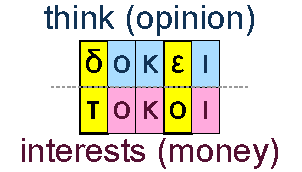
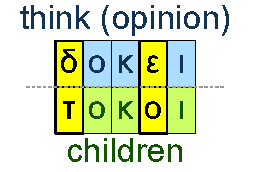
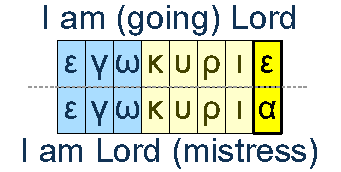
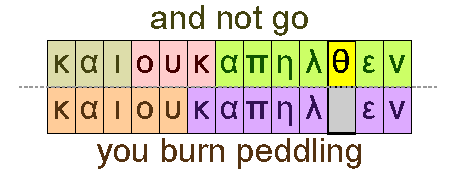
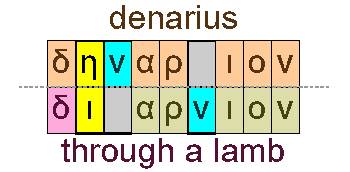
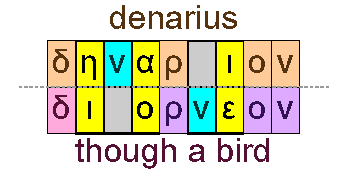
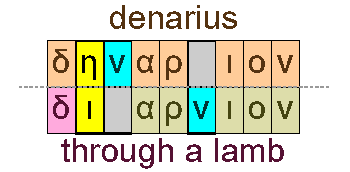
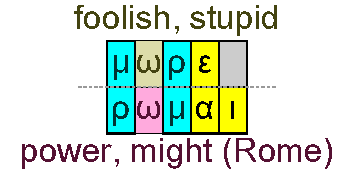
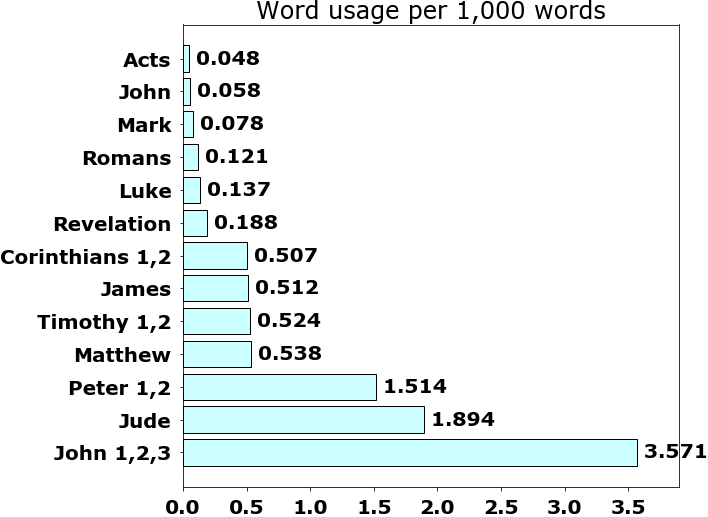
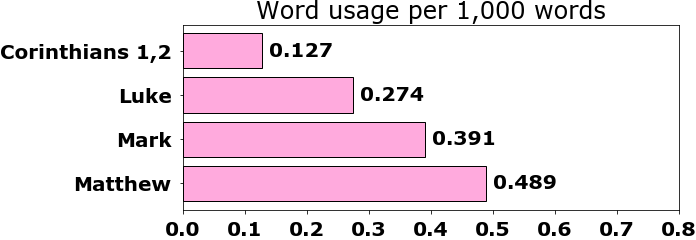
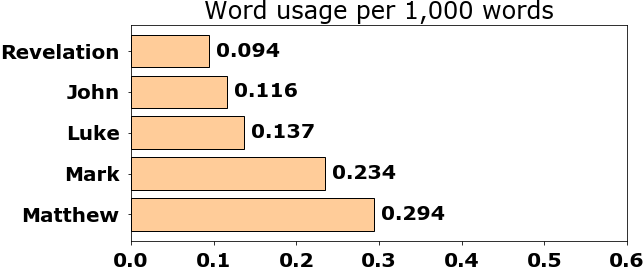
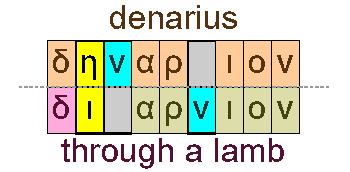
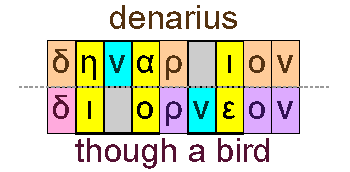
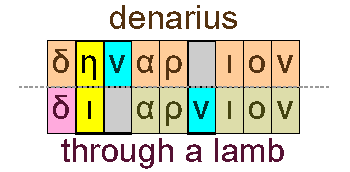
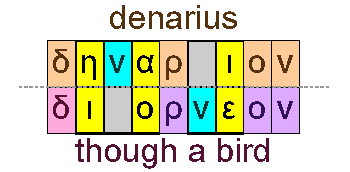
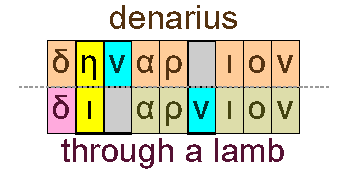
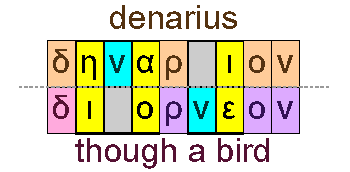
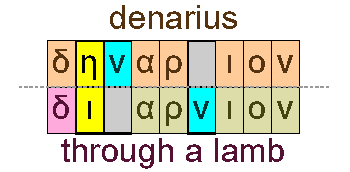
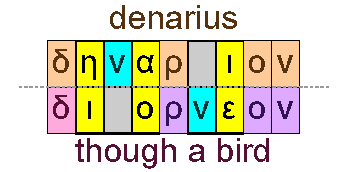
- *G1220 *0 δηνάριον (day-nar'-ee-on) : of Latin origin; a denarius (or ten asses):--pence, penny(-worth).
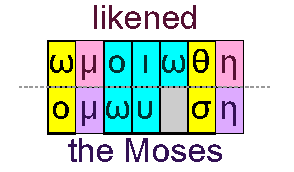
δηναριου *4 of 0
Matthew 20:2 ... with the labourers for a penny a day, he sent them ...
Matthew 20:13 ... not thou agree with me for a penny?
Revelation 6:6 ... A measure of wheat for a penny, and three measures of barley for a penny; and see thou hurt ...
45. Matthew 10:29 Sell out
Matthew 10:29 Are not two sparrows sold for a farthing? and one of them shall not fall on the ground without your Father. [kjv]
ουχι δυο στρουθια ασσαριου πωλειται και εν εξ αυτων ου πεσειται επι την γην ανευ του πατρος υμων [gnt]
What is the difference in the following?
10 (
assarionn ≈
1 denarius)
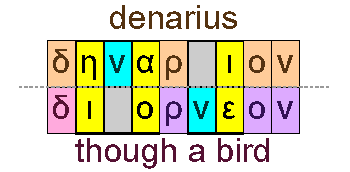
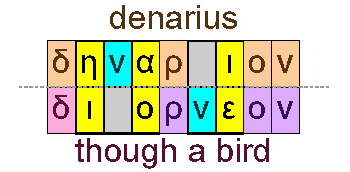
 "Are not two birds sold for an assarion [song].".
"Are not two birds bought for an assarion [song].".
"Are not two birds sold for an assarion [song].".
"Are not two birds bought for an assarion [song].".
*G4453 *22 πωλέω (po-leh'-o) : probably ultimately from pelomai (to be busy, to trade); to barter (as a pedlar), i.e. to sell:--sell, whatever is sold.
The ancient Greek word
"πωλέω" ≈ "sell" as in "
levy taxes",
"sell an office" or
"betray". This word often has negative connotations as sometimes does the English phrase
"sell out". A marketing phrase is from the Latin phrase
"caveat emptor" ≈ "let the buyer beware".
46. Matthew 10:28 Soul and body
Matthew 10:28 And fear not them which kill the body, but are not able to kill the soul: but rather fear him which is able to destroy both soul and body in hell. [kjv]
και μη φοβηθητε φοβεισθε απο των αποκτεινοντων το σωμα την δε ψυχην μη δυναμενων αποκτειναι φοβηθητε φοβεισθε δε μαλλον τον δυναμενον και ψυχην και σωμα απολεσαι εν γεεννη [gnt]
Jesus tells us that the "
body" and the "
soul" are different. Jesus tells us who we should
"fear" and it is not
"fear" about the
cares and
concerns of this world. The most dangerous attacks are not from the outside but from the inside and involve
deception.
One cannot "
destroy the soul" by
"killing" the body is in persecution (e.g., by the Roman administrations). The primary way to
"destroy" the "
soul" is through
deception so that you "
sell yourself out" or are "
sold out".
Jesus provides an example in the
next verse.
47. Matthew 10:29-31 Soul and body
Matthew 10:29 Are not two sparrows sold for a farthing? and one of them shall not fall on the ground without your Father. [kjv]
ουχι δυο στρουθια ασσαριου πωλειται και εν εξ αυτων ου πεσειται επι την γην ανευ του πατρος υμων [gnt]
10:30 But the very hairs of your head are all numbered. [kjv]
υμων δε και αι τριχες της κεφαλης πασαι ηριθμημεναι εισιν [gnt]
10:31 Fear ye not therefore, ye are of more value than many sparrows. [kjv]
μη ουν φοβηθητε φοβεισθε πολλων στρουθιων διαφερετε υμεις [gnt]
Discuss: [killing me softly with his song]
How might "sparrows" (birds of the evil one) deceive to "destroy the soul" in order to achieve "earthly gain" (money) by "selling out"?
Do "sparrows" succeed because those being deceived do not "understand"? This is what Jesus says of the birds in the Parable of the Sower in Matthew 13.
Have those "deceived" separated themselves from the love of Christ?
48. Matthew 20:2 Denarius
Matthew 20:2 And when he had agreed with the labourers for a penny a day, he sent them into his vineyard. [kjv]
συμφωνησας δε μετα των εργατων εκ δηναριου την ημεραν απεστειλεν αυτους εις τον αμπελωνα αυτου [gnt]
The
ancient Greek word
"δηνάριον" ≈ "denarius" comes from the Latin word
"denarius" ≈ "coin" and meaning,
literally,
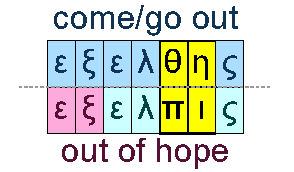
"of ten things" from the Latin word
"deni" ≈ "ten each". The symbol was a Roman
X for
ten with a horizontal line though it. Compare "
$" and "
¢". Does that make
sense?
In Bible times, it was a silver coin of about a days wages. The (initial) value was
ten assarions or
asses and devalued over time.
The Unicode is U+10196 (4 byte UTF code).
49. Matthew 20:2
KJV: And when he had agreed with the labourers for a penny a day, he sent them into his vineyard.
Greek: συμφωνησας δε μετα των εργατων εκ δηναριου την ημεραν απεστειλεν αυτους εις τον αμπελωνα αυτου
50. Horae - Greek gods of the seasons
In Greek mythology, the
"Ὧρα" ≈ "Horae" were the Greek gods of the
"Seasons" and controlled
"time". Later they were gods of natural justice and order.
The
ancient Greek word
"ὥρα" ≈ "period of time, season, year, time of day, hour" and comes from the
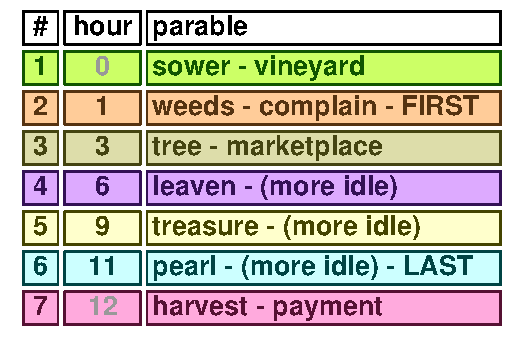
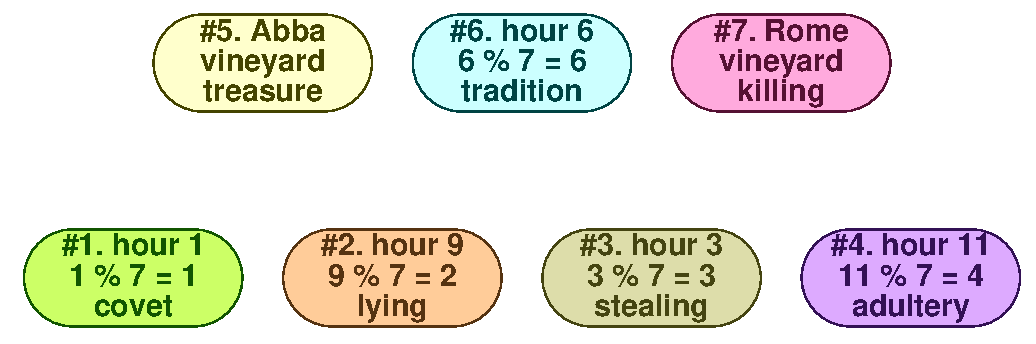
PIE (Proto Indo-European) root for
"year". The Greek word was borrowed as the Latin word
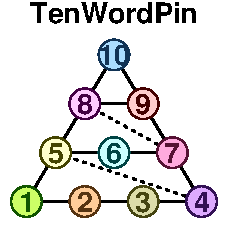
"hora" ≈ "hour, time, season".
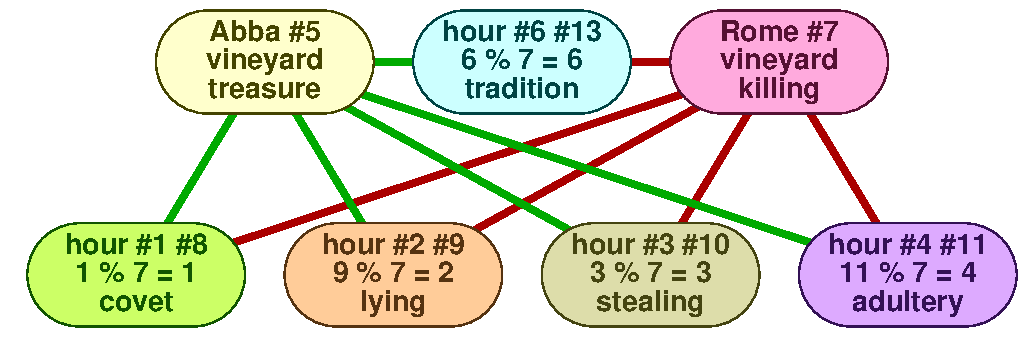
The English word
"year" (from Germanic from
PIE)
and the English word
"hour" (through Latin from Greek from
PIE) are
both related to the Greek word
"ὥρα" ≈ "period of time, season, year, time of day, hour".
51. Matthew 20:3,5 Hours
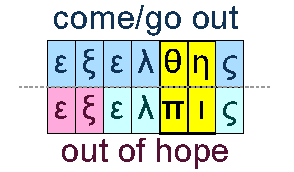
Matthew 20:3 And he went out about the third hour, and saw others standing idle in the marketplace, [kjv]
και εξελθων περι την τριτην ωραν ειδεν αλλους εστωτας εν τη αγορα αργους [gnt]
… horam … [v]
20:5 Again he went out about the sixth and ninth hour, and did likewise. [kjv]
οι δε απηλθον παλιν δε εξελθων περι εκτην και εννατην ενατην ωραν εποιησεν ωσαυτως [gnt]
… horam … [v]
Are all the "
workers" paid the same wage?Is that the
literal view? What might be the
code word view?
What do the
"hours" represent? The
TR (Textus Receptus) adds
"hours" in verse 6 after "
eleventh". The Latin word
"hora" ≈ "hour, time".
"ὥραν" ≈ "period of time, season, year, time of day, hour" (accusative feminine singular) from "ὥρα" ≈ "period of time, season, year, time of day, hour".
The
ancient Greek word
"ὥρα" ≈ "period of time, season, year, time of day, hour" and comes from the
PIE root for
"year". The Greek word was borrowed as the Latin word
"hora" ≈ "hour, time, season".
52. Leviticus 15:3 Flow
Leviticus 15:3 And this shall be his uncleanness in his issue: whether his flesh run with his issue, or his flesh be stopped from his issue, it is his uncleanness. [kjv]
και ουτος ο νομος της ακαθαρσιας αυτου ρεων γονον εκ σωματος αυτου εκ της ρυσεως ης συνεστηκεν το σωμα αυτου δια της ρυσεως αυτη η ακαθαρσια αυτου εν αυτω πασαι αι ημεραι ρυσεως σωματος αυτου η συνεστηκεν το σωμα αυτου δια της ρυσεως ακαθαρσια αυτου εστιν [lxx]
And this is the law of his uncleanness; whoever has a gonorrhoea out of his body, this is his uncleanness in him by reason of the issue, by which, his body is affected through the issue: all the days of the issue of his body, by which his body is affected through the issue, there is his uncleanness. [bs3]
The
ancient Greek word
"ῥέων" ≈ "flow, gush" (masculine present active participle) comes from
"ῥέω" ≈ "flow, gush".
The English word
"gonorrhea" which comes, through Latin, from the
ancient Greek word
"γονόρροια" ≈ "gonorrhea" which comes from
"γόνος" ≈ "fruit, race, procreation" and
"ῥοία" ≈ "flow, flux" .
The
ancient Greek word
"ῥέουσαν" ≈ "flowing, gushing" from
"ῥέων" ≈ "flow, gush" from
"ῥέω" ≈ "flow, gush".
53. Leviticus 15:3
KJV: And this shall be his uncleanness in his issue: whether his flesh run with his issue, or his flesh be stopped from his issue, it is his uncleanness.
Hebrew: וזאת תהיה טמאתו בזובו רר בשרו את זובו או החתים בשרו מזובו טמאתו הוא׃
Greek: και ουτος ο νομος της ακαθαρσιας αυτου ρεων γονον εκ σωματος αυτου εκ της ρυσεως ης συνεστηκεν το σωμα αυτου δια της ρυσεως αυτη η ακαθαρσια αυτου εν αυτω πασαι αι ημεραι ρυσεως σωματος αυτου η συνεστηκεν το σωμα αυτου δια της ρυσεως ακαθαρσια αυτου εστιν
Brenton: And this is the law of his uncleanness; whoever has a gonorrhoea out of his body, this is his uncleanness in him by reason of the issue, by which, his body is affected through the issue: all the days of the issue of his body, by which his body is affected through the issue, there is his uncleanness.
54. Job 38:30 Flow
55. Job 38:30
KJV: The waters are hid as with a stone, and the face of the deep is frozen.
Hebrew: כאבן מים יתחבאו ופני תהום יתלכדו׃
Greek: η καταβαινει ωσπερ υδωρ ρεον προσωπον δε αβυσσου τις επηξεν
Brenton: which descends like flowing water? who has terrified the face of the ungodly?
56. Matthew 20:3 Flow of hours
Matthew 20:3 And he went out about the third hour, and saw others standing idle in the marketplace, [kjv]
και εξελθων περι την τριτην ωραν ειδεν αλλους εστωτας εν τη αγορα αργους [gnt]
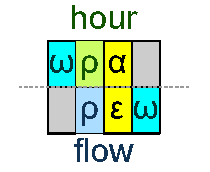
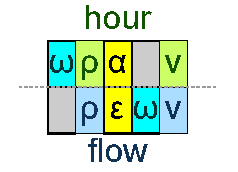
"ὥρα" ≈ "period of time, season, year, time of day, hour" and "ὥραν" ≈ "period of time, season, year, time of day, hour".
"ῥέω" ≈ "flow, gush" and "ῥέον" ≈ "flow, gush" and "ῥέων" ≈ "flow, gush".
Might there be a connection between
"hour" as a
"period of time" and
"flow" is in a
"flow" of
"milk" and
"honey"?
 |
Details are left as a future topic.
|
57. Matthew 20:3 Idle and not working
Matthew 20:3 And he went out about the third hour, and saw others standing idle in the marketplace, [kjv]
και εξελθων περι την τριτην ωραν ειδεν αλλους εστωτας εν τη αγορα αργους [gnt]
The Greek word for
"idle" is, literally,
"not working". This word can be a play on words with "
silver" or, as a play on words, "
lazy way around". Words that are
"idle" do
not "
work" for
Christ and are related to the "
unpardonable"
sin.
58. An opus on the workings of work
Matthew 20:2 And when he had agreed with the labourers for a penny a day, he sent them into his vineyard. [kjv]
συμφωνησας δε μετα των εργατων εκ δηναριου την ημεραν απεστειλεν αυτους εις τον αμπελωνα αυτου [gnt]
The ancient Greek word
"ἔργον" (er-gon) ≈ "work" is the source of the physics term
"erg" for work and is related to many other
PIE words for
"work".
20:3 And he went out about the third hour, and saw others standing idle in the marketplace, [kjv]
και εξελθων περι την τριτην ωραν ειδεν αλλους εστωτας εν τη αγορα αργους [gnt]
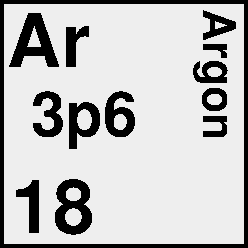
The
negation of the Greek word for
"work" is the ancient Greek word
"αεργος" ≈ "not working, idle" which contracted to
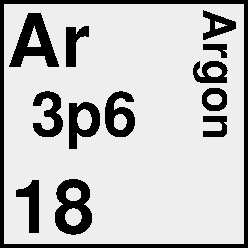
"αργος" ≈ "not working, idle" and is the source of the name for the chemical element
"Argon" as a "
lazy gas".
59. Matthew 11:16 Children
Matthew 11:16 But whereunto shall I liken this generation? It is like unto children sitting in the markets, and calling unto their fellows, [kjv]
τινι δε ομοιωσω την γενεαν ταυτην ομοια εστιν παιδαριοις παιδιοις καθημενοις εν ταις αγοραις καθημενοις και προσφωνουσιν α προσφωνουντα τοις εταιροις αυτων ετεροις [gnt]
The "
markets", in a
literal sense, is the "
market". Part of the temple was the "
courtyard" where the "
buying" of required sacrifices was done by "
selling". Jesus had overturned the "
tables" or "
benches" of these "
sellers" who had desecrated the temple.
These children appear to represent the religious establishment, who do no real work and feed off of others, like a bird, such that the others cannot do the things they are supposed to do as required by God (and not the religious establishment). These children are "
sitting". The others who are "
different" have actual day-to-day work to do.
60. Matthew 20:3 Marketplace
Matthew 20:3 And he went out about the third hour, and saw others standing idle in the marketplace, [kjv]
και εξελθων περι την τριτην ωραν ειδεν αλλους εστωτας εν τη αγορα αργους [gnt]
The ancient Greek word
"αγοράζω" ≈ "buy, purchase" and is related to the ancient Greek word
"ἀγορά" ≈ "assembly, speech, marketplace". The Greek marketplace is the source of the English word
"agora".
Jesus uses the Greek word for
"marketplace" as a code word for the "
sanctuary" of the
religious establishment since buying and selling at the money changers table made it a
den/cave of "
robbers". In general, a "
thief" uses
deception while a "
robber" uses
physical force.
What was happening in the
"marketplace"?
What type of "buying" and "selling"?
What type of "speech" was being done at the "assembly"? Were they being "smitten" (by the evil servant) with deception?
61. Matthew 21:12-14 House of prayer
Matthew 21:12 And Jesus went into the temple of God, and cast out all them that sold and bought in the temple, and overthrew the tables of the moneychangers, and the seats of them that sold doves, [kjv]
και εισηλθεν ο ιησους εις το ιερον του θεου και εξεβαλεν παντας τους πωλουντας και αγοραζοντας εν τω ιερω και τας τραπεζας των κολλυβιστων κατεστρεψεν και τας καθεδρας των πωλουντων τας περιστερας [gnt]
21:13 And said unto them, It is written, My house shall be called the house of prayer; but ye have made it a den of thieves. [kjv]
και λεγει αυτοις γεγραπται ο οικος μου οικος προσευχης κληθησεται υμεις δε αυτον εποιησατε ποιειτε σπηλαιον ληστων [gnt]
21:14 And the blind and the lame came to him in the temple; and he healed them. [kjv]
και προσηλθον αυτω τυφλοι και χωλοι εν τω ιερω και εθεραπευσεν αυτους [gnt]
In the
GNT, Jesus uses both words for
"thieves" and words for
"robbers".
The Greek word translated as
"thieves" (using
deception) is that of
"robbers" (using
force).
[Luke, Mark, Isaiah, guesses as to why Jesus was mad]
62. Matthew 21:13 Den of robbers
Matthew 21:13 And said unto them, It is written, My house shall be called the house of prayer; but ye have made it a den of thieves. [kjv]
και λεγει αυτοις γεγραπται ο οικος μου οικος προσευχης κληθησεται υμεις δε αυτον εποιησατε ποιειτε σπηλαιον ληστων [gnt]
Jesus said, "
My house shall be called the house of prayer, but you have made it ..." (check all that apply.)
☐ A den (cave) of
thieves.
☐ A den (cave) of
robbers.
☐ A coffee shop and bookstore.
☐ A basketball and volleyball court.
☐ A platform for social and political change.
☐ A place for "
cultural diversity" (even if it goes against God's laws).
☐ A yoke of compulsion (e.g., church as a tax collector)
☐ ... (add your own ideas here) ...
Discuss: Are these valid comparisons?
63. Matthew 11:15-19 A pipe dream in the market place
Matthew 11:16 But whereunto shall I liken this generation? It is like unto children sitting in the markets, and calling unto their fellows, [kjv]
τινι δε ομοιωσω την γενεαν ταυτην ομοια εστιν παιδαριοις παιδιοις καθημενοις εν ταις αγοραις καθημενοις και προσφωνουσιν α προσφωνουντα τοις εταιροις αυτων ετεροις [gnt]
11:17 And saying, We have piped unto you, and ye have not danced; we have mourned unto you, and ye have not lamented. [kjv]
και λεγουσιν ηυλησαμεν υμιν και ουκ ωρχησασθε εθρηνησαμεν υμιν και ουκ εκοψασθε [gnt]
These children appear to represent the religious establishment, who do no real work and feed off of others, like a bird, such that the others cannot do the things they are supposed to do as required by God (and not the religious establishment).
These verses appear immediately after speaking about John the Baptist and Elijah in a way that provides hints as to the Kingdom of heaven.
64. Go away
Matthew 4:10 Then saith Jesus unto him, Get thee hence, Satan: for it is written, Thou shalt worship the Lord thy God, and him only shalt thou serve. [kjv]
τοτε λεγει αυτω ο ιησους υπαγε σατανα γεγραπται γαρ κυριον τον θεον σου προσκυνησεις και αυτω μονω λατρευσεις [gnt]
5:24 Leave there thy gift before the altar, and go thy way; first be reconciled to thy brother, and then come and offer thy gift. [kjv]
αφες εκει το δωρον σου εμπροσθεν του θυσιαστηριου και υπαγε πρωτον διαλλαγηθι τω αδελφω σου και τοτε ελθων προσφερε το δωρον σου [gnt]
The first and second time Jesus uses
"go away" in Matthew are in an interesting sense.
Satan is to "go away".
You are to "go away" from the "altar".
In both cases, there is distance between the two parties or objects. Is there a deeper connection? Satan's "
examination" (
temptation) centered on "
health", "
wealth" and "
power".
What are the connections between Satan's "
examination" and a
"gift" "on" the
"altar"?
65. Usage - go away
*G5217 *76 ὑπάγω (hoop-ag'-o) : from G5259 and G71; to lead (oneself) under, i.e. withdraw or retire (as if sinking out of sight), literally or figuratively:--depart, get hence, go (a-)way.
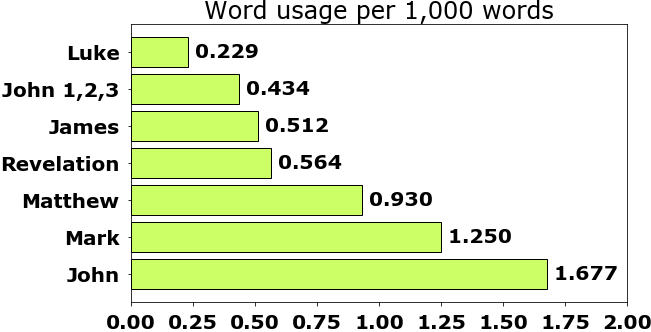 |
Words: υπαγε=26 υπαγει=10 υπαγειν=6 υπαγεις=5 υπαγετε=14 υπαγη υπαγητε υπαγοντας υπαγοντες υπαγω=11 υπηγον=2
|
The ancient Greek word
"ὑπάγω" ≈ "bring under, go slowly away" and is, literally,
"lead under" and comes from Greek words
"ὕπο" ≈ "under" and
"ἄγω" ≈ "lead". The usage in the
GNT appears to be that of
"go away".
66. Matthew 20:3
KJV: And he went out about the third hour, and saw others standing idle in the marketplace,
Greek: και εξελθων περι την τριτην ωραν ειδεν αλλους εστωτας εν τη αγορα αργους
Latin: et egressus circa horam tertiam vidit alios stantes in foro otiosos
67. Matthew 20:4 Go away with righteousness
Matthew 20:4 And said unto them; Go ye also into the vineyard, and whatsoever is right I will give you. And they went their way. [kjv]
κακεινοις και εκεινοις ειπεν υπαγετε και υμεις εις τον αμπελωνα και ο εαν η δικαιον δωσω υμιν οι δε απηλθον [gnt]
The ancient Greek word
"ὑπάγω" ≈ "bring under, go slowly away" and is, literally,
"lead under" and comes from Greek words
"ὕπο" ≈ "under" and
"ἄγω" ≈ "lead". The usage in the
GNT appears to be that of
"go away".
The Greek word for
"right" is that of
"righteous". The ancient Greek word
"δικαιοσύνη" ≈ "righteousness, justice" and comes from the idea of what is
"yours".
To what
"righteousness" does this verse refer?
☐ God's
"righteousness".
☐ Man's
"righteousness".
The last phrase appears in the Greek at the start of the next verse.
68. Matthew 20:4 Translations
Matthew 20:4 And said unto them; Go ye also into the vineyard, and whatsoever is right I will give you. And they went their way. [kjv]
κακεινοις και εκεινοις ειπεν υπαγετε και υμεις εις τον αμπελωνα και ο εαν η δικαιον δωσω υμιν οι δε απηλθον [gnt]
NIV (New International Version):
He told them, ‘You also go and work in my vineyard, and I will pay you whatever is right.’
NLT (New Living Translation):
So he hired them, telling them he would pay them whatever was right at the end of the day.
Berean Standard Bible:
‘You also go into my vineyard,’ he said, ‘and I will pay you whatever is right.’
Berean Literal Bible:
And to those ones he said, ‘You⁺ also go into the vineyard, and I will give you⁺ whatever may be right.’
69. Matthew 20:4 Vineyards
Matthew 20:4 And said unto them; Go ye also into the vineyard, and whatsoever is right I will give you. And they went their way. [kjv]
κακεινοις και εκεινοις ειπεν υπαγετε και υμεις εις τον αμπελωνα και ο εαν η δικαιον δωσω υμιν οι δε απηλθον [gnt]
The
NIV and
Berean Standard Bible (and others) add "
my" to
"vineyard". Any ambiguity would have been made more clear if the Greek word for "
my" had been spoken by Jesus (and recorded by Matthew). It is not in the Greek (though it is added by many translations).
Discuss:
What exactly is "the" "vineyard"? Can one choose, or be deceived, into working in another "vineyard"?
Can "whatever" is "right" or "righteous" include a penalty - for going and working in another "vineyard"?
The Greek word for
"give" is the source of the English word
"dose".
70. Nature and law and justice
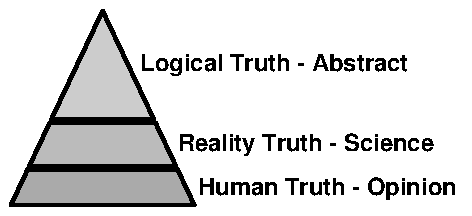
In his
On Sophistic Refutations, Aristotle says that from ancient times, nature (truth) and law (opinion) are opposites and that justice goes with the law (opinion) but not with nature (truth).
English: Nature and Law are opposites, and justice is a good thing according to the law but not according to nature. Loeb #400, p. 73.
Greek: ἐναντία γὰρ εἶναι φύσιν καὶ νόμον, καὶ τὴν δικαιοσύνην κατὰ νόμον μὲν εἶναι καλόν, κατὰ φύσιν δ´ οὐ καλόν Sophistic Refutations [173b]
"φύση" ≈ "nature, reality" (reality truth) as in "physics".
"νόμος" ≈ "custom, law" (opinion truth) as in "Deuteronomy" as in "second law". The Greek for "iniquity" is "against the law".
"δικαιοσύνη" ≈ "righteousness, justice".
Whenever Jesus, Paul, etc., use the word for
"righteousness" one must determine from context what is meant. There may be double meanings.
☐ God's
"righteousness" (opinion, glory, etc.).
☐ man's
"righteousness" (opinion, glory, etc.).
71. Truth and opinion
72. Matthew 20:4 Give
Matthew 20:4 And said unto them; Go ye also into the vineyard, and whatsoever is right I will give you. And they went their way. [kjv]
κακεινοις και εκεινοις ειπεν υπαγετε και υμεις εις τον αμπελωνα και ο εαν η δικαιον δωσω υμιν οι δε απηλθον [gnt]
The Greek word for
"give" is the source of the English word
"dose". The ancient Greek word
"δώσω" ≈ "give, present, allow, permit" and comes from
"δίδωμι" ≈ "give, present, allow, permit".
This
exact word Greek for
"give" is used
three times in Matthew,
two times by Jesus.
73. Matthew 4:9 Give
Satan is examining Jesus with what Jesus knows, thinks or believes to be true, in order to deceive him.
Matthew 4:9 And saith unto him, All these things will I give thee, if thou wilt fall down and worship me. [kjv]
και λεγει ειπεν αυτω ταυτα παντα σοι παντα δωσω εαν πεσων προσκυνησης μοι [gnt]
74. Matthew 16:19 Keys
Jesus is talking to Peter after Peter's confession of faith and Jesus stating that his church will be built on the rock.
Matthew 16:19 And I will give unto thee the keys of the kingdom of heaven: and whatsoever thou shalt bind on earth shall be bound in heaven: and whatsoever thou shalt loose on earth shall be loosed in heaven. [kjv]
και δωσω σοι τας κλεις κλειδας της βασιλειας των ουρανων και ο εαν δησης επι της γης εσται δεδεμενον εν τοις ουρανοις και ο εαν λυσης επι της γης εσται λελυμενον εν τοις ουρανοις [gnt]
A "
key" cannot "
open" a "
gate" more than it is allowed to be "
open". However, a "
key" can "
close" or "
shut" a "
gate".
The idea of "bind" is that of "glue" as in to be "glued" to Jesus.
The idea of "loose" is that of "separated" as in to be "separated" from Jesus.
75. Matthew 16:19
KJV: And I will give unto thee the keys of the kingdom of heaven: and whatsoever thou shalt bind on earth shall be bound in heaven: and whatsoever thou shalt loose on earth shall be loosed in heaven.
Greek: και δωσω σοι τας κλεις κλειδας της βασιλειας των ουρανων και ο εαν δησης επι της γης εσται δεδεμενον εν τοις ουρανοις και ο εαν λυσης επι της γης εσται λελυμενον εν τοις ουρανοις
76. Matthew 20:4
KJV: And said unto them; Go ye also into the vineyard, and whatsoever is right I will give you. And they went their way.
Greek: κακεινοις και εκεινοις ειπεν υπαγετε και υμεις εις τον αμπελωνα και ο εαν η δικαιον δωσω υμιν οι δε απηλθον
77. Strongs - likewise
*G5615 *17 ὡσαύτως (ho-sow'-toce) : from G5613 and an adverb from G846; as thus, i.e. in the same way:--even so, likewise, after the same (in like) manner.
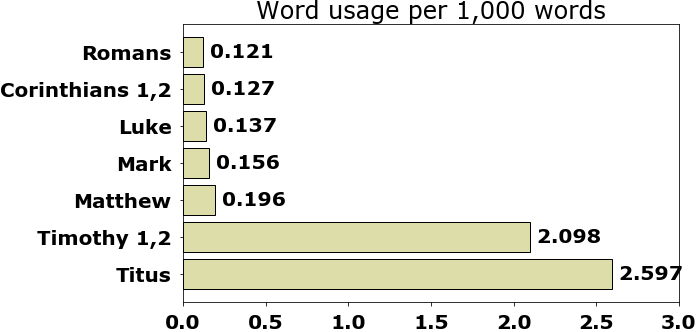 |
Words: ωσαυτως=17
|
78. Usage - likewise
- *G5615 *17 ὡσαύτως (ho-sow'-toce) : from G5613 and an adverb from G846; as thus, i.e. in the same way:--even so, likewise, after the same (in like) manner.
- ωσαυτως *17
- Matthew 20:5 ... ninth hour, and did likewise.
- Matthew 21:30 And he came to the second, and said likewise. And he answered and said, ...
- Matthew 21:36 ... and they did unto them likewise.
- Matthew 25:17 And likewise he that had received two, he also ...
- Mark 12:21 ... any seed: and the third likewise.
- Mark 14:31 ... not deny thee in any wise. Likewise also said they all.
- Luke 13:5 I tell you, Nay: but, except ye repent, ...
- Luke 20:31 ... took her; and in like manner the seven also: and they left ...
- Luke 22:20 Likewise also the cup after supper, saying, ...
- Romans 8:26 Likewise the Spirit also helpeth our infirmities: ...
- 1 Corinthians 11:25 After the same manner also he took the cup, when he had supped, saying, ...
- 1 Timothy 2:9 In like manner also, that women adorn themselves ...
- 1 Timothy 3:8 Likewise must the deacons be grave, not doubletongued, not ...
- 1 Timothy 3:11 Even so must their wives be grave, not slanderers, sober, ...
- 1 Timothy 5:25 Likewise also the good works of some are manifest beforehand; ...
- Titus 2:3 The aged women likewise, that they be in behaviour as becometh holiness, ...
- Titus 2:6 Young men likewise exhort to be sober minded.
79. Matthew 20:5 Likewise in this way
Matthew 20:5 Again he went out about the sixth and ninth hour, and did likewise. [kjv]
οι δε απηλθον παλιν δε εξελθων περι εκτην και εννατην ενατην ωραν εποιησεν ωσαυτως [gnt]
The
"likewise" is an
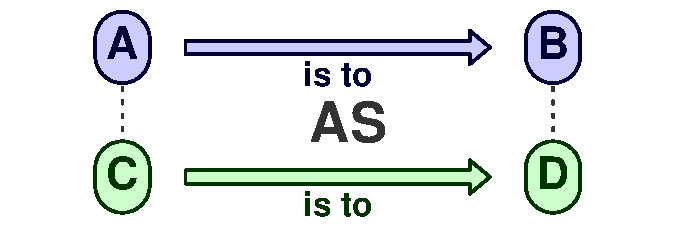
analogy which means that what happened at the "
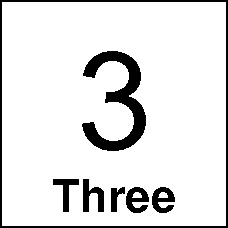
third"
"hour" was repeated at the "
sixth" and "
ninth"
"hour".
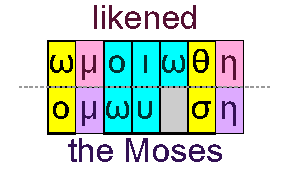
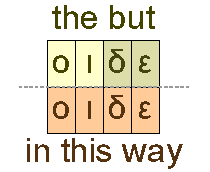
The first three words in the Greek were translated at the end of the previous verse. The first two form a play on words (by removing the space - there were no spaces in Greek at the time). It might be,
"in this way" "they went".
80. Matthew 20:5
KJV: Again he went out about the sixth and ninth hour, and did likewise.
Greek: οι δε απηλθον παλιν δε εξελθων περι εκτην και εννατην ενατην ωραν εποιησεν ωσαυτως
Latin: illi autem abierunt iterum autem exiit circa sextam et nonam horam et fecit similiter
81. Matthew 20:6 Idle
Matthew 20:6 And about the eleventh hour he went out, and found others standing idle, and saith unto them, Why stand ye here all the day idle? [kjv]
περι δε την ενδεκατην ωραν εξελθων ευρεν αλλους εστωτας αργους και λεγει αυτοις τι ωδε εστηκατε ολην την ημεραν αργοι [gnt]
If they were "
standing"
"idle" here all "
day", why were they not found the previous times? The words
"hour" and (first)
"idle" are inferred.
There are only "
twelve" hours in a day which would be at the end with no time left. Thus, the last hour stated is the "
eleventh" hour.
In the parable of the talents in Matthew 25,
one of the three servants is
"idle" at the reckoning at the end. His "
silver", or "
lazy way around" as in the "
ground" or "
sand".
82. J. R. Tolkien and Eleventy
The word "
leaven" is not related to the number
110 as in "
eleventy" as in "
eighty", "
ninety", "
hundred", "
eleventy".
It is from the Old English word
"hundendlefti" ≈ "one hundred and ten" from the Old English prefix
"hund" ≈ "hundred" and the Old English word
"endleofan" ≈ "eleven" and ending "tig" where the hard "
g" softened to a "
y".
J. R. Tolkien in the Lord of the Rings trilogy popularized the usage of "
eleventy" as
110. Tolkien writes the following in regards to Bilbo's birthday:
Bilbo was going to be eleventy-one, 111, a rather curious number, and a very respectable age for a hobbit (the Old Took himself had only reached 130); and Frodo was going to be thirty-three, 33, an important number:…
This play on words was used in the Beverly Hillbillies TV comedy series (by Grannie) in the 1960's. The name "
Eleventy" has been used in software as a name for a simple static web site generator.
83. Matthew 20:6
KJV: And about the eleventh hour he went out, and found others standing idle, and saith unto them, Why stand ye here all the day idle?
Greek: περι δε την ενδεκατην ωραν εξελθων ευρεν αλλους εστωτας αργους και λεγει αυτοις τι ωδε εστηκατε ολην την ημεραν αργοι
84. Matthew 20:7 Hired
Matthew 20:7 They say unto him, Because no man hath hired us. He saith unto them, Go ye also into the vineyard; and whatsoever is right, that shall ye receive. [kjv]
λεγουσιν αυτω οτι ουδεις ημας εμισθωσατο λεγει αυτοις υπαγετε και υμεις εις τον αμπελωνα και ο εαν η δικαιον ληψεσθε [gnt]
The "
man" is inferred. The Greek uses a pronoun for "
no one" .
These "
others" are all "
similar".
Are there any now that have not been
"hired"? Has
everyone been
"hired"? Does
everyone get a chance?
85. Matthew 20:7
KJV: They say unto him, Because no man hath hired us. He saith unto them, Go ye also into the vineyard; and whatsoever is right, that shall ye receive.
Greek: λεγουσιν αυτω οτι ουδεις ημας εμισθωσατο λεγει αυτοις υπαγετε και υμεις εις τον αμπελωνα και ο εαν η δικαιον ληψεσθε
86. Matthew 20:1-7 Parable of the vineyard workers 1
Matthew 20:1 For the kingdom of heaven is like unto a man that is an householder, which went out early in the morning to hire labourers into his vineyard. [kjv]
 |
early
|
vineyard
(of) him/it
|
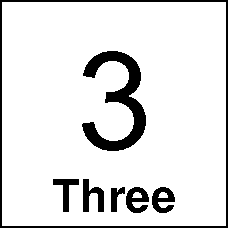 |
hour
|
the
vineyard
|
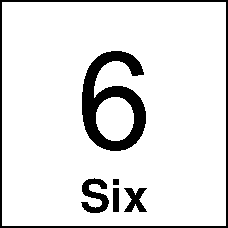 |
hour
|
likewise
|
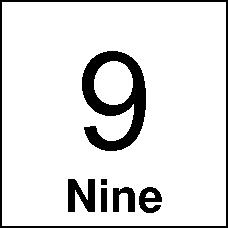 |
hour
|
likewise
|
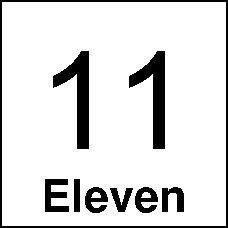 |
hour
|
the
vineyard
|
There are
five periods in which
"workers" are recruited. What do the
"hours" represent?
☐ Time of day.
☐ Time in history.
☐ Time of one's life.
☐ Something else.
How many "vineyards" are there?
To which "vineyard" are they "sent"?
To which "vineyard" do they "go"?
Go to the wrong
"vineyard" and you may end up
feeding the
"birds" and, in reality, be
birdseed!
The
"first" will know about and talk about the
"last".
87. Remainder left over
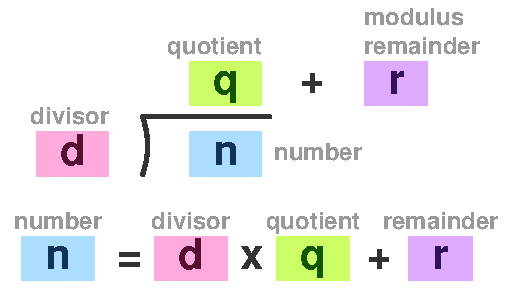
An integer is defined as a number with no fractional part.
Are 1 and 1.0 the same?
No. 1 is an representation of a mathematical integer (with no fractional part). 1.0 is a floating point approximation of a mathematical real number.
Are 0.9999... and 1.0 the same?
In reality, no. In mathematics, yes - to make mathematics consistent.
Why is division by zero undefined?
To make mathematics consistent.
What is one conclusion?
A perfect mathematical solution is only an approximation to reality. Computer science assumes this by doing calculations using floating point approximations to mathematical real numbers.
[quantum calculation, correctness proof, candidacy exams]
88. Remainder left over
 |
 |
| 1 |
2 |
3 |
4 |
5 |
6 |
7 |
| 8 |
9 |
10 |
11 |
12 |
13 |
14 |
|
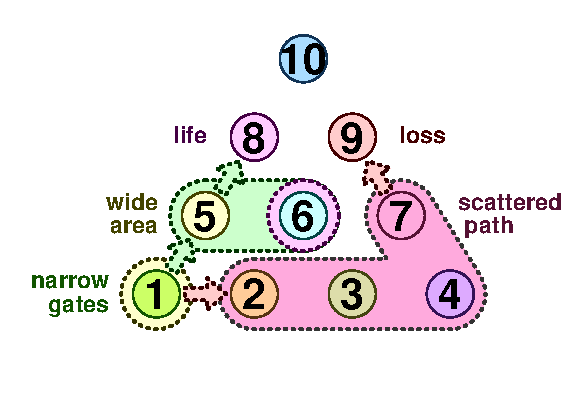
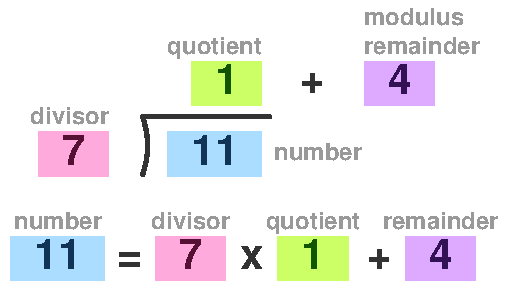
Is there anything more to integer division? Potential
zero in
node 7 avoided.
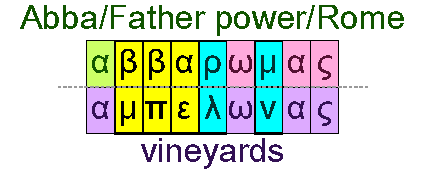
Rome vineyard (
killing node). Note: Drawing of my 8th grade substitute math teacher near the end of the school year.
89. Remainder left over
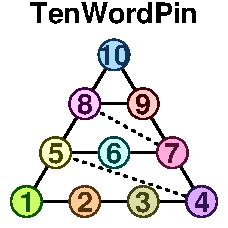 |
| Hour |
Rem |
From |
To |
| 1 |
1 |
node 1 |
node 5 |
| 3 |
3 |
node 3 |
? |
| 6 |
6 |
node 6 |
? |
| 9 |
2 |
node 2 |
? |
| 11 |
4 |
node 4 |
? |
|
The destination vineyard of those in node 1 is provided as node 5.
The destination vineyard of those in node 3, node 6, node 2 and node 4 is not provided. Choose wisely.
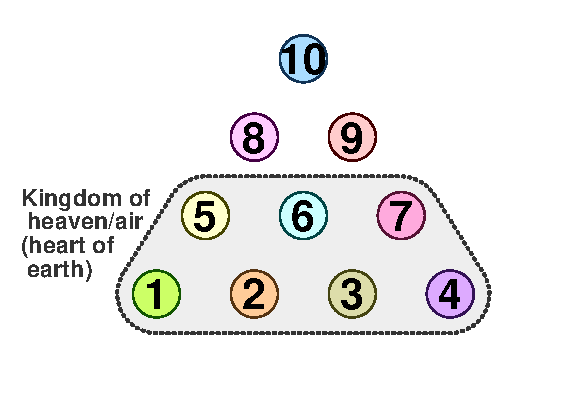
Of the nodes in the
KOH (Kingdom of Heaven) (1 to 7), the two nodes omitted are
node 5 (living bread, etc.) and
node 7 (killing, etc.).
Might the vineyard of the true householder by in node 5 (living bread, sheep, etc.)?
Might the vineyard of the false householder by in node 7 (killing, goats, etc.)?
What happens if you go to the
wrong vineyard? What if you are
deceived or
entrapped? This might be the "
millstone" "
deception/entrapment". What happened to the
two children?
90. Ten Pin: Vineyards and rewards
|
|
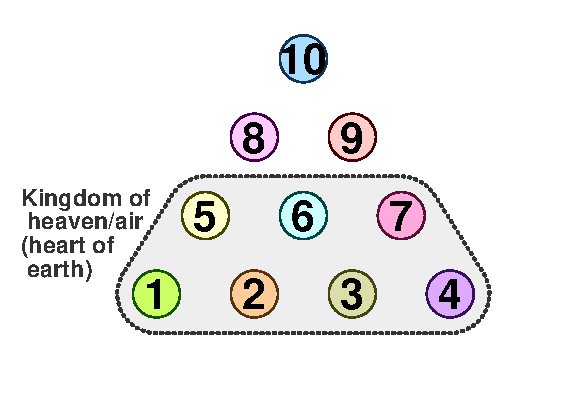
The literal meaning does not exactly match the code word meaning.
|
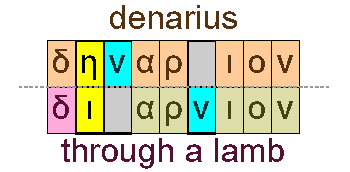
Abba reward.
|
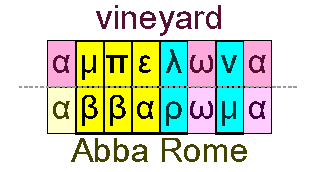
Which vineyard?
|
Rome reward.
|
[parable of the mustard seed]
If
five paths to
Abba and
five paths to
Rome are representative, then this model fits well with the Parable of the
Ten Virgins.
91. Matthew 25:2 Ten virgins
92. Matthew 25:1-2 Parable of the ten virgins
Matthew 25:1 Then shall the kingdom of heaven be likened unto ten virgins, which took their lamps, and went forth to meet the bridegroom. [kjv]
τοτε ομοιωθησεται η βασιλεια των ουρανων δεκα παρθενοις αιτινες λαβουσαι τας λαμπαδας αυτων εαυτων εξηλθον εις απαντησιν υπαντησιν του νυμφιου [gnt]
25:2 And five of them were wise, and five were foolish. [kjv]
πεντε δε ησαν εξ αυτων φρονιμοι ησαν μωραι και αι πεντε μωραι φρονιμοι [gnt]
Why "five" and "five" for a total of "ten"?
The "five" "prudent" appear to have had good oil.
The "five" "foolish" appear to have had snake oil.
93. Rich young man
Jesus asks the rich young man, earlier in the same discourse, about the following order:
node 7,
node 4,
node 3,
node 2,
node 6. That is, back from the two ways in which one can deviate from the true path to
node 5.
94. Matthew 20:8-12 Verses
Matthew 20:8 So when even was come, the lord of the vineyard saith unto his steward, Call the labourers, and give them their hire, beginning from the last unto the first. [kjv]
20:9 And when they came that were hired about the eleventh hour, they received every man a penny. [kjv]
20:10 But when the first came, they supposed that they should have received more; and they likewise received every man a penny. [kjv]
20:11 And when they had received it, they murmured against the goodman of the house, [kjv]
20:12 Saying, These last have wrought but one hour, and thou hast made them equal unto us, which have borne the burden and heat of the day. [kjv]
95. Matthew 20:13-16 Verses
Matthew 20:13 But he answered one of them, and said, Friend, I do thee no wrong: didst not thou agree with me for a penny? [kjv]
20:14 Take that thine is, and go thy way: I will give unto this last, even as unto thee. [kjv]
20:15 Is it not lawful for me to do what I will with mine own? Is thine eye evil, because I am good? [kjv]
20:16 So the last shall be first, and the first last: for many be called, but few chosen. [kjv]
96. End of page
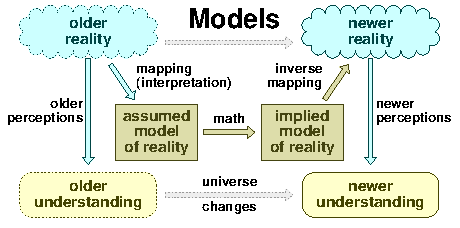 A model is an abstraction (interpretation) of reality that can be used for prediction and/or understanding.




















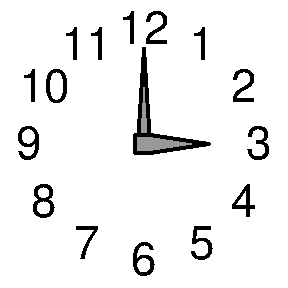 Many younger people today have trouble reading analog clocks. Would you want to use a second hand clock? Does anyone really know what time it is? (song by Robert Lamm, made popular by the music group Chicago).

















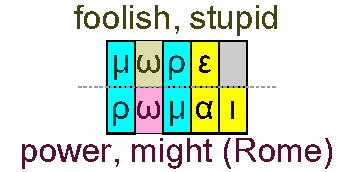
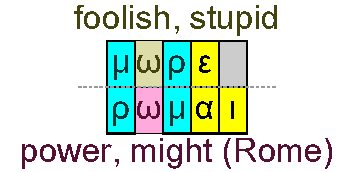
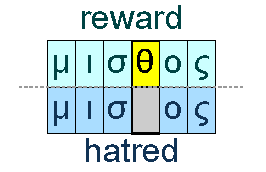 The Greek word for "reward" can be, in context, a play on words with the Greek word for "hate" or "hatred".

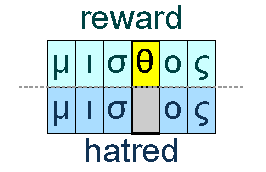 The Greek word for "reward" can be, in context, a play on words with the Greek word for "hate" or "hatred".



 The ancient Greek word "ἀμπελών" ≈ "vineyard" and comes from "ἄμπελος" ≈ "vine, vineyard". It was also an engine for protecting in a siege.
 The ancient Greek word "ἀμπελών" ≈ "vineyard" and comes from "ἄμπελος" ≈ "vine, vineyard". It was also an engine for protecting in a siege.























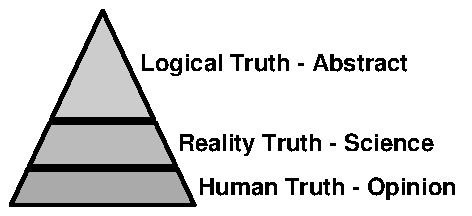 Aristotle continues about "nature" as "truth" and "law" as "opinion".