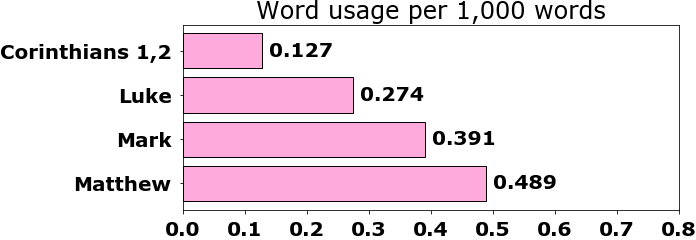
- *G290 *23 ἀμπελών (am-pel-ohn') : from G288; a vineyard:--vineyard.
αμπελωνα *11 of 23
Matthew 20:1 ... labourers into his vineyard.
Matthew 20:2 ... them into his vineyard.
Matthew 20:4 ... ye also into the vineyard, and whatsoever is ...
Matthew 20:7 ... ye also into the vineyard; and whatsoever is ...
Matthew 21:33 ... householder, which planted a vineyard, and hedged it ...
Matthew 21:41 ... wicked men, and will let out his vineyard unto other husbandmen, ...
Mark 12:1 ... parables. A certain man planted a vineyard, and set an hedge about ...
Mark 12:9 ... therefore the lord of the vineyard do? he will come and destroy the husbandmen, and will give the vineyard unto others.
Luke 20:9 ... A certain man planted a vineyard, and let it ...
Luke 20:16 ... husbandmen, and shall give the vineyard to others. And when they heard ...
1 Corinthians 9:7 ... charges? who planteth a vineyard, and eateth not ...
62. Matthew 7:15 Daniel Defoe
Matthew 7:15 Beware of false prophets, which come to you in sheep's clothing, but inwardly they are ravening wolves. [kjv]
προσεχετε δε απο των ψευδοπροφητων οιτινες ερχονται προς υμας εν ενδυμασιν προβατων εσωθεν δε εισιν λυκοι αρπαγες [gnt]
Consider the John Wesley house analogy. Before going up the
steps and through the
door into the
house one should be sure that this is the house into which one wants to go.
English novelist, journalist, merchant (and pamphleteer and spy)
Daniel Defoe (1660-1731), known for
Robinson Crusoe in 1719, starts his poem
The true-born Englishman as follows.
Whenever God erects a house of prayer, the devil always builds a chapel there.
And 'twill be found, upon examination, the latter has the largest congregation.
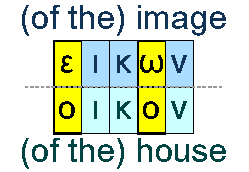
How does this compare with a "
vineyard"? How about a "
synagogue" of "
Satan"?
63. Matthew 22:21
Matthew 22:21 They say unto him, Caesar's. Then saith he unto them, Render therefore unto Caesar the things which are Caesar's; and unto God the things that are God's. [kjv]
λεγουσιν αυτω καισαρος τοτε λεγει αυτοις αποδοτε ουν τα καισαρος καισαρι και τα του θεου τω θεω [gnt]
| 1. |
God |
Caesar |
| 2. |
Father |
Rome |
| 3. |
Abba |
Rome |
Can a "
servant" of "
pray" be a "
serpent" of "
prey"?
How might you work the trade-offs between what is God's and what is Rome's? Might it be in the
"vineyard"? Might the Greek word for
"vineyard" be used by Jesus as a code word for the trade-off between God and Rome?
"τὰ" ≈ "the" (accusative plural) translated as "the things that are".
64. Matthew 22:21 Render
Matthew 22:21 They say unto him, Caesar's. Then saith he unto them, Render therefore unto Caesar the things which are Caesar's; and unto God the things that are God's. [kjv]
λεγουσιν αυτω καισαρος τοτε λεγει αυτοις αποδοτε ουν τα καισαρος καισαρι και τα του θεου τω θεω [gnt]
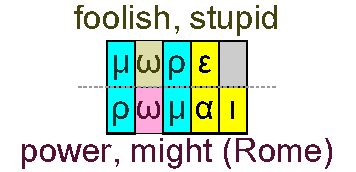
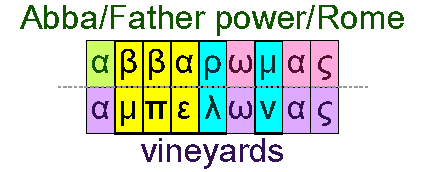
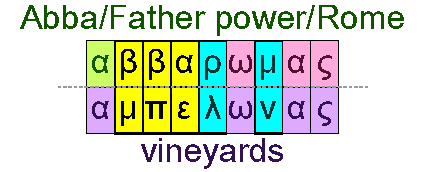
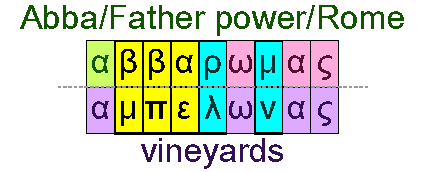
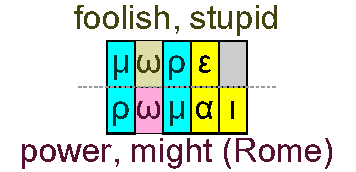
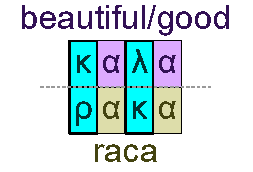
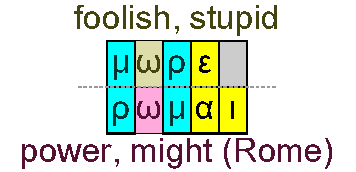
"Ἀββᾶ" ≈ "Abba, father" and "ῥώμας" ≈ "might, power, force, strength" (accusative, feminine, plural) as in "Rome"
"ἀμπελῶνας" ≈ "vineyard" (accusative, masculine, plural).
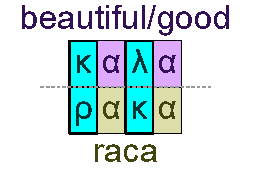
The Greek sounds for "
L" and "
R" were very similar. Try saying the sound "
mp" and compare it to the "
b" sound. In modern Greek, the "
b" sound is like the English "
v" sound so the combination "
mp" is used for imported words that start with the English "
b" sound.
65. Sevastopol
That Greek name for
"august" or
"respected" became the title of Russian Czarina (Augusta) Catherine II who founded the city Sevastopol in 1783.
"σεβαστός" ≈ "venerable, august".
"πόλις" ≈ "city".
Combined, one gets "
Sevastopol".
Charge of the Light Brigade during the Crimean War: (1853-1856) and the Siege of Sevastopol (1854-1855).
Florence Nightingale (care of wounded soldiers at Constantinople, improved nursing and medical treatment)
Sevastopol: Late 18th century. From Ukrainian Севасто́поль (Sevastópolʹ) and Russian Севасто́поль (Sevastópolʹ), from Ancient Greek Σεβαστόπολις (Sebastópolis) from σεβαστός (sebastós, “august”) + πόλις (pólis, “city”), probably after Empress (=Augusta) Catherine II of Russia. Wiktionary: 2022-12-15
66. Matthew 22:21 Caesar
Matthew 22:21 They say unto him, Caesar's. Then saith he unto them, Render therefore unto Caesar the things which are Caesar's; and unto God the things that are God's. [kjv]
λεγουσιν αυτω καισαρος τοτε λεγει αυτοις αποδοτε ουν τα καισαρος καισαρι και τα του θεου τω θεω [gnt]
… Caesaris … ergo … Caesaris Caesari … Dei Deo [v]
The Greek word for
"Caesar", from the Latin, appears
three times in Matthew. This is the
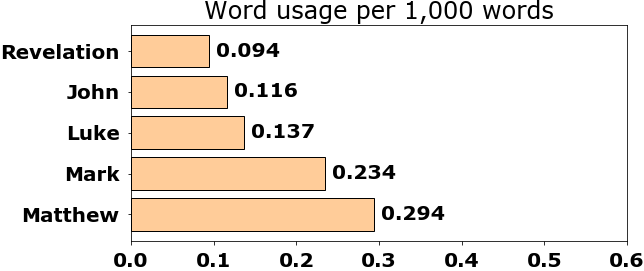
only time Jesus uses the word (in Matthew).
"Καίσαρος" ≈ "(of) Caesar" (genitive)
"Καίσαρι" ≈ "Caesar" (dative)
Roman leaders after
Caesar were named after him. The Latin word was
"Caesar" ≈ "Caesar", pronounced with a hard "
c" or "
k" sound. There are many linguistic ideas, none certain, of the origin of the Latin name of
Caesar.
67. Missing dog
Missing dog. If anyone sees her [Caesar], let us [lettuce] know.
Thanks a lot [think salad]. Before you toss it out, I know my salad jokes need addressing [a dressing]. With a little care, it [carrot] can be done. I love [olive] doing it. The salary [celery] is great. Until then, I'll play it [plate] safe and leave [leaf] it alone.
How does this dog salad joke relate to Bible verse analysis?
1. Number of the audience. 2. Gender of the dog. 3. Number of the owners.
68. Missing dog
Missing dog. If anyone sees her, let us know.
Sermon analysis analogy: (perhaps from a PhD dissertation)
The group being asked is plural to show how many need to hear the message of the lost dog.
The dog is female to show the importance of females (diversity, inclusion, etc.).
The group asking is plural to show the importance of the group rather than the individual. Better (bitter) together!
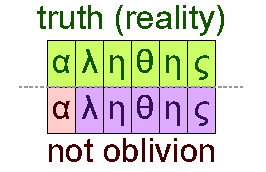
What is the reality of the statement?
If the number of the group asking and being asked is not plural, and if the dog is not female, the play on words joke does not work! That is, the joke is Biffed. Not funny: If you see him let me know.
69. Matthew 22:21 Serpent Caesar
70. Matthew 22:21 Serpent Caesar
Matthew 22:21 They say unto him, Caesar's. Then saith he unto them, Render therefore unto Caesar the things which are Caesar's; and unto God the things that are God's. [kjv]
λεγουσιν αυτω καισαρος τοτε λεγει αυτοις αποδοτε ουν τα καισαρος καισαρι και τα του θεου τω θεω [gnt]
Greek:
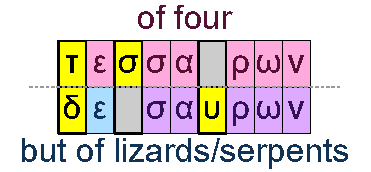
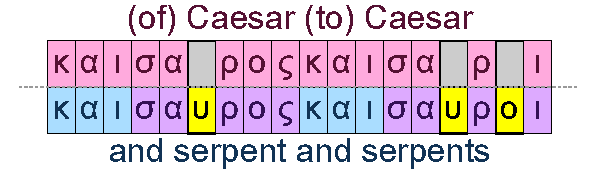
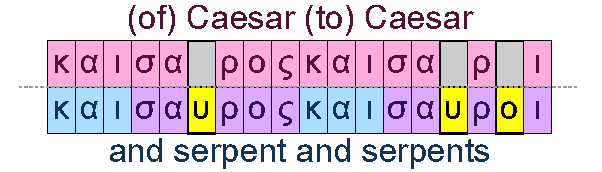
... therefore that (of) Caesar [and lizard/serpent] (to) Caesar [and lizards/serpents].
Discuss: How much of a coincidence is it, historically, that the Latin name of
Caesar as the leader of the power and might of the world, transliterated into Greek, is a play on words with
"lizard/serpent"?
71. Matthew 22:21
KJV: They say unto him, Caesar's. Then saith he unto them, Render therefore unto Caesar the things which are Caesar's; and unto God the things that are God's.
Greek: λεγουσιν αυτω καισαρος τοτε λεγει αυτοις αποδοτε ουν τα καισαρος καισαρι και τα του θεου τω θεω
Latin: dicunt ei Caesaris tunc ait illis reddite ergo quae sunt Caesaris Caesari et quae sunt Dei Deo
72. Matthew 22:22
Matthew 22:22 When they had heard these words, they marvelled, and left him, and went their way. [kjv]
και ακουσαντες εθαυμασαν και αφεντες αυτον απηλθον απηλθαν [gnt]
This is connecting commentary by Matthew.
73. Matthew 22:22
KJV: When they had heard these words, they marvelled, and left him, and went their way.
Greek: και ακουσαντες εθαυμασαν και αφεντες αυτον απηλθον απηλθαν
74. Matthew 22:20-22
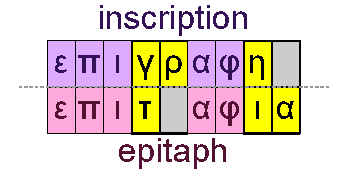
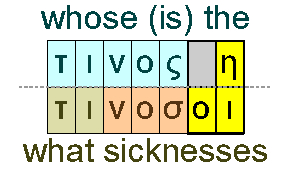
Matthew 22:20 And he saith unto them, Whose is this image and superscription? [kjv]
και λεγει αυτοις τινος η εικων αυτη και η επιγραφη [gnt]
22:21 They say unto him, Caesar's. Then saith he unto them, Render therefore unto Caesar the things which are Caesar's; and unto God the things that are God's. [kjv]
λεγουσιν αυτω καισαρος τοτε λεγει αυτοις αποδοτε ουν τα καισαρος καισαρι και τα του θεου τω θεω [gnt]
22:22 When they had heard these words, they marvelled, and left him, and went their way. [kjv]
και ακουσαντες εθαυμασαν και αφεντες αυτον απηλθον απηλθαν [gnt]
The same story is repeated in Mark and in Luke.
75. Mark 12:14-17
Mark 12:14 And when they were come, they say unto him, Master, we know that thou art true, and carest for no man: for thou regardest not the person of men, but teachest the way of God in truth: Is it lawful to give tribute to Caesar, or not? [kjv]
12:15 Shall we give, or shall we not give? But he, knowing their hypocrisy, said unto them, Why tempt ye me? bring me a penny, that I may see it. [kjv]
12:16 And they brought it. And he saith unto them, Whose is this image and superscription? And they said unto him, Caesar's. [kjv]
12:17 And Jesus answering said unto them, Render to Caesar the things that are Caesar's, and to God the things that are God's. And they marvelled at him. [kjv]
The same story is repeated in Mark.
76. Mark 12:14
KJV: And when they were come, they say unto him, Master, we know that thou art true, and carest for no man: for thou regardest not the person of men, but teachest the way of God in truth: Is it lawful to give tribute to Caesar, or not?
Greek: οι δε και ελθοντες λεγουσιν αυτω διδασκαλε οιδαμεν οτι αληθης ει και ου μελει σοι περι ουδενος ου γαρ βλεπεις εις προσωπον ανθρωπων αλλ επ αληθειας την οδον του θεου διδασκεις εξεστιν δουναι κηνσον καισαρι δουναι η ου
77. Mark 12:15
KJV: Shall we give, or shall we not give? But he, knowing their hypocrisy, said unto them, Why tempt ye me? bring me a penny, that I may see it.
Greek: δωμεν η μη δωμεν ο δε ειδως αυτων την υποκρισιν ειπεν αυτοις τι με πειραζετε φερετε μοι δηναριον ινα ιδω
78. Mark 12:16
KJV: And they brought it. And he saith unto them, Whose is this image and superscription? And they said unto him, Caesar's.
Greek: οι δε ηνεγκαν και λεγει αυτοις τινος η εικων αυτη και η επιγραφη οι δε ειπον ειπαν αυτω καισαρος
79. Mark 12:17
KJV: And Jesus answering said unto them, Render to Caesar the things that are Caesar's, and to God the things that are God's. And they marvelled at him.
Greek: και αποκριθεις ο δε ιησους ειπεν αυτοις αποδοτε τα καισαρος αποδοτε καισαρι και τα του θεου τω θεω και εθαυμασαν εξεθαυμαζον επ αυτω
80. Luke 20:21-25
Luke 20:21 And they asked him, saying, Master, we know that thou sayest and teachest rightly, neither acceptest thou the person of any, but teachest the way of God truly: [kjv]
20:22 Is it lawful for us to give tribute unto Caesar, or no? [kjv]
20:23 But he perceived their craftiness, and said unto them, Why tempt ye me? [kjv]
20:24 Shew me a penny. Whose image and superscription hath it? They answered and said, Caesar's. [kjv]
20:25 And he said unto them, Render therefore unto Caesar the things which be Caesar's, and unto God the things which be God's. [kjv]
The same story is repeated in Luke.
81. Luke 20:21
KJV: And they asked him, saying, Master, we know that thou sayest and teachest rightly, neither acceptest thou the person of any, but teachest the way of God truly:
Greek: και επηρωτησαν αυτον λεγοντες διδασκαλε οιδαμεν οτι ορθως λεγεις και διδασκεις και ου λαμβανεις προσωπον αλλ επ αληθειας την οδον του θεου διδασκεις
82. Luke 20:22
KJV: Is it lawful for us to give tribute unto Caesar, or no?
Greek: εξεστιν ημιν ημας καισαρι φορον δουναι η ου
83. Luke 20:23
KJV: But he perceived their craftiness, and said unto them, Why tempt ye me?
Greek: κατανοησας δε αυτων την πανουργιαν ειπεν προς αυτους τι με πειραζετε
84. Luke 20:24
KJV: Shew me a penny. Whose image and superscription hath it? They answered and said, Caesar's.
Greek: επιδειξατε δειξατε μοι δηναριον τινος εχει εικονα και επιγραφην αποκριθεντες οι δε ειπον ειπαν καισαρος
85. Luke 20:25
KJV: And he said unto them, Render therefore unto Caesar the things which be Caesar's, and unto God the things which be God's.
Greek: ο δε ειπεν αυτοις αποδοτε προς αυτους τοινυν αποδοτε τα καισαρος καισαρι και τα του θεου τω θεω
86. Luke 23:1-2 Crowd
At the trial and crucifixion, the misconceptions about what Jesus said are brought up again. We find this in Luke 23.
Luke 23:1 And the whole multitude of them arose, and led him unto Pilate. [kjv]
και ανασταν απαν το πληθος αυτων ηγαγεν ηγαγον αυτον επι τον πιλατον [gnt]
23:2 And they began to accuse him, saying, We found this fellow perverting the nation, and forbidding to give tribute to Caesar, saying that he himself is Christ a King. [kjv]
ηρξαντο δε κατηγορειν αυτου λεγοντες τουτον ευρομεν ευραμεν διαστρεφοντα το εθνος ημων και κωλυοντα καισαρι φορους καισαρι διδοναι και λεγοντα εαυτον αυτον χριστον βασιλεα ειναι [gnt]
87. Luke 23:1
KJV: And the whole multitude of them arose, and led him unto Pilate.
Greek: και ανασταν απαν το πληθος αυτων ηγαγεν ηγαγον αυτον επι τον πιλατον
88. Luke 23:2
KJV: And they began to accuse him, saying, We found this fellow perverting the nation, and forbidding to give tribute to Caesar, saying that he himself is Christ a King.
Greek: ηρξαντο δε κατηγορειν αυτου λεγοντες τουτον ευρομεν ευραμεν διαστρεφοντα το εθνος ημων και κωλυοντα καισαρι φορους καισαρι διδοναι και λεγοντα εαυτον αυτον χριστον βασιλεα ειναι
Latin: coeperunt autem accusare illum dicentes hunc invenimus subvertentem gentem nostram et prohibentem tributa dari Caesari et dicentem se Christum regem esse
Wessex: & agunnen hine wreigen & cwaeðen. Ðisne we ge-metton for-hwerfende ure þeode. & for-beodende þt man þam caysere gafol ne sealde. & saegð þaet he syo crist kyning;
Wycliffe: And thei bigunnen to accuse hym, and seiden, We han foundun this turnynge vpsodoun oure folk, and forbedynge tributis to be youun to the emperour, and seiynge that hym silf is Crist and kyng.
Tyndale: And they beganne to accuse him sayinge: We have founde this felowe pervertynge the people and forbiddynge to paye tribute to Cesar: sayinge that he is Christ a kynge.
Spanish: Y comenzaron a acusarle, diciendo: Hemos hallado queÉste pervierte la nación; y que prohíbe dar tributo a César, diciendo queÉl mismo es Cristo; un Rey.
Portuguese: e começaram a acusá-lo, nestes termos: «Encontrámos este homem a sublevar o povo, a impedir que se pagasse tributo a César e a dizer-se Ele próprio o Messias-Rei. »
89. Deuteronomy 14:11 A lamb and bird
90. Deuteronomy 14:11
KJV: Of all clean birds ye shall eat.
Hebrew: כל צפור טהרה תאכלו׃
Greek: παν ορνεον καθαρον φαγεσθε
Brenton: You shall eat every clean bird.
91. Play by play review
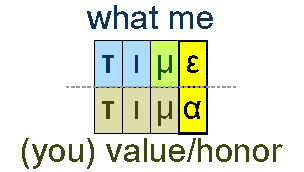
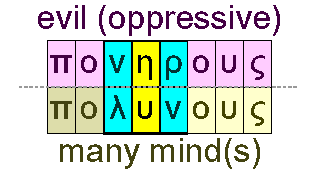
How well does the idea of "Abba" or "Father" compared to "Rome" or (human) "power" relate to the "vineyard" or "vineyards"?
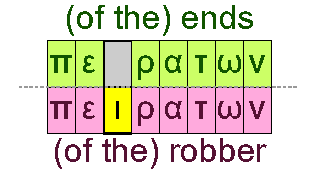
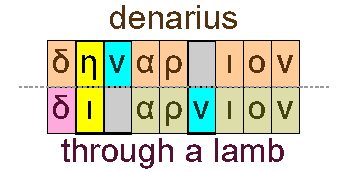
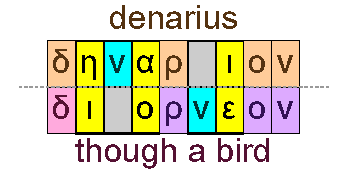
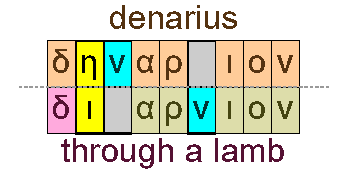
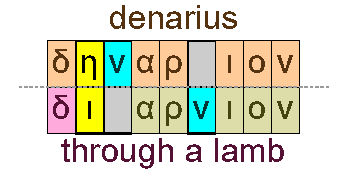
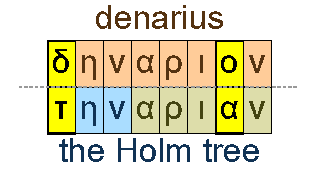
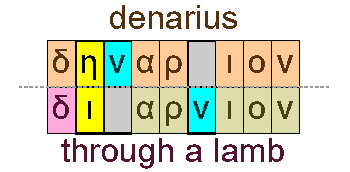
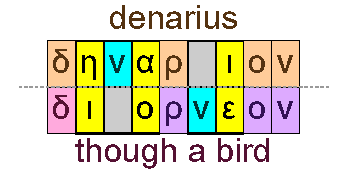
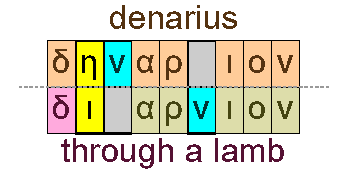
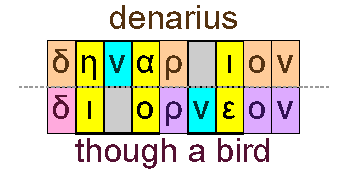
How well does the "denarius" relate to the idea of "through" a "lamb"? How about "through" a "bird"? Might there be two types of "reward" or "payment"? Might one be for the Father and another for Rome?
How well does the power and idea of
"Caesar" relate to
"serpent" or
"serpents"?
92. Chi Rho
|
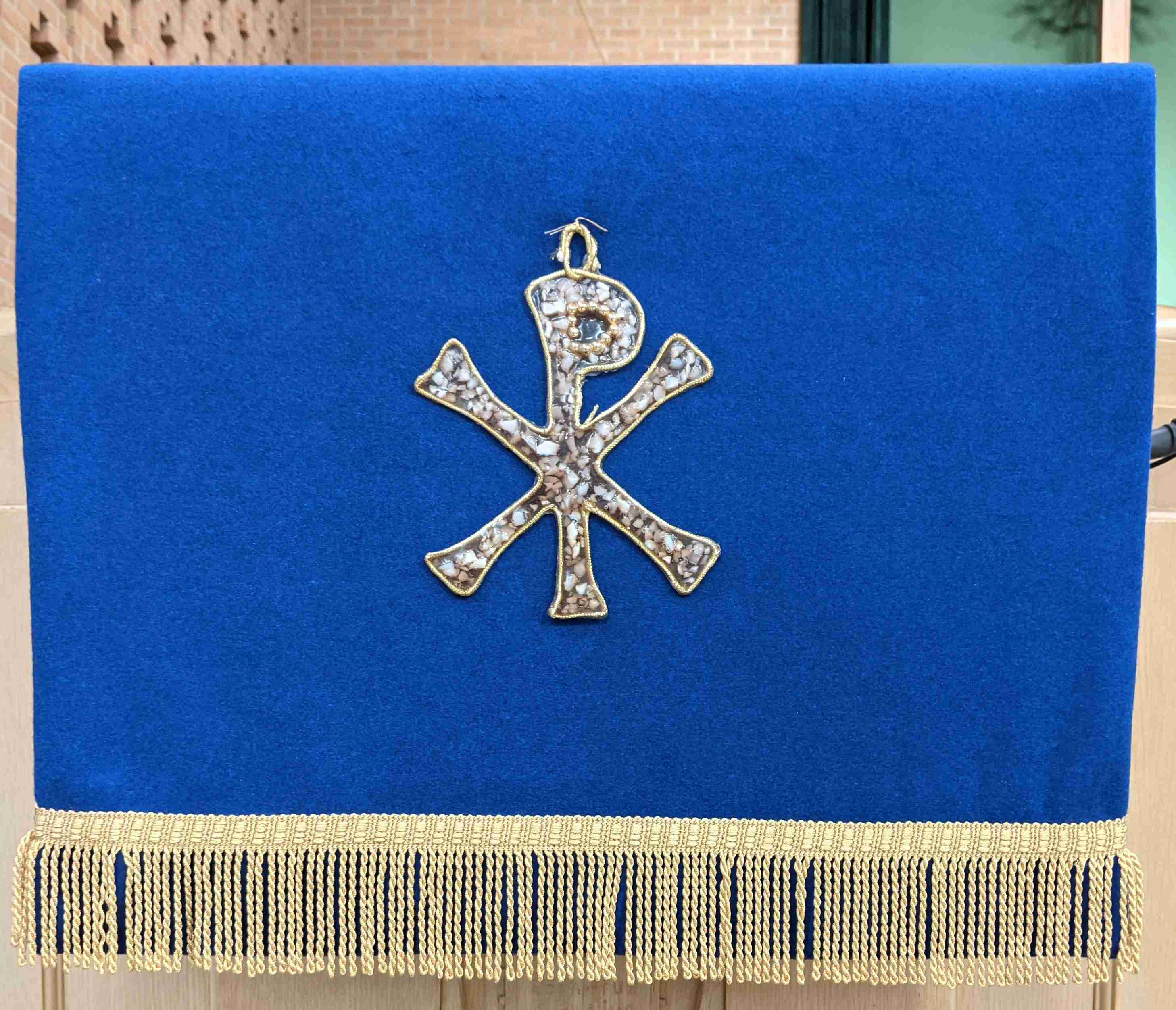
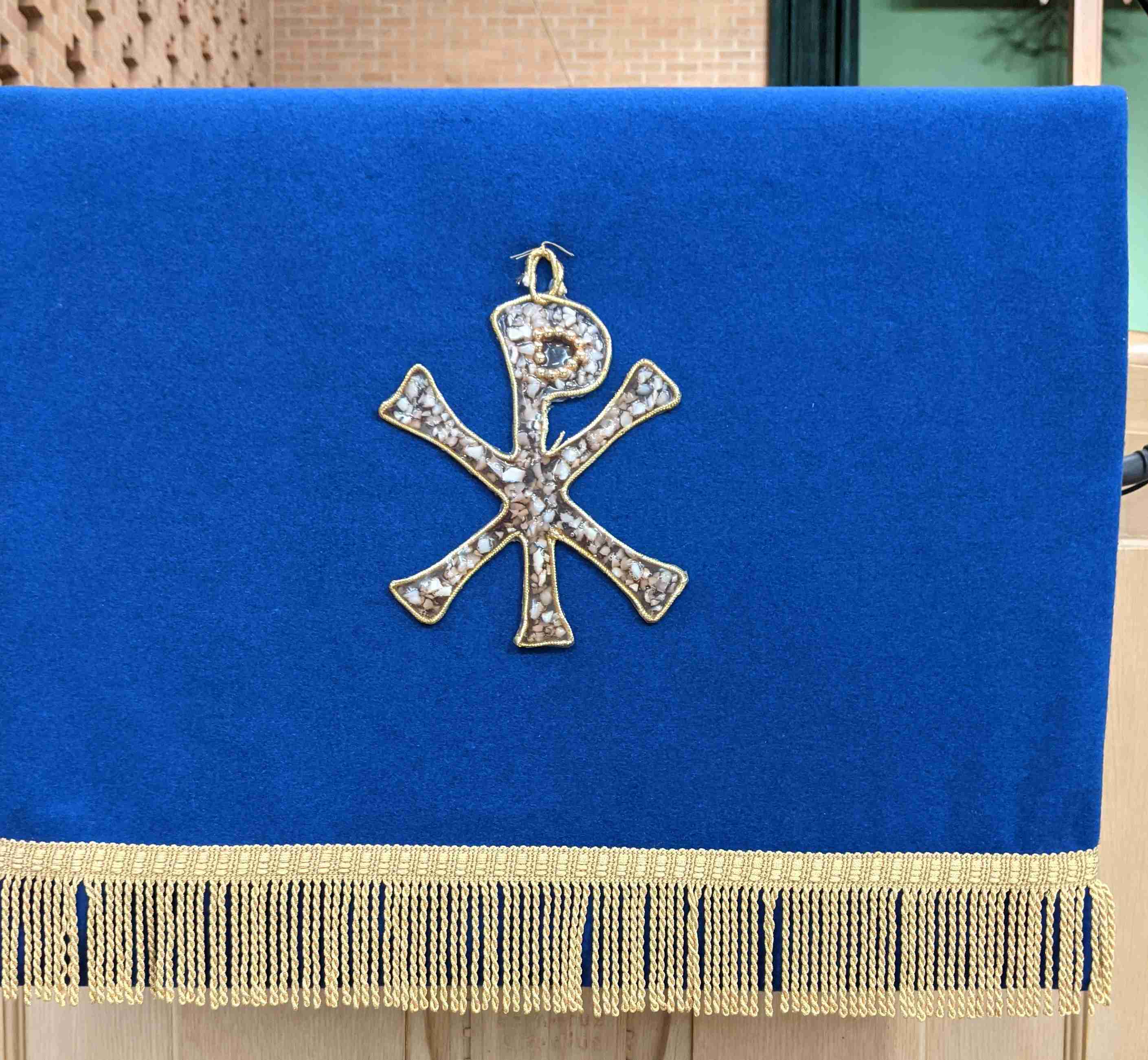
χ + ρ = ☧ = Χ + Ρ
|
 |
The "
chi rho" symbol became established under
Constantine as a combination of two Greek letters, "
chi" and "
rho", the first two letters of
"Χριστός" ≈ "Christ".
Might there by any interesting
gematria meanings from the two letters?
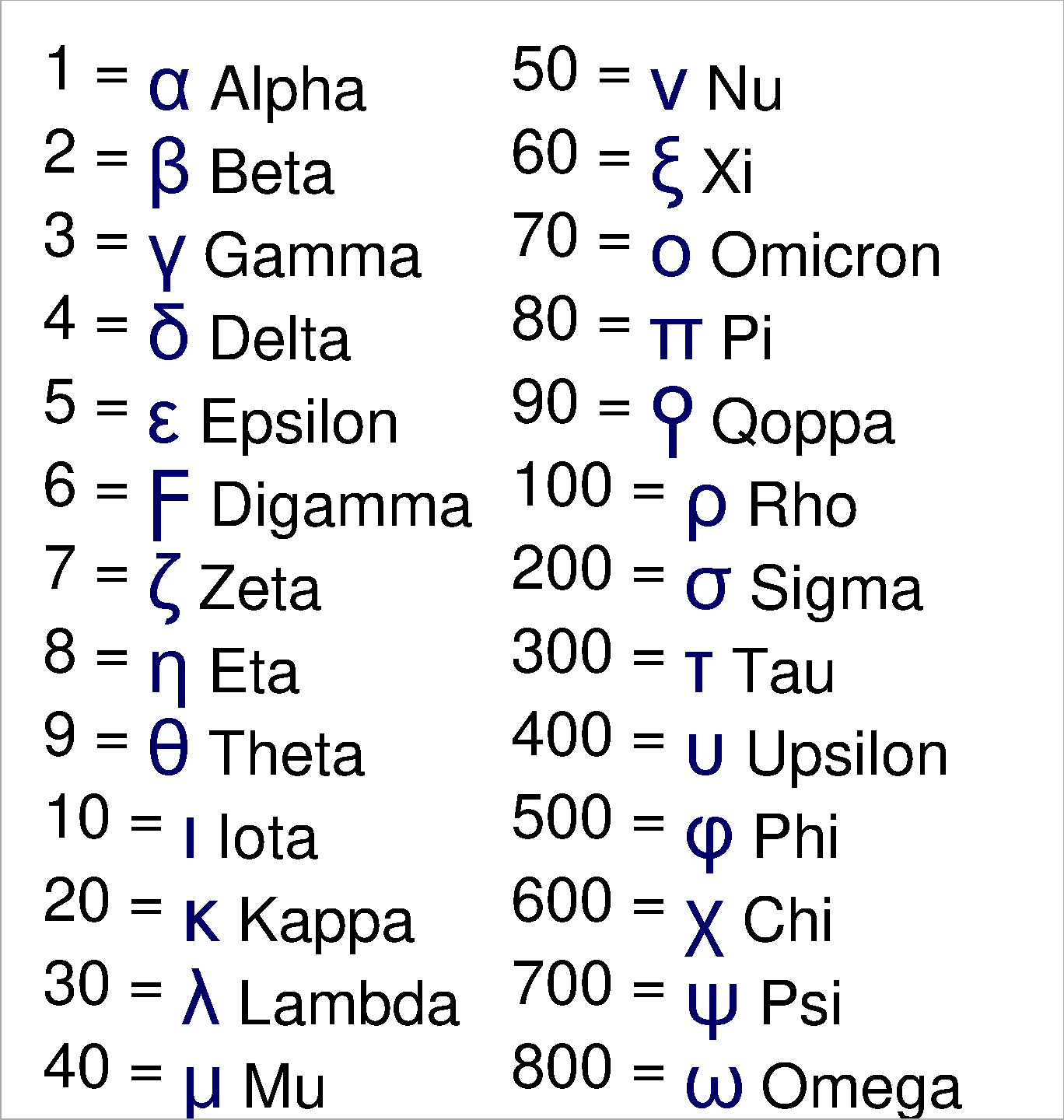
"χ" or "Χ" = 600 (part of 666).
"ρ" or "Ρ" = 100.
Note that "
rho" is also the first letter of "
Rome" and the
power/might of "
Rome".
 |
Details are left as a future topic.
|
The Unicode for "
Chi Rho" in the miscellaneous symbols block is "
U+2627" or
☧.
93. Chi Rho
94. Chrismon of Saint Ambrose
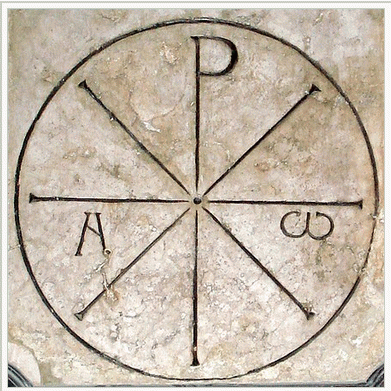
The so-called "Chrismon of Saint Ambrose" (Chrismon Sancti Ambrosii), on display on the eastern wall of Milan Cathedral, a Chi-Rho combined with Alpha and Omega in a circle. According to Landulf of Milan (12th century), it was used by Saint Ambrose to introduce the catechumens to the mysteries of the Christian faith (whence it was called "oracle" or chresmos of St. Ambrose, written by Landulf as crismon, whence the later Neo-Latin term for the Chi-Rho symbol). Wikipedia. (as of 2025-03-30)
[Augustine, when in Rome]
"ἄρχω" ≈ "I begin, I rule, I lead".
"κύριος" ≈ "lord or master" is the source of the word "church".
"ἐκκλησία" ≈ "assembly, called-out, church" (word used by Jesus for His church).
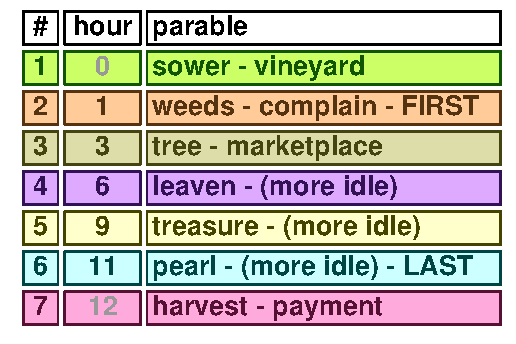
95. Matthew 20:1-2 Vineyard and denarius
Matthew 20:1 For the kingdom of heaven is like unto a man that is an householder, which went out early in the morning to hire labourers into his vineyard. [kjv]
20:2 And when he had agreed with the labourers for a penny a day, he sent them into his vineyard. [kjv]
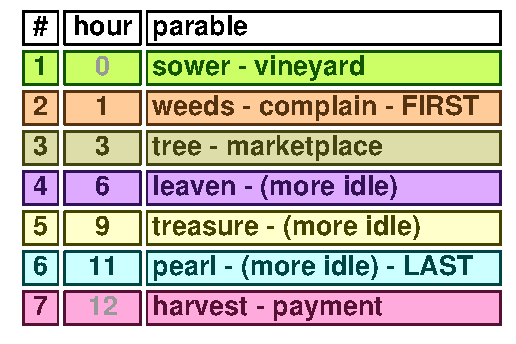
What are "workers" and what "work" do they do?
What is meant by a "vineyard"?
What is meant by a "denarius"?
What does a "day" represent?
What do the "hours" represent?
An "apostle" is who is "sent".
The "epistle" is the "message".
The
Latin word
"orcus" ≈ "underworld, afterlife".
96. End of page












































 The ancient Greek word "ἀμπελών" ≈ "vineyard" and comes from "ἄμπελος" ≈ "vine, vineyard". It was also an engine for protecting in a siege.