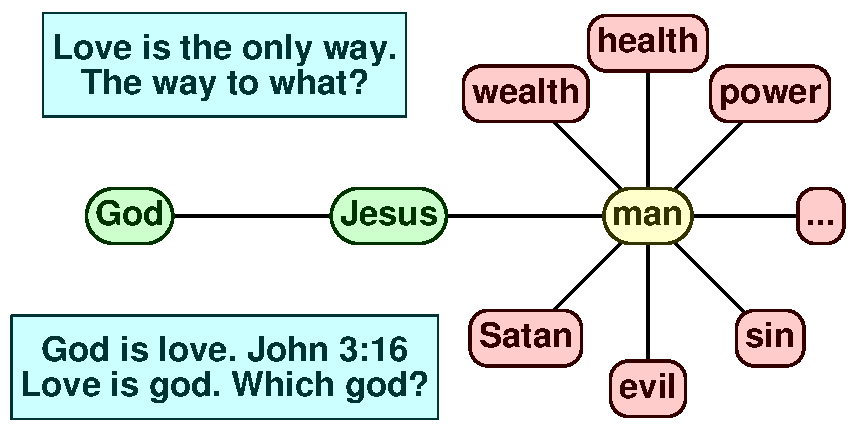
- *G4285 *1 προηγέομαι (pro-ay-geh'-om-ahee) : from G4253 and G2233; to lead the way for others, i.e. show deference:--prefer.
- προηγουμενοι
- Romans 12:10 ... another with brotherly love; in honour preferring one another;
33. Usage - precede
34. Romans 12:10
Romans 12:10 Be kindly affectioned one to another with brotherly love; in honour preferring one another; [kjv]
τη φιλαδελφια εις αλληλους φιλοστοργοι τη τιμη αλληλους προηγουμενοι [gnt]
Note that the brother love is no other (
similar) "
fellow believers". Those dissimilar would fall into the category of (
dissimilar) "
neighbors".
- Used here twice: "ἄλλος" ≈ "other - similar" and is related to the English word "else".
- Not used here: "ἕτερος" ≈ "other - different" and is related to the English word "asunder" as in "one or the other of two" and is the prefix of English words such as "heterosexual".
The Latin word
"invicem" ≈ "each other" without distinguishing between
"similar" or
"different".
35. Romans 12:10
KJV: Be kindly affectioned one to another with brotherly love; in honour preferring one another;
Greek: τη φιλαδελφια εις αλληλους φιλοστοργοι τη τιμη αλληλους προηγουμενοι
Latin: caritatem fraternitatis invicem diligentes honore invicem praevenientes
36. Acts 16:6-8
The verses of Acts 16:6-10 are sometimes used as an example of
"prevenient" "grace" in action.
- Paul had already been converted, so, for him, it would not be "prevenient" "grace".
- Paul was redirected, so for those to whom he was directed it would be "prevenient" "grace".
Acts 16:6 Now when they had gone throughout Phrygia and the region of Galatia, and were forbidden of the Holy Ghost to preach the word in Asia, [kjv]
16:7 After they were come to Mysia, they assayed to go into Bithynia: but the Spirit suffered them not. [kjv]
16:8 And they passing by Mysia came down to Troas. [kjv]
37. Acts 16:6
KJV: Now when they had gone throughout Phrygia and the region of Galatia, and were forbidden of the Holy Ghost to preach the word in Asia,
Greek: διελθοντες διηλθον δε την φρυγιαν και την γαλατικην χωραν κωλυθεντες υπο του αγιου πνευματος λαλησαι τον λογον εν τη ασια
38. Acts 16:7
KJV: After they were come to Mysia, they assayed to go into Bithynia: but the Spirit suffered them not.
Greek: ελθοντες δε κατα την μυσιαν επειραζον κατα εις την βιθυνιαν πορευεσθαι πορευθηναι και ουκ ειασεν αυτους το πνευμα ιησου
39. Acts 16:8
KJV: And they passing by Mysia came down to Troas.
Greek: παρελθοντες δε την μυσιαν κατεβησαν εις τρωαδα
40. Acts 16:9-10
Discuss: What about those to whom Paul then was
not sent? This is a
counter-factual question.
Acts 16:9 And a vision appeared to Paul in the night; There stood a man of Macedonia, and prayed him, saying, Come over into Macedonia, and help us. [kjv]
16:10 And after he had seen the vision, immediately we endeavoured to go into Macedonia, assuredly gathering that the Lord had called us for to preach the gospel unto them. [kjv]
41. Acts 16:9
KJV: And a vision appeared to Paul in the night; There stood a man of Macedonia, and prayed him, saying, Come over into Macedonia, and help us.
Greek: και οραμα δια της νυκτος ωφθη τω παυλω ωφθη ανηρ μακεδων τις ην μακεδων εστως και παρακαλων αυτον και λεγων διαβας εις μακεδονιαν βοηθησον ημιν
42. Acts 16:10
KJV: And after he had seen the vision, immediately we endeavoured to go into Macedonia, assuredly gathering that the Lord had called us for to preach the gospel unto them.
Greek: ως δε το οραμα ειδεν ευθεως εζητησαμεν εξελθειν εις την μακεδονιαν συμβιβαζοντες οτι προσκεκληται ημας ο κυριος θεος ευαγγελισασθαι αυτους
43. Misleading statement
Some pastors will preach the following.
- We broke it. God fixed it.
This is
deceptive. The fix that God did was to provide a way for people to fix it. If people do not take advantage of this offer , it is not fixed.
Think of God issuing a "
recall notice". If you commit to the recall and request the fix, it will happen.
This deceptive statement is similar in spirit to the claim that "
nothing can separate you from the love of Christ". Both Jesus and Paul appear to indicate that "
nothing but you can separate you from the love of Christ".
44. Images
We are made in the image of God.
Many people like to hear or read a good story. A good story sets up the starting point, has some controversy or deviation, and then restores some balance.
- Discuss: Does God like a good story?
When examining students with questions, good teachers will provide distractors to see if the students really understand what they are to do.
- Discuss: Is God a good teacher?
45. Porch reversal
46. Ephesians 2:8-9
Ephesians 2:8 For by grace are ye saved through faith; and that not of yourselves: it is the gift of God: [kjv]
τη γαρ χαριτι εστε σεσωσμενοι δια της πιστεως και τουτο ουκ εξ υμων θεου το δωρον [gnt]
2:9 Not of works, lest any man should boast. [kjv]
ουκ εξ εργων ινα μη τις καυχησηται [gnt]
- for grace are ye saved through belief/persuasion...
- as a favor you are saved through belief/persuasion ...
The Greek word translated as "
lest" is that of
"in order that" and
"not". Both the
actual "no" for "
works" and the
potential "no" for "
boast" are used in Ephesians 2:9.
47. Ephesians 2:8
KJV: For by grace are ye saved through faith; and that not of yourselves: it is the gift of God:
Greek: τη γαρ χαριτι εστε σεσωσμενοι δια της πιστεως και τουτο ουκ εξ υμων θεου το δωρον
48. Ephesians 2:9
KJV: Not of works, lest any man should boast.
Greek: ουκ εξ εργων ινα μη τις καυχησηται
49. A joyous thank you for the grace of a gaudy favor
The Greek word often translated as "
joy" can be mistaken as meaning "
merry" or "
great happiness" or "
bliss". The word "
joy" comes, through French, from the Latin
"gaudia" ≈ "joy" and which became
"gaudy".
The ancient Greek word
"χαρά" ≈ "favor, grace" was the word used to translate the Hebrew word. Following Jesus is not all "
joy" in the modern English sense of the word.
Philippians 1:29 For unto you it is given in the behalf of Christ, not only to believe on him, but also to suffer for his sake; [kjv]
At the time, the meaning of "
suffer" was to "
passively endure". So much of this endurance was painful persecution that the word took on the meaning it has today. Another Greek word meant "
suffer" as in "
to allow".
50. Thank you for giving thanks and for Thanksgiving
What can we say at
Thanksgiving?
Matthew 26:27 And he took the cup, and gave thanks, and gave it to them, saying, Drink ye all of it; [kjv]
και λαβων το ποτηριον και ευχαριστησας εδωκεν αυτοις λεγων πιετε εξ αυτου παντες [gnt]
Philippians 1:3 I I thank my God upon every remembrance of you, [kjv]
ευχαριστω τω θεω μου επι παση τη μνεια υμων [gnt]

One way to say that something is a "
good favor" is to say
"thank you". This Greek word comes through Latin as
"Eucharist". The Greek word for "
favor" is often translated as "
grace" or "
joy". Jesus and Paul often say
"thank you".
51. Word slide

Here is an example of a word slide where ideas change from the original Greek to Latin to Middle English to modern English and then some.
- The Greek word for (internal or intrinsic) "opinion" becomes the Latin word for (external or extrinsic) "glory" which takes on more meaning in English.
- The Greek word for "favor" becomes the Latin word for "grace" becomes the English word for "joy" which is similar to the English word "hedonism".
Soon, in a twisted way, the "
favor of God's opinion" morphs into "
God is glorified by our joy in Him" and called "
Christian Hedonism".
52. Statistical methods
The following is a traditional approach of
frequentist statistical .
- Create a hypothesis called the null hypothesis.
- Gather arguments for or against the hypothesis. This often involves "cherry picking" of evidence.
- Order the arguments based on how convincing they are. Hide arguments not favorable.
- Use any deception techniques on the assumption that the "end justifies the means".
It has been shown (e.g.,, Judea Pearl, 1970's) that the
frequentist statistical can show almost anything true and anything false as desired.
The
Bayesian statistical approach, and the
causation models developed by Pearl, fit more like a
constraint-based logic system in a probabilistic fault-tolerant search for truth within constraints.
 |
Details are left as a future topic.
|
53. Ephesians 2:8-9
Ephesians 2:8 For by grace are ye saved through faith; and that not of yourselves: it is the gift of God: [kjv]
τη γαρ χαριτι εστε σεσωσμενοι δια της πιστεως και τουτο ουκ εξ υμων θεου το δωρον [gnt]
2:9 Not of works, lest any man should boast. [kjv]
ουκ εξ εργων ινα μη τις καυχησηται [gnt]

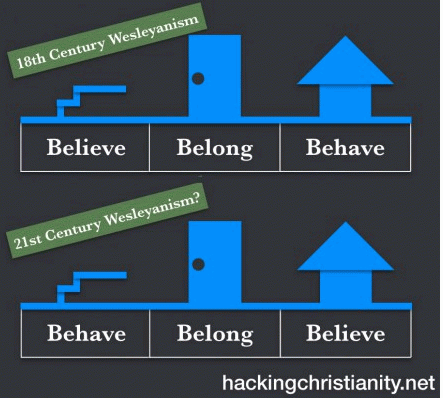
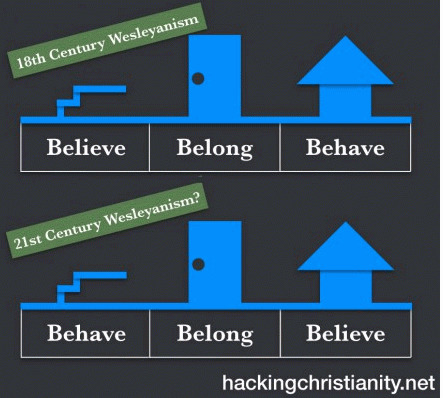
One way to see the modern change in Wesley's front porch analogy to grace is to observe when verses such as Ephesians 2:8-9 are used in a sermon but the preceding verses are
omitted. Context is important!
Just like
"prevenient" "grace", one should look at the
"preceding" verses that
"come before".
54. Ephesians 2:1
55. Matthew 6:14-15 Going astray in pursuit
Matthew 6:14 For if ye forgive men their trespasses, your heavenly Father will also forgive you: [kjv]
εαν γαρ αφητε τοις ανθρωποις τα παραπτωματα αυτων αφησει και υμιν ο πατηρ υμων ο ουρανιος [gnt]
6:15 But if ye forgive not men their trespasses, neither will your Father forgive your trespasses. [kjv]
εαν δε μη αφητε τοις ανθρωποις τα παραπτωματα αυτων ουδε ο πατηρ υμων αφησει τα παραπτωματα υμων [gnt]
The word often translated as
"trespass" is the ancient Greek word
"παράπτωσις" ≈ "impetuous pursuit, going astray". The parts of the word mean, literally, going
"beyond falling" as in "
fault" of imperfection.
- The ancient Greek word "παρά" ≈ "beyond" and, in this case, "excessive".
- The ancient Greek word "πτῶσις" ≈ "falling, failing". In the Beatitudes, the Greek word is used to describe those who are "poor" "beggars" in "spirit" and need the "good news".
A general English phrase for this might be
"stupid things" that are done (by you or others).
56. Ephesians 2:1
KJV: And you hath he quickened, who were dead in trespasses and sins;
Greek: και υμας οντας νεκρους τοις παραπτωμασιν και ταις αμαρτιαις υμων
Latin: et vos cum essetis mortui delictis et peccatis vestris
57. Ephesians 2:2
Ephesians 2:2 Wherein in time past ye walked according to the course of this world, according to the prince of the power of the air, the spirit that now worketh in the children of disobedience: [kjv]
εν αις ποτε περιεπατησατε κατα τον αιωνα του κοσμου τουτου κατα τον αρχοντα της εξουσιας του αερος του πνευματος του νυν ενεργουντος εν τοις υιοις της απειθειας [gnt]
- Does "Satan" exist? Some churches do not like to talk about this.
- Some churches are trying to bring the culture of the world into the church, even when that culture goes against the Bible.
- Some churches like everyone the be "good", not children of "disobedience".
58. Ephesians 2:2
KJV: Wherein in time past ye walked according to the course of this world, according to the prince of the power of the air, the spirit that now worketh in the children of disobedience:
Greek: εν αις ποτε περιεπατησατε κατα τον αιωνα του κοσμου τουτου κατα τον αρχοντα της εξουσιας του αερος του πνευματος του νυν ενεργουντος εν τοις υιοις της απειθειας
59. Ephesians 2:3
Ephesians 2:3 Among whom also we all had our conversation in times past in the lusts of our flesh, fulfilling the desires of the flesh and of the mind; and were by nature the children of wrath, even as others. [kjv]
εν οις και ημεις παντες ανεστραφημεν ποτε εν ταις επιθυμιαις της σαρκος ημων ποιουντες τα θεληματα της σαρκος και των διανοιων και ημεν ημεθα τεκνα φυσει οργης ως και οι λοιποι [gnt]
60. Ephesians 2:3
KJV: Among whom also we all had our conversation in times past in the lusts of our flesh, fulfilling the desires of the flesh and of the mind; and were by nature the children of wrath, even as others.
Greek: εν οις και ημεις παντες ανεστραφημεν ποτε εν ταις επιθυμιαις της σαρκος ημων ποιουντες τα θεληματα της σαρκος και των διανοιων και ημεν ημεθα τεκνα φυσει οργης ως και οι λοιποι
61. Ephesians 2:4
Ephesians 2:4 But God, who is rich in mercy, for his great love wherewith he loved us, [kjv]
ο δε θεος πλουσιος ων εν ελεει δια την πολλην αγαπην αυτου ην ηγαπησεν ημας [gnt]
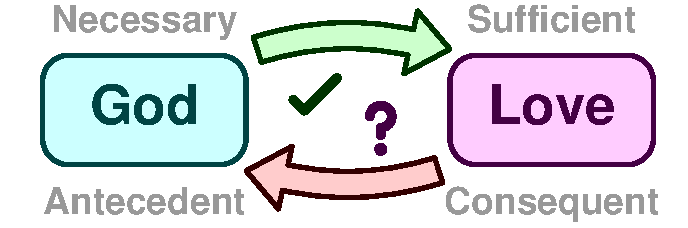
Some churches will cherry pick this verse out of context to support the claim that "
God is love" and omit the previous verses. Some will claim that "
love is god".
62. Ephesians 2:4
KJV: But God, who is rich in mercy, for his great love wherewith he loved us,
Greek: ο δε θεος πλουσιος ων εν ελεει δια την πολλην αγαπην αυτου ην ηγαπησεν ημας
63. Grace
Ephesians 2:5 Even when we were dead in sins, hath quickened us together with Christ, (by grace ye are saved;) [kjv]
και οντας ημας νεκρους τοις παραπτωμασιν συνεζωοποιησεν τω χριστω χαριτι εστε σεσωσμενοι [gnt]
The
KJV translates as
"sins" what in the Greek is
"impetuous wanderings" (by implication) away from where one should be.
John Wesley's definition of
grace is "
God's free and undeserved favor". This goes back to the original meaning in the Greek of a
"favor".
- "χᾰ́ρῐς" ≈ "grace, favor, goodwill".
A "
good"
"favor" is the Greek word for "
thank you" both in ancient and modern times.
64. Ephesians 2:5
KJV: Even when we were dead in sins, hath quickened us together with Christ, (by grace ye are saved;)
Greek: και οντας ημας νεκρους τοις παραπτωμασιν συνεζωοποιησεν τω χριστω χαριτι εστε σεσωσμενοι
65. Ephesians 2:6-7
Ephesians 2:6 And hath raised us up together, and made us sit together in heavenly places in Christ Jesus: [kjv]
2:7 That in the ages to come he might shew the exceeding riches of his grace in his kindness toward us through Christ Jesus. [kjv]
66. Ephesians 2:6
KJV: And hath raised us up together, and made us sit together in heavenly places in Christ Jesus:
Greek: και συνηγειρεν και συνεκαθισεν εν τοις επουρανιοις εν χριστω ιησου
67. Ephesians 2:7
KJV: That in the ages to come he might shew the exceeding riches of his grace in his kindness toward us through Christ Jesus.
Greek: ινα ενδειξηται εν τοις αιωσιν τοις επερχομενοις τον υπερβαλλοντα πλουτον το υπερβαλλον πλουτος της χαριτος αυτου εν χρηστοτητι εφ ημας εν χριστω ιησου
68. Ephesians 2:8-9
Ephesians 2:8 For by grace are ye saved through faith; and that not of yourselves: it is the gift of God: [kjv]
τη γαρ χαριτι εστε σεσωσμενοι δια της πιστεως και τουτο ουκ εξ υμων θεου το δωρον [gnt]
2:9 Not of works, lest any man should boast. [kjv]
ουκ εξ εργων ινα μη τις καυχησηται [gnt]
Now we have a better context, a
"prevenient" context, for these verses.
69. TULIP
The "
tulip mania" started in 1634 in Holland and then, just as suddenly, collapsed in early 1637. Today, the business term "
Tulip mania" is used to refer to any economic bubble that grows suddenly and then collapses.
Five points of
Calvinism regarding salvation, etc., had the acronym of
TULIP.
These points were solidified at the Synod of Dort (1618-1619) in the Netherlands (Holland), before the "
tulip mania" in Holland, and used to refute the teachings of Arminianism.
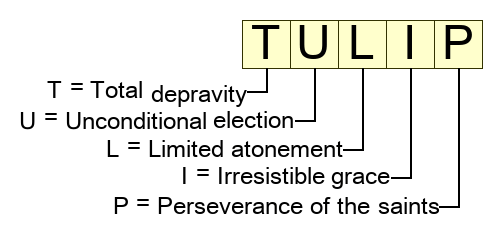 |
T = Total depravity
U = Unconditional election
L = Limited atonement
I = Irresistible grace
P = Perseverance of the saints
|
70. Predestined to have free will
Some people (e.g., mathematicians) like exact solutions to every problem. Some people (e.g., statisticians, business) can accept randomness and non-exact solutions or approximations to problems.
Far better an approximate answer to the right question, which is often vague, than the exact answer to the wrong question, which can always be made precise. John Tukey (American mathematician and statistician)
- Is everything in reality "predetermined" or "deterministic"?
- Is there "free will"?
- Is there "randomness" in the universe (as we know it)?
 |
Details are left as a future topic.
|
71. End of page

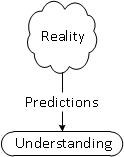 One goal is to create models of what was said that, in a sense, minimize assumptions of what was said while not assuming things that might have been meant. Here is a simple way to think about a model.

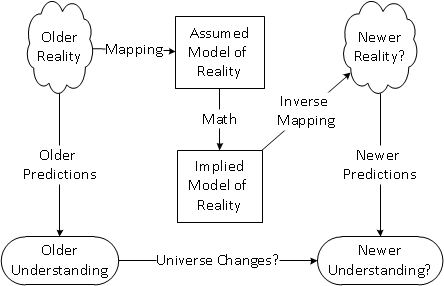 Here is a more refined way to think about a model. A model is an abstraction of reality.











 There are only "white" "hairs" of the "head" (Jesus), not "black" "hairs".