17. Matthew 19:16 Have eternal life
Matthew 19:16 And, behold, one came and said unto him, Good Master, what good thing shall I do, that I may have eternal life? [kjv]
και ιδου εις προσελθων ειπεν αυτω ειπεν διδασκαλε αγαθε τι αγαθον ποιησω ινα εχω σχω ζωην αιωνιον [gnt]
The
ancient Greek word
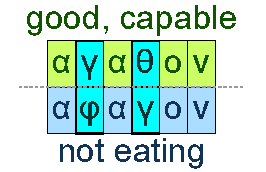
"ἀγαθός" ≈ "good, capable, trustworthy". A similar sounding word is
"ἀγηθής" ≈ "joyless" (of a person).
The
ancient Greek word
"σχῶμεν" ≈ "have" and is used here as first-person singular aorist active subjunctive of
"ἔχω" ≈ "have".
The
ancient Greek word
"ζωή" ≈ "living, property, life" (accusative feminine singular) and is the first part of the English word
"zoology".
The
ancient Greek word
"αἰώνιον" ≈ "lifetime, age, forever" (accusative feminine singular adjective) of
"αἰών" ≈ "lifetime, age, forever" and the source of the English word
"eons".
18. Matthew 19:16
KJV: And, behold, one came and said unto him, Good Master, what good thing shall I do, that I may have eternal life?
Greek: και ιδου εις προσελθων ειπεν αυτω ειπεν διδασκαλε αγαθε τι αγαθον ποιησω ινα εχω σχω ζωην αιωνιον
19. Matthew 19:17 One is good
Matthew 19:17 And he said unto him, Why callest thou me good? there is none good but one, that is, God: but if thou wilt enter into life, keep the commandments. [kjv]
ο δε ειπεν αυτω τι με λεγεις αγαθον ουδεις αγαθος ει μη ερωτας περι του αγαθου εις εστιν ο θεος αγαθος ει δε θελεις εισελθειν εις την ζωην τηρησον εισελθειν τηρει τας εντολας [gnt]
The ancient Greek word
"ἀγαθός" ≈ "good, capable, trustworthy". A similar sounding word is
"ἀγηθής" ≈ "joyless" (of a person). The
KJV, from the
TR, adds
"that is, God".
Note: There are other textual variants that do have the
"good" in
"good" "
Master".
These exact words for
"eternal" "life" will appear later in the this discourse/interaction. Jesus says, and appears to mean,
"enter" "into" "life".
The
ancient Greek word
"τηρέω" ≈ "watch over, look after, take care of".
20. Matthew 19:17 Enter into life
Matthew 19:17 And he said unto him, Why callest thou me good? there is none good but one, that is, God: but if thou wilt enter into life, keep the commandments. [kjv]
ο δε ειπεν αυτω τι με λεγεις αγαθον ουδεις αγαθος ει μη ερωτας περι του αγαθου εις εστιν ο θεος αγαθος ει δε θελεις εισελθειν εις την ζωην τηρησον εισελθειν τηρει τας εντολας [gnt]
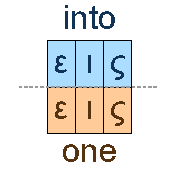
"εις" ≈ "into" and, in context, "against".
"εις" ≈ "one"
21. Matthew 19:17 Translations
Matthew 19:17 And he said unto him, Why callest thou me good? there is none good but one, that is, God: but if thou wilt enter into life, keep the commandments. [kjv]
ο δε ειπεν αυτω τι με λεγεις αγαθον ουδεις αγαθος ει μη ερωτας περι του αγαθου εις εστιν ο θεος αγαθος ει δε θελεις εισελθειν εις την ζωην τηρησον εισελθειν τηρει τας εντολας [gnt]
The Greek word translated as
"callest" is that of
"ask". The
ancient Greek word
"ἐρωτάω" ≈ "ask, question".
KJV:
... Why callest thou me good? ....
NIV (New International Version):
... Why do you ask me about what is good? ...
NLT (New Living Translation):
... Why ask me about what is good? ...
Berean Literal Bible:
... Why do you ask Me about what is good? ...
22. Matthew 19:17 God is good
Matthew 19:17 And he said unto him, Why callest thou me good? there is none good but one, that is, God: but if thou wilt enter into life, keep the commandments. [kjv]
ο δε ειπεν αυτω τι με λεγεις αγαθον ουδεις αγαθος ει μη ερωτας περι του αγαθου εις εστιν ο θεος αγαθος ει δε θελεις εισελθειν εις την ζωην τηρησον εισελθειν τηρει τας εντολας [gnt]
Only
"one" is "
good". Who might the
"one" be? Jesus refers in other places to the "
weak" or "
sick" as "
bad" as in "
not good".
One of the common misconceptions in the world and in many churches is that people are
"good" and the "
bad" is blamed on other factors. That does not appear to be what the Bible says (and in many places).
 |
Details are left as a future topic.
|
23. Matthew 19:17 Old English
Matthew 19:17 And he said unto him, Why callest thou me good? there is none good but one, that is, God: but if thou wilt enter into life, keep the commandments. [kjv]
ο δε ειπεν αυτω τι με λεγεις αγαθον ουδεις αγαθος ει μη ερωτας περι του αγαθου εις εστιν ο θεος αγαθος ει δε θελεις εισελθειν εις την ζωην τηρησον εισελθειν τηρει τας εντολας [gnt]
… god … god… [wes]
The Old English Wessex Gospels that say
"god" is
"god" for
"God" is
"good". This similarity is part of the confusion between "
Gospel" as the
"good" "
word" (from the Greek) and "
God's word" where "
spell" is a term for the word as in speaking.
24. Matthew 19:17 If not
Matthew 19:17 And he said unto him, Why callest thou me good? there is none good but one, that is, God: but if thou wilt enter into life, keep the commandments. [kjv]
ο δε ειπεν αυτω τι με λεγεις αγαθον ουδεις αγαθος ει μη ερωτας περι του αγαθου εις εστιν ο θεος αγαθος ει δε θελεις εισελθειν εις την ζωην τηρησον εισελθειν τηρει τας εντολας [gnt]
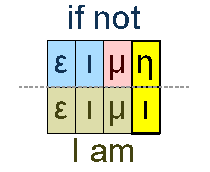
"εί" ≈ "if, whether".
"μὴ" ≈ "not" (potential).
"εἰμί" ≈ "I am".
The
TR adds words that add
"if" and "not" (and several other words). Thus, there is no play on words here.
25. Matthew 19:17 God is good
Matthew 19:17 And he said unto him, Why callest thou me good? there is none good but one, that is, God: but if thou wilt enter into life, keep the commandments. [kjv]
ο δε ειπεν αυτω τι με λεγεις αγαθον ουδεις αγαθος ει μη ερωτας περι του αγαθου εις εστιν ο θεος αγαθος ει δε θελεις εισελθειν εις την ζωην τηρησον εισελθειν τηρει τας εντολας [gnt]
The following prayer appears to have been started when the words "
good" and "
food" were closer in sound as in a
rhyme.
God is great. God is good.
Let us thank him for our food.
By his hands we are fed.
Thank you for our daily bread.
Shorter (Boy Scout) version:
Rub a dub dub. Thanks for the grub.
26. Matthew 19:17
KJV: And he said unto him, Why callest thou me good? there is none good but one, that is, God: but if thou wilt enter into life, keep the commandments.
Greek: ο δε ειπεν αυτω τι με λεγεις αγαθον ουδεις αγαθος ει μη ερωτας περι του αγαθου εις εστιν ο θεος αγαθος ει δε θελεις εισελθειν εις την ζωην τηρησον εισελθειν τηρει τας εντολας
Wessex: Ða cwaeð he. Hwaet axost þu me be gode. An god is god. soðlice gyf þu wylt on lyf becuman heald þa bebode.
27. Matthew 19:16-17 Eternal life
Matthew 19:16 And, behold, one came and said unto him, Good Master, what good thing shall I do, that I may have eternal life? [kjv]
και ιδου εις προσελθων ειπεν αυτω ειπεν διδασκαλε αγαθε τι αγαθον ποιησω ινα εχω σχω ζωην αιωνιον [gnt]
19:17 And he said unto him, Why callest thou me good? there is none good but one, that is, God: but if thou wilt enter into life, keep the commandments. [kjv]
ο δε ειπεν αυτω τι με λεγεις αγαθον ουδεις αγαθος ει μη ερωτας περι του αγαθου εις εστιν ο θεος αγαθος ει δε θελεις εισελθειν εις την ζωην τηρησον εισελθειν τηρει τας εντολας [gnt]
What is the difference between "
have"
"life" "eternal" and
"into" "the" "life"?
19:16 (young man): ... have life eternal.
19:17 (Jesus): ... into the life. (word eternal not used by Jesus)
The
ancient Greek word
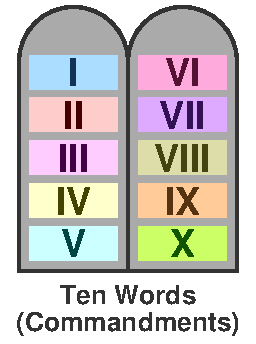
"ἐντολή" ≈ "order, command, mandate". The "
Ten" "
Commandments" are, in Hebrew and Greek, the "
Ten" "
Reasonings" or "
Ten" "
Words".
28. Matthew 19:18 Stealing
Matthew 19:18 He saith unto him, Which? Jesus said, Thou shalt do no murder, Thou shalt not commit adultery, Thou shalt not steal, Thou shalt not bear false witness, [kjv]
λεγει αυτω ποιας ο δε ιησους ειπεν εφη το ου φονευσεις ου μοιχευσεις ου κλεψεις ου ψευδομαρτυρησεις [gnt]
It is more difficult to see how the prohibition of stealing could be applied reflexively. How could one steal from oneself?
The Latin word
"homicidium" ≈ "murder" from which we get the English word "
homicide". The Old English word
"manslyht" ≈ "murder" which led to the Middle English word
"mansleying" ≈ "murder" which led to the English (legal) word
"manslaughter".
29. Matthew 19:18
KJV: He saith unto him, Which? Jesus said, Thou shalt do no murder, Thou shalt not commit adultery, Thou shalt not steal, Thou shalt not bear false witness,
Greek: λεγει αυτω ποιας ο δε ιησους ειπεν εφη το ου φονευσεις ου μοιχευσεις ου κλεψεις ου ψευδομαρτυρησεις
Latin: dicit illi quae Iesus autem dixit non homicidium facies non adulterabis non facies furtum non falsum testimonium dices
Wessex: Þa cwaeð he hwilce. Þa cwaeð se haelend. ne do þu man-slyht. ne do þu unriht-hameð. ne stell þu. ne saege þu lease gewytnesse.
Wycliffe: He seith to hym, Whiche? And Jhesus seide, Thou schalt not do mansleying, thou schalt not do auowtrie, thou schalt not do thefte, thou schalt not seie fals witnessying;
Luther: Da sprach er zu ihm: Welche? Jesus aber sprach: Du sollst nicht töten; du sollst nicht ehebrechen; du sollst nicht stehlen; du sollst nicht falsch Zeugnis geben;
30. Matthew 19:19-20
Matthew 19:19 Honour thy father and thy mother: and, Thou shalt love thy neighbour as thyself. [kjv]
τιμα τον πατερα σου και την μητερα και αγαπησεις τον πλησιον σου ως σεαυτον [gnt]
19:20 The young man saith unto him, All these things have I kept from my youth up: what lack I yet? [kjv]
λεγει αυτω ο νεανισκος παντα ταυτα εφυλαξαμην εκ νεοτητος μου παντα εφυλαξα τι ετι υστερω [gnt]
Why the order of the commandments by Jesus?
Since the young man asserts he has done these, might he be lying? Can one lie even when one does not know that one is lying? Can one believe something to be true that is not true? That is, true in reality.
31. Matthew 19:19
KJV: Honour thy father and thy mother: and, Thou shalt love thy neighbour as thyself.
Greek: τιμα τον πατερα σου και την μητερα και αγαπησεις τον πλησιον σου ως σεαυτον
32. Matthew 19:20 Young man
Matthew 19:20 The young man saith unto him, All these things have I kept from my youth up: what lack I yet? [kjv]
λεγει αυτω ο νεανισκος παντα ταυτα εφυλαξαμην εκ νεοτητος μου παντα εφυλαξα τι ετι υστερω [gnt]
This verse tells us who came to Jesus. The idea of "
rich" and "
ruler" comes from Luke and appears to have been back-patched into Matthew.
The ancient Greek word
"νεανίσκος" ≈ "young man" and comes from
"νεανίας" ≈ "young man" and comes from
"νέος" ≈ "young, new, fresh" and is related to the Latin word
"novus" ≈ "new" and the English word
"new" and the German word
"neu" ≈ "new". The suffix makes the
"youth" a
diminutive.
33. Revelation 1:19 After these things
34. Matthew 19:20 All these
Matthew 19:20 The young man saith unto him, All these things have I kept from my youth up: what lack I yet? [kjv]
λεγει αυτω ο νεανισκος παντα ταυτα εφυλαξαμην εκ νεοτητος μου παντα εφυλαξα τι ετι υστερω [gnt]
The
ancient Greek word
"αὐτῷ" ≈ "him, it" as
dative masculine/
neuter singular.
The
ancient Greek word
"ταυτα" ≈ "these" is the neuter plural of
"οὗτος" ≈ "this".
The
ancient Greek word
"πάντα" ≈ "always, all, whole" and requires a context which is usually what has just been talked about.
Greek word order:
says (with respect) to him/it the young man these all have I kept what yet lacks.
35. Romans 3:23 All have sinned
Romans 3:23 For all have sinned, and come short of the glory of God; [kjv]
παντες γαρ ημαρτον και υστερουνται της δοξης του θεου [gnt]
If sinners were not allowed in church, there would be no one allowed in church.
The Greek here for
"all" is
plural which means there may be
exceptions. Who might be an exception?
The ancient Greek word
"ἁμαρτία" ≈ "error, mistake, fault, sin" as in, literally,
"not a witness". The Greek for
"glory" is that of
"opinion". Anything that is
"not a witness" for God
"falls short" or
"lags behind" of God's
"opinion" or
"expectation".
In logical reasoning, one should not universally quantify something without specifying the domain to which it applies and how it applies. The "
for all" would appear to refer to "
men" who are not "
God" (as in "
Jesus").
Paraphrase:
For all have not been a (good) witness (of God) and not approached the opinion of God
36. Romans 3:23 Glory of God
Romans 3:23 For all have sinned, and come short of the glory of God; [kjv]
παντες γαρ ημαρτον και υστερουνται της δοξης του θεου [gnt]
Do we need to come up to the
"glory" of God? Perhaps a pastor could help us with that seemingly unattainable quest.
"υστερούντα" ≈ "lag behind, be late".
"δόξα" ≈ "opinion, expectation".
Paraphrase: All (with possible exceptions) have not been a (good) witness (for God) and have lagged behind the opinion/expectation of God.
It appears we do not have to reach the level of God. God has an
expectation/opinion of where we should be and we are
lagging behind that
expectation/opinion. This appears to be in line with Eastern Orthodox thought.
37. Matthew 19:20 Lag behind
Matthew 19:20 The young man saith unto him, All these things have I kept from my youth up: what lack I yet? [kjv]
λεγει αυτω ο νεανισκος παντα ταυτα εφυλαξαμην εκ νεοτητος μου παντα εφυλαξα τι ετι υστερω [gnt]
"τι" ≈ "what".
"ετι" ≈ "yet, further".
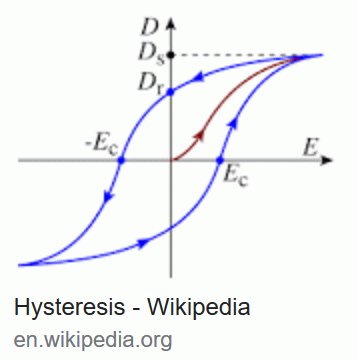
"ὑστερέω" ≈ "behind, late, lag behind" and is the source of the English word "hysteresis", a word coined by Sir James Alfred Ewing to describe magnetic memory. This memory causes the magnetic field to "lag behind".
The Greek word for "
kept" is that of an emphatic "
guard" or "
watch" and is
not the word Jesus uses in saying to "
keep" the "
commandments".
38. Psalms 23:1
Psalms 23:1 The LORD is my shepherd; I shall not want. [kjv]
ψαλμος τω δαυιδ κυριος ποιμαινει με και ουδεν με υστερησει [lxx]
The
ancient Greek word
"ὑστερέω" ≈ "behind, late, lag behind".
Paraphrase of the
LXX:
The Lord is my shepherd and I shall not be behind/late/lagging.
Discuss: How did we go from the "
Lord" is my "
shepherd" to the "
pastor" is my "
shepherd"? Explain.
What is the difference between a "
sheep" "
dog" and a "
wolf" "
dog"?
39. Psalms 23:1
KJV: The LORD is my shepherd; I shall not want.
Hebrew: מזמור לדוד יהוה רעי לא אחסר׃
Greek: ψαλμος τω δαυιδ κυριος ποιμαινει με και ουδεν με υστερησει
40. Matthew 19:20
KJV: The young man saith unto him, All these things have I kept from my youth up: what lack I yet?
Greek: λεγει αυτω ο νεανισκος παντα ταυτα εφυλαξαμην εκ νεοτητος μου παντα εφυλαξα τι ετι υστερω
41. Commandments kept
Matthew 19:18 He saith unto him, Which? Jesus said, Thou shalt do no murder, Thou shalt not commit adultery, Thou shalt not steal, Thou shalt not bear false witness, [kjv]
19:19 Honour thy father and thy mother: and, Thou shalt love thy neighbour as thyself. [kjv]
19:20 The young man saith unto him, All these things have I kept from my youth up: what lack I yet? [kjv]
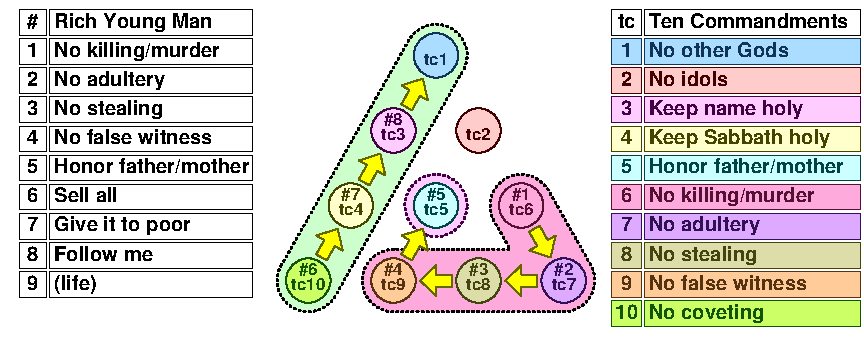
Why does Jesus list exactly five of the ten commandments in his response to the rich young man?
Why does Jesus use the order he does for those five commandments?
How does love your neighbor as yourself fit in with the ten commandments?
Why does Jesus give the rest of the response as he does? What does it mean? Why might the order be important?
42. Revelation and Ten Commandments build
1
2
3
4
5
6
7
8
9
10
11
12
13
+
-
▶
|
|
 |
43. Rich young man model build
1
2
3
4
5
6
7
8
9
10
11
+
-
▶
|
Matthew 19:18 He saith unto him, Which? Jesus said, Thou shalt do no murder, Thou shalt not commit adultery, Thou shalt not steal, Thou shalt not bear false witness, [kjv]
19:19 Honour thy father and thy mother: and, Thou shalt love thy neighbour as thyself. [kjv]
44. Coveting
The "
covet" commandant is not mentioned. The "
love neighbor as yourself" appears to take the place of the "
covet" commandment.
Discuss: What might the
"young man" "
covet" that keeps him from achieving "
purpose" and "
perfection"?
Might anything having to do with "
coveting" that causes the "
young man" to "
lag behind" need to be "
sold out"?
☐ What might one "
give" to the
destitute "
poor"?
☐ What might one "
give" to the "
poor" in
spirit?
45. Matthew 19:20-21 Verses
Matthew 19:20 The young man saith unto him, All these things have I kept from my youth up: what lack I yet? [kjv]
19:21 Jesus said unto him, If thou wilt be perfect, go and sell that thou hast, and give to the poor, and thou shalt have treasure in heaven: and come and follow me. [kjv]
Can you be "perfect"? The Greek meaning is different.
What is it that one "hast" and who has it? (mistranslation and changed word order). This is a key word in the verse.
Who are the "poor"? How might giving all the possessions that one has to the "poor" help them spiritually?
What exactly is "treasure" in "heaven"? Do you have that "treasure" before you "follow" Jesus?
46. End of page