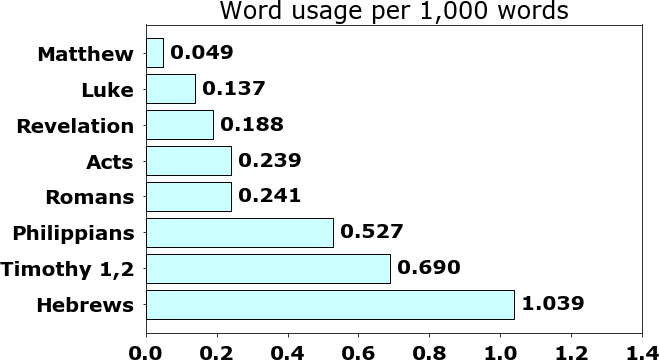
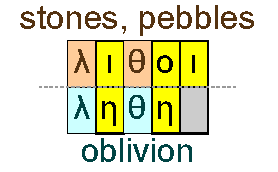
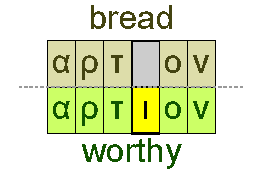
- *G3000 *21 λατρεύω (lat-ryoo'-o) : from latris (a hired menial); to minister (to God), i.e. render religious homage:--serve, do the service, worship(-per).
- λατρευω *4
- Acts 24:14 ... they call heresy, so worship I the God of my fathers, believing ...
- Acts 27:23 ... I am, and whom I serve,
- Romans 1:9 ... my witness, whom I serve with my spirit ...
- 2 Timothy 1:3 I thank God, whom I serve from my forefathers with ...
- λατρευειν *3
- Luke 1:74 ... of our enemies might serve him without fear,
- Acts 7:42 ... gave them up to worship the host of heaven; as ...
- Hebrews 9:14 ... dead works to serve the living God?
- λατρευσεις *2
- Matthew 4:10 ... and him only shalt thou serve.
- Luke 4:8 ... and him only shalt thou serve.
- λατρευσουσιν *2
- Acts 7:7 ... that shall they come forth, and serve me in this place.
- Revelation 22:3 ... and his servants shall serve him:
- λατρευοντες *2
- Philippians 3:3 For we are the circumcision, which worship God in the spirit, and ...
- Hebrews 13:10 ... no right to eat which serve the tabernacle.
- λατρευουσιν *2
- Hebrews 8:5 Who serve unto the example and shadow of heavenly things, ...
- Revelation 7:15 ... the throne of God, and serve him day and ...
- λατρευουσα
- Luke 2:37 ... not from the temple, but served God with fastings and prayers ...
- λατρευον
- Acts 26:7 ... promise our twelve tribes, instantly serving God day and night, ...
- ελατρευσαν
- Romans 1:25 ... and worshipped and served the creature more than the Creator, ...
- λατρευοντα
- Hebrews 9:9 ... could not make him that did the service perfect, as pertaining to the conscience;
- λατρευοντας
- Hebrews 10:2 ... have ceased to be offered? because that the worshippers once purged should have had ...
- λατρευωμεν
- Hebrews 12:28 ... let us have grace, whereby we may serve God acceptably with ...
42. Matthew 4:11
Matthew 4:11 Then the devil leaveth him, and, behold, angels came and ministered unto him. [kjv]
τοτε αφιησιν αυτον ο διαβολος και ιδου αγγελοι προσηλθον και διηκονουν αυτω [gnt]
The Greek for "
leaveth" is the same root word that is translated as "
forgive" or "
let go".
Discuss: Did the devil "
forgive" Jesus or did the devil "
let go" of Jesus?
Discuss: How can the English word
"forgive" make discussions difficult when the Greek means "
let go" of something or someone?
Mark includes "
wild beasts".
43. Matthew 4:11
KJV: Then the devil leaveth him, and, behold, angels came and ministered unto him.
Greek: τοτε αφιησιν αυτον ο διαβολος και ιδου αγγελοι προσηλθον και διηκονουν αυτω
44. Mark 1:13 Satan and wild beasts
Mark 1:13 And he was there in the wilderness forty days, tempted of Satan; and was with the wild beasts; and the angels ministered unto him. [kjv]
και ην εκει εν τη ερημω τεσσερακοντα ημερας τεσσαρακοντα πειραζομενος υπο του σατανα και ην μετα των θηριων και οι αγγελοι διηκονουν αυτω [gnt]
The
"wild beasts" are not mentioned in Matthew.
45. Mark 1:13
KJV: And he was there in the wilderness forty days, tempted of Satan; and was with the wild beasts; and the angels ministered unto him.
Greek: και ην εκει εν τη ερημω τεσσερακοντα ημερας τεσσαρακοντα πειραζομενος υπο του σατανα και ην μετα των θηριων και οι αγγελοι διηκονουν αυτω
46. Temptations by Satan
Here is a summary if the "
things" with which Jesus was tempted by the devil.
wealth - stones to bread
health - not be hurt
power - rule kingdoms
Note that the devil does
not tempt Jesus with
knowledge or
wisdom. Why might that be?
Note: Eve was deceived with the promise of knowledge or wisdom.
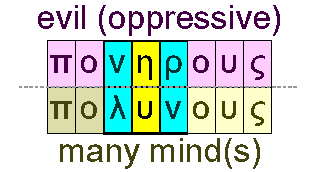
47. Evil training is toilsome work: no pain no gain
Many have heard the exercise saying "
No pain. No gain.". This saying is deceptive as "
fatigue" is good for training but "
pain" is not good.
The Greek word for "
work" or "
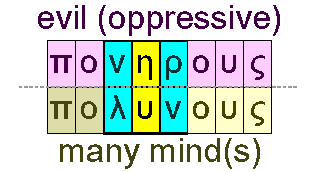
toil" appears to be the origin of a Greek word often translated as "
evil" in the
KJV. The meaning appears to have shifted from just "
work" to "
work" afflicted by someone else to that someone else being "
evil" to the modern meaning of "
pain". In many cases the "
evil" person inflicting "
work" or "
pain" on others has to do with laziness and/or greed and/or pleasure-seeking of that "
evil" person.
48. Burdensome evils
49. Word slide
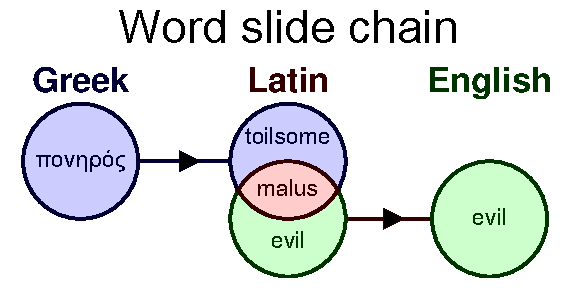
The Latin word
"malus" ≈ "unpleasant, evil".
It appears that there is a "
word slide" here in that the Latin word had more than one meaning and that other meaning was adapted in many places as the meaning of the original word.
Would such a "
semantic slide" be to the advantage or disadvantage of the church? Explain.
50. Oppression
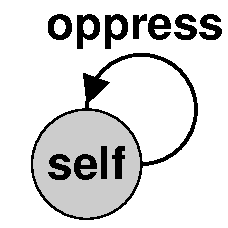
One can be oppressed by others. One can oppress oneself.
Discuss:
Does the modern idea of slaving away to earn the money needed to get things we want (or covet) oppress us in toils?
How might an attitude closer to what Jesus portrays help minimize that enslavement?
Would the world that is using you to take advantage of that coveting not appreciate you not being beholden to that behavior?
Discuss: Do you own the land you bought? Do you rent that land? (e.g., via property taxes, etc.) What about
eminent domain?
51. Oppression summary
The Greek translated as
"evil" is that of
"toil" as in
"oppression" (word slide through Latin).
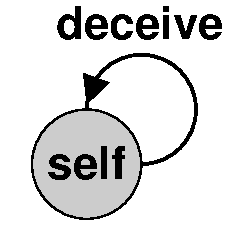
The same diagram for
"oppression" works for "
deception".
To
"oppress" by "
deception" (e.g.,
thief) is often easier than to
"oppress" by "
force" (e.g.,
robber).
[desire to be great]
52. Deception summary
☐ Do you "
deceive" others?
☐ Do others "
deceive" you?
☐ Do others "
deceive" others? Does it bother you?
☐ Do you "
deceive" you? (reflexively)
The Greek for "
entrap" is often translated as "
offend".
Jesus says not to make "
oaths". One can be "
deceived" by "
oaths".
53. Thoughts during prayer
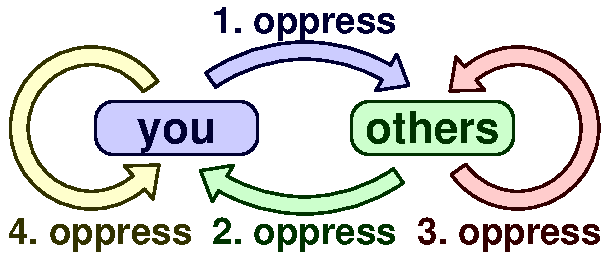
Lord's Prayer, where the Greek for
"evil" has the idea of
"oppression".
... flow us away from evil ...
... flow us away from oppression ...
How many of the following prayer segments do you think about when you pray the Lord's Prayer?
☐ 1.
... flow me away from me oppressing others ...
☐ 2.
... flow me away from others oppressing me ...
☐ 3.
... flow me away from others oppressing others ...
☐ 4.
... flow me away from me oppressing me ...
☐ 5.
... deliver me from evil ... (usual translation)
Is there one of these which is, by far, the one thought about the most during the Lord's Prayer?
54. Riches
Discuss: Which of the following is accomplished by giving your riches to the poor? Add any additional reasons you think appropriate.
The poor have a better life on earth. How far does that go? How about their life in heaven?
I am then not oppressing myself by being continually pre-occupied with gaining and maintaining wealth.
Discuss:
What is the eternal significance of just giving away riches?
Can one "follow Jesus" while not giving away all (fairly obtained) riches to the poor?
 |
Details are left as a future topic.
|
55. Review of temptations and evil
Matthew 4:1 Then was Jesus led up of the Spirit into the wilderness to be tempted of the devil. [kjv]
τοτε ο ιησους ανηχθη εις την ερημον υπο του πνευματος πειρασθηναι υπο του διαβολου [gnt]
6:13 And lead us not into temptation, but deliver us from evil: For thine is the kingdom, and the power, and the glory, for ever. Amen. [kjv]
και μη εισενεγκης ημας εις πειρασμον αλλα ρυσαι ημας απο του πονηρου οτι σου εστιν η βασιλεια και η δυναμις και η δοξα εις τους αιωνας αμην [gnt]
Paraphrase:
Do not be deceived by ideas/beliefs that you already think you understand. Help us move/flow from being oppressed by others or oppressing others or oppressing ourselves with toils (based on those deceptions).
Avoid confirmation bias (deciding what it says before investigation).
Ask deep questions.
Do fundamental research on meanings and ideas.
When there are differences, which makes more sense?
56. Self-reference in prophecy
If the meaning is anywhere near the paraphrase, it is interesting that exactly what the paraphrase warns against is what the eventual translation and meaning is doing. That is, by a check-list of avoiding things that are temptations, one can be delivered from evil. Instead, we are more likely to succumb to bad logic of what we think we know and, as a result, be oppressed in toils without realizing it.
57. The weeping and the gnashing of the teeth
Matthew 13:50 And shall cast them into the furnace of fire: there shall be wailing and gnashing of teeth. [kjv]
The
idiom of
the "weeping" and
the "gnashing" of
the "teeth" appears in the Bible. This phrase appears
9 times in the
GNT and
5 times in the
LXX (Septuagint). In the
LXX the phrase appears to be related to "
anger" against someone else. Translations
omit the
definite article before each of the nouns.
Jesus: The weeping and the gnashing of the teeth.
KJV: weeping and gnashing of teeth.
The phrase appears to have a more restricted meaning when used by Jesus in the
GNT in that it appears to be "
anger" against oneself as in "
regret" in a counterfactual sense. This is in a similar sense of how Jesus use the word "
offend" as "
entrap" in the sense of "
misinterpret".
It appears that the phrase
"gnashing" of
"teeth" has to do with someone who "
thought" they were correct but gets surprised. This idea appears on the narrow and wide gates, the parable of the sheep and goats, etc. Let us investigate.
[gristmills]
58. Matthew 11:6: Idiomatic misinterpretations that offend
Matthew 11:6 And blessed is he, who soever shall not be offended in me. [kjv]
και μακαριος εστιν ος εαν αν μη σκανδαλισθη εν εμοι [gnt]
… beatus … non … scandalizatus … [v]
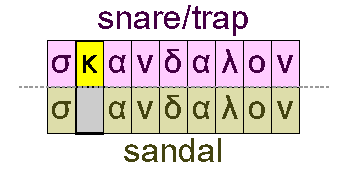
Jesus is speaking. The ancient Greek word
"σκάνδαλον" ≈ "trap, snare" as in
entice,
tempt, etc. Star Wars
Admiral Ackbar: "
It's a trap!".
The Greek word
"blessed" here means
"happy". The
"offended" means
"entrapped" as in being
"tricked" or
"deceived" or
"seduced". How could someone be "
deceived" by themselves or someone else about what Jesus really means? A simple
idiom as
"misinterpret" helps to understand this word in the
GNT.
Paraphrase:
Happy is the one who does not misinterpret (entrap themselves) in what I say.
59. Matthew 11:5 Context
Jesus says to tell John the Baptist the following.
Matthew 11:5 The blind receive their sight, and the lame walk, the lepers are cleansed, and the deaf hear, the dead are raised up, and the poor have the gospel preached to them. [kjv]
| blind |
receive sight |
| lame |
walk |
| lepers |
cleansed |
| deaf |
hear |
| dead |
raised up |
| poor |
gospel preached |
|
These are recognized as "signs" of the Messiah.
This is what Jesus has been doing.
What should the church be doing?
What should believers be doing?
|
The next verse is interesting.
60. Red herring: look at me distraction deception
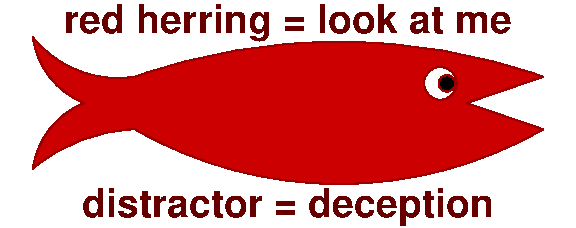
In logic, a "
red herring" is a distractor used to divert attention from otherwise important points. The name comes (in part) from using a strong-smelling fish drug across a path to distract hunting dogs away from their intended prey.
The "
red herring" is plausible and believable, not subject to fact checking, but distracts and is often not relevant to the argument being made.
In multiple choice (and other) exams, "
distractor" answers are often included in the possible answers.
In sermons, "
idle words" are often used as "
red herrings" to avoid or ignore certain parts of the Bible.
61. Matthew 12:30-37 Pardon the idle word counting - old
 (bottom-up forward-chaining)
Matthew 12:30 He that is not with me is against me; and he that gathereth not with me scattereth abroad. [kjv]
12:32 And who soever speaketh a word against the Son of man, it shall be forgiven him: but who soever speaketh against the Holy Ghost, it shall not be forgiven him, neither in this world, neither in the world to come. [kjv]
12:36 But I say unto you, That every idle word that men shall speak, they shall give account thereof in the day of judgment. [kjv]
12:37 For by thy words thou shalt be justified, and by thy words thou shalt be condemned. [kjv]

What is the "
unpardonable"
"sin"? What is an
"idle word"? How might they be related? How are they related to "
treasure" and "
trees"?
This is the
old content. The new content is at
Matthew 12:30-37 Pardon the idle word counting - new.
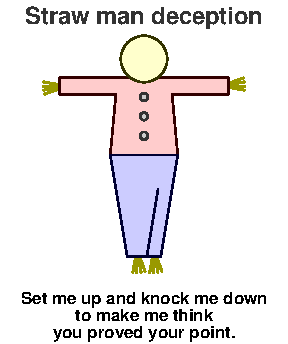
62. Red herring and straw man
A "
red herring" diverts attention away from otherwise important points.
By contrast, a "
straw man" is a distortion of the position of the other side.
63. Church example
Some pastors who appear to be trying to impress the congregation with their expertise in, say, the Greek language, may go into extended discussions of Greek verb tenses, as if, in the context being discussed, those verb tenses are actually important.
In many cases, it is a "
red flag" that warns of a possible "
red herring" in that there may be other parts of the verse, or surrounding verses, that the pastor wishes to distract attention from in order to make a desired point, often based on the "
opinion" or "
glory" of that pastor. In some cases, the verb tense discussion disguises the fact that the base meaning of the verb is not what is claimed or implied in the English translation.
64. Selective evidence fallacy: Cherry picking

In Biblical issues, the common way for someone to deceive, intentionally or otherwise, is to "
cherry-pick" verses out of context and piece them together to support the desired point of view - which is often not the view of God as expressed by scripture.
Be aware of verses skipped, verses "
cherry-picked" from various contexts that may be out of context, etc. When Satan tempts Jesus, Satan uses scripture out of context. Jesus answers and refutes Satan with scripture in context.
The use of "
cherry-picked" is sometimes called "
suppressed evidence" or "
incomplete evidence". Whatever it is called, it encourages what is called "
confirmation bias" and, as a result, a "
faulty generalization" or "
hasty generalization".
65. Confirmation bias
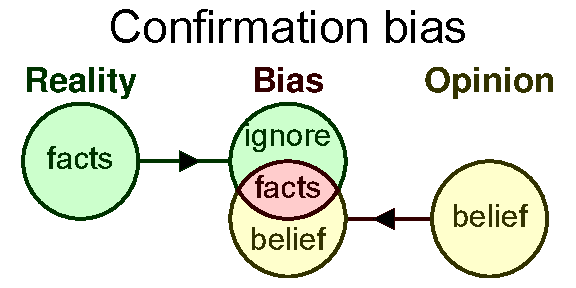
A
confirmation bias is a bias of accepting only facts that agree with what you have already decided is true and ignoring other facts.

That is, one accepts only new information that confirms what one already believes or has heard, etc. You can ignore facts that you do not know about (ignorance of the law) or ignore things in order to deceive others (and yourself).
In a constraint logic programming system such as Prolog, one can stop at the first solution found or continue to look for additional solutions.
Where does one usually find lost things?
One finds them in the last place one looks. Why keep looking? In confirmation bias, one stops looking when one finds what one has decided is to be found.
[make it doctrine]
66. Red herring: temptations of Jesus
A "
red herring" distracts from the something more important. The Greek for
"temptation" is an "
examination" that deceives using what you already think is true.
Consider the temptations of Jesus by the devil in Matthew 4. You may have encountered debates or discussions between the following views.
One liberal view: The temptations were in the mind of Jesus and not a reality.
One conservative view: The temptations were real and happened exactly as recorded.
Discuss: How might this discussion be considered a "
red herring"? Note that there is no discussion of the meaning or translation of
"temptation".
67. Red herring: Lord's Prayer
Matthew 6:13 And lead us not into temptation, but deliver us from evil: … [kjv]
και μη εισενεγκης ημας εις πειρασμον αλλα ρυσαι ημας απο του πονηρου οτι σου εστιν η βασιλεια και η δυναμις και η δοξα εις τους αιωνας αμην [gnt]
A "
red herring" distracts from the something more important. The Greek for
"temptation" is an "
examination" that deceives using what you already think is true.
Consider the change to the Lord's Prayer suggested by Pope Francis in 2017.
Original: "lead us not into temptation".
Revised: "do not let us fall into temptation".
Discuss: How might this controversy be considered a "
red herring"? Note that there was no discussion of the meaning or translation of
"temptation".
68. A third alternative
Many people think of two choices.
1. Look and do it.
2. Look but do not do it.
A third choice is at the heart of computer science and statistics.
3. Do not look. There is a cost to looking. And it may not matter.
It may already be known what is there, or it may have been determined that it is not necessary.
69. Short-circuit conditional evaluation
This idea is used all of the time in computer science and programming. A simple example is that of conditional evaluation of expressions (i.e., no side-effects during evaluation).
In the expression A and B, if A is false, then one need not look at B.
In the expression A or B, if A is true, then one need not look at B.
It may be the case that evaluating
B may cause an error.
In discussions, it may be the case that
B is a "
red herring" and does not matter. The only thing that matters is
A. Here are some tautologies often used in programming (as algebraic transformations).
(A and false) = false
(A and true) = A
(A or false) = A
(A or true) = true
(A = true) = A
(A = false) = false = (not A)
70. Other verses
71. James
James 1:13 Let no man say when he is tempted, I am tempted of God: for God cannot be tempted with evil, neither tempteth he any man: [kjv]
μηδεις πειραζομενος λεγετω οτι απο του θεου πειραζομαι ο γαρ θεος απειραστος εστιν κακων πειραζει δε αυτος ουδενα [gnt]
1:14 But every man is tempted, when he is drawn away of his own lust, and enticed. [kjv]
εκαστος δε πειραζεται υπο της ιδιας επιθυμιας εξελκομενος και δελεαζομενος [gnt]
James has a lot to say about "
examination", using variations of the word (or root) five times in two verses. English teachers would not like the use of the same word that many times. The use of "
tempt" seems strange given the modern meaning.
The main danger of "
examination" is that of self-deception.
72. James 1:13
KJV: Let no man say when he is tempted, I am tempted of God: for God cannot be tempted with evil, neither tempteth he any man:
Greek: μηδεις πειραζομενος λεγετω οτι απο του θεου πειραζομαι ο γαρ θεος απειραστος εστιν κακων πειραζει δε αυτος ουδενα
73. James 1:14
KJV: But every man is tempted, when he is drawn away of his own lust, and enticed.
Greek: εκαστος δε πειραζεται υπο της ιδιας επιθυμιας εξελκομενος και δελεαζομενος
74. Does it matter?
The modern Greek phrase
"δεν πειράζει" (thehn pee-RA-zee) ≈ "it does not matter" or, in common usage, "
Never mind!". That is, it does not tempt me. It does not test me, as in my patience (in the modern sense of patience).
So when the devil (or his minions) try to tempt (as a pirate might), one could answer, "
Never mind!". It does not tempt me.
Better yet, pray not to be preyed on by avoiding the temptation (or test or trial).
75. Song: What a friend we have in Jesus
Colossians 1:9 For this cause we also, since the day we heard it, do not cease to pray for you, … [kjv]
δια τουτο και ημεις αφ ης ημερας ηκουσαμεν ου παυομεθα υπερ υμων προσευχομενοι και αιτουμενοι ινα πληρωθητε την επιγνωσιν του θεληματος αυτου εν παση σοφια και συνεσει πνευματικη [gnt]
Joseph Scriven (1819-1886) wrote a poem of comfort to his mother entitled "
Pray without ceasing".
Charles Converse (1832-1918), an American educated in Germany, set Scriven's poem "
Pray without ceasing" to music and renamed it "
What a friend we have in Jesus". One verse talks of
trials and
temptations.

76. Verse 1
What a friend we have in Jesus,
All our sins and griefs to bear!
What a privilege to carry
Everything to God in prayer!
Oh, what peace we often forfeit,
Oh, what needless pain we bear,
All because we do not carry
Everything to God in prayer!
77. Verse 2
Have we trials and temptations?
Is there trouble anywhere?
We should never be discouraged—
Take it to the Lord in prayer.
Can we find a friend so faithful,
Who will all our sorrows share?
Jesus knows our every weakness;
Take it to the Lord in prayer.
78. Flesh is weak
Jesus says the following after the Last Supper in the Garden.
Matthew 26:41 Watch and pray, that ye enter not into temptation: the spirit indeed is willing, but the flesh is weak. [kjv]
γρηγορειτε και προσευχεσθε ινα μη εισελθητε εις πειρασμον το μεν πνευμα προθυμον η δε σαρξ ασθενης [gnt]
79. Matthew 26:41
KJV: Watch and pray, that ye enter not into temptation: the spirit indeed is willing, but the flesh is weak.
Greek: γρηγορειτε και προσευχεσθε ινα μη εισελθητε εις πειρασμον το μεν πνευμα προθυμον η δε σαρξ ασθενης
Latin: vigilate et orate ut non intretis in temptationem spiritus quidem promptus est caro autem infirma
Wessex: Wakieð & gebiddað eow. þt ge in ne gan on costnenge. Witodlice se gast ys raed. & þt flaesc is untrum.
Wycliffe: Wake ye, and preye ye, that ye entre not in to temptacioun; for the spirit is redi, but the fleisch is sijk.
Tyndale: watche and praye that ye fall not into temptacion. The spirite is willynge but the flesshe is weake.
Spanish: Velad y orad, para que no entréis en tentación; el espíritu a la verdad está dispuesto, pero la carne es débil.
80. English
81. Eve and temptation
It is interesting that the temptation of Eve involved a "
taste" of the fruit of the forbidden tree where the tempter used trickery and deception to accomplish it.
 |
Details are left as a future topic.
|
82. Matthew 22:16 Temptation
Matthew 22:16 And they sent out unto him their disciples with the Herodians, saying, Master, we know that thou art true, and teachest the way of God in truth, neither carest thou for any man: for thou regardest not the person of men. [kjv]
και αποστελλουσιν αυτω τους μαθητας αυτων μετα των ηρωδιανων λεγοντες λεγοντας διδασκαλε οιδαμεν οτι αληθης ει και την οδον του θεου εν αληθεια διδασκεις και ου μελει σοι περι ουδενος ου γαρ βλεπεις εις προσωπον ανθρωπων [gnt]
The context of this verse is whether money should be rendered to Caesar or God. Notice that they are trying to use ideas to which Jesus already accepts, but in a tricky manner.
No one is quite sure as to the identity of the "
Herodians". The appear to be a group that worked with the local rulers such as "
Herod" and with the religious establishment.
83. Matthew 22:18 Hypocrites
Matthew 22:18 But Jesus perceived their wickedness, and said, Why tempt ye me, ye hypocrites? [kjv]
γνους δε ο ιησους την πονηριαν αυτων ειπεν τι με πειραζετε υποκριται [gnt]
The Greek for
"wickedness" is that of
"oppression".
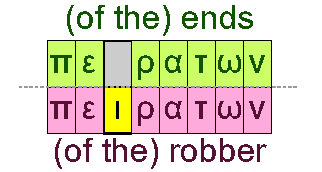
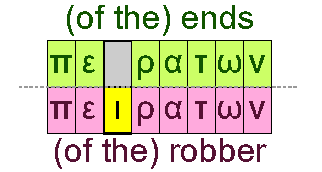
To what
"ends" will these
"robbers" or
"pirates" go?
When the religious leaders attempt (trial) to tempt Jesus, are they actually
"hypocrites" in the modern sense in that they are saying and thing and doing another? Or are they not in touch with reality and
"pretending"?
84. Matthew 22:16 Temptation
Matthew 22:16 And they sent out unto him their disciples with the Herodians, saying, Master, we know that thou art true, and teachest the way of God in truth, neither carest thou for any man: for thou regardest not the person of men. [kjv]
και αποστελλουσιν αυτω τους μαθητας αυτων μετα των ηρωδιανων λεγοντες λεγοντας διδασκαλε οιδαμεν οτι αληθης ει και την οδον του θεου εν αληθεια διδασκεις και ου μελει σοι περι ουδενος ου γαρ βλεπεις εις προσωπον ανθρωπων [gnt]
The context of this verse is whether money should be rendered to Caesar or God. Notice that they are trying to use ideas to which Jesus already accepts, but in a tricky manner.
No one is quite sure as to the identity of the "
Herodians". The appear to be a group that worked with the local rulers such as "
Herod" and with the religious establishment.
85. Matthew 22:18 Hypocrites
Matthew 22:18 But Jesus perceived their wickedness, and said, Why tempt ye me, ye hypocrites? [kjv]
γνους δε ο ιησους την πονηριαν αυτων ειπεν τι με πειραζετε υποκριται [gnt]
The Greek for
"wickedness" is that of
"oppression".
To what
"ends" will these
"robbers" or
"pirates" go?
When the religious leaders attempt (trial) to tempt Jesus, are they actually
"hypocrites" in the modern sense in that they are saying and thing and doing another? Or are they not in touch with reality and
"pretending"?
86. An actor as a hypocrite is not real
Many times Jesus appears to rebuke the Pharisees as
"hypocrites", in the modern sense, because the apply rules to others but not to themselves, reflexively. On closer inspection, and using the definition of
"hypocrite" at the time, this is not quite what is happening.
The
ancient Greek word
"ὑποκριτής" ≈ "actor, pretender" and comes from
"ὑποκρίνομαι" ≈ "answer, interpret, play a part as an actor" and comes from two Greek words.
"ῠ̔πο" ≈ "under" as in English words starting with "hypo".
"κρῑ́νω" ≈ "separate". In context, this can be "judge".
The meaning went from "
separate" to "
answer" to "
answer" an actor on stage to "
play a part" as in "
acting" or "
pretending".
The modern definition of
"hypocrite" appears to come from a misinterpretation of what Jesus says in Matthew 7:3-5 (plank or splinter in the eye).
When Jesus says "
You hypocrites", instead of the modern sense, it might be better read as "
You actors" as in "
You pretenders" or "
Get real" or "
Get in touch with reality" or "
Get in touch with the truth". Substituting "
actors" or "
pretenders" might make for a better translation than
"hypocrites".
87. Prove
John 6:5 When Jesus then lifted up his eyes, and saw a great company come unto him, he saith unto Philip, Whence shall we buy bread, that these may eat? [kjv]
επαρας ουν ο ιησους τους οφθαλμους ο ιησους και θεασαμενος οτι πολυς οχλος ερχεται προς αυτον λεγει προς τον φιλιππον ποθεν αγορασομεν αγορασωμεν αρτους ινα φαγωσιν ουτοι [gnt]
6:6 And this he said to prove him: for he himself knew what he would do. [kjv]
τουτο δε ελεγεν πειραζων αυτον αυτος γαρ ηδει τι εμελλεν ποιειν [gnt]
… temptans … [v]
The same ancient Greek word for "
tempt" mean "
examine". In a deceptive sense it uses ideas to which the person examined already accepts as true or valid.
88. John 6:5
KJV: When Jesus then lifted up his eyes, and saw a great company come unto him, he saith unto Philip, Whence shall we buy bread, that these may eat?
Greek: επαρας ουν ο ιησους τους οφθαλμους ο ιησους και θεασαμενος οτι πολυς οχλος ερχεται προς αυτον λεγει προς τον φιλιππον ποθεν αγορασομεν αγορασωμεν αρτους ινα φαγωσιν ουτοι
89. John 6:6
KJV: And this he said to prove him: for he himself knew what he would do.
Greek: τουτο δε ελεγεν πειραζων αυτον αυτος γαρ ηδει τι εμελλεν ποιειν
Latin: hoc autem dicebat temptans eum ipse enim sciebat quid esset facturus
Wessex: þat he cwaeð hys fandiende. he wiste hwaet he don wolde.
Wycliffe: But he seide this thing, temptynge hym; for he wiste what he was to do.
Tyndale: This he sayde to prove him: for he him sylfe knewe what he wolde do.
Gothic: thatuh than qath fraisands ina; ith silba wissa thatei habaida taujan.
90. Germanic
91. End of page



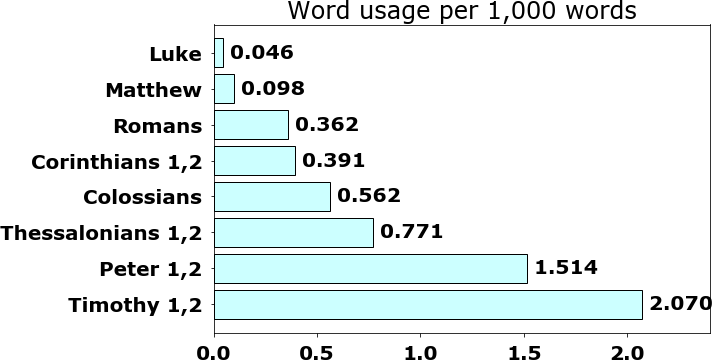


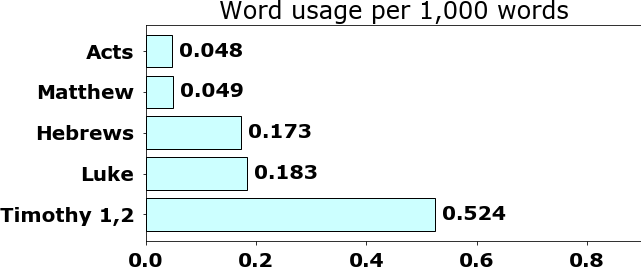
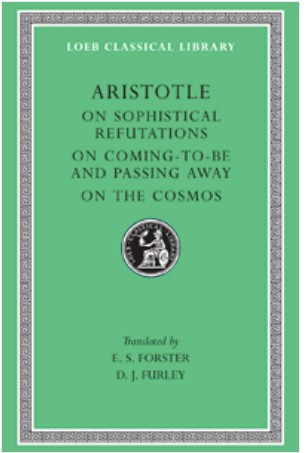
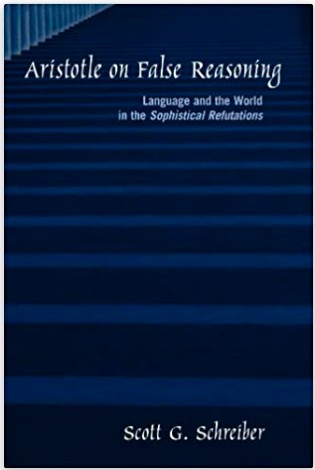 On page 2, Schreiber elaborates on "peirastic" reasoning as distinguished by Aristotle.



 In the temptations of Jesus by the devil, the logic and reasoning appear to be correct if one verifies what the devil says as correct but does not verify the claim against the entire context of God's word. This is sometimes called "cherry picking".





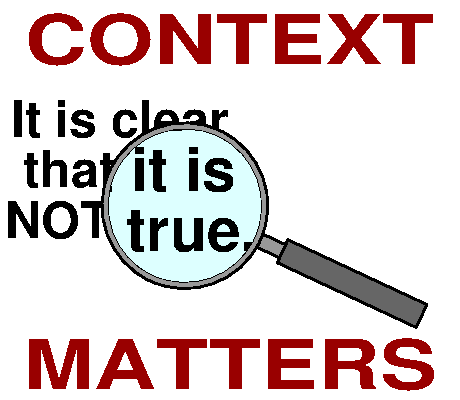 The devil quotes scripture. Jesus detects the deception and quotes back scripture in context. Context is important!