Send
Close Add comments:
(status displays here)
Got it! This site "creationpie.org" uses cookies. You consent to this by clicking on "Got it!" or by continuing to use this website. Note: This appears on each machine/browser from which this site is accessed.
Matthew 21:31-32 Desire of the Father 2
1. Matthew 21:31-32 Desire of the Father 2
This content is being developed.
2. Matthew 21
3. Cursed fig tree discourse paraphrase
21:18:
and in the morning, as Jesus returned to the city, the disciples decided (later) that he must have been hungry.
21:19:
And when Jesus saw one fig tree in the way, he said to the fig tree, "let no fruit grow on thee from now on". Immediately, the fig tree dried up.
21:20:
When the disciples saw it, they wondered, saying, "How quickly is the fig tree dried up".
21:21:
Jesus says, "Verily I say unto you" (connect this with the previous saying), If you believe and do not discern, you will not only do what has been done to this fig tree, but (in addition) if you say to this mountain/definition, be lifted up and cast [oblivion, forgetfulness] into the sea (of humanity,) it will come into being.
21:22:
and all (these not good things just mentioned), if you request (them) as a wish, persuaded, you shall take/seize.
[kp2: birds: weeds and wheat, lust, opinions]
[kp3: fish: mustard seed, tree, birds, oaths]
[kp4: pigs: woman, leaven]
4. Matthew 21:22 Receive the take
Matthew 21:22 And all things, whatsoever ye shall ask in prayer, believing, ye shall receive. [kjv]
και παντα οσα αν αιτησητε εν τη προσευχη πιστευοντες ληψεσθε λημψεσθε [gnt]
The Greek word translated as
"believing" is that of a
"persuasion". The verse does not say anything about
what one is
"believing" or how
strong that
"belief" is.
The Greek word translated
"shall receive" is that of
"shall take". It appears that, from the perspective of what Jesus says, the only things one are to
"take" are one's "
cross" and "
oneself". The two appear to be related.
Paraphrase:
and all (these not good things just mentioned), if you request (them) as a wish, persuaded, you shall take/seize.
Saying:
Be careful what you ask for. You might get it. What is your
take on this? Have you
seized the idea? The Latin phrase
"carpe diem" ≈ "seize the day" which to some is "
enjoy the present".
5. Matthew 21:27 No telling
Matthew 21:27 And they answered Jesus, and said, We cannot tell. And he said unto them, Neither tell I you by what authority I do these things. [kjv]
και αποκριθεντες τω ιησου ειπον ειπαν ουκ οιδαμεν εφη αυτοις και αυτος ουδε εγω λεγω υμιν εν ποια εξουσια ταυτα ποιω [gnt]
Jesus says he will not tell them. Most sermons end at that point. Does Jesus, in fact, tell them? To find out, one must read on and connect the dots. What if, instead of
telling them, Jesus
tells everyone who will listen and understand what he is saying? There is not
one shred of evidence that Jesus answers this question in the following verses.
"ἐγὼ" ≈ "I (am)" (for emphasis) and "λέγω" ≈ "(I) say"
"ποιῶ" ≈ "I do" (emphasis not used/needed)
Spanish: "hablo" ≈ "(I) speak" as a PIE (Proto Indo-European) example.
Spanish: "yo" ≈ "I" and "hablo" ≈ "(I) speak" (for emphasis).
6. Matthew 21:30 Put it together
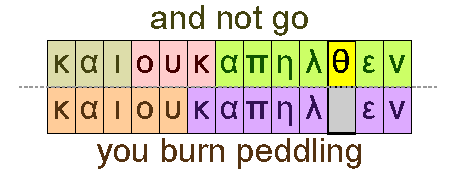
Matthew 21:30 And he came to the second, and said likewise. And he answered and said, I go, sir: and went not. [kjv]
21:29 ο δε αποκριθεις ειπεν ου θελω υστερον δε μεταμεληθεις εγω κυριε και ουκ απηλθεν [gnt]
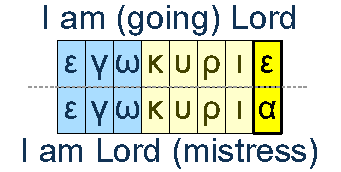
Might the one
child be assuming the role of
lord or
master? Is it a novel idea that a
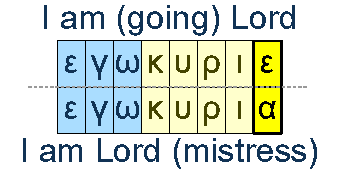
child who appears to be a male will want to be a female (leader, mistress, etc.). Might the
"peddling" imply a "
merchant"?
Might such a
child, instead of
working in the
vineyard, might
work the
vineyard as someone might
work the
crowd? That is, to their own benefit. Might this be
snake-oil?
7. Matthew 21:29 Lagging behind
Matthew 21:29 He answered and said, I will not: but afterward he repented, and went. [kjv]
21:30 και προσελθων δε τω δευτερω ετερω ειπεν ωσαυτως ο δε αποκριθεις ειπεν εγω κυριε και ουκ ου θελω υστερον μεταμεληθεις απηλθεν [gnt]
21:30 (Greek):
He came/went then to the second different (one) (and) said likewise he (one) but answered (and) said not desire (I) lagging behind repented (changed behavior) (and) went.
The modern English word
"will" does not capture the idea of
"desire" or "
wish". The
second child did not
"desire", mentally, to work in the vineyard but changed (actual) behavior and then did work in the vineyard.
"θέλω" ≈ "want, wish, care to" or "ἐθέλω" ≈ "want, wish, care to".
"βούλομαι" ≈ "will, want".
8. Think after what you heard and repent
One can compare
"mindful" with the Greek word for
"repent" which literally means
"after thought" as in
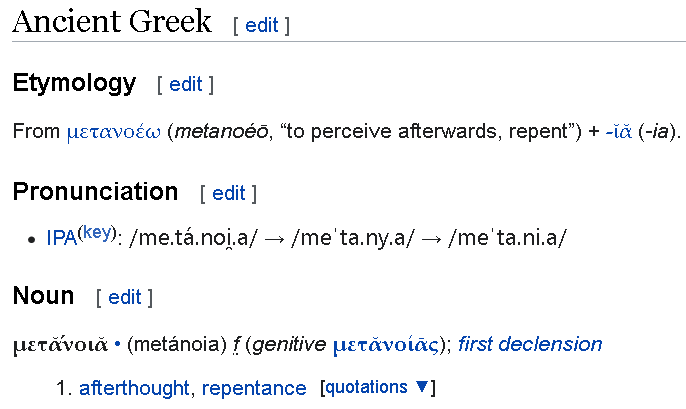
"perceiving afterwards". The ancient Greek word
"μετάνοια" ≈ "afterthought, repent".
That is, a
"transition" from what one was thinking "
before" to what one is thinking
"after".
The ancient Greek word "μετά" ≈ "after".
The ancient Greek word "νοια" ≈ "mind" as in "nous".
The definition in modern Greek has
narrowed, from influence of
GNT (Greek New Testament) translation, to
"μετάνοια" (meh-TA-nee-a) ≈ "repentance" (in the Latin sense).
If you already know that
"repent" in Greek means
"after thought" then, well, "
never mind".
Note: The first definition is that of "
afterthought". The second is that of "
repentance" but this comes from the
GNT.
9. Repent build
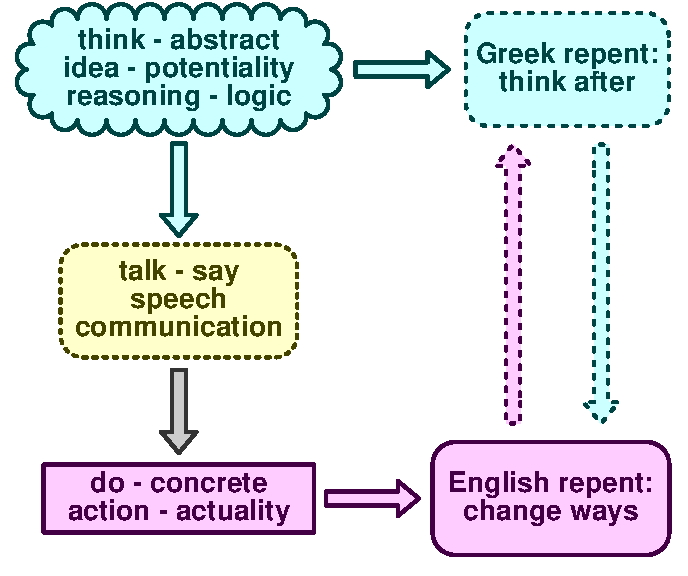
English repent: Change what you are doing. Absolute. Change! Confrontational.
Greek repent: Think about what you are doing. Conditional. Change if necessary.
There is another Greek word, used by Jesus, for changing what you are doing.
10. Church painting
What happened after the paint crew at the church thinned the paint to be able to get the entire building painted?
A quick rainstorm arose and washed off all of the paint. Then a voice from heaven roared, "Repaint, and thin no more"! So they were enlightened by a brush-off with God.
11. Matthew 21:29 Change ways
Matthew 21:29 He answered and said, I will not: but afterward he repented, and went. [kjv]
21:30 και προσελθων δε τω δευτερω ετερω ειπεν ωσαυτως ο δε αποκριθεις ειπεν εγω κυριε και ουκ ου θελω υστερον μεταμεληθεις απηλθεν [gnt]
The ancient Greek word
"μεταμέλεια" ≈ "change of purpose, regret, repentance" which is the modern idea of the Latin-based
"repent". This word has to do with
observed behavior and
not inferred attitude.
The ancient Greek word
"μετάνοια" ≈ "afterthought, think after" where the
"repent" (changed behavior) comes from the Latin and
not the Greek.
12. Hypocritical distinctions
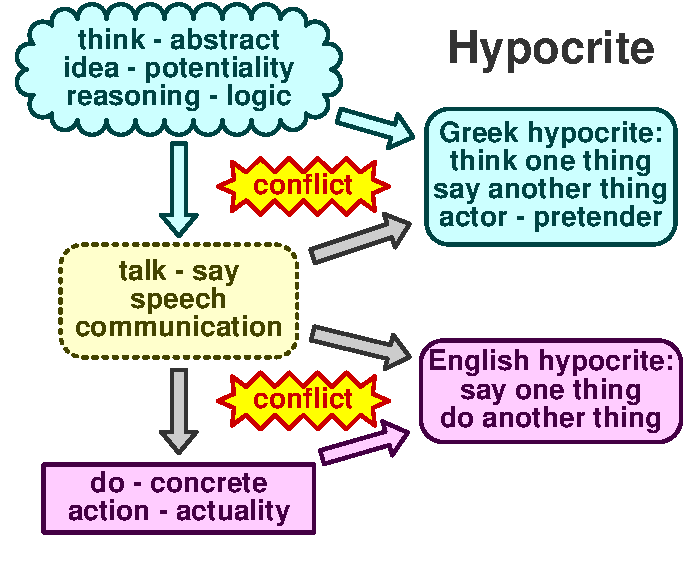
The ancient Greek word
"ὑποκριτής" ≈ "actor, pretender" and comes from
"ὑποκρίνομαι" ≈ "answer, interpret, play a part as an actor".
Since one cannot determine what someone is thinking, one needs to
compare what someone is saying with what God says to detect important differences. A deceiver would want to change what the people think that God is saying to avoid such a comparison.
A
modern English
"hypocrite" says to
do something but they actually
do something else. This can be
measured to see who is
greatest.
An
ancient Greek
"hypocrite" says to
do something, and they may in fact
do this something, but their
thoughts (
heart) is not in line with what they
say. They are
"pretending". In this case, as a deception to have dominion over other human beings.
Find the modern and ancient use of the idea of a
hypocrite in the following:
Salesperson: I
use this
product. I am
not a
hypocrite. Of course, I
know it is a piece of
junk, but I want to sell that junk to you for your money.
13. Matthew 15:7-8
Matthew 15:7 Ye hypocrites, well did Esaias prophesy of you, saying, [kjv]
υποκριται καλως προεφητευσεν επροφητευσεν περι υμων ησαιας λεγων [gnt]
15:8 This people draweth nigh unto me with their mouth, and honoureth me with their lips; but their heart is far from me. [kjv]
εγγιζει μοι ο λαος ουτος τω στοματι αυτων και τοις τοις χειλεσιν με τιμα η δε καρδια αυτων πορρω απεχει απ εμου [gnt]
The Greek word for
"hypocrite" meant
"acting" or
"pretending".
Modern hypocritical behavior: Telling the disciples not to eat without washing their hands while they, in fact, eating without washing their own hands. They were not doing this. Thus, they were not "hypocrites" in the modern sense.
Ancient hypocritical acting or pretending behavior: They believed what they were saying but were "acting" or "pretending" that this tradition was, in fact, important.
Jesus, through Isaiah, indicates the
definition of the
"hypocrite" as someone who
"pretends" to honor God (with their "
lips") but their
"heart" does not do this. They can do exactly what they are saying and are then
not "hypocrites" in the modern sense. Instead, they are just
pretending to honor God.
14. Matthew 23:3 Not hypocrites
Matthew 23:3 All therefore whatsoever they bid you observe, that observe and do; but do not ye after their works: for they say, and do not. [kjv]
παντα ουν οσα αν εαν ειπωσιν υμιν τηρειν τηρειτε ποιησατε και ποιειτε τηρειτε κατα δε τα εργα αυτων μη ποιειτε λεγεουσιν γαρ και ου ποιουσιν [gnt]
Modern
"hypocrite":
Do what I say, not what I do.
Jesus often calls the religious elite
"hypocrites". He does
not do so here. Why? The word
"hypocrite" meant
"pretending" or
"acting". The word as a technical term came from the
theater where
actors would
"pretend".
Paraphrase:
Saying, on the seat of Moses sit the scribes (hand motion) and the Pharisees (hand motion other way). All (motion of both hands). Therefore as when [do not be sick/distressed when] they say to you: Do this! (hand motion one direction) Observe that! (hand motion other direction). But according to the works of them, you should not do (head shake), For they say but do not do.
15. Actors and pastors
It can be a mixed blessing to have a pastor with an acting background.
Actors speak of things imaginary as if they were real, while you preachers too often speak of things real as if they were imaginary. Thomas Betterton (English actor and theater manager during Restoration England) (1635-1710)
Actors (tend to) take an imaginary world and make it seem real.
Pastors (tend to) take a real world and make it seem imaginary.
With a pastor with an acting background, it can be hard at times to separate reality from fiction.
[extension to Freud and modern psychology]
16. Matthew 21:31-32 Desire of the Father 2
Matthew 21:31 Whether of them twain did the will of his father? They say unto him, The first. Jesus saith unto them, Verily I say unto you, That the publicans and the harlots go into the kingdom of God before you. [kjv]
τις εκ των δυο εποιησεν το θελημα του πατρος λεγουσιν αυτω ο πρωτος υστερος λεγει αυτοις ο ιησους αμην λεγω υμιν οτι οι τελωναι και αι πορναι προαγουσιν υμας εις την βασιλειαν του θεου [gnt]
To support the earlier changes, the
TR (Textus Receptus) changes the
"lagging behind" one to the
"first" one.
"θέλω" ≈ "want, wish, care to" or "ἐθέλω" ≈ "want, wish, care to".
"βούλομαι" ≈ "will, want".
Is
anyone going into the "
Kingdom of God"?
Is anyone going into the "Kingdom of God"? Who is not going in?
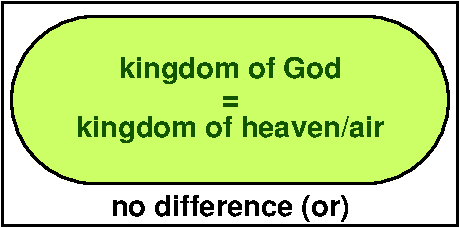
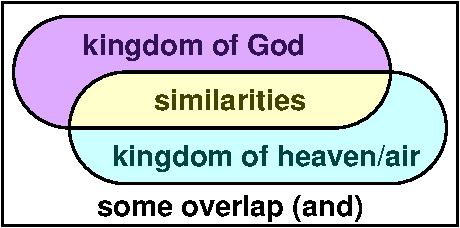
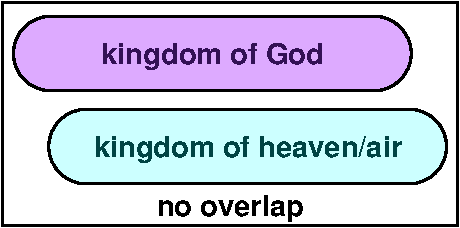
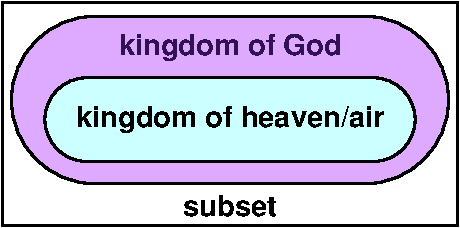
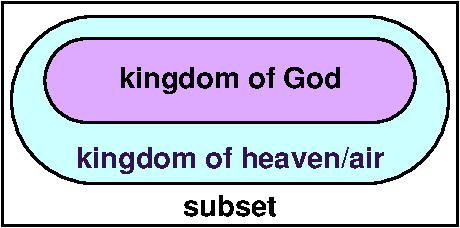
What is the difference between the "Kingdom of God" and the "Kingdom of heaven"?
17. Recurring pattern
How should one study and understand what Jesus says in the Bible? Here is a recurring pattern I have detected in studying and understanding what Jesus says in the Bible.
Jesus tells a parable (code-word story) that appears to refer to the Jewish religious establishment (literal).
The decoded parable, with play on words has additional meaning authentication codes, and appears to refer to the future religious establishment(s).
Those future religious establishments will move the mountains (definitions) and focus the blame on that Jewish religious establishment as they take that power for their own use.
All the codes are in place to show that Jesus knew that they would do this hundreds of years later.
This acts as an authentication code as to by what authority (lack of restraint) Jesus did the things he did.
18. Verily I say to you: connect the dots
Matthew 25:12 But he answered and said, Verily I say unto you, I know you not. [kjv]
ο δε αποκριθεις ειπεν αμην λεγω υμιν ουκ οιδα υμας [gnt]
Jesus uses the phrase
"verily" or
"amen",
"(I) say" "(to) you" (plural)
25 times and (singular)
2 times in Matthew. Since Matthew is writing down what Jesus says, the exact placement of this phrase appears to be important.
The "amen" in the Greek was changed, when spoken by Jesus at the beginning of a phrase, sometime in the Middle Ages, to "verily". The Latin Vulgate uses the "amen" instead of the Latin "verily".
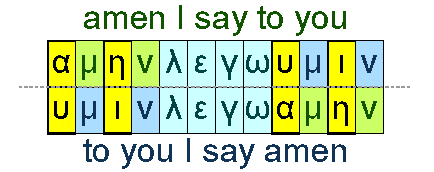
The phrase itself is a symmetrical play on words with the "amen" similar to the "(to) you".
This model appears to fit when the
"(to) you" is
singular and
not plural.
19. Verily I say unto you: connect the dots
Some (theologians, commentators, pastors, etc.) say that the phrase is used to introduce an important concept. Is what Jesus says ever
unimportant?
Instead, the phrase appears to be used to connect the previous thought (excluding scripture quotation) with the next thought as similar in some way.
In some cases, the two thoughts are stated in a
top-down backward-chaining manner so that it helps to consider the second thought before the first thought.
Student:
Are we doing anything important today in class?
20. Matthew 21:31 Connect the dots
Matthew 21:31 Whether of them twain did the will of his father? They say unto him, The first. Jesus saith unto them, Verily I say unto you, That the publicans and the harlots go into the kingdom of God before you. [kjv]
τις εκ των δυο εποιησεν το θελημα του πατρος λεγουσιν αυτω ο πρωτος υστερος λεγει αυτοις ο ιησους αμην λεγω υμιν οτι οι τελωναι και αι πορναι προαγουσιν υμας εις την βασιλειαν του θεου [gnt]
When Jesus says
"verily I say unto you", the symmetry of the Greek (as play on words) indicates that one should compare the previous (short) verses of the two children with what Jesus is going to say about the religious establishment (built on sand) in relation to the common people (the sand).
21. Kingdoms
 |
| Gospel |
Kingdom
of heaven |
Kingdom
of God |
| Matthew |
32 |
5* |
| Mark |
0 |
16 |
| Luke |
0 |
32 |
| John |
0 |
2 |
There are many viewpoints on the "kingdom" of "God" and the "kingdom" of "heaven/air". The "birds" of the "air" are the "birds" of "heaven". Which "heaven"?
Sometimes Jesus just says "kingdom". The TR adds "of God" in one of these verses.
It appears that Jesus uses the noun phrase "kingdom" of "heaven/air" as a code word. Matthew just wrote down what was said. The others merged these together in their minds before writing what they remembered. Compare kingdom, vineyard, garden.
[John: verily verily (twice) vs. Others: verily (once), local vs. global analysis]
|
22. Matthew 21:32 John
Matthew 21:32 For John came unto you in the way of righteousness, and ye believed him not: but the publicans and the harlots believed him: and ye, when ye had seen it, repented not afterward, that ye might believe him. [kjv]
ηλθεν γαρ ιωαννης προς υμας ιωαννης εν οδω δικαιοσυνης και ουκ επιστευσατε αυτω οι δε τελωναι και αι πορναι επιστευσαν αυτω υμεις δε ιδοντες ου ουδε μετεμεληθητε υστερον του πιστευσαι αυτω [gnt]
The ancient Greek word
"μεταμέλεια" ≈ "change of purpose, regret, repentance" which is the modern idea of the Latin-based
"repent". This word has to do with
observed behavior and
not inferred attitude.
23. Matthew 21:32 Questions
Matthew 21:32 For John came unto you in the way of righteousness, and ye believed him not: but the publicans and the harlots believed him: and ye, when ye had seen it, repented not afterward, that ye might believe him. [kjv]
ηλθεν γαρ ιωαννης προς υμας ιωαννης εν οδω δικαιοσυνης και ουκ επιστευσατε αυτω οι δε τελωναι και αι πορναι επιστευσαν αυτω υμεις δε ιδοντες ου ουδε μετεμεληθητε υστερον του πιστευσαι αυτω [gnt]
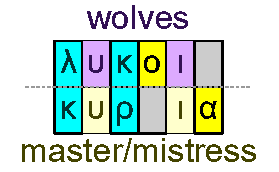
Had the religious establishment come to say, in effect, "
We are Lord, do what we say"?
Had the religious establishment become a form of "
tax collector"? (node 6)
Had the religious establishment become a form of "
harlot" or "
mistress" put in place of the true Lord? (node 4)
Had some of the actual "
tax collectors" and "
harlots" heard John and
"thought after" what he said and, as a result,
"changed behavior" despite
"lagging behind"?
24. TenWordPin model
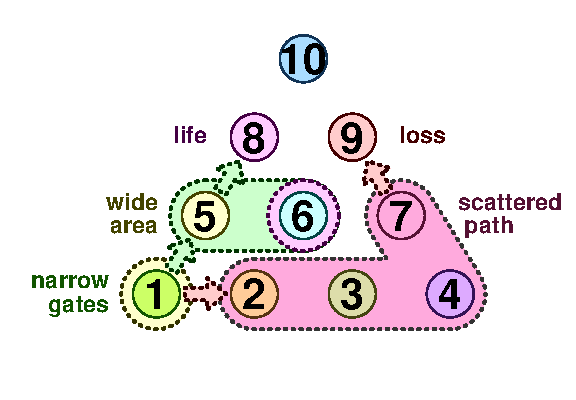
Had the religious establishment become a form of "
tax collector"? (node 6)
Had the religious establishment become a form of "
harlot" or "
mistress" put in place of the true Lord? (node 4)
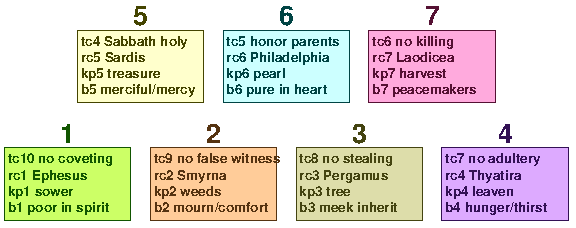
Both node 6 (merchandise) and node 4 (adultery) lead to node 7 (killing). Instead, one needs to move to node 5 (treasure, living bread). This choice is made at node 1 (covet/desire).
25. Matthew 21:31
KJV: Whether of them twain did the will of his father? They say unto him, The first. Jesus saith unto them, Verily I say unto you, That the publicans and the harlots go into the kingdom of God before you.
Greek: τις εκ των δυο εποιησεν το θελημα του πατρος λεγουσιν αυτω ο πρωτος υστερος λεγει αυτοις ο ιησους αμην λεγω υμιν οτι οι τελωναι και αι πορναι προαγουσιν υμας εις την βασιλειαν του θεου
26. Matthew 21:32
KJV: For John came unto you in the way of righteousness, and ye believed him not: but the publicans and the harlots believed him: and ye, when ye had seen it, repented not afterward, that ye might believe him.
Greek: ηλθεν γαρ ιωαννης προς υμας ιωαννης εν οδω δικαιοσυνης και ουκ επιστευσατε αυτω οι δε τελωναι και αι πορναι επιστευσαν αυτω υμεις δε ιδοντες ου ουδε μετεμεληθητε υστερον του πιστευσαι αυτω
27. Logical analysis: Groups
In Matthew, the "
Kingdom" of "
Heaven" (perception) is not the same as the "
Kingdom" of "
God" (reality).
Rather than use
opinion about what Jesus says (easily ambiguous), another approach is to first use
logical analysis (much less ambiguous).
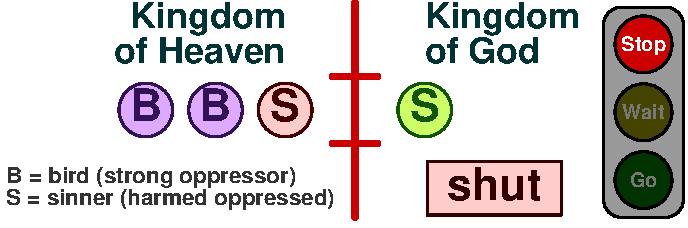
Jesus refers to two groups where one group can be split.
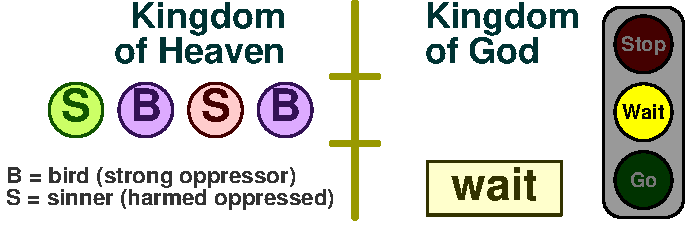
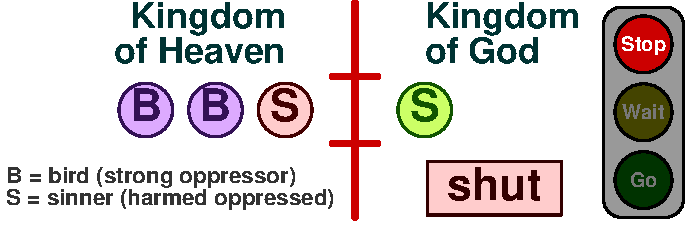
Birds (religious elite) who have oppressed others.
Sinners who have changed change mind and behavior (if necessary).
Sinners who have not changed mind and behavior (if necessary).
Note: To be a
bird one needs to make a
nest in the religious hierarchy and use that position in the pecking order to
oppress others via deception, added burdens, etc., and
not repented (in both senses). [Paul]
28. Logical analysis: Line up
Some sinners will
"repent" as in
"think about it" and, if and where needed, as in
"repent" as in
"change their ways" (different words in the Greek).
To enter the "
Kingdom of God", the groups are lined up.
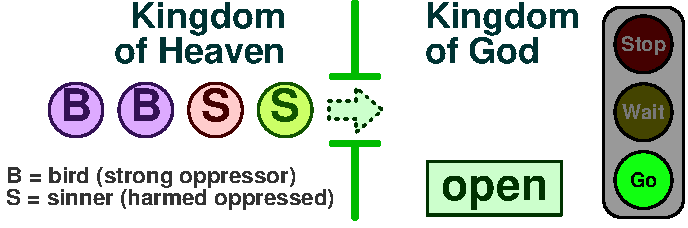
Front of the line: Sinners who have changed.
Middle of the line: Sinners who have not changed.
Back of the line: Birds (religious elite) who have oppressed others.
The gate is now
"open" . Note that the "
keys" to the "
kingdom" of "
heaven" cannot be "
opened" more than is already possible but can be "
closed" (the Greek definition of "
key").
29. Logical analysis: Enter
When the gate is
"open" , the
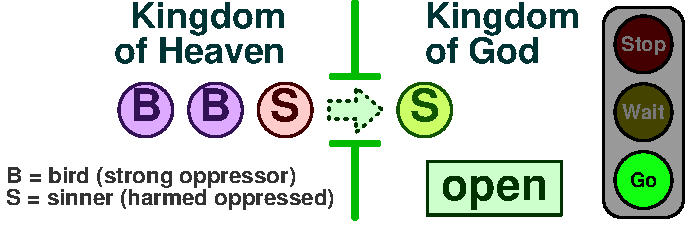
"sinners who have changed" enter first.
30. Logical analysis: Stop
The
"sinners who have not changed" do
not enter. The gate is then
"shut".
"Birds (religious elite) who have oppressed others." are still waiting
behind those
"sinners who have not changed" who have
not entered. Thus,
none of the
"Birds (religious elite) who have oppressed others." enter.
The "first" as the "birds" will be "last" (and not enter).
The "last" who have "lagged behind" (and have changed appropriately) shall enter "first".
This saying is an equivocation on the meaning of "
first" and "
last".
31. Matthew 21:31 Kingdom of God build
Matthew 21:31 Whether of them twain did the will of his father? They say unto him, The first. Jesus saith unto them, Verily I say unto you, That the publicans and the harlots go into the kingdom of God before you. [kjv]
τις εκ των δυο εποιησεν το θελημα του πατρος λεγουσιν αυτω ο πρωτος υστερος λεγει αυτοις ο ιησους αμην λεγω υμιν οτι οι τελωναι και αι πορναι προαγουσιν υμας εις την βασιλειαν του θεου [gnt]
32. Matthew 21:31 Review
Matthew 21:31 Whether of them twain did the will of his father? They say unto him, The first. Jesus saith unto them, Verily I say unto you, That the publicans and the harlots go into the kingdom of God before you. [kjv]
τις εκ των δυο εποιησεν το θελημα του πατρος λεγουσιν αυτω ο πρωτος υστερος λεγει αυτοις ο ιησους αμην λεγω υμιν οτι οι τελωναι και αι πορναι προαγουσιν υμας εις την βασιλειαν του θεου [gnt]
Logically, and relating the before and after of the "
Verily I say unto you", Jesus says that none of the
"birds" will enter the "
kingdom" of "
God" but some "
harlots" and/or "
tax collectors" may do so.
The "birds" correspond to the "child" who says "I am Lord (harlot)".
The others correspond to the "child" who "lagged behind" but then went and did the right thing.
33. Thought parable
Here is a paraphrase parable loosely based on some of the parables of Jesus.
1. Man one believed but spent all his time crusading for the belief that Jesus was one substance and fully human and fully God.
2. Man two believed but spent all his time crusading for the belief that Jesus was really God but just appeared to be human.
3. Man three believed but ignored the beliefs of man one and man two and went around doing good works, avoiding glory, and being passive when confronted.
Who did the will of the Father?
What happened to the men?
Man two condemned and executed man three for heresy. Man one wanted to condemn and execute man three for heresy but settled for condemning and executing man two for heresy. Compare and contrast this thought parable with the history of the church.
[partisan warfare, wash each other's feet]
34. Matthew 21:33 Parable of the householder 1
Matthew 21:33 Hear another parable: There was a certain householder, which planted a vineyard, and hedged it round about, and digged a winepress in it, and built a tower, and let it out to husbandmen, and went into a far country: [kjv]
21:40 When the lord therefore of the vineyard cometh, what will he do unto those husbandmen? [kjv]
21:41 They say unto him, He will miserably destroy those wicked men, and will let out his vineyard unto other husbandmen, which shall render him the fruits in their seasons. [kjv]
Who is the
"householder"? Are you sure? Do the actions of this
"householder" fit the actions of the real
"householder"?
35. End of page