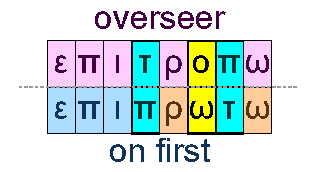
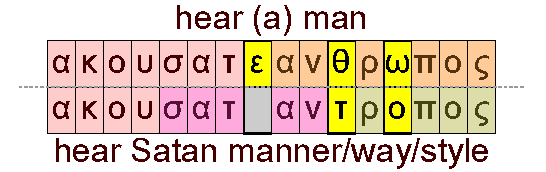
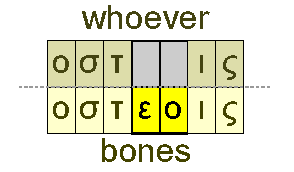
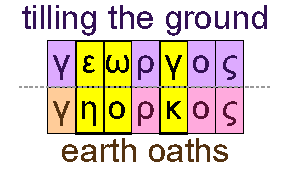
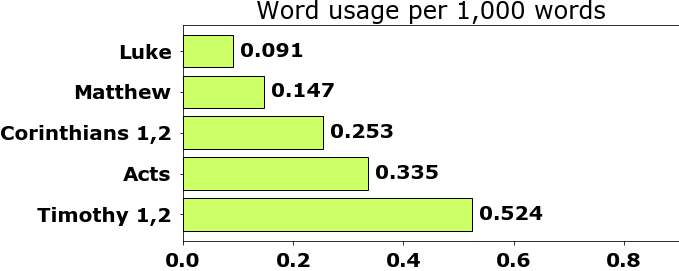
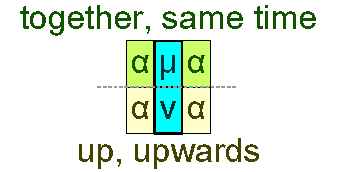
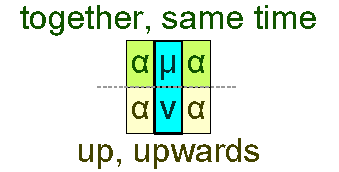
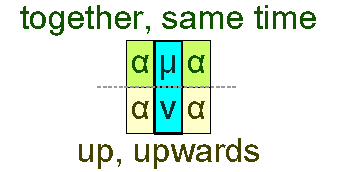
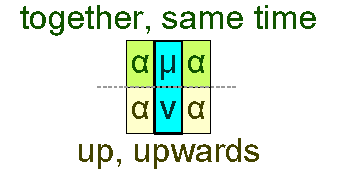
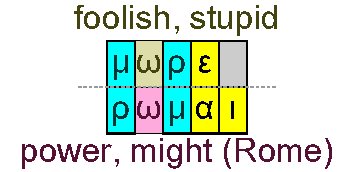
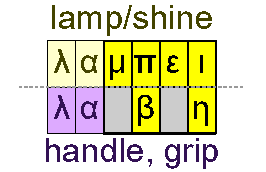
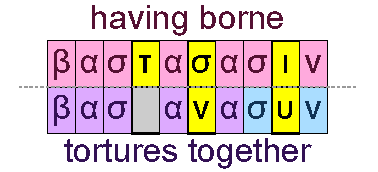
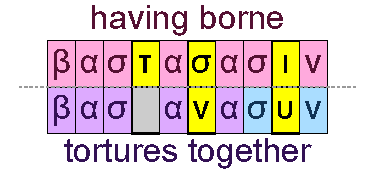
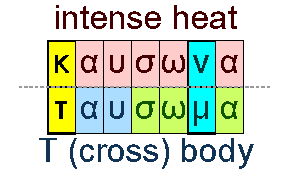
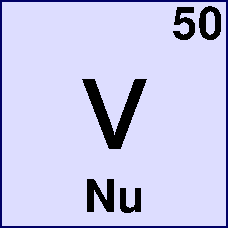
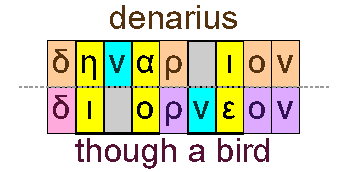
- *G4856 *6 συμφωνέω (soom-fo-neh'-o) : from G4859; to be harmonious, i.e. (figuratively) to accord (be suitable, concur) or stipulate (by compact):--agree (together, with).
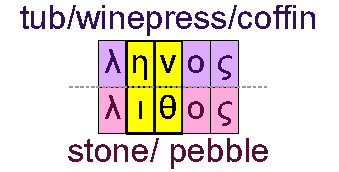
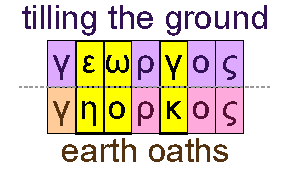
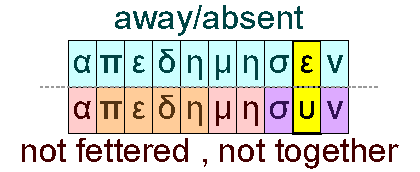
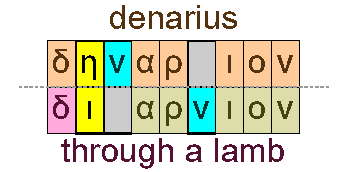
συμφωνησουσιν
συμφωνησας
συνεφωνησας
συμφωνησει
συνεφωνηθη
συμφωνουσιν
Acts 15:15 And to this agree the words of the prophets; as it is written,
90. Matthew 20:2 Oath of agreement
Matthew 20:2 And when he had agreed with the labourers for a penny a day, he sent them into his vineyard. [kjv]
συμφωνησας δε μετα των εργατων εκ δηναριου την ημεραν απεστειλεν αυτους εις τον αμπελωνα αυτου [gnt]
The Latin word
"concordo" ≈ "agree, harmonize" and is the source of the English word
"concordant". An
"agreement" is a form of "
oath".
The ancient Greek word
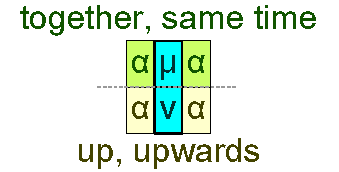
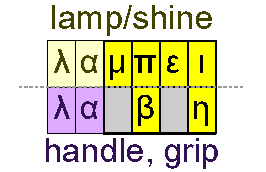
"συμφωνία" ≈ "agreement" and comes from the words for
"same voice". The English word
"symphony" comes from a group of people with the
"same voice". The letters "
M" and "
N" are related linguistically.
The ancient Greek word
"φωνή" ≈ "voice, sound" comes from the ancient Greek word
"φως" ≈ "light" and the ancient Greek word
"νους" ≈ "mind". That is, a
"sound" or
"voice" is
"light" into the
"mind".
91. Sounds of M and N
The Greek letters for "
M" and "
N" are related linguistically.
In Greek, the root of "
syn-" (before most letters) changes to "
sym-" before the consonants "
b", "
m" and "
p" to make pronunciation easier/smoother. Both prefixes mean "
together" or "
with".
Compare the following English words.
92. Matthew 20:13 Symphony
Matthew 20:13 But he answered one of them, and said, Friend, I do thee no wrong: didst not thou agree with me for a penny? [kjv]
ο δε αποκριθεις ειπεν ενι αυτων ειπεν εταιρε ουκ αδικω σε ουχι δηναριου συνεφωνησας μοι [gnt]
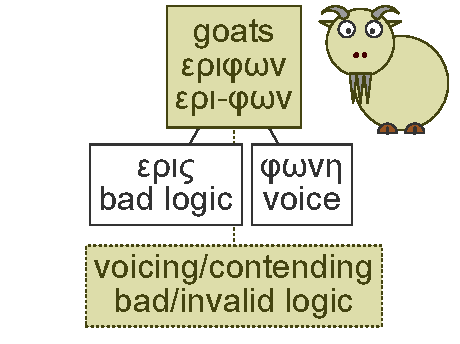
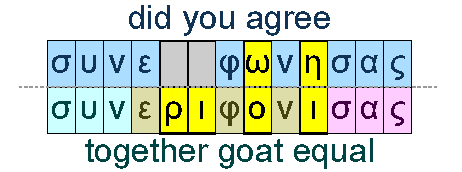
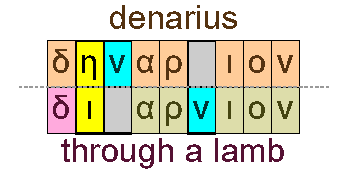
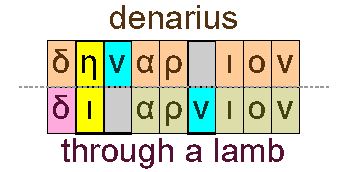
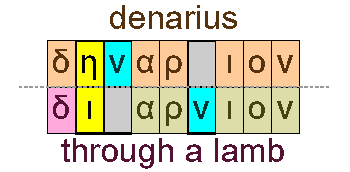
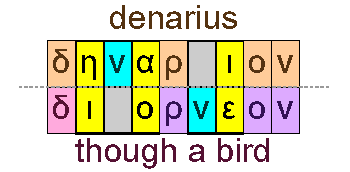
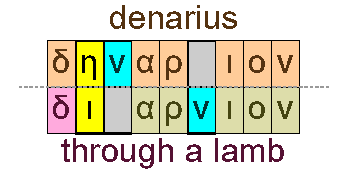
"συν" ≈ "together" and "ἔρῐφον" ≈ "kid, young goat" (accusative) and "ῐ̓́σᾱς" ≈ "equal" (feminine accusative plural).
93. Matthew 20:13 Agreement
Matthew 20:13 But he answered one of them, and said, Friend, I do thee no wrong: didst not thou agree with me for a penny? [kjv]
ο δε αποκριθεις ειπεν ενι αυτων ειπεν εταιρε ουκ αδικω σε ουχι δηναριου συνεφωνησας μοι [gnt]
The ancient Greek word
"συμφωνία" ≈ "agreement" and comes from the words for
"same voice". The English word
"symphony" comes from a group of people with the
"same voice". The letters "
M" and "
N" are related linguistically.
The ancient Greek word
"φωνή" ≈ "voice, sound" comes from the ancient Greek word
"φως" ≈ "light" and the ancient Greek word
"νους" ≈ "mind". That is, a
"sound" or
"voice" is
"light" into the
"mind".
The
ancient Greek word
"ἔχω" ≈ "have, hold".
The
modern Greek word
"ούχι" (U-khee) ≈ "no" comes from the idea of "
I do not have it" or "
not have it" where the ancient Greek word
"ου" ≈ "not".
The
Russian word
"нет" (nyet) ≈ "no" comes from the idea of "
I do not have it" or "
not have it".
94. Matthew 20:13
KJV: But he answered one of them, and said, Friend, I do thee no wrong: didst not thou agree with me for a penny?
Greek: ο δε αποκριθεις ειπεν ενι αυτων ειπεν εταιρε ουκ αδικω σε ουχι δηναριου συνεφωνησας μοι
95. Matthew 20:14 Take and go away
Matthew 20:14 Take that thine is, and go thy way: I will give unto this last, even as unto thee. [kjv]
αρον το σον και υπαγε θελω δε τουτω τω εσχατω δουναι ως και σοι [gnt]
The ancient Greek word
"ὑπάγω" ≈ "bring under, go slowly away" and is, literally,
"lead under" and comes from Greek words
"ὕπο" ≈ "under" and
"ἄγω" ≈ "lead". The usage in the
GNT appears to be that of
"go away".
It appears from what Jesus says that the only thing you are to
"take" is your "
cross" and "
follow" him. To avoid having a code word misinterpreted, Jesus here uses another Greek word that means
"take" as in
"take" or
"lift up" thy bed and walk (John 5:8).
"ἆρον" ≈ "lift, remove" from "αἴρω" ≈ "lift, take".
"ἐθέλω" ≈ "consent" rather than desire, for which "βούλομαι" ≈ "will, want" is used.
Why "
consent"? Does the "
agreement" go
both ways?
96. John 5:8
John 5:8 Jesus saith unto him, Rise, take up thy bed, and walk. [kjv]
λεγει αυτω ο ιησους εγειραι εγειρε αρον τον κραββατον κραβαττον σου και περιπατει [gnt]
The
ancient Greek word
"ἆρον" ≈ "lift, remove" from
"αἴρω" ≈ "lift, take".
97. John 5:8
KJV: Jesus saith unto him, Rise, take up thy bed, and walk.
Greek: λεγει αυτω ο ιησους εγειραι εγειρε αρον τον κραββατον κραβαττον σου και περιπατει
98. Strongs - take
*G142 *101 αἴρω (ah'-ee-ro) : a primary root; to lift up; by implication, to take up or away; figuratively, to raise (the voice), keep in suspense (the mind), specially, to sail away (i.e. weigh anchor); by Hebraism (compare H5375) to expiate sin:--away with, bear (up), carry, lift up, loose, make to doubt, put away, remove, take (away, up).
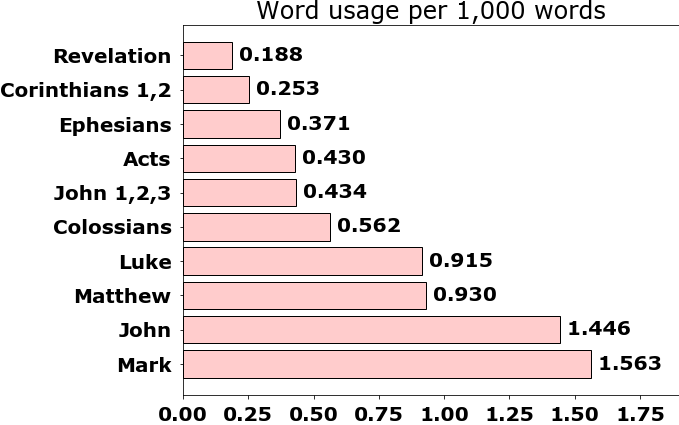 |
Words: αιρε=3 αιρει=8 αιρεις=2 αιρεται αιρετε αιρομενον αιροντος=2 αιρων=2 αιρωσιν αραι=6 αραντες=2 αρας=5 αρατε=5 αρατω=4 αρη=5 αρης αρθη αρθησεται=6 αρθητι=2 αρθητω αρθωσιν αρον=10 αρουσιν=4 αρω ηραν=13 ηρατε=3 ηρεν=5 ηρθη=3 ηρκεν ηρμενον
|
99. Matthew 9:6 Take up a bed
Matthew 9:6 But that ye may know that the Son of man hath power on earth to forgive sins, (then saith he to the sick of the palsy,) Arise, take up thy bed, and go unto thine house. [kjv]
ινα δε ειδητε οτι εξουσιαν εχει ο υιος του ανθρωπου επι της γης αφιεναι αμαρτιας τοτε λεγει τω παραλυτικω εγερθεις εγειρε αρον σου την κλινην και υπαγε εις τον οικον σου [gnt]
100. Matthew 9:6
KJV: But that ye may know that the Son of man hath power on earth to forgive sins, (then saith he to the sick of the palsy,) Arise, take up thy bed, and go unto thine house.
Greek: ινα δε ειδητε οτι εξουσιαν εχει ο υιος του ανθρωπου επι της γης αφιεναι αμαρτιας τοτε λεγει τω παραλυτικω εγερθεις εγειρε αρον σου την κλινην και υπαγε εις τον οικον σου
101. Matthew 17:27 Take up a fish
Matthew 17:27 Notwithstanding, lest we should offend them, go thou to the sea, and cast an hook, and take up the fish that first cometh up; and when thou hast opened his mouth, thou shalt find a piece of money: that take, and give unto them for me and thee. [kjv]
ινα δε μη σκανδαλισωμεν αυτους πορευθεις εις την θαλασσαν βαλε αγκιστρον και τον αναβαντα πρωτον ιχθυν αρον και ανοιξας το στομα αυτου ευρησεις στατηρα εκεινον λαβων δος αυτοις αντι εμου και σου [gnt]
102. Matthew 17:27
KJV: Notwithstanding, lest we should offend them, go thou to the sea, and cast an hook, and take up the fish that first cometh up; and when thou hast opened his mouth, thou shalt find a piece of money: that take, and give unto them for me and thee.
Greek: ινα δε μη σκανδαλισωμεν αυτους πορευθεις εις την θαλασσαν βαλε αγκιστρον και τον αναβαντα πρωτον ιχθυν αρον και ανοιξας το στομα αυτου ευρησεις στατηρα εκεινον λαβων δος αυτοις αντι εμου και σου
103. Matthew 20:14 Observations
Matthew 20:14 Take that thine is, and go thy way: I will give unto this last, even as unto thee. [kjv]
αρον το σον και υπαγε θελω δε τουτω τω εσχατω δουναι ως και σοι [gnt]
Discuss:
Are there those who have not been "hired"?
Everyone "hired" receives the same "wage". This is discrete or digital, zero or one, pass or fail.
There is no mention of amount of "work" in the "vineyard".
There is no mention of quality of "work" in the "vineyard".
It appears that everyone "hired" receives the one or pass and not the zero or fail.
104. Matthew 20:14 Comparisons
Matthew 20:14 Take that thine is, and go thy way: I will give unto this last, even as unto thee. [kjv]
αρον το σον και υπαγε θελω δε τουτω τω εσχατω δουναι ως και σοι [gnt]
Discuss the following.
How does the going into the "marketplace" to "hire" compare to the coupon of "grace" as an "offer"?
How does the "hiring" to "work" in the "vineyard" compare to the ticket of "salvation"?
"Salvation" has come to those in the "marketplace".
The ticket to enter the "vineyard" to "work" is used.
Do you need more than one ticket?
How might the
quantity and/or
quality of "
work" be evaluated? This question appears to be answered, in part, in other parables.
 |
Details are left as a future topic.
|
105. Matthew 20:14
Matthew 20:14 Take that thine is, and go thy way: I will give unto this last, even as unto thee. [kjv]
αρον το σον και υπαγε θελω δε τουτω τω εσχατω δουναι ως και σοι [gnt]
The Greek word translated as
"will" that of having "
"desire"" with the idea of
"consent".
"θέλω" ≈ "want, wish, care to" or "ἐθέλω" ≈ "want, wish, care to".
106. Matthew 20:14 And also about Caesar
Matthew 20:14 Take that thine is, and go thy way: I will give unto this last, even as unto thee. [kjv]
αρον το σον και υπαγε θελω δε τουτω τω εσχατω δουναι ως και σοι [gnt]
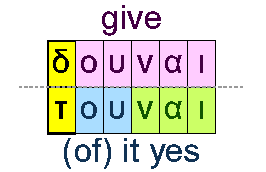
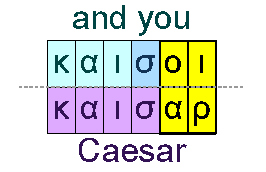
"δοῦναι" ≈ "give" and "και" ≈ "and" and "σοι" ≈ "(to) you" (dative).
"του" ≈ "(of) it" and "ναι" ≈ "yes" and "Καῖσαρ" ≈ "Caesar"
The last two words, in Greek, appear to a play on words with
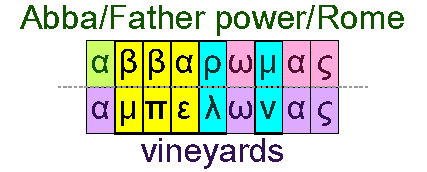
Caesar. Discuss: Did what the first say have anything to do with the power and might of Rome? The Greek word translated as
"unto" is that of
"and (also)".
107. Matthew 20:14
KJV: Take that thine is, and go thy way: I will give unto this last, even as unto thee.
Greek: αρον το σον και υπαγε θελω δε τουτω τω εσχατω δουναι ως και σοι
108. Matthew 20:15 Possibly allowed
Matthew 20:15 Is it not lawful for me to do what I will with mine own? Is thine eye evil, because I am good? [kjv]
η ουκ εξεστιν μοι ποιησαι ο θελω ποιησαι εν τοις εμοις ει η ο οφθαλμος σου πονηρος εστιν οτι εγω αγαθος ειμι [gnt]
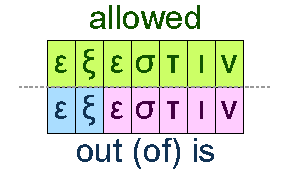
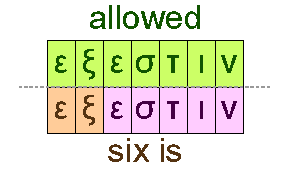
The Greek word translated as
"lawful" is that of
"allowed" or
"possible". The Greek does not indicate that what is done has to do with the "
law".
"ἔξεστι" ≈ "allowed, possible"
"νόμος" ≈ "custom, law" (opinion truth) as in "Deuteronomy" as in "second law". The Greek for "iniquity" is "against the law".
The Greek word translated as "
evil" is that of "
oppression (by toils)". What do "
evil" "
leaders" do? Jesus uses the Greek word for
"eye" as a code word for "
leader". Is there a "
leader" in the "
group" that is "
leading" this dissension?
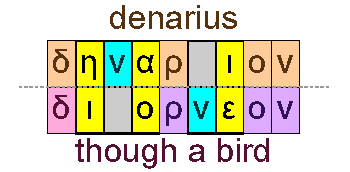
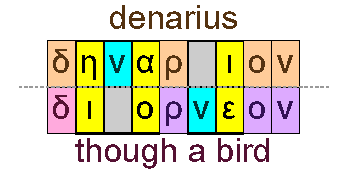
109. Matthew 20:15 Not out of six is
110. Matthew 7:17-18 Good and capable and tasty
Matthew 7:17 Even so every good tree bringeth forth good fruit; but a corrupt tree bringeth forth evil fruit. [kjv]
ουτως παν δενδρον αγαθον καρπους καλους ποιει το δε σαπρον δενδρον καρπους πονηρους ποιει [gnt]
7:18 A good tree cannot bring forth evil fruit, neither can a corrupt tree bring forth good fruit. [kjv]
ου δυναται δενδρον αγαθον καρπους πονηρους ποιειν ενεγκειν ουδε δενδρον σαπρον καρπους καλους ποιειν [gnt]
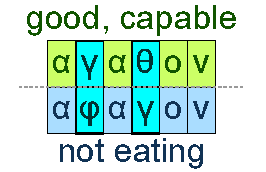
The
KJV translates
two different Greek words as "
good".
"ἀγαθός" ≈ "good, capable, trustworthy".
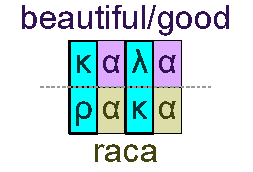
"καλός" ≈ "beautiful, good, right". The word "tasty" will be used for this quality of "fruit". Please do not get "testy" about something being "tasty" - an idea that might withstand the "taste" of time.
111. Matthew 22:32
Matthew 22:32 I am the God of Abraham, and the God of Isaac, and the God of Jacob? God is not the God of the dead, but of the living. [kjv]
εγω ειμι ο θεος αβρααμ και ο θεος ισαακ και ο θεος ιακωβ ουκ εστιν ο θεος θεος νεκρων αλλα ζωντων [gnt]
112. Exodus 3:14
Moses, at the burning bush, asks God to identify himself, Moses receives the following reply from God.
Exodus 3:14 And God said unto Moses, I AM THAT I AM: and he said, Thus shalt thou say unto the children of Israel, I AM hath sent me unto you. [kjv]
και ειπεν ο θεος προς μωυσην εγω ειμι ο ων και ειπεν ουτως ερεις τοις υιοις ισραηλ ο ων απεσταλκεν με προς υμας [lxx]
What exactly might the saying
"I" "am" "
that"
"I" "am" mean?
Is this similar or different to a saying of the cartoon character "
Popeye"? "
I yam what I yam and that's all what I yam" is the saying of Popeye the sailor man.
[the great I AM, not how great I am!]
113. Matthew 20:15 Because I am good
114. Matthew 6:22 Simple
115. Matthew 20:15 Questions
Matthew 20:15 Is it not lawful for me to do what I will with mine own? Is thine eye evil, because I am good? [kjv]
η ουκ εξεστιν μοι ποιησαι ο θελω ποιησαι εν τοις εμοις ει η ο οφθαλμος σου πονηρος εστιν οτι εγω αγαθος ειμι [gnt]
In this verse, the
TR adds one word, changes one word and moves one word to make the verse translate as two questions. Might these instead be two statements? The next verse starts with a word that means to follow directly from what was just said (this verse and previous verses).
Questions: (
TR Greek)
Greek: ... Or (is it) not allowed me create/make that (I) desire/consent in those me?.
Greek: ... If the eye (of) you (singular) oppressive is because I good am?
Statements: (a deal is a deal)
Greek: (It is) not allowed me that (I) desire/consent create/make in those me.
Greek: or the eye (of) you (singular) oppressive is because I good am.
116. Questions and answers
What does it mean when the husband says "What did you say?" to the wife?
He was not listening.
What does it mean when the wife says "What did you say?" to the husband?
She is giving him a chance to change what he said.
117. Matthew 20:15
Matthew 20:15 Is it not lawful for me to do what I will with mine own? Is thine eye evil, because I am good? [kjv]
η ουκ εξεστιν μοι ποιησαι ο θελω ποιησαι εν τοις εμοις ει η ο οφθαλμος σου πονηρος εστιν οτι εγω αγαθος ειμι [gnt]
Consider who might be the one talking. Might it be Peter? Jesus uses Peter to represent the church. Discuss:
Is Peter "oppressive", as in wanting to be "great" or "superior", for questioning what Jesus is doing or wants done - in regards to the rich young man?
Has the church ever been "oppressive", as in wanting to be "great" or "superior", for questioning what Jesus wants done - in regards to anyone rich or even just anyone?
Did the disciples use their "eye" to decide that what Jesus said would be (in the future) attributed to the fact that the young man had many "possessions"? This idea gets embellished in Mark (Peter's Gospel) and then even more in Luke.
118. Matthew 20:15
KJV: Is it not lawful for me to do what I will with mine own? Is thine eye evil, because I am good?
Greek: η ουκ εξεστιν μοι ποιησαι ο θελω ποιησαι εν τοις εμοις ει η ο οφθαλμος σου πονηρος εστιν οτι εγω αγαθος ειμι
119. Matthew 20:16 First and last
Matthew 20:16 So the last shall be first, and the first last: for many be called, but few chosen. [kjv]
ουτως εσονται οι εσχατοι πρωτοι και οι πρωτοι εσχατοι πολλοι γαρ εισιν κλητοι ολιγοι δε εκλεκτοι [gnt]
The ancient Greek word
"οὕτως" ≈ "thus" and indicates a conclusion from what has been said. One should look at what was said before this verse.
"πρῶτος" ≈ "first, earliest, most prominent, prime (number)" as in English words beginning with "proto".
"ἔσχατος" ≈ "farthest, most remote, last, final, extreme" and is the source of the English word "eschatology" as a "study of the end times".
Discuss:
Who are the "first"? Who are the "last"?
Who are those between the "first" and the "last"?
These questions appear to be answered, in part, at the end of the next chapter in the parable of the vineyard workers.
[job versus profession]
120. Matthew 20:16
KJV: So the last shall be first, and the first last: for many be called, but few chosen.
Greek: ουτως εσονται οι εσχατοι πρωτοι και οι πρωτοι εσχατοι πολλοι γαρ εισιν κλητοι ολιγοι δε εκλεκτοι
Latin: sic erunt novissimi primi et primi novissimi multi sunt enim vocati pauci autem electi
121. Matthew 21:31-32 Desire of the Father 2
Matthew 21:31 Whether of them twain did the will of his father? They say unto him, The first. Jesus saith unto them, Verily I say unto you, That the publicans and the harlots go into the kingdom of God before you. [kjv]
τις εκ των δυο εποιησεν το θελημα του πατρος λεγουσιν αυτω ο πρωτος υστερος λεγει αυτοις ο ιησους αμην λεγω υμιν οτι οι τελωναι και αι πορναι προαγουσιν υμας εις την βασιλειαν του θεου [gnt]
To support the earlier changes, the
TR changes the
"lagging behind" one to the
"first" one.
"θέλω" ≈ "want, wish, care to" or "ἐθέλω" ≈ "want, wish, care to".
"βούλομαι" ≈ "will, want".
Is
anyone going into the "
Kingdom of God"?
Is anyone going into the "Kingdom of God"? Who is not going in?
What is the difference between the "Kingdom of God" and the "Kingdom of heaven"?
122. Before and after
The following verses are immediately before (end of previous chapter) and at the end of the parable of the vineyard workers.
Matthew 19:30 But many that are first shall be last; and the last shall be first. [kjv]
πολλοι δε εσονται πρωτοι εσχατοι και εσχατοι πρωτοι [gnt]
This parable is in verses 1 to 16.
20:16 So the last shall be first, and the first last: for many be called, but few chosen. [kjv]
ουτως εσονται οι εσχατοι πρωτοι και οι πρωτοι εσχατοι πολλοι γαρ εισιν κλητοι ολιγοι δε εκλεκτοι [gnt]
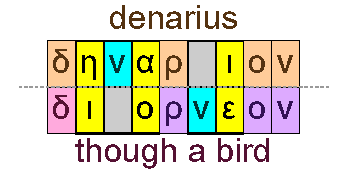
The end of the next chapter appears to be connected where Jesus uses the example of the
"first" as the religious establishment as
"birds" and the
"last" as the "
harlots" and "
tax collectors".
The
TR adds "
many be called, but few chosen" in Matthew 20:16 which does not fit in this context and breaks the model.
123. Matthew 21: Logical analysis
Matthew 21:31 Whether of them twain did the will of his father? They say unto him, The first. Jesus saith unto them, Verily I say unto you, That the publicans and the harlots go into the kingdom of God before you. [kjv]
τις εκ των δυο εποιησεν το θελημα του πατρος λεγουσιν αυτω ο πρωτος υστερος λεγει αυτοις ο ιησους αμην λεγω υμιν οτι οι τελωναι και αι πορναι προαγουσιν υμας εις την βασιλειαν του θεου [gnt]
Matthew uses
"kingdom" of
"God" and
not the
"kingdom" of
"heaven/air". Is there a difference? If so, is it important?
Many attribute this saying to
hyperbole or, essentially, an
opinion. A
logical analysis of this verse is that, with probability approaching certainty,
no religious elite who mislead the faithful for their own greatness will enter the
"kingdom" of
"God".
Who are the
"first"? Who are the
"last"? Who are the
"many"? Who are
not the
"many"?
124. Kingdom of heaven build
Jesus appears to make a
logical statement. If not, one can use
opinion to make it say many other things.
Are any of man's "
righteous" (without God) going in?
Sinners who have changed.
Sinners who have not changed.
Birds (religious elite) who have oppressed others. Are these the "first" that will be "last"? How many "sparrows" will fall without God?
Sinners who entered the Kingdom of God. Are these the "last" that will be "first"?
In particular, if there is even one tax collector or harlot that does not get into the kingdom of God, then neither do any of the religious elite to which Jesus refers.
125. TenWordPin summary
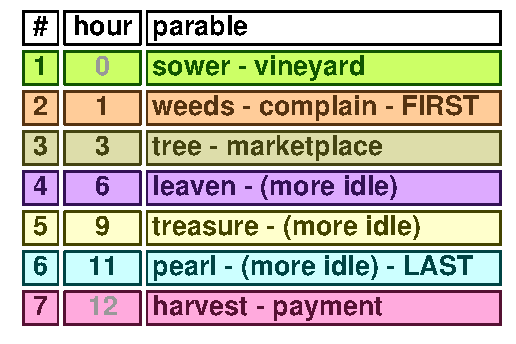
The parable of the vineyard workers can be compared with the kingdom parables in Matthew 13 using the TenWordPin model.
There are five hours, in a manner similar to five loaves (of bread).
There are the before and after, for two, in a manner similar to the two fish.
The word used for the one called "friend" (hour 1, complainer) is the same word as the one (few) without a wedding garment in the wedding feast two chapters later.
126. Matthew 20:17-19
Matthew 20:17 And Jesus going up to Jerusalem took the twelve disciples apart in the way, and said unto them, [kjv]
και αναβαινων ο μελλων δε αναβαινειν ιησους εις ιεροσολυμα παρελαβεν τους δωδεκα μαθητας κατ ιδιαν και εν τη οδω και ειπεν αυτοις [gnt]
20:18 Behold, we go up to Jerusalem; and the Son of man shall be betrayed unto the chief priests and unto the scribes, and they shall condemn him to death, [kjv]
20:19 And shall deliver him to the Gentiles to mock, and to scourge, and to crucify him: and the third day he shall rise again. [kjv]
This ends this discourse. Jesus and the disciples now go up to Jerusalem. Jesus provides some prophecy as to what will happen.
127. Matthew 20:18
KJV: Behold, we go up to Jerusalem; and the Son of man shall be betrayed unto the chief priests and unto the scribes, and they shall condemn him to death,
Greek: ιδου αναβαινομεν εις ιεροσολυμα και ο υιος του ανθρωπου παραδοθησεται τοις αρχιερευσιν και γραμματευσιν και κατακρινουσιν αυτον θανατω
128. Matthew 20:19
KJV: And shall deliver him to the Gentiles to mock, and to scourge, and to crucify him: and the third day he shall rise again.
Greek: και παραδωσουσιν αυτον τοις εθνεσιν εις το εμπαιξαι και μαστιγωσαι και σταυρωσαι και τη τριτη ημερα αναστησεται εγερθησεται
129. Matthew 20:17
KJV: And Jesus going up to Jerusalem took the twelve disciples apart in the way, and said unto them,
Greek: και αναβαινων ο μελλων δε αναβαινειν ιησους εις ιεροσολυμα παρελαβεν τους δωδεκα μαθητας κατ ιδιαν και εν τη οδω και ειπεν αυτοις
130. Matthew 20:8-19 Parable of the vineyard workers 2
|
|
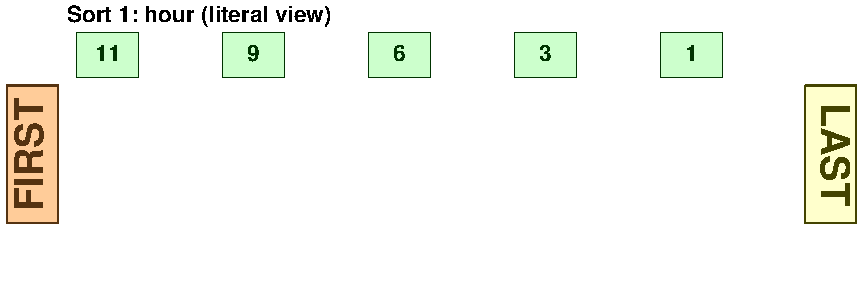
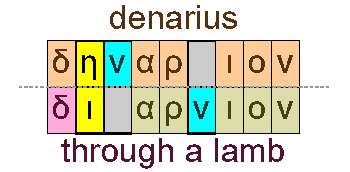
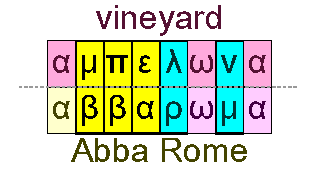
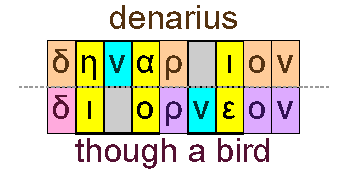
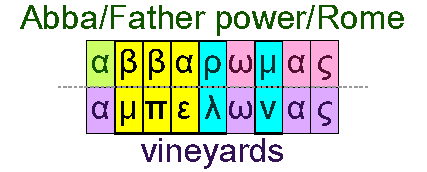
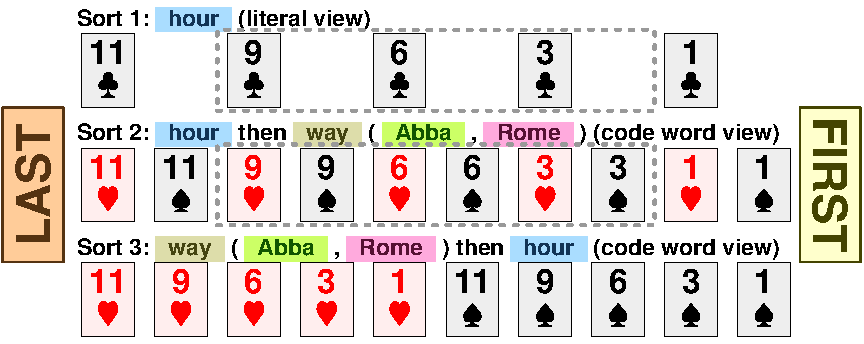
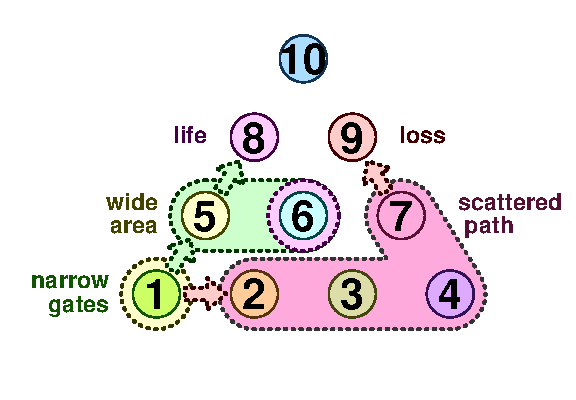
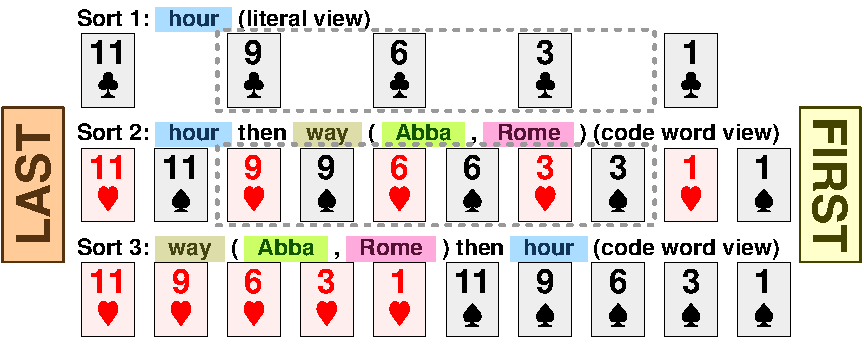
In the parable of the vineyard workers, workers agree to work in the vineyard for the same day's wage. This is the literal view.
|
In the
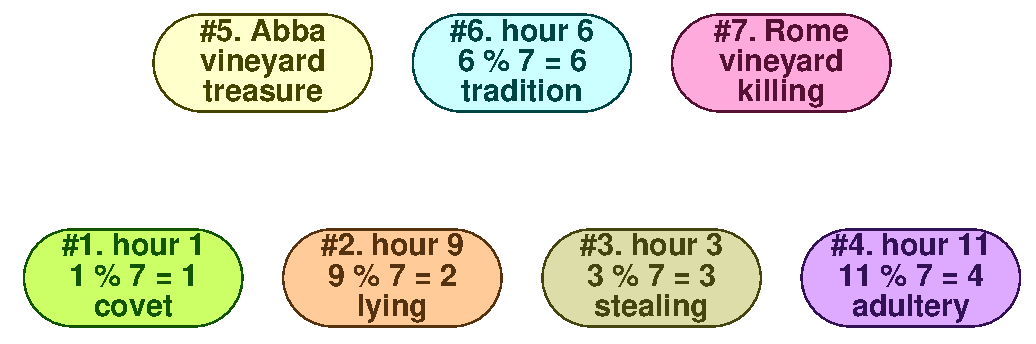
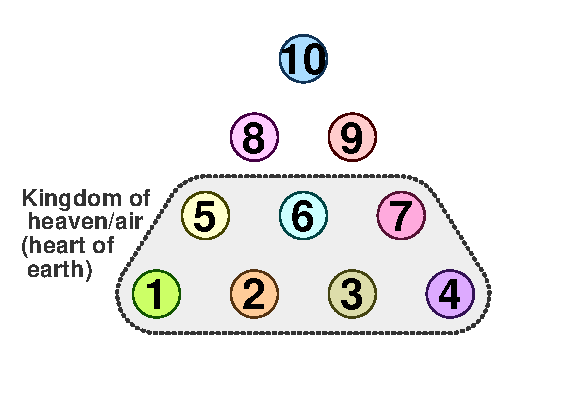
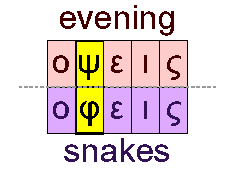
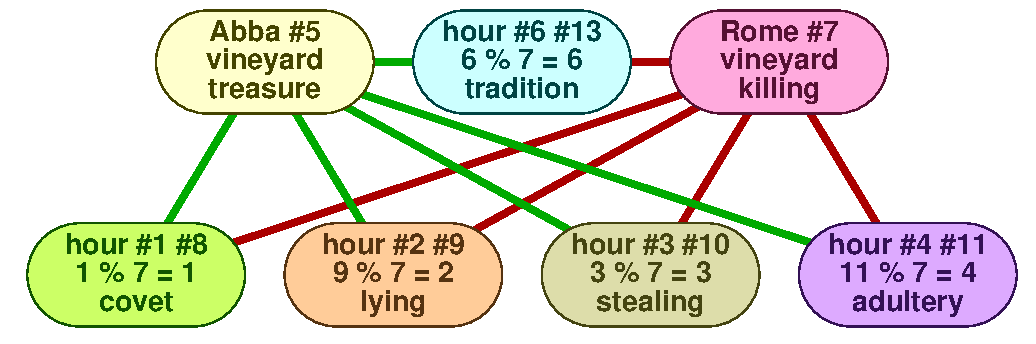
code word view, there are two types of wages - one for working in the true vineyard of Abba and one for working in the false vineyard of Rome.
A natural sorting order of a composite key in the code word view provides groupings of workers similar to the groupings and results of the parable of the
sheep and the
goats.
131. Deathbed conversion
Question: From where in the bible does the idea of a deathbed conversion come?
Microsoft Co Pilot AI (partial) answer: Another example is the parable of the vineyard workers (Matthew 20:1-16), where laborers hired late in the day received the same reward as those who worked all day, illustrating that God’s grace is not limited by the length of one’s prior life of unbelief. answerthebible.com
(as of 2026-08-01)
Discuss: How valid is this literal interpretation that contains many assumptions based on opinion?
132. End of page