Send
Close Add comments:
(status displays here)
Got it! This site "creationpie.org" uses cookies. You consent to this by clicking on "Got it!" or by continuing to use this website. Note: This appears on each machine/browser from which this site is accessed.
Matthew: First last and last first
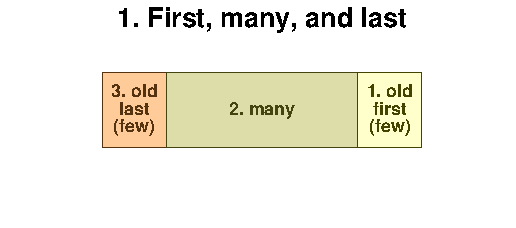
1. Matthew: First last and last first
2. Matthew 19
3. Meaning of sayings: Just saying
The number of code word views is intractable (AIT (Algorithmic Information Theory)).
Play on words are used as hints to make the problem tractable.
Play on words provide meaning authentication through tolerant providing fault tolerance and error detection and correction in message transmission (part of information theory).
Play on words provide message authentication through the origin of the Greek (and Latin) languages (appeal to General Revelation).
Limited prophecies provide author source authentication (e.g., claim that Matthew wrote himself in a clever manner).
4. Play on word jokes
A play on word joke usual has (at least) two parts.
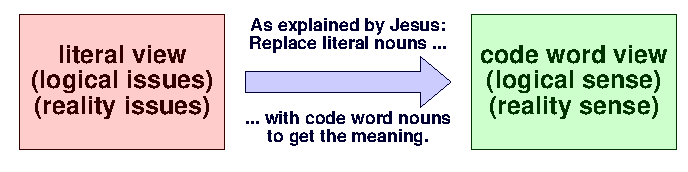
A literal view which only needs to make plausible sense.
A play on word view which has some unexpected meaning (i.e., a surprise) that is not the literal view.
This difference (not what one expects, a surprise) is essential in such jokes.
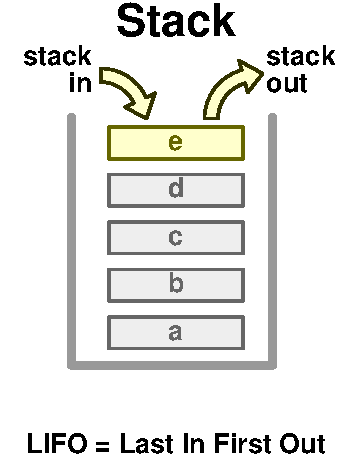
5. Matthew: First last and last first
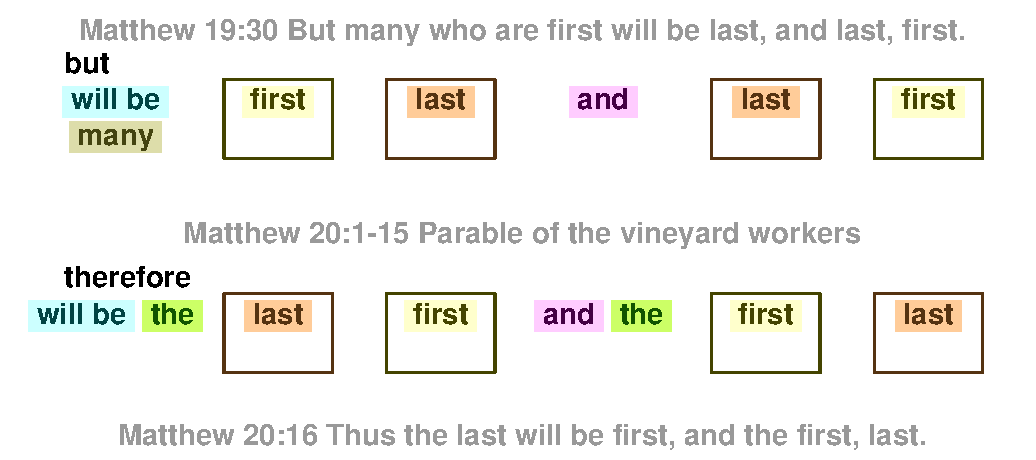
Matthew 19:30 But many that are first shall be last; and the last shall be first. [kjv]
πολλοι δε εσονται πρωτοι εσχατοι και εσχατοι πρωτοι [gnt]
[Matthew 20:1-15 Parable of the vineyard workers]
20:16 So the last shall be first, and the first last: for many be called, but few chosen. [kjv]
ουτως εσονται οι εσχατοι πρωτοι και οι πρωτοι εσχατοι πολλοι γαρ εισιν κλητοι ολιγοι δε εκλεκτοι [gnt]
In Matthew, Jesus talks
twice of the
"first" being
"last" and the
"last" being
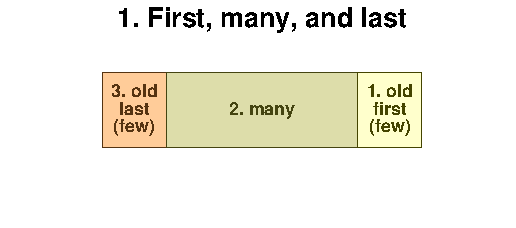
"first". Who are the
"many"? More importantly, who are
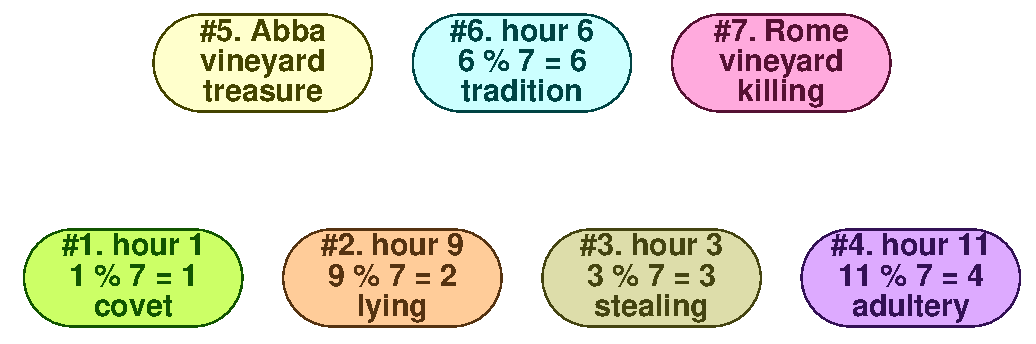
not the
"many" who might be called the "
few".
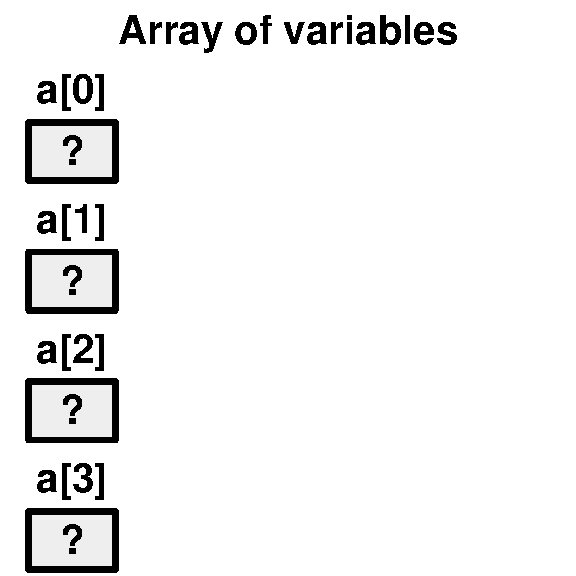
6. Chapter and verse divisions
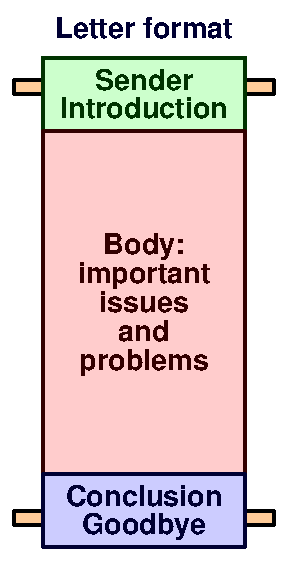
Chapter divisions were added (and chapters numbered) in the Middle Ages in the 13th century. Later, in 1551, in the Middle Ages, verse divisions were added (and verses numbered).
It is best to always check surrounding verses and, when appropriate, verses in the previous or next chapter, to see if those verses have important meaning for the context.
The common
KJV (King James Version) Bible has
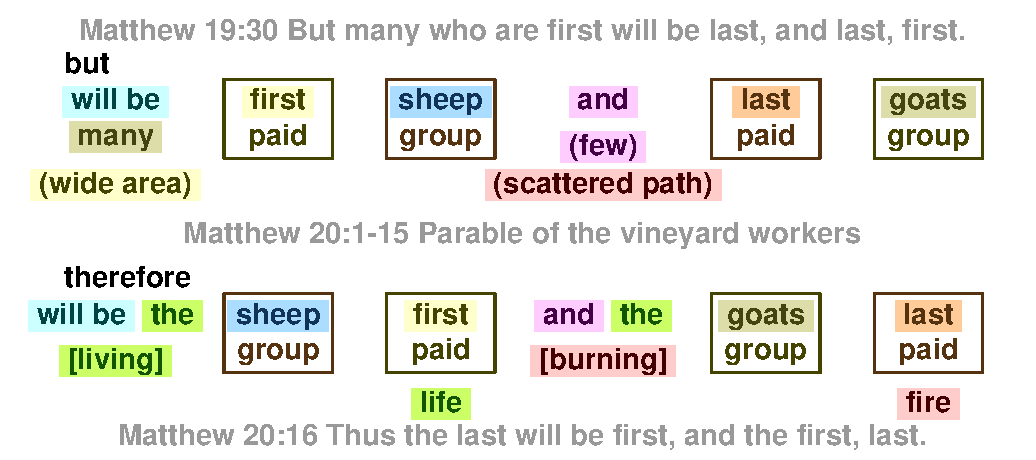
66 books,
40 in the
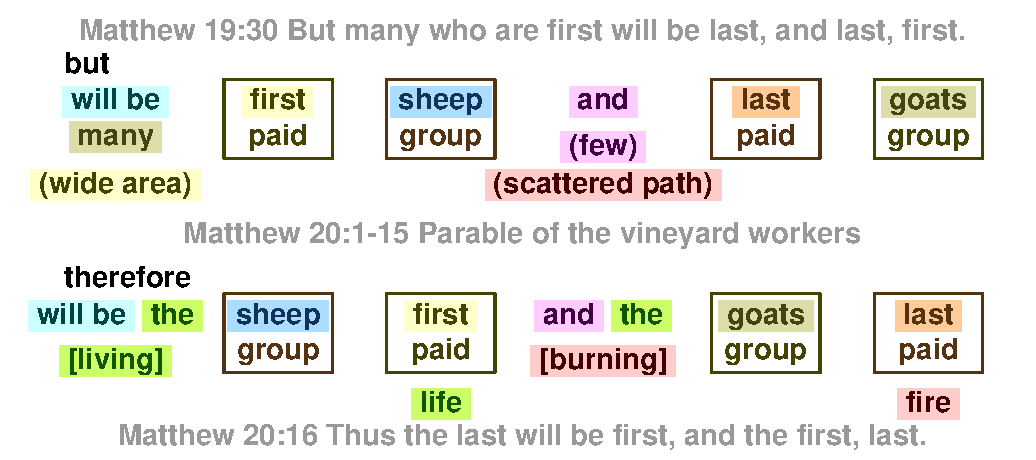
OT (Old Testament) and
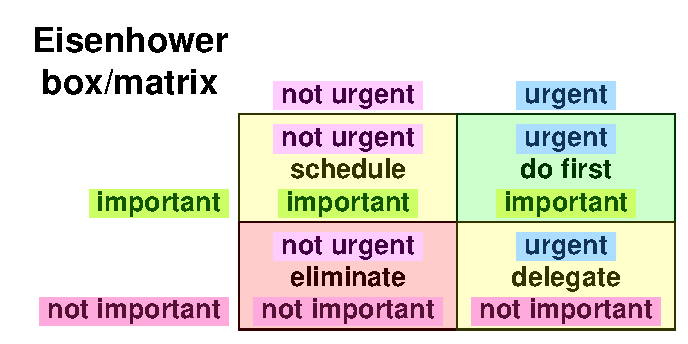
26 in the
NT (New Testament). Isaiah has
66 chapters.
In the 13th century, the books were divided into chapters. With small variations, there are
1,189 chapters in the Bible,
929 in the
OT and
260 in the
NT.
In the 16th century, the chapters were divided into verses. There are about
31,000 verses in the Bible,
23,000 in the
OT and
8,000 in the
NT. Some verses are more important than other verses. Is that a controversial view?
7. Matthew 20:8 Workers are called
Matthew 20:8 … hire, beginning from the last unto the first. [kjv]
… τον μισθον αρξαμενος απο των εσχατων εως των πρωτων [gnt]
Jesus uses
"first" and
"last" both before, after, and during the parable of the vineyard workers.
"ἀπο" ≈ "away from" and which has an idea of a "separating distance".
"ἔσχατος" ≈ "farthest, most remote, last, final, extreme" and is the source of the English word "eschatology" as a "study of the end times".
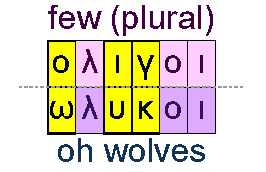
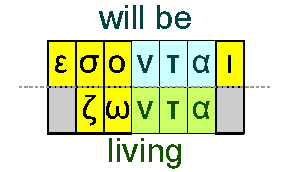
"εως" ≈ "until". "Ἕως" ≈ "Goddess of dawn" is another form of "Ἠώς" ≈ "Goddess of dawn".
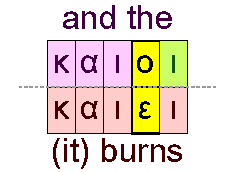
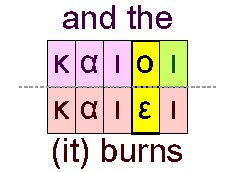
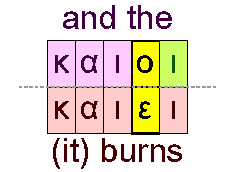
"πρῶτος" ≈ "first, earliest, most prominent, prime (number)" as in English words beginning with "proto".
[last as dark or target, first and way]
8. Matthew 19:30 Questions
Matthew 19:30 But many that are first shall be last; and the last shall be first. [kjv]
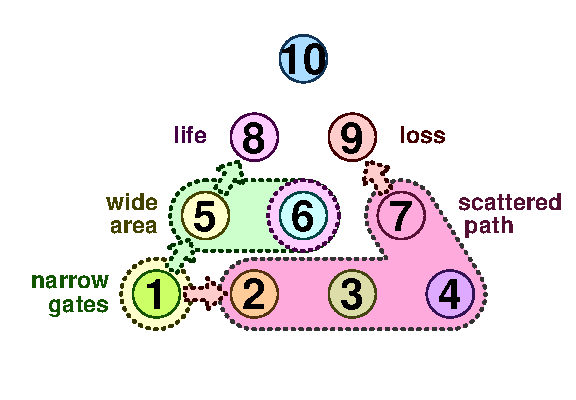
πολλοι δε εσονται πρωτοι εσχατοι και εσχατοι πρωτοι [gnt]
Who are the "many"?
Why was Greek "shall be" translated as "that are"?
Why was "shall be" added before both "last" and "first" in the KJV?
Why was "the" added in the KJV?
Why are "first" and "last" plural (both times for each)?
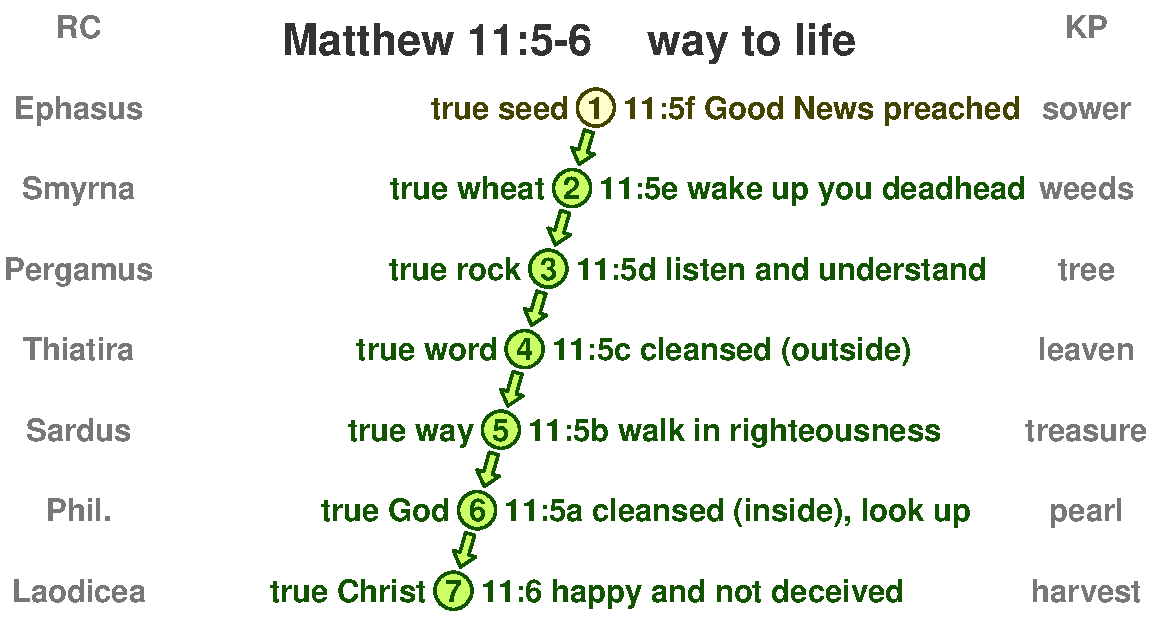
What are the potential and actual meanings of this verse?
The
ancient Greek word
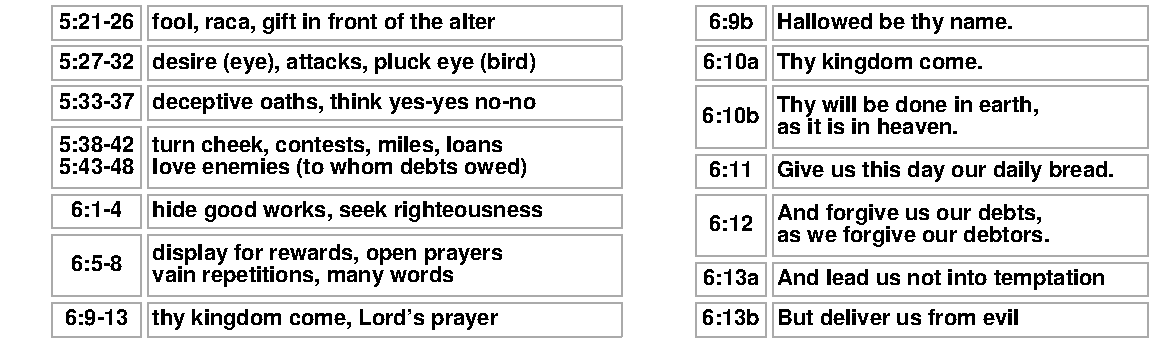
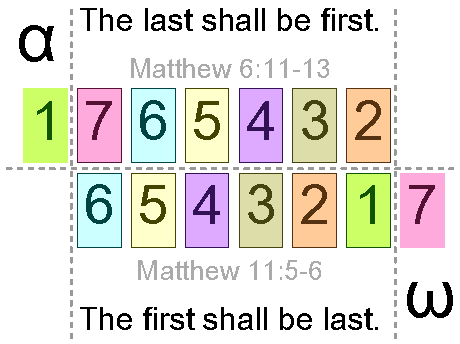
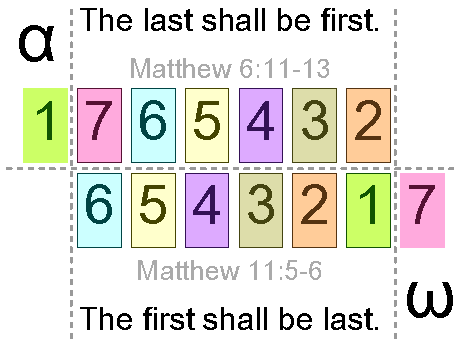
"ἔσονται" ≈ "will be" and is from
"εἰμί" ≈ "I am" as a form of
"existence" or
"being". The
exact word
"ἔσονται" ≈ "will be" is used in Matthew six times, all by Jesus.
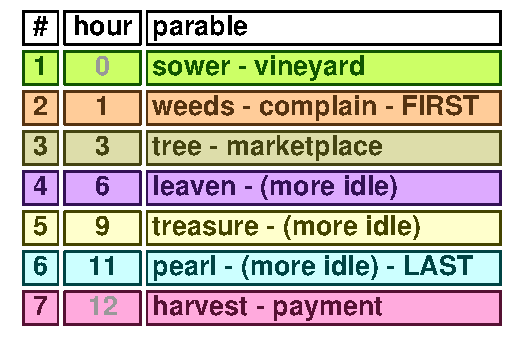
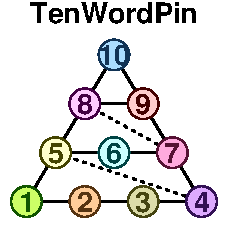
9. Matthew 19:30 Translations
Matthew 19:30 But many that are first shall be last; and the last shall be first. [kjv]
πολλοι δε εσονται πρωτοι εσχατοι και εσχατοι πρωτοι [gnt]
Greek:
Many but will be first last and last first.
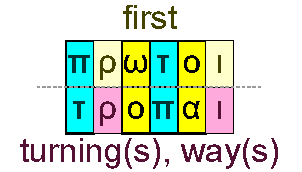
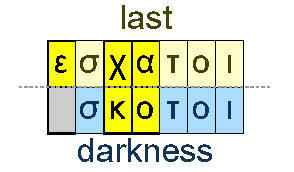
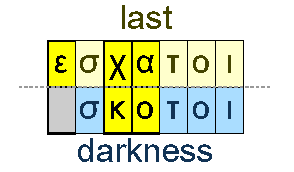
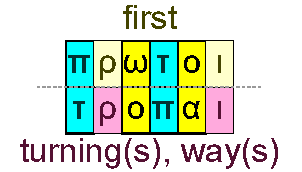
The Greek words
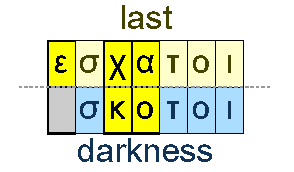
"many",
"first" and
"last" are all
plural.
Many translations follow the
KJV which is largely based on the Latin.
NIV (New International Version):
But many who are first will be last, and many who are last will be first.
NLT (New Living Translation):
But many who are the greatest now will be least important then, and those who seem least important now will be the greatest then.
Berean Literal Bible:
But many who are first will be last, and last, first.
10. Matthew 20:16 Translations
Matthew 20:16 So the last shall be first, and the first last: for many be called, but few chosen. [kjv]
ουτως εσονται οι εσχατοι πρωτοι και οι πρωτοι εσχατοι πολλοι γαρ εισιν κλητοι ολιγοι δε εκλεκτοι [gnt]
Greek:
Therefore will be the last first and the first last.
Many translations follow the
KJV which is largely based on the Latin and
not the Greek.
NIV:
So the last will be first, and the first will be last.
NLT:
So the last will be first, and the first will be last.
Berean Literal Bible:
Thus the last will be first, and the first, last.
11. Latin
Matthew 19:30 But many that are first shall be last; and the last shall be first. [kjv]
πολλοι δε εσονται πρωτοι εσχατοι και εσχατοι πρωτοι [gnt]
multi autem erunt primi novissimi et novissimi primi [v]
20:16 So the last shall be first, and the first last: for many be called, but few chosen. [kjv]
ουτως εσονται οι εσχατοι πρωτοι και οι πρωτοι εσχατοι πολλοι γαρ εισιν κλητοι ολιγοι δε εκλεκτοι [gnt]
sic erunt novissimi primi et primi novissimi multi sunt enim vocati pauci autem electi [v]
Jesus uses "
many" in 19:30 but not in 20:16. There is a "
the" (two times) in 20:16 but not in 19:30. The Latin in 20:16 does not have "
the" because Latin does not have a definite article.
The
TR (Textus Receptus), from the Latin,
adds "
many be called, but few chosen" which does not fit in this context and breaks the model. The
KJV in mo-st cases translates from the Latin and
TR rather than from the original Greek.
12. Matthew 20:16 Questions
Matthew 20:16 So the last shall be first, and the first last: for many be called, but few chosen. [kjv]
ουτως εσονται οι εσχατοι πρωτοι και οι πρωτοι εσχατοι πολλοι γαρ εισιν κλητοι ολιγοι δε εκλεκτοι [gnt]
Why are "first" and "last" plural (both times for each)?
Why is there a definite article "the" before the "last" (plural) and the "first" (plural)?
The TR adds "for many be called, but few chosen" which is out of place here.
What is the actual meaning of this verse?
Literal opinion.
Code word view.
13. Microsoft Co-Pilot AI
Question:
Who are the first and who are the last in Matthew 19:30 and Matthew 20:16?
Answer: Microsoft Co-Pilot AI: (as of 2026-09-02)
In both Matthew 19:30 and Matthew 20:16, Jesus says, “But many who are first will be last, and the last will be first.” The “first” and “last” here are not about wealth, social status, or earthly rank, but about spiritual position and God’s perspective. ...
Summary:
First: Disciples who trusted in their own sacrifices (Matthew 19:30) or those who had been working all day (Matthew 20:16).
Last: The rich young ruler (Matthew 19:30) or the workers hired late (Matthew 20:16), who were humble, overlooked, or repentant.
Jesus’ point is that God’s kingdom values humility, faithfulness, and trust in Him above human pride and self-assurance.
Notice that
AI (Artificial Intelligence) reports the
opinions on the
literal view since that is what it extracts from the Internet.
14. First, middle and last
Who are the "first"?
Who are the "last"?
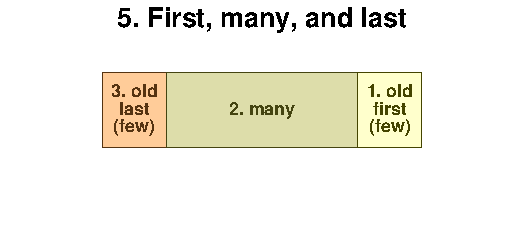
Who are the many in the "middle"?
Do the sayings for "first" and "last" apply to the "middle"?
Is there a "middle" for the "many"? Is this the "many" to which the verse refers?
Does this include everyone in the world? That is, are the above collectively exhaustive?
Who might it not include?
If not, do the sayings for "first" and "last" apply to those others?
Discuss:
How many issues are there with a literal interpretation of what is said?
How many have tried to be crafty about trying to be "last" so that they can be "first"?
How would a false leader/teacher (i.e., a bird) use or develop this attitude for their own purposes?
15. Microsoft Co-Pilot AI
Question: Who are those between the first and the last in Matthew 19:30 and Matthew 20:16?
Answer: Microsoft Co-Pilot AI: (as of 2026-09-03)
In both Matthew 19:30 and Matthew 20:16, Jesus says, “But many who are first will be last; and the last, first” (NIV). The “first” and “last” are not literal rankings in heaven, but worldly positions — “first” meaning those who appear to be in a position of honor, privilege, or spiritual leadership in this life, and “last” meaning those who are overlooked, humble, or in a lower social or spiritual status.
... (more below) ...
In short: The “those between” are the ordinary, humble believers who are neither the most exalted nor the most despised in this world, but who, through faith and service, are part of God’s kingdom reversal.
16. Microsoft Co-Pilot AI continued
Question:
Who are those between the first and the last in Matthew 19:30 and Matthew 20:16?
Answer: Microsoft Co-Pilot AI: (as of 2026-09-03)
Meaning of “Between the First and the Last” The “those between” are ordinary believers — not the most prominent or the most overlooked, but people in the middle of the spectrum. They may be:
Humble servants who are not seeking recognition but are faithful in their calling.
Believers in the middle of society who are neither the most wealthy nor the most poor, yet are part of God’s kingdom.
Disciples who are not the most visible leaders but who trust God’s timing and grace.
Jesus’ teaching is a call to reject pride in status and to trust that God’s reward is based on His grace, not on human merit or effort.
17. Literal views
We now look at several literal views of the
first and the
last.
1. Declarative exchange (swap) of
first and
last.
2. Inductive declarative exchange (swap) of
first and
last.
3. Application of the Inductive declarative exchange (swap) of
first and
last.
4. Imperative operational (sequenced) view of
first and
last.
5. A stack-based view of
first and
last (over time).
Each of these views is not completely satisfactory.
I had to give up trying to find part of my first aid kit.
It was a lost gauze.
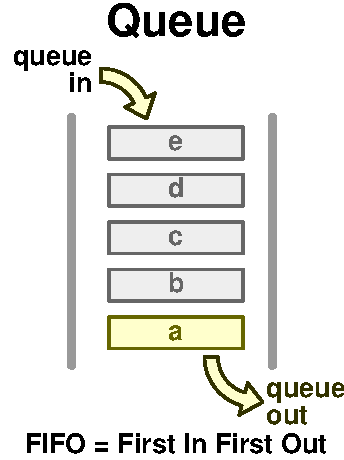
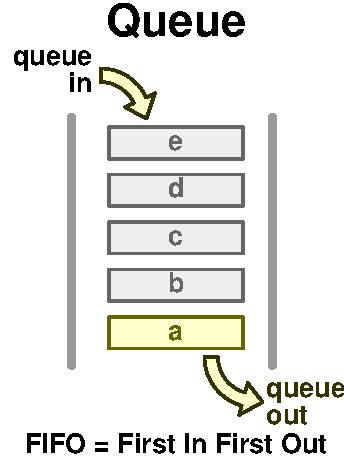
18. Stacks and queues in computer science
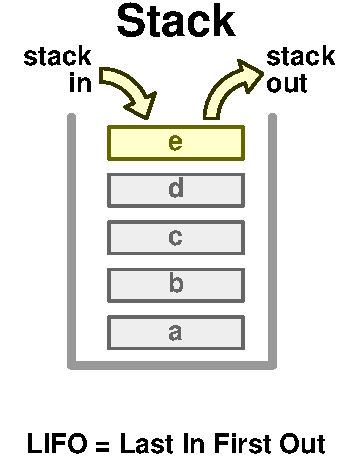
A "
stack" is a
LIFO (Last In First Out) data structure. Think of a "
stack" of cafeteria trays.
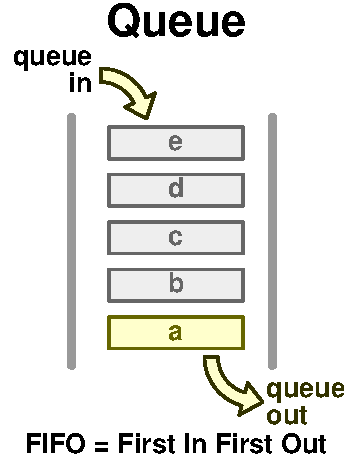
A "
queue" is a
FIFI (First In First Out) data structure. Think of a waiting line.
In computer science, stacks are used to remember something (push), go and do something else, and then remember what you were doing (pop) and continue what you were doing.
19. German
The German language often pushes verbs during a sentence and then pops them off in reverse order (creating some suspense) at the end of the sentence.
German: Er hat nach Hause gehen wollen, dass sie, weil sie müde war, nicht bleiben konnte.
English: He wanted to go home, that she, because she was tired, couldn't stay.
20. Stacks and queues in computer science
What is a "queue"?
A "queue" is a "q" with silent letters in-line after it.
To the person who cut in front of me in line:
You better watch out. I'm after you now!
What English word is pronounced the same when the last four letters are removed?
Queue! You lined yourself up for that one. That was your cue! I was never a good liar. That's why in the liar queue I was at the end of the lying.
21. Structural induction
The following are basically the same with a slight different in viewpoint and application.
A mathematical induction is an induction based on mathematical formulas (more abstract).
A structural induction is an induction based on (often programming) structures (more concrete).
Inside to outside: (syntheses, generative)
base case: one element (already ordered)
step (induction) case: two elements, one on each side
Outside to inside: (analysis)
base: two outer elements, one on each side.
step: inside elements as base and step.
[fractals]
22. Structural induction build
A
declarative interpretation of the
first and
last is that of a swap of values. Is this is what was intended by the verses?
The effect of the
first shall be last and the
last shall be first is that of
reversing the order of the
elements of the
list.
This is nice to know, but the
"first" and
"last" verses do not indicate that a recursive application is intended.
This is a
different idea than the "
greatest" shall be the "
least" and the "
least" shall be the "
greatest". In that case, every value can be the same. In a list, each is a different element and is
not the
same element, even if some elements have the
same value.
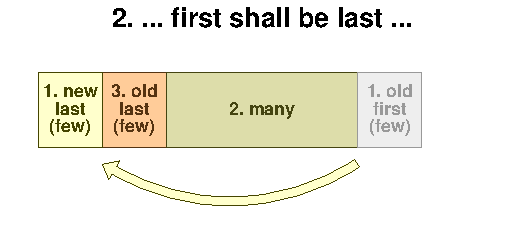
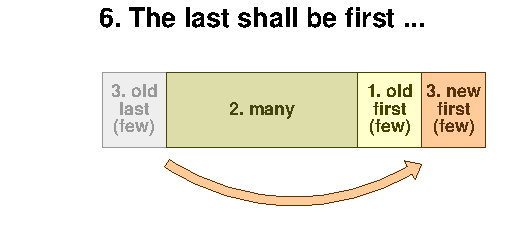
23. Flip a block
24. Matthew 19:30 Literal view
Matthew 19:30 But many that are first shall be last; and the last shall be first. [kjv]
Algorithm: What is the effect?
2. person at the
beginning of the line, go to the
back of the line.
3. person at the
back of the line go to the
beginning of the line.
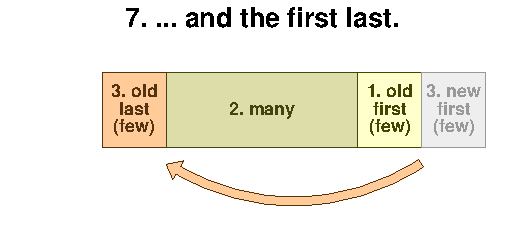
25. Matthew 20:16 Literal view
Matthew 20:16 So the last shall be first, and the first last: for many be called, but few chosen. [kjv]
Algorithm: What is the effect?
6. person at the
back of the line go to the
beginning of the line.
7. person at the
beginning of the line, go to the
back of the line.
26. First and last build
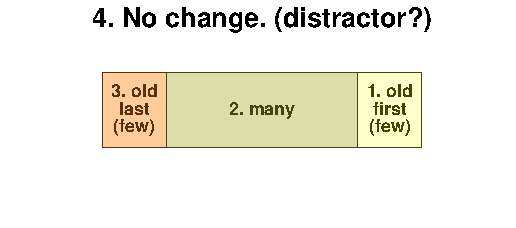
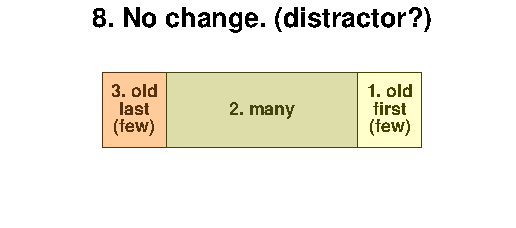
What is the effect of the (imperative) algorithms? Invariant transforms.
1. Initial configuration.
4, 8. Back to original configuration. No change.
2. person at the
beginning of the line, go to the
back of the line.
3. person at the
back of the line go to the
beginning of the line.
6. person at the
back of the line go to the
beginning of the line.
7. person at the
beginning of the line, go to the
back of the line.
27. Similarities and differences
Matthew 19:30 But many that are first shall be last; and the last shall be first. [kjv]
πολλοι δε εσονται πρωτοι εσχατοι και εσχατοι πρωτοι [gnt]
20:16 So the last shall be first, and the first last: for many be called, but few chosen. [kjv]
ουτως εσονται οι εσχατοι πρωτοι και οι πρωτοι εσχατοι πολλοι γαρ εισιν κλητοι ολιγοι δε εκλεκτοι [gnt]
"πρῶτος" ≈ "first, earliest, most prominent, prime (number)" as in English words beginning with "proto".
"ἔσχατος" ≈ "farthest, most remote, last, final, extreme" and is the source of the English word "eschatology" as a "study of the end times".
"ἔσονται" ≈ "will be" (third person plural medio-passive indicative) of "εἰμῐ́" ≈ "to be, exists".
28. Matthew 19:30 First and last
29. Matthew 19:30 Stacks and queues
Matthew 19:30 But many that are first shall be last; and the last shall be first. [kjv]
πολλοι δε εσονται πρωτοι εσχατοι και εσχατοι πρωτοι [gnt]
What is the criteria to which
first and
last refer?
Stack paraphrase:
But many that are first in (dead) shall be the last out (resurrected) and the last in (living) shall be the first out (resurrected).
Who are the
"many" in the
"middle"?
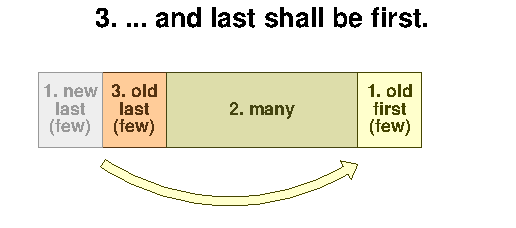
That is, from a time sequence perspective, the last in shall be first out and the first in shall be last out. This is the definition of a
stack structure.
30. Matthew 20:8 Last to the first
Matthew 20:8 So when even was come, the lord of the vineyard saith unto his steward, Call the labourers, and give them their hire, beginning from the last unto the first. [kjv]
οψιας δε γενομενης λεγει ο κυριος του αμπελωνος τω επιτροπω αυτου καλεσον τους εργατας και αποδος αυτοις τον μισθον αρξαμενος απο των εσχατων εως των πρωτων [gnt]
The order in which the workers are "
paid" is from the
"last" to the
"first". Both are
masculine,
genitive and
plural. The order appears to be that of
reverse order in which they were called to work in the
"vineyard".
This has a
literal meaning. Might this be a distractor for any secondary meaning?
The Greek translated as
"hire" is that of
"reward".
31. Ten Pin: Vineyards and rewards
|
|
The literal meaning does not exactly match the code word meaning.
|
Abba reward.
|
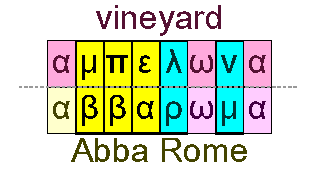
Which vineyard?
|
Rome reward.
|
[parable of the mustard seed]
If
five paths to
Abba and
five paths to
Rome are representative, then this model fits well with the Parable of the
Ten Virgins.
32. Sheep and goats
Heart
Not eating fruit.
 |
Spade
Digging in sand.
 |

Sheep
|

Goat
|
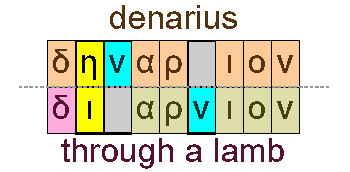 |
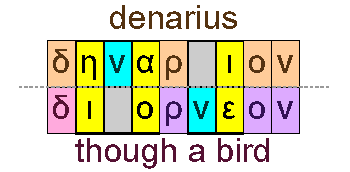 |
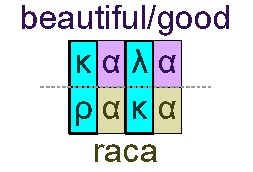 |
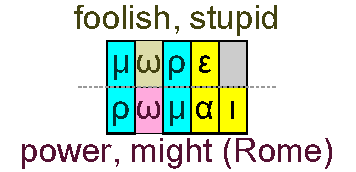 |
|
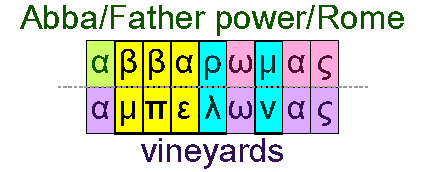
Let the ways of doing something be a "heart" or a "spade". Group by ways of doing things.
Relate "hearts" to "sheep" for working (primarily) in the "Abba" "vineyard".
Relate "spades" to "goats". for working (primarily) in the "Rome" "vineyard".
|
33. Sorting
To "
sort" is to "
arrange" into "
order" using some "
criteria". In the seventh kingdom parable, the harvest at the end of the age, the "
angels" "
arrange" or "
order" items into "
good" and "
rotten". This is the basic idea of the first iteration of
quicksort that was developed by Tony Hoare in 1959 and published in 1961.
If the "
greatest" and the "
least" are the same
value, then sorting on that
value results in
n! orderings for
n items, all of which are valid
sorts or
arrangements. In such a case, there is no need to ever
sort on that
value.
34. Arrays of lists
The "worth" such as greatest or least, of every element can be the same.
The "order" in the list, such as first or last, of each element is different.
To
reverse the list, no knowledge is needed of the value of each element in the list.
Each item may be a simple type or a complex structure. If it is a complex structure (not a simple type), then any sort or arrangement into order requires knowing how two items are to be structurally related.
For a worker in the vineyard, a worker item might have the following structure.
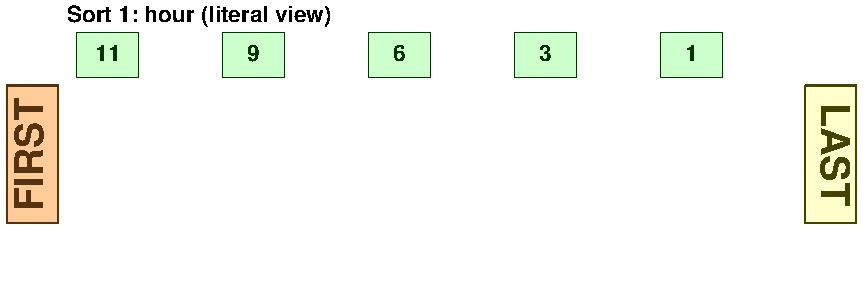
Hour hired: 1, 3, 6, 9, 11.
Way: Vineyard in which worked - "Abba" or "Rome".
35. Sorting on the way of the vineyard
How might you organize a set (hand) of cards in your hand?
By number or hour?
By suit or way of grouping?
Have you been
clubbed by the
literal view? Join the
club!
How many sort their cards
"on" the
"manner" or
"way" rather than by
number or
"hour"? It may be that the
"ἐπῐτρόπῳ" ≈ "person in charge" (dative, masculine, singular) will "
reward" based
"ἐπί" ≈ "on, upon" the
"τρόπῳ" ≈ "turn, way, manner, style" (dative, masculine. singular). There are two types, or
ways, of the
"vineyard".
Let the
"Abba" way be as a
"heart" and the
"Rome" way be as a
"spade". Then there are two natural groups in sort 3. Might these be the "
sheep" and the "
goats"?
36. Matthew 21: Logical analysis
Matthew 21:31 Whether of them twain did the will of his father? They say unto him, The first. Jesus saith unto them, Verily I say unto you, That the publicans and the harlots go into the kingdom of God before you. [kjv]
τις εκ των δυο εποιησεν το θελημα του πατρος λεγουσιν αυτω ο πρωτος υστερος λεγει αυτοις ο ιησους αμην λεγω υμιν οτι οι τελωναι και αι πορναι προαγουσιν υμας εις την βασιλειαν του θεου [gnt]
Matthew uses
"kingdom" of
"God" and
not the
"kingdom" of
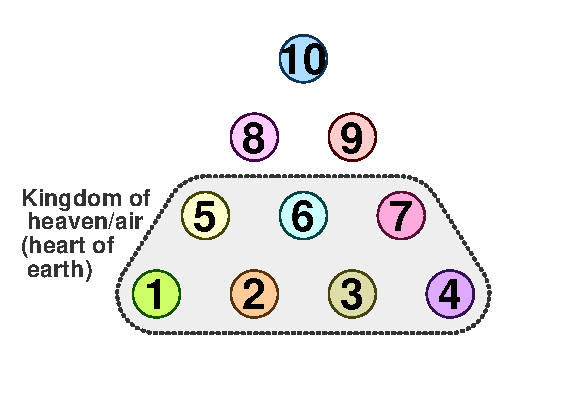
"heaven/air". Is there a difference? If so, is it important?
Many attribute this saying to
hyperbole or, essentially, an
opinion. A
logical analysis of this verse is that, with probability approaching certainty,
no religious elite who mislead the faithful for their own greatness will enter the
"kingdom" of
"God".
Who are the
"first"? Who are the
"last"? Who are the
"many"? Who are
not the
"many"?
37. Kingdom of heaven build
Jesus appears to make a
logical statement. If not, one can use
opinion to make it say many other things.
Are any of man's "
righteous" (without God) going in?
Sinners who have changed.
Sinners who have not changed.
Birds (religious elite) who have oppressed others. Are these the "first" that will be "last"? How many "sparrows" will fall without God?
Sinners who entered the Kingdom of God. Are these the "last" that will be "first"?
In particular, if there is even one tax collector or harlot that does not get into the kingdom of God, then neither do any of the religious elite to which Jesus refers.
38. Verses
Matthew 19:30 But many that are first shall be last; and the last shall be first. [kjv]
πολλοι δε εσονται πρωτοι εσχατοι και εσχατοι πρωτοι [gnt]
20:16 So the last shall be first, and the first last: for many be called, but few chosen. [kjv]
ουτως εσονται οι εσχατοι πρωτοι και οι πρωτοι εσχατοι πολλοι γαρ εισιν κλητοι ολιγοι δε εκλεκτοι [gnt]
Each of the words
"first" and
"last" needs to be
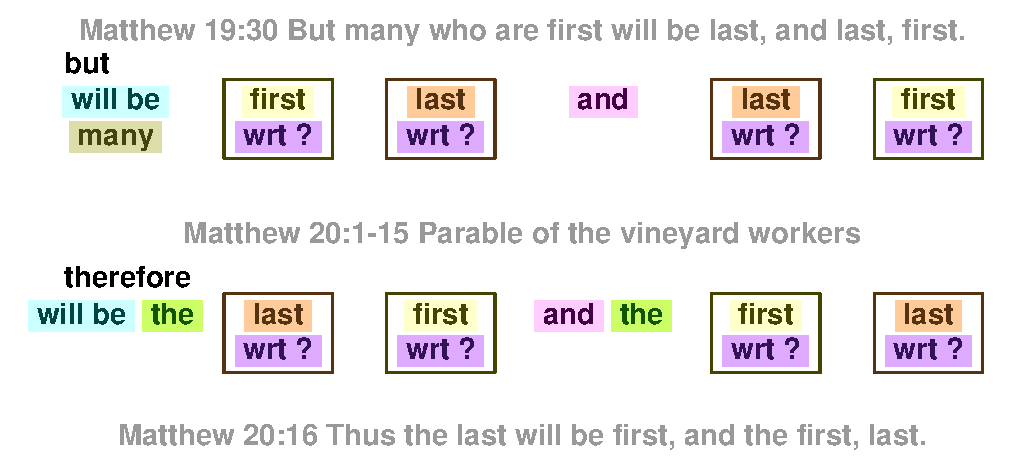
with respect to, abbreviated as
wrt in computer science proofs, some
criteria. General criteria, ignoring
"the" and
"many":
"first" wrt a criteria.
"last" wrt a criteria.
The criteria need not be the same. The
literal view tends to use the "
hour" of the day or "
place" in line, or other opinions.
39. First and last criteria
Simplified verse parts:
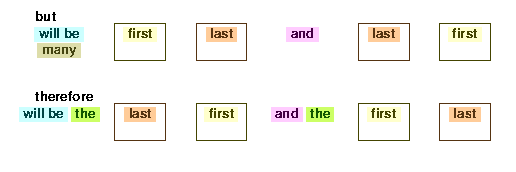
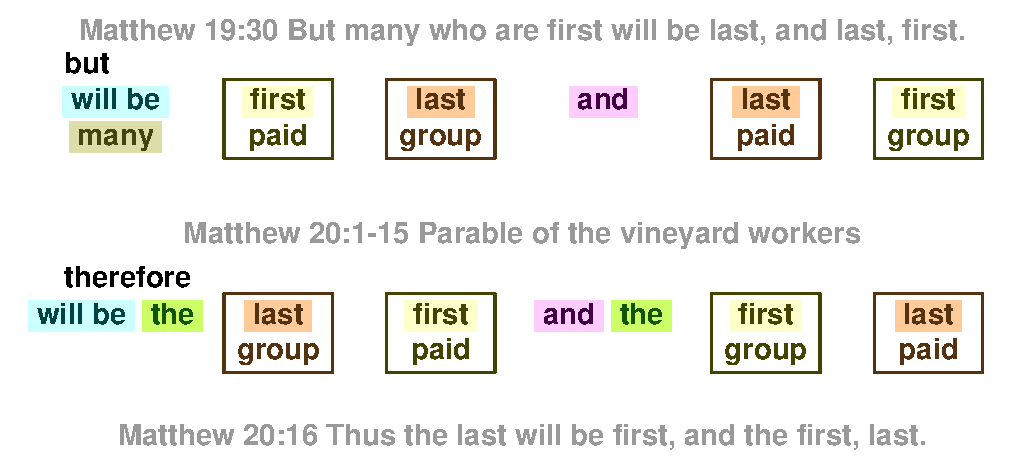
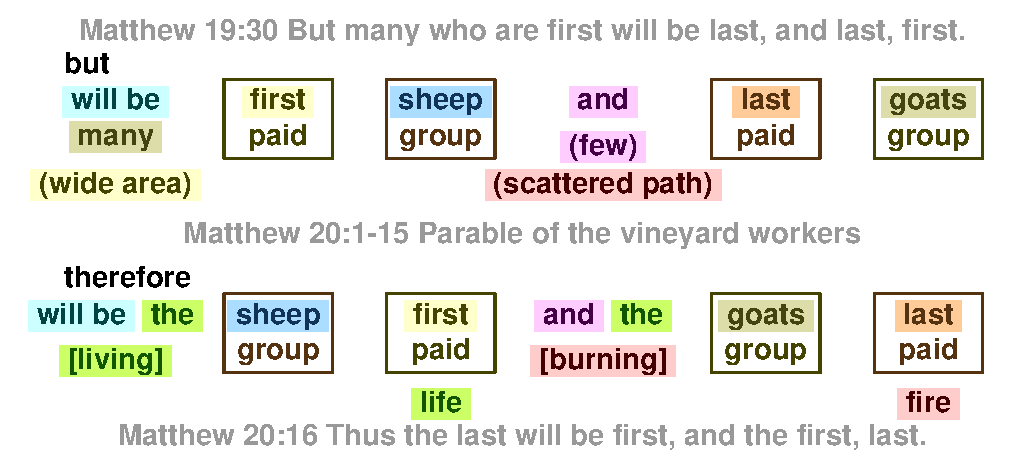
19:30: but many will be first last and last first.
20:16: therefore will be the last first and the first last.
19:30: (first wrt A) (last wrt B) and (last wrt C ) (first wrt D).
20:16: (last wrt E) (first wrt F) and (first wrt G) (last wrt H).
The literal view tends to either ignore the criteria or make them all the same but used opinion to decide which criteria for the same is used. As in the Sermon on the Mount, and elsewhere, there appears to have been non-verbal communication to fill in what is not explicitly stated, or implied via play on words.
40. First and last criteria
The problem then becomes one of deciding the criteria for each of A, B, C, D, E, F, G and H. Equivalence of criteria allows the merging of those criteria. A common literal view is to use the criteria of "place in line" of the vineyard workers.
There are (23)8 = about 16 million ways to assign eight different values to A through H. The literal view uses one of these - all are the same.
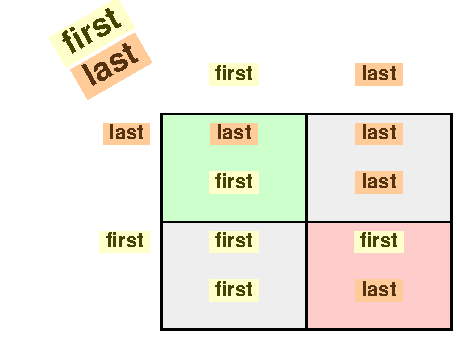
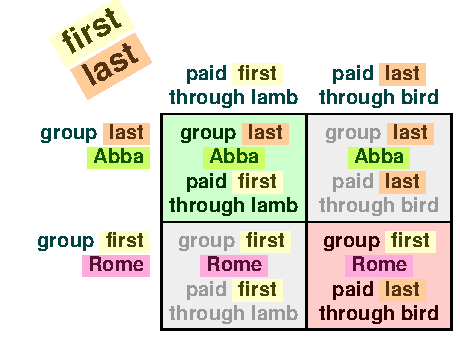
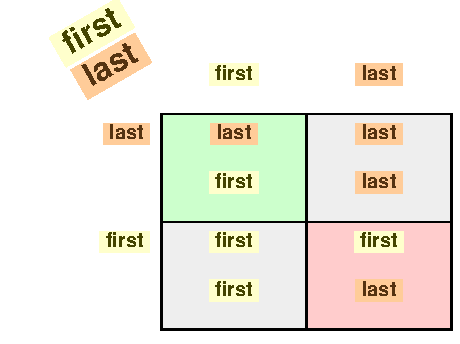
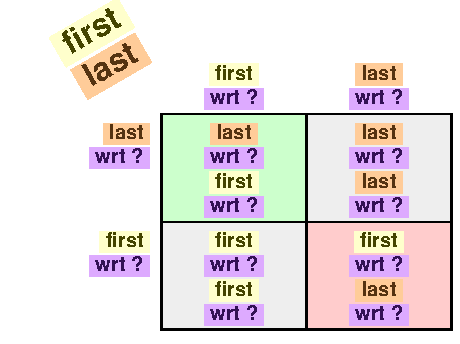
Since there are 2 ways/groups (first and last, Abba and Rome, sheep and goats, etc.) and two locations (first paid and last paid) a two by two grid might be useful for analysis.
41. First and last criteria
19:30: (first wrt A) (last wrt B) and (last wrt C ) (first wrt D).
20:16: (last wrt E) (first wrt F) and (first wrt G) (last wrt H).
Let us consider only the
"Abba" and the
"Rome" groups.
The "Abba" group is the "last" group wrt group order but the "first" group wrt getting paid/rewarded.
The "Rome" group is the "first" group wrt group order but the "last" group wrt getting paid/rewarded.
The following appear to fit:
Let A and C and F and H be getting paid/rewarded.
Let B and D and E and G be group order.
19:30: first to get paid/rewarded are the Abba group (last) and last to get paid/rewarded are the Rome group (first).
20:16: Abba group(last) is the first to get paid/rewarded and the Rome group (first) is the last to get paid/rewarded.
Are there other mappings that fit? What exactly is the payment? Perhaps we need to check any play on words.
42. Eisenhower grid
The Eisenhower grid/matrix is a
two by
two grid used for prioritizing tasks.
urgent vs. not urgent.
important vs. not important.
Some benefits:
Improved focus.
Better time management.
Enhanced decision-making.
Cells:
not important and not urgent: eliminate.
important and urgent: do first.
important but not urgent: schedule.
not important but urgent: delegate.
[eager vs. lazy evaluation]
43. First and last criteria 1
 |
Each is wrt as in "with respect to".
After that, the words "many" and "the" need to be addressed along with any play on words that can provide hints as to the meaning of what is said.
|
44. Extra
 |
There are two somewhat obvious criteria (in the code word view) for "first" and "last"
The paid type: first or last.
The group type: first or last.
|
45. First and last criteria 2
 |
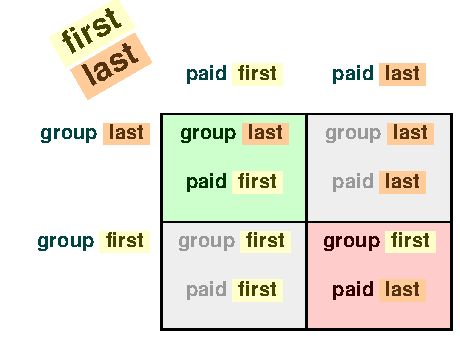
The parable of the vineyard workers provides both the groups and the type of reward or pay.
Note: There is a dual view of the grid but the parable of the vineyard workers, the parable of the sheep and goats, and the play on word hints point towards this view.
|
46. First and last criteria 3
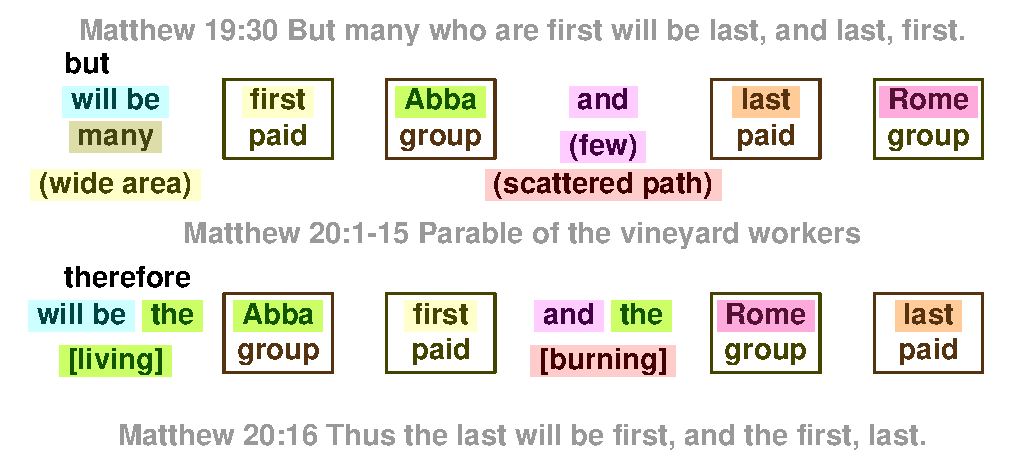 |
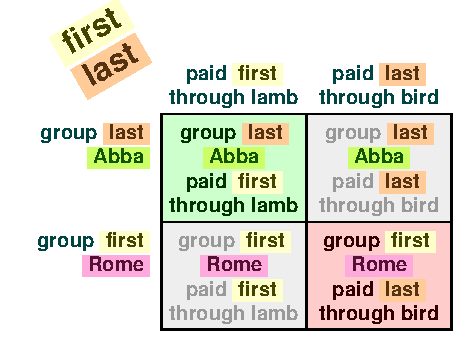
The payment depends on the "vineyard" in which one was (primarily) working.
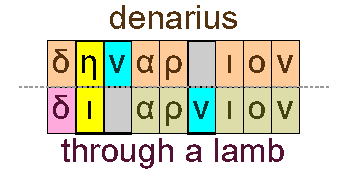
"Abba", "though a lamb".
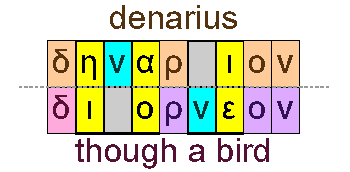
"Rome", "though a bird".
|
47. First and last criteria 3
 |
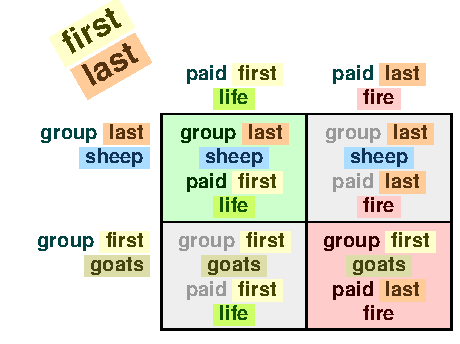
There appears to be a close connection between the following:
"Abba", "sheep", "life".
"Rome", "goats", "fire".
The play on words of "life" and "fire" point towards this view of an ordered payment: life or fire.
|
48. First and last
49. First and last criteria
50. First and last
51. Strongs - be
*G1510 *0 εἰμί (i-mee') : the first person singular present indicative; a prolonged form of a primary and defective verb; I exist (used only when emphatic):--am, have been, X it is I, was.
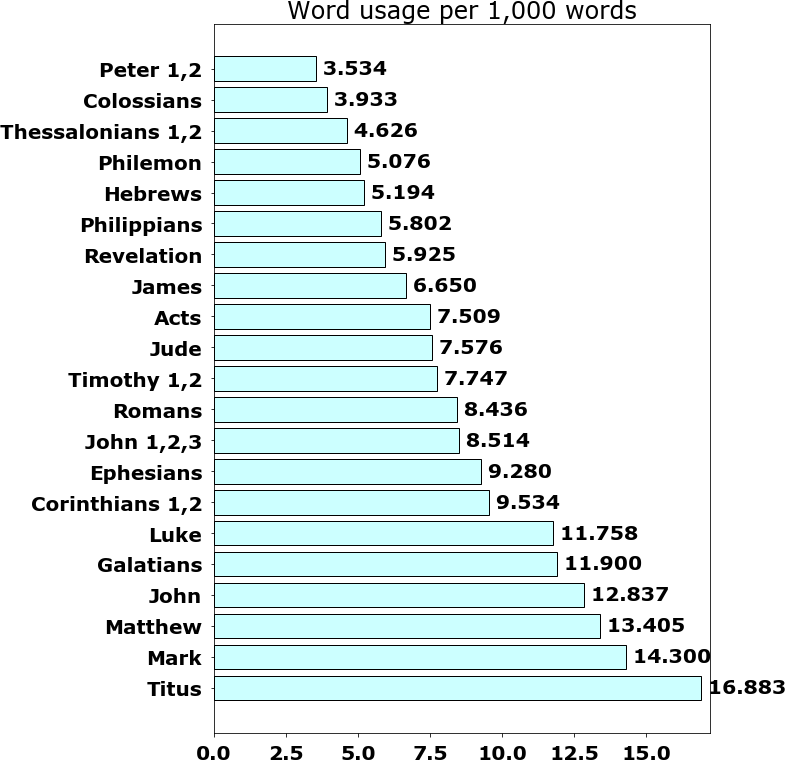 |
Words: ει=89 ειη=11 ειμι=134 ειναι=123 εισιν=158 εσεσθαι=4 εσεσθε=11 εση=8 εσμεν=51 εσομαι=13 εσομεθα=4 εσομενον εσονται=31 εσται=119 εστε=85 εστιν=888 εστω=12 εστωσαν=2 η=43 ημεθα=5 ημεν=8 ημην=15 ην=313 ης=7 ησαν=96 ησθα=2 ητε=19 ητω=2 ισθι=5 ον οντα=19 οντας=11 οντες=26 οντι=4 οντος=15 οντων=6 ουσα=6 ουσαι ουσαν=6 ουση=4 ουσης=6 ουσιν=9 ουσων ω=2 ωμεν=3 ων=45 ωσιν=11
|
The
ancient Greek word
"ἔσονται" ≈ "will be" and is from
"εἰμί" ≈ "I am" as a form of
"existence" or
"being". The
exact word
"ἔσονται" ≈ "will be" is used in Matthew six times, all by Jesus.
52. Matthew 12:27
Matthew 12:27 And if I by Beelzebub cast out devils, by whom do your children cast them out? therefore they shall be your judges. [kjv]
και ει εγω εν βεελζεβουλ βεεζεβουλ εκβαλλω τα δαιμονια οι υιοι υμων εν τινι εκβαλλουσιν δια τουτο αυτοι υμων κριται εσονται κριται υμων [gnt]
The
ancient Greek word
"ἔσονται" ≈ "will be" and is from
"εἰμί" ≈ "I am" as a form of
"existence" or
"being". The
exact word
"ἔσονται" ≈ "will be" is used in Matthew six times, all by Jesus.
53. Matthew 19:5 Shall be
Matthew 19:5 And said, For this cause shall a man leave father and mother, and shall cleave to his wife: and they twain shall be one flesh? [kjv]
και ειπεν ενεκεν ενεκα τουτου καταλειψει ανθρωπος τον πατερα και την μητερα και προσκολληθησεται κολληθησεται τη γυναικι αυτου και εσονται οι δυο εις σαρκα μιαν [gnt]
The
ancient Greek word
"ἔσονται" ≈ "will be" and is from
"εἰμί" ≈ "I am" as a form of
"existence" or
"being". The
exact word
"ἔσονται" ≈ "will be" is used in Matthew six times, all by Jesus.
54. Matthew 24:7
Matthew 24:7 For nation shall rise against nation, and kingdom against kingdom: and there shall be famines, and pestilences, and earthquakes, in divers places. [kjv]
εγερθησεται γαρ εθνος επι εθνος και βασιλεια επι βασιλειαν και εσονται λιμοι και λοιμοι και σεισμοι κατα τοπους [gnt]
The
ancient Greek word
"ἔσονται" ≈ "will be" and is from
"εἰμί" ≈ "I am" as a form of
"existence" or
"being". The
exact word
"ἔσονται" ≈ "will be" is used in Matthew six times, all by Jesus.
55. Matthew 24:40
Matthew 24:40 Then shall two be in the field; the one shall be taken, and the other left. [kjv]
τοτε δυο εσονται δυο εν τω αγρω ο εις παραλαμβανεται και ο εις αφιεται [gnt]
The
ancient Greek word
"ἔσονται" ≈ "will be" and is from
"εἰμί" ≈ "I am" as a form of
"existence" or
"being". The
exact word
"ἔσονται" ≈ "will be" is used in Matthew six times, all by Jesus.
56. Matthew 20:16 First and last
Matthew 20:16 So the last shall be first, and the first last: for many be called, but few chosen. [kjv]
ουτως εσονται οι εσχατοι πρωτοι και οι πρωτοι εσχατοι πολλοι γαρ εισιν κλητοι ολιγοι δε εκλεκτοι [gnt]
The ancient Greek word
"οὕτως" ≈ "thus" and indicates a conclusion from what has been said. One should look at what was said before this verse.
"πρῶτος" ≈ "first, earliest, most prominent, prime (number)" as in English words beginning with "proto".
"ἔσχατος" ≈ "farthest, most remote, last, final, extreme" and is the source of the English word "eschatology" as a "study of the end times".
Discuss:
Who are the "first"? Who are the "last"?
Who are those between the "first" and the "last"?
These questions appear to be answered, in part, at the end of the next chapter in the parable of the vineyard workers.
[job versus profession]
57. Psalms 58:9
Psalms 58:9 Before your pots can feel the thorns, he shall take them away as with a whirlwind, both living, and in his wrath. [kjv]
προ του συνιεναι τας ακανθας υμων την ραμνον ωσει ζωντας ωσει εν οργη καταπιεται υμας [lxx]
The
ancient Greek word
"ζῶντα" ≈ "living" from
"ζάω" ≈ "live" as an alternative form of
"ζῶ" ≈ "live".
58. Psalms 58:9
KJV: Before your pots can feel the thorns, he shall take them away as with a whirlwind, both living, and in his wrath.
Hebrew: בטרם יבינו סירתיכם אטד כמו חי כמו חרון ישערנו׃
Greek: προ του συνιεναι τας ακανθας υμων την ραμνον ωσει ζωντας ωσει εν οργη καταπιεται υμας
59. Proverbs 1:12
Proverbs 1:12 Let us swallow them up alive as the grave; and whole, as those that go down into the pit: [kjv]
καταπιωμεν δε αυτον ωσπερ αδης ζωντα και αρωμεν αυτου την μνημην εκ γης [lxx]
and let us swallow him alive, as Hades would, and remove the memorial of him from the earth: [bs3]
The
ancient Greek word
"ζῶντα" ≈ "living" from
"ζάω" ≈ "live" as an alternative form of
"ζῶ" ≈ "live".
60. Proverbs 1:12
KJV: Let us swallow them up alive as the grave; and whole, as those that go down into the pit:
Hebrew: נבלעם כשאול חיים ותמימים כיורדי בור׃
Greek: καταπιωμεν δε αυτον ωσπερ αδης ζωντα και αρωμεν αυτου την μνημην εκ γης
Brenton: and let us swallow him alive, as Hades would, and remove the memorial of him from the earth:
61. Luke 24:5
Luke 24:5 And as they were afraid, and bowed down their faces to the earth, they said unto them, Why seek ye the living among the dead? [kjv]
εμφοβων δε γενομενων αυτων και κλινουσων το προσωπον τα προσωπα εις την γην ειπον ειπαν προς αυτας τι ζητειτε τον ζωντα μετα των νεκρων [gnt]
The
ancient Greek word
"ζῶντα" ≈ "living" from
"ζάω" ≈ "live" as an alternative form of
"ζῶ" ≈ "live".
62. Luke 24:5
KJV: And as they were afraid, and bowed down their faces to the earth, they said unto them, Why seek ye the living among the dead?
Greek: εμφοβων δε γενομενων αυτων και κλινουσων το προσωπον τα προσωπα εις την γην ειπον ειπαν προς αυτας τι ζητειτε τον ζωντα μετα των νεκρων
63. Strongs - living
*G2198 *140 ζάω (dzah'-o) : a primary verb; to live (literally or figuratively):--life(-time), (a-)live(-ly), quick.
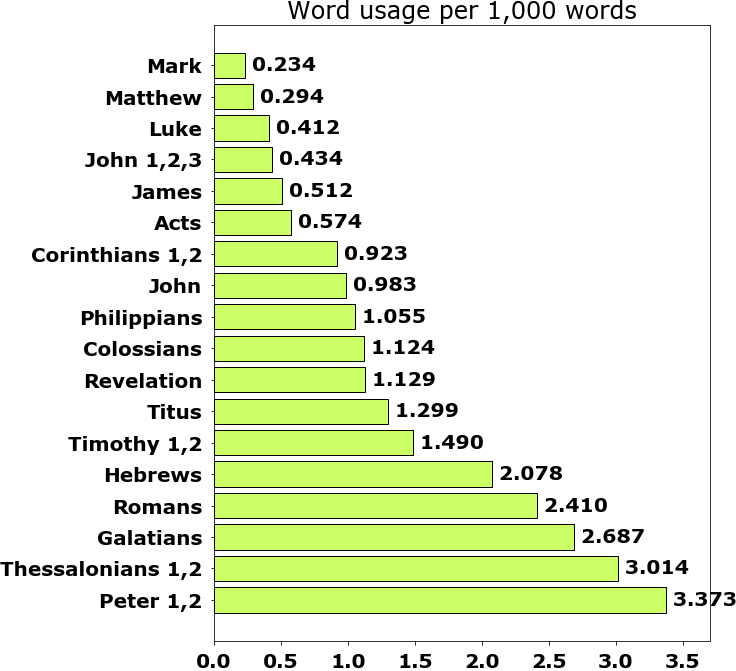 |
Words: εζησα εζησαν=2 εζησεν=4 εζητε εζων ζη=13 ζην=12 ζης=2 ζησασα ζησει=3 ζησεσθε ζησεται=9 ζησετε ζηση=2 ζησομεν=4 ζησουσιν ζησω ζησωμεν=4 ζητε ζω=6 ζωμεν=7 ζων=11 ζωντα=6 ζωντας=4 ζωντες=7 ζωντι=7 ζωντος=14 ζωντων=5 ζωσα ζωσαν=5 ζωσι ζωσιν=2
|
The
ancient Greek word
"ζῶντα" ≈ "living" from
"ζάω" ≈ "live" as an alternative form of
"ζῶ" ≈ "live" and the origin (from the corresponding noun form) of the English words
"zoo",
"zooology", and many other words.
64. Usage - living
- *G2198 *140 ζάω (dzah'-o) : a primary verb; to live (literally or figuratively):--life(-time), (a-)live(-ly), quick.
ζωντα *6 of 140
Luke 24:5 ... them, Why seek ye the living among the dead?
Acts 1:3 To whom also he shewed himself alive after his passion ...
Acts 7:38 ... fathers: who received the lively oracles to give unto us:
Acts 14:15 ... these vanities unto the living God, which made ...
Acts 20:12 And they brought the young man alive, and were not ...
1 Peter 2:4 To whom coming, as unto a living stone, disallowed indeed ...
65. Matthew 19:30 Shall live
Matthew 19:30 But many that are first shall be last; and the last shall be first. [kjv]
πολλοι δε εσονται πρωτοι εσχατοι και εσχατοι πρωτοι [gnt]
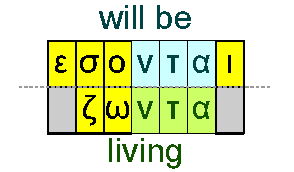
"ἔσονται" ≈ "will be"
"ζῶντα" ≈ "living".
As in English, the Greek "
s" and "
z" sounds were closely related (sound wise).
It appears that one group (first part of verse)
"shall be" "life" and this would be
"many".
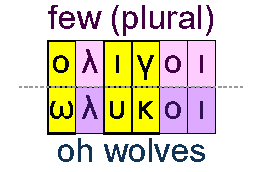
The other group (last part of verse) might then be
"few" though the word
"few" would have then been omitted - it would have been a play on words with
"wolves". Might this group
"burn"?
66. Matthew 19:30
Matthew 19:30 But many that are first shall be last; and the last shall be first. [kjv]
πολλοι δε εσονται πρωτοι εσχατοι και εσχατοι πρωτοι [gnt]
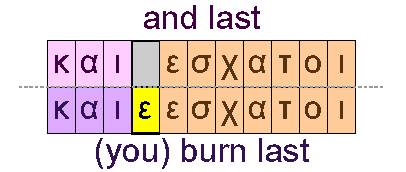
"καὶ" ≈ "and" and "ἔσχατοι" ≈ "last" (plural).
"καιε" ≈ "you burn" and "ἔσχατοι" ≈ "last" (plural).
The "e" sound can easily slide from the end of one word to the next word.
Might those who ;are
not the
"many" include others besides
"wolves"? Might it include those deceived by the
"wolves"? Using the
"few" here, with code word connotations, would then be out of place.
67. Matthew 20:16 Shall live or burn
Matthew 20:16 So the last shall be first, and the first last: for many be called, but few chosen. [kjv]
ουτως εσονται οι εσχατοι πρωτοι και οι πρωτοι εσχατοι πολλοι γαρ εισιν κλητοι ολιγοι δε εκλεκτοι [gnt]
"ἔσονται" ≈ "will be"
"ζῶντα" ≈ "living".
As in English, the Greek "
s" and "
z" sounds were closely related (sound wise).
"καὶ" ≈ "and" and "οι" ≈ "the" (plural).
"καίει" ≈ "(he/it) burns".
It appears that one group (first part of verse)
"shall be" "life" while one group (perhaps smaller, last part of verse) will
"burn".
68. Cambridge Greek Lexicon: Lead away

From the Cambridge Greek Lexicon (volume 1, p. 158), the ancient Greek word
"ἀπάγω" ≈ "lead away". Only in the
GNT (Greek New Testament) is the meaning that of
"lead".
Definitions 2 to 13 are narrowed meanings of primary meaning 1.
| 1. lead away |
8. divert, distract (jury, audience) |
| 2. drive or lead away (animals) |
9. bring, convey or guide back |
| 3. transport or take away |
10. lead back, withdraw |
| 4. take or go away |
11. recall, compel to withdraw |
| 5. remove or escort away |
12. pay tribute, send back (in return) |
| 6. arrest or deliver over |
13. take in/away (opinions, assertions) |
| 7. draw aside or back (archer) |
14. lead towards life or destruction (GNT) |
How does the English meaning of the verses
change if the usual definition of that Greek word is used? What is
the "life"? What is
the "loss"?
69. Matthew 7:13-14 Direction choices
Matthew 7:13 Enter ye in at the strait gate: for wide is the gate, and broad is the way, that leadeth to destruction, and many there be which go in thereat: [kjv]
7:14 Because strait is the gate, and narrow is the way, which leadeth unto life, and few there be that find it. [kjv]
| Verse |
As translated |
Possible Greek meaning |
| 7:13 |
leads into loss/destruction |
leads away from into loss/destruction |
| 7:14 |
leads into life |
leads away from into life |
How does the English meaning of the verses
change if the usual definition of that Greek word is used?
Jesus is using non-verbal communication and needs to talk in such a way as to avoid trouble with spies (reporting back), later translators who might change what he is saying, etc. Play on words help accomplish both objectives.
70. Matthew 25:46 Eternal results
Jesus then announces the
punishment/
recompense for the "
goats" and the
reward for the "
sheep" on the "
right" as the "
righteous".
Matthew 25:46 And these shall go away into everlasting punishment: but the righteous into life eternal. [kjv]
και απελευσονται ουτοι εις κολασιν αιωνιον οι δε δικαιοι εις ζωην αιωνιον [gnt]
In the kingdom parables 2 and 7, the "
angels" "
burn" those who appear to be neither "
sheep" nor "
goats".
Here, in the parable of the "
sheep" and "
goats", Jesus as God and King sends the "
goats" to
"everlasting" "
punishment".
| #2: Weeds, TC9: No false witness. |
#3: Tree: TC8: No stealing |
| #4: Leaven: TC7: No adultery |
#7: Harvest: TC6: No killing/murder |
Consider the parable of the wedding feast.
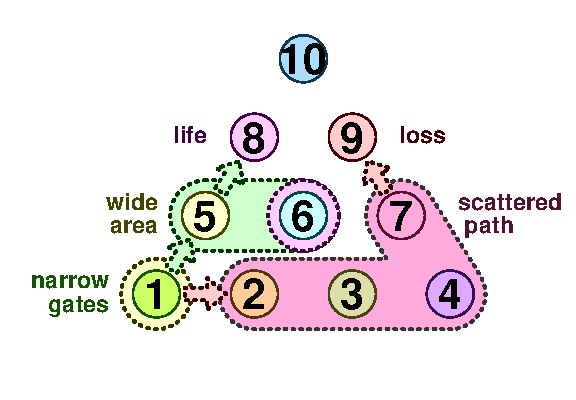
#5: Those to the (treasure in the) field :: wide area :: life
#6: Those to merchandise (pearl of great price) :: wide area :: outer darkness
#2, #3, #4, #7: Remnant (destroyed) :: scattered path :: furnace of fire
Discuss: Does "
everlasting punishment" require some form of "
consciousness"? Is this the same as the kingdom parables 2 and 7 as being "
burned" in the "
fire"?
71. Matthew 25:32 Sheep and goats
Matthew 25:32 And before him shall be gathered all nations: and he shall separate them one from another, as a shepherd divideth his sheep from the goats: [kjv]
και συναχθησεται συναχθησονται εμπροσθεν αυτου παντα τα εθνη και αφοριει αφορισει αυτους απ αλληλων ωσπερ ο ποιμην αφοριζει τα προβατα απο των εριφων [gnt]
[bad logic = word wrangle, Eris as goddess of discord, golden apple]
The
"last" group, the
"sheep", are addressed and
paid "first" and the first group, the
"goats", are addressed and
paid "last".
72. Sheep and goats review build
If the blind lead the blind, both will fall into the ditch/pit/abyss.
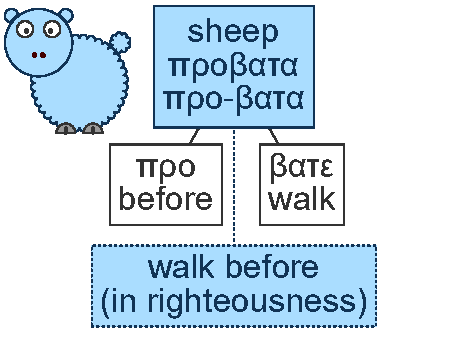
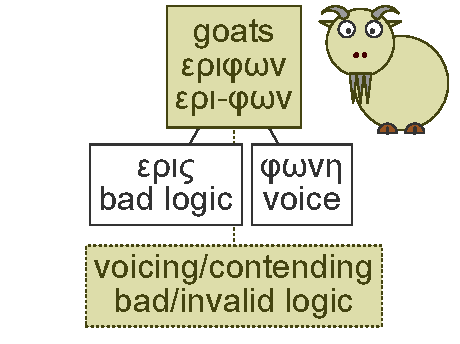
| Sheep [walk before ] |
Goats [voice invalid logic] |
| (in righteousness) |
(into righteousness) |
fed your hunger and thirst
for righteousness (others too) |
fed hungry people |
knew and accepted Jesus
(not a stranger to Jesus) |
took in strangers |
clothed yourself (and others)
in righteousness |
clothed the naked |
thought and considered Jesus,
weak and in (your) prison |
visited the weak in prison |
| Yourself first, then others. |
Others first, then you. |
| Eternal perspective. I know you. |
Worldly perspective. I know you not. |
| Enter life eternal. Heaven. Time. |
Into eternal fire. Earth. Death. |
[the dog/verse that bites is elsewhere]
73. Matthew 25:34,41,46 Life and fire
Notice the order. The
"sheep" the
"last" group, is
paid "first" with
"life" and then the
"goats", the
"first" group, is
paid "last" with
"fire".
Matthew 25:34 Then shall the King say unto them on his right hand, Come, ye blessed of my Father, inherit the kingdom prepared for you from the foundation of the world: [kjv]
25:41 Then shall he say also unto them on the left hand, Depart from me, ye cursed, into everlasting fire, prepared for the devil and his angels: [kjv]
Verse 46
summarizes in the reverse order (in a stack-like manner).
25:46 And these shall go away into everlasting punishment: but the righteous into life eternal. [kjv]
74. First and last review
Matthew 19:30 But many who are first will be last, and last, first. (Berean Literal Bible)
Matthew 20:16 Thus the last will be first, and the first, last. (Berean Literal Bible)
The two first and last verses spoken by Jesus in Matthew immediately precede and follow the parable of the vineyard workers. It follows, through play of word hints, that there are two types of payments for two types of groups. These can be related to the pairs of first and last verses such that connections can be made to both the parable of the sheep and goats and to the wide area and gate verses in Matthew 7:13-14. The play on words help explain why "many" is used in verse 19:30 and two "the" words in 20:16.
75. Extra material
The following is some extra content on the first and last that will be better integrated later.
... more to be added ...
76. Matthew 11:5-6 Bottom-up forward-chaining
Message of Jesus to John the Baptist (in physical prison):
Matthew 11:5 The blind receive their sight, and the lame walk, the lepers are cleansed, and the deaf hear, the dead are raised up, and the poor have the gospel preached to them. [kjv]
| Six noun‑verb pairs decoded |
| 6. |
poor=fallen, beggars |
start |
gospel=good news preached |
|
| 5. |
dead=asleep |
then |
raised=wake up you deadhead |
| 4. |
deaf=not listening |
then |
hear=listen and understand |
repent |
| 3. |
lepers=sinners |
then |
cleansed=be born again, cleansed in the blood |
Ask |
| 2. |
lame=passive |
then |
walk=active start walking in righteousness |
Seek |
| 1. |
blind=not seeing |
then |
sight=look up/ahead and see God & others |
Knock |
The
top-down verses (in English) may be more understandable as a
bottom-up progression (as events unfold in time) using the Greek meanings of the words. Approaches to change: (
stop,
repent, be
cleansed and
walk).
11:6 And blessed is he, who soever shall not be offended in me. [kjv]
Paraphrase:
Happy is he who does not misinterpret what I say.
77. Matthew 11:5-6 Diagram
The ways that six items can be ordered is 6! = 6*5*4*3*2*1 =
720 ways. Of these six items in Matthew 11:6, only two sequences fit - forward or backwards. Is this a coincidence?
Matthew 11:5 The blind receive their sight, and the lame walk, the lepers are cleansed, and the deaf hear, the dead are raised up, and the poor have the gospel preached to them. [kjv]
11:6 And blessed is he, who soever shall not be offended in me. [kjv]
78. Probability
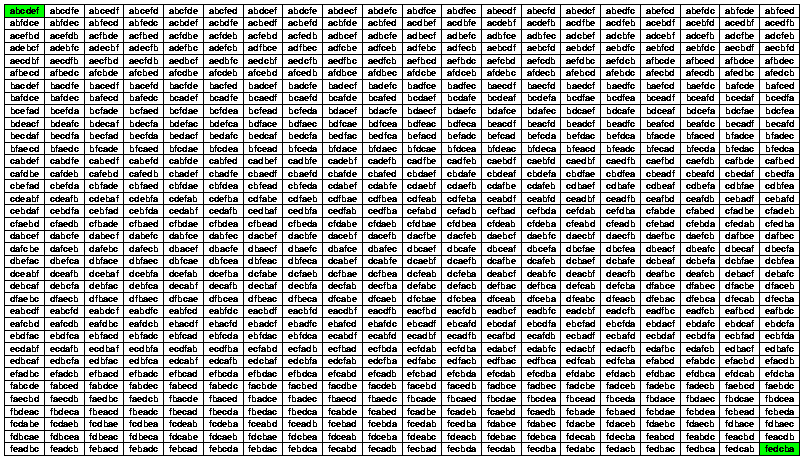
The ways that six items can be ordered is
6! =
6*5*4*3*2*1 =
720 ways. Of these six items in Matthew 11:6, only
two sequences fit - forward or backwards. That is, a probability of
1 in
360. There are
360 days in a prophetic year. Is any of this a coincidence?
79. Lord's Prayer in Matthew
Sermon on the Mount:
| 4 |
four foreword sequences (one split) |
| 2 |
two backward sequences |
| 1 |
Lord's Prayer subsequence (self‑similar fractal) |
| 7 |
sequences total |
80. Lord's Prayer in Matthew
| Verse patterns |
| Verses |
|
|
|
|
|
|
|
| Matthew 6:9‑13 |
1 |
7 |
6 |
5 |
4 |
3 |
2 |
Lord's Prayer |
| Matthew 11:5‑6 |
6 |
5 |
4 |
3 |
2 |
1 |
7 |
to John's disciples |
There is an interesting verse pattern in both the Lord's Prayer and the message to John's disciples.
Matthew 6:9 … Our Father which art in heaven, Hallowed be thy name.. [kjv]
6:10 Thy kingdom come. Thy will be done in earth, as it is in heaven. [kjv]
6:11 Give us this day our daily bread. [kjv]
6:12 And forgive us our debts, as we forgive our debtors. [kjv]
6:13 And lead us not into temptation, but deliver us from evil: For thine is the kingdom, and the power, and the glory, for ever. Amen. [kjv]
81. Revelation 1:8,11 Alpha and omega in Revelation
Revelation 1:8 I am Alpha and Omega, the beginning and the ending, saith the Lord, which is, and which was, and which is to come, the Almighty. [kjv]
1:11 Saying, I am Alpha and Omega, the first and the last: and, What thou seest, write in a book, and send it unto the seven churches which are in Asia; unto Ephesus, and unto Smyrna, and unto Pergamos, and unto Thyatira, and unto Sardis, and unto Philadelphia, and unto Laodicea. [kjv]
The
TR back-patches parts of later verse into these verses in Revelation.
82. Revelation 22:13 Alpha and omega in Revelation
Revelation 22:13 I am Alpha and Omega, the beginning and the end, the first and the last. [kjv]
εγω ειμι το α αλφα και το ω αρχη και τελος ο ο πρωτος και ο εσχατος η αρχη και το τελος [gnt]
Note that both
"first" and
"last" are
singular and
not plural.
The
TR changes the location of "
the beginning and the end" in the verse.
83. Verse model observations
In each verse sequence, the order of six times is reversed. The
"last" shall be
"first" and the
"first" shall be
"last".
The Greek word for "
hidden" as in "
hidden" "
manna" or "
bread" appears only in two places in Matthew, in the kingdom parables.
KP4 : Right after (part of) the Leaven (false doctrine) mixed in with true doctrine. The "false" "dead" "bread".
KP5 : Treasure hid in a field. The "true" "living" "bread".
The
"living" "
bread" is in Matthew 6:11 (step
5 of seven):
Give us tomorrow's bread today. (eternal "living" "bread")
Give us today our daily bread. (the worldly "bread", adjusted by theologians, etc., to be more appropriate)
84. Verse model observations
In each verse sequence, the order of six times is reversed. The
"last" shall be
"first" and the
"first" shall be
"last". There are two verses in Matthew where Jesus states this idea.
Which verses might relate to the following?
"eternal" "life" or "bread"
not "deceiving" oneself as to Christ's message
After the rich young man episode:
Matthew 19:30 But many that are first shall be last; and the last shall be first. [kjv]
Parable of the vineyard workers:
20:16 So the last shall be first, and the first last: for many be called, but few chosen. [kjv]
85. TenWordPin summary
The parable of the vineyard workers can be compared with the kingdom parables in Matthew 13 using the TenWordPin model.
There are five hours, in a manner similar to five loaves (of bread).
There are the before and after, for two, in a manner similar to the two fish.
The word used for the one called "friend" (hour 1, complainer) is the same word as the one (few) without a wedding garment in the wedding feast two chapters later.
86. Strongs - be
*G1510 *0 εἰμί (i-mee') : the first person singular present indicative; a prolonged form of a primary and defective verb; I exist (used only when emphatic):--am, have been, X it is I, was.
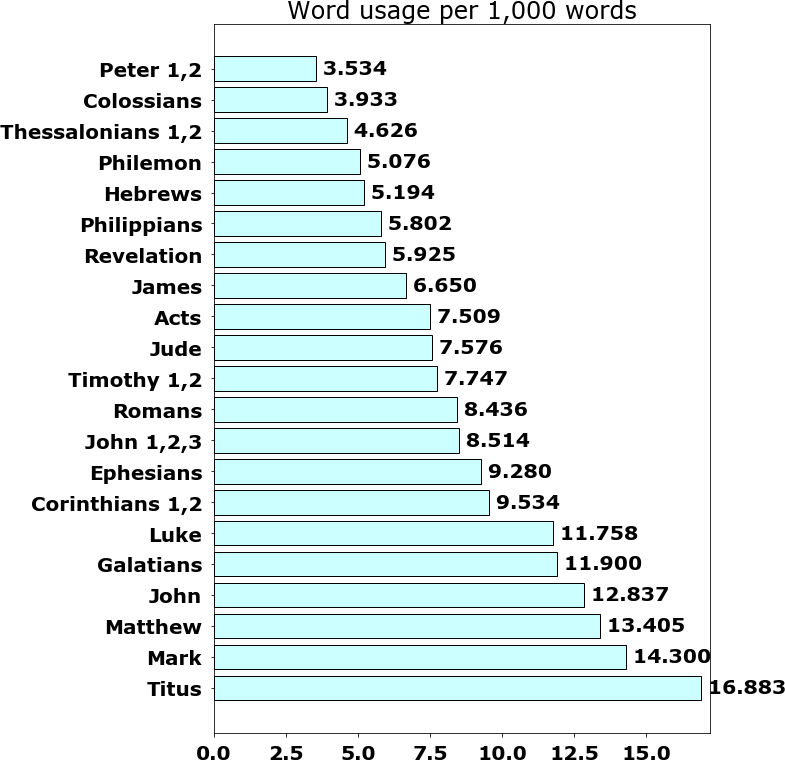 |
Words: ει=89 ειη=11 ειμι=134 ειναι=123 εισιν=158 εσεσθαι=4 εσεσθε=11 εση=8 εσμεν=51 εσομαι=13 εσομεθα=4 εσομενον εσονται=31 εσται=119 εστε=85 εστιν=888 εστω=12 εστωσαν=2 η=43 ημεθα=5 ημεν=8 ημην=15 ην=313 ης=7 ησαν=96 ησθα=2 ητε=19 ητω=2 ισθι=5 ον οντα=19 οντας=11 οντες=26 οντι=4 οντος=15 οντων=6 ουσα=6 ουσαι ουσαν=6 ουση=4 ουσης=6 ουσιν=9 ουσων ω=2 ωμεν=3 ων=45 ωσιν=11
|
87. Similarities and differences
Matthew 19:30 But many that are first shall be last; and the last shall be first. [kjv]
πολλοι δε εσονται πρωτοι εσχατοι και εσχατοι πρωτοι [gnt]
20:16 So the last shall be first, and the first last: for many be called, but few chosen. [kjv]
ουτως εσονται οι εσχατοι πρωτοι και οι πρωτοι εσχατοι πολλοι γαρ εισιν κλητοι ολιγοι δε εκλεκτοι [gnt]
Greek word order:
19:30
Many but will be first last and last first.
20:16
Therefore will be the last first and the first last.
Why does verse 20:16 use
"the" for both
"first" and
"last" but verse 19:30 does
not use
"the" at all?
88. Questionable statements
English has ways to unambiguously express a question. In many languages, including Greek, a statement and a question are written in exactly the same way. To make a statement a question, one
raises the
voice at the end of the statement.
 |
 |
 |
|
Question
|
Statement
|
Exclamation
|
The Greek language:
all uppercase
no spaces
no punctuation
These non-written hints are not in the Greek text. Examples:
You have it. (statement of fact)
You have it! (exclamation)
You have it? (raised voice at end)
Do you have it? (common English)
89. Question and answer
Matthew 19:30 But many that are first shall be last; and the last shall be first. [kjv]
20:16 So the last shall be first, and the first last: for many be called, but few chosen. [kjv]
19:30
Many but will be first last and last first?
20:1-15 Parable of the Vineyard Workers to answer the question followed by the statement of what has just been answered.
20:16
Therefore will be the last first and the first last.
Why does verse 19:30 change
"shall be" to
"that are" and then distribute the
"shall be" to both parts of what follows? Why are does the Greek word for
"the" appear two times in verse 20:16 but not in verse 19:30?
90. Play on words
"καίω" ≈ "light, kindle, set on fire, burn, burn up, make very cold (frost)".
"καιε" ≈ "you burn" and "καίει" ≈ "(it) burns".
"τροπαί" ≈ "turning(s), way(s)".
"ἔσχατος" ≈ "farthest, most remote, last, final, extreme".
"σκότος" ≈ "darkness, gloom, blindness, obscurity".
"σκότοι" ≈ "darkness, gloom, blindness, obscurity" (nominative plural).
"πολύς" ≈ "many, much".
91. Play on words
"ἔσχατος" ≈ "farthest, most remote, last, final, extreme".
"σκότος" ≈ "darkness, gloom, blindness, obscurity".
"σκότοι" ≈ "darkness, gloom, blindness, obscurity" (nominative plural).
Note: In a play on words (e.g., telling a joke), the leading "
e" would be implied or omitted by just a little audible breath (in or out) at that point.
If
"eschatology" is the "
study of the end times" might (the made up word)
"eskotology" be the "
study of dark times". Pastors might learn this in "
cemetery", I mean "
seminary". When I talk to a pastor without a sense of humor, I tell him or her that "
these jokes might go past your perception".
92. Play on words
Matthew 19:30 But many that are first shall be last; and the last shall be first. [kjv]
πολλοι δε εσονται πρωτοι εσχατοι και εσχατοι πρωτοι [gnt]
20:16 So the last shall be first, and the first last: for many be called, but few chosen. [kjv]
ουτως εσονται οι εσχατοι πρωτοι και οι πρωτοι εσχατοι πολλοι γαρ εισιν κλητοι ολιγοι δε εκλεκτοι [gnt]
93. Nothing new

The saying "
there is no new thing under the sun" a saying from Ecclesiastes 1:9.
Ecclesiastes 1:9 The thing that hath been, it is that which shall be; and that which is done is that which shall be done: and there is no new thing under the sun. [kjv]
τι το γεγονος αυτο το γενησομενον και τι το πεποιημενον αυτο το ποιηθησομενον και ουκ εστιν παν προσφατον υπο τον ηλιον [lxx]
It does happen that old ideas get repackaged and may or may not be recognized as such.
Discuss: Provide some historical examples of old ideas that become new ideas. Are
new age ideas really new?
94. End of page