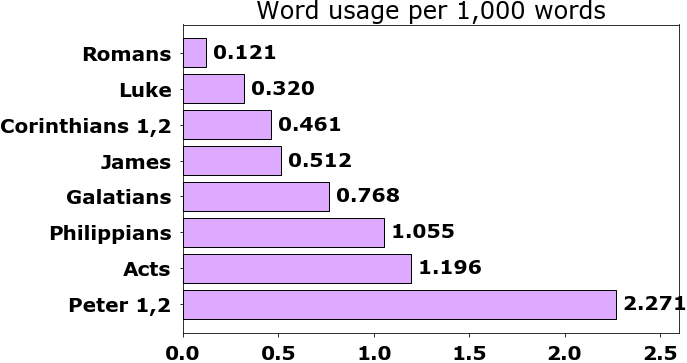
- *G5046 *19 τέλειος (tel'-i-os) : from G5056; complete (in various applications of labor, growth, mental and moral character, etc.); neuter (as noun, with G3588) completeness:--of full age, man, perfect.
- τελειον *7
- Romans 12:2 ... and acceptable, and perfect, will of God.
- 1 Corinthians 13:10 But when that which is perfect is come, then that which is ...
- Ephesians 4:13 ... of the Son of God, unto a perfect man, unto the measure ...
- Colossians 1:28 ... we may present every man perfect in Christ Jesus:
- James 1:4 But let patience have her perfect work, that ye may be perfect and entire, ...
- James 1:17 ... gift and every perfect gift is from above, ...
- James 1:25 But whoso looketh into the perfect law of liberty, and ...
- τελειοι *5
- Matthew 5:48 Be ye therefore perfect, even as your Father which is in heaven is perfect.
- 1 Corinthians 14:20 ... but in understanding be men.
- Philippians 3:15 Let us therefore, as many as be perfect, be thus minded: and ...
- Colossians 4:12 ... prayers, that ye may stand perfect and complete in ...
- James 1:4 But let patience have her perfect work, that ye may be perfect and entire, ...
- τελειος *3
- Matthew 5:48 Be ye therefore perfect, even as your Father which is in heaven is perfect.
- Matthew 19:21 ... If thou wilt be perfect, go and sell that ...
- James 3:2 ... in word, the same is a perfect man, and able also ...
- τελειοις
- 1 Corinthians 2:6 ... wisdom among them that are perfect: yet not the wisdom ...
- τελειων
- Hebrews 5:14 But strong meat belongeth to them that are of full age, even those who by reason of use ...
- τελειοτερας
- Hebrews 9:11 ... a greater and more perfect tabernacle, not made with hands, ...
- τελεια
- 1 John 4:18 ... in love; but perfect love casteth out ...
38. Perfecting complete perfection
39. Verb tenses
Many languages have verbs that have a
"perfect" tense and an "
imperfect" tense (and others).
The "perfect tense" refers to an action that is "complete".
The "imperfect tense" refers to an action that is "not complete".
English example:
perfect: I have been, I have gone, I have seen, etc.
imperfect: I was, I went, I saw, etc.
40. Verb tenses
Some pastors will go to great lengths to elaborate on Greek verb tenses. This is done for many reasons.
☐ To
convince people that they are
smart and actually know Greek. Few do. Most just look up a word for the sermon in a Bible dictionary which typically provides the Latin meaning that was decided for that word and that ignores the actual Greek meaning.
☐ To
distract from other parts of the verse that do not fit their political and/or social views an what they want the Bible to say. Sometimes they will tell a short stupid joke to get people to laugh and then move on, skipping the part of the verse they would rather not talk about.
In same cases, Jesus (or Paul, etc.) is using a particular verb tense (i.e., ending) to achieve some play on words. It does not appear appropriate to make some deep theological point on a verb tense that is serving other purposes.
The following notes were moved here and need reorganized.
41. Matthew 19:21 Perfect
The context is that of a young man entering heaven from the question of the young man and the requirement to be "
good" as in
"perfect".
Matthew 19:21 Jesus said unto him, If thou wilt be perfect, go and sell that thou hast, and give to the poor, and thou shalt have treasure in heaven: and come and follow me. [kjv]
εφη αυτω ο ιησους ει θελεις τελειος ειναι υπαγε πωλησον σου τα υπαρχοντα και δος τοις πτωχοις και εξεις θησαυρον εν ουρανω ουρανοις και δευρο ακολουθει μοι [gnt]
The Greek word for
"perfect" here does not mean without error (though it can mean that). It means
"complete" as in
"perfected". In Greek it can also mean having a
"purpose" or
"end" (goal). This may or may not mean the idea of being without error, blemish, etc.
In his model of four causes, Aristotle uses the word for
"perfect" as something having an
"end" or
"purpose".
42. James 1:4 Patient perfection
James 1:4 But let patience have her perfect work, that ye may be perfect and entire, wanting nothing. [kjv]
η δε υπομονη εργον τελειον εχετω ινα ητε τελειοι και ολοκληροι εν μηδενι λειπομενοι [gnt]
James wants the
"completed" actions to be without error is in not needed anything more. One has reached a "
fixed point" when no more changes are necessary.
The ancient Greek word "τέλειος" ≈ "complete".
The modern Greek word "τέλειος" (TEH-lee-os) ≈ "perfect, complete".
The modern Greek word "τελεία" (teh-LEE-a) ≈ "end" as in the period at the end of a sentence. In slang it can mean "great" (as in "what else could go wrong").
The English word
"perfect", is in "
a perfect circle", comes, through French, from the Latin word
"perfectus" ≈ "to finish".
43. John 1:1-5 Four causes in a design and implementation model

The ancient Greek word
"αἰτία" ≈ "cause, reason". Aristotle often used this word as
"explanation". Each
"cause" is a "
why" question. These are briefly summarized here using the Aristotle's example of a "
table". The more formal Latin and the less formal English words describing the Greek words are provided.
| αίτια |
cause |
Latin |
Informal |
table |
cooking |
computer |
| ὕλη |
matter |
material |
substance |
wood |
ingredients |
data |
| εἶδος |
form |
formal |
pattern |
design |
recipe |
code |
| κινοῦν |
movement |
efficient |
agent |
carpentry |
making |
run |
| τέλος |
end |
final |
purpose |
dining |
eating |
result |
Paul appears to use the four causes in writing to the Philippians. John appears to think in a top-down backward-chaining manner (much as a modern computer scientist). A top-down view of the four causes appears to fit John 1:1-5.
44. Matthew 5:48 Perfection
Matthew 5:48 Be ye therefore perfect, even as your Father which is in heaven is perfect. [kjv]
εσεσθε ουν υμεις τελειοι ωσπερ ως ο πατηρ υμων ο εν τοις ουρανοις ουρανιος τελειος εστιν [gnt]
The ancient Greek word
"τέλειος" ≈ "purposed, complete, perfected" and
not the modern English idea of "
perfect" as "
without error".
☐
Be perfect as your father ... is perfect.
☐
Be complete as your father ... is complete.
☐
Be purposeful as your father ... is purposeful.
☐
Be mature as your father ... is mature.
45. Matthew 19:21 Purpose
Matthew 19:21 Jesus said unto him, If thou wilt be perfect, go and sell that thou hast, and give to the poor, and thou shalt have treasure in heaven: and come and follow me. [kjv]
εφη αυτω ο ιησους ει θελεις τελειος ειναι υπαγε πωλησον σου τα υπαρχοντα και δος τοις πτωχοις και εξεις θησαυρον εν ουρανω ουρανοις και δευρο ακολουθει μοι [gnt]
Paraphrase:
... if you will have purpose, go and sell ...
If one needs to tell someone a way to have
"purpose", then that person may be doing things that do
not have
"purpose". What might some of those things be?
46. Matthew 19:21 A perfect sellout
Matthew 19:21 Jesus said unto him, If thou wilt be perfect, go and sell that thou hast, and give to the poor, and thou shalt have treasure in heaven: and come and follow me. [kjv]
εφη αυτω ο ιησους ει θελεις τελειος ειναι υπαγε πωλησον σου τα υπαρχοντα και δος τοις πτωχοις και εξεις θησαυρον εν ουρανω ουρανοις και δευρο ακολουθει μοι [gnt]
The ancient Greek word
"πωλέω" ≈ "sell" as in "
levy taxes",
"sell an office" or
"betray". This word often has negative connotations as sometimes does the English phrase
"sell out". A marketing phrase is from the Latin phrase
"caveat emptor" ≈ "let the buyer beware". The more
restrictive Latin word
"vende" ≈ "sell, vend" and is the source of the English word
"vendor".

What is it that the "
young man" is to
"sell" or
"sell out"? Might he need to "
betray", as in "
tradition", something that has been part of
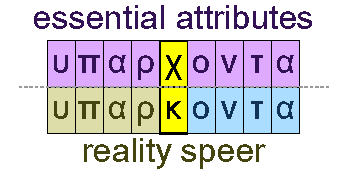
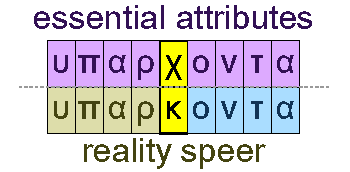
"essential attributes" in his life?
47. Matthew 19:21 Purpose
Matthew 19:21 Jesus said unto him, If thou wilt be perfect, go and sell that thou hast, and give to the poor, and thou shalt have treasure in heaven: and come and follow me. [kjv]
εφη αυτω ο ιησους ει θελεις τελειος ειναι υπαγε πωλησον σου τα υπαρχοντα και δος τοις πτωχοις και εξεις θησαυρον εν ουρανω ουρανοις και δευρο ακολουθει μοι [gnt]
The Greek for
"perfect" is that of being
"complete", as in the "
perfect tense", but not necessarily without error. The ancient Greek word
"τέλος" ≈ "end, purpose, complete" and is the source of the English word
"teleology" as the "
logic" or "
reasoning" about the "
end times".
Aristotle uses the word in the sense of
"having a purpose" in his "
four causes". Aristotle gave this word a special meaning in Greek philosophy as part of his four causes. The last of the four causes is that of a purpose or end towards which the cause progresses as a goal.
Does it change the meaning to use this idea as follows? Paraphrase:
To have purpose, go and sell all that you have ....
48. Matthew 10:29 Sell out
Matthew 10:29 Are not two sparrows sold for a farthing? and one of them shall not fall on the ground without your Father. [kjv]
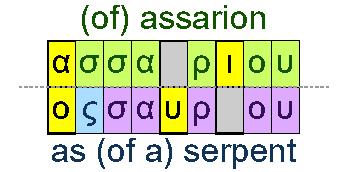
ουχι δυο στρουθια ασσαριου πωλειται και εν εξ αυτων ου πεσειται επι την γην ανευ του πατρος υμων [gnt]
What is the difference in the following?
10 (
assarionn ≈
1 denarius)
 "Are not two birds sold for an assarion [song].".
"Are not two birds bought for an assarion [song].".
"Are not two birds sold for an assarion [song].".
"Are not two birds bought for an assarion [song].".
*G4453 *22 πωλέω (po-leh'-o) : probably ultimately from pelomai (to be busy, to trade); to barter (as a pedlar), i.e. to sell:--sell, whatever is sold.
The ancient Greek word
"πωλέω" ≈ "sell" as in "
levy taxes",
"sell an office" or
"betray". This word often has negative connotations as sometimes does the English phrase
"sell out". A marketing phrase is from the Latin phrase
"caveat emptor" ≈ "let the buyer beware".
49. Matthew 10:29 Lizard coin
50. Sell
It would appear that the "
sell that thou hast" is referring to physical treasure here on earth.
How valuable are physical treasures here on earth?
Do such treasures have a limited shelf life? That is, use before such and such a date.
Discuss:
Can one "tithe" if one gives everything to the poor?
How might the church address this issue (to their advantage)?
51. Matthew 19:21 Give a dose
Matthew 19:21 Jesus said unto him, If thou wilt be perfect, go and sell that thou hast, and give to the poor, and thou shalt have treasure in heaven: and come and follow me. [kjv]
εφη αυτω ο ιησους ει θελεις τελειος ειναι υπαγε πωλησον σου τα υπαρχοντα και δος τοις πτωχοις και εξεις θησαυρον εν ουρανω ουρανοις και δευρο ακολουθει μοι [gnt]
The word for
"give" is that of a command and not always a polite request. The Greek word for
"give" is the ancient Greek word
"δόσις" ≈ "giving, gift, dose of medicine" and is the source of the English word
"dose".
A related Greek word is that of an "
antidote" as something that is given to work "
in place of" the
"dose".
52. Matthew 7:11 Good gifts and bad gifts
Matthew 7:11 If ye then, being evil, know how to give good gifts unto your children, how much more shall your Father which is in heaven give good things to them that ask him? [kjv]
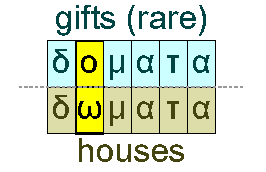
ει ουν υμεις πονηροι οντες οιδατε δοματα αγαθα διδοναι τοις τεκνοις υμων ποσω μαλλον ο πατηρ υμων ο εν τοις ουρανοις δωσει αγαθα τοις αιτουσιν αυτον [gnt]
"δοματα" ≈ "gifts" (rare) from "δόμα" ≈ "gift" (rare).
"δώματα" ≈ "houses" from "δῶμα" ≈ "house".
Note the play on words between similar sounding omicron "ο" and omega "ω" (same sound today).
The same sound play on words was used in the previous two verses. The idea of a
"gift" can be good, bad and/or even
deceptive.
Who would give bad gifts to their children?
Who would give bad houses (of sand) to their children?
The Father in heaven gives
"good". The word for
"gifts" is
not used. The
KJV adds
"things". Who gets this
"good"?
53. Matthew 5:3 Poor beggars
Matthew 5:3 Blessed are the poor in spirit: for theirs is the kingdom of heaven. [kjv]
μακαριοι οι πτωχοι τω πνευματι οτι αυτων εστιν η βασιλεια των ουρανων [gnt]
beati pauperes spiritu … regnum caelorum [v]
The ancient Greek word
"πτωχός" ≈ "beggar, one who crouches and cringes". As an adjective it could mean
"poor" or
"beggarly". The word comes from the ancient Greek word
"πτώση" ≈ "fallen, dropped". A similar phrase is used in English is a reference to a
"lower class" or
"low life" or
"culturally abused".
Contrast the following.
☐
Active: The
"poor" "beggar" who is
actively asking others for something.
☐
Passive: The
"poor" "destitute" who
wait for someone to come along and give them something.
To which group might Jesus be referring?
54. Luke 21:2 Poor in resources
There is
another Greek word
"πενιχρός" (peh-nee-KHROS) ≈ "poor, destitute" as in resources. There is some overlap but this appears to be more
passive (
destitute) while the other word more
active (
begging). The Latin uses the same word for both Greek words.
Luke 21:2 And he saw also a certain poor widow casting in thither two mites. [kjv]
ειδεν δε και τινα χηραν πενιχραν βαλλουσαν εκει λεπτα δυο λεπτα [gnt]
… pauperculam … [v]
The pastor in the sermon mentioned pointed out the two meanings of the Greek word, then used the one for the passive
"destitute" or
"poor" as the primary basis for his sermon, apparently ignoring the actual Greek word used in the Beatitude. The sermon spent a lot of time on
"destitute" "beggars" on the street without making a distinction between the meanings.
55. Matthew 19:21 Destitute and poor in spirit
Matthew 19:21 Jesus said unto him, If thou wilt be perfect, go and sell that thou hast, and give to the poor, and thou shalt have treasure in heaven: and come and follow me. [kjv]
εφη αυτω ο ιησους ει θελεις τελειος ειναι υπαγε πωλησον σου τα υπαρχοντα και δος τοις πτωχοις και εξεις θησαυρον εν ουρανω ουρανοις και δευρο ακολουθει μοι [gnt]
… perfectus … vende quae habes … da pauperibus … thesaurum … caelo … veni sequere … [v]
The
ancient Greek word
"πτωχός" ≈ "beggar, one who crouches and cringes". As an adjective it could mean
"poor" or
"beggarly". The word comes from the ancient Greek word
"πτώση" ≈ "fallen, dropped". A similar phrase is used in English is a reference to a
"lower class" or
"low life" or
"culturally abused".
The more restrictive Latin word
"pauperem" ≈ "poor" is the source of the English word
"pauper" and, through French,
"poor".
56. Matthew 19:21 Destitute and poor in spirit
Matthew 19:21 Jesus said unto him, If thou wilt be perfect, go and sell that thou hast, and give to the poor, and thou shalt have treasure in heaven: and come and follow me. [kjv]
εφη αυτω ο ιησους ει θελεις τελειος ειναι υπαγε πωλησον σου τα υπαρχοντα και δος τοις πτωχοις και εξεις θησαυρον εν ουρανω ουρανοις και δευρο ακολουθει μοι [gnt]
The meaning of this word depends on the point of view.
☐ To Jesus:
"poor" or
"fallen" in
spirit and who need the "
Good News".
☐ To others:
destitute "poor" in terms of
money, resources, etc.
57. Cases
Some languages have more
cases than others. Here are some cases. The
dative case has
disappeared in
modern Greek.
| N |
Nominative |
| D |
Dative |
| A |
Accusative |
| G |
Genitive |
| V |
Vocative |
|
... |
The Greek word for
"case" comes from the ancient Greek word
"πτώση" ≈ "fallen, dropped". A similar phrase is used in English is a reference to a
"lower class" or
"low life" or
"culturally abused". This Greek word is related to the Greek word for
"poor" or
"beggar" but is a word used by Jesus to refer to those who need the "
Good News".
In grammar, the word means a
"case" such as nominative, accusative, dative, genitive, etc. In a logical syllogism, it can mean an arrangement of terms.
58. Strongs - treasure
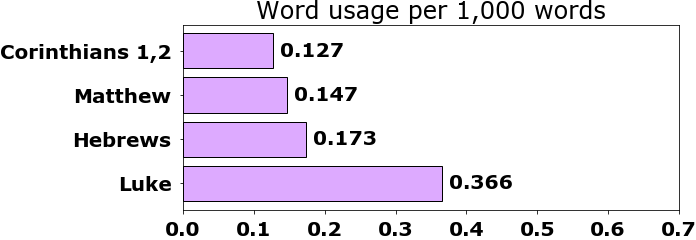
*G2343 *8 θησαυρίζω (thay-sow-rid'-zo) : from G2344 θησαυρός; to amass or reserve (literally or figuratively):--lay up (treasure), (keep) in store, (heap) treasure (together, up).
*G2344 *17 θησαυρός (thay-sow-ros') : from G5087; a deposit, i.e. wealth (literally or figuratively):--treasure.
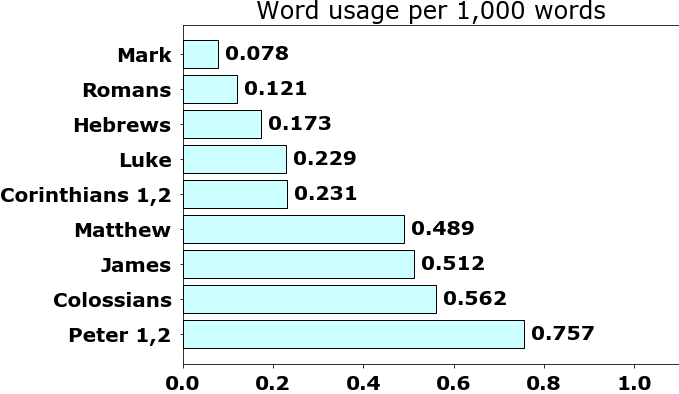 |
Words: εθησαυρισατε θησαυριζειν θησαυριζεις θησαυριζετε=2 θησαυριζων=2 θησαυροι θησαυρον=5 θησαυρος=2 θησαυρου=4 θησαυρους=3 θησαυρω θησαυρων τεθησαυρισμενοι
|
The
ancient Greek word
"θησαυρός" ≈ "treasure" and is the source, through Latin and then French, of the English words
"treasure" and "thesaurus". The
modern Greek word
"θησαυρός" (thee-sav-ROS) ≈ "treasure, thesaurus, hoard".
59. Usage - treasure
- *G2343 *8 θησαυρίζω (thay-sow-rid'-zo) : from G2344 θησαυρός; to amass or reserve (literally or figuratively):--lay up (treasure), (keep) in store, (heap) treasure (together, up).
- θησαυριζετε *2
- Matthew 6:19 Lay not up for yourselves treasures upon ...
- Matthew 6:20 But lay up for yourselves treasures in heaven, ...
- θησαυριζων *2
- Luke 12:21 So is he that layeth up treasure for himself, and is not ...
- 1 Corinthians 16:2 ... lay by him in store, as God hath prospered him, that ...
- θησαυριζεις
- Romans 2:5 ... and impenitent heart treasurest up unto thyself wrath against ...
- θησαυριζειν
- 2 Corinthians 12:14 ... the children ought not to lay up for the parents, but the parents for the children.
- εθησαυρισατε
- James 5:3 ... flesh as it were fire. Ye have heaped treasure together for the last days.
- τεθησαυρισμενοι
- 2 Peter 3:7 ... the same word are kept in store, reserved unto fire against ...
- *G2344 *17 θησαυρός (thay-sow-ros') : from G5087; a deposit, i.e. wealth (literally or figuratively):--treasure.
- θησαυρον *5
- Matthew 19:21 ... to the poor, and thou shalt have treasure in heaven: and ...
- Mark 10:21 ... to the poor, and thou shalt have treasure in heaven: and ...
- Luke 12:33 ... which wax not old, a treasure in the heavens that faileth not, ...
- Luke 18:22 ... unto the poor, and thou shalt have treasure in heaven: and ...
- 2 Corinthians 4:7 But we have this treasure in earthen vessels, ...
- θησαυρου *4
- Matthew 12:35 ... out of the good treasure of the heart bringeth forth good things: and an evil man out of the evil treasure ...
- Matthew 13:52 ... bringeth forth out of his treasure things new and old.
- Luke 6:45 ... out of the good treasure of his heart bringeth forth that which is good; and an evil man out of the evil treasure of his heart ...
- θησαυρους *3
- Matthew 2:11 ... and when they had opened their treasures, they presented unto him gifts; ...
- Matthew 6:19 Lay not up for yourselves treasures upon earth, where ...
- Matthew 6:20 But lay up for yourselves treasures in heaven, where ...
- θησαυρος *2
- Matthew 6:21 For where your treasure is, there will ...
- Luke 12:34 For where your treasure is, there will ...
- θησαυρω
- Matthew 13:44 ... of heaven is like unto treasure hid in a field; ...
- θησαυροι
- Colossians 2:3 ... are hid all the treasures of wisdom and knowledge.
- θησαυρων
- Hebrews 11:26 ... of Christ greater riches than the treasures in Egypt: for ...
60. Matthew 19:21 Essential attributes
Matthew 19:21 Jesus said unto him, If thou wilt be perfect, go and sell that thou hast, and give to the poor, and thou shalt have treasure in heaven: and come and follow me. [kjv]
εφη αυτω ο ιησους ει θελεις τελειος ειναι υπαγε πωλησον σου τα υπαρχοντα και δος τοις πτωχοις και εξεις θησαυρον εν ουρανω ουρανοις και δευρο ακολουθει μοι [gnt]
Is
"treasure" a
mental (soul) or
physical (body) idea (or both)? Which
"heaven"? Which
"heaven"?
The ancient Greek word
"ὑπάρχοντα" ≈ "begin, take the initiative, act first" and is often translated (e.g., as used by Aristotle) as
"essential attributes".
The Greek word translated as
"poor" is that of
"beggars". Jesus uses this word for those who are
"poor" in "
spirit" and need the "
good" "
news".
Does taking
"treasure" as a mental and not a physical concept change the possible meaning of the following verse?
Literal meaning: physical
Figurative meaning: abstract or mental
61. Matthew 19:21 Treasure
Matthew 19:21 Jesus said unto him, If thou wilt be perfect, go and sell that thou hast, and give to the poor, and thou shalt have treasure in heaven: and come and follow me. [kjv]
εφη αυτω ο ιησους ει θελεις τελειος ειναι υπαγε πωλησον σου τα υπαρχοντα και δος τοις πτωχοις και εξεις θησαυρον εν ουρανω ουρανοις και δευρο ακολουθει μοι [gnt]
The ancient Greek word
"θησαυρός" ≈ "treasure" and is the source, through Latin, of the English word
"thesaurus".
62. Thesaurus - treasury of words
The ancient Greek word
"θησαυρός" ≈ "treasure" and is the source of the English word
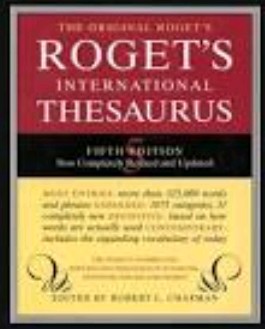
"thesaurus" as a general dictionary - a meaning that has been around since ancient times. The word narrowed in meaning in 1852 with the introduction of a thesaurus by
Peter Roget who re-defined thesaurus as a "
collection of words arranged according to sense".
What happens if you swallow a dictionary?
For a spell, you will get the sorest (thesaurus) throat you ever have had. You will not be able to (tongue in cheek) get a word in edgewise.
What do you say about a pony with a sore throat?
It's a little horse. You may be dying for more jokes, but let's not get the cart before the hearse. That tired joke fell flat. I may need to re-hearse.
63. Matthew 6:19 Treasurize
Matthew 6:19 Lay not up for yourselves treasures upon earth, where moth and rust doth corrupt, and where thieves break through and steal: [kjv]
μη θησαυριζετε υμιν θησαυρους επι της γης οπου σης και βρωσις αφανιζει και οπου κλεπται διορυσσουσιν και κλεπτουσιν [gnt]
The
KJV translates as
"lay up" what in the Greek is a verb form of
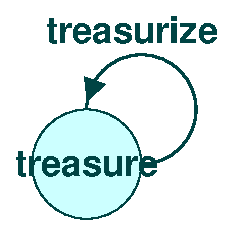
"treasure" as in the made-up English verb
"treasurize". [running, swimming, tennising]
How does one
"treasurize" a
"treasure"? This is a
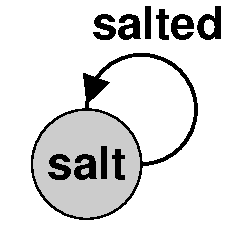
reflexive (self-referential) relationship. How can "
salt" be "
salted"? [tomorrow's bread today]
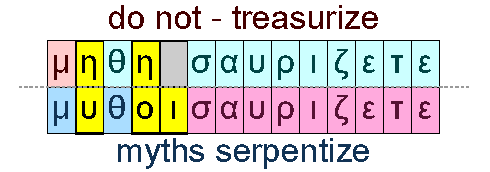
64. Matthew 6:19 Mythical serpents
65. Matthew 6:19-20 Causal relationships
Matthew 6:19 Lay not up for yourselves treasures upon earth, where moth and rust doth corrupt, and where thieves break through and steal: [kjv]
6:20 But lay up for yourselves treasures in heaven, where neither moth nor rust doth corrupt, and where thieves do not break through nor steal: [kjv]
6:19:
"Treasure" on
earth: (you
opened the tunnel)
... where (eating (the fruit) appears) and (not bread appears) ...
6:20:
"Treasure" In
heaven: (you
closed the tunnel)
... where (not eating (the fruit) appears) and (bread appears) ...
The appears to be a
causal relationship in that "
eating" or
"not" "
eating" the
"fruit" determines the
"appearance" or
"disappearance" of the
"bread" as
"food". This
causal relationship appears to be the determining factor of whether the
"tunnel" is open or closed for the potential
"thieves".
66. Matthew 6:19-20 Treasure on earth and in heaven
Matthew 6:19 Lay not up for yourselves treasures upon earth, where moth and rust doth corrupt, and where thieves break through and steal: [kjv]
6:20 But lay up for yourselves treasures in heaven, where neither moth nor rust doth corrupt, and where thieves do not break through nor steal: [kjv]
In any case:
Do not eat the fruit. Do not feed the birds.
To have
"treasure" in "
earth" one should eat (the fruit) so that the (living) bread does
"not" appear.
To have
"treasure" in "
heaven" one should
"not" eat (the fruit) so that the (living) bread appears.
67. Matthew 22:21 Serpent Caesar
Matthew 22:21 They say unto him, Caesar's. Then saith he unto them, Render therefore unto Caesar the things which are Caesar's; and unto God the things that are God's. [kjv]
λεγουσιν αυτω καισαρος τοτε λεγει αυτοις αποδοτε ουν τα καισαρος καισαρι και τα του θεου τω θεω [gnt]
Greek:
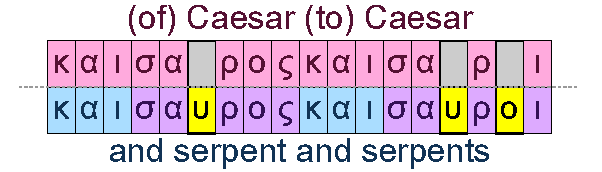
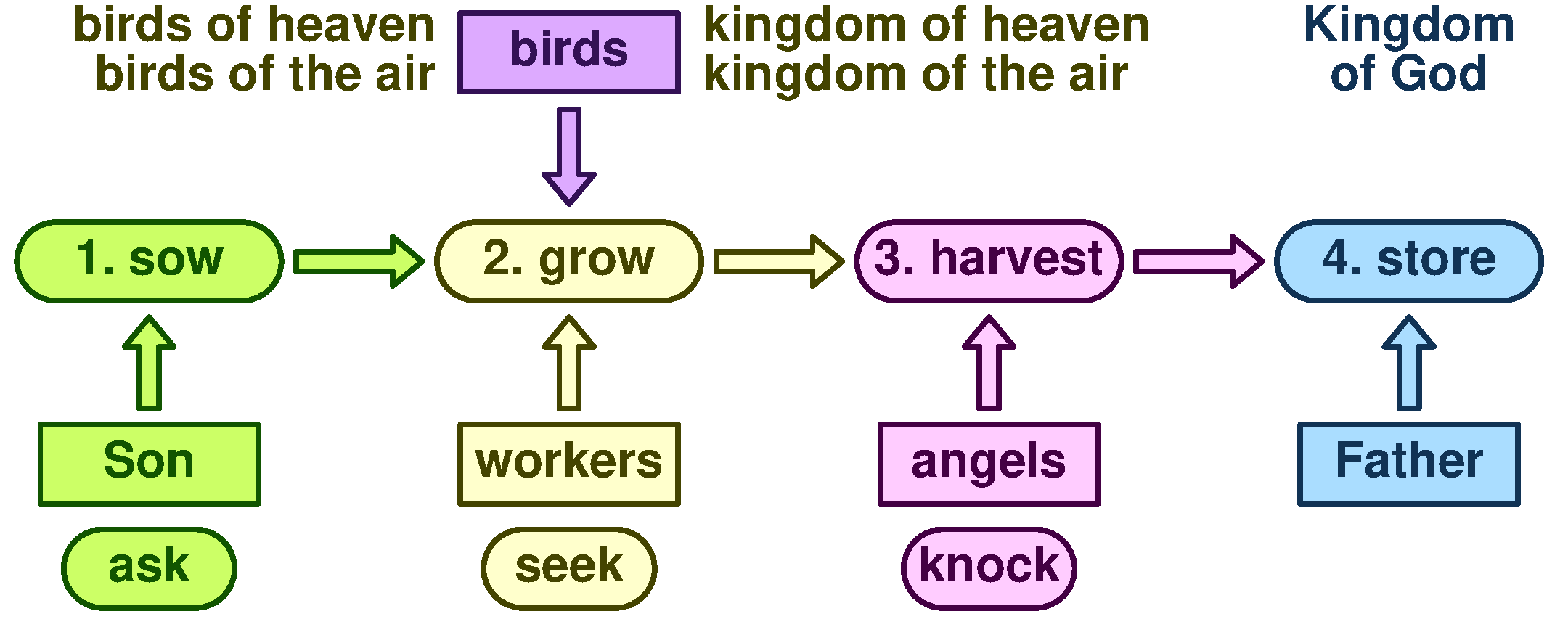
... therefore that (of) Caesar [and lizard/serpent] (to) Caesar [and lizards/serpents].
Discuss: How much of a coincidence is it, historically, that the Latin name of
Caesar as the leader of the power and might of the world, transliterated into Greek, is a play on words with
"lizard/serpent"?
68. Sky and heaven
*G3772 *275 οὐρανός (oo-ran-os') : perhaps from the same as G3735 (through the idea of elevation); the sky; by extension, heaven (as the abode of God); by implication, happiness, power, eternity; specially, the Gospel (Christianity):--air, heaven(-ly), sky.
The ancient Greek word
"ουρανός" ≈ "sky, heaven".
The English word for the planet
"Uranus", discovered by William Hershel in 1781, is from the ancient Greek word
"Οὐρανός" ≈ "Uranus" who was a god in Greek mythology.
What is the difference in the following?
Kingdom of "heaven".
Kingdom of the "sky".
69. Matthew 6:26 Kingdom of the birds
Matthew 6:26 Behold the fowls of the air: for they sow not, neither do they reap, nor gather into barns; yet your heavenly Father feedeth them. Are ye not much better than they? [kjv]
εμβλεψατε εις τα πετεινα του ουρανου οτι ου σπειρουσιν ουδε θεριζουσιν ουδε συναγουσιν εις αποθηκας και ο πατηρ υμων ο ουρανιος τρεφει αυτα ουχ υμεις μαλλον διαφερετε αυτων [gnt]
The step
omitted by Jesus is the
"grow" part. The
"birds" work the growing harvest by "
pecking" and taking part of the harvest (first parable), and, in turn, sowing
"weeds" (second parable).
You are "
rather different" (at least you should be). The
KJV, influenced by the Latin, says "
much better".
The
"birds" are used by Jesus as a symbol of "
false teachers" who "
prey", rather than "
pray", on others. The "
wolf" or "
wolf-dog", as contrasted to a "
sheep-dog", and the "
snake" or "
viper" appear to be used in the same manner.
70. Omitted step
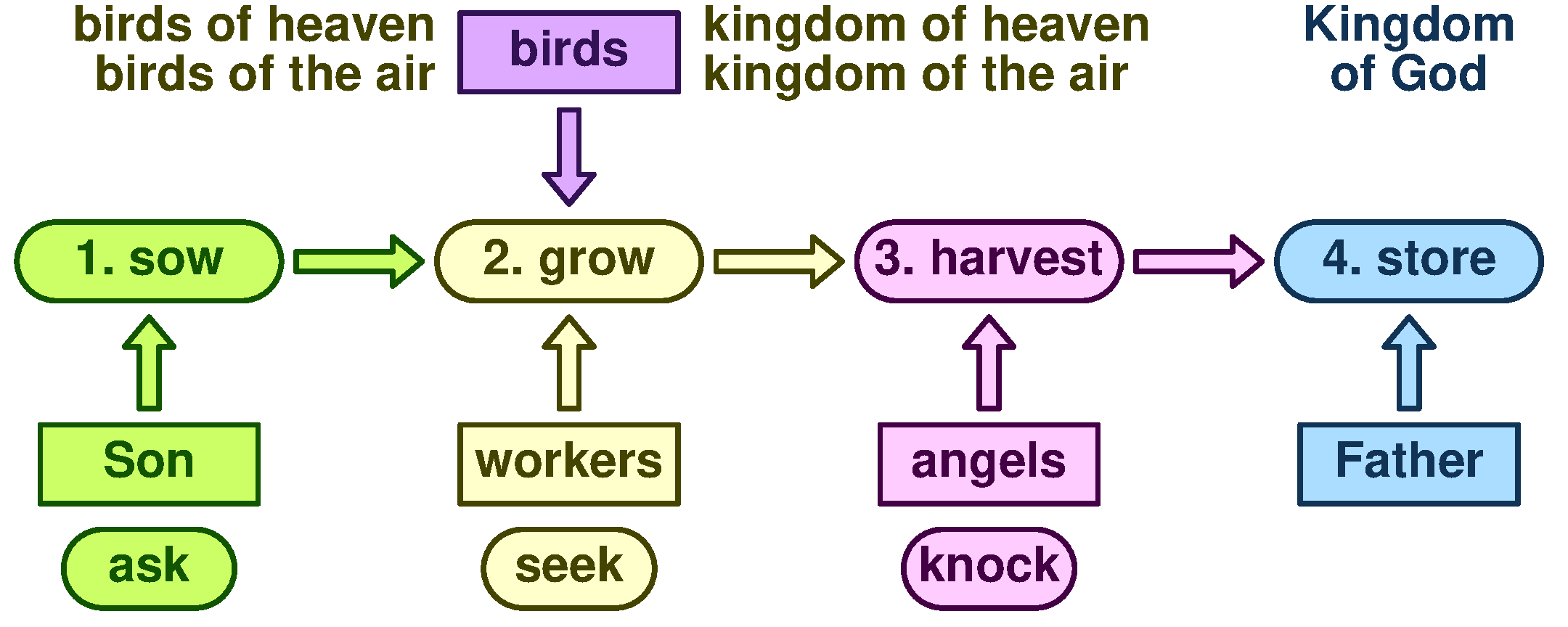
The
"ask",
"seek" and
"knock" sequence can be seen in the
"sow",
"grow" and
"harvest" sequence.
The
"Holy Spirit" is part of the
"worker" process as in the "
kingdom" of
"heaven" or the "
kingdom" of the "
air" where one must deal with the
"birds" of the "
air".
\
71. Matthew 19:21 Heaven of the air
Matthew 19:21 Jesus said unto him, If thou wilt be perfect, go and sell that thou hast, and give to the poor, and thou shalt have treasure in heaven: and come and follow me. [kjv]
εφη αυτω ο ιησους ει θελεις τελειος ειναι υπαγε πωλησον σου τα υπαρχοντα και δος τοις πτωχοις και εξεις θησαυρον εν ουρανω ουρανοις και δευρο ακολουθει μοι [gnt]
What is the
"heaven" for which the
"treasure" will be had? The ancient Greek word
"οὐρανός" ≈ "sky, heaven" as in the
"atmosphere". Here are some choices.
☐ "
kingdom" of
"air" with "
birds", etc.
☐ "
kingdom" of
"heaven".
☐ "
kingdom" of "
God".
Which, if any, might be the "
third"
"heaven"?
72. Matthew 8:20 Birds of the air
Matthew 8:20 And Jesus saith unto him, The foxes have holes, and the birds of the air have nests; but the Son of man hath not where to lay his head. [kjv]
και λεγει αυτω ο ιησους αι αλωπεκες φωλεους εχουσιν και τα πετεινα του ουρανου κατασκηνωσεις ο δε υιος του ανθρωπου ουκ εχει που την κεφαλην κλινη [gnt]
… Foxis … dennes… briddis … heuene … nestis… reste … heed. [wy]
Is the
"kingdom of heaven" actually
"heaven" as in the
"kingdom of God"?
"βασίλεια των ουρανών" ≈ "kingdom of heaven" or "kingdom of the air".
"πετεινα του ουρανου" ≈ "birds of the air" or "birds of heaven".
Wycliffe uses the phrase "briddis of heuene" or "birds of heaven".
Some will attempt to "
fix" a perceived "
error" in the Bible text by asserting their opinion (or glory) that
"kingdom of God" and
"kingdom of heaven" are the same thing.
If birds represent "
evil" or "
oppression" (parable 1), are there any birds in heaven?
73. Matthew 19:21 Come
Matthew 19:21 Jesus said unto him, If thou wilt be perfect, go and sell that thou hast, and give to the poor, and thou shalt have treasure in heaven: and come and follow me. [kjv]
εφη αυτω ο ιησους ει θελεις τελειος ειναι υπαγε πωλησον σου τα υπαρχοντα και δος τοις πτωχοις και εξεις θησαυρον εν ουρανω ουρανοις και δευρο ακολουθει μοι [gnt]
The ancient Greek word
"δεῦρο" ≈ "hither, here" as in "
come hither" in terms of
place. In terms of
time, it is "
until now" or "
hitherto".
74. Strongs - hither
*G1204 *9 δεῦρο (dyoo'-ro) : of uncertain affinity; here; used also imperative hither!; and of time, hitherto:--come (hither), hither(-to).
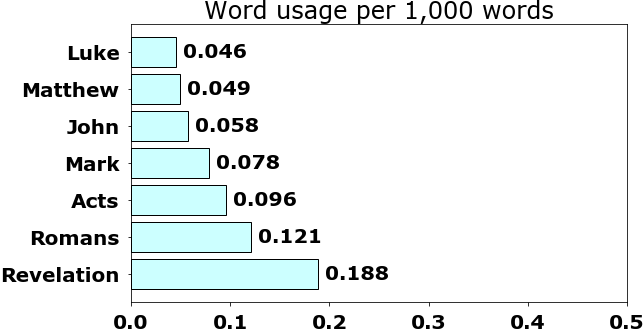 |
Words: δευρο=9
|
75. Usage - hither
- *G1204 *9 δεῦρο (dyoo'-ro) : of uncertain affinity; here; used also imperative hither!; and of time, hitherto:--come (hither), hither(-to).
- δευρο *9
- Matthew 19:21 ... in heaven: and come and follow me.
- Mark 10:21 ... in heaven: and come, take up the cross, and follow me.
- Luke 18:22 ... in heaven: and come, follow me.
- John 11:43 ... loud voice, Lazarus, come forth.
- Acts 7:3 ... thy kindred, and come into the land which ...
- Acts 7:34 ... them. And now come, I will send thee into Egypt.
- Romans 1:13 ... you, (but was let hitherto,) that I might have some ...
- Revelation 17:1 ... me, saying unto me, Come hither; I will shew unto thee the judgment ...
- Revelation 21:9 ... with me, saying, Come hither, I will shew thee the bride, ...
76. Matthew 19:21 Follow
Matthew 19:21 Jesus said unto him, If thou wilt be perfect, go and sell that thou hast, and give to the poor, and thou shalt have treasure in heaven: and come and follow me. [kjv]
εφη αυτω ο ιησους ει θελεις τελειος ειναι υπαγε πωλησον σου τα υπαρχοντα και δος τοις πτωχοις και εξεις θησαυρον εν ουρανω ουρανοις και δευρο ακολουθει μοι [gnt]
The English word
"acolyte" comes from the late Latin word
"acolythus" ≈ "acolyte" which comes from the ancient Greek word
"ἀκόλουθος" ≈ "following, attending". That word comes from
"κέλευθος" ≈ "road, way, path" which is from
"κελεύω" ≈ "urge, command" which appears in the
KJV and the
LXX.
Jesus says to "
follow" and not "
lead". The birds will want to convince you to "
lead" so they can give you the "
next steps" that, on careful analysis, often benefit the bird more than Jesus.
77. Matthew 10:38-42 Commanded to follow in the cross walk
Matthew 10:38 And he that taketh not his cross, and followeth after me, is not worthy of me. [kjv]
10:39 He that findeth his life shall lose it: and he that loseth his life for my sake shall find it. [kjv]
The English word
"acolyte" comes from the late Latin word
"acolythus" ≈ "acolyte" which comes from the ancient Greek word
"ἀκόλουθος" ≈ "following, attending".
That word comes from
"κέλευθος" ≈ "road, way, path" which is from
"κελεύω" ≈ "urge, command" which appears in the
KJV and the
LXX. The idea appears to be that if one is not commanding or leading than one is following or attending. We are told to be
"followers" and not
"leaders" in the human sense of the word. An interesting use of the word for
"command" appears in a verse for the "
rapture" and often translated as
"shout".
78. Revelation and Ten Commandments build
1
2
3
4
5
6
7
8
9
10
11
12
13
+
-
▶
|
|
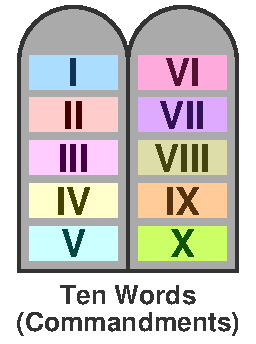 |
The "
Ten Commandments" are known in Hebrew and Greek as the "
Ten Words".
79. Rich young man model build
1
2
3
4
5
6
7
8
9
10
11
+
-
▶
|
Matthew 19:18 He saith unto him, Which? Jesus said, Thou shalt do no murder, Thou shalt not commit adultery, Thou shalt not steal, Thou shalt not bear false witness, [kjv]
19:19 Honour thy father and thy mother: and, Thou shalt love thy neighbour as thyself. [kjv]
80. Matthew 19:21 Paraphrase
Matthew 19:21 Jesus said unto him, If thou wilt be perfect, go and sell that thou hast, and give to the poor, and thou shalt have treasure in heaven: and come and follow me. [kjv]
εφη αυτω ο ιησους ει θελεις τελειος ειναι υπαγε πωλησον σου τα υπαρχοντα και δος τοις πτωχοις και εξεις θησαυρον εν ουρανω ουρανοις και δευρο ακολουθει μοι [gnt]
The wording is ambiguous as "
you" is
before "essential attributes" and not
after. Any non-verbal hand motions, etc., are not recorded. One way to understand this verse is the following.
Paraphrase:
Jesus said to him, if you desire/consent to be purposeful, go and sell out (of) you the (point to the young man) essential attributes and (Jesus points back to himself, as in the essential attributes of Jesus) give to the (Jesus points outward to others) beggars/poor (wanting the Good News) and you will have treasure (not eating the fruit, living bread appears in (the good) kingdom of) heaven and come and follow me.
81. Matthew 19:21
KJV: Jesus said unto him, If thou wilt be perfect, go and sell that thou hast, and give to the poor, and thou shalt have treasure in heaven: and come and follow me.
Greek: εφη αυτω ο ιησους ει θελεις τελειος ειναι υπαγε πωλησον σου τα υπαρχοντα και δος τοις πτωχοις και εξεις θησαυρον εν ουρανω ουρανοις και δευρο ακολουθει μοι
Latin: ait illi Iesus si vis perfectus esse vade vende quae habes et da pauperibus et habebis thesaurum in caelo et veni sequere me
82. Matthew 19:21-24 Context
Matthew 19:21 Jesus said unto him, If thou wilt be perfect, go and sell that thou hast, and give to the poor, and thou shalt have treasure in heaven: and come and follow me. [kjv]
εφη αυτω ο ιησους ει θελεις τελειος ειναι υπαγε πωλησον σου τα υπαρχοντα και δος τοις πτωχοις και εξεις θησαυρον εν ουρανω ουρανοις και δευρο ακολουθει μοι [gnt]
19:22 But when the young man heard that saying, he went away sorrowful: for he had great possessions. [kjv]
19:23 Then said Jesus unto his disciples, Verily I say unto you, That a rich man shall hardly enter into the kingdom of heaven. [kjv]
19:24 And again I say unto you, It is easier for a camel to go through the eye of a needle, than for a rich man to enter into the kingdom of God. [kjv]
The idea of "
rich" and "
ruler" comes from Luke and appears to have been back-patched into Matthew.
83. Matthew 19:28-30 Verses
The answer provided by Jesus is somewhat enigmatic.
Matthew 19:28 And Jesus said unto them, Verily I say unto you, That ye which have followed me, in the regeneration when the Son of man shall sit in the throne of his glory, ye also shall sit upon twelve thrones, judging the twelve tribes of Israel. [kjv]
19:29 And every one that hath forsaken houses, or brethren, or sisters, or father, or mother, or wife, or children, or lands, for my name's sake, shall receive an hundredfold, and shall inherit everlasting life. [kjv]
Who are the
"many"? Who, then, are the "
few"?
19:30 But many that are first shall be last; and the last shall be first. [kjv]
Hint: This verse appears to go with the next chapter as a continuation of this chapter.
84. End of page