Send
Close Add comments:
(status displays here)
Got it! This site "creationpie.org" uses cookies. You consent to this by clicking on "Got it!" or by continuing to use this website. Note: This appears on each machine/browser from which this site is accessed.
Matthew 21:1-11 Triumphal entry and donkey voices
1. Matthew 21:8-9 March 30, 1969: Palm Sunday
Matthew 21:8 And a very great multitude spread their garments in the way; others cut down branches from the trees, and strawed them in the way. [kjv]
21:9 And the multitudes that went before, and that followed, cried, saying, Hosanna to the Son of David: Blessed is he that cometh in the name of the Lord; Hosanna in the highest. [kjv]
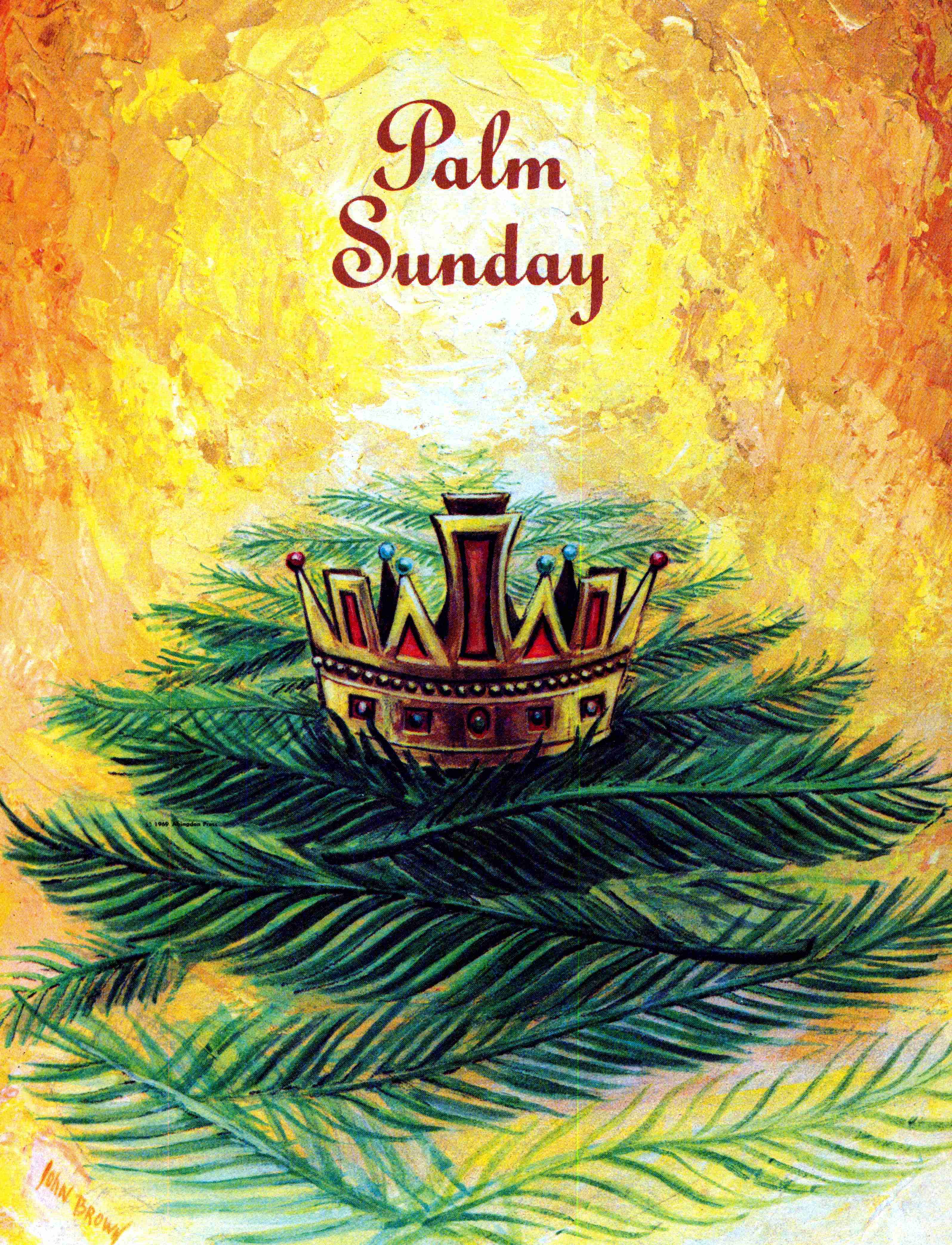 |

Bulletin cover from
Palm Sunday
March 30, 1969.
|
Not to "
rain" on the "
parade", but there appears to be a deeper meaning to the event than often portrayed.
We might have to "
rein" in some of our prior conceptions of the event.
What will be the "
reign" of Christ?
2. John 12:12
John 12:12 On the next day much people that were come to the feast, when they heard that Jesus was coming to Jerusalem, [kjv]
τη επαυριον ο οχλος πολυς ο ελθων εις την εορτην ακουσαντες οτι ερχεται ο ιησους εις ιεροσολυμα [gnt]
… morgan mycel menio … freols-daige… ge-hirdan … [wes]
3. John 12:12
KJV: On the next day much people that were come to the feast, when they heard that Jesus was coming to Jerusalem,
Greek: τη επαυριον ο οχλος πολυς ο ελθων εις την εορτην ακουσαντες οτι ερχεται ο ιησους εις ιεροσολυμα
Wessex: On morgan mycel menio þe coman to þam freols-daige. þa hyo ge-hirdan þaet se haelend com to ierusalem.
4. John 12:13 Palm branches
John 12:13 Took branches of palm trees, and went forth to meet him, and cried, Hosanna: Blessed is the King of Israel that cometh in the name of the Lord. [kjv]
ελαβον τα βαια των φοινικων και εξηλθον εις υπαντησιν αυτω και εκραζον εκραυγαζον ωσαννα ευλογημενος ο ερχομενος εν ονοματι κυριου και ο βασιλευς του ισραηλ [gnt]
acceperunt ramos palmarum et processerunt obviam ei et clamabant osanna benedictus qui venit in nomine Domini rex Israhel [v]
… palmtreowene twiggan … geuoden … hal … ge-bledsed… [wes]
… braunchis … palmes… camen … Osanna, blessid … [wy]
… astans peikabagme … urrunnun … osanna, thiuthida … [got]
[palm tree, branch, Phonecia, Phoenix, red]
5. John 12:14-15
John 12:14 And Jesus, when he had found a young ass, sat thereon; as it is written, [kjv]
ευρων δε ο ιησους οναριον εκαθισεν επ αυτο καθως εστιν γεγραμμενον [gnt]
12:15 Fear not, daughter of Sion: behold, thy King cometh, sitting on an ass's colt. [kjv]
μη φοβου θυγατερ θυγατηρ σιων ιδου ο βασιλευς σου ερχεται καθημενος επι πωλον ονου [gnt]
John is paraphrasing Zechariah 9:9 but what is said does not match that cherry-picked verse very well. In particular, the two animals (female donkey and male colt) are now combined into one animal. The donkey has become a young donkey.
6. John 12:14
KJV: And Jesus, when he had found a young ass, sat thereon; as it is written,
Greek: ευρων δε ο ιησους οναριον εκαθισεν επ αυτο καθως εστιν γεγραμμενον
7. John 12:15
KJV: Fear not, daughter of Sion: behold, thy King cometh, sitting on an ass's colt.
Greek: μη φοβου θυγατερ θυγατηρ σιων ιδου ο βασιλευς σου ερχεται καθημενος επι πωλον ονου
8. John 12:16
John 12:16 These things understood not his disciples at the first: but when Jesus was glorified, then remembered they that these things were written of him, and that they had done these things unto him. [kjv]
ταυτα δε ουκ εγνωσαν αυτου οι μαθηται αυτου το πρωτον αλλ οτε εδοξασθη ο ιησους τοτε εμνησθησαν οτι ταυτα ην επ αυτω γεγραμμενα και ταυτα εποιησαν αυτω [gnt]
Does
John include himself in the group of "
disciples"? Who wrote the book called
John?
The ancient Greek word
"δόξα" ≈ "opinion, expectation" as in
"doxology". This word, after the Latin, is often translated as "
glory" as a narrowing of a
good opinion. [
doxx from
docs from Latin
teach related to Greek
opinion]
Usually men
"glorify" or defer their
"opinion" to God.
9. John 12:16
KJV: These things understood not his disciples at the first: but when Jesus was glorified, then remembered they that these things were written of him, and that they had done these things unto him.
Greek: ταυτα δε ουκ εγνωσαν αυτου οι μαθηται αυτου το πρωτον αλλ οτε εδοξασθη ο ιησους τοτε εμνησθησαν οτι ταυτα ην επ αυτω γεγραμμενα και ταυτα εποιησαν αυτω
10. Luke 19:29
Luke 19:29 And it came to pass, when he was come nigh to Bethphage and Bethany, at the mount called the mount of Olives, he sent two of his disciples, [kjv]
και εγενετο ως ηγγισεν εις βηθφαγη και βηθανιαν βηθανια προς το ορος το καλουμενον ελαιων απεστειλεν δυο των μαθητων αυτου [gnt]
The "
mount" is "
called" by this name. Someone writing from the area would probably not say "
called".
11. Luke 19:29
KJV: And it came to pass, when he was come nigh to Bethphage and Bethany, at the mount called the mount of Olives, he sent two of his disciples,
Greek: και εγενετο ως ηγγισεν εις βηθφαγη και βηθανιαν βηθανια προς το ορος το καλουμενον ελαιων απεστειλεν δυο των μαθητων αυτου
12. Luke 19:30
Luke 19:30 Saying, Go ye into the village over against you; in the which at your entering ye shall find a colt tied, whereon yet never man sat: loose him, and bring him hither. [kjv]
ειπων λεγων υπαγετε εις την κατεναντι κωμην εν η εισπορευομενοι ευρησετε πωλον δεδεμενον εφ ον ουδεις πωποτε ανθρωπων εκαθισεν και λυσαντες αυτον αγαγετε [gnt]
Here we have a "
colt" with no "
donkey". There is one and not two animals involved.
No one has ever sat on this "
colt". How was that known?
13. Luke 19:30
KJV: Saying, Go ye into the village over against you; in the which at your entering ye shall find a colt tied, whereon yet never man sat: loose him, and bring him hither.
Greek: ειπων λεγων υπαγετε εις την κατεναντι κωμην εν η εισπορευομενοι ευρησετε πωλον δεδεμενον εφ ον ουδεις πωποτε ανθρωπων εκαθισεν και λυσαντες αυτον αγαγετε
14. Luke 19:31
Luke 19:31 And if any man ask you, Why do ye loose him? thus shall ye say unto him, Because the Lord hath need of him. [kjv]
και εαν τις υμας ερωτα δια τι λυετε ουτως ερειτε αυτω οτι ο κυριος αυτου χρειαν εχει [gnt]
15. Luke 19:31
KJV: And if any man ask you, Why do ye loose him? thus shall ye say unto him, Because the Lord hath need of him.
Greek: και εαν τις υμας ερωτα δια τι λυετε ουτως ερειτε αυτω οτι ο κυριος αυτου χρειαν εχει
16. Luke 19:32
Luke 19:32 And they that were sent went their way, and found even as he had said unto them. [kjv]
απελθοντες δε οι απεσταλμενοι ευρον καθως ειπεν αυτοις [gnt]
17. Luke 19:32
KJV: And they that were sent went their way, and found even as he had said unto them.
Greek: απελθοντες δε οι απεσταλμενοι ευρον καθως ειπεν αυτοις
18. Luke 19:33
Luke 19:33 And as they were loosing the colt, the owners thereof said unto them, Why loose ye the colt? [kjv]
λυοντων δε αυτων τον πωλον ειπον ειπαν οι κυριοι αυτου προς αυτους τι λυετε τον πωλον [gnt]
As often happens in Luke, the story is elaborated beyond that of Matthew.
19. Luke 19:33
KJV: And as they were loosing the colt, the owners thereof said unto them, Why loose ye the colt?
Greek: λυοντων δε αυτων τον πωλον ειπον ειπαν οι κυριοι αυτου προς αυτους τι λυετε τον πωλον
20. Luke 19:34
Luke 19:34 And they said, The Lord hath need of him. [kjv]
οι δε ειπον ειπαν οτι ο κυριος αυτου χρειαν εχει [gnt]
21. Luke 19:34
KJV: And they said, The Lord hath need of him.
Greek: οι δε ειπον ειπαν οτι ο κυριος αυτου χρειαν εχει
22. Luke 19:35
Luke 19:35 And they brought him to Jesus: and they cast their garments upon the colt, and they set Jesus thereon. [kjv]
και ηγαγον αυτον προς τον ιησουν και επιρριψαντες εαυτων επιριψαντες αυτων τα ιματια επι τον πωλον επεβιβασαν τον ιησουν [gnt]
Here the "
garments" are of "
them" and not just "
garments".
Why did
Jesus have to be "
set" on the "
colt" by "
them"?
23. Luke 19:35
KJV: And they brought him to Jesus: and they cast their garments upon the colt, and they set Jesus thereon.
Greek: και ηγαγον αυτον προς τον ιησουν και επιρριψαντες εαυτων επιριψαντες αυτων τα ιματια επι τον πωλον επεβιβασαν τον ιησουν
24. Luke 19:36
Luke 19:36 And as he went, they spread their clothes in the way. [kjv]
πορευομενου δε αυτου υπεστρωννυον τα ιματια αυτων εαυτων εν τη οδω [gnt]
25. Luke 19:36
KJV: And as he went, they spread their clothes in the way.
Greek: πορευομενου δε αυτου υπεστρωννυον τα ιματια αυτων εαυτων εν τη οδω
26. Luke 19:37
Luke 19:37 And when he was come nigh, even now at the descent of the mount of Olives, the whole multitude of the disciples began to rejoice and praise God with a loud voice for all the mighty works that they had seen; [kjv]
εγγιζοντος δε αυτου ηδη προς τη καταβασει του ορους των ελαιων ηρξαντο απαν το πληθος των μαθητων χαιροντες αινειν τον θεον φωνη μεγαλη περι πασων ων ειδον δυναμεων [gnt]
27. Luke 19:37
KJV: And when he was come nigh, even now at the descent of the mount of Olives, the whole multitude of the disciples began to rejoice and praise God with a loud voice for all the mighty works that they had seen;
Greek: εγγιζοντος δε αυτου ηδη προς τη καταβασει του ορους των ελαιων ηρξαντο απαν το πληθος των μαθητων χαιροντες αινειν τον θεον φωνη μεγαλη περι πασων ων ειδον δυναμεων
28. Luke 19:38
Luke 19:38 Saying, Blessed be the King that cometh in the name of the Lord: peace in heaven, and glory in the highest. [kjv]
λεγοντες ευλογημενος ο ερχομενος ο βασιλευς εν ονοματι κυριου ειρηνη εν ουρανω ειρηνη και δοξα εν υψιστοις [gnt]
29. Luke 19:38
KJV: Saying, Blessed be the King that cometh in the name of the Lord: peace in heaven, and glory in the highest.
Greek: λεγοντες ευλογημενος ο ερχομενος ο βασιλευς εν ονοματι κυριου ειρηνη εν ουρανω ειρηνη και δοξα εν υψιστοις
30. Mark 11:1
Mark 11:1 And when they came nigh to Jerusalem, unto Bethphage and Bethany, at the mount of Olives, he sendeth forth two of his disciples, [kjv]
και οτε εγγιζουσιν εις ιερουσαλημ ιεροσολυμα εις βηθφαγη και βηθανιαν προς το ορος των ελαιων αποστελλει δυο των μαθητων αυτου [gnt]
31. Mark 11:1
KJV: And when they came nigh to Jerusalem, unto Bethphage and Bethany, at the mount of Olives, he sendeth forth two of his disciples,
Greek: και οτε εγγιζουσιν εις ιερουσαλημ ιεροσολυμα εις βηθφαγη και βηθανιαν προς το ορος των ελαιων αποστελλει δυο των μαθητων αυτου
32. Mark 11:2
Mark 11:2 And saith unto them, Go your way into the village over against you: and as soon as ye be entered into it, ye shall find a colt tied, whereon never man sat; loose him, and bring him. [kjv]
και λεγει αυτοις υπαγετε εις την κωμην την κατεναντι υμων και ευθεως ευθυς εισπορευομενοι εις αυτην ευρησετε πωλον δεδεμενον εφ ον ουδεις ουπω ανθρωπων κεκαθικεν λυσαντες εκαθισεν λυσατε αυτον αγαγετε και φερετε [gnt]
Again, no one has ever sat on this "
colt". How was that known?
33. Mark 11:2
KJV: And saith unto them, Go your way into the village over against you: and as soon as ye be entered into it, ye shall find a colt tied, whereon never man sat; loose him, and bring him.
Greek: και λεγει αυτοις υπαγετε εις την κωμην την κατεναντι υμων και ευθεως ευθυς εισπορευομενοι εις αυτην ευρησετε πωλον δεδεμενον εφ ον ουδεις ουπω ανθρωπων κεκαθικεν λυσαντες εκαθισεν λυσατε αυτον αγαγετε και φερετε
34. Mark 11:3
Mark 11:3 And if any man say unto you, Why do ye this? say ye that the Lord hath need of him; and straightway he will send him hither. [kjv]
και εαν τις υμιν ειπη τι ποιειτε τουτο ειπατε οτι ο κυριος αυτου χρειαν εχει και ευθεως ευθυς αυτον αποστελει αποστελλει παλιν ωδε [gnt]
35. Mark 11:3
KJV: And if any man say unto you, Why do ye this? say ye that the Lord hath need of him; and straightway he will send him hither.
Greek: και εαν τις υμιν ειπη τι ποιειτε τουτο ειπατε οτι ο κυριος αυτου χρειαν εχει και ευθεως ευθυς αυτον αποστελει αποστελλει παλιν ωδε
36. Mark 11:4
Mark 11:4 And they went their way, and found the colt tied by the door without in a place where two ways met; and they loose him. [kjv]
και απηλθον δε και ευρον τον πωλον δεδεμενον προς την θυραν εξω επι του αμφοδου και λυουσιν αυτον [gnt]
Mark, Peter's Gospel, relates specific conditions that were remembered.
37. Mark 11:4
KJV: And they went their way, and found the colt tied by the door without in a place where two ways met; and they loose him.
Greek: και απηλθον δε και ευρον τον πωλον δεδεμενον προς την θυραν εξω επι του αμφοδου και λυουσιν αυτον
38. Mark 11:5
Mark 11:5 And certain of them that stood there said unto them, What do ye, loosing the colt? [kjv]
και τινες των εκει εστηκοτων ελεγον αυτοις τι ποιειτε λυοντες τον πωλον [gnt]
39. Mark 11:5
KJV: And certain of them that stood there said unto them, What do ye, loosing the colt?
Greek: και τινες των εκει εστηκοτων ελεγον αυτοις τι ποιειτε λυοντες τον πωλον
40. Mark 11:6
Mark 11:6 And they said unto them even as Jesus had commanded: and they let them go. [kjv]
οι δε ειπον ειπαν αυτοις καθως ενετειλατο ειπεν ο ιησους και αφηκαν αυτους [gnt]
The Greek translated as "
commanded" is that of "
said".
The Greek word translated as "
let go" is the same word often translated as "
forgiven".
41. Mark 11:6
KJV: And they said unto them even as Jesus had commanded: and they let them go.
Greek: οι δε ειπον ειπαν αυτοις καθως ενετειλατο ειπεν ο ιησους και αφηκαν αυτους
42. Mark 11:7
Mark 11:7 And they brought the colt to Jesus, and cast their garments on him; and he sat upon him. [kjv]
και ηγαγον φερουσιν τον πωλον προς τον ιησουν και επεβαλον επιβαλλουσιν αυτω τα ιματια αυτων και εκαθισεν επ αυτω αυτον [gnt]
There is one animal, not two. That animal is a "
colt" and
not a "
donkey".
43. Mark 11:7
KJV: And they brought the colt to Jesus, and cast their garments on him; and he sat upon him.
Greek: και ηγαγον φερουσιν τον πωλον προς τον ιησουν και επεβαλον επιβαλλουσιν αυτω τα ιματια αυτων και εκαθισεν επ αυτω αυτον
44. Mark 11:8
Mark 11:8 And many spread their garments in the way: and others cut down branches off the trees, and strawed them in the way. [kjv]
και πολλοι δε τα ιματια αυτων εστρωσαν εις την οδον αλλοι δε στοιβαδας εκοπτον στιβαδας κοψαντες εκ των δενδρων και εστρωννυον εις την οδον αγρων [gnt]
45. Mark 11:8
KJV: And many spread their garments in the way: and others cut down branches off the trees, and strawed them in the way.
Greek: και πολλοι δε τα ιματια αυτων εστρωσαν εις την οδον αλλοι δε στοιβαδας εκοπτον στιβαδας κοψαντες εκ των δενδρων και εστρωννυον εις την οδον αγρων
46. Mark 11:9
Mark 11:9 And they that went before, and they that followed, cried, saying, Hosanna; Blessed is he that cometh in the name of the Lord: [kjv]
και οι προαγοντες και οι ακολουθουντες εκραζον λεγοντες ωσαννα ευλογημενος ο ερχομενος εν ονοματι κυριου [gnt]
47. Mark 11:9
KJV: And they that went before, and they that followed, cried, saying, Hosanna; Blessed is he that cometh in the name of the Lord:
Greek: και οι προαγοντες και οι ακολουθουντες εκραζον λεγοντες ωσαννα ευλογημενος ο ερχομενος εν ονοματι κυριου
48. Mark 11:10
Mark 11:10 Blessed be the kingdom of our father David, that cometh in the name of the Lord: Hosanna in the highest. [kjv]
ευλογημενη η ερχομενη βασιλεια εν ονοματι κυριου του πατρος ημων δαβιδ δαυιδ ωσαννα εν τοις υψιστοις [gnt]
49. Mark 11:10
KJV: Blessed be the kingdom of our father David, that cometh in the name of the Lord: Hosanna in the highest.
Greek: ευλογημενη η ερχομενη βασιλεια εν ονοματι κυριου του πατρος ημων δαβιδ δαυιδ ωσαννα εν τοις υψιστοις
50. Matthew 21:1 Setup
Matthew 21:1 And when they drew nigh unto Jerusalem, and were come to Bethphage, unto the mount of Olives, then sent Jesus two disciples, [kjv]
και οτε ηγγισαν εις ιεροσολυμα και ηλθον εις βηθφαγη προς εις το ορος των ελαιων τοτε ο ιησους απεστειλεν δυο μαθητας [gnt]
[buddy system, lazy]
51. Matthew 21:1
KJV: And when they drew nigh unto Jerusalem, and were come to Bethphage, unto the mount of Olives, then sent Jesus two disciples,
Greek: και οτε ηγγισαν εις ιεροσολυμα και ηλθον εις βηθφαγη προς εις το ορος των ελαιων τοτε ο ιησους απεστειλεν δυο μαθητας
52. Matthew 21:2 Donkey and colt
Matthew 21:2 Saying unto them, Go into the village over against you, and straightway ye shall find an ass tied, and a colt with her: loose them, and bring them unto me. [kjv]
λεγων αυτοις πορευθητε πορευεσθε εις την κωμην την απεναντι κατεναντι υμων και ευθεως ευθυς ευρησετε ονον δεδεμενην και πωλον μετ αυτης λυσαντες αγαγετε μοι [gnt]
Are there
one or
two animals involved? Why is the
"donkey" "
bound"?
The "donkey" is female. Greek: "ὄνος" ≈ "ass, donkey" and "ὄνον" ≈ "ass, donkey" (accusative). Play: Latin word "onus" ≈ "burden, load" and is the source of the English word "onus". The ancient Greek word "ὄνομαι" ≈ "impugn, quarrel with".
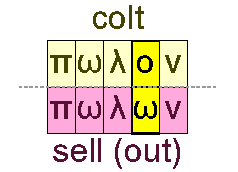
The "colt" is with "her", the "donkey". Greek: "πῶλος" ≈ "foal (young horse)" and (play) "πωλέω" ≈ "sell" as in "levy taxes", "sell an office" or "betray".
[pony with a sore throat, rehearse]
53. Strongs - colt
*G4454 *12 πῶλος (po'-los) : apparently a primary word; a "foal" or "filly", i.e. (specially), a young ass:--colt.
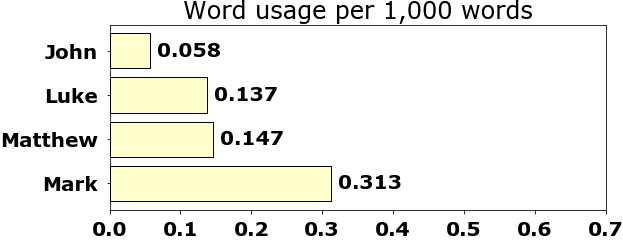 |
Words: πωλον=12
|
The
ancient Greek word
"πῶλος" ≈ "foal (young horse)" (whether masculine
"colt" or feminine
"filly") and related to the English word
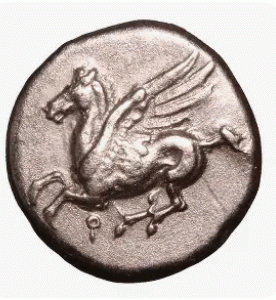
"foal" (Grimm's Law). Poetically it could be a young girl or maiden. It was the name of a Corinthian coin with a figure of
Pegasus on it.
Do
"donkeys" have
wings?
The
ancient Greek word
"πωλέω" ≈ "sell (out)" as in "
levy taxes",
"sell an office" or
"betray".
54. Matthew 21:2 Sell out
Matthew 21:2 Saying unto them, Go into the village over against you, and straightway ye shall find an ass tied, and a colt with her: loose them, and bring them unto me. [kjv]
λεγων αυτοις πορευθητε πορευεσθε εις την κωμην την απεναντι κατεναντι υμων και ευθεως ευθυς ευρησετε ονον δεδεμενην και πωλον μετ αυτης λυσαντες αγαγετε μοι [gnt]
"πῶλον" ≈ "foal (young horse)" (masculine accusative singular) from "πῶλος" ≈ "foal (young horse)"
"πωλῶν" ≈ "sell (out)" (contracted masculine present active participle) of "πωλέω" ≈ "sell (out)".
Why a "colt"? Might what Jesus is doing be a "sell (out)"? Consider the "treasure" in the "field".
Why a "donkey"? Might Jesus be the talking "donkey" (think Balaam), providing a warning to those who will listen? Consider the end of the Parable of the Wedding Feast.
55. Usage - colt
- *G4454 *12 πῶλος (po'-los) : apparently a primary word; a "foal" or "filly", i.e. (specially), a young ass:--colt.
- πωλον *12
- Matthew 21:2 ... an ass tied, and a colt with her: loose ...
- Matthew 21:5 ... upon an ass, and a colt the foal of an ass.
- Matthew 21:7 And brought the ass, and the colt, and put on ...
- Mark 11:2 ... into it, ye shall find a colt tied, whereon never ...
- Mark 11:4 And they went their way, and found the colt tied by the door ...
- Mark 11:5 ... What do ye, loosing the colt?
- Mark 11:7 And they brought the colt to Jesus, and ...
- Luke 19:30 ... the which at your entering ye shall find a colt tied, whereon yet ...
- Luke 19:33 And as they were loosing the colt, the owners thereof said unto them, Why loose ye the colt?
- Luke 19:35 ... their garments upon the colt, and they set Jesus thereon.
- John 12:15 ... sitting on an ass's colt.
56. Mobilgas
The flying horse
Pegasus, from Greek mythology, was the symbol of
Mobilgas, later
Exxon.
Where was the Mobilgas station in Elizabethtown? Erbs? Where Rita's is today?
57. Matthew 21:3 Passwords in the Bible
Matthew 21:3 And if any man say ought unto you, ye shall say, The Lord hath need of them; and straightway he will send them. [kjv]
και εαν τις υμιν ειπη τι ερειτε οτι ο κυριος αυτων χρειαν εχει ευθεως ευθυς δε αποστελει αυτους [gnt]
Jesus provides a pre-arranged
password to release a colt to ride on Palm Sunday. If this were not pre-arranged, then would Jesus be asking his disciples to take someone's colt without permission?
The word translated as "
need" can mean "
want". What is the difference between a "
need" and a "
want"?
The "strong" do not "want" a "healer".
The "strong" do not "need" a "healer".
58. Matthew 9:12-13 Verses
Matthew 9:12 But when Jesus heard that, he said unto them, They that be whole need not a physician, but they that are sick. [kjv]
ο δε ιησους ακουσας ειπεν αυτοις ου χρειαν εχουσιν οι ισχυοντες ιατρου αλλ αλλα οι κακως εχοντες [gnt]
at Iesus audiens ait non est opus valentibus medico sed male habentibus [v]
9:13 But go ye and learn what that meaneth, I will have mercy, and not sacrifice: for I am not come to call the righteous, but sinners to repentance. [kjv]
πορευθεντες δε μαθετε τι εστιν ελεον ελεος θελω και ου θυσιαν ου γαρ ηλθον καλεσαι δικαιους αλλ αλλα αμαρτωλους εις μετανοιαν [gnt]
… discite … misericordiam volo … sacrificium … vocare iustos … peccatores [v]
59. Matthew 21:2
KJV: Saying unto them, Go into the village over against you, and straightway ye shall find an ass tied, and a colt with her: loose them, and bring them unto me.
Greek: λεγων αυτοις πορευθητε πορευεσθε εις την κωμην την απεναντι κατεναντι υμων και ευθεως ευθυς ευρησετε ονον δεδεμενην και πωλον μετ αυτης λυσαντες αγαγετε μοι
60. Matthew 21:3
KJV: And if any man say ought unto you, ye shall say, The Lord hath need of them; and straightway he will send them.
Greek: και εαν τις υμιν ειπη τι ερειτε οτι ο κυριος αυτων χρειαν εχει ευθεως ευθυς δε αποστελει αυτους
Latin: et si quis vobis aliquid dixerit dicite quia Dominus his opus habet et confestim dimittet eos
Wycliffe: And if ony man seie to you ony thing, seie ye, that the Lord hath nede to hem; and anoon he schal leeue hem.
Tyndale: And if eny man saye ought vnto you saye ye yt the lorde hath neade of them: and streyght waye he will let them go.
Luther: Und so euch jemand etwas wird sagen, so sprechet: Der Herr bedarf ihrer; sobald wird er sie euch lassen.
61. Matthew 21:3 Say what
Matthew 21:3 And if any man say ought unto you, ye shall say, The Lord hath need of them; and straightway he will send them. [kjv]
και εαν τις υμιν ειπη τι ερειτε οτι ο κυριος αυτων χρειαν εχει ευθεως ευθυς δε αποστελει αυτους [gnt]
62. Matthew 21:4-5 Prophecy connection
Matthew 21:4 All this was done, that it might be fulfilled which was spoken by the prophet, saying, [kjv]
21:5 Tell ye the daughter of Sion, Behold, thy King cometh unto thee, meek, and sitting upon an ass, and a colt the foal of an ass. [kjv]
ειπατε τη θυγατρι σιων ιδου ο βασιλευς σου ερχεται σοι πραυς και επιβεβηκως επι ονον και επι πωλον υιον υποζυγιου [gnt]
Matthew makes the decision to cherry pick a verse from
Zechariah, read during most Palm Sunday worship services. Matthew thus claims that this is the reason. Is it really the reason? Is it one reason? Are there other more important reasons?
What does it mean to be "
meek"? This only applies if the verse selected by Matthew applies to this very situation.
63. Matthew 21:3 Direct your palms
Matthew 21:3 And if any man say ought unto you, ye shall say, The Lord hath need of them; and straightway he will send them. [kjv]
και εαν τις υμιν ειπη τι ερειτε οτι ο κυριος αυτων χρειαν εχει ευθεως ευθυς δε αποστελει αυτους [gnt]
The ancient Greek word
"εὐθύς" ≈ "straight, direct" and, in a verbal sense,
"open" or
"frank".
At Palm Sunday, Jesus sends disciples to get a colt. Should they do it
"quickly",
"soon", "
straightway", etc.?
64. Matthew 21:5
Matthew 21:5 Tell ye the daughter of Sion, Behold, thy King cometh unto thee, meek, and sitting upon an ass, and a colt the foal of an ass. [kjv]
ειπατε τη θυγατρι σιων ιδου ο βασιλευς σου ερχεται σοι πραυς και επιβεβηκως επι ονον και επι πωλον υιον υποζυγιου [gnt]
Greek:
... meek and mounted/riding on (a) donkey and on (a) colt son (of a) beast of burden.
The
KJV (King James Version) translates as
"foal" of an
"ass" what in the Greek is
"beast of burden". Are there
one or
two animals involved?
☐
ass
☐
colt son of a
beast of burden
65. Zechariah 9:9 Everything looks like a nail
Zechariah 9:9 Rejoice greatly, O daughter of Zion; shout, O daughter of Jerusalem: behold, thy King cometh unto thee: he is just, and having salvation; lowly, and riding upon an ass, and upon a colt the foal of an ass. [kjv]
χαιρε σφοδρα θυγατερ σιων κηρυσσε θυγατερ ιερουσαλημ ιδου ο βασιλευς σου ερχεται σοι δικαιος και σωζων αυτος πραυς και επιβεβηκως επι υποζυγιον και πωλον νεον [lxx]
LXX (Septuagint):
...... (he is) righteous and makes well/heals (he is) meek and confirming on (a) beast of burden and (a) new colt.
Once Matthew decides that this verse both fits and is prophetic of this event, words need to be changed and translated appropriately. It the
LXX, Zechariah does not use the word for
"donkey" or
"ass". Jesus does use that word. This is an instance of the converse error.
Perhaps there is an idea from the
HOT (Hebrew Old Testament) that fits better than what Zechariah says.
66. Zechariah 9:8-10 Context
Zechariah 9:8 And I will encamp about mine house because of the army, because of him that passeth by, and because of him that returneth: and no oppressor shall pass through them any more: for now have I seen with mine eyes. [kjv]
9:9 Rejoice greatly, O daughter of Zion; shout, O daughter of Jerusalem: behold, thy King cometh unto thee: he is just, and having salvation; lowly, and riding upon an ass, and upon a colt the foal of an ass. [kjv]
9:10 And I will cut off the chariot from Ephraim, and the horse from Jerusalem, and the battle bow shall be cut off: and he shall speak peace unto the heathen: and his dominion shall be from sea even to sea, and from the river even to the ends of the earth. [kjv]

Picking verses out of context to support one's
POV (Point Of View) is often called
cherry picking.
67. Matthew 21:4
KJV: All this was done, that it might be fulfilled which was spoken by the prophet, saying,
Greek: τουτο δε ολον γεγονεν ινα πληρωθη το ρηθεν δια του προφητου λεγοντος
68. Matthew 21:5
KJV: Tell ye the daughter of Sion, Behold, thy King cometh unto thee, meek, and sitting upon an ass, and a colt the foal of an ass.
Greek: ειπατε τη θυγατρι σιων ιδου ο βασιλευς σου ερχεται σοι πραυς και επιβεβηκως επι ονον και επι πωλον υιον υποζυγιου
69. Strongs - command
- *G4929 *2 συντάσσω (soon-tas-so) : from G4862 and G5021; to arrange jointly, i.e. (figuratively) to direct:--appoint.
70. Matthew 21:6 Parade arrangements
71. Matthew 21:6
KJV: And the disciples went, and did as Jesus commanded them,
Greek: πορευθεντες δε οι μαθηται και ποιησαντες καθως προσεταξεν συνεταξεν αυτοις ο ιησους
Latin: euntes autem discipuli fecerunt sicut praecepit illis Iesus
72. Matthew 21:7 Lead on
Matthew 21:7 And brought the ass, and the colt, and put on them their clothes, and they set him thereon. [kjv]
ηγαγον την ονον και τον πωλον και επεθηκαν επανω επ αυτων τα ιματια αυτων και επεκαθισεν επανω αυτων [gnt]
The "donkey" is female.
The "colt" is male.
Where the two animals
dressed up when they had
"clothes" "
put" "
on"
"them"? It was a
clothes call.
The
ancient Greek word
"ἄγω" ≈ "lead, fetch, bring". Who or what is
"αὐτῶν" ≈ "of them, theirs" (genitive plural, masculine, feminine or neuter)? Did Jesus sit on the
"cloaks" or the
"ass" and "colt" or both or something else?
73. Matthew 21:7 The clothes
Matthew 21:7 And brought the ass, and the colt, and put on them their clothes, and they set him thereon. [kjv]
ηγαγον την ονον και τον πωλον και επεθηκαν επανω επ αυτων τα ιματια αυτων και επεκαθισεν επανω αυτων [gnt]
| * |
Masc.
Sing. |
Masc.
Plural |
Fem.
Sing. |
Fem.
Plural |
Neuter
Sing. |
Neuter
Plural |
| Nom. |
ὁ |
οί |
ἡ |
αί |
τό |
τά |
| Gen. |
τοῦ |
τῶν |
τῆς |
τῶν |
τοῦ |
τῶν |
| Dat. |
τῷ |
τοῖς |
τῇ |
ταῖς |
τῷ |
τοῖς |
| Acc. |
τόν |
τούς |
τήν |
τάς |
τό |
τά |
The Greek word translated as
"their" "clothes" is that of
"the" "clothes" (plural).
The ancient Greek word
"ἱμάτιον" ≈ "garment, cloth" and is from
"εἷμᾰ" ≈ "garment".
74. Matthew 5:40 I am what reality/being
Matthew 5:40 And if any man will sue thee at the law, and take away thy coat, let him have thy cloke also. [kjv]
και τω θελοντι σοι κριθηναι και τον χιτωνα σου λαβειν αφες αυτω και το ιματιον [gnt]
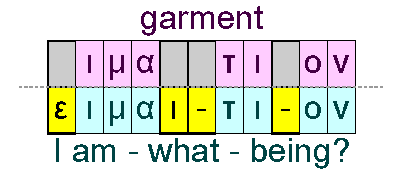
The Greek word for
"garment" can be a play on words with "
I am what reality/being?". This can be done with slower pronunciation of the words and appropriate hand movements while speaking.
The
ancient Greek word
"ἱμάτιον" ≈ "garment, cloth" and is from
"εἷμᾰ" ≈ "garment".
"εἶμαι" ≈ "I am".
"τι" ≈ "what".
"ὄν" ≈ "reality, being".
75. Matthew 21:7 Them are ducks
Matthew 21:7 And brought the ass, and the colt, and put on them their clothes, and they set him thereon. [kjv]
ηγαγον την ονον και τον πωλον και επεθηκαν επανω επ αυτων τα ιματια αυτων και επεκαθισεν επανω αυτων [gnt]
| * |
Masc.
Sing. |
Masc.
Plural |
Fem.
Sing. |
Fem.
Plural |
Neuter
Sing. |
Neuter
Plural |
| Nom. |
αὐτὁς |
αὐτοί |
αὐτἡ |
αὐταί |
αὐτό |
αὐτά |
| Gen. |
αὐτοῦ |
αὐτῶν |
αὐτῆς |
αὐτῶν |
αὐτοῦ |
αὐτῶν |
| Dat. |
αὐτῷ |
αὐτοῖς |
αὐτῇ |
αὐταῖς |
αὐτῷ |
αὐτοῖς |
| Acc. |
αὐτόν |
αὐτούς |
αὐτήν |
αὐτάς |
αὐτό |
αὐτά |
Who or what is
"them" in this verse?
The word for
"them" (plural) can refer to things masculine, feminine, neuter (or mixed).
76. Matthew 21:7
Matthew 21:7 And brought the ass, and the colt, and put on them their clothes, and they set him thereon. [kjv]
ηγαγον την ονον και τον πωλον και επεθηκαν επανω επ αυτων τα ιματια αυτων και επεκαθισεν επανω αυτων [gnt]
Are there
one or
two animals involved? There are several ambiguous pronouns here.
Greek:
(they) led the ass and the colt and (they) put on them the cloaks and (he/she/it) sat on them.
Who or what is
"αὐτῶν" ≈ "of them, theirs" (genitive plural, masculine, feminine or neuter)? Did Jesus sit on the "
cloaks" or the
"ass" and "colt" or both or something else?
77. Matthew 21:7
KJV: And brought the ass, and the colt, and put on them their clothes, and they set him thereon.
Greek: ηγαγον την ονον και τον πωλον και επεθηκαν επανω επ αυτων τα ιματια αυτων και επεκαθισεν επανω αυτων
Latin: et adduxerunt asinam et pullum et inposuerunt super eis vestimenta sua et eum desuper sedere fecerunt
78. 1 Kings 1:33 Solomon rides
1 Kings 1:33 The king also said unto them, Take with you the servants of your lord, and cause Solomon my son to ride upon mine own mule, and bring him down to Gihon: [kjv]
και ειπεν ο βασιλευς αυτοις λαβετε τους δουλους του κυριου υμων μεθ υμων και επιβιβασατε τον υιον μου σαλωμων επι την ημιονον την εμην και καταγαγετε αυτον εις τον γιων [lxx]
Much is made of Solomon
riding a
"half-donkey" as entering as a symbol of "
peace" but also made "
war" (and maintained "
horses"). The connection with "
peace" and a
"mule" seems
contrived. Solomon did, as did other Kings, make "
peace" offerings.
There are many reports of this happening in ancient times but I could find no verifiable account of such a happening. Once a conjecture (guess) is repeated over and over again, many people assume that it is true.
79. 2 Kings 9:13 Jehu is king
2 Kings 9:13 Then they hasted, and took every man his garment, and put it under him on the top of the stairs, and blew with trumpets, saying, Jehu is king. [kjv]
και ακουσαντες εσπευσαν και ελαβον εκαστος το ιματιον αυτου και εθηκαν υποκατω αυτου επι γαρεμ των αναβαθμων και εσαλπισαν εν κερατινη και ειπον εβασιλευσεν ιου [lxx]
*H1634 גֶּרֶם (gheh'-rem) : from H1633; a bone (as the skeleton of the body); hence, self, i.e. (figuratively) very:--bone, strong, top.
The word for
"top" appears once in the
LXX. The translators of the
LXX transliterated the Hebrew word.
Jehu is sometimes associated as a King that rode a
"donkey" as a symbol of "
peace" but I could not find any verses to support this. Jehu does, as an example, fit will into the Parable of the Wedding Feast.
80. Matthew 10:34 Ironic ignorance of peace
Matthew 10:34 Think not that I am come to send peace on earth: I came not to send peace, but a sword. [kjv]
μη νομισητε οτι ηλθον βαλειν ειρηνην επι την γην ουκ ηλθον βαλειν ειρηνην αλλα μαχαιραν [gnt]
"εἰρήνη" ≈ "peace".
"εἴρων" ≈ "one who feigns ignorance" (e.g., Socrates) and is the source of the English word "irony" but had that different meaning in ancient times.
Did Jesus come to "
reside" or make a home or nest in the "
law"? In doing so, he would have brought "
peace" as "
one who feigns ignorance", the meaning of the Greek word that became the English word
"irony".
Jesus often used words, especially nouns, as code words.
81. Matthew 10:34
Matthew 10:34 Think not that I am come to send peace on earth: I came not to send peace, but a sword. [kjv]
μη νομισητε οτι ηλθον βαλειν ειρηνην επι την γην ουκ ηλθον βαλειν ειρηνην αλλα μαχαιραν [gnt]
… pacem … gladium [v]
Many think that Jesus came to bring, or "
throw",
"peace" on earth.
Some pastors will say that Jesus wants to "
replace conflict with peace". Is that what Jesus says? The "
sword" is the sword of "
truth" (code word approach). In addition, Jesus provides the "
sword" part of the "
flaming sword" for the "
tree of life".
If the sword were not forged right, a "
forgery", you might say that the sword "
smelt funny". If you can find an inexpensive sword, it might be a "
good steel".
82. Jesus as Messiah and King
|
|
| Jesus as Messiah and King |
| Jesus |
| Messiah |
King |
| First coming |
Second coming |
| Kinsman redeemer |
Avenger of Blood |
| Love God and neighbor |
Love God and neighbor |
|
In the Bible, Jesus has two roles:
Messiah and
King. The Jews at the time of Christ expected both and were disappointed in the "
first coming". The phrase "
Thy kingdom come" refers to that "
second coming" to replace the "
evil rulers" of this world with "
Christ" as
"King". Many details are in Revelation.
This idea shifted in the 4th century when the church hierarchy (i.e., "
tree" with "
birds") became employed by those "
evil rulers".
Does Jesus claim to be the
"Messiah"? Does Jesus claim to be "
God"?
83. Revelation 19:11 Donkey and horse
Revelation 19:11 And I saw heaven opened, and behold a white horse; and he that sat upon him was called Faithful and True, and in righteousness he doth judge and make war. [kjv]
και ειδον τον ουρανον ανεωγμενον ηνεωγμενον και ιδου ιππος λευκος και ο καθημενος επ αυτον καλουμενος πιστος καλουμενος και αληθινος και εν δικαιοσυνη κρινει και πολεμει [gnt]
One pastor made an emphatic point that Jesus was riding a donkey and
not a
horse as some great and powerful
king. He failed to tell the congregation about that exact thing in Revelation in the
second coming of Jesus.
First coming: Kinsman redeemer as Messiah (Gospels)
Second coming: Avenger of blood as King (Revelation)
84. Revelation 19:12-13,15-16 Donkey and horse
Revelation 19:12 His eyes were as a flame of fire, and on his head were many crowns; and he had a name written, that no man knew, but he himself. [kjv]
19:13 And he was clothed with a vesture dipped in blood: and his name is called The Word of God. [kjv]
19:15 And out of his mouth goeth a sharp sword, that with it he should smite the nations: and he shall rule them with a rod of iron: and he treadeth the winepress of the fierceness and wrath of Almighty God. [kjv]
19:16 And he hath on his vesture and on his thigh a name written, KING OF KINGS, AND LORD OF LORDS. [kjv]
85. Revelation 19:11
KJV: And I saw heaven opened, and behold a white horse; and he that sat upon him was called Faithful and True, and in righteousness he doth judge and make war.
Greek: και ειδον τον ουρανον ανεωγμενον ηνεωγμενον και ιδου ιππος λευκος και ο καθημενος επ αυτον καλουμενος πιστος καλουμενος και αληθινος και εν δικαιοσυνη κρινει και πολεμει
86. Revelation 19:12
KJV: His eyes were as a flame of fire, and on his head were many crowns; and he had a name written, that no man knew, but he himself.
Greek: οι δε οφθαλμοι αυτου ως φλοξ πυρος και επι την κεφαλην αυτου διαδηματα πολλα εχων ονομα γεγραμμενον ο ουδεις οιδεν ει μη αυτος
87. Revelation 19:13
KJV: And he was clothed with a vesture dipped in blood: and his name is called The Word of God.
Greek: και περιβεβλημενος ιματιον βεβαμμενον ρεραντισμενον αιματι και καλειται κεκληται το ονομα αυτου ο λογος του θεου
88. Revelation 19:15
KJV: And out of his mouth goeth a sharp sword, that with it he should smite the nations: and he shall rule them with a rod of iron: and he treadeth the winepress of the fierceness and wrath of Almighty God.
Greek: και εκ του στοματος αυτου εκπορευεται ρομφαια οξεια ινα εν αυτη πατασση παταξη τα εθνη και αυτος ποιμανει αυτους εν ραβδω σιδηρα και αυτος πατει την ληνον του οινου του θυμου και της οργης του θεου του παντοκρατορος
89. Revelation 19:16
KJV: And he hath on his vesture and on his thigh a name written, KING OF KINGS, AND LORD OF LORDS.
Greek: και εχει επι το ιματιον και επι τον μηρον αυτου το ονομα γεγραμμενον βασιλευς βασιλεων και κυριος κυριων
90. Matthew 21:1-11 Triumphal entry and donkey voices
Matthew 21:8 And a very great multitude spread their garments in the way; others cut down branches from the trees, and strawed them in the way. [kjv]
21:9 And the multitudes that went before, and that followed, cried, saying, Hosanna to the Son of David: Blessed is he that cometh in the name of the Lord; Hosanna in the highest. [kjv]
Palm Sunday is the day that Jesus enters Jerusalem. This was not "
a day" but "
the day" which angered the religious establishment. They were expecting the "
Messiah" and "
King".
What do
branches represent? There were many
trees in Jerusalem? What happened to the trees?
91. Song: This is the day
Psalms 118:24 This is the day which the LORD hath made; we will rejoice and be glad in it. [kjv]
The word "
rejoice" appears often in the song "
This is the day" from 1967 by
Les Garrett. The phrase "
This is the day" refers to
the "
day" and not
a "
day".
That "
day" was originally the Passover before the Exodus but was to be a sign both the
Messiah and the
King (same person). Jesus entered on that day, "
Palm Sunday", with that song which angered the religious establishment. The tune works well as "
antiphonal" where the song can move between
two parts of the
congregation.
This is the day, this is the day that the Lord has made, that the Lord has made;
we will rejoice, we will rejoice and be glad in it, and be glad in it.
This is the day that the Lord has made; we will rejoice and be glad in it.
This is the day, this is the day that the Lord has made.
92. Psalms 118:22-24 Implications
Jesus spoke these two verses from Psalms in the
LXX in Matthew 21:42..
Psalms 118:22 The stone which the builders refused is become the head stone of the corner. [kjv]
118:23 This is the LORD'S doing; it is marvellous in our eyes. [kjv]
What was unsaid appears to be the point of the previous two verses. One must fill in the missing parts and connect the dots.
118:24 This is the day which the LORD hath made; we will rejoice and be glad in it. [kjv]
Knowing this, the next verse that starts "
therefore" which in the Greek is "
from these (things)" allows one to infer the basis for the what is said after the "
therefore". Might this also answer the question about by what "
authority" or "
lack of restraint" Jesus does these things?
93. Matthew 21:8 Very great multitude
Matthew 21:8 And a very great multitude spread their garments in the way; others cut down branches from the trees, and strawed them in the way. [kjv]
ο δε πλειστος οχλος εστρωσαν εαυτων τα ιματια εν τη οδω αλλοι δε εκοπτον κλαδους απο των δενδρων και εστρωννυον εν τη οδω [gnt]
The ancient Greek word
"πλεῖστος" ≈ "most, very much, for the most part" and comes from
"πολύς" ≈ "many, much" and is the suffix of English words starting with
"poly" as in "
polynomial".
Does the
"very much" or
"for the most part" refer to the
size of the
"crowd" or the
part of the
"crowd" that "
spread" down their "
garments"?
94. Matthew 21:8
KJV: And a very great multitude spread their garments in the way; others cut down branches from the trees, and strawed them in the way.
Greek: ο δε πλειστος οχλος εστρωσαν εαυτων τα ιματια εν τη οδω αλλοι δε εκοπτον κλαδους απο των δενδρων και εστρωννυον εν τη οδω
95. Matthew 21:9 Multitudes of a crowd
Matthew 21:9 And the multitudes that went before, and that followed, cried, saying, Hosanna to the Son of David: Blessed is he that cometh in the name of the Lord; Hosanna in the highest. [kjv]
οι δε οχλοι οι προαγοντες αυτον και οι ακολουθουντες εκραζον λεγοντες ωσαννα τω υιω δαβιδ δαυιδ ευλογημενος ο ερχομενος εν ονοματι κυριου ωσαννα εν τοις υψιστοις [gnt]
The Greek word translated as
"multitudes" is that of
"crowds". The Greek does not appear to say anything here about the
size of the crowd.
The ancient Greek word
"ὄχλος" ≈ "multitude, crowd" and. thorough the Greek
digamma, with "
v" or "
f" sound, may be related to the German word
"Volk" ≈ "people" as in "
Volkswagen" and to the English word
"folk".
96. Matthew 21:9
KJV: And the multitudes that went before, and that followed, cried, saying, Hosanna to the Son of David: Blessed is he that cometh in the name of the Lord; Hosanna in the highest.
Greek: οι δε οχλοι οι προαγοντες αυτον και οι ακολουθουντες εκραζον λεγοντες ωσαννα τω υιω δαβιδ δαυιδ ευλογημενος ο ερχομενος εν ονοματι κυριου ωσαννα εν τοις υψιστοις
97. Strongs - stirred
*G4579 *5 σείω (si'-o) : apparently a primary verb; to rock (vibrate, properly, sideways or to and fro), i.e. (generally) to agitate (in any direction; cause to tremble); figuratively, to throw into a tremor (of fear or concern):--move, quake, shake.
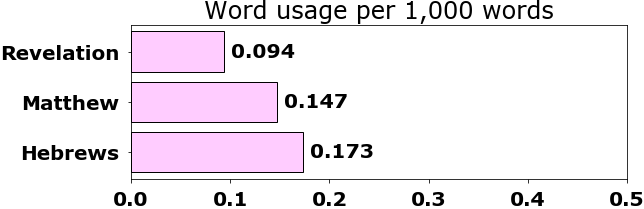 |
Words: εσεισθη=2 εσεισθησαν σειομενη σεισω
|
The ancient Greek word
"σείω" ≈ "shake (earthquakes), disturb, agitate" and is the source of the English word
"seismic".
98. Usage - stirred
- *G4579 *5 σείω (si'-o) : apparently a primary verb; to rock (vibrate, properly, sideways or to and fro), i.e. (generally) to agitate (in any direction; cause to tremble); figuratively, to throw into a tremor (of fear or concern):--move, quake, shake.
- εσεισθη *2
- Matthew 21:10 ... Jerusalem, all the city was moved, saying, Who is this?
- Matthew 27:51 ... the bottom; and the earth did quake, and the rocks rent;
- εσεισθησαν
- Matthew 28:4 ... fear of him the keepers did shake, and became as dead men.
- σεισω
- Hebrews 12:26 ... once more I shake not the earth only, ...
- σειομενη
- Revelation 6:13 ... casteth her untimely figs, when she is shaken of a mighty wind.
99. Matthew 21:10
Matthew 21:10 And when he was come into Jerusalem, all the city was moved, saying, Who is this? [kjv]
και εισελθοντος αυτου εις ιεροσολυμα εσεισθη πασα η πολις λεγουσα τις εστιν ουτος [gnt]
The ancient Greek word
"σείω" ≈ "shake (earthquakes), disturb, agitate" and is the source of the English word
"seismic".
How do you measure puns?
With a sighs-no-graph.
The ancient Greek word
"τις" ≈ "anyone, something" which can be used as a question or a statement.
100. Herod and the Magi
Matthew 2:3 When Herod the king had heard these things, he was troubled, and all Jerusalem with him. [kjv]
ακουσας δε ηρωδης ο βασιλευς ηρωδης εταραχθη και πασα ιεροσολυμα μετ αυτου [gnt]
audiens autem … turbatus … omnis … [v]
The Magi travel (from Parthia with a military escort) to see Herod (and as a diplomatic courtesy) and asking questions. Where is the one
born "
King of the Jews"?
[building projects, military escort, Masada]
Was this a trick, a prelude to another invasion, why now?
101. Strongs - most
102. Usage - most
- *G4118 *4 πλεῖστος (plice'-tos) : irregular superlative of G4183; the largest number or very large:--very great, most.
- πλειστος *2
- Matthew 21:8 And a very great multitude spread their ...
- Mark 4:1 And he began again to teach by the sea side: ...
- πλεισται
- Matthew 11:20 ... the cities where in most of his mighty works ...
- πλειστον
- 1 Corinthians 14:27 ... let it be by two, or at the most by three, and that by course; ...
103. Matthew 21:10
KJV: And when he was come into Jerusalem, all the city was moved, saying, Who is this?
Greek: και εισελθοντος αυτου εις ιεροσολυμα εσεισθη πασα η πολις λεγουσα τις εστιν ουτος
104. Matthew 21:11
Matthew 21:11 And the multitude said, This is Jesus the prophet of Nazareth of Galilee. [kjv]
οι δε οχλοι ελεγον ουτος εστιν ιησους ο προφητης ιησους ο απο ναζαρετ ναζαρεθ της γαλιλαιας [gnt]
105. Revelation 16:16 Armageddon
Revelation 16:16 And he gathered them together into a place called in the Hebrew tongue Armageddon. [kjv]
και συνηγαγεν αυτους εις τον τοπον τον καλουμενον εβραιστι αρμαγεδδων αρ μαγεδων [gnt]
The term Armageddon is known in modern times as a reference to the end of the world. Armageddon is in the Jezreel Valley and is near Nazareth.
Is "
Armageddon" a "
battle" as in one part of a "
war" or is "
Armageddon" a "
war" consisting of a series of battles? Most "
wars" consist of many "
battles". Does it matter?
106. Genesis 8:4 Battle at Armageddon
Genesis 8:4 And the ark rested in the seventh month, on the seventeenth day of the month, upon the mountains of Ararat. [kjv]
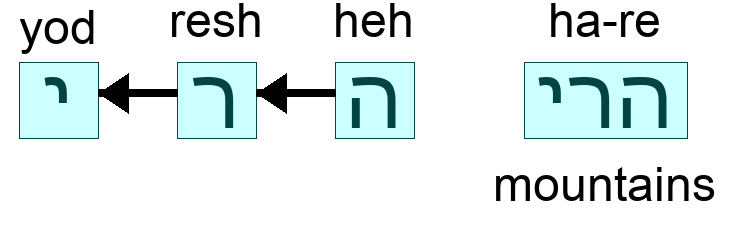
… הרי … [he]
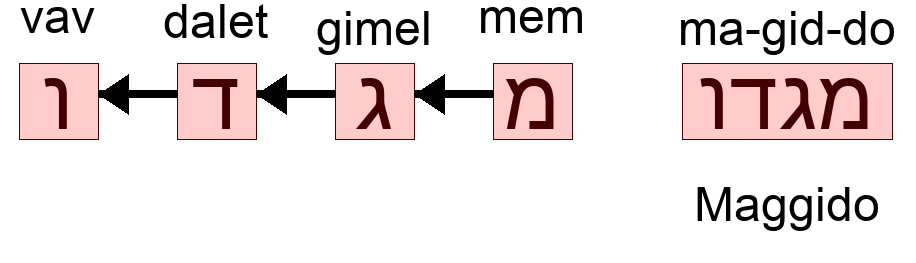
The battle of "
Armageddon" is from the Hebrew for
"Har" "
Megiddon", the
"Mountain" of "
Megiddo".
The mound (or city) of
Megiddo is, in Hebrew, "
Tel Megiddo". The
"mountain" is actually a
"mound" of a "
city" that has built up, layer by layer, such that it is referred to as a
"mountain".
Megiddo is found twelve times in the
OT (Old Testament) and once in Revelation.
107. Matthew 21:11
KJV: And the multitude said, This is Jesus the prophet of Nazareth of Galilee.
Greek: οι δε οχλοι ελεγον ουτος εστιν ιησους ο προφητης ιησους ο απο ναζαρετ ναζαρεθ της γαλιλαιας
108. Matthew 21
109. Matthew 22:10 Bride chamber
Matthew 22:10 So those servants went out into the highways, and gathered together all as many as they found, both bad and good: and the wedding was furnished with guests. [kjv]
και εξελθοντες οι δουλοι εκεινοι εις τας οδους συνηγαγον παντας οσους ους ευρον πονηρους τε και αγαθους και επλησθη ο γαμος νυμφων ανακειμενων [gnt]
In verse 10, the
TR changes
"bride chamber" to
singular "wedding".
"γάμος" ≈ "marriage, wedding" (in the TR).
"νυμφών" ≈ "bride chamber" (third person masculine singular).
Opposites:
"νυμφή" ≈ "bride, young wife". and is the source of the English word "nymph".
"νυμφίος" ≈ "bridegroom".
Where did the king say to
"fill" the
"bride chamber"? Why was the
"bride chamber" "filled".
110. Matthew 22:10 The bride chamber
Matthew 22:10 So those servants went out into the highways, and gathered together all as many as they found, both bad and good: and the wedding was furnished with guests. [kjv]
και εξελθοντες οι δουλοι εκεινοι εις τας οδους συνηγαγον παντας οσους ους ευρον πονηρους τε και αγαθους και επλησθη ο γαμος νυμφων ανακειμενων [gnt]
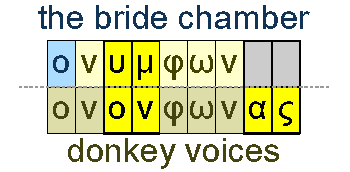
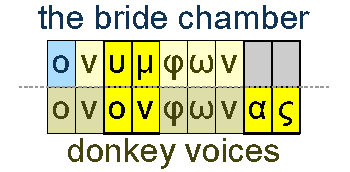
"ο" ≈ "the" and "νυμφών" ≈ "bride chamber" (third person masculine singular).
"ὄνον" ≈ "ass, donkey" (accusative) and "φωνᾱ́ς" ≈ "voices" (accusative plural).
Were there
"donkey" "voices"? Perhaps filling in the rest of the verse can help.
In verse 10, the
TR changes
"bride chamber" to
singular "wedding".
111. Matthew 22:10 Donkey voices if remaining
Matthew 22:10 So those servants went out into the highways, and gathered together all as many as they found, both bad and good: and the wedding was furnished with guests. [kjv]
και εξελθοντες οι δουλοι εκεινοι εις τας οδους συνηγαγον παντας οσους ους ευρον πονηρους τε και αγαθους και επλησθη ο γαμος νυμφων ανακειμενων [gnt]
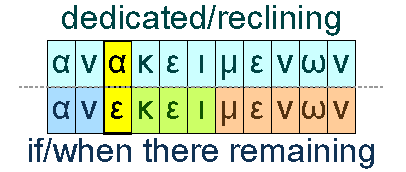
Greek word order paraphrase:
... and was filled the bride chamber [donkey voices] with those reclining [if there abiding/remaining].
Perhaps there were only the memory of
"donkey" "voices" as the
"donkeys" did not "
care" to attend.
A better fit may be to use singular "
voice" so it connects better to the next words and without the "
if".
... more to be added ...
112. Numbers 22:32
Numbers 22:32 And the angel of the LORD said unto him, Wherefore hast thou smitten thine ass these three times? behold, I went out to withstand thee, because thy way is perverse before me: [kjv]
και ειπεν αυτω ο αγγελος του θεου δια τι επαταξας την ονον σου τουτο τριτον και ιδου εγω εξηλθον εις διαβολην σου οτι ουκ αστεια η οδος σου εναντιον μου [lxx]
"ὄνος" ≈ "ass, donkey". The modern Greek word "όνος" (O-nos) ≈ "ass, donkey".
"ὄνον" ≈ "ass, donkey" (accusative).
"διαβολή" ≈ "slander, defamation".
"ἀστεῖος" ≈ "of the city, refined, elegant, witty" from "ἄστυ" ≈ "town, city". The modern Greek word "αστείος" (a-STEE-os) ≈ "funny, comical, trivial".
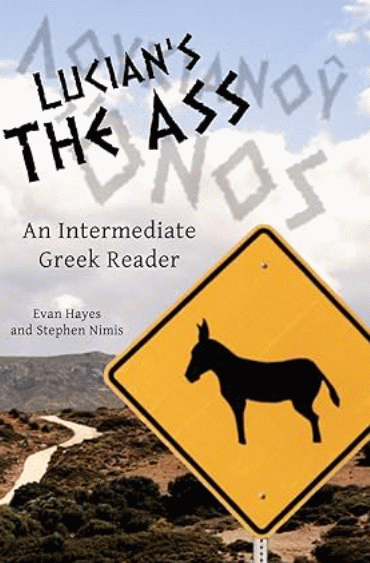
113. Lucian's The Ass
The
ancient Greek word
"ὄνος" ≈ "ass, donkey"
This book appears to be available as a
PDF (Portable Document Format). (as of 2025-12-23).
Lucian of Samosata (125-180) was a second century Hellenized (made to adopt Greek culture) Syrian writer who often used satire in his writings. He combined the classical Greek style (in a funny way) with the common or Koine Greek spoken by the people. As such, it contains many Greek words used in the
GNT (Greek New Testament).
114. Balaam and the beast of burden
2 Peter 2:15 Which have forsaken the right way, and are gone astray, following the way of Balaam the son of Bosor, who loved the wages of unrighteousness; [kjv]
2:16 But was rebuked for his iniquity: the dumb ass speaking with man's voice forbad the madness of the prophet. [kjv]
The false teacher Balaam would not curse God but knew how to lead the people astray with ungodly behavior. Balaam liked getting paid to fill his belly with such teaching.
To find the problem, "
follow the money". Is
money the root of
all evil? The "
dumb ass" is written by Peter as "
beast of burden" as the faithful followers who proclaim the truth.
Like that "
dumb ass", those faithful followers who are "
beasts of burden" will be struck and rebuked by the false teachers who do not follow their ungodly ways.
115. Matthew 7:14-15 I burn wolves
Matthew 7:14 Because strait is the gate, and narrow is the way, which leadeth unto life, and few there be that find it. [kjv]
οτι στενη η πυλη και τεθλιμμενη η οδος η απαγουσα εις την ζωην και ολιγοι εισιν οι ευρισκοντες αυτην [gnt]
7:15 Beware of false prophets, which come to you in sheep's clothing, but inwardly they are ravening wolves. [kjv]
προσεχετε δε απο των ψευδοπροφητων οιτινες ερχονται προς υμας εν ενδυμασιν προβατων εσωθεν δε εισιν λυκοι αρπαγες [gnt]
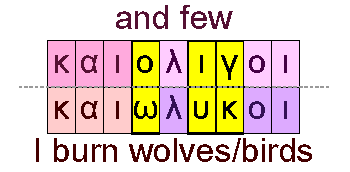
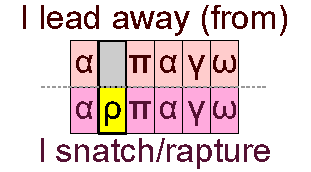
Can the
"wolves" "inside" the
"wide" area effectively
switch the direction signs by
"rapturing" or
"snatching" the meaning of
"lead away (from)" to
"lead (to)"? People understand a New York or New England accent even with the almost silent letter "
r".
[fish gills]
Some words:
"κοντός" ≈ "(short) pole" which led to the modern Greek word "κοντός" (kon-TOS) ≈ "pole".
"δορῠφόρος" ≈ "(long) spear".
"ἀκόντιον" ≈ "javelin".
"ἄκων" ≈ "unwilling, dart, javelin".
116. Numbers 22:18-19 Balaam and the donkey
Numbers 22:18 And Balaam answered and said unto the servants of Balak, If Balak would give me his house full of silver and gold, I cannot go beyond the word of the LORD my God, to do less or more. [kjv]
και απεκριθη βαλααμ και ειπεν τοις αρχουσιν βαλακ εαν δω μοι βαλακ πληρη τον οικον αυτου αργυριου και χρυσιου ου δυνησομαι παραβηναι το ρημα κυριου του θεου ποιησαι αυτο μικρον η μεγα εν τη διανοια μου [lxx]
22:19 Now therefore, I pray you, tarry ye also here this night, that I may know what the LORD will say unto me more. [kjv]
117. Numbers 22:20-22 Balaam and the donkey
Numbers 22:20 And God came unto Balaam at night, and said unto him, If the men come to call thee, rise up, and go with them; but yet the word which I shall say unto thee, that shalt thou do. [kjv]
22:21 And Balaam rose up in the morning, and saddled his ass, and went with the princes of Moab. [kjv]
22:22 And God's anger was kindled because he went: and the angel of the LORD stood in the way for an adversary against him. Now he was riding upon his ass, and his two servants were with him. [kjv]
118. Numbers 22:23,25-26 Balaam and the donkey
Numbers 22:23 And the ass saw the angel of the LORD standing in the way, and his sword drawn in his hand: and the ass turned aside out of the way, and went into the field: and Balaam smote the ass, to turn her into the way. [kjv]
22:25 And when the ass saw the angel of the LORD, she thrust herself unto the wall, and crushed Balaam's foot against the wall: and he smote her again. [kjv]
22:26 And the angel of the LORD went further, and stood in a narrow place, where was no way to turn either to the right hand or to the left. [kjv]
119. Numbers 22:27-29 Balaam and the donkey
Numbers 22:27 And when the ass saw the angel of the LORD, she fell down under Balaam: and Balaam's anger was kindled, and he smote the ass with a staff. [kjv]
22:28 And the LORD opened the mouth of the ass, and she said unto Balaam, What have I done unto thee, that thou hast smitten me these three times? [kjv]
22:29 And Balaam said unto the ass, Because thou hast mocked me: I would there were a sword in mine hand, for now would I kill thee. [kjv]
120. Numbers 22:30-32 Balaam and the donkey
Numbers 22:30 And the ass said unto Balaam, Am not I thine ass, upon which thou hast ridden ever since I was thine unto this day? was I ever wont to do so unto thee? And he said, Nay. [kjv]
22:31 Then the LORD opened the eyes of Balaam, and he saw the angel of the LORD standing in the way, and his sword drawn in his hand: and he bowed down his head, and fell flat on his face. [kjv]
22:32 And the angel of the LORD said unto him, Wherefore hast thou smitten thine ass these three times? behold, I went out to withstand thee, because thy way is perverse before me: [kjv]
121. Numbers 22:33-35 Balaam and the donkey
Numbers 22:33 And the ass saw me, and turned from me these three times: unless she had turned from me, surely now also I had slain thee, and saved her alive. [kjv]
22:34 And Balaam said unto the angel of the LORD, I have sinned; for I knew not that thou stoodest in the way against me: now therefore, if it displease thee, I will get me back again. [kjv]
22:35 And the angel of the LORD said unto Balaam, Go with the men: but only the word that I shall speak unto thee, that thou shalt speak. So Balaam went with the princes of Balak. [kjv]
122. A horse of another color: the name of Phillip
Acts 8:29 Then the Spirit said unto Philip, Go near, and join thyself to this chariot. [kjv]
ειπεν δε το πνευμα τω φιλιππω προσελθε και κολληθητι τω αρματι τουτω [gnt]
The modern Greek word
"Φίλιππος" (FEE-leep-pos) ≈ "Philip" as a name is, literally, a "
lover of horses". This name was popular in Bible times. There is more happening here that is interesting.
The modern Greek word "φίλος" (FEE-los) ≈ "friend, affection, love". The English word "philanthropy" is an "affection or love for man", "Philadelphia" is the "friendship of brothers" or "brotherly love".
The modern Greek word "άλογο" (A-lo-go) ≈ "horse" as used in 2 Peter and Jude to refer to "brute beasts" which were actually magnificent war horses.
123. Brute beasts and magnificent war horses
2 Peter 2:12 But these, as natural brute beasts, made to be taken and destroyed, speak evil of the things that they understand not; and shall utterly perish in their own corruption; [kjv]
ουτοι δε ως αλογα ζωα γεγεννημενα φυσικα γεγενημενα εις αλωσιν και φθοραν εν οις αγνοουσιν βλασφημουντες εν τη φθορα αυτων καταφθαρησονται και φθαρησονται [gnt]
2:16 But was rebuked for his iniquity: the dumb ass speaking with man's voice forbad the madness of the prophet. [kjv]
ελεγξιν δε εσχεν ιδιας παρανομιας υποζυγιον αφωνον εν ανθρωπου φωνη φθεγξαμενον εκωλυσεν την του προφητου παραφρονιαν [gnt]
The modern Greek word
"άλογο" (A-lo-go) ≈ "horse", in ancient times, came from the phrase
"άλογο ζώα" (A-lo-go ZO-a) ≈ "unspeaking/unthinking animal" and usually referred to a war horse (e.g., pulling a chariot, used in a mounted calvary attack, etc.). These were magnificent animals, trained to do whatever they were led to do by their rider/master - even to their own destruction.
The Greek for "
ass" is that of a pack animal doing work. The translators used the
OT word rather than the word Peter wrote and appeared to mean to keep the military animal analogy consistent and meaningful.
124. Matthew 26:17-29 Betrayal of the Last Supper tradition
 |
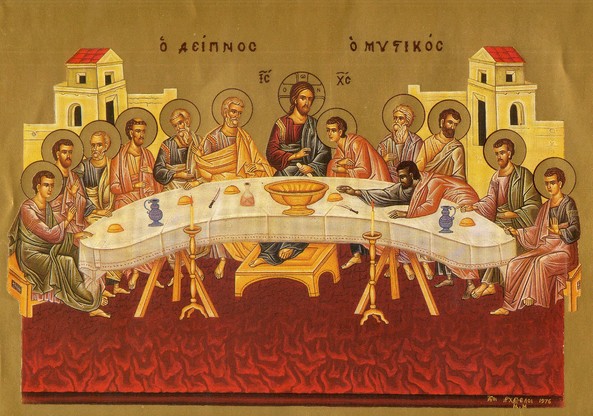 |
Matthew 26:17-29.
Mark 14:12-26.
Luke 22:7-38.
John 13-17.
|
Here we look primarily at the Last Supper in
Matthew. Discuss:
How should one think about discrepancies between the four accounts?
In what ways can Jesus be betrayed today? Is Jesus betrayed today? Explain.
How might one get a message through to future readers when the courier may not be trustworthy?
[steganography, error-correcting and fault tolerant code transmission]
[hiding things, hide in plain sight, Edgar Allen Poe, Purloined Letters, word golf and jokes]
125. End of page