Send
Close Add comments:
(status displays here)
Got it! This site "creationpie.org" uses cookies. You consent to this by clicking on "Got it!" or by continuing to use this website. Note: This appears on each machine/browser from which this site is accessed.
Winter and cold in the Bible
1. Winter and cold in the Bible
This content is being developed.
2. Matthew 21
3. Matthew 21:30 Put it together
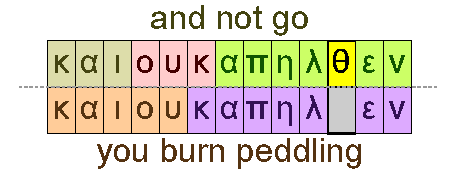
Matthew 21:30 And he came to the second, and said likewise. And he answered and said, I go, sir: and went not. [kjv]
21:29 ο δε αποκριθεις ειπεν ου θελω υστερον δε μεταμεληθεις εγω κυριε και ουκ απηλθεν [gnt]
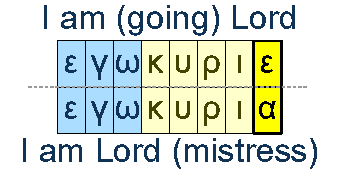
Might the one
child be assuming the role of
lord or
master? Is it a novel idea that a
child who appears to be a male will want to be a female (leader, mistress, etc.). Might the
"peddling" imply a "
merchant"?
Might such a
child, instead of
working in the
vineyard, might
work the
vineyard as someone might
work the
crowd? That is, to their own benefit. Might this be
snake-oil?
4. Matthew 21:29 Lagging behind
Matthew 21:29 He answered and said, I will not: but afterward he repented, and went. [kjv]
21:30 και προσελθων δε τω δευτερω ετερω ειπεν ωσαυτως ο δε αποκριθεις ειπεν εγω κυριε και ουκ ου θελω υστερον μεταμεληθεις απηλθεν [gnt]
21:30 (Greek):
He came/went then to the second different (one) (and) said likewise he (one) but answered (and) said not desire (I) lagging behind repented (changed behavior) (and) went.
The modern English word
"will" does not capture the idea of
"desire" or "
wish". The
second child did not
"desire", mentally, to work in the vineyard but changed (actual) behavior and then did work in the vineyard.
"θέλω" ≈ "want, wish, care to" or "ἐθέλω" ≈ "want, wish, care to".
"βούλομαι" ≈ "will, want".
5. Matthew 21:31 Kingdom of God build
Matthew 21:31 Whether of them twain did the will of his father? They say unto him, The first. Jesus saith unto them, Verily I say unto you, That the publicans and the harlots go into the kingdom of God before you. [kjv]
τις εκ των δυο εποιησεν το θελημα του πατρος λεγουσιν αυτω ο πρωτος υστερος λεγει αυτοις ο ιησους αμην λεγω υμιν οτι οι τελωναι και αι πορναι προαγουσιν υμας εις την βασιλειαν του θεου [gnt]
6. Matthew 21:33 Parable of the householder 1
Matthew 21:33 Hear another parable: There was a certain householder, which planted a vineyard, and hedged it round about, and digged a winepress in it, and built a tower, and let it out to husbandmen, and went into a far country: [kjv]
21:40 When the lord therefore of the vineyard cometh, what will he do unto those husbandmen? [kjv]
21:41 They say unto him, He will miserably destroy those wicked men, and will let out his vineyard unto other husbandmen, which shall render him the fruits in their seasons. [kjv]
Who is the
"householder"? Are you sure? Do the actions of this
"householder" fit the actions of the real
"householder"?
7. Winter and cold in the Bible
The most
cold winter months (in the northern hemisphere) are
December,
January and
February. Originally, for the Romans, the winter months had no names. The beginning of the year was in
March.
German: "Es ist kalt" ≈ "it's cold".
Russian: "Холодно" (Kholodno) ≈ "it's cold".
Greek: "κάνει κρύο" ≈ "it's cold" which is, literally, "it makes cold".
Spanish: "Hace frío" ≈ "it's cold" which is, literally, "it does cold". When that happens, one needs a fleece navidad and a Mexican burr-ito.
Winter began after
Autumn leaves, but soon
Spring will be here. What a re-leaf for the trees. Here are some winter jokes to
break the
ice.
What happens to a cat's voice in very cold weather?
The perfect answer is that instead of going purr the cat goes burrrrrrrr! Did I burden you with that cold-hearted joke? Oh! I see.
8. Matthew 8:14-15 February: Fever purification
Matthew 8:14 And when Jesus was come into Peter's house, he saw his wife's mother laid, and sick of a fever. [kjv]
και ελθων ο ιησους εις την οικιαν πετρου ειδεν την πενθεραν αυτου βεβλημενην και πυρεσσουσαν [gnt]
8:15 And he touched her hand, and the fever left her: and she arose, and ministered unto them. [kjv]
και ηψατο της χειρος αυτης και αφηκεν αυτην ο πυρετος και ηγερθη και διηκονει αυτοις αυτω [gnt]
The Latin word
"februum" ≈ "purification" which is cognate with the Latin word
"febris" ≈ "fever" from the
PIE (Proto Indo-European) root
"*DEG" ≈ "burn, warm" and from which we get the English word
"fever".
The Roman
purification ritual of
February was on
February 15, the full moon of the original Roman lunar calendar. The Latin word
"februum" ≈ "purification" became the name for the month of
February which had been the
last month of the year, and the only month with less than 30 days.
Do you ever have a
February fever?
9. Colossians 2:17 February: Groundhog day
Colossians 2:17 Which are a shadow of things to come; but the body is of Christ. [kjv]
α εστιν σκια των μελλοντων το δε σωμα του χριστου [gnt]
… umbra futurorum corpus … Christi [v]
The Punxsutawney Phil tradition dates from about 1870. Celebrations differ depending on the
borough in which the groundhog resides.
What does the French groundhog see on February 2?
His château. This is a holistic burrow. I had grounds to wholly borrow that joke.
What happened to the groundhog when the dog catcher's were called?
It became a pound hog . You ain't nothin' but a pound hog!
10. Exodus 25:5 Badgers and groundhogs
Exodus 25:5 And rams' skins dyed red, and badgers' skins, and shittim wood, [kjv]
και δερματα κριων ηρυθροδανωμενα και δερματα υακινθινα και ξυλα ασηπτα [lxx]
rötliche Widderfelle, Dachsfelle, Föhrenholz, [lu]
The
Pennsylvania Dutch superstition may come from the German
"Dachstag" ≈ "Badger Day" with a similar tradition. The German word
"Dachs" ≈ "groundhog" and is the source of the English word
"dachshund".
Pennsylvania Dutch superstition: If a groundhog emerges from its burrow on February 2 and sees its shadow, there will be six more weeks of winter. Otherwise, spring is near.
11. Hershey Bears
It appears that the name Hershey "
bears" started when the name Hershey "
bars" was denied due to it being considered a form of advertising.
The German word
"Bär" ≈ "bear".
The idea that the Hersey Bears, as a
minor league
hockey team, would be low on revenue, skating on
thin ice, and go into
hock or the
hokey-poky is a
hoax. [levels of
hock]
The English phrase
"hocuspocus" was associated in a sermon by the Archbishop of Canterbury, John Tillotson (1630-1694), as a play on words with the Latin phrase
"doc est enim corpus meum" ≈ "this is my body". The same phrase appears to be the source of
"hoax" and
"hokey". The Latin word
"iocos" ≈ "joke, jest" is the source of the English word
"joker".
12. Food pyramid
Matthew 6:11 Give us this day our daily bread. [kjv]
τον αρτον ημων τον επιουσιον δος ημιν σημερον [gnt]
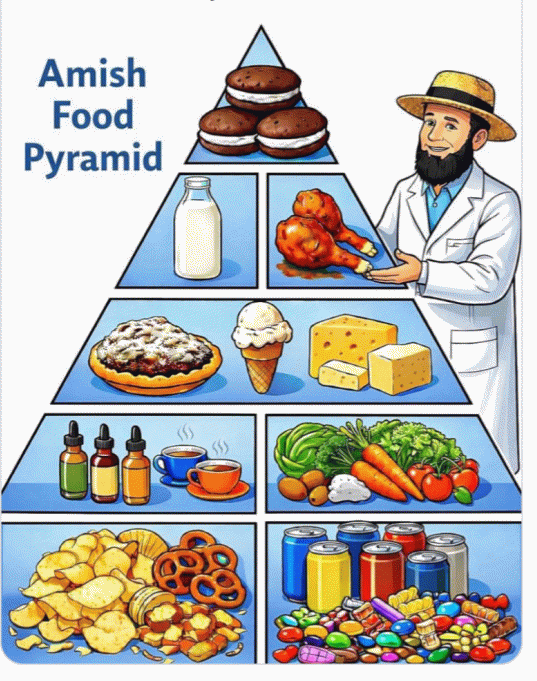
What are some favorite foods of a polar bear?
Frosted flakes, iceberg lettuce, cakes with lots of icing, cold cuts, chili and iced tea. Money is put in a snow bank.
What does a polar bear use to sleep?
Blankets of snow and sheets of ice.
How does a North Pole carpenter fix something that is broken apart?
Igloos it! It came apart from a heated argument.
13. Seasonal Affective Disorder
Judges 8:13 And Gideon the son of Joash returned from battle before the sun was up, [kjv]
Some people suffer from
SAD (Seasonal Affective Disorder), sometimes called the "
winter blues". This makes them
sad, you see. Just like the Sadducees. The long hours of darkness during the winter months (in the northern hemisphere) do not help.
affect (perception) and effect (causation)
Might this be because of a lack of the
Son? How about lack of
Sun? The same play on words of "
sun" and "
son" can be made in German.
The German word "die Sonne" ≈ "sun".
The German word "der Sohn" ≈ "son".
What happened when snowman's child threw a temper tantrum?
He had a meltdown and needed a chill pill.
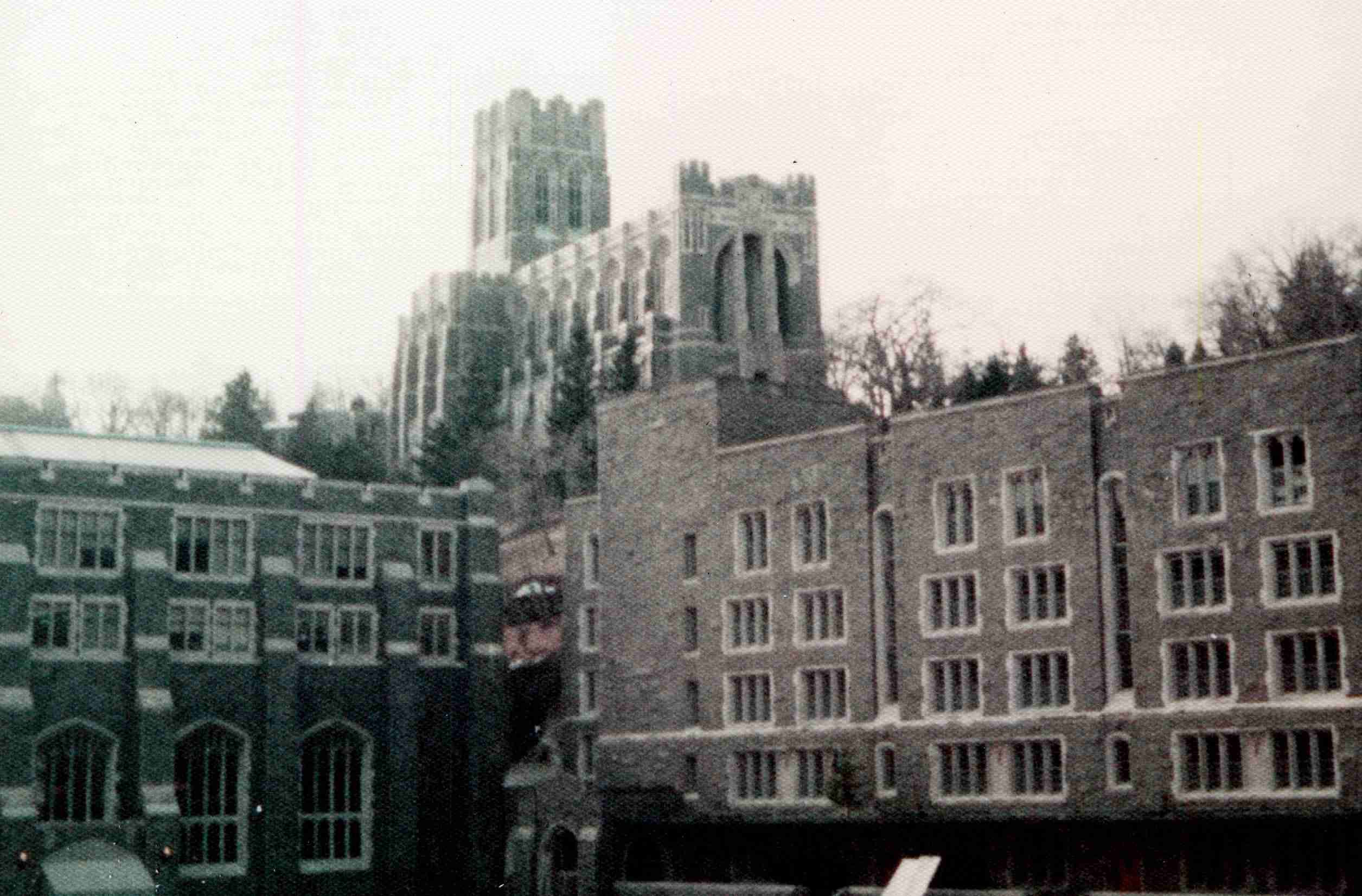
14. From the room window in Fall 1974
At West Point, the months after Christmas in January until about March are known as the "
gloom period".
The granite buildings are gray.
The uniforms are gray.
The clouds and fog and fallen snow are gray.
The cement walkways and formation areas are gray.
Early in the morning and at night the outside is dark and gray.
Everything is gray and gloomy.
There are gloomy parts of the Bible that have some interesting words and ideas.
[Thayer method of teaching and learning]
15. Blizzards in southeastern Pennsylvania
9. March 20-21, 2018 - 17.5
2. January 22-23, 2016 - 26.7
5. February 5-6, 2010 - 24
7. February 9-10, 2010 - 19
11. (tie) December 19, 2009 - 16
4. February 16-17, 2003 - 24
1. January 7-8, 1996 - 30
8. March 13-14, 1993 - 18
3. February 11-12, 1983 - 24
|
*. January 26-27, 1978
(lot of wind and cold)
(not as much snow)
10. (tie) February 3-4, 1961 - 17
6. February 15-16, 1958 - 20
11. (tie) February 20-21, 1947 - 16
10. (tie) January 16, 1945 - 17
11. (tie) January 29, 1928 - 16
|
Today, to get a good cold weather forecast, check the
Winternet. Some indecisive weather reporters are "
under the whether". Tell me about that
global warming and
climate change.
According to lancasteronline.com (as of 2026-01-29)
https://lancasteronline.com/news/local/10-biggest-snowstorms-in-lancaster-county-history/article_582b86b6-014a-57ed-aac7-25a3ae0748e8.html
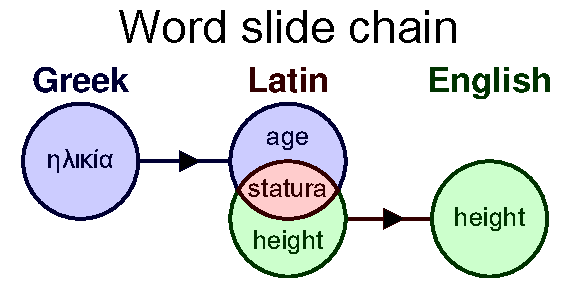
16. Climbing a tree to change
Luke 19:3 And he sought to see Jesus who he was; and could not for the press, because he was little of stature. [kjv]
και εζητει ιδειν τον ιησουν τις εστιν και ουκ ηδυνατο απο του οχλου οτι τη ηλικια μικρος ην [gnt]
… turba … statura pusillus … [v]
In Luke 19, Zacchaeus, who was young and not necessarily short, climbs a tree. Jesus calls him down and Zacchaeus has his life changed - all for the climbing of a tree.
17. Climbing a tree to change
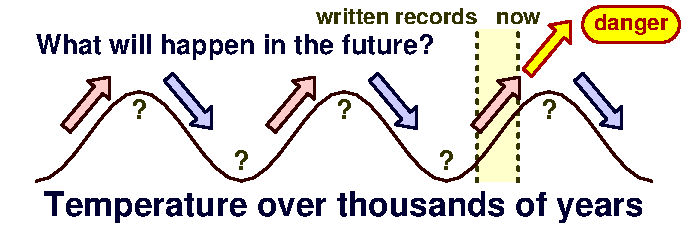
The story of Zacchaeus is an early documented instance of "
climb-it change". And, indeed, the climate has changed for anyone listening to the call of Jesus - no matter how high they think they have climbed the ladder of (worldly) success. Are you climbing the right ladder? Do not be wrong later ("
rung ladder"). [true ladder]
How can one get climate change?
Try mountaineering. You should approach it with the height altitude.
18. Genesis 8:22 Cold and heat
Genesis 8:22 While the earth remaineth, seedtime and harvest, and cold and heat, and summer and winter, and day and night shall not cease. [kjv]
πασας τας ημερας της γης σπερμα και θερισμος ψυχος και καυμα θερος και εαρ ημεραν και νυκτα ου καταπαυσουσιν [lxx]
19. Revelation 1:14 Head and white hairs
Does the discussion on the head and white hairs add meaning to the verse in Revelation 1:14?
Revelation 1:14 His head and his hairs were white like wool, as white as snow; and his eyes were as a flame of fire; [kjv]
η δε κεφαλη αυτου και αι τριχες λευκαι ωσει ως εριον λευκον ως χιων και οι οφθαλμοι αυτου ως φλοξ πυρος [gnt]

There are only
"white" "hairs" of the
"head" (Jesus), not
"black" "hairs".
Are any two snowflakes the exact same pattern? How are snowflakes formed?
[coded-information]
A snowflake is created as it falls to earth in a chaotic manner - a deterministic chaos. Most are symmetric as the temperature, pressure, etc., are approximately the same at any point in space.
The same argument that no two snowflakes are the same is the same argument that information (i.e., DNA via evolution) cannot arise by chance which means, by way of proof, that there is a creator God.
20. Job 37:9 South and north
Job 37:9 Out of the south cometh the whirlwind: and cold out of the north. [kjv]
εκ ταμιειων επερχονται διναι απο δε ακρωτηριων ψυχος [lxx]
Troubles come on out of the secret chambers, and cold from the mountain-tops. [bs3]
The
LXX (Septuagint) uses the word for "
secret chamber".
21. Snowflake generation

In recent times, according to Wikepedia (January 7, 2018), "
The term snowflake has been used to refer to children raised by their parents in ways that give them an inflated sense of their own uniqueness.".
[copy-cat hurt feelings]
One way this is expressed is as "
You can't say that. It hurts my feelings" (even if it is true in reality or logic).
In some ways, this has been noted before (from the 1990,s) with the claim that 80% of students believe that they are above average.
 In January 2017, Palahniuk claimed credit for coining this usage of snowflake, adding
 "
Every generation gets offended by different things but my friends who teach in high school tell me that their students are very easily offended."
[offended as in feeling attacked verbally and mentally]
 According to Claire Fox, members of Generation Snowflake "are genuinely distressed by ideas that run contrary to their worldview"; they are more likely than previous generations of students to report that they have mental health problems.
[confirmation bias]
 Fox argues that Generation Snowflake was created by over-protecting people when they were children and she argued the emphasis on self-esteem in childhood resulted in adults "tiptoeing around children's sensitivities" to avoid "damaging their wellbeing".
[self-esteem movement]
22. John 10:22 Hanukkah
John 10:22 And it was at Jerusalem the feast of the dedication, and it was winter. [kjv]
εγενετο δε τοτε τα εγκαινια εν τοις ιεροσολυμοις και χειμων ην [gnt]
… encenia … hiemps … [v]
… зима. [rus]
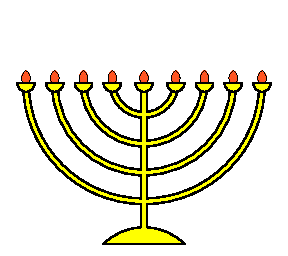
John refers the this "
Feast of Dedication" known as
Hanukkah (in December) in John 10:22. The origin of the "
Feast of Dedication" is recorded in
Maccabees. These history books were removed by the Protestant Church and placed in what is called the
Apocrypha.
The Latin word
"hiems" ≈ "winter" which is related to the modern Greek word
"χειμώνας" (hee-MO-nas) ≈ "winter". The Russian word
"зима" (zeem-ya) ≈ "winter" is related via a
PIE connection.
23. John 10:22
KJV: And it was at Jerusalem the feast of the dedication, and it was winter.
Greek: εγενετο δε τοτε τα εγκαινια εν τοις ιεροσολυμοις και χειμων ην
Latin: facta sunt autem encenia in Hierosolymis et hiemps erat
Wessex: Þa waeron tempel-halgunga on ierusalem aend hyt waes winter.
Wycliffe: But the feestis of halewyng of the temple weren maad in Jerusalem, and it was wyntir.
Tyndale: And it was at Ierusalem ye feaste of the dedicacion and it was wynter:
Luther: Es war aber Kirchweih zu Jerusalem und war Winter.
Russian: Настал же тогда в Иерусалиме праздник обновления, и была зима.
24. Snowflakes

Snow is associated with winter in general and with Christmas in particular.
The song made popular by Bing Crosby called "
White Christmas" talked about a Christmas with snow.
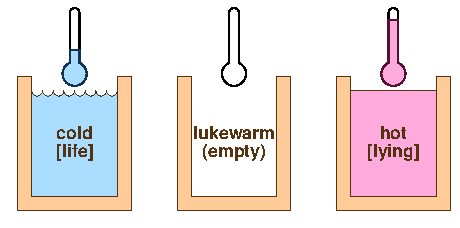
25. Revelation 3:15-16 Zesty hot and frigid cold
Revelation 3:15 I know thy works, that thou art neither cold nor hot: I would thou wert cold or hot. [kjv]
οιδα σου τα εργα οτι ουτε ψυχρος ει ουτε ζεστος οφελον ψυχρος ειης ης η ζεστος [gnt]
3:16 So then because thou art lukewarm, and neither cold nor hot, I will spue thee out of my mouth. [kjv]
ουτως οτι χλιαρος ει και ουτε ψυχρος ουτε ζεστος ουτε ψυχρος μελλω σε εμεσαι εκ του στοματος μου [gnt]
Jesus would prefer that the church at Laodicea be either
"cold" or
"hot" , both easily decidable, rather than
"lukewarm", neither
"cold" nor
"hot". Are both
"hot" and
"cold" good? This can be
literally true as in hot/cold tea, coffee, etc.
Are their "
works"
good? Might they think they are?
26. Revelation 3:15-16 English and German
Revelation 3:15 I know thy works, that thou art neither cold nor hot: I would thou wert cold or hot. [kjv]
… werkis… cold… hoot… could… hoot… [wy]
… workes … colde … hot… colde … hotte. [ty]
… Werke… kalt … warm … kalt … warm … [lu]
3:16 So then because thou art lukewarm, and neither cold nor hot, I will spue thee out of my mouth. [kjv]
… lew… cold… hoot… [wy]
… bitwene bothe … colde … hot … [ty]
… lau … kalt … warm… Munde. [lu]
Note the variations of
"cold" and
"hot" in the
Wycliffe and
Tyndale versions.
Wycliffe: cold, hoot, could, hoot, lew.
Tyndale: colde, hot, cold, hotte, bitwene bothe.
The German words "kalt" ≈ "cold" and "warm" ≈ "hot", "lau" ≈ "lukewarm, tepid", "lauwarm" ≈ "lukewarm, tepid".
27. Matthew 24:12 Wax cold
Matthew 24:12 And because iniquity shall abound, the love of many shall wax cold. [kjv]
και δια το πληθυνθηναι την ανομιαν ψυγησεται η αγαπη των πολλων [gnt]
The ancient Greek word
"ψύχω" ≈ "breathe, blow, chill, make cold, dry".
What else might happen to the "love of many"?
Is the idea of "cold" good, bad or indifferent?
An alternative form is «
ψύγω». The form in the
GNT (Greek New Testament) appears to be only in the
GNT.
"αγάπη" ≈ "totally devoted to, love"
"πάγος" ≈ "mountain peak, frost"
"πάγη" ≈ "snare, noose" and, in general, anything that fixes or fastens.
28. Strongs - grow cold
*G5594 *1 ψύχω (psoo'-kho) : a primary verb; to breathe (voluntarily but gently, thus differing on the one hand from G4154, which denotes properly a forcible respiration; and on the other from the base of G109, which refers properly to an inanimate breeze), i.e. (by implication, of reduction of temperature by evaporation) to chill (figuratively):--wax cold.
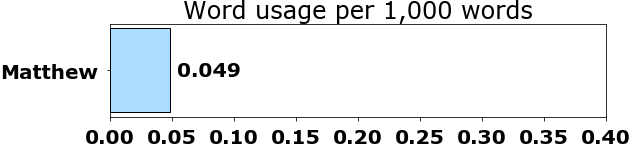 |
Words: ψυγησεται=1
|
Since this word is used
one time in the
GNT, and by Jesus, it may be a play on words. It could not be found elsewhere.
"ψῦχος" ≈ "cold" (noun) and "ψύχω" ≈ "make cold" (verb).
"ψυχῆς" ≈ "spirit, life" (genitive singular) of "ψυχή" ≈ "spirit, life".
"γη" ≈ "earth".
29. Usage - grow cold
- *G5594 *1 ψύχω (psoo'-kho) : a primary verb; to breathe (voluntarily but gently, thus differing on the one hand from G4154, which denotes properly a forcible respiration; and on the other from the base of G109, which refers properly to an inanimate breeze), i.e. (by implication, of reduction of temperature by evaporation) to chill (figuratively):--wax cold.
- ψυγησεται
- Matthew 24:12 ... shall abound, the love of many shall wax cold.
30. Revelation 3:15-16 Latin
Revelation 3:15 I know thy works, that thou art neither cold nor hot: I would thou wert cold or hot. [kjv]
scio opera tua quia neque frigidus es neque calidus utinam frigidus esses aut calidus [v]
3:16 So then because thou art lukewarm, and neither cold nor hot, I will spue thee out of my mouth. [kjv]
… tepidus … frigidus … calidus … [v]
The Latin word
"fridigus" ≈ "cold" and is the source of the English word
"frigid".
The Latin word
"calidus" ≈ "warm, hot".
The Latin word
"tepidus" ≈ "lukewarm, tepid" and is the source of the English word
"tepid".
The
modern Greek word
"ζεστός" (zeh-STOS) ≈ "hot".
31. Hot springs
The "
hot springs" in
Hierapolis (to the north of
Laodicea) are alluded to by Jesus in Revelation 3.
This is the literal view which could be a distractor.
Colossae, to the south, had cold springs, from which an aqueduct brought cold water to
Laodicea that was then somewhat lukewarm.
"Hot" is often good (coffee, cocoa, etc.).
"Cold" is often good (coffee, cocoa, etc.).
"Lukewarm" is "tepid" and tends to be not good.
Are there exceptions to this rule? Why might this be claimed?
32. Revelation 3:20 Jesus at the door
Revelation 3:20 Behold, I stand at the door, and knock: if any man hear my voice, and open the door, I will come in to him, and will sup with him, and he with me. [kjv]
ιδου εστηκα επι την θυραν και κρουω εαν τις ακουση της φωνης μου και ανοιξη την θυραν εισελευσομαι προς αυτον και δειπνησω μετ αυτου και αυτος μετ εμου [gnt]
Some churches only allow the part of Jesus they like into their church. The church at
Laodicia appears to not want Jesus in their church. Jesus is at the church door knocking. [prize for knock-knock jokes]
Have some churches today "separated" or "uprooted" themselves from (the love of) Jesus?
Are some churches today "strangers" to Jesus?
Are some churches today "blind" to the true and complete Jesus?
Might those in this church be too busy "
ministering" to
others (goats) and not "
examining" or "
thinking" about the entirety of Jesus (sheep)?
The "
hear" in Greek has a connotation of hearing with understanding. The Greek for "
voice" is, literally, "
light" into the "
mind" and can be a play on words with "
murders".
[Wesley's Preveniant Grace, Matthew at the foot of the door]
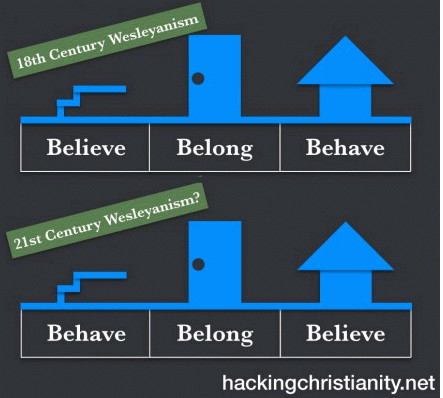
33. Big picture of prevenient grace
Some have pointed out a
difference from what Wesley stated and believed and what is being done today.
The Latin word
"praeveniens" ≈ "coming before, preceding" as in the "
porch" analogy. Intellectual ideas:
Calvin idea: depraved humans, predestination only, no free will
Arminius idea: depraved humans, little free will, grace only of predestined by God
Wesley idea: some more room for free will for sinful man
Modern changes: (some ideas)
Wesley idea then: Be convicted by sin and guilt, repent, believe, belong and behave.
Wesley idea today: Behave and appear to want to belong and believe.
Why not go directly to what Jesus said? [porch and door analogy]
34. Matthew 14:28 Walking on water
Matthew 14:28 And Peter answered him and said, Lord, if it be thou, bid me come unto thee on the water. [kjv]
αποκριθεις δε αυτω ο πετρος ειπεν αυτω κυριε ει συ ει κελευσον με ελθειν προς σε ελθειν επι τα υδατα [gnt]
Peter "
answers". What was the question? Then, Peter does ask a
question.
Anyone can walk on water if the water is frozen. This was a favorite battle technique of the Russians against the Germans on the Eastern Front of World War II. Walking on water is not easy if the water is liquid rather than solid.
[states of matter]
35. John 18:18 Warned of the cold
John 18:18 And the servants and officers stood there, who had made a fire of coals; for it was cold: and they warmed themselves: and Peter stood with them, and warmed himself. [kjv]
ειστηκεισαν ιστηκεισαν δε οι δουλοι και οι υπηρεται ανθρακιαν πεποιηκοτες οτι ψυχος ην και εθερμαινοντο ην δε μετ αυτων και ο πετρος μετ αυτων εστως και θερμαινομενος [gnt]
36. Cold
Here are verses that use the base Greek word for
"cold".
Acts 28:2 And the barbarous people shewed us no little kindness: for they kindled a fire, and received us every one, because of the present rain, and because of the cold. [kjv]
οι δε τε βαρβαροι παρειχον παρειχαν ου την τυχουσαν φιλανθρωπιαν ημιν αναψαντες αψαντες γαρ πυραν προσελαβοντο παντας ημας δια τον υετον τον εφεστωτα και δια το ψυχος [gnt]
2 Corinthians 11:27 In weariness and painfulness, in watchings often, in hunger and thirst, in fastings often, in cold and nakedness. [kjv]
εν κοπω και μοχθω εν αγρυπνιαις πολλακις εν λιμω και διψει εν νηστειαις πολλακις εν ψυχει και γυμνοτητι [gnt]
… labore … frigore … nuditate [v]
37. 2 Samuel 23:20 Lion in a pit
2 Samuel 23:20 And Benaiah the son of Jehoiada, the son of a valiant man, of Kabzeel, who had done many acts, he slew two lionlike men of Moab: he went down also and slew a lion in the midst of a pit in time of snow: [kjv]
και βαναιας υιος ιωδαε ανηρ αυτος πολλοστος εργοις απο καβεσεηλ και αυτος επαταξεν τους δυο υιους αριηλ του μωαβ και αυτος κατεβη και επαταξε τον λεοντα εν μεσω του λακκου εν τη ημερα της χιονος [lxx]
There have always been times of
cold and
snow even in Judea.
The ancient Greek word
"λάκκος" ≈ "pond, cistern, pit" and is related to the English words
"lake" and
"loch" as in the
Loch Ness Monster.
38. 2 Samuel 23:20
KJV: And Benaiah the son of Jehoiada, the son of a valiant man, of Kabzeel, who had done many acts, he slew two lionlike men of Moab: he went down also and slew a lion in the midst of a pit in time of snow:
Hebrew: ובניהו בן יהוידע בן איש חי רב פעלים מקבצאל הוא הכה את שני אראל מואב והוא ירד והכה את האריה בתוך הבאר ביום השלג׃
Greek: και βαναιας υιος ιωδαε ανηρ αυτος πολλοστος εργοις απο καβεσεηλ και αυτος επαταξεν τους δυο υιους αριηλ του μωαβ και αυτος κατεβη και επαταξε τον λεοντα εν μεσω του λακκου εν τη ημερα της χιονος
39. 1 Chronicles 11:22
KJV: Benaiah the son of Jehoiada, the son of a valiant man of Kabzeel, who had done many acts; he slew two lionlike men of Moab: also he went down and slew a lion in a pit in a snowy day.
Hebrew: בניה בן יהוידע בן איש חיל רב פעלים מן קבצאל הוא הכה את שני אריאל מואב והוא ירד והכה את הארי בתוך הבור ביום השלג׃
Greek: και βαναιας υιος ιωδαε υιος ανδρος δυνατου πολλα εργα αυτου υπερ καβασαηλ ουτος επαταξεν τους δυο αριηλ μωαβ και ουτος κατεβη και επαταξεν τον λεοντα εν τω λακκω εν ημερα χιονος
40. Matthew 10:42 Cold cup to drink
Matthew 10:42 And whosoever shall give to drink unto one of these little ones a cup of cold water only in the name of a disciple, verily I say unto you, he shall in no wise lose his reward. [kjv]
και ος εαν αν ποτιση ενα των μικρων τουτων ποτηριον ψυχρου μονον εις ονομα μαθητου αμην λεγω υμιν ου μη απολεση τον μισθον αυτου [gnt]
The ancient Greek word
"ψυχρός" ≈ "cold, frigid, cold-hearted". A figurative meaning is that of
"ineffectual". Could this be a play on words with "
life"?
"ψῦχος" ≈ "cold" and is related via PIE to the English word "frigid".
"ψυχρός" ≈ "cold, frigid, cold-hearted".
"ψυχρου" ≈ "cold" as used in the verse.
A modern day English idiom is that of giving someone a "
douse of cold water" as in a "
taste of reality". The Greek word for "
truth" is that of "
reality" as in
not "
oblivion". This is not the same as trying to walk through "
sinking" "
sands".
41. Matthew 10:42 Cold cup to drink
Matthew 10:42 And whosoever shall give to drink unto one of these little ones a cup of cold water only in the name of a disciple, verily I say unto you, he shall in no wise lose his reward. [kjv]
και ος εαν αν ποτιση ενα των μικρων τουτων ποτηριον ψυχρου μονον εις ονομα μαθητου αμην λεγω υμιν ου μη απολεση τον μισθον αυτου [gnt]
The Greek word for
"cold" can be a play on words with the Greek word for "
life".
"ψῦχος" ≈ "cold" and is related via PIE to the English word "frigid".
"ψυχή" ≈ "spirit, life" as in the animating principle of human life as a play on words and the first part of the English word "psychology".
If the
"water" is
"cold" enough, as in "
freezing"
"cold", than one
can walk on
"water". Oh, I see (
icy). Jesus says that the "
truth" will make you "
free". Will the "
truth" will make you "
freeze"?
42. Aristotle: Sophistic Refutations
English: Again, Is what the learner learns that which he learns? A man learns a slow march quick; it is not then what he learns that is meant but how he learns it. Again, Does a man trample on that through which he walks? But he walks through the whole day. Was not what was meant not what he walks through but when he walks? Just as when we talk of a man drinking a cup, we refer not to what he drinks but to that out of which he drinks. (Loeb#100, p. 115-117)
Greek: Καὶ "Ἆρ´ ὃ μανθάνει ὁ μανθάνων, τοῦτ´ ἔστιν ὃ μανθάνει; μανθάνει δέ τις τὸ βραδὺ ταχύ. " Οὐ τοίνυν ὃ μανθάνει ἀλλ´ ὡς μανθάνει εἴρηκεν. Καὶ "Ἆρ´ ὃ βαδίζει τις πατεῖ; βαδίζει δὲ τὴν ἡμέραν ὅλην. " Ἢ οὐχ ὃ βαδίζει ἀλλ´ ὅτε βαδίζει εἴρηκεν, οὐδὲ τὸ τὴν κύλικα πίνειν ὃ πίνει ἀλλ´ ἐξ οὗ. Aristotle: Sophistic Refutations [189a]
I had a funny hot coffee cup joke but I was told to put a lid on it.
43. Matthew 22:14 The cold and frozen elect
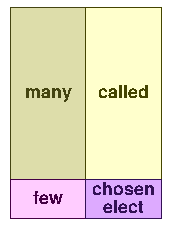
Matthew 22:14 For many are called, but few are chosen. [kjv]
πολλοι γαρ εισιν κλητοι ολιγοι δε εκλεκτοι [gnt]
The Greek word translated as "called" is part of the Greek word for "church" as in those believers "called out".
The Greek word translated as "chosen" is that of "elected".
There is an old line, in or about
denominational churches (that have a
name), that goes as follows.
Instead of "many are called, but few are chosen",
the line is "many are cold, a few are frozen".
The line brings to mind the reference to
cold and
hot in the letter of Jesus to the Church of
Laodicea in Revelation.
44. Matthew 22:14 Many called few chosen
Matthew 22:14 For many are called, but few are chosen. [kjv]
πολλοι γαρ εισιν κλητοι ολιγοι δε εκλεκτοι [gnt]
Of the
"many" called in the Parable of the Wedding Feast, only
one is
"chosen" to go into "
outer" "
darkness".
Paraphrase:
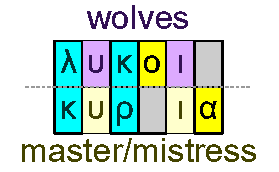
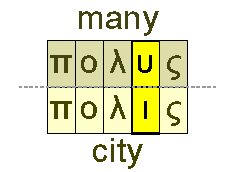
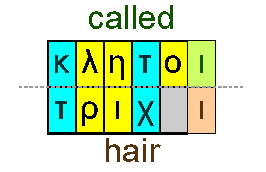
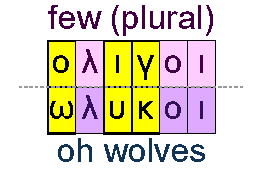
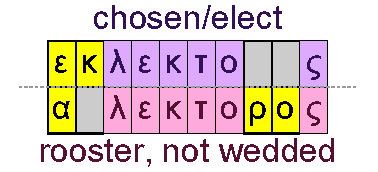
Many [city] are called [hairs] but few [O wolves] are chosen [roosters].
How
"many" is
"many"? How
"few" is
"few"?
45. Cold
I see that some of these winter and cold jokes were the white snow jokes to tell. That's snow joke. To some, it's a matter of degree, if you get my snow drift. I cold have done better. I shudder done better. Did you warm up to them?
46. Super Bowl light show in the big house
Matthew 5:15 Neither do men light a candle, and put it under a bushel, but on a candlestick; and it giveth light unto all that are in the house. [kjv]
ουδε καιουσιν λυχνον και τιθεασιν αυτον υπο τον μοδιον αλλ επι την λυχνιαν και λαμπει πασιν τοις εν τη οικια [gnt]
… accendunt lucernam … modio … super candelabrum … luceat … domo … [v]
The Super Bowl is played each year to determine the championship of the
NFL (National Football League). The Latin word
"super" ≈ "above, on top of, beyond". The word is not related to "
soup" as in a "
bowl".
2025 season: Seattle Seahawks vs. New England Patriots
The Super Bowl was originally called the "AFL-NFL World Championship Game". What is the origin of the name of the "Super Bowl"?
Lamar Hunt came up with the name of the Super Bowl from a toy of his son, a Super Ball.
47. A strong case for Valentine's Day
Matthew 9:12 But when Jesus heard that, he said unto them, They that be whole need not a physician, but they that are sick. [kjv]
ο δε ιησους ακουσας ειπεν αυτοις ου χρειαν εχουσιν οι ισχυοντες ιατρου αλλ αλλα οι κακως εχοντες [gnt]
at Iesus audiens ait non est opus valentibus medico sed male habentibus [v]
The Latin word
"valentibus" ≈ "strong" and is the source of the Latin name
"Valentine" meaning
"strong". From Saint
Valentine (there were two of them) comes the holiday known as Saint
Valentine's Day on February 14.
Valentine's Day has become a marketing bonanza and commercial celebration of love and romance.
[valence in chemistry in 1884, Emperor Valens and the Goths in 378 AD]
48. Ash Wednesday and Lent (and more) from the Bible
Lent begins after
Fastnacht Tuesday on
Ash Wednesday and ends at
Easter.
The "ashes" in Ash Wednesday represent "dust".
The term "Fastnacht" literally means the "night before the fast".
The French word "Mardi Gras" ≈ "Mardi Gras" as "Fat Tuesday".
Lent is noticeable for daylight hours
lengthening.
The Old English word "lencten" ≈ "spring".
The (older) German word "Lenz" ≈ "spring".
The Old English word "
lencten" and the German word
"Lenz" ≈ "spring" (dated) may be related to the word for "
long" or "
lengthen" as in the lengthening of days in the Spring time.
49. End of page