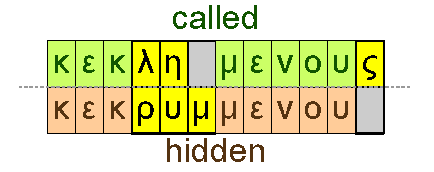
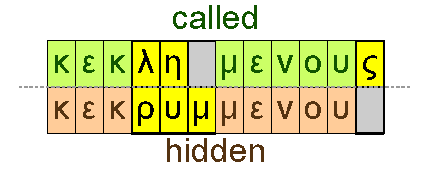
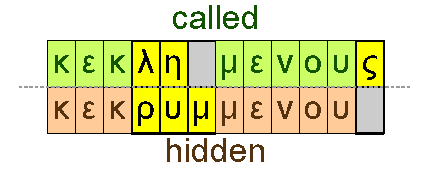
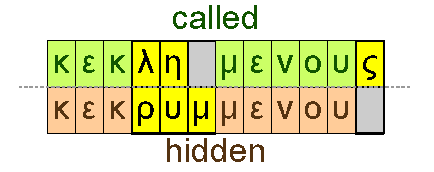
- *G2928 *18 κρύπτω (kroop'-to) : a primary verb; to conceal (properly, by covering):--hide (self), keep secret, secret(-ly).
- κεκρυμμενον *1 of 18
- Luke 18:34 ... this saying was hid from them, neither ...
- κεκρυμμενου *1 of 18
- Revelation 2:17 ... to eat of the hidden manna, and will give ...
54. Matthew 22:3
KJV: And sent forth his servants to call them that were bidden to the wedding: and they would not come.
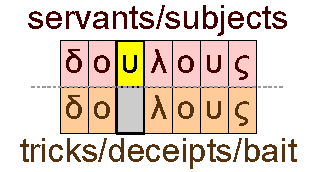
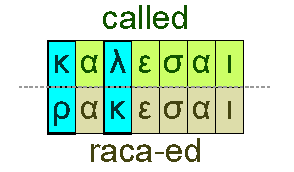
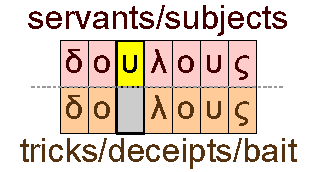
Greek: και απεστειλεν τους δουλους αυτου καλεσαι τους κεκλημενους εις τους γαμους και ουκ ηθελον ελθειν
55. Matthew 22:3 Would not could not
Matthew 22:3 And sent forth his servants to call them that were bidden to the wedding: and they would not come. [kjv]
και απεστειλεν τους δουλους αυτου καλεσαι τους κεκλημενους εις τους γαμους και ουκ ηθελον ελθειν [gnt]
The Greek word translated as
"would" "
not" is that of having "
no"
"desire".
"θέλω" ≈ "want, wish, care to" or "ἐθέλω" ≈ "want, wish, care to".
"ἤθελον" ≈ "" (first person singular, third person plural).
Discuss: Was this a
"call" to
fill the
pews? Explain.
56. Matthew 22:3
Matthew 22:3 And sent forth his servants to call them that were bidden to the wedding: and they would not come. [kjv]
και απεστειλεν τους δουλους αυτου καλεσαι τους κεκλημενους εις τους γαμους και ουκ ηθελον ελθειν [gnt]
Why might those "
called" "
not" have "
wished" to attend?
☐ They rejected God's calling.
☐ They were busy with their own concerns.
☐ They were busy with the concerns of their Lord.
☐ They were busy planting trees. What type of trees?
☐ They sensed a trap.
“If I knew the world was to end tomorrow, I would still plant an apple tree today. Often attributed to
Martin Luther.
57. Matthew 22:4 Again
Matthew 22:4 Again, he sent forth other servants, saying, Tell them which are bidden, Behold, I have prepared my dinner: my oxen and my fatlings are killed, and all things are ready: come unto the marriage. [kjv]
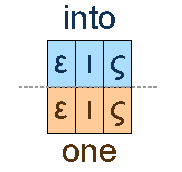
παλιν απεστειλεν αλλους δουλους λεγων ειπατε τοις κεκλημενοις ιδου το αριστον μου ητοιμασα ητοιμακα οι ταυροι μου και τα σιτιστα τεθυμενα και παντα ετοιμα δευτε εις τους γαμους [gnt]
The ancient Greek word
"πάλιν" ≈ "again, once more" and can mean
"back in time" and is related to the ancient Greek word
"παλιά" ≈ "old". The modern Greek word
"πάλιν" (PA-leen) ≈ "again".
When Jesus uses
"πάλιν" ≈ "again, once more" he
repeats what he just said in
another way.
"In other words", the word
"again" means
"in other words".
The
modern Greek word
"με άλλα λόγια" (meh AL-la LO-y-a) ≈ "in other words".
58. Recursively running back again with the palindromes
The English word
"palindrome" is a word whose letters are the same forward and backwards. Sometimes phrases are used where the blanks and other punctuation are ignored.
The English word "
palindrome" comes from the ancient Greek word
"παλίνδρομος" ≈ "running back again" and comes from two ancient Greek words.
"πάλιν" ≈ "again" and "δρόμος" ≈ "race course".
The word "
palindrome" was coined in 1638 by English poet and writer Henry Peacham. The idea appeared much earlier in history. Palindromes are found in the
DNA (Deoxyribonucleic Acid) code.
The English word "recursion" means, literally "running again".
"Cursive" text is text that "runs" or "flows".
59. Matthew 22:3-4 Again
Matthew 22:3 And sent forth his servants to call them that were bidden to the wedding: and they would not come. [kjv]
22:4 Again, he sent forth other servants, saying, Tell them which are bidden, Behold, I have prepared my dinner: my oxen and my fatlings are killed, and all things are ready: come unto the marriage. [kjv]
Hebrew
parallelism often uses two sound-bites that convey the same (or opposite, etc.) meaning. When Jesus uses
"πάλιν" ≈ "again, once more" he repeats what he just said in another way. What is meant by
"again" in these verses?
Verse 3 is the first time and verses 4 and 5 are the second time as a repeat of what was done before.
Verse 3 is the first time and verses 4 and 5 repeat verse 3 in more detail.
Who are the
"other" "servants"?
60. Other similar differences
Greek has
two words for
"others" as in others that are
"similar" and others that are
"different" whereas English has the
one word
"other"
| English |
Greek |
Greek |
| other |
other (similar) |
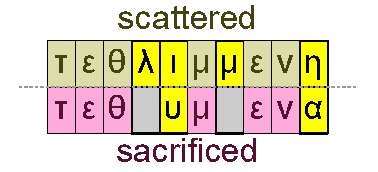
ἄλλος |
| other |
other (different) |
ἕτερος |
|
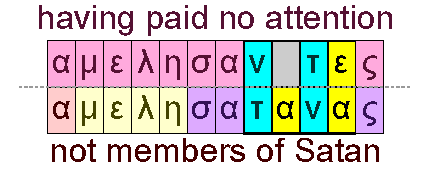
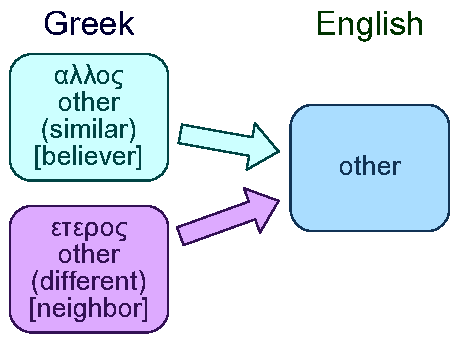 |
The ancient Greek word
"ἄλλος" ≈ "other - similar" and is related to the English word
"else".
The ancient Greek word
"ἕτερος" ≈ "other - different" and is related to the English word
"asunder" as in "
one or the other of two" and is the prefix of English words such as "
heterosexual", "
heterodoxy", etc.
61. Matthew 22:4 Other similar servants
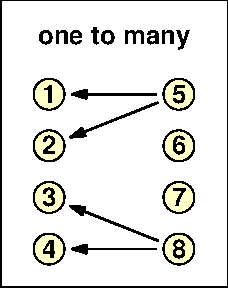
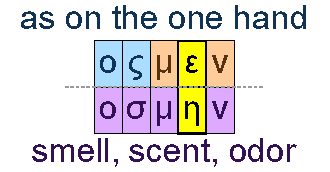
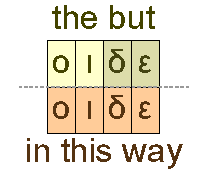
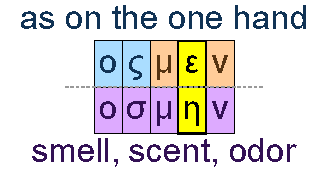
Matthew 22:4 Again, he sent forth other servants, saying, Tell them which are bidden, Behold, I have prepared my dinner: my oxen and my fatlings are killed, and all things are ready: come unto the marriage. [kjv]
παλιν απεστειλεν αλλους δουλους λεγων ειπατε τοις κεκλημενοις ιδου το αριστον μου ητοιμασα ητοιμακα οι ταυροι μου και τα σιτιστα τεθυμενα και παντα ετοιμα δευτε εις τους γαμους [gnt]
The ancient Greek word
"ἄλλος" ≈ "other - similar" and is related to the English word
"else". Who are the
"other" "servants"?
☐ Are they similar to those sent the first time? Is there a second time?
☐ Are they similar to those to whom they are calling? Is it a reflexive relationship?
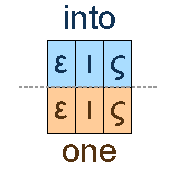
No other word would be clear. Different other word would be clear. Similar other word is ambiguous.
Are these "servants" different than the "soldiers" in verse 7? That is, three verses from here.
Are these "servants" "called"? Are these "servants" "hidden"?
62. Matthew 22:4 Word usage
Matthew 22:4 Again, he sent forth other servants, saying, Tell them which are bidden, Behold, I have prepared my dinner: my oxen and my fatlings are killed, and all things are ready: come unto the marriage. [kjv]
παλιν απεστειλεν αλλους δουλους λεγων ειπατε τοις κεκλημενοις ιδου το αριστον μου ητοιμασα ητοιμακα οι ταυροι μου και τα σιτιστα τεθυμενα και παντα ετοιμα δευτε εις τους γαμους [gnt]
| Matthew 22:4 |
| Strong |
Used |
Unique |
Word |
Part of speech |
| G2564 |
148 |
2 |
κεκλημενοις |
verb perfect passive participle dative plural masculine |
| G712 |
3 |
2 |
αριστον |
noun accusative singular neuter |
| G2090 |
41 |
1 |
ητοιμακα |
verb perfect active indicative 1st person singular |
| G5022 |
4 |
1 |
ταυροι |
noun nominative plural masculine |
| G4619 |
1 |
1 |
σιτιστα |
adjective nominative plural neuter |
| G2380 |
14 |
1 |
τεθυμενα |
verb perfect passive participle nominative plural neuter |
| G2092 |
17 |
3 |
ετοιμα |
adjective nominative plural neuter |
| G1062 |
16 |
6 |
γαμους |
noun accusative plural masculine |
63. Matthew 22:4 Again
Matthew 22:4 Again, he sent forth other servants, saying, Tell them which are bidden, Behold, I have prepared my dinner: my oxen and my fatlings are killed, and all things are ready: come unto the marriage. [kjv]
παλιν απεστειλεν αλλους δουλους λεγων ειπατε τοις κεκλημενοις ιδου το αριστον μου ητοιμασα ητοιμακα οι ταυροι μου και τα σιτιστα τεθυμενα και παντα ετοιμα δευτε εις τους γαμους [gnt]
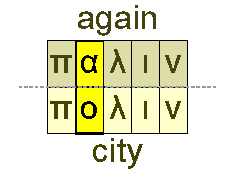
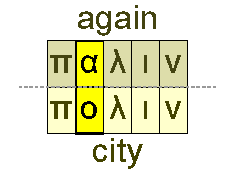
"πάλιν" ≈ "again, once more"
"πόλιν" ≈ "city" (accusative).
The ancient Greek word
"πάλιν" ≈ "again, once more" and can mean
"back in time" and is related to the ancient Greek word
"παλιά" ≈ "old". The modern Greek word
"πάλιν" (PA-leen) ≈ "again".
"πολύς" ≈ "many" (accent on second/last syllable).
"πόλις" ≈ "city" (accent on first syllable).
64. Strongs - breakfast
*G712 *3 ἄριστον (ar'-is-ton) : apparently neuter of a superlative from the same as G730; the best meal (or breakfast; perhaps from eri ("early")), i.e. luncheon:--dinner.
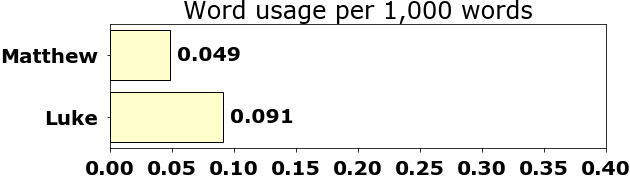 |
Words: αριστον=2 αριστου
|
The ancient Greek word
"ἄριστόν" ≈ "morning meal, breakfast, later lunch"
The English word
"dinner" comes from the Middle English word
"dyner" ≈ "dinner" which comes from the French word
"disner" ≈ "lunch" but originally
"breakfast", and which comes from the Latin word
"disiuno" ≈ "lunch" and, literally,
"break the fast".
Saying:
You can call me anything as long as you call me for dinner. How about calling for rain?
[West Point and lunch, dinner and supper]
65. Usage - breakfast
- *G712 *3 ἄριστον (ar'-is-ton) : apparently neuter of a superlative from the same as G730; the best meal (or breakfast; perhaps from eri ("early")), i.e. luncheon:--dinner.
- αριστον *2
- Matthew 22:4 ... Behold, I have prepared my dinner: my oxen and ...
- Luke 14:12 ... bade him, When thou makest a dinner or a supper, call ...
- αριστου
- Luke 11:38 ... first washed before dinner.
66. Luke 14:12 Breakfast and meals
Luke 14:12 Then said he also to him that bade him, When thou makest a dinner or a supper, call not thy friends, nor thy brethren, neither thy kinsmen, nor thy rich neighbours; lest they also bid thee again, and a recompence be made thee. [kjv]
ελεγεν δε και τω κεκληκοτι αυτον οταν ποιης αριστον η δειπνον μη φωνει τους φιλους σου μηδε τους αδελφους σου μηδε τους συγγενεις σου μηδε γειτονας πλουσιους μηποτε και αυτοι σε αντικαλεσωσιν σε και γενηται ανταποδομα σοι ανταποδομα [gnt]
Luke uses the words for both
"breakfast" and
"meal" which is sometimes translated as "
feast".
"ἄριστόν" ≈ "morning meal, breakfast, later lunch".
"δεῖπνον" ≈ "meal, food" would be a better word for "dinner".
67. Matthew 6:3 Left and right
Matthew 6:3 But when thou doest alms, let not thy left hand know what thy right hand doeth: [kjv]
σου δε ποιουντος ελεημοσυνην μη γνωτω η αριστερα σου τι ποιει η δεξια σου [gnt]
The ancient Greek word
"εὐώνυμος" ≈ "of good name, honored, fortunate, ominous, ill-boding" also meant
"left". This is not used in this verse.
Another ancient Greek word for
"left" was
"ἀριστερός" ≈ "left, ominous, clumsy". This is the word used in this verse. This word is from
"ἀριστος" ≈ "best".
The meaning of "
ominous" and/or "
clumsy" is dependent on point of view. There may be a play on words here with the "
best part".
Perhaps
both "
hands" are meant in a
negative sense. In that sense, since the "
pigs" are represented by "
hands", perhaps one should not facilitate, as a "
messenger", communication between two "
bad" parts that should be "
cut off".
68. Acts 6:2 Waiting tables
Acts 6:2 Then the twelve called the multitude of the disciples unto them, and said, It is not reason that we should leave the word of God, and serve tables. [kjv]
προσκαλεσαμενοι δε οι δωδεκα το πληθος των μαθητων ειπον ειπαν ουκ αρεστον εστιν ημας καταλειψαντας τον λογον του θεου διακονειν τραπεζαις [gnt]
The
ancient Greek word
"ἄριστος" ≈ "best". That is, the
"twelve" considered themselves the
"best" as in
"greatest" and therefore did not want to "
serve" "
tables".
☐ Was it the "best" solution?
☐ Was it the most "desirable" solution?
☐ Was it a "reason"?
|
|
Discuss: How might this decision have impacted a sense of
"greater" or
"greatest" and, by implication, have started the move to a hierarchical church structure?
The relation "
is greater than" or "
thinks one is greater than" induces a
tree structure on a set of people involved.
69. Acts 6:2 Waiting tables
Acts 6:2 Then the twelve called the multitude of the disciples unto them, and said, It is not reason that we should leave the word of God, and serve tables. [kjv]
προσκαλεσαμενοι δε οι δωδεκα το πληθος των μαθητων ειπον ειπαν ουκ αρεστον εστιν ημας καταλειψαντας τον λογον του θεου διακονειν τραπεζαις [gnt]
convocantes … duodecim … aequum … derelinquere verbum … ministrare mensis [v]
The Latin word
"aequus" ≈ "equal, level, fair, just" which starts the
word slide found in most modern translations.
Discuss: Why did the disciples need to replace Judas? Why was this vacancy considered a prize position? Matthias won the lottery drawing. Do we ever hear of him again?
70. Luke 14:12
KJV: Then said he also to him that bade him, When thou makest a dinner or a supper, call not thy friends, nor thy brethren, neither thy kinsmen, nor thy rich neighbours; lest they also bid thee again, and a recompence be made thee.
Greek: ελεγεν δε και τω κεκληκοτι αυτον οταν ποιης αριστον η δειπνον μη φωνει τους φιλους σου μηδε τους αδελφους σου μηδε τους συγγενεις σου μηδε γειτονας πλουσιους μηποτε και αυτοι σε αντικαλεσωσιν σε και γενηται ανταποδομα σοι ανταποδομα
71. Matthew 22:4 Breakfast of champions
Matthew 22:4 Again, he sent forth other servants, saying, Tell them which are bidden, Behold, I have prepared my dinner: my oxen and my fatlings are killed, and all things are ready: come unto the marriage. [kjv]
παλιν απεστειλεν αλλους δουλους λεγων ειπατε τοις κεκλημενοις ιδου το αριστον μου ητοιμασα ητοιμακα οι ταυροι μου και τα σιτιστα τεθυμενα και παντα ετοιμα δευτε εις τους γαμους [gnt]
[look around and compare]
The ancient Greek word
"ἄριστόν" ≈ "morning meal, breakfast, later lunch"
How does the meaning change if one changes the
modern "dinner" to the original
"breakfast"?
72. Strongs - prepare
*G2090 *41 ἑτοιμάζω (het-oy-mad'-zo) : from G2092; to prepare:--prepare, provide, make ready. Compare G2680.
 |
Words: ετοιμαζε ετοιμασαι=4 ετοιμασαντες ετοιμασας ετοιμασατε=7 ετοιμασθη ετοιμασον ετοιμασω ετοιμασωμεν=3 ητοιμακα=1 ητοιμασαν=6 ητοιμασας=2 ητοιμασεν=3 ητοιμασμενην=2 ητοιμασμενοι ητοιμασμενοις ητοιμασμενον=3 ητοιμασται=2
|
73. Usage - prepare
- *G2090 *41 ἑτοιμάζω (het-oy-mad'-zo) : from G2092; to prepare:--prepare, provide, make ready. Compare G2680.
- ητοιμακα *1 of 41
- Matthew 22:4 ... Tell them which are bidden, Behold, I have prepared my dinner: my ...
74. Matthew 22:4 Prepared
Matthew 22:4 Again, he sent forth other servants, saying, Tell them which are bidden, Behold, I have prepared my dinner: my oxen and my fatlings are killed, and all things are ready: come unto the marriage. [kjv]
παλιν απεστειλεν αλλους δουλους λεγων ειπατε τοις κεκλημενοις ιδου το αριστον μου ητοιμασα ητοιμακα οι ταυροι μου και τα σιτιστα τεθυμενα και παντα ετοιμα δευτε εις τους γαμους [gnt]
"ητοιμακα" ≈ "prepared" (as used).
"ητοιμασα" ≈ "prepared" (changed by the TR).
"μοιχόι" ≈ "adulterers" from "μοιχός" ≈ "adulterer".
"μάχαιρα" ≈ "sword".
"μακάριος" ≈ "happy, content".
The
TR changes the word for
"prepared" to be something more correct at the expense of losing any play on word meaning.
75. Matthew 10:34 Sword seduction and adultery
Matthew 10:34 Think not that I am come to send peace on earth: I came not to send peace, but a sword. [kjv]
μη νομισητε οτι ηλθον βαλειν ειρηνην επι την γην ουκ ηλθον βαλειν ειρηνην αλλα μαχαιραν [gnt]

The ancient Greek word
"μάχαιραν" ≈ "sword" and comes from the ancient Greek word
"μάχη" ≈ "battle, fight".
Jesus uses the Greek word for
"sword" with the idea of "
division". Another may be a play on words with
"adultery".
"μάχαιρα" ≈ "sword".
"μοιχεία" ≈ "adultery, seduction".
Can the "
church" commit
"adultery" before Jesus establishes the "
church"? How might this happen? Check the next few verses.
76. Matthew 22:4 Prepared are the battles
Matthew 22:4 Again, he sent forth other servants, saying, Tell them which are bidden, Behold, I have prepared my dinner: my oxen and my fatlings are killed, and all things are ready: come unto the marriage. [kjv]
παλιν απεστειλεν αλλους δουλους λεγων ειπατε τοις κεκλημενοις ιδου το αριστον μου ητοιμασα ητοιμακα οι ταυροι μου και τα σιτιστα τεθυμενα και παντα ετοιμα δευτε εις τους γαμους [gnt]
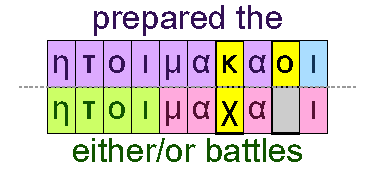
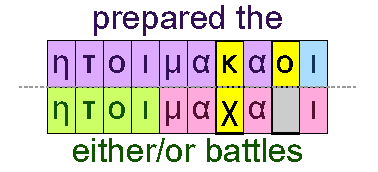
"ητοιμακα" ≈ "prepared" (as used) and "οι" ≈ "the" (plural).
"ἤτοι" ≈ "either, or" and "μάχαι" ≈ "battles, fights"
Possible play on words given the preceding
"ἤτοι" ≈ "either, or" and following
"οι" ≈ "the" (plural).
77. Matthew 22:4 Oxen and bulls
Matthew 22:4 Again, he sent forth other servants, saying, Tell them which are bidden, Behold, I have prepared my dinner: my oxen and my fatlings are killed, and all things are ready: come unto the marriage. [kjv]
παλιν απεστειλεν αλλους δουλους λεγων ειπατε τοις κεκλημενοις ιδου το αριστον μου ητοιμασα ητοιμακα οι ταυροι μου και τα σιτιστα τεθυμενα και παντα ετοιμα δευτε εις τους γαμους [gnt]
The ancient Greek word
"ταῦρος" ≈ "bull" and is the source of the English word
"Taurus" as the Zodiac constellation. Bulls were a symbol of Crete and the
Minotaur. These ideas appear to have traveled to Spain.
78. Strongs - bull
*G5022 *0 ταῦρος (tow'-ros) : apparently a primary word (compare H8450, "steer"); a bullock:--bull, ox.
 |
Words: ταυροι=1 ταυρους ταυρων=2
|
The ancient Greek word
"ταῦρος" ≈ "bull" and is the source of the English word
"Taurus" as the Zodiac constellation. Bulls were a symbol of Crete and the
Minotaur. These ideas appear to have traveled to Spain.
79. Usage - bull
- *G5022 *0 ταῦρος (tow'-ros) : apparently a primary word (compare H8450, "steer"); a bullock:--bull, ox.
- ταυρων *2
- Hebrews 9:13 For if the blood of bulls and of goats, and ...
- Hebrews 10:4 For it is not possible that the blood of bulls and of goats should take away sins.
- ταυροι
- Matthew 22:4 ... my dinner: my oxen and my fatlings are killed, ...
- ταυρους
- Acts 14:13 ... their city, brought oxen and garlands unto ...
80. Matthew 22:4 Bullish serpents
Matthew 22:4 Again, he sent forth other servants, saying, Tell them which are bidden, Behold, I have prepared my dinner: my oxen and my fatlings are killed, and all things are ready: come unto the marriage. [kjv]
παλιν απεστειλεν αλλους δουλους λεγων ειπατε τοις κεκλημενοις ιδου το αριστον μου ητοιμασα ητοιμακα οι ταυροι μου και τα σιτιστα τεθυμενα και παντα ετοιμα δευτε εις τους γαμους [gnt]
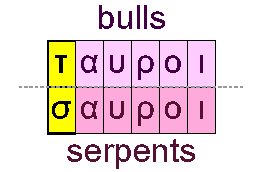
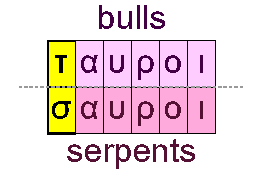
"ταυροι" ≈ "oxen, bulls".
"σαυροι" ≈ "serpents".
"σταυροί" ≈ "crosses".
The Greek word translated as
"oxen" can be a play on words with "
crosses" as in "
take up your cross" or as
"lizards" or
"serpents". The sounds "
s" and "
t" are related.
81. Strongs - fatlings
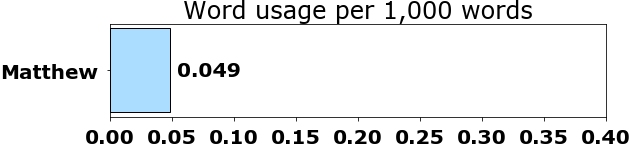
*G4619 *1 σιτιστός (sit-is-tos') : from a derivative of G4621; grained, i.e. fatted:--fatling.
 |
Words: σιτιστα=1
|
- *G4619 *1 σιτιστός (sit-is-tos') : from a derivative of G4621; grained, i.e. fatted:--fatling.
- σιτιστα *1 of 1
- Matthew 22:4 ... my oxen and my fatlings are killed, and all things ...
This word has the
onomatopoeic play on words with the Latin word
"zizanium" ≈ "darnel, tare, cockle" comes from the ancient Greek word
"ζιζάνιον" ≈ "darnel, rye-grass" which comes from the Semitic Aramaic, Hebrew, etc. It is interesting that the word for "
thistle" in the
OT and in the
GNT have unknown origins but appear to have sounded similar when spoken. Is there a connection?
The sounds "
s", "
t", "
z", "
tz", "
st" are similar and can be used as play on words.
82. Matthew 22:4 Food chain
Matthew 22:4 Again, he sent forth other servants, saying, Tell them which are bidden, Behold, I have prepared my dinner: my oxen and my fatlings are killed, and all things are ready: come unto the marriage. [kjv]
παλιν απεστειλεν αλλους δουλους λεγων ειπατε τοις κεκλημενοις ιδου το αριστον μου ητοιμασα ητοιμακα οι ταυροι μου και τα σιτιστα τεθυμενα και παντα ετοιμα δευτε εις τους γαμους [gnt]
Note the following.
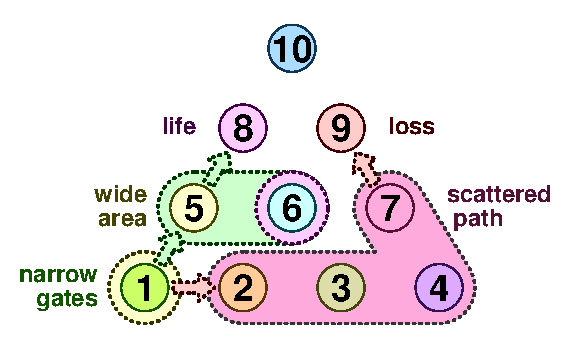
"Bulls" can graze on the "fruit" of the "grass" and on "weeds". Might those "weeds" include the "fatlings"?
"Fatlings" are grain fed as in, say, eating the "fruit" of the "grass".
What "
path" might these
"bulls" and
"fatlings" have been following? Might it be the
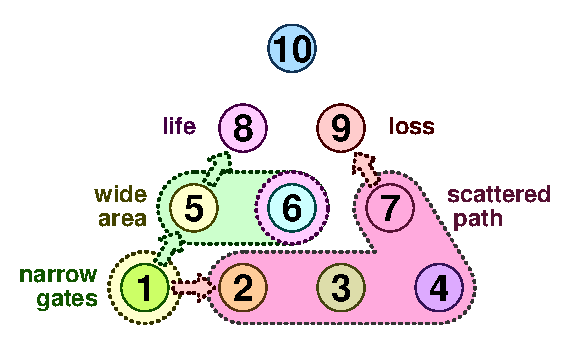
"narrow" or
"scattered" way" that "
leads (away from)" "
life"?
83. Matthew 22:4 Killed for dinner
Matthew 22:4 Again, he sent forth other servants, saying, Tell them which are bidden, Behold, I have prepared my dinner: my oxen and my fatlings are killed, and all things are ready: come unto the marriage. [kjv]
παλιν απεστειλεν αλλους δουλους λεγων ειπατε τοις κεκλημενοις ιδου το αριστον μου ητοιμασα ητοιμακα οι ταυροι μου και τα σιτιστα τεθυμενα και παντα ετοιμα δευτε εις τους γαμους [gnt]
The
KJV translates as
"killed" the ancient Greek word
"θύω" ≈ "offer in sacrifice, slay, burn, kill, slaughter" which has meaning beyond just
"killed".
84. Strongs - killed
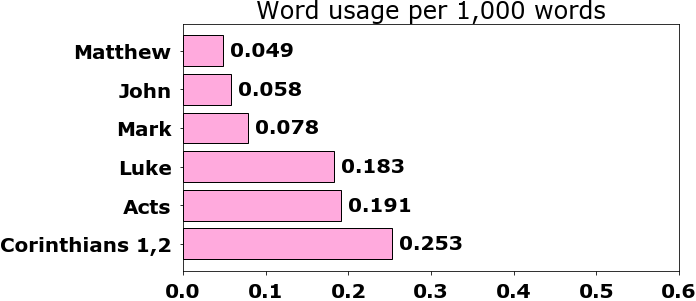
*G2380 *14 θύω (thoo'-o) : a primary verb; properly, to rush (breathe hard, blow, smoke), i.e. (by implication) to sacrifice (properly, by fire, but genitive case); by extension to immolate (slaughter for any purpose):--kill, (do) sacrifice, slay.
 |
Words: εθυον εθυσας εθυσεν ετυθη θυειν=2 θυεσθαι θυουσιν=2 θυσατε θυση θυσον=2 τεθυμενα=1
|
The ancient Greek word
"θύω" ≈ "offer in sacrifice, slay, burn, kill, slaughter".
[sanctuary as prison/watch, offering]
85. Matthew 22:4
KJV: Again, he sent forth other servants, saying, Tell them which are bidden, Behold, I have prepared my dinner: my oxen and my fatlings are killed, and all things are ready: come unto the marriage.
Greek: παλιν απεστειλεν αλλους δουλους λεγων ειπατε τοις κεκλημενοις ιδου το αριστον μου ητοιμασα ητοιμακα οι ταυροι μου και τα σιτιστα τεθυμενα και παντα ετοιμα δευτε εις τους γαμους
86. Strongs - scattered
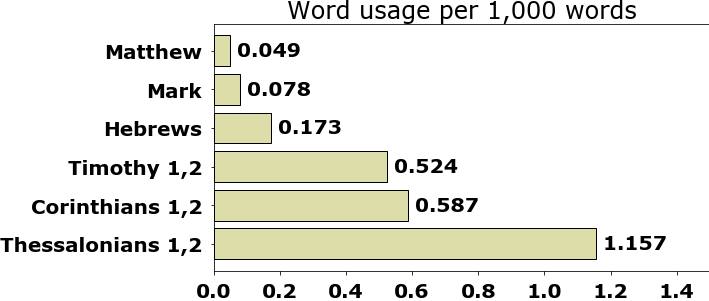
*G2346 *10 θλίβω (thlee'-bo) : akin to the base of G5147; to crowd (literally or figuratively):--afflict, narrow, throng, suffer tribulation, trouble.
 |
Words: θλιβεσθαι θλιβομεθα θλιβομενοι=3 θλιβομενοις=2 θλιβουσιν θλιβωσιν τεθλιμμενη=1
|
The ancient Greek word
"θλίβω" ≈ "squeeze, compress, oppress, afflict".
The ancient Greek word
"τετριμμένος" ≈ "rubbed, worn out" from
"τρίβω" ≈ "rub, grind, waste, wear away" and is
cognate with the Latin word
"tero" ≈ "rub, wear away, consume". (obliterate)
87. Usage - scattered
- *G2346 *10 θλίβω (thlee'-bo) : akin to the base of G5147; to crowd (literally or figuratively):--afflict, narrow, throng, suffer tribulation, trouble.
- θλιβομενοι *3
- 2 Corinthians 4:8 We are troubled on every side, yet not distressed; ...
- 2 Corinthians 7:5 ... rest, but we were troubled on every side; without ...
- Hebrews 11:37 ... goat skins; being destitute, afflicted, tormented;
- θλιβομενοις *2
- 2 Thessalonians 1:7 And to you who are troubled rest with us, ...
- 1 Timothy 5:10 ... feet, if she have relieved the afflicted, if she have diligently followed every ...
- τεθλιμμενη
- Matthew 7:14 Because strait is the gate, and narrow is the way, which leadeth unto ...
- θλιβωσιν
- Mark 3:9 ... because of the multitude, lest they should throng him.
- θλιβομεθα
- 2 Corinthians 1:6 And whether we be afflicted, it is for your consolation ...
- θλιβεσθαι
- 1 Thessalonians 3:4 ... before that we should suffer tribulation; even as it came to pass, ...
- θλιβουσιν
- 2 Thessalonians 1:6 ... God to recompense tribulation to them that trouble you;
88. Matthew 7:14 Scattered path
Matthew 7:14 Because strait is the gate, and narrow is the way, which leadeth unto life, and few there be that find it. [kjv]
οτι στενη η πυλη και τεθλιμμενη η οδος η απαγουσα εις την ζωην και ολιγοι εισιν οι ευρισκοντες αυτην [gnt]
The ancient Greek word
"θλίβω" ≈ "squeeze, compress, oppress, afflict".
The ancient Greek word
"τετριμμένος" ≈ "rubbed, worn out" from
"τρίβω" ≈ "rub, grind, waste, wear away" and is
cognate with the Latin word
"tero" ≈ "rub, wear away, consume" (obliterate).
Might the
"narrow" "way" be the
"worn out" or
"rubbed out" "way"?
[play on words]
89. Matthew 7:14 Scattered path
Matthew 7:14 Because strait is the gate, and narrow is the way, which leadeth unto life, and few there be that find it. [kjv]
οτι στενη η πυλη και τεθλιμμενη η οδος η απαγουσα εις την ζωην και ολιγοι εισιν οι ευρισκοντες αυτην [gnt]
The Greek word translated as
"narrow" is that of
"scattered" or
"smashed". The ancient Greek word
"στενή" ≈ "narrow, tight".
"θλίβω" ≈ "squeeze, compress, oppress, afflict".
"τετριμμένος" ≈ "rubbed, worn out" from "τρίβω" ≈ "rub, grind, waste, wear away" and is cognate with the Latin word "tero" ≈ "rub, wear away, consume" (obliterate).
"θρέμμα" ≈ "nursling, animal, creature" from "τρέφω" ≈ "make grow, maintain, rear".
[play on words]
90. Scattered killing
Matthew 7:14 Because strait is the gate, and narrow is the way, which leadeth unto life, and few there be that find it. [kjv]
οτι στενη η πυλη και τεθλιμμενη η οδος η απαγουσα εις την ζωην και ολιγοι εισιν οι ευρισκοντες αυτην [gnt]
22:4 Again, he sent forth other servants, saying, Tell them which are bidden, Behold, I have prepared my dinner: my oxen and my fatlings are killed, and all things are ready: come unto the marriage. [kjv]
παλιν απεστειλεν αλλους δουλους λεγων ειπατε τοις κεκλημενοις ιδου το αριστον μου ητοιμασα ητοιμακα οι ταυροι μου και τα σιτιστα τεθυμενα και παντα ετοιμα δευτε εις τους γαμους [gnt]
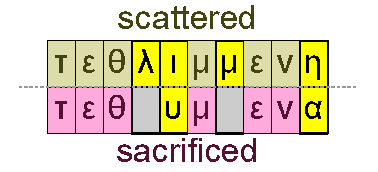
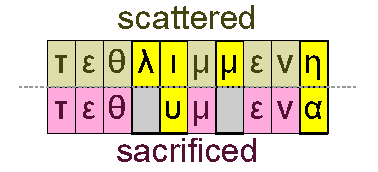
Is the
"scattered" "
way" that "
leads (away from)" "
life" one of being "
sacrificed" or "
killed"? Is this in any way a "
trap"? [King and false prophets of Baal][dictators and relaxed rules]
91. Word usage
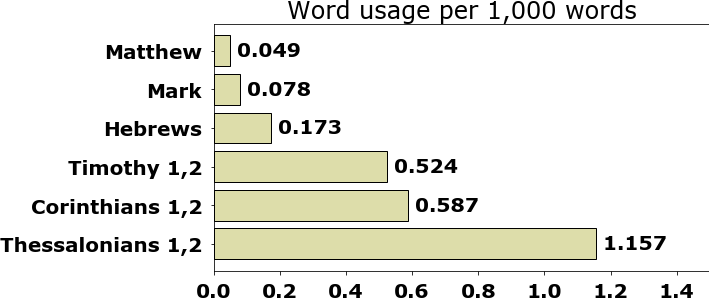 |
Words: θλιβεσθαι θλιβομεθα θλιβομενοι=3 θλιβομενοις=2 θλιβουσιν θλιβωσιν τεθλιμμενη=1
|
 |
Words: εθυον εθυσας εθυσεν ετυθη θυειν=2 θυεσθαι θυουσιν=2 θυσατε θυση θυσον=2 τεθυμενα=1
|
92. Matthew 22:4 Word play
Matthew 22:4 Again, he sent forth other servants, saying, Tell them which are bidden, Behold, I have prepared my dinner: my oxen and my fatlings are killed, and all things are ready: come unto the marriage. [kjv]
παλιν απεστειλεν αλλους δουλους λεγων ειπατε τοις κεκλημενοις ιδου το αριστον μου ητοιμασα ητοιμακα οι ταυροι μου και τα σιτιστα τεθυμενα και παντα ετοιμα δευτε εις τους γαμους [gnt]
93. Strongs - pay no attention
*G272 *4 ἀμελέω (am-el-eh'-o) : from G1 (as a negative particle) and G3199; to be careless of:--make light of, neglect, be negligent, no regard.
 |
Words: αμελει αμελησαντες=2 ημελησα
|
The ancient Greek word
"ἀμελέω" ≈ "not worry about, not care for, disregard" and comes from
"ἀμελής" ≈ "careless, negligent, uncared, unheeded" which is a negation of
"μέλω" ≈ "care" as in the "
cares" and "
concerns" of the "
world".
Consider the following as play on words:
"μέλη" ≈ "honey, anything sweet".
"μέλη" ≈ "body parts, limbs, members" from "μέλος" ≈ "body part, limb, member" and, in music, a "tune" or "melody".
[Matthew 18 and those who pay no heed]
94. Usage - pay no attention
- *G272 *4 ἀμελέω (am-el-eh'-o) : from G1 (as a negative particle) and G3199; to be careless of:--make light of, neglect, be negligent, no regard.
95. Matthew 22:5 Pay no attention
Matthew 22:5 But they made light of it, and went their ways, one to his farm, another to his merchandise: [kjv]
οι δε αμελησαντες απηλθον ο ος μεν εις τον ιδιον αγρον ο ος δε εις επι την εμποριαν αυτου [gnt]
The Greek word translated as
"made light" is that of
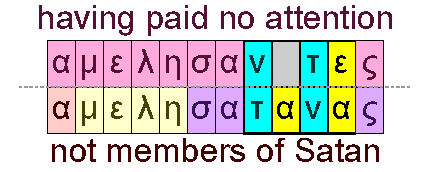
"paid no attention".
Might they have
"paid no attention" because they were
"not" "members" of
"Satan"?
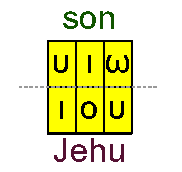
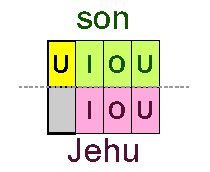
Consider about Jehu and the prophets of Baal.
96. Matthew 22:5 Expired membership
97. Matthew 22:5 Farmed out acres
Matthew 22:5 But they made light of it, and went their ways, one to his farm, another to his merchandise: [kjv]
οι δε αμελησαντες απηλθον ο ος μεν εις τον ιδιον αγρον ο ος δε εις επι την εμποριαν αυτου [gnt]
The ancient Greek word
"ἀγρός" ≈ "field, land, countryside" and is used by Jesus as a
code word for
"world" as in the "
people in the world".
The ancient Greek word
"ἄγριος" ≈ "living in the open fields" and, thus, animals there were considered
"wild",
"savage",
"violent",
"fierce".
98. Matthew 13:38 Field is the acre
99. Matthew 22:5 Unique field
Matthew 22:5 But they made light of it, and went their ways, one to his farm, another to his merchandise: [kjv]
οι δε αμελησαντες απηλθον ο ος μεν εις τον ιδιον αγρον ο ος δε εις επι την εμποριαν αυτου [gnt]
"ἴδιον" ≈ "own" (adjective).
"ἴδιον" ≈ "distinguishing feature, opinion" (noun).
The word "
his" must be
inferred. If inferred, to whom does "
his" refer? Is it the person, the Lord, etc.?
Saying:
Farmers like to be outstanding in their own field.
100. Matthew 22:5 Merchants and merchandise
101. North
102. Isaiah 14:13 North
Isaiah 14:13 For thou hast said in thine heart, I will ascend into heaven, I will exalt my throne above the stars of God: I will sit also upon the mount of the congregation, in the sides of the north: [kjv]
συ δε ειπας εν τη διανοια σου εις τον ουρανον αναβησομαι επανω των αστρων του ουρανου θησω τον θρονον μου καθιω εν ορει υψηλω επι τα ορη τα υψηλα τα προς βορραν [lxx]
In general, does the area of the
"north" in the Bible have a good, bad, or indifferent connotation?
[wilderness, north side, Dan, serpent, eagle]
The the English term
"aurora borealis" comes from the Latin word for "
dawn" or "
sunrise" and the Greek word
"north" (which comes through Latin).
103. Merchandise
104. Plastic words and merchandise
2 Peter 2:3 And through covetousness shall they with feigned words make merchandise of you: whose judgment now of a long time lingereth not, and their damnation slumbereth not. [kjv]
και εν πλεονεξια πλαστοις λογοις υμας εμπορευσονται οις το κριμα εκπαλαι ουκ αργει και η απωλεια αυτων ου νυσταζει [gnt]

Peter says that these
false teachers will use
"plastic" words to make
"merchandise" of their followers as in selling at an
"emporium".
"πλάσσω" ≈ "form, mold, shape" as is the source of the English word "plastic".
"ἔμπορος" ≈ "traveler, merchant" as in one who makes a journey and is the source of the English word "emporium".
In Romans 16, Paul make a play on words between "
useful words", "
subtle sermons" in Latin, and "
Christ words".
105. Matthew 13:45-46 KP6 Parable of the pearl of great price
Matthew 13:45 Again, the kingdom of heaven is like unto a merchant man, seeking goodly pearls: [kjv]
παλιν ομοια εστιν η βασιλεια των ουρανων ανθρωπω εμπορω ζητουντι καλους μαργαριτας [gnt]
13:46 Who, when he had found one pearl of great price, went and sold all that he had, and bought it. [kjv]
ος ευρων δε ενα πολυτιμον μαργαριτην απελθων πεπρακεν παντα οσα ειχεν και ηγορασεν αυτον [gnt]
The name "
Margaret" comes from the ancient Greek word
"μαργαρίτης" ≈ "pearl". The word
"pearl" appears in the
GNT but not in the
LXX (Septuagint), although the
KJV uses
"pearl" in Job.
What is being
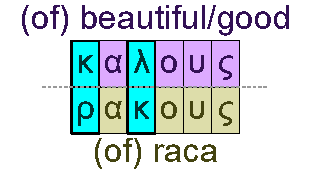
"bought"? [good and raca]
106. On the one hand
107. 1 Corinthians 11:21 Odorous trade-offs
108. 1 Corinthians 11:21
KJV: For in eating every one taketh before other his own supper: and one is hungry, and another is drunken.
Greek: εκαστος γαρ το ιδιον δειπνον προλαμβανει εν τω φαγειν και ος μεν πεινα ος δε μεθυει
109. Romans 14:2,5
110. Romans 14:2
KJV: For one believeth that he may eat all things: another, who is weak, eateth herbs.
Greek: ος μεν πιστευει φαγειν παντα ο δε ασθενων λαχανα εσθιει
111. Romans 14:5
KJV: One man esteemeth one day above another: another esteemeth every day alike. Let every man be fully persuaded in his own mind.
Greek: ος μεν γαρ κρινει ημεραν παρ ημεραν ος δε κρινει πασαν ημεραν εκαστος εν τω ιδιω νοι πληροφορεισθω
112. Matthew 22:5 Hands
113. Matthew 22:5 Attention to the profit of worldly interests
Matthew 22:5 But they made light of it, and went their ways, one to his farm, another to his merchandise: [kjv]
οι δε αμελησαντες απηλθον ο ος μεν εις τον ιδιον αγρον ο ος δε εις επι την εμποριαν αυτου [gnt]
They had
"no concern". Is this to be taken in a good or not good sense?
Some went to the "field" as in the "world" or "people of the world". Might these be "fish"?
Some went to their "merchandise" interests to make a "profit" of the "people of the world". Might these be "birds" or "wolves"? Might these be "goats"?
114. Matthew 22:5 Word play
Matthew 22:5 But they made light of it, and went their ways, one to his farm, another to his merchandise: [kjv]
οι δε αμελησαντες απηλθον ο ος μεν εις τον ιδιον αγρον ο ος δε εις επι την εμποριαν αυτου [gnt]
[into vs. on]
115. Matthew 22:5 Field and merchandise
Matthew 22:5 But they made light of it, and went their ways, one to his farm, another to his merchandise: [kjv]
οι δε αμελησαντες απηλθον ο ος μεν εις τον ιδιον αγρον ο ος δε εις επι την εμποριαν αυτου [gnt]
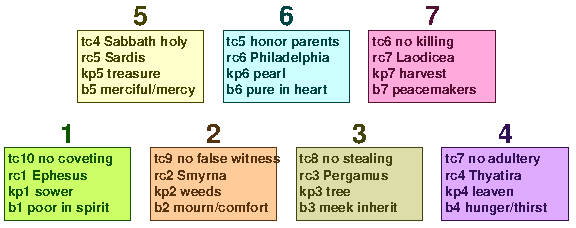
5: Field (treasure in the field) (donkey)
6: Merchandise (pearl of great price) (Balaam)
The remainder along the "scattered path".
116. Matthew 22:5
KJV: But they made light of it, and went their ways, one to his farm, another to his merchandise:
Greek: οι δε αμελησαντες απηλθον ο ος μεν εις τον ιδιον αγρον ο ος δε εις επι την εμποριαν αυτου
117. Matthew 22:6-10
Matthew 22:6 And the remnant took his servants, and entreated them spitefully, and slew them. [kjv]
22:7 But when the king heard thereof, he was wroth: and he sent forth his armies, and destroyed those murderers, and burned up their city. [kjv]
22:8 Then saith he to his servants, The wedding is ready, but they which were bidden were not worthy. [kjv]
22:9 Go ye therefore into the highways, and as many as ye shall find, bid to the marriage. [kjv]
22:10 So those servants went out into the highways, and gathered together all as many as they found, both bad and good: and the wedding was furnished with guests. [kjv]
118. Matthew 22:11-14
Matthew 22:11 And when the king came in to see the guests, he saw there a man which had not on a wedding garment: [kjv]
22:12 And he saith unto him, Friend, how camest thou in hither not having a wedding garment? And he was speechless. [kjv]
22:13 Then said the king to the servants, Bind him hand and foot, and take him away, and cast him into outer darkness; there shall be weeping and gnashing of teeth. [kjv]
22:14 For many are called, but few are chosen. [kjv]
Who are the
"many"? Who are the "
chosen"?
119. End of page


















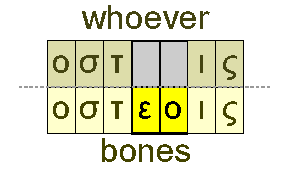
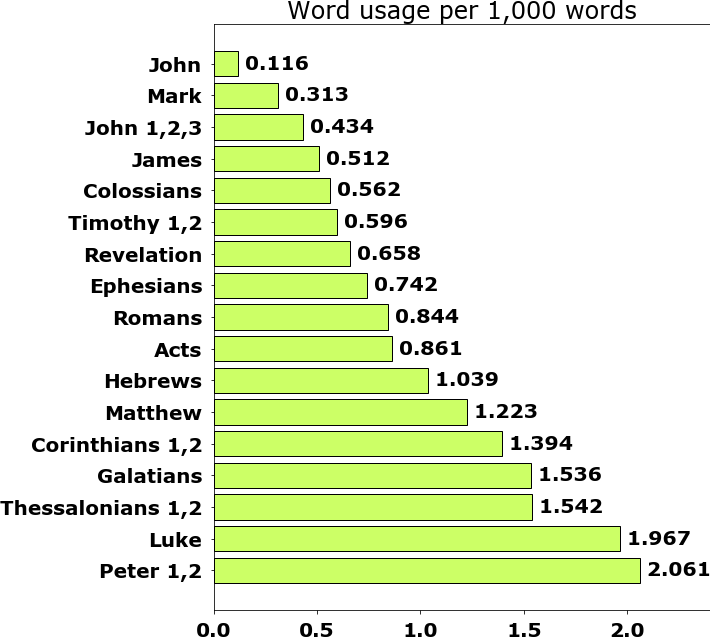
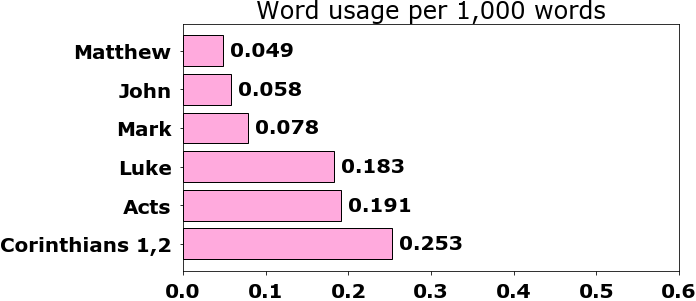
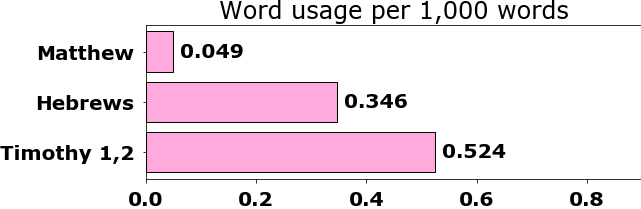
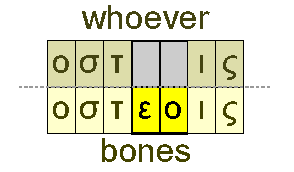 The ancient Greek word "ὅστις" ≈ "whoever, whosoever" is used in this exact form 16 times in Matthew, 15 by Jesus. and just 10 other times in the GNT. This is a play on words here in both Greek and Latin.



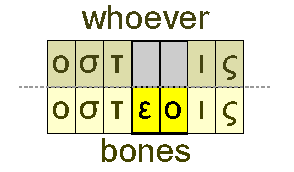 There is a play on words here in both Greek and Latin.


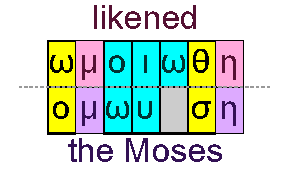
























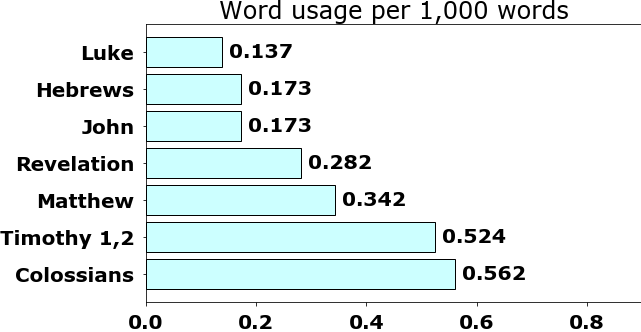






















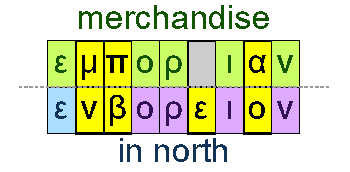
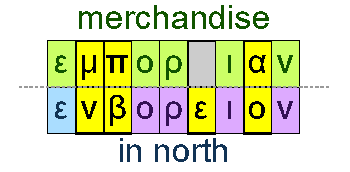
 The Greek word translated as "to" his "merchandise" is that of "onto" his "merchandise".