Send
Close Add comments:
(status displays here)
Got it! This site "creationpie.org" uses cookies. You consent to this by clicking on "Got it!" or by continuing to use this website. Note: This appears on each machine/browser from which this site is accessed.
Matthew 21:44-46 Winnowing the wheat and chaff to stone-ground powder
1. Matthew 21:44-46 Winnowing the wheat and chaff to stone-ground powder
2. Matthew 21
3. Matthew 21:27 No telling
Matthew 21:27 And they answered Jesus, and said, We cannot tell. And he said unto them, Neither tell I you by what authority I do these things. [kjv]
και αποκριθεντες τω ιησου ειπον ειπαν ουκ οιδαμεν εφη αυτοις και αυτος ουδε εγω λεγω υμιν εν ποια εξουσια ταυτα ποιω [gnt]
Jesus says he will not tell them. Most sermons end at that point. Does Jesus, in fact, tell them? To find out, one must read on and connect the dots. What if, instead of
telling them, Jesus
tells everyone who will listen and understand what he is saying? There is not
one shred of evidence that Jesus answers this question in the following verses.
"ἐγὼ" ≈ "I (am)" (for emphasis) and "λέγω" ≈ "(I) say"
"ποιῶ" ≈ "I do" (emphasis not used/needed)
Spanish: "hablo" ≈ "(I) speak" as a PIE (Proto Indo-European) example.
Spanish: "yo" ≈ "I" and "hablo" ≈ "(I) speak" (for emphasis).
4. Matthew 21:28 Go flee in jeopardy
Matthew 21:28 But what think ye? A certain man had two sons; and he came to the first, and said, Son, go work to day in my vineyard. [kjv]
τι δε υμιν δοκει ανθρωπος ειχεν τεκνα δυο και προσελθων τω πρωτω ειπεν τεκνον υπαγε σημερον εργαζου εν τω αμπελωνι μου [gnt]
The ancient Greek word
"ὑπάγω" ≈ "bring under, go slowly away" and is, literally,
"lead under" and comes from two Greek words.
"ὕπο" ≈ "under" and "ἄγω" ≈ "lead".
The usage in the
GNT (Greek New Testament) appears to be that of
"go away". Jesus says this word to
Satan in the
temptations (
examinations) in Matthew 4. Since both "
children" will
"answer" the father in the next verses, which might be a better way to translate what the father says (as in the game Jeopardy).
☐
Go today (to) work in the vineyard. Understand it! Confrontational approach.
☐
(Do you) go today (to) work in the vineyard? (voice raised at end). Understand it?
5. Matthew 21:30 Put it together
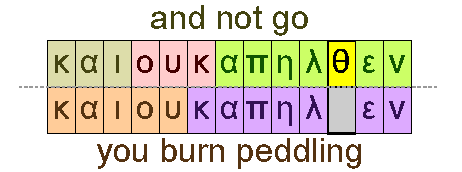
Matthew 21:30 And he came to the second, and said likewise. And he answered and said, I go, sir: and went not. [kjv]
21:29 ο δε αποκριθεις ειπεν ου θελω υστερον δε μεταμεληθεις εγω κυριε και ουκ απηλθεν [gnt]
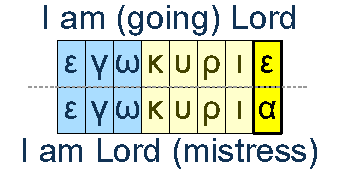
Might the one
child be assuming the role of
lord or
master? Is it a novel idea that a
child who appears to be a male will want to be a female (leader, mistress, etc.). Might the
"peddling" imply a "
merchant"?
Might such a
child, instead of
working in the
vineyard, might
work the
vineyard as someone might
work the
crowd? That is, to their own benefit. Might this be
snake-oil?
6. Matthew 24:5 Play on words
Matthew 24:5 For many shall come in my name, saying, I am Christ; and shall deceive many. [kjv]
πολλοι γαρ ελευσονται επι τω ονοματι μου λεγοντες εγω ειμι ο χριστος και πολλους πλανησουσιν [gnt]
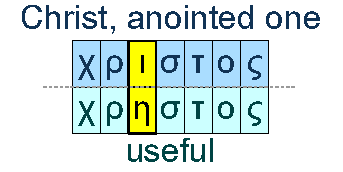
If Jesus as "
Christ" is "
Lord", then saying "
I am" "
Lord" is, by substitution of equals for equals, "
I am" "
Christ".
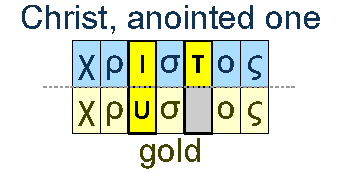
Greek: ... saying I (I) am the Christ and ...
Greek: ... saying I (I) am the useful and ... (play on words)
Greek: ... saying I (I) am the gold and ... (without the cross)
7. Matthew 21:29 Lagging behind
Matthew 21:29 He answered and said, I will not: but afterward he repented, and went. [kjv]
21:30 και προσελθων δε τω δευτερω ετερω ειπεν ωσαυτως ο δε αποκριθεις ειπεν εγω κυριε και ουκ ου θελω υστερον μεταμεληθεις απηλθεν [gnt]
21:30 (Greek):
He came/went then to the second different (one) (and) said likewise he (one) but answered (and) said not desire (I) lagging behind repented (changed behavior) (and) went.
The modern English word
"will" does not capture the idea of
"desire" or "
wish". The
second child did not
"desire", mentally, to work in the vineyard but changed (actual) behavior and then did work in the vineyard.
"θέλω" ≈ "want, wish, care to" or "ἐθέλω" ≈ "want, wish, care to".
"βούλομαι" ≈ "will, want".
8. Matthew 21:31 Review
Matthew 21:31 Whether of them twain did the will of his father? They say unto him, The first. Jesus saith unto them, Verily I say unto you, That the publicans and the harlots go into the kingdom of God before you. [kjv]
τις εκ των δυο εποιησεν το θελημα του πατρος λεγουσιν αυτω ο πρωτος υστερος λεγει αυτοις ο ιησους αμην λεγω υμιν οτι οι τελωναι και αι πορναι προαγουσιν υμας εις την βασιλειαν του θεου [gnt]
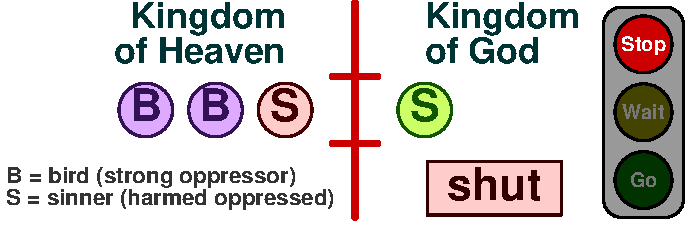
Logically, and relating the before and after of the "
Verily I say unto you", Jesus says that none of the
"birds" will enter the "
kingdom" of "
God" but some "
harlots" and/or "
tax collectors" may do so.
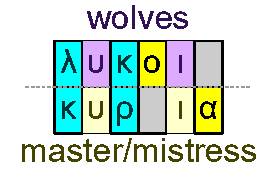
The "birds" correspond to the "child" who says "I am Lord (harlot)".
The others correspond to the "child" who "lagged behind" but then went and did the right thing.
9. Matthew 21:41 Miserably wicked
Matthew 21:41 They say unto him, He will miserably destroy those wicked men, and will let out his vineyard unto other husbandmen, which shall render him the fruits in their seasons. [kjv]
λεγουσιν αυτω κακους κακως απολεσει αυτους και τον αμπελωνα εκδοσεται εκδωσεται αλλοις γεωργοις οιτινες αποδωσουσιν αυτω τους καρπους εν τοις καιροις αυτων [gnt]
What exactly are
"miserably" "wicked" "men"?
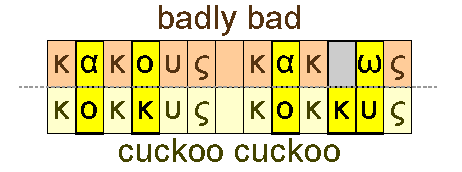
"κακοὺς" ≈ "bad" (adjective, as used).
"κακῶς" ≈ "bad" (adverb, as used).
Suppose the
"vineyard" contains both "
good" and
"bad" "husbandmen". How might one entice the
"bad" "husbandmen" to self-identify so they can receive their
just desserts?
10. Matthew 21:41 Bird calls
Matthew 21:41 They say unto him, He will miserably destroy those wicked men, and will let out his vineyard unto other husbandmen, which shall render him the fruits in their seasons. [kjv]
λεγουσιν αυτω κακους κακως απολεσει αυτους και τον αμπελωνα εκδοσεται εκδωσεται αλλοις γεωργοις οιτινες αποδωσουσιν αυτω τους καρπους εν τοις καιροις αυτων [gnt]
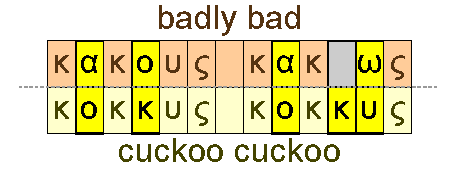
"κακοὺς" ≈ "bad" (adjective, as used).
"κακῶς" ≈ "bad" (adverb, as used).
"κόκκῦ" ≈ "cuckoo" as a call of a bird.
As in English (and any other language), anything close to the imitative sound would be taken as a
cuckoo.
[bad birds, Angry Birds]
11. Matthew 21:41 Bird calls
Matthew 21:41 They say unto him, He will miserably destroy those wicked men, and will let out his vineyard unto other husbandmen, which shall render him the fruits in their seasons. [kjv]
λεγουσιν αυτω κακους κακως απολεσει αυτους και τον αμπελωνα εκδοσεται εκδωσεται αλλοις γεωργοις οιτινες αποδωσουσιν αυτω τους καρπους εν τοις καιροις αυτων [gnt]
 |
 |
Audubon Bird
Call - Red
|
Hunters use "
bird" "
calls" to attract "
birds". The exact call used depends on the type of "
bird" one is trying to attract/trap.
Example from military, business, games, etc.
Call one's bluff.
For to show one's cards.
... and so on ...
12. Matthew 21:41
Matthew 21:41 They say unto him, He will miserably destroy those wicked men, and will let out his vineyard unto other husbandmen, which shall render him the fruits in their seasons. [kjv]
λεγουσιν αυτω κακους κακως απολεσει αυτους και τον αμπελωνα εκδοσεται εκδωσεται αλλοις γεωργοις οιτινες αποδωσουσιν αυτω τους καρπους εν τοις καιροις αυτων [gnt]
Question: How might the real
"householder" use bird calls to attract birds and get them to self-identify themselves as not doing what they were supposed to do so that they can be "
destroyed"?
Answer: Check the next parable at the start of the next chapter.
Why only
2 bird calls? What happens before
3 bird calls?
13. Matthew 21:42-43 Rock hard evidence of the rejected cornerstone
Matthew 21:42 Jesus saith unto them, Did ye never read in the scriptures, The stone which the builders rejected, the same is become the head of the corner: this is the Lord's doing, and it is marvellous in our eyes? [kjv]
λεγει αυτοις ο ιησους ουδεποτε ανεγνωτε εν ταις γραφαις λιθον ον απεδοκιμασαν οι οικοδομουντες ουτος εγενηθη εις κεφαλην γωνιας παρα κυριου εγενετο αυτη και εστιν θαυμαστη εν οφθαλμοις ημων [gnt]

Consider the "
Have you never read?" question. Many will
not admit that they do
not know something but will
pretend to know it . This fits the ancient Greek definition of "
hypocrite". The
"stone", as in the "
stone the builders rejected", is usually taken to be Jesus. The verses in Mark 12:10 and Luke 20:17 repeat the same idea.
The ancient Greek word
"γωνία" ≈ "corner, angle". and is the source of the English suffix
"gon" as in "
polygon". A "
triangle" has "
three"
"corners".
14. Matthew 21:43 Kingdom taken
Matthew 21:43 Therefore say I unto you, The kingdom of God shall be taken from you, and given to a nation bringing forth the fruits thereof. [kjv]
δια τουτο λεγω υμιν οτι αρθησεται αφ υμων η βασιλεια του θεου και δοθησεται εθνει ποιουντι τους καρπους αυτης [gnt]
Matthew uses
"kingdom" of
"God" rather than
"kingdom" of
"heaven/air". Is there a difference? If so, is it important?
This verse refers to the kingdom being taken and given to another. The word for
"nation" here means a
"people". Who is
"you"? Discuss:
The
ancient Greek word
"ἐθνικός" ≈ "national" and comes from the ancient Greek word
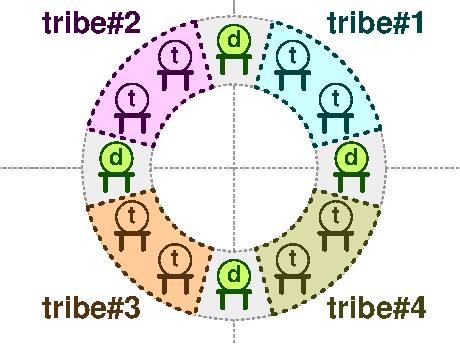
"ἔθνος" ≈ "tribe, family, nation" but can mean any group such as a group of animals (flock, herd, etc.).
15. Psalms 118:22-24 Implications
Jesus spoke these two verses from Psalms in the
LXX (Septuagint) in Matthew 21:42..
Psalms 118:22 The stone which the builders refused is become the head stone of the corner. [kjv]
118:23 This is the LORD'S doing; it is marvellous in our eyes. [kjv]
What was unsaid appears to be the point of the previous two verses. One must fill in the missing parts and connect the dots.
118:24 This is the day which the LORD hath made; we will rejoice and be glad in it. [kjv]
Knowing this, the next verse that starts "
therefore" which in the Greek is "
from these (things)" allows one to infer the basis for the what is said after the "
therefore". Might this also answer the question about by what "
authority" or "
lack of restraint" Jesus does these things?
16. Matthew 21:44-46 Verses
Matthew 21:44 And whosoever shall fall on this stone shall be broken: but on whomsoever it shall fall, it will grind him to powder. [kjv]
21:45 And when the chief priests and Pharisees had heard his parables, they perceived that he spake of them. [kjv]
21:46 But when they sought to lay hands on him, they feared the multitude, because they took him for a prophet. [kjv]
Matthew records what Jesus says in verse 44. Verses 45 and 46 are Matthew's connecting commentary based on personal opinion.
This ends chapter 21 but chapter 22, starting with the wedding feast, is a continuation of chapter 21 which is a continuation of chapter 20.
17. Matthew 21:44-46 Winnowing the wheat and chaff to stone-ground powder
Matthew 21:44 And whosoever shall fall on this stone shall be broken: but on whomsoever it shall fall, it will grind him to powder. [kjv]
21:45 And when the chief priests and Pharisees had heard his parables, they perceived that he spake of them. [kjv]

In Matthew 21:44, Jesus makes a statement about a stone
grinding some to
powder. What is this
"stone" that appears in two roles? There appear to be some translation issues involving
"broken",
"grind" and
"powder".
The process of
"winnowing" is that of separating the grain from the chaff. In ancient times, this was done using a stone threshing floor. The grain was thrown onto the stone floor to break it up into pieces. Additional breaking was done as needed.
There appear to be code words being used by Jesus since it was not clear to Matthew as to what they meant nor to the religious establishment listening.
18. Blowin' in the wind
Matthew 21:44 And whosoever shall fall on this stone shall be broken: but on whomsoever it shall fall, it will grind him to powder. [kjv]
What exactly does Jesus mean? So, in keeping with the topic of
winnowing the "
chaff", we might state that "
The answer, my friend, is blowin' in the wind".
In what year did Bob Dylan write "Blowin' in the wind"?
1962. It was redone by Peter, Paul and Mary in 1963 (right after the Bob Dylan version was released).
19. First verse and chorus
How many roads must a man walk down
Before you call him a man?
How many seas must a white dove sail
Before she sleeps in the sand?
Yes, and how many times must the cannonballs fly
Before they're forever banned?
The answer, my friend, is blowin' in the wind
The answer is blowin' in the wind
20. Ecclesiastes 1:14 Kansas: Dust in the Wind
Ecclesiastes 1:14 I have seen all the works that are done under the sun; and, behold, all is vanity and vexation of spirit. [kjv]
ειδον συν παντα τα ποιηματα τα πεποιημενα υπο τον ηλιον και ιδου τα παντα ματαιοτης και προαιρεσις πνευματος [lxx]
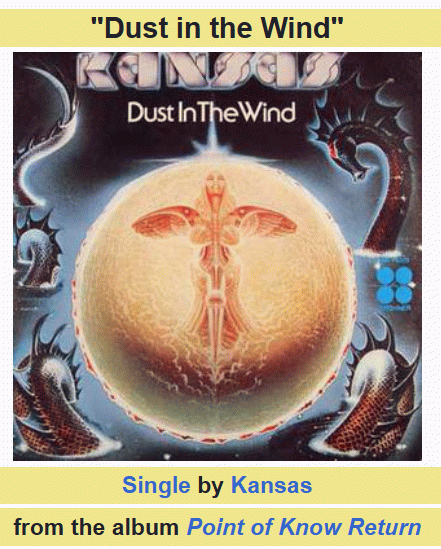
The song
Dust in the Wind was recorded by the music group Kansas and written by band member Kerry Livgren. This was the only single by Kansas to reach the top ten in the United States.
The motivation for the song was a paraphrase of Ecclesiastes 1:14.
NIV (New International Version):
I have seen all the things that are done under the sun; all of them are meaningless, a chasing after the wind. [Where did the sun go?]
In what year was the single by Kansas Dust in the Wind recorded/released?
1977/1978.
21. Dust in the wind: verse 1
I close my eyes, only for a moment, and the moment's gone
All my dreams, pass before my eyes, a curiosity
Dust in the wind, all they are is dust in the wind.
Same old song, just a drop of water in an endless sea
All we do, crumbles to the ground, though we refuse to see
Dust in the wind, all we are is dust in the wind.
22. Ecclesiastes 1:14
KJV: I have seen all the works that are done under the sun; and, behold, all is vanity and vexation of spirit.
Hebrew: ראיתי את כל המעשים שנעשו תחת השמש והנה הכל הבל ורעות רוח׃
Greek: ειδον συν παντα τα ποιηματα τα πεποιημενα υπο τον ηλιον και ιδου τα παντα ματαιοτης και προαιρεσις πνευματος
23. Psalms 103:16 Gone with the wind
Psalms 103:16 For the wind passeth over it, and it is gone; and the place thereof shall know it no more. [kjv]
οτι πνευμα διηλθεν εν αυτω και ουχ υπαρξει και ουκ επιγνωσεται ετι τον τοπον αυτου [lxx]
The
chaff, then, is "
Gone with the wind", the name of a movie from the book of the same name by Margaret Mitchell (1900-1949).
In what year did the (color) movie "Gone with the wind" premier?
1939.
In what year was the book "Gone with the wind" published?
1936.
In the
LXX, the Greek word translated as
"wind" is often translated as
"spirit". The ancient Greek word
"πνεῦμα" ≈ "air, wind, breath, life, spirit, soul" where the exact meaning depends on context. The Latin word
"spiritus" ≈ "spirit".
24. Psalms 103:16
KJV: For the wind passeth over it, and it is gone; and the place thereof shall know it no more.
Hebrew: כי רוח עברה בו ואיננו ולא יכירנו עוד מקומו׃
Greek: οτι πνευμα διηλθεν εν αυτω και ουχ υπαρξει και ουκ επιγνωσεται ετι τον τοπον αυτου
25. Matthew 21:44 Stones
Matthew 21:44 And whosoever shall fall on this stone shall be broken: but on whomsoever it shall fall, it will grind him to powder. [kjv]
και ο πεσων επι τον λιθον τουτον συνθλασθησεται εφ ον δ αν πεση λικμησει αυτον [gnt]
This verse appears to apply to those of the religious establishment but is stated in a more general way that appears to have wider and more general application.
The main words here are
"stone",
"broken", and the two words
"grind" and
"powder" which in the Greek are
one word.
The
"stone" appears to refer to Jesus in a figurative or code word sense, but appears to represent an actual
"stone" in a literal context.
26. Matthew 21:44 And whosoever
Matthew 21:44 And whosoever shall fall on this stone shall be broken: but on whomsoever it shall fall, it will grind him to powder. [kjv]
και ο πεσων επι τον λιθον τουτον συνθλασθησεται εφ ον δ αν πεση λικμησει αυτον [gnt]
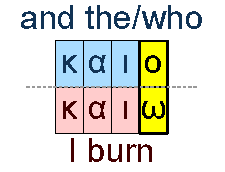
"και" ≈ "and" and "ο" ≈ "one".
"καίω" ≈ "(I) burn".
Might one
"burn" if one "
falls" on the
"stone" of
Jesus?
Might one be
"scattered" or
"smashed" if one "
falls" on the
"stone" of Jesus?
27. Matthew 21:44 Fall
Matthew 21:44 And whosoever shall fall on this stone shall be broken: but on whomsoever it shall fall, it will grind him to powder. [kjv]
και ο πεσων επι τον λιθον τουτον συνθλασθησεται εφ ον δ αν πεση λικμησει αυτον [gnt]
The ancient Greek word
"πεσών" ≈ "fall" (as used) is the aorist active participle of
"πίπτω" ≈ "fall".
The ancient Greek word
"πεζός" ≈ "on foot, walking". Feminine is
"πεζή" ≈ "on foot, walking" and neuter is
"πεζόν" ≈ "on foot, walking".
The word
"fall" appears to have connections with the parable of the houses built on rock and sand or the sparrows who sell themselves falling since they are without God.
28. Matthew 21:44 Stone
Matthew 21:44 And whosoever shall fall on this stone shall be broken: but on whomsoever it shall fall, it will grind him to powder. [kjv]
και ο πεσων επι τον λιθον τουτον συνθλασθησεται εφ ον δ αν πεση λικμησει αυτον [gnt]
The ancient Greek word
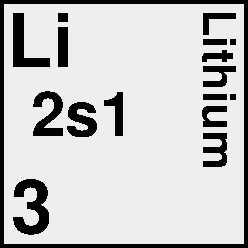
"λίθος" ≈ "stone, pebble" and is the source of the English word
"lithium" (soft, silver chemical element 3).
There are many comparisons between
Peter and the
rock and a
stone. Houses of sand are built on little pieces of stone. Towers are built using stones. The Temple Mount and Temple consisted of many stones.
Words:
lithography [buying non-rechargeable batteries]
29. Matthew 21:44 And a big but
Matthew 21:44 And whosoever shall fall on this stone shall be broken: but on whomsoever it shall fall, it will grind him to powder. [kjv]
και ο πεσων επι τον λιθον τουτον συνθλασθησεται εφ ον δ αν πεση λικμησει αυτον [gnt]
The
ancient Greek word
"ἄν" ≈ "possibility, if" which appears not to be directly translated in the
KJV (King James Version).
The
ancient Greek word
"δέ" ≈ "but (then)". The
"but" in the
KJV is a connective word in the Greek that can mean
"but", "
and", "
also", "
or", etc.
The implication in English of
"but" is that there are two mutually exclusive cases as in "
one or the other happen, but not both". The implication in English of "
and" or "
also" is that the two cases can be the same or overlap in same way. That is, it may be the case that the two parts are not
mutually exclusive.
30. Matthew 21:44
KJV: And whosoever shall fall on this stone shall be broken: but on whomsoever it shall fall, it will grind him to powder.
Greek: και ο πεσων επι τον λιθον τουτον συνθλασθησεται εφ ον δ αν πεση λικμησει αυτον
Latin: et qui ceciderit super lapidem istum confringetur super quem vero ceciderit conteret eum
31. Strongs - broken
- *G4917 *1 συνθλάω (soon-thlah'-o) : from G4862 and thlao (to crush); to dash together, i.e. shatter:--break.
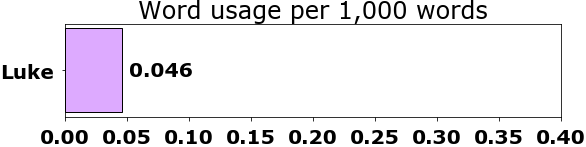 |
Words: συνθλασθησεται
|
32. Strongs - compress
- *G4918 *2 συνθλίβω (soon-thlee'-bo) : from G4862 and G2346; to compress, i.e. crowd on all sides:--throng.
- συνεθλιβον
- Mark 5:24 ... followed him, and thronged him.
- συνθλιβοντα
- Mark 5:31 ... unto him, Thou seest the multitude thronging thee, and sayest thou, ...
 |
Words: συνεθλιβον συνθλιβοντα
|
33. Collectively exhaustive
It may also be the case, as we shall see, that the two cases are not
collectively exhaustive. That is, there appears to be another case into which people might fall.
 |
Details are left as a future topic.
|
For now, we will be concerned with just the people to which this verse applies.
The Greek connective could/should then be translated as to which sense makes most sense - or provide a footnote or clarification. The following might be a better way - with minimal changes to the
KJV.
34. Matthew 21:44 Grind to powder
Matthew 21:44 And whosoever shall fall on this stone shall be broken: but on whomsoever it shall fall, it will grind him to powder. [kjv]
και ο πεσων επι τον λιθον τουτον συνθλασθησεται εφ ον δ αν πεση λικμησει αυτον [gnt]
The
"grind to powder" is one word in the Greek.
Discuss: Is it good or bad to be
"ground to powder"?
Matthew 21:44:
And whosoever shall fall on this stone (stumbling block) shall be broken and/or/but on whomsoever it shall fall, it will grind him to powder.
35. Strongs - winnow
- *G3039 *1 λικμάω (lik-mah'-o) : from likmos, the equivalent of liknon (a winnowing fan or basket); to winnow, i.e. (by analogy), to triturate:--grind to powder.
36. Usage - winnow
*G3039 *1 λικμάω (lik-mah'-o) : from likmos, the equivalent of liknon (a winnowing fan or basket); to winnow, i.e. (by analogy), to triturate:--grind to powder.
 |
Words: λικμησει
|
In the following verses in the
LXX, the word has the idea of winnowing, scattering with the wind, sifting (via winnowing), dispersing, etc., but not of grinding.
37. Location
The mixture of wheat and chaff was then moved around, thrown up in the air, etc., such that the wind would pull away the chaff and the grain would fall to the stone floor.
Threshing floors were often at the top of a hill so that, by the
Bernoulli effect, the wind would be intensified to make the winnowing easier.
[Boaz and Ruth]
Note that
"winnowing" and "
whinnying" (gentle neighing, coming from the Middle English for "
whine") are two
different things.
What did the old horse say when it fell down?
Help, I've fallen and I can't giddy up!
38. Ruth 3:2 Threshing floors and halos
Ruth 3:2 And now is not Boaz of our kindred, with whose maidens thou wast? Behold, he winnoweth barley to night in the threshingfloor. [kjv]
και νυν ουχι βοος γνωριμος ημων ου ης μετα των κορασιων αυτου ιδου αυτος λικμα τον αλωνα των κριθων ταυτη τη νυκτι [lxx]
The ancient Greek word
"ἅλως" ≈ "threshing floor" and is the source of the English word
"halo" since there tended to be a disk appearing as the sun or moon on the threshing floor.
- "λικμάω" ≈ "winnow" and "λίκνον" ≈ "winnowing fan, basket, cradle".
[hill, wind, security, rainbow in Revelation, salt of the earth]
39. Ruth 3:2
Ruth 3:2 And now is not Boaz of our kindred, with whose maidens thou wast? Behold, he winnoweth barley to night in the threshingfloor. [kjv]
και νυν ουχι βοος γνωριμος ημων ου ης μετα των κορασιων αυτου ιδου αυτος λικμα τον αλωνα των κριθων ταυτη τη νυκτι [lxx]
The
"threshing floor" would have been at a place on a hill that had sufficient wind to blow the chaff away. Boaz would have been there to work into the night and the sleep there to keep the grain safe from being stolen and then continue threshing in the morning.,
40. HALO
41. Ruth 3:2
KJV: And now is not Boaz of our kindred, with whose maidens thou wast? Behold, he winnoweth barley to night in the threshingfloor.
Hebrew: ועתה הלא בעז מדעתנו אשר היית את נערותיו הנה הוא זרה את גרן השערים הלילה׃
Greek: και νυν ουχι βοος γνωριμος ημων ου ης μετα των κορασιων αυτου ιδου αυτος λικμα τον αλωνα των κριθων ταυτη τη νυκτι
Wycliffe: This Booz, to whose damesels thou were ioyned in the feeld, is oure kynesman, and in this niyt he wyndewith the corn floor of barli.
42. Strongs
- *H2219 זָרָה (zaw-raw') : a primitive root (compare H2114); to toss about; by implication, to diffuse, winnow:--cast away, compass, disperse, fan, scatter (away), spread, strew, winnow.
- *H1637 גּוֹרֶן (go'-ren) : from an unused root meaning to smooth; a threshing- floor (as made even); by analogy, any open area:--(barn, corn, threshing- )floor, (threshing-, void) place.
43. Job 27:21
Job 27:21 The east wind carrieth him away, and he departeth: and as a storm hurleth him out of his place. [kjv]
αναλημψεται αυτον καυσων και απελευσεται και λικμησει αυτον εκ του τοπου αυτου [lxx]
44. Job 27:21
KJV: The east wind carrieth him away, and he departeth: and as a storm hurleth him out of his place.
Hebrew: ישאהו קדים וילך וישערהו ממקמו׃
Greek: αναλημψεται αυτον καυσων και απελευσεται και λικμησει αυτον εκ του τοπου αυτου
45. Proverbs 20:26
Proverbs 20:26 A wise king scattereth the wicked, and bringeth the wheel over them. [kjv]
λικμητωρ ασεβων βασιλευς σοφος και επιβαλει αυτοις τροχον [lxx]
The phrase "
stay out from under the wheel" might be traced to the above verse. Here:
Throw on the wheel. English:
Throw under the wheel/bus.
What do you do with an old car with too many miles on the tread?
You retire it and keep on going.
Some more "wheely" nice comments could be made here. Perhaps I spoke too soon, so do not get wrapped around the axle. More comments will wait until I get "around" to it. For that, I might be awarded a "round TUIT".
46. A round TUIT
I'm sorry I'm late. I get here as soon as I wanted to.
47. Proverbs 20:26
KJV: A wise king scattereth the wicked, and bringeth the wheel over them.
Hebrew: מזרה רשעים מלך חכם וישב עליהם אופן׃
Greek: λικμητωρ ασεβων βασιλευς σοφος και επιβαλει αυτοις τροχον
48. Isaiah 17:13 Parallelism
Isaiah 17:13 The nations shall rush like the rushing of many waters: but God shall rebuke them, and they shall flee far off, and shall be chased as the chaff of the mountains before the wind, and like a rolling thing before the whirlwind. [kjv]
ως υδωρ πολυ εθνη πολλα ως υδατος πολλου βια καταφερομενου και αποσκορακιει αυτον και πορρω αυτον διωξεται ως χνουν αχυρου λικμωντων απεναντι ανεμου και ως κονιορτον τροχου καταιγις φερουσα [lxx]
Notice the Hebrew parallelism in this verse. The repeated semantic meaning using two ways of saying what is essentially the same idea provides fault tolerance. Here are the two ideas involving "
flee" and "
chased".
- "as the chaff of the mountains before the wind"
- "like a rolling thing before the whirlwind"
The "
rolling thing" is translated in the Greek
LXX as "
wheel".
49. Isaiah 17:13
KJV: The nations shall rush like the rushing of many waters: but God shall rebuke them, and they shall flee far off, and shall be chased as the chaff of the mountains before the wind, and like a rolling thing before the whirlwind.
Hebrew: לאמים כשאון מים רבים ישאון וגער בו ונס ממרחק ורדף כמץ הרים לפני רוח וכגלגל לפני סופה׃
Greek: ως υδωρ πολυ εθνη πολλα ως υδατος πολλου βια καταφερομενου και αποσκορακιει αυτον και πορρω αυτον διωξεται ως χνουν αχυρου λικμωντων απεναντι ανεμου και ως κονιορτον τροχου καταιγις φερουσα
Brenton: many nations like much water, as when much water rushes violently: and they shall drive him away, and pursue him afar, as the dust of chaff when men winnow before the wind, and as a storm whirling the dust of the wheel.
50. Wind in Isaiah
Isaiah 17:13 The nations shall rush like the rushing of many waters: but God shall rebuke them, and they shall flee far off, and shall be chased as the chaff of the mountains before the wind, and like a rolling thing before the whirlwind. [kjv]
ως υδωρ πολυ εθνη πολλα ως υδατος πολλου βια καταφερομενου και αποσκορακιει αυτον και πορρω αυτον διωξεται ως χνουν αχυρου λικμωντων απεναντι ανεμου και ως κονιορτον τροχου καταιγις φερουσα [lxx]
41:16 Thou shalt fan them, and the wind shall carry them away, and the whirlwind shall scatter them: and thou shalt rejoice in the LORD, and shalt glory in the Holy One of Israel. [kjv]
και λικμησεις και ανεμος λημψεται αυτους και καταιγις διασπερει αυτους συ δε ευφρανθηση εν τοις αγιοις ισραηλ και αγαλλιασονται [lxx]
Again we have a repeated meaning involving a "
fan".
- "wind shall carry them away"
- "whirlwind shall scatter them"
Notice that these two verses, according to some, were written by different Isaiah's. One is from chapters 1-39 and the other from chapters 40-66. Chapter divisions were decided in the Middle Ages.
51. Isaiah 41:16
KJV: Thou shalt fan them, and the wind shall carry them away, and the whirlwind shall scatter them: and thou shalt rejoice in the LORD, and shalt glory in the Holy One of Israel.
Hebrew: תזרם ורוח תשאם וסערה תפיץ אותם ואתה תגיל ביהוה בקדוש ישראל תתהלל׃
Greek: και λικμησεις και ανεμος λημψεται αυτους και καταιγις διασπερει αυτους συ δε ευφρανθηση εν τοις αγιοις ισραηλ και αγαλλιασονται
52. Jeremiah 31:10
Jeremiah 31:10 Hear the word of the LORD, O ye nations, and declare it in the isles afar off, and say, He that scattered Israel will gather him, and keep him, as a shepherd doth his flock. [kjv]
ακουσατε λογον κυριου εθνη και αναγγειλατε εις νησους τας μακροτερον ειπατε ο λικμησας τον ισραηλ συναξει αυτον και φυλαξει αυτον ως ο βοσκων το ποιμνιον αυτου [lxx]
In the
GNT , word often translated as "
scatter" is the source of the English word
"scorpion".
Who and where are the "
isles" that are "
afar"?
[is land, not is land]
53. Jeremiah 31:10
KJV: Hear the word of the LORD, O ye nations, and declare it in the isles afar off, and say, He that scattered Israel will gather him, and keep him, as a shepherd doth his flock.
Hebrew: שמעו דבר יהוה גוים והגידו באיים ממרחק ואמרו מזרה ישראל יקבצנו ושמרו כרעה עדרו׃
Greek: ακουσατε λογον κυριου εθνη και αναγγειλατε εις νησους τας μακροτερον ειπατε ο λικμησας τον ισραηλ συναξει αυτον και φυλαξει αυτον ως ο βοσκων το ποιμνιον αυτου
54. Jeremiah 49:32
Jeremiah 49:32 And their camels shall be a booty, and the multitude of their cattle a spoil: and I will scatter into all winds them that are in the utmost corners; and I will bring their calamity from all sides thereof, saith the LORD. [kjv]
… גמליהם … רוח … [he]
και εσονται καμηλοι αυτων εις προνομην και πληθος κτηνων αυτων εις απωλειαν και λικμησω αυτους παντι πνευματι κεκαρμενους προ προσωπου αυτων εκ παντος περαν αυτων οισω την τροπην αυτων ειπεν κυριος [lxx]
The
LXX uses the Greek word for
"spirit" as in a "
good wind" from the gods.

The third letter of the Hebrew alphabet is "
gimel" which, as pronounced, is the word for "
camel".
55. Jeremiah 49:32
KJV: And their camels shall be a booty, and the multitude of their cattle a spoil: and I will scatter into all winds them that are in the utmost corners; and I will bring their calamity from all sides thereof, saith the LORD.
Hebrew: והיו גמליהם לבז והמון מקניהם לשלל וזרתים לכל רוח קצוצי פאה ומכל עבריו אביא את אידם נאם יהוה׃
Greek: και εσονται καμηλοι αυτων εις προνομην και πληθος κτηνων αυτων εις απωλειαν και λικμησω αυτους παντι πνευματι κεκαρμενους προ προσωπου αυτων εκ παντος περαν αυτων οισω την τροπην αυτων ειπεν κυριος
56. Ezekiel 30:23
Ezekiel 30:23 And I will scatter the Egyptians among the nations, and will disperse them through the countries. [kjv]
και διασπερω αιγυπτον εις τα εθνη και λικμησω αυτους εις τας χωρας [lxx]
57. Ezekiel 30:23
KJV: And I will scatter the Egyptians among the nations, and will disperse them through the countries.
Hebrew: והפצותי את מצרים בגוים וזריתם בארצות׃
Greek: και διασπερω αιγυπτον εις τα εθνη και λικμησω αυτους εις τας χωρας
58. Daniel 2:44
Daniel 2:44 And in the days of these kings shall the God of heaven set up a kingdom, which shall never be destroyed: and the kingdom shall not be left to other people, but it shall break in pieces and consume all these kingdoms, and it shall stand for ever. [kjv]
και εν ταις ημεραις των βασιλεων εκεινων αναστησει ο θεος του ουρανου βασιλειαν ητις εις τους αιωνας ου διαφθαρησεται και η βασιλεια αυτου λαω ετερω ουχ υπολειφθησεται λεπτυνει και λικμησει πασας τας βασιλειας και αυτη αναστησεται εις τους αιωνας [lxx]
In this verse, as part of the prophecies of future and end-time kingdoms related to the golden statue and the fiery furnace, Daniel, in the
LXX, uses the idea of "
bruising together" as "
breaking in pieces" and
"winnowing" as "
consuming".
59. Strongs
- *H1855 דְּקַק (dek-ak') : (Aramaic) corresponding to H1854; to crumble or (trans.) crush:--break to pieces.
- *H5487 סוּף (soof) : (Aramaic) corresponding to H5486; to come to an end:-- consume, fulfill.
60. Daniel 2:44
KJV: And in the days of these kings shall the God of heaven set up a kingdom, which shall never be destroyed: and the kingdom shall not be left to other people, but it shall break in pieces and consume all these kingdoms, and it shall stand for ever.
Hebrew: וביומיהון די מלכיא אנון יקים אלה שמיא מלכו די לעלמין לא תתחבל ומלכותה לעם אחרן לא תשתבק תדק ותסיף כל אלין מלכותא והיא תקום לעלמיא׃
Greek: και εν ταις ημεραις των βασιλεων εκεινων αναστησει ο θεος του ουρανου βασιλειαν ητις εις τους αιωνας ου διαφθαρησεται και η βασιλεια αυτου λαω ετερω ουχ υπολειφθησεται λεπτυνει και λικμησει πασας τας βασιλειας και αυτη αναστησεται εις τους αιωνας
61. Amos 9:9
Amos 9:9 For, lo, I will command, and I will sift the house of Israel among all nations, like as corn is sifted in a sieve, yet shall not the least grain fall upon the earth. [kjv]
διοτι ιδου εγω εντελλομαι και λικμιω εν πασι τοις εθνεσιν τον οικον του ισραηλ ον τροπον λικμαται εν τω λικμω και ου μη πεση συντριμμα επι την γην [lxx]
… schake … hous … folkis… wheete … riddil… litil stoon … [wy]
The Middle English word
"riddil" ≈ "sift" and is the source of the English word
"riddle" (not the puzzle) as in
"riddled" with "
holes".
62. Amos 9:9
KJV: For, lo, I will command, and I will sift the house of Israel among all nations, like as corn is sifted in a sieve, yet shall not the least grain fall upon the earth.
Hebrew: כי הנה אנכי מצוה והנעותי בכל הגוים את בית ישראל כאשר ינוע בכברה ולא יפול צרור ארץ׃
Greek: διοτι ιδου εγω εντελλομαι και λικμιω εν πασι τοις εθνεσιν τον οικον του ισραηλ ον τροπον λικμαται εν τω λικμω και ου μη πεση συντριμμα επι την γην
Wycliffe: For lo! Y schal comaunde, and schal schake the hous of Israel in alle folkis, as wheete is in a riddil, and a litil stoon schal not falle on erthe.
63. Matthew 24:41 Grinding at the mill
Matthew 24:41 Two women shall be grinding at the mill; the one shall be taken, and the other left. [kjv]
δυο αληθουσαι εν τω μυλωνι μυλω μια παραλαμβανεται και μια αφιεται [gnt]
duae molentes in mola una adsumetur et una relinquetur [v]
One does not want to "
crush" or
"grind" the winnowed grain until it is ready for use. There is a Greek word for
grinding, as in
grinding winnowed grain to flour for usage. That word is not used here.
A related idea is that of a "
grist" "
mill".
The
KJV adds some words from the corresponding verse in Luke to Matthew.
64. Matthew 13:50 Gnashing of teeth
Matthew 13:50 And shall cast them into the furnace of fire: there shall be wailing and gnashing of teeth. [kjv]
και βαλουσιν αυτους εις την καμινον του πυρος εκει εσται ο κλαυθμος και ο βρυγμος των οδοντων [gnt]
… gristbyting. [wes]
… gryntyng … teeth. [wy]
… gnasshynge … teth. [ty]
… Zähneklappen … [lu]
The English word
"grist" is "
grain" to be "
ground" in a "
mill".
A "
gristmill" is a "
mill" that "
grinds" "
grain". A web site with many photos of "
gristmills" is at
https://millpictures.com. (as of 2024-12-09)
65. Luke 17:35 Grinding at the mill
Luke 17:35 Two women shall be grinding together; the one shall be taken, and the other left. [kjv]
δυο εσονται δυο αληθουσαι επι το αυτο η μια παραληφθησεται και παραλημφθησεται η δε ετερα αφεθησεται [gnt]
duae erunt molentes in unum una adsumetur et altera relinquetur duo in agro unus adsumetur et alter relinquetur [v]
Luke repeats the same idea as Matthew.
66. Matthew 24:41
KJV: Two women shall be grinding at the mill; the one shall be taken, and the other left.
Greek: δυο αληθουσαι εν τω μυλωνι μυλω μια παραλαμβανεται και μια αφιεται
Latin: duae molentes in mola una adsumetur et una relinquetur
Wycliffe: twey wymmen schulen be gryndynge in o queerne, oon schal be takun, and`the tother left; tweyn in a bedde, `the toon schal be takun, and the tother left.
Tyndale: two shalbe gryndinge at ye myll: ye oue shalbe receaved and ye other shalbe refused.
Luther: Zwo werden mahlen auf der Mühle; eine wird angenommen und die andere wird verlassen werden.
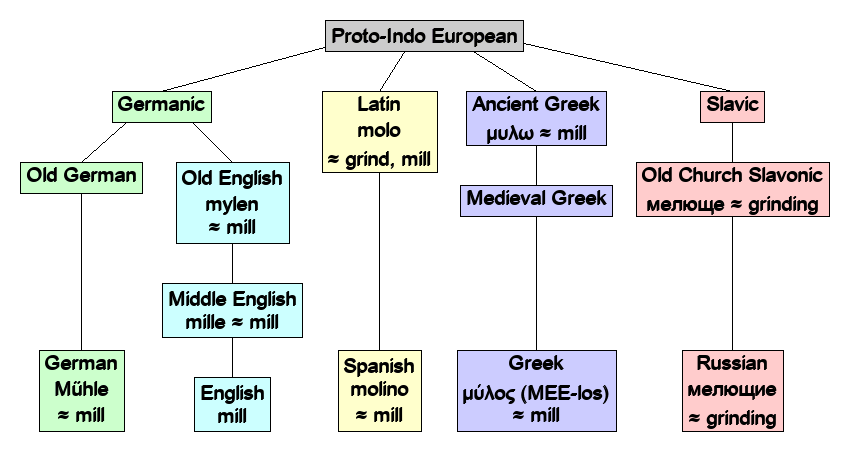
Slavonic: две мелюще в жерновех: едина поемлется, и едина оставляется.
Russian: две мелющие в жерновах: одна берется, а другая оставляется.
Spanish: Dos mujeres estarán moliendo en un molino; la una será tomada, y la otra será dejada.
67. Luke 17:35
KJV: Two women shall be grinding together; the one shall be taken, and the other left.
Greek: δυο εσονται δυο αληθουσαι επι το αυτο η μια παραληφθησεται και παραλημφθησεται η δε ετερα αφεθησεται
Latin: duae erunt molentes in unum una adsumetur et altera relinquetur duo in agro unus adsumetur et alter relinquetur
Wessex: Twa byð aet-gadere grindende. an beoð ge-numen & oðer lefed.
Wycliffe: twei wymmen schulen be gryndynge togidir, `the toon schal be takun, and`the tother forsakun; twei in a feeld, `the toon schal be takun, and`the tother left.
Tyndale: Two shalbe also a grindynge to gedder: the one shalbe receaved and the other forsaken.
Gothic: twos wairthand malandeins samana, aina usnimada jah anthara bileithada.
Spanish: Dos mujeres estarán moliendo juntas; la una será tomada, y la otra dejada.
68. Mill
69. Diagram
70. Strongs - grinding





























 In parachuting, HALO (High Altitude Low Opening) is where one jumps from a great height but does not open the parachute until very near the ground. One does not want to do HANO (High Altitude No Opening).











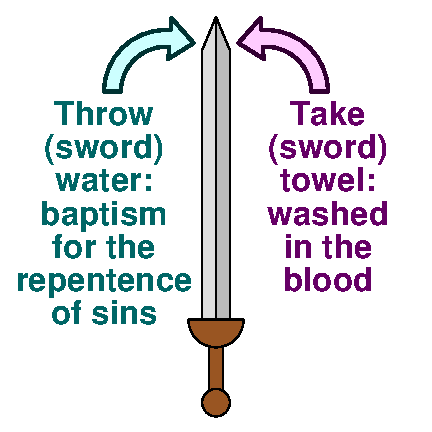 In Matthew 3, John the Baptist appears to foreshadow the above paraphrase. First, John the Baptist talks of the coming one who will baptize with wind (Holy Ghost) and fire.