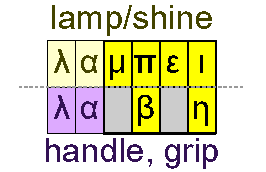
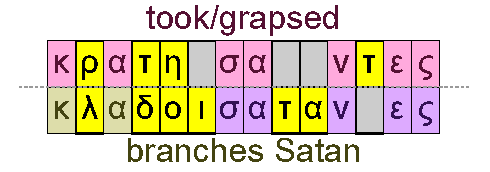
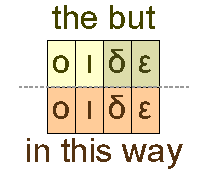
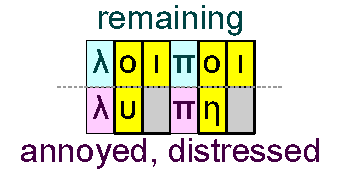
Send
Close Add comments:
(status displays here)
Got it! This site "creationpie.org" uses cookies. You consent to this by clicking on "Got it!" or by continuing to use this website. Note: This appears on each machine/browser from which this site is accessed.
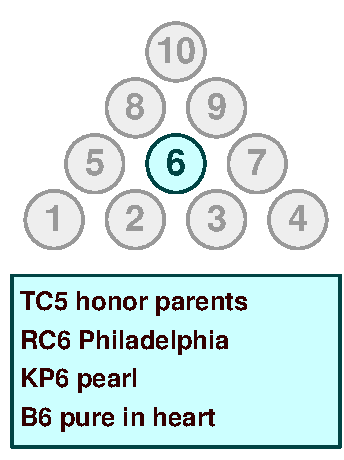
Revelation 3:7-13 RC6 Philadelphia
1. Revelation 3:7-13 RC6 Philadelphia
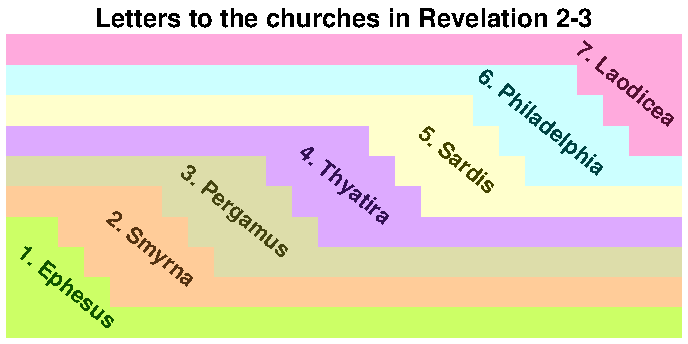
2. Seven Churches in Revelation
Revelation 1:11 Saying, I am Alpha and Omega, the first and the last: and, What thou seest, write in a book, and send it unto the seven churches which are in Asia; unto Ephesus, and unto Smyrna, and unto Pergamos, and unto Thyatira, and unto Sardis, and unto Philadelphia, and unto Laodicea. [kjv]
The seven letters to the seven churches of Revelation were written, from Jesus through John, to
actual churches in Asia Minor (western Turkey today).
1. Ephesus: Revelation 2:1-7 RC1 Ephesus
2. Smyrna: Revelation 2:8-11 RC2 Smyrna
3. Pergamum/Pergamus: Revelation 2:12-17 RC3 Pergamus
4. Thyatira: Revelation 2:18-29 RC4 Thyatira
5: Sardus: Revelation 3:1-6 RC5 Sardus
6. Philadelphia : Revelation 3:7-13 RC6 Philadelphia (this page)
7. Laodicea: Revelation 3:14-22 RC7 Laodicea
1. City: Ephesus
7. Revelation 3:15-16 Zesty hot and frigid cold
3. Historical interpretation of church history
| Interpretations |
| ☐ Literal |
☐ Christian living |
| ☐ Figurative |
☐ Heresies over time |
| ☐ Historical |
☐ Prophetic details |
[spread spectrum communication] [self-similar like fractals] [linear combinations]
|
Note that the time of Roman persecutions was that of the universal church as a collection of small "mustard seeds" while the time of Roman acceptance was that of the universal church as "tree with birds making a home in the branches".
|
4. Historical interpretation of church history
| * |
Churches |
Parables |
Beatitudes |
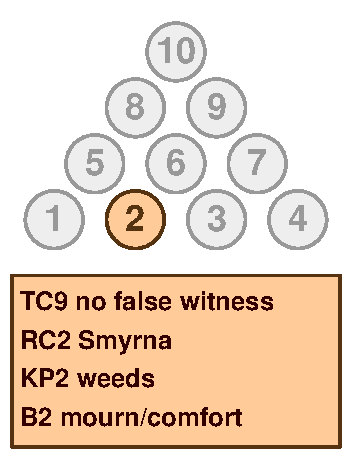
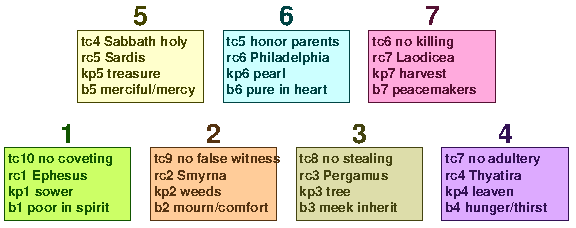
Church ages |
| 1 |
Ephesus |
Sower |
Poor in Spirit |
Jesus and the Good News |
| 2 |
Smyrna |
Weeds |
They that mourn |
Roman persecutions |
| 3 |
Pergamus |
Mustard |
Meek inherit |
Roman acceptance |
| 4 |
Thyatira |
Leaven |
Hunger and thirst |
Catholic Church |
| 5 |
Sardis |
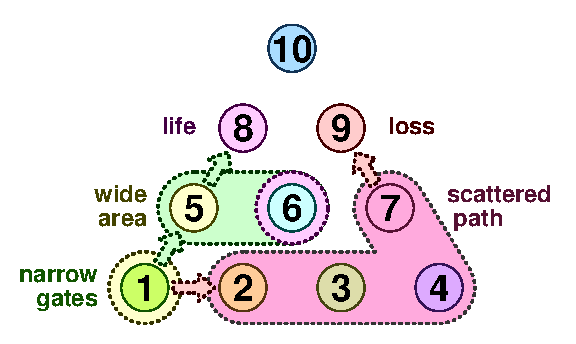
Treasure |
Merciful and alms |
Protestant Reformation |
| 6 |
Philadelphia |
Pearl |
Pure in heart |
Great Awakenings |
| 7 |
Laodicea |
Harvest |
Peacemakers |
Apostate church age |
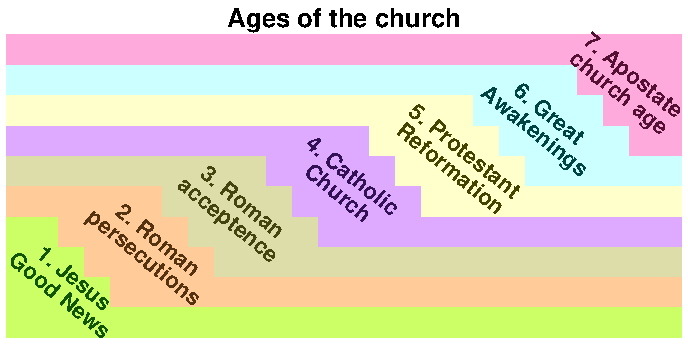
If you do not like the historical interpretation, as prophecy, just use the model to remember the order of the Churches, Parables and Beatitudes.
[spread spectrum communication] [self-similar like fractals]
5. Philadelphia
6. Revelation 3:7 Philadelphia
Revelation 3:7 And to the angel of the church in Philadelphia write; These things saith he that is holy, he that is true, he that hath the key of David, he that openeth, and no man shutteth; and shutteth, and no man openeth; [kjv]
και τω αγγελω της εν φιλαδελφεια εκκλησιας γραψον ταδε λεγει ο αγιος ο αληθινος ο εχων την κλειδα του δαβιδ κλειν δαυιδ ο ανοιγων και ουδεις κλειει κλεισει και κλειει κλειων και ουδεις ανοιγει [gnt]
The
ancient Greek word
"φίλος" ≈ "that which is loved or important, friend" and is the source of the English name
"Phillip". The
ancient Greek word
"ἀδελφός" ≈ "brother, male sibling" and comes from the Greek word parts that mean, literally,
"same womb".
Putting the two words together, one gets
"Philadelphia" as
"love of brothers" or
"brotherly love", part of the Pennsylvania of the
Quaker William Penn. The state is named after his father, an admiral in the British Navy, and to which the Crown of England owed a great debt.
7. Revelation 3:7 Brotherly love
Revelation 3:7 And to the angel of the church in Philadelphia write; These things saith he that is holy, he that is true, he that hath the key of David, he that openeth, and no man shutteth; and shutteth, and no man openeth; [kjv]
και τω αγγελω της εν φιλαδελφεια εκκλησιας γραψον ταδε λεγει ο αγιος ο αληθινος ο εχων την κλειδα του δαβιδ κλειν δαυιδ ο ανοιγων και ουδεις κλειει κλεισει και κλειει κλειων και ουδεις ανοιγει [gnt]
"Brotherly love" can be either Christ-based or man-based. One needs to carefully inspect the context of what is said to determine which it is. There could be double meanings such that, in some sense, it applies to both.
8. John
John 13:34 A new commandment I give unto you, That ye love one another; as I have loved you, that ye also love one another. [kjv]
εντολην καινην διδωμι υμιν ινα αγαπατε αλληλους καθως ηγαπησα υμας ινα και υμεις αγαπατε αλληλους [gnt]
13:35 By this shall all men know that ye are my disciples, if ye have love one to another. [kjv]
εν τουτω γνωσονται παντες οτι εμοι μαθηται εστε εαν αγαπην εχητε εν αλληλοις [gnt]
15:12 This is my commandment, That ye love one another, as I have loved you. [kjv]
αυτη εστιν η εντολη η εμη ινα αγαπατε αλληλους καθως ηγαπησα υμας [gnt]
15:17 These things I command you, that ye love one another. [kjv]
ταυτα εντελλομαι υμιν ινα αγαπατε αλληλους [gnt]
The context of these statements is that the command is addressed to "
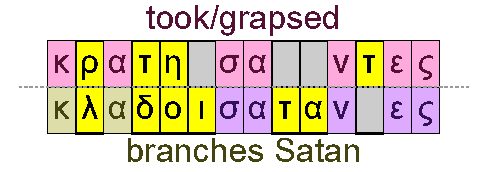
disciples" or "
followers" who are
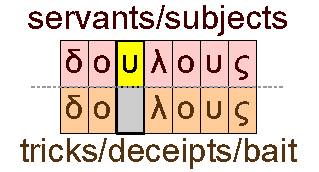
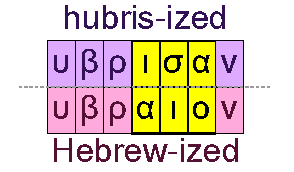
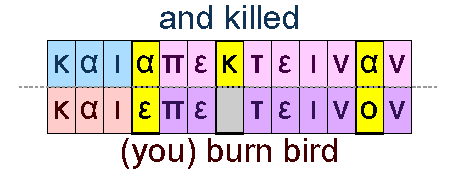
"similar" rather than to the world in general. That is,
"different".
9. Other similar differences
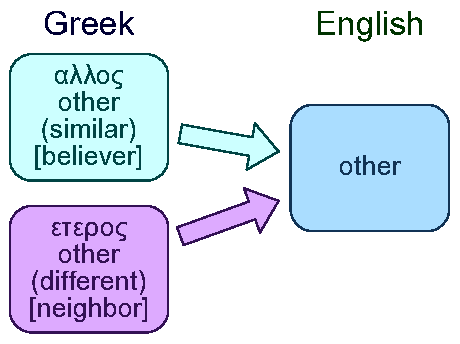
Greek has
two words for
"others" as in others that are
"similar" and others that are
"different" whereas English has the
one word
"other"
| English |
Greek |
Greek |
| other |
other (similar) |
ἄλλος |
| other |
other (different) |
ἕτερος |
|
 |
The ancient Greek word
"ἄλλος" ≈ "other - similar" and is related to the English word
"else".
The ancient Greek word
"ἕτερος" ≈ "other - different" and is related to the English word
"asunder" as in "
one or the other of two" and is the prefix of English words such as "
heterosexual", "
heterodoxy", etc.
10. John 15:17
John 15:17 These things I command you, that ye love one another. [kjv]
ταυτα εντελλομαι υμιν ινα αγαπατε αλληλους [gnt]
Some churches today blur the distinction that Jesus is making. Jesus is talking to disciples. They should love one another who are similar and not different. Otherwise, one should love your neighbor as yourself, not doing for your neighbor what God would not condone.
What these churches say fits the historical context of the Church of Philadelphia in church history.
Is their purity of heart that of an empty heart - clean and not biased (either for or against God)? If this idea continues, would Jesus rather spit them out of his mouth?
11. Gospels - love neighbor as yourself
Matthew 19:19 Honour thy father and thy mother: and, Thou shalt love thy neighbour as thyself. [kjv]
22:39 And the second is like unto it, Thou shalt love thy neighbour as thyself. [kjv]
Mark 12:31 And the second is like, namely this, Thou shalt love thy neighbour as thyself. There is none other commandment greater than these. [kjv]
Luke 10:27 And he answering said, Thou shalt love the Lord thy God with all thy heart, and with all thy soul, and with all thy strength, and with all thy mind; and thy neighbour as thyself. [kjv]
What happens if the
"as thyself" is omitted - as is often done in modern times in order to justify bringing the world's culture into the church even when it violates God's laws?
12. Revelation 3:7-9 Verses
Revelation 3:7 And to the angel of the church in Philadelphia write; These things saith he that is holy, he that is true, he that hath the key of David, he that openeth, and no man shutteth; and shutteth, and no man openeth; [kjv]
3:8 I know thy works: behold, I have set before thee an open door, and no man can shut it: for thou hast a little strength, and hast kept my word, and hast not denied my name. [kjv]
3:9 Behold, I will make them of the synagogue of Satan, which say they are Jews, and are not, but do lie; behold, I will make them to come and worship before thy feet, and to know that I have loved thee. [kjv]
13. Revelation 3:10-13 Verses
Revelation 3:10 Because thou hast kept the word of my patience, I also will keep thee from the hour of temptation, which shall come upon all the world, to try them that dwell upon the earth. [kjv]
3:11 Behold, I come quickly: hold that fast which thou hast, that no man take thy crown. [kjv]
3:12 Him that overcometh will I make a pillar in the temple of my God, and he shall go no more out: and I will write upon him the name of my God, and the name of the city of my God, which is new Jerusalem, which cometh down out of heaven from my God: and I will write upon him my new name. [kjv]
3:13 He that hath an ear, let him hear what the Spirit saith unto the churches. [kjv]
14. Revelation 3:7-8 Verses with Greek
Revelation 3:7 And to the angel of the church in Philadelphia write; These things saith he that is holy, he that is true, he that hath the key of David, he that openeth, and no man shutteth; and shutteth, and no man openeth; [kjv]
και τω αγγελω της εν φιλαδελφεια εκκλησιας γραψον ταδε λεγει ο αγιος ο αληθινος ο εχων την κλειδα του δαβιδ κλειν δαυιδ ο ανοιγων και ουδεις κλειει κλεισει και κλειει κλειων και ουδεις ανοιγει [gnt]
3:8 I know thy works: behold, I have set before thee an open door, and no man can shut it: for thou hast a little strength, and hast kept my word, and hast not denied my name. [kjv]
οιδα σου τα εργα ιδου δεδωκα ενωπιον σου θυραν ανεωγμενην και ηνεωγμενην ην ουδεις δυναται κλεισαι αυτην οτι μικραν εχεις δυναμιν και ετηρησας μου τον λογον και ουκ ηρνησω το ονομα μου [gnt]
15. Revelation 3:9-10 Verses with Greek
Revelation 3:9 Behold, I will make them of the synagogue of Satan, which say they are Jews, and are not, but do lie; behold, I will make them to come and worship before thy feet, and to know that I have loved thee. [kjv]
ιδου διδωμι διδω εκ της συναγωγης του σατανα των λεγοντων εαυτους ιουδαιους ειναι και ουκ εισιν αλλα ψευδονται ιδου ποιησω αυτους ινα ηξωσιν ηξουσιν και προσκυνησωσιν προσκυνησουσιν ενωπιον των ποδων σου και γνωσιν οτι εγω ηγαπησα σε [gnt]
3:10 Because thou hast kept the word of my patience, I also will keep thee from the hour of temptation, which shall come upon all the world, to try them that dwell upon the earth. [kjv]
οτι ετηρησας τον λογον της υπομονης μου καγω σε τηρησω εκ της ωρας του πειρασμου της μελλουσης ερχεσθαι επι της οικουμενης ολης πειρασαι τους κατοικουντας επι της γης [gnt]
16. Revelation 3:11-12 Verses with Greek
Revelation 3:11 Behold, I come quickly: hold that fast which thou hast, that no man take thy crown. [kjv]
ιδου ερχομαι ταχυ κρατει ο εχεις ινα μηδεις λαβη τον στεφανον σου [gnt]
3:12 Him that overcometh will I make a pillar in the temple of my God, and he shall go no more out: and I will write upon him the name of my God, and the name of the city of my God, which is new Jerusalem, which cometh down out of heaven from my God: and I will write upon him my new name. [kjv]
ο νικων ποιησω αυτον στυλον εν τω ναω του θεου μου και εξω ου μη εξελθη ετι και γραψω επ αυτον το ονομα του θεου μου και το ονομα της πολεως του θεου μου της καινης ιερουσαλημ η καταβαινουσα εκ του ουρανου απο του θεου μου και το ονομα μου το καινον [gnt]
17. Revelation 3:7
KJV: And to the angel of the church in Philadelphia write; These things saith he that is holy, he that is true, he that hath the key of David, he that openeth, and no man shutteth; and shutteth, and no man openeth;
Greek: και τω αγγελω της εν φιλαδελφεια εκκλησιας γραψον ταδε λεγει ο αγιος ο αληθινος ο εχων την κλειδα του δαβιδ κλειν δαυιδ ο ανοιγων και ουδεις κλειει κλεισει και κλειει κλειων και ουδεις ανοιγει
18. Matthew 13:9,43 Matthew Kingdom Parables
Matthew 13:9 Who hath ears to hear, let him hear. [kjv]
ο εχων ωτα ακουειν ακουετω [gnt]
13:43 Then shall the righteous shine forth as the sun in the kingdom of their Father. Who hath ears to hear, let him hear. [kjv]
τοτε οι δικαιοι εκλαμψουσιν ως ο ηλιος εν τη βασιλεια του πατρος αυτων ο εχων ωτα ακουειν ακουετω [gnt]
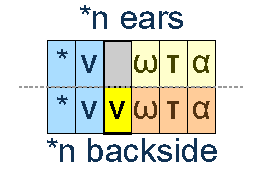
Jesus uses the
"ear" phrase many times during the telling of the Kingdom Parables in Matthew 13.
These verses started my search for
"hearing" with the
"ear" play on words as spoken by Jesus. I had found two near these verses and continued my search for more.
19. Revelation 3:13
20. Revelation 3:13 Listen
Revelation 3:13 He that hath an ear, let him hear what the Spirit saith unto the churches. [kjv]
ο εχων ους ακουσατω τι το πνευμα λεγει ταις εκκλησιαις [gnt]
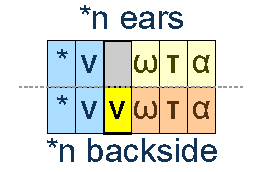
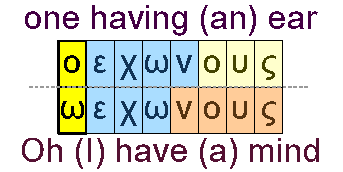
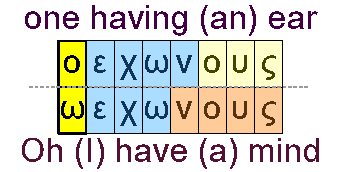
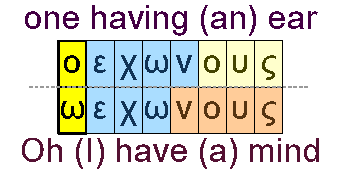
When Jesus says to
"listen" with the
"ear", it appears to mean that some play-on-words are used. For these, one must
"listen". This word play could be before or after this saying.
Perhaps one should also be "
counting".
21. Hearing ears in Revelation
Revelation 2:7 He that hath an ear, let him hear what the Spirit saith unto the churches; … [kjv]
2:11 He that hath an ear, let him hear what the Spirit saith unto the churches; … [kjv]
2:17 He that hath an ear, let him hear what the Spirit saith unto the churches; … [kjv]
2:29 He that hath an ear, let him hear what the Spirit saith unto the churches. [kjv]
3:6 He that hath an ear, let him hear what the Spirit saith unto the churches. [kjv]
3:13 He that hath an ear, let him hear what the Spirit saith unto the churches. [kjv]
3:22 He that hath an ear, let him hear what the Spirit saith unto the churches. [kjv]
13:9 If any man have an ear, let him hear. [kjv]
Some say that these verses mean that we are to
hear and understand the written words when
spoken. Jesus uses the same idea in Matthew where there are play on words (with added meaning) that one needs to hear to understand.
This includes the verses right before and after the letter to the Church at Philadelphia, Revelation 3:7-12.
22. Hearing ears in Revelation
Αποκάλυψη Ιωάννη β΄:7 ο εχων ους ακουσατω τι το πνευμα λεγει ταις εκκλησιαις … [gnt]
2:11 ο εχων ους ακουσατω τι το πνευμα λεγει ταις εκκλησιαις … [gnt]
2:17 ο εχων ους ακουσατω τι το πνευμα λεγει ταις εκκλησιαις … [gnt]
2:29 ο εχων ους ακουσατω τι το πνευμα λεγει ταις εκκλησιαις [gnt]
3:6 ο εχων ους ακουσατω τι το πνευμα λεγει ταις εκκλησιαις [gnt]
3:13 ο εχων ους ακουσατω τι το πνευμα λεγει ταις εκκλησιαις [gnt]
3:22 ο εχων ους ακουσατω τι το πνευμα λεγει ταις εκκλησιαις [gnt]
13:9 ει τις εχει ους ακουσατω [gnt]
23. Build-up to the punch line play on words
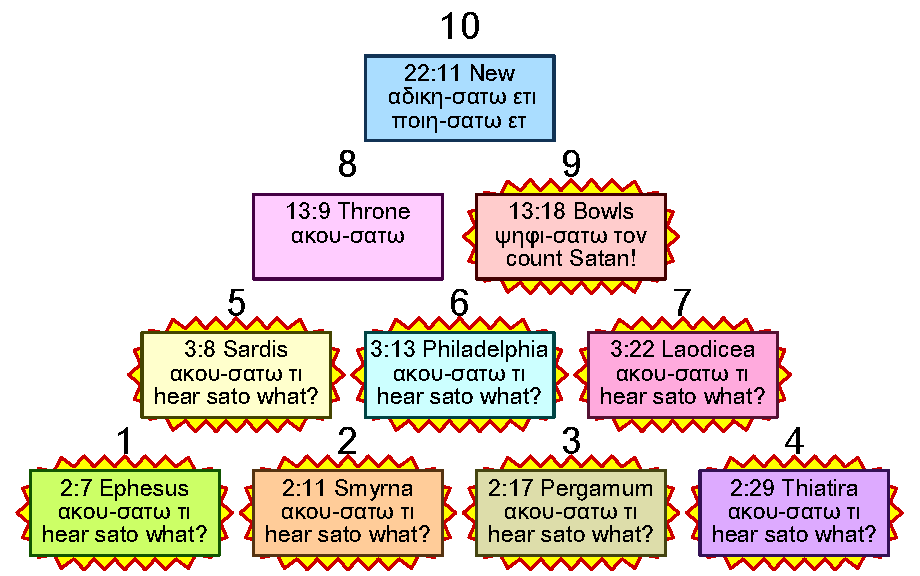 |
To each of the seven churches: "He that hath an ear, let him hear what the Spirit saith unto the churches ..."
|
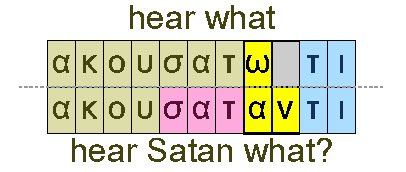
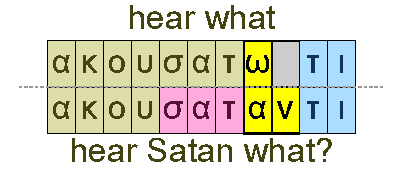
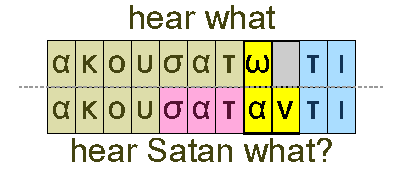
1-7: Churches: "hear" "sato" "what?" Might these be related to the seven evil spirits that return to the "house" in Matthew 12?
9: Bowls: "count" "Satan" (serpent, dragon).
24. Revelation build on a Greek suffix
1
2
3
4
5
6
7
8
9
10
11
12
13
+
-
▶
|
The other places in the
GNT (Greek New Testament) that this suffix appears, Luke and 1 Peter, do not have words related to
"hearing" or "
counting".
What might be the purpose of telling the reader to "
count" "
σατω" with certain play on words with "
Satan"? Might it be related to the number of "
666" in the
same verse, Revelation 13:18?
25. Revelation 3:13
KJV: He that hath an ear, let him hear what the Spirit saith unto the churches.
Greek: ο εχων ους ακουσατω τι το πνευμα λεγει ταις εκκλησιαις
26. Great Awakening
The historical context of
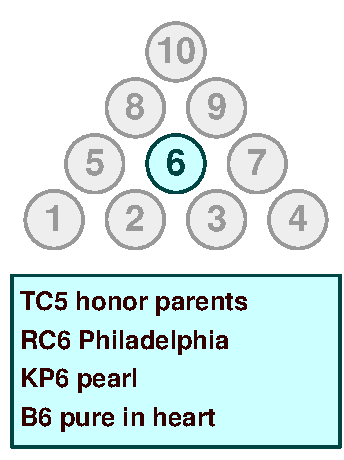
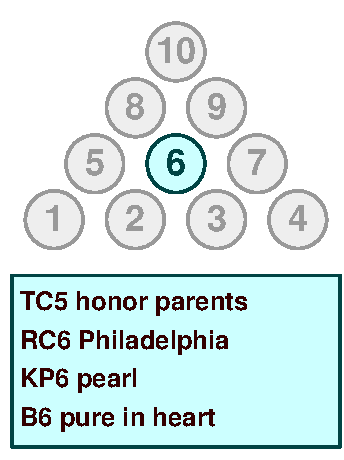
node 6 in the Ten Pin model is that of the Great Awakening. The "
Great Awakening" is usually taken as a series of religious conversion waves from the 1700's into the 1900's. Each wave was
less in magnitude.
First Great Awakening: 1700's. George Whitfield, Jonathan Edwards, Gilbert Tennet, etc.
Second Great Awakening: United States.
Third Great Awakening: 1830's into the 1900's. Missionary work. YMCA. Dwight L. Moody. 1830's: Start of the altar call. Charles Grandison Finney was famous for this. Oaths comparison.
Fourth Great Awakening: 1960's and 1970's.
Discuss: How do the Great Awakenings compare with the idea of just filling the pews?
27. Revelation 3:7 Holy
Revelation 3:7 And to the angel of the church in Philadelphia write; These things saith he that is holy, he that is true, he that hath the key of David, he that openeth, and no man shutteth; and shutteth, and no man openeth; [kjv]
και τω αγγελω της εν φιλαδελφεια εκκλησιας γραψον ταδε λεγει ο αγιος ο αληθινος ο εχων την κλειδα του δαβιδ κλειν δαυιδ ο ανοιγων και ουδεις κλειει κλεισει και κλειει κλειων και ουδεις ανοιγει [gnt]
The Greek translated as
"holy" is that of
"set apart" or
"sanctified". The
ancient Greek word
"ἅγιος" ≈ "devoted to the gods, sacred, holy".
28. Revelation 3:7 True
29. Revelation 3:7 What is not said
Revelation 3:7 And to the angel of the church in Philadelphia write; These things saith he that is holy, he that is true, he that hath the key of David, he that openeth, and no man shutteth; and shutteth, and no man openeth; [kjv]
και τω αγγελω της εν φιλαδελφεια εκκλησιας γραψον ταδε λεγει ο αγιος ο αληθινος ο εχων την κλειδα του δαβιδ κλειν δαυιδ ο ανοιγων και ουδεις κλειει κλεισει και κλειει κλειων και ουδεις ανοιγει [gnt]
| Jesus |
Church at Philadelphia |
| holy |
not holy |
| true |
not true |
| has key |
no key without agreement |
| can open |
cannot open |
| can close |
cannot close |
Why does Jesus need to say these things?
Perhaps the church is
not evidencing these traits.
30. Revelation 3:7 Open and shut case
Revelation 3:7 And to the angel of the church in Philadelphia write; These things saith he that is holy, he that is true, he that hath the key of David, he that openeth, and no man shutteth; and shutteth, and no man openeth; [kjv]
και τω αγγελω της εν φιλαδελφεια εκκλησιας γραψον ταδε λεγει ο αγιος ο αληθινος ο εχων την κλειδα του δαβιδ κλειν δαυιδ ο ανοιγων και ουδεις κλειει κλεισει και κλειει κλειων και ουδεις ανοιγει [gnt]
The
ancient Greek word
"ἀνοίγω" ≈ "open" and comes from two Greek words.
"ἀνα" ≈ "up, upwards" as the "up" in "born" from "above".
"οἴγω" ≈ "open".
The
modern Greek word
"ανοίγω" (a-NEE-go) ≈ "open".
Is the English phrase
"open up" redundant? Is it
overly redundant?
31. Revelation 3:7 Open and shut case
Revelation 3:7 And to the angel of the church in Philadelphia write; These things saith he that is holy, he that is true, he that hath the key of David, he that openeth, and no man shutteth; and shutteth, and no man openeth; [kjv]
και τω αγγελω της εν φιλαδελφεια εκκλησιας γραψον ταδε λεγει ο αγιος ο αληθινος ο εχων την κλειδα του δαβιδ κλειν δαυιδ ο ανοιγων και ουδεις κλειει κλεισει και κλειει κλειων και ουδεις ανοιγει [gnt]
The Greek translated as
"angel" is that of
"messenger". The "
to" is inferred from the (
dative) "
(with respect to) the"
"angel" or
"messenger"

The Greek words for
"key" and
"close" are closely (linguistically) related. A
"key" was used to
"shut" something that would otherwise be
"open".
Why would Jesus make this remark? Perhaps this church thought that they had that
"key". Where might they have gotten that idea?
32. Church at Philadelphia
Revelation 3:7 And to the angel of the church in Philadelphia write; These things saith he that is holy, he that is true, he that hath the key of David, he that openeth, and no man shutteth; and shutteth, and no man openeth; [kjv]
Does the "
church" at
"Philadelphia" have "
the"
"key" of David?
"He that opens, no man shuts"
"He that shuts, no man opens"
What is
"opened" or
"closed"? Might it be related to the following?
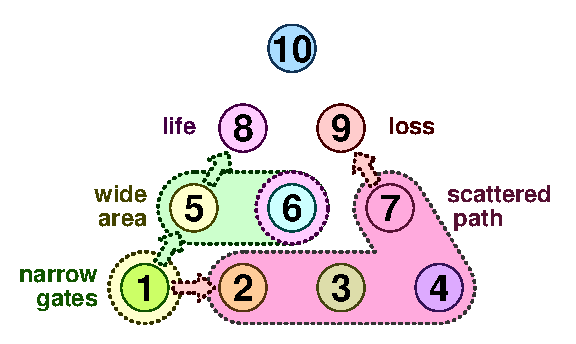
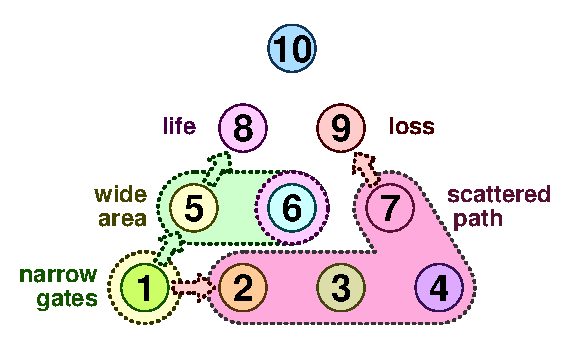
Scattered path (to destruction) and the wide area (to life). Both through a narrow gate.
The Gates of Hell (not at full strength).
The way kept open by the flaming sword.
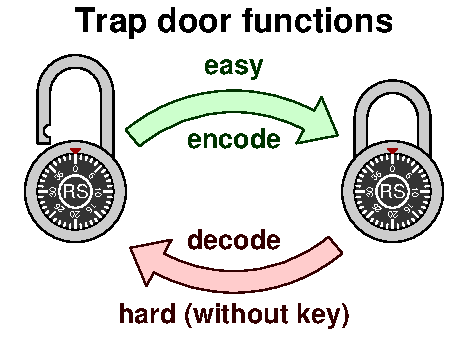
Trap door functions in mathematics and security (public key cryptography).
33. Trapdoor functions
In public key security, a trapdoor function: y = f(x) is a function f such that the following hold.
Encoding function f is public knowledge (code).
Decoding function g is private knowledge (code, needs key).
Given x (message and public key), easy to determine y (encoded message).
Given y (encoded message), difficult to determine x (message) with public key, but easy with private key.
Analogy: unlocked
combination lock.
Easy to put on one way.
Not easy to take off the other way (especially without the combination key).
Side-channel attacks: bolt cutter, listening device, etc.
Combinations (permutations): 40*40*40 = 64,000.
Public Key Cryptography
34. Split keys
It is interesting that the split key concept, physical or real, requires that those with the keys get together and agree on something.
The Greek word for "thing" in "touching any thing" is usually used for a physical object and not an abstract concept, though that may be the case here.
It would appear that Jesus needs to be in the "midst" of them in order to accomplish the combining of the "keys" (whatever they are) in order to open whatever access is needed to be granted.
To use such a key "both" must agree.
35. Matthew 18:3,5,19 Two that agree
Matthew 18:3 And said, Verily I say unto you, Except ye be converted, and become as little children, ye shall not enter into the kingdom of heaven. [kjv]
18:5 And whoso shall receive one such little child in my name receiveth me. [kjv]
18:19 Again I say unto you, That if two of you shall agree on earth as touching any thing that they shall ask, it shall be done for them of my Father which is in heaven. [kjv]
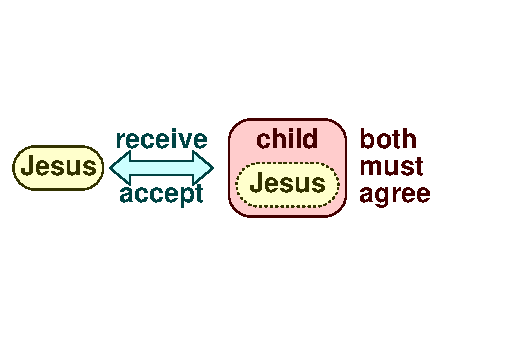
The "one" "little one" is you (one cookie rule).
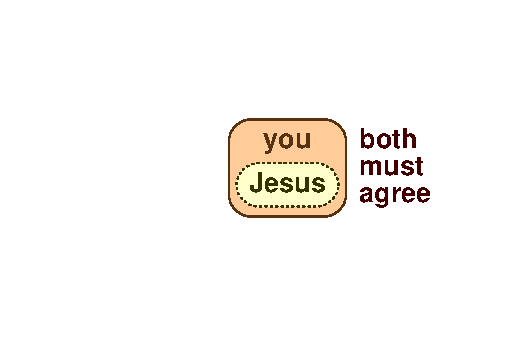
If you "receive" or "accept" Jesus, then Jesus is with you.
Thus, you and Jesus are the two.
If Jesus does not agree, it will not "come into being".
If you do not agree, it will not "come into being".
Both you and Jesus must agree for it to "come into being".
This is a
logical conjunction. You can
separate yourself (e.g., by wanting to be the
"greatest").
36. Matthew 18:19 Two that agree
Matthew 18:19 Again I say unto you, That if two of you shall agree on earth as touching any thing that they shall ask, it shall be done for them of my Father which is in heaven. [kjv]
|
First time:
|
Again:
|
 |
 |
What a nice pair! Could anything possibly happen to destroy this relationship?
How about "
fish" as "
feet", "
pigs" as "
hands", "
birds" as "
eyes"? They
all want to be
"great" and at your expense.
Will Jesus be there when you need him?
37. Keys of hell and death
Revelation 1:18 I am he that liveth, and was dead; and, behold, I am alive for evermore, Amen; and have the keys of hell and of death. [kjv]
και ο ζων και εγενομην νεκρος και ιδου ζων ειμι εις τους αιωνας των αιωνων αμην και εχω τας κλεις του αδου θανατου και του θανατου αδου [gnt]
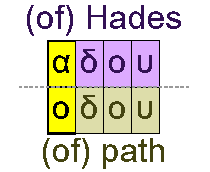
"ᾅδου" ≈ "Hades" (genitive singular) of "ᾅδης" ≈ "Hades".
"ὁδοῦ" ≈ "path" (genitive singular) of "ὁδός" ≈ "road, path, way".
It appears that Jesus has the
"keys" of
death and of
hell. The
TR (Textus Receptus) changes the order. The word
"keys" here is plural. Is there a key for each individual?
Keys are used to close access to something. Does this mean that Jesus can selectively close access to both
"hell" and "
death" for whoever he
chooses?
38. Revelation 1:18
KJV: I am he that liveth, and was dead; and, behold, I am alive for evermore, Amen; and have the keys of hell and of death.
Greek: και ο ζων και εγενομην νεκρος και ιδου ζων ειμι εις τους αιωνας των αιωνων αμην και εχω τας κλεις του αδου θανατου και του θανατου αδου
39. Revelation Bottomless pit
Revelation 9:1 And the fifth angel sounded, and I saw a star fall from heaven unto the earth: and to him was given the key of the bottomless pit. [kjv]
και ο πεμπτος αγγελος εσαλπισεν και ειδον αστερα εκ του ουρανου πεπτωκοτα εις την γην και εδοθη αυτω η κλεις του φρεατος της αβυσσου [gnt]
… clavis putei abyssi [v]
20:1 And I saw an angel come down from heaven, having the key of the bottomless pit and a great chain in his hand. [kjv]
και ειδον αγγελον καταβαινοντα εκ του ουρανου εχοντα την κλειδα κλειν της αβυσσου και αλυσιν μεγαλην επι την χειρα αυτου [gnt]
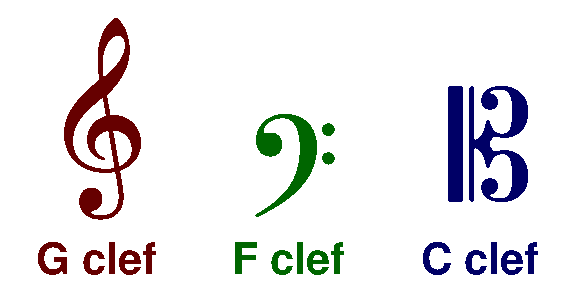
The
"key" to the bottomless pit is
singular,
not plural, in two verses in Revelation. The Latin word
"clavis" ≈ "key" is the source of the English musical term
"clef".
40. Hearing ears in Matthew
Matthew 11:15 He that hath ears to hear, let him hear. [kjv]
ο εχων ωτα ακουειν ακουετω [gnt]
13:9 Who hath ears to hear, let him hear. [kjv]
ο εχων ωτα ακουειν ακουετω [gnt]
13:16 But blessed are your eyes, for they see: and your ears, for they hear. [kjv]
υμων δε μακαριοι οι οφθαλμοι οτι βλεπουσιν και τα ωτα υμων οτι ακουει ακουουσιν [gnt]
13:43 Then shall the righteous shine forth as the sun in the kingdom of their Father. Who hath ears to hear, let him hear. [kjv]
τοτε οι δικαιοι εκλαμψουσιν ως ο ηλιος εν τη βασιλεια του πατρος αυτων ο εχων ωτα ακουειν ακουετω [gnt]
Some say that these verses mean that we are to
hear and understand the written words when
spoken. The verses in Matthew between these
"ear" verses have many play on words that require one to
"hear" and "
understand".
41. Hearing ears in Matthew
Matthew 11:15 He that hath ears to hear, let him hear. [kjv]
13:9 Who hath ears to hear, let him hear. [kjv]
13:16 But blessed are your eyes, for they see: and your ears, for they hear. [kjv]
13:43 Then shall the righteous shine forth as the sun in the kingdom of their Father. Who hath ears to hear, let him hear. [kjv]
The phrase "
Lend me an ear" does not mean that you should cut off your ear and give it to me.
You to me: Listen!
Me to you: I'm all hears.
Jesus uses the same idea in Revelation where there are play on words (with added meaning) that one needs to hear to understand.
42. Revelation 3:8
KJV: I know thy works: behold, I have set before thee an open door, and no man can shut it: for thou hast a little strength, and hast kept my word, and hast not denied my name.
Greek: οιδα σου τα εργα ιδου δεδωκα ενωπιον σου θυραν ανεωγμενην και ηνεωγμενην ην ουδεις δυναται κλεισαι αυτην οτι μικραν εχεις δυναμιν και ετηρησας μου τον λογον και ουκ ηρνησω το ονομα μου
43. Door and hunted beast
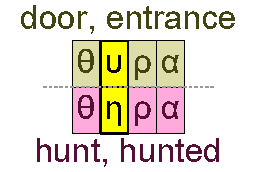
The Greek word for
"door", appearing
3 times in Revelation, can be a play on words with the Greek word for
"beast" which appears over
30 times in Revelation.
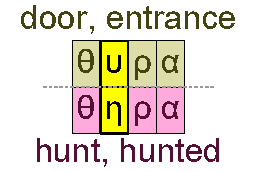
The ancient Greek word "θύρα" ≈ "door, entrance".
The ancient Greek word "θήρα" ≈ "hunt, hunted".
The modern Greek word "θύρα" (THEE-ra) ≈ "door, gate".
The modern Greek word "θήρα" (THEE-ra) ≈ "hunt, hunted".
Today, these words are pronounced in modern Greek such that they sound the same. However, in ancient Greece, there must have been some distinction in the way the vowels "
η" and "
υ" were pronounced.
44. Revelation 3:8 Twelve sets
Revelation 3:8 I know thy works: behold, I have set before thee an open door, and no man can shut it: for thou hast a little strength, and hast kept my word, and hast not denied my name. [kjv]
οιδα σου τα εργα ιδου δεδωκα ενωπιον σου θυραν ανεωγμενην και ηνεωγμενην ην ουδεις δυναται κλεισαι αυτην οτι μικραν εχεις δυναμιν και ετηρησας μου τον λογον και ουκ ηρνησω το ονομα μου [gnt]
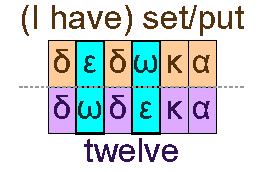
"δέδωκα" ≈ "I have set".
"δώδεκα" ≈ "twelve"
Of what are there
"twelve" "
before" or "
eye to eye" with the "
open" "
door"?
45. Paragraph of recommendation
Here is a paragraph of recommendation.
To whom it may concern: You wrote to ask me for my opinion of John, who has applied for a position in your department.
I cannot recommend him too highly nor say enough good things about him.
There is no other student of mine with whom I can adequately compare him.
His thesis is the sort of work you don't expect to see nowadays and in it he has clearly demonstrated his complete capabilities.
The amount of material he knows will surprise you.
You will indeed be fortunate if you can get him to work for you.
Source: Paulos, J. (1995).
A mathematician reads the newspaper. New York: Basic Books., p. 43.
That is, while (many) computer languages are designed to be unambiguous, natural language is inherently ambiguous.
46. Revelation 3:8 Known works
Revelation 3:8 I know thy works: behold, I have set before thee an open door, and no man can shut it: for thou hast a little strength, and hast kept my word, and hast not denied my name. [kjv]
οιδα σου τα εργα ιδου δεδωκα ενωπιον σου θυραν ανεωγμενην και ηνεωγμενην ην ουδεις δυναται κλεισαι αυτην οτι μικραν εχεις δυναμιν και ετηρησας μου τον λογον και ουκ ηρνησω το ονομα μου [gnt]
Jesus says, that he "
knows" their "
works". Are those "
works"
good or
not good?
The amount of work and the quality of the work of this church may surprise you.
I cannot recommend this church too highly nor say enough good things about this church.
What or who might they be
hiding such that the
"door" cannot be
"closed"? If so, might that
"door" be
"closed" (from the inside) in the
next church?
What does it mean that they
"have" a
"little" "strength" or
"potential"?
47. Revelation 3:8 Having a little potential
Revelation 3:8 I know thy works: behold, I have set before thee an open door, and no man can shut it: for thou hast a little strength, and hast kept my word, and hast not denied my name. [kjv]
οιδα σου τα εργα ιδου δεδωκα ενωπιον σου θυραν ανεωγμενην και ηνεωγμενην ην ουδεις δυναται κλεισαι αυτην οτι μικραν εχεις δυναμιν και ετηρησας μου τον λογον και ουκ ηρνησω το ονομα μου [gnt]
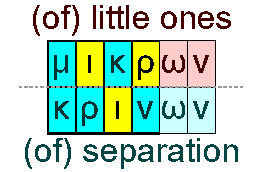
Might they have, within their "
doors" a
"little one" that has been
"separated" and all that it
"has", having been entrapped by the "
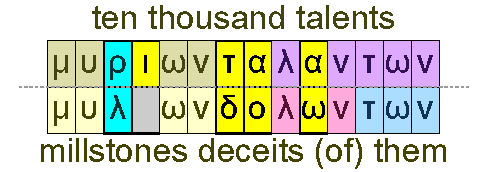
millstone" entrapment/deception and who could,
"potentially", walk out the
"door"? Is that why the
"door" needs to be kept
"open"? Might this
"door" be
"closed" at the next step in the "
church" progression.
48. Revelation 3:8 Reasoning and name
Revelation 3:8 I know thy works: behold, I have set before thee an open door, and no man can shut it: for thou hast a little strength, and hast kept my word, and hast not denied my name. [kjv]
οιδα σου τα εργα ιδου δεδωκα ενωπιον σου θυραν ανεωγμενην και ηνεωγμενην ην ουδεις δυναται κλεισαι αυτην οτι μικραν εχεις δυναμιν και ετηρησας μου τον λογον και ουκ ηρνησω το ονομα μου [gnt]
The
ancient Greek word
"λόγος" ≈ "rational explanation, word".
False teachers do
not "deny" the
"name" of Jesus. They do, however,
"deny" the underlying
"true" "reasoning" of Jesus. While affirming the
"name" of Jesus, they may
substitute their
own political and social beliefs.
49. Revelation 3:8 Face to face
Revelation 3:8 I know thy works: behold, I have set before thee an open door, and no man can shut it: for thou hast a little strength, and hast kept my word, and hast not denied my name. [kjv]
οιδα σου τα εργα ιδου δεδωκα ενωπιον σου θυραν ανεωγμενην και ηνεωγμενην ην ουδεις δυναται κλεισαι αυτην οτι μικραν εχεις δυναμιν και ετηρησας μου τον λογον και ουκ ηρνησω το ονομα μου [gnt]
The word translated as
"before" is the ancient Greek word
"ἐνώπιος" ≈ "face to face" and comes from two Greek words.
"ἐν" ≈ "in" and "ὤψ" ≈ "eye, face".
More literally, it is
"eye to eye" rather than
"face to face". The English phase
"in your face" might be appropriate here.
"ὀπή" ≈ "opening, hole, hollow"
Jesus uses the idea of an "
eye" as a
leader and, in
context a
false leader.
50. Usage - before
*G1799 *93 ἐνώπιον (en-o'-pee-on) : neuter of a compound of G1722 and a derivative of G3700; in the face of (literally or figuratively):--before, in the presence (sight) of, to.
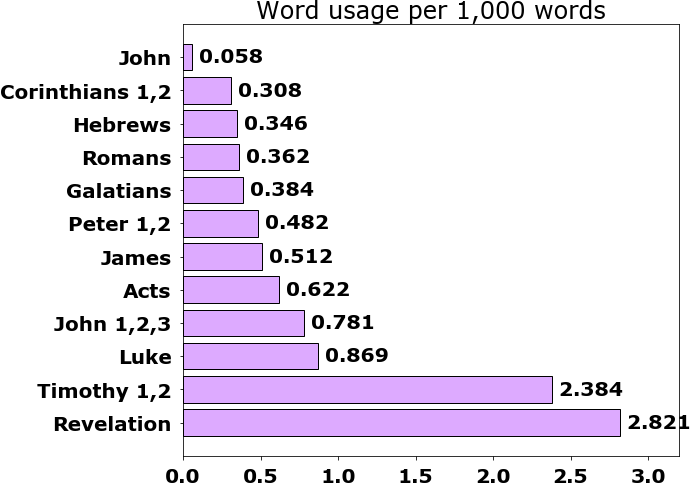 |
Words: ενωπιον=93
|
The word translated as
"before" is the ancient Greek word
"ἐνώπιος" ≈ "face to face" and comes from two Greek words.
"ἐν" ≈ "in".
"ὤψ" ≈ "eye, face"
More literally, it is
"eye to eye" rather than
"face to face". The English phase
"in your face" might be appropriate here.
51. Revelation 3:8 Words
Revelation 3:8 I know thy works: behold, I have set before thee an open door, and no man can shut it: for thou hast a little strength, and hast kept my word, and hast not denied my name. [kjv]
οιδα σου τα εργα ιδου δεδωκα ενωπιον σου θυραν ανεωγμενην και ηνεωγμενην ην ουδεις δυναται κλεισαι αυτην οτι μικραν εχεις δυναμιν και ετηρησας μου τον λογον και ουκ ηρνησω το ονομα μου [gnt]
The following Greek words will show up again after the next verse.
The Greek word translated "know" is that of "seeing" with "understanding".
The Greek word translated "strength" is that of "potentiality".
"kept" or "observed" or "watch over". [play on words]
"word" or "reasoning". The ancient Greek word "λόγος" ≈ "rational explanation, word".
"before" or "face to face" or "eye to eye".
52. Bird denial play on words
53. Matthew 10:33 Deny as a bird
Matthew 10:33 But whosoever shall deny me before men, him will I also deny before my Father which is in heaven. [kjv]
οστις δε δ αν αρνησηται με εμπροσθεν των ανθρωπων αρνησομαι αυτον καγω αυτον εμπροσθεν του πατρος μου του εν τοις ουρανοις [gnt]
Use the noun for
"bird" as a verb. What's your "
ask"? [tennising]
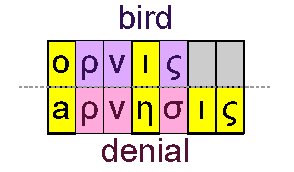
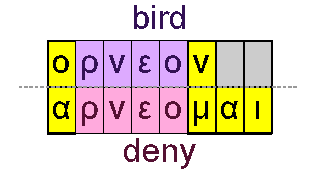
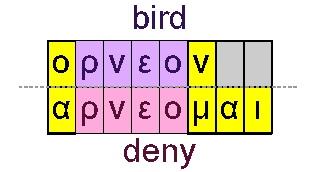
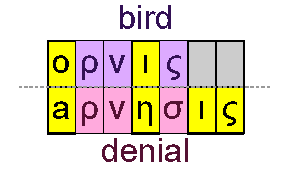
Greek: αρνησηται (say "ar-NEE-see-ta"), verb "deny".
Greek: ορνησηται (say "or-NEE-see-ta"), verb "bird".
Paraphrase (with play on words):
Whoever [bones, hostile] denies [birds] me before men, I will deny [bird] him before my Father in heaven.
"ἀρνέομαι" ≈ "deny, disown, refuse, decline".
"ὄρνεον" ≈ "bird" as in ornithology.
This play on word usage is
not the same as the modern "
flip" the
"bird" action, though the word "
flip" is similar in spirit to the Greek word for "
worthy" as in "
counter-balance" and the word translated as "
variance" (in two verses).
54. Matthew 10:33 Denial of Jesus
Matthew 10:33 But whosoever shall deny me before men, him will I also deny before my Father which is in heaven. [kjv]
The play on words is that of
"deny" with
"bird" (behavior).
Paraphrase:
Whoever denies me before men, I will deny him before my Father in heaven.
Play on words:
Whoever [bones, hostile] denies [birds] me before men, I will deny [bird] him before my Father in heaven.
So Jesus will use the
reasoning of the
"bird" who
"denies" Jesus by not "
knowing" Jesus. Does Jesus ever say that he does
not "
know" someone?
55. Revelation 3:8 Deny the name
Revelation 3:8 I know thy works: behold, I have set before thee an open door, and no man can shut it: for thou hast a little strength, and hast kept my word, and hast not denied my name. [kjv]
οιδα σου τα εργα ιδου δεδωκα ενωπιον σου θυραν ανεωγμενην και ηνεωγμενην ην ουδεις δυναται κλεισαι αυτην οτι μικραν εχεις δυναμιν και ετηρησας μου τον λογον και ουκ ηρνησω το ονομα μου [gnt]
They have not
"denied" his
"name". Discuss:
Can one "deny" the "meaning" of Christ and not "deny" the "name" of Christ?
Are there churches that proclaim the "name" of Christ but yet deny parts of what Christ said? That is, the complete meaning.
Can one "deny" or "bird" Christ by what one does and not by what one says?
Can one "confess" or "agree" with Christ by what one does and not by what one says?
56. Revelation 3:9
KJV: Behold, I will make them of the synagogue of Satan, which say they are Jews, and are not, but do lie; behold, I will make them to come and worship before thy feet, and to know that I have loved thee.
Greek: ιδου διδωμι διδω εκ της συναγωγης του σατανα των λεγοντων εαυτους ιουδαιους ειναι και ουκ εισιν αλλα ψευδονται ιδου ποιησω αυτους ινα ηξωσιν ηξουσιν και προσκυνησωσιν προσκυνησουσιν ενωπιον των ποδων σου και γνωσιν οτι εγω ηγαπησα σε
Latin: ecce dabo de synagoga Satanae qui dicunt se Iudaeos esse et non sunt sed mentiuntur ecce faciam illos ut veniant et adorent ante pedes tuos et scient quia ego dilexi te
57. Revelation 3:9 Jews
Revelation 3:9 Behold, I will make them of the synagogue of Satan, which say they are Jews, and are not, but do lie; behold, I will make them to come and worship before thy feet, and to know that I have loved thee. [kjv]
ιδου διδωμι διδω εκ της συναγωγης του σατανα των λεγοντων εαυτους ιουδαιους ειναι και ουκ εισιν αλλα ψευδονται ιδου ποιησω αυτους ινα ηξωσιν ηξουσιν και προσκυνησωσιν προσκυνησουσιν ενωπιον των ποδων σου και γνωσιν οτι εγω ηγαπησα σε [gnt]
What might "
which say they are Jews, and are not" mean?
☐ They actually claim to be Jews.
☐ They claim to have inherited the promises made to the Jews.
☐ Something else.
In any case, this group
"lies". The ancient Greek word
"ψευδής" ≈ "lying, false, untrue".
An interesting "
paradox" is the "
liar paradox" or "
Russell Paradox".
58. Revelation 2:9
Revelation 2:9 I know thy works, and tribulation, and poverty, (but thou art rich ) and I know the blasphemy of them which say they are Jews, and are not, but are the synagogue of Satan. [kjv]
οιδα σου τα εργα και την θλιψιν και την πτωχειαν αλλα πλουσιος δε ει και την βλασφημιαν εκ των λεγοντων ιουδαιους ειναι εαυτους και ουκ εισιν αλλα συναγωγη του σατανα [gnt]
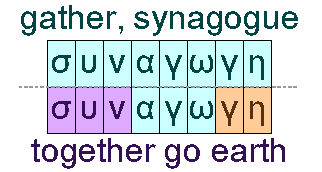
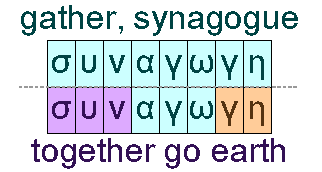
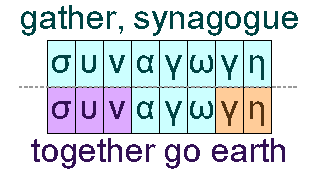
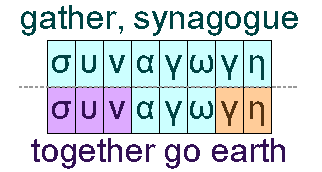
The Greek word for
"synagogue", which is the source of the English word
"synogogue", can be a play on words meaning, literally,
"going" "together" on the
"earth". The
"synagogue" "of (the)" "Satan" may not be restricted to the Jewish
"synagogue".
59. Synagogue of Satan
5: Field (treasure in the field)
6: Merchandise (pearl of great price)
The
"Synagogue" of
"Satan" appears in two of the
RC (Revelation Church).
RC2 as Smyrna, node 2 (weeds) from node 1. Dried-up water/blood.
RC6 as Philadelphia, node 6 (pearl) from node 5. Dirty/dead water/blood.
These appear to be "
on" the two "
exit ramps" of the "
paths" which "
lead (away from)" "
life".
60. Revelation 3:9 Come
Revelation 3:9 Behold, I will make them of the synagogue of Satan, which say they are Jews, and are not, but do lie; behold, I will make them to come and worship before thy feet, and to know that I have loved thee. [kjv]
ιδου διδωμι διδω εκ της συναγωγης του σατανα των λεγοντων εαυτους ιουδαιους ειναι και ουκ εισιν αλλα ψευδονται ιδου ποιησω αυτους ινα ηξωσιν ηξουσιν και προσκυνησωσιν προσκυνησουσιν ενωπιον των ποδων σου και γνωσιν οτι εγω ηγαπησα σε [gnt]
The ancient Greek word
"ἥκω" ≈ "come, be present" and, of messages,
"have arrived".
Why should they "
worship" "
before" or "
eye to eye" with their "
feet"? How did they get "
feet" or "
fish" (code word correspondence). There may be a play on words with the Greek word that is translated "
power" but has the idea of "
lack of restraint".
Jesus had
loved them. Does he still love them? Have they, perhaps, separated themselves from the love of Christ. This will happen at the next church. Some modern churches deny that this can actually happen.
61. Strongs - come
- *G2240 *0 ἥκω (hay'-ko) : a primary verb; to arrive, i.e. be present (literally or figuratively):--come.
ηξει *9
Matthew 23:36 ... unto you, All these things shall come upon this generation.
Matthew 24:14 ... and then shall the end come.
Matthew 24:50 The lord of that servant shall come in a day when ...
Luke 12:46 The lord of that servant will come in a day when ...
Luke 13:35 ... see me, until the time come when ye shall say, Blessed ...
John 6:37 ... the Father giveth me shall come to me; and ...
Romans 11:26 ... shall be saved: as it is written, There shall come out of Sion the Deliverer, ...
Hebrews 10:37 ... a little while, and he that shall come will come, and will not tarry.
2 Peter 3:10 But the day of the Lord will come as a thief in ...
ηξουσιν *6
Matthew 8:11 ... unto you, That many shall come from the east and ...
Luke 13:29 And they shall come from the east, and from the west, ...
Luke 19:43 For the days shall come upon thee, that ...
Revelation 3:9 ... I will make them to come and worship before ...
Revelation 15:4 ... for all nations shall come and worship before ...
Revelation 18:8 Therefore shall her plagues come in one ...
ηκει *4
Luke 15:27 ... unto him, Thy brother is come; and thy father ...
John 2:4 ... mine hour is not yet come.
John 4:47 ... heard that Jesus was come out of Judæa into ...
1 John 5:20 ... that the Son of God is come, and hath given us ...
ηξω *3
Revelation 2:25 ... ye have already hold fast till I come.
Revelation 3:3 ... not watch, I will come on thee as a thief, and thou shalt not know what hour I will come upon thee.
ηκω *2
Hebrews 10:7 Then said I, Lo, I come (in the volume of the book ...
Hebrews 10:9 Then said he, Lo, I come to do thy will, ...
ηκασιν
62. Usage - come
*G2240 *0 ἥκω (hay'-ko) : a primary verb; to arrive, i.e. be present (literally or figuratively):--come.
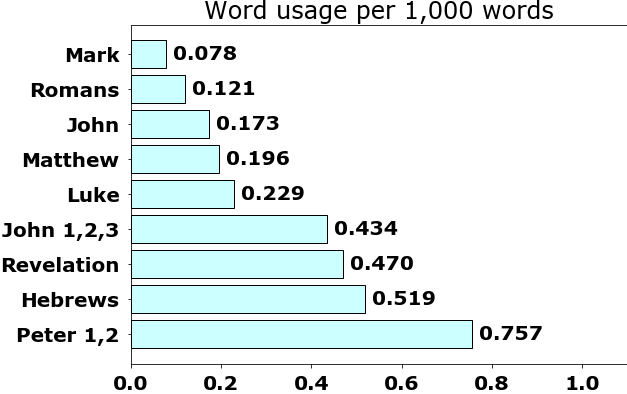 |
Words: ηκασιν ηκει=4 ηκω=2 ηξει=9 ηξουσιν=6 ηξω=3
|
The ancient Greek word
"ἥκω" ≈ "come, be present" and, of messages,
"have arrived". Is this "
letter" from Jesus to the church at Philadelphia not itself a "
message"? Has it "
arrived"? Have they "
arrived"? In what way have they "
arrived"?
63. Matthew 8:11 Arrived
Matthew 8:11 And I say unto you, That many shall come from the east and west, and shall sit down with Abraham, and Isaac, and Jacob, in the kingdom of heaven. [kjv]
λεγω δε υμιν οτι πολλοι απο ανατολων και δυσμων ηξουσιν και ανακλιθησονται μετα αβρααμ και ισαακ και ιακωβ εν τη βασιλεια των ουρανων [gnt]
The ancient Greek word
"ἥκω" ≈ "come, be present" and, of messages,
"have arrived".
- The Greek word for "east" can mean "morning" or, perhaps, "beginning of time".
- The Greek word for "west" can mean "evening" or, perhaps, "end of time". This is a play on words with "bind".
Discussion questions:
- Which kingdom of heaven is this? The good one or the not good one?
- Is it good to sit down with Abraham, Isaac and Jacob?
64. Revelation 3:9 Synagogue
Revelation 3:9 Behold, I will make them of the synagogue of Satan, which say they are Jews, and are not, but do lie; behold, I will make them to come and worship before thy feet, and to know that I have loved thee. [kjv]
ιδου διδωμι διδω εκ της συναγωγης του σατανα των λεγοντων εαυτους ιουδαιους ειναι και ουκ εισιν αλλα ψευδονται ιδου ποιησω αυτους ινα ηξωσιν ηξουσιν και προσκυνησωσιν προσκυνησουσιν ενωπιον των ποδων σου και γνωσιν οτι εγω ηγαπησα σε [gnt]
- "συναγωγή" ≈ "gathering" as in "synagogue".
- "συν" ≈ "together" and "αγω" ≈ "go"and "γη" ≈ "earth".
The ancient Greek word
"συναγωγή" ≈ "gathering" and is the source of the English word
"synagogue" which is a Greek word and
not a Hebrew word. This word can be a play on words with the three constituent words
"together",
"lead, bring, go" and
"earth".
- "συναγωγή" ≈ "gathering"
- "συν" ≈ "together".
- "ἄγω" ≈ "go" and "γη" ≈ "earth".
65. Revelation 3:9 Synagogue
Revelation 3:9 Behold, I will make them of the synagogue of Satan, which say they are Jews, and are not, but do lie; behold, I will make them to come and worship before thy feet, and to know that I have loved thee. [kjv]
ιδου διδωμι διδω εκ της συναγωγης του σατανα των λεγοντων εαυτους ιουδαιους ειναι και ουκ εισιν αλλα ψευδονται ιδου ποιησω αυτους ινα ηξωσιν ηξουσιν και προσκυνησωσιν προσκυνησουσιν ενωπιον των ποδων σου και γνωσιν οτι εγω ηγαπησα σε [gnt]
- "συναγωγή" ≈ "gathering"
- "συν" ≈ "together".
- "ἄγω" ≈ "go" and "γη" ≈ "earth".
Discuss:
- Who might "lead, bring, go" "together" on the "earth"?
- What might be meant by "to" "know"? The "to" was added.
- Might the wording indicate that, at one time, they were "loved" but they have now separated themselves from the "love" of Christ?
[Ten Pin model]
66. Revelation 3:9
Revelation 3:9 Behold, I will make them of the synagogue of Satan, which say they are Jews, and are not, but do lie; behold, I will make them to come and worship before thy feet, and to know that I have loved thee. [kjv]
ιδου διδωμι διδω εκ της συναγωγης του σατανα των λεγοντων εαυτους ιουδαιους ειναι και ουκ εισιν αλλα ψευδονται ιδου ποιησω αυτους ινα ηξωσιν ηξουσιν και προσκυνησωσιν προσκυνησουσιν ενωπιον των ποδων σου και γνωσιν οτι εγω ηγαπησα σε [gnt]
Greek:
... out of the "synagogue" "of (the)" "Satan" ...
67. Matthew 7:15 Daniel Defoe
Matthew 7:15 Beware of false prophets, which come to you in sheep's clothing, but inwardly they are ravening wolves. [kjv]
προσεχετε δε απο των ψευδοπροφητων οιτινες ερχονται προς υμας εν ενδυμασιν προβατων εσωθεν δε εισιν λυκοι αρπαγες [gnt]
Consider the John Wesley house analogy. Before going up the
steps and through the
door into the
house one should be sure that this is the house into which one wants to go.
English novelist, journalist, merchant (and pamphleteer and spy)
Daniel Defoe (1660-1731), known for
Robinson Crusoe in 1719, starts his poem
The true-born Englishman as follows.
Whenever God erects a house of prayer, the devil always builds a chapel there.
And 'twill be found, upon examination, the latter has the largest congregation.
How does this compare with a "
vineyard"? How about a "
synagogue" of "
Satan"?
68. Revelation 3:9
Revelation 3:9 Behold, I will make them of the synagogue of Satan, which say they are Jews, and are not, but do lie; behold, I will make them to come and worship before thy feet, and to know that I have loved thee. [kjv]
ιδου διδωμι διδω εκ της συναγωγης του σατανα των λεγοντων εαυτους ιουδαιους ειναι και ουκ εισιν αλλα ψευδονται ιδου ποιησω αυτους ινα ηξωσιν ηξουσιν και προσκυνησωσιν προσκυνησουσιν ενωπιον των ποδων σου και γνωσιν οτι εγω ηγαπησα σε [gnt]
The
first Greek word translated as
"make" is the ancient Greek word
"δίδωμι" ≈ "give, grant". The word is related to
"δόσις" ≈ "giving, gift, dose of medicine" and is the source of the English word
"dose".
The
second Greek word translated as
"make" is
"ποιέω" ≈ "make, cause" and, in the middle voice, to
"pretend".
69. Revelation 3:9 In order that
Revelation 3:9 Behold, I will make them of the synagogue of Satan, which say they are Jews, and are not, but do lie; behold, I will make them to come and worship before thy feet, and to know that I have loved thee. [kjv]
ιδου διδωμι διδω εκ της συναγωγης του σατανα των λεγοντων εαυτους ιουδαιους ειναι και ουκ εισιν αλλα ψευδονται ιδου ποιησω αυτους ινα ηξωσιν ηξουσιν και προσκυνησωσιν προσκυνησουσιν ενωπιον των ποδων σου και γνωσιν οτι εγω ηγαπησα σε [gnt]
The ancient Greek word
"ἵνα" ≈ "in order that, so that" . It is hard to see where this word has been translated.
English (Greek word order):
... lie. Behold (look around), I give them in order that they will come or arrive with a message and worship face to face with their feet ...
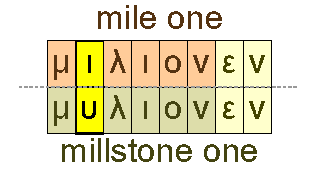
[go mile one with it - millstone deception/entrapment]
70. Usage - verb know
*G1097 *217 γινώσκω (ghin-oce'-ko) : a prolonged form of a primary verb; to "know" (absolutely) in a great variety of applications and with many implications (as follow, with others not thus clearly expressed):--allow, be aware (of), feel, (have) know(-ledge), perceived, be resolved, can speak, be sure, understand.
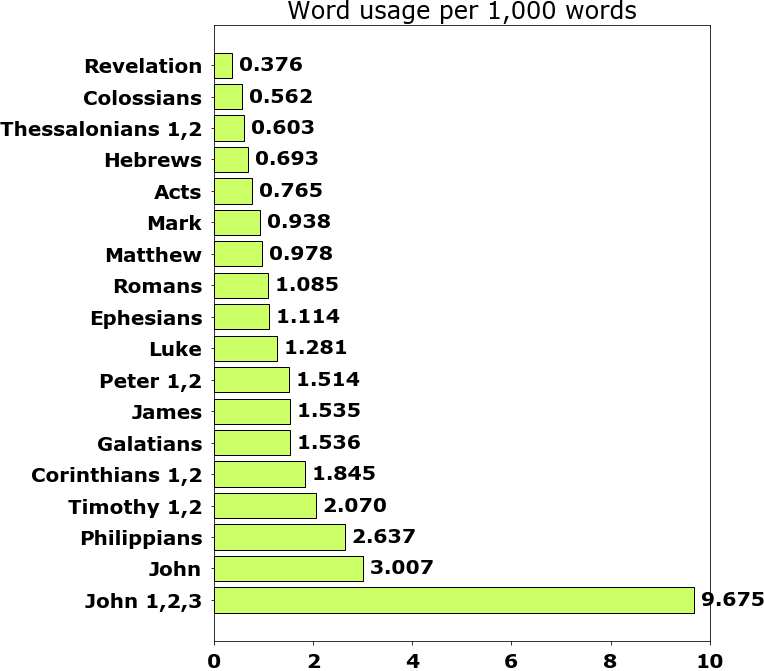 |
Words: γινωσκε γινωσκει=12 γινωσκειν=2 γινωσκεις=7 γινωσκεται=2 γινωσκετε=21 γινωσκετω=3 γινωσκη γινωσκητε γινωσκομεν=10 γινωσκομενη γινωσκοντες=6 γινωσκουσι γινωσκουσιν γινωσκω=7 γινωσκων=2 γινωσκωσιν γνοι=3 γνοντα γνοντες=5 γνους=12 γνω=4 γνωθι γνωναι=15 γνωσεσθε=4 γνωσεται γνωση=2 γνωσθεντες γνωσθη γνωσθησεται=4 γνωσθητω γνωσιν=1 γνωσομαι=2 γνωσομεθα γνωσονται=3 γνωτε=6 γνωτω εγινωσκεν=4 εγινωσκον εγνω=16 εγνωκα=2 εγνωκαμεν=5 εγνωκαν εγνωκας εγνωκατε=5 εγνωκειτε εγνωκεν=3 εγνωκεναι εγνωκοτες εγνων=6 εγνως=3 εγνωσαν=16 εγνωσθη=2 εγνωσται
|
71. Usage - noun know
*G1108 *29 γνῶσις (gno'-sis) : from G1097; knowing (the act), i.e. (by implication) knowledge:--knowledge, science.
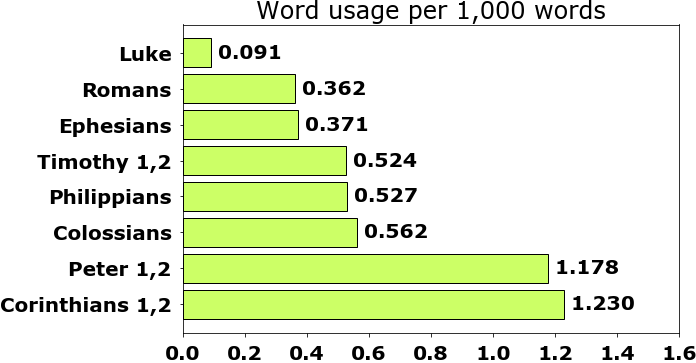 |
Words: γνωσει=8 γνωσεως=12 γνωσιν=6 γνωσις=3
|
72. Revelation 3:9 Knowledge
Revelation 3:9 Behold, I will make them of the synagogue of Satan, which say they are Jews, and are not, but do lie; behold, I will make them to come and worship before thy feet, and to know that I have loved thee. [kjv]
ιδου διδωμι διδω εκ της συναγωγης του σατανα των λεγοντων εαυτους ιουδαιους ειναι και ουκ εισιν αλλα ψευδονται ιδου ποιησω αυτους ινα ηξωσιν ηξουσιν και προσκυνησωσιν προσκυνησουσιν ενωπιον των ποδων σου και γνωσιν οτι εγω ηγαπησα σε [gnt]
The ancient Greek word
"γνωσιν" ≈ "knowledge" and is translated that way in other places in the
GNT. For some reason, it was decided to make it a
verb instead of a
noun. To be a
noun, a different parse is needed and the
verb then used changes the meaning of the verse.
- "γνῶσις" ≈ "inquiry, knowledge, fame".(nominative singular noun)
- "γνῶσιν" ≈ "inquiry, knowledge, fame" (accusative singular noun)
73. Revelation 3:9 To know knowledge
Revelation 3:9 Behold, I will make them of the synagogue of Satan, which say they are Jews, and are not, but do lie; behold, I will make them to come and worship before thy feet, and to know that I have loved thee. [kjv]
ιδου διδωμι διδω εκ της συναγωγης του σατανα των λεγοντων εαυτους ιουδαιους ειναι και ουκ εισιν αλλα ψευδονται ιδου ποιησω αυτους ινα ηξωσιν ηξουσιν και προσκυνησωσιν προσκυνησουσιν ενωπιον των ποδων σου και γνωσιν οτι εγω ηγαπησα σε [gnt]
Paraphrase:
Look, I give out of the synagogue [going together on the earth] of Satan of you, which say they are Jews and are not but lie. Look, I will make them such that they come [lack of restraint] and worship [towards the tent/nest be] face to face of/with the feet (fish) of you (church) and (make them such that they come to the) knowledge that I have loved (in the past, perhaps not now) you (church).
Remember that they have been called
"liars". Are there churches that provide their
"fish" or
"feet" with (
false as in lying)
"knowledge" that Jesus
"loves" them (regardless of what they do)? Would Satan desire this?
Might this be a warning for certain types of churches?
74. Revelation 3:10
KJV: Because thou hast kept the word of my patience, I also will keep thee from the hour of temptation, which shall come upon all the world, to try them that dwell upon the earth.
Greek: οτι ετηρησας τον λογον της υπομονης μου καγω σε τηρησω εκ της ωρας του πειρασμου της μελλουσης ερχεσθαι επι της οικουμενης ολης πειρασαι τους κατοικουντας επι της γης
75. Revelation 3:7-13 RC6 Philadelphia
Here is a verse in the letter to the church at
Philadelphia in the book of
Revelation.
Revelation 3:10 Because thou hast kept the word of my patience, I also will keep thee from the hour of temptation, which shall come upon all the world, to try them that dwell upon the earth. [kjv]
οτι ετηρησας τον λογον της υπομονης μου καγω σε τηρησω εκ της ωρας του πειρασμου της μελλουσης ερχεσθαι επι της οικουμενης ολης πειρασαι τους κατοικουντας επι της γης [gnt]
In part, since the Greek word translated
"from" is
"εκ" ≈ "out", some would claim that the words in Greek are an indication of the
rapture. Others would argue that this claim is not valid.
Let us use logic, linguistics, word play, and, of course, the Greek language to investigate. As is often the case, many want a definitive "
yes" or "
no" answer. The reality is often just indications of higher or lower probabilities. The
bottom line question is this.
Does the reality of the answer really matter from an eternal perspective?
76. Revelation 3:10 Examinations
Revelation 3:10 Because thou hast kept the word of my patience, I also will keep thee from the hour of temptation, which shall come upon all the world, to try them that dwell upon the earth. [kjv]
οτι ετηρησας τον λογον της υπομονης μου καγω σε τηρησω εκ της ωρας του πειρασμου της μελλουσης ερχεσθαι επι της οικουμενης ολης πειρασαι τους κατοικουντας επι της γης [gnt]
The key words in this verse are the
related words
"temptation" and
"try". In the Greek, this is an
"examination" with what you know or believe to be try in an attempt to
"deceive".
To be "
kept" "
out" of the (consequences of the) "
hour" of
"examination" one must understand the "
reasoning" or "
word" without being
"deceived". If you show that you
understand the
"examination", you will pass the
"examination" either way. Thus, the important information here is that the "
world" will be
"examined". As such, this verse is somewhat of a "
tautology". Paul does a lot of this.
77. Peirastic
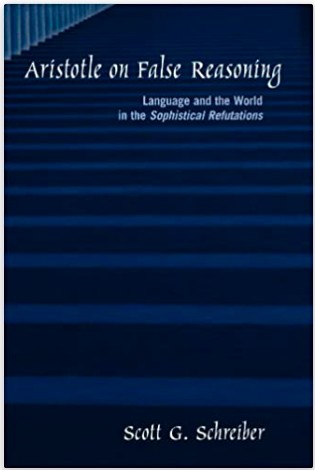
On page 2, Schreiber elaborates on
"peirastic" reasoning as distinguished by Aristotle.
... he (Aristotle) distinguishes another type of reasoning called "peirastic" (πειραστικός) or examinational reasoning. Peirastic proceeds from some belief of the person being examined. ... (1) it must be believed by the person being examined ... and (2) it need not be an endoxon (i.e., it may be an entirely idiosyncratic belief) ...
Aristotle's clarification of the word fits the
"temptations" of Jesus in the Gospels. The ancient Greek word
"πειράζω" ≈ "examine" and is often translated in the
KJV (King James Version) as
"tempt". The modern idea of the Greek
"temptation" is that of an interview where one examines someone about things they know or believe they know.
78. Review of temptations and evil
Matthew 4:1 Then was Jesus led up of the Spirit into the wilderness to be tempted of the devil. [kjv]
τοτε ο ιησους ανηχθη εις την ερημον υπο του πνευματος πειρασθηναι υπο του διαβολου [gnt]
6:13 And lead us not into temptation, but deliver us from evil: For thine is the kingdom, and the power, and the glory, for ever. Amen. [kjv]
και μη εισενεγκης ημας εις πειρασμον αλλα ρυσαι ημας απο του πονηρου οτι σου εστιν η βασιλεια και η δυναμις και η δοξα εις τους αιωνας αμην [gnt]
Paraphrase:
Do not be deceived by ideas/beliefs that you already think you understand. Help us move/flow from being oppressed by others or oppressing others or oppressing ourselves with toils (based on those deceptions).
- Avoid confirmation bias (deciding what it says before investigation).
- Ask deep questions.
- Do fundamental research on meanings and ideas.
- When there are differences, which makes more sense?
79. Reminders about deceptions
2 Thessalonians 2:5 Remember ye not, that, when I was yet with you, I told you these things? [kjv]
ου μνημονευετε οτι ετι ων προς υμας ταυτα ελεγον υμιν [gnt]
Jesus said something similar, using different words, when talking about deception.
Matthew 24:24 For there shall arise false Christs, and false prophets, and shall shew great signs and wonders; insomuch that, if it were possible, they shall deceive the very elect. [kjv]
εγερθησονται γαρ ψευδοχριστοι και ψευδοπροφηται και δωσουσιν σημεια μεγαλα και τερατα ωστε πλανησαι πλανασθαι ει δυνατον και τους εκλεκτους [gnt]
24:25 Behold, I have told you before. [kjv]
ιδου προειρηκα υμιν [gnt]
80. Matthew 12:29 Snatching the raptured goods from the strong man
Matthew 12:29 Or else how can one enter into a strong man's house, and spoil his goods, except he first bind the strong man? and then he will spoil his house. [kjv]
η πως δυναται τις εισελθειν εις την οικιαν του ισχυρου και τα σκευη αυτου διαρπα σαι αρπασαι εαν μη πρωτον δηση τον ισχυρον και τοτε την οικιαν αυτου διαρπασει [gnt]
The
GNT word for
"spoil" is the ancient Greek word
"ἁρπάζω" ≈ "snatch away, carry off" and may be related to the ancient Greek word
"ἅρπη" ≈ "bird of prey" as a hawk or falcon and which
may be related to the
PIE (Proto Indo-European) root for "
reap", "
harvest", "
sickle". This word for
"snatch" is sometimes translated
"rapture" or
"ravenous" as in "
wolves".
The ancient Greek word
"σκευή" ≈ "vessel" ,
"stuff" in parts of the
KJV, as something that is made but can refer to
"people" as in a
"chosen vessel". Who is doing the "
choosing"?
[Last Supper, 1 & 2 Thessalonians]
81. Usage - watch over
*G5083 *69 τηρέω (tay-reh'-o) : from teros (a watch; perhaps akin to G2334); to guard (from loss or injury, properly, by keeping the eye upon; and thus differing from G5442, which is properly to prevent escaping; and from G2892, which implies a fortress or full military lines of apparatus), i.e. to note (a prophecy; figuratively, to fulfil a command); by implication, to detain (in custody; figuratively, to maintain); by extension, to withhold (for personal ends; figuratively, to keep unmarried); by extension, to withhold (for personal ends; figuratively, to keep unmarried):--hold fast, keep(- er), (pre-, re-)serve, watch.
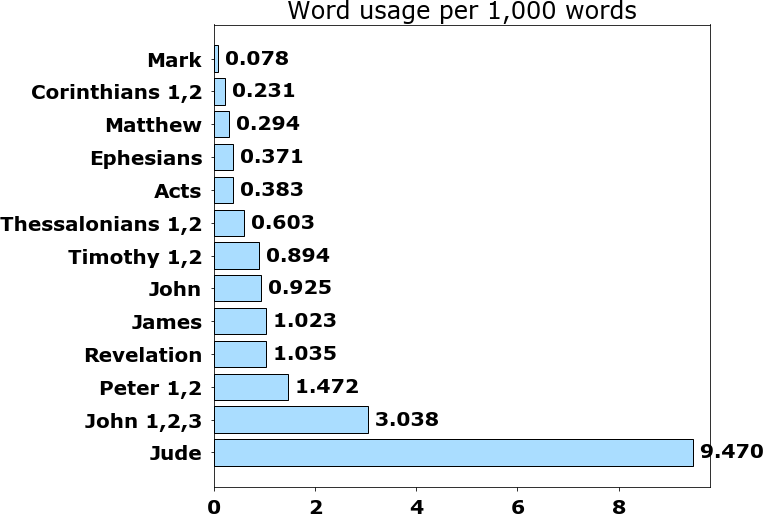 |
Words: ετηρειτο ετηρησα ετηρησαν ετηρησας=2 ετηρουν=3 τετηρηκα=2 τετηρηκαν τετηρηκας τετηρηκεν τετηρημενην τετηρημενοις τετηρηται=2 τηρει=5 τηρειν=7 τηρεισθαι=3 τηρειτε τηρη τηρηθειη τηρηθηναι τηρησαι τηρησαντας τηρησατε τηρησει τηρησετε τηρηση=2 τηρησης τηρησητε=2 τηρησον=2 τηρησουσιν τηρησω=2 τηρουμεν τηρουμενοι τηρουμενους τηρουντες=4 τηρουντων=2 τηρω τηρωμεν=2 τηρων=6
|
The
ancient Greek word
"τηρέω" ≈ "watch over, look after, take care of".
82. Usage - observe
83. Strongs - observe
- *G5084 *3 τήρησις (tay'-ray-sis) : from G5083; a watching, i.e. (figuratively) observance, or (concretely) a prison:--hold.
- τηρησιν
- Acts 4:3 ... and put them in hold unto the next day: for ...
- τηρησει
- Acts 5:18 ... them in the common prison.
- τηρησις
- 1 Corinthians 7:19 ... is nothing, but the keeping of the commandments of God.
84. Revelation 3:8,10 Watch over
Revelation 3:8 I know thy works: behold, I have set before thee an open door, and no man can shut it: for thou hast a little strength, and hast kept my word, and hast not denied my name. [kjv]
οιδα σου τα εργα ιδου δεδωκα ενωπιον σου θυραν ανεωγμενην και ηνεωγμενην ην ουδεις δυναται κλεισαι αυτην οτι μικραν εχεις δυναμιν και ετηρησας μου τον λογον και ουκ ηρνησω το ονομα μου [gnt]
3:10 Because thou hast kept the word of my patience, I also will keep thee from the hour of temptation, which shall come upon all the world, to try them that dwell upon the earth. [kjv]
οτι ετηρησας τον λογον της υπομονης μου καγω σε τηρησω εκ της ωρας του πειρασμου της μελλουσης ερχεσθαι επι της οικουμενης ολης πειρασαι τους κατοικουντας επι της γης [gnt]
- "τήρησις" ≈ "custody, confinement, safeguarding".
- "τηρέω" ≈ "watch over, look after, take care of".
The word used in verses 8 and 10 and translated as
"hast kept" is
"ετηρησας" ≈ "watch over, look after, take care of" (
aorist active indicative) and appears
only in these two verses.
85. Revelation 3:8 Watch over
Revelation 3:8 I know thy works: behold, I have set before thee an open door, and no man can shut it: for thou hast a little strength, and hast kept my word, and hast not denied my name. [kjv]
| Revelation 3:8 |
| Strong |
Used |
Unique |
Word |
Part of speech |
| G1325 |
414 |
6 |
δεδωκα |
verb perfect active indicative 1st person singular |
| G455 |
77 |
1 |
ηνεωγμενην |
verb perfect passive participle accusative singular feminine |
| G2808 |
16 |
2 |
κλεισαι |
verb aorist active infinitive |
| G3398 |
30 |
1 |
μικραν |
adjective accusative singular feminine |
| G5083 |
69 |
2 |
ετηρησας |
verb aorist active indicative 2nd person singular |
| G720 |
33 |
2 |
ηρνησω |
verb aorist middle deponent indicative 2nd person singular |
The ancient Greek word
"ἑταιρεία" ≈ "association, company, band". The modern Greek word
"εταιρεία" (eh-teh-REE-a) ≈ "association, society, company".
86. Revelation 3:10 Watch over
Revelation 3:10 Because thou hast kept the word of my patience, I also will keep thee from the hour of temptation, which shall come upon all the world, to try them that dwell upon the earth. [kjv]
| Revelation 3:10 |
| Strong |
Used |
Unique |
Word |
Part of speech |
| G5083 |
69 |
2 |
ετηρησας |
verb aorist active indicative 2nd person singular |
| G5083 |
69 |
2 |
τηρησω |
verb future active indicative 1st person singular |
| G3986 |
21 |
3 |
πειρασμου |
noun genitive singular masculine |
| G3195 |
110 |
6 |
μελλουσης |
verb present active participle genitive singular feminine |
| G3625 |
15 |
4 |
οικουμενης |
noun genitive singular feminine |
| G3985 |
38 |
2 |
πειρασαι |
verb aorist active infinitive |
87. Sight for sure ayes
Play on words example:
That hot dog looked really good. I wanted one in the worst [wurst] way. I never saw such [sausage] a sight. Note that this joke would not have been complete without a
pun [
bun].
Note that the English words "
see such" do not work well as a play on words while "
saw such" work better. To make the play on words, the sentence must be organized so that instead of present tense a past tense is used. Such appears to be the case with play on words in the
GNT. Some of those verb tenses may have been chosen, not for deep theological purposes, but to make the play on words work. Thus, the general idea of the words may be more important than trying to get an exact fine-tuned result.
The English word
"sausage" comes from the word for "
salt".
What should you give a dog with a fever?
Mustard is great for a hot dog! If it is running fast, however, you may need to ketchup also.
88. Strongs - friend
- *G2083 *3 ἑταίρος (het-ah'-ee-ros) : from etes (a clansman); a comrade:--fellow, friend.
- εταιρε *3
- Matthew 20:13 ... one of them, and said, Friend, I do thee no ...
- Matthew 22:12 And he saith unto him, Friend, how camest thou in hither ...
- Matthew 26:50 And Jesus said unto him, Friend, wherefore art thou come? Then ...
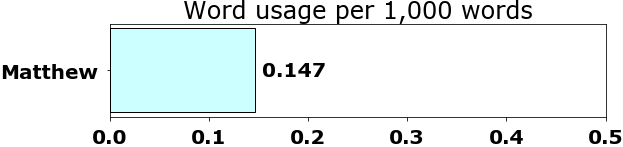 |
Words: εταιρε=3
|
The ancient Greek word
"ἑταιρεία" ≈ "association, company, band". The modern Greek word
"εταιρεία" (eh-teh-REE-a) ≈ "association, society, company".
89. Matthew 11:16 Other different friends
Matthew 11:16 But whereunto shall I liken this generation? It is like unto children sitting in the markets, and calling unto their fellows, [kjv]
τινι δε ομοιωσω την γενεαν ταυτην ομοια εστιν παιδαριοις παιδιοις καθημενοις εν ταις αγοραις καθημενοις και προσφωνουσιν α προσφωνουντα τοις εταιροις αυτων ετεροις [gnt]
These "
children" appear to represent the
religious establishment. The word
"friends" is used but it appears to be a play on words with the Greek word meaning
"other (different)". Following this verse are a series of play on words.
- "ετεροις" ≈ "friend".
- "ἕτερος" ≈ "other - different" and is related to the English word "asunder" as in "one or the other of two" and is the prefix of English words such as "heterosexual". The plural inflection in Greek would have the same ending as "friends".
90. Acts 2:40 Different
Acts 2:40 And with many other words did he testify and exhort, saying, Save yourselves from this untoward generation. [kjv]
ετεροις τε λογοις πλειοσιν διεμαρτυρετο διεμαρτυρατο και παρεκαλει αυτους λεγων σωθητε απο της γενεας της σκολιας ταυτης [gnt]
91. Acts 2:40
KJV: And with many other words did he testify and exhort, saying, Save yourselves from this untoward generation.
Greek: ετεροις τε λογοις πλειοσιν διεμαρτυρετο διεμαρτυρατο και παρεκαλει αυτους λεγων σωθητε απο της γενεας της σκολιας ταυτης
92. Matthew 11:16
KJV: But whereunto shall I liken this generation? It is like unto children sitting in the markets, and calling unto their fellows,
Greek: τινι δε ομοιωσω την γενεαν ταυτην ομοια εστιν παιδαριοις παιδιοις καθημενοις εν ταις αγοραις καθημενοις και προσφωνουσιν α προσφωνουντα τοις εταιροις αυτων ετεροις
93. Matthew 20:13 Now friend
Matthew 20:13 But he answered one of them, and said, Friend, I do thee no wrong: didst not thou agree with me for a penny? [kjv]
ο δε αποκριθεις ειπεν ενι αυτων ειπεν εταιρε ουκ αδικω σε ουχι δηναριου συνεφωνησας μοι [gnt]
- "ἑταῖρε" ≈ "comrade, friend"
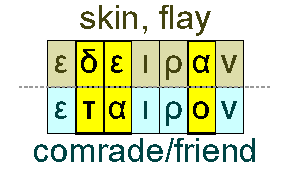
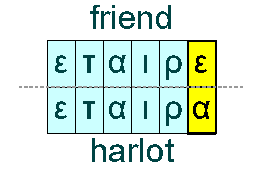
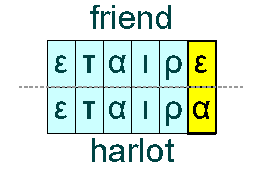
- "ἑταίρα" ≈ "courtesan, escort, prostitute"
Jesus does not use the word
"friend" in a good sense. The ancient Greek word
"ἑταιρεία" ≈ "association, company, band". The modern Greek word
"εταιρεία" (eh-teh-REE-a) ≈ "association, society, company".
This is
not the ancient Greek word
"φίλος" ≈ "that which is loved or important, friend" as in "
Philadelphia" as "
love of brothers" or "
brotherly love".
[business deals]
94. Matthew 22:12 Now friend
95. Revelation 3:8,10 Watch over
Revelation 3:8 I know thy works: behold, I have set before thee an open door, and no man can shut it: for thou hast a little strength, and hast kept my word, and hast not denied my name. [kjv]
οιδα σου τα εργα ιδου δεδωκα ενωπιον σου θυραν ανεωγμενην και ηνεωγμενην ην ουδεις δυναται κλεισαι αυτην οτι μικραν εχεις δυναμιν και ετηρησας μου τον λογον και ουκ ηρνησω το ονομα μου [gnt]
3:10 Because thou hast kept the word of my patience, I also will keep thee from the hour of temptation, which shall come upon all the world, to try them that dwell upon the earth. [kjv]
οτι ετηρησας τον λογον της υπομονης μου καγω σε τηρησω εκ της ωρας του πειρασμου της μελλουσης ερχεσθαι επι της οικουμενης ολης πειρασαι τους κατοικουντας επι της γης [gnt]
- "ετεροις" ≈ "friend" and "σας" ≈ "you, yours".
- "ετηρησας" ≈ "watch over, look after, take care of" aorist active indicative. As a play on words it would add the meaning "friend(s) of yours".
96. Revelation 3:10 Paraphrase
Revelation 3:10 Because thou hast kept the word of my patience, I also will keep thee from the hour of temptation, which shall come upon all the world, to try them that dwell upon the earth. [kjv]
οτι ετηρησας τον λογον της υπομονης μου καγω σε τηρησω εκ της ωρας του πειρασμου της μελλουσης ερχεσθαι επι της οικουμενης ολης πειρασαι τους κατοικουντας επι της γης [gnt]
Paraphrase:
Because you have (understood and) observed my reasoning, I will watch over you such that you will not be deceived by the examination while those on the (inhabited) world may be deceived by what they believe is true (but is not) in that (same) examination.
97. Matthew 5:25 Quickly
Matthew 5:25 Agree with thine adversary quickly, whiles thou art in the way with him; lest at any time the adversary deliver thee to the judge, and the judge deliver thee to the officer, and thou be cast into prison. [kjv]
ισθι ευνοων τω αντιδικω σου ταχυ εως οτου ει μετ αυτου εν τη οδω μετ αυτου μηποτε μηποτε σε παραδω ο αντιδικος τω κριτη και ο κριτης σε παραδω τω τω υπηρετη και εις φυλακην βληθηση [gnt]
The ancient Greek word
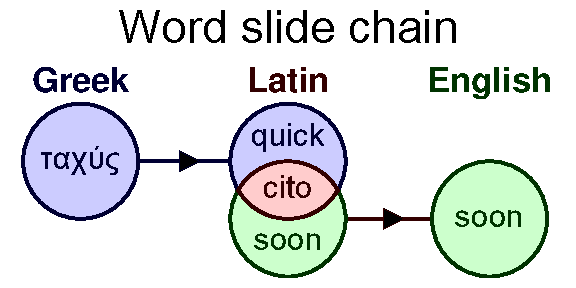
"ταχύς" ≈ "quick, rapid, soon" where the
"soon" appears to require a context for the
"quick".
Should one be
"quick" to
"agree" or should one use a
"quick" "good mind"?
98. Matthew 5:25 Quickly
Matthew 5:25 Agree with thine adversary quickly, whiles thou art in the way with him; lest at any time the adversary deliver thee to the judge, and the judge deliver thee to the officer, and thou be cast into prison. [kjv]
ισθι ευνοων τω αντιδικω σου ταχυ εως οτου ει μετ αυτου εν τη οδω μετ αυτου μηποτε μηποτε σε παραδω ο αντιδικος τω κριτη και ο κριτης σε παραδω τω τω υπηρετη και εις φυλακην βληθηση [gnt]
esto consentiens adversario … cito dum … via cum … adversarius iudici … iudex tradat … ministro … carcerem mittaris [v]
The
ancient Greek word
"ταχύς" ≈ "quick" which, depending on context, might mean
"soon". The idea of
"soon" comes from the Latin word
"cito" ≈ "quickly, speedily".
In Revelation, the Greek word for
"quickly" is often translated as
"soon" to support the idea that Jesus is coming
"soon" or that the events in Revelation were fulfilled in the first century - a view called
preterism.
99. Revelation 3:11 Quickly
Revelation 3:11 Behold, I come quickly: hold that fast which thou hast, that no man take thy crown. [kjv]
ιδου ερχομαι ταχυ κρατει ο εχεις ινα μηδεις λαβη τον στεφανον σου [gnt]
The
ancient Greek word
"ταχύς" ≈ "quick" which, depending on context, might mean
"soon". The idea of
"soon" comes from the Latin word
"cito" ≈ "quickly, speedily".
Whatever the previous verse means, the start of this verse is that Jesus will "
come" or "
go" (same word in Greek)
"quickly".
100. That that you have
Matthew 19:21 … sell that thou hast, and give to the poor, … [kjv]
… πωλησον σου τα υπαρχοντα και δος τοις πτωχοις … [gnt]
… vende quae habes et da pauperibus … [v]
Mark 10:21 … sell whatsoever thou hast, and give to the poor, … [kjv]
… οσα εχεις πωλησον και δος τοις πτωχοις … [gnt]
… quaecumque habes vende et da pauperibus … [v]
Luke 18:22 …: sell all that thou hast, and distribute unto the poor, … [kjv]
… παντα οσα εχεις πωλησον και διαδος πτωχοις … [gnt]
… omnia quaecumque habes vende et da pauperibus … [v]
It appears that, in practice, the Greek word for
"essential attributes" and
"that that thou hast" were close in meaning. The Latin uses the same word in all the verses and changes
"beggars" to
"paupers". The Matthew word ordering, as spoken by Jesus, provides an ambiguity that might be understood by unrecorded non-verbal communication.
101. Matthew 25:25
Matthew 25:25 And I was afraid, and went and hid thy talent in the earth: lo, there thou hast that is thine. [kjv]
και φοβηθεις απελθων εκρυψα το ταλαντον σου εν τη γη ιδε εχεις το σον [gnt]
The Greek word for
"earth" and
"sand" appear to be similar. In Matthew, Jesus talks about the "
house" built on
"sand". What people remembered and told Luke was the "
house" built on
"earth".
What does the Lord now
"have"? This exact Greek word is used
1 time in Matthew.
Discuss:
- Is what this servant says the truth?
- Was it, perhaps, an excuse thought up at the moment to rationalize what had been done? That is what is said in Luke.
102. Strongs - seize and hold
*G2902 *47 κρατέω (krat-eh'-o) : from G2904; to use strength, i.e. seize or retain (literally or figuratively):--hold (by, fast), keep, lay hand (hold) on, obtain, retain, take (by).
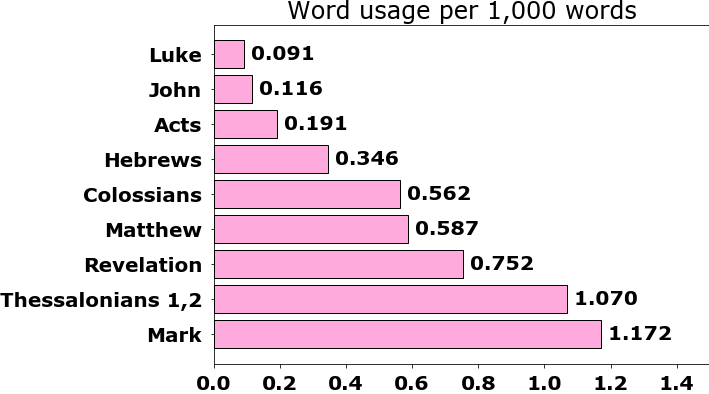 |
Words: εκρατησαμεν εκρατησαν=4 εκρατησατε=2 εκρατησεν=3 εκρατουντο κεκρατηκεναι κεκρατηνται κρατει=1 κρατειν κρατεις κρατεισθαι κρατειτε=2 κρατησαι=4 κρατησαντες=3 κρατησας=6 κρατησατε=3 κρατησει=1 κρατησωσιν κρατητε κρατουντας=3 κρατουντες κρατουντος κρατουσιν κρατωμεν κρατων=2
|
The
ancient Greek word
"κρατέω" ≈ "rule, command, conquer, seize, hold". Jesus uses this word
3 times in Matthew.
103. Usage - seize and hold
- *G2902 *47 κρατέω (krat-eh'-o) : from G2904; to use strength, i.e. seize or retain (literally or figuratively):--hold (by, fast), keep, lay hand (hold) on, obtain, retain, take (by).
κρατησαντες *3 of 47
Matthew 22:6 And the remnant took his servants, and entreated them spitefully, ...
Matthew 26:57 And they that had laid hold on Jesus led him away to ...
Mark 14:1 ... the scribes sought how they might take him by craft, ...
κρατησει *1 of 47
Matthew 12:11 ... a pit on the sabbath day, will he not lay hold on it, and ...
κρατει *1 of 47
Revelation 3:11 Behold, I come quickly: hold that fast which thou hast, ...
104. Revelation 3:11 Holding fast
Revelation 3:11 Behold, I come quickly: hold that fast which thou hast, that no man take thy crown. [kjv]
ιδου ερχομαι ταχυ κρατει ο εχεις ινα μηδεις λαβη τον στεφανον σου [gnt]
What is being
"held fast"? The
KJV translates as
"hold fast" the The
ancient Greek word
"κρατέω" ≈ "rule, command, conquer, seize, hold". Might those
"taken" have been
"branched" in some way? A "
tree" represents the human infrastructure of an empire.
105. Revelation 3:11 Crown
Revelation 3:11 Behold, I come quickly: hold that fast which thou hast, that no man take thy crown. [kjv]
ιδου ερχομαι ταχυ κρατει ο εχεις ινα μηδεις λαβη τον στεφανον σου [gnt]
The
ancient Greek word
"στέφανος" ≈ "that which encircles, surrounds, crown" and comes from
"στέφω" ≈ "encircle, put around".
The ancient Greek word
"στρέφω" ≈ "turn, direct, twist" and is related to the English word
"strap" as "
fasten". The modern Greek word
"στρέφω" (STREH-fo) ≈ "turn, direct".
- "στρέφειι" ≈ "turn, direct, twist"
106. Matthew 22:6 Taking a branch
107. Matthew 22:6 Word play
Matthew 22:6 And the remnant took his servants, and entreated them spitefully, and slew them. [kjv]
οι δε λοιποι κρατησαντες τους δουλους αυτου υβρισαν και απεκτειναν [gnt]
108. Matthew 12:11 Grab with power
Matthew 12:11 And he said unto them, What man shall there be among you, that shall have one sheep, and if it fall into a pit on the sabbath day, will he not lay hold on it, and lift it out? [kjv]
ο δε ειπεν αυτοις τις εσται εξ υμων ανθρωπος ος εξει προβατον εν και εαν εμπεση τουτο τοις σαββασιν εις βοθυνον ουχι κρατησει αυτο και εγερει [gnt]
The ancient Greek word
"κρατέω" ≈ "rule, conquer, seize, hold" and provides the last part of the English word
"democracy".
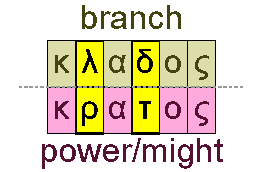
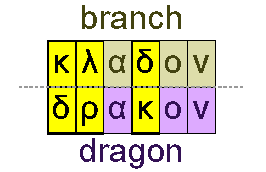
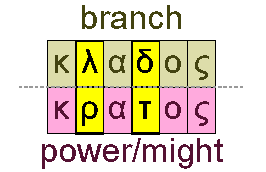
- "κλάδος" ≈ "branch".
- "κράτος" ≈ "might, strength" which is source of the word "democracy" which means "power of the people".
The Greek word for
"branch" is a play on words with "
power" or "
might". Linguistically, the liquid "
R" and "
L" are similar. Compare:
- "fried rice" and "flied lice" (Letter similarity).
- "light fires" and "fight liars" (Spoonerism).
109. Revelation 3:11 Crowned head
Revelation 3:11 Behold, I come quickly: hold that fast which thou hast, that no man take thy crown. [kjv]
ιδου ερχομαι ταχυ κρατει ο εχεις ινα μηδεις λαβη τον στεφανον σου [gnt]
There is a
"crown" on "
your" "
head".
- What "crown"?
- What "head"?
- To what does "your" (singular) refer?
- Who might be the "crown"?
- Who might be the "head"?
Note: If one does not actually have a
"crown", but only thinks that they have a
"crown", can that
"crown" be "
seized"?
110. Revelation 3:11
KJV: Behold, I come quickly: hold that fast which thou hast, that no man take thy crown.
Greek: ιδου ερχομαι ταχυ κρατει ο εχεις ινα μηδεις λαβη τον στεφανον σου
111. Review of head and hairs
Matthew 5:36 Neither shalt thou swear by thy head, because thou canst not make one hair white or black. [kjv]
5:37 But let your communication be, Yea, yea; Nay, nay: for whatsoever is more than these cometh of evil. [kjv]
10:30 But the very hairs of your head are all numbered. [kjv]
Insight: Jesus is your
"head". Believers are the
"hairs". The Greek translated as
"white" and
"black" mean
"distinct" or
"indistinct". Latin
"sermo" ≈ "conversation, speech".
Matthew 5:36:
Do not swear by your head as Jesus because you cannot make/judge/separate one believer/person as 'white' or 'black'. (or "
narrow gate" or "
wide area" or "
heaven" or "
hell", etc.).
Matthew 5:37:
But let your rational explanation (to the points provided and implied) be yes, yes no, no. Whatever is more is out of the evil/oppression.
Matthew 10:30:
But the very hairs or believers/persons of your head as Jesus are all numbered.
112. Revelation 3:12
KJV: Him that overcometh will I make a pillar in the temple of my God, and he shall go no more out: and I will write upon him the name of my God, and the name of the city of my God, which is new Jerusalem, which cometh down out of heaven from my God: and I will write upon him my new name.
Greek: ο νικων ποιησω αυτον στυλον εν τω ναω του θεου μου και εξω ου μη εξελθη ετι και γραψω επ αυτον το ονομα του θεου μου και το ονομα της πολεως του θεου μου της καινης ιερουσαλημ η καταβαινουσα εκ του ουρανου απο του θεου μου και το ονομα μου το καινον
113. Revelation 3:12 New mind
Revelation 3:12 Him that overcometh will I make a pillar in the temple of my God, and he shall go no more out: and I will write upon him the name of my God, and the name of the city of my God, which is new Jerusalem, which cometh down out of heaven from my God: and I will write upon him my new name. [kjv]
ο νικων ποιησω αυτον στυλον εν τω ναω του θεου μου και εξω ου μη εξελθη ετι και γραψω επ αυτον το ονομα του θεου μου και το ονομα της πολεως του θεου μου της καινης ιερουσαλημ η καταβαινουσα εκ του ουρανου απο του θεου μου και το ονομα μου το καινον [gnt]
- "καινοῦ" ≈ "new" in the genitive from "καινός" ≈ "new".
- "και" ≈ "and" and "νοῦ" ≈ "mind, brain" in the genitive from "νοῦς" ≈ "mind, brain".
The last Greek word for
"new" can be a play on words for
"and" "mind"
114. Diogenes Laertius: New clothes and a brain
115. Matthew 9:17 Double meaning
Matthew 9:17 Neither do men put new wine into old bottles: else the bottles break, and the wine runneth out, and the bottles perish: but they put new wine into new bottles, and both are preserved. [kjv]
ουδε βαλλουσιν οινον νεον εις ασκους παλαιους ει δε μηγε ρηγνυνται οι ασκοι και ο οινος εκχειται και οι ασκοι απολουνται απολλυνται αλλα βαλλουσιν οινον νεον εις ασκους καινους και αμφοτερα αμφοτεροι συντηρουνται [gnt]
- "καινοῦς" ≈ "new" (accusative) from "καινός" ≈ "new".
- "και" ≈ "and" and "νοῦς" ≈ "mind, brain" (nominative).
As translated:
... but they put new wine into new bottles and both are preserved.
Greek word order:
... but they put wine new into bottles new and both are preserved.
Play on words:
... but they put new wine into bottles and mind and both are preserved.
That is, the new "
doctrine" of the "
wine" (as in "
drink my blood") is put into the containers (body) and the "
mind" and, thus, both body and mind are preserved (resurrected). If one puts new "
doctrine" of the "
wine" into the old containers (body) those containers are not preserved (resurrected)
116. Genesis 19:26
Genesis 19:26 But his wife looked back from behind him, and she became a pillar of salt. [kjv]
και επεβλεψεν η γυνη αυτου εις τα οπισω και εγενετο στηλη αλος [lxx]
Is it good to become a "
pillar" in the "
church"?
If your "
church" is a "
desert" or "
wilderness", and your church has "
bad" "
salt", do you want to become a "
pillar" in that "
church"?
117. Genesis 19:26
KJV: But his wife looked back from behind him, and she became a pillar of salt.
Hebrew: ותבט אשתו מאחריו ותהי נציב מלח׃
Greek: και επεβλεψεν η γυνη αυτου εις τα οπισω και εγενετο στηλη αλος
118. Luke 17:32
Luke 17:32 Remember Lot's wife. [kjv]
μνημονευετε της γυναικος λωτ [gnt]
119. Luke 17:32
KJV: Remember Lot's wife.
Greek: μνημονευετε της γυναικος λωτ
120. Philadelphia
121. End of page