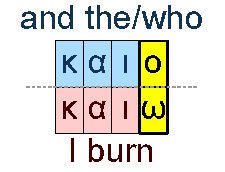
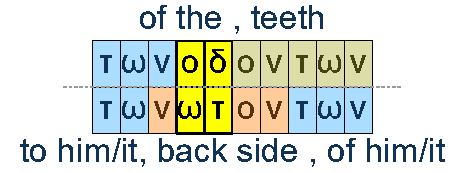
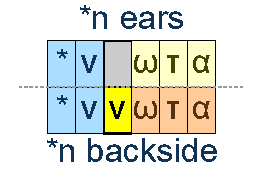
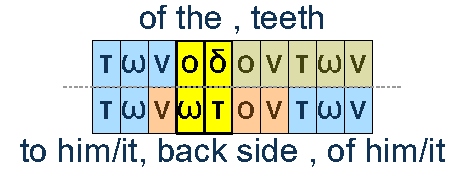
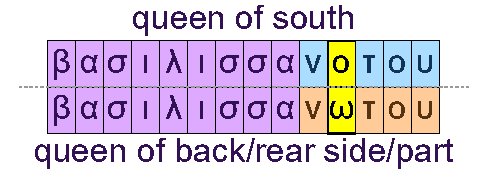
Romans 11:10 Let their eyes be darkened, that they may not see, and bow down their back alway. [kjv]
σκοτισθητωσαν οι οφθαλμοι αυτων του μη βλεπειν και τον νωτον αυτων διαπαντος δια παντος συγκαμψον [gnt]
34. Playing by ear
Some people can hear the exact tones being played. That is, they have perfect pitch or absolute pitch.
Some people can add harmony to a melody in real time. This is like improvisation but follows rules for such harmonization. Why is rap music degenerate?

In the 1970's, Rodney Shearer, a pastor just starting out, could do such playing. Years later, in graduate school, I learned enough of music theory to understand how this can be done.
35. Punishment by mondegreens: misheard lyrics
A
mondegreen is pun consisting of a misheard lyric or verse that sounds like something other than what was written.
The term "
mondegreen" was coined by
Sylvia Wright in 1954 who as a child had heard the poem line "
laid him on the green" as "
Lady Mondegreen".
Here are some hymn titles or lines that are mondegreens.
Gladly, the cross-eye bear
Come on oh kinky turtle
Andy walks with me
Bringing in the sheets
A maze of grapes, how sweet and round
How late though art (for the Spring time change)
While shepherds washed their socks by night
36. Song: Open my eyes that I may see
Psalms 119:18 Open thou mine eyes, that I may behold wondrous things out of thy law. [kjv]
… עיני … [he]
αποκαλυψον τους οφθαλμους μου και κατανοησω τα θαυμασια σου εκ του νομου σου [lxx]
The hymn "
Open my eyes that I may see" was based on Psalms 119:18. Additional verses cover the
"ears", "
mouth" and "
mind".
It was written in 1895 by
Clara Scott (American composer) . Growing up on a farm in the mid-west, the family moved to Chicago. She was the first woman to publish a volume of anthems. In 1897, returning from a funeral with some friends, she was thrown from her carriage and died instantly from the accident at age 55.
[hymn 486]
37. Verse 1
Open my eyes that I may see
glimpses of truth thou hast for me.
Place in my hands the wonderful key
that shall unclasp and set me free.
Silently now I wait for thee,
ready, my God, thy will to see.
Open my eyes, illumine me,
Spirit divine!
38. Verse 2
Open my ears that I may hear
voices of truth thou sendest clear,
and while the wave notes fall on my ear,
ev’rything false will disappear.
Silently now I wait for thee,
ready, my God, thy will to see.
Open my ears, illumine me,
Spirit divine!
39. Shibboleth: how something is said
Judges 12:6 Then said they unto him, Say now Shibboleth: and he said Sibboleth: for he could not frame to pronounce it right. Then they took him, and slew him at the passages of Jordan: and there fell at that time of the Ephraimites forty and two thousand. [kjv]
… שבלת … סבלת … [he]
Originally, from the book of Joshua in the
OT (Old Testament), a
"shibboleth" was a sound that a particular group of people have trouble pronouncing and that was used as a form of audible password or authentication mechanism in battle of identifying "
friend" or "
foe", that is, an
IFF (Identify Friend or Foe) system.
Today, the meaning has been generalized to be any sound that distinguishes a group of people.
40. Matthew 11:15
Matthew 11:15 He that hath ears to hear, let him hear. [kjv]
ο εχων ωτα ακουειν ακουετω [gnt]
After this verse, Jesus makes a short statement that appear to have three (or more) meanings.
A literal meaning (good).
A figurative meaning (opinion).
A code-word meaning (recommended by Jesus)
A play-on-words meaning (bad, code word meaning).
A Spoonerism meaning (ugly, code word meaning, sometimes opposite meaning).
41. Jesus speaking
It appears that Jesus uses play-on-word meanings when he is speaking in front of the general public and the religious authorities. Both Greek and Aramaic were spoken and understood by most everyone. The religious establishment appears to have spent a lot of time learning to read and write Hebrew (no longer spoken) and tended to look down on Greek. Therefore, they understood when Jesus used Greek but often did not follow the play-on-word sayings. Most of the general public, however, would have followed the play-on-words without difficulty.
42. Matthew 11:15
KJV: He that hath ears to hear, let him hear.
Greek: ο εχων ωτα ακουειν ακουετω
43. Matthew 13:9,43 Matthew Kingdom Parables
Matthew 13:9 Who hath ears to hear, let him hear. [kjv]
ο εχων ωτα ακουειν ακουετω [gnt]
13:43 Then shall the righteous shine forth as the sun in the kingdom of their Father. Who hath ears to hear, let him hear. [kjv]
τοτε οι δικαιοι εκλαμψουσιν ως ο ηλιος εν τη βασιλεια του πατρος αυτων ο εχων ωτα ακουειν ακουετω [gnt]
Jesus uses the
"ear" phrase many times during the telling of the Kingdom Parables in Matthew 13.
These verses started my search for
"hearing" with the
"ear" play on words as spoken by Jesus. I had found two near these verses and continued my search for more.
44. Matthew 5:45 Under the weather
Matthew 5:45 That ye may be the children of your Father which is in heaven: for he maketh his sun to rise on the evil and on the good, and sendeth rain on the just and on the unjust. [kjv]
οπως γενησθε υιοι του πατρος υμων του εν ουρανοις οτι τον ηλιον αυτου ανατελλει επι πονηρους και αγαθους και βρεχει επι δικαιους και αδικους [gnt]
The Greek word translated as "
be" is that of "
coming into being".
The "sun" rises on the "evil" or "oppressive" and the "good". Are these opposites?
It "rains" on the "just" and the "unjust". These are, by definition, opposites.
At the end of the Sermon on the Mount, the "
rain" will fall on
both the "
house" built on the "
rock" and the "
house" built on "
sand". Only
one will
fall.
Jesus will speak many verses having to do with "
evil" and "
good". Are these
opposites?
45. Matthew 5:45
Matthew 5:45 That ye may be the children of your Father which is in heaven: for he maketh his sun to rise on the evil and on the good, and sendeth rain on the just and on the unjust. [kjv]
οπως γενησθε υιοι του πατρος υμων του εν ουρανοις οτι τον ηλιον αυτου ανατελλει επι πονηρους και αγαθους και βρεχει επι δικαιους και αδικους [gnt]
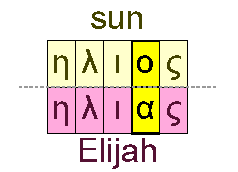
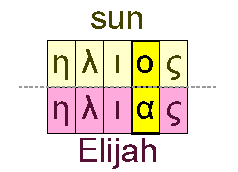
"ἥλιος" ≈ "sun, east, day, sunshine"
"Ἠλίας" ≈ "Elijah".
Since Jesus associates
John the Baptist with
Elijah, it is interesting to see how Jesus uses the word for "
sun".
Elijah was taken away in a chariot of fire.
... sends the sun [call to repentance, think after, through the John connection] on the oppressive and the good ...
... and rain [theft] on the righteous and unrighteous.
46. Play by play review
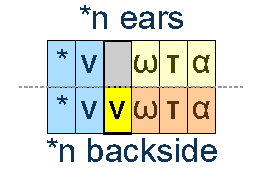
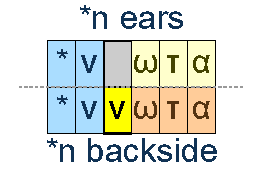
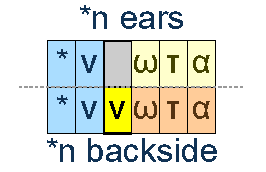
How well does the idea of "ears" fit with that of "backside/rear"?
How well does the idea of "sun" fit with "Elijah" and, by implication, "John" and the call to "repentance" as, literally, "thinking after"?
How well do these ideas go together to refer to a place where the "sun" does not "shine"?
47. Matthew 13:9
KJV: Who hath ears to hear, let him hear.
Greek: ο εχων ωτα ακουειν ακουετω
48. Matthew 13:43
KJV: Then shall the righteous shine forth as the sun in the kingdom of their Father. Who hath ears to hear, let him hear.
Greek: τοτε οι δικαιοι εκλαμψουσιν ως ο ηλιος εν τη βασιλεια του πατρος αυτων ο εχων ωτα ακουειν ακουετω
49. Matthew 13:15-16 Kingdom Parables
Matthew 13:15 For this people's heart is waxed gross, and their ears are dull of hearing, and their eyes they have closed; lest at any time they should see with their eyes, and hear with their ears, and should understand with their heart, and should be converted, and I should heal them. [kjv]
επαχυνθη γαρ η καρδια του λαου τουτου και τοις ωσιν βαρεως ηκουσαν και τους οφθαλμους αυτων εκαμμυσαν μηποτε ιδωσιν τοις οφθαλμοις και τοις ωσιν ακουσωσιν και τη καρδια συνωσιν και επιστρεψωσιν και ιασωμαι ιασομαι αυτους [gnt]
13:16 But blessed are your eyes, for they see: and your ears, for they hear. [kjv]
υμων δε μακαριοι οι οφθαλμοι οτι βλεπουσιν και τα ωτα υμων οτι ακουει ακουουσιν [gnt]
50. Matthew 13:15
KJV: For this people's heart is waxed gross, and their ears are dull of hearing, and their eyes they have closed; lest at any time they should see with their eyes, and hear with their ears, and should understand with their heart, and should be converted, and I should heal them.
Greek: επαχυνθη γαρ η καρδια του λαου τουτου και τοις ωσιν βαρεως ηκουσαν και τους οφθαλμους αυτων εκαμμυσαν μηποτε ιδωσιν τοις οφθαλμοις και τοις ωσιν ακουσωσιν και τη καρδια συνωσιν και επιστρεψωσιν και ιασωμαι ιασομαι αυτους
51. Matthew 13:16
KJV: But blessed are your eyes, for they see: and your ears, for they hear.
Greek: υμων δε μακαριοι οι οφθαλμοι οτι βλεπουσιν και τα ωτα υμων οτι ακουει ακουουσιν
52. Mark Ears to hear
Mark 4:9 And he said unto them, He that hath ears to hear, let him hear. [kjv]
και ελεγεν αυτοις ο εχων ος εχει ωτα ακουειν ακουετω [gnt]
4:23 If any man have ears to hear, let him hear. [kjv]
ει τις εχει ωτα ακουειν ακουετω [gnt]
7:16 If any man have ears to hear, let him hear. [kjv]
8:18 Having eyes, see ye not? and having ears, hear ye not? and do ye not remember? [kjv]
οφθαλμους εχοντες ου βλεπετε και ωτα εχοντες ουκ ακουετε και ου μνημονευετε [gnt]
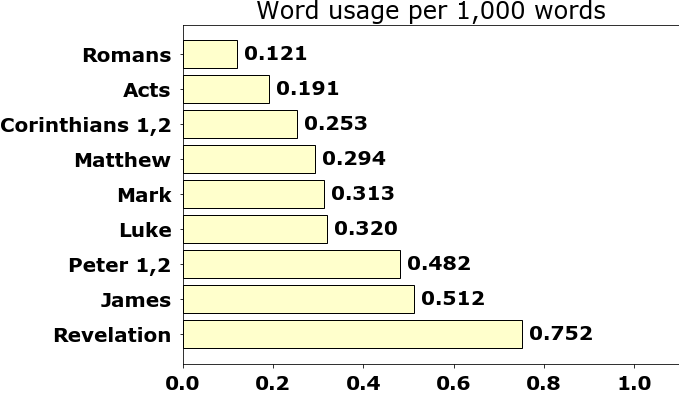
Mark repeats many of the
"ear" verses from Matthew.
53. Mark 4:9
KJV: And he said unto them, He that hath ears to hear, let him hear.
Greek: και ελεγεν αυτοις ο εχων ος εχει ωτα ακουειν ακουετω
54. Mark 4:23
KJV: If any man have ears to hear, let him hear.
Greek: ει τις εχει ωτα ακουειν ακουετω
55. Mark 7:16
KJV: If any man have ears to hear, let him hear.
Greek: ει τις εχει ωτα ακουειν ακουετω
56. Mark 8:18
KJV: Having eyes, see ye not? and having ears, hear ye not? and do ye not remember?
Greek: οφθαλμους εχοντες ου βλεπετε και ωτα εχοντες ουκ ακουετε και ου μνημονευετε
57. Luke Ears to hear
Luke 8:8 And other fell on good ground, and sprang up, and bare fruit an hundredfold. And when he had said these things, he cried, He that hath ears to hear, let him hear. [kjv]
και ετερον επεσεν επι εις την γην την αγαθην και φυεν εποιησεν καρπον εκατονταπλασιονα ταυτα λεγων εφωνει ο εχων ωτα ακουειν ακουετω [gnt]
14:35 It is neither fit for the land, nor yet for the dunghill; but men cast it out. He that hath ears to hear, let him hear. [kjv]
ουτε εις γην ουτε εις κοπριαν ευθετον εστιν εξω βαλλουσιν αυτο ο εχων ωτα ακουειν ακουετω [gnt]
58. Luke 8:8
KJV: And other fell on good ground, and sprang up, and bare fruit an hundredfold. And when he had said these things, he cried, He that hath ears to hear, let him hear.
Greek: και ετερον επεσεν επι εις την γην την αγαθην και φυεν εποιησεν καρπον εκατονταπλασιονα ταυτα λεγων εφωνει ο εχων ωτα ακουειν ακουετω
59. Luke 14:35
KJV: It is neither fit for the land, nor yet for the dunghill; but men cast it out. He that hath ears to hear, let him hear.
Greek: ουτε εις γην ουτε εις κοπριαν ευθετον εστιν εξω βαλλουσιν αυτο ο εχων ωτα ακουειν ακουετω
60. Revelation: To count on ears
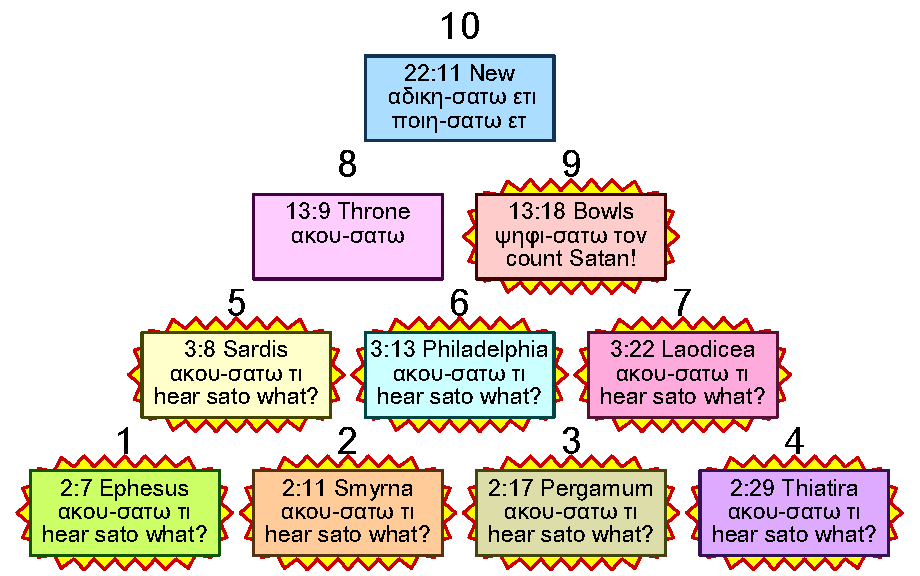
The warning about
"ears" and
"hearing" are at the end of
each of the
seven letters to a church in Revelation. There appears to be some play on words and a form of a joke, so to speak, in the patterns of the suffix of the Greek word.
The ancient Greek word
"ακουσατω" ≈ "let him hear". This
exact word for "
let him hear" appears
8 times in the
GNT (Greek New Testament) and only in Revelation. It appears
5 times in the
LXX (Septuagint).
Other verbs with a
different root but with the
same suffix "
σατω" appear
3 other times in Revelation (twice in one verse) and only
6 other times in the rest of the
GNT (in Luke and 1 Peter and James).
61. Build-up to the punch line play on words
 |
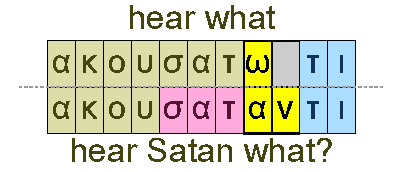
To each of the seven churches: "He that hath an ear, let him hear what the Spirit saith unto the churches ..."
|
1-7: Churches: "hear" "sato" "what?" Might these be related to the seven evil spirits that return to the "house" in Matthew 12?
9: Bowls: "count" "Satan" (serpent, dragon).
62. Revelation build on a Greek suffix
1
2
3
4
5
6
7
8
9
10
11
12
13
+
-
▶
|
The other places in the
GNT that this suffix appears, Luke and 1 Peter, do not have words related to
"hearing" or "
counting".
What might be the purpose of telling the reader to "
count" "
σατω" with certain play on words with "
Satan"? Might it be related to the number of "
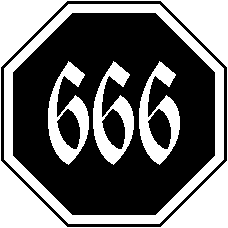
666" in the
same verse, Revelation 13:18?
63. End of page




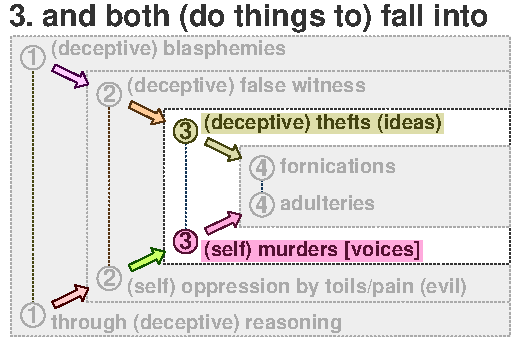 The third part of the process is that of the "pigs" performing or doing the deception. That is, the "muscle" or "hands".