Send
Close Add comments:
(status displays here)
Got it! This site "creationpie.org" uses cookies. You consent to this by clicking on "Got it!" or by continuing to use this website. Note: This appears on each machine/browser from which this site is accessed.
That that is had
1. That that is had
This content is being developed.
2. Matthew 19:21 Essential attributes
Matthew 19:21 Jesus said unto him, If thou wilt be perfect, go and sell that thou hast, and give to the poor, and thou shalt have treasure in heaven: and come and follow me. [kjv]
εφη αυτω ο ιησους ει θελεις τελειος ειναι υπαγε πωλησον σου τα υπαρχοντα και δος τοις πτωχοις και εξεις θησαυρον εν ουρανω ουρανοις και δευρο ακολουθει μοι [gnt]
What are the implications of the following?
Give all your "wealth" to the "poor" (English translations).
Give all of your "essential attributes" to the "beggars". If it is a problem for you, how will it help them?
Give all of the "essential attributes" of Jesus to the "beggars".
Does the word order make a difference?
Greek word order: ... sell (of) you the essential attributes and ...
English word order: ... sell the essential attributes (of) you and ...
3. Under rule
The
ancient Greek word
"ὑπάρχοντα" ≈ "begin, take the initiative, act first" is often translated as
abstract "essential attributes" (e.g., in the writings of Aristotle) but in the
GNT (Greek New Testament), the same word is often translated as
physical "goods".
This word comes from the
ancient Greek word
"ὑπάρχω" ≈ "begin, take the initiative, act first" and comes from two Greek words.
"υπό" ≈ "under" as in English words beginning with "hypo-".
"ἄρχω" ≈ "begin, rule, lead".
Might the
"essential attributes" of Jesus be that of an
"under" "rule" from the
bottom and
not from the
top as in a top-down hierarchical tree power structure?
Discuss: Has the "
church" ever ignored the
"under" part and assumed a
"rule" from the
top?
Aside: Some Greek (and other language) experts will make fun of those trying to get meaning from the underlying parts of the words. Jesus appears to make fun of those experts, at times, by using words where the code word meaning is that of the underlying parts. To see this, go stand under a tree and then you might understand the tree.
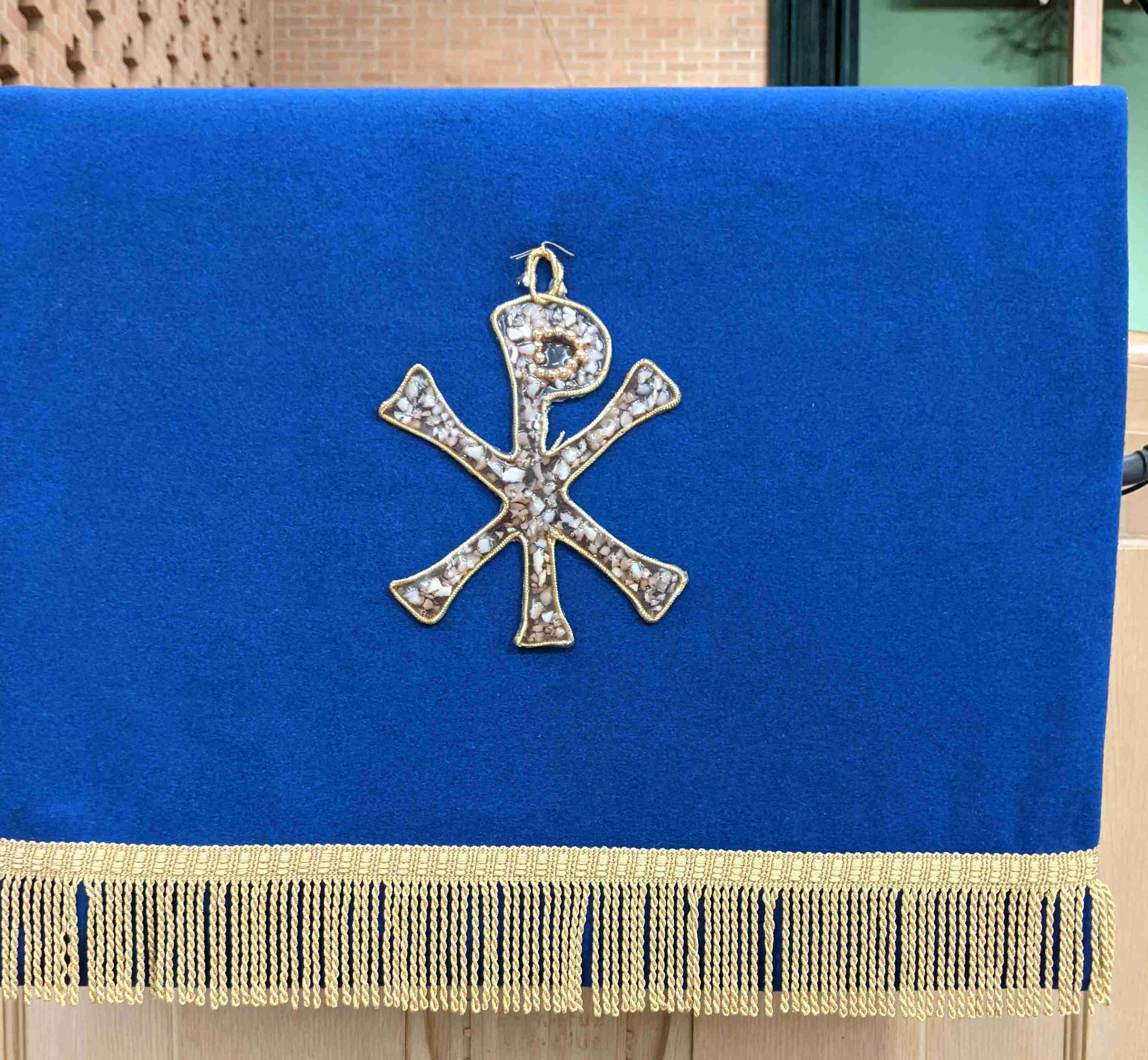
4. Chi Rho
|
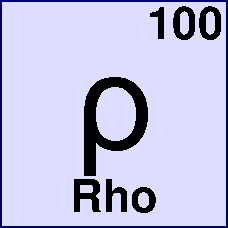
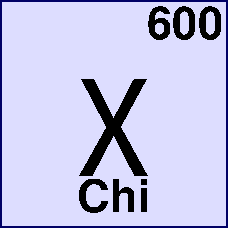
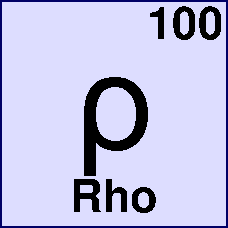
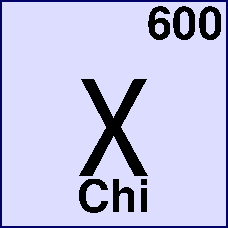
χ + ρ = ☧ = Χ + Ρ
|
 |
The "
chi rho" symbol became established under
Constantine as a combination of two Greek letters, "
chi" and "
rho", the first two letters of
"Χριστός" ≈ "Christ".
Might there by any interesting
gematria meanings from the two letters?
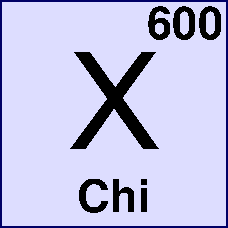
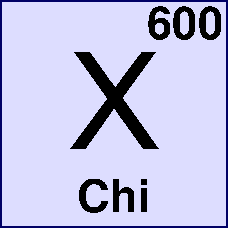
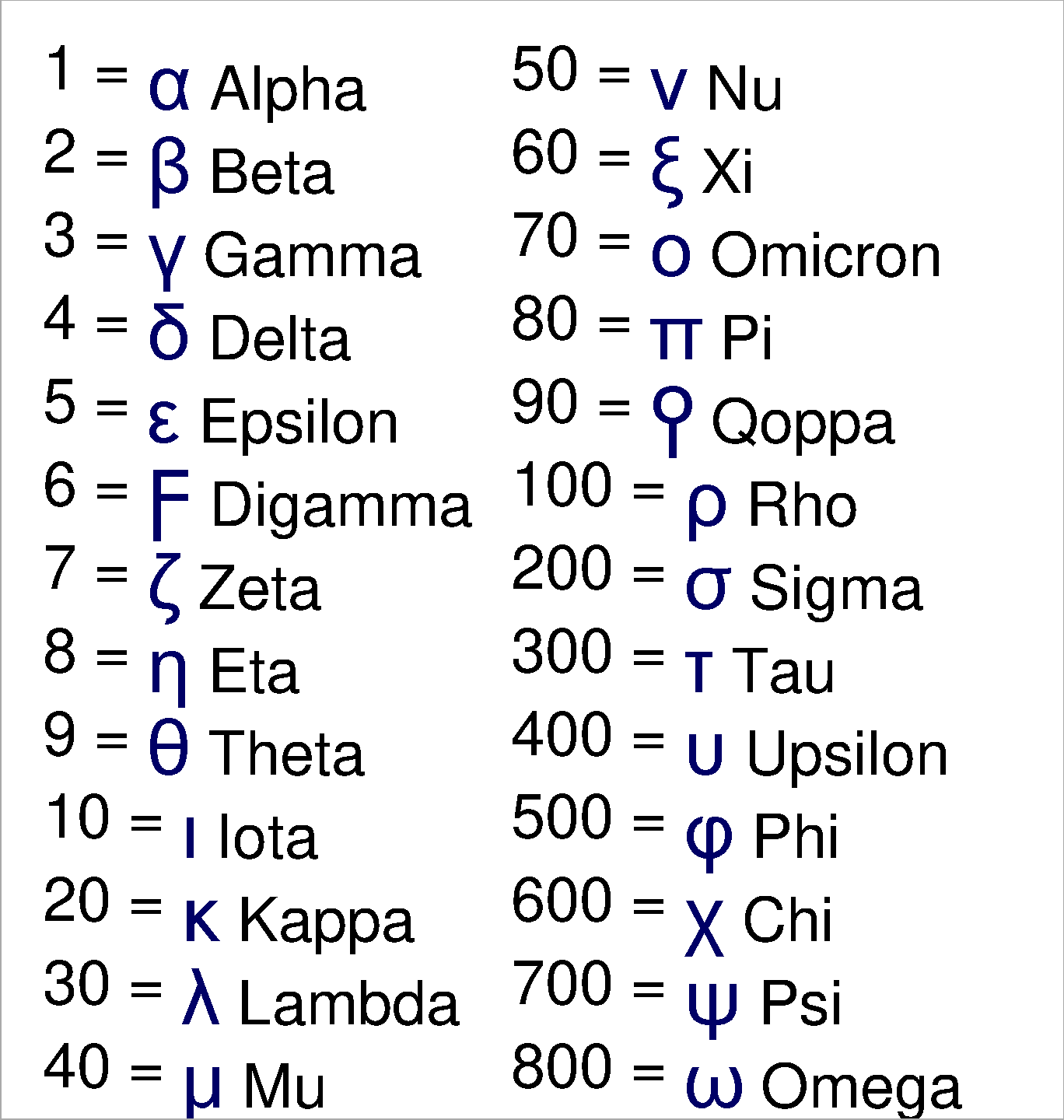
"χ" or "Χ" = 600 (part of 666).
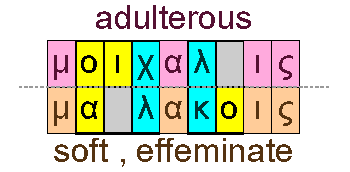
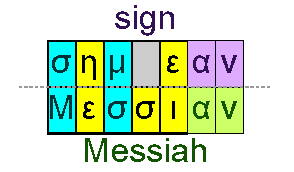
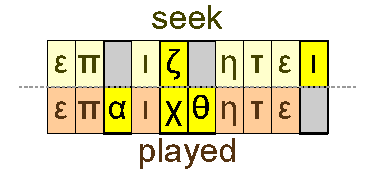
"ρ" or "Ρ" = 100.
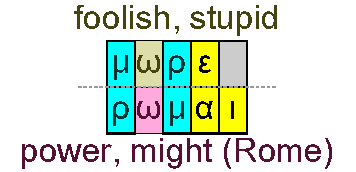
Note that "
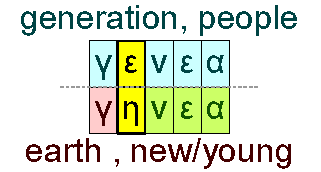
rho" is also the first letter of "
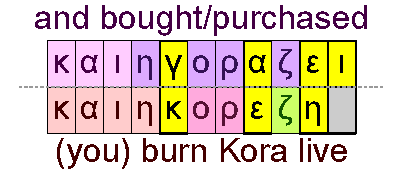
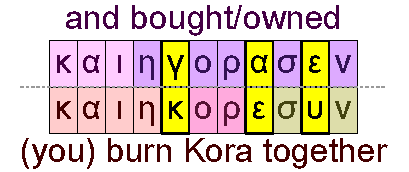
Rome" and the
power/might of "
Rome".
 |
Details are left as a future topic.
|
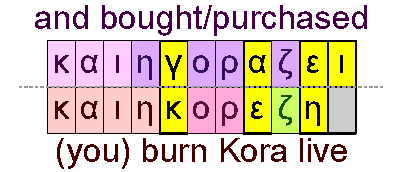
The Unicode for "
Chi Rho" in the miscellaneous symbols block is "
U+2627" or
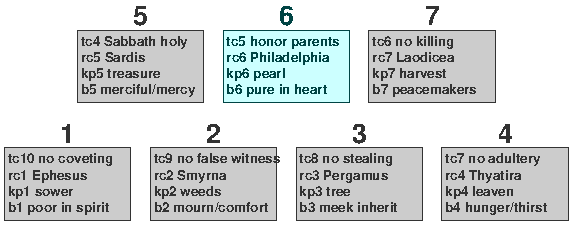
☧.
5. Chi Rho
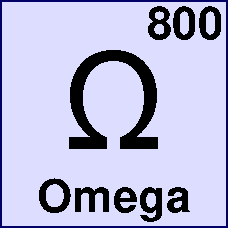
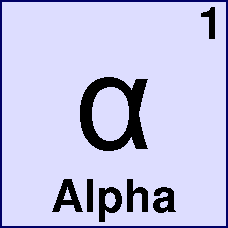
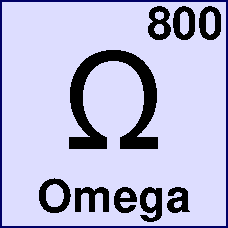
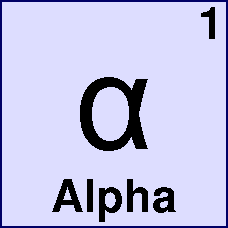
6. Chrismon of Saint Ambrose
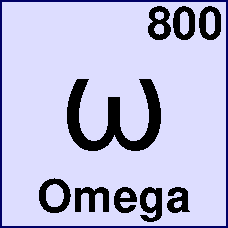
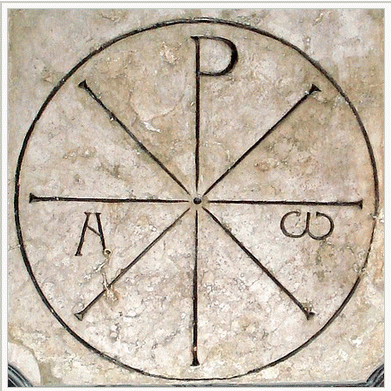
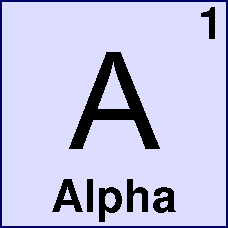
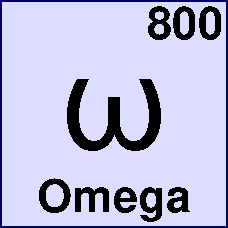
The so-called "Chrismon of Saint Ambrose" (Chrismon Sancti Ambrosii), on display on the eastern wall of Milan Cathedral, a Chi-Rho combined with Alpha and Omega in a circle. According to Landulf of Milan (12th century), it was used by Saint Ambrose to introduce the catechumens to the mysteries of the Christian faith (whence it was called "oracle" or chresmos of St. Ambrose, written by Landulf as crismon, whence the later Neo-Latin term for the Chi-Rho symbol). Wikipedia. (as of 2025-03-30)
[Augustine, when in Rome]
"ἄρχω" ≈ "I begin, I rule, I lead".
"κύριος" ≈ "lord or master" is the source of the word "church".
"ἐκκλησία" ≈ "assembly, called-out, church" (word used by Jesus for His church).
7. Matthew 19:21 Existence of essential attributes
The ancient Greek word
"ὑπάρχοντα" ≈ "begin, take the initiative, act first" is an inflection of
"ὑπάρχων" ≈ "begin, take the initiative, act first" which comes from
"ὑπάρχω" ≈ "begin, take the initiative, act first" and comes from two Greek words.
"υπό" ≈ "under" as in English words beginning with "hypo-".
"ἄρχω" ≈ "begin, rule, lead".
As a
noun (participle), Aristotle uses this word many times. The usual translations is that of an
"essential attribute". This
abstract idea might be expressed in English as
"have the goods" on someone. In
context, it can be a
concrete entity.
The
GNT appears to translate this word as a
concrete "goods" and not as a more
abstract idea of
"essential attributes", which can have a
physical manifestation.
8. Aristotle: Prior Analytics
In his
Prior Analytics, Aristotle uses the word
"ὑπάρχω" ≈ "begin, take the initiative, act first" twice, as noun (participle) and verb, in the same sentence.
English: … We must look for the attributes and subjects of both our terms, … (Loeb#325, p 357)
Greek: δεῖ γὰρ τὰ ὑπάρχοντα καὶ οἷς ὑπάρχει περὶ ἑκάτερον ἀθρεῖν, … Aristotle: Prior Analytics [46a]
The ancient Greek word
"ὑπάρχω" ≈ "begin, take the initiative, act first".
The "attributes" as in "essential attributes" and are abstract and potential.
The "subjects", using a variation of the same word, are realized actualities and concrete.
9. That that is had
Matthew 19:21 Jesus said unto him, If thou wilt be perfect, go and sell that thou hast, and give to the poor, and thou shalt have treasure in heaven: and come and follow me. [kjv]
εφη αυτω ο ιησους ει θελεις τελειος ειναι υπαγε πωλησον σου τα υπαρχοντα και δος τοις πτωχοις και εξεις θησαυρον εν ουρανω ουρανοις και δευρο ακολουθει μοι [gnt]
… perfectus … vende quae habes … da pauperibus … thesaurum … caelo … veni sequere … [v]
The
ancient Greek word
"ὑπάρχοντα" ≈ "begin, take the initiative, act first" is often translated as
"goods" as in material possessions. How did the
KJV (King James Version) come to translate this as that that thou "
that that is had" or
"that thou hast"? The usual hint is to check the
Latin.
The word, as used by Jesus, can be physical and
concrete and/
or mental and
abstract. This is seen in how Matthew records what Jesus is saying and in Mark and Luke which records what certain people remembered Jesus saying.
The
"sell" words, as used by Jesus, come in two variations.
10. Matthew 25:14 The goods on goods
This is the beginning of the parable of the
talents.
Matthew 25:14 For the kingdom of heaven is as a man travelling into a far country, who called his own servants, and delivered unto them his goods. [kjv]
ωσπερ γαρ ανθρωπος αποδημων εκαλεσεν τους ιδιους δουλους και παρεδωκεν αυτοις τα υπαρχοντα αυτου [gnt]
"ὑπάρχοντα" ≈ "begin, take the initiative, act first" from "υπό" ≈ "under" as in English words beginning with "hypo-" and "ἄρχω" ≈ "begin, rule, lead".
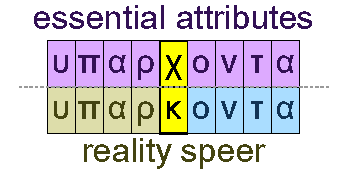
"ὕπαρ" ≈ "reality (view)", as compared to a dream, and "κοντᾰ́" ≈ "short (spear)" as in a short "sword".
The ancient Greek word
"ὑπάρχω" ≈ "begin, take the initiative, act first". How do the "
servants" know what to do with what is provided?
11. Matthew 25:14 Translations
Matthew 25:14 For the kingdom of heaven is as a man travelling into a far country, who called his own servants, and delivered unto them his goods. [kjv]
ωσπερ γαρ ανθρωπος αποδημων εκαλεσεν τους ιδιους δουλους και παρεδωκεν αυτοις τα υπαρχοντα αυτου [gnt]
NIV (New International Version):
Again, it will be like a man going on a journey, who called his servants and entrusted his wealth to them.
NLT (New Living Translation):
For it will be like a man going on a journey, who called his servants and entrusted to them his property.
Berean Literal Bible:
For it is like a man going on a journey who called his own servants and delivered his possessing to them.
The "entrusted" is an assumption. The Greek is that of "handing over" as in "tradition" as in "traitor" as in "deliver".
12. Church fathers: Barnabas
In the Epistle of Barnabas, the word
"ὑπάρχω" ≈ "begin, take the initiative, act first" is translated as
"is" which may be thought of as
"is (as the first initiative)" as in
"essential attributes".
English: ... For if he had not come in the flesh, people could in no way have been saved by looking at him. For when they look at merely the sun they are not able to gaze at its rays, even though it is the work of his hands and will eventually cease to exist. ... (Holmes, p. 395)
Greek: … ει γαρ μη ἐν σαρκί, οὐδ’ ἂν πως οἱ ἄνθρωποι ἐσώθησαν βλέποντες αὐτόν, ὅτε τόν μέλλοντα μὴ εἶναι ἥλιον, ἔργον τῶν χειρῶν αὐτοῦ ὑπάρχοντα, ἐμβλέποντες οὐκ ἰσχύουσιν εἰς τὰς ἀκτῖνας αὐτοῦ ἀντοφθαλμῆσαι; … [5.10]
The Greek word translated as
"able" is that of
"strong (enough)".
13. First Clement
In the first paragraph of First Clement, the word
"ὑπάρχω" ≈ "begin, take the initiative, act first" appears to have been translated as
"persons".
English: ... especially the detestable and unholy schism, so alien and strange to those chosen by God, which a few reckless and arrogant persons have kindled to such a pitch of insanity that your good name, once so renowned and loved by all, has been greatly reviled. (Holmes, 2007, p. 14)
Greek: … τῆς τε ἀλλοτρίας καὶ ξένης τοῖς ἐκλεκτοῖς τοῦ θεοῦ, μιαρᾶς καὶ ἀνοσίου στάσεως ἣν ὀλίγα πρόσωπα προπετῆ καὶ αὐθάδη ὑπάρχοντα εἰς τοσοῦτον ἀπονοίας ἐξέκαυσαν, ὥστε τὸ σεμνὸν καὶ περιβόητον καὶ πᾶσιν ἀνθρώποις ἀξιαγάπητον ὄνομα ὑμῶν μεγάλως βλασφημηθῆναι. First Clement [1]
Clement appears to not know that the
"elect" as used by Jesus refers to those who are
not good.
14. Mark 10:21 Sell that that you have
Mark 10:21 Then Jesus beholding him loved him, and said unto him, One thing thou lackest: go thy way, sell whatsoever thou hast, and give to the poor, and thou shalt have treasure in heaven: and come, take up the cross, and follow me. [kjv]
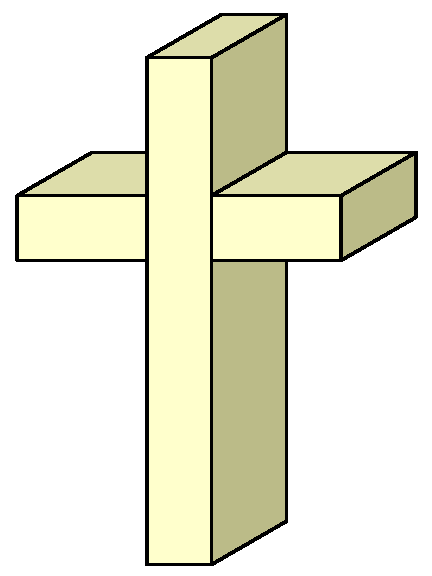
ο δε ιησους εμβλεψας αυτω ηγαπησεν αυτον και ειπεν αυτω εν σοι σε υστερει υπαγε οσα εχεις πωλησον και δος τοις πτωχοις και εξεις θησαυρον εν ουρανω και δευρο ακολουθει μοι αρας τον σταυρον [gnt]
… quaecumque habes vende … da pauperibus … [v]
"ὅσα" ≈ "as far as" and "ἔχει" ≈ "had" (third person singular active indicative).
The Latin word
"veneo" ≈ "to be sold, go on sale". The phrase
"venum do" ≈ "give for sale".
15. Mark 10:21
KJV: Then Jesus beholding him loved him, and said unto him, One thing thou lackest: go thy way, sell whatsoever thou hast, and give to the poor, and thou shalt have treasure in heaven: and come, take up the cross, and follow me.
Greek: ο δε ιησους εμβλεψας αυτω ηγαπησεν αυτον και ειπεν αυτω εν σοι σε υστερει υπαγε οσα εχεις πωλησον και δος τοις πτωχοις και εξεις θησαυρον εν ουρανω και δευρο ακολουθει μοι αρας τον σταυρον
Latin: Iesus autem intuitus eum dilexit eum et dixit illi unum tibi deest vade quaecumque habes vende et da pauperibus et habebis thesaurum in caelo et veni sequere me
16. Luke 18:22 Sell what you have
Luke 18:22 Now when Jesus heard these things, he said unto him, Yet lackest thou one thing: sell all that thou hast, and distribute unto the poor, and thou shalt have treasure in heaven: and come, follow me. [kjv]
ακουσας δε ταυτα ο ιησους ειπεν αυτω ετι εν σοι λειπει παντα οσα εχεις πωλησον και διαδος πτωχοις και εξεις θησαυρον εν ουρανω τοις ουρανοις και δευρο ακολουθει μοι [gnt]
… omnia quaecumque habes vende … da pauperibus … [v]
"ὅσα" ≈ "as far as" and "ἔχει" ≈ "had" (third person singular active indicative).
17. Luke 18:22
KJV: Now when Jesus heard these things, he said unto him, Yet lackest thou one thing: sell all that thou hast, and distribute unto the poor, and thou shalt have treasure in heaven: and come, follow me.
Greek: ακουσας δε ταυτα ο ιησους ειπεν αυτω ετι εν σοι λειπει παντα οσα εχεις πωλησον και διαδος πτωχοις και εξεις θησαυρον εν ουρανω τοις ουρανοις και δευρο ακολουθει μοι
Latin: quo audito Iesus ait ei adhuc unum tibi deest omnia quaecumque habes vende et da pauperibus et habebis thesaurum in caelo et veni sequere me
18. That that you have
Matthew 19:21 … sell that thou hast, and give to the poor, … [kjv]
… πωλησον σου τα υπαρχοντα και δος τοις πτωχοις … [gnt]
… vende quae habes et da pauperibus … [v]
Mark 10:21 … sell whatsoever thou hast, and give to the poor, … [kjv]
… οσα εχεις πωλησον και δος τοις πτωχοις … [gnt]
… quaecumque habes vende et da pauperibus … [v]
Luke 18:22 …: sell all that thou hast, and distribute unto the poor, … [kjv]
… παντα οσα εχεις πωλησον και διαδος πτωχοις … [gnt]
… omnia quaecumque habes vende et da pauperibus … [v]
It appears that, in practice, the Greek word for
"essential attributes" and
"that that thou hast" were close in meaning. The Latin uses the same word in all the verses and changes
"beggars" to
"paupers". The Matthew word ordering, as spoken by Jesus, provides an ambiguity that might be understood by unrecorded non-verbal communication.
19. Matthew 19:21 Paraphrase
Matthew 19:21 Jesus said unto him, If thou wilt be perfect, go and sell that thou hast, and give to the poor, and thou shalt have treasure in heaven: and come and follow me. [kjv]
εφη αυτω ο ιησους ει θελεις τελειος ειναι υπαγε πωλησον σου τα υπαρχοντα και δος τοις πτωχοις και εξεις θησαυρον εν ουρανω ουρανοις και δευρο ακολουθει μοι [gnt]
The wording is ambiguous as "
you" is
before "essential attributes" and not
after. Any non-verbal hand motions, etc., are not recorded. One way to understand this verse is the following.
Paraphrase:
Jesus said to him, if you desire/consent to be purposeful, go and sell out (of) you the (point to the young man) essential attributes and (Jesus points back to himself, as in the essential attributes of Jesus) give to the (Jesus points outward to others) beggars/poor (wanting the Good News) and you will have treasure (not eating the fruit, living bread appears in (the good) kingdom of) heaven and come and follow me.
20. Matthew 19:21 Destitute and poor in spirit
Matthew 19:21 Jesus said unto him, If thou wilt be perfect, go and sell that thou hast, and give to the poor, and thou shalt have treasure in heaven: and come and follow me. [kjv]
εφη αυτω ο ιησους ει θελεις τελειος ειναι υπαγε πωλησον σου τα υπαρχοντα και δος τοις πτωχοις και εξεις θησαυρον εν ουρανω ουρανοις και δευρο ακολουθει μοι [gnt]
… perfectus … vende quae habes … da pauperibus … thesaurum … caelo … veni sequere … [v]
The
ancient Greek word
"πτωχός" ≈ "beggar, one who crouches and cringes". As an adjective it could mean
"poor" or
"beggarly". The word comes from the ancient Greek word
"πτώση" ≈ "fallen, dropped". A similar phrase is used in English is a reference to a
"lower class" or
"low life" or
"culturally abused".
The more restrictive Latin word
"pauperem" ≈ "poor" is the source of the English word
"pauper" and, through French,
"poor".
21. Luke 21:2 Poor in resources
There is
another Greek word
"πενιχρός" (peh-nee-KHROS) ≈ "poor, destitute" as in resources. There is some overlap but this appears to be more
passive (
destitute) while the other word more
active (
begging). The Latin uses the same word for both Greek words.
Luke 21:2 And he saw also a certain poor widow casting in thither two mites. [kjv]
ειδεν δε και τινα χηραν πενιχραν βαλλουσαν εκει λεπτα δυο λεπτα [gnt]
… pauperculam … [v]
The pastor in the sermon mentioned pointed out the two meanings of the Greek word, then used the one for the passive
"destitute" or
"poor" as the primary basis for his sermon, apparently ignoring the actual Greek word used in the Beatitude. The sermon spent a lot of time on
"destitute" "beggars" on the street without making a distinction between the meanings.
22. Matthew 26:11 Put it together
Matthew 26:11 For ye have the poor always with you; but me ye have not always. [kjv]
παντοτε γαρ τους πτωχους εχετε μεθ εαυτων εμε δε ου παντοτε εχετε [gnt]
Possible play:
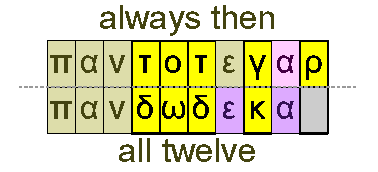
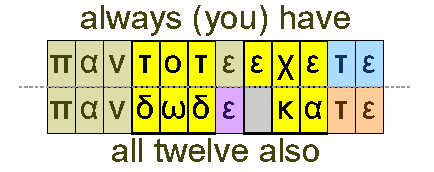
All then twelve of the poor (in spirit) (you) have with yourself but me not all twelve also.
What might happen to one of the
twelve? Might it be the one who made the suggestion to which all agreed? That is, the others were entrapped into taking an "
oath".
23. John 16:15 All that is had
John 16:15 All things that the Father hath are mine: therefore said I, that he shall take of mine, and shall shew it unto you. [kjv]
παντα οσα εχει ο πατηρ εμα εστιν δια τουτο ειπον οτι εκ του εμου ληψεται λαμβανει και αναγγελει υμιν [gnt]
"πάντα" ≈ "always, all, whole"
"ὅσα" ≈ "as far as" and "ἔχει" ≈ "had" (third person singular active indicative).
24. Strongs - disclose
25. Usage - disclose
- *G312 *13 ἀναγγέλλω (an-ang-el'-lo) : from G303 and the base of G32; to announce (in detail):--declare, rehearse, report, show, speak, tell.
αναγγελει *4 of 13
John 4:25 ... when he is come, he will tell us all things.
John 16:13 ... he shall hear, that shall he speak: and he will shew you things to come.
John 16:14 ... of mine, and shall shew it unto you.
John 16:15 ... of mine, and shall shew it unto you.
The
ancient Greek word
"ἀναγγέλλω" ≈ "carry back news, report". In the
GNT the meaning is often
"announce" or
"make known".
26. John 16:15
KJV: All things that the Father hath are mine: therefore said I, that he shall take of mine, and shall shew it unto you.
Greek: παντα οσα εχει ο πατηρ εμα εστιν δια τουτο ειπον οτι εκ του εμου ληψεται λαμβανει και αναγγελει υμιν
Latin: omnia quaecumque habet Pater mea sunt propterea dixi quia de meo accipit et adnuntiabit vobis
27. Genesis 7:22 All that is had
28. Genesis 7:22
KJV: All in whose nostrils was the breath of life, of all that was in the dry land, died.
Hebrew: כל אשר נשמת רוח חיים באפיו מכל אשר בחרבה מתו׃
Greek: και παντα οσα εχει πνοην ζωης και πας ος ην επι της ξηρας απεθανεν
29. A concise tome on insect divisions and sections
30. Aristotle: Insects
Aristotle coined the word
"insect" from the idea that their bodies were
"in sections". The Latin word
"inseco" ≈ "cut up, incise" is a
calque of the Greek word.
Greek:
Καλῶ δ’ ἔντομα ὅσα ἔχει κατὰ τὸ σῶμα ἐντομάς.
English:
I call notched all those that have below/under the body notches.
English:
I call in section all those that have below/under the body in sections.
Aristotle, History of Animals 1.487a.33.
"ὅσα" ≈ "as far as" and "ἔχει" ≈ "have" (third person singular active indicative).
31. Matthew 13:44 That he had
Matthew 13:44 Again, the kingdom of heaven is like unto treasure hid in a field; the which when a man hath found, he hideth, and for joy thereof goeth and selleth all that he hath, and buyeth that field. [kjv]
παλιν ομοια εστιν η βασιλεια των ουρανων θησαυρω κεκρυμμενω εν τω αγρω ον ευρων ανθρωπος εκρυψεν και απο της χαρας αυτου υπαγει και παντα πωλει οσα εχει πωλει και αγοραζει τον αγρον εκεινον [gnt]
simile … gaudio … vendit universa quae habet et emit agrum … [v]
The
"all" comes from the Latin word
"universus" ≈ "whole, entire, universal" and is the source of the English word
"universal".
"ὅσα" ≈ "as far as" and "ἔχει" ≈ "had" (third person singular active indicative).
The Latin word
"similis" ≈ "similar to" and is the source of the English word
"similar". The
TR (Textus Receptus) adds
"again".
32. Matthew 21:2 Donkey and colt
Matthew 21:2 Saying unto them, Go into the village over against you, and straightway ye shall find an ass tied, and a colt with her: loose them, and bring them unto me. [kjv]
λεγων αυτοις πορευθητε πορευεσθε εις την κωμην την απεναντι κατεναντι υμων και ευθεως ευθυς ευρησετε ονον δεδεμενην και πωλον μετ αυτης λυσαντες αγαγετε μοι [gnt]
Are there
one or
two animals involved? Why is the
"donkey" "
bound"?
The "donkey" is female. Greek: "ὄνος" ≈ "ass, donkey" and "ὄνον" ≈ "ass, donkey" (accusative). Play: Latin word "onus" ≈ "burden, load" and is the source of the English word "onus". The ancient Greek word "ὄνομαι" ≈ "impugn, quarrel with".
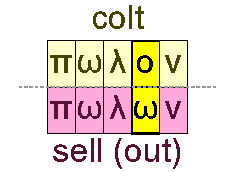
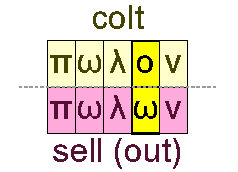
The "colt" is with "her", the "donkey". Greek: "πῶλος" ≈ "foal (young horse)" and (play) "πωλέω" ≈ "sell" as in "levy taxes", "sell an office" or "betray".
[pony with a sore throat, rehearse]
33. Strongs - colt
*G4454 *12 πῶλος (po'-los) : apparently a primary word; a "foal" or "filly", i.e. (specially), a young ass:--colt.
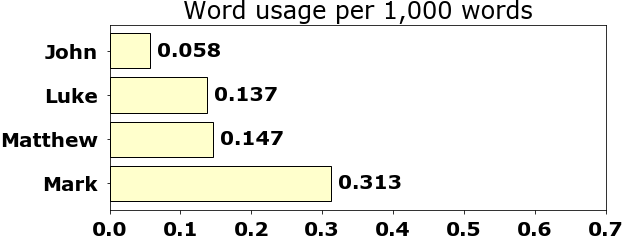 |
Words: πωλον=12
|
The
ancient Greek word
"πῶλος" ≈ "foal (young horse)" (whether masculine
"colt" or feminine
"filly") and related to the English word
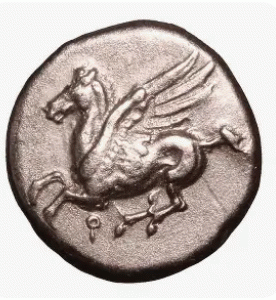
"foal" (Grimm's Law). Poetically it could be a young girl or maiden. It was the name of a Corinthian coin with a figure of
Pegasus on it.
Do
"donkeys" have
wings?
The
ancient Greek word
"πωλέω" ≈ "sell (out)" as in "
levy taxes",
"sell an office" or
"betray".
34. Usage - colt
- *G4454 *12 πῶλος (po'-los) : apparently a primary word; a "foal" or "filly", i.e. (specially), a young ass:--colt.
- πωλον *12
- Matthew 21:2 ... an ass tied, and a colt with her: loose ...
- Matthew 21:5 ... upon an ass, and a colt the foal of an ass.
- Matthew 21:7 And brought the ass, and the colt, and put on ...
- Mark 11:2 ... into it, ye shall find a colt tied, whereon never ...
- Mark 11:4 And they went their way, and found the colt tied by the door ...
- Mark 11:5 ... What do ye, loosing the colt?
- Mark 11:7 And they brought the colt to Jesus, and ...
- Luke 19:30 ... the which at your entering ye shall find a colt tied, whereon yet ...
- Luke 19:33 And as they were loosing the colt, the owners thereof said unto them, Why loose ye the colt?
- Luke 19:35 ... their garments upon the colt, and they set Jesus thereon.
- John 12:15 ... sitting on an ass's colt.
35. Matthew 21:2 Sell out
Matthew 21:2 Saying unto them, Go into the village over against you, and straightway ye shall find an ass tied, and a colt with her: loose them, and bring them unto me. [kjv]
λεγων αυτοις πορευθητε πορευεσθε εις την κωμην την απεναντι κατεναντι υμων και ευθεως ευθυς ευρησετε ονον δεδεμενην και πωλον μετ αυτης λυσαντες αγαγετε μοι [gnt]
"πῶλον" ≈ "foal (young horse)" (masculine accusative singular) from "πῶλος" ≈ "foal (young horse)"
"πωλῶν" ≈ "sell (out)" (contracted masculine present active participle) of "πωλέω" ≈ "sell (out)".
Why a "colt"? Might what Jesus is doing be a "sell (out)"? Consider the "treasure" in the "field".
Why a "donkey"? Might Jesus be the talking "donkey" (think Balaam), providing a warning to those who will listen? Consider the end of the Parable of the Wedding Feast.
36. Matthew 21:4-5 Prophecy connection
Matthew 21:4 All this was done, that it might be fulfilled which was spoken by the prophet, saying, [kjv]
21:5 Tell ye the daughter of Sion, Behold, thy King cometh unto thee, meek, and sitting upon an ass, and a colt the foal of an ass. [kjv]
ειπατε τη θυγατρι σιων ιδου ο βασιλευς σου ερχεται σοι πραυς και επιβεβηκως επι ονον και επι πωλον υιον υποζυγιου [gnt]
Matthew makes the decision to cherry pick a verse from
Zechariah, read during most Palm Sunday worship services. Matthew thus claims that this is the reason. Is it really the reason? Is it one reason? Are there other more important reasons?
What does it mean to be "
meek"? This only applies if the verse selected by Matthew applies to this very situation.
37. Matthew 21:5
Matthew 21:5 Tell ye the daughter of Sion, Behold, thy King cometh unto thee, meek, and sitting upon an ass, and a colt the foal of an ass. [kjv]
ειπατε τη θυγατρι σιων ιδου ο βασιλευς σου ερχεται σοι πραυς και επιβεβηκως επι ονον και επι πωλον υιον υποζυγιου [gnt]
Greek:
... meek and mounted/riding on (a) donkey and on (a) colt son (of a) beast of burden.
The
KJV translates as
"foal" of an
"ass" what in the Greek is
"beast of burden". Are there
one or
two animals involved?
☐
ass
☐
colt son of a
beast of burden
38. Matthew 13:44 Sell out
Matthew 13:44 Again, the kingdom of heaven is like unto treasure hid in a field; the which when a man hath found, he hideth, and for joy thereof goeth and selleth all that he hath, and buyeth that field. [kjv]
παλιν ομοια εστιν η βασιλεια των ουρανων θησαυρω κεκρυμμενω εν τω αγρω ον ευρων ανθρωπος εκρυψεν και απο της χαρας αυτου υπαγει και παντα πωλει οσα εχει πωλει και αγοραζει τον αγρον εκεινον [gnt]
The ancient Greek word
"πωλέω" ≈ "sell" as in "
levy taxes",
"sell an office" or "
betray". This word often has negative connotations.
The Greek for
"selleth" is that of
"selling out" or
"selling oneself" (reflexively). Often this is done for money as in a bribe. One can
"sell oneself" to obtain something for someone else as a "
sacrifice".
Sell out others to help yourself (sparrows).
Sell out yourself to help others (Jesus).
39. Matthew 13:44 Sell a colt
Matthew 13:44 Again, the kingdom of heaven is like unto treasure hid in a field; the which when a man hath found, he hideth, and for joy thereof goeth and selleth all that he hath, and buyeth that field. [kjv]
παλιν ομοια εστιν η βασιλεια των ουρανων θησαυρω κεκρυμμενω εν τω αγρω ον ευρων ανθρωπος εκρυψεν και απο της χαρας αυτου υπαγει και παντα πωλει οσα εχει πωλει και αγοραζει τον αγρον εκεινον [gnt]
"πῶλον" ≈ "foal (young horse)" (masculine accusative singular) from "πῶλος" ≈ "foal (young horse)"
"πωλῶν" ≈ "sell (out)" (contracted masculine present active participle) of "πωλέω" ≈ "sell (out)".
Might this
"colt" as a
"sell out" become a full grown "
horse" in Revelation?
40. Revelation 6:2 White horse and crown
Revelation 6:2 And I saw, and behold a white horse: and he that sat on him had a bow; and a crown was given unto him: and he went forth conquering, and to conquer. [kjv]
και ειδον και ιδου ιππος λευκος και ο καθημενος επ αυτω αυτον εχων τοξον και εδοθη αυτω στεφανος και εξηλθεν νικων και ινα νικηση [gnt]
The ancient Greek word
"λευκός" ≈ "bright, light, pale, happy" and, if the
context is
color,
"white" or
"light".
When a more exact appearance of a color is intended, there will be additional descriptive words such as "
as snow", "
as light", etc.
41. Matthew 10:29 Sell out
Matthew 10:29 Are not two sparrows sold for a farthing? and one of them shall not fall on the ground without your Father. [kjv]
ουχι δυο στρουθια ασσαριου πωλειται και εν εξ αυτων ου πεσειται επι την γην ανευ του πατρος υμων [gnt]
What is the difference in the following?
10 (
assarionn ≈
1 denarius)
 "Are not two birds sold for an assarion [song].".
"Are not two birds bought for an assarion [song].".
"Are not two birds sold for an assarion [song].".
"Are not two birds bought for an assarion [song].".
*G4453 *22 πωλέω (po-leh'-o) : probably ultimately from pelomai (to be busy, to trade); to barter (as a pedlar), i.e. to sell:--sell, whatever is sold.
The ancient Greek word
"πωλέω" ≈ "sell" as in "
levy taxes",
"sell an office" or
"betray". This word often has negative connotations as sometimes does the English phrase
"sell out". A marketing phrase is from the Latin phrase
"caveat emptor" ≈ "let the buyer beware".
42. Matthew 13:45 Seeking
Matthew 13:45 Again, the kingdom of heaven is like unto a merchant man, seeking goodly pearls: [kjv]
παλιν ομοια εστιν η βασιλεια των ουρανων ανθρωπω εμπορω ζητουντι καλους μαργαριτας [gnt]
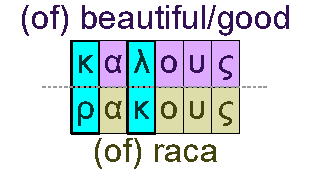
"κᾰλούς" ≈ "beautiful, good, right"
"ῥακά" ≈ "idiot, fool, good-for-nothing"
What type of
"pearls" were being "
sought" by the
"merchant"? Perhaps the type of
"pearls" that would otherwise effectively say
"raca" to the "
council" by not doing what the "
council" desires.
43. Great merchants of the earth
Matthew 13:45 Again, the kingdom of heaven is like unto a merchant man, seeking goodly pearls: [kjv]
παλιν ομοια εστιν η βασιλεια των ουρανων ανθρωπω εμπορω ζητουντι καλους μαργαριτας [gnt]
Revelation 18:23 … for thy merchants were the great men of the earth; for by thy sorceries were all nations deceived. [kjv]
και φως λυχνου ου μη φανη εν σοι ετι και φωνη νυμφιου και νυμφης ου μη ακουσθη εν σοι ετι οτι οι εμποροι σου ησαν οι μεγιστανες της γης οτι εν τη φαρμακεια σου επλανηθησαν παντα τα εθνη [gnt]
Jesus explains some parable words in Revelation. A
"merchant man" is a
"great one of the earth" who is involved in some "
business" of buying and selling.
A business need not make money. It could be selling ideas, salvation, etc. There are (at least) two Greek words to "
sell" something.
Not used here: Sell oneself for something as a sparrow, Jesus (on the cross), etc.
Used here: Sell something as a business opportunity to make a profit of some form.
44. Strongs - buy
*G59 *30 ἀγοράζω (ag-or-ad'-zo) : from G58; properly, to go to market, i.e. (by implication) to purchase; specially, to redeem:--buy, redeem.
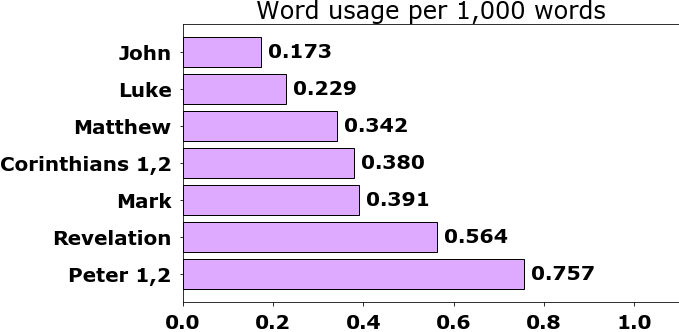 |
Words: αγοραζει=2 αγοραζοντας=2 αγοραζοντες αγορασαι=3 αγορασαντα αγορασας αγορασατε αγορασατω αγορασον αγορασωμεν=3 αγορασωσιν=3 ηγοραζον ηγορασα=2 ηγορασαν=2 ηγορασας ηγορασεν=1 ηγορασθησαν ηγορασθητε=2 ηγορασμενοι
|
The
ancient Greek word
"ἀγοράζω" ≈ "frequent the market, buy in the market, be idle in the market".
45. Usage - buy
- *G59 *30 ἀγοράζω (ag-or-ad'-zo) : from G58; properly, to go to market, i.e. (by implication) to purchase; specially, to redeem:--buy, redeem.
αγοραζει *2 of 30
Matthew 13:44 ... that he hath, and buyeth that field.
Revelation 18:11 ... her; for no man buyeth their merchandise any more:
ηγορασεν *1 of 30
Matthew 13:46 ... that he had, and bought it.
46. Strongs - sell
47. Usage - sell
- *G4097 *9 πιπράσκω (pip-ras'-ko) : prao prah'-o; (which occurs only as an alternate in certain tenses) contracted from perao (to traverse; from the base of G4008); to traffic (by travelling), i.e. dispose of as merchandise or into slavery (literally or figuratively):--sell.
πραθηναι *3 of 9
Matthew 18:25 ... lord commanded him to be sold, and his wife, ...
Matthew 26:9 For this ointment might have been sold for much, and given to the poor.
Mark 14:5 For it might have been sold for more than three hundred pence, ...
πεπρακεν *1 of 9
Matthew 13:46 ... pearl of great price, went and sold all that he had, ...
48. Matthew 13:46 That that is had
Matthew 13:46 Who, when he had found one pearl of great price, went and sold all that he had, and bought it. [kjv]
ος ευρων δε ενα πολυτιμον μαργαριτην απελθων πεπρακεν παντα οσα ειχεν και ηγορασεν αυτον [gnt]
The
ancient Greek word
"πιπράσκω" ≈ "to sell (export) into slavery, betray (passive)".
"πάντα" ≈ "always, all, whole"
"ὅσα" ≈ "as far as" and "ἔχει" ≈ "had" (third person singular active indicative).
The
"he" is inferred. Beth the
"he" and the
"it" could be the "
merchant" or it could be the
"pearl" (or what is represented by the
"pearl") or something or someone else.
Greek :
... went and sold/betrayed (into slavery) all that he/it had and bought/owned him/it.
Is it more likely that the "
merchant"
sold/betrayed (into slavery) himself or the
"pearl"?
The
TR adds the
"who".
49. Matthew 18:25 All that is had
Matthew 18:25 But forasmuch as he had not to pay, his lord commanded him to be sold, and his wife, and children, and all that he had, and payment to be made. [kjv]
μη εχοντος δε αυτου αποδουναι εκελευσεν αυτον ο κυριος αυτου πραθηναι και την γυναικα αυτου και τα τεκνα και παντα οσα ειχεν εχει και αποδοθηναι [gnt]
… venundari … omnia quae habebat … [v]
What is
"all" "as much as" "had"?
"πάντα" ≈ "always, all, whole".
"ὅσα" ≈ "as far as" and "ἔχει" ≈ "(he/she/it) had" (third person singular active indicative).
Greek:
... ordered him the lord to be sold (into slavery) ... and all that (he/she/it) had ...
The
"all" "that" (he/she/it)
"had" might include the "
house" built on "
sand" (human infrastructure).
50. Compare
Matthew 13:46 Who, when he had found one pearl of great price, went and sold all that he had, and bought it. [kjv]
ος ευρων δε ενα πολυτιμον μαργαριτην απελθων πεπρακεν παντα οσα ειχεν και ηγορασεν αυτον [gnt]
… pretiosa margarita … vendidit omnia quae habuit … emit … [v]
18:25 But forasmuch as he had not to pay, his lord commanded him to be sold, and his wife, and children, and all that he had, and payment to be made. [kjv]
μη εχοντος δε αυτου αποδουναι εκελευσεν αυτον ο κυριος αυτου πραθηναι και την γυναικα αυτου και τα τεκνα και παντα οσα ειχεν εχει και αποδοθηναι [gnt]
… venundari … omnia quae habebat … [v]
13:45:
... went and sold/betrayed (into slavery, to himself) all that he/it (the pearl) had ...
18:25:
... ordered (to) him the lord to be sold/traditioned (into slavery, as projection) ... and all that he had ...
51. Matthew 13:46 Buying
Matthew 13:46 Who, when he had found one pearl of great price, went and sold all that he had, and bought it. [kjv]
ος ευρων δε ενα πολυτιμον μαργαριτην απελθων πεπρακεν παντα οσα ειχεν και ηγορασεν αυτον [gnt]
We have the best government money can buy.
Mark Twain (Author and Humorist, alias Samuel Clemens)
The
"bought" might be compared to the English phrase
"to own someone".
[Missionaries to China selling out those they claimed to be converting]
The
ancient Greek word
"ἀγοράζω" ≈ "frequent the market, buy in the market, be idle in the market".
52. Samuel Clemens and the Chinese
Question:
What did Samuel Clemens say about missionaries to China exploiting the Chinese?
Answer:
To understand Samuel Clemens' views on missionaries in China, consider the following points:
Clemens criticized missionaries for exploiting the Chinese people under the guise of helping them.
He believed that their efforts often prioritized conversion over genuine aid.
Clemens argued that missionaries contributed to cultural imperialism rather than fostering true understanding.
He highlighted the hypocrisy of claiming to help while benefiting from the exploitation of local resources.
Clemens called for a more respectful and equitable approach to foreign aid and cultural exchange.
Google AI Summary. (as of 2026-07-15)
53. Numbers 16:32-33 Rebellion of Korah
Numbers 16:32 And the earth opened her mouth, and swallowed them up, and their houses, and all the men that appertained unto Korah, and all their goods. [kjv]
και ηνοιχθη η γη και κατεπιεν αυτους και τους οικους αυτων και παντας τους ανθρωπους τους οντας μετα κορε και τα κτηνη αυτων [lxx]
16:33 They, and all that appertained to them, went down alive into the pit, and the earth closed upon them: and they perished from among the congregation. [kjv]
και κατεβησαν αυτοι και οσα εστιν αυτων ζωντα εις αδου και εκαλυψεν αυτους η γη και απωλοντο εκ μεσου της συναγωγης [lxx]
"κτηνα" ≈ "beast" and "κτήνη" ≈ "animal, livestock" from "κτῆνος" ≈ "animal, livestock".
"κτῆσις" ≈ "act of acquiring, ownership, taking"
Korah stirred rebellion by claiming that Moses and Aaron had too much power. It appears that
Korah wanted that power for himself. The
LXX (Septuagint) translates
"pit" as
"hades".
54. Numbers 16:34-35 Rebellion of Korah
Numbers 16:34 And all Israel that were round about them fled at the cry of them: for they said, Lest the earth swallow us up also. [kjv]
και πας ισραηλ οι κυκλω αυτων εφυγον απο της φωνης αυτων οτι λεγοντες μηποτε καταπιη ημας η γη [lxx]
16:35 And there came out a fire from the LORD, and consumed the two hundred and fifty men that offered incense. [kjv]
και πυρ εξηλθεν παρα κυριου και κατεφαγεν τους πεντηκοντα και διακοσιους ανδρας τους προσφεροντας το θυμιαμα [lxx]
55. Matthew 12:39 Paraphrase
Matthew 12:39 But he answered and said unto them, An evil and adulterous generation seeketh after a sign; and there shall no sign be given to it, but the sign of the prophet Jonas: [kjv]
ο δε αποκριθεις ειπεν αυτοις γενεα πονηρα και μοιχαλις σημειον επιζητει και σημειον ου δοθησεται αυτη ει μη το σημειον ιωνα του προφητου [gnt]
Greek word order:
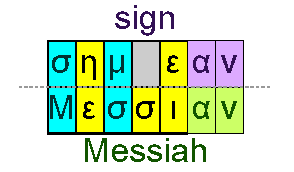
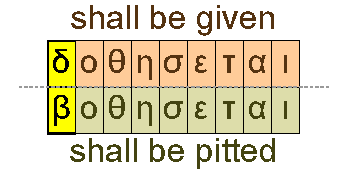
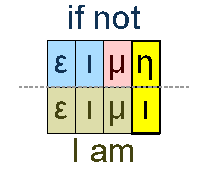
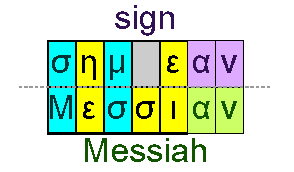
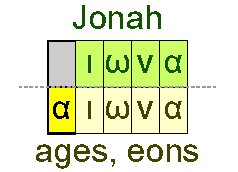
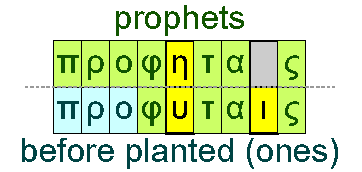
... and sign no shall be given[shall be pitted] if not [I am] the sign [Messiah] Jonah [ages] (of the) prophet. [planted ones before]
56. Matthew 12:40 Paraphrase
57. Matthew 12:39-40 Paraphrase
Matthew 12:39 But he answered and said unto them, An evil and adulterous generation seeketh after a sign; and there shall no sign be given to it, but the sign of the prophet Jonas: [kjv]
12:40 For as Jonas was three days and three nights in the whale's belly; so shall the Son of man be three days and three nights in the heart of the earth. [kjv]
5. night 1. 6. night 2. 7. night 3.
1. Jesus. 2. day 1. 3, day 2. 4. day 3.
12:39
... no sign [Messiah] shall be given [pitted] if not [I am] the sign [Messiah] (of) Jonah [ages] (of the) prophet [planted ones before].
12:40
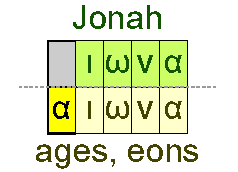
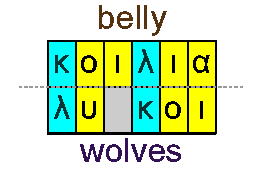
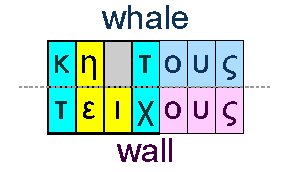
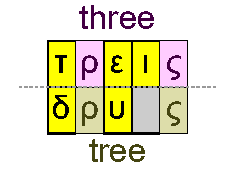
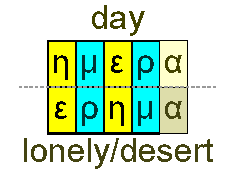
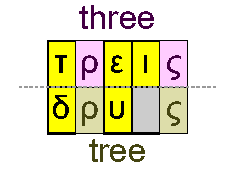
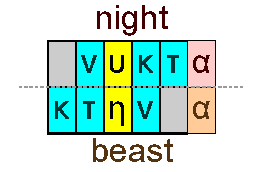
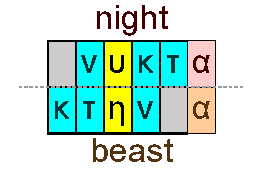
... for as Jonah [ages] was in the belly [wolves] of the whale [wall] three [tree] days [deserts] and three [tree] nights [beasts] ... heart [mind] of the earth [sand].
58. Matthew 13:46 Burn together
Matthew 13:46 Who, when he had found one pearl of great price, went and sold all that he had, and bought it. [kjv]
ος ευρων δε ενα πολυτιμον μαργαριτην απελθων πεπρακεν παντα οσα ειχεν και ηγορασεν αυτον [gnt]
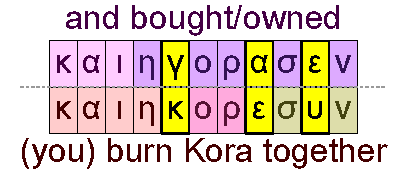
If the
"pearl" remains
"bought" or
"owned" by the "
merchant", might they both
"burn" "together" as those following (or deceived to follow)
"Kora"?
- *G59 *30 ἀγοράζω (ag-or-ad'-zo) : from G58; properly, to go to market, i.e. (by implication) to purchase; specially, to redeem:--buy, redeem.
59. 2 Timothy 4:1 Living quick
2 Timothy 4:1 I charge thee therefore before God, and the Lord Jesus Christ, who shall judge the quick and the dead at his appearing and his kingdom; [kjv]
διαμαρτυρομαι ουν εγω ενωπιον του θεου και του κυριου χριστου ιησου χριστου του μελλοντος κρινειν ζωντας και νεκρους κατα και την επιφανειαν αυτου και την βασιλειαν αυτου [gnt]
The Middle English word
"quick" ≈ "living".
The ancient Greek word
"ζάω" ≈ "live" from which we get English words such as
"zoology",
"zoo", etc. The modern Greek word is
"ζώντας" (ZON-tas) ≈ "living".
60. Strongs - live
*G2198 *140 ζάω (dzah'-o) : a primary verb; to live (literally or figuratively):--life(-time), (a-)live(-ly), quick.
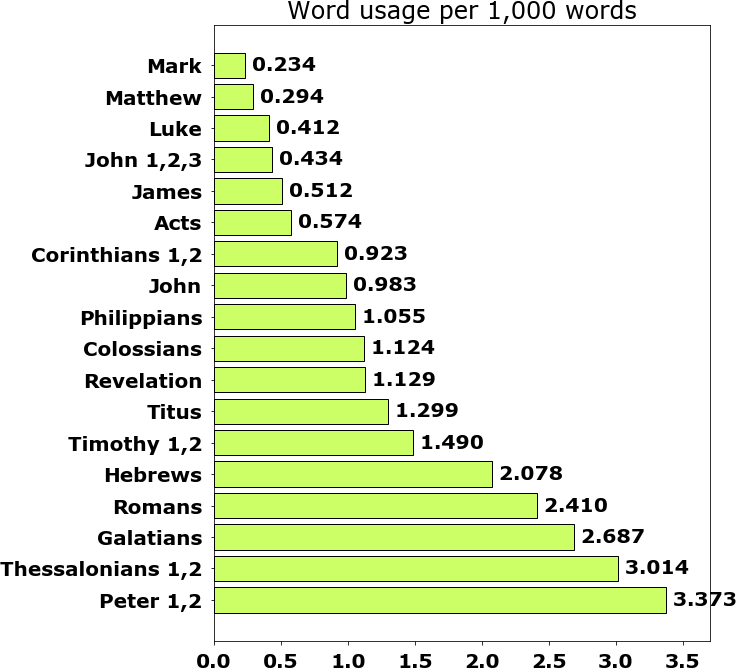 |
Words: εζησα εζησαν=2 εζησεν=4 εζητε εζων ζη=13 ζην=12 ζης=2 ζησασα ζησει=3 ζησεσθε ζησεται=9 ζησετε ζηση=2 ζησομεν=4 ζησουσιν ζησω ζησωμεν=4 ζητε ζω=6 ζωμεν=7 ζων=11 ζωντα=6 ζωντας=4 ζωντες=7 ζωντι=7 ζωντος=14 ζωντων=5 ζωσα ζωσαν=5 ζωσι ζωσιν=2
|
The ancient Greek word
"ζάω" ≈ "live" from which we get English words such as
"zoology",
"zoo", etc. The modern Greek word is
"ζώντας" (ZON-tas) ≈ "living".
61. Romans 6:10
Romans 6:10 For in that he died, he died unto sin once: but in that he liveth, he liveth unto God. [kjv]
ο γαρ απεθανεν τη αμαρτια απεθανεν εφαπαξ ο δε ζη ζη τω θεω [gnt]
The ancient Greek word
"ζάω" ≈ "live" from which we get English words such as
"zoology",
"zoo", etc. The modern Greek word is
"ζώντας" (ZON-tas) ≈ "living".
62. Romans 6:10
KJV: For in that he died, he died unto sin once: but in that he liveth, he liveth unto God.
Greek: ο γαρ απεθανεν τη αμαρτια απεθανεν εφαπαξ ο δε ζη ζη τω θεω
63. Matthew 13:44 Buy and live
Matthew 13:44 Again, the kingdom of heaven is like unto treasure hid in a field; the which when a man hath found, he hideth, and for joy thereof goeth and selleth all that he hath, and buyeth that field. [kjv]
παλιν ομοια εστιν η βασιλεια των ουρανων θησαυρω κεκρυμμενω εν τω αγρω ον ευρων ανθρωπος εκρυψεν και απο της χαρας αυτου υπαγει και παντα πωλει οσα εχει πωλει και αγοραζει τον αγρον εκεινον [gnt]
64. Compare
Matthew 13:44 Again, the kingdom of heaven is like unto treasure hid in a field; the which when a man hath found, he hideth, and for joy thereof goeth and selleth all that he hath, and buyeth that field. [kjv]
παλιν ομοια εστιν η βασιλεια των ουρανων θησαυρω κεκρυμμενω εν τω αγρω ον ευρων ανθρωπος εκρυψεν και απο της χαρας αυτου υπαγει και παντα πωλει οσα εχει πωλει και αγοραζει τον αγρον εκεινον [gnt]
13:46 Who, when he had found one pearl of great price, went and sold all that he had, and bought it. [kjv]
ος ευρων δε ενα πολυτιμον μαργαριτην απελθων πεπρακεν παντα οσα ειχεν και ηγορασεν αυτον [gnt]
13:44
Treasure:
you burn Korah (and) live.
13:45
Pearl :
you burn (with) Korah together.
65. Matthew 13:46 Selling out all of the pearl
Matthew 13:46 Who, when he had found one pearl of great price, went and sold all that he had, and bought it. [kjv]
ος ευρων δε ενα πολυτιμον μαργαριτην απελθων πεπρακεν παντα οσα ειχεν και ηγορασεν αυτον [gnt]
There are many similarities (words, ideas, etc.) that relate the parable of the unforgiving servant and the merchant man and pearl.
Greek (with similarities):
finding then one very valuable/honored pearl, (the merchant) went and sold/betrayed/traditioned (into slavery, via the millstone deception) all as much as it (the pearl) had and (thereby deceptively) bought/owned it (the pearl as a follower of the merchant).
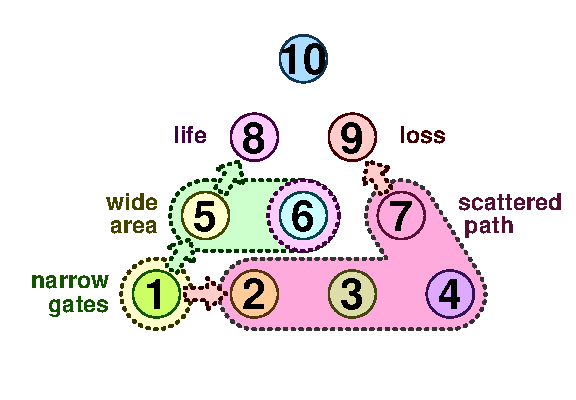
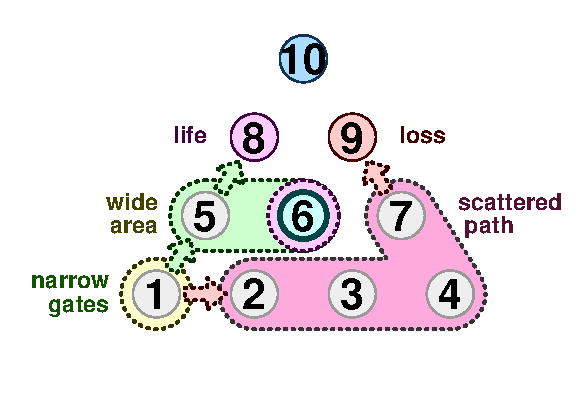
Both verses, in the context of the Ten Pin model, are of someone trying to entice/entrap someone from the true treasure in the field (living bread, Holy Spirit, Sabbath, etc.) in node 4 to the tradition node (honor parents) in node 6 on their way to the killing node 6.
66. Great merchants of the earth
Matthew 13:45 Again, the kingdom of heaven is like unto a merchant man, seeking goodly pearls: [kjv]
παλιν ομοια εστιν η βασιλεια των ουρανων ανθρωπω εμπορω ζητουντι καλους μαργαριτας [gnt]
Revelation 18:23 … for thy merchants were the great men of the earth; for by thy sorceries were all nations deceived. [kjv]
και φως λυχνου ου μη φανη εν σοι ετι και φωνη νυμφιου και νυμφης ου μη ακουσθη εν σοι ετι οτι οι εμποροι σου ησαν οι μεγιστανες της γης οτι εν τη φαρμακεια σου επλανηθησαν παντα τα εθνη [gnt]
Jesus explains some parable words in Revelation. A
"merchant man" is a
"great one of the earth" who is involved in some "
business" of buying and selling.
A business need not make money. It could be selling ideas, salvation, etc. There are (at least) two Greek words to "
sell" something.
Not used here: Sell oneself for something as a sparrow, Jesus (on the cross), etc.
Used here: Sell something as a business opportunity to make a profit of some form.
67. Ten Pin: Node 6
There are many Ten Pin sequences in the Bible, both in the
GNT and the
LXX.
This is
node 6 of
young "
goats" a play on words of "
voicing" "
invalid logic", in the "
wide area", a play on words of "
the boats".
68. End of page