Send
Close Add comments:
(status displays here)
Got it! This site "creationpie.org" uses cookies. You consent to this by clicking on "Got it!" or by continuing to use this website. Note: This appears on each machine/browser from which this site is accessed.
Matthew 12:9-13 Healing on the Sabbath
1. Matthew 12:9-13 Healing on the Sabbath
This content is being developed.
2. Matthew 11
3. Matthew 12:9-13 Healing on the Sabbath
Jesus heals on the sabbath and makes some interesting comments.
... more to be added ...
4. Matthew 12:9
5. Meta and after
The ancient Greek word
"μετά" ≈ "after" has the primary idea of being
"after" something. The modern Greek word
"μετά" (meh-TA) ≈ "after".
Metaphysics is named because of the way the writings of Aristotle were organized. The writings that were hard to categorize and were placed together
"after" the writings on "
physics" and became known as "
metaphysics" or the writings
"after" the "
physics".
The ancient Greek word
"μεταβολή" ≈ "change, transition" is defined as a transition from what was
before to what is
after.
6. Aristotle: Transitional change
English: Well then, since every transition is from something to something else (for the very word transition implies a going across from where you were before to where you are afterwards) there seem to be four ways to of transit, as follows. (Loeb#255, p. 14)
Greek: ἐπεὶ δὲ πᾶσα μεταβολή ἐστιν ἔκ τινος εἴς τι (δηλοῖ δὲ καὶ τοὔνομα μετ' ἄλλο γάρ τι καὶ τὸ μὲν πρότερον δηλοῖ, τὸ δ' ὕστερον), μεταβάλλοι ἂν τὸ μεταβάλλον τετραχῶς Aristotle: Physics 5 [225a]
To make the idea clear, Aristotle does not use
"meta" to define itself. Rather, he uses another Greek word that also means
"after".
"μετά" ≈ "after".
"ὔστερος" ≈ "after, later".
"πρότερος" ≈ "before, earlier".
Matthew 4:2 And when he had fasted forty days and forty nights, he was afterward an hungred. [kjv]
και νηστευσας ημερας τεσσαρακοντα τεσσερακοντα και νυκτας τεσσαρακοντα τεσσερακοντα υστερον επεινασεν [gnt]
7. Matthew 12:9
KJV: And when he was departed thence, he went into their synagogue:
Greek: και μεταβας εκειθεν ηλθεν εις την συναγωγην αυτων
8. Matthew 12:10 Allowed
Matthew 12:10 And, behold, there was a man which had his hand withered. And they asked him, saying, Is it lawful to heal on the sabbath days? that they might accuse him. [kjv]
και ιδου ανθρωπος ην την χειρα εχων ξηραν και επηρωτησαν αυτον λεγοντες ει εξεστιν τοις σαββασιν θεραπευειν ινα κατηγορησωσιν αυτου [gnt]
The Greek word for
"lawful" is inferred here but not in this verse.
"ἔξεστι" ≈ "allowed, possible"
"νόμος" ≈ "custom, law, pasture" (opinion truth) as in "Deuteronomy" as in "second law". The Greek for "iniquity" is "against the law".
9. Matthew 12:10 Heal allowed
Matthew 12:10 And, behold, there was a man which had his hand withered. And they asked him, saying, Is it lawful to heal on the sabbath days? that they might accuse him. [kjv]
και ιδου ανθρωπος ην την χειρα εχων ξηραν και επηρωτησαν αυτον λεγοντες ει εξεστιν τοις σαββασιν θεραπευειν ινα κατηγορησωσιν αυτου [gnt]
The ancient Greek word
"θεραπεύω" ≈ "wait on, obey, flatter consult, cure, heal" and is the source of the English word
"therapy". The primary meaning is that of attending to or waiting on and not of curing or healing.
10. Strongs - accuse
*G2723 *23 κατηγορέω (kat-ay-gor-eh'-o) : from G2725; to be a plaintiff, i.e. to charge with some offence:--accuse, object.
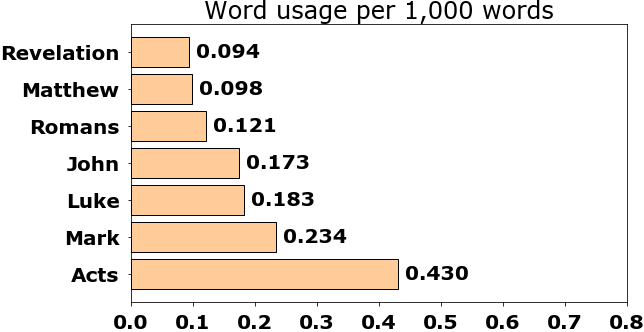 |
Words: κατηγορειν=6 κατηγορεισθαι κατηγορειται κατηγορειτε κατηγορειτωσαν κατηγορησω κατηγορησωσιν=2 κατηγορουμεν κατηγορουμενος κατηγορουν κατηγορουντες κατηγορουντων κατηγορουσιν=3 κατηγορων=2
|
The ancient Greek word
"κατηγορία" ≈ "charge, accusation" and, in logic,
"predication" or
"category". This Greek word is the source, through Latin and French, of the English word
"category".
11. Matthew 12:10 Categories of accusation
Matthew 12:10 And, behold, there was a man which had his hand withered. And they asked him, saying, Is it lawful to heal on the sabbath days? that they might accuse him. [kjv]
και ιδου ανθρωπος ην την χειρα εχων ξηραν και επηρωτησαν αυτον λεγοντες ει εξεστιν τοις σαββασιν θεραπευειν ινα κατηγορησωσιν αυτου [gnt]
The ancient Greek word
"κατηγορία" ≈ "charge, accusation" and, in logic,
"predication" or
"category". The ancient Greek word
"κατηγορέω" ≈ "speak against, signify, affirm (logic)" and is the source, through Latin and French, of the English word
"category".
It appears that Matthew adds the
"accuse" part based on what happened
later.
12. Matthew 12:10
KJV: And, behold, there was a man which had his hand withered. And they asked him, saying, Is it lawful to heal on the sabbath days? that they might accuse him.
Greek: και ιδου ανθρωπος ην την χειρα εχων ξηραν και επηρωτησαν αυτον λεγοντες ει εξεστιν τοις σαββασιν θεραπευειν ινα κατηγορησωσιν αυτου
13. Strongs - will have
*G2192 *701 ἔχω (ekh'-o) : scheo skheh'-o; (used in certain tenses only) a primary verb; to hold (used in very various applications, literally or figuratively, direct or remote; such as possession; ability, contiuity, relation, or condition):--be (able, X hold, possessed with), accompany, + begin to amend, can(+ -not), X conceive, count, diseased, do + eat, + enjoy, + fear, following, have, hold, keep, + lack, + go to law, lie, + must needs, + of necessity, + need, next, + recover, + reign, + rest, + return, X sick, take for, + tremble, + uncircumcised, use.
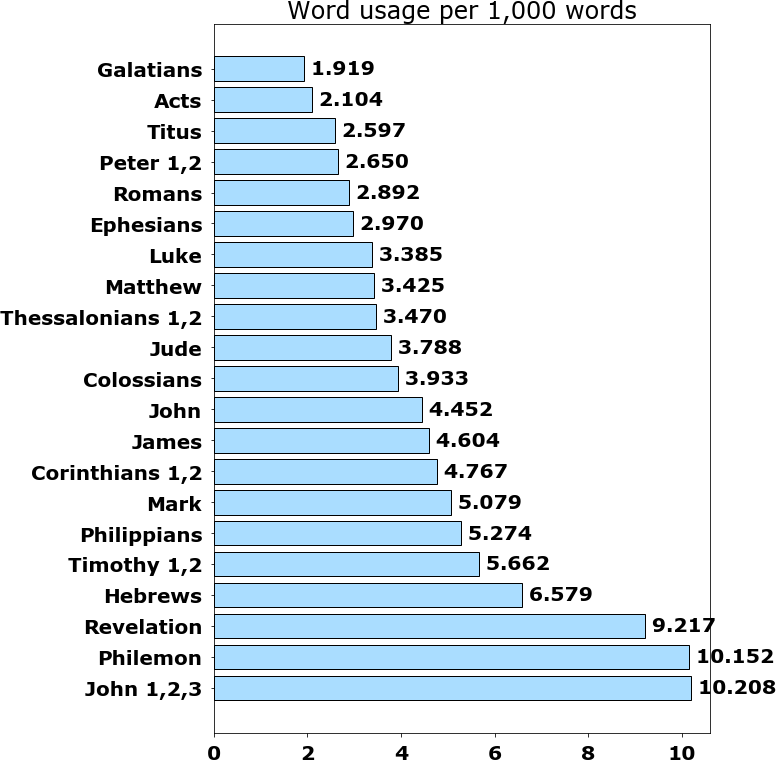 |
Words: ειχαν=2 ειχε ειχεν=24 ειχετε=3 ειχομεν ειχον=18 ειχοσαν=2 εξει=6 εξεις=4 εξετε εξουσιν=2 εσχεν=5 εσχες εσχηκα εσχηκαμεν=2 εσχηκεν εσχηκοτα εσχομεν εσχον=5 εχε=4 εχει=102 εχειν=30 εχεις=27 εχετε=50 εχετω=3 εχη=11 εχητε=11 εχοι=2 εχοιεν εχομεν=41 εχομενα εχομενας εχομενη=3 εχον=4 εχοντα=29 εχοντας=16 εχοντες=46 εχοντι=10 εχοντος=5 εχοντων=9 εχουσα=15 εχουσαι=3 εχουσαις=3 εχουσαν=6 εχουση εχουσης=2 εχουσι=2 εχουσιν=32 εχω=46 εχωμεν=6 εχων=85 εχωσι εχωσιν=5 σχητε σχω=5 σχωμεν=2
|
14. Matthew 12:11 Hole in the ground
Matthew 12:11 And he said unto them, What man shall there be among you, that shall have one sheep, and if it fall into a pit on the sabbath day, will he not lay hold on it, and lift it out? [kjv]
ο δε ειπεν αυτοις τις εσται εξ υμων ανθρωπος ος εξει προβατον εν και εαν εμπεση τουτο τοις σαββασιν εις βοθυνον ουχι κρατησει αυτο και εγερει [gnt]
The ancient Greek word
"βόθρος" ≈ "hole in the ground, pit", specifically, containing water, used for washing clothes, planting of trees.
15. Isaiah 47:11 Falling into a pit
Isaiah 47:11 Therefore shall evil come upon thee; thou shalt not know from whence it riseth: and mischief shall fall upon thee; thou shalt not be able to put it off: and desolation shall come upon thee suddenly, which thou shalt not know. [kjv]
και ηξει επι σε απωλεια και ου μη γνως βοθυνος και εμπεση εις αυτον και ηξει επι σε ταλαιπωρια και ου μη δυνηση καθαρα γενεσθαι και ηξει επι σε εξαπινης απωλεια και ου μη γνως [lxx]
And destruction shall come upon you, and you shall not be aware; there shall be a pit, and you shall fall into it: and grief shall come upon you, and you shall not be able to be clear; and destruction shall come suddenly upon you, and you shall not know. [bs3]
The
LXX (Septuagint) has many words that are in what Jesus is saying about the "
falling", the "
pit", etc.
16. Isaiah 47:11
KJV: Therefore shall evil come upon thee; thou shalt not know from whence it riseth: and mischief shall fall upon thee; thou shalt not be able to put it off: and desolation shall come upon thee suddenly, which thou shalt not know.
Hebrew: ובא עליך רעה לא תדעי שחרה ותפל עליך הוה לא תוכלי כפרה ותבא עליך פתאם שואה לא תדעי׃
Greek: και ηξει επι σε απωλεια και ου μη γνως βοθυνος και εμπεση εις αυτον και ηξει επι σε ταλαιπωρια και ου μη δυνηση καθαρα γενεσθαι και ηξει επι σε εξαπινης απωλεια και ου μη γνως
Brenton: And destruction shall come upon you, and you shall not be aware; there shall be a pit, and you shall fall into it: and grief shall come upon you, and you shall not be able to be clear; and destruction shall come suddenly upon you, and you shall not know.
17. Matthew 15:14 Ditch
Matthew 15:14 Let them alone: they be blind leaders of the blind. And if the blind lead the blind, both shall fall into the ditch. [kjv]
αφετε αυτους οδηγοι εισιν τυφλοι τυφλων εισιν οδηγοι τυφλος δε τυφλον εαν οδηγη αμφοτεροι εις βοθυνον πεσουνται [gnt]
The Greek word for
"ditch" can be a play on words with the Greek word for
"help". The
"ditch", if deep enough, be taken as an
"abyss".
"βόθρος" ≈ "hole in the ground, pit", specifically, containing water, used for washing clothes, planting of trees.
"βοήθεια" ≈ "aid, help".
"βοή" ≈ "shout, cry" which is onomatopoeic.
The exact Greek word used by Jesus for "
fall" is used in only one other verse in Matthew.
18. Strongs - take hold of
*G2902 *47 κρατέω (krat-eh'-o) : from G2904; to use strength, i.e. seize or retain (literally or figuratively):--hold (by, fast), keep, lay hand (hold) on, obtain, retain, take (by).
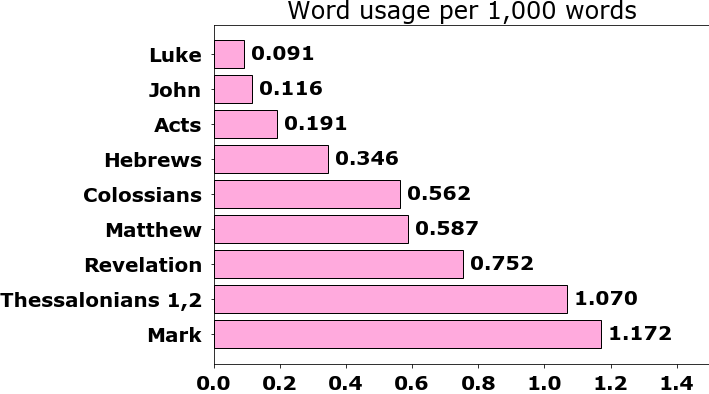 |
Words: εκρατησαμεν εκρατησαν=4 εκρατησατε=2 εκρατησεν=3 εκρατουντο κεκρατηκεναι κεκρατηνται κρατει κρατειν κρατεις κρατεισθαι κρατειτε=2 κρατησαι=4 κρατησαντες=3 κρατησας=6 κρατησατε=3 κρατησει=1 κρατησωσιν κρατητε κρατουντας=3 κρατουντες κρατουντος κρατουσιν κρατωμεν κρατων=2
|
The
ancient Greek word
"κρατέω" ≈ "rule, conquer, seize, hold" and provides the last part of the English word
"democracy".
19. Matthew 12:11 Wake up and resurrect
Matthew 12:11 And he said unto them, What man shall there be among you, that shall have one sheep, and if it fall into a pit on the sabbath day, will he not lay hold on it, and lift it out? [kjv]
ο δε ειπεν αυτοις τις εσται εξ υμων ανθρωπος ος εξει προβατον εν και εαν εμπεση τουτο τοις σαββασιν εις βοθυνον ουχι κρατησει αυτο και εγερει [gnt]
The Greek word translated as
"lift" is that of
"wake up",
"raise up" or, in context,
"resurrect".
To whom is Jesus talking?
20. Matthew 12:11 Grab with power
Matthew 12:11 And he said unto them, What man shall there be among you, that shall have one sheep, and if it fall into a pit on the sabbath day, will he not lay hold on it, and lift it out? [kjv]
ο δε ειπεν αυτοις τις εσται εξ υμων ανθρωπος ος εξει προβατον εν και εαν εμπεση τουτο τοις σαββασιν εις βοθυνον ουχι κρατησει αυτο και εγερει [gnt]
The ancient Greek word
"κρατέω" ≈ "rule, conquer, seize, hold" and provides the last part of the English word
"democracy".
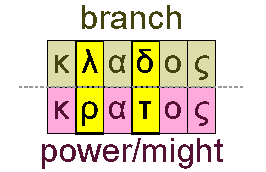
"κλάδος" ≈ "branch".
"κράτος" ≈ "might, strength" which is source of the word "democracy" which means "power of the people".
The Greek word for
"branch" is a play on words with "
power" or "
might". Linguistically, the liquid "
R" and "
L" are similar. Compare:
"fried rice" and "flied lice" (Letter similarity).
"light fires" and "fight liars" (Spoonerism).
21. Matthew 12:11 Will have six if
Matthew 12:11 And he said unto them, What man shall there be among you, that shall have one sheep, and if it fall into a pit on the sabbath day, will he not lay hold on it, and lift it out? [kjv]
ο δε ειπεν αυτοις τις εσται εξ υμων ανθρωπος ος εξει προβατον εν και εαν εμπεση τουτο τοις σαββασιν εις βοθυνον ουχι κρατησει αυτο και εγερει [gnt]
The
ancient Greek word
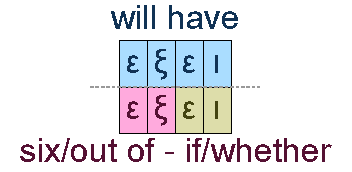
"εξει" ≈ "will have" (used one time by Jesus in Matthew) from
"ἔχω" ≈ "have".
How might this
"sheep" compare with the
"one" "sheep" that left the group (hundred)
"sheep"?
"εί" ≈ "if, whether".
"ἕξ" ≈ "six" as in the first part of "hexagon" or "ἐξ" ≈ "out of" as in the first part of "exodus", translated in this verse as "among".
The
"six" and "
one" sum to "
seven".
22. Matthew 12:11
KJV: And he said unto them, What man shall there be among you, that shall have one sheep, and if it fall into a pit on the sabbath day, will he not lay hold on it, and lift it out?
Greek: ο δε ειπεν αυτοις τις εσται εξ υμων ανθρωπος ος εξει προβατον εν και εαν εμπεση τουτο τοις σαββασιν εις βοθυνον ουχι κρατησει αυτο και εγερει
23. Matthew 12:12 Different better
Matthew 12:12 How much then is a man better than a sheep? Wherefore it is lawful to do well on the sabbath days. [kjv]
ποσω ουν διαφερει ανθρωπος προβατου ωστε εξεστιν τοις σαββασιν καλως ποιειν [gnt]
Greek word order:
How much therefore different (carrying through) man of the sheep ...
Who is the "
man" of the
"sheep"? The Greek word translated as
"better" is that of
"different".
"διαφέρω" ≈ "carried through, different" with a sense of a "different" way or type as in it "makes a difference".
The Latin word "melior" ≈ "better" and is from "bon" ≈ "better" which is the source of the English word "bonus".
In the
GNT (Greek New Testament) and
LXX, this Greek word is
always translated as "
different"
except in a few verses such as this one.
24. Matthew 12:12 Man and sheep
Matthew 12:12 How much then is a man better than a sheep? Wherefore it is lawful to do well on the sabbath days. [kjv]
ποσω ουν διαφερει ανθρωπος προβατου ωστε εξεστιν τοις σαββασιν καλως ποιειν [gnt]
The Greek for the nominative singular "
(a) man" is followed immediately by the genitive singular "
(of a) sheep". The word "
than" is not in the Greek.
The verb (indicative third person singular) is
"carry over",
"makes a difference",
"is different"..
Paraphrase:
How much different is a man of a sheep? ...
In the context, the
"sheep" has "
fallen" into a "
pit" and, since it needs "
lifted" or "
woken up" or, in context, "
resurrected", it cannot do so of it's own will.
25. Matthew 12:12
KJV: How much then is a man better than a sheep? Wherefore it is lawful to do well on the sabbath days.
Greek: ποσω ουν διαφερει ανθρωπος προβατου ωστε εξεστιν τοις σαββασιν καλως ποιειν
Latin: quanto magis melior est homo ove itaque licet sabbatis benefacere
26. Matthew 12:13
Matthew 12:13 Then saith he to the man, Stretch forth thine hand. And he stretched it forth; and it was restored whole, like as the other. [kjv]
τοτε λεγει τω ανθρωπω εκτεινον σου την χειρα σου και εξετεινεν και αποκατεσταθη απεκατεσταθη υγιης ως η αλλη [gnt]
Jesus, with the Matthew connecting words, results in a verse with similar sounding words.
"εξεστιν" ≈ "allowed" and translated as "lawful".
"εκτεινον" ≈ "stretch" (used by Jesus)
"εξετεινεν" ≈ "stretch" (connecting words by Matthew)
27. Matthew 12:13
KJV: Then saith he to the man, Stretch forth thine hand. And he stretched it forth; and it was restored whole, like as the other.
Greek: τοτε λεγει τω ανθρωπω εκτεινον σου την χειρα σου και εξετεινεν και αποκατεσταθη απεκατεσταθη υγιης ως η αλλη
28. Matthew 12:14-21 Comments added by Matthew
Matthew 12:14 Then the Pharisees went out, and held a council against him, how they might destroy him. [kjv]
οι εξελθοντες δε οι φαρισαιοι συμβουλιον ελαβον κατ αυτου εξελθοντες οπως αυτον απολεσωσιν [gnt]
How did Matthew know that there was a council against Jesus? Did Matthew have inside information? Was Matthew at that council?
Matthew will go on to add his own comments about what is happening.
29. End of page