Send
Close Add comments:
(status displays here)
Got it! This site "creationpie.org" uses cookies. You consent to this by clicking on "Got it!" or by continuing to use this website. Note: This appears on each machine/browser from which this site is accessed.
Similarity of the R and L sounds
1. Similarity of the R and L sounds
This content is being developed.
2. Similarity of the R and L sounds
3. M and N
The letters "
M" and "
N" can be related linguistically even though they sound different to English speakers. In Greek, some words have variants that go between "
M" and "
N".
The
modern Greek word
"Πέμπτη" (PEHM-ptee) ≈ "Thursday" from the
ancient Greek word
"πέμπτος" ≈ "fifth" which is from the number
"πέντε" ≈ "five".
... more to be added ...
4. Modern Greek
These letters are known as
liquids in linguistics. Modern Greek has a formal language variant called
Katharevousa that is designed to retain much of Ancient Greek. In Katharevousa:
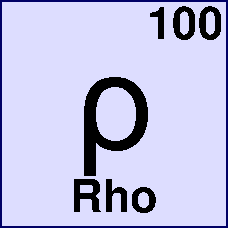
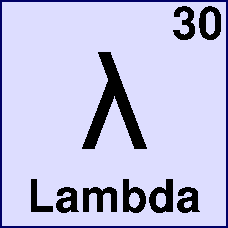
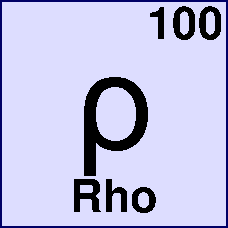
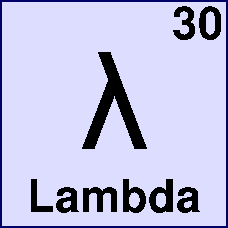
The "λ" (lambda) is (often) used in more formal settings.
The "ρ" (rho) is (often) used in more everyday usage.
In many words, the original "
λ" before a consonant became a "
ρ".
5. Examples
6. Pacific war
During World War II in the Pacific, the Americans sometimes used code words that contained the "L" sound. A common word was "lollapalooza". If a Japanese soldier heard that code word and attempted to use it, it would be said as "rorraparooza" and made clear that the person was an enemy and not a friend.
7. English
English, like other languages, will sometimes switch between the "
R" and "
L" sounds.
The English word
"colonel", as a military rank, is from the French word
"coronnel" ≈ "middle-ranking military officer".
It was my first day at work and I was looking for the room to get a notebook and pencil.
Suddenly, the janitor jumps out of the closet and yells, "supplies"! If you made the connection, your mind switched the "L" and "R" sounds (in English)
8. Liquid constants
Linguistically, the "
L" and "
R" sounds are liquid constants and related by sound (and somewhat similar pronunciation). These are sometimes called "
L-like" and "
R-like" sounds.
The name "
liquid" is a
calque, from the Latin word
"liquidus" ≈ "liquid", of the ancient Greek word
"ὑγρός" ≈ "moist, wet" as used to describe these
fluid sounds by Dionysus Thrax. He included the sounds "
M" and "
N" which in Greek are often interchanged.
Some English examples, including Spoonerisms.
fled and fret
lit and rid
ladle and rattle
9. Strongs - oven
10. Usage - oven
- *G2823 *2 κλίβανος (klib'-an-os) : of uncertain derivation; an earthen pot used for baking in:--oven.
- κλιβανον *2 of 2
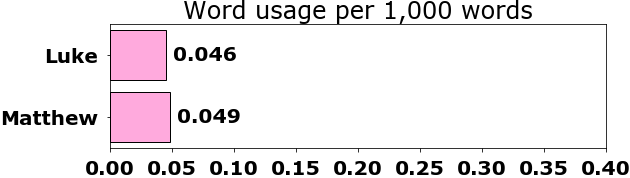
- Matthew 6:30 ... to morrow is cast into the oven, shall he not much more ...
- Luke 12:28 ... to morrow is cast into the oven; how much more will he clothe you, O ye of little faith?
11. Brother and brethren
12. Matthew 24:32 Branch and power
Matthew 24:32 Now learn a parable of the fig tree; When his branch is yet tender, and putteth forth leaves, ye know that summer is nigh: [kjv]
απο δε της συκης μαθετε την παραβολην οταν ηδη ο κλαδος αυτης γενηται απαλος και τα φυλλα εκφυη γινωσκετε οτι εγγυς το θερος [gnt]
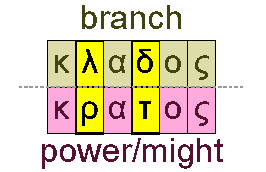
"κλάδος" ≈ "branch".
"κράτος" ≈ "might, strength" which is source of the word "democracy" which means "power of the people".
Paraphrase:
... when already the branch [power] becomes ...
The sounds of the letters "
R" and "
L" are closely related. In Greek these are "
Ρ" or "
ρ" and "
Λ" or are "
λ".
13. Matthew 12:11 Grab with power
Matthew 12:11 And he said unto them, What man shall there be among you, that shall have one sheep, and if it fall into a pit on the sabbath day, will he not lay hold on it, and lift it out? [kjv]
ο δε ειπεν αυτοις τις εσται εξ υμων ανθρωπος ος εξει προβατον εν και εαν εμπεση τουτο τοις σαββασιν εις βοθυνον ουχι κρατησει αυτο και εγερει [gnt]
The ancient Greek word
"κρατέω" ≈ "rule, conquer, seize, hold" and provides the last part of the English word
"democracy".
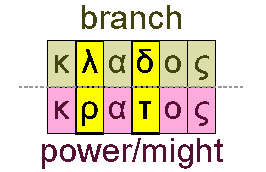
"κλάδος" ≈ "branch".
"κράτος" ≈ "might, strength" which is source of the word "democracy" which means "power of the people".
The Greek word for
"branch" is a play on words with "
power" or "
might". Linguistically, the liquid "
R" and "
L" are similar. Compare:
"fried rice" and "flied lice" (Letter similarity).
"light fires" and "fight liars" (Spoonerism).
14. Strongs - secret
*G2927 *19 κρυπτός (kroop-tos') : from G2928; concealed, i.e. private:--hid(-den), inward(-ly), secret.
 |
Words: κρυπτα=4 κρυπτον=4 κρυπτος κρυπτω=8 κρυφαιω=2
|
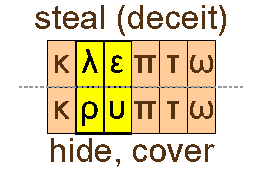
"κλέπτω" ≈ "steal".
"κρύπτω" ≈ "hide, cover".
The ancient Greek word
"κρυπτός" ≈ "hidden, secret" and is from the ancient Greek word
"κρύπτω" ≈ "hide, cover" and whose meaning may have been influenced by the ancient Greek word
"καλύπτω" ≈ "cover".
The
ancient Greek word
"φαιός" ≈ "gray, mixed black and white" and, of sound, "
harsh". The
modern Greek word
"φαιός" (feh-OS) ≈ "gray".
[thief connection, sounds L and R]
15. Usage - secret
- *G2927 *19 κρυπτός (kroop-tos') : from G2928; concealed, i.e. private:--hid(-den), inward(-ly), secret.
- κρυφαιω *2 of 19
- Matthew 6:18 ... which is in secret: and thy Father, which seeth in secret, shall reward thee openly.
16. Strongs - screech
*G2896 *55 κράζω (krad'-zo) : a primary verb; properly, to "croak" (as a raven) or scream, i.e. (genitive case) to call aloud (shriek, exclaim, intreat):--cry (out).
 |
Words: εκεκραξα εκραζεν=5 εκραζον=8 εκραξαν=7 εκραξεν=10 κεκραγεν=1 κραζει=5 κραζειν κραζομεν κραζον κραζοντας κραζοντες=5 κραζουσιν κραζων=2 κραξαντες κραξας=4 κραξουσιν
|
"κράζω" ≈ "scream, shriek, clamor".
"κλάζω" ≈ "make a sharp piercing sound".
Note that these words of similar meaning differ only in one letter which are similar linguistic sounds of "
L" and "
R". Certain declinations of these words have the "
G" sound needed for certain play on words.
17. Shibboleth: how something is said
Judges 12:6 Then said they unto him, Say now Shibboleth: and he said Sibboleth: for he could not frame to pronounce it right. Then they took him, and slew him at the passages of Jordan: and there fell at that time of the Ephraimites forty and two thousand. [kjv]
… שבלת … סבלת … [he]
Originally, from the book of Joshua in the
OT (Old Testament), a
"shibboleth" was a sound that a particular group of people have trouble pronouncing and that was used as a form of audible password or authentication mechanism in battle of identifying "
friend" or "
foe", that is, an
IFF (Identify Friend or Foe) system.
Today, the meaning has been generalized to be any sound that distinguishes a group of people.
18. Punishment by Spoonerisms: switched consonants
A
Spoonerism, named for William
Spooner (1844-1930), switches consonants of words. Vowels can often be pronounced such as to sound similar.
It is kisstomary to cuss the bride.
The Lord is a shoving leopard.
Mardon me padam, This pie is occupewed. Please sew me to another sheet.
| shake a tower |
take a shower |
| runny babbit |
bunny rabbit |
| fight a liar |
light a fire |
From the comedy group
Capitol Steps (1980's):
Resident Pagan (President Reagan).
The same effect can be achieved in many languages, including Greek. [Caesar using Greek to encrypt Latin]
19. End of page