Send
Close Add comments:
(status displays here)
Got it! This site "creationpie.org" uses cookies. You consent to this by clicking on "Got it!" or by continuing to use this website. Note: This appears on each machine/browser from which this site is accessed.
Touched by an angelic messenger
1. Touched by an angelic messenger
This content is being developed.
2. Touched by an angelic messenger
What does it mean to be "
touched by an angel"?
The TV series of the same name ran from 1994 to 2003, but is not really relevant here.
The English word
"angel" comes from the
ancient Greek word
"ἄγγελος" ≈ "messenger, one that announces".
In the Biblical context, the meaning is that of a
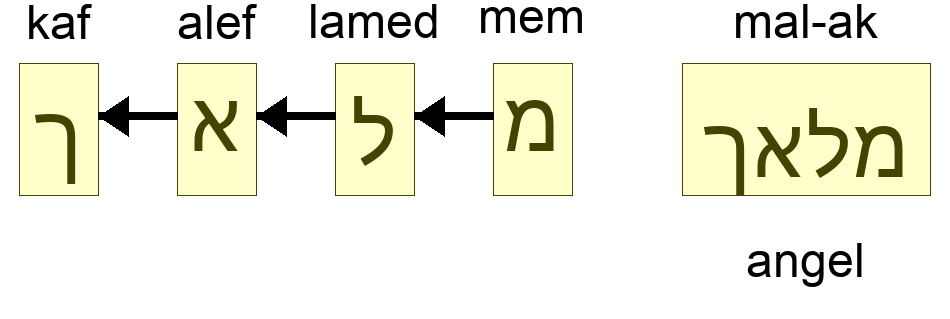
messenger from God and comes from the Hebrew word
"מלאך" (mal-ak) ≈ "angel" and is the root word for the prophet name "
Malachi".
Despite the song "
Hark the herald angels sing" the Bible records only one angel not singing at the birth of Jesus.
Other ancient cultures such as in Egypt, Babylon, Greece, etc., had supernatural beings that were messengers that brought news - good or bad. This idea appears to have been passed down from Adam, eventually to Noah, eventually to peoples and cultures dispersed from the Ark and the Tower of Babel, etc.
3. Los Angeles
4. Hebrew for angel
Zechariah 3:6 And the angel of the LORD protested unto Joshua, saying, [kjv]
… מלאך … [he]
και διεμαρτυρατο ο αγγελος κυριου προς ιησουν λεγων [lxx]
… angelus … [v]
The English word
"angel" comes from the Latin word
"angelus" ≈ "angel" which comes from the ancient Greek word
"ἄγγελος" ≈ "messenger, one that announces" and which comes from the Persian. Thus, in Matthew 5:41:
if someone compels you to be a messenger one mile, go with him/it two.
5. Zechariah 3:6
KJV: And the angel of the LORD protested unto Joshua, saying,
Hebrew: ויעד מלאך יהוה ביהושע לאמר׃
Greek: και διεμαρτυρατο ο αγγελος κυριου προς ιησουν λεγων
Latin: et contestabatur angelus Domini Iesum dicens
6. Psalms 35:5
Psalms 35:5 Let them be as chaff before the wind: and let the angel of the LORD chase them. [kjv]
… ומלאך … [he]
γενηθητωσαν ωσει χνους κατα προσωπον ανεμου και αγγελος κυριου εκθλιβων αυτους [lxx]
7. Psalms 35:5
KJV: Let them be as chaff before the wind: and let the angel of the LORD chase them.
Hebrew: יהיו כמץ לפני רוח ומלאך יהוה דוחה׃
Greek: γενηθητωσαν ωσει χνους κατα προσωπον ανεμου και αγγελος κυριου εκθλιβων αυτους
8. Psalms 91:11
Psalms 91:11 For he shall give his angels charge over thee, to keep thee in all thy ways. [kjv]
οτι τοις αγγελοις αυτου εντελειται περι σου του διαφυλαξαι σε εν πασαις ταις οδοις σου [lxx]
9. Psalms 91:11
KJV: For he shall give his angels charge over thee, to keep thee in all thy ways.
Hebrew: כי מלאכיו יצוה לך לשמרך בכל דרכיך׃
Greek: οτι τοις αγγελοις αυτου εντελειται περι σου του διαφυλαξαι σε εν πασαις ταις οδοις σου
10. Angels in ancient cultures
Other ancient cultures such as in Egypt, Babylon, Greece, etc., had supernatural beings that were messengers that brought news - good or bad. This idea appears to have been passed down from Adam, eventually to Noah, eventually to peoples and cultures dispersed from the Ark and the Tower of Babel, etc.
11. Nabu or Nebo
The Babylonian god "
Nabu" or "
Nebo", with Mesopotamian roots, was associated with literacy and wisdom. The word is from the Akkadian and means to "
announce" or "
prophesy".
This god Nabu is
not related to the idyllic Naboo colony in the Star Wars episodes.
The god "
Nabu" is associated with the Latin god "
Mercury", the Greek god "
Hermes" and the Egyptian god "
Thoth".
In terms of "
prophecy", the god "
Nabu" is sometimes associated with the Greek god "
Apollo" as the "
giver of prophecies".
12. Hermes
The Roman god Mercury is the Greek god Hermes from the ancient Greek word
"Ἑρμῆς" ≈ "Hermes, Mercury" the messenger of the gods who is related to commerce, deception, etc. The modern Greek word
"Ερμής" (EHr-MEES) ≈ "Hermes, Mercury".
Hermes is considered the inventor of language and speech - as both an interpreter and a deceiver. Such language could lead to truths or to non-truths.
13. Hermes and the caduceus and Aesculapius
John 3:14 And as Moses lifted up the serpent in the wilderness, even so must the Son of man be lifted up: [kjv]
και καθως μωσης μωυσης υψωσεν τον οφιν εν τη ερημω ουτως υψωθηναι δει τον υιον του ανθρωπου [gnt]
|
|
|
 |
doctors use:
Caduceus/Hermes
god of commerce
(deception)
|
nurses use:
Aesculapius
god of healing
|
|
Historically, the
single snake on the rod of
Aesculapius became a sign of healing.
Nurses have adopted this symbol healing as a symbol of their profession.
The
double snake and the caduceus is a symbol of travel (from the wings) and commerce and is associated with and carried by the Greek god
Hermes.
Doctors have adopted this symbol of commerce as a symbol of their profession.
14. John 3:15 In and into
John 3:15 That whosoever believeth in him should not perish, but have eternal life. [kjv]
ινα πας ο πιστευων εις αυτον μη αποληται αλλ εν αυτω εχη ζωην αιωνιον [gnt]
The
TR (Textus Receptus) changes
"in" to
"into".
15. John 3:14
KJV: And as Moses lifted up the serpent in the wilderness, even so must the Son of man be lifted up:
Greek: και καθως μωσης μωυσης υψωσεν τον οφιν εν τη ερημω ουτως υψωθηναι δει τον υιον του ανθρωπου
16. John 3:15
KJV: That whosoever believeth in him should not perish, but have eternal life.
Greek: ινα πας ο πιστευων εις αυτον μη αποληται αλλ εν αυτω εχη ζωην αιωνιον
17. Hermes and the Caduceus
The name of the chemical mercury comes from the Roman god Mercury who was a speedy messenger for the gods, particularly the main god Jupiter.
The Greek name for the Roman god Mercury is Hermes. Hermes is known as the god of commerce, oratory, deception, marketing, etc.
The Roman god Mercury or the Greek god Hermes travels around and carries the caduceus consisting of two snakes around a pole.
18. Modern Greek
19. Calque: The good news
20. Psalms 8:1-9 Lower than the angels
Psalms 8:4 What is man, that thou art mindful of him? and the son of man, that thou visitest him? [kjv]
τι εστιν ανθρωπος οτι μιμνησκη αυτου η υιος ανθρωπου οτι επισκεπτη αυτον [lxx]
… homo … [v]
8:5 For thou hast made him a little lower than the angels, and hast crowned him with glory and honour. [kjv]
ηλαττωσας αυτον βραχυ τι παρ αγγελους δοξη και τιμη εστεφανωσας αυτον [lxx]
… minus … Deo … [v]
Who exactly was created "
lower than the angels"?
21. Angel songs
There are many hymns that refer to angels.
22. Song: Hark the herald angels sing
Luke 2:13 And suddenly there was with the angel a multitude of the heavenly host praising God, and saying, [kjv]
και εξαιφνης εγενετο συν τω αγγελω πληθος στρατιας ουρανιου αινουντων τον θεον και λεγοντων [gnt]
Charles Wesley (1707-1788) wrote: "Hark the herald welkins ring".
George Whitefield (1714-1770) changed it to: "Hark the herald angels sing".
Felix Mendelssohn (1809-1847) wrote music, also "Wedding march".
Ever since, angels have been singing at Christmas in songs, devotionals, etc.
The German word
"die Wolke" ≈ "the cloud" which is related to the Old English word
"welcan" ≈ "cloud".
[Elizabeth Hughes and Elizabethtown]
23. Tracking down the scent of apostles and messages
In tracking down the scent of apostles and messages one must determine what it means to be sent (scent).
The word "
apostle" and "
epistle" mean sending.
The word "apostle", with prefix "apo", refers to the sending of a person who has a message to tell.
The word "epistle", with prefix "epi", refers to the sending of a message such as a letter to be read.
The English word
"angel" is another type of messenger.
24. Edward the Confessor
Edward the Confessor, or, in old English, "Ēadƿeard Andettere", lived from about 1006 to 1066 and was one of the last Anglo-Saxon kings of England, as the Normans arrived in 1066 with their consequent French influence on the developing English language. He ruled England from 1042 to 1066.
Edward developed a fame for his healing touch, especially for scrofula - a disease that often cured itself so that the King gave the impression that it was his touch that was the impetus for the cure.
In later centuries, a coin, as in the touch of a coin, sometimes on a necklace, was often substituted for the King's touch. A favorite coin had an image of the King on one side and an angel on the other side.
25. Macbeth
Edward the Confessor is mentioned several times in Shakespeare's play of Macbeth, including the King's ability "to cure someone of evil bears".
The mere despair of surgery, he cures,
Hanging a golden stamp about their necks,
Put on with holy prayers: and ’tis spoken,
To the succeeding royalty he leaves
The healing benediction. With this strange virtue,
He hath a heavenly gift of prophecy,
And sundry blessings hang about his throne,
That speak him full of grace.
This then is the source of the phrase "
touched by an angel".
One favorite verse for the occasion of creating this idea (or tradition) was Mark 16:18.
26. Mark 16:15
Mark 16:15 And he said unto them, Go ye into all the world, and preach the gospel to every creature. [kjv]
και ειπεν αυτοις πορευθεντες εις τον κοσμον απαντα κηρυξατε το ευαγγελιον παση τη κτισει [gnt]
27. Mark 16:15
KJV: And he said unto them, Go ye into all the world, and preach the gospel to every creature.
Greek: και ειπεν αυτοις πορευθεντες εις τον κοσμον απαντα κηρυξατε το ευαγγελιον παση τη κτισει
This is known as the "
great commission".
Note that "
creature" here is «
κτισει» which appears to refer to "
human" creatures and not animals in general.
28. Mark 16:16
Mark 16:16 He that believeth and is baptized shall be saved; but he that believeth not shall be damned. [kjv]
ο πιστευσας και βαπτισθεις σωθησεται ο δε απιστησας κατακριθησεται [gnt]
29. Mark 16:16
KJV: He that believeth and is baptized shall be saved; but he that believeth not shall be damned.
Greek: ο πιστευσας και βαπτισθεις σωθησεται ο δε απιστησας κατακριθησεται
To be saved, one should believe and be baptized.
He that does not believe is damned. Is this the same as "not saved"?
This verse does not address the often contentious issue as to whether one can be saved without being baptized.
30. Mark 16:17
Mark 16:17 And these signs shall follow them that believe; In my name shall they cast out devils; they shall speak with new tongues; [kjv]
σημεια δε τοις πιστευσασιν ακολουθησει ταυτα ταυτα παρακολουθησει εν τω ονοματι μου δαιμονια εκβαλουσιν γλωσσαις λαλησουσιν καιναις [gnt]
31. Mark 16:17
KJV: And these signs shall follow them that believe; In my name shall they cast out devils; they shall speak with new tongues;
Greek: σημεια δε τοις πιστευσασιν ακολουθησει ταυτα ταυτα παρακολουθησει εν τω ονοματι μου δαιμονια εκβαλουσιν γλωσσαις λαλησουσιν καιναις
What does it mean to speak in "
new tongues"?
Here is the verse that was often used with coins used to help cure individuals and from which the phrase "
touched by an angel" developed.
32. Mark 16:18
Mark 16:18 They shall take up serpents; and if they drink any deadly thing, it shall not hurt them; they shall lay hands on the sick, and they shall recover. [kjv]
και εν ταις χερσιν οφεις αρουσιν καν θανασιμον τι πιωσιν ου μη αυτους βλαψει βλαψη επι αρρωστους χειρας επιθησουσιν και καλως εξουσιν [gnt]
33. Mark 16:18
KJV: They shall take up serpents; and if they drink any deadly thing, it shall not hurt them; they shall lay hands on the sick, and they shall recover.
Greek: και εν ταις χερσιν οφεις αρουσιν καν θανασιμον τι πιωσιν ου μη αυτους βλαψει βλαψη επι αρρωστους χειρας επιθησουσιν και καλως εξουσιν
Latin: serpentes tollent et si mortiferum quid biberint non eos nocebit super aegrotos manus inponent et bene habebunt
Wycliffe: thei schulen do awei serpentis; and if thei drynke ony venym, it schal not noye hem. Thei schulen sette her hondis on sijk men, and thei schulen wexe hoole.
Tyndale: and shall kyll serpentes. And yf they drinke eny dedly thinge yt shall not hurte the. They shall laye their hondes on ye sicke and they shall recover.
Geneva: And shall take away serpents, and if they shall drinke any deadly thing, it shall not hurt them: they shall lay their handes on the sicke, and they shall recouer.
Luther: Schlangen vertreiben, und so sie etwas Tödliches trinken, wird's ihnen nicht schaden; auf die Kranken werden sie die Hände legen, so wird's besser mit ihnen werden.
The reference to "
serpents" fit in with the side of the coin that had the angel Michael slaying a dragon. A dragon was also known as a serpent.
While the
KJV (King James Version) says "
shall take up serpents" the Middle English of Wycliffe says "
shulen do awei seprentis" while the Tyndalle says "
shall kyll seprentes". Might this interpretation have been influenced by the idea of "
touched by an angel"?
34. Mark 16:19
Mark 16:19 So then after the Lord had spoken unto them, he was received up into heaven, and sat on the right hand of God. [kjv]
ο μεν ουν κυριος ιησους μετα το λαλησαι αυτοις ανεληφθη ανελημφθη εις τον ουρανον και εκαθισεν εκ δεξιων του θεου [gnt]
35. Mark 16:19
KJV: So then after the Lord had spoken unto them, he was received up into heaven, and sat on the right hand of God.
Greek: ο μεν ουν κυριος ιησους μετα το λαλησαι αυτοις ανεληφθη ανελημφθη εις τον ουρανον και εκαθισεν εκ δεξιων του θεου
36. Touched by an angel
What is an "angel"?
What does it mean to be "touched by an angel"?
Let us look at some examples from the Bible of being "touched by an angel".
37. 2 Peter 2:6
2 Peter 2:6 And turning the cities of Sodom and Gomorrha into ashes condemned them with an overthrow, making them an ensample unto those that after should live ungodly; [kjv]
και πολεις σοδομων και γομορρας τεφρωσας καταστροφη κατεκρινεν υποδειγμα μελλοντων ασεβειν ασεβεσιν τεθεικως [gnt]
38. 2 Peter 2:6
KJV: And turning the cities of Sodom and Gomorrha into ashes condemned them with an overthrow, making them an ensample unto those that after should live ungodly;
Greek: και πολεις σοδομων και γομορρας τεφρωσας καταστροφη κατεκρινεν υποδειγμα μελλοντων ασεβειν ασεβεσιν τεθεικως
Latin: et civitates Sodomorum et Gomorraeorum in cinerem redigens eversione damnavit exemplum eorum qui impie acturi sunt ponens
Wycliffe: and he droof in to poudre the citees of men of Sodom and of men of Gommor, and dampnede bi turnyng vpsedoun, and putte hem the ensaumple of hem that weren to doynge yuele;
Luther: und hat die Städte Sodom und Gomorra zu Asche gemacht, umgekehret und verdammt, damit ein Exempel gesetzt den Gottlosen, die hernach kommen würden;
Spanish: y si condenó por destrucción las ciudades de Sodoma y de Gomorra, tornándolas en ceniza, y poniéndolas de ejemplo a los que habían de vivir impíamente,
39. 2 Kings 19:35 Syrian army
2 Kings 19:35 And it came to pass that night, that the angel of the LORD went out, and smote in the camp of the Assyrians an hundred fourscore and five thousand: and when they arose early in the morning, behold, they were all dead corpses. [kjv]
και εγενετο εως νυκτος και εξηλθεν αγγελος κυριου και επαταξεν εν τη παρεμβολη των ασσυριων εκατον ογδοηκοντα πεντε χιλιαδας και ωρθρισαν το πρωι και ιδου παντες σωματα νεκρα [lxx]
During the reign of Hezekiah, in 2 Kings 19:35, an angel killed 185,000 Assyrian soldiers after which the Assyrian King Sennacherib returned to Nineveh.
Note the use of the word "
castra", from which we get the word "
castle", for "
camp".
40. 2 Kings 19:35
KJV: And it came to pass that night, that the angel of the LORD went out, and smote in the camp of the Assyrians an hundred fourscore and five thousand: and when they arose early in the morning, behold, they were all dead corpses.
Hebrew: ויהי בלילה ההוא ויצא מלאך יהוה ויך במחנה אשור מאה שמונים וחמשה אלף וישכימו בבקר והנה כלם פגרים מתים׃
Greek: και εγενετο εως νυκτος και εξηλθεν αγγελος κυριου και επαταξεν εν τη παρεμβολη των ασσυριων εκατον ογδοηκοντα πεντε χιλιαδας και ωρθρισαν το πρωι και ιδου παντες σωματα νεκρα
Latin: factum est igitur in nocte illa venit angelus Domini et percussit castra Assyriorum centum octoginta quinque milia cumque diluculo surrexisset vidit omnia corpora mortuorum et recedens abiit
Wycliffe: Therfor it was don, in that niyt the aungel of the Lord cam, and smoot in the castels of Assiryens an hundrid foure score and fyue thousynde. And whanne Sennacherib hadde rise eerli, he siy alle bodies of deed men; and he departide, and yede awei.
Luther: Und in derselben Nacht fuhr aus der Engel des Herrn und schlug im Lager von Assyrien hundertundfünfundachtzigtausend Mann. Und da sie sich des Morgens frühe aufmachten, siehe, da lag es alles eitel tote Leichname.
Spanish: Y aconteció que la misma noche salió elángel de Jehová, e hirió en el campamento de los asirios ciento ochenta y cinco mil; y cuando se levantaron por la mañana, he aquí, todo era cuerpos de muertos.
41. 2 Kings 19:36
2 Kings 19:36 So Sennacherib king of Assyria departed, and went and returned, and dwelt at Nineveh. [kjv]
και απηρεν και επορευθη και απεστρεψεν σενναχηριμ βασιλευς ασσυριων και ωκησεν εν νινευη [lxx]
42. 2 Kings 19:36
KJV: So Sennacherib king of Assyria departed, and went and returned, and dwelt at Nineveh.
Greek: και απηρεν και επορευθη και απεστρεψεν σενναχηριμ βασιλευς ασσυριων και ωκησεν εν νινευη
43. Sennacherib
In 701 BC Hezekiah and Jerusalem miraculously escaped the conquering and destruction of Jerusalem by
Sennacherib, the ruler of Assyria.
Isaiah the prophet was inside the city of Jerusalem during the siege, providing prophecies from God.
This is recorded both in the Bible and in secular history and on an ancient
prism discovered and deciphered. In the Bible, an angel smites 185,000 Assyrian soldiers in one night.
44. Caged birds
On the prism of Sennacherib, Sennacherib recounts how he had trapped Hezekiah in Jerusalem "
like a caged bird" (which was true) but leaving out the overnight disaster and having to retreat. Some secular sources attribute the disaster to a sudden plague, but the two viewpoints had the same effect.
Hezekiah is mentioned by name on the prism. It was during this siege of Jerusalem that the tunnel of Hezekiah was dug to obtain water for Jerusalem.
 |
Details are left as a future topic.
|
45. Acts 12:7 Peter
Acts 12:7 And, behold, the angel of the Lord came upon him, and a light shined in the prison: and he smote Peter on the side, and raised him up, saying, Arise up quickly. And his chains fell off from his hands. [kjv]
και ιδου αγγελος κυριου επεστη και φως ελαμψεν εν τω οικηματι παταξας δε την πλευραν του πετρου ηγειρεν αυτον λεγων αναστα εν ταχει και εξεπεσον εξεπεσαν αυτου αι αλυσεις εκ των χειρων [gnt]
Angels can be more gentle in their actions.
46. Acts 12:7
KJV: And, behold, the angel of the Lord came upon him, and a light shined in the prison: and he smote Peter on the side, and raised him up, saying, Arise up quickly. And his chains fell off from his hands.
Greek: και ιδου αγγελος κυριου επεστη και φως ελαμψεν εν τω οικηματι παταξας δε την πλευραν του πετρου ηγειρεν αυτον λεγων αναστα εν ταχει και εξεπεσον εξεπεσαν αυτου αι αλυσεις εκ των χειρων
Latin: et ecce angelus Domini adstitit et lumen refulsit in habitaculo percussoque latere Petri suscitavit eum dicens surge velociter et ceciderunt catenae de manibus eius
Tyndale: And beholde the angell of ye Lorde was there present and a lyght shyned in the lodge. And smote Peter on the syde and steryd him vp sayinge: aryse vp quyckly. And his cheynes fell of fro his hondes.
Spanish: Y he aquí, elángel del Señor vino, y una luz resplandeció en la cárcel; y golpeando a Pedro en el costado, le despertó, diciendo: Levántate prestamente. Y las cadenas se le cayeron de las manos.
Angels are created beings. There are good angels and bad angels.
What is the "
day star"?
47. 2 Peter 1:19
KJV: We have also a more sure word of prophecy; whereunto ye do well that ye take heed, as unto a light that shineth in a dark place, until the day dawn, and the day star arise in your hearts:
Greek: και εχομεν βεβαιοτερον τον προφητικον λογον ω καλως ποιειτε προσεχοντες ως λυχνω φαινοντι εν αυχμηρω τοπω εως ου ημερα διαυγαση και φωσφορος ανατειλη εν ταις καρδιαις υμων
Latin: et habemus firmiorem propheticum sermonem cui bene facitis adtendentes quasi lucernae lucenti in caliginoso loco donec dies inlucescat et lucifer oriatur in cordibus vestris
Wycliffe: And we han a saddere word of prophecie, to which ye yyuynge tent don wel, as to a lanterne that yyueth liyt in a derk place, til the dai bigynne to yyue liyt, and the dai sterre sprenge in youre hertis.
Geneva: We haue also a most sure worde of the Prophets, to the which ye doe well that yee take heede, as vnto a light that shineth in a darke place, vntill the day dawne, and the day starre arise in your hearts.
Luther: Wir haben ein festes prophetisches Wort, und ihr tut wohl, daß ihr darauf achtet als auf ein Licht, das da scheinet in einem dunkeln Ort, bis der Tag anbreche, und der Morgenstern aufgehe in euren Herzen.
Spanish: Tenemos además la palabra profética más segura, a la cual hacéis bien de estar atentos como a una lámpara que alumbra en lugar oscuro hasta que el día esclarezca, y el lucero de la mañana salga en vuestros corazones;
48. Isaiah 14:12
KJV: How art thou fallen from heaven, O Lucifer, son of the morning! how art thou cut down to the ground, which didst weaken the nations!
Greek: πως εξεπεσεν εκ του ουρανου ο εωσφορος ο πρωι ανατελλων συνετριβη εις την γην ο αποστελλων προς παντα τα εθνη
Latin: quomodo cecidisti de caelo lucifer qui mane oriebaris corruisti in terram qui vulnerabas gentes
Wycliffe: A! Lucifer, that risidist eerli, hou feldist thou doun fro heuene; thou that woundist folkis, feldist doun togidere in to erthe.
Geneva: How art thou fallen from heauen, O Lucifer, sonne of the morning? and cutte downe to the grounde, which didest cast lottes vpon the nations?
Luther: Wie bist du vom Himmel gefallen, du schöner Morgenstern! Wie bist du zur Erde gefället, der du die Heiden schwächtest!
Spanish: ¡Cómo caíste del cielo, oh Lucifer, hijo de la mañana! Cortado fuiste por tierra, tú que debilitabas las naciones.
49. Fallen angels
Peter mentions some fallen angels.
50. 2 Peter 2:4
KJV: For if God spared not the angels that sinned, but cast them down to hell, and delivered them into chains of darkness, to be reserved unto judgment;
Greek: ει γαρ ο θεος αγγελων αμαρτησαντων ουκ εφεισατο αλλα σειραις σειροις ζοφου ταρταρωσας παρεδωκεν εις κρισιν τετηρημενους τηρουμενους
Latin: si enim Deus angelis peccantibus non pepercit sed rudentibus inferni detractos in tartarum tradidit in iudicium cruciatos reservari
Wycliffe: For if God sparide not aungels synnynge, but bitook hem to be turmentid, and to be drawun doun with boondis of helle in to helle, to be kept in to dom;
Geneva: For if God spared not the Angels that had sinned, but cast them downe into hell, and deliuered them into chaines of darkenes, to be kept vnto damnation:
Luther: Denn so Gott der Engel, die gesündiget haben, nicht verschonet hat, sondern hat sie mit Ketten der Finsternis zur Hölle verstoßen und übergeben, daß sie zum Gerichte behalten werden;
Spanish: Porque si Dios no perdonó a losángeles que pecaron, sino que los arrojó al infierno y los entregó a prisiones de oscuridad, a ser reservados para el juicio;
Peter (and Jude) appear to reference the Nephilim (fallen ones) from Genesis.
51. Genesis 6:4
KJV: There were giants in the earth in those days; and also after that, when the sons of God came in unto the daughters of men, and they bare children to them, the same became mighty men which were of old, men of renown.
Greek: οι δε γιγαντες ησαν επι της γης εν ταις ημεραις εκειναις και μετ εκεινο ως αν εισεπορευοντο οι υιοι του θεου προς τας θυγατερας των ανθρωπων και εγεννωσαν εαυτοις εκεινοι ησαν οι γιγαντες οι απ αιωνος οι ανθρωποι οι ονομαστοι
52. Tree of life
In Genesis, after the fall, God puts (an angel with) a flaming sword to guard the way of the tree of life.
53. Genesis 3:24
KJV: So he drove out the man; and he placed at the east of the garden of Eden Cherubims, and a flaming sword which turned every way, to keep the way of the tree of life.
Greek: και εξεβαλεν τον αδαμ και κατωκισεν αυτον απεναντι του παραδεισου της τρυφης και εταξεν τα χερουβιμ και την φλογινην ρομφαιαν την στρεφομενην φυλασσειν την οδον του ξυλου της ζωης
Is an angel really needed to keep humans from this tree? Who else might want access to this tree?
54. End of page