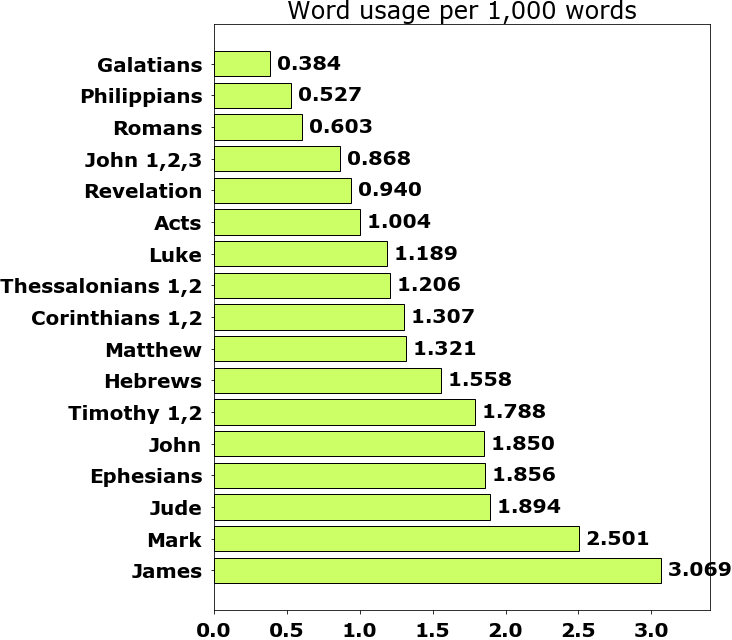
- *G1410 *206 δύναμαι (doo'-nam-ahee) : of uncertain affinity; to be able or possible:--be able, can (do, + -not), could, may, might, be possible, be of power.
δυνη *4 of 206
Mark 9:22 ... him: but if thou canst do any thing, have compassion on ...
Mark 9:23 Jesus said unto him, If thou canst believe, all things are possible to him that believeth.
Luke 16:2 ... of thy stewardship; for thou mayest be no longer steward.
Revelation 2:2 ... patience, and how thou canst not bear them which are evil: ...
8. Revelation 2:2 Church at Ephesus
Revelation 2:2 I know thy works, and thy labour, and thy patience, and how thou canst not bear them which are evil: and thou hast tried them which say they are apostles, and are not, and hast found them liars: [kjv]
οιδα τα εργα σου και τον κοπον σου και την υπομονην σου και οτι ου δυνη βαστασαι κακους και επειρασω επειρασας τους φασκοντας ειναι λεγοντας εαυτους αποστολους και ουκ εισιν και ευρες αυτους ψευδεις [gnt]
"κόπος" ≈ "toil, work".
"κακῶς" ≈ "badly, miserably, maliciously" and "κακός" ≈ "bad, ugly, wretched, mean". Jesus uses this word as a play on words with a "bird" "call".
"ψευδής" ≈ "lying, false, untrue" and is the source of the English word "pseudo".
The "
birds" that
"lie" are in
node 2 and attempt to seduce the "
fish" at
node 1 (covet, Ephesus) to follow them to
node 2.
Who might have claimed to be an "
apostle" and are
"liars"? Might this include those who wrote letters claiming to be from an apostle? Might they be part of the "
synagogue" of "
Satan" at
node 2 and
node 6?
9. Revelation 2:2 Works
Revelation 2:2 I know thy works, and thy labour, and thy patience, and how thou canst not bear them which are evil: and thou hast tried them which say they are apostles, and are not, and hast found them liars: [kjv]
οιδα τα εργα σου και τον κοπον σου και την υπομονην σου και οτι ου δυνη βαστασαι κακους και επειρασω επειρασας τους φασκοντας ειναι λεγοντας εαυτους αποστολους και ουκ εισιν και ευρες αυτους ψευδεις [gnt]
"ἔργων" ≈ "works, deeds" (genitive neuter plural) from "ἔργον" (er-gon) ≈ "work, deed" "τά" ≈ "those" (nominative/accusative plural).
"κόπος" ≈ "toil, work".
"ὑπομονή" ≈ "enduring, waiting"
"βαστάσασιν" ≈ "having borne" (as used).
"βάσανα" ≈ "torture, torments" (plural).
"ψευδής" ≈ "lying, false, untrue"
10. Revelation 2:2
Revelation 2:2 I know thy works, and thy labour, and thy patience, and how thou canst not bear them which are evil: and thou hast tried them which say they are apostles, and are not, and hast found them liars: [kjv]
οιδα τα εργα σου και τον κοπον σου και την υπομονην σου και οτι ου δυνη βαστασαι κακους και επειρασω επειρασας τους φασκοντας ειναι λεγοντας εαυτους αποστολους και ουκ εισιν και ευρες αυτους ψευδεις [gnt]
The
ancient Greek word
"κακός" ≈ "bad, worthless, ugly, vile".
The English word
"cacophony" comes, through French, from the
ancient Greek word
"κακοφωνία" ≈ "ill-sounding".
11. Revelation 2:2
KJV: I know thy works, and thy labour, and thy patience, and how thou canst not bear them which are evil: and thou hast tried them which say they are apostles, and are not, and hast found them liars:
Greek: οιδα τα εργα σου και τον κοπον σου και την υπομονην σου και οτι ου δυνη βαστασαι κακους και επειρασω επειρασας τους φασκοντας ειναι λεγοντας εαυτους αποστολους και ουκ εισιν και ευρες αυτους ψευδεις
12. Revelation 2:3
13. Revelation 2:3
KJV: And hast borne, and hast patience, and for my name's sake hast laboured, and hast not fainted.
Greek: και εβαστασας και υπομονην εχεις και εβαστασας δια το ονομα μου κεκοπιακας και ου κεκμηκας κεκοπιακες
14. Revelation 2:4 To the church at Ephesus
Revelation 2:4 Nevertheless I have somewhat against thee, because thou hast left thy first love. [kjv]
αλλ αλλα εχω κατα σου οτι την αγαπην σου την πρωτην αφηκας αφηκες [gnt]

The Greek translated as
"left" is the word for
"forgive" or
"allow" or
"let go".
They had lost their
"first" "
love". When Jesus uses the word for
"first" there is often no second or third or later option.
In many cases, losing the "
love" of Jesus results in a "
love" of oneself. The "
birds" will use a false light to attract "
fish" from which "
pigs" are recruited to keep everyone in line as the "
birds" create their own "
house" built of "
sand".
15. Revelation 2:4 To the church at Ephesus
Revelation 2:4 Nevertheless I have somewhat against thee, because thou hast left thy first love. [kjv]
αλλ αλλα εχω κατα σου οτι την αγαπην σου την πρωτην αφηκας αφηκες [gnt]
The ancient Greek words
"κατά σου" ≈ "against you" as in being
"down on you". These two Greek words for
"against you" are only used in Matthew 5:23 and in Revelation, to the churches at
Ephesus,
Smyrna and
Thyatira.
If one loses their "
first" "
love", that usually means that they have new "
first" "
love". What might that be?
16. Revelation 2:4
KJV: Nevertheless I have somewhat against thee, because thou hast left thy first love.
Greek: αλλ αλλα εχω κατα σου οτι την αγαπην σου την πρωτην αφηκας αφηκες
17. Matthew 5:23 Against thee
Matthew 5:23 Therefore if thou bring thy gift to the altar, and there rememberest that thy brother hath ought against thee; [kjv]
εαν ουν προσφερης το δωρον σου επι το θυσιαστηριον κακει μνησθης οτι ο αδελφος σου εχει τι κατα σου [gnt]
The ancient Greek words
"κατά σου" ≈ "against you" as in being
"down on you".
The ancient Greek prefix
"κατά" ≈ "back, downwards, against, fully, completely" and
"σου" ≈ "you".
"κατά" ≈ "against, opposing, into" (genitive)
"κατά" ≈ "downwards, towards, according to" (accusative)
"κᾷτα" ≈ "and then" as a short form of "καὶ εἶτᾰ" ≈ "and then".
Using the last word as a play on words, would be
that the brother Jesus has something (and then some) against you. The two Greek words for
"against you" are only used in Matthew 5:23 and in Revelation, to the churches at
Ephesus,
Smyrna and
Thyatira.
18. Revelation 2:5
Revelation 2:5 Remember therefore from whence thou art fallen, and repent, and do the first works; or else I will come unto thee quickly, and will remove thy candlestick out of his place, except thou repent. [kjv]
μνημονευε ουν ποθεν εκπεπτωκας πεπτωκες και μετανοησον και τα πρωτα εργα ποιησον ει δε μη ερχομαι σοι ταχει και κινησω την λυχνιαν σου εκ του τοπου αυτης εαν μη μετανοησης [gnt]
The
TR adds the Greek word for "
quickly".
19. Revelation 2:5
Revelation 2:5 Remember therefore from whence thou art fallen, and repent, and do the first works; or else I will come unto thee quickly, and will remove thy candlestick out of his place, except thou repent. [kjv]
μνημονευε ουν ποθεν εκπεπτωκας πεπτωκες και μετανοησον και τα πρωτα εργα ποιησον ει δε μη ερχομαι σοι ταχει και κινησω την λυχνιαν σου εκ του τοπου αυτης εαν μη μετανοησης [gnt]
The Greek word for "
remember" is used in the same section of the Sermon on the Mount where the phrase "
against you" appears.
What are the "
first"
"works"? Perhaps they have drifted from "
active"
"works" to "
passive" "
saying" and "
thinking" rather than "
doing".
The Greek word translated as "
repent" means, literally, "
after thought" or "
think after". There is another Greek word, used by Jesus, that means to "
change behavior".
20. Revelation 2:5 Remove with movement
Revelation 2:5 Remember therefore from whence thou art fallen, and repent, and do the first works; or else I will come unto thee quickly, and will remove thy candlestick out of his place, except thou repent. [kjv]
μνημονευε ουν ποθεν εκπεπτωκας πεπτωκες και μετανοησον και τα πρωτα εργα ποιησον ει δε μη ερχομαι σοι ταχει και κινησω την λυχνιαν σου εκ του τοπου αυτης εαν μη μετανοησης [gnt]
The Greek word translated "
remove" is that of "
movement" and is the source of the English word
"kinetic". The
KJV (King James Version) goes back to the time when the English prefix "
re-" emphasized rather than changed (i.e., as in do again) the meaning of the word. Thus, "
replenish" meant to "
plenish" the earth without doing it again. If you are in doubt of this claim, one can "
research" that, rather than "
search" for that - for the first time!
21. Revelation 2:1,5
Revelation 2:1 Unto the angel of the church of Ephesus write; These things saith he that holdeth the seven stars in his right hand, who walketh in the midst of the seven golden candlesticks; [kjv]
τω αγγελω της εφεσινης τω εν εφεσω εκκλησιας γραψον ταδε λεγει ο κρατων τους επτα αστερας εν τη δεξια αυτου ο περιπατων εν μεσω των επτα λυχνιων των χρυσων [gnt]
2:5 Remember therefore from whence thou art fallen, and repent, and do the first works; or else I will come unto thee quickly, and will remove thy candlestick out of his place, except thou repent. [kjv]
μνημονευε ουν ποθεν εκπεπτωκας πεπτωκες και μετανοησον και τα πρωτα εργα ποιησον ει δε μη ερχομαι σοι ταχει και κινησω την λυχνιαν σου εκ του τοπου αυτης εαν μη μετανοησης [gnt]
[silted harbor]
22. Revelation 2:5
KJV: Remember therefore from whence thou art fallen, and repent, and do the first works; or else I will come unto thee quickly, and will remove thy candlestick out of his place, except thou repent.
Greek: μνημονευε ουν ποθεν εκπεπτωκας πεπτωκες και μετανοησον και τα πρωτα εργα ποιησον ει δε μη ερχομαι σοι ταχει και κινησω την λυχνιαν σου εκ του τοπου αυτης εαν μη μετανοησης
23. Revelation 2:6
Revelation 2:6 But this thou hast, that thou hatest the deeds of the Nicolaitans, which I also hate. [kjv]
αλλα τουτο εχεις οτι μισεις τα εργα των νικολαιτων α καγω μισω [gnt]
The Greek for "
Nicolaitans" means, literally, "
victory of the people". It is also the name "
Nicolas" as in "
Saint" "
Nicolas" as in "
Santa" "
Claus".
The Greek word for "
hate" can be a play on words with the Greek word for "
reward". This word is used in the letter to Pergamus.
24. Revelation 2:6
KJV: But this thou hast, that thou hatest the deeds of the Nicolaitans, which I also hate.
Greek: αλλα τουτο εχεις οτι μισεις τα εργα των νικολαιτων α καγω μισω
25. Revelation 2:7 Tree of life
Revelation 2:7 He that hath an ear, let him hear what the Spirit saith unto the churches; To him that overcometh will I give to eat of the tree of life, which is in the midst of the paradise of God. [kjv]
ο εχων ους ακουσατω τι το πνευμα λεγει ταις εκκλησιαις τω νικωντι δωσω αυτω φαγειν εκ του ξυλου της ζωης ο εστιν εν μεσω του παραδεισου τω παραδεισω του θεου [gnt]
Jesus uses the phrase "
he that hath an ear" to indicate that there are some play on words being used in the area of this statement. Many of these have prophetic meaning.
One should seek to eat of the
"tree" of "
life" and not of the
"tree" of the "
law" where the "
birds" come to "
reside".
26. Revelation 2:7
KJV: He that hath an ear, let him hear what the Spirit saith unto the churches; To him that overcometh will I give to eat of the tree of life, which is in the midst of the paradise of God.
Greek: ο εχων ους ακουσατω τι το πνευμα λεγει ταις εκκλησιαις τω νικωντι δωσω αυτω φαγειν εκ του ξυλου της ζωης ο εστιν εν μεσω του παραδεισου τω παραδεισω του θεου
27. Unconditional access to tree of life
Revelation 2:7 He that hath an ear, let him hear what the Spirit saith unto the churches; To him that overcometh will I give to eat of the tree of life, which is in the midst of the paradise of God. [kjv]
ο εχων ους ακουσατω τι το πνευμα λεγει ταις εκκλησιαις τω νικωντι δωσω αυτω φαγειν εκ του ξυλου της ζωης ο εστιν εν μεσω του παραδεισου τω παραδεισω του θεου [gnt]
The "
tree of life" can be represented as a circle, much as the "
Garden of Eden" means, from the Persian, an enclosed place or garden. The ancient Greek word
"παράδεισος" ≈ "paradise, enclosed park" and is the source of the English word
"paradise".
28. End of page