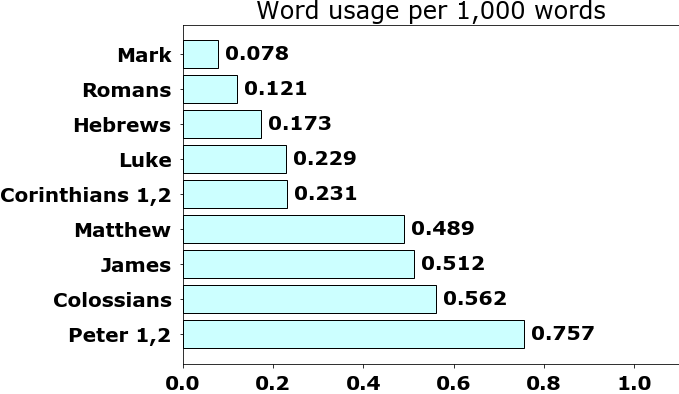
- *G2343 *8 θησαυρίζω (thay-sow-rid'-zo) : from G2344 θησαυρός; to amass or reserve (literally or figuratively):--lay up (treasure), (keep) in store, (heap) treasure (together, up).
- θησαυριζετε *2
- Matthew 6:19 Lay not up for yourselves treasures upon ...
- Matthew 6:20 But lay up for yourselves treasures in heaven, ...
- θησαυριζων *2
- Luke 12:21 So is he that layeth up treasure for himself, and is not ...
- 1 Corinthians 16:2 ... lay by him in store, as God hath prospered him, that ...
- θησαυριζεις
- Romans 2:5 ... and impenitent heart treasurest up unto thyself wrath against ...
- θησαυριζειν
- 2 Corinthians 12:14 ... the children ought not to lay up for the parents, but the parents for the children.
- εθησαυρισατε
- James 5:3 ... flesh as it were fire. Ye have heaped treasure together for the last days.
- τεθησαυρισμενοι
- 2 Peter 3:7 ... the same word are kept in store, reserved unto fire against ...
- *G2344 *17 θησαυρός (thay-sow-ros') : from G5087; a deposit, i.e. wealth (literally or figuratively):--treasure.
- θησαυρον *5
- Matthew 19:21 ... to the poor, and thou shalt have treasure in heaven: and ...
- Mark 10:21 ... to the poor, and thou shalt have treasure in heaven: and ...
- Luke 12:33 ... which wax not old, a treasure in the heavens that faileth not, ...
- Luke 18:22 ... unto the poor, and thou shalt have treasure in heaven: and ...
- 2 Corinthians 4:7 But we have this treasure in earthen vessels, ...
- θησαυρου *4
- Matthew 12:35 ... out of the good treasure of the heart bringeth forth good things: and an evil man out of the evil treasure ...
- Matthew 13:52 ... bringeth forth out of his treasure things new and old.
- Luke 6:45 ... out of the good treasure of his heart bringeth forth that which is good; and an evil man out of the evil treasure of his heart ...
- θησαυρους *3
- Matthew 2:11 ... and when they had opened their treasures, they presented unto him gifts; ...
- Matthew 6:19 Lay not up for yourselves treasures upon earth, where ...
- Matthew 6:20 But lay up for yourselves treasures in heaven, where ...
- θησαυρος *2
- Matthew 6:21 For where your treasure is, there will ...
- Luke 12:34 For where your treasure is, there will ...
- θησαυρω
- Matthew 13:44 ... of heaven is like unto treasure hid in a field; ...
- θησαυροι
- Colossians 2:3 ... are hid all the treasures of wisdom and knowledge.
- θησαυρων
- Hebrews 11:26 ... of Christ greater riches than the treasures in Egypt: for ...
8. Matthew 6:19-21 Treasured treasury of treasures
Matthew 6:19 Lay not up for yourselves treasures upon earth, where moth and rust doth corrupt, and where thieves break through and steal: [kjv]
μη θησαυριζετε υμιν θησαυρους επι της γης οπου σης και βρωσις αφανιζει και οπου κλεπται διορυσσουσιν και κλεπτουσιν [gnt]
6:20 But lay up for yourselves treasures in heaven, where neither moth nor rust doth corrupt, and where thieves do not break through nor steal: [kjv]
θησαυριζετε δε υμιν θησαυρους εν ουρανω οπου ουτε σης ουτε βρωσις αφανιζει και οπου κλεπται ου διορυσσουσιν ουδε κλεπτουσιν [gnt]
6:21 For where your treasure is, there will your heart be also. [kjv]
οπου γαρ εστιν ο θησαυρος υμων σου εκει εσται και η καρδια υμων σου [gnt]
The
same Greek words,
noun and
verb, for
"treasure" are used
five times in three verses. Would your favorite English teacher like you writing like this?
9. Thesaurus - treasury of words
The ancient Greek word
"θησαυρός" ≈ "treasure" and is the source of the English word
"thesaurus" as a general dictionary - a meaning that has been around since ancient times. The word narrowed in meaning in 1852 with the introduction of a thesaurus by
Peter Roget who re-defined thesaurus as a "
collection of words arranged according to sense".
What happens if you swallow a dictionary?
For a spell, you will get the sorest (thesaurus) throat you ever have had. You will not be able to (tongue in cheek) get a word in edgewise.
What do you say about a pony with a sore throat?
It's a little horse. You may be dying for more jokes, but let's not get the cart before the hearse. That tired joke fell flat. I may need to re-hearse.
10. Serpent guarded treasure
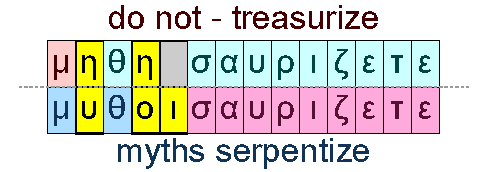
The ancient Greek word "θησαυρός" ≈ "treasure".
The ancient Greek word "σαῦρος" ≈ "lizard, serpent" and is the source of the English word "dinosaur" and is used symbolically to represent Satan as a "serpent". The source of the word "saurus" is that of "twisting".
The last six letters in the Greek word for
"treasure" are the word for
"lizard". There is no apparent etymological connection. Both words appears to be pre-Greek.
Snakes are often associated with the guarding of
"treasure". Job talks of creatures that sound like dinosaurs. [dragons] Is this a
"myth"?
11. Matthew 6:19 Mythical serpents
12. Matthew 6:20 Neither nor
Matthew 6:20 But lay up for yourselves treasures in heaven, where neither moth nor rust doth corrupt, and where thieves do not break through nor steal: [kjv]
θησαυριζετε δε υμιν θησαυρους εν ουρανω οπου ουτε σης ουτε βρωσις αφανιζει και οπου κλεπται ου διορυσσουσιν ουδε κλεπτουσιν [gnt]
The following are
equivalent and can be related using DeMorgan's Law (from the mid 1800's). The Greek words
"και" ≈ "and" and
"η" ≈ "or".
| Logic |
Mail delivery |
Greek |
| neither A nor B |
neither rain nor snow |
ουτε A ουτε B ... |
| not (A or B) |
not ( rain or snow ) |
ου (A η B) ... |
| (not A) and (not B) |
(not rain) and (not snow) |
(ου A) και (ου B) ... |
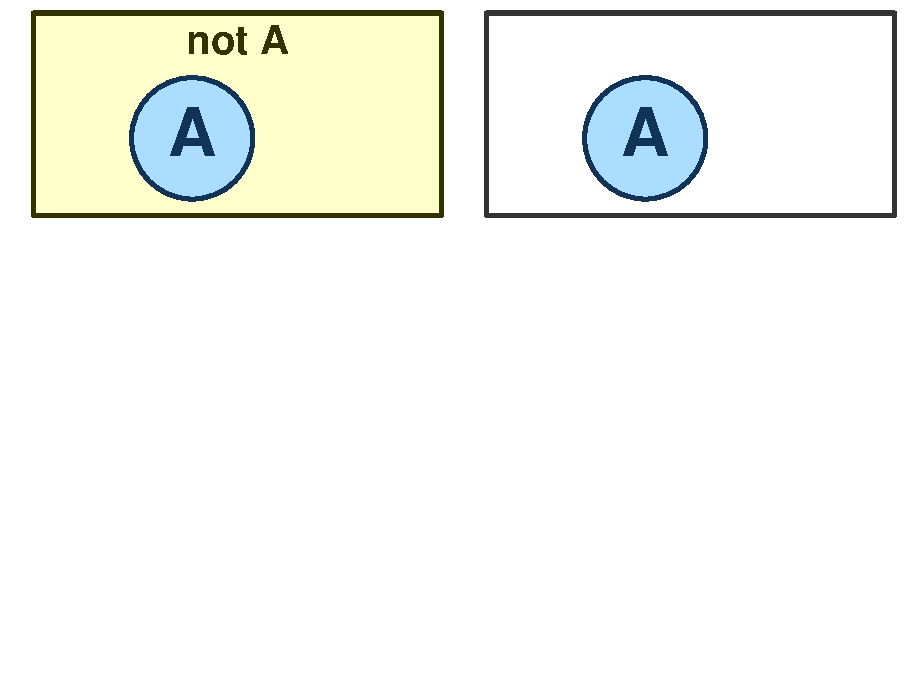
A
negation analysis can now be done.
13. DeMorgan's Laws of compound logical negation
|
|
|
|
DeMorgan's Laws for propositional (truth table) logic are named for Augustus DeMorgan (1806-1871).
[Bible inerrancy]
|
DeMorgan tutored (mostly via correspondence) Ada Lovelace, considered the first programmer, in the early 1840's. The Ada programming language, used mostly for government work, is named after Ada Lovelace.
|
DeMorgan's Law is needed to fully analyze what Jesus says about
mammon in Matthew 6:24 and the plucking of the eye in the Sermon on the Mount and in Matthew 18.
14. Matthew 6:19-20 Logical formulation
Matthew 6:19 Lay not up for yourselves treasures upon earth, where moth and rust doth corrupt, and where thieves break through and steal: [kjv]
μη θησαυριζετε υμιν θησαυρους επι της γης οπου σης και βρωσις αφανιζει και οπου κλεπται διορυσσουσιν και κλεπτουσιν [gnt]
6:20 But lay up for yourselves treasures in heaven, where neither moth nor rust doth corrupt, and where thieves do not break through nor steal: [kjv]
θησαυριζετε δε υμιν θησαυρους εν ουρανω οπου ουτε σης ουτε βρωσις αφανιζει και οπου κλεπται ου διορυσσουσιν ουδε κλεπτουσιν [gnt]
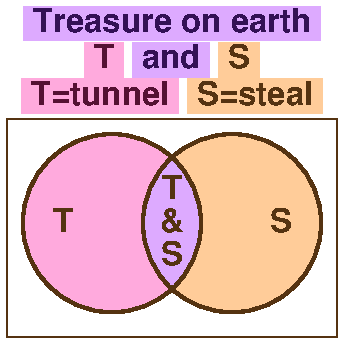 |
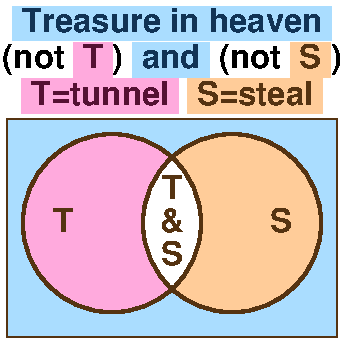 |
| v19 |
T and S |
| v20 |
neither T nor S |
| v20 |
not (T or S) |
| v20 |
(not T) and (not S) |
|
Let "T" be "Tunnel through".
Let "S" be "Deceptively steal".
15. Matthew 6:19 Negation analysis
Matthew 6:19 Lay not up for yourselves treasures upon earth, where moth and rust doth corrupt, and where thieves break through and steal: [kjv]
μη θησαυριζετε υμιν θησαυρους επι της γης οπου σης και βρωσις αφανιζει και οπου κλεπται διορυσσουσιν και κλεπτουσιν [gnt]
The word "moth" is "your" as a pronoun referring to "fasting" from the previous three verses. [non-verbal communication]
The word "rust" is "food" as in the "bread" of "life" from eight verses earlier.
The word "corrupt" is "disappear". The opposite is "appear" or "become evident".
[model and interpretation to a logical system]
16. Logical negation analysis of Matthew 6:20
Assume the pronoun
"you" refers to
"fasting" as in
"not eating". Let the
"food" be the
"bread" of
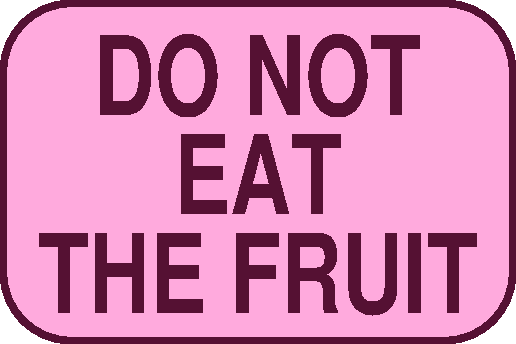
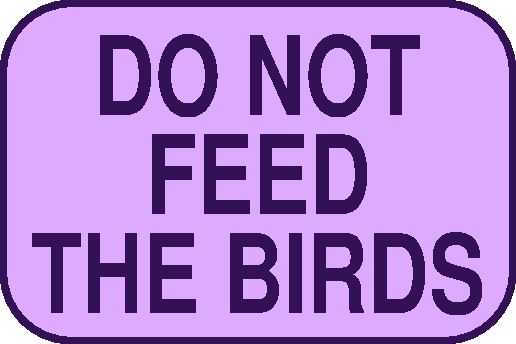
"life". Do not eat the fruit! Do not feed the birds!
6:19:
"Treasure" on
earth: (you
opened the tunnel)
a. ... where (fasting and bread) disappear ...
b. ... where (fasting disappears) and (bread disappears )...
c. ... where (not eating (not appears)) and (bread (not appears )) ...
d. ... where (eating (the fruit) appears) and (not bread appears) ...
6:20:
"Treasure" In
heaven: (you
closed the tunnel)
a. ... where neither (fasting disappears) nor (bread disappears) ...
b. ... where (not (fasting (not appears))) and (not (bread (not appears))) ...
c. ... where (not (not eating (not appears))) and (bread appears ) ...
d. ... where (not eating (the fruit) appears) and (bread appears) ...
[logical truth as symbol manipulation, algebra, reversibility of propositional logic]
17. Matthew 6:19-20 Causal relationships
Matthew 6:19 Lay not up for yourselves treasures upon earth, where moth and rust doth corrupt, and where thieves break through and steal: [kjv]
6:20 But lay up for yourselves treasures in heaven, where neither moth nor rust doth corrupt, and where thieves do not break through nor steal: [kjv]
6:19:
"Treasure" on
earth: (you
opened the tunnel)
... where (eating (the fruit) appears) and (not bread appears) ...
6:20:
"Treasure" In
heaven: (you
closed the tunnel)
... where (not eating (the fruit) appears) and (bread appears) ...
The appears to be a
causal relationship in that "
eating" or
"not" "
eating" the
"fruit" determines the
"appearance" or
"disappearance" of the
"bread" as
"food". This
causal relationship appears to be the determining factor of whether the
"tunnel" is open or closed for the potential
"thieves".
18. Matthew 6:19-20 Treasure on earth and in heaven
Matthew 6:19 Lay not up for yourselves treasures upon earth, where moth and rust doth corrupt, and where thieves break through and steal: [kjv]
6:20 But lay up for yourselves treasures in heaven, where neither moth nor rust doth corrupt, and where thieves do not break through nor steal: [kjv]
In any case:
Do not eat the fruit. Do not feed the birds.
To have
"treasure" in "
earth" one should eat (the fruit) so that the (living) bread does
"not" appear.
To have
"treasure" in "
heaven" one should
"not" eat (the fruit) so that the (living) bread appears.
19. Matthew 6:21 Treasure and heart
Matthew 6:21 For where your treasure is, there will your heart be also. [kjv]
οπου γαρ εστιν ο θησαυρος υμων σου εκει εσται και η καρδια υμων σου [gnt]
The
"treasure" and
"heart" of a person appear to be both located in the same place. Might they be the same thing? Might they be part of what is called the "
soul"? Might they be part of the "
body"?
Where is the "heart" or "treasure" of the "earth" or "sand" as in human infrastructure?
Where is the "body" or "soul" of the "earth" or "sand" as in human infrastructure?
20. Matthew 6:21 Treasure and heart
Matthew 6:21 For where your treasure is, there will your heart be also. [kjv]
οπου γαρ εστιν ο θησαυρος υμων σου εκει εσται και η καρδια υμων σου [gnt]
Is
"treasure" a
mental (soul) or
physical (body) idea (or both)? Which
"heaven"?
Once Jesus came and became part of those who accepted him (as a little one) how long does Jesus remain there? How much time does Jesus then have to spend in the
"heart" of those in the
"earth" or
"sand"? Is that until he comes back to take those little ones out? Might that be
"three" "days" and
"three" "nights"?
21. Matthew 6:21 Treasure and heart
Matthew 6:21 For where your treasure is, there will your heart be also. [kjv]
What might be the meaning of
"treasure"? Could it be the "
body" and/or "
soul"?
What might be the meaning of
"heart"?
The following have the same or similar meaning:
righteousness,
opinion,
glory. Is it of God or of man?
Paraphrase:
For where your life/body/soul/treasure is, there will your righteousness/opinion/glory/heart be also.
On earth that life is that of man's righteousness/opinion/glory.
In heaven that life is that of God's righteousness/opinion/glory.
22. Matthew 6:19-20
Matthew 6:19 Lay not up for yourselves treasures upon earth, where moth and rust doth corrupt, and where thieves break through and steal: [kjv]
6:20 But lay up for yourselves treasures in heaven, where neither moth nor rust doth corrupt, and where thieves do not break through nor steal: [kjv]
Let
EF be "
eat (the fruit)". Let
B be
"(living) bread".
|
6:19: |
6:20 |
Operation |
|
Treasure on earth |
Treasure in heaven |
(location) |
| a. |
EF and (not B) |
(not EF) and B |
(as stated) |
| b. |
not (not (EF and (not B))) |
not (not ((not EF and B))) |
double negation |
| c. |
not ((not EF) and B) |
not (EF and (not B)) |
DeMorgan's law |
| d. |
not (EF implies B) |
not (B implies EF) |
implication |
[logical truth as symbol manipulation, algebra, reversibility of propositional logic]
23. Treasure
Let
EF be "
eat (the fruit)". Let
B be
"(living) bread".
Before: treasure
on earth |
not (EF implies B) |
It is not true that "eating (the fruit)"
implies "(living) bread" |
After: treasure
in heaven |
not (B implies EF) |
It is not true that "(living) bread"
implies "eating (the fruit)" |
Was the rich young man "eating (the fruit)" (before)?
Does the rich young man need to change to not "eating (the fruit)" (after)?
Might this be a traumatic change? Might the young man be annoyed/distressed?
Must one dispose of all material wealth? Explain.
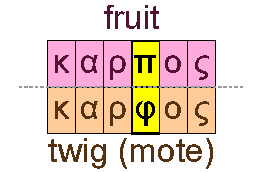
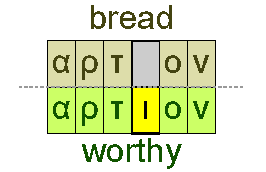
Might these distinctions help identify the nature of
"fruit" and
"twigs" and of
"bread"? and being
"worthy"?
24. Essential attributes
Check all that apply.
☐ Having "
possessions" causes "
fruit" to be "
eaten"?
☐ Having "
possessions" keeps "
fruit" from being produced?
☐ Being consumed with obtaining (and keeping) "
possessions" causes "
fruit" to be "
eaten"?
☐ Being consumed with obtaining (and keeping) "
possessions" keeps "
fruit" from being produced?
25. End of page