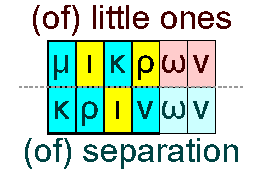
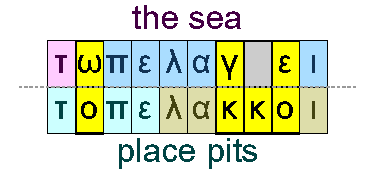
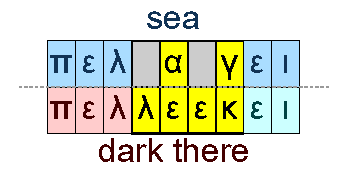
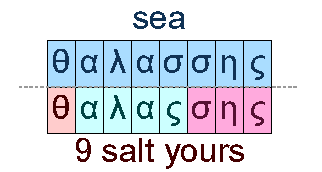
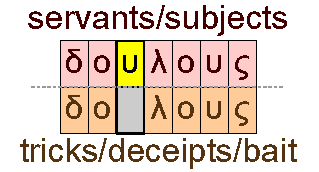
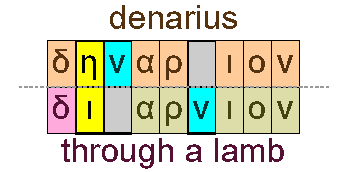
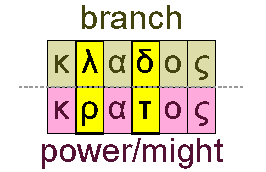
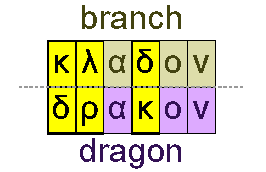
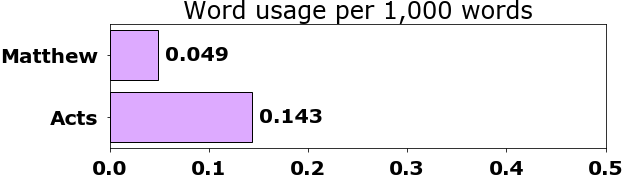
- *G4097 *9 πιπράσκω (pip-ras'-ko) : prao prah'-o; (which occurs only as an alternate in certain tenses) contracted from perao (to traverse; from the base of G4008); to traffic (by travelling), i.e. dispose of as merchandise or into slavery (literally or figuratively):--sell.
πραθηναι *3 of 9
Matthew 18:25 ... lord commanded him to be sold, and his wife, ...
Matthew 26:9 For this ointment might have been sold for much, and given to the poor.
Mark 14:5 For it might have been sold for more than three hundred pence, ...
πεπρακεν *1 of 9
Matthew 13:46 ... pearl of great price, went and sold all that he had, ...
50. Matthew 13:46 That that is had
Matthew 13:46 Who, when he had found one pearl of great price, went and sold all that he had, and bought it. [kjv]
ος ευρων δε ενα πολυτιμον μαργαριτην απελθων πεπρακεν παντα οσα ειχεν και ηγορασεν αυτον [gnt]
The
ancient Greek word
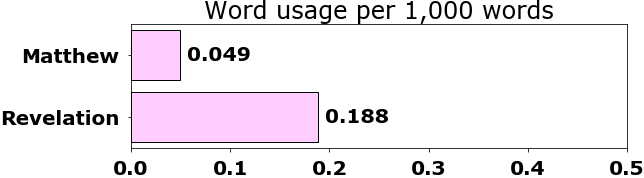
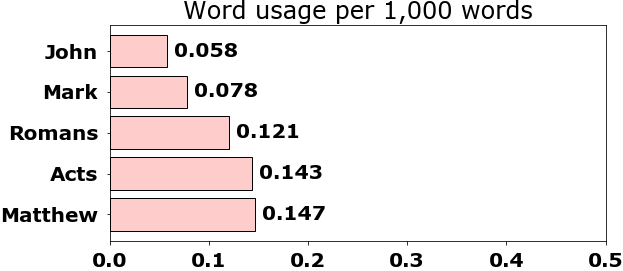
"πιπράσκω" ≈ "to sell (export) into slavery, betray (passive)".
"πάντα" ≈ "always, all, whole"
"ὅσα" ≈ "as far as" and "ἔχει" ≈ "had" (third person singular active indicative).
The
"he" is inferred. Beth the
"he" and the
"it" could be the "
merchant" or it could be the
"pearl" (or what is represented by the
"pearl") or something or someone else.
Greek :
... went and sold/betrayed (into slavery) all that he/it had and bought/owned him/it.
Is it more likely that the "
merchant"
sold/betrayed (into slavery) himself or the
"pearl"?
The
TR (Textus Receptus) adds the
"who".
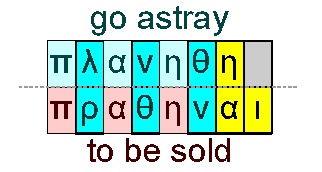
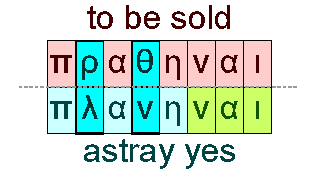
51. Matthew 18:12 Sell astray
Matthew 18:12 How think ye? if a man have an hundred sheep, and one of them be gone astray, doth he not leave the ninety and nine, and goeth into the mountains, and seeketh that which is gone astray? [kjv]
τι υμιν δοκει εαν γενηται τινι ανθρωπω εκατον προβατα και πλανηθη εν εξ αυτων ουχι αφεις αφησει τα εννενηκονταεννεα ενενηκοντα εννεα επι τα ορη και πορευθεις ζητει το πλανωμενον [gnt]
"πλανηθῇ" ≈ "go astray".
"πραθῆναι" ≈ "to be sold (into slavery)".
"πλάνη" ≈ "wander, roam" and "ναι" ≈ "yes"
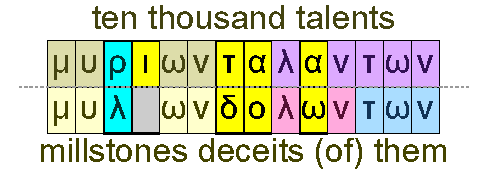
In the parable of the unforgiving servant, at the end of this chapter, the lord commands to "
sell" the "
woman", "
children", etc. Might this have been what that "
servant" was doing to others? Might this be a
"sheep" that was thus "
sold"? Perhaps this was a
deceptive "wander",
"yes", the "
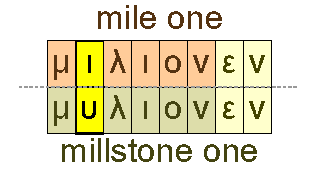
millstone" not being noticed by the one "
sold".
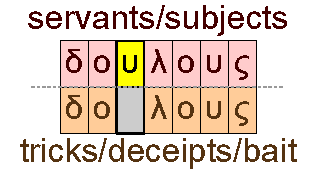
In Greek the "
L" and "
R" sounds were more similar than in English.
52. Matthew 18:25
Matthew 18:25 But forasmuch as he had not to pay, his lord commanded him to be sold, and his wife, and children, and all that he had, and payment to be made. [kjv]
μη εχοντος δε αυτου αποδουναι εκελευσεν αυτον ο κυριος αυτου πραθηναι και την γυναικα αυτου και τα τεκνα και παντα οσα ειχεν εχει και αποδοθηναι [gnt]
The Greek for
"pay", used
twice in this verse, is that of "
fork over" and was used several times in the Sermon on the Mount.
The human ruler "
commands". Jesus does not "
command" but asks you to "
follow". The Greek for "
follow" is the source of the English word
"acolyte" and is, literally, that of "
not commanding".
In the Sermon on the Mount, one will not get out of the "
watch" or "
prison" until one has "
paid" or "
forked over" the "
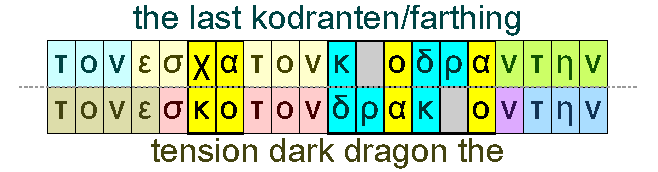
last farthing" as a (paid for with money) sacrifice on the alter (the verse before). There will never be a "
last farthing".
53. Matthew 18:25 Woman and children
Matthew 18:25 But forasmuch as he had not to pay, his lord commanded him to be sold, and his wife, and children, and all that he had, and payment to be made. [kjv]
μη εχοντος δε αυτου αποδουναι εκελευσεν αυτον ο κυριος αυτου πραθηναι και την γυναικα αυτου και τα τεκνα και παντα οσα ειχεν εχει και αποδοθηναι [gnt]
Why the "wife" or "woman"? Who is she? The "his" was added by the TR.
Why the "children"? Who are they? Are they the "children" of the "woman"?
If he is "
sold", how can he ever
"pay" the
"debt"?
"γυναίκα" ≈ "woman, wife"
"τέκνα" ≈ "children" (accusative neuter plural) from "τέκνον" ≈ "child"
It appears that the lord is commanding "
servant 1" to be punished with the same punishment that he has been imposing on others. Might this be related to the "
millstone" deception/entrapment?
[psychological projection]
54. Matthew 18:25
Matthew 18:25 But forasmuch as he had not to pay, his lord commanded him to be sold, and his wife, and children, and all that he had, and payment to be made. [kjv]
μη εχοντος δε αυτου αποδουναι εκελευσεν αυτον ο κυριος αυτου πραθηναι και την γυναικα αυτου και τα τεκνα και παντα οσα ειχεν εχει και αποδοθηναι [gnt]
One possible connection is the following. A reflexive relationship might include the "
servant" with one of these.
The "woman" as the "eye" as "harlot" or "false leader" or "bird".
One "child" as the "hand" as a "pig" working with the "bird".
One "child" as the "fish" enraptured by the "bird".
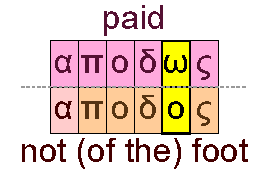
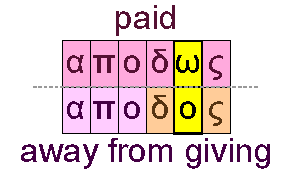
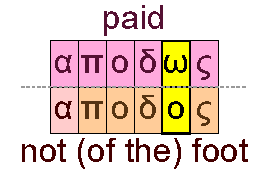
These "
parts" or "
members" should be "
cut off" and appeared earlier in the chapter.
These "
parts" were repeated in the "
two" or "
three" gathered "
against" his "
name" as in "
against" the
"child" in the "
middle".
55. Matthew 18:25 All that is had
Matthew 18:25 But forasmuch as he had not to pay, his lord commanded him to be sold, and his wife, and children, and all that he had, and payment to be made. [kjv]
μη εχοντος δε αυτου αποδουναι εκελευσεν αυτον ο κυριος αυτου πραθηναι και την γυναικα αυτου και τα τεκνα και παντα οσα ειχεν εχει και αποδοθηναι [gnt]
… venundari … omnia quae habebat … [v]
What is
"all" "as much as" "had"?
"πάντα" ≈ "always, all, whole".
"ὅσα" ≈ "as far as" and "ἔχει" ≈ "(he/she/it) had" (third person singular active indicative).
Greek:
... ordered him the lord to be sold (into slavery) ... and all that (he/she/it) had ...
The
"all" "that" (he/she/it)
"had" might include the "
house" built on "
sand" (human infrastructure).
56. Matthew 13:44 That he had
Matthew 13:44 Again, the kingdom of heaven is like unto treasure hid in a field; the which when a man hath found, he hideth, and for joy thereof goeth and selleth all that he hath, and buyeth that field. [kjv]
παλιν ομοια εστιν η βασιλεια των ουρανων θησαυρω κεκρυμμενω εν τω αγρω ον ευρων ανθρωπος εκρυψεν και απο της χαρας αυτου υπαγει και παντα πωλει οσα εχει πωλει και αγοραζει τον αγρον εκεινον [gnt]
simile … gaudio … vendit universa quae habet et emit agrum … [v]
The
"all" comes from the Latin word
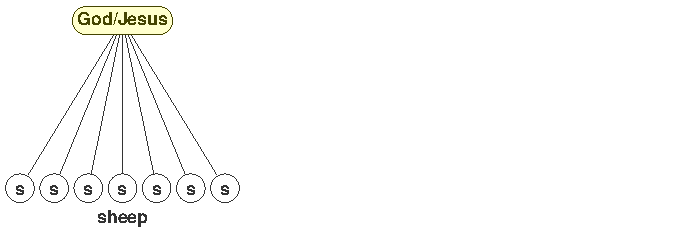
"universus" ≈ "whole, entire, universal" and is the source of the English word
"universal".
"ὅσα" ≈ "as far as" and "ἔχει" ≈ "had" (third person singular active indicative).
The Latin word
"similis" ≈ "similar to" and is the source of the English word
"similar". The
TR adds
"again".
57. Matthew 18:25
KJV: But forasmuch as he had not to pay, his lord commanded him to be sold, and his wife, and children, and all that he had, and payment to be made.
Greek: μη εχοντος δε αυτου αποδουναι εκελευσεν αυτον ο κυριος αυτου πραθηναι και την γυναικα αυτου και τα τεκνα και παντα οσα ειχεν εχει και αποδοθηναι
Latin: cum autem non haberet unde redderet iussit eum dominus venundari et uxorem eius et filios et omnia quae habebat et reddi
58. Matthew 4:9 Bowing down
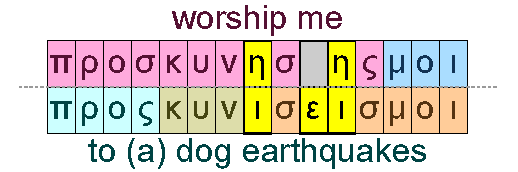
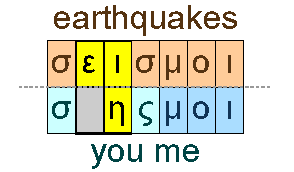
59. Matthew 18:26 Worship
Matthew 18:26 The servant therefore fell down, and worshipped him, saying, Lord, have patience with me, and I will pay thee all. [kjv]
πεσων ουν ο δουλος προσεκυνει αυτω λεγων κυριε μακροθυμησον επ εμοι και παντα σοι αποδωσω σοι [gnt]
"πρός" ≈ "to, towards" (preposition).
"κῠνῐ́" ≈ "dog" (dative) from "κύων" ≈ "dog".
60. Matthew 18:26 I surrender all
Matthew 18:26 The servant therefore fell down, and worshipped him, saying, Lord, have patience with me, and I will pay thee all. [kjv]
πεσων ουν ο δουλος προσεκυνει αυτω λεγων κυριε μακροθυμησον επ εμοι και παντα σοι αποδωσω σοι [gnt]
The word for
"pay" or "
fork over" is used again.
Is
"servant 1" praying, in effect, "
I surrender all"? Does he really mean it?
Why does
"servant 1" say
"all"? What is the difference in the following?
And I will "pay" "all".
And I will "pay".
61. Matthew 18:26
KJV: The servant therefore fell down, and worshipped him, saying, Lord, have patience with me, and I will pay thee all.
Greek: πεσων ουν ο δουλος προσεκυνει αυτω λεγων κυριε μακροθυμησον επ εμοι και παντα σοι αποδωσω σοι
62. Matthew 18:27
Matthew 18:27 Then the lord of that servant was moved with compassion, and loosed him, and forgave him the debt. [kjv]
σπλαγχνισθεις δε ο κυριος του δουλου εκεινου εκεινου απελυσεν αυτον και το δανειον δανιον αφηκεν αυτω [gnt]
The Greek for "compassion" is that, literally, of a "gut feeling".
This ruler "loosed" on "earth".
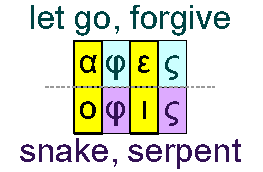
The Greek for "forgave" is that of "let go".
The Greek for "dept" is that of a "loan".
The
ancient Greek word
"δάνειον" ≈ "(finance) loan" and comes from
"δάνος" ≈ "gift, present" with the diminutive suffix.
63. Usage - borrow
*G1155 *4 δανείζω (dan-ide'-zo) : from G1156; to loan on interest; reflexively, to borrow:--borrow, lend.
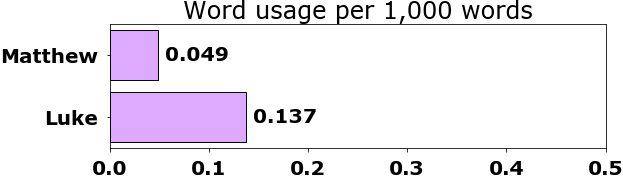 |
Words: δανιζετε δανιζουσιν δανισασθαι=1 δανισητε
|
The ancient Greek word
"δάνειον" ≈ "(finance) loan" and comes from
"δάνος" ≈ "gift, present" with the diminutive suffix.
There can be a lot of interest in loans!
64. Loan sharks
A
loan shark is someone who lends money at an
exorbitant interest rate somewhat higher than, say, credit card companies.
This is in contrast to a
lone shark which is a single shark. To
shirk is to
avoid. Someone who does not
loan shirk is someone who does not avoid
loaning something.
There is not a lot of interest in this loanly joke with no friends. Actually, it's not my joke. It's just a loaner joke.
If you take out a loan for a personal exorcism, and do not pay it back, you will get repossessed - or, at the least, lose your tail. The devil is in the de-tails.
What exactly does the verse refer to in terms of a "
loan"?
65. Matthew 5:42 Overview
Matthew 5:42 Give to him that asketh thee, and from him that would borrow of thee turn not thou away. [kjv]
τω αιτουντι σε διδου δος και τον θελοντα απο σου δανεισασθαι δανισασθαι μη αποστραφης [gnt]
The Angels are asking for (requesting) a shortstop. The shortstop desires (support) from the Padres to play for the Angels. The Padres (should) give the shortstop as an (indefinite, free) loan to the Angels (until the end of the season). Do not turn back (have regrets).
Give him (to) them (who are) asking. And, him (who is) desiring from you, loan (him) (to them). No turning back.
Give him them asking. And, him desiring from you loan. No turning back.
Give you it asking. And, him desiring from you loan. No turning back.
It asking you give. And, him desiring from you loan. No turning back.
Note: To go from
verbal (less ambiguous pronouns, missing words) to
written form (less clear), the first
"you" or
"thee" is changed to
"him". (explained below)
66. Matthew 5:42 You give you
Matthew 5:42 Give to him that asketh thee, and from him that would borrow of thee turn not thou away. [kjv]
τω αιτουντι σε διδου δος και τον θελοντα απο σου δανεισασθαι δανισασθαι μη αποστραφης [gnt]
Paraphrase:
You give (subject) you (direct object) (to) it ...
The
"ask" is a participle in the
dative case (some other include
nominative,
accusative,
genitive,
vocative, etc.) and serves as the
direct object of the sentence. The (first)
"you" is in the
accusative case.
The English word
"accusative" comes, through French, from the Latin word
"accusativus" ≈ "having been blamed" from
"accuso" ≈ "to blame". This is a mistranslation of the ancient Greek grammatical word
"αἰτιᾱτική" ≈ "expressing an effect" and comes from
"αἰτιατικός" ≈ "cause". This word comes from
"αἰτία" ≈ "accusation, cause, occasion" and comes from
"αἰτέω" ≈ "ask, request" which is the word for
"ask" (as a
dative participle) in this verse and so goes with the
"him" or
"it"
67. Matthew 18:27
KJV: Then the lord of that servant was moved with compassion, and loosed him, and forgave him the debt.
Greek: σπλαγχνισθεις δε ο κυριος του δουλου εκεινου εκεινου απελυσεν αυτον και το δανειον δανιον αφηκεν αυτω
That servant want and found a fellow servant - one at the same level. The amount is much smaller.
68. Strongs - owed
*G3781 *7 ὀφειλέτης (of-i-let'-ace) : from G3784 ὀφείλω; an ower, i.e. person indebted; figuratively, a delinquent; morally, a transgressor (against God):--debtor, which owed, sinner.
*G3782 *3 ὀφειλή (of-i-lay') : from G3784 ὀφείλω; indebtedness, i.e. (concretely) a sum owed; figuratively, obligation, i.e. (conjugal) duty:--debt, due.
*G3783 *2 ὀφείλημα (of-i'-lay-mah) : from (the alternate of) 3784; something owed, i.e. (figuratively) a due; morally, a fault:--debt.
*G3784 *35 ὀφείλω (of-i'-lo) : opheileo of-i-leh'-o probably from the base of G3786 (through the idea of accruing); to owe (pecuniarily); figuratively, to be under obligation (ought, must, should); morally, to fail in duty:--behove, be bound, (be) debt(-or), (be) due(-ty), be guilty (indebted), (must) need(-s), ought, owe, should.
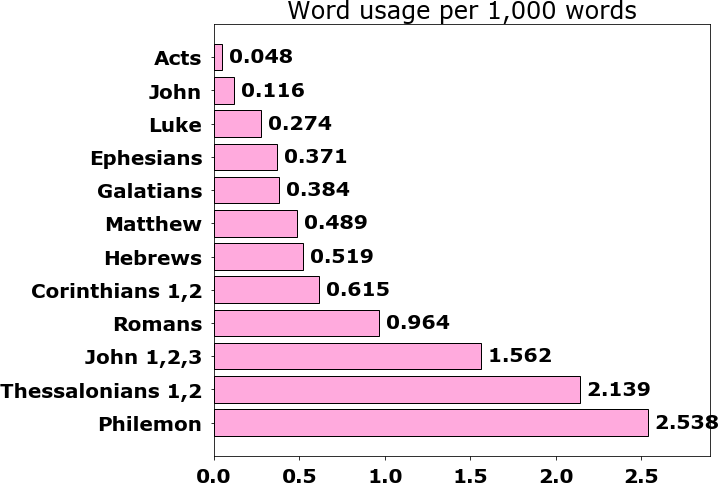 |
Words: οφειλας οφειλει=11 οφειλεις=3 οφειλεται=3 οφειλεταις οφειλετε=2 οφειλετης=3 οφειλημα οφειληματα οφειλην=2 οφειλομεν=7 οφειλομενον=2 οφειλοντες οφειλοντι οφειλουσιν=2 ωφειλεν=3 ωφειλετε ωφειλομεν ωφειλον
|
69. Matthew 18:24,28 Loans owed
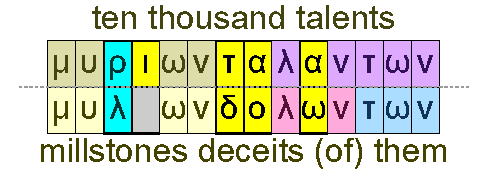
Matthew 18:24 And when he had begun to reckon, one was brought unto him, which owed him ten thousand talents. [kjv]
αρξαμενου δε αυτου συναιρειν προσηνεχθη αυτω προσηχθη εις αυτω οφειλετης μυριων ταλαντων [gnt]
18:28 But the same servant went out, and found one of his fellowservants, which owed him an hundred pence: and he laid hands on him, and took him by the throat, saying, Pay me that thou owest. [kjv]
εξελθων δε ο δουλος εκεινος ευρεν ενα των συνδουλων αυτου ος ωφειλεν αυτω εκατον δηναρια και κρατησας αυτον επνιγεν λεγων αποδος μοι ο ει τι οφειλεις [gnt]
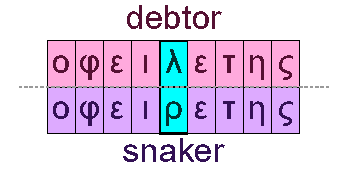
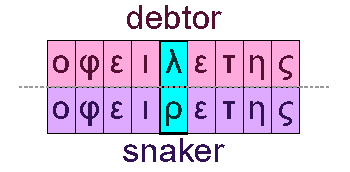
The "
s" sound in the words for
"owed" lend to a play on words.
"ὄφεις" ≈ "serpents, snakes" (as a play on words).
70. Matthew 18:30,32,34 Loans owed
Matthew 18:30 And he would not: but went and cast him into prison, till he should pay the debt. [kjv]
ο δε ουκ ηθελεν αλλα απελθων εβαλεν αυτον εις φυλακην εως ου αποδω το οφειλομενον [gnt]
18:32 Then his lord, after that he had called him, said unto him, O thou wicked servant, I forgave thee all that debt, because thou desiredst me: [kjv]
τοτε προσκαλεσαμενος αυτον ο κυριος αυτου λεγει αυτω δουλε πονηρε πασαν την οφειλην εκεινην αφηκα σοι επει παρεκαλεσας με [gnt]
18:34 And his lord was wroth, and delivered him to the tormentors, till he should pay all that was due unto him. [kjv]
και οργισθεις ο κυριος αυτου παρεδωκεν αυτον τοις βασανισταις εως ου αποδω παν το οφειλομενον αυτω [gnt]
There is no "
s" sound in the words for
"owe" in these verses.
71. A hundred play on words
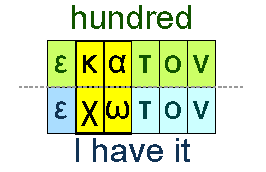
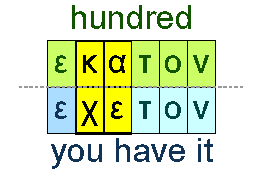
"ἑκατόν" ≈ "hundred".
"ἔχω" ≈ "(I) have/keep".
"ἔχε" ≈ "(you) have/keep" (imperative).
"τον" ≈ "the/it" (accusative masculine).
If everyone in a group or set of members says
"(I) have" "it" and
"(you) have" "it" then (if true) the relation on
"it" is
reflexive,
symmetric and
transitive (by induction) and thus forms an equivalence relation and induces an equivalence set (of the entire group).
Note that the reasoning only requires the
"(you) have" "it" (imperative) within the group. Sayings:
The in thing,
out of it. Jazz saying:
Be around or be square.
How well does this play on words fit for the times when Jesus uses the word for
"hundred"? That is, does the
"hundred" refer to a group that has some
relation, called
"it", that holds for the entire group (member by member)? Note: The resulting group (equivalence class) could be either "
good" or
not "
good" (in some sense).
72. Matthew 18:28 Hundred sheep together
Matthew 18:28 But the same servant went out, and found one of his fellowservants, which owed him an hundred pence: and he laid hands on him, and took him by the throat, saying, Pay me that thou owest. [kjv]
εξελθων δε ο δουλος εκεινος ευρεν ενα των συνδουλων αυτου ος ωφειλεν αυτω εκατον δηναρια και κρατησας αυτον επνιγεν λεγων αποδος μοι ο ει τι οφειλεις [gnt]
The
ancient Greek word
"ἑκατόν" ≈ "hundred" and is cognate with the English word
"hundred" and the Latin word
"centum" ≈ "hundred" and many other
PIE languages.
This, by analogy and projection, is the "
millstone" "
deception/entrapment". This servant, is told that he owes a
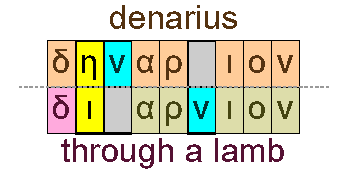
"hundred", as a
group together, as if it is "
through a lamb" but, in actuality, it is "
through a bird" that is for the benefit of the unforgiving servant.
[better/bitter together]
73. Matthew 18:28 Hundred sheep together
Matthew 18:28 But the same servant went out, and found one of his fellowservants, which owed him an hundred pence: and he laid hands on him, and took him by the throat, saying, Pay me that thou owest. [kjv]
εξελθων δε ο δουλος εκεινος ευρεν ενα των συνδουλων αυτου ος ωφειλεν αυτω εκατον δηναρια και κρατησας αυτον επνιγεν λεγων αποδος μοι ο ει τι οφειλεις [gnt]
What happens to a "sheep" that leaves a not "good" group? Could this be the "sheep" that went "astray"?
What happens to a "sheep" that stays with a not "good" group? That is, they do not "cut off" the part of the "body" that is trying to "entrap" them?
74. Church conflict review
Consider
two viewpoints of the same phenomena from Matthew 18:15-17.
Discuss:
Why is it important that no action be taken against the individual and why might such actions not have been included in the guidelines provided by Jesus?
Discuss:
Do churches that have established a book of discipline, or something similar, violated what Jesus says in Matthew 18:15-17
Are we "
better together"? Are we "
better apart"? Jesus answers this question in the next verses. [Paul, Early Church Fathers, Catholic Church]
An issue with "
division" without "
action" is when the "
gathering of believers" has stored up "
treasure" on earth in terms of property, buildings, investments, etc. In any division, each side tends to want that "
treasure".
75. Matthew 18: Cut out and pluck out
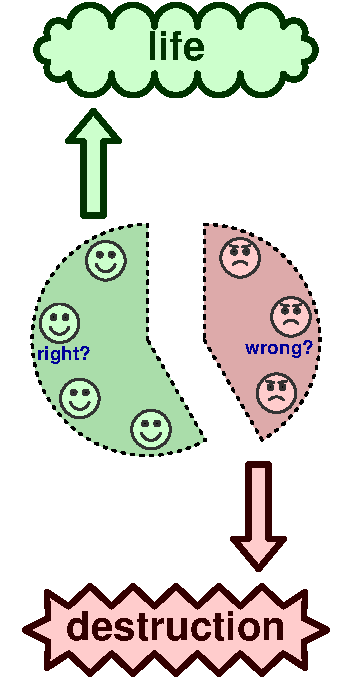 |
Matthew 18:8 Wherefore if thy hand or thy foot offend thee, cut them off, and cast them from thee: it is better for thee to enter into life halt or maimed, rather than having two hands or two feet to be cast into everlasting fire. [kjv]
18:9 And if thine eye offend thee, pluck it out, and cast it from thee: it is better for thee to enter into life with one eye, rather than having two eyes to be cast into hell fire. [kjv]
If you make the wrong choice, you are not "better together". You have two ways to relate to others: "fellow believer" or "neighbor".
|
76. Variations on a theme
Two ways to relate to others: "fellow believer" or "neighbor".
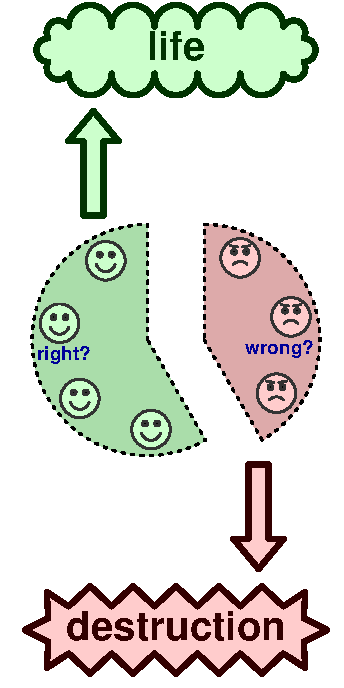
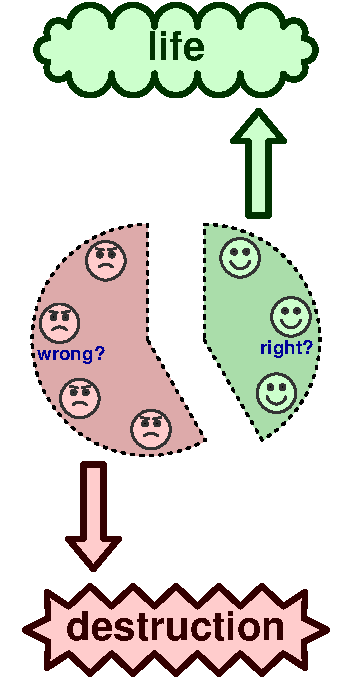
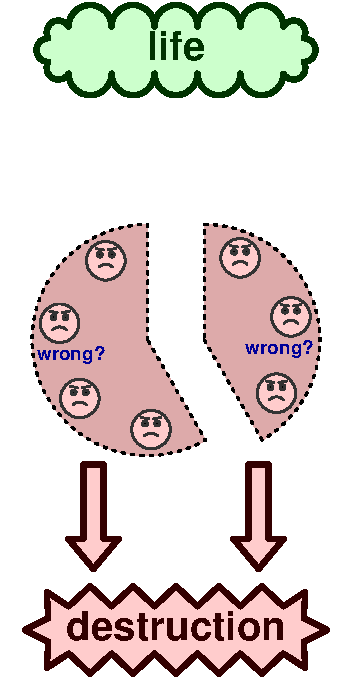
It may not be clear which group is right or wrong. Do not be deceived. The "bird" or "false leader" will try to coerce everyone to be in the same boat - even if that boat is going to sink.
You need to make your best choice and "glue" yourself to the best choice and "distance" yourself from the other choice. You live or are lost by that choice.
Correct "actions" such as "good works" matter. What one "thinks" does not appear to matter.
The mathematical idea of the
equivalence relation "
agrees that x is a sin" divides a group into two separate
equivalence classes. Has this happened in recent times? What is "
x" in the relation?
77. Matthew 18:28 One hundred denarius
Matthew 18:28 But the same servant went out, and found one of his fellowservants, which owed him an hundred pence: and he laid hands on him, and took him by the throat, saying, Pay me that thou owest. [kjv]
εξελθων δε ο δουλος εκεινος ευρεν ενα των συνδουλων αυτου ος ωφειλεν αυτω εκατον δηναρια και κρατησας αυτον επνιγεν λεγων αποδος μοι ο ει τι οφειλεις [gnt]
"ὃς" ≈ "who" but could be "ὅς" ≈ "as far as, like, as"
"εί" ≈ "if, whether".
... as if ...
In the parable of the vineyard workers, each gets paid "
one"
"denarius". That is, "
one"
"through" a
"lamb" (as a code word). How can one
"owe" someone a
"hundred" "through" a
"lamb"? Perhaps
"servant 1" is extorting
"servant 2", demanding
... like as owed ... pay if what you owe (and even if not). Might this be a repeat of the "
millstone" "
deception" earlier in the chapter?
78. Matthew 6:12 Forgiving debts
Matthew 6:12 And forgive us our debts, as we forgive our debtors. [kjv]
και αφες ημιν τα οφειληματα ημων ως και ημεις αφιεμεν αφηκαμεν τοις οφειλεταις ημων [gnt]
"ὄφεις" ≈ "serpents, snakes" (as a play on words).
Might the first
"debts" be those the
"snakes" think we
"owe"?
The Greek for
"forgive" as that of
"letting go" where there is the idea of separation. The ancient Greek word
"ἀφίημι" ≈ "send away, let pass".
The Greek for
"debts" has to do with an obligation to someone, such as
"owing" money. It could be any obligation. Luke uses the word Greek word for "
sins" whereas Matthew uses the word for
"owing".
[sin not undo death]
79. Matthew 18:28 Owe
Matthew 18:28 But the same servant went out, and found one of his fellowservants, which owed him an hundred pence: and he laid hands on him, and took him by the throat, saying, Pay me that thou owest. [kjv]
εξελθων δε ο δουλος εκεινος ευρεν ενα των συνδουλων αυτου ος ωφειλεν αυτω εκατον δηναρια και κρατησας αυτον επνιγεν λεγων αποδος μοι ο ει τι οφειλεις [gnt]
"ὀφείλω" ≈ "owe, be obligated"
"ὄφεις" ≈ "serpents, snakes" (as a play on words).
80. Matthew 18:28 Took
Matthew 18:28 But the same servant went out, and found one of his fellowservants, which owed him an hundred pence: and he laid hands on him, and took him by the throat, saying, Pay me that thou owest. [kjv]
εξελθων δε ο δουλος εκεινος ευρεν ενα των συνδουλων αυτου ος ωφειλεν αυτω εκατον δηναρια και κρατησας αυτον επνιγεν λεγων αποδος μοι ο ει τι οφειλεις [gnt]
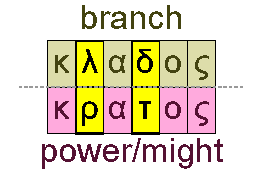
Might "servant 1" have "branched" "servant 2"? Is this "entrapment" as in a "millstone"?
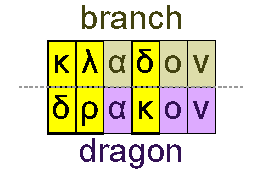
Might "servant 1" have "dragoned" "servant 2"? Is this "extortion"?
Here
"servant 2" is gapped around the "
neck" and "
strangled". The "
young child" had a "
millstone" hung around the "
neck" and "
sunk down in the sea" in the "
sea" of the "
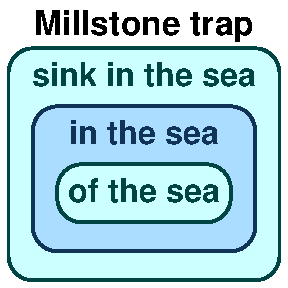
sea". What are the similarities and differences?
81. Matthew 18:28 Play on words
Matthew 18:28 But the same servant went out, and found one of his fellowservants, which owed him an hundred pence: and he laid hands on him, and took him by the throat, saying, Pay me that thou owest. [kjv]
εξελθων δε ο δουλος εκεινος ευρεν ενα των συνδουλων αυτου ος ωφειλεν αυτω εκατον δηναρια και κρατησας αυτον επνιγεν λεγων αποδος μοι ο ει τι οφειλεις [gnt]
82. Matthew 18:28
KJV: But the same servant went out, and found one of his fellowservants, which owed him an hundred pence: and he laid hands on him, and took him by the throat, saying, Pay me that thou owest.
Greek: εξελθων δε ο δουλος εκεινος ευρεν ενα των συνδουλων αυτου ος ωφειλεν αυτω εκατον δηναρια και κρατησας αυτον επνιγεν λεγων αποδος μοι ο ει τι οφειλεις
Latin: egressus autem servus ille invenit unum de conservis suis qui debebat ei centum denarios et tenens suffocabat eum dicens redde quod debes
83. Matthew 18:26,29 Pay all
84. Matthew 18:29 Prison
Matthew 18:29 And his fellowservant fell down at his feet, and besought him, saying, Have patience with me, and I will pay thee all. [kjv]
πεσων ουν ο συνδουλος αυτου εις τους ποδας αυτου αυτου παρεκαλει αυτον λεγων μακροθυμησον επ εμοι και παντα αποδωσω σοι [gnt]
Has
"servant 2" "let go" or
"forgiven" "servant 1" for extorting him, saying he will
"pay" (even though nothing is owed)?.
Is this wrong to agree to
"pay" when one does not
"owe"?
Might this constitute going off the "
mountain" from which there is only one way - "
down" is a "
sinking down" sense to the "
sea".?
[swine from the mountain into the sea]
85. Matthew 18:29
KJV: And his fellowservant fell down at his feet, and besought him, saying, Have patience with me, and I will pay thee all.
Greek: πεσων ουν ο συνδουλος αυτου εις τους ποδας αυτου αυτου παρεκαλει αυτον λεγων μακροθυμησον επ εμοι και παντα αποδωσω σοι
86. Strongs - prison
87. Usage - prison
- *G1201 *4 δεσμωτήριον (des-mo-tay'-ree-on) : from a derivative of G1199 (equivalent to G1196); a place of bondage, i.e. a dungeon:--prison.
δεσμωτηριον *2
Acts 5:21 ... and sent to the prison to have them brought.
Acts 5:23 Saying, The prison truly found we shut with ...
δεσμωτηριω
Matthew 11:2 Now when John had heard in the prison the works of Christ, he sent ...
δεσμωτηριου
Acts 16:26 ... earthquake, so that the foundations of the prison were shaken: and immediately ...
88. Matthew 5:23 Altar prison
89. To see a timely prison watch
Matthew 5:25 Agree with thine adversary quickly, whiles thou art in the way with him; lest at any time the adversary deliver thee to the judge, and the judge deliver thee to the officer, and thou be cast into prison. [kjv]
ισθι ευνοων τω αντιδικω σου ταχυ εως οτου ει μετ αυτου εν τη οδω μετ αυτου μηποτε μηποτε σε παραδω ο αντιδικος τω κριτη και ο κριτης σε παραδω τω τω υπηρετη και εις φυλακην βληθηση [gnt]
The
ancient Greek word
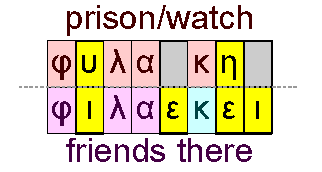
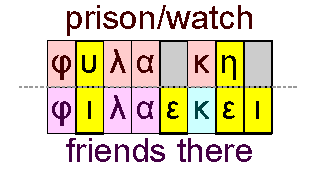
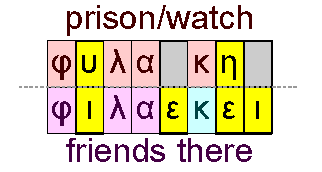
"φυλακή" ≈ "watch, prison" where
"prison" was one way to be
"watched". The Greek word is the source of the English word
"prophylactic".
14:25 And in the fourth watch of the night Jesus went unto them, walking on the sea. [kjv]
τεταρτη δε φυλακη της νυκτος απηλθεν ηλθεν προς αυτους ο ιησους περιπατων επι της θαλασσης την θαλασσαν [gnt]
Jesus wants believers to "
walk" in "
righteousness" in the "
sea" of "
humanity" and be "
fishers" of "
men" and
not "
fishers" of "
pigs" or "
birds".
The
modern Greek word
"φυλακή" (fee-la-KEE) ≈ "watch, prison".
90. Matthew 18:30 Prison watch
91. Prisoners
The best way to keep a prisoner from escaping is to make sure he never knows he's in prison. Fyodor Dostoevsky (1821-1881), author of
Crime and punishment.
Russian name: Фёдор Михайлович Достоевский (1821-1881)
Analogy:
The best way to keep people separated (rooted up, loosed, judged) from the love of Christ is to not let them know they have separated themselves from the love of Christ. One way:
Convince the people that nothing can separate them from the love of Christ. Therefore, they do not need to worry about anything.
Many are "
happy" in the "
abyss", "
pit", "
ditch", "
wide area" as in
better/bitter together,
all in the same boat/vote, etc.
Discuss: Has has the modern cell phone become a prison? Is there a tribulation pressure? How about peer pressure?
92. Matthew 18:30 Prison watch
93. Acts 26:22 Epicureans
Acts 26:22 Having therefore obtained help of God, I continue unto this day, witnessing both to small and great, saying none other things than those which the prophets and Moses did say should come: [kjv]
επικουριας ουν τυχων της παρα απο του θεου αχρι της ημερας ταυτης εστηκα μαρτυρουμενος μαρτυρομενος μικρω τε και μεγαλω ουδεν εκτος λεγων ων τε οι προφηται ελαλησαν μελλοντων γινεσθαι και μωσης μωυσης [gnt]
The ancient Greek word
"ἐπικουρία" ≈ "help, aid" and is used by Paul as a play on words of the Greek philosopher
"Ἐπίκουρος " ≈ "Epicurus" (341-270 BC).
Did Paul first become a "
friend" of those to whom he was "
witnessing"?
Epicurus advocated having "friends" to "help" you and being "self-sufficient".
Paul advocates getting "help" from God.
94. Matthew 5:26 The last farthing
95. Usage - pay
*G591 *48 ἀποδίδωμι (ap-od-eed'-o-mee) : from G575 and G1325; to give away, i.e. up, over, back, etc. (in various applications):--deliver (again), give (again), (re-)pay(-ment be made), perform, recompense, render, requite, restore, reward, sell, yield.
The car had a flat tire. There was a fork in the road!
The
ancient Greek word
"ἀποδίδωμι" ≈ "give back, render what is due, return" and many other associated meanings.
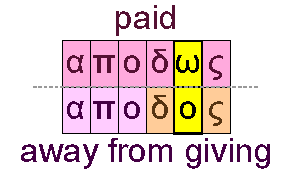
The Greek word translated as
"pay" is that of, literally,
"turning over" as in the saying
"fork it over". This exact form of the word appears two times in the
GNT. The Luke verse in what people remembered about what Jesus said as recorded by Matthew.
Matthew 5:26 Verily I say unto thee, Thou shalt by no means come out thence, till thou hast paid the uttermost farthing. [kjv]
αμην λεγω σοι ου μη εξελθης εκειθεν εως αν αποδως τον εσχατον κοδραντην [gnt]
96. Usage - pay
97. Usage - pay
Matthew 5:26 Verily I say unto thee, Thou shalt by no means come out thence, till thou hast paid the uttermost farthing. [kjv]
αμην λεγω σοι ου μη εξελθης εκειθεν εως αν αποδως τον εσχατον κοδραντην [gnt]
Luke 12:59 I tell thee, thou shalt not depart thence, till thou hast paid the very last mite. [kjv]
λεγω σοι ου μη εξελθης εκειθεν εως ου και το εσχατον λεπτον αποδως [gnt]
"ἀποδῷς" ≈ "pay" (as used).
"ἀπό" ≈ "away from" (separating distance).
"δος" ≈ "give" (dose of medicine).
98. Usage - pay comparison
Matthew 5:26 Verily I say unto thee, Thou shalt by no means come out thence, till thou hast paid the uttermost farthing. [kjv]
αμην λεγω σοι ου μη εξελθης εκειθεν εως αν αποδως τον εσχατον κοδραντην [gnt]
Luke 12:59 I tell thee, thou shalt not depart thence, till thou hast paid the very last mite. [kjv]
λεγω σοι ου μη εξελθης εκειθεν εως ου και το εσχατον λεπτον αποδως [gnt]
If Jesus
"paid" it all, then why do we need to keep
"paying"?
99. Matthew 18:30
KJV: And he would not: but went and cast him into prison, till he should pay the debt.
Greek: ο δε ουκ ηθελεν αλλα απελθων εβαλεν αυτον εις φυλακην εως ου αποδω το οφειλομενον
100. Matthew 18:31
Matthew 18:31 So when his fellowservants saw what was done, they were very sorry, and came and told unto their lord all that was done. [kjv]
ιδοντες δε ουν οι συνδουλοι αυτου τα γενομενα ελυπηθησαν σφοδρα και ελθοντες διεσαφησαν τω κυριω αυτων εαυτων παντα τα γενομενα [gnt]
The Greek for "very" is that of "terribly" as in having a multiplicative effect.
The Greek for "sorry" is that of being "annoyed".
The Greek for "told" is that of "make clear" or "clarified".
The Greek for "done" is that of "coming into being". In this case, the "coming into being" was not a good one.
101. Strongs - having taken place
*G1096 *665 γίνομαι (ghin'-om-ahee) : a prolongation and middle voice form of a primary verb; to cause to be ("gen"-erate), i.e. (reflexively) to become (come into being), used with great latitude (literal, figurative, intensive, etc.):--arise, be assembled, be(-come, -fall, -have self), be brought (to pass), (be) come (to pass), continue, be divided, draw, be ended, fall, be finished, follow, be found, be fulfilled, + God forbid, grow, happen, have, be kept, be made, be married, be ordained to be, partake, pass, be performed, be published, require, seem, be showed, X soon as it was, sound, be taken, be turned, use, wax, will, would, be wrought.
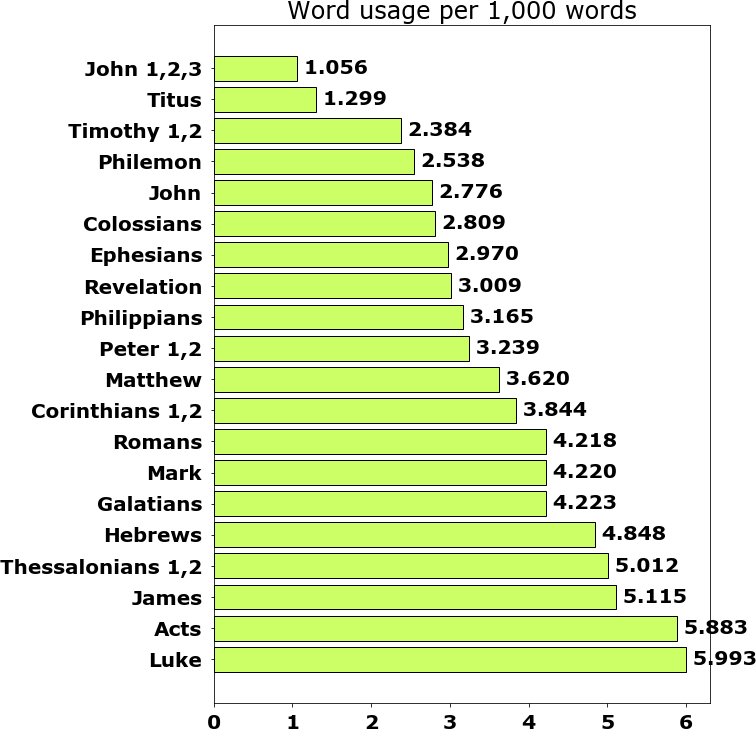 |
Words: γεγενημενον γεγενησθαι γεγονα=5 γεγοναμεν=2 γεγοναν=2 γεγονας=3 γεγονασιν=2 γεγονατε=2 γεγονει γεγονεν=30 γεγονεναι=4 γεγονος=7 γεγονοτας γεγονοτες=2 γεγονοτι γεγονυια γεγονως γενεσθαι=38 γενεσθω γενηθεντας γενηθεντες=2 γενηθεντων γενηθηναι γενηθητε γενηθητω=7 γενηθωμεν γενησεσθε γενησεται=10 γενησθε=7 γενησομενον γενηται=46 γενοιτο=17 γενομενα=6 γενομεναι=4 γενομενην=4 γενομενης=31 γενομενοι=6 γενομενοις=3 γενομενον=4 γενομενος=26 γενομενου=7 γενομενων=2 γενωμαι=2 γενωμεθα γενωνται=4 γινεσθαι=10 γινεσθε=24 γινεσθω=7 γινεται=26 γινομενα=5 γινομενας γινομενη=2 γινομενης=3 γινομενοι=2 γινομενοις γινομενον=4 γινομενου γινομενων γινονται γινου=5 γινωμεθα=2 γινωνται εγενεσθε=4 εγενετο=204 εγενηθη=12 εγενηθημεν=7 εγενηθην εγενηθησαν=6 εγενηθητε=5 εγενομην=12 εγενοντο=13 εγενου=2 εγινετο=3
|
102. Usage - having taken place
- *G1096 *665 γίνομαι (ghin'-om-ahee) : a prolongation and middle voice form of a primary verb; to cause to be ("gen"-erate), i.e. (reflexively) to become (come into being), used with great latitude (literal, figurative, intensive, etc.):--arise, be assembled, be(-come, -fall, -have self), be brought (to pass), (be) come (to pass), continue, be divided, draw, be ended, fall, be finished, follow, be found, be fulfilled, + God forbid, grow, happen, have, be kept, be made, be married, be ordained to be, partake, pass, be performed, be published, require, seem, be showed, X soon as it was, sound, be taken, be turned, use, wax, will, would, be wrought.
γενομενα *6 of 665
Matthew 18:31 ... fellowservants saw what was done, they were very sorry, and came and told unto their lord all that was done.
Matthew 28:11 ... and shewed unto the chief priests all the things that were done.
Luke 4:23 ... thyself: whatsoever we have heard done in Capernaum, do ...
Luke 23:48 ... sight, beholding the things which were done, smote their breasts, and returned.
Luke 24:18 ... not known the things which are come to pass there in these days?
103. Matthew 18:31 Just the facts
Matthew 18:31 So when his fellowservants saw what was done, they were very sorry, and came and told unto their lord all that was done. [kjv]
ιδοντες δε ουν οι συνδουλοι αυτου τα γενομενα ελυπηθησαν σφοδρα και ελθοντες διεσαφησαν τω κυριω αυτων εαυτων παντα τα γενομενα [gnt]
Might
"what was done" be that of
"establishing the facts" of
"every (spoken) word"?
104. Matthew Every spoken word
Matthew 18:16 But if he will not hear thee, then take with thee one or two more, that in the mouth of two or three witnesses every word may be established. [kjv]
εαν δε μη ακουση παραλαβε μετα σου ετι ενα η δυο ινα επι στοματος δυο μαρτυρων η τριων σταθη παν ρημα [gnt]
12:36 But I say unto you, That every idle word that men shall speak, they shall give account thereof in the day of judgment. [kjv]
λεγω δε υμιν οτι παν ρημα αργον ο εαν λαλησωσιν λαλησουσιν οι ανθρωποι αποδωσουσιν περι αυτου λογον εν ημερα κρισεως [gnt]
The
"every word" is the same Greek phrase used in "
every idle word" in Matthew 12 and means
"spoken words". The ancient Greek word
"παν ῥημα" ≈ "every spoken word". The
KJV changes the Greek word order from "
every word idle" to "
every idle word".
105. Matthew 18:31 Exceedingly annoyed by the dragon
Matthew 18:31 So when his fellowservants saw what was done, they were very sorry, and came and told unto their lord all that was done. [kjv]
ιδοντες δε ουν οι συνδουλοι αυτου τα γενομενα ελυπηθησαν σφοδρα και ελθοντες διεσαφησαν τω κυριω αυτων εαυτων παντα τα γενομενα [gnt]
"σφόδρα" ≈ "very much so, exceedingly" (as used) from "σφοδρός" ≈ "very much so, exceedingly".
"καὶ" ≈ "and".
"δράκαινα" ≈ "dragoness, scourge" from "δράκων" ≈ "dragon, serpent" perhaps related to "δράκος" ≈ "eye" (one who stares).
The
ancient Greek word
"λύπη" ≈ "annoyance, distress, anguish, pain". The
CGL (Cambridge Greek Lexicon) does not list
"sorrow" or
"sadness" as part of the definition.
"σαφής" ≈ "clear, distinct".
106. Matthew 18:31
KJV: So when his fellowservants saw what was done, they were very sorry, and came and told unto their lord all that was done.
Greek: ιδοντες δε ουν οι συνδουλοι αυτου τα γενομενα ελυπηθησαν σφοδρα και ελθοντες διεσαφησαν τω κυριω αυτων εαυτων παντα τα γενομενα
107. Matthew 18:32
Matthew 18:32 Then his lord, after that he had called him, said unto him, O thou wicked servant, I forgave thee all that debt, because thou desiredst me: [kjv]
τοτε προσκαλεσαμενος αυτον ο κυριος αυτου λεγει αυτω δουλε πονηρε πασαν την οφειλην εκεινην αφηκα σοι επει παρεκαλεσας με [gnt]
The Greek for "
wicked" is that of "
evil" in the sense of "
oppressing with toils".
The Greek for "
desiredst" is that of "
called on" as in "
plead" or "
please" (the meaning of the modern Greek word).
108. Matthew 18:32
KJV: Then his lord, after that he had called him, said unto him, O thou wicked servant, I forgave thee all that debt, because thou desiredst me:
Greek: τοτε προσκαλεσαμενος αυτον ο κυριος αυτου λεγει αυτω δουλε πονηρε πασαν την οφειλην εκεινην αφηκα σοι επει παρεκαλεσας με
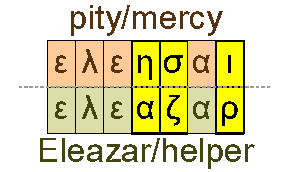
109. Matthew 18:33 Pity and Eleazar
110. Psalms 30:10 Helper and Eleazar
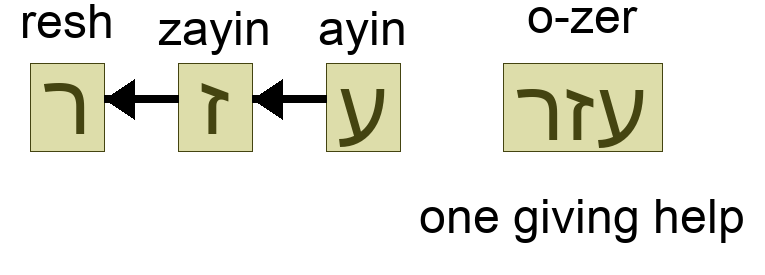
Psalms 30:10 Hear, O LORD, and have mercy upon me: LORD, be thou my helper. [kjv]
… עזר … [he]
ηκουσεν κυριος και ηλεησεν με κυριος εγενηθη βοηθος μου [lxx]
The Hebrew word
"אל" ≈ "God" as in the "
el" of "
el Shaddai" or of "
Daniel", or of "
Emmanuel", etc.
111. Psalms 30:10
KJV: Hear, O LORD, and have mercy upon me: LORD, be thou my helper.
Hebrew: שמע יהוה וחנני יהוה היה עזר לי׃
Greek: ηκουσεν κυριος και ηλεησεν με κυριος εγενηθη βοηθος μου
112. Eleazar
Matthew 1:15 And Eliud begat Eleazar; and Eleazar begat Matthan; and Matthan begat Jacob; [kjv]
ελιουδ δε εγεννησεν τον ελεαζαρ ελεαζαρ δε εγεννησεν τον ματθαν ματθαν δε εγεννησεν τον ιακωβ [gnt]
Numbers 20:25 Take Aaron and Eleazar his son, and bring them up unto mount Hor: [kjv]
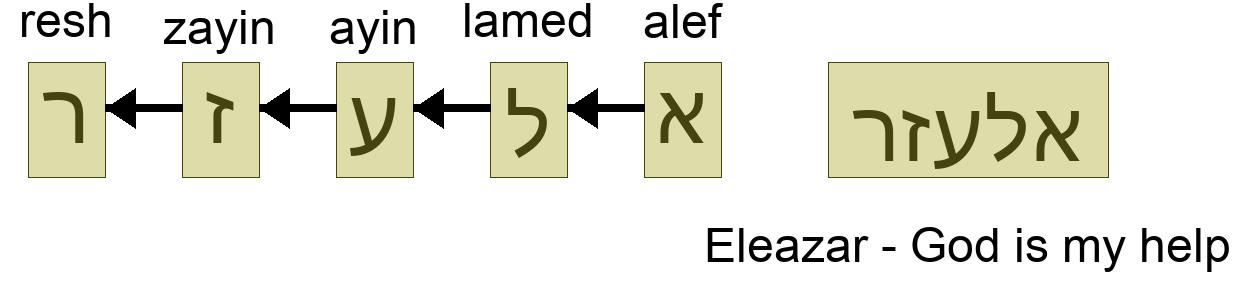
… אלעזר … [he]
λαβε τον ααρων και ελεαζαρ τον υιον αυτου και αναβιβασον αυτους εις ωρ το ορος εναντι πασης της συναγωγης [lxx]
*G1648 *2 Ἐλεάζαρ (el-eh-ad'-zar) : of Hebrew origin (499); Eleazar, an Israelite:--Eleazar.
*H499 אֶלעָזָר (el-aw-zawr') : from H410 and H5826; God (is) helper; Elazar, the name of seven Israelites:--Eleazar.
113. Matthew 1:15
KJV: And Eliud begat Eleazar; and Eleazar begat Matthan; and Matthan begat Jacob;
Greek: ελιουδ δε εγεννησεν τον ελεαζαρ ελεαζαρ δε εγεννησεν τον ματθαν ματθαν δε εγεννησεν τον ιακωβ
114. Numbers 20:25
KJV: Take Aaron and Eleazar his son, and bring them up unto mount Hor:
Hebrew: קח את אהרן ואת אלעזר בנו והעל אתם הר ההר׃
Greek: λαβε τον ααρων και ελεαζαρ τον υιον αυτου και αναβιβασον αυτους εις ωρ το ορος εναντι πασης της συναγωγης
Brenton: Take Aaron, and Eleazar his son, and bring them up to the mount Or before all the congregation;
115. Matthew 18:33
KJV: Shouldest not thou also have had compassion on thy fellowservant, even as I had pity on thee?
Greek: ουκ εδει και σε ελεησαι τον συνδουλον σου ως και εγω καγω σε ηλεησα
116. Strongs - tormentors
117. Usage - tormentors
- *G930 *1 βασανιστής (bas-an-is-tace') : from G928; a torturer:--tormentor.
118. Strongs - touchstone
*G931 *3 βάσανος (bas'-an-os) : perhaps remotely from the same as G939 (through the notion of going to the bottom); a touch-stone, i.e. (by analogy) torture:--torment.
 |
Words: βασανοις=2 βασανου
|
The
ancient Greek word
"βασανίζω" ≈ "rub gold on the touchstone" from
"βάσανος" ≈ "gold touchstone" which comes from the Egyptian. That is, a "
stone" on which "
gold" is rubbed to be more sure that the "
gold" is genuine. Figuratively, the idea was that of a test or trial. A more narrow meaning is that of inquiry by torture.
The
ancient Greek word
"βασανιστής" ≈ "one who rubs gold on a touchstone". In context, it would be one who tortures as part of an inquiry to ascertain a confession.
119. Usage - touchstone
- *G931 *3 βάσανος (bas'-an-os) : perhaps remotely from the same as G939 (through the notion of going to the bottom); a touch-stone, i.e. (by analogy) torture:--torment.
βασανοις *2
Matthew 4:24 ... with divers diseases and torments, and those which were possessed with devils, and ...
Luke 16:23 ... eyes, being in torments, and seeth Abraham afar off, ...
βασανου
120. Matthew 8:28-29
Matthew 8:28 And when he was come to the other side into the country of the Gergesenes, there met him two possessed with devils, coming out of the tombs, exceeding fierce, so that no man might pass by that way. [kjv]
και ελθοντι αυτω ελθοντος αυτου εις το περαν εις την χωραν των γεργεσηνων γαδαρηνων υπηντησαν αυτω δυο δαιμονιζομενοι εκ των μνημειων εξερχομενοι χαλεποι λιαν ωστε μη ισχυειν τινα παρελθειν δια της οδου εκεινης [gnt]
8:29 And, behold, they cried out, saying, What have we to do with thee, Jesus, thou Son of God? art thou come hither to torment us before the time? [kjv]
και ιδου εκραξαν λεγοντες τι ημιν και σοι ιησου υιε του θεου ηλθες ωδε προ καιρου βασανισαι ημας [gnt]
There are two men that are possessed. It is not clear how many demons were in them. When might that time be? Might it be at the time of the "
chi" "
rho" when the "
leaven" becomes apparent (to those who have insight)?
121. Matthew 18:34 Tormentors
Matthew 18:34 And his lord was wroth, and delivered him to the tormentors, till he should pay all that was due unto him. [kjv]
και οργισθεις ο κυριος αυτου παρεδωκεν αυτον τοις βασανισταις εως ου αποδω παν το οφειλομενον αυτω [gnt]
… tortoribus … [v]
Is the lord observing the second kingdom parable about not pulling up weeds - that will be taken care of at the end? Does the lord "
let go" more than once? How about seventy seven times? Was this an "
oath"?
Who are the "tormentors"? Are they the "jailers". Might this be the "sanctuary"?
The Greek word translated as "delivered" is the same as that of "betrayed".
Might the lord have
"forgiven" him a second time? Might the lord have put
"servant 1" back to be
"tormented" in the place where he had been to see if he will ever change. In that case, the touchstone marking might change.
Might
"servant 2" have to forgive him again - until seventy seven times (or more)?
122. Matthew 18:34
Matthew 18:34 And his lord was wroth, and delivered him to the tormentors, till he should pay all that was due unto him. [kjv]
και οργισθεις ο κυριος αυτου παρεδωκεν αυτον τοις βασανισταις εως ου αποδω παν το οφειλομενον αυτω [gnt]
Will all that was
"owed" ever be "
paid"? How can something be "
paid" back if that something involves not doing what one was not supposed to do?
Football coach to a player:
You have fumbled twice now. You will be benched until you can show that you will not fumble again!
123. Matthew 18:7 Compulsion trap
Matthew 18:7 Woe unto the world because of offences! for it must needs be that offences come; but woe to that man by whom the offence cometh! [kjv]
ουαι τω κοσμω απο των σκανδαλων αναγκη γαρ εστιν ελθειν τα σκανδαλα πλην ουαι τω ανθρωπω εκεινω δι ου το σκανδαλον ερχεται [gnt]
The word
"woe" in Greek is that of a
"bird" of prey sound.
The TR adds the word "be", adds some connecting words, and rearranges some words.
"ἀπό" ≈ "away from" as in "from" but with an idea of a separating distance.
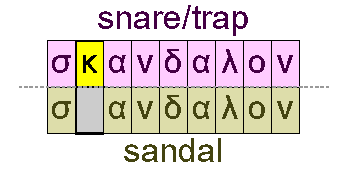
"σκάνδαλον" ≈ "trap, snare" and is used as a noun, three times in this verse and once in the previous verse.
"ανάγκη" ≈ "necessity, constraint, compulsion, force" and is used as a noun. The word is associated with the "yoke" of "compulsion" by Amos, Isaiah, Jesus, Barnabas, etc.
"πλήν" ≈ "with the exception of, except for".
124. Matthew 18:7
Matthew 18:7 Woe unto the world because of offences! for it must needs be that offences come; but woe to that man by whom the offence cometh! [kjv]
ουαι τω κοσμω απο των σκανδαλων αναγκη γαρ εστιν ελθειν τα σκανδαλα πλην ουαι τω ανθρωπω εκεινω δι ου το σκανδαλον ερχεται [gnt]
Thus, the
compound noun is that of a
"compulsion" "trap" or
"trap" of
"compulsion". Jesus talks of this in the Sermon on the Mount in terms of the
dead "
gift" "
on" top of the "
alter" (
"trap" of
"compulsion") and the
living "
gift" "
in front of" the "
alter".
The
modern Greek word
"πλην" (pleen) ≈ "except for" and is used as a "
minus sign" for the subtraction operation as in
5 "except for" 3 is
2.
125. Matthew 18:7 Compulsion trap
Matthew 18:7 Woe unto the world because of offences! for it must needs be that offences come; but woe to that man by whom the offence cometh! [kjv]
ουαι τω κοσμω απο των σκανδαλων αναγκη γαρ εστιν ελθειν τα σκανδαλα πλην ουαι τω ανθρωπω εκεινω δι ου το σκανδαλον ερχεται [gnt]
Paraphrase:
Woe (with respect to) the (people in the) world apart from the trap of compulsion because the entrapments come (but) with the exception of woe (with respect to) the man through whom [not] the entrapment comes.
This appears to provide an
out of sorts to those who have been
"entrapped" by the
"compulsion" (e.g.,
pay even if you do not owe) provided they do the other things that they are expected by Jesus to do. This would be the "
sheep" as "
little ones" that have been "
separated".
However, this does not appear to provide an
out to those who have supported or promoted the
"compulsion" "entrapments". This would be the
"birds" and
"pigs". What Jesus says about "
idle words" might explain how ambiguity of intention is disambiguated.
[woe as a bird of prey cry, gift on the alter, last farthing]
126. Matthew 18:34
KJV: And his lord was wroth, and delivered him to the tormentors, till he should pay all that was due unto him.
Greek: και οργισθεις ο κυριος αυτου παρεδωκεν αυτον τοις βασανισταις εως ου αποδω παν το οφειλομενον αυτω
Latin: et iratus dominus eius tradidit eum tortoribus quoadusque redderet universum debitum
127. Matthew 18:35 Heart
Matthew 18:35 So likewise shall my heavenly Father do also unto you, if ye from your hearts forgive not every one his brother their trespasses. [kjv]
ουτως και ο πατηρ μου ο επουρανιος ουρανιος ποιησει υμιν εαν μη αφητε εκαστος τω αδελφω αυτου απο των καρδιων υμων τα παραπτωματα αυτων [gnt]
This parable involves "
forgiving" or "
letting go" multiple times. Who in this story has
"forgiven" or
"let go" multiple times?
☐ Lord.
☐
"servant 1".
☐
"servant 2".
Might any of these need to "
forgive" or
"let go" more times?
Which one of these might be considered the "
lost"
"sheep" on the "
mountain" or "
definition" of the parable earlier in this chapter?
128. Matthew 18:35
KJV: So likewise shall my heavenly Father do also unto you, if ye from your hearts forgive not every one his brother their trespasses.
Greek: ουτως και ο πατηρ μου ο επουρανιος ουρανιος ποιησει υμιν εαν μη αφητε εκαστος τω αδελφω αυτου απο των καρδιων υμων τα παραπτωματα αυτων
129. Matthew 18:23,35 Review
Matthew 18:23 Therefore is the kingdom of heaven likened unto a certain king, which would take account of his servants. [kjv]
18:35 So likewise shall my heavenly Father do also unto you, if ye from your hearts forgive not every one his brother their trespasses. [kjv]
In the parable, the "
Lord" represents "
Jesus" as "
God". Using the animal model, the unforgiving servant could be called the "
bird". The servant at the bottom could be called the
"sheep".
The "bird" owes a debt to the "Lord".
The "Lord" "lets go" of the debt of the "bird".
The "sheep" does not owe a debt to the "bird" but is extorted and pays anyway.
The "bird" does not "let go" of the (imagined) debt of the "sheep" but throws the "sheep" into or "prison" or "watch" or "sanctuary" (i.e., until the "last farthing" is "paid", which will never happen).
130. Comparison
1. Jesus has a flat hierarchy. Everyone is both "greatest" and "least".
2. Start of the discourse: The "bird" as a "sheep" who went "on" the "mountain" or "definition" to be "great" set up a tree hierarchy to be "greatest" and so "sheep" and others can be "less". The "bird" collects "taxes", etc., to "oppress" the "sheep" with a "yoke" of "compulsion".
3. End of the discourse: Consider the "taxing" or "religious" establishment as the "bird" in the parable. Consider the "sheep" being "taxed" as the "sheep" in the parable.
Do you see any connection?
131. End of page



















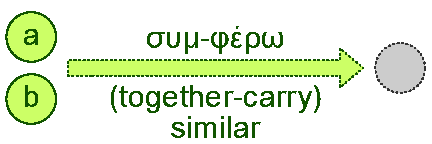 The ancient Greek word "συμφέρω" ≈ "bring together, work with, to be carried along with" and means, literally, "carry together".








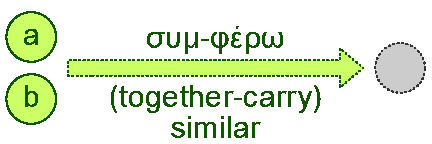 The ancient Greek word "συμφέρω" ≈ "bring together, work with, to be carried along with" and means, literally, "carry together" similar (not different) things.