Send
Close Add comments:
(status displays here)
Got it! This site "creationpie.org" uses cookies. You consent to this by clicking on "Got it!" or by continuing to use this website. Note: This appears on each machine/browser from which this site is accessed.
Numbers 22:1-41 The false prophet Balaam
1. Numbers 22:1-41 The false prophet Balaam
The false prophet Balaam first appears at the time of Moses and Joshua and is used as an example of false prophets by Peter, in Revelation and elsewhere.
The donkey verses, with some context, are in Numbers 22:18-35.
 |
Details are left as a future topic.
|
2. Numbers 22:1
Numbers 22:1 And the children of Israel set forward, and pitched in the plains of Moab on this side Jordan by Jericho. [kjv]
και απαραντες οι υιοι ισραηλ παρενεβαλον επι δυσμων μωαβ παρα τον ιορδανην κατα ιεριχω [lxx]
3. Numbers 22:1
KJV: And the children of Israel set forward, and pitched in the plains of Moab on this side Jordan by Jericho.
Hebrew: ויסעו בני ישראל ויחנו בערבות מואב מעבר לירדן ירחו׃
Greek: και απαραντες οι υιοι ισραηλ παρενεβαλον επι δυσμων μωαβ παρα τον ιορδανην κατα ιεριχω
4. Numbers 22:2
Numbers 22:2 And Balak the son of Zippor saw all that Israel had done to the Amorites. [kjv]
και ιδων βαλακ υιος σεπφωρ παντα οσα εποιησεν ισραηλ τω αμορραιω [lxx]
Why were the Amorites self-righteous?
They want around saying "I'm all right".
5. Numbers 22:2
KJV: And Balak the son of Zippor saw all that Israel had done to the Amorites.
Hebrew: וירא בלק בן צפור את כל אשר עשה ישראל לאמרי׃
Greek: και ιδων βαλακ υιος σεπφωρ παντα οσα εποιησεν ισραηλ τω αμορραιω
6. Numbers 22:3
Numbers 22:3 And Moab was sore afraid of the people, because they were many: and Moab was distressed because of the children of Israel. [kjv]
και εφοβηθη μωαβ τον λαον σφοδρα οτι πολλοι ησαν και προσωχθισεν μωαβ απο προσωπου υιων ισραηλ [lxx]
7. Numbers 22:3
KJV: And Moab was sore afraid of the people, because they were many: and Moab was distressed because of the children of Israel.
Hebrew: ויגר מואב מפני העם מאד כי רב הוא ויקץ מואב מפני בני ישראל׃
Greek: και εφοβηθη μωαβ τον λαον σφοδρα οτι πολλοι ησαν και προσωχθισεν μωαβ απο προσωπου υιων ισραηλ
8. Numbers 22:4
Numbers 22:4 And Moab said unto the elders of Midian, Now shall this company lick up all that are round about us, as the ox licketh up the grass of the field. And Balak the son of Zippor was king of the Moabites at that time. [kjv]
και ειπεν μωαβ τη γερουσια μαδιαμ νυν εκλειξει η συναγωγη αυτη παντας τους κυκλω ημων ως εκλειξαι ο μοσχος τα χλωρα εκ του πεδιου και βαλακ υιος σεπφωρ βασιλευς μωαβ ην κατα τον καιρον εκεινον [lxx]
9. Numbers 22:4
KJV: And Moab said unto the elders of Midian, Now shall this company lick up all that are round about us, as the ox licketh up the grass of the field. And Balak the son of Zippor was king of the Moabites at that time.
Hebrew: ויאמר מואב אל זקני מדין עתה ילחכו הקהל את כל סביבתינו כלחך השור את ירק השדה ובלק בן צפור מלך למואב בעת ההוא׃
Greek: και ειπεν μωαβ τη γερουσια μαδιαμ νυν εκλειξει η συναγωγη αυτη παντας τους κυκλω ημων ως εκλειξαι ο μοσχος τα χλωρα εκ του πεδιου και βαλακ υιος σεπφωρ βασιλευς μωαβ ην κατα τον καιρον εκεινον
10. Numbers 22:5
Numbers 22:5 He sent messengers therefore unto Balaam the son of Beor to Pethor, which is by the river of the land of the children of his people, to call him, saying, Behold, there is a people come out from Egypt: behold, they cover the face of the earth, and they abide over against me: [kjv]
και απεστειλεν πρεσβεις προς βαλααμ υιον βεωρ φαθουρα ο εστιν επι του ποταμου γης υιων λαου αυτου καλεσαι αυτον λεγων ιδου λαος εξεληλυθεν εξ αιγυπτου και ιδου κατεκαλυψεν την οψιν της γης και ουτος εγκαθηται εχομενος μου [lxx]
11. Numbers 22:5
KJV: He sent messengers therefore unto Balaam the son of Beor to Pethor, which is by the river of the land of the children of his people, to call him, saying, Behold, there is a people come out from Egypt: behold, they cover the face of the earth, and they abide over against me:
Hebrew: וישלח מלאכים אל בלעם בן בעור פתורה אשר על הנהר ארץ בני עמו לקרא לו לאמר הנה עם יצא ממצרים הנה כסה את עין הארץ והוא ישב ממלי׃
Greek: και απεστειλεν πρεσβεις προς βαλααμ υιον βεωρ φαθουρα ο εστιν επι του ποταμου γης υιων λαου αυτου καλεσαι αυτον λεγων ιδου λαος εξεληλυθεν εξ αιγυπτου και ιδου κατεκαλυψεν την οψιν της γης και ουτος εγκαθηται εχομενος μου
12. Numbers 22:6
Numbers 22:6 Come now therefore, I pray thee, curse me this people; for they are too mighty for me: peradventure I shall prevail, that we may smite them, and that I may drive them out of the land: for I wot that he whom thou blessest is blessed, and he whom thou cursest is cursed. [kjv]
13. Numbers 22:6
KJV: Come now therefore, I pray thee, curse me this people; for they are too mighty for me: peradventure I shall prevail, that we may smite them, and that I may drive them out of the land: for I wot that he whom thou blessest is blessed, and he whom thou cursest is cursed.
Hebrew: ועתה לכה נא ארה לי את העם הזה כי עצום הוא ממני אולי אוכל נכה בו ואגרשנו מן הארץ כי ידעתי את אשר תברך מברך ואשר תאר יואר׃
Greek: και νυν δευρο αρασαι μοι τον λαον τουτον οτι ισχυει ουτος η ημεις εαν δυνωμεθα παταξαι εξ αυτων και εκβαλω αυτους εκ της γης οτι οιδα ους εαν ευλογησης συ ευλογηνται και ους εαν καταραση συ κεκατηρανται
14. Numbers 22:7
Numbers 22:7 And the elders of Moab and the elders of Midian departed with the rewards of divination in their hand; and they came unto Balaam, and spake unto him the words of Balak. [kjv]
15. Numbers 22:7
KJV: And the elders of Moab and the elders of Midian departed with the rewards of divination in their hand; and they came unto Balaam, and spake unto him the words of Balak.
Hebrew: וילכו זקני מואב וזקני מדין וקסמים בידם ויבאו אל בלעם וידברו אליו דברי בלק׃
Greek: και επορευθη η γερουσια μωαβ και η γερουσια μαδιαμ και τα μαντεια εν ταις χερσιν αυτων και ηλθον προς βαλααμ και ειπαν αυτω τα ρηματα βαλακ
16. Numbers 22:8
Numbers 22:8 And he said unto them, Lodge here this night, and I will bring you word again, as the LORD shall speak unto me: and the princes of Moab abode with Balaam. [kjv]
17. Numbers 22:8
KJV: And he said unto them, Lodge here this night, and I will bring you word again, as the LORD shall speak unto me: and the princes of Moab abode with Balaam.
Hebrew: ויאמר אליהם לינו פה הלילה והשבתי אתכם דבר כאשר ידבר יהוה אלי וישבו שרי מואב עם בלעם׃
Greek: και ειπεν προς αυτους καταλυσατε αυτου την νυκτα και αποκριθησομαι υμιν πραγματα α εαν λαληση κυριος προς με και κατεμειναν οι αρχοντες μωαβ παρα βαλααμ
18. Numbers 22:9
Numbers 22:9 And God came unto Balaam, and said, What men are these with thee? [kjv]
19. Numbers 22:9
KJV: And God came unto Balaam, and said, What men are these with thee?
Hebrew: ויבא אלהים אל בלעם ויאמר מי האנשים האלה עמך׃
Greek: και ηλθεν ο θεος προς βαλααμ και ειπεν αυτω τι οι ανθρωποι ουτοι παρα σοι
20. Numbers 22:10
Numbers 22:10 And Balaam said unto God, Balak the son of Zippor, king of Moab, hath sent unto me, saying, [kjv]
21. Numbers 22:10
KJV: And Balaam said unto God, Balak the son of Zippor, king of Moab, hath sent unto me, saying,
Hebrew: ויאמר בלעם אל האלהים בלק בן צפר מלך מואב שלח אלי׃
Greek: και ειπεν βαλααμ προς τον θεον βαλακ υιος σεπφωρ βασιλευς μωαβ απεστειλεν αυτους προς με λεγων
22. Numbers 22:11
Numbers 22:11 Behold, there is a people come out of Egypt, which covereth the face of the earth: come now, curse me them; peradventure I shall be able to overcome them, and drive them out. [kjv]
23. Numbers 22:11
KJV: Behold, there is a people come out of Egypt, which covereth the face of the earth: come now, curse me them; peradventure I shall be able to overcome them, and drive them out.
Hebrew: הנה העם היצא ממצרים ויכס את עין הארץ עתה לכה קבה לי אתו אולי אוכל להלחם בו וגרשתיו׃
Greek: ιδου λαος εξεληλυθεν εξ αιγυπτου και ιδου κεκαλυφεν την οψιν της γης και ουτος εγκαθηται εχομενος μου και νυν δευρο αρασαι μοι αυτον ει αρα δυνησομαι παταξαι αυτον και εκβαλω αυτον απο της γης
24. Numbers 22:12
Numbers 22:12 And God said unto Balaam, Thou shalt not go with them; thou shalt not curse the people: for they are blessed. [kjv]
25. Numbers 22:12
KJV: And God said unto Balaam, Thou shalt not go with them; thou shalt not curse the people: for they are blessed.
Hebrew: ויאמר אלהים אל בלעם לא תלך עמהם לא תאר את העם כי ברוך הוא׃
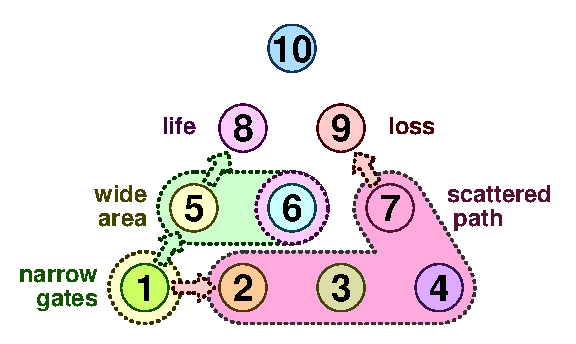
Greek: και ειπεν ο θεος προς βαλααμ ου πορευση μετ αυτων ουδε καταραση τον λαον εστιν γαρ ευλογημενος
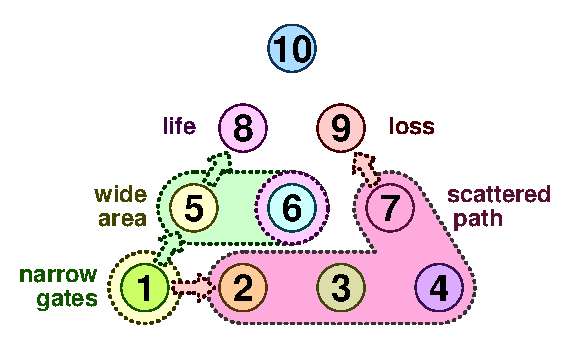
26. Numbers 22:13
Numbers 22:13 And Balaam rose up in the morning, and said unto the princes of Balak, Get you into your land: for the LORD refuseth to give me leave to go with you. [kjv]
27. Numbers 22:13
KJV: And Balaam rose up in the morning, and said unto the princes of Balak, Get you into your land: for the LORD refuseth to give me leave to go with you.
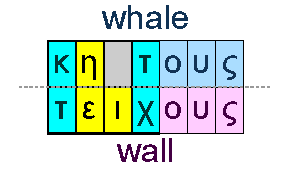
Hebrew: ויקם בלעם בבקר ויאמר אל שרי בלק לכו אל ארצכם כי מאן יהוה לתתי להלך עמכם׃
Greek: και αναστας βαλααμ το πρωι ειπεν τοις αρχουσιν βαλακ αποτρεχετε προς τον κυριον υμων ουκ αφιησιν με ο θεος πορευεσθαι μεθ υμων
28. Numbers 22:14
Numbers 22:14 And the princes of Moab rose up, and they went unto Balak, and said, Balaam refuseth to come with us. [kjv]
29. Numbers 22:14
KJV: And the princes of Moab rose up, and they went unto Balak, and said, Balaam refuseth to come with us.
Hebrew: ויקומו שרי מואב ויבאו אל בלק ויאמרו מאן בלעם הלך עמנו׃
Greek: και ανασταντες οι αρχοντες μωαβ ηλθον προς βαλακ και ειπαν ου θελει βαλααμ πορευθηναι μεθ ημων
30. Numbers 22:15
Numbers 22:15 And Balak sent yet again princes, more, and more honourable than they. [kjv]
31. Numbers 22:15
KJV: And Balak sent yet again princes, more, and more honourable than they.
Hebrew: ויסף עוד בלק שלח שרים רבים ונכבדים מאלה׃
Greek: και προσεθετο βαλακ ετι αποστειλαι αρχοντας πλειους και εντιμοτερους τουτων
32. Numbers 22:16
Numbers 22:16 And they came to Balaam, and said to him, Thus saith Balak the son of Zippor, Let nothing, I pray thee, hinder thee from coming unto me: [kjv]
33. Numbers 22:16
KJV: And they came to Balaam, and said to him, Thus saith Balak the son of Zippor, Let nothing, I pray thee, hinder thee from coming unto me:
Hebrew: ויבאו אל בלעם ויאמרו לו כה אמר בלק בן צפור אל נא תמנע מהלך אלי׃
Greek: και ηλθον προς βαλααμ και λεγουσιν αυτω ταδε λεγει βαλακ ο του σεπφωρ αξιω σε μη οκνησης ελθειν προς με
34. Numbers 22:17
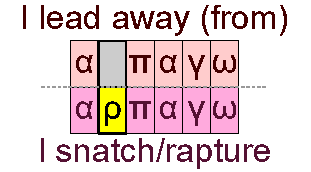
Numbers 22:17 For I will promote thee unto very great honour, and I will do whatsoever thou sayest unto me: come therefore, I pray thee, curse me this people. [kjv]
35. Numbers 22:17
KJV: For I will promote thee unto very great honour, and I will do whatsoever thou sayest unto me: come therefore, I pray thee, curse me this people.
Hebrew: כי כבד אכבדך מאד וכל אשר תאמר אלי אעשה ולכה נא קבה לי את העם הזה׃
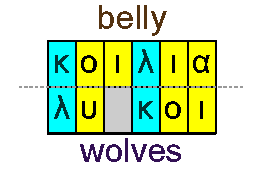
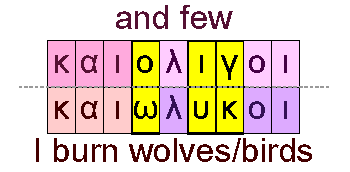
Greek: εντιμως γαρ τιμησω σε και οσα εαν ειπης ποιησω σοι και δευρο επικαταρασαι μοι τον λαον τουτον
36. Numbers 22:18 Silver and gold
Numbers 22:18 And Balaam answered and said unto the servants of Balak, If Balak would give me his house full of silver and gold, I cannot go beyond the word of the LORD my God, to do less or more. [kjv]
και απεκριθη βαλααμ και ειπεν τοις αρχουσιν βαλακ εαν δω μοι βαλακ πληρη τον οικον αυτου αργυριου και χρυσιου ου δυνησομαι παραβηναι το ρημα κυριου του θεου ποιησαι αυτο μικρον η μεγα εν τη διανοια μου [lxx]
Balaam appears to know not to go against God. He does appear to try to be sneaky in getting around the rules of God. Has it happened historically? Does that happen today? Provide examples.
"μικρός" ≈ "little of, brief, young" and is the source of the English word/prefix "micro".
"μεγας" ≈ "great" and is the source of the English word/prefix "mega".
37. Numbers 22:18 In my dreams
Numbers 22:18 And Balaam answered and said unto the servants of Balak, If Balak would give me his house full of silver and gold, I cannot go beyond the word of the LORD my God, to do less or more. [kjv]
και απεκριθη βαλααμ και ειπεν τοις αρχουσιν βαλακ εαν δω μοι βαλακ πληρη τον οικον αυτου αργυριου και χρυσιου ου δυνησομαι παραβηναι το ρημα κυριου του θεου ποιησαι αυτο μικρον η μεγα εν τη διανοια μου [lxx]
At the end, the
LXX (Septuagint) adds (or the Hebrew removes) "
in" the
"mind" of "
me". The
ancient Greek word
"διάνοια" ≈ "intention, purpose, process of thinking"
Greek:
... beyond the spoken word of Lord of God make/create (with respect to) it less or more in the mind of me.
38. Numbers 22:18
KJV: And Balaam answered and said unto the servants of Balak, If Balak would give me his house full of silver and gold, I cannot go beyond the word of the LORD my God, to do less or more.
Hebrew: ויען בלעם ויאמר אל עבדי בלק אם יתן לי בלק מלא ביתו כסף וזהב לא אוכל לעבר את פי יהוה אלהי לעשות קטנה או גדולה׃
Greek: και απεκριθη βαλααμ και ειπεν τοις αρχουσιν βαλακ εαν δω μοι βαλακ πληρη τον οικον αυτου αργυριου και χρυσιου ου δυνησομαι παραβηναι το ρημα κυριου του θεου ποιησαι αυτο μικρον η μεγα εν τη διανοια μου
39. Numbers 22:19 Tarry the night
Numbers 22:19 Now therefore, I pray you, tarry ye also here this night, that I may know what the LORD will say unto me more. [kjv]
και νυν υπομεινατε αυτου και υμεις την νυκτα ταυτην και γνωσομαι τι προσθησει κυριος λαλησαι προς με [lxx]
The ancient Greek word
"νυκτός" ≈ "(of the) night" is the genitive singular of
"νύξ" ≈ "night" which is related to the English word
"night".
40. Psalms 91:5 Fear of fear
41. Numbers 22:19
KJV: Now therefore, I pray you, tarry ye also here this night, that I may know what the LORD will say unto me more.
Hebrew: ועתה שבו נא בזה גם אתם הלילה ואדעה מה יסף יהוה דבר עמי׃
Greek: και νυν υπομεινατε αυτου και υμεις την νυκτα ταυτην και γνωσομαι τι προσθησει κυριος λαλησαι προς με
Brenton: And now do you also wait here this night, and I shall know what the Lord will yet say to me.
42. Numbers 22:18-19 Balaam and the donkey
Numbers 22:18 And Balaam answered and said unto the servants of Balak, If Balak would give me his house full of silver and gold, I cannot go beyond the word of the LORD my God, to do less or more. [kjv]
και απεκριθη βαλααμ και ειπεν τοις αρχουσιν βαλακ εαν δω μοι βαλακ πληρη τον οικον αυτου αργυριου και χρυσιου ου δυνησομαι παραβηναι το ρημα κυριου του θεου ποιησαι αυτο μικρον η μεγα εν τη διανοια μου [lxx]
22:19 Now therefore, I pray you, tarry ye also here this night, that I may know what the LORD will say unto me more. [kjv]
43. Numbers 22:20-22 Balaam and the donkey
Numbers 22:20 And God came unto Balaam at night, and said unto him, If the men come to call thee, rise up, and go with them; but yet the word which I shall say unto thee, that shalt thou do. [kjv]
22:21 And Balaam rose up in the morning, and saddled his ass, and went with the princes of Moab. [kjv]
22:22 And God's anger was kindled because he went: and the angel of the LORD stood in the way for an adversary against him. Now he was riding upon his ass, and his two servants were with him. [kjv]
44. Numbers 22:23,25-26 Balaam and the donkey
Numbers 22:23 And the ass saw the angel of the LORD standing in the way, and his sword drawn in his hand: and the ass turned aside out of the way, and went into the field: and Balaam smote the ass, to turn her into the way. [kjv]
22:25 And when the ass saw the angel of the LORD, she thrust herself unto the wall, and crushed Balaam's foot against the wall: and he smote her again. [kjv]
22:26 And the angel of the LORD went further, and stood in a narrow place, where was no way to turn either to the right hand or to the left. [kjv]
45. Numbers 22:27-29 Balaam and the donkey
Numbers 22:27 And when the ass saw the angel of the LORD, she fell down under Balaam: and Balaam's anger was kindled, and he smote the ass with a staff. [kjv]
22:28 And the LORD opened the mouth of the ass, and she said unto Balaam, What have I done unto thee, that thou hast smitten me these three times? [kjv]
22:29 And Balaam said unto the ass, Because thou hast mocked me: I would there were a sword in mine hand, for now would I kill thee. [kjv]
46. Numbers 22:30-32 Balaam and the donkey
Numbers 22:30 And the ass said unto Balaam, Am not I thine ass, upon which thou hast ridden ever since I was thine unto this day? was I ever wont to do so unto thee? And he said, Nay. [kjv]
22:31 Then the LORD opened the eyes of Balaam, and he saw the angel of the LORD standing in the way, and his sword drawn in his hand: and he bowed down his head, and fell flat on his face. [kjv]
22:32 And the angel of the LORD said unto him, Wherefore hast thou smitten thine ass these three times? behold, I went out to withstand thee, because thy way is perverse before me: [kjv]
47. Numbers 22:33-35 Balaam and the donkey
Numbers 22:33 And the ass saw me, and turned from me these three times: unless she had turned from me, surely now also I had slain thee, and saved her alive. [kjv]
22:34 And Balaam said unto the angel of the LORD, I have sinned; for I knew not that thou stoodest in the way against me: now therefore, if it displease thee, I will get me back again. [kjv]
22:35 And the angel of the LORD said unto Balaam, Go with the men: but only the word that I shall speak unto thee, that thou shalt speak. So Balaam went with the princes of Balak. [kjv]
48. Numbers 22:20 Spoken words
Numbers 22:20 And God came unto Balaam at night, and said unto him, If the men come to call thee, rise up, and go with them; but yet the word which I shall say unto thee, that shalt thou do. [kjv]
και ηλθεν ο θεος προς βαλααμ νυκτος και ειπεν αυτω ει καλεσαι σε παρεισιν οι ανθρωποι ουτοι αναστας ακολουθησον αυτοις αλλα το ρημα ο αν λαλησω προς σε τουτο ποιησεις [lxx]
Throughout these verses, and elsewhere in the
LXX, God
speaks in
spoken words.
"λαλέω" ≈ "talk, speak, chatter".
"ῥῆμα" ≈ "spoken word" and is the source of the English word "rhetoric".
The ancient Greek word
"λόγος" ≈ "rational explanation, reasoning". In
context, it
can mean
"word". When might it mean "
spoken word"? Would this word be used when there already exist Greek words for "
spoken words"?
49. Numbers 22:20
Numbers 22:20 And God came unto Balaam at night, and said unto him, If the men come to call thee, rise up, and go with them; but yet the word which I shall say unto thee, that shalt thou do. [kjv]
και ηλθεν ο θεος προς βαλααμ νυκτος και ειπεν αυτω ει καλεσαι σε παρεισιν οι ανθρωποι ουτοι αναστας ακολουθησον αυτοις αλλα το ρημα ο αν λαλησω προς σε τουτο ποιησεις [lxx]
Who is
called? Who is doing the
calling? How is "
calling" used in the Parable of the Wedding Feast?
50. Luke 1:37 Not impossible with God
Luke 1:37 For with God nothing shall be impossible. [kjv]
οτι ουκ αδυνατησει παρα τω θεω του θεου παν ρημα [gnt]
Paraphrase:
Because (it is) not not potentially possible beyond every spoken word of God. (note the double negative)
The idea of
potentially possible means that it has not happened yet. About the 16th c., the
"all/every" "spoken word" disappeared. The "
of"
"God" was
changed to "
with"
"God".
Before this, the following were used.
4th century Latin Vulgate as "omne verbum" ≈ "every word".
5th century Wulfila Gothic as "ainhun waurde" ≈ "each word".
8th century Old Church Slavonic as "всяк глаголгол" ≈ "each word".
10th century Wessex Gospels Old English as "aelch word" ≈ "each word".
51. Numbers 22:20
KJV: And God came unto Balaam at night, and said unto him, If the men come to call thee, rise up, and go with them; but yet the word which I shall say unto thee, that shalt thou do.
Hebrew: ויבא אלהים אל בלעם לילה ויאמר לו אם לקרא לך באו האנשים קום לך אתם ואך את הדבר אשר אדבר אליך אתו תעשה׃
Greek: και ηλθεν ο θεος προς βαλααμ νυκτος και ειπεν αυτω ει καλεσαι σε παρεισιν οι ανθρωποι ουτοι αναστας ακολουθησον αυτοις αλλα το ρημα ο αν λαλησω προς σε τουτο ποιησεις
52. Lamentations 3:63 Rising up
Lamentations 3:63 Behold their sitting down, and their rising up; I am their musick. [kjv]
καθεδραν αυτων και αναστασιν αυτων επιβλεψον επι τους οφθαλμους αυτων [lxx]
their sitting down and their rising up: look you upon their eyes. [bs3]
The
ancient Greek word
"ἀνάστασις" ≈ "standing up, making someone move, resurrection" and is the source of the English name
"Anastasia" with the shorter form "
Stacy".
Is this "
music" to the
ears or
eyes?
Abstract words often come from words that have some literal meaning. Do you
understand? Under what are you
standing?
53. Numbers 22:21 Resurrection in the morning
Numbers 22:21 And Balaam rose up in the morning, and saddled his ass, and went with the princes of Moab. [kjv]
και αναστας βαλααμ το πρωι επεσαξεν την ονον αυτου και επορευθη μετα των αρχοντων μωαβ [lxx]
Was Balaam
"resurrected"? An appropriate
context is needed for that meaning.
The
ancient Greek word
"ἀνάστασις" ≈ "standing up, making someone move, resurrection" and is the source of the English name
"Anastasia" with the shorter form
"Stacy".
54. Numbers 22:21 Resurrection in the morning
Numbers 22:21 And Balaam rose up in the morning, and saddled his ass, and went with the princes of Moab. [kjv]
και αναστας βαλααμ το πρωι επεσαξεν την ονον αυτου και επορευθη μετα των αρχοντων μωαβ [lxx]
The
ancient Greek word
"πρωΐ" ≈ "early in the day, morning".
The early bird gets the worm.
The early worm gets eaten by the bird.
Do not eat the fruit! Do not feed the birds! Do not be a worm.
55. Matthew 20:1 Early
Matthew 20:1 For the kingdom of heaven is like unto a man that is an householder, which went out early in the morning to hire labourers into his vineyard. [kjv]
ομοια γαρ εστιν η βασιλεια των ουρανων ανθρωπω οικοδεσποτη οστις εξηλθεν αμα πρωι μισθωσασθαι εργατας εις τον αμπελωνα αυτου [gnt]
The
ancient Greek word
"πρωΐ" ≈ "early in the day, morning".
The
"in the morning" is inferred. The Greek word means
"early" or
"first". The other hours have numbers, but the idea of "
zero" or "
nothing" as a number took a long time to develop and be accepted into everyday use.
This use of
"householder" is a
comparison or
analogy to the true
"householder".
56. Numbers 22:21 The donkey
Numbers 22:21 And Balaam rose up in the morning, and saddled his ass, and went with the princes of Moab. [kjv]
και αναστας βαλααμ το πρωι επεσαξεν την ονον αυτου και επορευθη μετα των αρχοντων μωαβ [lxx]
In many languages, the
grammatical genders of masculine and feminine (and neuter, when present) do not necessarily correspond to the physical genders of the entity to which the word refers. Sometimes there were
different names for the masculine and feminine form of animals.
The
ancient Greek word
"ὄνος" ≈ "ass, donkey" and
"ὄνον" ≈ "ass, donkey" (accusative). The word for donkey
could be masculine or feminine. In this account (and verses), the grammatical gender is
feminine.
57. Numbers 22:21
KJV: And Balaam rose up in the morning, and saddled his ass, and went with the princes of Moab.
Hebrew: ויקם בלעם בבקר ויחבש את אתנו וילך עם שרי מואב׃
Greek: και αναστας βαλααμ το πρωι επεσαξεν την ονον αυτου και επορευθη μετα των αρχοντων μωαβ
58. Lucian's The Ass
The
ancient Greek word
"ὄνος" ≈ "ass, donkey"
This book appears to be available as a
PDF (Portable Document Format). (as of 2025-12-23).
Lucian of Samosata (125-180) was a second century Hellenized (made to adopt Greek culture) Syrian writer who often used satire in his writings. He combined the classical Greek style (in a funny way) with the common or Koine Greek spoken by the people. As such, it contains many Greek words used in the
GNT (Greek New Testament).
59. Touched by an angelic messenger
What does it mean to be "
touched by an angel"?
The TV series of the same name ran from 1994 to 2003, but is not really relevant here.
The English word
"angel" comes from the
ancient Greek word
"ἄγγελος" ≈ "messenger, one that announces".
In the Biblical context, the meaning is that of a
messenger from God and comes from the Hebrew word
"מלאך" (mal-ak) ≈ "angel" and is the root word for the prophet name "
Malachi".
Despite the song "
Hark the herald angels sing" the Bible records only one angel not singing at the birth of Jesus.
Other ancient cultures such as in Egypt, Babylon, Greece, etc., had supernatural beings that were messengers that brought news - good or bad. This idea appears to have been passed down from Adam, eventually to Noah, eventually to peoples and cultures dispersed from the Ark and the Tower of Babel, etc.
60. Strongs - compel as a messenger
61. Usage - compel as a messenger
- *G29 *3 ἀγγαρεύω (ang-ar-yew'-o) : of foreign origin (compare H104); properly, to be a courier, i.e. (by implication) to press into public service:--compel (to go).
- αγγαρευσει
- Matthew 5:41 And whosoever shall compel thee to go a mile, ...
- ηγγαρευσαν
- Matthew 27:32 ... Simon by name: him they compelled to bear his cross.
- αγγαρευουσιν
- Mark 15:21 And they compel one Simon a Cyrenian, who passed by, ...
62. Hebrew for angel
Zechariah 3:6 And the angel of the LORD protested unto Joshua, saying, [kjv]
… מלאך … [he]
και διεμαρτυρατο ο αγγελος κυριου προς ιησουν λεγων [lxx]
… angelus … [v]
The English word
"angel" comes from the Latin word
"angelus" ≈ "angel" which comes from the ancient Greek word
"ἄγγελος" ≈ "messenger, one that announces" and which comes from the Persian. Thus, in Matthew 5:41:
if someone compels you to be a messenger one mile, go with him/it two.
63. Zechariah 3:6
KJV: And the angel of the LORD protested unto Joshua, saying,
Hebrew: ויעד מלאך יהוה ביהושע לאמר׃
Greek: και διεμαρτυρατο ο αγγελος κυριου προς ιησουν λεγων
Latin: et contestabatur angelus Domini Iesum dicens
64. Numbers 22:22 Angelic resurrected
Numbers 22:22 And God's anger was kindled because he went: and the angel of the LORD stood in the way for an adversary against him. Now he was riding upon his ass, and his two servants were with him. [kjv]
και ωργισθη θυμω ο θεος οτι επορευθη αυτος και ανεστη ο αγγελος του θεου ενδιαβαλλειν αυτον και αυτος επιβεβηκει επι της ονου αυτου και δυο παιδες αυτου μετ αυτου [lxx]
Was the
"messenger" or
"angel" "resurrected"? An appropriate
context is needed for that meaning.
The
ancient Greek word
"ἀνάστασις" ≈ "standing up, making someone move, resurrection" and is the source of the English name
"Anastasia" with the shorter form
"Stacy".
65. Job 29:5
Job 29:5 When the Almighty was yet with me, when my children were about me; [kjv]
οτε ημην υλωδης λιαν κυκλω δε μου οι παιδες [lxx]
The
ancient Greek word
"παῖς" ≈ "child, servant" is one who is to
learn from and
follow the example of a parent (or teacher or master). In
context, the word can mean
"servant".
By contrast, the
ancient Greek word
"δουλους" ≈ "servile, subject" (accusative plural) of
"δοῦλος" ≈ "servile, subject".
66. Job 29:5
KJV: When the Almighty was yet with me, when my children were about me;
Hebrew: בעוד שדי עמדי סביבותי נערי׃
Greek: οτε ημην υλωδης λιαν κυκλω δε μου οι παιδες
67. Proverbs 4:1
Proverbs 4:1 Hear, ye children, the instruction of a father, and attend to know understanding. [kjv]
ακουσατε παιδες παιδειαν πατρος και προσεχετε γνωναι εννοιαν [lxx]
The
ancient Greek word
"παῖς" ≈ "child, servant" is one who is to
learn from and
follow the example of a parent (or teacher or master). In
context, the word can mean
"servant".
By contrast, the
ancient Greek word
"δουλους" ≈ "servile, subject" (accusative plural) of
"δοῦλος" ≈ "servile, subject".
68. Proverbs 4:1
KJV: Hear, ye children, the instruction of a father, and attend to know understanding.
Hebrew: שמעו בנים מוסר אב והקשיבו לדעת בינה׃
Greek: ακουσατε παιδες παιδειαν πατρος και προσεχετε γνωναι εννοιαν
69. Numbers 22:22
Numbers 22:22 And God's anger was kindled because he went: and the angel of the LORD stood in the way for an adversary against him. Now he was riding upon his ass, and his two servants were with him. [kjv]
και ωργισθη θυμω ο θεος οτι επορευθη αυτος και ανεστη ο αγγελος του θεου ενδιαβαλλειν αυτον και αυτος επιβεβηκει επι της ονου αυτου και δυο παιδες αυτου μετ αυτου [lxx]
Balaam was "riding" "on" the "donkey".
There were "two" "servants" or "children" with him (Balaam).
In the triumphal entry, there are
"two" animals being ridden and "
one"
"servant" or
"child" riding.
"παῖς" ≈ "child, servant" is one who is to learn from and follow the example of a parent (or teacher or master).
"παιδίον" ≈ "small child" of any age up to about 12 (due to the diminutive suffix).
In
context, the word(s) can mean
"servant".
70. Matthew 18:2-4 Believers as children
Matthew 18:2 And Jesus called a little child unto him, and set him in the midst of them, [kjv]
και προσκαλεσαμενος ο ιησους παιδιον εστησεν αυτο εν μεσω αυτων [gnt]
18:3 And said, Verily I say unto you, Except ye be converted, and become as little children, ye shall not enter into the kingdom of heaven. [kjv]
και ειπεν αμην λεγω υμιν εαν μη στραφητε και γενησθε ως τα παιδια ου μη εισελθητε εις την βασιλειαν των ουρανων [gnt]
18:4 Whosoever therefore shall humble himself as this little child, the same is greatest in the kingdom of heaven. [kjv]
οστις ουν ταπεινωση ταπεινωσει εαυτον ως το παιδιον τουτο ουτος εστιν ο μειζων εν τη βασιλεια των ουρανων [gnt]
"παῖς" ≈ "child, servant" is one who is to learn from and follow the example of a parent (or teacher or master).
"παιδίον" ≈ "child" of any age up to about 12 (due to the diminutive suffix).
Jesus, Paul, etc., use the word for a
"child" to refer to
believers (of all ages). Such
believers are often known as
"sheep".
71. Numbers 22:22
KJV: And God's anger was kindled because he went: and the angel of the LORD stood in the way for an adversary against him. Now he was riding upon his ass, and his two servants were with him.
Hebrew: ויחר אף אלהים כי הולך הוא ויתיצב מלאך יהוה בדרך לשטן לו והוא רכב על אתנו ושני נעריו עמו׃
Greek: και ωργισθη θυμω ο θεος οτι επορευθη αυτος και ανεστη ο αγγελος του θεου ενδιαβαλλειν αυτον και αυτος επιβεβηκει επι της ονου αυτου και δυο παιδες αυτου μετ αυτου
72. Numbers 22:23 Balaam and the ass
Numbers 22:23 And the ass saw the angel of the LORD standing in the way, and his sword drawn in his hand: and the ass turned aside out of the way, and went into the field: and Balaam smote the ass, to turn her into the way. [kjv]
και ιδουσα η ονος τον αγγελον του θεου ανθεστηκοτα εν τη οδω και την ρομφαιαν εσπασμενην εν τη χειρι αυτου και εξεκλινεν η ονος εκ της οδου και επορευετο εις το πεδιον και επαταξεν την ονον τη ραβδω του ευθυναι αυτην εν τη οδω [lxx]
The
ancient Greek word
"ὄνος" ≈ "ass, donkey" and
"ὄνον" ≈ "ass, donkey" (accusative). The
modern Greek word
"όνος" (O-nos) ≈ "ass, donkey".
The "path" or "way" will be important in the parable of the wedding feast.
The "donkey" or "ass" will be a play on words in the parable of the wedding feast.
73. Strongs - recline
*G2827 *7 κλίνω (klee'-no) : a primary verb; to slant or slope, i.e. incline or recline (literally or figuratively):--bow (down), be far spent, lay, turn to flight, wear away.
 |
Words: εκλιναν κεκλικεν κλινας κλινειν κλινη=2 κλινουσων
|
The ancient Greek word
"κλίνω" ≈ "bend, slant, lean, lie down" and is the source, through Latin and then French, of the English word
"clinic" as a (medical) place where one
"lies down".
74. Usage - recline
- *G2827 *7 κλίνω (klee'-no) : a primary verb; to slant or slope, i.e. incline or recline (literally or figuratively):--bow (down), be far spent, lay, turn to flight, wear away.
- κλινη *2 of 7
- Matthew 8:20 ... hath not where to lay his head.
- Luke 9:58 ... hath not where to lay his head.
75. Strongs - deviate
*G1578 *3 ἐκκλίνω (ek-klee'-no) : from G1537 and G2827; to deviate, i.e. (absolutely) to shun (literally or figuratively), or (relatively) to decline (from piety):--avoid, eschew, go out of the way.
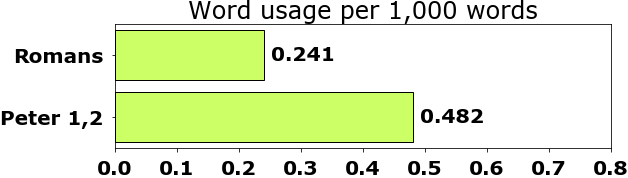 |
Words: εκκλινατω εκκλινετε εξεκλιναν
|
The ancient Greek word
"κλίνω" ≈ "bend, slant, lean, lie down" and is the source of the English word
"clinic" as a (medical) place where one
"lies down".
The ancient Greek word/prefix
"εκ" ≈ "out of", as in the first part of Exodus (the way out) where
"ὁδός" ≈ "way, path" as in the last part of the English words
"method" and
"exodus" (the
way out).
The Latin word
"inclinatio" ≈ "act of learning, slope, inclination" and the source of the English word
"inclination".
76. Usage - deviate
- *G1578 *3 ἐκκλίνω (ek-klee'-no) : from G1537 and G2827; to deviate, i.e. (absolutely) to shun (literally or figuratively), or (relatively) to decline (from piety):--avoid, eschew, go out of the way.
- εξεκλιναν
- Romans 3:12 They are all gone out of the way, they are together become unprofitable; there is ...
- εκκλινετε
- Romans 16:17 ... ye have learned; and avoid them.
- εκκλινατω
- 1 Peter 3:11 Let him eschew evil, and do good; let him seek ...
77. Psalms 34:14
Psalms 34:14 Depart from evil, and do good; seek peace, and pursue it. [kjv]
εκκλινον απο κακου και ποιησον αγαθον ζητησον ειρηνην και διωξον αυτην [lxx]
You are to "
seek"
"peace" and not
"make" "peace". Rather than
"making" "peace", one should
"make" "
good".
The Greek word translated as
"evil" is that of
"bad".
The word for
"pursue" is, in context,
"persecute" as in
"go after" in a
negative way.
78. Pax Romana
1 Peter 3:11 Let him eschew evil, and do good; let him seek peace, and ensue it. [kjv]
εκκλινατω δε απο κακου και ποιησατω αγαθον ζητησατω ειρηνην και διωξατω αυτην [gnt]
Peter says we are to
"make" or "
do" "
good" and "
seek"
"peace",
not "make" "peace". The Greek translated as
"ensue" is that of
"pursue" or
"persecute".
When the word
"peace" is used, one must ask the following question. What exactly is meant by the word
"peace"?
World (humanist) definition of "peace".
Bible definition of "peace".
The Latin word
"pax" ≈ "peace" as in the "
Roman peace" or "
Pax Romana". This was a
"peace" by
force.
[Grove]
79. Exodus 23:2
Exodus 23:2 Thou shalt not follow a multitude to do evil; neither shalt thou speak in a cause to decline after many to wrest judgment: [kjv]
ουκ εση μετα πλειονων επι κακια ου προστεθηση μετα πληθους εκκλιναι μετα πλειονων ωστε εκκλιναι κρισιν [lxx]
The Greek word translated as
"evil" is that of
"bad".
80. Exodus 23:2
KJV: Thou shalt not follow a multitude to do evil; neither shalt thou speak in a cause to decline after many to wrest judgment:
Hebrew: לא תהיה אחרי רבים לרעת ולא תענה על רב לנטת אחרי רבים להטת׃
Greek: ουκ εση μετα πλειονων επι κακια ου προστεθηση μετα πληθους εκκλιναι μετα πλειονων ωστε εκκλιναι κρισιν
81. Numbers 22:23
KJV: And the ass saw the angel of the LORD standing in the way, and his sword drawn in his hand: and the ass turned aside out of the way, and went into the field: and Balaam smote the ass, to turn her into the way.
Hebrew: ותרא האתון את מלאך יהוה נצב בדרך וחרבו שלופה בידו ותט האתון מן הדרך ותלך בשדה ויך בלעם את האתון להטתה הדרך׃
Greek: και ιδουσα η ονος τον αγγελον του θεου ανθεστηκοτα εν τη οδω και την ρομφαιαν εσπασμενην εν τη χειρι αυτου και εξεκλινεν η ονος εκ της οδου και επορευετο εις το πεδιον και επαταξεν την ονον τη ραβδω του ευθυναι αυτην εν τη οδω
82. Numbers 22:23 Decline to recline
Numbers 22:23 And the ass saw the angel of the LORD standing in the way, and his sword drawn in his hand: and the ass turned aside out of the way, and went into the field: and Balaam smote the ass, to turn her into the way. [kjv]
και ιδουσα η ονος τον αγγελον του θεου ανθεστηκοτα εν τη οδω και την ρομφαιαν εσπασμενην εν τη χειρι αυτου και εξεκλινεν η ονος εκ της οδου και επορευετο εις το πεδιον και επαταξεν την ονον τη ραβδω του ευθυναι αυτην εν τη οδω [lxx]
The word for
"turned aside" can be compared with the word for "
out (of)" a
"recline". That is how guests would "
sit" at, say, a "
wedding feast".
Which way did the "donkey" want to go?
Which way did Balaam want the "donkey" to go?
Why is the
"donkey" going "
into" the "
field"?
83. Matthew 22:5 Farmed out acres
Matthew 22:5 But they made light of it, and went their ways, one to his farm, another to his merchandise: [kjv]
οι δε αμελησαντες απηλθον ο ος μεν εις τον ιδιον αγρον ο ος δε εις επι την εμποριαν αυτου [gnt]
The ancient Greek word
"ἀγρός" ≈ "field, land, countryside" and is used by Jesus as a
code word for
"world" as in the "
people in the world".
The ancient Greek word
"ἄγριος" ≈ "living in the open fields" and, thus, animals there were considered
"wild",
"savage",
"violent",
"fierce".
84. Matthew 13:38 Field is the acre
85. Matthew 22:5 Unique field
Matthew 22:5 But they made light of it, and went their ways, one to his farm, another to his merchandise: [kjv]
οι δε αμελησαντες απηλθον ο ος μεν εις τον ιδιον αγρον ο ος δε εις επι την εμποριαν αυτου [gnt]
"ἴδιον" ≈ "own" (adjective).
"ἴδιον" ≈ "distinguishing feature, opinion" (noun).
The word "
his" must be
inferred. If inferred, to whom does "
his" refer? Is it the person, the Lord, etc.?
Saying:
Farmers like to be outstanding in their own field.
86. Matthew 13:44 Hidden in a field
Matthew 13:44 Again, the kingdom of heaven is like unto treasure hid in a field; the which when a man hath found, he hideth, and for joy thereof goeth and selleth all that he hath, and buyeth that field. [kjv]
παλιν ομοια εστιν η βασιλεια των ουρανων θησαυρω κεκρυμμενω εν τω αγρω ον ευρων ανθρωπος εκρυψεν και απο της χαρας αυτου υπαγει και παντα πωλει οσα εχει πωλει και αγοραζει τον αγρον εκεινον [gnt]
*G2928 *18 κρύπτω (kroop'-to) : a primary verb; to conceal (properly, by covering):--hide (self), keep secret, secret(-ly).
The "
treasure" is
"hidden", found, and then
"hidden" again before the selling and buying. The ancient Greek word
"κρυπτός" ≈ "hidden, secret" and is from the ancient Greek word
"κρύπτω" ≈ "hide, cover" and is the source of the English word
"cryptography".
In kingdom parable 4, the woman hides or encrypts (with more negative connotations)
leaven (false doctrine) into meal/wheat (true doctrine).
87. Matthew 22:5 Merchants and merchandise
88. Matthew 13:45-46 KP6 Parable of the pearl of great price
Matthew 13:45 Again, the kingdom of heaven is like unto a merchant man, seeking goodly pearls: [kjv]
παλιν ομοια εστιν η βασιλεια των ουρανων ανθρωπω εμπορω ζητουντι καλους μαργαριτας [gnt]
13:46 Who, when he had found one pearl of great price, went and sold all that he had, and bought it. [kjv]
ος ευρων δε ενα πολυτιμον μαργαριτην απελθων πεπρακεν παντα οσα ειχεν και ηγορασεν αυτον [gnt]
The name "
Margaret" comes from the ancient Greek word
"μαργαρίτης" ≈ "pearl". The word
"pearl" appears in the
GNT but not in the
LXX, although the
KJV (King James Version) uses
"pearl" in Job.
What is being
"bought"? [good and raca]
89. Matthew 22:5 Field and merchandise
Matthew 22:5 But they made light of it, and went their ways, one to his farm, another to his merchandise: [kjv]
οι δε αμελησαντες απηλθον ο ος μεν εις τον ιδιον αγρον ο ος δε εις επι την εμποριαν αυτου [gnt]
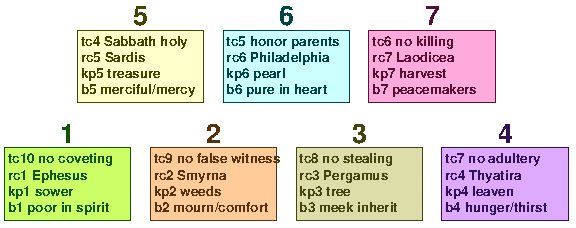
5: Field (treasure in the field) (donkey)
6: Merchandise (pearl of great price) (Balaam)
The remainder along the "scattered path".
90. Numbers 22:24 Wide area
Numbers 22:24 But the angel of the LORD stood in a path of the vineyards, a wall being on this side, and a wall on that side. [kjv]
… גדר … וגדר … [he]
και εστη ο αγγελος του θεου εν ταις αυλαξιν των αμπελων φραγμος εντευθεν και φραγμος εντευθεν [lxx]
The Greek word translated as
"path" is that of
"courtyard". Might this relate to the "
wide area"?
"αὐλή" ≈ "courtyard"
"αὐλός" ≈ "pipe, flute" as in "hydraulic".
91. Strongs - piped and courtyard
*G832 *3 αὐλέω (ow-leh'-o) : from G836; to play the flute:--pipe.
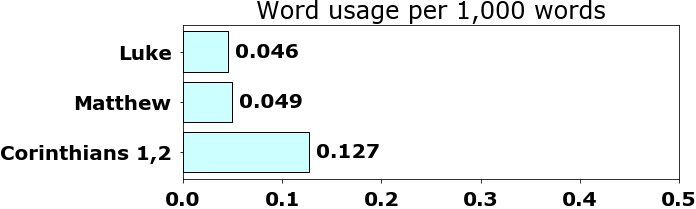 |
Words: αυλουμενον ηυλησαμεν=2
|
The ancient Greek word
"αὐλέω" ≈ "play the pipe, flute" and comes from the ancient Greek word
"αὐλός" ≈ "pipe, flute" which is the source of the English word
"hydraulic", literally, "
water" and "
pipe".
*G833 *12 αὐλή (ow-lay') : from the same as G109; a yard (as open to the wind); by implication, a mansion:--court, (sheep-)fold, hall, palace.
A similar sounding word is the ancient Greek word
"αὐλή" ≈ "courtyard" as in the courtyard of the temple or the courtyard where Peter denied Christ.
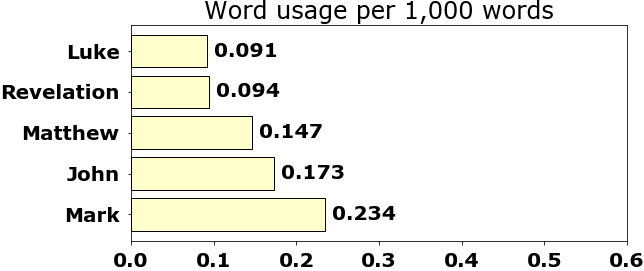 |
Words: αυλη=2 αυλην=6 αυλης=4
|
92. Usage - piped
- *G832 *3 αὐλέω (ow-leh'-o) : from G836; to play the flute:--pipe.
- ηυλησαμεν *2
- Matthew 11:17 And saying, We have piped unto you, and ye have ...
- Luke 7:32 ... one to another, and saying, We have piped unto you, and ye have ...
- αυλουμενον
- 1 Corinthians 14:7 ... how shall it be known what is piped or harped?
93. Numbers 22:24 Balaam and the angel
Numbers 22:24 But the angel of the LORD stood in a path of the vineyards, a wall being on this side, and a wall on that side. [kjv]
… גדר … וגדר … [he]
και εστη ο αγγελος του θεου εν ταις αυλαξιν των αμπελων φραγμος εντευθεν και φραγμος εντευθεν [lxx]
The
ancient Greek word
"φραγμός" ≈ "blockage, enclosure, fence, division".
The "vineyard" will be important in the parables of the vineyard workers and the householder.
The "wall" will be important in the parable of the householder.
94. Strongs - wall
Numbers 22:24 But the angel of the LORD stood in a path of the vineyards, a wall being on this side, and a wall on that side. [kjv]
… גדר … וגדר … [he]
22:25 And when the ass saw the angel of the LORD, she thrust herself unto the wall, and crushed Balaam's foot against the wall: and he smote her again. [kjv]
… הקיר … הקיר … [he]
*H1447 גָּדֵר (gaw-dare') : from H1443; a circumvallation; by implication, an inclosure:--fence, hedge, wall.
*H7023 קִיר קִר קִירָה (keer) : or qir (Isa. 22:5) {keer}; or (feminine) qiyrah {kee-raw'}; from H6979; a wall (as built in a trench):--+ mason, side, town, X very, wall.
"φραγμός" ≈ "blockage, enclosure, fence, division"
"τεῖχος" ≈ "of the mound, earth works, wall".
The Hebrew
and Greek use different words that are both translated as "
wall" in the
KJV (and many translations).
95. Strongs - fence
96. Usage - fence
- *G5418 *4 φραγμός (frag-mos') : from G5420; a fence, or inclosing barrier (literally or figuratively):--hedge (+ round about), partition.
- φραγμον *2
- Matthew 21:33 ... planted a vineyard, and hedged it round about, and ...
- Mark 12:1 ... a vineyard, and set an hedge about it, and digged a place for the winefat, ...
- φραγμους
- Luke 14:23 ... into the highways and hedges, and compel them to come in, ...
- φραγμου
- Ephesians 2:14 ... and hath broken down the middle wall of partition between us;
97. Matthew 21:33 Hedge funds
Matthew 21:33 Hear another parable: There was a certain householder, which planted a vineyard, and hedged it round about, and digged a winepress in it, and built a tower, and let it out to husbandmen, and went into a far country: [kjv]
αλλην παραβολην ακουσατε ανθρωπος τις ην οικοδεσποτης οστις εφυτευσεν αμπελωνα και φραγμον αυτω περιεθηκεν και ωρυξεν εν αυτω ληνον και ωκοδομησεν πυργον και εξεδοτο εξεδετο αυτον γεωργοις και απεδημησεν [gnt]
The ancient Greek word
"φραγμός" ≈ "blockage, enclosure, fence, division".
Would the "
heavenly" "
Father" as a
"householder" create "
blockages", "
fences", "
divisions"? Who might do so as a
"householder"?
98. Numbers 22:24
KJV: But the angel of the LORD stood in a path of the vineyards, a wall being on this side, and a wall on that side.
Hebrew: ויעמד מלאך יהוה במשעול הכרמים גדר מזה וגדר מזה׃
Greek: και εστη ο αγγελος του θεου εν ταις αυλαξιν των αμπελων φραγμος εντευθεν και φραγμος εντευθεν
99. Numbers 22:25 Up against the wall
100. Matthew 12:40 Whale belly Spoonerism
101. Matthew 24:9 Traditional delivering
Matthew 24:9 Then shall they deliver you up to be afflicted, and shall kill you: and ye shall be hated of all nations for my name's sake. [kjv]
τοτε παραδωσουσιν υμας εις θλιψιν και αποκτενουσιν υμας και εσεσθε μισουμενοι υπο παντων των εθνων δια το ονομα μου [gnt]
Who will do the
"delivering" or
"turning over" or
"betraying" (same word in Greek)? The Latin word
"trado" ≈ "hand over, betray" (verb) and is the source, through French, of the English word
"traitor" (noun).
☐
civil powers (worldly places)
☐
religious powers (heavenly places)
The Greek word translated as "
nations" is that of "
peoples". Great "
persecution" and
"hatred" will result.
102. Matthew 24:9 Affliction pressure of tribulation
Matthew 24:9 Then shall they deliver you up to be afflicted, and shall kill you: and ye shall be hated of all nations for my name's sake. [kjv]
τοτε παραδωσουσιν υμας εις θλιψιν και αποκτενουσιν υμας και εσεσθε μισουμενοι υπο παντων των εθνων δια το ονομα μου [gnt]
The ancient Greek word
"θλῖψις" ≈ "pressure" and,
figuratively,
"oppression",
"affliction", etc. Might this include
peer "pressure"? [without peer, heron birds]
The Latin word
"tribulare" ≈ "press, thresh" and is the source, through French, of the English word
"tribulation".
Can we then relate
"pressure",
"affliction",
"oppression" and
"tribulation", from the Latin word for
"pressure"?
103. Matthew 24:9 Affliction pressure of tribulation
Matthew 24:9 Then shall they deliver you up to be afflicted, and shall kill you: and ye shall be hated of all nations for my name's sake. [kjv]
τοτε παραδωσουσιν υμας εις θλιψιν και αποκτενουσιν υμας και εσεσθε μισουμενοι υπο παντων των εθνων δια το ονομα μου [gnt]
The
figurative meaning of
"θλῖψις" ≈ "pressure" is the same as the
literal meaning of the ancient Greek word
"πονηρός" ≈ "oppressed by toils" and which comes from the ancient Greek word
"πονέω" ≈ "to toil, labor". Think
"oppression", including
"oppressing" oneself, and which comes from wanting to be "
great" (at the expense of others, or yourself). This is the word often translated as
"evil".
Thus,
"evil" and
"tribulation" and
"affliction" have related meanings.
104. Matthew 24:9 Kill
Matthew 24:9 Then shall they deliver you up to be afflicted, and shall kill you: and ye shall be hated of all nations for my name's sake. [kjv]
τοτε παραδωσουσιν υμας εις θλιψιν και αποκτενουσιν υμας και εσεσθε μισουμενοι υπο παντων των εθνων δια το ονομα μου [gnt]
The ancient Greek word
"ἀποκτείνω" ≈ "kill, slay" and can be
figurative instead of a
physical action. When Jesus uses the word
"kill" in this verse, which of the following is intended?
☐ A
physical "killing" of the
body.
☐ A
spiritual "killing" of the
soul.
Which of these is to be "
feared"? Is there another way to look at the meaning of this verse?
Can your "
soul" be
"pressured" through "
deception"? How about
"tradition"? How about through
"rewards"?
105. Numbers 22:25 Foot in the door
Numbers 22:25 And when the ass saw the angel of the LORD, she thrust herself unto the wall, and crushed Balaam's foot against the wall: and he smote her again. [kjv]
… הקיר … הקיר … [he]
και ιδουσα η ονος τον αγγελον του θεου προσεθλιψεν εαυτην προς τον τοιχον και απεθλιψεν τον ποδα βαλααμ και προσεθετο ετι μαστιξαι αυτην [lxx]
The English word
"pew" comes, through French and Latin, from the ancient Greek word
"πόδιον" ≈ "little foot" as a diminutive which comes from
"πούς" ≈ "foot".
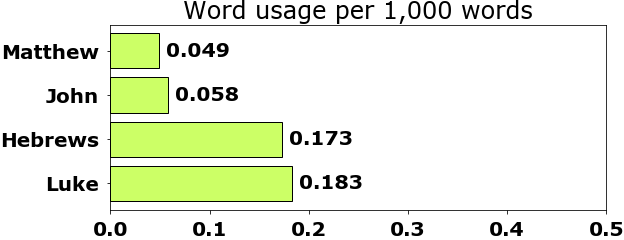
106. Strongs - scourge
*G3146 *7 μαστιγόω (mas-tig-o'-o) : from G3148; to flog (literally or figuratively):--scourge.
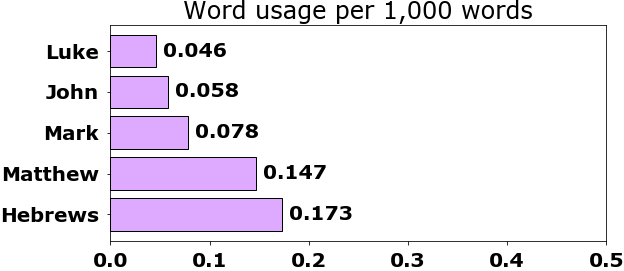 |
Words: εμαστιγωσεν μαστιγοι μαστιγωσαι μαστιγωσαντες μαστιγωσετε μαστιγωσουσιν=2
|
The
ancient Greek word
"μάστιξ" ≈ "whip, scourge" and, in a figurative sense,
"lash of eloquence". As a verb it is
"μαστιγόω" ≈ "whip, scourge". From these words comes the English word
"masochist" - made popular by the secular and atheist founder of modern psychology Sigmund Freud (1856-1939).
Has any Catholic ever made a joke about self-inflicting pain by being addicted to Mass as a
"masochist"?
107. Usage - scourge
- *G3146 *7 μαστιγόω (mas-tig-o'-o) : from G3148; to flog (literally or figuratively):--scourge.
- μαστιγωσουσιν *2
- Matthew 10:17 ... up to the councils, and they will scourge you in their synagogues;
- Mark 10:34 And they shall mock him, and shall scourge him, and shall spit upon ...
- μαστιγωσαι
- Matthew 20:19 ... to mock, and to scourge, and to crucify him: and ...
- μαστιγωσετε
- Matthew 23:34 ... and some of them shall ye scourge in your synagogues, ...
- μαστιγωσαντες
- Luke 18:33 And they shall scourge him, and put him to death: and ...
- εμαστιγωσεν
- John 19:1 ... took Jesus, and scourged him.
- μαστιγοι
- Hebrews 12:6 ... loveth he chasteneth, and scourgeth every son whom he receiveth.
108. Matthew 23:34 Massive sermons
Matthew 23:34 Wherefore, behold, I send unto you prophets, and wise men, and scribes: and some of them ye shall kill and crucify; and some of them shall ye scourge in your synagogues, and persecute them from city to city: [kjv]
δια τουτο ιδου εγω αποστελλω προς υμας προφητας και σοφους και γραμματεις και εξ αυτων αποκτενειτε και σταυρωσετε και εξ αυτων μαστιγωσετε εν ταις συναγωγαις υμων και διωξετε απο πολεως εις πολιν [gnt]
Can the
"scourging" be figurative? It is tempting to use the modern English word "
mass" and the Greek word prefix and say they will be, in the Catholic sense,
"massed" in the
"synagogue" as in, using modern terms,
"sermoned" in the
"pews". That is a figurative idea of being
"scourged" "
in" the
"synagogue".
109. Numbers 22:25 Smitten
Numbers 22:25 And when the ass saw the angel of the LORD, she thrust herself unto the wall, and crushed Balaam's foot against the wall: and he smote her again. [kjv]
… הקיר … הקיר … [he]
και ιδουσα η ονος τον αγγελον του θεου προσεθλιψεν εαυτην προς τον τοιχον και απεθλιψεν τον ποδα βαλααμ και προσεθετο ετι μαστιξαι αυτην [lxx]
The
ancient Greek word
"μάστιξ" ≈ "whip, scourge" and, in a figurative sense,
"lash of eloquence". As a verb it is
"μαστιγόω" ≈ "whip, scourge".
The
ancient Greek word
"προσθεῖναι" ≈ "add" and is translated in the
KJV as
"again".
110. Matthew 6:27 Play on words
111. Numbers 22:25 Crushing pressure without peer
Numbers 22:25 And when the ass saw the angel of the LORD, she thrust herself unto the wall, and crushed Balaam's foot against the wall: and he smote her again. [kjv]
… הקיר … הקיר … [he]
και ιδουσα η ονος τον αγγελον του θεου προσεθλιψεν εαυτην προς τον τοιχον και απεθλιψεν τον ποδα βαλααμ και προσεθετο ετι μαστιξαι αυτην [lxx]
Balaam is
riding the "
donkey". If Balaam's
"foot" were
"crushed" how would he continue to walk, etc.?
"προς" ≈ "to, towards".
"ἀπο" ≈ "away from" and which has an idea of a "separating distance".
The
ancient Greek word
"θλῖψις" ≈ "pressure" and,
figuratively,
"oppression",
"affliction", etc. Might this include
peer "pressure"?
112. Numbers 22:25
Numbers 22:25 And when the ass saw the angel of the LORD, she thrust herself unto the wall, and crushed Balaam's foot against the wall: and he smote her again. [kjv]
… הקיר … הקיר … [he]
και ιδουσα η ονος τον αγγελον του θεου προσεθλιψεν εαυτην προς τον τοιχον και απεθλιψεν τον ποδα βαλααμ και προσεθετο ετι μαστιξαι αυτην [lxx]
LXX:
... she towards-pressured herself towards the wall and pressured away from the foot of Balaam and (he) added yet strike (to) her.
113. Numbers 22:25
KJV: And when the ass saw the angel of the LORD, she thrust herself unto the wall, and crushed Balaam's foot against the wall: and he smote her again.
Hebrew: ותרא האתון את מלאך יהוה ותלחץ אל הקיר ותלחץ את רגל בלעם אל הקיר ויסף להכתה׃
Greek: και ιδουσα η ονος τον αγγελον του θεου προσεθλιψεν εαυτην προς τον τοιχον και απεθλιψεν τον ποδα βαλααμ και προσεθετο ετι μαστιξαι αυτην
114. Numbers 22:26 Blocking the narrow way
Numbers 22:26 And the angel of the LORD went further, and stood in a narrow place, where was no way to turn either to the right hand or to the left. [kjv]
και προσεθετο ο αγγελος του θεου και απελθων υπεστη εν τοπω στενω εις ον ουκ ην εκκλιναι δεξιαν ουδε αριστεραν [lxx]
The ancient Greek word
"τόπος" ≈ "place" and is the source of the English word
"topology" as the study of shapes.
The ancient Greek word
"στενός" ≈ "narrow, tight" (nominative neuter singular) as in "
stenography" or, literally, "
narrow writing".
Is this "narrow" "place" or "gate" where one should be going through?
Is the "narrow" "gate" a "place" where one should be going through?
What happens if you decide to go through anyway?
115. Strongs - lead away from
*G520 *15 ἀπάγω (ap-ag'-o) : from G575 and G71; to take off (in various senses):--bring, carry away, lead (away), put to death, take away.
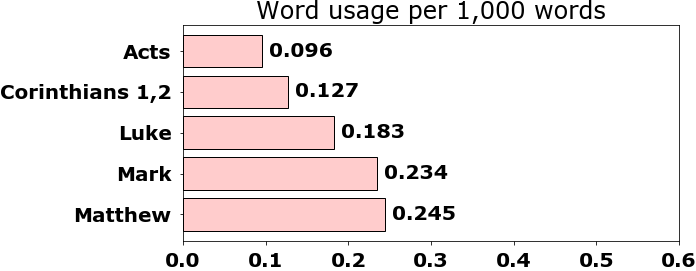 |
Words: απαγαγων απαγε απαγετε απαγομενοι απαγομενους απαγουσα=2 απαχθηναι απηγαγον=7
|
The ancient Greek word
"ἀπάγω" ≈ "lead away (from)".
The prefix "ἀπο" ≈ "away from" which has an idea of a "separating distance".
"ἄγω" ≈ "lead, fetch, bring, carry (off)" and many similar meanings.
[Greek: outside the house]
116. Usage - lead away from
- *G520 *15 ἀπάγω (ap-ag'-o) : from G575 and G71; to take off (in various senses):--bring, carry away, lead (away), put to death, take away.
- απηγαγον *7
- Matthew 26:57 And they that had laid hold on Jesus led him away to Caiaphas ...
- Matthew 27:2 And when they had bound him, they led him away, and delivered ...
- Matthew 27:31 ... him, and led him away to crucify him.
- Mark 14:53 And they led Jesus away to the high priest: ...
- Mark 15:16 And the soldiers led him away into the hall, ...
- Luke 22:66 And as soon as it was day, the elders of the people ...
- Luke 23:26 And as they led him away, they laid hold upon one ...
- απαγουσα *2
- Matthew 7:13 ... and broad is the way, that leadeth to destruction, and ...
- Matthew 7:14 ... and narrow is the way, which leadeth unto life, and ...
- απαγετε
- Mark 14:44 ... him, and lead him away safely.
- απαγαγων
- Luke 13:15 ... the stall, and lead him away to watering?
- απαγομενους
- Luke 21:12 But before all these, they shall lay their ...
- απαχθηναι
- Acts 12:19 ... he examined the keepers, and commanded that they should be put to death. And he went down from ...
- απαγε
- Acts 23:17 ... one of the centurions unto him, and said, Bring this young man unto ...
- απαγομενοι
- 1 Corinthians 12:2 ... dumb idols, even as ye were led.
117. Cambridge Greek Lexicon: Lead away

From the Cambridge Greek Lexicon (volume 1, p. 158), the ancient Greek word
"ἀπάγω" ≈ "lead away". Only in the
GNT is the meaning that of
"lead".
Definitions 2 to 13 are narrowed meanings of primary meaning 1.
| 1. lead away |
8. divert, distract (jury, audience) |
| 2. drive or lead away (animals) |
9. bring, convey or guide back |
| 3. transport or take away |
10. lead back, withdraw |
| 4. take or go away |
11. recall, compel to withdraw |
| 5. remove or escort away |
12. pay tribute, send back (in return) |
| 6. arrest or deliver over |
13. take in/away (opinions, assertions) |
| 7. draw aside or back (archer) |
14. lead towards life or destruction (GNT) |
How does the English meaning of the verses
change if the usual definition of that Greek word is used? What is
the "life"? What is
the "loss"?
118. Matthew 7:13-14 Direction choices
Matthew 7:13 Enter ye in at the strait gate: for wide is the gate, and broad is the way, that leadeth to destruction, and many there be which go in thereat: [kjv]
7:14 Because strait is the gate, and narrow is the way, which leadeth unto life, and few there be that find it. [kjv]
| Verse |
As translated |
Possible Greek meaning |
| 7:13 |
leads into loss/destruction |
leads away from into loss/destruction |
| 7:14 |
leads into life |
leads away from into life |
How does the English meaning of the verses
change if the usual definition of that Greek word is used?
Jesus is using non-verbal communication and needs to talk in such a way as to avoid trouble with spies (reporting back), later translators who might change what he is saying, etc. Play on words help accomplish both objectives.
119. Matthew 7:14-15 I burn wolves
Matthew 7:14 Because strait is the gate, and narrow is the way, which leadeth unto life, and few there be that find it. [kjv]
οτι στενη η πυλη και τεθλιμμενη η οδος η απαγουσα εις την ζωην και ολιγοι εισιν οι ευρισκοντες αυτην [gnt]
7:15 Beware of false prophets, which come to you in sheep's clothing, but inwardly they are ravening wolves. [kjv]
προσεχετε δε απο των ψευδοπροφητων οιτινες ερχονται προς υμας εν ενδυμασιν προβατων εσωθεν δε εισιν λυκοι αρπαγες [gnt]
Can the
"wolves" "inside" the
"wide" area effectively
switch the direction signs by
"rapturing" or
"snatching" the meaning of
"lead away (from)" to
"lead (to)"? People understand a New York or New England accent even with the almost silent letter "
r".
[fish gills]
Some words:
"κοντός" ≈ "(short) pole" which led to the modern Greek word "κοντός" (kon-TOS) ≈ "pole".
"δορῠφόρος" ≈ "(long) spear".
"ἀκόντιον" ≈ "javelin".
"ἄκων" ≈ "unwilling, dart, javelin".
120. Numbers 22:26
KJV: And the angel of the LORD went further, and stood in a narrow place, where was no way to turn either to the right hand or to the left.
Hebrew: ויוסף מלאך יהוה עבור ויעמד במקום צר אשר אין דרך לנטות ימין ושמאול׃
Greek: και προσεθετο ο αγγελος του θεου και απελθων υπεστη εν τοπω στενω εις ον ουκ ην εκκλιναι δεξιαν ουδε αριστεραν
121. Numbers 22:27 Hit with a strong type
Numbers 22:27 And when the ass saw the angel of the LORD, she fell down under Balaam: and Balaam's anger was kindled, and he smote the ass with a staff. [kjv]
και ιδουσα η ονος τον αγγελον του θεου συνεκαθισεν υποκατω βαλααμ και εθυμωθη βαλααμ και ετυπτεν την ονον τη ραβδω [lxx]
The "
donkey" "
(together) sat down" "
from under" Balaam.
Will Jesus get "
struck" during the crucifixion week? The Greek word in the
LXX is that of being "
typed". Throughout history, will Jesus (and others) get "
typed" in ways not consistent with his teachings?
The
ancient Greek word
"ῥάβδος" ≈ "rod, wand, scepter, shaft of a spear". In literary terms it was a
line or
verse.
122. Matthew 24:49 Type
Matthew 24:49 And shall begin to smite his fellowservants, and to eat and drink with the drunken; [kjv]
και αρξηται τυπτειν τους συνδουλους εσθιειν αυτου εσθιη δε και πινειν πινη μετα των μεθυοντων [gnt]
The ancient Greek word
"τύπος" ≈ "blow, pressing, mark, figure" and is the source of the English word
"type" as in printing, computer programming languages, etc.
Interesting, to
"type" on a keyboard is to
"strike" or
"hit" the keys - the original meaning of
"type" in Greek.
123. Matthew 24:48-49 Hit me with your best shot
Matthew 24:48 But and if that evil servant shall say in his heart, My lord delayeth his coming; [kjv]
24:49 And shall begin to smite his fellowservants, and to eat and drink with the drunken; [kjv]
και αρξηται τυπτειν τους συνδουλους εσθιειν αυτου εσθιη δε και πινειν πινη μετα των μεθυοντων [gnt]
Here is one way to take these verses
figuratively in a sense of
"type" as used by Paul, Barnabas, etc. The "
evil" or "
bad"
"servant" is a
"bird" or
false leader. A
"type" is a metaphor of something of more significance. The
"bird" will
"type" the followers with bad example after bad example to deceive the followers.
If you do not like this figurative meaning of "
type" as "
smite", at least I tried to "
hit" you with my best "
shot", to "
clobber" you with "
logic", but you took it as a "
slap" in the "
face", and were not "
smitten" by the analogy.
124. Strongs - drunk
125. Usage - drunk
- *G3184 *6 μεθύω (meth-oo'-o) : from another form of G3178; to drink to intoxication, i.e. get drunk:--drink well, make (be) drunk(-en).
- μεθυουσιν *2
- Acts 2:15 For these are not drunken, as ye ...
- 1 Thessalonians 5:7 ... in the night; and they that be drunken are drunken in the night.
- μεθυοντων
- Matthew 24:49 ... and drink with the drunken;
- μεθυσθωσιν
- John 2:10 ... wine; and when men have well drunk, then that which is worse: but thou ...
- μεθυει
- 1 Corinthians 11:21 ... is hungry, and another is drunken.
- μεθυουσαν
- Revelation 17:6 And I saw the woman drunken with the blood of the saints, ...
126. Matthew 24:49 Drunken trick
Matthew 24:49 And shall begin to smite his fellowservants, and to eat and drink with the drunken; [kjv]
και αρξηται τυπτειν τους συνδουλους εσθιειν αυτου εσθιη δε και πινειν πινη μετα των μεθυοντων [gnt]
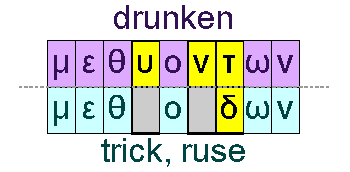
"μεθυόντων" ≈ "drunken".
"μεθόδων" ≈ "following after, pursuit, trick, ruse" and the source of the English word "method".
Greek: ... and to eat and drink after the drunken.
Play: ... and to eat and drink after the trick/ruse.
To chemists,
alcohol is
not a
problem. It is a
solution!
127. Numbers 22:27
KJV: And when the ass saw the angel of the LORD, she fell down under Balaam: and Balaam's anger was kindled, and he smote the ass with a staff.
Hebrew: ותרא האתון את מלאך יהוה ותרבץ תחת בלעם ויחר אף בלעם ויך את האתון במקל׃
Greek: και ιδουσα η ονος τον αγγελον του θεου συνεκαθισεν υποκατω βαλααμ και εθυμωθη βαλααμ και ετυπτεν την ονον τη ραβδω
128. Numbers 22:28
Numbers 22:28 And the LORD opened the mouth of the ass, and she said unto Balaam, What have I done unto thee, that thou hast smitten me these three times? [kjv]
και ηνοιξεν ο θεος το στομα της ονου και λεγει τω βαλααμ τι εποιησα σοι οτι πεπαικας με τουτο τριτον [lxx]
How important might the "
three times" be during the crucifixion week?
129. Numbers 22:28
KJV: And the LORD opened the mouth of the ass, and she said unto Balaam, What have I done unto thee, that thou hast smitten me these three times?
Hebrew: ויפתח יהוה את פי האתון ותאמר לבלעם מה עשיתי לך כי הכיתני זה שלש רגלים׃
Greek: και ηνοιξεν ο θεος το στομα της ονου και λεγει τω βαλααμ τι εποιησα σοι οτι πεπαικας με τουτο τριτον
130. Numbers 22:29
Numbers 22:29 And Balaam said unto the ass, Because thou hast mocked me: I would there were a sword in mine hand, for now would I kill thee. [kjv]
και ειπεν βαλααμ τη ονω οτι εμπεπαιχας μοι και ει ειχον μαχαιραν εν τη χειρι μου ηδη αν εξεκεντησα σε [lxx]
The Greek word translated as "
killed" is that of "
piked" as in using a "
pole".
[out-piked]
131. Numbers 22:29
KJV: And Balaam said unto the ass, Because thou hast mocked me: I would there were a sword in mine hand, for now would I kill thee.
Hebrew: ויאמר בלעם לאתון כי התעללת בי לו יש חרב בידי כי עתה הרגתיך׃
Greek: και ειπεν βαλααμ τη ονω οτι εμπεπαιχας μοι και ει ειχον μαχαιραν εν τη χειρι μου ηδη αν εξεκεντησα σε
132. Numbers 22:30
Numbers 22:30 And the ass said unto Balaam, Am not I thine ass, upon which thou hast ridden ever since I was thine unto this day? was I ever wont to do so unto thee? And he said, Nay. [kjv]
και λεγει η ονος τω βαλααμ ουκ εγω η ονος σου εφ ης επεβαινες απο νεοτητος σου εως της σημερον ημερας μη υπερορασει υπεριδουσα εποιησα σοι ουτως ο δε ειπεν ουχι [lxx]
133. Numbers 22:30
KJV: And the ass said unto Balaam, Am not I thine ass, upon which thou hast ridden ever since I was thine unto this day? was I ever wont to do so unto thee? And he said, Nay.
Hebrew: ותאמר האתון אל בלעם הלוא אנכי אתנך אשר רכבת עלי מעודך עד היום הזה ההסכן הסכנתי לעשות לך כה ויאמר לא׃
Greek: και λεγει η ονος τω βαλααμ ουκ εγω η ονος σου εφ ης επεβαινες απο νεοτητος σου εως της σημερον ημερας μη υπερορασει υπεριδουσα εποιησα σοι ουτως ο δε ειπεν ουχι
134. Numbers 22:31
Numbers 22:31 Then the LORD opened the eyes of Balaam, and he saw the angel of the LORD standing in the way, and his sword drawn in his hand: and he bowed down his head, and fell flat on his face. [kjv]
απεκαλυψεν δε ο θεος τους οφθαλμους βαλααμ και ορα τον αγγελον κυριου ανθεστηκοτα εν τη οδω και την μαχαιραν εσπασμενην εν τη χειρι αυτου και κυψας προσεκυνησεν τω προσωπω αυτου [lxx]
Balaam thinks he has the "
sword" and the power that goes with it.
Balaam finds out who has a more effective and powerful "
sword".
135. Numbers 22:31
KJV: Then the LORD opened the eyes of Balaam, and he saw the angel of the LORD standing in the way, and his sword drawn in his hand: and he bowed down his head, and fell flat on his face.
Hebrew: ויגל יהוה את עיני בלעם וירא את מלאך יהוה נצב בדרך וחרבו שלפה בידו ויקד וישתחו לאפיו׃
Greek: απεκαλυψεν δε ο θεος τους οφθαλμους βαλααμ και ορα τον αγγελον κυριου ανθεστηκοτα εν τη οδω και την μαχαιραν εσπασμενην εν τη χειρι αυτου και κυψας προσεκυνησεν τω προσωπω αυτου
136. Numbers 22:32
Numbers 22:32 And the angel of the LORD said unto him, Wherefore hast thou smitten thine ass these three times? behold, I went out to withstand thee, because thy way is perverse before me: [kjv]
και ειπεν αυτω ο αγγελος του θεου δια τι επαταξας την ονον σου τουτο τριτον και ιδου εγω εξηλθον εις διαβολην σου οτι ουκ αστεια η οδος σου εναντιον μου [lxx]
"ὄνος" ≈ "ass, donkey". The modern Greek word "όνος" (O-nos) ≈ "ass, donkey".
"ὄνον" ≈ "ass, donkey" (accusative).
"διαβολή" ≈ "slander, defamation".
"ἀστεῖος" ≈ "of the city, refined, elegant, witty" from "ἄστυ" ≈ "town, city". The modern Greek word "αστείος" (a-STEE-os) ≈ "funny, comical, trivial".
137. Numbers 22:32
KJV: And the angel of the LORD said unto him, Wherefore hast thou smitten thine ass these three times? behold, I went out to withstand thee, because thy way is perverse before me:
Hebrew: ויאמר אליו מלאך יהוה על מה הכית את אתנך זה שלוש רגלים הנה אנכי יצאתי לשטן כי ירט הדרך לנגדי׃
Greek: και ειπεν αυτω ο αγγελος του θεου δια τι επαταξας την ονον σου τουτο τριτον και ιδου εγω εξηλθον εις διαβολην σου οτι ουκ αστεια η οδος σου εναντιον μου
Brenton: And the angel of God said to him, Why have you struck your ass this third time? and, behold, I came out to withstand you, for your way was not seemly before me; and when the ass saw me, she turned away from me this third time.
138. Numbers 22:33
Numbers 22:33 And the ass saw me, and turned from me these three times: unless she had turned from me, surely now also I had slain thee, and saved her alive. [kjv]
και ιδουσα με η ονος εξεκλινεν απ εμου τριτον τουτο και ει μη εξεκλινεν νυν ουν σε μεν απεκτεινα εκεινην δε περιεποιησαμην [lxx]
Who are the leaders leading?
Who are the followers following?
[leaders and followers]
139. Numbers 22:33
KJV: And the ass saw me, and turned from me these three times: unless she had turned from me, surely now also I had slain thee, and saved her alive.
Hebrew: ותראני האתון ותט לפני זה שלש רגלים אולי נטתה מפני כי עתה גם אתכה הרגתי ואותה החייתי׃
Greek: και ιδουσα με η ονος εξεκλινεν απ εμου τριτον τουτο και ει μη εξεκλινεν νυν ουν σε μεν απεκτεινα εκεινην δε περιεποιησαμην
140. Numbers 22:34
Numbers 22:34 And Balaam said unto the angel of the LORD, I have sinned; for I knew not that thou stoodest in the way against me: now therefore, if it displease thee, I will get me back again. [kjv]
και ειπεν βαλααμ τω αγγελω κυριου ημαρτηκα ου γαρ ηπισταμην οτι συ μοι ανθεστηκας εν τη οδω εις συναντησιν και νυν ει μη σοι αρεσκει αποστραφησομαι [lxx]
When one sees that one is going on the wrong direction, one should turn the way back again.
141. Numbers 22:34
KJV: And Balaam said unto the angel of the LORD, I have sinned; for I knew not that thou stoodest in the way against me: now therefore, if it displease thee, I will get me back again.
Hebrew: ויאמר בלעם אל מלאך יהוה חטאתי כי לא ידעתי כי אתה נצב לקראתי בדרך ועתה אם רע בעיניך אשובה לי׃
Greek: και ειπεν βαλααμ τω αγγελω κυριου ημαρτηκα ου γαρ ηπισταμην οτι συ μοι ανθεστηκας εν τη οδω εις συναντησιν και νυν ει μη σοι αρεσκει αποστραφησομαι
142. Numbers 22:35
Numbers 22:35 And the angel of the LORD said unto Balaam, Go with the men: but only the word that I shall speak unto thee, that thou shalt speak. So Balaam went with the princes of Balak. [kjv]
και ειπεν ο αγγελος του θεου προς βαλααμ συμπορευθητι μετα των ανθρωπων πλην το ρημα ο εαν ειπω προς σε τουτο φυλαξη λαλησαι και επορευθη βαλααμ μετα των αρχοντων βαλακ [lxx]
143. Numbers 22:35
KJV: And the angel of the LORD said unto Balaam, Go with the men: but only the word that I shall speak unto thee, that thou shalt speak. So Balaam went with the princes of Balak.
Hebrew: ויאמר מלאך יהוה אל בלעם לך עם האנשים ואפס את הדבר אשר אדבר אליך אתו תדבר וילך בלעם עם שרי בלק׃
Greek: και ειπεν ο αγγελος του θεου προς βαλααμ συμπορευθητι μετα των ανθρωπων πλην το ρημα ο εαν ειπω προς σε τουτο φυλαξη λαλησαι και επορευθη βαλααμ μετα των αρχοντων βαλακ
144. 2 Peter 2:15
2 Peter 2:15 Which have forsaken the right way, and are gone astray, following the way of Balaam the son of Bosor, who loved the wages of unrighteousness; [kjv]
καταλιποντες την καταλειποντες ευθειαν οδον επλανηθησαν εξακολουθησαντες τη οδω του βαλααμ του βοσορ βεωρ ος μισθον αδικιας ηγαπησεν [gnt]
145. 2 Peter 2:15
KJV: Which have forsaken the right way, and are gone astray, following the way of Balaam the son of Bosor, who loved the wages of unrighteousness;
Greek: καταλιποντες την καταλειποντες ευθειαν οδον επλανηθησαν εξακολουθησαντες τη οδω του βαλααμ του βοσορ βεωρ ος μισθον αδικιας ηγαπησεν
146. Revelation 2:14
Revelation 2:14 But I have a few things against thee, because thou hast there them that hold the doctrine of Balaam, who taught Balac to cast a stumblingblock before the children of Israel, to eat things sacrificed unto idols, and to commit fornication. [kjv]
αλλ αλλα εχω κατα σου ολιγα οτι εχεις εκει κρατουντας την διδαχην βαλααμ ος εδιδασκεν εν τω βαλακ βαλειν σκανδαλον ενωπιον των υιων ισραηλ φαγειν ειδωλοθυτα και πορνευσαι [gnt]
Balaam is referenced in Revelation in the letter to the church of Pergamos.
147. Revelation 2:14
KJV: But I have a few things against thee, because thou hast there them that hold the doctrine of Balaam, who taught Balac to cast a stumblingblock before the children of Israel, to eat things sacrificed unto idols, and to commit fornication.
Greek: αλλ αλλα εχω κατα σου ολιγα οτι εχεις εκει κρατουντας την διδαχην βαλααμ ος εδιδασκεν εν τω βαλακ βαλειν σκανδαλον ενωπιον των υιων ισραηλ φαγειν ειδωλοθυτα και πορνευσαι
148. 2 Peter 2:16
2 Peter 2:16 But was rebuked for his iniquity: the dumb ass speaking with man's voice forbad the madness of the prophet. [kjv]
ελεγξιν δε εσχεν ιδιας παρανομιας υποζυγιον αφωνον εν ανθρωπου φωνη φθεγξαμενον εκωλυσεν την του προφητου παραφρονιαν [gnt]
Why is the English "
dumb ass" while the Greek is «
υποζυγιον» as "
beast of burden"?
The modern Greek word
"υποζύγιο" (ee-po-ZEE-y-o) ≈ "beast of burden, pack animal".
Compare a similar verse in Jude.
149. 2 Peter 2:16
KJV: But was rebuked for his iniquity: the dumb ass speaking with man's voice forbad the madness of the prophet.
Greek: ελεγξιν δε εσχεν ιδιας παρανομιας υποζυγιον αφωνον εν ανθρωπου φωνη φθεγξαμενον εκωλυσεν την του προφητου παραφρονιαν
150. Brute beasts and magnificent war horses
2 Peter 2:12 But these, as natural brute beasts, made to be taken and destroyed, speak evil of the things that they understand not; and shall utterly perish in their own corruption; [kjv]
ουτοι δε ως αλογα ζωα γεγεννημενα φυσικα γεγενημενα εις αλωσιν και φθοραν εν οις αγνοουσιν βλασφημουντες εν τη φθορα αυτων καταφθαρησονται και φθαρησονται [gnt]
2:16 But was rebuked for his iniquity: the dumb ass speaking with man's voice forbad the madness of the prophet. [kjv]
ελεγξιν δε εσχεν ιδιας παρανομιας υποζυγιον αφωνον εν ανθρωπου φωνη φθεγξαμενον εκωλυσεν την του προφητου παραφρονιαν [gnt]
The modern Greek word
"άλογο" (A-lo-go) ≈ "horse", in ancient times, came from the phrase
"άλογο ζώα" (A-lo-go ZO-a) ≈ "unspeaking/unthinking animal" and usually referred to a war horse (e.g., pulling a chariot, used in a mounted calvary attack, etc.). These were magnificent animals, trained to do whatever they were led to do by their rider/master - even to their own destruction.
The Greek for "
ass" is that of a pack animal doing work. The translators used the
OT (Old Testament) word rather than the word Peter wrote and appeared to mean to keep the military animal analogy consistent and meaningful.
151. Jude 1:11
Jude 1:11 Woe unto them! for they have gone in the way of Cain, and ran greedily after the error of Balaam for reward, and perished in the gainsaying of Core. [kjv]
ουαι αυτοις οτι τη οδω του καιν επορευθησαν και τη πλανη του βαλααμ μισθου εξεχυθησαν και τη αντιλογια του κορε απωλοντο [gnt]
152. Jude 1:11
KJV: Woe unto them! for they have gone in the way of Cain, and ran greedily after the error of Balaam for reward, and perished in the gainsaying of Core.
Greek: ουαι αυτοις οτι τη οδω του καιν επορευθησαν και τη πλανη του βαλααμ μισθου εξεχυθησαν και τη αντιλογια του κορε απωλοντο
153. Numbers 22:36
Numbers 22:36 And when Balak heard that Balaam was come, he went out to meet him unto a city of Moab, which is in the border of Arnon, which is in the utmost coast. [kjv]
154. Numbers 22:36
KJV: And when Balak heard that Balaam was come, he went out to meet him unto a city of Moab, which is in the border of Arnon, which is in the utmost coast.
Hebrew: וישמע בלק כי בא בלעם ויצא לקראתו אל עיר מואב אשר על גבול ארנן אשר בקצה הגבול׃
Greek: και ακουσας βαλακ οτι ηκει βαλααμ εξηλθεν εις συναντησιν αυτω εις πολιν μωαβ η εστιν επι των οριων αρνων ο εστιν εκ μερους των οριων
155. Numbers 22:37
Numbers 22:37 And Balak said unto Balaam, Did I not earnestly send unto thee to call thee? wherefore camest thou not unto me? am I not able indeed to promote thee to honour? [kjv]
156. Numbers 22:37
KJV: And Balak said unto Balaam, Did I not earnestly send unto thee to call thee? wherefore camest thou not unto me? am I not able indeed to promote thee to honour?
Hebrew: ויאמר בלק אל בלעם הלא שלח שלחתי אליך לקרא לך למה לא הלכת אלי האמנם לא אוכל כבדך׃
Greek: και ειπεν βαλακ προς βαλααμ ουχι απεστειλα προς σε καλεσαι σε δια τι ουκ ηρχου προς με οντως ου δυνησομαι τιμησαι σε
157. Numbers 22:38
Numbers 22:38 And Balaam said unto Balak, Lo, I am come unto thee: have I now any power at all to say any thing? the word that God putteth in my mouth, that shall I speak. [kjv]
158. Numbers 22:38
KJV: And Balaam said unto Balak, Lo, I am come unto thee: have I now any power at all to say any thing? the word that God putteth in my mouth, that shall I speak.
Hebrew: ויאמר בלעם אל בלק הנה באתי אליך עתה היכול אוכל דבר מאומה הדבר אשר ישים אלהים בפי אתו אדבר׃
Greek: και ειπεν βαλααμ προς βαλακ ιδου ηκω προς σε νυν δυνατος εσομαι λαλησαι τι το ρημα ο εαν βαλη ο θεος εις το στομα μου τουτο λαλησω
159. Numbers 22:39
Numbers 22:39 And Balaam went with Balak, and they came unto Kirjath–huzoth. [kjv]
160. Numbers 22:39
KJV: And Balaam went with Balak, and they came unto Kirjath–huzoth.
Hebrew: וילך בלעם עם בלק ויבאו קרית חצות׃
Greek: και επορευθη βαλααμ μετα βαλακ και ηλθον εις πολεις επαυλεων
161. Numbers 22:40
Numbers 22:40 And Balak offered oxen and sheep, and sent to Balaam, and to the princes that were with him. [kjv]
162. Numbers 22:40
KJV: And Balak offered oxen and sheep, and sent to Balaam, and to the princes that were with him.
Hebrew: ויזבח בלק בקר וצאן וישלח לבלעם ולשרים אשר אתו׃
Greek: και εθυσεν βαλακ προβατα και μοσχους και απεστειλεν τω βαλααμ και τοις αρχουσι τοις μετ αυτου
163. Numbers 22:41
Numbers 22:41 And it came to pass on the morrow, that Balak took Balaam, and brought him up into the high places of Baal, that thence he might see the utmost part of the people. [kjv]
164. Numbers 22:41
KJV: And it came to pass on the morrow, that Balak took Balaam, and brought him up into the high places of Baal, that thence he might see the utmost part of the people.
Hebrew: ויהי בבקר ויקח בלק את בלעם ויעלהו במות בעל וירא משם קצה העם׃
Greek: και εγενηθη πρωι και παραλαβων βαλακ τον βαλααμ ανεβιβασεν αυτον επι την στηλην του βααλ και εδειξεν αυτω εκειθεν μερος τι του λαου
165. End of page














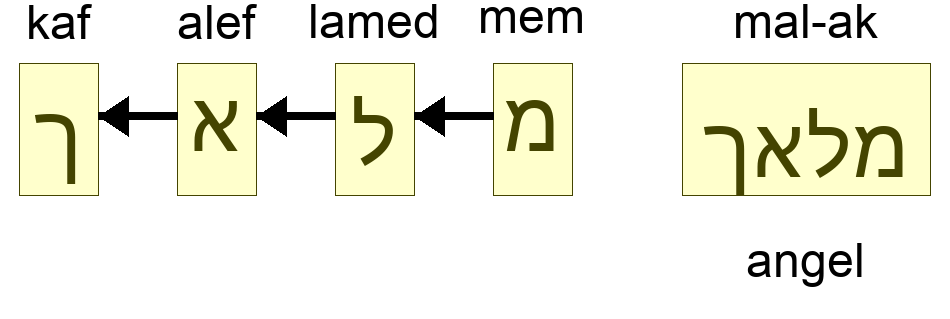




















 The Greek word translated as "to" his "merchandise" is that of "onto" his "merchandise".