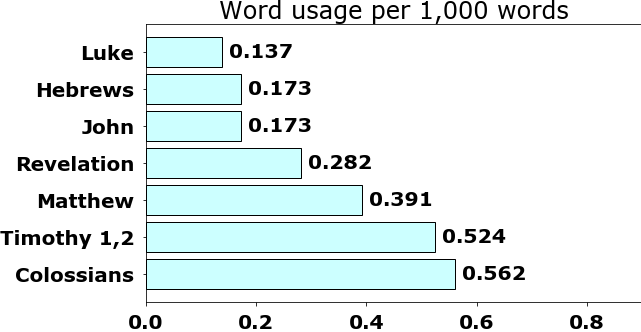
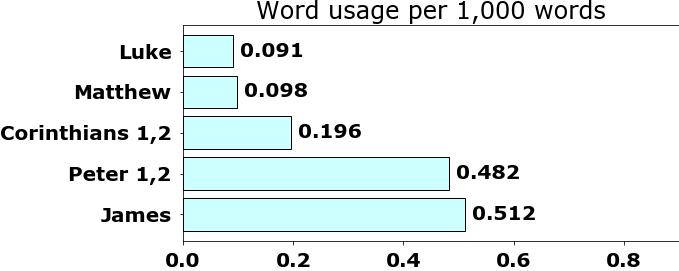
- *G2990 *6 λανθάνω (lan-than'-o) : a prolonged form of a primary verb, which is used only as an alternate in certain tenses; to lie hid (literally or figuratively); often used adverbially, unwittingly:--be hid, be ignorant of, unawares.
- λαθειν
- Mark 7:24 ... it: but he could not be hid.
- ελαθεν
- Luke 8:47 ... saw that she was not hid, she came trembling, ...
- λανθανειν
- Acts 26:26 ... I am persuaded that none of these things are hidden from him; for this thing ...
- ελαθον
- Hebrews 13:2 ... some have entertained angels unawares.
- λανθανει
- 2 Peter 3:5 For this they willingly are ignorant of, that by the word of God ...
- λανθανετω
- 2 Peter 3:8 But, beloved, be not ignorant of this one thing, ...
22. Usage - escape detection
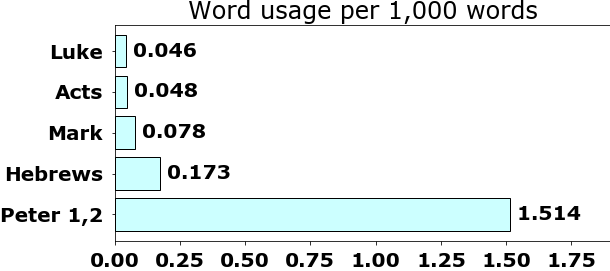 |
Words: ελαθεν ελαθον λαθειν λανθανει λανθανειν λανθανετω
|
23. Not escaping detection
Mark 7:24 And from thence he arose, and went into the borders of Tyre and Sidon, and entered into an house, and would have no man know it: but he could not be hid. [kjv]
και εκειθεν δε αναστας απηλθεν εις τα μεθορια ορια τυρου και σιδωνος και εισελθων εις την οικιαν ουδενα ηθελεν γνωναι και ουκ ηδυνηθη ηδυνασθη λαθειν [gnt]
That is, Jesus could not "
escape detection". A fundamental part of "
escaping deception" has to do with the definition of "
information". That is, what is known and by whom is it know and at what time was it known. This is a fundamental part of statistics which is why the fields of informatics or computer science are closely related to the fields of statistics and data science.
24. Mark 7:24
KJV: And from thence he arose, and went into the borders of Tyre and Sidon, and entered into an house, and would have no man know it: but he could not be hid.
Greek: και εκειθεν δε αναστας απηλθεν εις τα μεθορια ορια τυρου και σιδωνος και εισελθων εις την οικιαν ουδενα ηθελεν γνωναι και ουκ ηδυνηθη ηδυνασθη λαθειν
25. Not escaping detection
Luke 8:47 And when the woman saw that she was not hid, she came trembling, and falling down before him, she declared unto him before all the people for what cause she had touched him, and how she was healed immediately. [kjv]
ιδουσα δε η γυνη οτι ουκ ελαθεν τρεμουσα ηλθεν και προσπεσουσα αυτω δι ην αιτιαν ηψατο αυτου απηγγειλεν αυτω ενωπιον παντος του λαου και ως ιαθη παραχρημα [gnt]
26. Luke 8:47
KJV: And when the woman saw that she was not hid, she came trembling, and falling down before him, she declared unto him before all the people for what cause she had touched him, and how she was healed immediately.
Greek: ιδουσα δε η γυνη οτι ουκ ελαθεν τρεμουσα ηλθεν και προσπεσουσα αυτω δι ην αιτιαν ηψατο αυτου απηγγειλεν αυτω ενωπιον παντος του λαου και ως ιαθη παραχρημα
27. Angel detection
Hebrews 13:2 Be not forgetful to entertain strangers: for there by some have entertained angels unawares. [kjv]
της φιλοξενιας μη επιλανθανεσθε δια ταυτης γαρ ελαθον τινες ξενισαντες αγγελους [gnt]
… latuerunt … angelis … [v]
The Latin word
"lateo" ≈ "hidden, concealed, escape notice" became translated as "
ignorant".
28. Hebrews 13:2
KJV: Be not forgetful to entertain strangers: for there by some have entertained angels unawares.
Greek: της φιλοξενιας μη επιλανθανεσθε δια ταυτης γαρ ελαθον τινες ξενισαντες αγγελους
Latin: hospitalitatem nolite oblivisci per hanc enim latuerunt quidam angelis hospitio receptis
29. Not escaping detection
Acts 26:26 For the king knoweth of these things, before whom also I speak freely: for I am persuaded that none of these things are hidden from him; for this thing was not done in a corner. [kjv]
επισταται γαρ περι τουτων ο βασιλευς προς ον και παρρησιαζομενος λαλω λανθανειν γαρ αυτον τι τουτων ου πειθομαι ουδεν ουθεν ου γαρ εστιν εν γωνια πεπραγμενον τουτο [gnt]
… latere … [v]
30. Acts 26:26
KJV: For the king knoweth of these things, before whom also I speak freely: for I am persuaded that none of these things are hidden from him; for this thing was not done in a corner.
Greek: επισταται γαρ περι τουτων ο βασιλευς προς ον και παρρησιαζομενος λαλω λανθανειν γαρ αυτον τι τουτων ου πειθομαι ουδεν ουθεν ου γαρ εστιν εν γωνια πεπραγμενον τουτο
Latin: scit enim de his rex ad quem et constanter loquor latere enim eum nihil horum arbitror neque enim in angulo quicquam horum gestum est
31. Willingly forgetting
2 Peter 3:5 For this they willingly are ignorant of, that by the word of God the heavens were of old, and the earth standing out of the water and in the water: [kjv]
λανθανει γαρ αυτους τουτο θελοντας οτι ουρανοι ησαν εκπαλαι και γη εξ υδατος και δι υδατος συνεστωσα τω του θεου λογω [gnt]
latet … [v]
Peter uses the word for "
escaping detection" or "
forgetting" as the first word in the sentence, increasing it's importance.
Peter will use the same word a few verses later.
32. 2 Peter 3:5
KJV: For this they willingly are ignorant of, that by the word of God the heavens were of old, and the earth standing out of the water and in the water:
Greek: λανθανει γαρ αυτους τουτο θελοντας οτι ουρανοι ησαν εκπαλαι και γη εξ υδατος και δι υδατος συνεστωσα τω του θεου λογω
Latin: latet enim eos hoc volentes quod caeli erant prius et terra de aqua et per aquam consistens Dei verbo
33. Do not forget
2 Peter 3:8 But, beloved, be not ignorant of this one thing, that one day is with the Lord as a thousand years, and a thousand years as one day. [kjv]
εν δε τουτο μη λανθανετω υμας αγαπητοι οτι μια ημερα παρα κυριω ως χιλια ετη και χιλια ετη ως ημερα μια [gnt]
… lateat … [v]
The Latin word
"lateo" ≈ "hidden, concealed, escape notice" became translated as "
ignorant".
34. 2 Peter 3:8
KJV: But, beloved, be not ignorant of this one thing, that one day is with the Lord as a thousand years, and a thousand years as one day.
Greek: εν δε τουτο μη λανθανετω υμας αγαπητοι οτι μια ημερα παρα κυριω ως χιλια ετη και χιλια ετη ως ημερα μια
Latin: unum vero hoc non lateat vos carissimi quia unus dies apud Dominum sicut mille anni et mille anni sicut dies unus
35. Sin through ignorance
Leviticus 5:15 If a soul commit a trespass, and sin through ignorance, in the holy things of the LORD; then he shall bring for his trespass unto the LORD a ram without blemish out of the flocks, with thy estimation by shekels of silver, after the shekel of the sanctuary, for a trespass offering: [kjv]
ψυχη εαν λαθη αυτον ληθη και αμαρτη ακουσιως απο των αγιων κυριου και οισει της πλημμελειας αυτου τω κυριω κριον αμωμον εκ των προβατων τιμης αργυριου σικλων τω σικλω των αγιων περι ου επλημμελησεν [lxx]
… errorem … [v]
How is a sin through "
ignorance" different than one from "
escaping detection"? Remember that in any information or statistical concept, "
point of view" is important.
36. Leviticus 5:15
KJV: If a soul commit a trespass, and sin through ignorance, in the holy things of the LORD; then he shall bring for his trespass unto the LORD a ram without blemish out of the flocks, with thy estimation by shekels of silver, after the shekel of the sanctuary, for a trespass offering:
Hebrew: נפש כי תמעל מעל וחטאה בשגגה מקדשי יהוה והביא את אשמו ליהוה איל תמים מן הצאן בערכך כסף שקלים בשקל הקדש לאשם׃
Greek: ψυχη εαν λαθη αυτον ληθη και αμαρτη ακουσιως απο των αγιων κυριου και οισει της πλημμελειας αυτου τω κυριω κριον αμωμον εκ των προβατων τιμης αργυριου σικλων τω σικλω των αγιων περι ου επλημμελησεν
Latin: anima si praevaricans caerimonias per errorem in his quae Domino sunt sanctificata peccaverit offeret pro delicto suo arietem inmaculatum de gregibus qui emi potest duobus siclis iuxta pondus sanctuarii
37. Fraud and deception
Matthew 13:22 He also that received seed among the thorns is he that heareth the word; and the care of this world, and the deceitfulness of riches, choke the word, and he becometh unfruitful. [kjv]
ο δε εις τας ακανθας σπαρεις ουτος εστιν ο τον λογον ακουων και η μεριμνα του αιωνος τουτου και η απατη του πλουτου συμπνιγει τον λογον και ακαρπος γινεται [gnt]
Mark 4:19 And the cares of this world, and the deceitfulness of riches, and the lusts of other things entering in, choke the word, and it becometh unfruitful. [kjv]
και αι μεριμναι του αιωνος τουτου και η απατη του πλουτου και αι περι τα λοιπα επιθυμιαι εισπορευομεναι συμπνιγουσιν τον λογον και ακαρπος γινεται [gnt]
The ancient Greek word
"ἀπάτη" ≈ "deceit, fraud".
38. Matthew 13:22
KJV: He also that received seed among the thorns is he that heareth the word; and the care of this world, and the deceitfulness of riches, choke the word, and he becometh unfruitful.
Greek: ο δε εις τας ακανθας σπαρεις ουτος εστιν ο τον λογον ακουων και η μεριμνα του αιωνος τουτου και η απατη του πλουτου συμπνιγει τον λογον και ακαρπος γινεται
39. Mark 4:19
KJV: And the cares of this world, and the deceitfulness of riches, and the lusts of other things entering in, choke the word, and it becometh unfruitful.
Greek: και αι μεριμναι του αιωνος τουτου και η απατη του πλουτου και αι περι τα λοιπα επιθυμιαι εισπορευομεναι συμπνιγουσιν τον λογον και ακαρπος γινεται
40. Strongs - deceit
- *G539 *7 ἀπάτη (ap-at'-ay) : from G538; delusion:--deceit(-ful, -fulness), deceivableness(-ving).
- απατη *4
- Matthew 13:22 ... of this world, and the deceitfulness of riches, choke the word, ...
- Mark 4:19 ... of this world, and the deceitfulness of riches, and the lusts ...
- 2 Thessalonians 2:10 And with all deceivableness of unrighteousness in them that perish; ...
- Hebrews 3:13 ... of you be hardened through the deceitfulness of sin.
- απατης *2
- Ephesians 4:22 ... which is corrupt according to the deceitful lusts;
- Colossians 2:8 ... philosophy and vain deceit, after the tradition of men, ...
- απαταις
- 2 Peter 2:13 ... sporting themselves with their own deceivings while they feast with you;
41. Usage - deceit
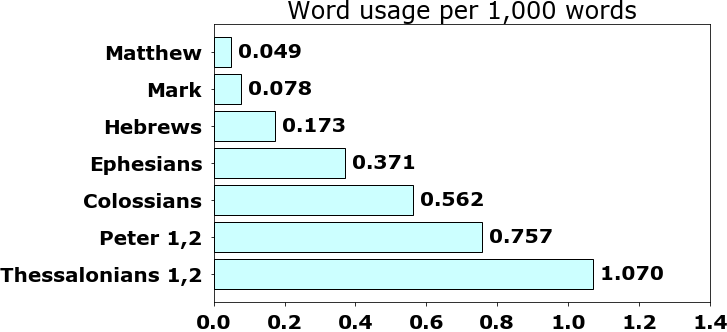 |
Words: απαταις απατη=4 απατης=2
|
42. Deceitful lusts
Ephesians 4:22 That ye put off concerning the former conversation the old man, which is corrupt according to the deceitful lusts; [kjv]
αποθεσθαι υμας κατα την προτεραν αναστροφην τον παλαιον ανθρωπον τον φθειρομενον κατα τας επιθυμιας της απατης [gnt]
The Greek word for "
lust" is that of "
desire" - the original meaning of the English word. The Middle English word
"list" ≈ "desire, lust" was another way to describe "
desire" as in the "
spirit" choosing who it "
desires" for those "
born of the wind".
John 3:8 The wind bloweth where it listeth, and thou hearest the sound thereof, but canst not tell whence it cometh, and whither it goeth: so is every one that is born of the Spirit. [kjv]
το πνευμα οπου θελει πνει και την φωνην αυτου ακουεις αλλ ουκ οιδας ποθεν ερχεται και που υπαγει ουτως εστιν πας ο γεγεννημενος εκ του πνευματος [gnt]
Spiritus … vult … Spiritu [v]
43. Ephesians 4:22
KJV: That ye put off concerning the former conversation the old man, which is corrupt according to the deceitful lusts;
Greek: αποθεσθαι υμας κατα την προτεραν αναστροφην τον παλαιον ανθρωπον τον φθειρομενον κατα τας επιθυμιας της απατης
44. John 3:8
KJV: The wind bloweth where it listeth, and thou hearest the sound thereof, but canst not tell whence it cometh, and whither it goeth: so is every one that is born of the Spirit.
Greek: το πνευμα οπου θελει πνει και την φωνην αυτου ακουεις αλλ ουκ οιδας ποθεν ερχεται και που υπαγει ουτως εστιν πας ο γεγεννημενος εκ του πνευματος
Latin: Spiritus ubi vult spirat et vocem eius audis sed non scis unde veniat et quo vadat sic est omnis qui natus est ex Spiritu
45. Philosophy and deceit
Colossians 2:8 Beware lest any man spoil you through philosophy and vain deceit, after the tradition of men, after the rudiments of the world, and not after Christ. [kjv]
βλεπετε μη τις υμας εσται ο συλαγωγων δια της φιλοσοφιας και κενης απατης κατα την παραδοσιν των ανθρωπων κατα τα στοιχεια του κοσμου και ου κατα χριστον [gnt]
… philosophiam … fallaciam … [v]
The Greek for "
vain deceit" is that of "
empty deceit" or "
empty fraud". The Greek for "
spoil" appears to be a play on words of the logical "
syllogism".
The Latin word
"fallacio" ≈ "deception, deceit" and is the source of the English word
"fallacy".
46. Colossians 2:8
KJV: Beware lest any man spoil you through philosophy and vain deceit, after the tradition of men, after the rudiments of the world, and not after Christ.
Greek: βλεπετε μη τις υμας εσται ο συλαγωγων δια της φιλοσοφιας και κενης απατης κατα την παραδοσιν των ανθρωπων κατα τα στοιχεια του κοσμου και ου κατα χριστον
Latin: videte ne quis vos decipiat per philosophiam et inanem fallaciam secundum traditionem hominum secundum elementa mundi et non secundum Christum
47. Thessalonians
2 Thessalonians 2:10 And with all deceivableness of unrighteousness in them that perish; because they received not the love of the truth, that they might be saved. [kjv]
και εν παση απατη της αδικιας εν τοις απολλυμενοις ανθ ων την αγαπην της αληθειας ουκ εδεξαντο εις το σωθηναι αυτους [gnt]
… seductione … [v]
The Latin word
"seduco" ≈ "lead astray" and is the source of the English word
"seduce".
48. 2 Thessalonians 2:10
KJV: And with all deceivableness of unrighteousness in them that perish; because they received not the love of the truth, that they might be saved.
Greek: και εν παση απατη της αδικιας εν τοις απολλυμενοις ανθ ων την αγαπην της αληθειας ουκ εδεξαντο εις το σωθηναι αυτους
Latin: et in omni seductione iniquitatis his qui pereunt eo quod caritatem veritatis non receperunt ut salvi fierent
49. Adam and Eve
1 Timothy 2:14 And Adam was not deceived, but the woman being deceived was in the transgression. [kjv]
… ηπατηψη … απατηψεισα … [byz]
… seductus … seducta … [v]
The Latin word
"seduco" ≈ "lead astray" and is the source of the English word
"seduce".
50. 1 Timothy 2:14
KJV: And Adam was not deceived, but the woman being deceived was in the transgression.
Greek: και αδαμ ουκ ηπατηθη η δε γυνη απατηθεισα εξαπατηθεισα εν παραβασει γεγονεν
Byzantine: και αδαμ ουκ ηπατηψη η δε γυνη απατηψεισα εν παραβασει γεγονεν
Latin: et Adam non est seductus mulier autem seducta in praevaricatione fuit
51. Self-deception in James
James 1:26 If any man among you seem to be religious, and bridleth not his tongue, but deceiveth his own heart, this man's religion is vain. [kjv]
ει τις δοκει θρησκος ειναι εν υμιν μη χαλιναγωγων γλωσσαν εαυτου αυτου αλλ αλλα απατων καρδιαν αυτου εαυτου τουτου ματαιος η θρησκεια [gnt]
… religiosum … seducens … [v]
The Latin word
"seduco" ≈ "lead astray" and is the source of the English word
"seduce".
52. James 1:26
KJV: If any man among you seem to be religious, and bridleth not his tongue, but deceiveth his own heart, this man's religion is vain.
Greek: ει τις δοκει θρησκος ειναι εν υμιν μη χαλιναγωγων γλωσσαν εαυτου αυτου αλλ αλλα απατων καρδιαν αυτου εαυτου τουτου ματαιος η θρησκεια
Latin: si quis autem putat se religiosum esse non refrenans linguam suam sed seducens cor suum huius vana est religio
53. Self-decption in Peter
2 Peter 2:13 And shall receive the reward of unrighteousness, as they that count it pleasure to riot in the day time. Spots they are and blemishes, sporting themselves with their own deceivings while they feast with you; [kjv]
κομιουμενοι αδικουμενοι μισθον αδικιας ηδονην ηγουμενοι την εν ημερα τρυφην σπιλοι και μωμοι εντρυφωντες εν ταις απαταις αυτων συνευωχουμενοι υμιν [gnt]
54. 2 Peter 2:13
KJV: And shall receive the reward of unrighteousness, as they that count it pleasure to riot in the day time. Spots they are and blemishes, sporting themselves with their own deceivings while they feast with you;
Greek: κομιουμενοι αδικουμενοι μισθον αδικιας ηδονην ηγουμενοι την εν ημερα τρυφην σπιλοι και μωμοι εντρυφωντες εν ταις απαταις αυτων συνευωχουμενοι υμιν
55. Related ideas
56. Error of falling down

The
ancient Greek word
"σφάλμα" ≈ "fall, be cast down" which comes from the ancient Greek word
"σφάλλω" ≈ "topple, be foiled". The
modern Greek word
"σφάλμα" (SFAL-ma) ≈ "error, fault".

A possible connection is the Latin word
"fallo" ≈ "deceive, trick" which is the source of the English word
"fail" and the German word
"fehlen" ≈ "weak, lacking".
The ancient Greek word
"ἀσφαλής" ≈ "immovable, unfailing, safe" and is, literally, "
not fallen down". The modern Greek word
"ασφαλής" (a-sfa-LEES) ≈ "safe, secure". So in baseball, one may slide into a base, falling down in the process, and be called "
safe" or in Greek, literally, "
not fallen down".
The
modern Greek word
"λάθος" (LA-thos) ≈ "error, mistake" .
57. Planets as wandering stars
Matthew 24:5 For many shall come in my name, saying, I am Christ; and shall deceive many. [kjv]
πολλοι γαρ ελευσονται επι τω ονοματι μου λεγοντες εγω ειμι ο χριστος και πολλους πλανησουσιν [gnt]
How does a "
sheep" know if it has gone or is going
"astray"? How
"many" is
"many"?
The ancient Greek word
"πλάνη" ≈ "wandering, roaming" and, figuratively,
"going astray" or
"in error". as in wandering off-target. The English word
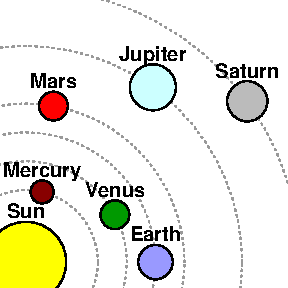
"planet" comes from this Greek word as a shortened form of
"wandering star" since planets were considered wandering stars. The modern Greek word
"πλανήτης" (pla-NEE-tees) ≈ "planet".
Discuss: Consider the billions of people throughout the ages. Are the
"many" a few insurrectionists from the first century or so who led a few thousand followers?
58. End of page



 In sermons (one-sided arguments not subject to cross-examination), some pastors "conceal" by cherry picking verses that support their "opinion" or "glory", omitting other verses for the purposes of "escaping detection" all for the "joy of deception" - which could be a reflexive self-deception.