- *G520 *15 ἀπάγω (ap-ag'-o) : from G575 and G71; to take off (in various senses):--bring, carry away, lead (away), put to death, take away.
- απηγαγον *7
- Matthew 26:57 And they that had laid hold on Jesus led him away to Caiaphas ...
- Matthew 27:2 And when they had bound him, they led him away, and delivered ...
- Matthew 27:31 ... him, and led him away to crucify him.
- Mark 14:53 And they led Jesus away to the high priest: ...
- Mark 15:16 And the soldiers led him away into the hall, ...
- Luke 22:66 And as soon as it was day, the elders of the people ...
- Luke 23:26 And as they led him away, they laid hold upon one ...
- απαγουσα *2
- Matthew 7:13 ... and broad is the way, that leadeth to destruction, and ...
- Matthew 7:14 ... and narrow is the way, which leadeth unto life, and ...
- απαγετε
- Mark 14:44 ... him, and lead him away safely.
- απαγαγων
- Luke 13:15 ... the stall, and lead him away to watering?
- απαγομενους
- Luke 21:12 But before all these, they shall lay their ...
- απαχθηναι
- Acts 12:19 ... he examined the keepers, and commanded that they should be put to death. And he went down from ...
- απαγε
- Acts 23:17 ... one of the centurions unto him, and said, Bring this young man unto ...
- απαγομενοι
- 1 Corinthians 12:2 ... dumb idols, even as ye were led.
9. Examples of lead away
*G520 *15 ἀπάγω (ap-ag'-o) : from G575 and G71; to take off (in various senses):--bring, carry away, lead (away), put to death, take away.
The Greek word (verb)
"ἀπάγω" ≈ "lead away (from)" is usually translated in the Latin Vulgate as
"duco" ≈ "lead, lead away" which has a more general meaning. A better Latin word, more matching the Greek, might have been
"abduco" ≈ "lead away (from)", source of the English word
"abduct", and which comes from
"ab" ≈ "away" and
"duco" ≈ "lead, lead away".
Let us look at the
15 uses of the verb
"ἀπάγω" ≈ "lead away (from)" in the
GNT (Greek New Testament).
10. Acts 12:19 Lead away from here
Acts 12:19 And when Herod had sought for him, and found him not, he examined the keepers, and commanded that they should be put to death. And he went down from Judaea to Caesarea, and there abode. [kjv]
ηρωδης δε επιζητησας αυτον και μη ευρων ανακρινας τους φυλακας εκελευσεν απαχθηναι και κατελθων απο της ιουδαιας εις την καισαρειαν καισαριαν διετριβεν [gnt]
… duci … [v]
The Greek word translated as
"put" is that of
"lead away (from)" where the
"to death" is
inferred (and
added).
... led away from (here) (to be put to death) ...
11. Acts 12:19
KJV: And when Herod had sought for him, and found him not, he examined the keepers, and commanded that they should be put to death. And he went down from Judaea to Caesarea, and there abode.
Greek: ηρωδης δε επιζητησας αυτον και μη ευρων ανακρινας τους φυλακας εκελευσεν απαχθηναι και κατελθων απο της ιουδαιας εις την καισαρειαν καισαριαν διετριβεν
Latin: Herodes autem cum requisisset eum et non invenisset inquisitione facta de custodibus iussit eos duci descendensque a Iudaea in Caesaream ibi commoratus est
12. Acts 23:17 Lead away from here
Acts 23:17 Then Paul called one of the centurions unto him, and said, Bring this young man unto the chief captain: for he hath a certain thing to tell him. [kjv]
προσκαλεσαμενος δε ο παυλος ενα των εκατονταρχων εφη τον νεανιαν τουτον απαγαγε απαγε προς τον χιλιαρχον εχει γαρ τι απαγγειλαι τι αυτω [gnt]
… adulescentem … [v]
The Greek word translated as
"take" is that of
"lead away (from here)".
... lead it away from where it is to ...
13. Acts 23:17
KJV: Then Paul called one of the centurions unto him, and said, Bring this young man unto the chief captain: for he hath a certain thing to tell him.
Greek: προσκαλεσαμενος δε ο παυλος ενα των εκατονταρχων εφη τον νεανιαν τουτον απαγαγε απαγε προς τον χιλιαρχον εχει γαρ τι απαγγειλαι τι αυτω
Latin: vocans autem Paulus ad se unum ex centurionibus ait adulescentem hunc perduc ad tribunum habet enim aliquid indicare illi
14. 1 Corinthians 12:2 Carried away
1 Corinthians 12:2 Ye know that ye were Gentiles, carried away unto these dumb idols, even as ye were led. [kjv]
οιδατε οτι οτε εθνη ητε προς τα ειδωλα τα αφωνα ως αν ηγεσθε απαγομενοι [gnt]
Note the word order switch in the
KJV (King James Version) which serves to obscure the meaning of
"carried away".
... to the unvoiced idols as if led led away from here
15. Luke 13:15 Taken away
Luke 13:15 The Lord then answered him, and said, Thou hypocrite, doth not each one of you on the sabbath loose his ox or his ass from the stall, and lead him away to watering? [kjv]
απεκριθη ουν δε αυτω ο κυριος και ειπεν υποκριτα υποκριται εκαστος υμων τω σαββατω ου λυει τον βουν αυτου η τον ονον απο της φατνης και απαγαγων απαγων ποτιζει [gnt]
… ducit … [v]
... not untie/loose the ox of yours or the donkey away from the crib/stall and lead away from (there) (such that) (it) drinks.
16. Luke 13:15
KJV: The Lord then answered him, and said, Thou hypocrite, doth not each one of you on the sabbath loose his ox or his ass from the stall, and lead him away to watering?
Greek: απεκριθη ουν δε αυτω ο κυριος και ειπεν υποκριτα υποκριται εκαστος υμων τω σαββατω ου λυει τον βουν αυτου η τον ονον απο της φατνης και απαγαγων απαγων ποτιζει
Latin: respondit autem ad illum Dominus et dixit hypocritae unusquisque vestrum sabbato non solvit bovem suum aut asinum a praesepio et ducit adaquare
17. Luke 21:12 Taken away
Luke 21:12 But before all these, they shall lay their hands on you, and persecute you, delivering you up to the synagogues, and into prisons, being brought before kings and rulers for my name's sake. [kjv]
προ δε τουτων απαντων παντων επιβαλουσιν εφ υμας τας χειρας αυτων και διωξουσιν παραδιδοντες εις τας συναγωγας και φυλακας αγομενους απαγομενους επι βασιλεις και ηγεμονας ενεκεν του ονοματος μου [gnt]
… tradentes … trahentes … [v]
The Greek word translated as
"brought" is that of
"taken away".
... into the synagogues/gatherings and prisons/watches being lead away (from where one was) onto kings and rulers on account of the name of me.
18. Luke 21:12
KJV: But before all these, they shall lay their hands on you, and persecute you, delivering you up to the synagogues, and into prisons, being brought before kings and rulers for my name's sake.
Greek: προ δε τουτων απαντων παντων επιβαλουσιν εφ υμας τας χειρας αυτων και διωξουσιν παραδιδοντες εις τας συναγωγας και φυλακας αγομενους απαγομενους επι βασιλεις και ηγεμονας ενεκεν του ονοματος μου
Latin: sed ante haec omnia inicient vobis manus suas et persequentur tradentes in synagogas et custodias trahentes ad reges et praesides propter nomen meum
19. Luke 22:66 Lead away
Luke 22:66 And as soon as it was day, the elders of the people and the chief priests and the scribes came together, and led him into their council, saying, [kjv]
και ως εγενετο ημερα συνηχθη το πρεσβυτεριον του λαου αρχιερεις τε και γραμματεις και ανηγαγον απηγαγον αυτον εις το συνεδριον εαυτων αυτων λεγοντες [gnt]
… duxerunt … [v]
The Greek word translated as
"led" is that of
"led away".
... and led away (from) him into the council of theirs saying ...
20. Luke 22:66
KJV: And as soon as it was day, the elders of the people and the chief priests and the scribes came together, and led him into their council, saying,
Greek: και ως εγενετο ημερα συνηχθη το πρεσβυτεριον του λαου αρχιερεις τε και γραμματεις και ανηγαγον απηγαγον αυτον εις το συνεδριον εαυτων αυτων λεγοντες
Latin: et ut factus est dies convenerunt seniores plebis et principes sacerdotum et scribae et duxerunt illum in concilium suum dicentes si tu es Christus dic nobis
21. Luke 23:26 Lead away
Luke 23:26 And as they led him away, they laid hold upon one Simon, a Cyrenian, coming out of the country, and on him they laid the cross, that he might bear it after Jesus. [kjv]
και ως απηγαγον αυτον επιλαβομενοι σιμωνος τινος κυρηναιου του ερχομενου σιμωνα τινα κυρηναιον ερχομενον απ αγρου επεθηκαν αυτω τον σταυρον φερειν οπισθεν του ιησου [gnt]
… ducerent … [v]
and as led away from him (they) laid hold ...
22. Luke 23:26
KJV: And as they led him away, they laid hold upon one Simon, a Cyrenian, coming out of the country, and on him they laid the cross, that he might bear it after Jesus.
Greek: και ως απηγαγον αυτον επιλαβομενοι σιμωνος τινος κυρηναιου του ερχομενου σιμωνα τινα κυρηναιον ερχομενον απ αγρου επεθηκαν αυτω τον σταυρον φερειν οπισθεν του ιησου
Latin: et cum ducerent eum adprehenderunt Simonem quendam Cyrenensem venientem de villa et inposuerunt illi crucem portare post Iesum
23. Mark 14:44 Lead away
Mark 14:44 And he that betrayed him had given them a token, saying, Whomsoever I shall kiss, that same is he; take him, and lead him away safely. [kjv]
δεδωκει δε ο παραδιδους αυτον συσσημον αυτοις λεγων ον αν φιλησω αυτος εστιν κρατησατε αυτον και απαγαγετε απαγετε ασφαλως [gnt]
… traditor … ducite [v]
... grasped him and lead (him) away (from) safely.
24. Mark 14:44
KJV: And he that betrayed him had given them a token, saying, Whomsoever I shall kiss, that same is he; take him, and lead him away safely.
Greek: δεδωκει δε ο παραδιδους αυτον συσσημον αυτοις λεγων ον αν φιλησω αυτος εστιν κρατησατε αυτον και απαγαγετε απαγετε ασφαλως
Latin: dederat autem traditor eius signum eis dicens quemcumque osculatus fuero ipse est tenete eum et ducite
25. Mark 14:53 Lead away
Mark 14:53 And they led Jesus away to the high priest: and with him were assembled all the chief priests and the elders and the scribes. [kjv]
και απηγαγον τον ιησουν προς τον αρχιερεα και συνερχονται αυτω παντες οι αρχιερεις και οι πρεσβυτεροι και οι γραμματεις [gnt]
… adduxerunt … [v]
and led away from the Jesus to the high priest ...
26. Mark 14:53
KJV: And they led Jesus away to the high priest: and with him were assembled all the chief priests and the elders and the scribes.
Greek: και απηγαγον τον ιησουν προς τον αρχιερεα και συνερχονται αυτω παντες οι αρχιερεις και οι πρεσβυτεροι και οι γραμματεις
Latin: et adduxerunt Iesum ad summum sacerdotem et conveniunt omnes sacerdotes et scribae et seniores
27. Mark 15:16 Lead away
Mark 15:16 And the soldiers led him away into the hall, called Praetorium; and they call together the whole band. [kjv]
οι δε στρατιωται απηγαγον αυτον εσω της αυλης ο εστιν πραιτωριον και συγκαλουσιν ολην την σπειραν [gnt]
… duxerunt … [v]
but the soldiers lead away from him outside the courtyard ...
28. Mark 15:16
KJV: And the soldiers led him away into the hall, called Praetorium; and they call together the whole band.
Greek: οι δε στρατιωται απηγαγον αυτον εσω της αυλης ο εστιν πραιτωριον και συγκαλουσιν ολην την σπειραν
Latin: milites autem duxerunt eum intro in atrium praetorii et convocant totam cohortem
29. Matthew 26:57 Lead away
Matthew 26:57 And they that had laid hold on Jesus led him away to Caiaphas the high priest, where the scribes and the elders were assembled. [kjv]
οι δε κρατησαντες τον ιησουν απηγαγον προς καιαφαν τον αρχιερεα οπου οι γραμματεις και οι πρεσβυτεροι συνηχθησαν [gnt]
… duxerunt … [v]
... grasped the Jesus led away from (there) to Caiaphas ...
30. Matthew 26:57
KJV: And they that had laid hold on Jesus led him away to Caiaphas the high priest, where the scribes and the elders were assembled.
Greek: οι δε κρατησαντες τον ιησουν απηγαγον προς καιαφαν τον αρχιερεα οπου οι γραμματεις και οι πρεσβυτεροι συνηχθησαν
Latin: at illi tenentes Iesum duxerunt ad Caiaphan principem sacerdotum ubi scribae et seniores convenerant
31. Matthew 27:2 Lead away
Matthew 27:2 And when they had bound him, they led him away, and delivered him to Pontius Pilate the governor. [kjv]
και δησαντες αυτον απηγαγον και παρεδωκαν αυτον ποντιω πιλατω τω ηγεμονι [gnt]
… adduxerunt … [v]
and bound him led (him) away from (there) and delivered/betrayed (to) Pilate ...
32. Matthew 27:2
KJV: And when they had bound him, they led him away, and delivered him to Pontius Pilate the governor.
Greek: και δησαντες αυτον απηγαγον και παρεδωκαν αυτον ποντιω πιλατω τω ηγεμονι
Latin: et vinctum adduxerunt eum et tradiderunt Pontio Pilato praesidi
33. Matthew 27:31 Lead away
Matthew 27:31 And after that they had mocked him, they took the robe off from him, and put his own raiment on him, and led him away to crucify him. [kjv]
και οτε ενεπαιξαν αυτω εξεδυσαν αυτον την χλαμυδα και ενεδυσαν αυτον τα ιματια αυτου και απηγαγον αυτον εις το σταυρωσαι [gnt]
… duxerunt … [v]
the clothes (of) his and led away from (there) him into the crucifixion (area).
34. Matthew 27:31
KJV: And after that they had mocked him, they took the robe off from him, and put his own raiment on him, and led him away to crucify him.
Greek: και οτε ενεπαιξαν αυτω εξεδυσαν αυτον την χλαμυδα και ενεδυσαν αυτον τα ιματια αυτου και απηγαγον αυτον εις το σταυρωσαι
Latin: et postquam inluserunt ei exuerunt eum clamydem et induerunt eum vestimentis eius et duxerunt eum ut crucifigerent
35. Matthew 7:14 Leads or goes into life
Matthew 7:14 Because strait is the gate, and narrow is the way, which leadeth unto life, and few there be that find it. [kjv]
οτι στενη η πυλη και τεθλιμμενη η οδος η απαγουσα εις την ζωην και ολιγοι εισιν οι ευρισκοντες αυτην [gnt]
If Jesus had wanted to say
"leads" or
"goes" "into" "life", how might he have said that?
36. Matthew 18:8-9 Into life
Matthew 18:8 Wherefore if thy hand or thy foot offend thee, cut them off, and cast them from thee: it is better for thee to enter into life halt or maimed, rather than having two hands or two feet to be cast into everlasting fire. [kjv]
ει δε η χειρ σου η ο πους σου σκανδαλιζει σε εκκοψον αυτα αυτον και βαλε απο σου καλον σοι εστιν εισελθειν εις την ζωην χωλον η κυλλον η χωλον η δυο χειρας η δυο ποδας εχοντα βληθηναι εις το πυρ το αιωνιον [gnt]
18:9 And if thine eye offend thee, pluck it out, and cast it from thee: it is better for thee to enter into life with one eye, rather than having two eyes to be cast into hell fire. [kjv]
και ει ο οφθαλμος σου σκανδαλιζει σε εξελε αυτον και βαλε απο σου καλον σοι εστιν μονοφθαλμον εις την ζωην εισελθειν η δυο οφθαλμους εχοντα βληθηναι εις την γεενναν του πυρος [gnt]
Twice it
two successive verses Jesus says, and appears to mean,
"enter" "into" "
the"
"life".
37. Matthew 19:17 Enter into life
Matthew 19:17 And he said unto him, Why callest thou me good? there is none good but one, that is, God: but if thou wilt enter into life, keep the commandments. [kjv]
ο δε ειπεν αυτω τι με λεγεις αγαθον ουδεις αγαθος ει μη ερωτας περι του αγαθου εις εστιν ο θεος αγαθος ει δε θελεις εισελθειν εις την ζωην τηρησον εισελθειν τηρει τας εντολας [gnt]
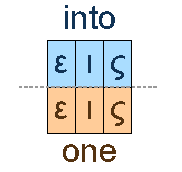
"εις" ≈ "into" and, in context, "against".
"εις" ≈ "one"
38. Cambridge Greek Lexicon: Lead away

From the Cambridge Greek Lexicon (volume 1, p. 158), the ancient Greek word
"ἀπάγω" ≈ "lead away". Only in the
GNT is the meaning that of
"lead".
Definitions 2 to 13 are narrowed meanings of primary meaning 1.
| 1. lead away |
8. divert, distract (jury, audience) |
| 2. drive or lead away (animals) |
9. bring, convey or guide back |
| 3. transport or take away |
10. lead back, withdraw |
| 4. take or go away |
11. recall, compel to withdraw |
| 5. remove or escort away |
12. pay tribute, send back (in return) |
| 6. arrest or deliver over |
13. take in/away (opinions, assertions) |
| 7. draw aside or back (archer) |
14. lead towards life or destruction (GNT) |
How does the English meaning of the verses
change if the usual definition of that Greek word is used? What is
the "life"? What is
the "loss"?
39. Matthew 7:13-14 Leadeth away
Matthew 7:13 Enter ye in at the strait gate: for wide is the gate, and broad is the way, that leadeth to destruction, and many there be which go in thereat: [kjv]
εισελθετε εισελθατε δια της στενης πυλης οτι πλατεια η πυλη και ευρυχωρος η οδος η απαγουσα εις την απωλειαν και πολλοι εισιν οι εισερχομενοι δι αυτης [gnt]
7:14 Because strait is the gate, and narrow is the way, which leadeth unto life, and few there be that find it. [kjv]
οτι στενη η πυλη και τεθλιμμενη η οδος η απαγουσα εις την ζωην και ολιγοι εισιν οι ευρισκοντες αυτην [gnt]
In both verses, the Greek word for
"lead away" is made up of two parts.
The prefix "ἀπο" ≈ "away from" which has an idea of a "separating distance".
The verb "άγω" ≈ "lead, go"
40. Matthew 7:13-14
Matthew 7:13 Enter ye in at the strait gate: for wide is the gate, and broad is the way, that leadeth to destruction, and many there be which go in thereat: [kjv]
εισελθετε εισελθατε δια της στενης πυλης οτι πλατεια η πυλη και ευρυχωρος η οδος η απαγουσα εις την απωλειαν και πολλοι εισιν οι εισερχομενοι δι αυτης [gnt]
intrate per angustam portam quia lata porta et spatiosa via quae ducit ad perditionem et multi sunt qui intrant per eam [v]
7:14 Because strait is the gate, and narrow is the way, which leadeth unto life, and few there be that find it. [kjv]
οτι στενη η πυλη και τεθλιμμενη η οδος η απαγουσα εις την ζωην και ολιγοι εισιν οι ευρισκοντες αυτην [gnt]
quam angusta porta et arta via quae ducit ad vitam et pauci sunt qui inveniunt eam [v]
41. Matthew 7:13-14 Abstraction
Matthew 7:13 Enter ye in at the strait gate: for wide is the gate, and broad is the way, that leadeth to destruction, and many there be which go in thereat: [kjv]
εισελθετε εισελθατε δια της στενης πυλης οτι πλατεια η πυλη και ευρυχωρος η οδος η απαγουσα εις την απωλειαν και πολλοι εισιν οι εισερχομενοι δι αυτης [gnt]
7:14 Because strait is the gate, and narrow is the way, which leadeth unto life, and few there be that find it. [kjv]
οτι στενη η πυλη και τεθλιμμενη η οδος η απαγουσα εις την ζωην και ολιγοι εισιν οι ευρισκοντες αυτην [gnt]
Let us paraphrase the two verses in a more abstract way.
7:13: ... broad is the way that leads away from into the destruction ...
7:14: ... scattered is the way that leads away from into the life ...
42. Aristotle
In his "
proof by contradiction", literally "
demonstration"
"into" the "
impossible", Aristotle uses the exact same two Greek words as Matthew 7:13 and 7:14 for
... leads away from into....
Aristotle calls it the method
"into" the "
impossible" since the syllogism technique does not work for proving a negation. Instead, one must go outside the system (i.e., away from the system) and reason that by negating the first part one can then do the proof and reason using negation.
Aristotle: ... demonstration by into the impossible is the way that leads away from into the impossible ...
7:13: ... broad is the way that leads away from into the destruction ...
7:14: ... scattered is the way that leads away from into the life ...
In the Sermon on the Mount, Jesus appears to often use nonverbal communication which is not reflected in what Matthew wrote down as Jesus was speaking the words.
43. Leading away from into the impossible
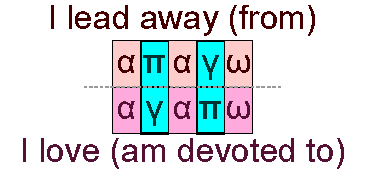
44. Devoted to leading away
45. Matthew 7:13 Enter through
Matthew 7:13 Enter ye in at the strait gate: for wide is the gate, and broad is the way, that leadeth to destruction, and many there be which go in thereat: [kjv]
εισελθετε εισελθατε δια της στενης πυλης οτι πλατεια η πυλη και ευρυχωρος η οδος η απαγουσα εις την απωλειαν και πολλοι εισιν οι εισερχομενοι δι αυτης [gnt]
The ancient Greek prefix
"διά" ≈ "through" as in the prefix of the English word
"diameter". Jesus uses the adjacent pairs of words for
"come/go in" and
"through/by" twice. It appears that one is in one place and going
"through" a
"gate" and then being in another place on the other side of the
"gate".
Is it the
same "gate" in both verses or are there
two different "gates"? Each
"gate" appears to
"lead" to a
different "way" or
"path" - one
"wide" and one
"scattered" or
"smashed".
How might
"entering in" relate to a
"way of life" or
"diet" of what Jesus wants one to do?
46. Matthew 7:13 Through the diet
Matthew 7:13 Enter ye in at the strait gate: for wide is the gate, and broad is the way, that leadeth to destruction, and many there be which go in thereat: [kjv]
εισελθετε εισελθατε δια της στενης πυλης οτι πλατεια η πυλη και ευρυχωρος η οδος η απαγουσα εις την απωλειαν και πολλοι εισιν οι εισερχομενοι δι αυτης [gnt]
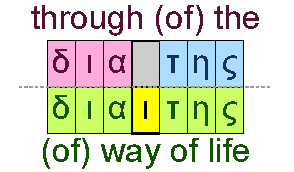
"διά" ≈ "through" (preposition)
"της" ≈ "(of) the" (genitive feminine singular)
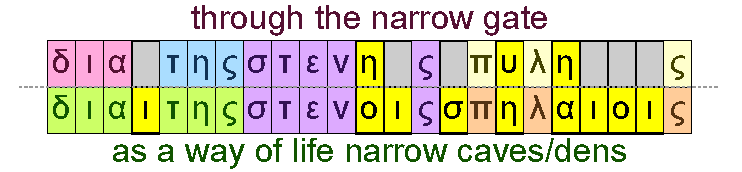
"δῐαίτης" ≈ "(of) way of life" (genitive feminine singular)
The Greek words for
"through" "(of) the" can be a play on words with
"(of) way of life". The English word
"diet" comes, through French, from the Latin word
"diaeta" ≈ "diet, regimen" (Medieval "
assembly") and which comes from the ancient Greek word
"δίαιτα" ≈ "way of living, residence, health regimen" and related meanings.
47. Pronouns
What is the most probable noun, "
gate" or "
treasure", to which the pronoun "
it" refers in each of the following sentence pairs?
The hidden gate leads towards the treasure and few find it.
The hidden gate leads away from the treasure and few find it.
Come/go through the narrow gate ... leads to destruction ... many come/go through it.
Come/go through the narrow gate ... leads away from destruction ... many come/go through it.
The pronoun such as
it does not always refer to the nearest noun.
Airplane:
There's a problem at the hospital. What is it? A big building with patients, but that's not important now.
Discuss: How should one address ambiguity in the text? How is the ambiguity made more difficult when the text is translated and then meaning is inferred (that might not be implied)?
48. Matthew 7:13 Gates and dens
Matthew 7:13 Enter ye in at the strait gate: for wide is the gate, and broad is the way, that leadeth to destruction, and many there be which go in thereat: [kjv]
εισελθετε εισελθατε δια της στενης πυλης οτι πλατεια η πυλη και ευρυχωρος η οδος η απαγουσα εις την απωλειαν και πολλοι εισιν οι εισερχομενοι δι αυτης [gnt]
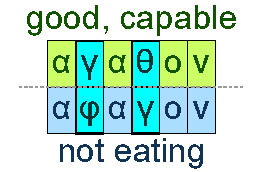
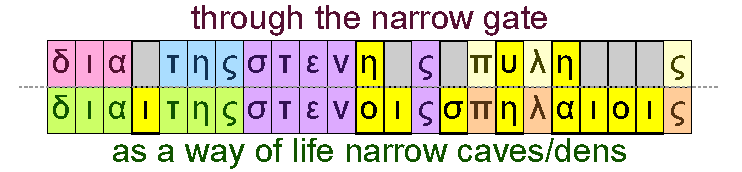
Slide the "
S" duplication and the similar sounding vowels.
[not eating]
"τῆς" ≈ "the" (feminine genitive singular)
"τοῖς" ≈ "the" (dative neuter plural)
"στενῆς" ≈ "narrow, tight" (feminine genitive singular)
"στενοῖς" ≈ "narrow, tight" (dative neuter plural)
"πύλης" ≈ "gate" (feminine genitive singular)
"σπηλαίοις" ≈ "the caves, dens, lairs" (dative neuter plural)
[sheep count, monastery fumigation]
49. Matthew 7:13 Fasting annoyance
Matthew 7:13 Enter ye in at the strait gate: … [kjv]
εισελθετε εισελθατε δια της στενης πυλης … [gnt]
Good: Enter through the narrow gate ...
Bad: Enter as a way of life narrow caves/dens ...
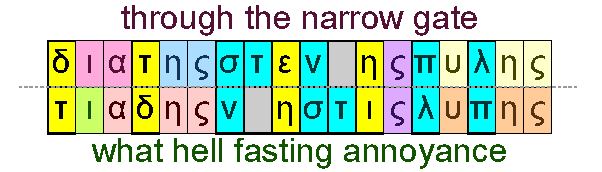
Ugly: Enter what hell fasting annoyance ...
The first word,
"εισελθατε" ≈ "enter (you)",
1 time in this form in the
GNT, has an ending hint of
Satan.
50. End of page