Send
Close Add comments:
(status displays here)
Got it! This site "creationpie.org" uses cookies. You consent to this by clicking on "Got it!" or by continuing to use this website. Note: This appears on each machine/browser from which this site is accessed.
Some witty remarks on laughing and humor
1. Some witty remarks on laughing and humor
2. Aristotle on humor
English:
Greek: ἔστιν δὲ καὶ τὰ ἀστεῖα τὰ πλεῖστα διὰ μεταφορᾶς καὶ ἐκ τοῦ προσεξαπατᾶν· μᾶλλον γὰρ γίγνεται δῆλον ὅ τι ἔμαθε παρὰ τὸ ἐναντίως ἔχειν, καὶ ἔοικεν λέγειν ἡ ψυχὴ ὡς ἀληθῶς, ἐγὼ δὲ ἥμαρτον. καὶ τῶν ἀποφθεγμάτων δὲ τὰ ἀστεῖά ἐστιν ἐκ τοῦ μὴ ὅ φησι λέγειν, οἷον τὸ Στησιχόρου, ὅτι οἱ τέττιγες ἑαυτοῖς χαμόθεν ᾄσονται. καὶ τὰ εὖ ᾐνιγμένα διὰ τὸ αὐτὸ ἡδέα μάθησις γάρ ἐστι καὶ μεταφορἄ, καὶ (ὃ λέγει Θεόδωρος) τὸ καινὰ λέγειν. γίγνεται δὲ ὅταν παράδοξον ᾖ, καὶ μή, ὡς ἐκεῖνος λέγει, πρὸς τὴν ἔμπροσθεν δόξαν, ἀλλʼ ὥσπερ ἐν τοῖς γελοίοις τὰ παραπεποιημένα (ὅπερ δύναται καὶ τὰ παρὰ γράμμα σκώμματα· ἐξαπατᾷ γάρ), καὶ ἐν τοῖς μέτροις· οὐ γὰρ ὥσπερ ὁ ἀκούων ὑπέλαβεν· ἔστειχε δʼ ἔχων ὑπὸ ποσσὶ χίμεθλα· ὁ δʼ ᾤετο πέδιλα ἐρεῖν. τούτου δʼ ἅμα λεγομένου δεῖ δῆλον εἶναι. τὰ δὲ παρὰ γράμμα ποιεῖ οὐχ ὃ λέγει λέγειν, ἀλλʼ ὃ μεταστρέφει ὄνομα, οἷον τὸ Θεοδώρου εἰς Νίκωνα τὸν κιθαρῳδὸν θράξει σε, προσποιεῖται γὰρ λέγειν τὸ Θρᾷξ εἶ σύ καὶ ἐξαπατᾷ· ἄλλο γὰρ λέγει. διὸ μαθόντι ἡδύ, ἐπεὶ εἰ μὴ ὑπολαμβάνει Θρᾷκα εἶναι, οὐ δόξει ἀστεῖον εἶναι. [11.6]
Art of Rhetoric. Book 3. Section 11.6.
3. Play on word jokes
A play on word joke usual has (at least) two parts.
A literal view which only needs to make plausible sense.
A play on word view which has some unexpected meaning (i.e., a surprise) that is not the literal view.
This difference (not what one expects, a surprise) is essential in such jokes.
4. Missing dog
Missing dog. If anyone sees her [Caesar], let us [lettuce] know.
Thanks a lot [think salad]. Before you toss it out, I know my salad jokes need addressing [a dressing]. With a little care, it [carrot] can be done. I love [olive] doing it. The salary [celery] is great. Until then, I'll play it [plate] safe and leave [leaf] it alone.
How does this dog salad joke relate to Bible verse analysis?
1. Number of the audience. 2. Gender of the dog. 3. Number of the owners.
5. Missing dog
Missing dog. If anyone sees her, let us know.
Sermon analysis analogy: (perhaps from a PhD dissertation)
The group being asked is plural to show how many need to hear the message of the lost dog.
The dog is female to show the importance of females (diversity, inclusion, etc.).
The group asking is plural to show the importance of the group rather than the individual. Better (bitter) together!
What is the reality of the statement?
If the number of the group asking and being asked is not plural, and if the dog is not female, the play on words joke does not work! That is, the joke is Biffed. Not funny: If you see him let me know.
6. Matthew 26:53 Laughing angels
Matthew 26:53 Thinkest thou that I can not now pray to my Father, and he shall presently give me more than twelve legions of angels? [kjv]
η δοκεις οτι ου δυναμαι αρτι παρακαλεσαι τον πατερα μου και παραστησει μοι πλειους η αρτι πλειω δωδεκα λεγεωνας λεγιωνας αγγελων [gnt]
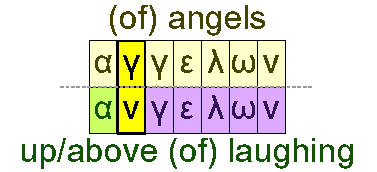
"ἄγγελων" ≈ "messengers, ones that announce" (genitive) (Persian word).
"ἀνα" ≈ "up, upwards" or "ἀν" ≈ "up, upwards" (prefix of many words).
"γελῶν" ≈ "laughing" (masculine/neuter singular active infinitive participle, contracted).
Today the Greek "
gg" sound is pronounced as "
ng" as in English
hunger,
angel, etc. In
ancient Greek it could be a double hard "
g" sound, one hard "
g" sound, or the "
ng" sound.
Is there
"laughter" in "
heaven"?
7. Psalms 2:4 Laughter in heaven
Psalms 2:4 He that sitteth in the heavens shall laugh: the Lord shall have them in derision. [kjv]
ο κατοικων εν ουρανοις εκγελασεται αυτους και ο κυριος εκμυκτηριει αυτους [lxx]
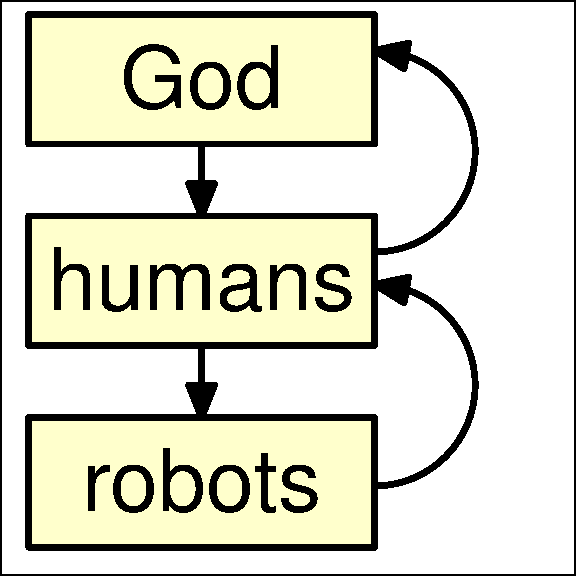
Do those in heaven (angels, etc.) laugh at human attempts to take over the world?
Who else might be talking? How would we view robots attempting to take over?
The Greek word translated as "
sitteth" is that of "
inhabit/dwell".
8. Some witty remarks on laughing and humor
Ephesians 5:4 Neither filthiness, nor foolish talking, nor jesting, which are not convenient: but rather giving of thanks. [kjv]
και αισχροτης και μωρολογια η ευτραπελια τα α ουκ ανηκοντα ανηκεν αλλα μαλλον ευχαριστια [gnt]
This content is about laughing and humor in general and witty humor in particular.
Paul makes an interesting remark on "
witty humor" in Ephesians 5:4. In context, the intended meaning is not clear as it depends on the (ambiguous) way in which the sentence is parsed.
9. Ephesians 5:4
KJV: Neither filthiness, nor foolish talking, nor jesting, which are not convenient: but rather giving of thanks.
Greek: και αισχροτης και μωρολογια η ευτραπελια τα α ουκ ανηκοντα ανηκεν αλλα μαλλον ευχαριστια
10. Laugh-in
A network TV comedy show from 1968 until 1973 was Rowan and Martin's Laugh-in. It featured Dan Rowan and Dick Martin.
The one-time 1967 show was so popular, it was brought back and replaced "
The man from U.N.C.L.E." on Monday night at 8 PM.
In suffix "
-in" was a play on the hippie and counter culture movements at the time with terms such as "
sit-in", "
be-in", "
love-in", etc.
11. Laughing all the way
The
Christmas song "
Jingle bells", written for
Thanksgiving, has a line about "
laughing".
Dashing through the snow,
in a one-horse open sleigh
O'er the fields we go,
laughing all the way
[West Point, laughing all the way]
12. Rudolph and laughing
Rudolph, the red-nosed reindeer had to deal with laughing. The popular animated feature (55 minutes) is from 1964.
What was the name of the other reindeer that laughed and called Rudolph names?
Olive, the other reindeer.
Hermey (who wants to be a dentist): "
This won't hurt a bit".
13. Reflexive laughing
An example of a
reflexive rule is the following.
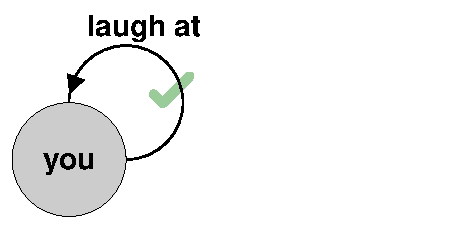
It is good to be able to laugh at oneself.
Have you heard that being able to laugh at yourself may help
lengthen your life?
Here, the "
laugh at" relation is applied
reflexively to itself. That is, relating "
laugh at" from "
you" to "
you".
14. Not reflexive laughing
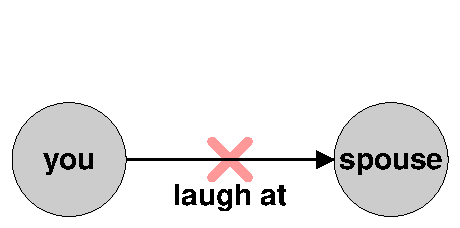
Have you heard that laughing at your spouse may help
shorten your life?
Here, the "
laugh at" relation is not applied reflexively.
15. Belly laugh
A "
belly laugh" can make one's entire body shake.
January 24 is "
Belly laugh day".
16. Laughing to tears
17. Xenophon
Here is a line from Xenophon, Hell. 7.2,9, which has an allusion to the Iliad (vi., 484). The time period is 369 B.C.
English:
Then one might have beheld the men congratulating one another with handclasps on their preservation, and the women bringing them drink and at the same time crying for joy. Indeed, “laughter mingled with tears” did on that occasion really possess all who were present.
Greek:
ἔνθα δὴ θεάσασθαι παρῆν ἐπὶ τῆς σωτηρίας τοὺς μὲν ἄνδρας δεξιουμένους ἀλλήλους, τὰς δὲ γυναῖκας πιεῖν τε φερούσας καὶ ἅμα χαρᾷ δακρυούσας· πάντας δὲ τοὺς παρόντας τότε γε τῷ ὄντι κλαυσίγελως εἶχεν.
https://anastrophe.uchicago.edu/cgi-bin/perseus/citequery3.pl?dbname=GreekNov21&query=Xen.%20Hell.%207.2.9 (as of 2023-02-21)
18. Biblical laughing
The Bible has numerous other references about laughing.
19. Scornful laughing
When the daughter of the ruler of the synagogue became dead, Jesus brings here to life. She is referred to as "
Talitha" meaning "
Damsel". The people there
laugh at what he claims to have done. The story is recorded in Matthew, Mark and Luke. That is, the Synoptic Gospels.
Matthew 9:24 … for the maid is not dead, but sleepeth. And they laughed him to scorn. [kjv]
λεγει αυτοις ελεγεν αναχωρειτε ου γαρ απεθανεν το κορασιον αλλα καθευδει και κατεγελων αυτου [gnt]
Mark 5:40 And they laughed him to scorn. … [kjv]
και κατεγελων αυτου ο αυτος δε εκβαλων απαντας παντας παραλαμβανει τον πατερα του παιδιου και την μητερα και τους μετ αυτου και εισπορευεται οπου ην το παιδιον ανακειμενον [gnt]
Luke 8:53 And they laughed him to scorn, knowing that she was dead. [kjv]
και κατεγελων αυτου ειδοτες οτι απεθανεν [gnt]
The modern Greek word
"κοιμητήρια" (kee-mee-TEE-ree-a) ≈ "cemetery" but the ancient Greek word meant "
sleep".
20. Sleeping dead
Note that Jesus refers to dead Lazarus as "
sleeping". A place where the dead sleep is called a "
cemetery"
John 11:11 These things said he: and after that he saith unto them, Our friend Lazarus sleepeth; but I go, that I may awake him out of sleep. [kjv]
ταυτα ειπεν και μετα τουτο λεγει αυτοις λαζαρος ο φιλος ημων κεκοιμηται αλλα πορευομαι ινα εξυπνισω αυτον [gnt]
… somno exsuscitem … [v]
Jesus uses the "
euphemism" (or code word) of "
sleep" meaning "
dead". The
KJV (King James Version) adds "
out of sleep" which is implied in the Greek but not actually there. The Latin word
"somno" ≈ "sleep".
The ancient Greek word
"κοιμητήριον " ≈ "sleeping place" and the source, through Latin, of "
cemetery".
21. John 11:11
KJV: These things said he: and after that he saith unto them, Our friend Lazarus sleepeth; but I go, that I may awake him out of sleep.
Greek: ταυτα ειπεν και μετα τουτο λεγει αυτοις λαζαρος ο φιλος ημων κεκοιμηται αλλα πορευομαι ινα εξυπνισω αυτον
Latin: haec ait et post hoc dicit eis Lazarus amicus noster dormit sed vado ut a somno exsuscitem eum
22. Matthew 9:24
KJV: He said unto them, Give place: for the maid is not dead, but sleepeth. And they laughed him to scorn.
Greek: λεγει αυτοις ελεγεν αναχωρειτε ου γαρ απεθανεν το κορασιον αλλα καθευδει και κατεγελων αυτου
23. Mark 5:40
KJV: And they laughed him to scorn. But when he had put them all out, he taketh the father and the mother of the damsel, and them that were with him, and entereth in where the damsel was lying.
Greek: και κατεγελων αυτου ο αυτος δε εκβαλων απαντας παντας παραλαμβανει τον πατερα του παιδιου και την μητερα και τους μετ αυτου και εισπορευεται οπου ην το παιδιον ανακειμενον
24. Luke 8:53
KJV: And they laughed him to scorn, knowing that she was dead.
Greek: και κατεγελων αυτου ειδοτες οτι απεθανεν
25. Strongs - laugh to scorn
*G2606 *3 καταγελάω (kat-ag-el-ah'-o) : to laugh down, i.e. deride:--laugh to scorn.
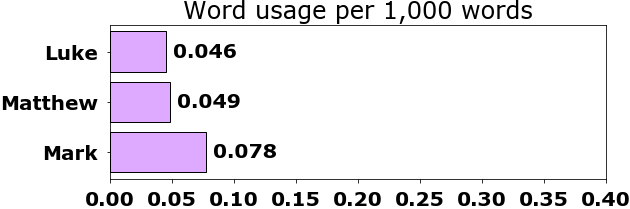 |
Words: κατεγελων=3
|
The
ancient Greek word
"καταγελάω" ≈ "laugh to scorn".
26. Usage - laugh to scorn
- *G2606 *3 καταγελάω (kat-ag-el-ah'-o) : to laugh down, i.e. deride:--laugh to scorn.
κατεγελων *3
Matthew 9:24 ... sleepeth. And they laughed him to scorn.
Mark 5:40 And they laughed him to scorn. But when he had put them ...
Luke 8:53 And they laughed him to scorn, knowing that she was dead.
27. Strongs - laugh
- *G2606 *3 καταγελάω (kat-ag-el-ah'-o) : to laugh down, i.e. deride:--laugh to scorn.
κατεγελων *3
Matthew 9:24 ... sleepeth. And they laughed him to scorn.
Mark 5:40 And they laughed him to scorn. But when he had put them ...
Luke 8:53 And they laughed him to scorn, knowing that she was dead.
28. Usage - laugh
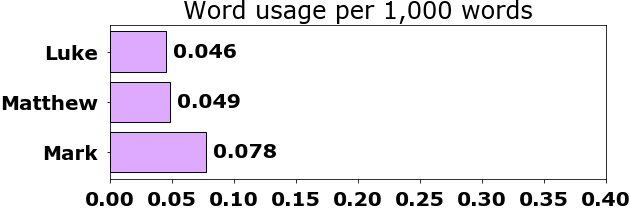 |
Words: κατεγελων=3
|
29. Strongs - laugh
*G1070 *2 γελάω (ghel-ah'-o) : of uncertain affinity; to laugh (as a sign of joy or satisfaction):--laugh.
*G1071 *1 γέλως (ghel'-os) : from G1070 γελάω; laughter (as a mark of gratification):--laughter.
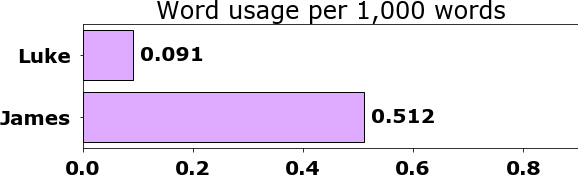 |
Words: γελασετε γελωντες γελως
|
30. Usage - laugh
- *G1070 *2 γελάω (ghel-ah'-o) : of uncertain affinity; to laugh (as a sign of joy or satisfaction):--laugh.
- *G1071 *1 γέλως (ghel'-os) : from G1070 γελάω; laughter (as a mark of gratification):--laughter.
31. Weeping and laughing
Matthew 5:7 Blessed are the merciful: for they shall obtain mercy. [kjv]
μακαριοι οι ελεημονες οτι αυτοι ελεηθησονται [gnt]
The fifth Beatitude in Matthew about
"mercy" has a Greek word that relates to making sounds which could be "
weeping" or "
laughing" or some other sound. The following Beatitude in Luke is
not in Matthew.
Luke 6:21 Blessed are ye that hunger now: for ye shall be filled. Blessed are ye that weep now: for ye shall laugh. [kjv]
μακαριοι οι πεινωντες νυν οτι χορτασθησεσθε μακαριοι οι κλαιοντες νυν οτι γελασετε [gnt]
- Is it a different Beatitude?
- Is it a re-stating of a Beatitude in Matthew but not as precise or as remembered and written down?
32. Ecclesiastes 3:4 Time to weep and laugh
Ecclesiastes 3:4 A time to weep, and a time to laugh; a time to mourn, and a time to dance; [kjv]
καιρος του κλαυσαι και καιρος του γελασαι καιρος του κοψασθαι και καιρος του ορχησασθαι [lxx]
The ancient Greek word
"γέλως" ≈ "laugh". The modern Greek word
"γέλως" (Y-los) ≈ "laughing".
The Greek word used here for "
dance" is the source of the English word
"orchestra".
- There is a time to weep.
- There is a time to laugh.
33. Laugh
Proverbs 1:26 I also will laugh at your calamity; I will mock when your fear cometh; [kjv]
τοιγαρουν καγω τη υμετερα απωλεια επιγελασομαι καταχαρουμαι δε ηνικα αν ερχηται υμιν ολεθρος [lxx]
therefore I also will laugh at your destruction; and I will rejoice against you when ruin comes upon you: [bs3]
The Greek word translated as "
ruin" is that of "
not" "
victory" as in opposite of "
victory".
34. Witty humor
Ephesians 5:4 Neither filthiness, nor foolish talking, nor jesting, which are not convenient: but rather giving of thanks. [kjv]
και αισχροτης και μωρολογια η ευτραπελια τα α ουκ ανηκοντα ανηκεν αλλα μαλλον ευχαριστια [gnt]
What type of "
jesting" does Paul frown on? One could guess. What does the Greek mean in general? What might the Greek mean in this context?
The ancient Greek word
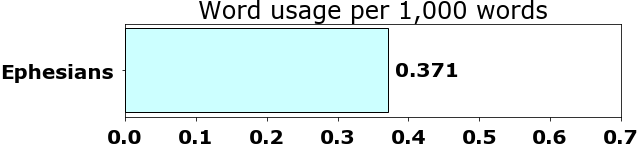
"εὐτραπελία" ≈ "witty humor" as in being jovial and lively. A rare meaning is that of using profanity. Does the context of Paul's statements support this meaning?
35. Witty humor
The ancient Greek word
"εὐτράπελος" ≈ "witty humor" and comes from two Greek words.
- The ancient Greek word "εὖ" ≈ "good".
- The ancient Greek word "τρέπω" ≈ "turn, divert" and, in conversation, to "change someone's mind".
Somehow these words were combined to get "
witty humor". The word in modern Greek has narrowed to this less negative meaning. There are other words for "
crude humor" (below).
Somehow, the
KJV translates the word as "
jesting" and Strongs defines it as "
crude joking".
36. Strongs - jesting