Send Close Add comments: (status displays here)
Got it!  This site "creationpie.org" uses cookies. You consent to this by clicking on "Got it!" or by continuing to use this website.  Note: This appears on each machine/browser from which this site is accessed.
A hundred ways to have it together
by RS  admin@creationpie.org : 1024 x 640


1. A hundred ways to have it together

2. A hundred ways to have it together
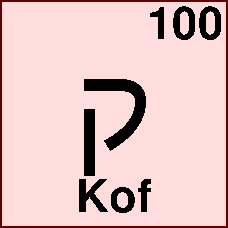
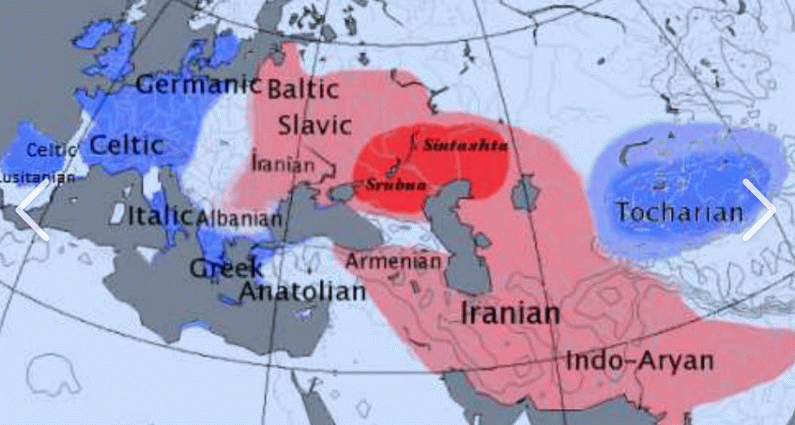
Jesus uses the Greek word for "hundred", as in the number 100, four times in Matthew. It is used 17 times in the GNT (Greek New Testament) and 193 times in the LXX (Septuagint). The ancient Greek word "ἑκατόν""hundred" and is cognate with the English word "hundred" and the Latin word "centum""hundred" and many other PIE (Proto Indo-European) languages. The English word "hectometer" is a hundred meters.

3. Selected Roman military units
Unit Number Latin Greek
Legion 5000 legio λεγεών
Cohort 500 cohortis σπεῖρα
Century 80 centuria κεντύριον
Numbers are approximate as military unit size has historically varied (for the same unit in the same country) over time.

4. Strongs - hundred
*G1540 *17 ἑκατόν (hek-at-on') : of uncertain affinity; a hundred:--hundred.
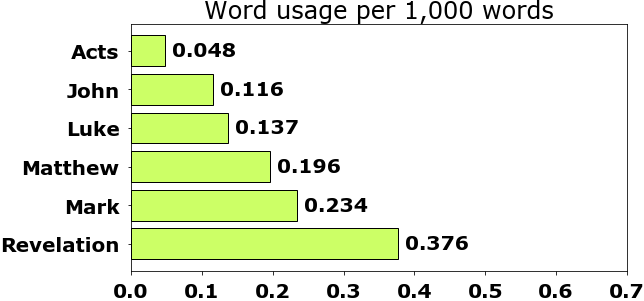
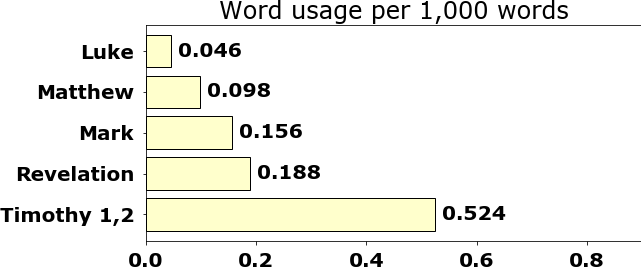
Word usage per chapter Words: εκατον=17

The ancient Greek word "ἑκατόν""hundred" (cardinal). The KJV (King James Version) (and other) translation sometimes translates this as "hundredfold" even though the Greek word is just "hundred".

5. Usage - hundred
  • *G1540 *17 ἑκατόν (hek-at-on') : of uncertain affinity; a hundred:--hundred.
  •  Usage 
     All 
       εκατον *17  of 17
          Matthew 13:8 ... brought forth fruit, some an hundredfold, some sixtyfold, some thirtyfold.
          Matthew 13:23 ... and bringeth forth, some an hundredfold, some sixty, some thirty.
          Matthew 18:12 ... a man have an hundred sheep, and one ...
          Matthew 18:28 ... which owed him an hundred pence: and he laid hands ...
          Mark 4:8 ... sixty, and some an hundred.
          Mark 4:20 ... sixty, and some an hundred.
          Mark 6:40 And they sat down in ranks, by hundreds, and by fifties.
          Luke 15:4 ... of you, having an hundred sheep, if he lose ...
          Luke 16:6 And he said, An hundred measures of oil. And ...
          Luke 16:7 ... thou? And he said, An hundred measures of wheat. And ...
          John 19:39 ... and aloes, about an hundred pound weight.
          John 21:11 ... full of great fishes, an hundred and fifty and three: and for all there were ...
          Acts 1:15 ... together were about an hundred and twenty,)
          Revelation 7:4 ... of them which were sealed: and there were sealed an hundred and forty and four thousand ...
          Revelation 14:1 ... and with him an hundred forty and four thousand, ...
          Revelation 14:3 ... that song but the hundred and forty and four thousand, ...
          Revelation 21:17 And he measured the wall thereof, an hundred and forty and four cubits, ...

6. Equivalence relations
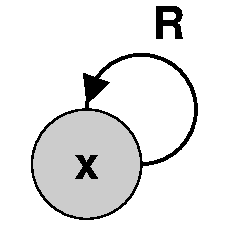
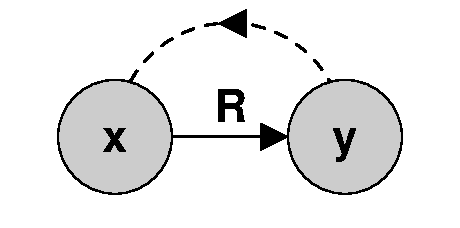
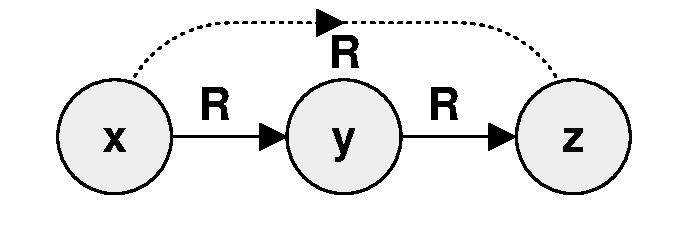
A relation R on set A is an equivalence relation if the following properties hold.

Reflexive x and R Symmetric x y and R Transitive x y z and R
1. Reflexive:
xA : x R x
2. Symmetric:
x, yA : x R yy R x
3. Transitive:
x, y, zA : x R yy R zx R z

Equivalence classes reduce the amount of information that must be considered when working with properties of the set A. An equivalence class induces equivalence sets on a set, provided a suitable relation R can be defined. If a suitable relation R cannot be defined, there are only two conclusions.

7. Play on words
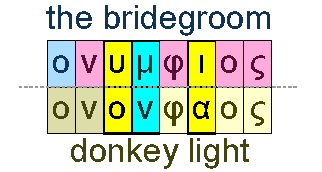
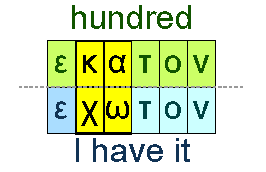
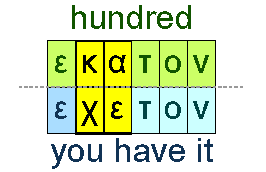
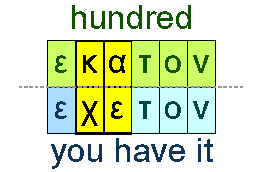
Hundred and I have it Hundred and you have it

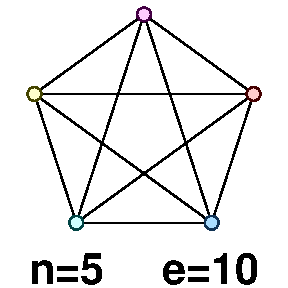
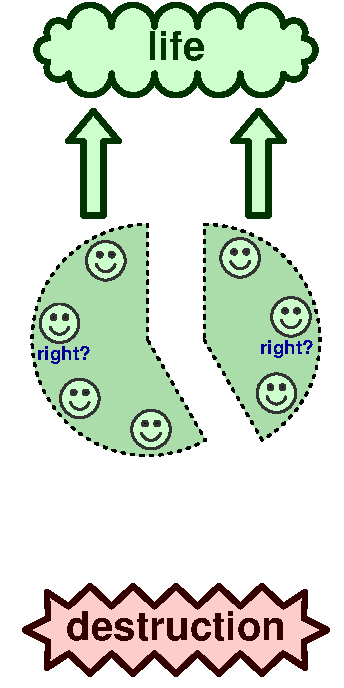
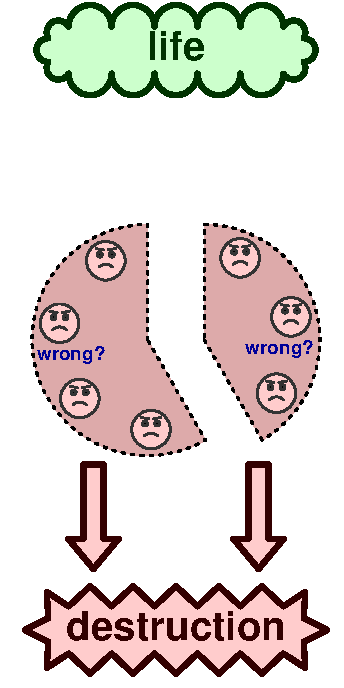
If everyone in a group or set of members says "(I) have" "it" and "(you) have" "it" then (if true) the relation on "it" is reflexive, symmetric and transitive (by induction) and thus forms an equivalence relation and induces an equivalence set (of the entire group). Note that the reasoning only requires the "(you) have" "it" (imperative) within the group.

How well does this play on words fit for the times when Jesus uses the word for "hundred"?

That is, does the "hundred" refer to a group that has some relation, called "it", that holds for the entire group (member by member)?

8. Matthew 19:29 Much sand
Matthew 19:29 And every one that hath forsaken houses, or brethren, or sisters, or father, or mother, or wife, or children, or lands, for my name's sake, shall receive an hundredfold, and shall inherit everlasting life. [kjv]
και πας οστις αφηκεν οικιας η αδελφους η αδελφας η πατερα η μητερα η τεκνα η αγρους ενεκεν του εμου ονοματος πολλαπλασιονα λημψεται και ζωην αιωνιον κληρονομησει [gnt]

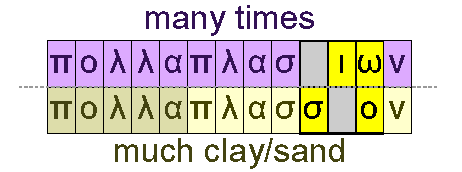
Many times and much clay/sand

Note that this verse shows that there a way to say "many times" or "manifold times" in an abstract sense. Jesus says it.

One can do things in the "name" of Jesus. One can also deceive in the "name" of Jesus. One may be good. One is not good. It can be hard to determine the difference.

9. Matthew 13:8 One the one hand a hundred
Matthew 13:8 But other fell into good ground, and brought forth fruit, some an hundredfold, some sixtyfold, some thirtyfold. [kjv]
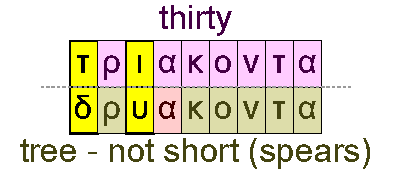
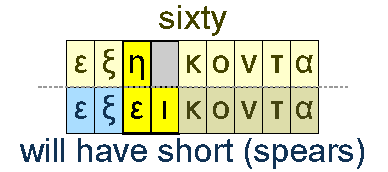
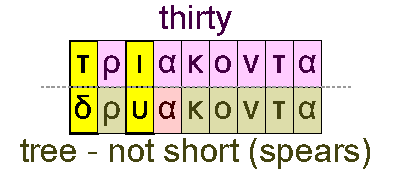
αλλα δε επεσεν επι την γην την καλην και εδιδου καρπον ο μεν εκατον ο δε εξηκοντα ο δε τριακοντα [gnt]
terram bonamfructumcentesimumsexagesimumtricesimum [v]

The ancient Greek word "ἑκατόν""hundred" (cardinal). The KJV (and other) translation sometimes translates this as "hundredfold" even though the Greek word is just "hundred".

The Latin word "centesimus""hundredth" and appears to be the origin of the English adding "fold" or "times" to the Greek "hundred". This "fold" or "times" was then used in other verses even when the Latin has just the number "hundred".

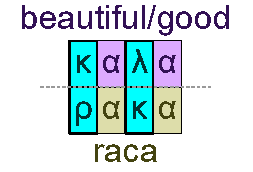
Note that the play on words of the Greek "good" with "raca" (not doing what the council wants when it conflicts with what Jesus wants) is lost in the Latin word for "good" as "bonam""good" as in the English word "bona fide".

Information sign More: Matthew 13:3-23 KP1 Parable of the sower

10. Matthew 13:8 On many hands
Matthew 13:8 But other fell into good ground, and brought forth fruit, some an hundredfold, some sixtyfold, some thirtyfold. [kjv]
αλλα δε επεσεν επι την γην την καλην και εδιδου καρπον ο μεν εκατον ο δε εξηκοντα ο δε τριακοντα [gnt]

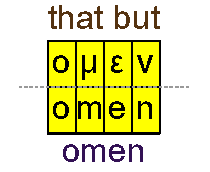
Are the numbers a time sequence of events? Could these be happening at the same time (e.g., in different places or hands). Does using the Greek meaning of "on the one hand" change usual meaning of the verse? Does the play on words with Latin "omen" have any meaning here? With the modified meaning (i.e., declarative statements), does it matter that Mark reverses the order of the numbers?

Information sign More: Omens on the one hand
Information sign More: Matthew 13:3-23 KP1 Parable of the sower

11. Translations
Matthew 13:8 But other fell into good ground, and brought forth fruit, some an hundredfold, some sixtyfold, some thirtyfold. [kjv]
αλλα δε επεσεν επι την γην την καλην και εδιδου καρπον ο μεν εκατον ο δε εξηκοντα ο δε τριακοντα [gnt]

Note: The "fold" or "times" is not in the Greek and needs to be assumed. Even the Berean Literal Bible includes it.

NIV (New International Version): Still other seed fell on good soil, where it produced a crop—a hundred, sixty or thirty times what was sown.

NLT (New Living Translation): Still other seeds fell on fertile soil, and they produced a crop that was thirty, sixty, and even a hundred times as much as had been planted!

Berean Literal Bible: And others fell upon the good soil and were giving fruit—some indeed a hundredfold, and some sixty, and some thirty.

Information sign More: Matthew 13:3-23 KP1 Parable of the sower

12. Matthew 13:23 Word bearing
Matthew 13:23 But he that received seed into the good ground is he that heareth the word, and understandeth it; which also beareth fruit, and bringeth forth, some an hundredfold, some sixty, some thirty. [kjv]
ο δε επι την καλην γην σπαρεις ουτος εστιν ο τον λογον ακουων και συνιεις ος δη καρποφορει και ποιει ο μεν εκατον ο δε εξηκοντα ο δε τριακοντα [gnt]

The ancient Greek word "καρπός""fruit" and is related to the English word "harvest". What is the difference between the following? The ancient Greek word "καρποφορέω""carry fruit, fertile, bear fruit".

The modern Greek word "καρποφορέω" (kar-po-fo-REH-o) ≈ "bear fruit" which is a narrowed meaning from what was decided for the meaning of the word in the GNT.

Information sign More: Matthew 13:3-23 KP1 Parable of the sower

13. Matthew 13:23 Word bearing
Matthew 13:23 But he that received seed into the good ground is he that heareth the word, and understandeth it; which also beareth fruit, and bringeth forth, some an hundredfold, some sixty, some thirty. [kjv]
ο δε επι την καλην γην σπαρεις ουτος εστιν ο τον λογον ακουων και συνιεις ος δη καρποφορει και ποιει ο μεν εκατον ο δε εξηκοντα ο δε τριακοντα [gnt]

The modern Greek word "δορυφόρος" (tho-ree-FO-ros) ≈ "satellite".

Information sign More: Matthew 13:3-23 KP1 Parable of the sower

14. Matthew 13:23 Bear play
Matthew 13:23 But he that received seed into the good ground is he that heareth the word, and understandeth it; which also beareth fruit, and bringeth forth, some an hundredfold, some sixty, some thirty. [kjv]
ο δε επι την καλην γην σπαρεις ουτος εστιν ο τον λογον ακουων και συνιεις ος δη καρποφορει και ποιει ο μεν εκατον ο δε εξηκοντα ο δε τριακοντα [gnt]

The modern Greek word "φόρεμα" (FO-reh-ma) ≈ "dress (clothing)" from the ancient Greek word "φόρημα""that which is carried, worn" from "φορέω""bear carry, wear". The ancient Greek word "φόρος""tribute, tax" from "φέρω""bring, bear, carry". Thus, there are several play on words here. The birds may use the "millstone deception" where the goat (or sheep) owes a 100 of "through a lamb" but, in reality, it is 100 of "through a bird"

Making a play on words with the Greek word for bear is reasonable and might be called, "bear play"!

Information sign More: Matthew 13:3-23 KP1 Parable of the sower

15. Matthew 13:23 Good ground
Matthew 13:23 But he that received seed into the good ground is he that heareth the word, and understandeth it; which also beareth fruit, and bringeth forth, some an hundredfold, some sixty, some thirty. [kjv]
ο δε επι την καλην γην σπαρεις ουτος εστιν ο τον λογον ακουων και συνιεις ος δη καρποφορει και ποιει ο μεν εκατον ο δε εξηκοντα ο δε τριακοντα [gnt]

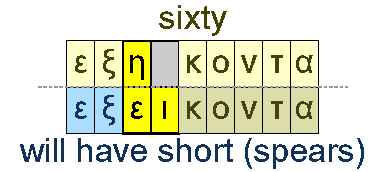
Greek: the one then (that) on the good [raca] ground (is) seeded is the one (who) the reasoning hears (with understanding) and understands then as (he) carries fruit and (he) makes/creates (he) on the one hand hundred [according to it - reasoning] (he) on the other hand sixty [shadow - short (speer)] (he) on another hand thirty [not three/tree - short (speer)].

How did the Greek change from attributes about the one (third person singular) to a generalization about many (some)? For some it is then a time-sequence of events for different groups.

Information sign More: Matthew 13:3-23 KP1 Parable of the sower

16. Matthew 13:23 Good ground
Matthew 13:23 But he that received seed into the good ground is he that heareth the word, and understandeth it; which also beareth fruit, and bringeth forth, some an hundredfold, some sixty, some thirty. [kjv]
ο δε επι την καλην γην σπαρεις ουτος εστιν ο τον λογον ακουων και συνιεις ος δη καρποφορει και ποιει ο μεν εκατον ο δε εξηκοντα ο δε τριακοντα [gnt]

There are no specific units on the numbers. To what does each number refer? Is it the same or different attributes?

The "good" [raca] produces three variations of "carried-fruit" (in the same person).

17. Matthew 13:23 Latin hands
Matthew 13:23 But he that received seed into the good ground is he that heareth the word, and understandeth it; which also beareth fruit, and bringeth forth, some an hundredfold, some sixty, some thirty. [kjv]
ο δε επι την καλην γην σπαρεις ουτος εστιν ο τον λογον ακουων και συνιεις ος δη καρποφορει και ποιει ο μεν εκατον ο δε εξηκοντα ο δε τριακοντα [gnt]
qui vero in terra bona seminatus est hic est qui audit verbum et intellegit et fructum adfert et facit aliud quidem centum aliud autem sexaginta porro aliud triginta [v]

The Latin has just numbers, just as the Greek. The English decides to add "fold" or "times".

The Latin word "aliud""other, another, else, different" (nominative/accusative/vocative neuter singular) of "alius""other, another, else, different". It is sometimes used as the "on the one hand" and "on the other hand"

Information sign More: Matthew 13:3-23 KP1 Parable of the sower

18. Matthew 13:23 Wessex and Wycliffe
Matthew 13:23 But he that received seed into the good ground is he that heareth the word, and understandeth it; which also beareth fruit, and bringeth forth, some an hundredfold, some sixty, some thirty. [kjv]
ο δε επι την καλην γην σπαρεις ουτος εστιν ο τον λογον ακουων και συνιεις ος δη καρποφορει και ποιει ο μεν εκατον ο δε εξηκοντα ο δε τριακοντα [gnt]
gode landwordwaestme bringðsum hund-fealdne. sum sixtig-fealdne. sum þrittig-fealdne. [wes]
sowungood loondherithwordvnderstondethbryngithfruytsummehundrid foldanothir sixti foldanother thritti fold. [wy]


Information sign More: Matthew 13:3-23 KP1 Parable of the sower

19. Matthew 13:23 Gematria
Matthew 13:23 But he that received seed into the good ground is he that heareth the word, and understandeth it; which also beareth fruit, and bringeth forth, some an hundredfold, some sixty, some thirty. [kjv]
ο μεν εκατον ο δε εξηκοντα ο δε τριακοντα [gnt]

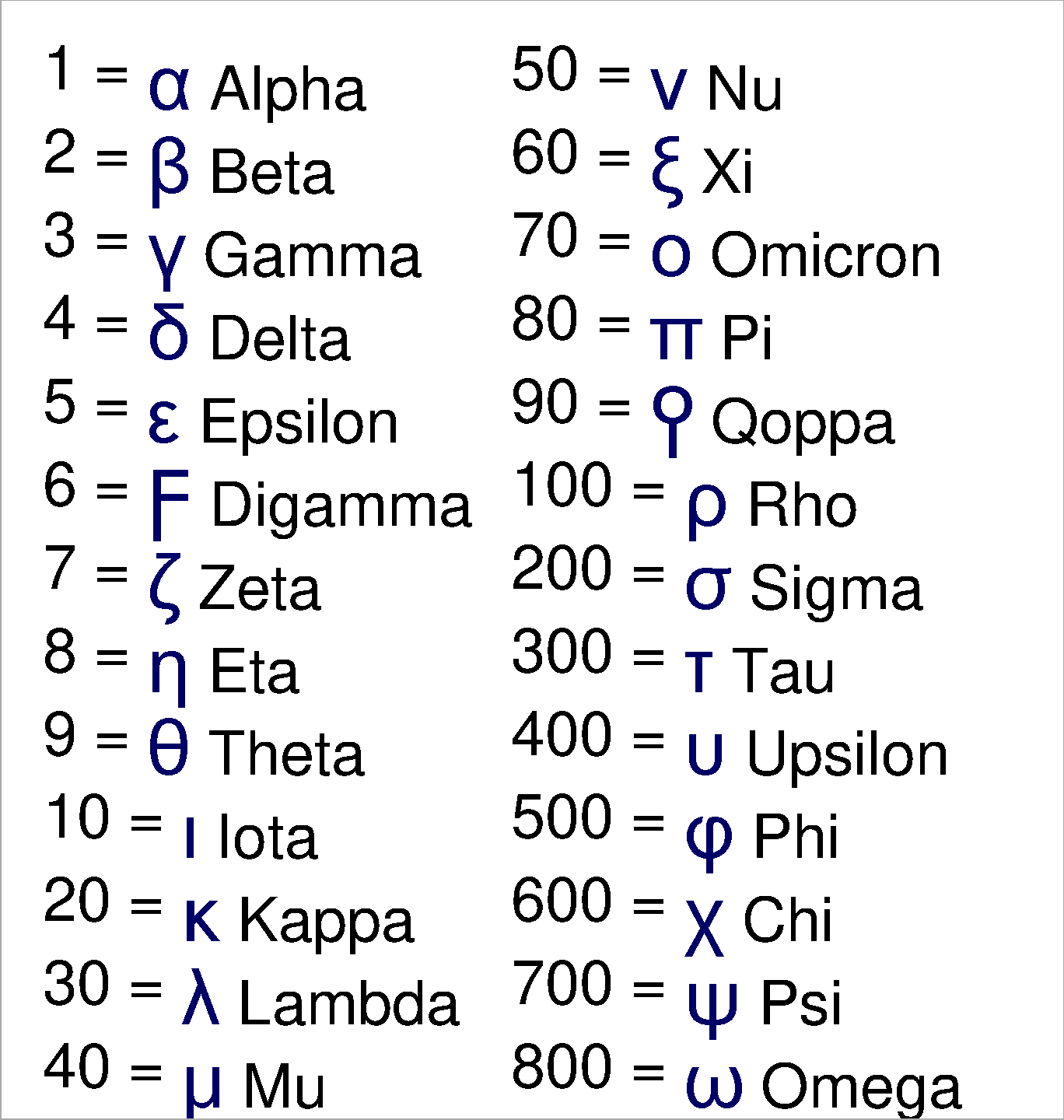
Greek gematriaGreek, like Hebrew, associated letters with numbers. The study of this is called gematria. The most famous instance of gematria is the 666 from Revelation 13. Any gematria meaning of 100, 60 and 30 is not clear but may indicate some interesting connections.

Keep in mind that the historical connection of this parable is that of the time of Jesus in Judea where the Romans ruled and had let Herod (and descendent's) have some local rule.

Information sign More: Matthew 13:3-23 KP1 Parable of the sower

20. Gematria of decreasing yields
SPQRThe symbol of Rome, the ruling power of the world at that time, in letters was SPQR (Senatus Populusque Romanus) (as an initialism) from the Latin phrase "senātus populusque rōmānus""The Roman Senate and People".

Gematria
value upper lower letter connection
100 Ρ ρ rho R for "Rome" (Latin and Greek)
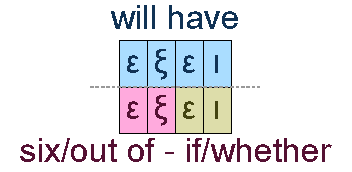
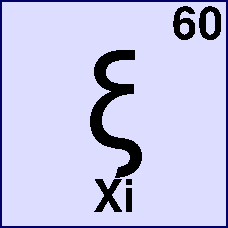
60 Ξ ξ ski (composite letter KS)
Κ κ kappa K for "and" (Greek)
Σ σ sigma S for "Senate" (Latin)
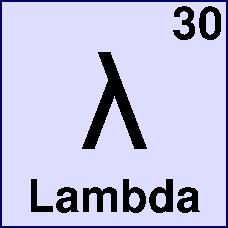
30 Λ λ lambda L for "people" (Greek)
This is just one of many possible gematria connections.

21. Matthew and Mark
Matthew 13:23 But he that received seed into the good ground is he that heareth the word, and understandeth it; which also beareth fruit, and bringeth forth, some an hundredfold, some sixty, some thirty. [kjv]
ο δε επι την καλην γην σπαρεις ουτος εστιν ο τον λογον ακουων και συνιεις ος δη καρποφορει και ποιει ο μεν εκατον ο δε εξηκοντα ο δε τριακοντα [gnt]

Mark 4:8 And other fell on good ground, and did yield fruit that sprang up and increased; and brought forth, some thirty, and some sixty, and some an hundred. [kjv]
και αλλα επεσεν εις την γην την καλην και εδιδου καρπον αναβαινοντα και αυξανομενα και εφερεν εις εν τριακοντα και εν εξηκοντα και εν εκατον [gnt]

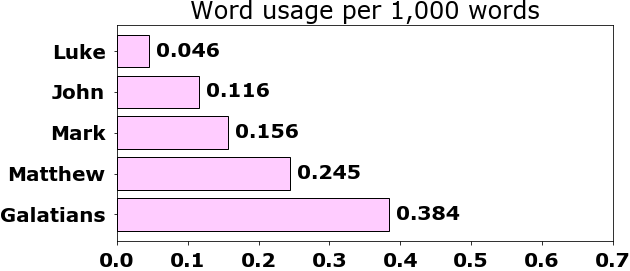
Mark repeats some of what Matthew writes but also changes and adds some things. Many details in Matthew are not in Mark (or Luke). Note the order of the numbers. Discuss:

22. Matthew 18:12 Hundred sheep
Matthew 18:12 How think ye? if a man have an hundred sheep, and one of them be gone astray, doth he not leave the ninety and nine, and goeth into the mountains, and seeketh that which is gone astray? [kjv]
τι υμιν δοκει εαν γενηται τινι ανθρωπω εκατον προβατα και πλανηθη εν εξ αυτων ουχι αφησει τα ενενηκοντα εννεα επι τα ορη και πορευθεις ζητει το πλανωμενον [gnt]
centum ovesnonaginta novem … [v]

The ancient Greek word "ἑκατόν""hundred" (cardinal number). The Latin word "centum""hundred".

Are these "sheep" all "together" as a group?

Information sign More: Matthew 18:12-14 Sheep astray downward from the mountains

23. Matthew 18:28 Hundred
Matthew 18:28 But the same servant went out, and found one of his fellowservants, which owed him an hundred pence: and he laid hands on him, and took him by the throat, saying, Pay me that thou owest. [kjv]
εξελθων δε ο δουλος εκεινος ευρεν ενα των συνδουλων αυτου ος ωφειλεν αυτω εκατον δηναρια και κρατησας αυτον επνιγεν λεγων αποδος ει τι οφειλεις [gnt]

The ancient Greek word "ἑκατόν""hundred" and is cognate with the English word "hundred" and the Latin word "centum""hundred" and many other PIE languages.

This, by analogy and projection, is the "millstone" "deception/entrapment".

This servant, is told that he owns a "hundred", as a group together, as if it is "through a lamb" but, in actuality, it is "through a bird" that is for the benefit of the unforgiving servant.

Information sign More: Matthew 18:23-35 Parable of the unforgiving servant

24. End of page

by RS  admin@creationpie.org : 1024 x 640