Send Close Add comments: (status displays here)
Got it!  This site "creationpie.org" uses cookies. You consent to this by clicking on "Got it!" or by continuing to use this website.  Note: This appears on each machine/browser from which this site is accessed.
Matthew 6:28-31 Lilies of the field
by RS  admin@creationpie.org : 1024 x 640


1. Matthew 6:28-31 Lilies of the field
This content is being developed.

2. Matthew 6:28-31 Lilies of the field
Matthew 6:28 And why take ye thought for raiment? Consider the lilies of the field, how they grow; they toil not, neither do they spin: [kjv]

6:29 And yet I say unto you, That even Solomon in all his glory was not arrayed like one of these. [kjv]

6:30 Wherefore, if God so clothe the grass of the field, which to day is, and to morrow is cast into the oven, shall he not much more clothe you, O ye of little faith? [kjv]


3. Sermon on the Mount: TenWordPin verse model
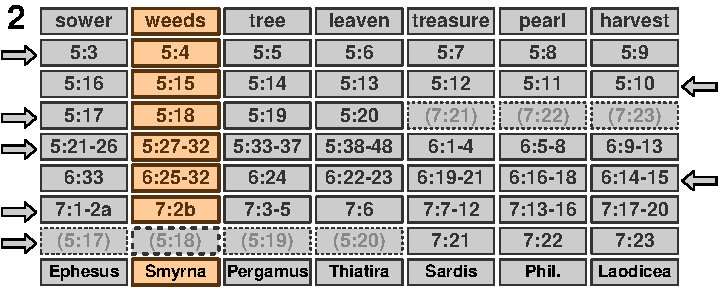
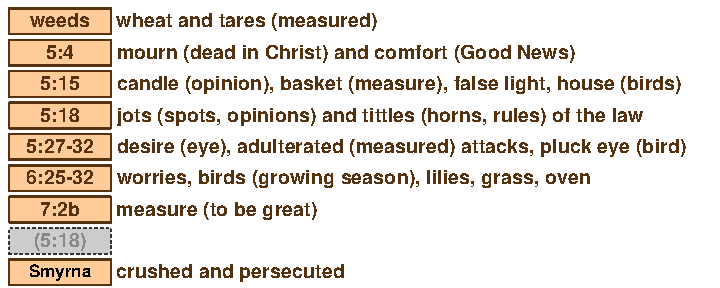
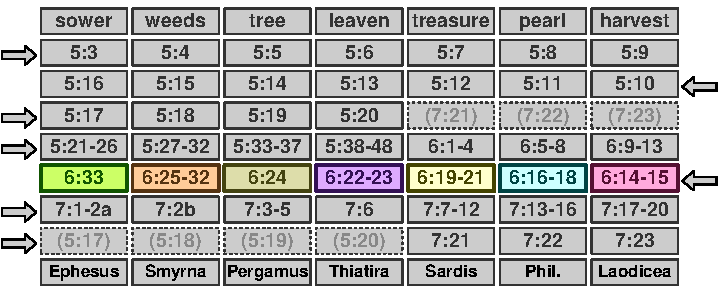
Matthew 6:28-30 on the "birds" corresponds to the "weeds" and "Smyrna".

SM 0
The birds:

2. Deceive (lie) with opinions (weeds).
3. Recruit (steal) followers (tree).
4. Recruit (adultery) leaders (leaven).
[spread spectrum communication]

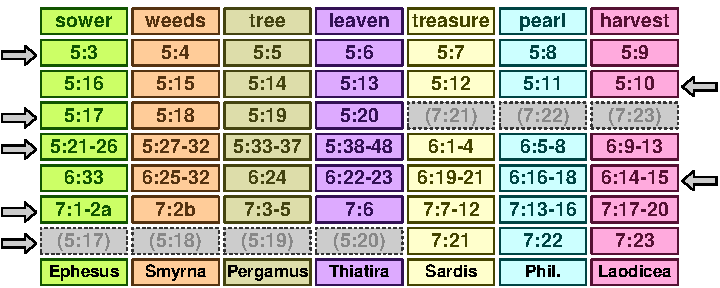
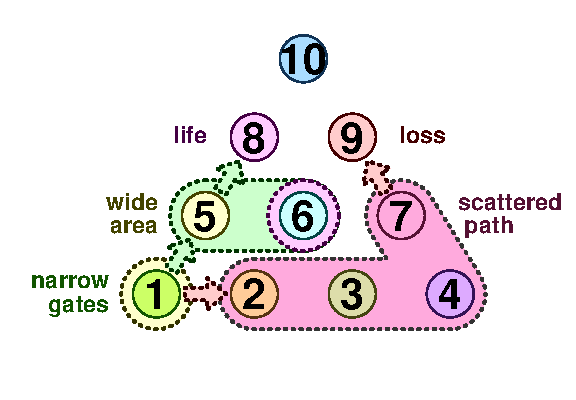
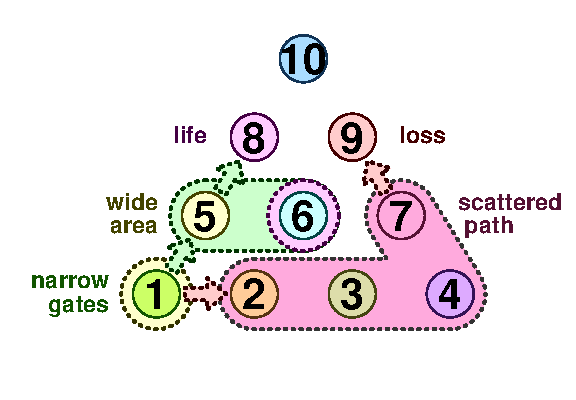
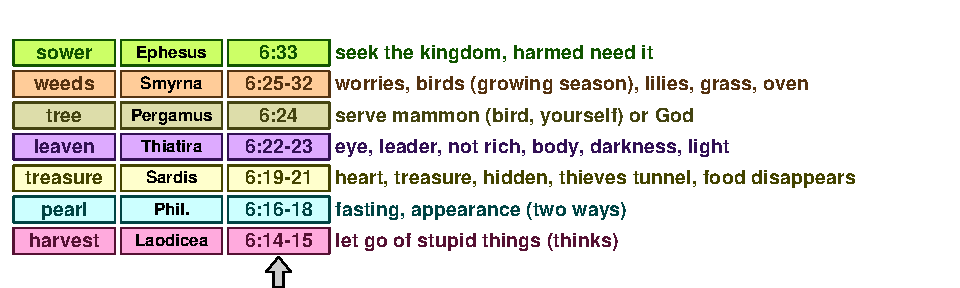
Here are some more connections in the Sermon on the Mount. The 103 verses that form the body of the Sermon on the Mount form six sequences of seven ideas that match rather well the Kingdom Parables and the Seven Churches in Revelation. Some sequences are top-down backward-chaining while others are bottom-up forward-chaining.

Information sign More: Sermon on the Mount: TenWordPin verse model

4. Smyrna: weeds and deception/lying
TenPin 6 SM 2
Theme: The good and bad seeds start to grow. The birds seek to have the bad seeds desire to be measured to be great, stealing something from them, feeding during the growing season.

At each stage, there are both positive and negative aspects of the connections.
SM slice 2


Information sign More: Matthew 13:24-30,36-43 KP2 Parable of the wheat and tares
Information sign More: Revelation 2:8-11 RC2 Smyrna
Information sign More: Matthew 5:4 B2 Good grief: the consolation prize of comfort
Information sign More: Sermon on the Mount: TenWordPin verse model

5. Kingdom verses
TenPin 6 SM 6
SM slice 5


Information sign More: Sermon on the Mount: TenWordPin verse model

6. Conditional logic: decision to fast

 1   2   3   +   -   ▶ 
Bottom line: Does it matter?

To the extent fasting helps you do what you should be doing, it is good.

To the extent fasting does not help you do what you should be doing, it is not good.

Do not eat the fruit Do not feed the birds

In any case: Do not eat the fruit. Do not feed the birds.


Information sign More: Matthew 6:16-18 The appearance of fast food disappearing

7. Matthew 6:23 Dark opinions
Matthew 6:23 But if thine eye be evil, thy whole body shall be full of darkness. If therefore the light that is in thee be darkness, how great is that darkness ! [kjv]
εαν δε ο οφθαλμος σου πονηρος η ολον το σωμα σου σκοτεινον εσται ει ουν το φως το εν σοι σκοτος εστιν το σκοτος ποσον [gnt]

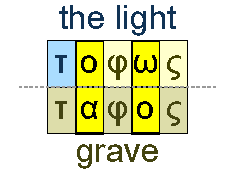
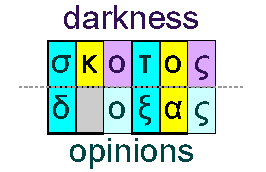
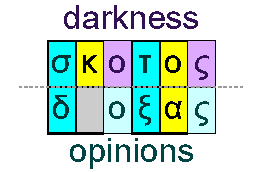
The light and grave Darkness and opinions

Paraphrase: If then the light[tomb/grave] that (is) in you is darkness, [opinions] how much [feet/fish] opinionated (is/are that/those) darkness [opinions].

Words opinion and opine, Greek sounds: "sk" and "ks", "t" and "d".

The ancient Greek word "δόξα""opinion, expectation" as in "doxology". This word, after the Latin, is often translated as "glory" as a narrowing of a good opinion. [doxx from docs from Latin teach related to Greek opinion]

Information sign More: Punishment by Spoonerisms: switched consonants
Information sign More: Matthew 6:22-23 Lamp of the body

8. Matthew 6:23 Hello darkness
Matthew 6:23 But if thine eye be evil, thy whole body shall be full of darkness. If therefore the light that is in thee be darkness, how great is that darkness ! [kjv]

Hello darkness my old friend Record: Sounds of Silence by Simon and Garfunkel Black Friday sale on bird houses
Speaking of "darkness" in the Fall, Thanksgiving and Black Friday (and trains) are approaching. Do you see the "light" at the end of the "tunnel" ("treasure" verses)?
The "eye" as a false "leader" is represented by a "bird". They look so pretty. They sound so nice. Use a remote camera (hole into a chamber) to catch the "bird" eating the "fruit".

[sound of silence, sound of one hand clapping, nothing is something]
 
In what year was the Simon and Garfunkel album (and song) Sound of Silence released?


Information sign More: Matthew 6:19-21: A treasury of treasures of which to treasure
Information sign More: Matthew 6:22-23 Lamp of the body

9. Matthew 6:26 Kingdom of the birds
Matthew 6:26 Behold the fowls of the air: for they sow not, neither do they reap, nor gather into barns; yet your heavenly Father feedeth them. Are ye not much better than they? [kjv]
εμβλεψατε εις τα πετεινα του ουρανου οτι ου σπειρουσιν ουδε θεριζουσιν ουδε συναγουσιν εις αποθηκας και ο πατηρ υμων ο ουρανιος τρεφει αυτα ουχ υμεις μαλλον διαφερετε αυτων [gnt]

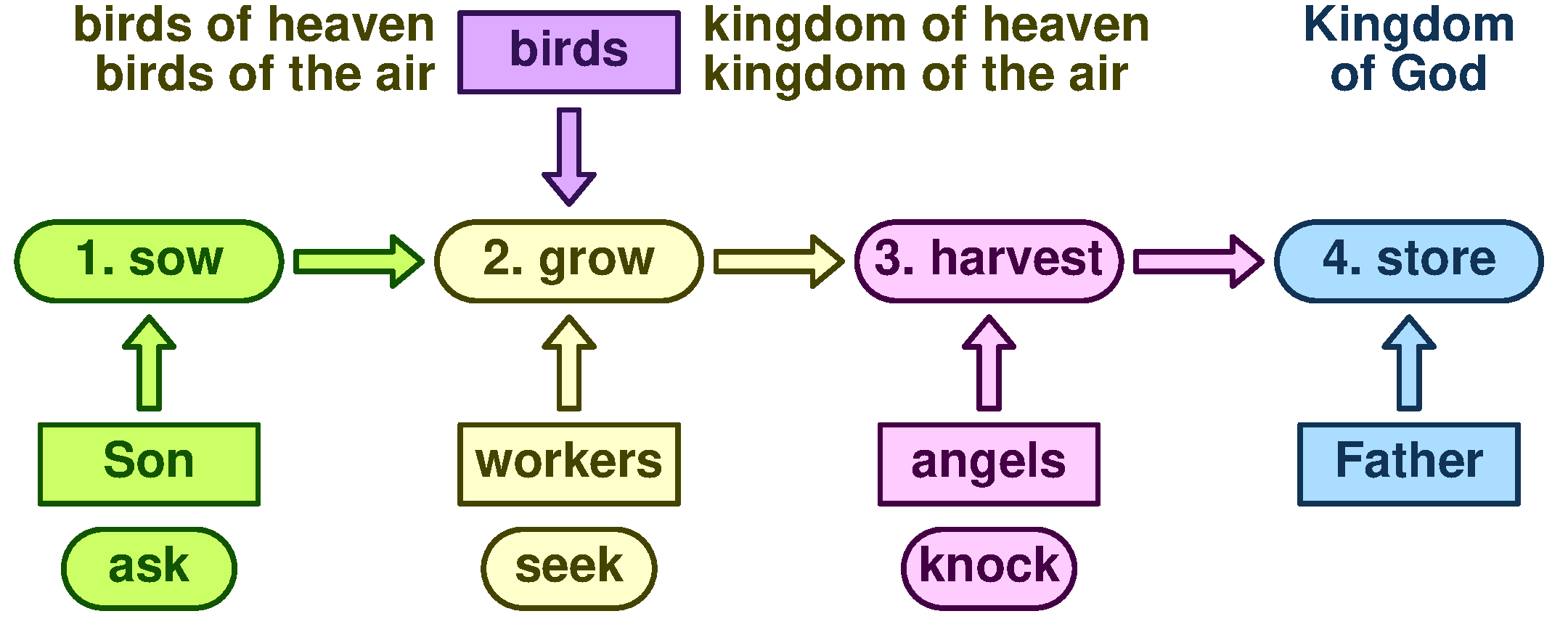
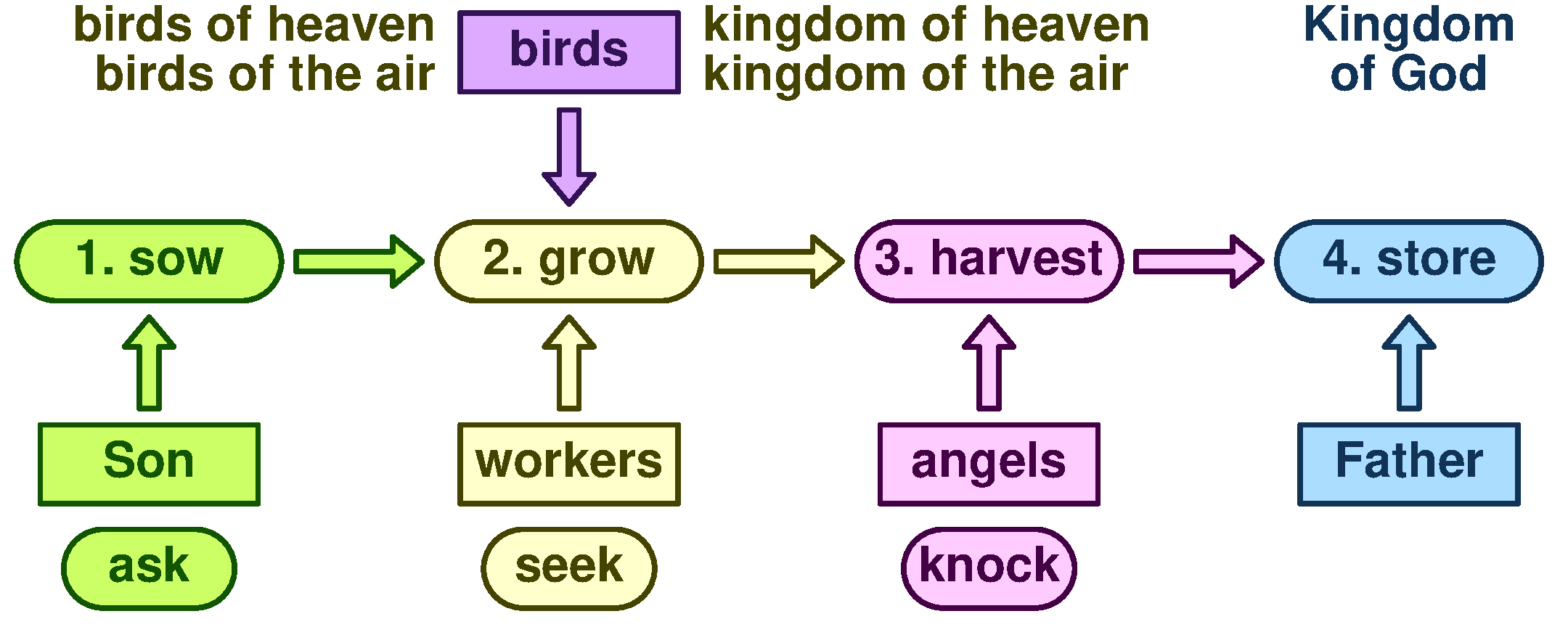
Sow grow harvest store

The step omitted by Jesus is the "grow" part. The "birds" work the growing harvest by "pecking" and taking part of the harvest (first parable), and, in turn, sowing "weeds" (second parable). You are "rather different" (at least you should be). The KJV (King James Version), influenced by the Latin, says "much better".

The "birds" are used by Jesus as a symbol of "false teachers" who "prey", rather than "pray", on others. The "wolf" or "wolf-dog", as contrasted to a "sheep-dog", and the "snake" or "viper" appear to be used in the same manner.

Information sign More: Matthew 6:25-27 The missing part worked out for the birds

10. Omitted step
Sow grow harvest storeThe "ask", "seek" and "knock" sequence can be seen in the "sow", "grow" and "harvest" sequence.
The "Holy Spirit" is part of the "worker" process as in the "kingdom" of "heaven" or the "kingdom" of the "air" where one must deal with the "birds" of the "air".

Information sign More: Matthew 6:25-27 The missing part worked out for the birds

11. Matthew 6:26 Feeding the birds
Matthew 6:26 Behold the fowls of the air: for they sow not, neither do they reap, nor gather into barns; yet your heavenly Father feedeth them. Are ye not much better than they? [kjv]
εμβλεψατε εις τα πετεινα του ουρανου οτι ου σπειρουσιν ουδε θεριζουσιν ουδε συναγουσιν εις αποθηκας και ο πατηρ υμων ο ουρανιος τρεφει αυτα ουχ υμεις μαλλον διαφερετε αυτων [gnt]

Language What is said. What is heard.
English twenty sick sheep twenty six sheep
Greek ...ουράνιος τρέφει αυτα ...ουράνιος στρέφει αυτα
English ...(in) heaven feeds them ... (in) heaven turns (away from) them

The "birds" appear to "work" but do not do useful "work". The "laborers" are needed for the future "harvest". We see other verses where the "Father" feeds both the "birds" and the others. What can separate you from the love of Christ?

Information sign More: Matthew 6:25-27 The missing part worked out for the birds


Information sign More: Matthew 5:39 Turning the other cheek
Information sign More: Matthew 5:42 Do not loan shirk

12. Matthew 6:26 Paraphrase
Matthew 6:26 Behold the fowls of the air: for they sow not, neither do they reap, nor gather into barns; yet your heavenly Father feedeth them. Are ye not much better than they? [kjv]
εμβλεψατε εις τα πετεινα του ουρανου οτι ου σπειρουσιν ουδε θεριζουσιν ουδε συναγουσιν εις αποθηκας και ο πατηρ υμων ο ουρανιος τρεφει αυτα ουχ υμεις μαλλον διαφερετε αυτων [gnt]

The KJV translation is somewhat contrived from the actual Greek word order. The paraphrase does not need to change the Greek word order nor change the meanings of the words. The "not" you fits with the play on words. Was that what Jesus really meant?

The ancient Greek word "δῐεφέρετε""different" (second person plural imperfect active indicative).

Information sign More: Matthew 6:25-27 The missing part worked out for the birds

13. Matthew 6:28 Word usage
Matthew 6:28 And why take ye thought for raiment? Consider the lilies of the field, how they grow; they toil not, neither do they spin: [kjv]
και περι ενδυματος τι μεριμνατε καταμαθετε τα κρινα του αγρου πως αυξανουσιν ου κοπιωσιν ουδε νηθουσιν [gnt]

Matthew 6:28
Strong Used Unique Word Part of speech
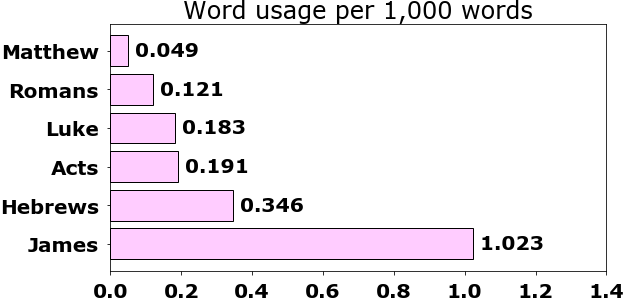
G1742 8 3 ενδυματος noun genitive singular neuter
G3309 19 5 μεριμνατε verb present active indicative 2nd person plural
G2648 1 1 καταμαθετε verb 2nd person aorist active imperative 2nd person plural
G2918 2 2 κρινα noun accusative plural neuter
G68 36 7 αγρου noun genitive singular masculine
G837 22 1 αυξανουσιν verb present active indicative 3rd person plural
G2872 22 1 κοπιωσιν verb present active indicative 3rd person plural
G3514 2 1 νηθουσιν verb present active indicative 3rd person plural

14. Matthew 6:28 Thoughts about money
Matthew 6:28 And why take ye thought for raiment? Consider the lilies of the field, how they grow; they toil not, neither do they spin: [kjv]
και περι ενδυματος τι μεριμνατε καταμαθετε τα κρινα του αγρου πως αυξανουσιν ου κοπιωσιν ουδε νηθουσιν [gnt]

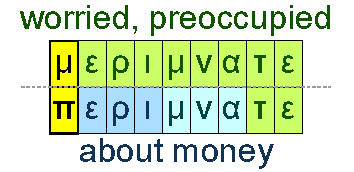
Worried and about money

If one does not "think" is one "doing"? [repent, hypocrite, etc.]

The Greek word for "thought" has to do with the "cares" and "concerns" of the riches of this world from the first kingdom parable in Matthew 13. Might the "worry" be "about" "money"? Tense thought: Think, thank, thunk.

The ancient Greek word "μαντεῖον""oracle" from "μάντις""prophet, seer, mantis".

15. Luke 19:13
Luke 19:13 And he called his ten servants, and delivered them ten pounds, and said unto them, Occupy till I come. [kjv]
καλεσας δε δεκα δουλους εαυτου εδωκεν αυτοις δεκα μνας και ειπεν προς αυτους πραγματευσασθαι εν ω ερχομαι [gnt]

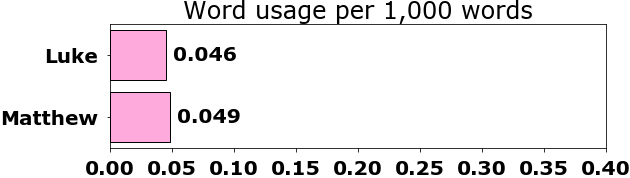
Luke has "ten" servants rather than the "three" in Matthew. The "talents" in Matthew, which appears to be a code word, is change to a unit of money at the time. Luke does not say here how the "ten" "pounds" are distributed.

The ancient Greek word "μνᾶ""sum of money, weight" equivalent to 100 drachmas. The Greek word is from the Aramaic which is from the Akkadian.

Luke has the servants "occupied" until he returns. Matthew, changing the mistranslation of (literal) "goods" to (figurative) "goals", implicitly lets the servants know what they should be doing.

Information sign More: Luke 19:11-28 Parable of the talents in Luke

16. Strongs - consider
  • *G2648 *1 καταμανθάνω (kat-am-an-than'-o) : from G2596 and G3129; to learn thoroughly, i.e. (by implication) to note carefully:--consider.
  •  Usage 
     All 
    • καταμαθετε
      •   Matthew 6:28 ... take ye thought for raiment? Consider the lilies of the field, how ...
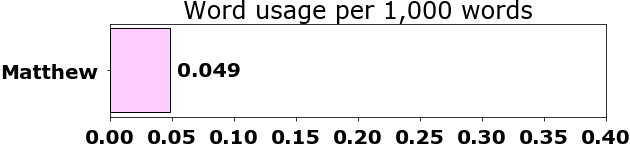
Word usage per chapter Words: καταμαθετε=1

The ancient Greek word "καταμάθετε""learn, find out, understand" (more active) and not just "consider". This word is used one time in the GNT (Greek New Testament).

In the corresponding verse in Luke, Luke uses the much more common ancient Greek word "κατανοέω""apprehend, understand, learn" (more passive).

17. Matthew 6:28 Consider
Matthew 6:28 And why take ye thought for raiment? Consider the lilies of the field, how they grow; they toil not, neither do they spin: [kjv]
και περι ενδυματος τι μεριμνατε καταμαθετε τα κρινα του αγρου πως αυξανουσιν ου κοπιωσιν ουδε νηθουσιν [gnt]

The ancient Greek word "καταμάθετε""learn, find out, understand" and not just "consider". This word is used one time in the GNT.

In the corresponding verse in Luke, Luke uses the much more common ancient Greek word "κατανοέω""apprehend, understand, learn".

18. Strongs - consider
*G2657 *14 κατανοέω (kat-an-o-eh'-o) : from G2596 and G3539; to observe fully:--behold, consider, discover, perceive.
Word usage per chapter Words: κατανοεις=2 κατανοησαι=2 κατανοησας κατανοησατε=3 κατανοουντι κατανοωμεν κατενοησεν=2 κατενοουν=2

The ancient Greek word "κατανοέω""apprehend, understand, learn".

19. Usage - consider
  • *G2657 *14 κατανοέω (kat-an-o-eh'-o) : from G2596 and G3539; to observe fully:--behold, consider, discover, perceive.
  •  Usage 
     All 
    • κατανοησατε *3
      •   Luke 12:24 Consider the ravens: for they neither sow ...
      •   Luke 12:27 Consider the lilies how they grow: they toil not, ...
      •   Hebrews 3:1 ... partakers of the heavenly calling, consider the Apostle and High Priest ...
    • κατανοεις *2
      •   Matthew 7:3 ... brother's eye, but considerest not the beam that is in ...
      •   Luke 6:41 And why beholdest thou the mote that is in thy brother's eye, but perceivest not the beam that is in thine own eye?
    • κατανοησαι *2
      •   Acts 7:31 ... at the sight: and as he drew near to behold it, the voice of the Lord came ...
      •   Acts 7:32 ... trembled, and durst not behold.
    • κατενοουν *2
      •   Acts 11:6 Upon the which when I had fastened mine eyes, I considered, and saw fourfooted beasts ...
      •   Acts 27:39 ... not the land: but they discovered a certain creek with ...
    • κατενοησεν *2
      •   Romans 4:19 ... not weak in faith, he considered not his own body ...
      •   James 1:24 For he beholdeth himself, and goeth his way, and ...
    • κατανοησας
      •   Luke 20:23 But he perceived their craftiness, and said unto ...
    • κατανοωμεν
      •   Hebrews 10:24 And let us consider one another to provoke unto love ...
    • κατανοουντι
      •   James 1:23 ... is like unto a man beholding his natural face ...

20. Luke 12:27 Consider the lilies
Luke 12:27 Consider the lilies how they grow: they toil not, they spin not; and yet I say unto you, that Solomon in all his glory was not arrayed like one of these. [kjv]
κατανοησατε τα κρινα πως αυξανει ου κοπια ουδε νηθει λεγω δε υμιν ουδε σολομων εν παση τη δοξη αυτου περιεβαλετο ως εν τουτων [gnt]

The ancient Greek word "κατανοέω""apprehend, understand, learn".

By contrast, Matthew uses the unique, in the GNT, word "καταμάθετε""learn, find out, understand". The ancient Greek phrase "Τί μαθών""What were you thinking?"

21. Luke 12:27
   Luke 12:27 
 All 
KJV: Consider the lilies how they grow: they toil not, they spin not; and yet I say unto you, that Solomon in all his glory was not arrayed like one of these.
Greek: κατανοησατε τα κρινα πως αυξανει ου κοπια ουδε νηθει λεγω δε υμιν ουδε σολομων εν παση τη δοξη αυτου περιεβαλετο ως εν τουτων

22. Poppy day

"Remembrance Day", later "Veterans Day", is also known as "Poppy Day" for wearing a red poppy in remembrance of those fallen in the line of duty.

The appearance of red poppies on the graves of fallen soldiers goes back to the Napoleonic wars and etched in the memory of everyone by the poem "In Flanders Fields" from World War I.

Saying (repeated by many soldiers): There are no atheists in foxholes.

[popcorn]

Information sign More: November 11: Veterans Day

23. Flanders field

The poem "In Flanders Fields" was written on May 3, 1915 during World War I by John McCrae during the Second Battle of Ypres which went from April 22 to May 25. Losses: British: 60,000, French: 3,000.

For seventeen days and seventeen nights none of us have had our clothes off, nor our boots even, except occasionally. In all that time while I was awake, gunfire and rifle fire never ceased for sixty seconds ... And behind it all was the constant background of the sights of the dead, the wounded, the maimed, and a terrible anxiety lest the line should give way. McCrae.

Information sign More: November 11: Veterans Day

24. Strongs - lilies
  • *G2918 *2 κρίνον (kree'-non) : perhaps a prim word; a lily:--lily.
  •  Usage 
     All 
    •  κρινα *2  of 2
      •   Matthew 6:28 ... for raiment? Consider the lilies of the field, how they grow; ...
      •   Luke 12:27 Consider the lilies how they grow: they toil not, ...
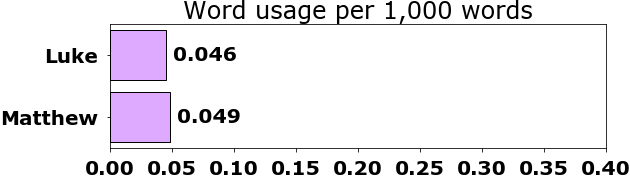
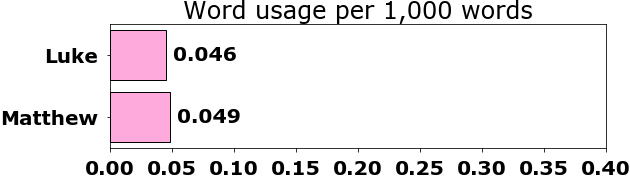
Word usage per chapter Words: κρινα=2

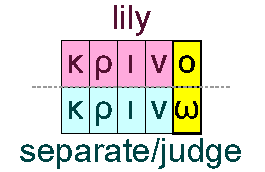
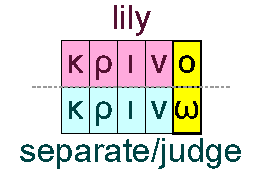
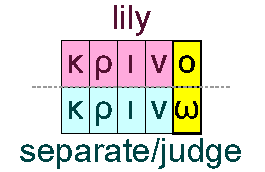
Lily and separate/judge

25. Lilies and barley judges
Matthew 6:28 And why take ye thought for raiment? Consider the lilies of the field, how they grow; they toil not, neither do they spin: [kjv]
και περι ενδυματος τι μεριμνατε καταμαθετε τα κρινα του αγρου πως αυξανουσιν ου κοπιωσιν ουδε νηθουσιν [gnt]

Lily and separate/judge

The topic of "separation", translated as "judging", appears 7 verses later.
7:1 Judge not, that ye be not judged. [kjv]
μη κρινετε ινα μη κριθητε [gnt]

Paraphrase: Separate not (from me) that ye not be separated (from me). What can separate you from the love of Christ?

[discern, rinse]

Information sign More: Matthew 7:1-2 Here comes the judge, but just barley
Information sign More: Romans 8: Battle cry separation for the love of Christ (part 1)
Information sign More: Romans 8: Battle cry separation for the love of Christ (part 2)

26. Matthew 6:28
   Matthew 6:28 
 All 
KJV: And why take ye thought for raiment? Consider the lilies of the field, how they grow; they toil not, neither do they spin:
Greek: και περι ενδυματος τι μεριμνατε καταμαθετε τα κρινα του αγρου πως αυξανει αυξανουσιν ου κοπια κοπιωσιν ουδε νηθει νηθουσιν

27. Matthew 7:1
   Matthew 7:1 
 All 
KJV: Judge not, that ye be not judged.
Greek: μη κρινετε ινα μη κριθητε

28. Strongs - increase
*G837 *22 αὐξάνω (owx-an'-o) : a prolonged form of a primary verb; to grow ("wax"), i.e. enlarge (literal or figurative, active or passive):--grow (up), (give the) increase.
Word usage per chapter Words: αυξανειν αυξανετε αυξανομενης αυξανομενοι αυξανομενον=2 αυξανουσιν=1 αυξανων αυξει=2 αυξηθη αυξηθητε αυξησει αυξησωμεν ηυξανεν=6 ηυξησεν=2

The ancient Greek word "αὐξάνω""make grow, increase, promote, exalt". The inflection used by Jesus has a play on words of "not" "together". [better together, bitter together]

29. Usage - increase
  • *G837 *22 αὐξάνω (owx-an'-o) : a prolonged form of a primary verb; to grow ("wax"), i.e. enlarge (literal or figurative, active or passive):--grow (up), (give the) increase.
  •  Usage 
     All 
    •  αυξανουσιν *1  of 22
      •   Matthew 6:28 ... the lilies of the field, how they grow; they toil not, neither do they spin:

30. Matthew 6:28 Increase
Matthew 6:28 And why take ye thought for raiment? Consider the lilies of the field, how they grow; they toil not, neither do they spin: [kjv]
και περι ενδυματος τι μεριμνατε καταμαθετε τα κρινα του αγρου πως αυξανουσιν ου κοπιωσιν ουδε νηθουσιν [gnt]

The ancient Greek word "αὐξάνω""make grow, increase, promote, exalt".

The inflection used by Jesus has a play on words of "not" "together".

[suddenly]

31. Strongs - toil
*G2872 *22 κοπιάω (kop-ee-ah'-o) : from a derivative of G2873; to feel fatigue; by implication, to work hard:--(bestow) labour, toil, be wearied.
Word usage per chapter Words: εκοπιασα=2 εκοπιασεν=2 κεκοπιακα κεκοπιακασιν κεκοπιακατε κεκοπιακες κεκοπιακως κοπιασαντες κοπιατω κοπιω κοπιωμεν=2 κοπιωντα κοπιωντας=2 κοπιωντες=2 κοπιωντι κοπιωσας κοπιωσιν=1

The inflection used by Jesus has a play on words of "oh" "together".

32. Usage - toil
  • *G2872 *22 κοπιάω (kop-ee-ah'-o) : from a derivative of G2873; to feel fatigue; by implication, to work hard:--(bestow) labour, toil, be wearied.
  •  Usage 
     All 
    •  κοπιωσιν *1  of 22
      •   Matthew 6:28 ... of the field, how they grow; they toil not, neither do they spin:

33. Strongs - toil

34. Matthew 6:28 Toil
Matthew 6:28 And why take ye thought for raiment? Consider the lilies of the field, how they grow; they toil not, neither do they spin: [kjv]
και περι ενδυματος τι μεριμνατε καταμαθετε τα κρινα του αγρου πως αυξανουσιν ου κοπιωσιν ουδε νηθουσιν [gnt]

The Greek word for "toil" is appears to be related to the English word "copious".

35. Strongs - spin
  • *G3514 *2 νήθω (nay'-tho) : from neo (of like meaning); to spin:--spin.
  •  Usage 
     All 
    •  νηθουσιν *1  of 2
      •   Matthew 6:28 ... they toil not, neither do they spin:
Word usage per chapter Words: νηθει νηθουσιν=1

Luke changes the less common Matthew inflection to the more common inflection. The TR (Textus Receptus) changes Matthew to match Luke. The inflection used by Jesus has a play on words of "not" "together". The ancient Greek word "νήθω""spin" which is the source of the modern Greek word "γνέθω" (GHNEH-tho) ≈ "spin".

36. Greek fates
There are three "fates" in Greek mythology. The ancient Greek word "Μοῖραι""lots, fate". The Latin word "Fata""fates".

37. Clothos
1, Ask: "Clothos" spins the thread of life. The ancient Greek word "Κλωθώ""spinner" and is the source of the English word "clothes". Roman name is "Nona".

38. Matthew 6:28 Waring about spinning
Do "lilies" actually "spin"? Jesus says not.
Matthew 6:28 And why take ye thought for raiment? Consider the lilies of the field, how they grow; they toil not, neither do they spin: [kjv]
και περι ενδυματος τι μεριμνατε καταμαθετε τα κρινα του αγρου πως αυξανουσιν ου κοπιωσιν ουδε νηθουσιν [gnt]

Could Jesus have meant, by play on words, that the lilies do not give warning or proper instruction?
 
Speaking about dryer humor, I was spinning time with the washer and drier, but it did not all come out in the wash.


Information sign More: Nouthetic counseling: Having peace of mind or giving piece of mind

39. Strongs - warn
*G3560 *8 νουθετέω (noo-thet-eh'-o) : from the same as G3559; to put in mind, i.e. (by implication) to caution or reprove gently:--admonish, warn.
Word usage per chapter Words: νουθετειν νουθετειτε=2 νουθετουντας νουθετουντες=2 νουθετων=2

40. Usage - warn
  • *G3560 *8 νουθετέω (noo-thet-eh'-o) : from the same as G3559; to put in mind, i.e. (by implication) to caution or reprove gently:--admonish, warn.
  •  Usage 
     All 
    • νουθετων *2
      •   Acts 20:31 ... by the space of three years I ceased not to warn every one night ...
      •   1 Corinthians 4:14 ... my beloved sons I warn you.
    • νουθετουντες *2
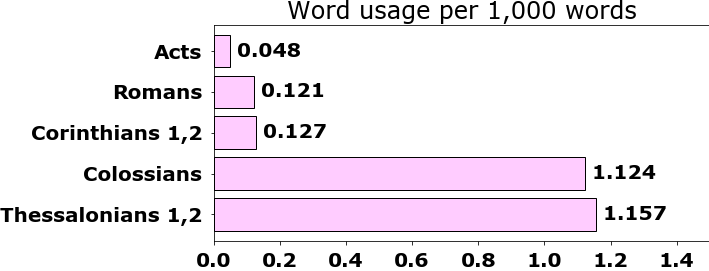
      •   Colossians 1:28 Whom we preach, warning every man, and ...
      •   Colossians 3:16 ... wisdom; teaching and admonishing one another in psalms and ...
    • νουθετειτε *2
      •   1 Thessalonians 5:14 Now we exhort you, brethren, warn them that are unruly, comfort ...
      •   2 Thessalonians 3:15 ... as an enemy, but admonish him as a brother.
    • νουθετειν
      •   Romans 15:14 ... knowledge, able also to admonish one another.
    • νουθετουντας
      •   1 Thessalonians 5:12 ... in the Lord, and admonish you;

41. Colossians 1:28 Warning
Colossians 1:28 Whom we preach, warning every man, and teaching every man in all wisdom; that we may present every man perfect in Christ Jesus: [kjv]
ον ημεις καταγγελλομεν νουθετουντες παντα ανθρωπον και διδασκοντες παντα ανθρωπον εν παση σοφια ινα παραστησωμεν παντα ανθρωπον τελειον εν χριστω [gnt]


42. Colossians 1:28
 All 
KJV: Whom we preach, warning every man, and teaching every man in all wisdom; that we may present every man perfect in Christ Jesus:
Greek: ον ημεις καταγγελλομεν νουθετουντες παντα ανθρωπον και διδασκοντες παντα ανθρωπον εν παση σοφια ινα παραστησωμεν παντα ανθρωπον τελειον εν χριστω ιησου

43. Proverbs 2:2 Instruction
Proverbs 2:2 So that thou incline thine ear unto wisdom, and apply thine heart to understanding; [kjv]
υπακουσεται σοφιας το ους σου και παραβαλεις καρδιαν σου εις συνεσιν παραβαλεις δε αυτην επι νουθετησιν τω υιω σου [lxx]
your ear shall listen to wisdom; you shall also apply your heart to understanding, and shall apply it to the instruction of your son. [bs3]


44. Proverbs 2:2
   Proverbs 2:2 
 All 
KJV: So that thou incline thine ear unto wisdom, and apply thine heart to understanding;
Hebrew: להקשיב לחכמה אזנך תטה לבך לתבונה׃
Greek: υπακουσεται σοφιας το ους σου και παραβαλεις καρδιαν σου εις συνεσιν παραβαλεις δε αυτην επι νουθετησιν τω υιω σου
Brenton: your ear shall listen to wisdom; you shall also apply your heart to understanding, and shall apply it to the instruction of your son.

45. Lachesis
2. Seek: "Lachesis" determines the length of life. The ancient Greek word "Λάχεσις""disposer of lots". Roman name is "Decima".

Information sign More: A hot time to harvest - now and later

46. Matthew 6:27 Translations
Matthew 6:27 Which of you by taking thought can add one cubit unto his stature? [kjv]
τις δε εξ υμων μεριμνων δυναται προσθειναι επι την ηλικιαν αυτου πηχυν ενα [gnt]

What is the "yardstick" or "ruler" by which age or maturity should be measured?

… can add a single hour to your span of life? NRSV (New Revised Standard Version)
… can add a single hour to his life? NASB (New American Standard Bible)

Foot rulerPhrase: "One foot in the grave" (distance with time meaning).

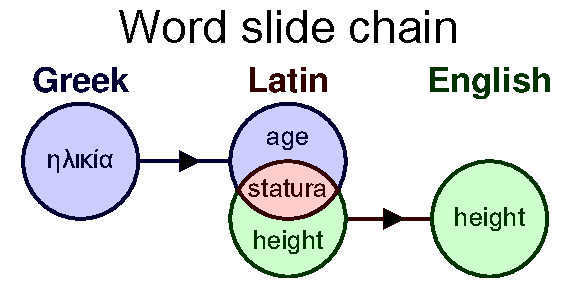
Whisper chain age to height
The Greek for "stature" has a meaning of "age". The word "cubit" can be taken in the sense of time as in extending the span of life.


Information sign More: Luke 19:1-11 A short discussion on stature

47. Atropos
3. Knock: "Atropos" chooses the manner of death and cuts the thread of life. The ancient Greek word "Ἄτροπος""without turn". Roman name was "Morta" as in "mortify", "mortician", etc.

A related word is the ancient Greek word "ἀτροφία""wasting away" and is the source of the English word "atrophy".

The KJV uses the word "stature" in places where the Greek is "length of life".

Information sign More: Luke 19:1-11 A short discussion on stature
Information sign More: A hot time to harvest - now and later

48. Matthew 6:25 Thinking about food
Matthew 6:25 Therefore I say unto you, Take no thought for your life, what ye shall eat, or what ye shall drink; nor yet for your body, what ye shall put on. Is not the life more than meat, and the body than raiment? [kjv]
δια τουτο λεγω υμιν μη μεριμνατε τη ψυχη υμων τι φαγητε η τι πιητε μηδε τω σωματι υμων τι ενδυσησθε ουχι η ψυχη πλειον εστιν της τροφης και το σωμα του ενδυματος [gnt]

The ancient Greek word "τροφῆς""food" (genitive singular) from "τροφή""nourishment, food, nurture, education".

The ancient Greek word "τρόπαιον""trophy" and is, through Latin and French, the source of the English word "trophy". The word is from "τροπή""route, turning of an enemy". A related word is "στροφής""turn, direct, twist" (genitive singular).
Note the sound similarity of English "p" and "f" as in the Greek "π" and "φ".

Information sign More: Matthew 6:25-27 The missing part worked out for the birds

49. Matthew 6:29 Solomon
Matthew 6:29 And yet I say unto you, That even Solomon in all his glory was not arrayed like one of these. [kjv]
λεγω δε υμιν οτι ουδε σολομων εν παση τη δοξη αυτου περιεβαλετο ως εν τουτων [gnt]

Darkness and opinions
Solomon was known for his wisdom. He was also known for his heavy taxation in order to raise revenue for his palace and extravagant living.

Similarity of "ks" and "sk" sounds.
In other places in the Gospels (omitted) Jesus criticizes the religious establishment for not working, putting heavy burdens on others, etc.

The Greek word for "arrayed" has to do with "putting on" or "surrounding oneself" as in putting on the full armor of God (Paul). The Greek word for "glory" originally meant "opinion".

Information sign More: The word glory in Latin and Greek

50. Matthew 6:28 Red letter verses
Matthew 6:28 And why take ye thought for raiment? Consider the lilies of the field, how they grow; they toil not, neither do they spin: [kjv]
και περι ενδυματος τι μεριμνατε καταμαθετε τα κρινα του αγρου πως αυξανουσιν ου κοπιωσιν ουδε νηθουσιν [gnt]

Lily and separate/judge

Solomon was known for his wisdom in judging. Jesus uses the code word "field" for "world".

The Greek word for "lily" is a play on words on "judging" as "separating".

Information sign More: Parables and secret codes used and explained by Jesus

51. Matthew 6:29 Red tape analogy
Matthew 6:29 And yet I say unto you, That even Solomon in all his glory was not arrayed like one of these. [kjv]
λεγω δε υμιν οτι ουδε σολομων εν παση τη δοξη αυτου περιεβαλετο ως εν τουτων [gnt]

Here is an analogy using double-meanings in English to refer to government practices. The Greek translated as "glory" is that of "opinion".
Analogy: Consider these red-tape pansies [separator's] of the world. They increase, they do not work, they spend. Yet even George Washington in all his glory (opinion) was not surrounded (clothed) by red-tape pansies [separator's] such as these (red-tape pansies).

Information sign More: Whether this or that: What is your opinion on glory?
Information sign More: The word glory in Latin and Greek

52. Transition
Jesus will now transition from "lilies" (such as "pansies") to the "grass" or possibly "fruit of the grass".

53. Matthew 6:29
   Matthew 6:29 
 All 
KJV: And yet I say unto you, That even Solomon in all his glory was not arrayed like one of these.
Greek: λεγω δε υμιν οτι ουδε σολομων εν παση τη δοξη αυτου περιεβαλετο ως εν τουτων

54. Matthew 13:38 Field is the world
Matthew 13:38 The field is the world; the good seed are the children of the kingdom; but the tares are the children of the wicked one; [kjv]
ο δε αγρος εστιν ο κοσμος το δε καλον σπερμα ουτοι εισιν οι υιοι της βασιλειας τα δε ζιζανια εισιν οι υιοι του πονηρου [gnt]

In explaining the code words for kingdom parable 2 (wheat and tares), Jesus says that the "field" is the "world".

55. Matthew 13:38

 All 
KJV: The field is the world; the good seed are the children of the kingdom; but the tares are the children of the wicked one;
Greek: ο δε αγρος εστιν ο κοσμος το δε καλον σπερμα ουτοι εισιν οι υιοι της βασιλειας τα δε ζιζανια εισιν οι υιοι του πονηρου

56. Matthew: Field and world
Matthew 13:38 The field is the world; the good seed are the children of the kingdom; but the tares are the children of the wicked one; [kjv]
ο δε αγρος εστιν ο κοσμος το δε καλον σπερμα ουτοι εισιν οι υιοι της βασιλειας τα δε ζιζανια εισιν οι υιοι του πονηρου [gnt]

Field of wheat

The "field" in the first kingdom parable of Matthew 13 is defined by Jesus as the "world" or, more precisely, the "people in the world".

The "grass of the field" can be either "weeds" or "tares" or it can be "fruit of the grass" is in "wheat". In the second kingdom parable of Matthew 13, Jesus has the "weeds" are bound at the end of the age and burned.

57. Strongs - oven
*G2823 *2 κλίβανος (klib'-an-os) : of uncertain derivation; an earthen pot used for baking in:--oven.
Word usage per chapter Words: κλιβανον=2

The ancient Greek word "κλίβανος""oven". The ancient Greek word "κρίβανος""covered earthen vessel" from which bread was baked. It could be a "cavern in a rock". There are many similar Greek words with an interchange of the "r" or "ρ" (rho) and "l" or "λ" (lambda) sounds.

The ancient Greek word "κρίθινος""made from barley". The modern Greek word "κλουβί" (klu-VEE) ≈ "cage".

Information sign More: Similarity of the R and L sounds

58. Usage - oven
  • *G2823 *2 κλίβανος (klib'-an-os) : of uncertain derivation; an earthen pot used for baking in:--oven.
  •  Usage 
     All 
    •  κλιβανον *2  of 2
      •   Matthew 6:30 ... to morrow is cast into the oven, shall he not much more ...
      •   Luke 12:28 ... to morrow is cast into the oven; how much more will he clothe you, O ye of little faith?

59. Matthew 6:30 Oven
Matthew 6:30 Wherefore, if God so clothe the grass of the field, which to day is, and to morrow is cast into the oven, shall he not much more clothe you, O ye of little faith? [kjv]
ει δε τον χορτον του αγρου σημερον οντα και αυριον εις κλιβανον βαλλομενον ο θεος ουτως αμφιεννυσιν ου πολλω μαλλον υμας ολιγοπιστοι [gnt]

Field of wheat

The ancient Greek word "κλίβανος""covered earthen vessel, oven". The ancient Greek word "κρίβανος""covered earthen vessel, oven" from which bread was baked. It could be a "cavern in a rock".

There are many similar Greek words with an interchange of the "r" or "ρ" (rho) and "l" or "λ" (lambda) sounds.

The ancient Greek word "κρίθινος""made from barley".

Information sign More: A hot time to harvest - now and later
Information sign More: John 8:31-36 The true reality of a free wheat harvest

60. Matthew 6:30 Grass of the field
Matthew 6:30 Wherefore, if God so clothe the grass of the field, which to day is, and to morrow is cast into the oven, shall he not much more clothe you, O ye of little faith? [kjv]
ει δε τον χορτον του αγρου σημερον οντα και αυριον εις κλιβανον βαλλομενον ο θεος ουτως αμφιεννυσιν ου πολλω μαλλον υμας ολιγοπιστοι [gnt]


Is that which is cast into the "oven" good or bad? What does it mean to have "little faith". The "fruit of the grass", as in "wheat", is crushed, winnowed, stored and then baked in an "oven" to create something good such as "bread".

At least (yeast) this is not even (oven) a half-baked idea!

Information sign More: Matthew 21:44-46 Winnowing the wheat and chaff to stone-ground powder
Information sign More: Matthew 16:5-8 Big ideas connected with a little faith
Information sign More: Similarity of the R and L sounds

61. Flower and flour
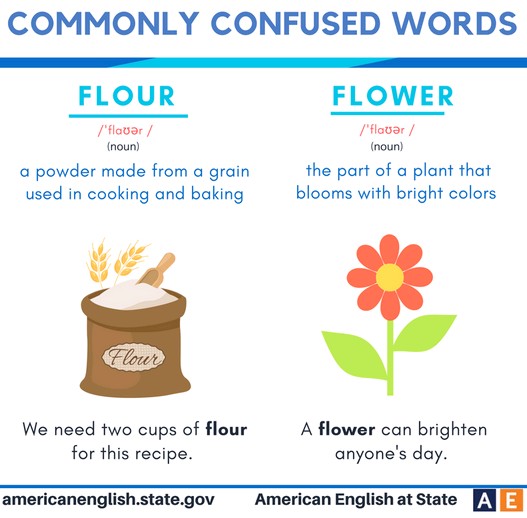
Flour and flowerAside: The English word "flour" was created from the English word "flower" to distinguish the "fruit of the grass" from a colorful and nice looking plant that was, in general, not edible.

The same idea was used in the following.
 
I got my wife her favorite flower.
Did you hear about the flour, sugar, salt, water and yeast that grew up together in jail?


Information sign More: Happy Holidays and the Wassail

62. Matthew 6:30 How much rather
Matthew 6:30 Wherefore, if God so clothe the grass of the field, which to day is, and to morrow is cast into the oven, shall he not much more clothe you, O ye of little faith? [kjv]
ει δε τον χορτον του αγρου σημερον οντα και αυριον εις κλιβανον βαλλομενον ο θεος ουτως αμφιεννυσιν ου πολλω μαλλον υμας ολιγοπιστοι [gnt]

The ancient Greek word "πολλῷ""how much" (masculine/neuter dative singular) from "πολύς""many, much, a lot".

The Greek word translated as "more" is that of "rather".

The ancient Greek word "μᾶλλον""rather" as in "rather than". In a comparison, in context, it could be "rather more". The modern Greek word "μάλλον" (MAL-lon) ≈ "rather, more precisely".

63. Matthew 6:30 Little faith
Matthew 6:30 Wherefore, if God so clothe the grass of the field, which to day is, and to morrow is cast into the oven, shall he not much more clothe you, O ye of little faith? [kjv]
ει δε τον χορτον του αγρου σημερον οντα και αυριον εις κλιβανον βαλλομενον ο θεος ουτως αμφιεννυσιν ου πολλω μαλλον υμας ολιγοπιστοι [gnt]

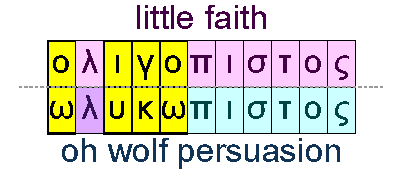
Little faith and wolves persuasion

The ancient Greek word (adjective) "ὀλιγόπιστος""little faith" is a made-up word used by Jesus. Of what are the disciples not "convinced", "persuaded".
 
What type of faith did the woodworker have?


Information sign More: Matthew 16:5-8 Big ideas connected with a little faith

64. Strongs - clothe
*G294 *4 ἀμφιέννυμι (am-fee-en'-noo-mee) : from the base of G297 and hennumi (to invest); to enrobe:--clothe.
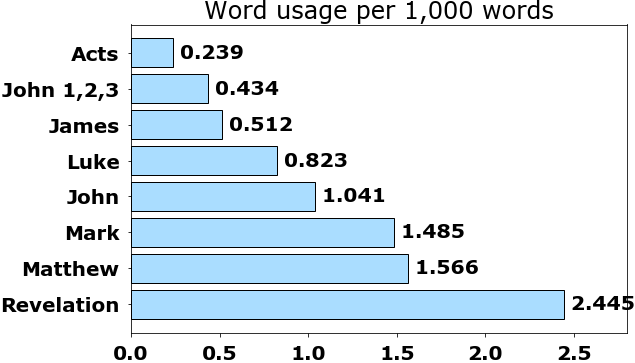
Word usage per chapter Words: αμφιεζει αμφιεννυσιν ημφιεσμενον=2

65. Usage - clothe

  • *G294 *4 ἀμφιέννυμι (am-fee-en'-noo-mee) : from the base of G297 and hennumi (to invest); to enrobe:--clothe.
  •  Usage 
     All 
    • ημφιεσμενον *2
      •   Matthew 11:8 ... went ye out for to see? A man clothed in soft raiment? ...
      •   Luke 7:25 ... went ye out for to see? A man clothed in soft raiment? ...
    • αμφιεννυσιν
      •   Matthew 6:30 Wherefore, if God so clothe the grass of the field, which ...
    • αμφιεζει
      •   Luke 12:28 If then God so clothe the grass, which is to day ...

66. Strongs - thrown
*G906 *125 βάλλω (bal'-lo) : a primary verb; to throw (in various applications, more or less violent or intense):--arise, cast (out), X dung, lay, lie, pour, put (up), send, strike, throw (down), thrust. Compare G4496.
Word usage per chapter Words: αμφιβαλλοντας βαλε=9 βαλει βαλειν=9 βαλετε βαλετω=2 βαλη=2 βαλητε βαλλει=5 βαλλεται=3 βαλλομεν βαλλομενα βαλλομενον=2 βαλλοντας=2 βαλλοντες βαλλοντων=2 βαλλουσα βαλλουσαν βαλλουσιν=4 βαλλω=2 βαλοντες βαλουσα βαλουσιν=3 βαλω=3 βαλωσιν βεβληκεν βεβληκοτος βεβλημενην βεβλημενον=3 βεβλημενος βεβληται=2 βληθεις βληθειση βληθεν βληθη βληθηναι=4 βληθησεται βληθηση βληθητι=2 εβαλαν εβαλεν=21 εβαλλον εβαλον=8 εβεβλητο εβληθη=9 εβληθησαν=3

67. Usage - thrown
  • *G906 *125 βάλλω (bal'-lo) : a primary verb; to throw (in various applications, more or less violent or intense):--arise, cast (out), X dung, lay, lie, pour, put (up), send, strike, throw (down), thrust. Compare G4496.
  •  Usage 
     All 
    •  βαλλομενον *2  of 125
      •   Matthew 6:30 ... is, and to morrow is cast into the oven, shall he not ...
      •   Luke 12:28 ... the field, and to morrow is cast into the oven; how much ...

68. Matthew 6:30 Word usage
Matthew 6:30 Wherefore, if God so clothe the grass of the field, which to day is, and to morrow is cast into the oven, shall he not much more clothe you, O ye of little faith? [kjv]
ει δε τον χορτον του αγρου σημερον οντα και αυριον εις κλιβανον βαλλομενον ο θεος ουτως αμφιεννυσιν ου πολλω μαλλον υμας ολιγοπιστοι [gnt]

Matthew 6:30
Strong Used Unique Word Part of speech
G5528 15 6 χορτον noun accusative singular masculine
G68 36 7 αγρου noun genitive singular masculine
G2823 2 2 κλιβανον noun accusative singular masculine
G906 125 2 βαλλομενον verb present passive participle accusative singular masculine
G294 4 1 αμφιεννυσιν verb present active indicative 3rd person singular
G3640 6 4 ολιγοπιστοι adjective vocative plural masculine

69. Matthew 6:30
   Matthew 6:30 
 All 
KJV: Wherefore, if God so clothe the grass of the field, which to day is, and to morrow is cast into the oven, shall he not much more clothe you, O ye of little faith?
Greek: ει δε τον χορτον του αγρου σημερον οντα και αυριον εις κλιβανον βαλλομενον ο θεος ουτως αμφιεννυσιν ου πολλω μαλλον υμας ολιγοπιστοι

70. Comparison of Matthew and Luke
Matthew 6:30 Wherefore, if God so clothe the grass of the field, which to day is, and to morrow is cast into the oven, shall he not much more clothe you, O ye of little faith? [kjv]
ει δε τον χορτον του αγρου σημερον οντα και αυριον εις κλιβανον βαλλομενον ο θεος ουτως αμφιεννυσιν ου πολλω μαλλον υμας ολιγοπιστοι [gnt]

Luke 12:28 If then God so clothe the grass, which is to day in the field, and to morrow is cast into the oven; how much more will he clothe you, O ye of little faith? [kjv]
ει δε εν αγρω τον χορτον οντα σημερον και αυριον εις κλιβανον βαλλομενον ο θεος ουτως αμφιεζει ποσω μαλλον υμας ολιγοπιστοι [gnt]


71. Luke 12:28
   Luke 12:28 
 All 
KJV: If then God so clothe the grass, which is to day in the field, and to morrow is cast into the oven; how much more will he clothe you, O ye of little faith?
Greek: ει δε τον χορτον εν τω αγρω σημερον τον χορτον οντα σημερον και αυριον εις κλιβανον βαλλομενον ο θεος ουτως αμφιεννυσιν αμφιεζει ποσω μαλλον υμας ολιγοπιστοι

72. Flowers and flour and thorns
James 1:10 But the rich, in that he is made low: because as the flower of the grass he shall pass away. [kjv]
ο δε πλουσιος εν τη ταπεινωσει αυτου οτι ως ανθος χορτου παρελευσεται [gnt]

The "flower" or "blossom" of the "grass" is the grain/seed and the primary meaning of the Greek word for "fruit".

Vertical wheat King Arthur bread flour
"ἄνθος""blossom, bloom" which is the source of the English word "anthology".

At one time, the word "flower" referred to both the blooming pretty flower and the ground "flour" which was the "blooming" part of the wheat. The English word "flour" was introduced to differentiate between the two meanings.


The ancient Greek word "ἄκανθος""thorny plant" can be thought of as "opposite" of "blossom" but comes from "ἀκή""thorn" as a "point" and "ἄνθος""blossom, bloom". This plant may have a "flower" but also has "thorns".

Information sign More: Matthew 21:44-46 Winnowing the wheat and chaff to stone-ground powder

73. Strongs - furnace

74. Matthew 6:31 Thought
Matthew 6:31 Therefore take no thought, saying, What shall we eat? or, What shall we drink? or, Wherewithal shall we be clothed? [kjv]
μη ουν μεριμνησητε λεγοντες τι φαγωμεν η τι πιωμεν η τι περιβαλωμεθα [gnt]

Don't even think of parking here! Don't even think of thinking here!
Tense thought: Think, thank, thunk.

The ancient Greek word "μεριμνάω""be worried, preoccupied" and comes from "μέριμνα""care, thought, pursuit, ambition".
The ancient Greek word "μερίζω""sever, cut off, divide, distribute" and comes from "μέρος""part, portion, share" and which is the source of "μέριμνα""portion, part" and is related to the ancient Greek words for "care" is in the "cares" of this "world" and "anxious" is an about getting one's "share" or "part".

75. Matthew 6:31 Eat, drink, clothing
Matthew 6:31 Therefore take no thought, saying, What shall we eat? or, What shall we drink? or, Wherewithal shall we be clothed? [kjv]
μη ουν μεριμνησητε λεγοντες τι φαγωμεν η τι πιωμεν η τι περιβαλωμεθα [gnt]


76. Matthew 6:31
   Matthew 6:31 
 All 
KJV: Therefore take no thought, saying, What shall we eat? or, What shall we drink? or, Wherewithal shall we be clothed?
Greek: μη ουν μεριμνησητε λεγοντες τι φαγωμεν η τι πιωμεν η τι περιβαλωμεθα

77. Luke 12:16-17 Eat drink and be merry
A worldly saying is "eat, drink and be merry" with the ending being "for tomorrow we die". The source of this saying is from a short parable by Jesus in Luke 12.
In the parable in Luke 12, Luke describes the sayings of a rich man who builds barns to store his worldly gain, and who dies that night.
Luke 12:16 And he spake a parable unto them, saying, The ground of a certain rich man brought forth plentifully: [kjv]

12:17 And he thought within himself, saying, What shall I do, because I have no room where to bestow my fruits? [kjv]

Note that the rich man does not consider distributing "fruits" to those who might be in need.

78. Luke 12:16
   Luke 12:16 
 All 
KJV: And he spake a parable unto them, saying, The ground of a certain rich man brought forth plentifully:
Greek: ειπεν δε παραβολην προς αυτους λεγων ανθρωπου τινος πλουσιου ευφορησεν η χωρα

79. Luke 12:17
   Luke 12:17 
 All 
KJV: And he thought within himself, saying, What shall I do, because I have no room where to bestow my fruits?
Greek: και διελογιζετο εν εαυτω αυτω λεγων τι ποιησω οτι ουκ εχω που συναξω τους καρπους μου

80. Luke 12:18-20 Storehouses
Luke 12:18 And he said, This will I do: I will pull down my barns, and build greater; and there will I bestow all my fruits and my goods. [kjv]
και ειπεν τουτο ποιησω καθελω μου τας αποθηκας και μειζονας οικοδομησω και συναξω εκει παντα τον σιτον και τα αγαθα μου [gnt]

12:19 And I will say to my soul, Soul, thou hast much goods laid up for many years; take thine ease, eat, drink, and be merry. [kjv]

12:20 But God said unto him, Thou fool, this night thy soul shall be required of thee: then whose shall those things be, which thou hast provided? [kjv]

Barn


Information sign More: Luke 12: Barn-burner storage

81. Luke 12:18
   Luke 12:18 
 All 
KJV: And he said, This will I do: I will pull down my barns, and build greater; and there will I bestow all my fruits and my goods.
Greek: και ειπεν τουτο ποιησω καθελω μου τας αποθηκας και μειζονας οικοδομησω και συναξω εκει παντα τα γενηματα μου τον σιτον και τα αγαθα μου

82. Luke 12:19
   Luke 12:19 
 All 
KJV: And I will say to my soul, Soul, thou hast much goods laid up for many years; take thine ease, eat, drink, and be merry.
Greek: και ερω τη ψυχη μου ψυχη εχεις πολλα αγαθα κειμενα κειμενα εις ετη πολλα αναπαυου φαγε πιε ευφραινου

83. Ecclesiastes 8:15 Eat drink and be merry
This part of the saying is in Ecclesiastes 8:15.
Ecclesiastes 8:15 Then I commended mirth, because a man hath no better thing under the sun, than to eat, and to drink, and to be merry: for that shall abide with him of his labour the days of his life, which God giveth him under the sun. [kjv]


84. Ecclesiastes 8:15
 All 
KJV: Then I commended mirth, because a man hath no better thing under the sun, than to eat, and to drink, and to be merry: for that shall abide with him of his labour the days of his life, which God giveth him under the sun.
Hebrew: ושבחתי אני את השמחה אשר אין טוב לאדם תחת השמש כי אם לאכול ולשתות ולשמוח והוא ילונו בעמלו ימי חייו אשר נתן לו האלהים תחת השמש׃
Greek: και επηνεσα εγω συν την ευφροσυνην οτι ουκ εστιν αγαθον τω ανθρωπω υπο τον ηλιον οτι ει μη του φαγειν και του πιειν και του ευφρανθηναι και αυτο συμπροσεσται αυτω εν μοχθω αυτου ημερας ζωης αυτου οσας εδωκεν αυτω ο θεος υπο τον ηλιον
Brenton: Then I praised mirth, because there is no good for a man under the sun, but to eat, and drink, and be merry: and this shall attend him in his labour all the days of his life, which God has given him under the sun.

85. Luke 12:20
   Luke 12:20 
 All 
KJV: But God said unto him, Thou fool, this night thy soul shall be required of thee: then whose shall those things be, which thou hast provided?
Greek: ειπεν δε αυτω ο θεος αφρων ταυτη τη νυκτι την ψυχην σου απαιτουσιν αιτουσιν απο σου α δε ητοιμασας τινι εσται

86. Isaiah 22:13 Tomorrow we die
Isaiah 22:13 And behold joy and gladness, slaying oxen, and killing sheep, eating flesh, and drinking wine: let us eat and drink; for to morrow we shall die. [kjv]

The "soul" is the same Greek word used as "life" a back in verse 25. The verse appears to be the end of "for tomorrow we die" part of the English saying "eat, drink and be merry". This had been said by Isaiah.

87. Isaiah 22:13
   Isaiah 22:13 
 All 
KJV: And behold joy and gladness, slaying oxen, and killing sheep, eating flesh, and drinking wine: let us eat and drink; for to morrow we shall die.
Hebrew: והנה ששון ושמחה הרג בקר ושחט צאן אכל בשר ושתות יין אכול ושתו כי מחר נמות׃
Greek: αυτοι δε εποιησαντο ευφροσυνην και αγαλλιαμα σφαζοντες μοσχους και θυοντες προβατα ωστε φαγειν κρεα και πιειν οινον λεγοντες φαγωμεν και πιωμεν αυριον γαρ αποθνησκομεν

88. 1 Corinthians 15:32 Paul
1 Corinthians 15:32 If after the manner of men I have fought with beasts at Ephesus, what advantageth it me, if the dead rise not? let us eat and drink; for to morrow we die. [kjv]

Paul repeats the thought in 1 Corinthians 15:32.

89. 1 Corinthians 15:32
 All 
KJV: If after the manner of men I have fought with beasts at Ephesus, what advantageth it me, if the dead rise not? let us eat and drink; for to morrow we die.
Greek: ει κατα ανθρωπον εθηριομαχησα εν εφεσω τι μοι το οφελος ει νεκροι ουκ εγειρονται φαγωμεν και πιωμεν αυριον γαρ αποθνησκομεν

90. Matthew 6:31-32 Gentiles seek
Returning to Matthew, the "gentiles" seek those things. That is, clothing (what you put on), food and drink.
Matthew 6:31 Therefore take no thought, saying, What shall we eat? or, What shall we drink? or, Wherewithal shall we be clothed? [kjv]
μη ουν μεριμνησητε λεγοντες τι φαγωμεν η τι πιωμεν η τι περιβαλωμεθα [gnt]

6:32 (For after all these things do the Gentiles seek: ) for your heavenly Father knoweth that ye have need of all these things. [kjv]
παντα γαρ ταυτα τα εθνη επιζητουσιν οιδεν γαρ ο πατηρ υμων ο ουρανιος οτι χρηζετε τουτων απαντων [gnt]


91. Matthew 6:32-34 Seek to eat , drink and be married to Jesus
Matthew 6:33 But seek ye first the kingdom of God, and his righteousness; and all these things shall be added unto you. [kjv]
ζητειτε δε πρωτον την βασιλειαν και την δικαιοσυνην αυτου και ταυτα παντα προστεθησεται υμιν [gnt]

What might this verse mean? Let us investigate.

Information sign More: Matthew 6:32-34 Seek to eat , drink and be married to Jesus

92. End of page

by RS  admin@creationpie.org : 1024 x 640