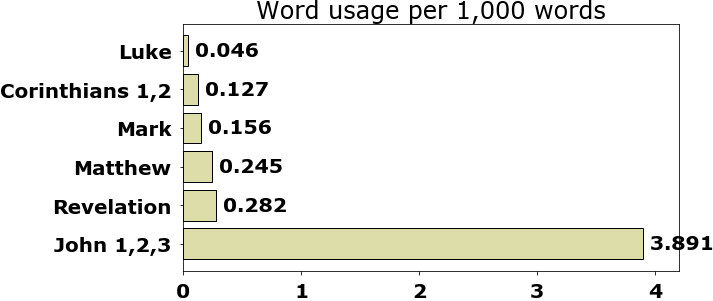
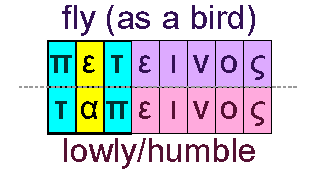
- *G2562 *1 καλάμη (kal-am'-ay) : feminine of G2563 κάλαμος; a stalk of grain, i.e. (collectively) stubble:--stubble.
- καλαμην
- 1 Corinthians 3:12 ... stones, wood, hay, stubble;
- *G2563 *12 κάλαμος (kal'-am-os) : or uncertain affinity; a reed (the plant or its stem, or that of a similar plant); by implication, a pen:--pen, reed.
- καλαμον *6
- Matthew 11:7 ... into the wilderness to see? A reed shaken with the wind?
- Matthew 12:20 A bruised reed shall he not break, and ...
- Matthew 27:29 ... his head, and a reed in his right hand: ...
- Matthew 27:30 ... upon him, and took the reed, and smote him ...
- Luke 7:24 ... into the wilderness for to see? A reed shaken with the wind?
- Revelation 21:15 ... me had a golden reed to measure the city, ...
- καλαμω *4
- Matthew 27:48 ... it with vinegar, and put it on a reed, and gave him to drink.
- Mark 15:19 And they smote him on the head with a reed, and did spit upon him, ...
- Mark 15:36 ... of vinegar, and put it on a reed, and gave him to drink, ...
- Revelation 21:16 ... and he measured the city with the reed, twelve thousand furlongs. ...
- καλαμου
- 3 John 1:13 ... with ink and pen write unto thee:
- καλαμος
- Revelation 11:1 And there was given me a reed like unto a rod: and the angel stood, saying, ...
35. The Greek difference is not better
Matthew 10:31 Fear ye not therefore, ye are of more value than many sparrows. [kjv]
μη ουν φοβηθητε φοβεισθε πολλων στρουθιων διαφερετε υμεις [gnt]
12:12 How much then is a man better than a sheep? Wherefore it is lawful to do well on the sabbath days. [kjv]
ποσω ουν διαφερει ανθρωπος προβατου ωστε εξεστιν τοις σαββασιν καλως ποιειν [gnt]

The ancient Greek word
"διαφέρω" ≈ "carried through, different" with a sense of a
"different" way or type as in it
"makes a difference".
In many places, the Latin Vulgate changed
"different" to
"better".
Paraphrase: ... you are different (not better) than many of the sparrows.
Paraphrase: ... how different (not better) is a man (than) a sheep.
The word comes from two Greek words.
The ancient Greek prefix "δια" ≈ "through" as in the English word "diameter".
The ancient Greek word "φέρω" ≈ "bring, carry" and is related to the English word "bear" (as in carrying something) and the Latin word "fero" ≈ "bear, carry".
The modern Greek word
"διαφέρω" (thee-a-FEH-ro) ≈ "differ, be different".
36. Matthew 12:20
Matthew 12:20 A bruised reed shall he not break, and smoking flax shall he not quench, till he send forth judgment unto victory. [kjv]
καλαμον συντετριμμενον ου κατεαξει και λινον τυφομενον ου σβεσει εως αν εκβαλη εις νικος την κρισιν [gnt]
This is commentary added by Matthew which may or may not fit the situation.
This verses uses the sense of "
extinguishable" as in, for example, "
not quenched".
The Greek word translated as "
bruised" is similar to the "
scattered" in "
path" in the "
path" not to take.
37. Matthew 12:33 Good and rotten trees
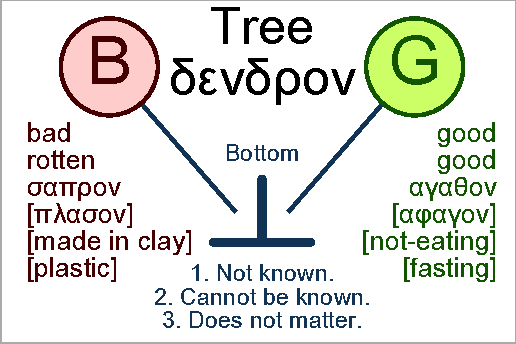
Matthew 12:33 Either make the tree good, and his fruit good; or else make the tree corrupt, and his fruit corrupt: for the tree is known by his fruit. [kjv]
η ποιησατε το δενδρον καλον και τον καρπον αυτου καλον η ποιησατε το δενδρον σαπρον και τον καρπον αυτου σαπρον εκ γαρ του καρπου το δενδρον γινωσκεται [gnt]
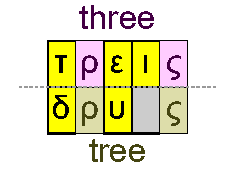
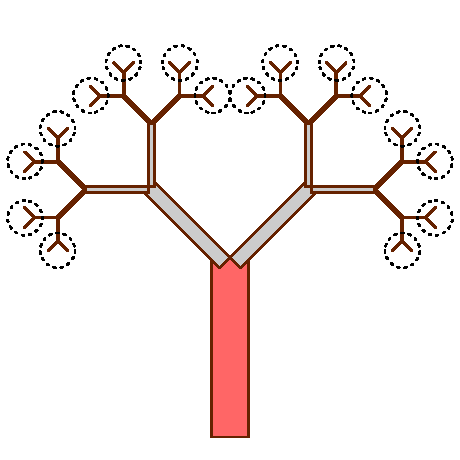
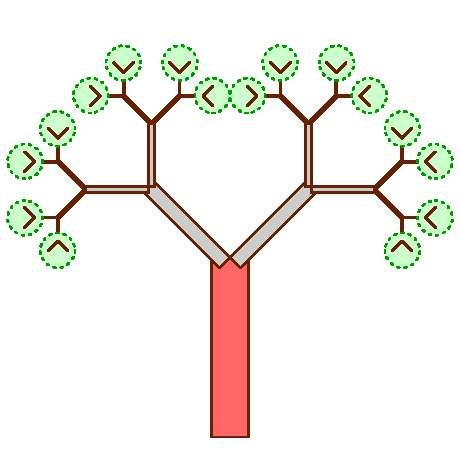
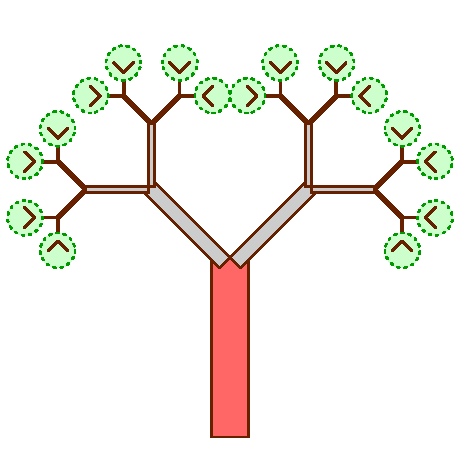
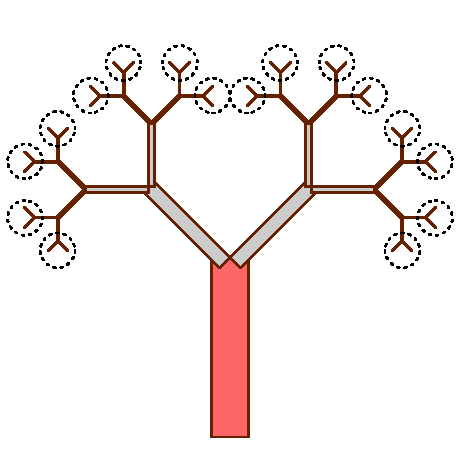
It's a tree, wooden you know! Let's make like a tree and get out of here.
Jesus: Freely you have received. Freely give. ... Know the truth and the truth will make you free.
Birds: Treely you have received. Treely give. ... Know the root and the root will make you (a) tree.
38. Matthew 12:33 Good and rotten trees
Matthew 12:33 Either make the tree good, and his fruit good; or else make the tree corrupt, and his fruit corrupt: for the tree is known by his fruit. [kjv]
η ποιησατε το δενδρον καλον και τον καρπον αυτου καλον η ποιησατε το δενδρον σαπρον και τον καρπον αυτου σαπρον εκ γαρ του καρπου το δενδρον γινωσκεται [gnt]
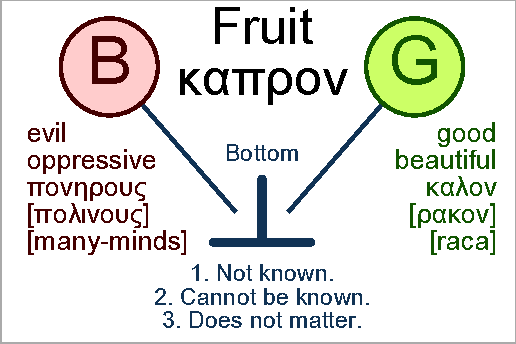
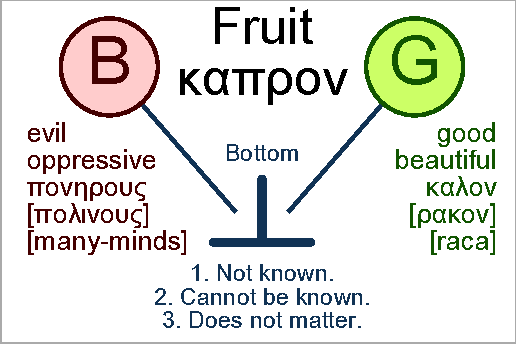
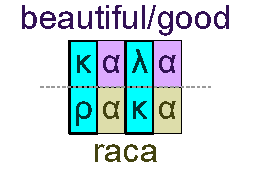
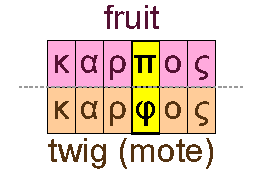
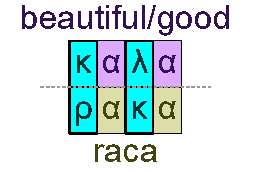
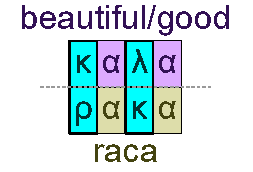
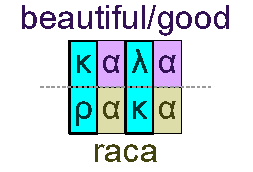
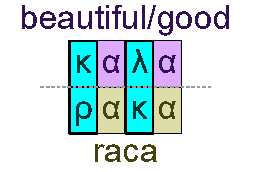
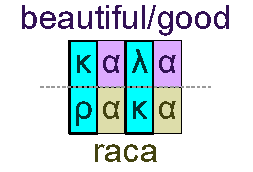
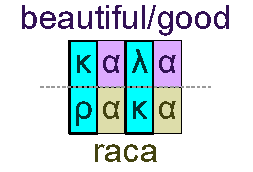
Can one "make" the "tree" and the "fruit" "beautiful" or "raca"?
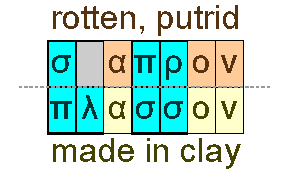
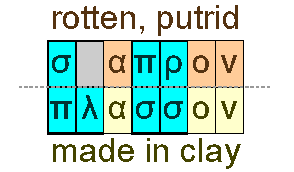
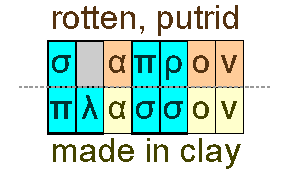
Can one "make" the "tree" and the "fruit" "rotten" or "plastic"?
Is the "tree" really "known" by it's "fruit"?
What is the
information content? Whose
POV (Point Of View) is being used?
39. Matthew 12:33 Good and rotten trees
Matthew 12:33 Either make the tree good, and his fruit good; or else make the tree corrupt, and his fruit corrupt: for the tree is known by his fruit. [kjv]
η ποιησατε το δενδρον καλον και τον καρπον αυτου καλον η ποιησατε το δενδρον σαπρον και τον καρπον αυτου σαπρον εκ γαρ του καρπου το δενδρον γινωσκεται [gnt]
Notice that the Latin uses the same word for the Greek
"rotten" "fruit" in verse 33 and for
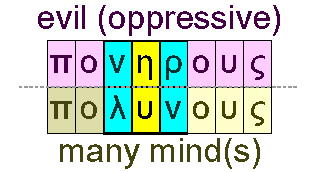
"evil" man in verse 35. It is reasonable to assume that if Jesus intended these two be the same, Matthew would have used the same Greek word in each verse.
A
mountain represents an
empire. A
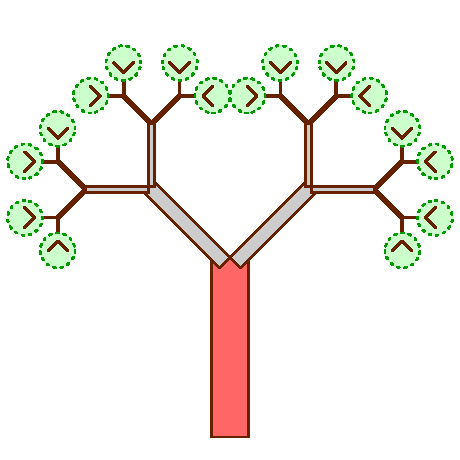
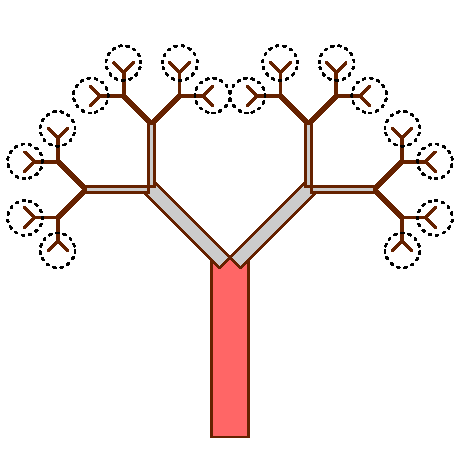
tree represents the human infrastructure of an empire. The
root of the tree represents the human
leader. In computer science, a single person would be a (degenerate)
tree structure. That is, a tree with no branches and one leaf - the root of the (degenerate) tree.
40. Matthew 12:33 Good and rotten fruit
Matthew 12:33 Either make the tree good, and his fruit good; or else make the tree corrupt, and his fruit corrupt: for the tree is known by his fruit. [kjv]
η ποιησατε το δενδρον καλον και τον καρπον αυτου καλον η ποιησατε το δενδρον σαπρον και τον καρπον αυτου σαπρον εκ γαρ του καρπου το δενδρον γινωσκεται [gnt]
Assume that the
"tree" represents a human hierarchy as in a religious establishment such as the one Jesus is addressing. Here are the choices provided.
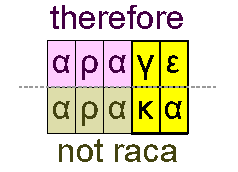
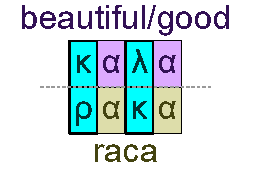
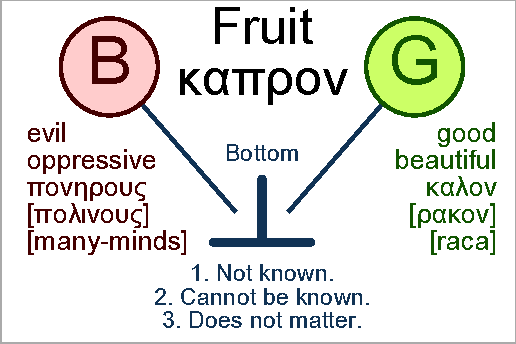
Make the "tree" good and the fruit good [raca].
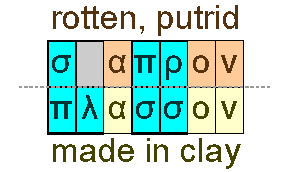
Make the "tree" rotten and the fruit evil/oppressive [made in clay, plastic].
This verse would not need to be said unless something else were happening.
It appears that the
"rotten" "tree" was trying to make the fruit appear as
"good" fruit. Why would a
"good" "tree" try to make the fruit appear as
"rotten"? Might any
"idle words" used to make the fruit
appear "good" need an "
accounting"?
Jesus is the "
vine" and we are the "
branches" (of the vine, not the tree).
41. Matthew 12:33 Good and rotten fruit
Matthew 12:33 Either make the tree good, and his fruit good; or else make the tree corrupt, and his fruit corrupt: for the tree is known by his fruit. [kjv]
η ποιησατε το δενδρον καλον και τον καρπον αυτου καλον η ποιησατε το δενδρον σαπρον και τον καρπον αυτου σαπρον εκ γαρ του καρπου το δενδρον γινωσκεται [gnt]
The statement "
The tree is known by its fruit." is an
ambiguous statement based on the viewpoint of who "
knows" or "
infers" what.
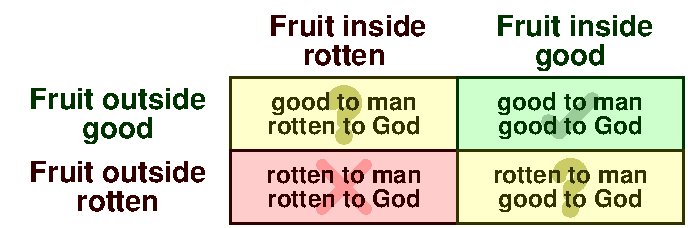 God "knows" (sees) both the inside and the outside of the "fruit".
Man "knows" (sees) only the outside of the "fruit".
God "knows" (sees) both the inside and the outside of the "fruit".
Man "knows" (sees) only the outside of the "fruit".
From computability theory, it may not be possible to always determine in
all cases if the inside is
"good" or
"rotten". An "
accounting" may be necessary for
"idle words" so that a
decision procedure can be used to resolve ambiguities.
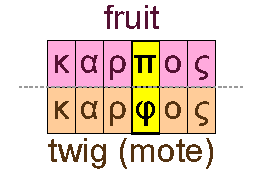
The Greek word for
"fruit" is masculine and takes the
grammatical gender of "
his".
42. Matthew 13:7-8 Thorns and good ground
Matthew 13:7 And some fell among thorns; and the thorns sprung up, and choked them: [kjv]
αλλα δε επεσεν επι τας ακανθας και ανεβησαν αι ακανθαι και απεπνιξαν αυτα [gnt]
13:8 But other fell into good ground, and brought forth fruit, some an hundredfold, some sixtyfold, some thirtyfold. [kjv]
αλλα δε επεσεν επι την γην την καλην και εδιδου καρπον ο μεν εκατον ο δε εξηκοντα ο δε τριακοντα [gnt]
Can a seed be "choked"? (not an artichoke seed)
Can "thorns" "choke" a growing seed?
For fun, someone once tried to strangle me.
I guess the choke was on me.
Note the decreasing productivity of the seeds:
100 then
60 then
30. Why?
43. Matthew 13:23 Good ground
Matthew 13:23 But he that received seed into the good ground is he that heareth the word, and understandeth it; which also beareth fruit, and bringeth forth, some an hundredfold, some sixty, some thirty. [kjv]
ο δε επι την γην την καλην γην σπαρεις ουτος εστιν ο τον λογον ακουων και συνιων συνιεις ος δη καρποφορει και ποιει ο μεν εκατον ο δε εξηκοντα ο δε τριακοντα [gnt]
Greek:
the one then (that) on the good [raca] ground (is) seeded is the one (who) the reasoning hears (with understanding) and understands then as (he) carries fruit and (he) makes/creates (he) on the one hand hundred [according to it - reasoning] (he) on the other hand sixty [having a short spear/sword] (he) on another hand thirty [three/tree, not a short spear/sword].
How did translations change from attributes about the
one (third person singular) to a generalization about
many (some)? For some it is then a time-sequence of events for different groups.
44. Matthew 13:23 Good ground
Matthew 13:23 But he that received seed into the good ground is he that heareth the word, and understandeth it; which also beareth fruit, and bringeth forth, some an hundredfold, some sixty, some thirty. [kjv]
ο δε επι την γην την καλην γην σπαρεις ουτος εστιν ο τον λογον ακουων και συνιων συνιεις ος δη καρποφορει και ποιει ο μεν εκατον ο δε εξηκοντα ο δε τριακοντα [gnt]
There are no specific units on the numbers. To what does each number refer? Is it the same or different attributes?
The
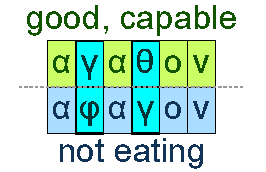
"good" [raca] produces three variations of
"carried-fruit" (in the same person).
100. [according to it] : "understanding" of the "reasoning".
60: [shadow - short (spear)] : not trying to be first or get recognition.
30: [not three/tree - short (spear)] : not part of a tree - saying raca to the tree.
45. Matthew 13:23 Latin hands
Matthew 13:23 But he that received seed into the good ground is he that heareth the word, and understandeth it; which also beareth fruit, and bringeth forth, some an hundredfold, some sixty, some thirty. [kjv]
ο δε επι την γην την καλην γην σπαρεις ουτος εστιν ο τον λογον ακουων και συνιων συνιεις ος δη καρποφορει και ποιει ο μεν εκατον ο δε εξηκοντα ο δε τριακοντα [gnt]
qui vero in terra bona seminatus est hic est qui audit verbum et intellegit et fructum adfert et facit aliud quidem centum aliud autem sexaginta porro aliud triginta [v]
The Latin has just numbers, just as the Greek. The English decides to add "
fold" or "
times".
The Latin word
"aliud" ≈ "other, another, else, different" (nominative/accusative/vocative neuter singular) of
"alius" ≈ "other, another, else, different". It is sometimes used as the
"on the one hand" and
"on the other hand"
46. Matthew 13:23 Wessex and Wycliffe
Matthew 13:23 But he that received seed into the good ground is he that heareth the word, and understandeth it; which also beareth fruit, and bringeth forth, some an hundredfold, some sixty, some thirty. [kjv]
ο δε επι την γην την καλην γην σπαρεις ουτος εστιν ο τον λογον ακουων και συνιων συνιεις ος δη καρποφορει και ποιει ο μεν εκατον ο δε εξηκοντα ο δε τριακοντα [gnt]
… gode land … word … waestme bringð … sum hund-fealdne. sum sixtig-fealdne. sum þrittig-fealdne. [wes]
… sowun … good loond… herith … word… vnderstondeth… bryngith … fruyt… summe … hundrid fold… anothir sixti fold… another thritti fold. [wy]
47. Matthew 13:23 Gematria
Matthew 13:23 But he that received seed into the good ground is he that heareth the word, and understandeth it; which also beareth fruit, and bringeth forth, some an hundredfold, some sixty, some thirty. [kjv]
… ο μεν εκατον ο δε εξηκοντα ο δε τριακοντα [gnt]
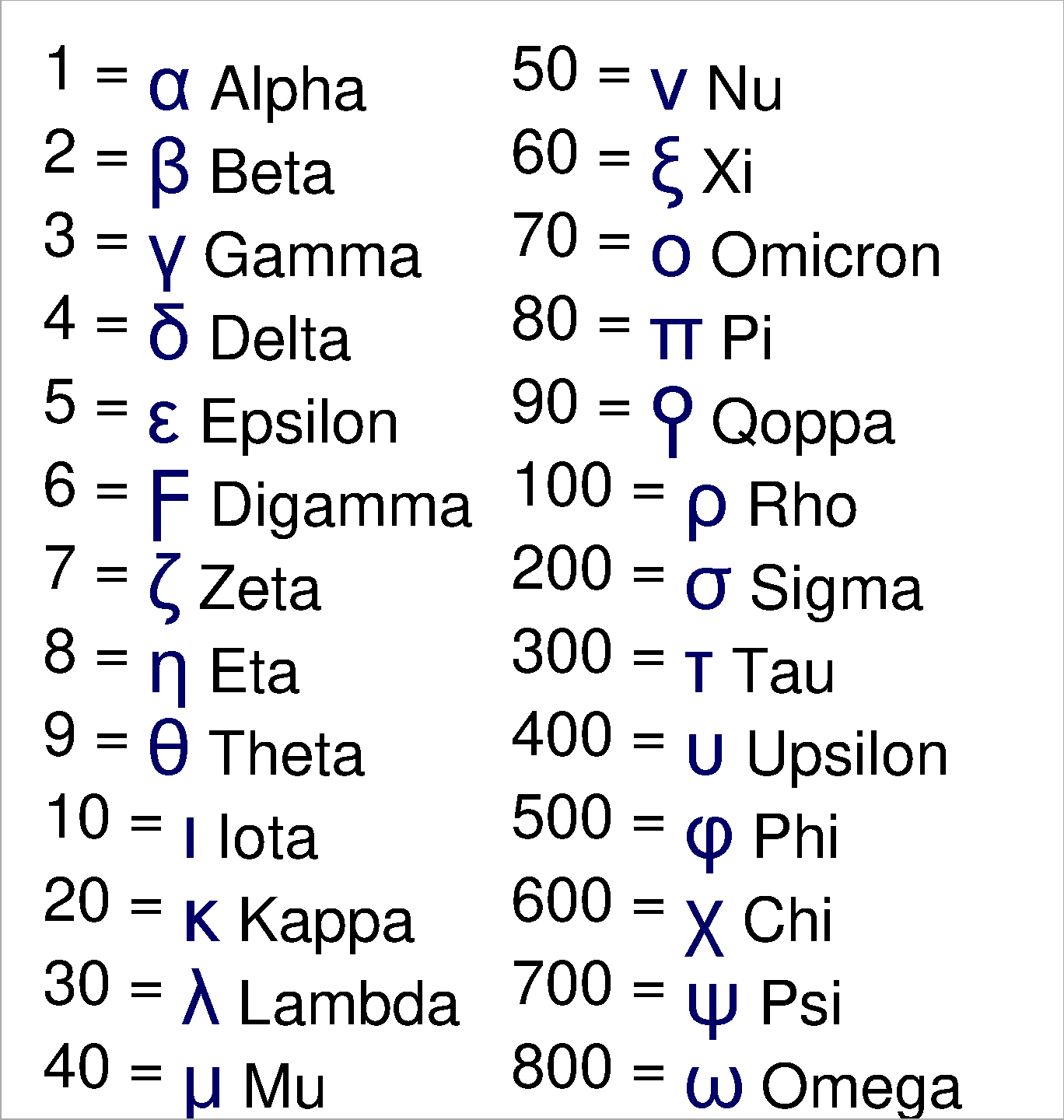
Greek, like Hebrew, associated letters with numbers. The study of this is called
gematria. The most famous instance of gematria is the
666 from Revelation 13.
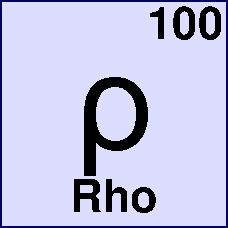
100 = "Ρ" or "ρ" or "rho".
60 = "Ξ" or "ξ" or "ski".
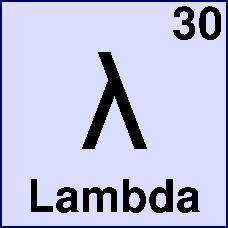
30 = "Λ" or "λ" or "lambda".
Any gematria meaning of
100,
60 and
30 is not clear but may indicate some interesting connections.
Keep in mind that the historical connection of this parable is that of the time of Jesus in Judea where the Romans ruled and had let Herod (and descendent's) have some local rule.
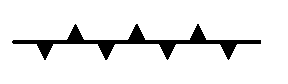
48. Gematria of decreasing yields
49. Reversed number order in Matthew and Mark
Matthew 13:23 But he that received seed into the good ground is he that heareth the word, and understandeth it; which also beareth fruit, and bringeth forth, some an hundredfold, some sixty, some thirty. [kjv]
Mark 4:8 And other fell on good ground, and did yield fruit that sprang up and increased; and brought forth, some thirty, and some sixty, and some an hundred. [kjv]
|
Matthew:
|
... 100 ... 60 ... 30 ...
|
|
Mark:
|
... 30 ... 60 ... 100 ...
|
Who is right? Does it matter? Who copied from whom?
How might this discrepancy have arisen?
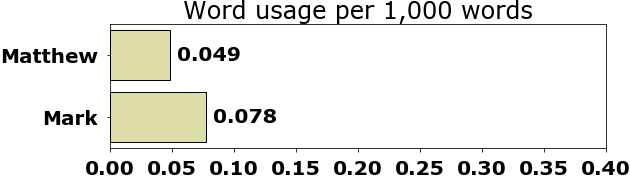
Mark repeats some of what Matthew writes but also changes and adds some things. Many details in Matthew are not in Mark (or Luke). Note the order of the numbers.
50. Matthew 13:24-25
Matthew 13:24 Another parable put he forth unto them, saying, The kingdom of heaven is likened unto a man which sowed good seed in his field: [kjv]
αλλην παραβολην παρεθηκεν αυτοις λεγων ωμοιωθη η βασιλεια των ουρανων ανθρωπω σπειροντι σπειραντι καλον σπερμα εν τω αγρω αυτου [gnt]
13:25 But while men slept, his enemy came and sowed tares among the wheat, and went his way. [kjv]
εν δε τω καθευδειν τους ανθρωπους ηλθεν αυτου ο εχθρος και εσπειρεν επεσπειρεν ζιζανια ανα μεσον του σιτου και απηλθεν [gnt]
The "
sowing" of the "
seed" appears to have happened in parable #1, the parable of the sower. Those who fell by the wayside, choked by thorns, etc., do
not appear to be the
"tares".
It would appear that the "
birds" deposited as weed seeds the weeds that appear with the wheat.
51. Matthew 13:27 Good seed
Matthew 13:27 So the servants of the householder came and said unto him, Sir, didst not thou sow good seed in thy field? from whence then hath it tares? [kjv]
προσελθοντες δε οι δουλοι του οικοδεσποτου ειπον αυτω κυριε ουχι καλον σπερμα εσπειρας εν τω σω αγρω ποθεν ουν εχει τα ζιζανια [gnt]
52. Matthew 13:45-46 One pearl
Matthew 13:45 Again, the kingdom of heaven is like unto a merchant man, seeking goodly pearls: [kjv]
παλιν ομοια εστιν η βασιλεια των ουρανων ανθρωπω εμπορω ζητουντι καλους μαργαριτας [gnt]
13:46 Who, when he had found one pearl of great price, went and sold all that he had, and bought it. [kjv]
ος ευρων δε ενα πολυτιμον μαργαριτην απελθων πεπρακεν παντα οσα ειχεν και ηγορασεν αυτον [gnt]
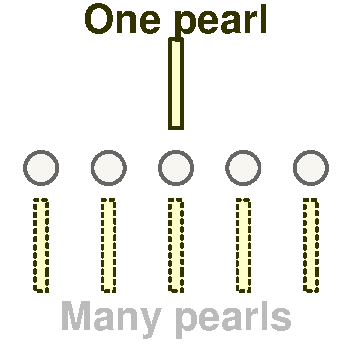
Revelation defines a "
merchant man" as a "
great one of the earth". Why might a
"great" one of the earth sell everything, but not himself, to obtain
"one" pearl? Are not "
many" pearls needed. That is, at least
two pearls, needed. If everything is sold to buy
one pearl, which pearls are thus
not obtained? Obtaining only
one pearl is like having one link in a chain. From Matthew 18, that
"one" or
"sheep" or
"little one" might be you! Have you been
"bought" to help someone else be
"great"?
Might the two most important laws identified by Jesus be
two "pearls". Both are needed. What happens if one obtains only
one of these
"pearls"?
53. Matthew 13:48 Good and bad
Matthew 13:48 Which, when it was full, they drew to shore, and sat down, and gathered the good into vessels, but cast the bad away. [kjv]
ην οτε επληρωθη αναβιβασαντες επι τον αιγιαλον και καθισαντες συνελεξαν τα καλα εις αγγεια αγγη τα δε σαπρα εξω εβαλον [gnt]
54. Matthew 13:48 Gathered vessels
Matthew 13:48 Which, when it was full, they drew to shore, and sat down, and gathered the good into vessels, but cast the bad away. [kjv]
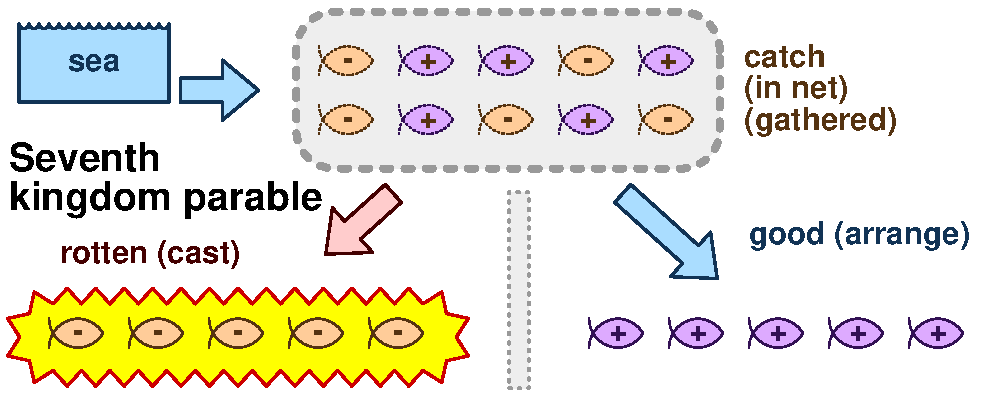
How are the
"good" "arranged" into
"vessels"?
What exactly is meant by
"gathered" or
"collected" or
"arranged" into
"vessels"?
Consider
10 of which
5 are
"rotten" and
5 are
"good". There are three obvious possibilities for
"gathering" or
"arranging" into
"vessels". There may be more.
55. Strongs - rotten
56. Usage - rotten
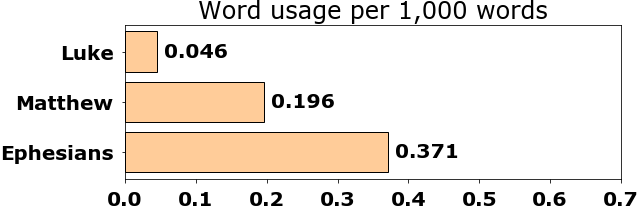
- *G4550 *8 σαπρός (sap-ros') : from G4595; rotten, i.e. worthless (literally or morally):--bad, corrupt. Compare G4190.
σαπρον *6
- Matthew 7:17 ... good fruit; but a corrupt tree bringeth forth evil fruit.
- Matthew 7:18 ... evil fruit, neither can a corrupt tree bring forth good fruit.
- Matthew 12:33 ... make the tree corrupt, and his fruit corrupt: for the tree ...
- Luke 6:43 ... not forth corrupt fruit; neither doth a corrupt tree bring forth ...
σαπρα
- Matthew 13:48 ... vessels, but cast the bad away.
σαπρος
- Ephesians 4:29 Let no corrupt communication proceed out of ...
57. Matthew 15:7-8
Matthew 15:7 Ye hypocrites, well did Esaias prophesy of you, saying, [kjv]
υποκριται καλως προεφητευσεν επροφητευσεν περι υμων ησαιας λεγων [gnt]
15:8 This people draweth nigh unto me with their mouth, and honoureth me with their lips; but their heart is far from me. [kjv]
εγγιζει μοι ο λαος ουτος τω στοματι αυτων και τοις τοις χειλεσιν με τιμα η δε καρδια αυτων πορρω απεχει απ εμου [gnt]
The Greek word for
"hypocrite" meant
"acting" or
"pretending".
Modern hypocritical behavior: Telling the disciples not to eat without washing their hands while they, in fact, eating without washing their own hands. They were not doing this. Thus, they were not "hypocrites" in the modern sense.
Ancient hypocritical acting or pretending behavior: They believed what they were saying but were "acting" or "pretending" that this tradition was, in fact, important.
Jesus, through Isaiah, indicates the
definition of the
"hypocrite" as someone who
"pretends" to honor God (with their "
lips") but their "
heart" does not do this. They can do exactly what they are saying and are then
not "hypocrites" in the modern sense. Instead, they are just
pretending to honor God.
58. Matthew 15:26-27 Woman and the bread crumbs at the table
An interesting story that appears to be related is in Matthew 15. The account in Mark 7 is similar. Let us look at Matthew 15. Jesus is speaking.
Matthew 15:26 But he answered and said, It is not meet to take the children's bread, and to cast it to dogs. [kjv]
ο δε αποκριθεις ειπεν ουκ εστιν καλον λαβειν τον αρτον των τεκνων και βαλειν τοις κυναριοις [gnt]
15:27 And she said, Truth, Lord: yet the dogs eat of the crumbs which fall from their masters' table. [kjv]
η δε ειπεν ναι κυριε και γαρ τα κυναρια εσθιει απο των ψιχιων των πιπτοντων απο της τραπεζης των κυριων αυτων [gnt]
The woman replies. Then Jesus grants
"bread" "crumbs" to the woman. Why might a church
deny communion to those may consider
"dogs"? What about a
pure bred "dog"?
59. Matthew 17:4
Matthew 17:4 Then answered Peter, and said unto Jesus, Lord, it is good for us to be here: if thou wilt, let us make here three tabernacles; one for thee, and one for Moses, and one for Elias. [kjv]
αποκριθεις δε ο πετρος ειπεν τω ιησου κυριε καλον εστιν ημας ωδε ειναι ει θελεις ποιησωμεν ποιησω ωδε τρεις σκηνας σοι μιαν και μωση μωυσει μιαν και μιαν ηλια μιαν [gnt]
Peter is speaking. What Peter is saying appears to not be in line with
"raca".
60. Matthew 18:8 Good or better
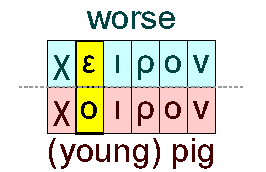
Matthew 18:8 Wherefore if thy hand or thy foot offend thee, cut them off, and cast them from thee: it is better for thee to enter into life halt or maimed, rather than having two hands or two feet to be cast into everlasting fire. [kjv]
ει δε η χειρ σου η ο πους σου σκανδαλιζει σε εκκοψον αυτα αυτον και βαλε απο σου καλον σοι εστιν εισελθειν εις την ζωην χωλον η κυλλον η χωλον η δυο χειρας η δυο ποδας εχοντα βληθηναι εις το πυρ το αιωνιον [gnt]
What is
"good" to do? How might this be
"raca"?
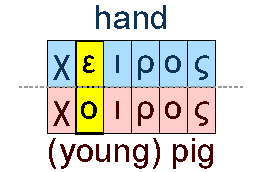
The "hand" refers to the "pig" (muscle) who works for the "bird".
The "foot" refers to the "fish" attracted by the "bird" to a "city" on a "hill" that cannot be "hid" (in a not good sense). The "mountain" cannot be "hid" because it is already under water. [Revelation]
61. Matthew 18:9 Good or better
Matthew 18:9 And if thine eye offend thee, pluck it out, and cast it from thee: it is better for thee to enter into life with one eye, rather than having two eyes to be cast into hell fire. [kjv]
και ει ο οφθαλμος σου σκανδαλιζει σε εξελε αυτον και βαλε απο σου καλον σοι εστιν μονοφθαλμον εις την ζωην εισελθειν η δυο οφθαλμους εχοντα βληθηναι εις την γεενναν του πυρος [gnt]
Jesus uses the word
"one" to refer to
you (one cookie rule). Using
"one" here would break that model. Here, Jesus uses a different word for
"one" - as the Greek word
"mono".
What is
"good" to do? How might this be
"raca"?
The "eye" refers to the "leader". In the case of a false "leader" it is a "bird".
A folk etymology (i.e., in this case, an obvious play on words) is that an
"eye" is a "
hole" into a "
chamber" as in a
"bird" "
house".
62. Matthew 26:24 Raca good
Matthew 26:24 The Son of man goeth as it is written of him: but woe unto that man by whom the Son of man is betrayed ! it had been good for that man if he had not been born. [kjv]
ο μεν υιος του ανθρωπου υπαγει καθως γεγραπται περι αυτου ουαι δε τω ανθρωπω εκεινω δι ου ο υιος του ανθρωπου παραδιδοται καλον ην αυτω ει ουκ εγεννηθη ο ανθρωπος εκεινος [gnt]
What is
"good" to do? How might this be
"raca"?
Does the "
on the one hand" and "
on the other hand" make a difference in how one might understand the meaning of this verse?
63. Good raca
How well does the code word "
good" as "
raca" fit when used by Jesus in Matthew?
64. End of page











































 The ancient Greek word "καλάμη" ≈ "reed, staff, rod" and is related to "canons" and "cannons" and "canyons". A similar Greek word refereed to a stylus on pen used for writing.























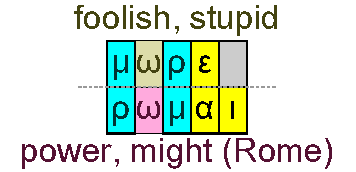
 The symbol of Rome, the ruling power of the world at that time, in letters was SPQR (Senatus Populusque Romanus) (as an initialism) from the Latin phrase "senātus populusque rōmānus" ≈ "The Roman Senate and People".