Send
Close Add comments:
(status displays here)
Got it! This site "creationpie.org" uses cookies. You consent to this by clicking on "Got it!" or by continuing to use this website. Note: This appears on each machine/browser from which this site is accessed.
Matthew 7:17-20 Fruit trees programmed to produce fruit of their kind
1. Matthew 7:17-20 Fruit trees programmed to produce fruit of their kind
2. Text meanings
There are many ways to obtain the possible meanings of text. It assumed that the creator of the text had one or more meanings in mind. Such text cannot arise by chance. Here are some ways to attempt to obtain the possible meanings.
☐ literal meaning(s) - acts as a distractor
☐ figurative meaning(s) (many meanings, opinion-based, go figure)
☐ code word (good) meaning (few meanings, constraint-logic based)
☐ simple play (bad) on word meaning (verification, continuity, authentication)
☐ extended play (ugly) on word meanings (Spoonerisms, etc. deeper verification, etc.)
☐ modified meaning based on possible non-verbal communication
The language used can affect the inferred meaning.
☐ original Greek (Hebrew/Aramaic excuse, Koine excuse, idiom excuse)
☐ modified Latin meanings (which changed Greek meanings - deliberate or well-meaning)
☐ modified English meanings (which propagated and/or changed Latin meanings)
☐ change of English over time
[dictionary definitions]
3. Matthew 7
4. Matthew 7:17-20 Fruit trees programmed to produce fruit of their kind
Matthew 7:17 Even so every good tree bringeth forth good fruit; but a corrupt tree bringeth forth evil fruit. [kjv]
7:18 A good tree cannot bring forth evil fruit, neither can a corrupt tree bring forth good fruit. [kjv]
7:19 Every tree that bringeth not forth good fruit is hewn down, and cast into the fire. [kjv]
7:20 Wherefore by their fruits ye shall know them. [kjv]
Jesus makes some interesting remarks about fruit trees. Plants, such as fruit trees, have DNA which determines which fruit is produced by which trees.
A peach tree always produces peaches.
An apple tree always produces apples.
This works well for
literal trees and fruit. However, in these verses, Jesus uses one adjective for the
trees and a
different adjective for the
fruit.
5. Ginkgo leaves falling
The leaves of
ginkgo trees appear to fall on one day. The superficial reason involves scarring in their stems that happens quickly in the ginkgo trees given certain weather conditions (cold air, etc.).
tree, seed
root(s), trunk, branches
leaves, fruit
Biff:
Make like a tree and get out of here.
The underlying reason is that the
DNA (Deoxyribonucleic Acid) is programmed to do so. From an applied programming language theory perspective, this can be a higher-order effect.
6. Kung Fu Panda
The Peach Tree of Heavenly Wisdom.
For those who like to watch animated movies, such as Kung Fu Panda, Master Shifu (Dustin Hoffman) tells Oogway that he can decide what tree to plant. Oogway tells Shifu that the tree will always be the tree determined by the seed - which came from that type of tree.
A peach tree always produces peaches.
An apple tree always produces apples.
Trees are named for what they produce. Are there exceptions?
[present]
7. Genesis 1:11-13 A seed within itself, the chicken or the egg
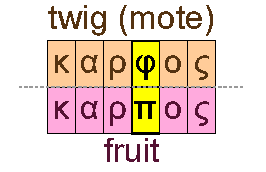
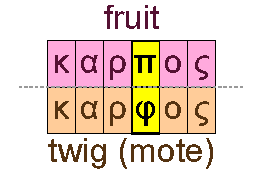
In Genesis 1:11-12 we have an example of this with fruit, "
whose seed is in itself". Modern self-replicating programs provide an example of this idea.
Genesis 1:11 And God said, Let the earth bring forth grass, the herb yielding seed, and the fruit tree yielding fruit after his kind, whose seed is in itself, upon the earth: and it was so. [kjv]
και ειπεν ο θεος βλαστησατω η γη βοτανην χορτου σπειρον σπερμα κατα γενος και καθ ομοιοτητα και ξυλον καρπιμον ποιουν καρπον ου το σπερμα αυτου εν αυτω κατα γενος επι της γης και εγενετο ουτως [lxx]
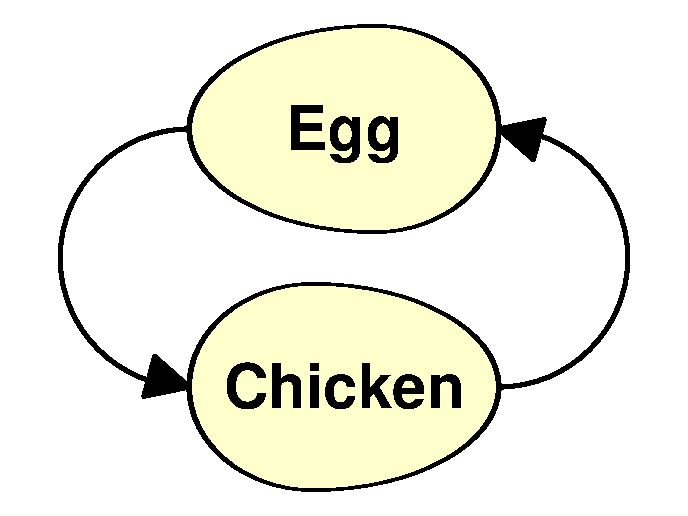
Which came first, the
chicken or the
egg?
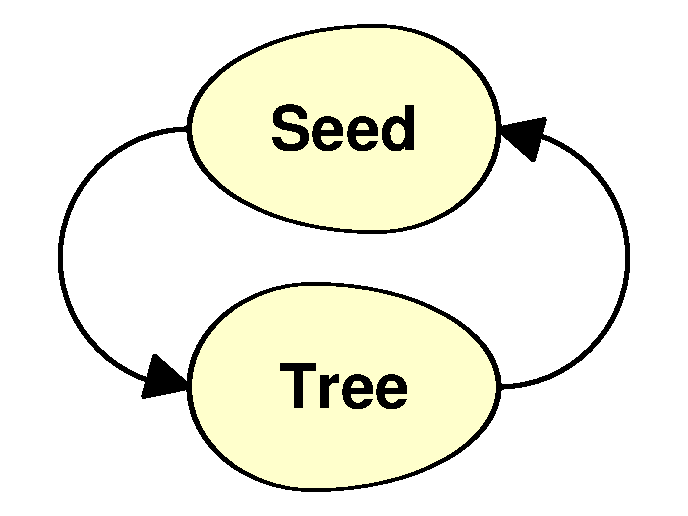
Which came first, the
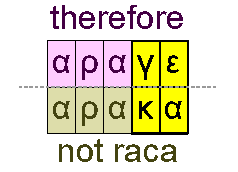
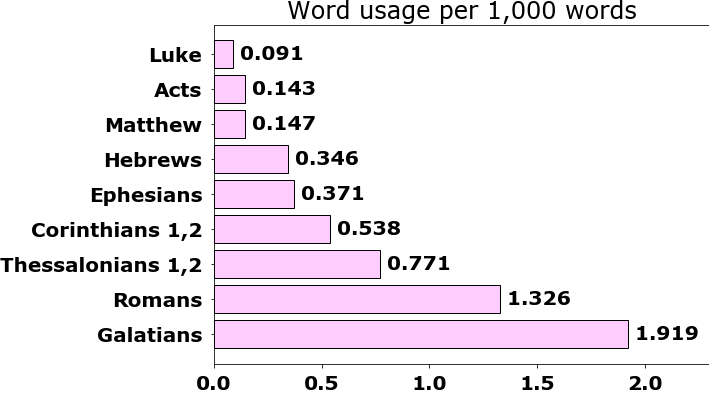
tree or the
seed?
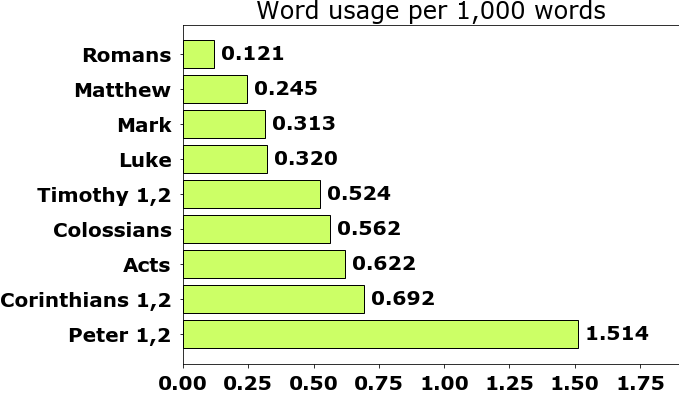
The question, "
Which came first, the chicken or the egg?" refers to a
symbiotic situation where there are two objects that each depend on the other and the problem is to determine which came first.
Somehow, the information for the
egg needs to be within the
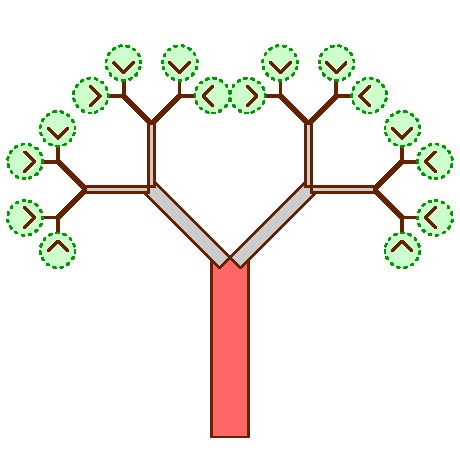
chicken. This is a self-referential system. The situation is simpler in regards to
plants which are much more like
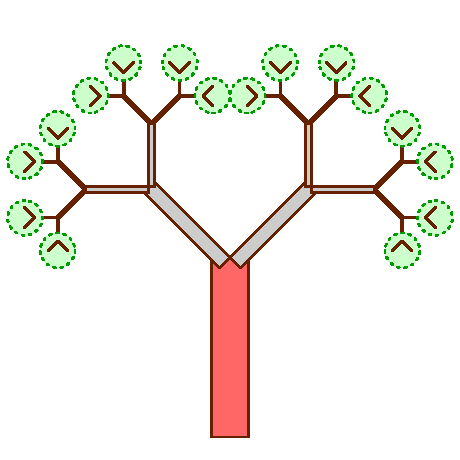
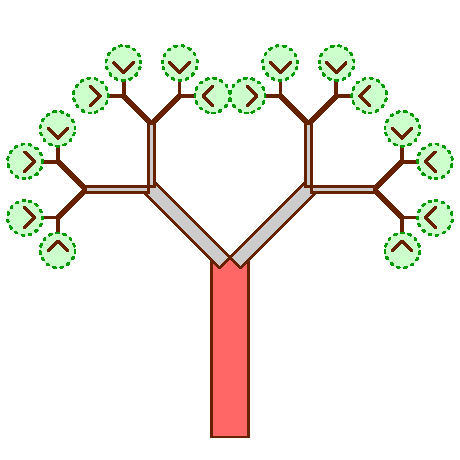
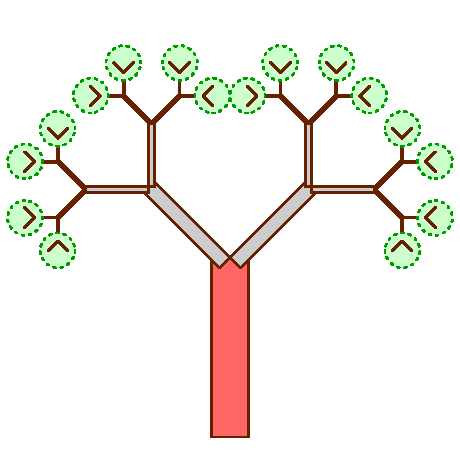
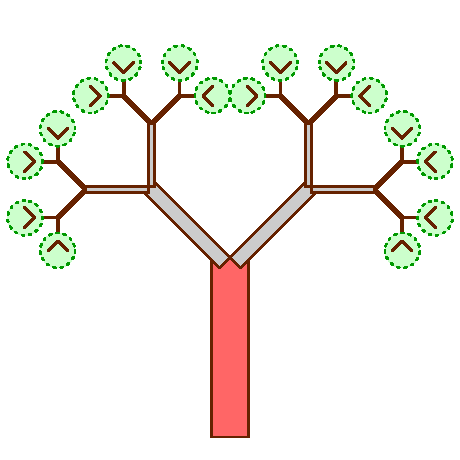
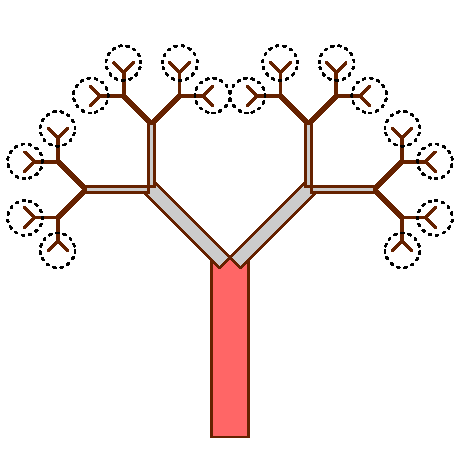
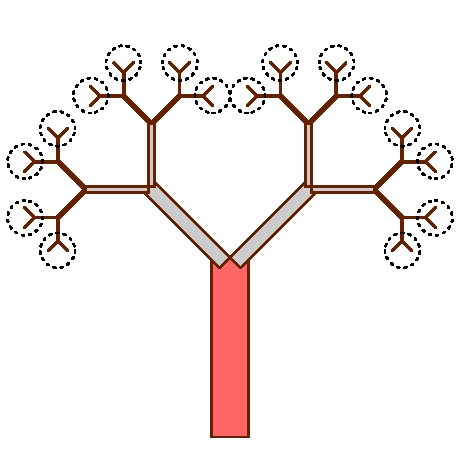
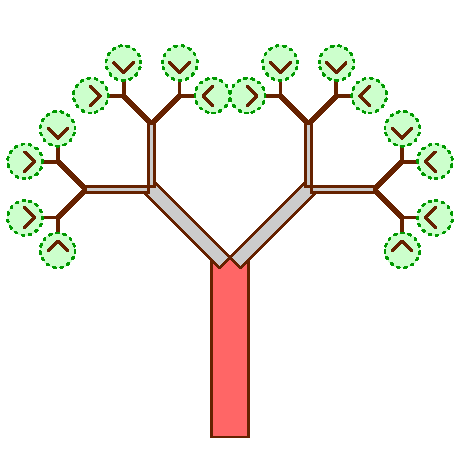
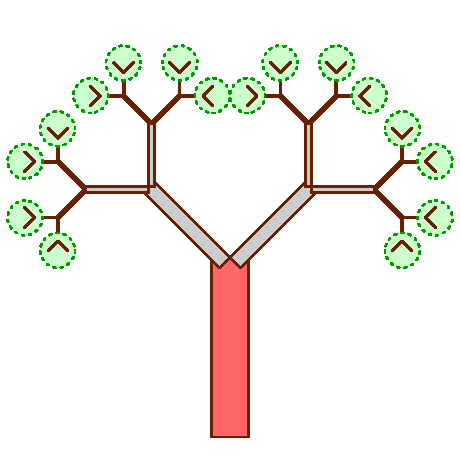
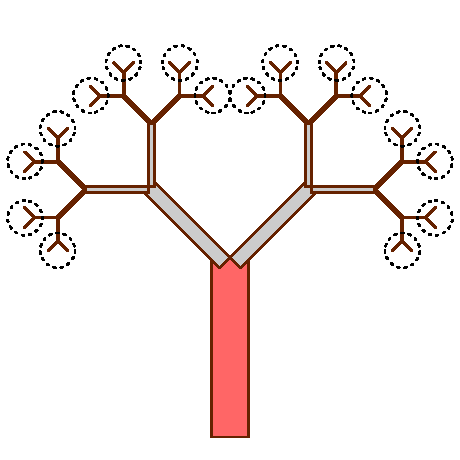
fractals.
8. Adding the numbers
9. Creation week build
1
2
3
4
5
6
7
8
9
10
11
12
13
+
-
▶
|
10. Matthew 7:17-18 Good and bad trees
Matthew 7:17 Even so every good tree bringeth forth good fruit; but a corrupt tree bringeth forth evil fruit. [kjv]
ουτως παν δενδρον αγαθον καρπους καλους ποιει το δε σαπρον δενδρον καρπους πονηρους ποιει [gnt]
7:18 A good tree cannot bring forth evil fruit, neither can a corrupt tree bring forth good fruit. [kjv]
ου δυναται δενδρον αγαθον καρπους πονηρους ποιειν ενεγκειν ουδε δενδρον σαπρον καρπους καλους ποιειν [gnt]
The
adjective of the type of
"tree" and the type of
"fruit" are
not the same.
"good" and "good" using two different Greek words.
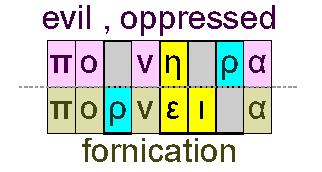
"rotten" and "evil" or "oppressed by toils".
11. Matthew 7:17 Word usage
Matthew 7:17 Even so every good tree bringeth forth good fruit; but a corrupt tree bringeth forth evil fruit. [kjv]
ουτως παν δενδρον αγαθον καρπους καλους ποιει το δε σαπρον δενδρον καρπους πονηρους ποιει [gnt]
| Matthew 7:17 |
| Strong |
Used |
Unique |
Word |
Part of speech |
| G1186 |
25 |
17 |
δενδρον |
noun nominative singular neuter |
| G2590 |
66 |
10 |
καρπους |
noun accusative plural masculine |
| G2570 |
100 |
4 |
καλους |
adjective accusative plural masculine |
| G4550 |
8 |
6 |
σαπρον |
adjective nominative singular neuter |
| G1186 |
25 |
17 |
δενδρον |
noun nominative singular neuter |
| G2590 |
66 |
10 |
καρπους |
noun accusative plural masculine |
| G4190 |
76 |
7 |
πονηρους |
adjective accusative plural masculine |
12. Matthew 7:18 Word usage
Matthew 7:18 A good tree cannot bring forth evil fruit, neither can a corrupt tree bring forth good fruit. [kjv]
ου δυναται δενδρον αγαθον καρπους πονηρους ποιειν ενεγκειν ουδε δενδρον σαπρον καρπους καλους ποιειν [gnt]
| Matthew 7:18 |
| Strong |
Used |
Unique |
Word |
Part of speech |
| G1186 |
25 |
17 |
δενδρον |
noun nominative singular neuter |
| G2590 |
66 |
10 |
καρπους |
noun accusative plural masculine |
| G4190 |
76 |
7 |
πονηρους |
adjective accusative plural masculine |
| G5342 |
68 |
2 |
ενεγκειν |
verb 2nd person aorist active infinitive |
| G1186 |
25 |
17 |
δενδρον |
noun nominative singular neuter |
| G4550 |
8 |
6 |
σαπρον |
adjective nominative singular neuter |
| G2590 |
66 |
10 |
καρπους |
noun accusative plural masculine |
| G2570 |
100 |
4 |
καλους |
adjective accusative plural masculine |
| G5342 |
68 |
2 |
ενεγκειν |
verb 2nd person aorist active infinitive |
13. Matthew 7:19 Word usage
Matthew 7:19 Every tree that bringeth not forth good fruit is hewn down, and cast into the fire. [kjv]
παν δενδρον μη ποιουν καρπον καλον εκκοπτεται και εις πυρ βαλλεται [gnt]
| Matthew 7:19 |
| Strong |
Used |
Unique |
Word |
Part of speech |
| G1186 |
25 |
17 |
δενδρον |
noun nominative singular neuter |
| G4160 |
560 |
5 |
ποιουν |
verb present active participle nominative singular neuter |
| G1581 |
10 |
3 |
εκκοπτεται |
verb present passive indicative 3rd person singular |
| G906 |
125 |
3 |
βαλλεται |
verb present passive indicative 3rd person singular |
14. Matthew 7:20 Word usage
Matthew 7:20 Wherefore by their fruits ye shall know them. [kjv]
αραγε απο των καρπων αυτων επιγνωσεσθε αυτους [gnt]
| Matthew 7:20 |
| Strong |
Used |
Unique |
Word |
Part of speech |
| G686 |
36 |
4 |
αραγε |
participle |
| G2590 |
66 |
6 |
καρπων |
noun genitive plural masculine |
| G1921 |
44 |
3 |
επιγνωσεσθε |
? V-FDI-2P |
15. Strongs - tree
*G1186 *25 δένδρον (den'-dron) : probably from drus (an oak); a tree:--tree.
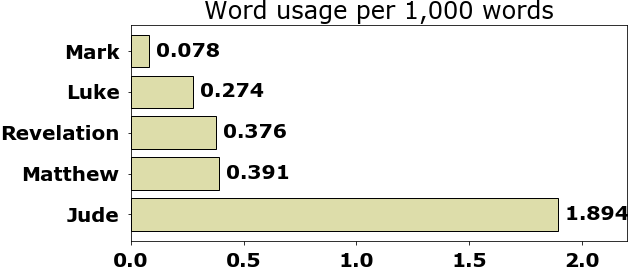 |
Words: δενδρα=4 δενδρον=17 δενδρων=4
|
The
ancient Greek word
"δένδρον" ≈ "tree" and is the source of English words starting with
"dendr" such as
"dendrite" (slender projection of nerve cells).
The
modern Greek word
"δέντρο" (THEH-dro) ≈ "tree".
16. Usage - tree
- *G1186 *25 δένδρον (den'-dron) : probably from drus (an oak); a tree:--tree.
- δενδρον *17
- Matthew 3:10 ... unto the root of the trees: therefore every tree which bringeth not ...
- Matthew 7:17 Even so every good tree bringeth forth good fruit; but a corrupt tree bringeth forth evil fruit.
- Matthew 7:18 A good tree cannot bring forth evil fruit, neither can a corrupt tree bring forth good fruit.
- Matthew 7:19 Every tree that bringeth not forth good ...
- Matthew 12:33 Either make the tree good, and his fruit good; or else make the tree corrupt, and ...
- Matthew 13:32 ... among herbs, and becometh a tree, so that the birds of the air ...
- Luke 3:9 ... unto the root of the trees: every tree therefore which bringeth ...
- Luke 6:43 For a good tree bringeth not forth corrupt fruit; neither doth a corrupt tree bring forth good fruit.
- Luke 6:44 For every tree is known by his own ...
- Luke 13:19 ... and waxed a great tree; and the fowls of the air ...
- Revelation 7:1 ... nor on any tree.
- Revelation 9:4 ... green thing, neither any tree; but only those ...
- δενδρων *4
- Matthew 3:10 ... unto the root of the trees: therefore every tree which bringeth not ...
- Matthew 21:8 ... cut down branches from the trees, and strawed them in the way.
- Luke 3:9 ... unto the root of the trees: every tree therefore which bringeth ...
- Revelation 8:7 ... the earth: and the third part of trees was burnt up, and all ...
- δενδρα *4
- Mark 8:24 ... I see men as trees, walking.
- Luke 21:29 ... the fig tree, and all the trees;
- Jude 1:12 ... carried about of winds; trees whose fruit withereth, without fruit, twice ...
- Revelation 7:3 ... neither the sea, nor the trees, till we have sealed the servants ...
17. Rhododendron
18. Matthew 7:17 Trees
Matthew 7:17 Even so every good tree bringeth forth good fruit; but a corrupt tree bringeth forth evil fruit. [kjv]
ουτως παν δενδρον αγαθον καρπους καλους ποιει το δε σαπρον δενδρον καρπους πονηρους ποιει [gnt]
The
ancient Greek word
"δένδρον" ≈ "tree". The Bible in general and Jesus in particular use the word for
"tree" as the
human infrastructure of an empire or organization. A
"bird" can "
reside" in a
"tree".
By contrast,
grapes grow on a
vine and are
not trees. A
vine can
appear as a
tree given proper trellising.
19. Family trees
A
tree is a
connected graph with
no cycles.
Each level of a tree increases the number of
nodes in the tree.
There are more and more ancestors in the family tree as one goes back in time. How then does one go back to just two people (i.e., Adam and Eve) at the start?
Geometric increase has to do with integer numbers (counts) such as 1, 2, 4, 8, 16, etc.
Exponential increase has to do with real numbers (measures) such as 1.0, 2.0, 4.0, 8.0, 16.0, etc. etc.
20. A family tree is not a tree
The population
doubles at each generation. That is,
2,
4,
8,
16, etc. This is a geometric increase.
In computer science terms, the family tree is
not a (pure)
tree structure. A
tree is a
connected graph with
no cycles. The family tree structure is what is called a
DAG (Directed Acyclic Graph). The corresponding
unconnected graph has cycles.
21. A family tree is not a tree
Simple (degenerate) view (where siblings marry siblings):
1. The first generation has two boys and two girls. They marry each other.
2. The second generation has two boys and two girls. They marry each other.
3. The third generation has two boys and two girls. They marry each other.
Note:
The population doubling in each generation as 2, 4, 8, 16, etc.
Going back, one has one set of parents, one set of grandparents, one set of great-grandparents, all the way to the original two (e.g., Adam and Eve).
... more to be added ...
22. Matthew 7:17-18 Good and capable and tasty
Matthew 7:17 Even so every good tree bringeth forth good fruit; but a corrupt tree bringeth forth evil fruit. [kjv]
ουτως παν δενδρον αγαθον καρπους καλους ποιει το δε σαπρον δενδρον καρπους πονηρους ποιει [gnt]
7:18 A good tree cannot bring forth evil fruit, neither can a corrupt tree bring forth good fruit. [kjv]
ου δυναται δενδρον αγαθον καρπους πονηρους ποιειν ενεγκειν ουδε δενδρον σαπρον καρπους καλους ποιειν [gnt]
The
KJV (King James Version) translates
two different Greek words as "
good".
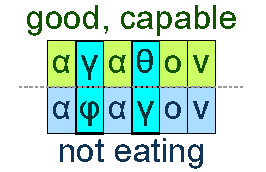
"ἀγαθός" ≈ "good, capable, trustworthy".
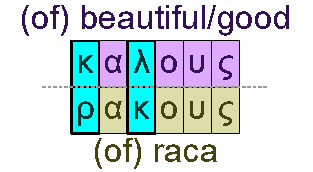
"καλός" ≈ "beautiful, good, right". The word "tasty" will be used for this quality of "fruit". Please do not get "testy" about something being "tasty" - an idea that might withstand the "taste" of time.
23. Strongs - good
*G2570 *100 καλός (kal-os') : of uncertain affinity; properly, beautiful, but chiefly (figuratively) good (literally or morally), i.e. valuable or virtuous (for appearance or use, and thus distinguished from G18, which is properly intrinsic):--X better, fair, good(-ly), honest, meet, well, worthy.
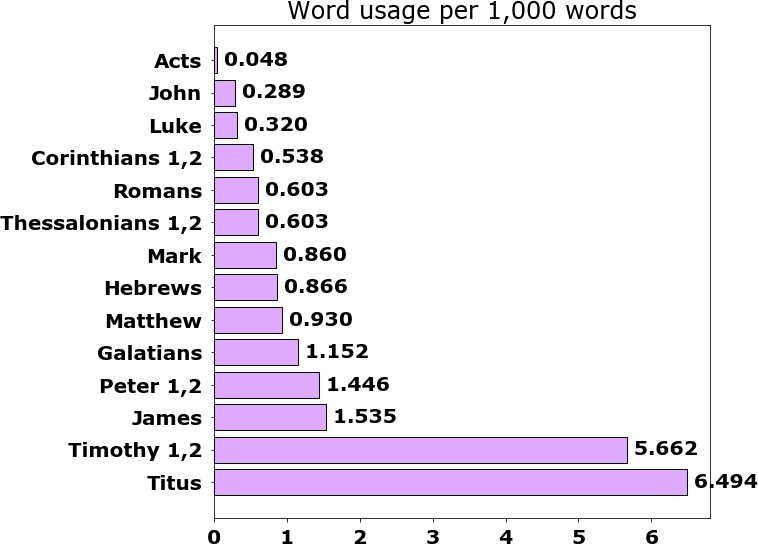 |
Words: καλα=7 καλη=2 καλην=11 καλης=2 καλοι καλοις=3 καλον=53 καλος=7 καλου=3 καλους=4 καλω καλων=6
|
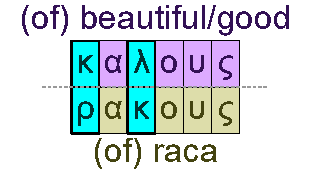
The ancient Greek word
"καλός" ≈ "beautiful, good, right" (nominative, masculine, singular).
The ancient Greek word
"κᾰλούς" ≈ "beautiful, good, right" (accusative, masculine, plural).
24. Usage - good
- *G2570 *100 καλός (kal-os') : of uncertain affinity; properly, beautiful, but chiefly (figuratively) good (literally or morally), i.e. valuable or virtuous (for appearance or use, and thus distinguished from G18, which is properly intrinsic):--X better, fair, good(-ly), honest, meet, well, worthy.
- καλους *4 of 100
- Matthew 7:17 ... good tree bringeth forth good fruit; but a corrupt ...
- Matthew 7:18 ... can a corrupt tree bring forth good fruit.
- Matthew 13:45 ... a merchant man, seeking goodly pearls:
- Acts 27:8 And, hardly passing it, came unto ...
25. Acts 27:8 Fair haven
Acts 27:8 And, hardly passing it, came unto a place which is called The fair havens; nigh whereunto was the city of Lasea. [kjv]
μολις τε παραλεγομενοι αυτην ηλθομεν εις τοπον τινα καλουμενον καλους λιμενας ω εγγυς ην πολις λασαια λασεα [gnt]
… good hauen… [wy]
… good porte… [ty]
The ancient Greek word
"καλός" ≈ "beautiful, good, right" (nominative, masculine, singular).
The ancient Greek word
"κᾰλούς" ≈ "beautiful, good, right" (accusative, masculine, plural).
At one time, the English word
"fair" meant more of
"beautiful" or
"good", although both Tyndale and Wycliffe use the English word
"good".
Note that both words together constitute a place name and not a general description.
26. Acts 27:8
KJV: And, hardly passing it, came unto a place which is called The fair havens; nigh whereunto was the city of Lasea.
Greek: μολις τε παραλεγομενοι αυτην ηλθομεν εις τοπον τινα καλουμενον καλους λιμενας ω εγγυς ην πολις λασαια λασεα
Wycliffe: And vnnethe we seilden bisidis, and camen into a place, that is clepid of good hauen, to whom the cite Tessala was niy.
Tyndale: and with moche worke sayled beyonde yt and came vnto a place called good porte. Nye whervnto was a citie called Lasea.
27. Matthew 7:17-19 Tasty
Matthew 7:17 Even so every good tree bringeth forth good fruit; but a corrupt tree bringeth forth evil fruit. [kjv]
ουτως παν δενδρον αγαθον καρπους καλους ποιει το δε σαπρον δενδρον καρπους πονηρους ποιει [gnt]
7:18 A good tree cannot bring forth evil fruit, neither can a corrupt tree bring forth good fruit. [kjv]
ου δυναται δενδρον αγαθον καρπους πονηρους ποιειν ενεγκειν ουδε δενδρον σαπρον καρπους καλους ποιειν [gnt]
7:19 Every tree that bringeth not forth good fruit is hewn down, and cast into the fire. [kjv]
παν δενδρον μη ποιουν καρπον καλον εκκοπτεται και εις πυρ βαλλεται [gnt]
The ancient Greek word
"κᾰλούς" ≈ "beautiful, good, right" (accusative, masculine, plural) appears in each of
three successive verses. Jesus uses this
exact word in one other place in Matthew.
28. Review: KP6 Pearl of great price
Matthew 13:45 Again, the kingdom of heaven is like unto a merchant man, seeking goodly pearls: [kjv]
παλιν ομοια εστιν η βασιλεια των ουρανων ανθρωπω εμπορω ζητουντι καλους μαργαριτας [gnt]
13:46 Who, when he had found one pearl of great price, went and sold all that he had, and bought it. [kjv]
ος ευρων δε ενα πολυτιμον μαργαριτην απελθων πεπρακεν παντα οσα ειχεν και ηγορασεν αυτον [gnt]
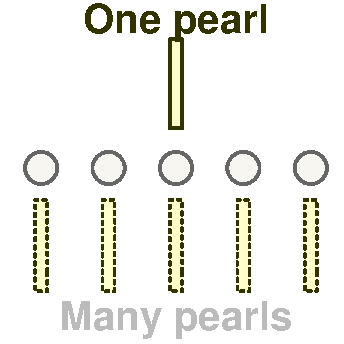
Why might a
"great one of the earth", as a business transaction,
"sell" everything, but not himself, to obtain
"one" pearl?
This "
one" pearly might be
you!
Are not "many" pearls needed? That is, at least two pearls, needed?
Might you be that one pearl being purchased?
If everything is sold to buy
one pearl, which pearls are thus
not obtained?
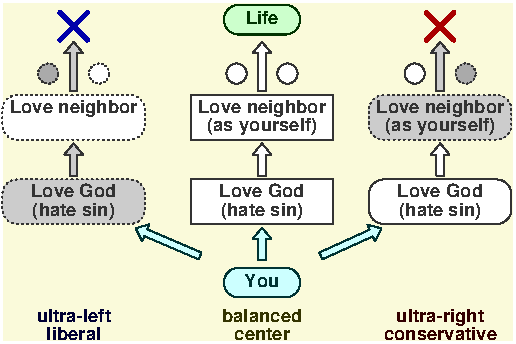
Might the two most important laws identified by Jesus be
two "pearls". Both are needed. What happens if one obtains only
one of these
"pearls"?
29. Matthew 7:17 Raca fruit
30. Matthew 5:22 Foolish raca
Matthew 5:22 But I say unto you, That whosoever is angry with his brother without a cause shall be in danger of the judgment: and whosoever shall say to his brother, Raca, shall be in danger of the council: but whosoever shall say, Thou fool, shall be in danger of hell fire. [kjv]
εγω δε λεγω υμιν οτι πας ο οργιζομενος τω αδελφω αυτου εικη ενοχος εσται τη κρισει ος δ αν ειπη τω αδελφω αυτου ρακα ενοχος εσται τω συνεδριω ος δ αν ειπη μωρε ενοχος εσται εις την γεενναν του πυρος [gnt]
The English word
"raca" comes from the ancient Greek word
"ῥακά" ≈ "idiot, fool, good-for-nothing" which comes from Aramaic (similar to Hebrew) word
"ריקא" ≈ "worthless person".
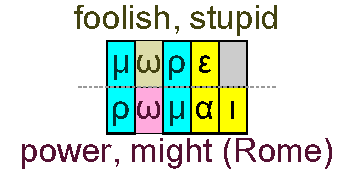
The ancient Greek word
"μωρε" ≈ "foolish, stupid" (as used) from
"μωρός" ≈ "foolish, stupid" as in the English word
"moron".
31. Gift at the alter
There are two main events or competitions.
Great Commission (what Jesus wants you to do).
Gifts on the altar (what birds want you to do)
Which is the most important event or competition?
Which is just a shadow of an event or competition?
32. Strongs - cloth
*G4470 *2 ῥάκος (hrak'-os) : from G4486; a "rag," i.e. piece of cloth:--cloth.
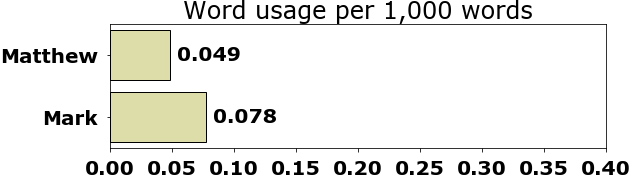 |
Words: ρακους=2
|
Proverbs 23:21 For the drunkard and the glutton shall come to poverty: and drowsiness shall clothe a man with rags. [kjv]
πας γαρ μεθυσος και πορνοκοπος πτωχευσει και ενδυσεται διερρηγμενα και ρακωδη πας υπνωδης [lxx]
The ancient Greek word
"ῥάκος" ≈ "rag, strip of cloth".
The
LXX includes a word for tattered that is part of a play on words with the "
teeth" part of "
weeping" and "
gnashing" of "
teeth".
 |
Details are left as a future topic.
|
33. Usage - cloth
- *G4470 *2 ῥάκος (hrak'-os) : from G4486; a "rag," i.e. piece of cloth:--cloth.
- ρακους *2
- Matthew 9:16 No man putteth a piece of new cloth unto an old ...
- Mark 2:21 ... seweth a piece of new cloth on an old ...
34. Throwing pure light
Matthew 9:16 No man putteth a piece of new cloth unto an old garment, for that which is put in to fill it up taketh from the garment, and the rent is made worse. [kjv]
ουδεις δε επιβαλλει επιβλημα ρακους αγναφου επι ιματιω παλαιω αιρει γαρ το πληρωμα αυτου απο του ιματιου και χειρον σχισμα γινεται [gnt]
The idea of being
"clothed in righteousness" and the
"garments" provided at the wedding feast provide one connection of the meaning of the
"garment" in Matthew 9:16. Those
"garments" can be "
righteous" or "
unrighteous" depending on the
point of view.
Paraphrase:
No one throws uncarded [ pure light ] on an old garment (righteousness) to complete it ... the rupture (schism) is made worse [pigs].
John 1:5 And the light shineth in darkness; and the darkness comprehended it not. [kjv]
και το φως εν τη σκοτια φαινει και η σκοτια αυτο ου κατελαβεν [gnt]
Note below: The
"worse" can be a play on words for
"pig" or
"swine". That "
old garment" might not
understand that "
pure light". The Greek for "
cloth" can be a play on words with "
raca" or "
fool" is in the religious establishment.
35. Matthew 13:48-50 Rotten and good
Matthew 13:48 Which, when it was full, they drew to shore, and sat down, and gathered the good into vessels, but cast the bad away. [kjv]
ην οτε επληρωθη αναβιβασαντες επι τον αιγιαλον και καθισαντες συνελεξαν τα καλα εις αγγεια αγγη τα δε σαπρα εξω εβαλον [gnt]
13:49 So shall it be at the end of the world: the angels shall come forth, and sever the wicked from among the just, [kjv]
ουτως εσται εν τη συντελεια του αιωνος εξελευσονται οι αγγελοι και αφοριουσιν τους πονηρους εκ μεσου των δικαιων [gnt]
13:50 And shall cast them into the furnace of fire: there shall be wailing and gnashing of teeth. [kjv]
και βαλουσιν αυτους εις την καμινον του πυρος εκει εσται ο κλαυθμος και ο βρυγμος των οδοντων [gnt]
The Greek word translated as
"bad" is that of
"rotten". The end of the
"rotten" is the "
furnace" of "
fire".
The ancient Greek word
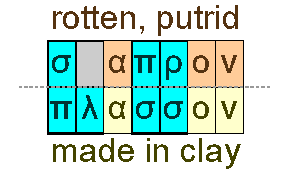
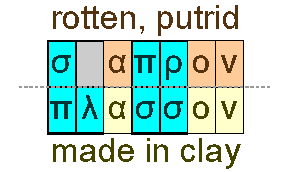
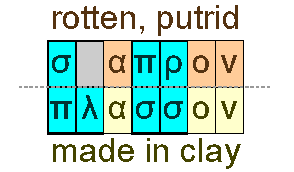
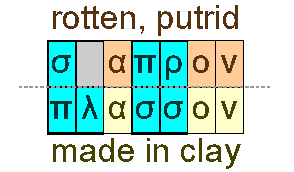
"σαπρός" ≈ "rotten, putrid" and comes from
"σήπω" ≈ "make rotten, putrid". [Rodney Dangerfield, sap] The ancient Greek word
"πράσον" ≈ "leek" (plant).
The ancient Greek word
"καλός" ≈ "beautiful, good, right" and is often associated with
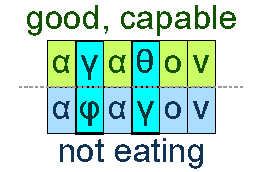
"ἀγαθός" ≈ "good, capable, trustworthy". A play on words can be
"ἀγηθής" ≈ "joyless" (of a person).
36. Matthew 7:17-19 Make and bring forth
Matthew 7:17 Even so every good tree bringeth forth good fruit; but a corrupt tree bringeth forth evil fruit. [kjv]
ουτως παν δενδρον αγαθον καρπους καλους ποιει το δε σαπρον δενδρον καρπους πονηρους ποιει [gnt]
7:18 A good tree cannot bring forth evil fruit, neither can a corrupt tree bring forth good fruit. [kjv]
ου δυναται δενδρον αγαθον καρπους πονηρους ποιειν ενεγκειν ουδε δενδρον σαπρον καρπους καλους ποιειν [gnt]
7:19 Every tree that bringeth not forth good fruit is hewn down, and cast into the fire. [kjv]
παν δενδρον μη ποιουν καρπον καλον εκκοπτεται και εις πυρ βαλλεται [gnt]
The
KJV translates two
different Greek words as "
bring forth".
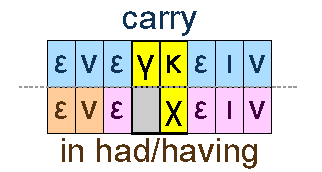
"ενεγκειν" ≈ "carry" and comes from "φέρω" ≈ "carry, bring".
"ποιέω" ≈ "make, cause" and, in the middle voice, to "pretend".
The
literal meaning is that of "
bring forth" as in
"fruit" but any figurative or code word meanings might need the different words.
The
TR (Textus Receptus) changes "
carry" to "
make" to fit the other usages of this word in the surrounding verses.
37. Matthew 13:5-6 Not having had
Matthew 13:5 Some fell upon stony places, where they had not much earth: and forthwith they sprung up, because they had no deepness of earth: [kjv]
αλλα δε επεσεν επι τα πετρωδη οπου ουκ ειχεν γην πολλην και ευθεως εξανετειλεν δια το μη εχειν βαθος γης [gnt]
13:6 And when the sun was up, they were scorched; and because they had no root, they withered away. [kjv]
ηλιου δε ανατειλαντος εκαυματισθη και δια το μη εχειν ριζαν εξηρανθη [gnt]
The ancient Greek word
"ἔχειν" ≈ "had" (present active infinitive, third person singular) of
"ἔχω" ≈ "have".
38. Matthew 7:18 Carry forth
Matthew 7:18 A good tree cannot bring forth evil fruit, neither can a corrupt tree bring forth good fruit. [kjv]
ου δυναται δενδρον αγαθον καρπους πονηρους ποιειν ενεγκειν ουδε δενδρον σαπρον καρπους καλους ποιειν [gnt]
"ενεγκειν" ≈ "carry".
"ἐν" ≈ "in".
"ἔχειν" ≈ "had"
A
"good" "tree" does
"not" "carry" or
"have" "in" it
"rotten" "fruit".
Note that some Greek manuscripts have
"make" or
"cause" rather than
"carry".
Salt verse: It is not good to keep or carry bad salt.
Eye verse: If the eye (bird, leader) entraps, cut it out (block it off).
Eye verse: If the hand (pig) entraps, cut it out (block it off).
39. Matthew 7:17-19 Make and bring forth
Matthew 7:17 Even so every good tree bringeth forth good fruit; but a corrupt tree bringeth forth evil fruit. [kjv]
7:18 A good tree cannot bring forth evil fruit, neither can a corrupt tree bring forth good fruit. [kjv]
7:19 Every tree that bringeth not forth good fruit is hewn down, and cast into the fire. [kjv]
Here is the logic of the verses using the different words that are translated the same by the
KJV.
v. 17: a good/capable tree makes/causes tasty fruit.
v. 17: a rotten tree makes/causes oppressed fruit.
v. 18: a good/capable tree does not bring forth oppressed fruit.
v. 18: a rotten tree does not make/cause tasty fruit.
v. 19: every tree that does not make/cause tasty fruit is cut down and cast into the fire.
The
TR changes the Greek word for
"bring forth" to that of
"make/cause" but most translations then translate them all as
"bring forth" instead of
"make/cause". Analyzing the logic would have been simpler if the words were the same.
40. Matthew 7:17 Good tree and good fruit
Matthew 7:17 Even so every good tree bringeth forth good fruit; but a corrupt tree bringeth forth evil fruit. [kjv]
ουτως παν δενδρον αγαθον καρπους καλους ποιει το δε σαπρον δενδρον καρπους πονηρους ποιει [gnt]
In this verse there are two different Greek words that are translated as "
good".
The ancient Greek word
"ἀγαθός" ≈ "good, capable, trustworthy". A similar sounding word is
"ἀγηθής" ≈ "joyless" (of a person).
The ancient Greek word
"καλός" ≈ "beautiful, good, right". This is paraphrased as
"tasty" to separate it from the
"good" word.
41. Strongs - rotten
42. Usage - rotten
- *G4550 *8 σαπρός (sap-ros') : from G4595; rotten, i.e. worthless (literally or morally):--bad, corrupt. Compare G4190.
σαπρον *6
- Matthew 7:17 ... good fruit; but a corrupt tree bringeth forth evil fruit.
- Matthew 7:18 ... evil fruit, neither can a corrupt tree bring forth good fruit.
- Matthew 12:33 ... make the tree corrupt, and his fruit corrupt: for the tree ...
- Luke 6:43 ... not forth corrupt fruit; neither doth a corrupt tree bring forth ...
σαπρα
- Matthew 13:48 ... vessels, but cast the bad away.
σαπρος
- Ephesians 4:29 Let no corrupt communication proceed out of ...
43. Matthew 7:17 Rotten plastic
44. Matthew 7:17 Evil and oppressive
45. Matthew 7:17 Trees and fruit
Matthew 7:17 Even so every good tree bringeth forth good fruit; but a corrupt tree bringeth forth evil fruit. [kjv]
ουτως παν δενδρον αγαθον καρπους καλους ποιει το δε σαπρον δενδρον καρπους πονηρους ποιει [gnt]
There are two adjectives associated with each tree.
Does a "tree" of a given type always produce all "fruit" as indicated? Are there exceptions?
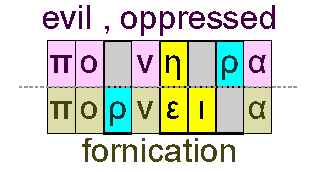
How does "fruit" that is "oppressed by toils" compare with "fruit" that is "evil"?
Can a
"tree" that is
"rotten" produce
"fruit" that is
"oppressed by toils"? Might this be a result of a "
yoke of compulsion"?
Jesus talked of this idea earlier in the verses of the "
beams" and "
twigs" or "
motes".
46. Matthew 7:17
KJV: Even so every good tree bringeth forth good fruit; but a corrupt tree bringeth forth evil fruit.
Greek: ουτως παν δενδρον αγαθον καρπους καλους ποιει το δε σαπρον δενδρον καρπους πονηρους ποιει
47. Matthew 7:17 But a tree
48. Matthew 7:17 Tree play
Matthew 7:17 Even so every good tree bringeth forth good fruit; but a corrupt tree bringeth forth evil fruit. [kjv]
ουτως παν δενδρον αγαθον καρπους καλους ποιει το δε σαπρον δενδρον καρπους πονηρους ποιει [gnt]
There are two types of
"trees". Each has a
"fruit" that is
different than the
"tree".
How well do the play on words work?
... a good/capable tree makes beautiful/right fruit but the rotten tree makes oppressive/oppressed fruit.
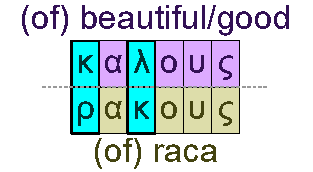
... a not-eating tree makes raca fruit but the made in clay tree makes fornicating fruit.
The
good tree would
not eat the
fruit for themselves. A
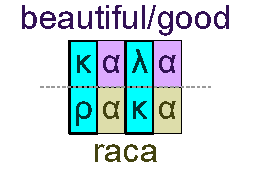
raca fruit would be a
fruit that does not do what the council desires when that conflicts with what Jesus wants.
49. Matthew 7:18
KJV: A good tree cannot bring forth evil fruit, neither can a corrupt tree bring forth good fruit.
Greek: ου δυναται δενδρον αγαθον καρπους πονηρουςποιειν ενεγκειν ουδε δενδρον σαπρον καρπους καλους ποιειν
50. Strongs - cut down
*G1581 *10 ἐκκόπτω (ek-kop'-to) : from G1537 and G2875; to exscind; figuratively, to frustrate:--cut down (off, out), hew down, hinder.
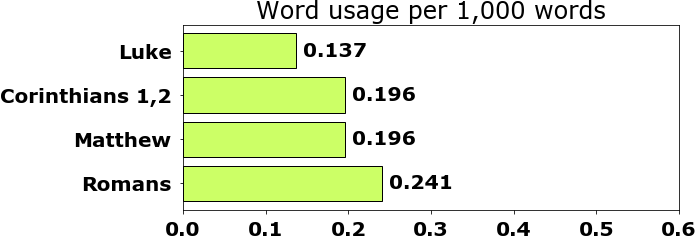 |
Words: εκκοπηση εκκοπτεται=3 εκκοψεις εκκοψον=3 εκκοψω εξεκοπης
|
51. Usage - cut down
- *G1581 *10 ἐκκόπτω (ek-kop'-to) : from G1537 and G2875; to exscind; figuratively, to frustrate:--cut down (off, out), hew down, hinder.
- εκκοπτεται *3
- Matthew 3:10 ... forth good fruit is hewn down, and cast into the fire.
- Matthew 7:19 ... forth good fruit is hewn down, and cast into the fire.
- Luke 3:9 ... forth good fruit is hewn down, and cast into the fire.
- εκκοψον *3
- Matthew 5:30 ... offend thee, cut it off, and cast ...
- Matthew 18:8 ... offend thee, cut them off, and cast ...
- Luke 13:7 ... find none: cut it down; why cumbereth ...
- εκκοψεις
- Luke 13:9 ... then after that thou shalt cut it down.
- εκκοπηση
- Romans 11:22 ... otherwise thou also shalt be cut off.
- εξεκοπης
- Romans 11:24 For if thou wert cut out of the olive tree which is wild by ...
- εκκοψω
- 2 Corinthians 11:12 ... I do, that I will do, that I may cut off occasion from them which desire ...
52. Matthew 7:19 Cut down
Matthew 7:19 Every tree that bringeth not forth good fruit is hewn down, and cast into the fire. [kjv]
παν δενδρον μη ποιουν καρπον καλον εκκοπτεται και εις πυρ βαλλεται [gnt]
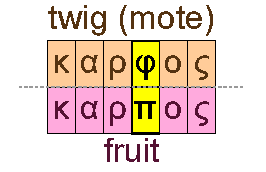
"κάρφος" ≈ "twig, splinter"
"καρπός" ≈ "fruit"
A
"tree" represents the human infrastructure of a human organization.
If the "
good"
"fruit" is taken off a
"tree", can the
"tree" then be "
burnt"?
What happens if you have no
"fruit" and are just a
"twig" and still attached to the
"tree"?
53. Matthew 7:19 Fire
Matthew 7:19 Every tree that bringeth not forth good fruit is hewn down, and cast into the fire. [kjv]
παν δενδρον μη ποιουν καρπον καλον εκκοπτεται και εις πυρ βαλλεται [gnt]

The Greek word for
"red" is related to the ancient Greek word
"πῦρ" ≈ "fire" which is from the
PIE (Proto Indo-European) root
"*PEHWR" ≈ "fire" and is related to the English word
"fire" through Grimm's Law.
The English word
"pyre" comes from the Latin word
"pyre" ≈ "funeral pyre" which comes from the ancient Greek word
"πυρά" ≈ "funeral pyre" which comes from
"πῦρ" ≈ "fire". How do we know that a
"fire" is
burning? Who is burning in a
"fire"?
Greek (order used):
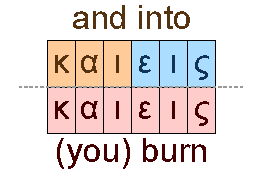
... and into (a) fire thrown. (play on words)
English:
... and thrown into (a) fire. (no play on words)
Greek (order not used):
... and thrown into (a) fire. (no play on words)
54. Matthew 7:19 Thrown into the fire
Matthew 7:19 Every tree that bringeth not forth good fruit is hewn down, and cast into the fire. [kjv]
παν δενδρον μη ποιουν καρπον καλον εκκοπτεται και εις πυρ βαλλεται [gnt]
Greek:
... and into (a) fire thrown. (play on words)
Greek:
... and thrown into (a) fire. (no play on words)
English:
... and thrown into (a) fire. (no play on words)
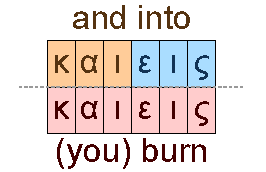
"και" ≈ "and" and "εις" ≈ "into".
"καίεις" ≈ "(you) burn" (second person singular indicative).
"βάλλω" ≈ "throw" which is the source of the English word "ballistic".
55. Matthew 7:19
KJV: Every tree that bringeth not forth good fruit is hewn down, and cast into the fire.
Greek: παν δενδρον μη ποιουν καρπον καλον εκκοπτεται και εις πυρ βαλλεται
56. Revelation 12:3 Greek red fire
Revelation 12:3 And there appeared another wonder in heaven; and behold a great red dragon, having seven heads and ten horns, and seven crowns upon his heads. [kjv]
και ωφθη αλλο σημειον εν τω ουρανω και ιδου δρακων μεγας πυρρος εχων κεφαλας επτα και κερατα δεκα και επι τας κεφαλας αυτου διαδηματα επτα διαδηματα [gnt]
… rufus … [v]

The Greek word for
"red" is related to the ancient Greek word
"πῦρ" ≈ "fire" which is from the
PIE root
"*PEHWR" ≈ "fire" and is related to the English word
"fire" through Grimm's Law.
The German word "das Feuer" ≈ "fire".
The modern Greek word "πυρ" (peer) ≈ "fire".
Is this a
"red" "
dragon" or a
"fire" breathing "
dragon"?
Fire often appears more
orange than
red, but, remember, that distinction was not made at that time.
57. Matthew 3:10 Root of trees
Matthew 3:10 And now also the axe is laid unto the root of the trees: therefore every tree which bringeth not forth good fruit is hewn down, and cast into the fire. [kjv]
ηδη δε και η αξινη προς την ριζαν των δενδρων κειται παν ουν δενδρον μη ποιουν καρπον καλον εκκοπτεται και εις πυρ βαλλεται [gnt]
As commentary added by Matthew, John the Baptist is speaking. Neither appears to be clued into the specific code meanings used by Jesus for these words. To what does the "
root" and the associated
"tree" refer?
☐ A person who does not bring forth good fruit (the ultimate "
fish fry").
☐ A human infrastructure (empire, church, etc.) that does not bring forth good fruit where the "
root" is the leader (in for a "
rude" or "
root" awakening).
What could this
"tree" refer to
historically?
☐ Rome, ☐ Judea under Herod, ☐ Israel (as the fig tree),
☐ church (sand infrastructure), ☐ other trees/empires/mountains,
58. Tree and fruit comparison
Matthew 3:10 And now also the axe is laid unto the root of the trees: therefore every tree which bringeth not forth good fruit is hewn down, and cast into the fire. [kjv]
ηδη δε και η αξινη προς την ριζαν των δενδρων κειται παν ουν δενδρον μη ποιουν καρπον καλον εκκοπτεται και εις πυρ βαλλεται [gnt]
7:19 Every tree that bringeth not forth good fruit is hewn down, and cast into the fire. [kjv]
παν δενδρον μη ποιουν καρπον καλον εκκοπτεται και εις πυρ βαλλεται [gnt]
"και" ≈ "and" and "εις" ≈ "into".
"καίεις" ≈ "(you) burn" (second person singular indicative).
Does
"good" "fruit" say
"raca" to the "
council" by doing what Jesus wants done?
59. Matthew 7:19 Trees and fire
Matthew 7:19 Every tree that bringeth not forth good fruit is hewn down, and cast into the fire. [kjv]
παν δενδρον μη ποιουν καρπον καλον εκκοπτεται και εις πυρ βαλλεται [gnt]
Discuss:
If the "fruit" is removed, is there any need for the "tree".
Are all "trees" cut down and thrown into the "fire"?
What happens if you are a "twig" and still attached to the "tree"?
60. Strongs - therefore
*G686 *36 ἄρα (ar'-ah) : probably from G142 (through the idea of drawing a conclusion); a particle denoting an inference more or less decisive (as follows):--haply, (what) manner (of man), no doubt, perhaps, so be, then, therefore, truly, wherefore. Often used in connection with other particles, especially 1065 or G3767 (after) or G1487 (before). Compare also 687.
 |
Words: αρα=32 αραγε=4
|
The ancient Greek word
"ἆράγε" ≈ "therefore" from two words.
"ἄρα" ≈ "so, therefore".
"γε" ≈ "in fact, at least".
61. Usage - therefore
- *G686 *36 ἄρα (ar'-ah) : probably from G142 (through the idea of drawing a conclusion); a particle denoting an inference more or less decisive (as follows):--haply, (what) manner (of man), no doubt, perhaps, so be, then, therefore, truly, wherefore. Often used in connection with other particles, especially 1065 or G3767 (after) or G1487 (before). Compare also 687.
- αραγε *4 of 36
- Matthew 7:20 Wherefore by their fruits ye shall know them.
- Matthew 17:26 ... Jesus saith unto him, Then are the children free.
- Acts 8:30 And Philip ran thither to him, and heard him read ...
- Acts 17:27 That they should seek the Lord, if haply they might feel after him, ...
62. Strongs - know
*G1921 *44 ἐπιγινώσκω (ep-ig-in-oce'-ko) : from G1909 and G1097; to know upon some mark, i.e. recognize; by implication, to become fully acquainted with, to acknowledge:--(ac-, have, take)know(-ledge, well), perceive.
 |
Words: επεγινωσκον=3 επεγνωκεναι επεγνωκοσι επεγνωμεν επεγνωσαν=4 επεγνωσθην επεγνωτε=2 επιγινωσκει=2 επιγινωσκεις επιγινωσκετε=3 επιγινωσκετω επιγινωσκομενοι επιγνοντες=5 επιγνους=5 επιγνουσα=2 επιγνουσιν επιγνω επιγνωναι=4 επιγνως επιγνωσεσθε=3 επιγνωσομαι
|
The ancient Greek word
"ἐπίγνωσις" ≈ "examination, scrutiny" as in an in-depth and intimate working knowledge. The literal meaning is
"upon-knowledge" as in
"knowledge on knowledge" or a type of meta-knowledge. How do you "
know" something?
63. Usage - know
- *G1921 *44 ἐπιγινώσκω (ep-ig-in-oce'-ko) : from G1909 and G1097; to know upon some mark, i.e. recognize; by implication, to become fully acquainted with, to acknowledge:--(ac-, have, take)know(-ledge, well), perceive.
- επιγνωσεσθε *3 of 44
- Matthew 7:16 Ye shall know them by their fruits. Do ...
- Matthew 7:20 Wherefore by their fruits ye shall know them.
- 2 Corinthians 1:13 ... ye read or acknowledge; and I trust ye shall acknowledge even to the end;
64. Mark 7:3 Strongs - fist
Mark 7:3 For the Pharisees, and all the Jews, except they wash their hands oft, eat not, holding the tradition of the elders. [kjv]
οι γαρ φαρισαιοι και παντες οι ιουδαιοι εαν μη πυγμη νιψωνται τας χειρας ουκ εσθιουσιν κρατουντες την παραδοσιν των πρεσβυτερων [gnt]
*G4435 πυγμή (poog-may') : from a primary pux (the fist as a weapon); the clenched hand, i.e. (only in dative case as adverb) with the fist (hard scrubbing):--oft.
 |
Words:
|
The ancient Greek word
"πυγμή" ≈ "fist (boxing), measure of length".
The English word
"pigmy" comes, through Latin, from the ancient Greek word
"πυγμή" ≈ "fist" as in
small as a
"fist". In Greek mythology, this refers to a race of
"dwarfs". The Latin word
"pugnus" ≈ "fist" and is the source of the English word
"pugal" as in a
"pugil" stick.
The ancient Greek word
"πήγνυμι" ≈ "secure, fasten, freeze, fix".
65. Usage - fist
- *G4435 πυγμή (poog-may') : from a primary pux (the fist as a weapon); the clenched hand, i.e. (only in dative case as adverb) with the fist (hard scrubbing):--oft.
66. Mark 7:3
KJV: For the Pharisees, and all the Jews, except they wash their hands oft, eat not, holding the tradition of the elders.
Greek: οι γαρ φαρισαιοι και παντες οι ιουδαιοι εαν μη πυγμη νιψωνται τας χειρας ουκ εσθιουσιν κρατουντες την παραδοσιν των πρεσβυτερων
67. Matthew 7:20
Matthew 7:20 Wherefore by their fruits ye shall know them. [kjv]
αραγε απο των καρπων αυτων επιγνωσεσθε αυτους [gnt]
The ancient Greek word
"ἐπίγνωσις" ≈ "examination, scrutiny" as in an in-depth and intimate working knowledge.
Is Jesus saying that we should be
"fruit" "
inspectors"?
68. Matthew 7:20 Fruits and twigs
Matthew 7:20 Wherefore by their fruits ye shall know them. [kjv]
αραγε απο των καρπων αυτων επιγνωσεσθε αυτους [gnt]
"ἆράγε" ≈ "therefore"
"ἄρακα" ≈ "not raca" (with the negating alpha prefix).
"καρπός" ≈ "fruit"
"κάρφος" ≈ "twig, splinter"
Greek: So (in fact), you shall know them by their fruit. (statement)
Greek: So (in fact), you shall know them by their fruit? (question)
Play: Not raca (supporting the council), you shall secure/fasten them by their twigs. (play on words)
69. Matthew 7:20
KJV: Wherefore by their fruits ye shall know them.
Greek: αραγε απο των καρπων αυτων επιγνωσεσθε αυτους
70. Matthew 12:33 Good and rotten trees
Matthew 12:33 Either make the tree good, and his fruit good; or else make the tree corrupt, and his fruit corrupt: for the tree is known by his fruit. [kjv]
η ποιησατε το δενδρον καλον και τον καρπον αυτου καλον η ποιησατε το δενδρον σαπρον και τον καρπον αυτου σαπρον εκ γαρ του καρπου το δενδρον γινωσκεται [gnt]
Notice that the Latin uses the same word for the Greek
"rotten" "fruit" in verse 33 and for
"evil" man in verse 35. It is reasonable to assume that if Jesus intended these two be the same, Matthew would have used the same Greek word in each verse.
A
mountain represents an
empire. A
tree represents the human infrastructure of an empire. The
root of the tree represents the human
leader. In computer science, a single person would be a (degenerate)
tree structure. That is, a tree with no branches and one leaf - the root of the (degenerate) tree.
71. Luke 6:43-44 Trees and fruit
Luke 6:43 For a good tree bringeth not forth corrupt fruit; neither doth a corrupt tree bring forth good fruit. [kjv]
ου γαρ εστιν δενδρον καλον ποιουν καρπον σαπρον ουδε παλιν δενδρον σαπρον ποιουν καρπον καλον [gnt]
6:44 For every tree is known by his own fruit. For of thorns men do not gather figs, nor of a bramble bush gather they grapes. [kjv]
εκαστον γαρ δενδρον εκ του ιδιου καρπου γινωσκεται ου γαρ εξ ακανθων συλλεγουσιν συκα ουδε εκ βατου σταφυλην τρυγωσιν σταφυλην [gnt]
Note how Luke changes the context so that the gathering of
figs,
grapes, etc., follows or is part of the
tree analogy.
Luke is less detailed, loses the context of Matthew, and uses a different word for "
good" and also for
"rotten" that loses the play on word meaning as spoken and recorded by Matthew. The
NA (Nestle Aland) Greek has "
again" which is
omitted in the
TR and the
KJV.
72. Luke 6:43
KJV: For a good tree bringeth not forth corrupt fruit; neither doth a corrupt tree bring forth good fruit.
Greek: ου γαρ εστιν δενδρον καλον ποιουν καρπον σαπρον ουδε παλιν δενδρον σαπρον ποιουν καρπον καλον
73. Luke 6:44
KJV: For every tree is known by his own fruit. For of thorns men do not gather figs, nor of a bramble bush gather they grapes.
Greek: εκαστον γαρ δενδρον εκ του ιδιου καρπου γινωσκεται ου γαρ εξ ακανθων συλλεγουσιν συκα ουδε εκ βατου σταφυλην τρυγωσιν σταφυλην
74. Ephesians 4:29-30 Rotten and good
Ephesians 4:29 Let no corrupt communication proceed out of your mouth, but that which is good to the use of edifying, that it may minister grace unto the hearers. [kjv]
πας λογος σαπρος εκ του στοματος υμων μη εκπορευεσθω αλλ αλλα ει τις αγαθος προς οικοδομην της χρειας ινα δω χαριν τοις ακουουσιν [gnt]
4:30 And grieve not the holy Spirit of God, whereby ye are sealed unto the day of redemption. [kjv]
και μη λυπειτε το πνευμα το αγιον του θεου εν ω εσφραγισθητε εις ημεραν απολυτρωσεως [gnt]
What is
"rotten" "reasoning"?
What does it mean to
"grieve" the Holy Spirit?
How well do the play on words work with what Paul is saying?
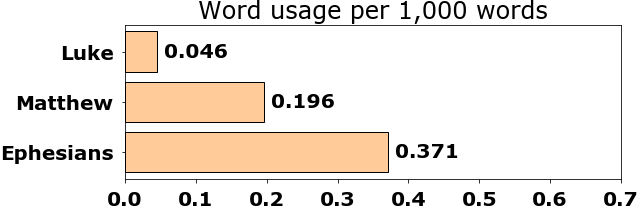
let no rotten reasoning proceed .... that which is good to edification ...
let no made in clay reasoning proceed .... that which is not eating to edification ...
It is not clear that Paul understood the code word and play on word meanings used by Jesus. This is the only play in the
GNT and
LXX that the words for "
rotten" and "
good" appear in the same verse - except in Matthew 7:17-18 (both verses).
75. Ephesians 4:29
KJV: Let no corrupt communication proceed out of your mouth, but that which is good to the use of edifying, that it may minister grace unto the hearers.
Greek: πας λογος σαπρος εκ του στοματος υμων μη εκπορευεσθω αλλ αλλα ει τις αγαθος προς οικοδομην της χρειας ινα δω χαριν τοις ακουουσιν
76. Ephesians 4:30
KJV: And grieve not the holy Spirit of God, whereby ye are sealed unto the day of redemption.
Greek: και μη λυπειτε το πνευμα το αγιον του θεου εν ω εσφραγισθητε εις ημεραν απολυτρωσεως
77. End of page









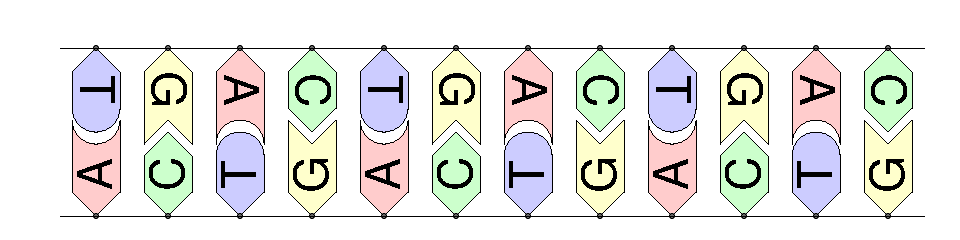 DNA as coded information is created in days 3, 5 and 6.