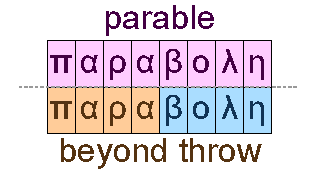
- *G272 *4 ἀμελέω (am-el-eh'-o) : from G1 (as a negative particle) and G3199; to be careless of:--make light of, neglect, be negligent, no regard.
112. Matthew 22:5 Pay no attention
 Matthew 22:5 But they made light of it, and went their ways, one to his farm, another to his merchandise: [kjv]
 οι δε αμελησαντες απηλθον ος μεν εις τον ιδιον αγρον ος δε επι την εμποριαν αυτου [gnt]
The Greek word translated as
"made light" is that of
"paid no attention".
Might they have
"paid no attention" because they were
"not" "members" of
"Satan"?
Consider about Jehu and the prophets of Baal.
113. Matthew 22:5 Expired membership
114. Matthew 22:5 Farmed out acres
 Matthew 22:5 But they made light of it, and went their ways, one to his farm, another to his merchandise: [kjv]
 οι δε αμελησαντες απηλθον ος μεν εις τον ιδιον αγρον ος δε επι την εμποριαν αυτου [gnt]
The ancient Greek word
"ἀγρός" ≈ "field, land, countryside" and is used by Jesus as a
code word for
"world" as in the "
people in the world".
The ancient Greek word
"ἄγριος" ≈ "living in the open fields" and, thus, animals there were considered
"wild",
"savage",
"violent",
"fierce".
115. Matthew 13:38 Field is the acre
116. Matthew 22:5 Unique field
 Matthew 22:5 But they made light of it, and went their ways, one to his farm, another to his merchandise: [kjv]
 οι δε αμελησαντες απηλθον ος μεν εις τον ιδιον αγρον ος δε επι την εμποριαν αυτου [gnt]
"ἴδιον" ≈ "own" (adjective).
"ἴδιον" ≈ "distinguishing feature, opinion" (noun).
The word "
his" must be
inferred. If inferred, to whom does "
his" refer? Is it the person, the Lord, etc.?
Saying:
Farmers like to be outstanding in their own field.
117. Matthew 22:5 Merchants and merchandise
118. North
119. Isaiah 14:13 North
 Isaiah 14:13 For thou hast said in thine heart, I will ascend into heaven, I will exalt my throne above the stars of God: I will sit also upon the mount of the congregation, in the sides of the north: [kjv]
 συ δε ειπας εν τη διανοια σου εις τον ουρανον αναβησομαι επανω των αστρων του ουρανου θησω τον θρονον μου καθιω εν ορει υψηλω επι τα ορη τα υψηλα τα προς βορραν [lxx]
In general, does the area of the
"north" in the Bible have a good, bad, or indifferent connotation?
[wilderness, north side, Dan, serpent, eagle]
The the English term
"aurora borealis" comes from the Latin word for "
dawn" or "
sunrise" and the Greek word
"north" (which comes through Latin).
120. Merchandise
121. Plastic words and merchandise
 2 Peter 2:3 And through covetousness shall they with feigned words make merchandise of you: whose judgment now of a long time lingereth not, and their damnation slumbereth not. [kjv]
 και εν πλεονεξια πλαστοις λογοις υμας εμπορευσονται οις το κριμα εκπαλαι ουκ αργει και η απωλεια αυτων ου νυσταζει [gnt]

Peter says that these
false teachers will use
"plastic" words to make
"merchandise" of their followers as in selling at an
"emporium".
"πλάσσω" ≈ "form, mold, shape" as is the source of the English word "plastic".
"ἔμπορος" ≈ "traveler, merchant" as in one who makes a journey and is the source of the English word "emporium".
In Romans 16, Paul make a play on words between "
useful words", "
subtle sermons" in Latin, and "
Christ words".
122. Matthew 13:45-46 KP6 Parable of the pearl of great price
 Matthew 13:45 Again, the kingdom of heaven is like unto a merchant man, seeking goodly pearls: [kjv]
 παλιν ομοια εστιν η βασιλεια των ουρανων εμπορω ζητουντι καλους μαργαριτας [gnt]
 13:46 Who, when he had found one pearl of great price, went and sold all that he had, and bought it. [kjv]
 ευρων δε ενα πολυτιμον μαργαριτην απελθων πεπρακεν παντα οσα ειχεν και ηγορασεν αυτον [gnt]
The name "
Margaret" comes from the ancient Greek word
"μαργαρίτης" ≈ "pearl". The word "
pearl" appears in the
GNT but not in the
LXX, although the
KJV uses "
pearl" in Job.
It is easy to confuse the "
pearl of great price" parable with the "
treasure in a field" parable (one verse earlier). To what or who does the "
pearl of great price" refer?
To understand the "
merchant" and "
selling" and "
buying", it helps to have an understanding of "
business".
The word "
pearls" in Matthew 7:6 appears to be used in a figurative or code-word sense.
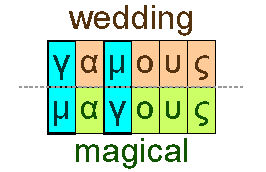
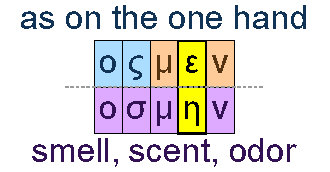
123. On the one hand
124. 1 Corinthians 11:21 Odorous trade-offs
125. 1 Corinthians 11:21
KJV: For in eating every one taketh before other his own supper: and one is hungry, and another is drunken.
Greek: εκαστος γαρ το ιδιον δειπνον προλαμβανει εν τω φαγειν και ος μεν πεινα ος δε μεθυει
126. Romans 14:2,5
127. Romans 14:2
KJV: For one believeth that he may eat all things: another, who is weak, eateth herbs.
Greek: ος μεν πιστευει φαγειν παντα ο δε ασθενων λαχανα εσθιει
128. Romans 14:5
KJV: One man esteemeth one day above another: another esteemeth every day alike. Let every man be fully persuaded in his own mind.
Greek: ος μεν γαρ κρινει ημεραν παρ ημεραν ος δε κρινει πασαν ημεραν εκαστος εν τω ιδιω νοι πληροφορεισθω
129. Matthew 22:5 Hands
130. Matthew 22:5 Attention to the profit of worldly interests
 Matthew 22:5 But they made light of it, and went their ways, one to his farm, another to his merchandise: [kjv]
 οι δε αμελησαντες απηλθον ος μεν εις τον ιδιον αγρον ος δε επι την εμποριαν αυτου [gnt]
They had
"no concern". Is this to be taken in a good or not good sense?
Some went to the "field" as in the "world" or "people of the world". Might these be "fish"?
Some went to their "merchandise" interests to make a "profit" of the "people of the world". Might these be "birds" or "wolves"? Might these be "goats"?
131. Matthew 22:5 Field and merchandise
 Matthew 22:5 But they made light of it, and went their ways, one to his farm, another to his merchandise: [kjv]
 οι δε αμελησαντες απηλθον ος μεν εις τον ιδιον αγρον ος δε επι την εμποριαν αυτου [gnt]
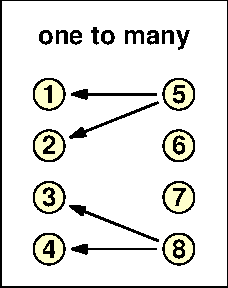
5: Field (treasure in the field)
6: Merchandise (pearl of great price)
132. Matthew 22:5
KJV: But they made light of it, and went their ways, one to his farm, another to his merchandise:
Greek: οι δε αμελησαντες απηλθον ο ος μεν εις τον ιδιον αγρον ο ος δε εις επι την εμποριαν αυτου
133. Matthew 22:6 Word usage
 Matthew 22:6 And the remnant took his servants, and entreated them spitefully, and slew them. [kjv]
 οι δε λοιποι κρατησαντες τους δουλους αυτου υβρισαν και απεκτειναν [gnt]
| Matthew 22:6 |
| Strong |
Used |
Unique |
Word |
Part of speech |
| G2902 |
47 |
3 |
κρατησαντες |
verb aorist active participle nominative plural masculine |
| G5195 |
5 |
1 |
υβρισαν |
verb aorist active indicative 3rd person plural |
| G615 |
71 |
10 |
απεκτειναν |
verb aorist active indicative 3rd person plural |
134. Matthew 22:6 Remaining
 Matthew 22:6 And the remnant took his servants, and entreated them spitefully, and slew them. [kjv]
 οι δε λοιποι κρατησαντες τους δουλους αυτου υβρισαν και απεκτειναν [gnt]
"οἱ" ≈ "the" (plural).
"δε" ≈ "(but) not". This is a qualified negation (but).
"οἵδε" ≈ "here, in this way" (masculine nominative plural).
The ancient Greek word
"λοιπός" ≈ "remaining" as in "
others" and is from the ancient Greek word
"λείπω" ≈ "leave behind". It is the source of the ancient Greek word
"λοιπόν" ≈ "what remains, others" and is often translated as
"so" or
"therefore". In speech, it can mean
"to the remainder".
To whom does "
his" (singular) refer? It would appear to be the "
king" since the "
remnant" is plural.
135. Matthew 22:6 Remaining annoyance
 Matthew 22:6 And the remnant took his servants, and entreated them spitefully, and slew them. [kjv]
 οι δε λοιποι κρατησαντες τους δουλους αυτου υβρισαν και απεκτειναν [gnt]
"λουποί" ≈ "remaining".
"λύπη" ≈ "annoyed, distressed".
These are pronounced the same today (except for the accent).
The Greek word, as used by Jesus, can be a play on words with the Greek word for
"annoyed" or
"distressed" and that is sometimes translated as
"sad".
The
ancient Greek word
"λύπη" ≈ "annoyance, distress". The
modern Greek word
"λύπη" (LEE-pee) ≈ "sorrow, sadness, suffering". It appears that the modern meaning comes from the meaning assumed in the
GNT from Latin, etc.
136. Rich young ruler
 Matthew 19:22 But when the young man heard that saying, he went away sorrowful: for he had great possessions. [kjv]
 ακουσας δε ο νεανισκος τον λογον τουτον απηλθεν λυπουμενος ην γαρ εχων κτηματα πολλα [gnt]
 Mark 10:22 And he was sad at that saying, and went away grieved: for he had great possessions. [kjv]
 ο δε στυγνασας επι τω λογω απηλθεν λυπουμενος ην γαρ εχων κτηματα πολλα [gnt]
Which word fits best?
"annoyed", "annoyance", etc. (primary meaning)
"distressed", "distress", "troubled", etc.(secondary meaning)
"sorrowful", "sorry", "grieved", etc.
The
ancient Greek word
"λύπη" ≈ "annoyance, distress". The
modern Greek word
"λύπη" (LEE-pee) ≈ "sorrow, sadness, suffering". It appears that the modern meaning comes from the meaning assumed in the
GNT from Latin, etc.
137. Matthew 22:6 Taking a branch
 Matthew 22:6 And the remnant took his servants, and entreated them spitefully, and slew them. [kjv]
 οι δε λοιποι κρατησαντες τους δουλους αυτου υβρισαν και απεκτειναν [gnt]
The
KJV translates as
"took" the The
ancient Greek word
"κρατέω" ≈ "rule, command, conquer, seize, hold". Might those
"taken" have been
"branched" in some way? A "
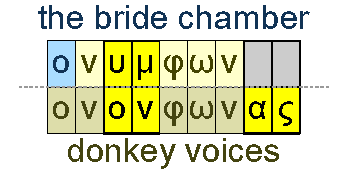
tree" represents the human infrastructure of an empire.
The same play on words is present at the end of "
took" as in "
rule" (by) "
Satan".
138. Strongs - hubris
*G5195 *5 ὑβρίζω (hoo-brid'-zo) : from G5196 ὕβρις; to exercise violence, i.e. abuse:--use despitefully, reproach, entreat shamefully (spitefully).
*G5196 *3 ὕβρις (hoo'-bris) : from G5228; insolence (as over-bearing), i.e. insult, injury:--harm, hurt, reproach.
 |
Words: υβρεσιν υβρεως υβριζεις υβριν υβρισαι υβρισαν=1 υβρισθεντες υβρισθησεται
|
The ancient Greek word
"ὕβρις" ≈ "pride, insolence" and is the source of the English word
"hubris". One can do this in a
condescending manner as a "
bird" or
false leader might do.
The
KJV often uses this word to mean a physical action or violence - something that is more easily "
measured".
Note: The modern Greek word
"Εβραϊκά" (EH-vra-ee-KA) ≈ "Hebrew".
139. Usage - hubris
- *G5195 *5 ὑβρίζω (hoo-brid'-zo) : from G5196 ὕβρις; to exercise violence, i.e. abuse:--use despitefully, reproach, entreat shamefully (spitefully).
- υβρισαν
- Matthew 22:6 ... took his servants, and entreated them spitefully, and slew them.
- υβριζεις
- Luke 11:45 ... Master, thus saying thou reproachest us also.
- υβρισθησεται
- Luke 18:32 ... and shall be mocked, and spitefully entreated, and spitted on:
- υβρισαι
- Acts 14:5 ... their rulers, to use them despitefully, and to stone them,
- υβρισθεντες
- 1 Thessalonians 2:2 But even after that we had suffered before, and were shamefully entreated, as ye know, at ...
- *G5196 *3 ὕβρις (hoo'-bris) : from G5228; insolence (as over-bearing), i.e. insult, injury:--harm, hurt, reproach.
- υβρεως
- Acts 27:10 ... will be with hurt and much damage, not ...
- υβριν
- Acts 27:21 ... and to have gained this harm and loss.
- υβρεσιν
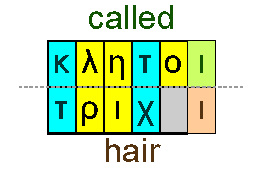
- 2 Corinthians 12:10 ... in infirmities, in reproaches, in necessities, in ...
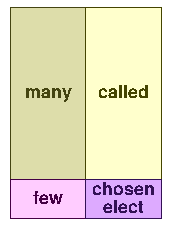
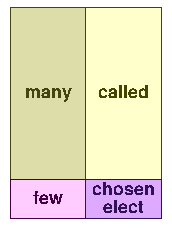
140. Romans and Proverbs
 Romans 1:30 Backbiters, haters of God, despiteful, proud, boasters, inventors of evil things, disobedient to parents, [kjv]
 καταλαλους θεοστυγεις υβριστας υπερηφανους αλαζονας εφευρετας κακων γονευσιν απειθεις [gnt]
Which fits better here?
☐
"boaster"
☐
"pretense to superior knowledge"
Paul uses a common Greek word for
"proud" or
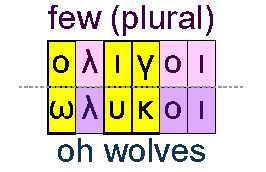
"arrogant" in this verse. The ancient Greek word
"ὕβρις" ≈ "pride, insolence" and is the source of the English word
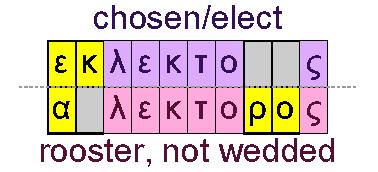
"hubris".
 Proverbs 16:18 Pride goeth before destruction, and an haughty spirit before a fall. [kjv]
 προ συντριβης ηγειται υβρις προ δε πτωματος κακοφροσυνη [lxx]
141. Matthew 22:6 Deadly hubris
 Matthew 22:6 And the remnant took his servants, and entreated them spitefully, and slew them. [kjv]
 οι δε λοιποι κρατησαντες τους δουλους αυτου υβρισαν και απεκτειναν [gnt]
The Greek word translated as "
spitefully" is the ancient Greek word
"ὕβρις" ≈ "pride, insolence" and is the source of the English word
"hubris". One can do this in a
condescending manner as a "
bird" or
false leader might do.
[they burn in their hate]
142. Matthew 6:16 The have their reward
 Matthew 6:16 Moreover when ye fast, be not, as the hypocrites, of a sad countenance: for they disfigure their faces, that they may appear unto men to fast. Verily I say unto you, They have their reward. [kjv]
 οταν δε νηστευητε μη γινεσθε ως οι υποκριται σκυθρωποι αφανιζουσιν γαρ τα προσωπα αυτων οπως φανωσιν τοις ανθρωποις νηστευοντες αμην λεγω υμιν απεχουσιν τον μισθον αυτων [gnt]
"μισθός" ≈ "wages, pay, recompense, reward".
"μῖσος" ≈ "hatred, hate".
[(made-up) Faithbook and Facebook]
143. Matthew 6:16 The have their reward
 Matthew 6:16 Moreover when ye fast, be not, as the hypocrites, of a sad countenance: for they disfigure their faces, that they may appear unto men to fast. Verily I say unto you, They have their reward. [kjv]
 οταν δε νηστευητε μη γινεσθε ως οι υποκριται σκυθρωποι αφανιζουσιν γαρ τα προσωπα αυτων οπως φανωσιν τοις ανθρωποις νηστευοντες αμην λεγω υμιν απεχουσιν τον μισθον αυτων [gnt]
The ancient Greek word
"ἀπέχουσιν" ≈ "keep away from, be far from",
The ancient Greek word
"καιουσιν" ≈ "light, burn, kindle". (
1 time in
GNT) and
"επικαιουσιν" ≈ "light, burn, kindle" (intensified).
144. Matthew 6:16 The have their reward
 Matthew 6:16 Moreover when ye fast, be not, as the hypocrites, of a sad countenance: for they disfigure their faces, that they may appear unto men to fast. Verily I say unto you, They have their reward. [kjv]
 οταν δε νηστευητε μη γινεσθε ως οι υποκριται σκυθρωποι αφανιζουσιν γαρ τα προσωπα αυτων οπως φανωσιν τοις ανθρωποις νηστευοντες αμην λεγω υμιν απεχουσιν τον μισθον αυτων [gnt]
Greek: They are far from their reward.
Play: They burn (in) their hate.
145. Matthew 22:6 Slew of killings
 Matthew 22:6 And the remnant took his servants, and entreated them spitefully, and slew them. [kjv]
 οι δε λοιποι κρατησαντες τους δουλους αυτου υβρισαν και απεκτειναν [gnt]
The ancient Greek word
"ἀποκτείνω" ≈ "kill, slay" and can be
figurative instead of a physical action.
Many "prophets" and "righteous" ones have been physically "killed" over the ages.
Many "believers" can have their "body" and "soul" destroyed or "killed" through deception.
146. Matthew 22:6 Burning of the birds
147. Matthew 22:6 You burn bird
148. Matthew 10:28 Soul and body
 Matthew 10:28 And fear not them which kill the body, but are not able to kill the soul: but rather fear him which is able to destroy both soul and body in hell. [kjv]
 και μη φοβεισθε απο των αποκτεινοντων το σωμα την δε ψυχην μη δυναμενων αποκτειναι φοβεισθε δε μαλλον τον δυναμενον και ψυχην και σωμα απολεσαι εν γεεννη [gnt]
Jesus tells us that the "
body" and the "
soul" are different. Jesus tells us who we should
"fear" and it is not
"fear" about the
cares and
concerns of this world. The most dangerous attacks are not from the outside but from the inside and involve
deception.
One cannot "
destroy the soul" by
"killing" the body is in persecution (e.g., by the Roman administrations). The primary way to
"destroy" the "
soul" is through
deception so that you "
sell yourself out" or are "
sold out".
Jesus provides an example in the
next verse.
149. Matthew 10:29-31 Soul and body
150. Strongs - kill
*G615 *71 ἀποκτείνω (ap-ok-ti'-no) : from G575 and kteino (to slay); to kill outright; figuratively, to destroy:--put to death, kill, slay.
 |
Words: απεκτανθη απεκτανθησαν=4 απεκτειναν=10 απεκτεινατε απεκτεινεν=2 αποκτανθεις αποκτανθηναι=5 αποκτανθωσιν αποκτειναι=14 αποκτειναντων αποκτεινας=2 αποκτεινουσα=2 αποκτεινωμεν=4 αποκτεινωσιν=8 αποκτενει=2 αποκτενειτε αποκτεννει αποκτεννεσθαι αποκτεννοντες αποκτεννοντων=2 αποκτενουσιν=6 αποκτενω
|
The ancient Greek word
"ἀποκτείνω" ≈ "kill, slay" and can be
figurative instead of a physical action.
151. Matthew 22:5-6 Three groups
 Matthew 22:5 But they made light of it, and went their ways, one to his farm, another to his merchandise: [kjv]
 οι δε αμελησαντες απηλθον ος μεν εις τον ιδιον αγρον ος δε επι την εμποριαν αυτου [gnt]
 22:6 And the remnant took his servants, and entreated them spitefully, and slew them. [kjv]
 οι δε λοιποι κρατησαντες τους δουλους αυτου υβρισαν και απεκτειναν [gnt]
There appear to be
three groups who
"pay no attention".
☐ Those going to the
"field" or
"world" as those doing ordinary "
worldly work".
☐ Those going to make a
"profit" of
"merchandise" as in the "
great men of the world".
☐ The
"remainder", who may be "
birds" or
false teachers, who use
"hubris" to
"kill" both body and/or soul.
To which group or groups belong the
"servants"?
152. Matthew 22:6
KJV: And the remnant took his servants, and entreated them spitefully, and slew them.
Greek: οι δε λοιποι κρατησαντες τους δουλους αυτου υβρισαν και απεκτειναν
153. Matthew 22:7 Word usage
 Matthew 22:7 But when the king heard thereof, he was wroth: and he sent forth his armies, and destroyed those murderers, and burned up their city. [kjv]
 ο δε βασιλευς ωργισθη και πεμψας τα στρατευματα αυτου απωλεσεν τους φονεις εκεινους και την πολιν αυτων ενεπρησεν [gnt]
| Matthew 22:7 |
| Strong |
Used |
Unique |
Word |
Part of speech |
| G3710 |
8 |
3 |
ωργισθη |
verb aorist passive indicative 3rd person singular |
| G4753 |
8 |
3 |
στρατευματα |
noun accusative plural neuter |
| G622 |
90 |
4 |
απωλεσεν |
verb aorist active indicative 3rd person singular |
| G5406 |
7 |
3 |
φονεις |
noun accusative plural masculine |
| G1565 |
238 |
5 |
εκεινους |
? D-APM |
| G1714 |
2 |
1 |
ενεπρησεν |
verb aorist active indicative 3rd person singular |
154. Matthew 22:7 Kingly actions
 Matthew 22:7 But when the king heard thereof, he was wroth: and he sent forth his armies, and destroyed those murderers, and burned up their city. [kjv]
 ο δε βασιλευς ωργισθη και πεμψας τα στρατευματα αυτου απωλεσεν τους φονεις εκεινους και την πολιν αυτων ενεπρησεν [gnt]
The
TR adds "
heard" which could be implied in the context.
Who are the "soldiers" or "armies" or "hosts" sent forth? Might these appear in Revelation?
What is the "city" that is "burned"? Might this appear in Revelation?
Who are the "murderers" who are "destroyed"? Only one of the three groups appears to fit this criteria.
Might some in the two other groups have been "burned" in the "city" or "many"?
Does that mean that there are some "remaining" who might sneak into the "feast" of the "weddings"?
There are still those outside that can be invited. Are they "
hidden"? Might they include those who went "
into" the "
field" or those who went "
onto" the "
merchandise"?
155. Strongs - armies, hosts
*G4753 *8 στράτευμα (strat'-yoo-mah) : from G4754; an armament, i.e. (by implication) a body of troops (more or less extensive or systematic):--army, soldier, man of war.
*G4756 *3 στρατία (strat-ee'-ah) : feminine of a derivative of stratos (an army; from the base of G4766, as encamped); camp-likeness, i.e. an army, i.e. (figuratively) the angels, the celestial luminaries:--host.
 |
Words: στρατευμα στρατευμασιν στρατευματα=3 στρατευματι στρατευματος στρατευματων
|
156. Usage - armies, hosts
- *G4753 *8 στράτευμα (strat'-yoo-mah) : from G4754; an armament, i.e. (by implication) a body of troops (more or less extensive or systematic):--army, soldier, man of war.
- στρατευματα *3
- Matthew 22:7 ... and he sent forth his armies, and destroyed those murderers, ...
- Revelation 19:14 And the armies which were in heaven followed him ...
- Revelation 19:19 ... and their armies, gathered together to make war against him that sat on the horse, and against his army.
- στρατευμασιν
- Luke 23:11 And Herod with his men of war set him at nought, ...
- στρατευμα
- Acts 23:10 ... of them, commanded the soldiers to go down, and to take him ...
- στρατευματι
- Acts 23:27 ... them: then came I with an army, and rescued him, having understood ...
- στρατευματων
- Revelation 9:16 And the number of the army of the horsemen were two hundred thousand ...
- στρατευματος
- Revelation 19:19 ... and their armies, gathered together to make war against him that sat on the horse, and against his army.
- *G4756 *3 στρατία (strat-ee'-ah) : feminine of a derivative of stratos (an army; from the base of G4766, as encamped); camp-likeness, i.e. an army, i.e. (figuratively) the angels, the celestial luminaries:--host.
- στρατιας *2
- Luke 2:13 ... the angel a multitude of the heavenly host praising God, and saying,
- 2 Corinthians 10:4 For the weapons of our warfare are not carnal, ...
- στρατια
- Acts 7:42 ... them up to worship the host of heaven; as it is written ...
157. Luke 2:13 Heavenly hosts
 Luke 2:13 And suddenly there was with the angel a multitude of the heavenly host praising God, and saying, [kjv]
 και εξαιφνης εγενετο συν τω αγγελω πληθος στρατιας ουρανιου αινουντων τον θεον και λεγοντων [gnt]
Who are the "
heavenly"
"soldiers"?
Notice that they are "
praising" and not "
singing".
158. Luke 2:13
KJV: And suddenly there was with the angel a multitude of the heavenly host praising God, and saying,
Greek: και εξαιφνης εγενετο συν τω αγγελω πληθος στρατιας ουρανιου αινουντων τον θεον και λεγοντων
159. Matthew 22:7 Host of armies
160. Matthew 22:7 Voices of the murdering mind
161. Matthew 22:7 And beds of the many
162. Matthew 24:5 Once upon a time
 Matthew 24:5 For many shall come in my name, saying, I am Christ; and shall deceive many. [kjv]
 πολλοι γαρ ελευσονται επι τω ονοματι μου λεγοντες εγω ειμι ο χριστος και πολλους πλανησουσιν [gnt]
There are
two usages of the
same Greek word for (plural)
"many" in this verse. How
"many" is
"many"?
"πολλοί" ≈ "many, a lot" (plural).
"πολυς" ≈ "many, a lot" (singular)
The "many" shall come in the "name" of Jesus saying they are "Christ".
The "many" shall be "deceived".
Might these be the same
"many"? That is, the
"many" shall deceive themselves as in self-deception.
163. Matthew 5:14 Cities and many
 Matthew 5:14 Ye are the light of the world. A city that is set on an hill cannot be hid. [kjv]
 υμεις εστε το φως του κοσμου ου δυναται πολις κρυβηναι επανω ορους κειμενη [gnt]
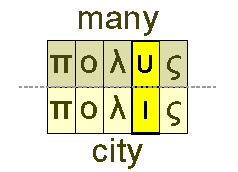
"πολύς" ≈ "many" (accent on second/last syllable).
"πόλις" ≈ "city" (accent on first syllable).
Many claim to have done
many. The Greek for
"city" can be a play on words with
"many". There are
"many" in a
"city". and
"many" that are in the "
wide area". A
"city" on a "
hill" cannot be "
hid" (the false light of the world, not in a good sense).
In modern Greek, the words are pronounced the same except for the accent stress which could be made more or less when pronounced.
164. Strongs - burn
*G1714 *2 ἐμπρήθω (em-pray'-tho) : from G1722 and pretho (to blow a flame); to enkindle, i.e. set on fire:--burn up.
 |
Words: εμπιπρασθαι ενεπρησεν
|
165. Usage - burn
- *G1714 *2 ἐμπρήθω (em-pray'-tho) : from G1722 and pretho (to blow a flame); to enkindle, i.e. set on fire:--burn up.
- ενεπρησεν
- Matthew 22:7 ... those murderers, and burned up their city.
- εμπιπρασθαι
- Acts 28:6 Howbeit they looked when he should have swollen, or ...
166. Burned cities
 Matthew 22:7 But when the king heard thereof, he was wroth: and he sent forth his armies, and destroyed those murderers, and burned up their city. [kjv]
 ο δε βασιλευς ωργισθη και πεμψας τα στρατευματα αυτου απωλεσεν τους φονεις εκεινους και την πολιν αυτων ενεπρησεν [gnt]
"πρηστήρ" ≈ "thunderstorm with lightning".
"πίμπρημι" ≈ "kindle, burn down" and can figuratively mean to become "inflated" or "swollen".
 2 Kings 10:26 And they brought forth the images out of the house of Baal, and burned them. [kjv]
 και εξηνεγκαν την στηλην του βααλ και ενεπρησαν αυτην [lxx]
167. Acts 28:6
 Acts 28:6 Howbeit they looked when he should have swollen, or fallen down dead suddenly: but after they had looked a great while, and saw no harm come to him, they changed their minds, and said that he was a god. [kjv]
 οι δε προσεδοκων αυτον μελλειν πιμπρασθαι η καταπιπτειν αφνω νεκρον επι πολυ δε αυτων προσδοκωντων και θεωρουντων μηδεν ατοπον εις αυτον γινομενον μεταβαλομενοι ελεγον αυτον ειναι θεον [gnt]
168. Acts 28:6
KJV: Howbeit they looked when he should have swollen, or fallen down dead suddenly: but after they had looked a great while, and saw no harm come to him, they changed their minds, and said that he was a god.
Greek: οι δε προσεδοκων αυτον μελλειν πιμπρασθαι η καταπιπτειν αφνω νεκρον επι πολυ δε αυτων προσδοκωντων και θεωρουντων μηδεν ατοπον εις αυτον γινομενον μεταβαλλομενοι μεταβαλομενοι ελεγον θεον αυτον ειναι θεον
169. Matthew 22:7
KJV: But when the king heard thereof, he was wroth: and he sent forth his armies, and destroyed those murderers, and burned up their city.
Greek: ακουσας δε ο δε βασιλευς ωργισθη και πεμψας τα στρατευματα αυτου απωλεσεν τους φονεις εκεινους και την πολιν αυτων ενεπρησεν
170. Matthew 22:8 Word usage
 Matthew 22:8 Then saith he to his servants, The wedding is ready, but they which were bidden were not worthy. [kjv]
 τοτε λεγει τοις δουλοις αυτου ο μεν γαμος ετοιμος εστιν οι δε κεκλημενοι ουκ ησαν αξιοι [gnt]
| Matthew 22:8 |
| Strong |
Used |
Unique |
Word |
Part of speech |
| G1401 |
122 |
7 |
δουλοις |
noun dative plural masculine |
| G1062 |
16 |
4 |
γαμος |
noun nominative singular masculine |
| G2092 |
17 |
3 |
ετοιμος |
adjective nominative singular masculine |
| G2564 |
148 |
3 |
κεκλημενοι |
verb perfect passive participle nominative plural masculine |
| G514 |
41 |
4 |
αξιοι |
adjective nominative plural masculine |
171. Matthew 22:8
172. Matthew 22:8 Worthy of not a shadow
 Matthew 22:8 Then saith he to his servants, The wedding is ready, but they which were bidden were not worthy. [kjv]
 τοτε λεγει τοις δουλοις αυτου ο μεν γαμος ετοιμος εστιν οι δε κεκλημενοι ουκ ησαν αξιοι [gnt]
"αξιοι" ≈ "worthy" (plural).
"α" ≈ "(negating prefix)" and "σκιάι" ≈ "shadows".
"σκιά" ≈ "shadow".
The sounds "
ks" as in "
ξ" and "
sk" as in "
σκ" can be used as play on words.
Logic:
not worthy =
not (
not shadows) =
shadows
Does the play on words fit in this context? Were those "
hidden", in a sense, "
shadows"? Do those "
hidden" as "
shadows" include the
"servants" (
reflexively)? How might one get them to self-select (e.g., as in the parable of the ten virgins) so they can be identified?
173. Matthew 22:8
KJV: Then saith he to his servants, The wedding is ready, but they which were bidden were not worthy.
Greek: τοτε λεγει τοις δουλοις αυτου ο μεν γαμος ετοιμος εστιν οι δε κεκλημενοι ουκ ησαν αξιοι
174. Matthew 22:9 Word usage
 Matthew 22:9 Go ye therefore into the highways, and as many as ye shall find, bid to the marriage. [kjv]
 πορευεσθε ουν επι τας διεξοδους των οδων και οσους εαν ευρητε καλεσατε εις τους γαμους [gnt]
| Matthew 22:9 |
| Strong |
Used |
Unique |
Word |
Part of speech |
| G4198 |
155 |
7 |
πορευεσθε |
? V-PNM-2P |
| G1327 |
1 |
1 |
διεξοδους |
noun accusative plural feminine |
| G3598 |
101 |
1 |
οδων |
noun genitive plural feminine |
| G2147 |
175 |
2 |
ευρητε |
verb 2nd person aorist active subjunctive 2nd person plural |
| G2564 |
148 |
1 |
καλεσατε |
verb aorist active imperative 2nd person plural |
| G1062 |
16 |
6 |
γαμους |
noun accusative plural masculine |
175. Matthew 22:9 On the exit ramps
 Matthew 22:9 Go ye therefore into the highways, and as many as ye shall find, bid to the marriage. [kjv]
 πορευεσθε ουν επι τας διεξοδους των οδων και οσους εαν ευρητε καλεσατε εις τους γαμους [gnt]
The Greek is that of
"on" the
"through the exit paths" of the
"path" and
not just the
"path". On might think of this as an
"off ramp" of the
"paths".
The ancient Greek word "επί" ≈ "on" (more passive and static)
The ancient Greek word "εις" ≈ "into" (more active and dynamic).
What happens if you are still going
"through" the "
path" and have not reached the "
exit"
"through" the "
path"?
Which is better English:
Get off into the exit of the road.
Get off on the exit of the road.
176. Strongs - exit
*G1327 *1 διέξοδος (dee-ex'-od-os) : from G1223 and G1841; an outlet through, i.e. probably an open square (from which roads diverge):--highway.
 |
Words: διεξοδους=1
|
The ancient Greek word
"διέξοδος" ≈ "exit, way out, outlet". This is
not a common word.
177. Usage - exit
- *G1327 *1 διέξοδος (dee-ex'-od-os) : from G1223 and G1841; an outlet through, i.e. probably an open square (from which roads diverge):--highway.
- διεξοδους *1 of 1
- Matthew 22:9 Go ye therefore into the highways, and as many ...
178. Matthew 22:9 Exit ramps
179. Matthew 22:9 Exist of path six
 Matthew 22:9 Go ye therefore into the highways, and as many as ye shall find, bid to the marriage. [kjv]
 πορευεσθε ουν επι τας διεξοδους των οδων και οσους εαν ευρητε καλεσατε εις τους γαμους [gnt]
A play on words is with the following.
"ἐξ" ≈ "out of" as in the English word/prefix "ex".
"ἕξ" ≈ "six" as in the English word/prefix "hex".
Greek word order:
go then on the through exit (six) paths of the paths and ...
What exactly is
path "six"? What are the other
"paths"?
180. Matthew 22:9 Exit 6
 Matthew 22:9 Go ye therefore into the highways, and as many as ye shall find, bid to the marriage. [kjv]
 πορευεσθε ουν επι τας διεξοδους των οδων και οσους εαν ευρητε καλεσατε εις τους γαμους [gnt]
5: Field (treasure in the field)
6: Merchandise (pearl of great price)
Where are the
"exit ramps" of node
"six"? Would
three of them be "
666"? Is "
Satan" somehow involved?
181. Matthew 22:9 Satanic call
 Matthew 22:9 Go ye therefore into the highways, and as many as ye shall find, bid to the marriage. [kjv]
 πορευεσθε ουν επι τας διεξοδους των οδων και οσους εαν ευρητε καλεσατε εις τους γαμους [gnt]
"καλεσατα" ≈ "call" (as used).
"καλέε" ≈ "call" (imperative).
"Σατᾶν" ≈ "Satan" or "Σᾰτᾰ́ν" ≈ "Satan".
The Greek is that of "
as many" "
if/when" you "
find" them
"call" them "
into" the "
weddings".
How does the play on words compare to what was done by King Jehu in 2 Kings 10?
182. Matthew 22:9
KJV: Go ye therefore into the highways, and as many as ye shall find, bid to the marriage.
Greek: πορευεσθε ουν επι τας διεξοδους των οδων και οσους αν εαν ευρητε καλεσατε εις τους γαμους
183. Matthew 22:10 Word usage
 Matthew 22:10 So those servants went out into the highways, and gathered together all as many as they found, both bad and good: and the wedding was furnished with guests. [kjv]
 και εξελθοντες οι δουλοι εκεινοι εις τας οδους συνηγαγον παντας ους ευρον πονηρους τε και αγαθους και επλησθη ο νυμφων ανακειμενων [gnt]
| Matthew 22:10 |
| Strong |
Used |
Unique |
Word |
Part of speech |
| G3598 |
101 |
8 |
οδους |
noun accusative plural feminine |
| G4863 |
59 |
4 |
συνηγαγον |
verb 2nd person aorist active indicative 3rd person plural |
| G4190 |
76 |
7 |
πονηρους |
adjective accusative plural masculine |
| G18 |
102 |
2 |
αγαθους |
adjective accusative plural masculine |
| G4130 |
24 |
5 |
επλησθη |
verb aorist passive indicative 3rd person singular |
| G3567 |
4 |
1 |
νυμφων |
noun nominative singular masculine |
| G345 |
14 |
4 |
ανακειμενων |
verb present middle/passive deponent participle genitive plural masculine |
184. Matthew 22:10 Synagogue together
 Matthew 22:10 So those servants went out into the highways, and gathered together all as many as they found, both bad and good: and the wedding was furnished with guests. [kjv]
 και εξελθοντες οι δουλοι εκεινοι εις τας οδους συνηγαγον παντας ους ευρον πονηρους τε και αγαθους και επλησθη ο νυμφων ανακειμενων [gnt]
The
TR changes "
groom" to
"wedding". The word for
"synagogue" is used as
"gathered together".
The Greek word translated as
"bad" is that of
"oppression" or
"evil".
The
"bad" and
"good" reminds one of the seventh kingdom parable involving the "
rotten" and
"good".
185. Matthew 22:10 Going together on the earth
 Matthew 22:10 So those servants went out into the highways, and gathered together all as many as they found, both bad and good: and the wedding was furnished with guests. [kjv]
 και εξελθοντες οι δουλοι εκεινοι εις τας οδους συνηγαγον παντας ους ευρον πονηρους τε και αγαθους και επλησθη ο νυμφων ανακειμενων [gnt]
"συναγωγή" ≈ "gathering"
"συν" ≈ "together".
"ἄγω" ≈ "go" and "γη" ≈ "earth".
The ancient Greek word
"συναγωγή" ≈ "gathering" and is the source of the English word
"synagogue" which is a Greek word and
not a Hebrew word. This word can be a play on words with the three constituent words
"together",
"lead, bring, go" and
"earth".
186. Matthew 22:10 Those with ears
 Matthew 22:10 So those servants went out into the highways, and gathered together all as many as they found, both bad and good: and the wedding was furnished with guests. [kjv]
 και εξελθοντες οι δουλοι εκεινοι εις τας οδους συνηγαγον παντας ους ευρον πονηρους τε και αγαθους και επλησθη ο νυμφων ανακειμενων [gnt]
"οὓς" ≈ "this, who, which" (plural) of "ὅς" ≈ "this, who, which".
"οὖς" ≈ "ear" and cognate with the English word "ear".
Did they "
find" those that had an
"ear" for what they were
"calling"? What exactly were they
"calling"? [Song title: Killing me softly with his song]
The
TR changes
"οὓς" ≈ "this, who, which" to
"όσους" ≈ "as many as, as much as" (plural) from
"όσος" ≈ "as many as, as much as" which breaks the play on words and changes the translation somewhat.
187. Matthew 22:10 Bad
 Matthew 22:10 So those servants went out into the highways, and gathered together all as many as they found, both bad and good: and the wedding was furnished with guests. [kjv]
 και εξελθοντες οι δουλοι εκεινοι εις τας οδους συνηγαγον παντας ους ευρον πονηρους τε και αγαθους και επλησθη ο νυμφων ανακειμενων [gnt]
"πονηρους" ≈ "oppressed by toils" (accusative).
"πολύ" ≈ "many".
"νοῦς" ≈ "(of) mind".
The Greek word translated as
"bad" is the ancient Greek word
"πονηρα" ≈ "oppressed by toils" and often translated as
"evil".
188. Matthew 22:10 Good
 Matthew 22:10 So those servants went out into the highways, and gathered together all as many as they found, both bad and good: and the wedding was furnished with guests. [kjv]
 και εξελθοντες οι δουλοι εκεινοι εις τας οδους συνηγαγον παντας ους ευρον πονηρους τε και αγαθους και επλησθη ο νυμφων ανακειμενων [gnt]
In any case:
Do not eat the fruit. Do not feed the birds.
189. Strongs - of those reclining
*G345 *14 ἀνακεῖμαι (an-ak-i'-mahee) : from G303 and G2749; to recline (as a corpse or at a meal):--guest, lean, lie, sit (down, at meat), at the table.
 |
Words: ανακειμενοις=2 ανακειμενος=3 ανακειμενου=2 ανακειμενους=2 ανακειμενων=4 ανεκειτο
|
The Greek word translated as
"guests" is that of
"dedicated".
Were those in attendance
"reclining" as in a
corpse or at a
meal?
The ancient Greek word
"ἀνάκειμαι" ≈ "be dedicated" as in having been set up as a votive offering (in a temple or sacred place).
Adding one letter changes the word to the ancient Greek word
"ἀντίκειμαι" ≈ "those opposite, set against".
190. Usage - of those reclining
- *G345 *14 ἀνακεῖμαι (an-ak-i'-mahee) : from G303 and G2749; to recline (as a corpse or at a meal):--guest, lean, lie, sit (down, at meat), at the table.
- ανακειμενων *4 of 14
- Matthew 22:10 ... and the wedding was furnished with guests.
- Mark 14:18 And as they sat and did eat, Jesus ...
- John 12:2 There they made him a supper; and Martha ...
- John 13:28 Now no man at the table knew for what intent he spake ...
- ανακειμενους *2 of 14
- Matthew 22:11 ... the king came in to see the guests, he saw there a man ...
- Mark 6:26 And the king was exceeding sorry; yet for his oath's sake, ...
191. Cambridge Greek Lexicon
The
CGL (Cambridge Greek Lexicon) (p. 96) provides the following definitions for the ancient Greek word
"ἀνάκειμαι" ≈ "be dedicated" as in having been set up as a votive offering (in a temple or sacred place).
1. be
dedicated (as a votive offering in a temple or sacred place).
2. be set up (of statues, of persons for status).
3. be stored or treasured up (of an athlete's achievements).
4. be stored up or saved (of a topic).
5. be ascribed or attributed (of achievements).
6. be laid (of responsibilities).
7. depend (of fortune in battle).
8. lie down (as opposed to standing),
recline (at a meal)
GNT.
9. be weighted down by (of a person).
Several times the
GNT translates this word as
"guests".
192. Matthew 22:10 Dedicated
 Matthew 22:10 So those servants went out into the highways, and gathered together all as many as they found, both bad and good: and the wedding was furnished with guests. [kjv]
 και εξελθοντες οι δουλοι εκεινοι εις τας οδους συνηγαγον παντας ους ευρον πονηρους τε και αγαθους και επλησθη ο νυμφων ανακειμενων [gnt]
"ἀνακειμένων" ≈ "be dedicated".
"ἀντικειμένων" ≈ "opposite, set against, opposed".
Might those
"dedicated" actually be
"set against" or
"opposed" to the will/desire of the
King?
What might happen "
if" they "
remain" "
there (in that place)" instead of doing the will/desire of the
King?
193. Matthew 22:10 Dedicated
 Matthew 22:10 So those servants went out into the highways, and gathered together all as many as they found, both bad and good: and the wedding was furnished with guests. [kjv]
 και εξελθοντες οι δουλοι εκεινοι εις τας οδους συνηγαγον παντας ους ευρον πονηρους τε και αγαθους και επλησθη ο νυμφων ανακειμενων [gnt]
"ἀνακειμένων" ≈ "be dedicated"
"αν" ≈ "if, when".
"ἐκεῖ" ≈ "there, in that place".
"μενων" ≈ "abide, remain" (present active participle).
Were those in attendance
"reclining" as in a
corpse or at a
meal? What happens
"if" they
"remain" "there (in that place)"?
The ancient Greek word
"ἀνάκειμαι" ≈ "be dedicated" as in having been set up as a votive offering (in a temple or sacred place).
194. Strongs - become full
*G4130 *24 πλήθω (play'-tho) : pleo pleh'-o (which appears only as an alternate in certain tenses and in the reduplicated form pimplemi) to "fill" (literally or figuratively (imbue, influence, supply)); specially, to fulfil (time):--accomplish, full (...come), furnish.
 |
Words: επλησαν επλησθη=5 επλησθησαν=12 πλησας πλησθεις=2 πλησθηναι πλησθης πλησθησεται
|
The ancient Greek word
"πλήθω" ≈ "become full, swell" and can mean going through a period of time (from the filling of the moon).
195. Usage - become full
- *G4130 *24 πλήθω (play'-tho) : pleo pleh'-o (which appears only as an alternate in certain tenses and in the reduplicated form pimplemi) to "fill" (literally or figuratively (imbue, influence, supply)); specially, to fulfil (time):--accomplish, full (...come), furnish.
- επλησθη *5 of 24
- Matthew 22:10 ... good: and the wedding was furnished with guests.
- Luke 1:41 ... womb; and Elisabeth was filled with the Holy Ghost:
- Luke 1:57 Now Elisabeth's full time came that she should be delivered; ...
- Luke 1:67 And his father Zacharias was filled with the Holy Ghost, ...
- Acts 19:29 And the whole city was filled with confusion: and having caught ...
196. Matthew 22:10 Furnished
 Matthew 22:10 So those servants went out into the highways, and gathered together all as many as they found, both bad and good: and the wedding was furnished with guests. [kjv]
 και εξελθοντες οι δουλοι εκεινοι εις τας οδους συνηγαγον παντας ους ευρον πονηρους τε και αγαθους και επλησθη ο νυμφων ανακειμενων [gnt]
The ancient Greek word
"πλήθω" ≈ "become full, swell" and can mean going through a period of time (from the filling of the moon).
Discuss: Compare
"filling" the "
bride chamber" with
"filling" the "
pews".
The English word
"pew" comes, through French and Latin, from the ancient Greek word
"πόδιον" ≈ "little foot" as a diminutive which comes from
"πούς" ≈ "foot".
197. Romans 1:22 Ewe in the Pew
 Romans 1:22 Professing themselves to be wise, they became fools, [kjv]
 φασκοντες ειναι σοφοι εμωρανθησαν [gnt]
Forget the elf on the shelf.
Let's get some bleat on the seat.
How about ewe in the pew?
You (ewe) got to agree that one was
really (woolly) nice! I tried to
lambaste (lamb past, or ram past)
you (ewe) a
sheepish joke that, I gather, you would have
heard (herd) about. That is why many do not
flock to my jokes, nor go
past your (pasture) jokes.
Who wants "
you" in the "
pew"?
☐
"birds"
☐ Jesus
[wash one another's feet]
Today we know a lot more but we may not be more smart as a result of having
TMI (Too Much Information). How about TMJ (
Too Many Jokes)?
198. Matthew 22:10 Bride chamber
 Matthew 22:10 So those servants went out into the highways, and gathered together all as many as they found, both bad and good: and the wedding was furnished with guests. [kjv]
 και εξελθοντες οι δουλοι εκεινοι εις τας οδους συνηγαγον παντας ους ευρον πονηρους τε και αγαθους και επλησθη ο νυμφων ανακειμενων [gnt]
In verse 10, the
TR changes
"bride chamber" to
singular "wedding".
"γάμος" ≈ "marriage, wedding" (in the TR).
"νυμφών" ≈ "bride chamber" (third person masculine singular).
Opposites:
"νυμφή" ≈ "bride, young wife". and is the source of the English word "nymph".
"νυμφίος" ≈ "bridegroom".
Where did the king say to
"fill" the
"bride chamber"? Why was the
"bride chamber" "filled".
199. Matthew 22:10
 Matthew 22:10 So those servants went out into the highways, and gathered together all as many as they found, both bad and good: and the wedding was furnished with guests. [kjv]
 και εξελθοντες οι δουλοι εκεινοι εις τας οδους συνηγαγον παντας ους ευρον πονηρους τε και αγαθους και επλησθη ο νυμφων ανακειμενων [gnt]
Many "
ignored" the "
call" as if they smelled a "
trap". Did they say anything? Might they have provided
"voices" in the manner of the
"ass" or
"donkey" to "
Balam" and been ridiculed or otherwise punished for it?
200. Numbers 22:32
 Numbers 22:32 And the angel of the LORD said unto him, Wherefore hast thou smitten thine ass these three times? behold, I went out to withstand thee, because thy way is perverse before me: [kjv]
 και ειπεν αυτω ο αγγελος του θεου δια τι επαταξας την ονον σου τουτο τριτον και ιδου εγω εξηλθον εις διαβολην σου οτι ουκ αστεια η οδος σου εναντιον μου [lxx]
"ὄνος" ≈ "ass, donkey". The modern Greek word "όνος" (O-nos) ≈ "ass, donkey".
"ὄνον" ≈ "ass, donkey" (accusative).
"διαβολή" ≈ "slander, defamation".
"ἀστεῖος" ≈ "of the city, refined, elegant, witty" from "ἄστυ" ≈ "town, city". The modern Greek word "αστείος" (a-STEE-os) ≈ "funny, comical, trivial".
201. Lucian's The Ass
This book appears to be available as a
PDF (Portable Document Format). (as of 2025-12-23).
Lucian of Samosata (125-180) was a second century Hellenized (made to adopt Greek culture) Syrian writer who often used satire in his writings. He combined the classical Greek style (in a funny way) with the common or Koine Greek spoken by the people. As such, it contains many Greek words used in the
GNT.
202. Matthew 22:10 The bride chamber
 Matthew 22:10 So those servants went out into the highways, and gathered together all as many as they found, both bad and good: and the wedding was furnished with guests. [kjv]
 και εξελθοντες οι δουλοι εκεινοι εις τας οδους συνηγαγον παντας ους ευρον πονηρους τε και αγαθους και επλησθη ο νυμφων ανακειμενων [gnt]
"ο" ≈ "the" and "νυμφών" ≈ "bride chamber" (third person masculine singular).
"ὄνον" ≈ "ass, donkey" (accusative) and "φωνᾱ́ς" ≈ "voices" (accusative plural).
Were there
"donkey" "voices"? Perhaps filling in the rest of the verse can help.
203. Matthew 22:10
 Matthew 22:10 So those servants went out into the highways, and gathered together all as many as they found, both bad and good: and the wedding was furnished with guests. [kjv]
 και εξελθοντες οι δουλοι εκεινοι εις τας οδους συνηγαγον παντας ους ευρον πονηρους τε και αγαθους και επλησθη ο νυμφων ανακειμενων [gnt]
Greek word order paraphrase:
... and was filled the bride chamber [donkey voices] with those reclining [if there abiding/remaining].
Perhaps there were only the memory of
"donkey" "voices" as the
"donkeys" did not "
care" to attend.
A better fit may be to use singular "
voice" so it connects better to the next words and without the "
if".
... more to be added ...
204. Matthew 22:10 Contrast
 Matthew 22:10 So those servants went out into the highways, and gathered together all as many as they found, both bad and good: and the wedding was furnished with guests. [kjv]
 και εξελθοντες οι δουλοι εκεινοι εις τας οδους συνηγαγον παντας ους ευρον πονηρους τε και αγαθους και επλησθη ο νυμφων ανακειμενων [gnt]
|
What the "servants" were asked to do.
|
What the "servants" did.
|
Go "on" the "exits" of the "paths". That is, "path" "six".
|
They went "into" the "paths". Which "paths"?
|
"Call" those who are "called".
|
"Gather" as in "synagogue" both "evil" and "good".
|
Allow those "called" to go "into" the "weddings".
|
"Filled" the "bride chamber" with those "dedicated". To whom were those "dedicated"?
|
Were they warned that they should not be doing what they did? Were they "
donkey" "
voices" warning them about the "
angel" of the "
Lord"? Might those "
angels" be "
deacons"?
205. Program facing aspects
Two aspects of programs that follow from specifications are the following.
What does the customer see? This is customer-facing or functional specification requirements. Provides direct value to the customer.
What does the programmer see? This is programmer-facing or nonfunctional specification requirements. Necessary but no direct value to customer.
206. Biblical view
A Biblical view of aspects of software engineering specifications are the following.
The "customer-facing" or "functional requirements" are provided by God and Jesus as bottom-up as a shallow-structured organization.
The "programmer-facing" or "nonfunctional requirements" are provided by the church as an tree-structured organization of human hierarchy.
In general, a false teacher would tend to either obscure the actual functional requirements (omitting parts of the Bible, etc.) or overly emphasize nonfunctional requirements (i.e., of the church).
207. Matthew 22:10
 Matthew 22:10 So those servants went out into the highways, and gathered together all as many as they found, both bad and good: and the wedding was furnished with guests. [kjv]
 και εξελθοντες οι δουλοι εκεινοι εις τας οδους συνηγαγον παντας ους ευρον πονηρους τε και αγαθους και επλησθη ο νυμφων ανακειμενων [gnt]
Discuss:
Is the goal of the "servants" of the "Lord" to fill the pews or bride-chamber? Explain.
Did the "servants" do the "will" of the Father?
Is there historical precedent for the
"servants" of the Lord not doing what they were asked to do? [Great Commission, Feed my sheep, etc.]
Using the play on words, is this a way to
"call" "
Satan"? [Synagogue of Satan][Smyrna - weeds][Philadelphia - pearl].
208. Revelation 2:9
 Revelation 2:9 I know thy works, and tribulation, and poverty, (but thou art rich ) and I know the blasphemy of them which say they are Jews, and are not, but are the synagogue of Satan. [kjv]
 οιδα σου την θλιψιν και την πτωχειαν αλλα πλουσιος ει και την βλασφημιαν εκ των λεγοντων ιουδαιους ειναι εαυτους και ουκ εισιν αλλα συναγωγη του σατανα [gnt]
Jesus uses the Greek word translated as "
poverty" or "
poor" to mean those that are "
fallen" (the literal meaning of the word) and need the
Good News. In what are they "
rich"? What does it mean for someone to "
say" that they are "
Jews"?
The Greek word for "
synagogue", which is the source of the English word
"synogogue", can be a play on words meaning, literally, "
going together on the earth". The "
synagogue" of "
Satan" may not be restricted to the Jewish "
synagogue".
209. Revelation 3:9 Synagogue
 Revelation 3:9 Behold, I will make them of the synagogue of Satan, which say they are Jews, and are not, but do lie; behold, I will make them to come and worship before thy feet, and to know that I have loved thee. [kjv]
 ιδου διδω εκ της συναγωγης του σατανα των λεγοντων εαυτους ιουδαιους ειναι και ουκ εισιν αλλα ψευδονται ιδου ποιησω αυτους ινα ηξουσιν και προσκυνησουσιν ενωπιον των ποδων σου και γνωσιν οτι εγω ηγαπησα σε [gnt]
The ancient Greek word
"συναγωγή" ≈ "gathering" and is the source of the English word
"synagogue" which is a Greek word and
not a Hebrew word. This word can be a play on words with the three constituent words "
together", "
lead, bring, go" and "
earth".
"συν" ≈ "together" and "αγω" ≈ "go"and "γη" ≈ "earth".
Discuss:
Who might "lead, bring, go" "together" on the "earth"?
What might be meant by "to" "know"? The "to" was added.
Might the wording indicate that, at one time, they were "loved" but they have now separated themselves from the "love" of Christ?
210. Synagogue of Satan
5: Field (treasure in the field)
6: Merchandise (pearl of great price)
The
"Synagogue" of
"Satan" appears in two of the
RC (Revelation Church).
RC2 as Smyrna, node 2 (weeds)
RC6 as Philadelphia, node 6 (pearl).
These appear to be "
on" the two "
exit ramps" of the "
paths" which "
lead (away from)" "
life".
211. Matthew 22:10
KJV: So those servants went out into the highways, and gathered together all as many as they found, both bad and good: and the wedding was furnished with guests.
Greek: και εξελθοντες οι δουλοι εκεινοι εις τας οδους συνηγαγον παντας οσους ους ευρον πονηρους τε και αγαθους και επλησθη ο γαμος νυμφων ανακειμενων
212. Matthew 22:7-9 Parable of the wedding feast
213. Context review with Greek
 Matthew 22:7 But when the king heard thereof, he was wroth: and he sent forth his armies, and destroyed those murderers, and burned up their city. [kjv]
 ο δε βασιλευς ωργισθη και πεμψας τα στρατευματα αυτου απωλεσεν τους φονεις εκεινους και την πολιν αυτων ενεπρησεν [gnt]
 22:8 Then saith he to his servants, The wedding is ready, but they which were bidden were not worthy. [kjv]
 τοτε λεγει τοις δουλοις αυτου ο μεν γαμος ετοιμος εστιν οι δε κεκλημενοι ουκ ησαν αξιοι [gnt]
 22:9 Go ye therefore into the highways, and as many as ye shall find, bid to the marriage. [kjv]
 πορευεσθε ουν επι τας διεξοδους των οδων και οσους εαν ευρητε καλεσατε εις τους γαμους [gnt]
214. Matthew 22:11 Word usage
 Matthew 22:11 And when the king came in to see the guests, he saw there a man which had not on a wedding garment: [kjv]
 εισελθων δε ο βασιλευς θεασασθαι τους ανακειμενους ειδεν εκει ανθρωπον ουκ ενδεδυμενον ενδυμα γαμου [gnt]
| Matthew 22:11 |
| Strong |
Used |
Unique |
Word |
Part of speech |
| G2300 |
23 |
4 |
θεασασθαι |
? V-ADN |
| G345 |
14 |
2 |
ανακειμενους |
verb present middle/passive deponent participle accusative plural masculine |
| G1746 |
28 |
2 |
ενδεδυμενον |
verb perfect middle participle accusative singular masculine |
| G1742 |
8 |
4 |
ενδυμα |
noun accusative singular neuter |
| G1062 |
16 |
4 |
γαμου |
noun genitive singular masculine |
215. Matthew 22:12 Word usage
 Matthew 22:12 And he saith unto him, Friend, how camest thou in hither not having a wedding garment? And he was speechless. [kjv]
 και λεγει αυτω εταιρε πως εισηλθες ωδε μη εχων ενδυμα γαμου ο δε εφιμωθη [gnt]
| Matthew 22:12 |
| Strong |
Used |
Unique |
Word |
Part of speech |
| G2083 |
3 |
3 |
εταιρε |
noun vocative singular masculine |
| G1742 |
8 |
4 |
ενδυμα |
noun accusative singular neuter |
| G1062 |
16 |
4 |
γαμου |
noun genitive singular masculine |
| G5392 |
8 |
1 |
εφιμωθη |
verb aorist passive indicative 3rd person singular |
216. Parable of the wedding garments
217. Matthew 22:11
 Matthew 22:11 And when the king came in to see the guests, he saw there a man which had not on a wedding garment: [kjv]
 εισελθων δε ο βασιλευς θεασασθαι τους ανακειμενους ειδεν εκει ανθρωπον ουκ ενδεδυμενον ενδυμα γαμου [gnt]
The Greek uses the same word repeated in a different form. Thus,
... was not clothed in clothes of the wedding. Was this
too clothes to call?
Having a "
ticket" to get into the "
feast" is
necessary but
not sufficient.
One must be "
clothed" in "
righteousness". This man had gained entry but not completed the required actions.
Might the "
man" be one of the
"servants" who is "
there" "
remaining"?
218. Matthew 22:11
KJV: And when the king came in to see the guests, he saw there a man which had not on a wedding garment:
Greek: εισελθων δε ο βασιλευς θεασασθαι τους ανακειμενους ειδεν εκει ανθρωπον ουκ ενδεδυμενον ενδυμα γαμου
219. Matthew 22:12 Now friend
 Matthew 22:12 And he saith unto him, Friend, how camest thou in hither not having a wedding garment? And he was speechless. [kjv]
 και λεγει αυτω εταιρε πως εισηλθες ωδε μη εχων ενδυμα γαμου ο δε εφιμωθη [gnt]
"ἑταῖρε" ≈ "comrade, friend"
"ἑταίρα" ≈ "courtesan, escort, prostitute"
The
ancient Greek word
"ἑταιρεία" ≈ "association, company, band". The
modern Greek word
"εταιρεία" (eh-teh-REE-a) ≈ "association, society, company".
Might this one be one that, on the other hand, went "
onto" the
"merchandise"?
220. Strongs - speechless
*G5392 *8 φιμόω (fee-mo'-o) : from phimos (a muzzle); to muzzle:--muzzle.
 |
Words: εφιμωθη=1 εφιμωσεν κημωσεις πεφιμωσο φιμουν φιμωθητι=2 φιμωσεις
|
The ancient Greek word
"φιμόω" ≈ "muzzle, shut up, seal up". The idea of "
put to silence" is a meaning from the
GNT.
221. Usage - speechless
- *G5392 *8 φιμόω (fee-mo'-o) : from phimos (a muzzle); to muzzle:--muzzle.
- φιμωθητι *2
- Mark 1:25 ... rebuked him, saying, Hold thy peace, and come out of him.
- Luke 4:35 ... rebuked him, saying, Hold thy peace, and come out of ...
- εφιμωθη
- Matthew 22:12 ... wedding garment? And he was speechless.
- εφιμωσεν
- Matthew 22:34 ... had heard that he had put the Sadducees to silence, they were gathered together.
- πεφιμωσο
- Mark 4:39 ... said unto the sea, Peace, be still. And the wind ceased, ...
- κημωσεις
- 1 Corinthians 9:9 ... the law of Moses, Thou shalt not muzzle the mouth of the ox that treadeth out the corn. ...
- φιμωσεις
- 1 Timothy 5:18 For the scripture saith, Thou shalt not muzzle the ox that treadeth out the corn. ...
- φιμουν
- 1 Peter 2:15 ... the will of God, that with well doing ye may put to silence the ignorance of foolish men:
222. Peaceful muzzle
 Mark 1:25 And Jesus rebuked him, saying, Hold thy peace, and come out of him. [kjv]
 και επετιμησεν αυτω ο ιησους λεγων φιμωθητι και εξελθε εξ αυτου [gnt]
 Luke 4:35 And Jesus rebuked him, saying, Hold thy peace, and come out of him. And when the devil had thrown him in the midst, he came out of him, and hurt him not. [kjv]
 και επετιμησεν αυτω ο ιησους λεγων φιμωθητι και εξελθε απ αυτου και ριψαν αυτον το δαιμονιον εις το μεσον εξηλθεν απ αυτου μηδεν βλαψαν αυτον [gnt]
Here we have a way
not to translate scripture using cross-language words.
"λεγω" ≈ "say" which, when pronounced as "Lego".
The ancient Greek word "φιμόω" ≈ "muzzle, shut up, seal up". The idea of "put to silence" is a meaning from the GNT. Here the word is translated as "hold peace".
So, when building with "
Legos", one should hold the "
piece".
223. Matthew 22:12 Speechless
224. Matthew 13:33 Muzzled leaven
 Matthew 13:33 Another parable spake he unto them; The kingdom of heaven is like unto leaven, which a woman took, and hid in three measures of meal, till the whole was leavened. [kjv]
 αλλην παραβολην ελαλησεν αυτοις ομοια εστιν η βασιλεια των ουρανων ζυμη ην λαβουσα γυνη ενεκρυψεν εις αλευρου σατα τρια εως ου εζυμωθη ολον [gnt]
"ἐζυμώθη" ≈ "leavened".
"ἐφιμώθη" ≈ "muzzled, speechless".
It was
"all" "leavened". Did this, in effect, have
everyone "muzzled"?
225. Matthew 22:12 In this way
226. Matthew 22:12
KJV: And he saith unto him, Friend, how camest thou in hither not having a wedding garment? And he was speechless.
Greek: και λεγει αυτω εταιρε πως εισηλθες ωδε μη εχων ενδυμα γαμου ο δε εφιμωθη
227. Matthew 22:13 Word usage
 Matthew 22:13 Then said the king to the servants, Bind him hand and foot, and take him away, and cast him into outer darkness; there shall be weeping and gnashing of teeth. [kjv]
 τοτε ο βασιλευς ειπεν τοις διακονοις δησαντες αυτου ποδας και χειρας εκβαλετε αυτον εις το σκοτος το εξωτερον εκει εσται ο κλαυθμος και ο βρυγμος των οδοντων [gnt]
| Matthew 22:13 |
| Strong |
Used |
Unique |
Word |
Part of speech |
| G1249 |
30 |
3 |
διακονοις |
noun dative plural masculine |
| G1210 |
43 |
3 |
δησαντες |
verb aorist active participle nominative plural masculine |
| G1544 |
80 |
2 |
εκβαλετε |
verb 2nd person aorist active imperative 2nd person plural |
| G1857 |
3 |
3 |
εξωτερον |
? A-ASN-C |
| G2805 |
9 |
9 |
κλαυθμος |
noun nominative singular masculine |
| G1030 |
7 |
7 |
βρυγμος |
noun nominative singular masculine |
| G3599 |
12 |
7 |
οδοντων |
noun genitive plural masculine |
228. Strongs - bind
*G1210 *43 δέω (deh'-o) : a primary verb; to bind (in various applications, literally or figuratively):--bind, be in bonds, knit, tie, wind.
 |
Words: δεδεκως δεδεμαι δεδεμενα δεδεμενην δεδεμενον=6 δεδεμενος=4 δεδεμενους=4 δεδεσαι δεδεσθαι δεδεται=3 δεθηναι=2 δησαι=2 δησαντες=3 δησας δησατε δηση=2 δησης δησητε δησουσιν εδησαν=2 εδησεν=4
|
The ancient Greek word
"δήσαντες" ≈ "having bound" (as used).
229. Usage - bind
- *G1210 *43 δέω (deh'-o) : a primary verb; to bind (in various applications, literally or figuratively):--bind, be in bonds, knit, tie, wind. See also G1163, G1189.
- δησαντες *3 of 43
- Matthew 22:13 Then said the king to the servants, Bind him hand and ...
- Matthew 27:2 And when they had bound him, they led him away, and ...
- Mark 15:1 ... and the whole council, and bound Jesus, and carried him away, ...
230. Deacon as an administration gopher
 Matthew 23:11 But he that is greatest among you shall be your servant. [kjv]
 ο δε μειζων υμων εσται υμων διακονος [gnt]
Does the
converse hold: If you become a
"servant" or
"deacon", will you become
"great" or
"greatest"?
"διάκονος" ≈ "servant".
"δία" ≈ "through" as in the first part of "diameter".
"κόνις" ≈ "dust, ashes" and related to "cinder".
The Greek words for
"through" and
"dust" appear to be related to the Greek word for
"deacon".
231. Matthew 22:13 Deacons and servants
 Matthew 22:13 Then said the king to the servants, Bind him hand and foot, and take him away, and cast him into outer darkness; there shall be weeping and gnashing of teeth. [kjv]
 τοτε ο βασιλευς ειπεν τοις διακονοις δησαντες αυτου ποδας και χειρας εκβαλετε αυτον εις το σκοτος το εξωτερον εκει εσται ο κλαυθμος και ο βρυγμος των οδοντων [gnt]
"διακόνοις" ≈ "deacons" (1 time).
"δούλους" ≈ "servants" (5 times).
The only ones known to have not done what they were supposed to do in this parable are the
"servants". Might the
"servants" have been (unknowing)
"bait" in a self-referential reflexive manner? Should they have known better?
Have the
"deacons" been
"through" the
"dust" or
"sand" or
"earth" as in the "
house" built on
"sand" or
"earth"?
232. Matthew 22:13 Deacons and servants
 Matthew 22:13 Then said the king to the servants, Bind him hand and foot, and take him away, and cast him into outer darkness; there shall be weeping and gnashing of teeth. [kjv]
 τοτε ο βασιλευς ειπεν τοις διακονοις δησαντες αυτου ποδας και χειρας εκβαλετε αυτον εις το σκοτος το εξωτερον εκει εσται ο κλαυθμος και ο βρυγμος των οδοντων [gnt]
The Greek word translated as
"servants" is that of
"deacons". In this parable;
"δούλους" ≈ "servants" (5 times).
"διακόνοις" ≈ "deacons" (1 time).
Might one of the
"servants" be the one the
"deacons" throw out? Otherwise, who are the
"deacons"? In English, a play on words would be of
"servants" with
"serpents".
Have the
"deacons" been
"through" the
"dust" or
"sand" or
"earth" as in the "
house" built on
"sand" or
"earth"?
233. Matthew 22:3-4,6,8,10,13
 Matthew 22:3 And sent forth his servants to call them that were bidden to the wedding: and they would not come. [kjv]
 22:4 Again, he sent forth other servants, saying, Tell them which are bidden, Behold, I have prepared my dinner: my oxen and my fatlings are killed, and all things are ready: come unto the marriage. [kjv]
22:6 And the remnant took his servants, and entreated them spitefully, and slew them. [kjv]
 22:8 Then saith he to his servants, The wedding is ready, but they which were bidden were not worthy. [kjv]
 22:10 So those servants went out into the highways, and gathered together all as many as they found, both bad and good: and the wedding was furnished with guests. [kjv]
 22:13 Then said the king to the servants, Bind him hand and foot, and take him away, and cast him into outer darkness; there shall be weeping and gnashing of teeth. [kjv]
234. Matthew 22:13 Bind Satan
235. Matthew 22:13
 Matthew 22:13 Then said the king to the servants, Bind him hand and foot, and take him away, and cast him into outer darkness; there shall be weeping and gnashing of teeth. [kjv]
 τοτε ο βασιλευς ειπεν τοις διακονοις δησαντες αυτου ποδας και χειρας εκβαλετε αυτον εις το σκοτος το εξωτερον εκει εσται ο κλαυθμος και ο βρυγμος των οδοντων [gnt]
The Greek phrase for "
outer" "
darkness" is used by Jesus three times in Matthew. The choice of the words "
hand" and "
foot" is interesting. Jesus uses code word nouns to represent other words and meanings.
The "hands" represent "pigs" or those who work for the "birds" and get in the way of sinners wanting to repent.
The "foot" represent "fish" or those who swim in sin from the sea of humanity. One is the be "fishers" of men as "fish" and not "fishers" of "pigs" or "birds".
There is no allusion here to the "
birds" or
false leaders. Those have, apparently, not been given a "
ticket" to the "
banquet".
236. Matthew 8:10-12 Children of the kingdom
Jesus is talking to a Roman Centenarian (commander of 80 to 100 Roman soldiers).
 Matthew 8:10 When Jesus heard it, he marvelled, and said to them that followed, Verily I say unto you, I have not found so great faith, no, not in Israel. [kjv]
 8:11 And I say unto you, That many shall come from the east and west, and shall sit down with Abraham, and Isaac, and Jacob, in the kingdom of heaven. [kjv]
 λεγω δε υμιν οτι πολλοι απο ανατολων και δυσμων ηξουσιν και ανακλιθησονται μετα αβρααμ και ισαακ και ιακωβ εν τη βασιλεια των ουρανων [gnt]
 8:12 But the children of the kingdom shall be cast out into outer darkness: there shall be weeping and gnashing of teeth. [kjv]
 οι δε υιοι της βασιλειας εκβληθησονται εις το σκοτος το εξωτερον εκει εσται ο κλαυθμος και ο βρυγμος των οδοντων [gnt]
Who are the "children" of the "kingdom"?
Which "kingdom" is this?
237. Matthew 8:10
KJV: When Jesus heard it, he marvelled, and said to them that followed, Verily I say unto you, I have not found so great faith, no, not in Israel.
Greek: ακουσας δε ο ιησους εθαυμασεν και ειπεν τοις ακολουθουσιν αμην λεγω υμιν ουδε παρ ουδενι τοσαυτην πιστιν εν τω ισραηλ τοσαυτην πιστιν ευρον
238. Matthew 8:11
KJV: And I say unto you, That many shall come from the east and west, and shall sit down with Abraham, and Isaac, and Jacob, in the kingdom of heaven.
Greek: λεγω δε υμιν οτι πολλοι απο ανατολων και δυσμων ηξουσιν και ανακλιθησονται μετα αβρααμ και ισαακ και ιακωβ εν τη βασιλεια των ουρανων
239. Matthew 8:12
KJV: But the children of the kingdom shall be cast out into outer darkness: there shall be weeping and gnashing of teeth.
Greek: οι δε υιοι της βασιλειας εκβληθησονται εις το σκοτος το εξωτερον εκει εσται ο κλαυθμος και ο βρυγμος των οδοντων
240. Matthew 25:30 Parable of the talents
 Matthew 25:30 And cast ye the unprofitable servant into outer darkness: there shall be weeping and gnashing of teeth. [kjv]
 και τον αχρειον δουλον εκβαλετε εις το σκοτος το εξωτερον εκει εσται ο κλαυθμος και ο βρυγμος των οδοντων [gnt]
The Greek word translated as "
unprofitable" is that of "
not useful".
What is "outer" "darkness"?
What is "inner" "light"?
What might be "inner" "darkness"?
What might be "outer" "light"?
[black holes, dark matter, dark energy]
241. Matthew 22:13
KJV: Then said the king to the servants, Bind him hand and foot, and take him away, and cast him into outer darkness; there shall be weeping and gnashing of teeth.
Greek: τοτε ειπεν ο βασιλευς ειπεν τοις διακονοις δησαντες αυτου ποδας και χειρας αρατε αυτον και εκβαλετε αυτον εις το σκοτος το εξωτερον εκει εσται ο κλαυθμος και ο βρυγμος των οδοντων
242. Matthew 22:14 Word usage
 Matthew 22:14 For many are called, but few are chosen. [kjv]
 πολλοι γαρ εισιν κλητοι ολιγοι δε εκλεκτοι [gnt]
| Matthew 22:14 |
| Strong |
Used |
Unique |
Word |
Part of speech |
| G2822 |
10 |
3 |
κλητοι |
adjective nominative plural masculine |
| G3641 |
41 |
7 |
ολιγοι |
adjective nominative plural masculine |
| G1588 |
22 |
3 |
εκλεκτοι |
adjective nominative plural masculine |
"κλητοὶ" ≈ "called".
"τριχί" ≈ "hair" (dative).
243. Matthew 22:12-14
This is the end for those without proper
garments in the Parable of the Wedding Feast.
 Matthew 22:12 And he saith unto him, Friend, how camest thou in hither not having a wedding garment? And he was speechless. [kjv]
 22:13 Then said the king to the servants, Bind him hand and foot, and take him away, and cast him into outer darkness; there shall be weeping and gnashing of teeth. [kjv]
 22:14 For many are called, but few are chosen. [kjv]
Who are the "many"?
Who are the "called"?
Who are the "few"?
Who are the "chose" or "elect"?
The joke for some denominational churches is "
many are cold, a few are frozen".
244. Matthew 22:14 Callings
 Matthew 22:14 For many are called, but few are chosen. [kjv]
 πολλοι γαρ εισιν κλητοι ολιγοι δε εκλεκτοι [gnt]
While in church, you may hear God calling in many ways. However, God will not call you on your
cell phone. So you can turn that off while in church.
245. Matthew 22:14 Clamor calling
 Matthew 22:14 For many are called, but few are chosen. [kjv]
 πολλοι γαρ εισιν κλητοι ολιγοι δε εκλεκτοι [gnt]
The English word
"clamor" comes, through French, from the Latin word
"clamor" ≈ "shout, cry" which comes from the Latin word
"clamo" ≈ "cry out, complain" which is related to the ancient Greek word
"καλέω" ≈ "call". The "
cl" in Latin changed into the "
ll" in Spanish as in
"llamar" ≈ "summon, call".
English: What is it called?
Spanish: ¿Cómo se llama?
Why do so many people who speak Spanish want others to join them and look at alpacas?
They are always saying, ¿Cómo se llama? (Come see the llama!)
246. Matthew 22:14 The chosen elect
247. Matthew 22:14 The cold and frozen elect
 Matthew 22:14 For many are called, but few are chosen. [kjv]
 πολλοι γαρ εισιν κλητοι ολιγοι δε εκλεκτοι [gnt]
The Greek word translated as "called" is part of the Greek word for "church" as in those believers "called out".
The Greek word translated as "chosen" is that of "elected".
There is an old line, in or about
denominational churches (that have a
name), that goes as follows.
Instead of "many are called, but few are chosen",
the line is "many are cold, a few are frozen".
The line brings to mind the reference to
cold and
hot in the letter of Jesus to the Church of
Laodicea in Revelation.
248. Matthew 22:14 Many called and few chosen
 Matthew 22:14 For many are called, but few are chosen. [kjv]
 πολλοι γαρ εισιν κλητοι ολιγοι δε εκλεκτοι [gnt]
Consider most sermons.
Who are the "many"?
Who are the "called"?
Who are the "few"?
Who are the "chose" or "elect"?
This verse is the only verse where Jesus makes this distinction of
"many",
"called",
"few" and
"chosen".
Should the Biblical context, as recorded by Matthew, be used in determining the meaning of these words?
249. Matthew 22:14 Many called and few chosen
 Matthew 22:14 For many are called, but few are chosen. [kjv]
 πολλοι γαρ εισιν κλητοι ολιγοι δε εκλεκτοι [gnt]
Google
AI (Artificial Intelligence) answer on 2025-06-29:
Many are invited or called via the general call of the gospel, which is presented through the Bible, churches, missionaries, and any type of evangelism. Few are chosen means that, of those invited, only the elect (true followers of Jesus) will remain at the wedding feast in the kingdom of God.
Another question:
What is the difference between being called and being chosen?
Another answer:
However, being called is not enough to be a saint. We must respond to that calling (invitation). Positive action is required! To be chosen, a person must accept his or her calling, be grateful for it and move forward in serving God and His Son.
250. Matthew 22:10-13 Parable of the wedding feast
251. Matthew 22:10-11 Many called and few chosen
252. Matthew 22:12-14 Many called and few chosen
 Matthew 22:12 And he saith unto him, Friend, how camest thou in hither not having a wedding garment? And he was speechless. [kjv]
 και λεγει αυτω εταιρε πως εισηλθες ωδε μη εχων ενδυμα γαμου ο δε εφιμωθη [gnt]
 22:13 Then said the king to the servants, Bind him hand and foot, and take him away, and cast him into outer darkness; there shall be weeping and gnashing of teeth. [kjv]
 τοτε ο βασιλευς ειπεν τοις διακονοις δησαντες αυτου ποδας και χειρας εκβαλετε αυτον εις το σκοτος το εξωτερον εκει εσται ο κλαυθμος και ο βρυγμος των οδοντων [gnt]
 22:14 For many are called, but few are chosen. [kjv]
 πολλοι γαρ εισιν κλητοι ολιγοι δε εκλεκτοι [gnt]
253. Matthew 22:13-14 Many called and few chosen
 Matthew 22:13 Then said the king to the servants, Bind him hand and foot, and take him away, and cast him into outer darkness; there shall be weeping and gnashing of teeth. [kjv]
 22:14 For many are called, but few are chosen. [kjv]
 πολλοι γαρ εισιν κλητοι ολιγοι δε εκλεκτοι [gnt]
"ὀλίγοι" ≈ "little in size, value, duration, etc." (plural).
"ὦ" ≈ "oh (joy or pain)".
"λυκοί" ≈ "wolves" (could be a type of "bird").
What does Jesus mean when he says that
"few" are
"chosen" or
"elected"? This verse is the
only verse where Jesus makes this distinction of
"many",
"called",
"few" and
"chosen".
Should the Biblical context, as recorded by Matthew, be used in determining the meaning of these words? Here are examples of multiple lists?
Santa: "naughty" and "nice".
Dean: "Dean's List" and "Dean's Other List".
What list or lists (sometimes called a book) does God have?
254. Chosen roosters
255. Matthew 22:14 Many called few chosen
 Matthew 22:14 For many are called, but few are chosen. [kjv]
 πολλοι γαρ εισιν κλητοι ολιγοι δε εκλεκτοι [gnt]
Paraphrase:
Many [city] are called [hairs] but few [O wolves] are chosen [roosters].
The Greek word for
"chosen" has the "
kle" and "
kto" onomatopoeic sounds of a
"bird" or
"rooster" as, in English, "
cluck" "
cluck".
You
cannot make (yourself or others) one
"hair" white/
light or
black/
dark. Jesus is the "
head" and, in Revelation, appears to only keep
white/
light hairs. Haircut saying:
A little off the top please.
256. Matthew 22:14
KJV: For many are called, but few are chosen.
Greek: πολλοι γαρ εισιν κλητοι ολιγοι δε εκλεκτοι
Latin: multi autem sunt vocati pauci vero electi
Wessex: Witodlice manega synde ge-laðede äc feawe ge-corene.
Wycliffe: For many ben clepid, but fewe ben chosun.
Tyndale: For many are called and feawe be chosen.
Luther: denn viele sind berufen, aber wenige sind auserwählet.
Slavonic: мнози бо суть звани, мало же избранных.
Russian: ибо много званых, а мало избранных.
Spanish: Porque muchos son llamados, pero pocos son escogidos.
Portuguese: Porque muitos são os chamados, mas poucos os escolhidos. »
257. Luke 14:7-24 Parables of the feast and great supper
In Luke 14, Luke presents two parables by Jesus.
The parable of the feast is a setup for
the parable of the great supper.
The parables of the feast and great supper fit in with the idea of "
taking it to the streets". However, the viewpoint is important in understanding the parables.
The sending out to the "
streets" and "
hedges" in the parable of the Great Supper has both an interesting interpretation and an interesting misinterpretation.
258. End of page


 Matthew 22:1 And Jesus answered and spake unto them again by parables, and said, [kjv]
 και αποκριθεις ο ιησους παλιν ειπεν εν παραβολαις αυτοις λεγων [gnt]
 Matthew 24:2 And Jesus said unto them, See ye not all these things? verily I say unto you, There shall not be left here one stone upon another, that shall not be thrown down. [kjv]
 ο δε αποκριθεις ειπεν αυτοις ου βλεπετε ταυτα παντα αμην λεγω υμιν ου μη αφεθη ωδε λιθος επι λιθον ος ου καταλυθησεται [gnt]
 Matthew 22:1 And Jesus answered and spake unto them again by parables, and said, [kjv]
 και αποκριθεις ο ιησους παλιν ειπεν εν παραβολαις αυτοις λεγων [gnt]
 John 16:29 His disciples said unto him, Lo, now speakest thou plainly, and speakest no proverb. [kjv]
 λεγουσιν οι μαθηται αυτου ιδε νυν εν παρρησια λαλεις και παροιμιαν ουδεμιαν λεγεις [gnt]
 … openlice… by-spell. [wes]

 Matthew 22:1 And Jesus answered and spake unto them again by parables, and said, [kjv]
 22:2 The kingdom of heaven is like unto a certain king, which made a marriage for his son, [kjv]
 22:3 And sent forth his servants to call them that were bidden to the wedding: and they would not come. [kjv]
 22:4 Again, he sent forth other servants, saying, Tell them which are bidden, Behold, I have prepared my dinner: my oxen and my fatlings are killed, and all things are ready: come unto the marriage. [kjv]
 22:5 But they made light of it, and went their ways, one to his farm, another to his merchandise: [kjv]
 22:6 And the remnant took his servants, and entreated them spitefully, and slew them. [kjv]
 Matthew 22:2 The kingdom of heaven is like unto a certain king, which made a marriage for his son, [kjv]
 ωμοιωθη η βασιλεια των ουρανων ανθρωπω βασιλει οστις εποιησεν γαμους τω υιω αυτου [gnt]


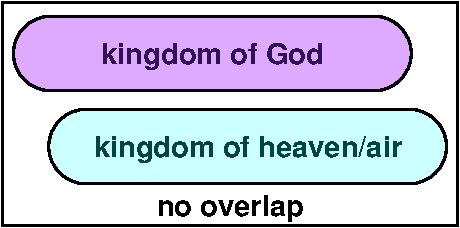








 Matthew 22:2 The kingdom of heaven is like unto a certain king, which made a marriage for his son, [kjv]
 ωμοιωθη η βασιλεια των ουρανων ανθρωπω βασιλει οστις εποιησεν γαμους τω υιω αυτου [gnt]
 Matthew 22:2 The kingdom of heaven is like unto a certain king, which made a marriage for his son, [kjv]
 ωμοιωθη η βασιλεια των ουρανων ανθρωπω βασιλει οστις εποιησεν γαμους τω υιω αυτου [gnt]
 Matthew 5:39 But I say unto you, That ye resist not evil: but whosoever shall smite thee on thy right cheek, turn to him the other also. [kjv]
 εγω δε λεγω υμιν μη αντιστηναι τω πονηρω αλλ οστις σε ραπιζει εις την δεξιαν σιαγονα σου στρεψον αυτω και την αλλην [gnt]
 The ancient Greek word "ὅστις" ≈ "whoever, whosoever" is used in this exact form 16 times in Matthew, 15 by Jesus. and just 10 other times in the GNT. This is a play on words here in both Greek and Latin.


 Matthew 22:2 The kingdom of heaven is like unto a certain king, which made a marriage for his son, [kjv]
 ωμοιωθη η βασιλεια των ουρανων ανθρωπω βασιλει οστις εποιησεν γαμους τω υιω αυτου [gnt]
 There is a play on words here in both Greek and Latin.


 2 Kings 10:19 Now therefore call unto me all the prophets of Baal, all his servants, and all his priests; let none be wanting: for I have a great sacrifice to do to Baal; whosoever shall be wanting, he shall not live. But Jehu did it in subtilty, to the intent that he might destroy the worshippers of Baal. [kjv]
 και νυν παντες οι προφηται του βααλ παντας τους δουλους αυτου και τους ιερεις αυτου καλεσατε προς με ανηρ μη επισκεπητω οτι θυσια μεγαλη μοι τω βααλ πας ος εαν επισκεπη ου ζησεται και ιου εποιησεν εν πτερνισμω ινα απολεση τους δουλους του βααλ [lxx]
 Matthew 23:37 O Jerusalem, Jerusalem, thou that killest the prophets, and stonest them which are sent unto thee, how often would I have gathered thy children together, even as a hen gathereth her chickens under her wings, and ye would not ! [kjv]
 ιερουσαλημ ιερουσαλημ η αποκτεινουσα τους προφητας και λιθοβολουσα τους απεσταλμενους προς αυτην ποσακις ηθελησα επισυναγαγειν τα τεκνα σου ον τροπον ορνις επισυναγει τα νοσσια αυτης υπο τας πτερυγας και ουκ ηθελησατε [gnt]
 2 Kings 10:19 Now therefore call unto me all the prophets of Baal, all his servants, and all his priests; let none be wanting: for I have a great sacrifice to do to Baal; whosoever shall be wanting, he shall not live. But Jehu did it in subtilty, to the intent that he might destroy the worshippers of Baal. [kjv]
 και νυν παντες οι προφηται του βααλ παντας τους δουλους αυτου και τους ιερεις αυτου καλεσατε προς με ανηρ μη επισκεπητω οτι θυσια μεγαλη μοι τω βααλ πας ος εαν επισκεπη ου ζησεται και ιου εποιησεν εν πτερνισμω ινα απολεση τους δουλους του βααλ [lxx]
 2 Kings 10:19 Now therefore call unto me all the prophets of Baal, all his servants, and all his priests; let none be wanting: for I have a great sacrifice to do to Baal; whosoever shall be wanting, he shall not live. But Jehu did it in subtilty, to the intent that he might destroy the worshippers of Baal. [kjv]
 και νυν παντες οι προφηται του βααλ παντας τους δουλους αυτου και τους ιερεις αυτου καλεσατε προς με ανηρ μη επισκεπητω οτι θυσια μεγαλη μοι τω βααλ πας ος εαν επισκεπη ου ζησεται και ιου εποιησεν εν πτερνισμω ινα απολεση τους δουλους του βααλ [lxx]
 Matthew 22:9 Go ye therefore into the highways, and as many as ye shall find, bid to the marriage. [kjv]
 πορευεσθε ουν επι τας διεξοδους των οδων και οσους εαν ευρητε καλεσατε εις τους γαμους [gnt]

 Matthew 13:33 Another parable spake he unto them; The kingdom of heaven is like unto leaven, which a woman took, and hid in three measures of meal, till the whole was leavened. [kjv]
 αλλην παραβολην ελαλησεν αυτοις ομοια εστιν η βασιλεια των ουρανων ζυμη ην λαβουσα γυνη ενεκρυψεν εις αλευρου σατα τρια εως ου εζυμωθη ολον [gnt]

 2 Kings 10:20 And Jehu said, Proclaim a solemn assembly for Baal. And they proclaimed it. [kjv]
 και ειπεν ιου αγιασατε ιερειαν τω βααλ και εκηρυξαν [lxx]
 2 Kings 10:21 And Jehu sent through all Israel: and all the worshippers of Baal came, so that there was not a man left that came not. And they came into the house of Baal; and the house of Baal was full from one end to another. [kjv]
 και απεστειλεν ιου εν παντι ισραηλ λεγων και νυν παντες οι δουλοι του βααλ και παντες οι ιερεις αυτου και παντες οι προφηται αυτου μηδεις απολειπεσθω οτι θυσιαν μεγαλην ποιω ος αν απολειφθη ου ζησεται και ηλθον παντες οι δουλοι του βααλ και παντες οι ιερεις αυτου και παντες οι προφηται αυτου ου κατελειφθη ανηρ ος ου παρεγενετο και εισηλθον εις τον οικον του βααλ και επλησθη ο οικος του βααλ στομα εις στομα [lxx]
 2 Kings 10:21 And Jehu sent through all Israel: and all the worshippers of Baal came, so that there was not a man left that came not. And they came into the house of Baal; and the house of Baal was full from one end to another. [kjv]
 και απεστειλεν ιου εν παντι ισραηλ λεγων και νυν παντες οι δουλοι του βααλ και παντες οι ιερεις αυτου και παντες οι προφηται αυτου μηδεις απολειπεσθω οτι θυσιαν μεγαλην ποιω ος αν απολειφθη ου ζησεται και ηλθον παντες οι δουλοι του βααλ και παντες οι ιερεις αυτου και παντες οι προφηται αυτου ου κατελειφθη ανηρ ος ου παρεγενετο και εισηλθον εις τον οικον του βααλ και επλησθη ο οικος του βααλ στομα εις στομα [lxx]
 Matthew 22:10 So those servants went out into the highways, and gathered together all as many as they found, both bad and good: and the wedding was furnished with guests. [kjv]
 και εξελθοντες οι δουλοι εκεινοι εις τας οδους συνηγαγον παντας ους ευρον πονηρους τε και αγαθους και επλησθη ο νυμφων ανακειμενων [gnt]
 2 Kings 10:22 And he said unto him that was over the vestry, Bring forth vestments for all the worshippers of Baal. And he brought them forth vestments. [kjv]
 και ειπεν ιου τω επι του οικου μεσθααλ εξαγαγε ενδυματα πασι τοις δουλοις του βααλ και εξηνεγκεν αυτοις ο στολιστης [lxx]
 2 Kings 10:22 And he said unto him that was over the vestry, Bring forth vestments for all the worshippers of Baal. And he brought them forth vestments. [kjv]
 και ειπεν ιου τω επι του οικου μεσθααλ εξαγαγε ενδυματα πασι τοις δουλοις του βααλ και εξηνεγκεν αυτοις ο στολιστης [lxx]
 Matthew 22:11 And when the king came in to see the guests, he saw there a man which had not on a wedding garment: [kjv]
 εισελθων δε ο βασιλευς θεασασθαι τους ανακειμενους ειδεν εκει ανθρωπον ουκ ενδεδυμενον ενδυμα γαμου [gnt]
 22:12 And he saith unto him, Friend, how camest thou in hither not having a wedding garment? And he was speechless. [kjv]
 και λεγει αυτω εταιρε πως εισηλθες ωδε μη εχων ενδυμα γαμου ο δε εφιμωθη [gnt]
 2 Kings 10:23 And Jehu went, and Jehonadab the son of Rechab, into the house of Baal, and said unto the worshippers of Baal, Search, and look that there be here with you none of the servants of the LORD, but the worshippers of Baal only. [kjv]
 και εισηλθεν ιου και ιωναδαβ υιος ρηχαβ εις οικον του βααλ και ειπεν τοις δουλοις του βααλ ερευνησατε και ιδετε ει εστιν μεθ υμων των δουλων κυριου οτι αλλ η οι δουλοι του βααλ μονωτατοι [lxx]
 2 Kings 10:24 And when they went in to offer sacrifices and burnt offerings, Jehu appointed fourscore men without, and said, If any of the men whom I have brought into your hands escape, he that letteth him go, his life shall be for the life of him. [kjv]
 και εισηλθεν του ποιησαι τα θυματα και τα ολοκαυτωματα και ιου εταξεν εαυτω εξω ογδοηκοντα ανδρας και ειπεν ανηρ ος εαν διασωθη απο των ανδρων ων εγω αναγω επι χειρας υμων η ψυχη αυτου αντι της ψυχης αυτου [lxx]
 2 Kings 10:25 And it came to pass, as soon as he had made an end of offering the burnt offering, that Jehu said to the guard and to the captains, Go in, and slay them; let none come forth. And they smote them with the edge of the sword; and the guard and the captains cast them out, and went to the city of the house of Baal. [kjv]
 και εγενετο ως συνετελεσεν ποιων την ολοκαυτωσιν και ειπεν ιου τοις παρατρεχουσιν και τοις τρισταταις εισελθοντες παταξατε αυτους ανηρ μη εξελθατω εξ αυτων και επαταξαν αυτους εν στοματι ρομφαιας και ερριψαν οι παρατρεχοντες και οι τρισταται και επορευθησαν εως πολεως οικου του βααλ [lxx]
 2 Kings 10:26 And they brought forth the images out of the house of Baal, and burned them. [kjv]
 και εξηνεγκαν την στηλην του βααλ και ενεπρησαν αυτην [lxx]
 2 Kings 10:26 And they brought forth the images out of the house of Baal, and burned them. [kjv]
 και εξηνεγκαν την στηλην του βααλ και ενεπρησαν αυτην [lxx]
 Matthew 22:7 But when the king heard thereof, he was wroth: and he sent forth his armies, and destroyed those murderers, and burned up their city. [kjv]
 ο δε βασιλευς ωργισθη και πεμψας τα στρατευματα αυτου απωλεσεν τους φονεις εκεινους και την πολιν αυτων ενεπρησεν [gnt]
 Exodus 34:13 But ye shall destroy their altars, break their images, and cut down their groves: [kjv]
 τους βωμους αυτων καθελειτε και τας στηλας αυτων συντριψετε και τα αλση αυτων εκκοψετε και τα γλυπτα των θεων αυτων κατακαυσετε εν πυρι [lxx]
 2 Kings 10:27 And they brake down the image of Baal, and brake down the house of Baal, and made it a draught house unto this day. [kjv]
 και κατεσπασαν τας στηλας του βααλ και καθειλον τον οικον του βααλ και εταξαν αυτον εις λυτρωνας εως της ημερας ταυτης [lxx]
 10:28 Thus Jehu destroyed Baal out of Israel. [kjv]
 και ηφανισεν ιου τον βααλ εξ ισραηλ [lxx]
 Luke 14:8 When thou art bidden of any man to a wedding, sit not down in the highest room; lest a more honourable man than thou be bidden of him; [kjv]
 οταν κληθης υπο τινος εις γαμους μη κατακλιθης εις την πρωτοκλισιαν μηποτε εντιμοτερος σου η κεκλημενος υπ αυτου [gnt]
 Matthew 22:2 The kingdom of heaven is like unto a certain king, which made a marriage for his son, [kjv]
 ωμοιωθη η βασιλεια των ουρανων ανθρωπω βασιλει οστις εποιησεν γαμους τω υιω αυτου [gnt]
 22:3 And sent forth his servants to call them that were bidden to the wedding: and they would not come. [kjv]
 και απεστειλεν τους δουλους αυτου καλεσαι τους κεκλημενους εις τους γαμους και ουκ ηθελον ελθειν [gnt]
 22:8 Then saith he to his servants, The wedding is ready, but they which were bidden were not worthy. [kjv]
 τοτε λεγει τοις δουλοις αυτου ο μεν γαμος ετοιμος εστιν οι δε κεκλημενοι ουκ ησαν αξιοι [gnt]
 Matthew 22:2 The kingdom of heaven is like unto a certain king, which made a marriage for his son, [kjv]
 ωμοιωθη η βασιλεια των ουρανων ανθρωπω βασιλει οστις εποιησεν γαμους τω υιω αυτου [gnt]
 Matthew 22:2 The kingdom of heaven is like unto a certain king, which made a marriage for his son, [kjv]
 ωμοιωθη η βασιλεια των ουρανων ανθρωπω βασιλει οστις εποιησεν γαμους τω υιω αυτου [gnt]

 Matthew 22:3 And sent forth his servants to call them that were bidden to the wedding: and they would not come. [kjv]
 και απεστειλεν τους δουλους αυτου καλεσαι τους κεκλημενους εις τους γαμους και ουκ ηθελον ελθειν [gnt]
 Matthew 22:3 And sent forth his servants to call them that were bidden to the wedding: and they would not come. [kjv]
 και απεστειλεν τους δουλους αυτου καλεσαι τους κεκλημενους εις τους γαμους και ουκ ηθελον ελθειν [gnt]

 Matthew 22:3 And sent forth his servants to call them that were bidden to the wedding: and they would not come. [kjv]
 και απεστειλεν τους δουλους αυτου καλεσαι τους κεκλημενους εις τους γαμους και ουκ ηθελον ελθειν [gnt]


 Matthew 22:3 And sent forth his servants to call them that were bidden to the wedding: and they would not come. [kjv]
 και απεστειλεν τους δουλους αυτου καλεσαι τους κεκλημενους εις τους γαμους και ουκ ηθελον ελθειν [gnt]
 Matthew 7:17 Even so every good tree bringeth forth good fruit; but a corrupt tree bringeth forth evil fruit. [kjv]
 ουτως παν δενδρον αγαθον καρπους καλους ποιει το δε σαπρον δενδρον καρπους πονηρους ποιει [gnt]



 Matthew 22:3 And sent forth his servants to call them that were bidden to the wedding: and they would not come. [kjv]
 και απεστειλεν τους δουλους αυτου καλεσαι τους κεκλημενους εις τους γαμους και ουκ ηθελον ελθειν [gnt]
 Matthew 22:3 And sent forth his servants to call them that were bidden to the wedding: and they would not come. [kjv]
 και απεστειλεν τους δουλους αυτου καλεσαι τους κεκλημενους εις τους γαμους και ουκ ηθελον ελθειν [gnt]
 Matthew 13:44 Again, the kingdom of heaven is like unto treasure hid in a field; the which when a man hath found, he hideth, and for joy thereof goeth and selleth all that he hath, and buyeth that field. [kjv]
 ομοια εστιν η βασιλεια των ουρανων θησαυρω κεκρυμμενω εν τω αγρω ον ευρων ανθρωπος εκρυψεν και απο της χαρας αυτου υπαγει και πωλει οσα εχει και αγοραζει τον αγρον εκεινον [gnt]


 Revelation 2:17 He that hath an ear, let him hear what the Spirit saith unto the churches; To him that overcometh will I give to eat of the hidden manna, and will give him a white stone, and in the stone a new name written, which no man knoweth saving he that receiveth it. [kjv]
 Revelation 2:17 He that hath an ear, let him hear what the Spirit saith unto the churches; To him that overcometh will I give to eat of the hidden manna, and will give him a white stone, and in the stone a new name written, which no man knoweth saving he that receiveth it. [kjv]
 ο εχων ους ακουσατω τι το πνευμα λεγει ταις εκκλησιαις τω νικωντι δωσω αυτω του μαννα του κεκρυμμενου και δωσω αυτω ψηφον λευκην και επι την ψηφον ονομα καινον γεγραμμενον ο ουδεις οιδεν ει μη ο λαμβανων [gnt]
 Matthew 22:3 And sent forth his servants to call them that were bidden to the wedding: and they would not come. [kjv]
 και απεστειλεν τους δουλους αυτου καλεσαι τους κεκλημενους εις τους γαμους και ουκ ηθελον ελθειν [gnt]
 Matthew 22:3 And sent forth his servants to call them that were bidden to the wedding: and they would not come. [kjv]
 και απεστειλεν τους δουλους αυτου καλεσαι τους κεκλημενους εις τους γαμους και ουκ ηθελον ελθειν [gnt]
 Matthew 22:4 Again, he sent forth other servants, saying, Tell them which are bidden, Behold, I have prepared my dinner: my oxen and my fatlings are killed, and all things are ready: come unto the marriage. [kjv]
 παλιν απεστειλεν αλλους δουλους λεγων ειπατε τοις κεκλημενοις ιδου το αριστον μου ητοιμακα οι ταυροι μου και τα σιτιστα τεθυμενα και παντα ετοιμα δευτε εις τους γαμους [gnt]

 Matthew 22:3 And sent forth his servants to call them that were bidden to the wedding: and they would not come. [kjv]
 22:4 Again, he sent forth other servants, saying, Tell them which are bidden, Behold, I have prepared my dinner: my oxen and my fatlings are killed, and all things are ready: come unto the marriage. [kjv]
 22:5 But they made light of it, and went their ways, one to his farm, another to his merchandise: [kjv]
 Matthew 22:4 Again, he sent forth other servants, saying, Tell them which are bidden, Behold, I have prepared my dinner: my oxen and my fatlings are killed, and all things are ready: come unto the marriage. [kjv]
 παλιν απεστειλεν αλλους δουλους λεγων ειπατε τοις κεκλημενοις ιδου το αριστον μου ητοιμακα οι ταυροι μου και τα σιτιστα τεθυμενα και παντα ετοιμα δευτε εις τους γαμους [gnt]
 Matthew 22:4 Again, he sent forth other servants, saying, Tell them which are bidden, Behold, I have prepared my dinner: my oxen and my fatlings are killed, and all things are ready: come unto the marriage. [kjv]
 παλιν απεστειλεν αλλους δουλους λεγων ειπατε τοις κεκλημενοις ιδου το αριστον μου ητοιμακα οι ταυροι μου και τα σιτιστα τεθυμενα και παντα ετοιμα δευτε εις τους γαμους [gnt]
 Luke 14:12 Then said he also to him that bade him, When thou makest a dinner or a supper, call not thy friends, nor thy brethren, neither thy kinsmen, nor thy rich neighbours; lest they also bid thee again, and a recompence be made thee. [kjv]
 ελεγεν δε και τω κεκληκοτι αυτον οταν ποιης αριστον η δειπνον μη φωνει τους φιλους σου μηδε τους αδελφους σου μηδε τους συγγενεις σου μηδε γειτονας πλουσιους μηποτε και αυτοι αντικαλεσωσιν σε και γενηται ανταποδομα σοι [gnt]
 Matthew 6:3 But when thou doest alms, let not thy left hand know what thy right hand doeth: [kjv]
 σου δε ποιουντος ελεημοσυνην μη γνωτω η αριστερα σου τι ποιει η δεξια σου [gnt]
 Acts 6:2 Then the twelve called the multitude of the disciples unto them, and said, It is not reason that we should leave the word of God, and serve tables. [kjv]
 προσκαλεσαμενοι δε οι δωδεκα το πληθος των μαθητων ειπαν ουκ αρεστον εστιν ημας καταλειψαντας τον λογον του θεου διακονειν τραπεζαις [gnt]
 convocantes … duodecim … aequum … derelinquere verbum … ministrare mensis [v]
 Matthew 22:4 Again, he sent forth other servants, saying, Tell them which are bidden, Behold, I have prepared my dinner: my oxen and my fatlings are killed, and all things are ready: come unto the marriage. [kjv]
 παλιν απεστειλεν αλλους δουλους λεγων ειπατε τοις κεκλημενοις ιδου το αριστον μου ητοιμακα οι ταυροι μου και τα σιτιστα τεθυμενα και παντα ετοιμα δευτε εις τους γαμους [gnt]
 Matthew 22:4 Again, he sent forth other servants, saying, Tell them which are bidden, Behold, I have prepared my dinner: my oxen and my fatlings are killed, and all things are ready: come unto the marriage. [kjv]
 παλιν απεστειλεν αλλους δουλους λεγων ειπατε τοις κεκλημενοις ιδου το αριστον μου ητοιμακα οι ταυροι μου και τα σιτιστα τεθυμενα και παντα ετοιμα δευτε εις τους γαμους [gnt]
 Matthew 10:34 Think not that I am come to send peace on earth: I came not to send peace, but a sword. [kjv]
 μη νομισητε οτι ηλθον βαλειν ειρηνην επι την γην ουκ ηλθον βαλειν ειρηνην αλλα μαχαιραν [gnt]
 The ancient Greek word "μάχαιραν" ≈ "sword" and comes from the ancient Greek word "μάχη" ≈ "battle, fight".

 Matthew 22:4 Again, he sent forth other servants, saying, Tell them which are bidden, Behold, I have prepared my dinner: my oxen and my fatlings are killed, and all things are ready: come unto the marriage. [kjv]
 παλιν απεστειλεν αλλους δουλους λεγων ειπατε τοις κεκλημενοις ιδου το αριστον μου ητοιμακα οι ταυροι μου και τα σιτιστα τεθυμενα και παντα ετοιμα δευτε εις τους γαμους [gnt]
 Matthew 22:4 Again, he sent forth other servants, saying, Tell them which are bidden, Behold, I have prepared my dinner: my oxen and my fatlings are killed, and all things are ready: come unto the marriage. [kjv]
 παλιν απεστειλεν αλλους δουλους λεγων ειπατε τοις κεκλημενοις ιδου το αριστον μου ητοιμακα οι ταυροι μου και τα σιτιστα τεθυμενα και παντα ετοιμα δευτε εις τους γαμους [gnt]

 Matthew 22:4 Again, he sent forth other servants, saying, Tell them which are bidden, Behold, I have prepared my dinner: my oxen and my fatlings are killed, and all things are ready: come unto the marriage. [kjv]
 παλιν απεστειλεν αλλους δουλους λεγων ειπατε τοις κεκλημενοις ιδου το αριστον μου ητοιμακα οι ταυροι μου και τα σιτιστα τεθυμενα και παντα ετοιμα δευτε εις τους γαμους [gnt]


 Matthew 22:4 Again, he sent forth other servants, saying, Tell them which are bidden, Behold, I have prepared my dinner: my oxen and my fatlings are killed, and all things are ready: come unto the marriage. [kjv]
 παλιν απεστειλεν αλλους δουλους λεγων ειπατε τοις κεκλημενοις ιδου το αριστον μου ητοιμακα οι ταυροι μου και τα σιτιστα τεθυμενα και παντα ετοιμα δευτε εις τους γαμους [gnt]

 Matthew 22:4 Again, he sent forth other servants, saying, Tell them which are bidden, Behold, I have prepared my dinner: my oxen and my fatlings are killed, and all things are ready: come unto the marriage. [kjv]
 παλιν απεστειλεν αλλους δουλους λεγων ειπατε τοις κεκλημενοις ιδου το αριστον μου ητοιμακα οι ταυροι μου και τα σιτιστα τεθυμενα και παντα ετοιμα δευτε εις τους γαμους [gnt]

 Matthew 7:14 Because strait is the gate, and narrow is the way, which leadeth unto life, and few there be that find it. [kjv]
 οτι στενη η πυλη και τεθλιμμενη η οδος η απαγουσα εις την ζωην και ολιγοι εισιν οι ευρισκοντες αυτην [gnt]
 Matthew 7:14 Because strait is the gate, and narrow is the way, which leadeth unto life, and few there be that find it. [kjv]
 οτι στενη η πυλη και τεθλιμμενη η οδος η απαγουσα εις την ζωην και ολιγοι εισιν οι ευρισκοντες αυτην [gnt]
 Matthew 7:14 Because strait is the gate, and narrow is the way, which leadeth unto life, and few there be that find it. [kjv]
 οτι στενη η πυλη και τεθλιμμενη η οδος η απαγουσα εις την ζωην και ολιγοι εισιν οι ευρισκοντες αυτην [gnt]
 22:4 Again, he sent forth other servants, saying, Tell them which are bidden, Behold, I have prepared my dinner: my oxen and my fatlings are killed, and all things are ready: come unto the marriage. [kjv]
 παλιν απεστειλεν αλλους δουλους λεγων ειπατε τοις κεκλημενοις ιδου το αριστον μου ητοιμακα οι ταυροι μου και τα σιτιστα τεθυμενα και παντα ετοιμα δευτε εις τους γαμους [gnt]
 Matthew 22:5 But they made light of it, and went their ways, one to his farm, another to his merchandise: [kjv]
 οι δε αμελησαντες απηλθον ος μεν εις τον ιδιον αγρον ος δε επι την εμποριαν αυτου [gnt]

 Matthew 22:5 But they made light of it, and went their ways, one to his farm, another to his merchandise: [kjv]
 οι δε αμελησαντες απηλθον ος μεν εις τον ιδιον αγρον ος δε επι την εμποριαν αυτου [gnt]

 Matthew 13:38 The field is the world; the good seed are the children of the kingdom; but the tares are the children of the wicked one; [kjv]
 ο δε αγρος εστιν ο κοσμος το δε καλον σπερμα ουτοι εισιν οι υιοι της βασιλειας τα δε ζιζανια εισιν οι υιοι του πονηρου [gnt]
 ager … semen … zizania … [v]
 … aker … saed … coccel … [wes]
 Matthew 22:5 But they made light of it, and went their ways, one to his farm, another to his merchandise: [kjv]
 The Greek word translated as "to" his "merchandise" is that of "onto" his "merchandise".





 1 Corinthians 11:21 For in eating every one taketh before other his own supper: and one is hungry, and another is drunken. [kjv]
 εκαστος γαρ το ιδιον δειπνον προλαμβανει εν τω φαγειν και ος μεν πεινα ος δε μεθυει [gnt]
 Romans 14:2 For one believeth that he may eat all things: another, who is weak, eateth herbs. [kjv]
 ος μεν πιστευει φαγειν παντα ο δε ασθενων λαχανα εσθιει [gnt]
 14:5 One man esteemeth one day above another: another esteemeth every day alike. Let every man be fully persuaded in his own mind. [kjv]
 ος μεν γαρ κρινει ημεραν παρ ημεραν ος δε κρινει πασαν ημεραν εκαστος εν τω ιδιω νοι πληροφορεισθω [gnt]
 Matthew 22:5 But they made light of it, and went their ways, one to his farm, another to his merchandise: [kjv]
 οι δε αμελησαντες απηλθον ος μεν εις τον ιδιον αγρον ος δε επι την εμποριαν αυτου [gnt]







 Matthew 22:6 And the remnant took his servants, and entreated them spitefully, and slew them. [kjv]
 οι δε λοιποι κρατησαντες τους δουλους αυτου υβρισαν και απεκτειναν [gnt]
 Matthew 22:6 And the remnant took his servants, and entreated them spitefully, and slew them. [kjv]
 οι δε λοιποι κρατησαντες τους δουλους αυτου υβρισαν και απεκτειναν [gnt]
 Matthew 10:29 Are not two sparrows sold for a farthing? and one of them shall not fall on the ground without your Father. [kjv]
 ουχι δυο στρουθια ασσαριου πωλειται και εν εξ αυτων ου πεσειται επι την γην ανευ του πατρος υμων [gnt]
 10:30 But the very hairs of your head are all numbered. [kjv]
 υμων δε και αι τριχες της κεφαλης πασαι ηριθμημεναι εισιν [gnt]
 10:31 Fear ye not therefore, ye are of more value than many sparrows. [kjv]
 μη ουν φοβεισθε πολλων στρουθιων διαφερετε υμεις [gnt]

 Matthew 22:7 But when the king heard thereof, he was wroth: and he sent forth his armies, and destroyed those murderers, and burned up their city. [kjv]
 ο δε βασιλευς ωργισθη και πεμψας τα στρατευματα αυτου απωλεσεν τους φονεις εκεινους και την πολιν αυτων ενεπρησεν [gnt]
 Matthew 22:7 But when the king heard thereof, he was wroth: and he sent forth his armies, and destroyed those murderers, and burned up their city. [kjv]
 ο δε βασιλευς ωργισθη και πεμψας τα στρατευματα αυτου απωλεσεν τους φονεις εκεινους και την πολιν αυτων ενεπρησεν [gnt]
 Matthew 22:7 But when the king heard thereof, he was wroth: and he sent forth his armies, and destroyed those murderers, and burned up their city. [kjv]
 ο δε βασιλευς ωργισθη και πεμψας τα στρατευματα αυτου απωλεσεν τους φονεις εκεινους και την πολιν αυτων ενεπρησεν [gnt]


 Matthew 22:8 Then saith he to his servants, The wedding is ready, but they which were bidden were not worthy. [kjv]
 τοτε λεγει τοις δουλοις αυτου ο μεν γαμος ετοιμος εστιν οι δε κεκλημενοι ουκ ησαν αξιοι [gnt]
 Matthew 22:9 Go ye therefore into the highways, and as many as ye shall find, bid to the marriage. [kjv]
 πορευεσθε ουν επι τας διεξοδους των οδων και οσους εαν ευρητε καλεσατε εις τους γαμους [gnt]









 Matthew 22:7 But when the king heard thereof, he was wroth: and he sent forth his armies, and destroyed those murderers, and burned up their city. [kjv]
 22:8 Then saith he to his servants, The wedding is ready, but they which were bidden were not worthy. [kjv]
 22:9 Go ye therefore into the highways, and as many as ye shall find, bid to the marriage. [kjv]
 Matthew 22:11 And when the king came in to see the guests, he saw there a man which had not on a wedding garment: [kjv]
 εισελθων δε ο βασιλευς θεασασθαι τους ανακειμενους ειδεν εκει ανθρωπον ουκ ενδεδυμενον ενδυμα γαμου [gnt]
 22:12 And he saith unto him, Friend, how camest thou in hither not having a wedding garment? And he was speechless. [kjv]
 και λεγει αυτω εταιρε πως εισηλθες ωδε μη εχων ενδυμα γαμου ο δε εφιμωθη [gnt]


 Matthew 22:12 And he saith unto him, Friend, how camest thou in hither not having a wedding garment? And he was speechless. [kjv]
 και λεγει αυτω εταιρε πως εισηλθες ωδε μη εχων ενδυμα γαμου ο δε εφιμωθη [gnt]

 Matthew 22:12 And he saith unto him, Friend, how camest thou in hither not having a wedding garment? And he was speechless. [kjv]
 και λεγει αυτω εταιρε πως εισηλθες ωδε μη εχων ενδυμα γαμου ο δε εφιμωθη [gnt]


 Matthew 22:13 Then said the king to the servants, Bind him hand and foot, and take him away, and cast him into outer darkness; there shall be weeping and gnashing of teeth. [kjv]
 τοτε ο βασιλευς ειπεν τοις διακονοις δησαντες αυτου ποδας και χειρας εκβαλετε αυτον εις το σκοτος το εξωτερον εκει εσται ο κλαυθμος και ο βρυγμος των οδοντων [gnt]




 Matthew 22:14 For many are called, but few are chosen. [kjv]
 πολλοι γαρ εισιν κλητοι ολιγοι δε εκλεκτοι [gnt]


 Matthew 22:10 So those servants went out into the highways, and gathered together all as many as they found, both bad and good: and the wedding was furnished with guests. [kjv]
 22:11 And when the king came in to see the guests, he saw there a man which had not on a wedding garment: [kjv]
 22:12 And he saith unto him, Friend, how camest thou in hither not having a wedding garment? And he was speechless. [kjv]
 22:13 Then said the king to the servants, Bind him hand and foot, and take him away, and cast him into outer darkness; there shall be weeping and gnashing of teeth. [kjv]
 Matthew 22:10 So those servants went out into the highways, and gathered together all as many as they found, both bad and good: and the wedding was furnished with guests. [kjv]
 και εξελθοντες οι δουλοι εκεινοι εις τας οδους συνηγαγον παντας ους ευρον πονηρους τε και αγαθους και επλησθη ο νυμφων ανακειμενων [gnt]
 22:11 And when the king came in to see the guests, he saw there a man which had not on a wedding garment: [kjv]
 εισελθων δε ο βασιλευς θεασασθαι τους ανακειμενους ειδεν εκει ανθρωπον ουκ ενδεδυμενον ενδυμα γαμου [gnt]