Send
Close Add comments:
(status displays here)
Got it! This site "creationpie.org" uses cookies. You consent to this by clicking on "Got it!" or by continuing to use this website. Note: This appears on each machine/browser from which this site is accessed.
Whosoever is a hostile witness
1. Whosoever is a hostile witness
This content is being developed.
2. Greek: rough and smooth breathing
Ancient Greek has words that have either rough or smooth breathing diacritical marks at the beginning of the word. This mark is also used with the "
r" character "
rho" as "
ρ".
This aspiration was used only for a short time in Attic (classical) Greek and had disappeared by the time of Koine Greek in the
GNT (Greek New Testament). Nevertheless, these markings have been retained as part of the (cumbersome) historical notation for ancient Greek.
This disappearance leads to some interesting play on words for words that, according to aspiration, were not as close sounding as they were in practice.
[Aristotle comments]
3. New Testament Greek: B. G. McClean
Note that any play on word meanings would ignore any such artificial aspiration, such as
"mountain" and
"definition".
(smooth breathing) "ὄρος" ≈ "mountain".
(rough breathing) "ὅρος" ≈ "boundary, definition".
Note: The meaning is not determined by the breathing marks. The breathing marks were added to fit the decided meaning.
The rough breathing mark was used to indicate aspiration in Attic (Athenian) Greek ... The other main dialects of Greek, namely Ionic, Doric, and Aeolic, never employed aspiration. In fact, all aspiration in Greek died out prior to the first century AD. Therefore, there is no good reason to continue using these breathing marks in modern editions of the Greek New Testament. (p. 20-21)
From a historical perspective, it is clear that the addition of breathing marks to the Greek New Testament does [sic] is artificial. (p. 21)
4. Matthew 17:1 Disambiguation
Matthew 17:1 And after six days Jesus taketh Peter, James, and John his brother, and bringeth them up into an high mountain apart, [kjv]
και μεθ ημερας εξ παραλαμβανει ο ιησους τον πετρον και ιακωβον και ιωαννην τον αδελφον αυτου και αναφερει αυτους εις ορος υψηλον κατ ιδιαν [gnt]
If the context cannot by itself be used to determine whether the word refers to a
"mountain" or a (flat)
"region" or
"coast", some context needs to be added to make the passage clear. Consider the following.
... brought them to a region by themselves.
... brought them to a mountain by themselves.
Which meaning is to be used? Now add a disambiguating word.
... brought them to a high region by themselves.
... brought them to a high mountain by themselves.
Which one of the meanings now fit? Which does not fit? What implications does this have for those who make a theological distinction about the
"mountain" being "
high"?
The
KJV (King James Version) translates as "
apart" the Greek word that means "
by themselves".
5. Whosoever is a hostile witness
6. Matthew 5:39 Paraphrase
Matthew 5:39 But I say unto you, That ye resist not evil: but whosoever shall smite thee on thy right cheek, turn to him the other also. [kjv]
εγω δε λεγω υμιν μη αντιστηναι τω πονηρω αλλ οστις σε ραπιζει εις την δεξιαν σιαγονα σου στρεψον αυτω και την αλλην [gnt]
5:39:
But I say to you. Do not stand in place of the evil/oppression (get in the way of the adversary). But whoever [bones, enemy, hostile] shall cause thee to strike (rapidly, false start) on your [but a shadow] of a right jawbone (offensive weapon) [the (evil, oppressive) contest, competition] turn from that to the other [(true) contest, competition].
Example:
Saul, later
Paul, under orders from the religious establishment, sought to strike out (false start) on a (evil) contest or competition, but was directed to turn from that contest or competition to the true contest or competition. Interestingly, this example of Paul will fit the next few verses as a continuation of the analogy or story.
This verse relates to both the "
altar" verse back in 5:23-24 and the "
agree" with the "
adversary" verse back in verses 5:25-26.
7. Matthew 5:41 Paraphrase
Matthew 5:41 And whosoever shall compel thee to go a mile, go with him twain. [kjv]
και οστις σε αγγαρευσει μιλιον εν υπαγε μετ αυτου δυο [gnt]
5:41 Paraphrase:
Whosoever [enemy, hostile, bones] you compels (to be a messenger) (with it( message)) mile one [indistinct (message), millstone] go away with it (message) two [of God].
Example: Paul was compelled as a messenger of the religious institution to go one mile (with an indistinct message). Instead, he changed course (turned the jaw bone or cheek) and went two miles (and more) with a message of God. [military common sense]
8. Matthew 5:39 Turning the other cheek
Matthew 5:39 But I say unto you, That ye resist not evil: but whosoever shall smite thee on thy right cheek, turn to him the other also. [kjv]
Should one not "resist" "the evil"? Should one let "the evil" have it's way?
Who is meant by "whosoever"?
The Greek translated as "on" is that of "into".
What does it mean to "smite"? It (s) might be something else.
The Greek for "cheek" is that of a "jaw bone".
Why the "right" "cheek" and not the "left" "cheek"?
The Greek translated as "him" (person) can be "it" (that which you are doing).
What is the "other" "it" to which one is to "turn"?
9. Matthew 10:32-33 Whosoever is hostile
Matthew 10:32 Whosoever therefore shall confess me before men, him will I confess also before my Father which is in heaven. [kjv]
πας ουν οστις ομολογησει εν εμοι εμπροσθεν των ανθρωπων ομολογησω καγω εν αυτω εμπροσθεν του πατρος μου του εν τοις ουρανοις [gnt]
10:33 But whosoever shall deny me before men, him will I also deny before my Father which is in heaven. [kjv]
οστις δε δ αν αρνησηται με εμπροσθεν των ανθρωπων αρνησομαι καγω αυτον εμπροσθεν του πατρος μου του εν τοις ουρανοις [gnt]
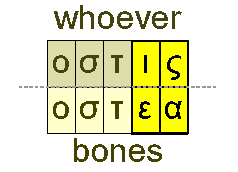
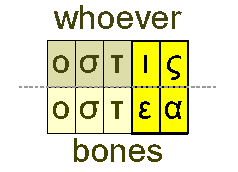
The ancient Greek word
"ὅστις" ≈ "whoever, whosoever" is used in this exact form
16 times in Matthew,
15 by Jesus. and just
10 other times in the
GNT. This is a play on words here in
both Greek and Latin.
"ὅστις" ≈ "whoever, whosoever".
"ὀστέον" ≈ "bone" as in the first part of the English word "osteoporosis".
The English word
"hostile" comes, through French, from the
Latin word
"hostis" ≈ "enemy" which is similar to how the Greek word would be pronounced. [guest, ghost, host, hostile]
10. Matthew 10:33 Deny as a bird
Matthew 10:33 But whosoever shall deny me before men, him will I also deny before my Father which is in heaven. [kjv]
οστις δε δ αν αρνησηται με εμπροσθεν των ανθρωπων αρνησομαι καγω αυτον εμπροσθεν του πατρος μου του εν τοις ουρανοις [gnt]
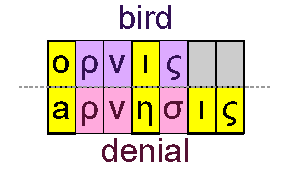
Use the noun for
"bird" as a verb. What's your "
ask"? [tennising]
Greek: αρνησηται (say "ar-NEE-see-ta"), verb "deny".
Greek: ορνησηται (say "or-NEE-see-ta"), verb "bird".
Paraphrase (with play on words):
Whoever [bones, hostile] denies [birds] me before men, I will deny [bird] him before my Father in heaven.
"ἀρνέομαι" ≈ "deny, disown, refuse, decline".
"ὄρνεον" ≈ "bird" as in ornithology.
This play on word usage is
not the same as the modern "
flip" the
"bird" action, though the word "
flip" is similar in spirit to the Greek word for "
worthy" as in "
counter-balance" and the word translated as "
variance" (in two verses).
11. Brothers
On the other hand: If "
A" is a "
brother" of Jesus, then is Jesus a "
brother" of "
A"? This is a
commutative property.
Matthew 12:50 For who soever shall do the will of my Father which is in heaven, the same is my brother, and sister, and mother. [kjv]
Suppose the "
brother" is
Jesus. Could being
"angry" with
Jesus make one
"liable" "with respect to" the "
judgment"?
5:22 But I say unto you, That whosoever is angry with his brother without a cause shall be in danger of the judgment: and whosoever shall say to his brother, Raca, shall be in danger of the council: but whosoever shall say, Thou fool, shall be in danger of hell fire. [kjv]
12. Non-commutative property
Matthew 12:50 For who soever shall do the will of my Father which is in heaven, the same is my brother, and sister, and mother. [kjv]
οστις γαρ αν ποιηση το θελημα του πατρος μου του εν ουρανοις αυτος μου αδελφος και αδελφη και μητηρ εστιν [gnt]
If "
A" is a "
brother" of Jesus, then is Jesus a "
brother" of "
A"? This is a
commutative property. There is an important
non-commutative aspect.
Story: There were four brothers and one sister (the youngest). The youngest brother made a claim later in life.
If any of the brothers yelled at the sister, that brother got in trouble.
If the sister yelled at any of the brothers, that brother got in trouble.
Do you see the
non-commutative aspect of this story?
If you are "angry" at "the" "brother" Jesus, then you get in trouble.
If "the" "brother" Jesus is "angry" at you (or what you did), then you get in trouble.
13. Matthew 13:12 Whosoever
Matthew 13:12 For whosoever hath, to him shall be given, and he shall have more abundance: but whosoever hath not, from him shall be taken away even that he hath. [kjv]
οστις γαρ εχει δοθησεται αυτω και περισσευθησεται οστις δε ουκ εχει και ο εχει αρθησεται απ αυτου [gnt]
When is the last time you have heard this verse covered in church?
No winners! Everyone gets a participation trophy!
How does what Jesus says here compare to the idea of humanistic "
socialism"? How about "
capitalism"?
In general, the "
humanistic" ideas of "
socialism" are directly opposed to the Bible. Some, but not all, aspects of "
capitalism" agree with the Bible.
14. Analogy of scribe and householder
Matthew 13:52 Then said he unto them, Therefore every scribe which is instructed unto the kingdom of heaven is like unto a man that is an householder, which bringeth forth out of his treasure things new and old. [kjv]
ο δε ειπεν αυτοις δια τουτο πας γραμματευς μαθητευθεις τη βασιλεια των ουρανων ομοιος εστιν ανθρωπω οικοδεσποτη οστις εκβαλλει εκ του θησαυρου αυτου καινα και παλαια [gnt]
| scribe |
householder |
| instructed |
casts out |
| kingdom of heaven |
new and old treasure |
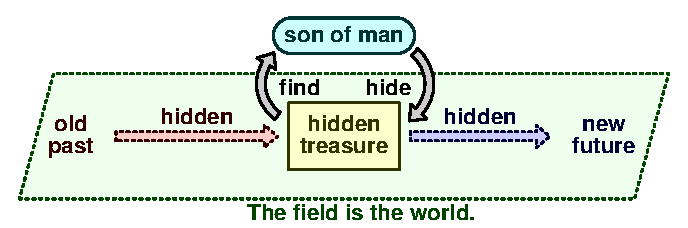 |
The "like" analogy appears to relate words.
Perhaps the inferred "things" in Matthew 13:52 are abstract (as souls or words) and not concrete.
|
The "scribe" is related to "householder" or "Jesus as God".
The "instructed" is related to "casts out" or "bringeth forth".
The "kingdom of heaven" or "kingdom of the air" is related to "new" and "old" (things) of the "treasure". Those "things" appear to span the entirety of the "kingdom of heaven".
It might be assumed that the inferred "
things", which are "
new" and "
old", are similar (or dissimilar) in some consistent way.
15. Matthew 18:3 Whosoever
Matthew 18:3 And said, Verily I say unto you, Except ye be converted, and become as little children, ye shall not enter into the kingdom of heaven. [kjv]
και ειπεν αμην λεγω υμιν εαν μη στραφητε και γενησθε ως τα παιδια ου μη εισελθητε εις την βασιλειαν των ουρανων [gnt]
16. Matthew 18:4 Humbled at the same level
Matthew 18:4 Whosoever therefore shall humble himself as this little child, the same is greatest in the kingdom of heaven. [kjv]
οστις ουν ταπεινωσει εαυτον ως το παιδιον τουτο ουτος εστιν ο μειζων εν τη βασιλεια των ουρανων [gnt]
Who is "greatest"?
Who is "least"?
|
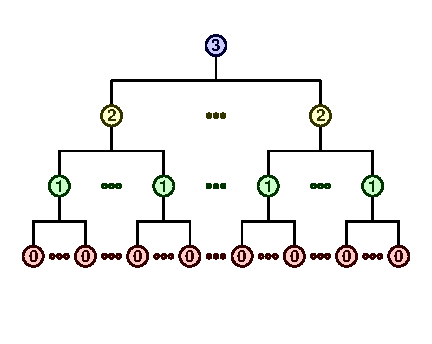
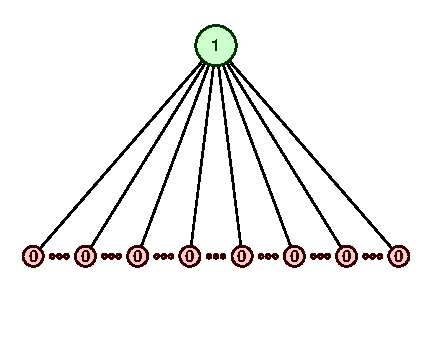
With Jesus as the "head" , every "hair" or "believer" is both "greatest" and "least".
|
 |
 |
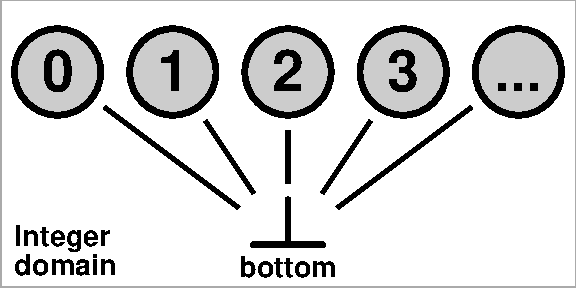 |
Jesus has a flat organizational chart. This is similar to the semantic domain of integers in programming language theory. Top was not needed for the theory to work.
[No child left behind. No child gets ahead.]
|
17. Matthew 19:29
Matthew 19:29 And every one that hath forsaken houses, or brethren, or sisters, or father, or mother, or wife, or children, or lands, for my name's sake, shall receive an hundredfold, and shall inherit everlasting life. [kjv]
και πας οστις αφηκεν οικιας η αδελφους η αδελφας η πατερα η μητερα η τεκνα η αγρους ενεκεν του εμου ονοματος πολλαπλασιονα λημψεται και ζωην αιωνιον κληρονομησει [gnt]
18. Matthew 19:29
KJV: And every one that hath forsaken houses, or brethren, or sisters, or father, or mother, or wife, or children, or lands, for my name's sake, shall receive an hundredfold, and shall inherit everlasting life.
Greek: και πας ος οστις αφηκεν οικιας η αδελφους η αδελφας η πατερα η μητερα η γυναικα η τεκνα η αγρους ενεκεν του εμου ονοματος μου εκατονταπλασιονα ληψεται πολλαπλασιονα λημψεται και ζωην αιωνιον κληρονομησει
19. Matthew 20:1
Matthew 20:1 For the kingdom of heaven is like unto a man that is an householder, which went out early in the morning to hire labourers into his vineyard. [kjv]
ομοια γαρ εστιν η βασιλεια των ουρανων ανθρωπω οικοδεσποτη οστις εξηλθεν αμα πρωι μισθωσασθαι εργατας εις τον αμπελωνα αυτου [gnt]
20. Matthew 20:1
KJV: For the kingdom of heaven is like unto a man that is an householder, which went out early in the morning to hire labourers into his vineyard.
Greek: ομοια γαρ εστιν η βασιλεια των ουρανων ανθρωπω οικοδεσποτη οστις εξηλθεν αμα πρωι μισθωσασθαι εργατας εις τον αμπελωνα αυτου
21. Matthew 21:33
Matthew 21:33 Hear another parable: There was a certain householder, which planted a vineyard, and hedged it round about, and digged a winepress in it, and built a tower, and let it out to husbandmen, and went into a far country: [kjv]
αλλην παραβολην ακουσατε ανθρωπος ην οικοδεσποτης οστις εφυτευσεν αμπελωνα και φραγμον αυτω περιεθηκεν και ωρυξεν εν αυτω ληνον και ωκοδομησεν πυργον και εξεδετο αυτον γεωργοις και απεδημησεν [gnt]
22. Matthew 21:33
KJV: Hear another parable: There was a certain householder, which planted a vineyard, and hedged it round about, and digged a winepress in it, and built a tower, and let it out to husbandmen, and went into a far country:
Greek: αλλην παραβολην ακουσατε ανθρωπος τις ην οικοδεσποτης οστις εφυτευσεν αμπελωνα και φραγμον αυτω περιεθηκεν και ωρυξεν εν αυτω ληνον και ωκοδομησεν πυργον και εξεδοτο εξεδετο αυτον γεωργοις και απεδημησεν
23. Matthew 22:2
Matthew 22:2 The kingdom of heaven is like unto a certain king, which made a marriage for his son, [kjv]
ωμοιωθη η βασιλεια των ουρανων ανθρωπω βασιλει οστις εποιησεν γαμους τω υιω αυτου [gnt]
24. Matthew 22:2
KJV: The kingdom of heaven is like unto a certain king, which made a marriage for his son,
Greek: ωμοιωθη η βασιλεια των ουρανων ανθρωπω βασιλει οστις εποιησεν γαμους τω υιω αυτου
25. Matthew 23:12
Matthew 23:12 And whosoever shall exalt himself shall be abased; and he that shall humble himself shall be exalted. [kjv]
οστις δε υψωσει εαυτον ταπεινωθησεται και οστις ταπεινωσει εαυτον υψωθησεται [gnt]
26. Matthew 23:12
KJV: And whosoever shall exalt himself shall be abased; and he that shall humble himself shall be exalted.
Greek: οστις δε υψωσει εαυτον ταπεινωθησεται και οστις ταπεινωσει εαυτον υψωθησεται
27. Matthew 7:24
Matthew 7:24 Therefore whosoever heareth these sayings of mine, and doeth them, I will liken him unto a wise man, which built his house upon a rock: [kjv]
πας ουν οστις ακουει μου τους λογους τουτους και ποιει αυτους ομοιωθησεται ανδρι φρονιμω οστις ωκοδομησεν αυτου την οικιαν επι την πετραν [gnt]
28. Matthew 7:24
KJV: Therefore whosoever heareth these sayings of mine, and doeth them, I will liken him unto a wise man, which built his house upon a rock:
Greek: πας ουν οστις ακουει μου τους λογους τουτους και ποιει αυτους ομοιωσω αυτον ομοιωθησεται ανδρι φρονιμω οστις ωκοδομησεν αυτου την οικιαν αυτου επι την πετραν
29. Matthew 7:26
Matthew 7:26 And every one that heareth these sayings of mine, and doeth them not, shall be likened unto a foolish man, which built his house upon the sand: [kjv]
30. Matthew 7:26
KJV: And every one that heareth these sayings of mine, and doeth them not, shall be likened unto a foolish man, which built his house upon the sand:
Greek: και πας ο ακουων μου τους λογους τουτους και μη ποιων αυτους ομοιωθησεται ανδρι μωρω οστις ωκοδομησεν αυτου την οικιαν αυτου επι την αμμον
31. Matthew 2:6
Matthew 2:6 And thou Bethlehem, in the land of Juda, art not the least among the princes of Juda: for out of thee shall come a Governor, that shall rule my people Israel. [kjv]
και συ βηθλεεμ γη ιουδα ουδαμως ελαχιστη ει εν τοις ηγεμοσιν ιουδα εκ σου γαρ εξελευσεται ηγουμενος οστις ποιμανει τον λαον μου τον ισραηλ [gnt]
When Jesus uses a word as a code word, the other disciples, including Matthew, may not be aware of that meaning.
[leaven]
32. Matthew 2:6
KJV: And thou Bethlehem, in the land of Juda, art not the least among the princes of Juda: for out of thee shall come a Governor, that shall rule my people Israel.
Greek: και συ βηθλεεμ γη ιουδα ουδαμως ελαχιστη ει εν τοις ηγεμοσιν ιουδα εκ σου γαρ εξελευσεται ηγουμενος οστις ποιμανει τον λαον μου τον ισραηλ
33. End of page



 The ancient Greek word "ὅστις" ≈ "whoever, whosoever" is used in this exact form 16 times in Matthew, 15 by Jesus. and just 10 other times in the GNT. This is a play on words here in both Greek and Latin.