- *G189 *24 ἀκοή (ak-o-ay') : from G191; hearing (the act, the sense or the thing heard):--audience, ear, fame, which ye heard, hearing, preached, report, rumor.
- ακοη *10
- Matthew 4:24 And his fame went throughout all ...
- Matthew 13:14 ... the prophecy of Esaias, which saith, By hearing ye shall hear, and shall ...
- Mark 1:28 And immediately his fame spread abroad throughout all ...
- John 12:38 ... who hath believed our report? and to whom hath ...
- Acts 28:26 ... people, and say, Hearing ye shall hear, and shall ...
- Romans 10:16 ... who hath believed our report?
- Romans 10:17 So then faith cometh by hearing, and hearing by the word of God.
- 1 Corinthians 12:17 ... were an eye, where were the hearing? If the whole were hearing, where were the smelling?
- 2 Peter 2:8 ... them, in seeing and hearing, vexed his righteous soul ...
- ακοης *5
- Romans 10:17 So then faith cometh by hearing, and hearing by the word of God.
- Galatians 3:2 ... of the law, or by the hearing of faith?
- Galatians 3:5 ... of the law, or by the hearing of faith?
- 1 Thessalonians 2:13 ... when ye received the word of God which ye heard of us, ye received ...
- Hebrews 4:2 ... unto them: but the word preached did not profit ...
- ακοας *4
- Matthew 24:6 ... hear of wars and rumours of wars: see that ye be ...
- Mark 13:7 ... ye shall hear of wars and rumours of wars, be ye not ...
- Luke 7:1 ... his sayings in the audience of the people, he entered into Capernaum.
- Acts 17:20 ... strange things to our ears: we would know therefore ...
- ακοην *3
- Matthew 14:1 ... Herod the tetrarch heard of the fame of Jesus,
- 2 Timothy 4:3 ... to themselves teachers, having itching ears;
- 2 Timothy 4:4 And they shall turn away their ears from the truth, and ...
- ακοαι
- Mark 7:35 And straightway his ears were opened, and the string ...
- ακοαις
- Hebrews 5:11 ... seeing ye are dull of hearing.
16. Usage - news
*G189 *24 ἀκοή (ak-o-ay') : from G191; hearing (the act, the sense or the thing heard):--audience, ear, fame, which ye heard, hearing, preached, report, rumor.
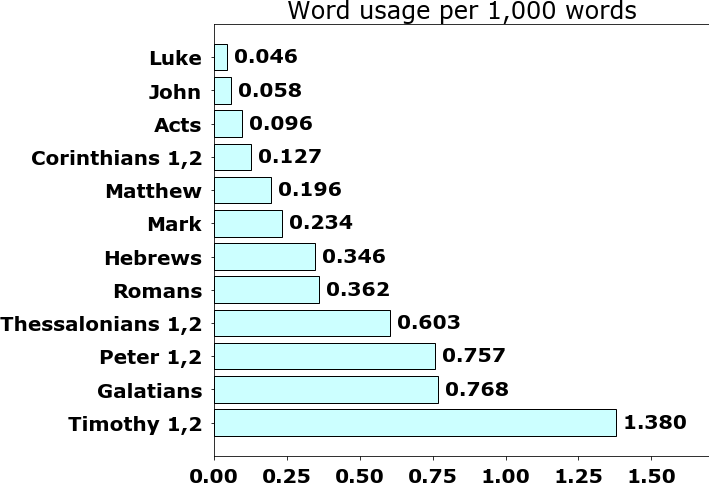 |
Words: ακοαι ακοαις ακοας=4 ακοη=10 ακοην=3 ακοης=5
|
17. Crowds of people
Matthew 4:25 And there followed him great multitudes of people from Galilee, and from Decapolis, and from Jerusalem, and from Judaea, and from beyond Jordan. [kjv]
και ηκολουθησαν αυτω οχλοι πολλοι απο της γαλιλαιας και δεκαπολεως και ιεροσολυμων και ιουδαιας και περαν του ιορδανου [gnt]
Crowds of people followed Jesus.
A hundred years later, after several uprisings, Roman Emperor Hadrian made many Jews leave
Judea and renamed the area "
Palistinia" which is the Latin name for their traditional enemies the "
Philistines".
Here is an arbitrary chapter boundary between Matthew 5:25 and 5:1.
18. Matthew 4:25
KJV: And there followed him great multitudes of people from Galilee, and from Decapolis, and from Jerusalem, and from Judaea, and from beyond Jordan.
Greek: και ηκολουθησαν αυτω οχλοι πολλοι απο της γαλιλαιας και δεκαπολεως και ιεροσολυμων και ιουδαιας και περαν του ιορδανου
19. Chapter and verse divisions
In this case, as with many others, one must account for the chapter divisions being added in the Middle Ages, so one must look at the before (or after) of any given verse.

Chapter divisions were added (and chapters numbered) in the Middle Ages in the 13th century. Later, in 1551, in the Middle Ages, verse divisions were added (and verses numbered).
It is best to always check surrounding verses and, when appropriate, verses in the previous or next chapter, to see if those verses have important meaning for the context.
20. Crowds and mountains
Matthew 5:1 And seeing the multitudes, he went up into a mountain: and when he was set, his disciples came unto him: [kjv]
ιδων δε τους οχλους ανεβη εις το ορος και καθισαντος αυτου προσηλθαν αυτω οι μαθηται αυτου [gnt]

The
KJV translates as "
into a mountain" what in the Greek is "
into the mountain" (definite article) as a specific but unnamed mountain.
- Going or being "επί" ≈ "on" the mountain means going (if necessary) and being "on" the mountain semi-permanently.
- Going "εις" ≈ "into, to" the mountain means going "to" and "on" the mountain but only temporarily.
21. Matthew 5:14: Light of the world
Matthew 5:14 Ye are the light of the world. A city that is set on an hill cannot be hid. [kjv]
υμεις εστε το φως του κοσμου ου δυναται πολις κρυβηναι επανω ορους κειμενη [gnt]
This
"city" of
"many" is "
on" the
"mountain".
- Is the "light" good or bad?
- Is being "hid" good or bad?
If I tell you that the
"city" on "
on" the
"mountain", why do I need to tell you that it is
"set" "
on" the
"mountain"? What is the difference?
- A city set on a mountain ...
- A city on a mountain ...
Is going on the
"mountain" good or
bad?
22. Wandering sheep
Matthew 18:12 How think ye? if a man have an hundred sheep, and one of them be gone astray, doth he not leave the ninety and nine, and goeth into the mountains, and seeketh that which is gone astray? [kjv]
τι υμιν δοκει εαν γενηται τινι ανθρωπω εκατον προβατα και πλανηθη εν εξ αυτων ουχι αφησει τα ενενηκοντα εννεα επι τα ορη και πορευθεις ζητει το πλανωμενον [gnt]
The
KJV translates as "
into the mountains" what in the Greek is "
on the mountains" as in ready to stay there for a while. This sheep is "
lost" as in going "
astray" using the word that became the English word
"planet".
Luke 15:4 What man of you, having an hundred sheep, if he lose one of them, doth not leave the ninety and nine in the wilderness, and go after that which is lost, until he find it? [kjv]
τις ανθρωπος εξ υμων εχων εκατον προβατα και απολεσας εξ αυτων εν ου καταλειπει τα ενενηκοντα εννεα εν τη ερημω και πορευεται επι το απολωλος εως ευρη αυτο [gnt]
What people remembered and told Luke was that the man went "
in" the "
desert" and
not the "
mountain". This sheep is "
lost" as in "
destroyed".
23. Matthew 18:12
KJV: How think ye? if a man have an hundred sheep, and one of them be gone astray, doth he not leave the ninety and nine, and goeth into the mountains, and seeketh that which is gone astray?
Greek: τι υμιν δοκει εαν γενηται τινι ανθρωπω εκατον προβατα και πλανηθη εν εξ αυτων ουχι αφεις αφησει τα εννενηκονταεννεα ενενηκοντα εννεα επι τα ορη και πορευθεις ζητει το πλανωμενον
24. Luke 15:4
KJV: What man of you, having an hundred sheep, if he lose one of them, doth not leave the ninety and nine in the wilderness, and go after that which is lost, until he find it?
Greek: τις ανθρωπος εξ υμων εχων εκατον προβατα και απολεσας εν εξ αυτων εν ου καταλειπει τα εννενηκονταεννεα ενενηκοντα εννεα εν τη ερημω και πορευεται επι το απολωλος εως ευρη αυτο
25. Transfiguration
Matthew 17:1 And after six days Jesus taketh Peter, James, and John his brother, and bringeth them up into an high mountain apart, [kjv]
και μεθ ημερας εξ παραλαμβανει ο ιησους τον πετρον και ιακωβον και ιωαννην τον αδελφον αυτου και αναφερει αυτους εις ορος υψηλον κατ ιδιαν [gnt]
Mark 9:2 And after six days Jesus taketh with him Peter, and James, and John, and leadeth them up into an high mountain apart by themselves: and he was transfigured before them. [kjv]
και μετα ημερας εξ παραλαμβανει ο ιησους τον πετρον και τον ιακωβον και ιωαννην και αναφερει αυτους εις ορος υψηλον κατ ιδιαν μονους και μετεμορφωθη εμπροσθεν αυτων [gnt]
26. Matthew 17:1
KJV: And after six days Jesus taketh Peter, James, and John his brother, and bringeth them up into an high mountain apart,
Greek: και μεθ ημερας εξ παραλαμβανει ο ιησους τον πετρον και ιακωβον και ιωαννην τον αδελφον αυτου και αναφερει αυτους εις ορος υψηλον κατ ιδιαν
27. Mark 9:2
KJV: And after six days Jesus taketh with him Peter, and James, and John, and leadeth them up into an high mountain apart by themselves: and he was transfigured before them.
Greek: και μεθ μετα ημερας εξ παραλαμβανει ο ιησους τον πετρον και τον ιακωβον και τον ιωαννην και αναφερει αυτους εις ορος υψηλον κατ ιδιαν μονους και μετεμορφωθη εμπροσθεν αυτων
28. Flee into the mountains
Mark 13:14 But when ye shall see the abomination of desolation, spoken of by Daniel the prophet, standing where it ought not, (let him that readeth understand,) then let them that be in Judaea flee to the mountains: [kjv]
οταν δε ιδητε το βδελυγμα της ερημωσεως εστηκοτα οπου ου δει ο αναγινωσκων νοειτω τοτε οι εν τη ιουδαια φευγετωσαν εις τα ορη [gnt]
Luke 21:21 Then let them which are in Judaea flee to the mountains; and let them which are in the midst of it depart out; and let not them that are in the countries enter thereinto. [kjv]
τοτε οι εν τη ιουδαια φευγετωσαν εις τα ορη και οι εν μεσω αυτης εκχωρειτωσαν και οι εν ταις χωραις μη εισερχεσθωσαν εις αυτην [gnt]
Matthew 24:16 Then let them which be in Judaea flee into the mountains: [kjv]
τοτε οι εν τη ιουδαια φευγετωσαν εις τα ορη [gnt]
In Matthew 24:16, the
TR (Textus Receptus) has "
on" as if those fleeing should move and live and be "
on" the mountain.
29. Luke 21:21
KJV: Then let them which are in Judaea flee to the mountains; and let them which are in the midst of it depart out; and let not them that are in the countries enter thereinto.
Greek: τοτε οι εν τη ιουδαια φευγετωσαν εις τα ορη και οι εν μεσω αυτης εκχωρειτωσαν και οι εν ταις χωραις μη εισερχεσθωσαν εις αυτην
30. Mark 13:14
KJV: But when ye shall see the abomination of desolation, spoken of by Daniel the prophet, standing where it ought not, (let him that readeth understand,) then let them that be in Judaea flee to the mountains:
Greek: οταν δε ιδητε το βδελυγμα της ερημωσεως το ρηθεν υπο δανιηλ του προφητου εστος εστηκοτα οπου ου δει ο αναγινωσκων νοειτω τοτε οι εν τη ιουδαια φευγετωσαν εις τα ορη
31. Matthew 24:16
KJV: Then let them which be in Judaea flee into the mountains:
Greek: τοτε οι εν τη ιουδαια φευγετωσαν επι εις τα ορη
32. Crowds and a private briefing
Matthew 5:1 And seeing the multitudes, he went up into a mountain: and when he was set, his disciples came unto him: [kjv]
ιδων δε τους οχλους ανεβη εις το ορος και καθισαντος αυτου προσηλθαν αυτω οι μαθηται αυτου [gnt]

It appears that Jesus was getting away from the crowds. Jesus had many disciples,
not just the
12 remaining at the end. So the Beatitudes "
teachings" are a private briefing these disciples.
Later, in John 6, Jesus starts to explain his real mission and many stop following him (for the food, healing, etc.). The
12 disciples remain.
33. Matthew 5:1
KJV: And seeing the multitudes, he went up into a mountain: and when he was set, his disciples came unto him:
Greek: ιδων δε τους οχλους ανεβη εις το ορος και καθισαντος αυτου προσηλθον προσηλθαν αυτω οι μαθηται αυτου
Latin: videns autem turbas ascendit in montem et cum sedisset accesserunt ad eum discipuli eius
Wessex: Videns iesus turbas ascendit in montem. R. Soðlice þa se haelend geseah þa manige. he astah on þanne munt. & þa he saet þa geneahlahten his leorning-cnihtes to hym.
Wycliffe: And Jhesus, seynge the puple, wente vp in to an hil; and whanne he was set, hise disciplis camen to hym.
Tyndale: When he sawe the people he went vp into a mountayne and when he was set his disciples came to hym
Luther: Da er aber das Volk sah, ging er auf einen Berg und setzte sich, und seine Jünger traten zu ihm.
Slavonic: Узрев же народы, взыде на гору: и седшу Ему, приступиша к Нему ученицы Его.
Russian: Увидев народ, Он взошел на гору; и, когда сел, приступили к Нему ученики Его.
34. John 6:26,60,66 Disciples
There were many more than just twelve disciples at this time.
John 6:26 Jesus answered them and said, Verily, verily, I say unto you, Ye seek me, not because ye saw the miracles, but because ye did eat of the loaves, and were filled. [kjv]
Jesus then explained more of his teaching (some verses omitted).
6:60 Many therefore of his disciples, when they had heard this, said, This is an hard saying; who can hear it? [kjv]
6:66 From that time many of his disciples went back, and walked no more with him. [kjv]
35. John 6:60
KJV: Many therefore of his disciples, when they had heard this, said, This is an hard saying; who can hear it?
Greek: πολλοι ουν ακουσαντες εκ των μαθητων αυτου ειπον ειπαν σκληρος εστιν ουτος ο λογος ουτος τις δυναται αυτου ακουειν
36. John 6:66
KJV: From that time many of his disciples went back, and walked no more with him.
Greek: εκ τουτου πολλοι απηλθον εκ των μαθητων αυτου απηλθον εις τα οπισω και ουκετι μετ αυτου περιεπατουν
37. John 6:26
KJV: Jesus answered them and said, Verily, verily, I say unto you, Ye seek me, not because ye saw the miracles, but because ye did eat of the loaves, and were filled.
Greek: απεκριθη αυτοις ο ιησους και ειπεν αμην αμην λεγω υμιν ζητειτε με ουχ οτι ειδετε σημεια αλλ οτι εφαγετε εκ των αρτων και εχορτασθητε
38. Matthew 5:1 Mountains
Matthew 5:1 And seeing the multitudes, he went up into a mountain: and when he was set, his disciples came unto him: [kjv]
ιδων δε τους οχλους ανεβη εις το ορος και καθισαντος αυτου προσηλθαν αυτω οι μαθηται αυτου [gnt]
… ascendit in montem. … [wes]
… wente vp in to an hil; … [wy]
… went vp into a mountayne … [ty]
Ancient Greek had one word for "
mountain" or "
hill". Note the Old English word
"montem" ≈ "mountain" and the Middle English word
"mountayne" ≈ "mountain" but the Middle English word
"hil" ≈ "hill". In many places in the
GNT, but not all, the English translations moved from "
mountain" to "
hill".
The English word
"Montana" is from the Spanish word
"montaña" ≈ "mountain" which is from the Latin word
"montanus" ≈ "mountain".
39. Luke 4:20-21 Luke 4 Sitting
Luke 4:20 And he closed the book, and he gave it again to the minister, and sat down. And the eyes of all them that were in the synagogue were fastened on him. [kjv]
4:21 And he began to say unto them, This day is this scripture fulfilled in your ears. [kjv]
The point at which Jesus stopped is important. In ancient times, a teacher would sometimes "
sit" and the students would "
stand". Is this a "
standing ovation"? Luke 4 has Jesus standing to read and then sitting down to teach - a short lesson it would appear.
In some cases, the students would "
sit" and the teacher would "
stand" and sometimes walk around.
In the Sermon on the Mount, Jesus as the "
teacher" is sitting. The
disciples are listening.
40. Luke 4:20
KJV: And he closed the book, and he gave it again to the minister, and sat down. And the eyes of all them that were in the synagogue were fastened on him.
Greek: και πτυξας το βιβλιον αποδους τω υπηρετη εκαθισεν και παντων οι οφθαλμοι εν τη συναγωγη οι οφθαλμοι ησαν ατενιζοντες αυτω
41. Luke 4:21
KJV: And he began to say unto them, This day is this scripture fulfilled in your ears.
Greek: ηρξατο δε λεγειν προς αυτους οτι σημερον πεπληρωται η γραφη αυτη εν τοις ωσιν υμων
42. Matthew 23:2 Sitting to teach
Matthew 23:2 Saying, The scribes and the Pharisees sit in Moses' seat: [kjv]
λεγων επι της μωυσεως καθεδρας εκαθισαν οι γραμματεις και οι φαρισαιοι [gnt]
At the time,
teachers usually
sat to
teach. An "
endowed chair" in an academic school has that notion of "
sitting" as a "
teacher". A king or queen would rule from the "
throne" in a sitting position.
The Latin phrase
"ex cathedra" ≈ "from out of the chair" is used for the Pope to make "
infallible" pronouncements.
How many
"sit" in the
"seat" of Moses?
"All" of them! The
"all" appears to have been moved to the start of the next verse.
43. Matthew 15:17 Give way to more food
Jesus makes a distinction between the "
belly" and the "
heart" using the Greek word for
"understand" that does
not have a
negative connotation.
Matthew 15:17 Do not ye yet understand, that whatsoever entereth in at the mouth goeth into the belly, and is cast out into the draught? [kjv]
ου νοειτε οτι παν το εισπορευομενον εις το στομα εις την κοιλιαν χωρει και εις αφεδρωνα εκβαλλεται [gnt]
The ancient Greek word
"ἀφεδρών" ≈ "toilet" and comes from
"ἕδρα" ≈ "seat", as in "
cathedral", "
polyhedron", etc.
The prefix
"ἀπο" ≈ "away from" which has an idea of a "
separating distance".
The English word
"draught" is an older and obsolete word for
"outhouse" as a
"toilet".
The ancient Greek word
"χωρέω" ≈ "give way, make way". That is, what goes in pushes out what is there such that what is in
"gives way" or
"makes way" to what is coming in.
44. Romans 1:22 Modern teaching
Romans 1:22 Professing themselves to be wise, they became fools, [kjv]
φασκοντες ειναι σοφοι εμωρανθησαν [gnt]
The ancient Greek word
"σοφός" ≈ "clever, cunning" and is often translated as the English word
"wise". [sophomore]
The ancient Greek word
"μωρανθη" ≈ "foolish flower, foolish blossom" and will be used by Jesus to describe
"salt" that is
"not effective". The Latin word
"stulti" ≈ "stupid".
|
|
Three ways to teach:
- The sage on the stage.
- The guide on the side.
- The fool on the stool.
|
Saying in academia:
- Those that cannot do, teach.
- Those that cannot teach, administrate.
Where does Jesus want you?
45. Romans 1:22
KJV: Professing themselves to be wise, they became fools,
Greek: φασκοντες ειναι σοφοι εμωρανθησαν
Latin: dicentes enim se esse sapientes stulti facti sunt
Wycliffe: For thei`seiynge that hem silf weren wise, thei weren maad foolis.
Luther: Da sie sich für weise hielten, sind sie zu Narren worden
46. Romans 1:22 Ewe in the Pew
Romans 1:22 Professing themselves to be wise, they became fools, [kjv]
φασκοντες ειναι σοφοι εμωρανθησαν [gnt]
- Forget the elf on the shelf.
- Let's get some bleat on the seat.
- How about ewe in the pew?
You (ewe) got to agree that one was
really (woolly) nice! I tried to
lambaste (lamb past, or ram past)
you (ewe) a
sheepish joke that, I gather, you would have
heard (herd) about. That is why many do not
flock to my jokes, nor go
past your (pasture) jokes.
Who wants "
you" in the "
pew"?
☐
"birds"
☐ Jesus
[wash one another's feet]
Today we know a lot more but we may not be more smart as a result of having
TMI (Too Much Information). How about TMJ (
Too Many Jokes)?
47. Coleridge
In the ocean, there is water all around, but if you drink the
salty seawater, you will die from dehydration.
- Water, water, everywhere, nor any drop to drink. The Rime of the Ancient Mariner, Samuel Taylor Coleridge. What is the "salt of the earth"?
- Data, data, everywhere, and not a thought to think. Computer Scientist Jesse Shera. TMI.
There is so much data around, it can be hard to find the information. We are drowning in a sea of information and we can easily lose sight of our goals.
48. Teaching and learning and mathematics
Matthew 5:2 And he opened his mouth, and taught them, saying, [kjv]
και ανοιξας το στομα αυτου εδιδασκεν αυτους λεγων [gnt]
Teaching and learning are two viewpoints. In English, the following viewpoints are used.
- The teacher teaches the student.
- The student learns from the teacher.
In many settings, the teacher may learn things from the student.
The ancient Greek word
"μαθητής" ≈ "learner, disciple" and which is translated in the
GNT as "
disciple". A "
disciple" is someone who "
learns" from a teacher.
49. Graduate school: German
In graduate school, for a Ph.D. in computer science, we needed to pass a scientific language such as German. One could not just take the test. Since computer science had funds, some of those funds were used to support language graduate students. After a few lessons, the teacher said I could come when I wanted to and take the test at the end, since I had an advanced knowledge of German.
50. Graduate school: German
Near the start, I did ask her the following. If I could produce a English sentence that she could not translate into German, then I would get an A and pass the course. She did not accept but wanted to know the sentence. The sentence was, "
This sentence is in English". If you translate it into "
Dieses Satz ist auf Englisch", then the sentence is now false since it is no longer in English. But if you translate it into "
Dieses Satz ist auf Deutsch" then the sentence is true but is not an accurate translation of the original sentence. This concept is related to many logical paradoxes involving self-reference.
51. Mathematics

Mathematics got its name from "
teach" since one had to be "
taught" it, unlike rhetoric, poetry or music.
- Arithmetic: 2 + 3 * 5 (push button calculator)
- Mathematics: x + 3 = y (create and then solve)
English: The Peripatetics say that rhetoric and poetry and the whole of popular music can be understood without any course of instruction, but no one can acquire knowledge of the subjects called by the special name mathematics unless he has first gone through a course of instruction in them; and for this reason the study of these subjects was called mathematics. …” Loeb 335, p. 2.
Greek: “Οἱ μὲν ἀπὸ τοῦ Περιπάτου φάσκοντες ῥητορικῆς μὲν καὶ ποιητικῆς συμπάσης τε τῆς δημώδους μουσικῆς δύνασθαί τινα συνεῖναι καὶ μὴ μαθόντα, τὰ δὲ καλούμενα ἰδίως μαθήματα οὐδένα εἰς εἴδησιν λαμβάνειν μὴ οὐχὶ πρότερον ἐν μαθήσει γενόμενον τούτων, διὰ τοῦτο μαθηματικὴν καλεῖσθαι τὴν περὶ τούτων θεωρίαν ὑπελάμβανον. …”
52. Matthew 26:25 Statement or question
Matthew 26:25 Then Judas, which betrayed him, answered and said, Master, is it I? He said unto him, Thou hast said. [kjv]
αποκριθεις δε ιουδας ο παραδιδους αυτον ειπεν μητι εγω ειμι ραββι λεγει αυτω συ ειπας [gnt]
Is what Jesus says a question or a statement or something else?
- Statement: You have said.
- Question: You have said? What did you say?
[Monday morning quarterback]
The
ancient Greek word
"ειπεν" ≈ "said" is sometimes translated as
"command" to support the agenda of the translator.
Italian phrase :
"Traduttore, traditore" ≈ "The translator is the traitor".
53. Rabboni and rabbi
John 20:16 Jesus saith unto her, Mary. She turned herself, and saith unto him, Rabboni; which is to say, Master. [kjv]
λεγει αυτη ιησους μαριαμ στραφεισα εκεινη λεγει αυτω εβραιστι ραββουνι ο λεγεται διδασκαλε [gnt]
… rabboni … [v]
The
KJV translates "
master" for the Greek word for "
teacher". In the Hebrew, this is "
rabbi".
Matthew 26:25 Then Judas, which betrayed him, answered and said, Master, is it I? He said unto him, Thou hast said. [kjv]
αποκριθεις δε ιουδας ο παραδιδους αυτον ειπεν μητι εγω ειμι ραββι λεγει αυτω συ ειπας [gnt]
… rabbi … [v]
… Maestro… [es]
54. John 20:16
KJV: Jesus saith unto her, Mary. She turned herself, and saith unto him, Rabboni; which is to say, Master.
Greek: λεγει αυτη ο ιησους μαρια μαριαμ στραφεισα εκεινη λεγει αυτω εβραιστι ραββουνι ο λεγεται διδασκαλε
Latin: dicit ei Iesus Maria conversa illa dicit ei rabboni quod dicitur magister
55. Blessed are ...
Each "
Beatitude" starts with "
Blessed".
Matthew 5:3 Blessed are the poor in spirit: … [kjv]
5:4 Blessed are they that mourn: … [kjv]
5:5 Blessed are the meek: … [kjv]
5:6 Blessed are they which do hunger and thirst after righteousness: … [kjv]
5:7 Blessed are the merciful: … [kjv]
5:8 Blessed are the pure in heart: … [kjv]
5:9 Blessed are the peacemakers: … [kjv]
5:10 Blessed are they which are persecuted … [kjv]
5:11 Blessed are ye, when men shall … [kjv]
The meaning of many of the English words do not match the Greek meanings.
56. Matthew 5: A eulogy of some blessed words on being blissfully happy
Each of the Beatitudes in Matthew 5 start with the word
"blessed". What does it mean to say someone is "
blessed"?
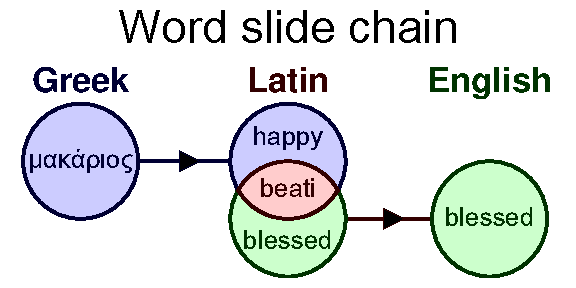
The Latin word
"beati" ≈ "happy, fortunate, blessed" and is the origin of the English word
"beatitude" and the name of the "
Beatitudes". Latin has
one word as "
fortunate" for which Greek has
two separate words:
- "blessed" from the Greek "happy" or "content".
- "blessed" from the Greek "good words" as in "eulogy".
Observation: It is easier for a priest, pastor, etc., to wave their hands and
"bless" you than to actually make you
"happy".

In English, both words are merged as one
"blessed" and, historically, conflated with the word "
bliss" which is associated with "
joy".
57. Matthew 5:8 Bless your heart
Matthew 5:8 Blessed are the pure in heart: … [kjv]

The phrase
"bless" your
"heart" is a
southern saying that has several meanings.
- It might express sympathy.
- It might be said before an insult - to soften the blow as in "well bless her heart".
- It might be used as a nice way to say "you are not very smart" as in "well bless his heart".
One might hear it used about children who are not well-behaved.
58. Beatitudes summary
Here is a quick summary of the Beatitudes. Each starts with "
Blessed are".
- 1. poor in spirit - theirs is the kingdom of heaven.
- 2. they that mourn - shall be comforted.
- 3. meek - shall inherit the earth
- 4. those that hunger and thirst for righteousness - shall be satisfied
- 5. merciful - shall obtain mercy
- 6. pure in heart - shall see God
- 7. peacemakers - shall be called children of God
- 8. persecuted for righteousness sake - theirs is the kingdom of heaven
- ...reviled... (follow-on, not same format as previous eight)
To
not be
negative, most series of
ARMS (Attractive Refrigerator Magnet Sermons) stop at number 6 or 7. The Sermon on the Mount then starts with "
salt of the earth" and ends with the "
house built on sand".
59. Matthew 5:13: Salt of the earth
Matthew 5:13 Ye are the salt of the earth: but if the salt have lost his savour, wherewith shall it be salted? it is thenceforth good for nothing, but to be cast out, and to be trodden under foot of men. [kjv]
The
tasteless "
refrigerator magnet" sermon
loses savor when the following is noted.
- The Greek translated as "losing savor" or "tasteless" means "foolish bloom" or, in context, "false bloom" or "off track".
- The Greek translated as "good for nothing" means "not effective". It may be "valued" by some as "good for something".
- The English "but to be" is the Greek "yet" "if" "not".
- The "cast" or "put" out requires a context. Would "salt" that is "not effective" ever be kept and not be "cast" out? Should good "salt" ever be "put" out?
- The Greek for "trodden" under depends on where and by whom this happens.
Most importantly, the meaning of the
code word (noun) of
"salt" is critical to understanding the verse.
60. End of page
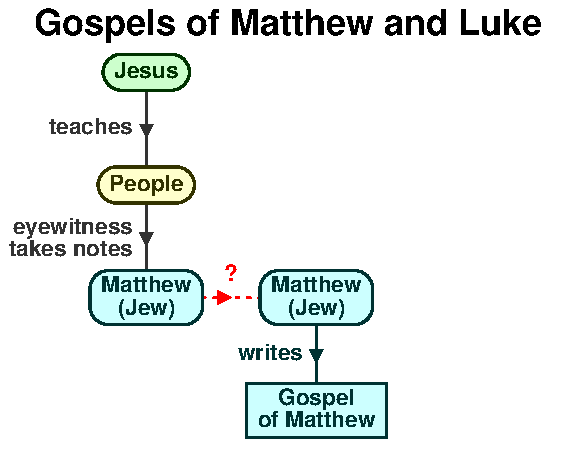


 Jesus addresses the disciples as believers directly. Pastors often preach as if the Sermon on the Mount (the Beatitudes, etc.) was to a large crowd and applies to everyone in the crowd. Some raise doubt that this was on a mountain. Some suggest a field with the rest of the crowd.