Got it! This site "creationpie.org" uses cookies. You consent to this by clicking on "Got it!" or by continuing to use this website. Note: This appears on each machine/browser from which this site is accessed.
Matthew 6:25-27 The missing part worked out for the birds
1. Matthew 6:25-27 The missing part worked out for the birds
2. Matthew 6:25-27 Verses
Matthew 6:25Therefore I say unto you, Take nothought for your life, what ye shall eat, or what ye shall drink; nor yet for yourbody, what ye shall put on. Is not the lifemore than meat, and the body than raiment? [kjv]
6:26Behold the fowls of the air: for they sownot, neither do they reap, norgatherintobarns; yet your heavenly Father feedeth them. Are ye notmuchbetter than they? [kjv]
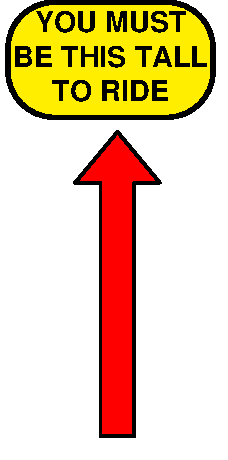
6:27Which of you by taking thoughtcanadd one cubitunto his stature? [kjv]
3. Sermon on the Mount: TenWordPin verse model
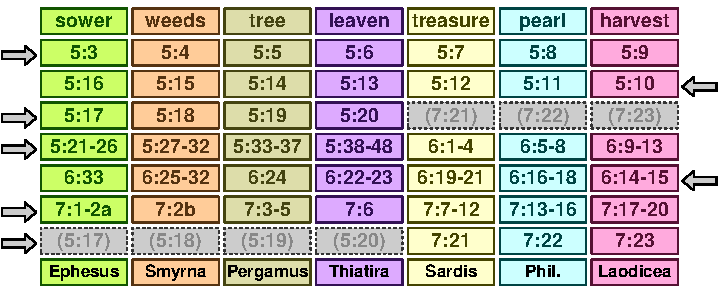
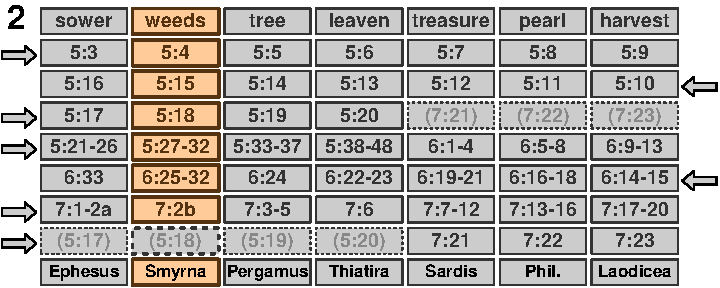
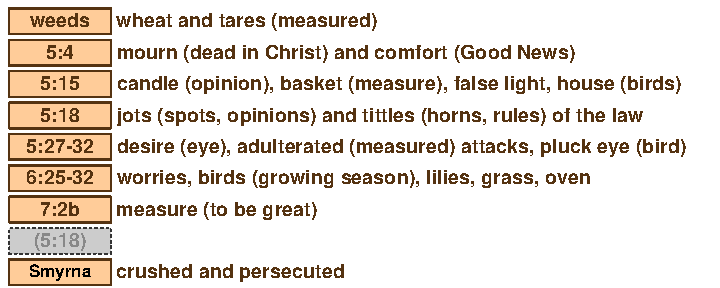
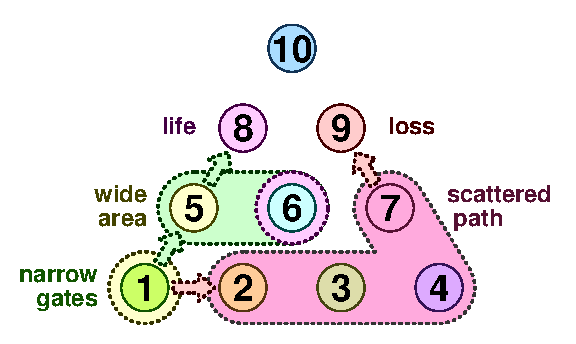
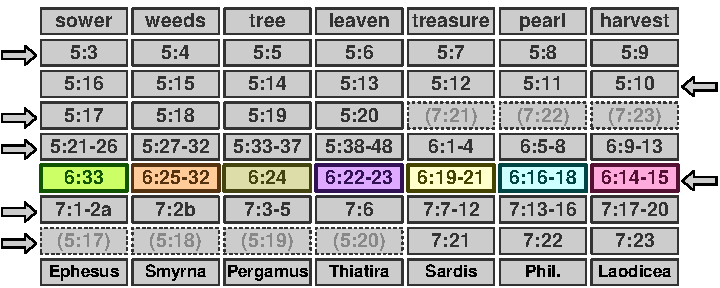
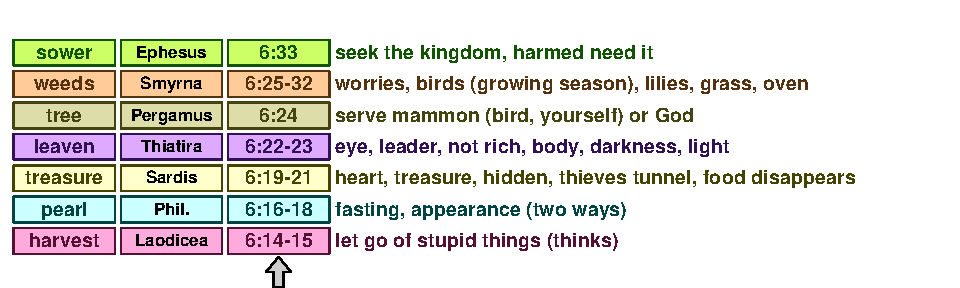
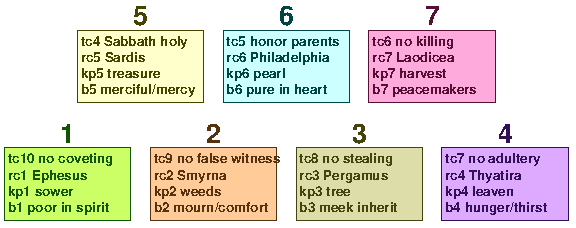
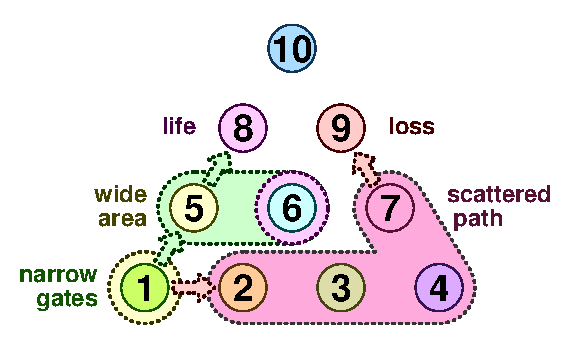
Matthew 6:25-27 on the "birds" corresponds to the "weeds" and "Smyrna".
Matthew 5:1-2 Introduction of Jesus and disciples on the mountain, the crowd down further away.
Matthew 5:3 to 7:23 Body of the Sermon an the mount (103 verses).
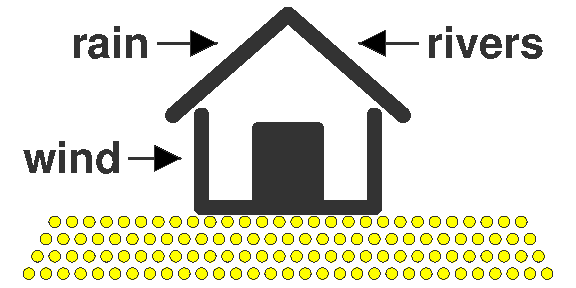
Matthew 7:24-27 Summary of the house on rock and house on sand.
Matthew 7:28-29 Commentary after the Sermon on the Mount.
[spread spectrum communication]
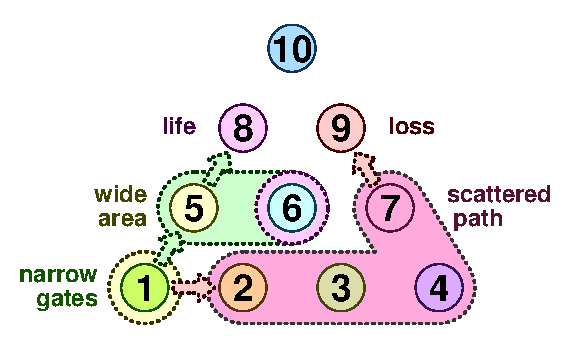
Here are some more connections in the Sermon on the Mount. The 103 verses that form the body of the Sermon on the Mount form six sequences of seven ideas that match rather well the Kingdom Parables and the Seven Churches in Revelation. Some sequences are top-down backward-chaining while others are bottom-up forward-chaining.
Theme: The good and bad seeds start to grow. The birds seek to have the bad seeds desire to be measured to be great, stealing something from them, feeding during the growing season.
At each stage, there are both positive and negative aspects of the connections.
Matthew 6:25Therefore I say unto you, Take nothought for your life, what ye shall eat, or what ye shall drink; nor yet for yourbody, what ye shall put on. Is not the lifemore than meat, and the body than raiment? [kjv]
διατουτο λεγω υμιν μημεριμνατε τη ψυχη υμων τι φαγητεκαι ητιπιητεμηδε τω σωματιυμων τι ενδυσησθεουχι η ψυχηπλειον εστιν της τροφης και το σωμα του ενδυματος [gnt]
Matthew 6:25
Strong
Used
Unique
Word
Part of speech
G3309
19
5
μεριμνατε
verb present active imperative 2nd person plural
G5315
93
5
φαγητε
verb 2nd person aorist active subjunctive 2nd person plural
G1746
28
4
ενδυσησθε
? V-AMS-2P
G1742
8
3
ενδυματος
noun genitive singular neuter
7. Matthew 6:25 Through this therefore
Matthew 6:25Therefore I say unto you, Take nothought for your life, what ye shall eat, or what ye shall drink; nor yet for yourbody, what ye shall put on. Is not the lifemore than meat, and the body than raiment? [kjv]
διατουτο λεγω υμιν μημεριμνατε τη ψυχη υμων τι φαγητεκαι ητιπιητεμηδε τω σωματιυμων τι ενδυσησθεουχι η ψυχηπλειον εστιν της τροφης και το σωμα του ενδυματος [gnt]
The Greek word translated as "therefore" is that of "through""this" (accusative, singular, neuter). What has Jesus just taken you "through"?
The ancient Greek word "τοῦτο" ≈ "this" in a grammatically neuter sense. Interestingly, Aristotle reports that the neuter is often used, as a Solecism, where the masculine would otherwise be used.
Matthew 6:25Therefore I say unto you, Take nothought for your life, what ye shall eat, or what ye shall drink; nor yet for yourbody, what ye shall put on. Is not the lifemore than meat, and the body than raiment? [kjv]
διατουτο λεγω υμιν μημεριμνατε τη ψυχη υμων τι φαγητεκαι ητιπιητεμηδε τω σωματιυμων τι ενδυσησθεουχι η ψυχηπλειον εστιν της τροφης και το σωμα του ενδυματος [gnt]
Might this verse be related to the "mammon" deception of the previous verse?
Might the "through""this" refer to what is going to be said next instead of referring back to what had just been said?
9. Revealed purpose
Philippians 3:15Let us therefore, as many as be perfect, be thus minded: and if in any thing ye be otherwise minded, God shall reveal even this unto you. [kjv]
οσοι ουν τελειοι τουτο φρονωμεν και ειτιετερωςφρονειτε και τουτο ο θεος υμιναποκαλυψει [gnt]
The ancient Greek word "τοῦτο" ≈ "this" in a grammatically "neuter" sense. Interestingly, Aristotle reports that the "neuter" is often used, as a Solecism, where the "masculine" would otherwise be used. Could the "this" being revealed by a "person" by way of a solecism?
Matthew 6:25Therefore I say unto you, Take nothought for your life, what ye shall eat, or what ye shall drink; nor yet for yourbody, what ye shall put on. Is not the lifemore than meat, and the body than raiment? [kjv]
διατουτο λεγω υμιν μημεριμνατε τη ψυχη υμων τι φαγητεκαι ητιπιητεμηδε τω σωματιυμων τι ενδυσησθεουχι η ψυχηπλειον εστιν της τροφης και το σωμα του ενδυματος [gnt]
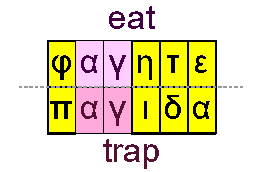
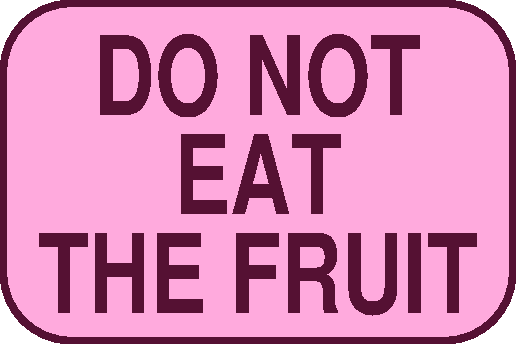
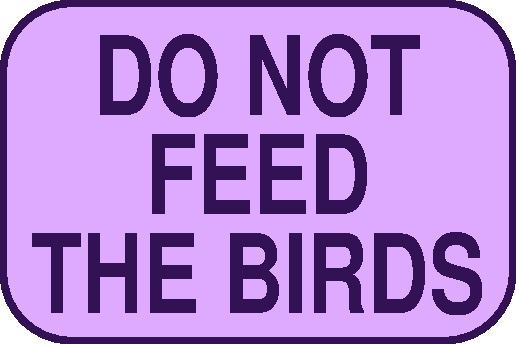
Previous verses in this sequence on "not eating" as in "fasting" appear to relate to this part of this verse. In any case: Do noteat the fruit.Do notfeed the birds. Does the "Father" "feed" the "birds"?
Matthew 6:25Therefore I say unto you, Take nothought for your life, what ye shall eat, or what ye shall drink; nor yet for yourbody, what ye shall put on. Is not the lifemore than meat, and the body than raiment? [kjv]
διατουτο λεγω υμιν μημεριμνατε τη ψυχη υμων τι φαγητεκαι ητιπιητεμηδε τω σωματιυμων τι ενδυσησθεουχι η ψυχηπλειον εστιν της τροφης και το σωμα του ενδυματος [gnt]
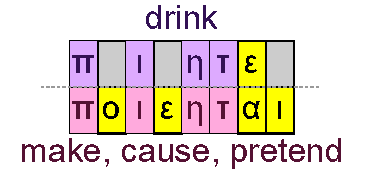
"ποιέω" ≈ "make, cause" and, in the middle voice, to "pretend". The Doric, with digamma, is "ποιϝέω" ≈ "make, cause". This word is the source of the English word "poet" as someone who makes things with words.
Matthew 6:25Therefore I say unto you, Take nothought for your life, what ye shall eat, or what ye shall drink; nor yet for yourbody, what ye shall put on. Is not the lifemore than meat, and the body than raiment? [kjv]
διατουτο λεγω υμιν μημεριμνατε τη ψυχη υμων τι φαγητεκαι ητιπιητεμηδε τω σωματιυμων τι ενδυσησθεουχι η ψυχηπλειον εστιν της τροφης και το σωμα του ενδυματος [gnt]
Matthew 6:25Therefore I say unto you, Take nothought for your life, what ye shall eat, or what ye shall drink; nor yet for yourbody, what ye shall put on. Is not the lifemore than meat, and the body than raiment? [kjv]
διατουτο λεγω υμιν μημεριμνατε τη ψυχη υμων τι φαγητεκαι ητιπιητεμηδε τω σωματιυμων τι ενδυσησθεουχι η ψυχηπλειον εστιν της τροφης και το σωμα του ενδυματος [gnt]
The ancient Greek word "ψυχή" ≈ "spirit, life" as in the animating principle of human life as a play on words and the first part of the English word "psychology".
*G3307 *14 μερίζω (mer-id'-zo) : from G3313; to part, i.e. (literally) to apportion, bestow, share, or (figuratively) to disunite, differ:--deal, be difference between, distribute, divide, give participle
*G3307 *14 μερίζω (mer-id'-zo) : from G3313; to part, i.e. (literally) to apportion, bestow, share, or (figuratively) to disunite, differ:--deal, be difference between, distribute, divide, give participle
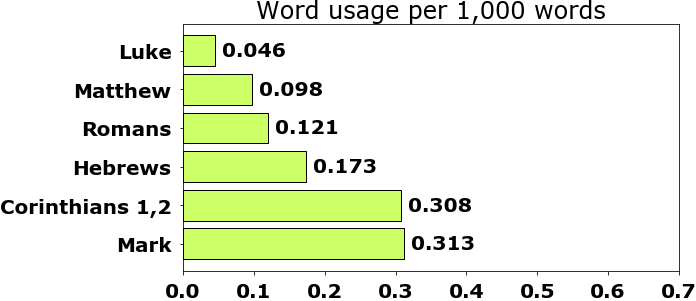
Usage
All
εμερισεν *4
Mark 6:41 ... and the two fishes divided he among them all.
Romans 12:3 ... soberly, according as God hath dealt to every man the measure of faith.
2 Corinthians 10:13 ... of the rule which God hath distributed to us, a measure to reach ...
Hebrews 7:2 To whom also Abraham gave a tenth part of all; ...
μερισθεισα *2
Matthew 12:25 ... Every kingdom divided against itself is brought to desolation; and every city or house divided against itself ...
εμερισθη *2
Matthew 12:26 ... Satan cast out Satan, he is divided against himself; how ...
Mark 3:26 ... against himself, and be divided, he cannot stand, ...
μερισθη *2
Mark 3:24 And if a kingdom be divided against itself, that ...
Mark 3:25 And if a house be divided against itself, that ...
μεμερισται *2
1 Corinthians 1:13Is Christ divided? was Paul crucified ...
1 Corinthians 7:34There is differencealso between a wife and a virgin. ...
μερισασθαι
Luke 12:13 ... to my brother, that he divide the inheritance with me.
μεμερικεν
1 Corinthians 7:17 But as God hath distributed to every man, as the Lord ...
Some of these verb inflections have the ancient Greek word "μνᾶ" ≈ "sum of money, weight" embedded in them. This is a possible play on words.
18. Usage - anxious
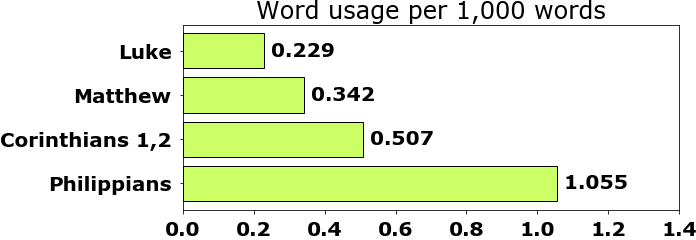
*G3309 *19 μεριμνάω (mer-im-nah'-o) : from G3308; to be anxious about:--(be, have) care(-ful), take thought.
Usage
All
μεριμνατε *5
Matthew 6:25 Therefore I say unto you, Take no thought for your ...
Matthew 6:28 And why take ye thought for raiment? Consider ...
Luke 12:22 ... I say unto you, Take no thought for your ...
Luke 12:26 ... able to do that thing which is least, why take ye thought for the rest?
Philippians 4:6Be careful for nothing; but in every thing by prayer ...
μεριμνησητε *4
Matthew 6:31 Therefore take no thought, saying, What ...
Matthew 6:34Take therefore no thought for the morrow: for ...
Matthew 10:19 ... you up, take no thought how or ...
Luke 12:11 ... and powers, take ye no thought how or ...
μεριμνα *4
1 Corinthians 7:32 ... He that is unmarried careth for the things that belong to the Lord, how ...
1 Corinthians 7:33 But he that is married careth for the things that are of the world, how ...
1 Corinthians 7:34 ... a virgin. The unmarried woman careth for the things of the Lord, that she may be holy both in body and in spirit: but she that is married careth for the things of the world, ...
μεριμνων *2
Matthew 6:27 Which of you by taking thought can add one ...
Luke 12:25 And which of you with taking thought can add to ...
μεριμνησει *2
Matthew 6:34Take therefore no thought for the morrow: for ...
Philippians 2:20 ... likeminded, who will naturally care for your state.
μεριμνας
Luke 10:41 ... unto her, Martha, Martha, thou art careful and troubled about many things:
μεριμνωσιν
1 Corinthians 12:25 ... but that the members should have the same care one for another.
19. Luke 19:13
Luke 19:13And he called his tenservants, and delivered them tenpounds, and said unto them, Occupy till I come. [kjv]
καλεσας δε δεκαδουλους εαυτου εδωκεν αυτοις δεκαμνας και ειπεν προς αυτους πραγματευσασθε εως πραγματευσασθαι ενω ερχομαι [gnt]
Luke has "ten" servants rather than the "three" in Matthew. The "talents" in Matthew, which appears to be a code word, is change to a unit of money at the time. Luke does not say here how the "ten" "pounds" are distributed.
The ancient Greek word "μνᾶ" ≈ "sum of money, weight" equivalent to 100 drachmas. The Greek word is from the Aramaic which is from the Akkadian.
Luke has the servants "occupied" until he returns. Matthew, changing the mistranslation of (literal) "goods" to (figurative) "goals", implicitly lets the servants know what they should be doing.
Matthew 6:25Therefore I say unto you, Take nothought for your life, what ye shall eat, or what ye shall drink; nor yet for yourbody, what ye shall put on. Is not the lifemore than meat, and the body than raiment? [kjv]
διατουτο λεγω υμιν μημεριμνατε τη ψυχη υμων τι φαγητεκαι ητιπιητεμηδε τω σωματιυμων τι ενδυσησθεουχι η ψυχηπλειον εστιν της τροφης και το σωμα του ενδυματος [gnt]
Matthew 6:25Therefore I say unto you, Take nothought for your life, what ye shall eat, or what ye shall drink; nor yet for yourbody, what ye shall put on. Is not the lifemore than meat, and the body than raiment? [kjv]
διατουτο λεγω υμιν μημεριμνατε τη ψυχη υμων τι φαγητεκαι ητιπιητεμηδε τω σωματιυμων τι ενδυσησθεουχι η ψυχηπλειον εστιν της τροφης και το σωμα του ενδυματος [gnt]
Matthew 6:25Therefore I say unto you, Take nothought for your life, what ye shall eat, or what ye shall drink; nor yet for yourbody, what ye shall put on. Is not the lifemore than meat, and the body than raiment? [kjv]
διατουτο λεγω υμιν μημεριμνατε τη ψυχη υμων τι φαγητεκαι ητιπιητεμηδε τω σωματιυμων τι ενδυσησθεουχι η ψυχηπλειον εστιν της τροφης και το σωμα του ενδυματος [gnt]
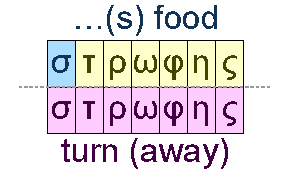
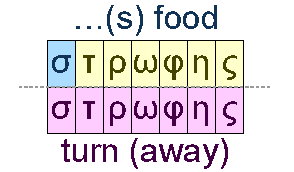
"τροφῆς" ≈ "food" (genitive singular)
"στροφής" ≈ "turn, direct, twist" (genitive singular)
Is your "life" more than "food"? How about (just) "turning"? That is, do you need to actually do something rather than just thinking about it?
KJV: Nor scrip for your journey, neither twocoats, neither shoes, nor yet staves: for the workmanisworthy of his meat.
Greek: μη πηραν εις οδον μηδε δυοχιτωνας μηδε υποδηματα μηδε ραβδοναξιος γαρ ο εργατης της τροφης αυτου εστιν
25. Matthew 6:25 Putting on clothes
Matthew 6:25Therefore I say unto you, Take nothought for your life, what ye shall eat, or what ye shall drink; nor yet for yourbody, what ye shall put on. Is not the lifemore than meat, and the body than raiment? [kjv]
διατουτο λεγω υμιν μημεριμνατε τη ψυχη υμων τι φαγητεκαι ητιπιητεμηδε τω σωματιυμων τι ενδυσησθεουχι η ψυχηπλειον εστιν της τροφης και το σωμα του ενδυματος [gnt]
It is interesting that that the word "cardinal" is the name of a "bird". Early European settlers in North America were reminded of the red robes and hats worn by Roman Catholic cardinals which provided the name for the "cardinal" "bird".
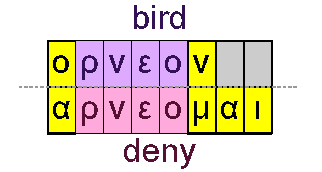
Jesus does not use the idea of a "bird" in a good sense. The Greek word for "bird" is a play on words with the Greek word for "deny".
Matthew 6:25Therefore I say unto you, Take nothought for your life, what ye shall eat, or what ye shall drink; nor yet for yourbody, what ye shall put on. Is not the lifemore than meat, and the body than raiment? [kjv]
διατουτο λεγω υμιν μημεριμνατε τη ψυχη υμων τι φαγητεκαι ητιπιητεμηδε τω σωματιυμων τι ενδυσησθεουχι η ψυχηπλειον εστιν της τροφης και το σωμα του ενδυματος [gnt]
*G1739 *1 ἐνδόμησις (en-dom'-ay-sis) : from a compound of G1722 and a derivative of the base of G1218; a housing in (residence), i.e. structure:--building.
Usage
All
ενδωμησις
Revelation 21:18 And the building of the wall of it was of jasper: ...
Matthew 6:25Therefore I say unto you, Take nothought for your life, what ye shall eat, or what ye shall drink; nor yet for yourbody, what ye shall put on. Is not the lifemore than meat, and the body than raiment? [kjv]
διατουτο λεγω υμιν μημεριμνατε τη ψυχη υμων τι φαγητεκαι ητιπιητεμηδε τω σωματιυμων τι ενδυσησθεουχι η ψυχηπλειον εστιν της τροφης και το σωμα του ενδυματος [gnt]
KJV: Therefore I say unto you, Take nothought for your life, what ye shall eat, or what ye shall drink; nor yet for yourbody, what ye shall put on. Is not the lifemore than meat, and the body than raiment?
Greek: διατουτο λεγω υμιν μημεριμνατε τη ψυχη υμων τι φαγητεκαιητιπιητεμηδε τω σωματιυμων τι ενδυσησθεουχι η ψυχηπλειον εστιν της τροφης και το σωμα του ενδυματος
33. Matthew 6:25-27 The missing part worked out for the birds
Matthew 6:26Behold the fowls of the air: for they sownot, neither do they reap, norgatherintobarns; yet your heavenly Father feedeth them. Are ye notmuchbetter than they? [kjv]
εμβλεψατεεις τα πετεινα του ουρανουοτιουσπειρουσινουδεθεριζουσινουδεσυναγουσινειςαποθηκας και ο πατηρ υμων ο ουρανιοςτρεφει αυτα ουχ υμεις μαλλονδιαφερετε αυτων [gnt]
Jesus directly mentions birdsfour times in Matthew. According to Jesus:
The birds do notsow.
The birds do notreap.
The birds do notgatherintobarns.
Who are the "birds"? What do they do?
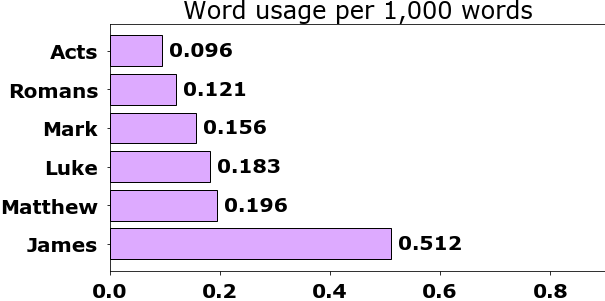
34. Matthew 6:26 Word usage
Matthew 6:26Behold the fowls of the air: for they sownot, neither do they reap, norgatherintobarns; yet your heavenly Father feedeth them. Are ye notmuchbetter than they? [kjv]
εμβλεψατεεις τα πετεινα του ουρανουοτιουσπειρουσινουδεθεριζουσινουδεσυναγουσινειςαποθηκας και ο πατηρ υμων ο ουρανιοςτρεφει αυτα ουχ υμεις μαλλονδιαφερετε αυτων [gnt]
Matthew 6:26
Strong
Used
Unique
Word
Part of speech
G1689
11
1
εμβλεψατε
verb aorist active imperative 2nd person plural
G4687
53
2
σπειρουσιν
verb present active indicative 3rd person plural
G2325
21
2
θεριζουσιν
verb present active indicative 3rd person plural
G4863
59
2
συναγουσιν
verb present active indicative 3rd person plural
G596
6
2
αποθηκας
noun accusative plural feminine
G3770
9
7
ουρανιος
adjective nominative singular masculine
G5142
8
2
τρεφει
verb present active indicative 3rd person singular
G1308
13
4
διαφερετε
verb present active indicative 2nd person plural
35. Matthew 6:26 Bird examples
Matthew 6:26Behold the fowls of the air: for they sownot, neither do they reap, norgatherintobarns; yet your heavenly Father feedeth them. Are ye notmuchbetter than they? [kjv]
εμβλεψατεεις τα πετεινα του ουρανουοτιουσπειρουσινουδεθεριζουσινουδεσυναγουσινειςαποθηκας και ο πατηρ υμων ο ουρανιοςτρεφει αυτα ουχ υμεις μαλλονδιαφερετε αυτων [gnt]
Jesus now provides an example. Is this a good or not good example?
The ancient Greek word "ἐμβλέψατε" ≈ "look (in the eye)". The ancient Greek word "εις" ≈ "into". In context, it can mean "against". One is to "look" "into", and possibly "against", and not just, in English, "behold".
The "eye", as a code word, represents the "leader" which in the case of a false "leader" is a "bird".
Matthew 6:26Behold the fowls of the air: for they sownot, neither do they reap, norgatherintobarns; yet your heavenly Father feedeth them. Are ye notmuchbetter than they? [kjv]
εμβλεψατεεις τα πετεινα του ουρανουοτιουσπειρουσινουδεθεριζουσινουδεσυναγουσινειςαποθηκας και ο πατηρ υμων ο ουρανιοςτρεφει αυτα ουχ υμεις μαλλονδιαφερετε αυτων [gnt]
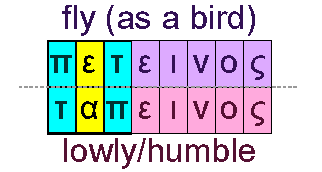
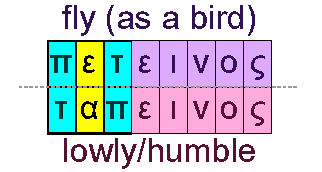
The etymology of the Greek word for "lowly" or "humble" is not known. As a Spoonerism (exchanged consonants), the word for "lowly" or "humble" is a play on words with "birds"
Matthew 6:26Behold the fowls of the air: for they sownot, neither do they reap, norgatherintobarns; yet your heavenly Father feedeth them. Are ye notmuchbetter than they? [kjv]
εμβλεψατεεις τα πετεινα του ουρανουοτιουσπειρουσινουδεθεριζουσινουδεσυναγουσινειςαποθηκας και ο πατηρ υμων ο ουρανιοςτρεφει αυτα ουχ υμεις μαλλονδιαφερετε αυτων [gnt]
KJV: Behold the fowls of the air: for they sownot, neither do they reap, norgatherintobarns; yet your heavenly Father feedeth them. Are ye notmuchbetter than they?
Greek: εμβλεψατεεις τα πετεινα του ουρανουοτιουσπειρουσινουδεθεριζουσινουδεσυναγουσινειςαποθηκας και ο πατηρ υμων ο ουρανιοςτρεφει αυτα ουχ υμεις μαλλονδιαφερετε αυτων
Latin: respicite volatilia caeli quoniam non serunt neque metunt neque congregant in horrea et Pater vester caelestis pascit illa nonne vos magispluris estis illis
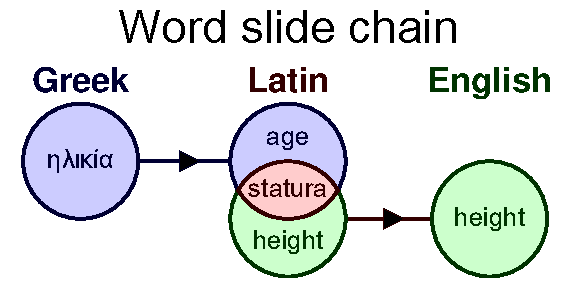
KJV: Which of you by taking thoughtcanadd one cubitunto his stature?
Greek: τις δε εξ υμων μεριμνωνδυναταιπροσθειναιεπι την ηλικιαν αυτου πηχυν ενα
Latin: quis autem vestrum cogitans potest adicere ad staturam suam cubitum unum
Wycliffe: But who of you thenkynge mai putte to his stature o cubit?
Tyndale: Which of you (though he toke thought therfore) coulde put one cubit vnto his stature?
Luther: Wer ist unter euch, der seiner Länge eine Elle zusetzen möge, ob er gleich darum sorget?
40. Sports teams with bird names
Many sports teams have bird names.
Not birds: Blackhawks, Red Wings, Flyers, Hornets
Sports teams with bird names
NFL bird name teams
Arizona
Cardinals
Atlanta
Falcons
Baltimore
Ravens
Philadelphia
Eagles
Seattle
Seahawks
NBA bird name teams
Atlanta
Hawks
New Orleans
Pelicans
Sports teams with bird names
MLB bird name teams
Baltimore
Orioles
St. Louis
Cardinals
Toronto
Blue Jays
NHL bird name teams
Arizona
Mighty Ducks
Atlanta
Thrashers
Pittsburgh
Penguins
41. Angry birds
At one time, Angry Birds was a very popular game and mobile application that eventually had a movie named after it.
It is still popular.
Behind the scenes, the low level programming is in C/C++ and was scripted at the high level, in part, using the Lua programming language.
42. Birdbrain
The English phrase "birdbrain" conveys the idea of being stupid or a "scatterbrain".
There are many jokes that a "birdbrain" might tell.
43. Birds of a feather
Some birds compete for the best "cheap", "cheap", "cheap" and go "cheaper", "cheaper", "cheaper".
The "nest" thing is to cover some bird (brain) jokes as a special "tweet".
When is the best time to buy a bird?
When it is going cheap. That was a fowl joke.
Why did the little bird get in trouble at school?
He was tweeting on a test.
Perhaps these jokes are "for the birds". Instead of "winging it", let us investigate before we go into a "tail spin".
44. Eagles and vultures
We are not interested in birds such as "eagles" or, sometimes, "vultures", as in "birds of prey".
The Greek word for "eagle" appears many times in the LXX (Septuagint) and GNT.
One area of "dinosaurs" is that of "flying dragons" or "flying dinosaurs". The "pterodactyl", a name coined by French naturalist and zoologist Georges Cuvier (1769-1832), comes from two Greek words.
We are not interested in "hens" that brood and sit on nests or in "roosters" as associated with Peter's denial of Christ where Peter is targeted by Satan.
Back to the generic "birds" of the Bible.
47. Roosters and weather vanes
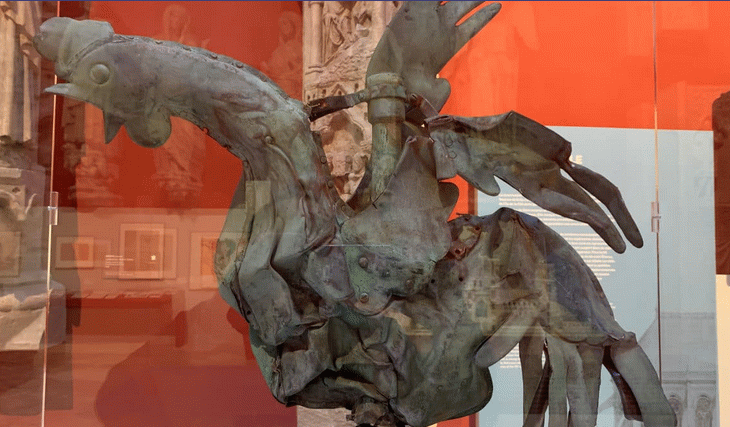
In the Middle Ages, the Catholic church wanted each parish church (area around the church) to have a rooster to remind everyone of Peter's literal denial that night.
This reminder often became a weather vane. The modern Greek word "ανεμοδείκτης" (a-neh-mo-THEE-ktees) ≈ "weather vane" is, literally, a "wind pointer" where the prefix is the modern Greek word "άνεμος" (A-neh-mos) ≈ "wind".
The Greek word for "deny" is a play on words with "bird". To "bird" Christ is to "deny" Christ. He will then "deny" or "bird" you. Do "birds" as false leaders, false teachers, etc., "crow" when they deceptively get someone to "deny" Christ? Do we see this in what happened, as an example, to Peter?
The current topic is the "birds" and not the "Byrds".
The "Byrds" were an American rock music band from the 1960's. Some band members: David Crosby, Gene Clark, Michael Clarke, Chris Hillman, Jim McGuinn
First four albums:
Mr. Tambourine Man
Turn! Turn! Turn! (lyrics taken from Ecclesiastes 3)
Fifth Dimension
Younger Than Yesterday
Note: The "Yardbirds" were a different rock group at that time period.
To everything (turn, turn, turn)
There is a season (turn, turn, turn)
And a time to every purpose, under heaven
A time to be born, a time to die.
A time to plant, a time to reap.
A time to kill, a time to heal.
A time to laugh, a time to weep.
... A time for peace, I swear it's not too late!
51. Matthew 8:20 Birds of heaven
Matthew 8:20And Jesus saith unto him, The foxes have holes, and the birds of the air have nests; but the Son of man hath not where to lay his head. [kjv]
και λεγει αυτω ο ιησους αι αλωπεκεςφωλεους εχουσιν και τα πετεινα του ουρανουκατασκηνωσεις ο δε υιος του ανθρωπου ουκ εχει που την κεφαληνκλινη [gnt]
*G4071 *14 πετεινόν (pet-i-non') : neuter of a derivative of G4072; a flying animal, i.e. bird:--bird, fowl.
Words: πετεινα=11 πετεινων=3
The etymology of the Greek word for "lowly" or "humble" is not known. As a Spoonerism (exchanged consonants), the word for "lowly" or "humble" is a play on words with "birds"
Saying: Fly high as a bird. That is, a high flying bird.
54. Usage - bird
*G4071 *14 πετεινόν (pet-i-non') : neuter of a derivative of G4072; a flying animal, i.e. bird:--bird, fowl.
Usage
All
πετεινα *11
Matthew 6:26 Behold the fowls of the air: for they sow not, ...
Matthew 8:20 ... have holes, and the birds of the air have nests; but ...
Matthew 13:4 ... by the way side, and the fowls came and devoured ...
Matthew 13:32 ... becometh a tree, so that the birds of the air come and ...
Mark 4:4 ... by the way side, and the fowls of the air came and ...
Mark 4:32 ... great branches; so that the fowls of the air may lodge ...
Luke 8:5 ... and it was trodden down, and the fowls of the air devoured it.
Luke 9:58 ... have holes, and birds of the air have nests; but ...
Luke 13:19 ... a great tree; and the fowls of the air lodged in ...
Acts 10:12 ... and creeping things, and fowls of the air.
Acts 11:6 ... and creeping things, and fowls of the air.
πετεινων *3
Luke 12:24 ... are ye better than the fowls?
Romans 1:23 ... corruptible man, and to birds, and fourfooted beasts, and creeping things.
James 3:7 ... kind of beasts, and of birds, and of serpents, and ...
55. Strongs - bird
*G3732 *3 ὄρνεον (or'-neh-on) : neuter of a presumed derivative of G3733; a birdling:--bird, fowl.
Words: ορνεα ορνεοις ορνεου
The ancient Greek word "ὄρνεον" ≈ "bird" as in a generic bird and is the source of the Old English word "earn" ≈ "eagle" and the English word "ornithology" as the "study of birds" (coined in the 1600's).
This play on word usage is not the same as the modern "flip" the "bird" action, though the word "flip" is similar in spirit to the Greek word for "worthy" as in "counter-balance" and the word translated as "variance" (in two verses).
In the creation story in Genesis, birds are created of every sort. The LXX mentions the bird kind only once.
Genesis 7:14They, and every beast after his kind, and all the cattle after their kind, and every creeping thing that creepeth upon the earth after his kind, and every fowl after his kind, every bird of every sort. [kjv]
και παντα τα θηρια κατα γενος και παντα τα κτηνη κατα γενος και παν ερπετον κινουμενον επι της γης κατα γενος και παν πετεινον κατα γενος [lxx]
And all the wild beasts after their kind, and all cattle after their kind, and every reptile moving itself on the ;earth after its kind, and every flying bird after its kind, [bs3]
KJV: They, and every beast after his kind, and all the cattle after their kind, and every creeping thing that creepeth upon the earth after his kind, and every fowl after his kind, every bird of every sort.
Hebrew: המה וכל החיה למינה וכל הבהמה למינה וכל הרמש הרמש על הארץ למינהו וכל העוף למינהו כל צפור כל כנף׃
Greek: και παντα τα θηρια κατα γενος και παντα τα κτηνη κατα γενος και παν ερπετον κινουμενον επι της γης κατα γενος και παν πετεινον κατα γενος
Brenton: And all the wild beasts after their kind, and all cattle after their kind, and every reptile moving itself on the earth after its kind, and every flying bird after its kind,
60. Flying birds
The creation account says that birds of every kind were created. There are non-flying birds, such as "Big Bird".
Here, we are only interested in certain types of bird references.
Let us first mention some of the bird types in which we are not interested in this discussion.
61. Doves and pigeons
Matthew 3:16And Jesus ... saw the Spirit of God descending like a pigeon, and lighting upon him: [kjv]
και βαπτισθεις δε ο ιησους ανεβη ευθυς ανεβη απο του υδατος και ιδου ανεωχθησαν ηνεωχθησαν αυτω οι ουρανοι και ειδεν πνευμα το πνευμα του θεου καταβαινον ωσει περιστερανκαι ερχομενον επ αυτον [gnt]
… Taube … [lu]
… paloma… [es]
We are interested in the words used for generic birds and not the word for dove or pigeon. Most languages have only one word for this bird.
KJV: And Jesus, when he was baptized, went up straightway out of the water: and, lo, the heavens were opened unto him, and he saw the Spirit of God descending like a dove, and lighting upon him:
Greek: και βαπτισθεις δε ο ιησους ανεβη ευθυς ανεβη απο του υδατος και ιδου ανεωχθησανηνεωχθησαν αυτω οι ουρανοι και ειδεν πνευμα το πνευμα του θεου καταβαινον ωσει περιστερανκαι ερχομενον επ αυτον
Latin: baptizatus autem confestim ascendit de aqua et ecce aperti sunt ei caeli et vidit Spiritum Dei descendentem sicut columbam venientem super se
Luther: Und da Jesus getauft war, stieg er bald herauf aus dem Wasser; und siehe, da tat sich der Himmel auf über ihm. Und Johannes sah den Geist Gottes gleich als eine Taube herabfahren und über ihn kommen.
Spanish: Y Jesús, después que fue bautizado, subió luego del agua; y he aquí los cielos le fueron abiertos, y vio al Espíritu de Dios que descendía como paloma, y venía sobreÉl.
63. Luke 12:6-7 Sparrows and hairs
Luke 12:6Are not fivesparrowssoldfortwofarthings, and not one of them is forgotten before God? [kjv]
ουχι πεντεστρουθιαπωλειται πωλουνταιασσαριωνδυο και εν εξ αυτων ουκ εστιν επιλελησμενον ενωπιον του θεου [gnt]
12:7But even the very hairs of your head are all numbered. Fear not therefore: ye are of more value than many sparrows. [kjv]
αλλα και αι τριχες της κεφαλης υμων πασαι ηριθμηνται μη ουν φοβεισθε πολλων στρουθιωνδιαφερετε [gnt]
Luke correctly reports what people remembered as to the meaning of what Jesus said, sometimes using other words. This sometimes loses the additional meanings as recorded in Matthew.
Luke talks of "sparrows" and them not being "forgotten" by God.
64. Matthew 13:31-32 KP3 Parable of the mustard seed
Matthew 13:31Another parableput he forth unto them, saying, The kingdom of heaven is like to a grain of mustard seed, which a man took, and sowed in his field: [kjv]
13:32Which indeed is the least of allseeds: but when it is grown, it is the greatest among herbs, and becometh a tree, so that the birds of the aircome and lodge in the branches thereof. [kjv]
The "mustard seed" :
is not the "smallest" of all "seeds".
is not the "greatest" of all "herbs".
grows into a bush, not a tree.
The "birds" do not (usually) nest in small bushes. Are the "birds" good? What is a "mustard seed"? What does a "tree" represent?
The KJV (King James Version) translates as "least" the Greek word that means "smallest". There is another Greek word for "least".
Matthew 13:4And when he sowed, some seedsfellby the way side, and the fowls came anddevoured them up: [kjv]
και εν τω σπειρειν αυτον α μεν επεσενπαρα την οδον και ηλθεν ελθοντα τα πετεινακαι κατεφαγεν αυτα [gnt]
13:19When any one heareth the word of the kingdom, and understandeth it not, then cometh the wicked one, and catcheth away that which was sown in his heart. This is he which receivedseedby the way side. [kjv]
παντος ακουοντος τον λογον της βασιλειας και μη συνιεντος ερχεται ο πονηρος και αρπαζει το εσπαρμενον εν τη καρδια αυτου ουτος εστιν ο παρα την οδονσπαρεις [gnt]
Jesus relates "devour" as in "eating" to "catcheth away" which is related to the word for "rapture". The KJV translates as "evil" or "wicked" the Greek word that means "oppression" or "oppressor". Saying: You'll be birdseed.
Matthew 13:4And when he sowed, some seedsfellby the way side, and the fowls came anddevoured them up: [kjv]
13:19When any one heareth the word of the kingdom, and understandeth it not, then cometh the wicked one, and catcheth away that which was sown in his heart. This is he which receivedseedby the way side. [kjv]
The Greek for "snatch away" is the word used for "rapture" and the source of the English word "harpoon". It is also used as "ravenous" in terms of "wolves".
Saying: You'll be birdseed. The "seed" that was "snatched away" in parable 1 appears to have been deposited (by the "birds") in parable 2 as "weeds" and then grows into a "tree" in parable 3 so that those "birds" have a place to make their "nests".
Matthew 8:20And Jesus saith unto him, The foxes have holes, and the birds of the air have nests; but the Son of man hath not where to lay his head. [kjv]
και λεγει αυτω ο ιησους αι αλωπεκεςφωλεους εχουσιν και τα πετεινα του ουρανουκατασκηνωσεις ο δε υιος του ανθρωπου ουκ εχει που την κεφαληνκλινη [gnt]
Wycliffe uses the phrase "briddis of heuene" or "birds of heaven".
Some will attempt to "fix" a perceived "error" in the Bible text by asserting their opinion (or glory) that "kingdom of God" and "kingdom of heaven" are the same thing.
If birds represent "evil" or "oppression" (parable 1), are there any birds in heaven?
Revelation 18:2And he criedmightily with a strongvoice, saying, Babylon the great is fallen, is fallen, and is become the habitation of devils, and the hold of everyfoulspirit, and a cage of everyunclean and hatefulbird. [kjv]
και εκραξεν εν ισχυι ισχυραφωνημεγαλη λεγωνεπεσενεπεσενβαβυλων η μεγαλη και εγενετο κατοικητηριονδαιμονων δαιμονιων και φυλακηπαντοςπνευματοςακαθαρτου και φυλακηπαντοςορνεουακαθαρτου και μεμισημενου [gnt]
In Revelation, Babylon is described as a "watch" of every "unclean" and "hateful" type of "bird". Are they "watching" those in the "watch"?
Some Greek manuscripts add a "beast" as a landanimal.
In Matthew 7, the house built on sand will be "cut off" and "fall".
Revelation 18:2And he criedmightily with a strongvoice, saying, Babylon the great is fallen, is fallen, and is become the habitation of devils, and the hold of everyfoulspirit, and a cage of everyunclean and hatefulbird. [kjv]
και εκραξεν εν ισχυι ισχυραφωνημεγαλη λεγωνεπεσενεπεσενβαβυλων η μεγαλη και εγενετο κατοικητηριονδαιμονων δαιμονιων και φυλακηπαντοςπνευματοςακαθαρτου και φυλακηπαντοςορνεουακαθαρτου και μεμισημενου [gnt]
The ancient Greek word "φυλάσσω" ≈ "watch" is related to "φυλακή" ≈ "watch, prison". The KJV translates the same word as "hold" and then "cage" and takes a viewpoint on who is "watching" and who is being "watched".
Discuss: How might the world be a "cage" or "watch" for a believer?
The Greek word for "cage" is that of a "prison" as in something that is "watched".
The Greek word for "bird" is not the word used in Matthew but is that of "fowl", as used by John, or "hen", as used in Matthew and Luke.
Revelation 19:17And I saw an angel standing in the sun; and he cried with a loud voice, saying to all the fowls that fly in the midst of heaven, Come and gather yourselves together unto the supper of the great God; [kjv]
και ειδον ενα αγγελον εστωτα εν τω ηλιω και εκραξεν εν φωνη μεγαλη λεγων πασιν τοις ορνεοις τοις πετωμενοις πετομενοις εν μεσουρανηματιδευτεκαι συναγεσθε συναχθητε εις το δειπνοντομεγα του μεγαλου θεου [gnt]
19:21And the remnant were slain with the sword of him that sat upon the horse, which sword proceeded out of his mouth: and all the fowls were filled with their flesh. [kjv]
και οι λοιποιαπεκτανθησαν εν τη ρομφαια του καθημενου επι του ιππου τη εκπορευομενη εξελθουση εκ του στοματος αυτου και παντα τα ορνεαεχορτασθησαν εκ των σαρκων αυτων [gnt]
KJV: And I saw an angel standing in the sun; and he cried with a loud voice, saying to all the fowls that fly in the midst of heaven, Come and gather yourselves together unto the supper of the great God;
Greek: και ειδον ενα αγγελον εστωτα εν τω ηλιω και εκραξεν εν φωνη μεγαλη λεγων πασιν τοις ορνεοις τοις πετωμενοιςπετομενοις εν μεσουρανηματιδευτεκαι συναγεσθεσυναχθητε εις το δειπνοντομεγα του μεγαλου θεου
KJV: And the remnant were slain with the sword of him that sat upon the horse, which sword proceeded out of his mouth: and all the fowls were filled with their flesh.
Greek: και οι λοιποιαπεκτανθησαν εν τη ρομφαια του καθημενου επι του ιππου τη εκπορευομενηεξελθουση εκ του στοματος αυτου και παντα τα ορνεαεχορτασθησαν εκ των σαρκων αυτων
73. Luke 12:24 Ravens
The ancient Greek word "κόραξ" ≈ "raven, crow" and is onomatopoeic, as is the English word "crow". Luke uses "ravens" (used once GNT).
Luke 12:24Consider the ravens: for they neither sow nor reap; which neither have storehouse nor barn; and God feedeth them: how muchmore are ye better than the fowls? [kjv]
κατανοησατε τους κορακας οτι ουσπειρουσινουδεθεριζουσιν οις ουκ εστιν ταμειον ουδε αποθηκη και ο θεος τρεφει αυτους ποσωμαλλον υμεις διαφερετε των πετεινων [gnt]
In ancient Greece, to tell someone to "go to hell" was to say, literally, "to the ravens". This might refer to bodies left in the open to be eaten by the "birds".
Quoth the Raven : "Nevermore." From the poem "The Raven", 1845, by Edgar Allen Poe (1809-1849) who attended West Point (but did not graduate).
The modern Greek word "κόρακας" (KO-ra-kas) ≈ "raven". The Latin word "corvus" ≈ "raven".
KJV: Consider the ravens: for they neither sow nor reap; which neither have storehouse nor barn; and God feedeth them: how muchmore are ye better than the fowls?
Greek: κατανοησατε τους κορακας οτι ουσπειρουσινουδεθεριζουσιν οις ουκ εστιν ταμειον ουδε αποθηκη και ο θεος τρεφει αυτους ποσωμαλλον υμεις διαφερετε των πετεινων
Latin: considerate corvos quia non seminant neque metunt quibus non est cellarium neque horreum et Deus pascit illos quanto magis vos pluris estis illis
75. Ecclesiastes 11:4
Ecclesiastes 11:4He that observeth the wind shall not sow; and he that regardeth the clouds shall not reap. [kjv]
τηρων ανεμον ου σπερει και βλεπων εν ταις νεφελαις ου θερισει [lxx]
The "wind" may be related to the "birds" who do not "sow" neither do they "reap".
KJV: He giveth to the beast his food, and to the youngravens which cry.
Hebrew: נותן לבהמה לחמה לבני ערב אשר יקראו׃
Greek: διδοντι τοις κτηνεσι τροφην αυτων και τοις νεοσσοις των κορακων τοις επικαλουμενοις αυτον
86. Proverbs 30:17
Proverbs 30:17The eye that mocketh at his father, and despiseth to obey his mother, the ravens of the valley shall pick it out, and the young eagles shall eat it. [kjv]
οφθαλμον καταγελωντα πατρος και ατιμαζοντα γηρας μητρος εκκοψαισαν αυτον κορακες εκ των φαραγγων και καταφαγοισαν αυτον νεοσσοι αετων [lxx]
KJV: The eye that mocketh at his father, and despiseth to obey his mother, the ravens of the valley shall pick it out, and the young eagles shall eat it.
Hebrew: עין תלעג לאב ותבוז ליקהת אם יקרוה ערבי נחל ויאכלוה בני נשר׃
Greek: οφθαλμον καταγελωντα πατρος και ατιμαζοντα γηρας μητρος εκκοψαισαν αυτον κορακες εκ των φαραγγων και καταφαγοισαν αυτον νεοσσοι αετων
88. Song of Solomon 5:11
Song of Solomon 5:11His head is as the most fine gold, his locks are bushy, and black as a raven. [kjv]
κεφαλη αυτου χρυσιον και φαζβοστρυχοι αυτου ελαται μελανες ως κοραξ [lxx]
KJV: His head is as the most fine gold, his locks are bushy, and black as a raven.
Hebrew: ראשו כתם פז קוצותיו תלתלים שחרות כעורב׃
Greek: κεφαλη αυτου χρυσιον και φαζβοστρυχοι αυτου ελαται μελανες ως κοραξ
90. Isaiah 34:11
Isaiah 34:11But the cormorant and the bittern shall possess it; the owl also and the raven shall dwell in it: and he shall stretch out upon it the line of confusion, and the stones of emptiness. [kjv]
και κατοικησουσιν εν αυτη ορνεα και εχινοι και ιβεις και κορακες και επιβληθησεται επ αυτην σπαρτιον γεωμετριας ερημου και ονοκενταυροι οικησουσιν εν αυτη [lxx]
KJV: But the cormorant and the bittern shall possess it; the owl also and the raven shall dwell in it: and he shall stretch out upon it the line of confusion, and the stones of emptiness.
Hebrew: וירשוה קאת וקפוד וינשוף וערב ישכנו בה ונטה עליה קו תהו ואבני בהו׃
Greek: και κατοικησουσιν εν αυτη ορνεα και εχινοι και ιβεις και κορακες και επιβληθησεται επ αυτην σπαρτιον γεωμετριας ερημου και ονοκενταυροι οικησουσιν εν αυτη
92. Matthew 6:26 Birds
Matthew 6:26Behold the fowls of the air: for they sownot, neither do they reap, norgatherintobarns; yet your heavenly Father feedeth them. Are ye notmuchbetter than they? [kjv]
εμβλεψατεεις τα πετεινα του ουρανουοτιουσπειρουσινουδεθεριζουσινουδεσυναγουσινειςαποθηκας και ο πατηρ υμων ο ουρανιοςτρεφει αυτα ουχ υμεις μαλλονδιαφερετε αυτων [gnt]
When Jesus talks, what is not said can be as important as what is said. What step in the literal process is missing that the birds do?
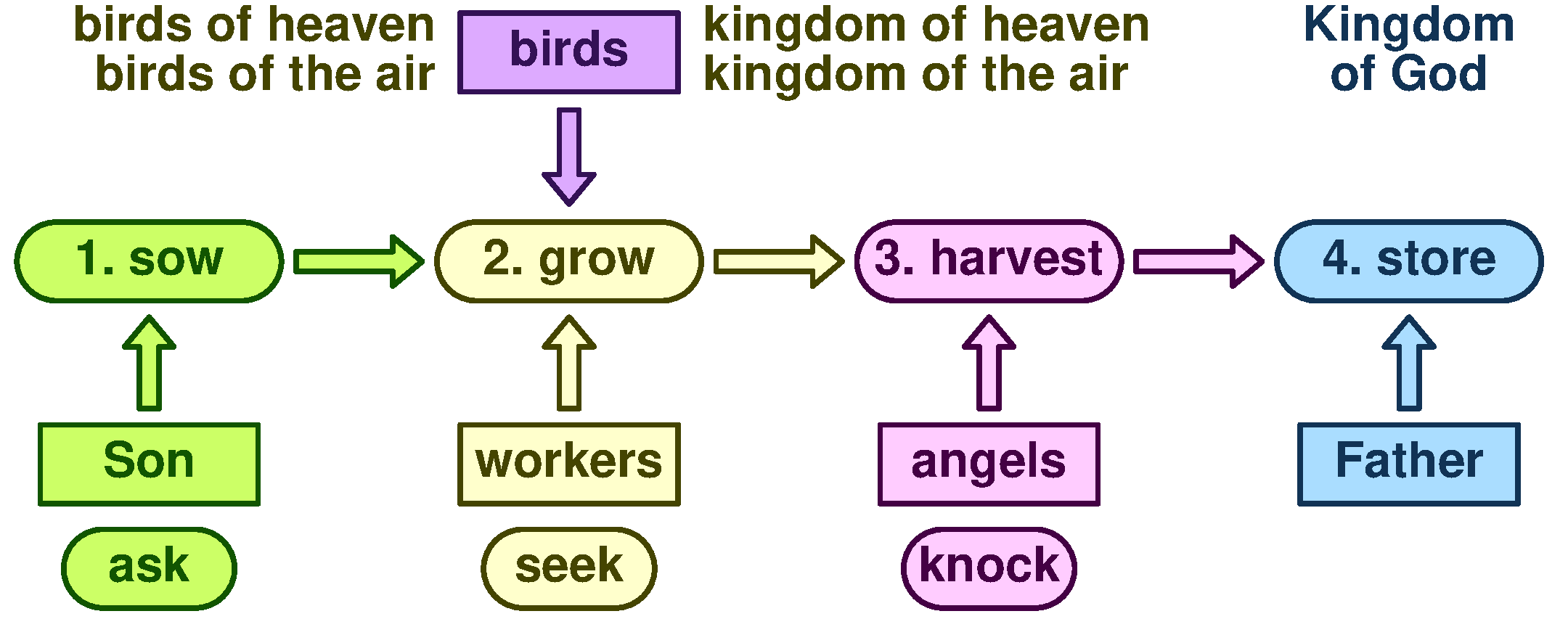
The firststep is sowing the seed. The "seed" is the word and Jesus in the parable of the sower "sows" the "seed". This is the first kingdom parable in Matthew 13.
The "birds" do not "sow" in this good sense. They could sow "weeds" as in the second kingdom parable. When might they do this?
Matthew 13:24Another parable put he forth unto them, saying, The kingdom of heaven is likened unto a man which sowed good seed in his field: [kjv]
13:27So the servants of the householder came and said unto him, Sir, didst not thou sow good seed in thy field? from whence then hath it tares? [kjv]
13:37He answered and said unto them, He that soweth the good seed is the Son of man; [kjv]
As noun code words, Jesus defines the "man" is as the "householder" as the "Son of Man". In all the parables that refer to a "householder", four other times with this word, only in Matthew, the "householder" also appears to be Jesus as God. Similar verses in Luke and Mark are translated as the "goodman of the house" or "master of the house".
The thirdstep is to "reap". In the second kingdom parable in Matthew 13, Jesus says that the "angels" are the reapers.
Matthew 13:39The enemy that sowed them is the devil; the harvest is the end of the world; and the reapers are the angels. [kjv]
The "birds" do not "reap" in this sense but they have pecked away "seeds" and sown "weeds". This can be reflexive in that the birds can sow themselves as weeds.
96. Matthew 13:24-30,36-43 KP2 Parable of the wheat and tares
The parable of the wheat and the tares provides a fault tolerant and realistic approach to the tolerance paradox which, as a simple form of the Russell Paradox, has no logical solution but occurs often in society.
Parable: (encoded with code words)
Matthew 13:28He saidunto them, An enemy hath done this. The servants said unto him, Wilt thou then that we go and gather them up? [kjv]
13:29But he said, Nay; lest while ye gather up the tares, ye root up also the wheat with them. [kjv]
Explained: (decoded code words)
13:39The enemy that sowed them is the devil; the harvest is the endof theworld; and the reapers are the angels. [kjv]
ο δε εχθρος ο σπειρας αυτα εστιν ο διαβολος ο δε θερισμοςσυντελειατου αιωνος εστιν οι δε θερισταιαγγελοι εισιν [gnt]
The English word "barn" comes from the Middle English word "berne" ≈ "barn" which comes from the Old English word "bern" ≈ "barn".
The fourthstep is to "store" into "barns".
This comes after the "reaping" of the "harvest" at the "end of the age".
The "birds" do not "store" into "barns" in this sense.
Matthew 9:37Then saith he unto his disciples, Theharvesttruly is plenteous, butthelabourersarefew; [kjv]
τοτε λεγει τοις μαθηταις αυτου ο μενθερισμοςπολυςοιδεεργαταιολιγοι [gnt]
Both football players and farmers like to be "outstanding in their field".
Notice that, speaking of the "harvest", Jesus does not say anything about needing "leaders". He needs "followers" who will do "work" without other human "supervision".
That leaves the second step which is to work what grows until the harvest. This is done by the "workers" or "laborers".
Matthew 9:37Then saith he unto his disciples, Theharvesttruly is plenteous, butthelabourersarefew; [kjv]
τοτε λεγει τοις μαθηταις αυτου ο μενθερισμοςπολυςοιδεεργαταιολιγοι [gnt]
Note that the "workers" help to "grow" the "fruit" for the "harvest". A reflexive relationship exists in that the "workers" are also part of the "harvest" as "fruit".
Matthew 6:26Behold the fowls of the air: for they sownot, neither do they reap, norgatherintobarns; yet your heavenly Father feedeth them. Are ye notmuchbetter than they? [kjv]
εμβλεψατεεις τα πετεινα του ουρανουοτιουσπειρουσινουδεθεριζουσινουδεσυναγουσινειςαποθηκας και ο πατηρ υμων ο ουρανιοςτρεφει αυτα ουχ υμεις μαλλονδιαφερετε αυτων [gnt]
The step omitted by Jesus is the "grow" part. The "birds" work the growing harvest by "pecking" and taking part of the harvest (first parable), and, in turn, sowing "weeds" (second parable).
You are "rather different" (at least you should be). The KJV, influenced by the Latin, says "much better".
The "birds" are used by Jesus as a symbol of "false teachers" who "prey", rather than "pray", on others. The "wolf" or "wolf-dog", as contrasted to a "sheep-dog", and the "snake" or "viper" appear to be used in the same manner.
102. Omitted step
The "ask", "seek" and "knock" sequence can be seen in the "sow", "grow" and "harvest" sequence.
The "Holy Spirit" is part of the "worker" process as in the "kingdom" of "heaven" or the "kingdom" of the "air" where one must deal with the "birds" of the "air".
103. Seed picker
A term for "babbler" in Greek is that of a "bird" that goes around pecking at seeds as in talking but not doing real work.
In Acts 17 at Mars Hill, Paul is ridiculed as doing what the people saying it about him are doing.
Acts 17:18Then certain philosophers ... said, What will this babbler say? ... [kjv]
τινες δε και των επικουρειων και των στωικων φιλοσοφων συνεβαλλον αυτω και τινες ελεγον τι αν θελοι ο σπερμολογος ουτος λεγειν οι δε ξενων δαιμονιων δοκει καταγγελευς ειναι οτι τον ιησουν και την αναστασιν αυτοις ευηγγελιζετο [gnt]
*G4691 *1 σπερμολόγος (sper-mol-og'-os) : from G4690 and G3004; a seed-picker (as the crow), i.e. (figuratively) a sponger, loafer (specially, a gossip or trifler in talk):--babbler.
Usage
All
σπερμολογος
Acts 17:18 ... What will this babbler say? other some, He seemeth ...
105. Matthew 6:26 Feeding the birds
Matthew 6:26Behold the fowls of the air: for they sownot, neither do they reap, norgatherintobarns; yet your heavenly Father feedeth them. Are ye notmuchbetter than they? [kjv]
εμβλεψατεεις τα πετεινα του ουρανουοτιουσπειρουσινουδεθεριζουσινουδεσυναγουσινειςαποθηκας και ο πατηρ υμων ο ουρανιοςτρεφει αυτα ουχ υμεις μαλλονδιαφερετε αυτων [gnt]
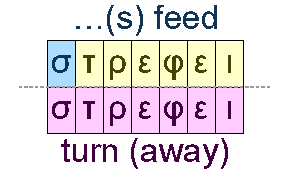
It appears that the "Father" "feeds" the "birds" even though they sow "weeds". How nice? Would the "Father" ever "turn away (from)" "them", the "birds"
What can separate you from the "love" of Christ? Some would proclaim nothing. That is not what Jesus, Paul, etc., appear to say.
Matthew 6:26Behold the fowls of the air: for they sownot, neither do they reap, norgatherintobarns; yet your heavenly Father feedeth them. Are ye notmuchbetter than they? [kjv]
εμβλεψατεεις τα πετεινα του ουρανουοτιουσπειρουσινουδεθεριζουσινουδεσυναγουσινειςαποθηκας και ο πατηρ υμων ο ουρανιοςτρεφει αυτα ουχ υμεις μαλλονδιαφερετε αυτων [gnt]
Matthew 6:26Behold the fowls of the air: for they sownot, neither do they reap, norgatherintobarns; yet your heavenly Father feedeth them. Are ye notmuchbetter than they? [kjv]
εμβλεψατεεις τα πετεινα του ουρανουοτιουσπειρουσινουδεθεριζουσινουδεσυναγουσινειςαποθηκας και ο πατηρ υμων ο ουρανιοςτρεφει αυτα ουχ υμεις μαλλονδιαφερετε αυτων [gnt]
Language
What is said.
What is heard.
English
twenty sicksheep
twenty sixsheep
Greek
...ουράνιοςτρέφει αυτα
...ουράνιοςστρέφει αυτα
English
...(in) heaven feeds them
... (in) heaven turns (away from) them
The "birds"appear to "work" but do not do useful "work". The "laborers" are needed for the future "harvest". We see other verses where the "Father" feeds both the "birds" and the others. What can separate you from the love of Christ?
Spiros Zodhiates (Greek-American Bible scholar, author and ministry innovator) (1922-2009) published an audio version of the GNT (Nestle/Aland 26 edition) using modern Greek pronunciation which is used in many colleges and universities.
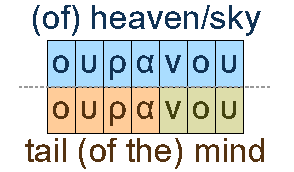
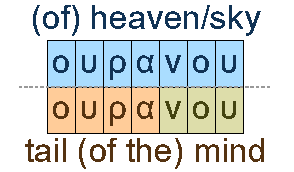
The same play on words can be heard in ancientGreek and in modernGreek. It is interesting that when Spiros Zodhiates reads this verse, he puts in a distinct and somewhat long (and unusual) pause between the two words that would otherwise be heard as a play on words in Greek. [English trains and strains]
109. The reign/rain of Jesus
Matthew 5:45That ye may be the children of your Father which is in heaven: for he maketh his sun to rise on the evil and on the good, and sendeth rain on the just and on the unjust. [kjv]
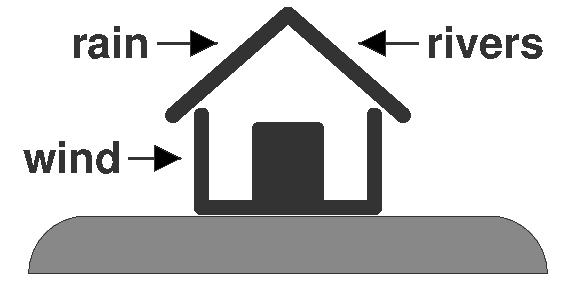
7:25And the rain descended, and the floods came, and the winds blew, and beat upon that house; and it fell not: for it was founded upon a rock. [kjv]
7:27And the rain descended, and the floods came, and the winds blew, and beat upon that house; and it fell: and great was the fall of it. [kjv]
Jesus says that the Father sends rain on both the just and the unjust. Some of that "rain" is sent on houses built on "sand" and on "rock", with different results.
KJV: That ye may be the children of your Father which is in heaven: for he maketh his sun to rise on the evil and on the good, and sendeth rain on the just and on the unjust.
Greek: οπως γενησθε υιοι του πατρος υμων του εν ουρανοις οτι τον ηλιον αυτου ανατελλει επι πονηρους και αγαθους και βρεχει επι δικαιους και αδικους
Geneva: That ye may be the children of your father that is in heauen: for he maketh his sunne to arise on the euill, and the good, and sendeth raine on the iust, and vniust.
KJV: And the rain descended, and the floods came, and the winds blew, and beat upon that house; and it fell not: for it was founded upon a rock.
Greek: και κατεβη η βροχη και ηλθονηλθαν οι ποταμοι και επνευσαν οι ανεμοι και προσεπεσονπροσεπεσαν τη οικια εκεινη και ουκ επεσεν τεθεμελιωτο γαρ επι την πετραν
KJV: And the rain descended, and the floods came, and the winds blew, and beat upon that house; and it fell: and great was the fall of it.
Greek: και κατεβη η βροχη και ηλθονηλθαν οι ποταμοι και επνευσαν οι ανεμοι και προσεκοψαν τη οικια εκεινη και επεσεν και ην η πτωσις αυτης μεγαλη
113. Deferring on a difference of opinion on differences
Matthew 6:26Behold the fowls of the air: for they sownot, neither do they reap, norgatherintobarns; yet your heavenly Father feedeth them. Are ye notmuchbetter than they? [kjv]
εμβλεψατεεις τα πετεινα του ουρανουοτιουσπειρουσινουδεθεριζουσινουδεσυναγουσινειςαποθηκας και ο πατηρ υμων ο ουρανιοςτρεφει αυτα ουχ υμεις μαλλονδιαφερετε αυτων [gnt]
In many places in the GNT, the Greek verb for "difference" as in "making a difference" is translated as "better".
Matthew 6:26Behold the fowls of the air: for they sownot, neither do they reap, norgatherintobarns; yet your heavenly Father feedeth them. Are ye notmuchbetter than they? [kjv]
εμβλεψατεεις τα πετεινα του ουρανουοτιουσπειρουσινουδεθεριζουσινουδεσυναγουσινειςαποθηκας και ο πατηρ υμων ο ουρανιοςτρεφει αυτα ουχ υμεις μαλλονδιαφερετε αυτων [gnt]
The KJV translation is somewhat contrived from the actual Greek word order.
Greek word order: ... and the Father (of) yours (in) the heavensfeeds them not you ratherdifferent (of/from) them.
Paraphrase: ... and the Father (of) yours (in) the heavensfeeds [turns away from] them. Not you! Rather, (you) be different (imperative) (of/from) them (the birds).
The paraphrase does not need to change the Greek word order nor change the meanings of the words. The "not" you fits with the play on words. Was that what Jesus really meant?
The ancient Greek word "δῐεφέρετε" ≈ "different" (second person plural imperfect active indicative).
115. The Greek difference is not better
Matthew 10:31Fear ye not therefore, ye are of more value than manysparrows. [kjv]
μη ουν φοβηθητε φοβεισθεπολλωνστρουθιωνδιαφερετε υμεις [gnt]
12:12How much then is a man betterthan a sheep? Wherefore it is lawful to do well on the sabbathdays. [kjv]
The ancient Greek word "διαφέρω" ≈ "carried through, different" with a sense of a "different" way or type as in it "makes a difference".
In many places, the Latin Vulgate changed "different" to "better".
Paraphrase: ... you are different (not better) than many of the sparrows.
Paraphrase: ... how different (not better) is a man (than) a sheep.
Matthew 6:27Which of you by taking thoughtcanadd one cubitunto his stature? [kjv]
τις δε εξ υμων μεριμνωνδυναταιπροσθειναιεπι την ηλικιαν αυτου πηχυν ενα [gnt]
Matthew 6:27
Strong
Used
Unique
Word
Part of speech
G4369
18
2
προσθειναι
verb 2nd person aorist active infinitive
G2244
8
4
ηλικιαν
noun accusative singular feminine
G4083
4
2
πηχυν
noun accusative singular masculine
120. Comparison
If the "birds" are the "evil ones", we find other verses in the previous chapter, Matthew 5, that describe this idea that we should be "different" than "birds". Two successive verses in Matthew 5:13-14 (the previous chapter and part of the same discourse) appear to refer to how we are to be "different" than "birds".
Matthew 5:13Ye are the salt of the earth: but if the salt have lost his savour, wherewith shall it be salted? it is thenceforth good for nothing, but to be cast out, and to be trodden under foot of men. [kjv]
5:14Ye are the light of the world. A city that is set on an hill cannot be hid. [kjv]
KJV: Ye are the salt of the earth: but if the salt have lost his savour, wherewith shall it be salted? it is thenceforth good for nothing, but to be cast out, and to be trodden under foot of men.
Greek: υμεις εστε το αλας της γης εαν δε το αλας μωρανθη εν τινι αλισθησεται εις ουδεν ισχυει ετι ει μη βληθηναιβληθεν εξω και καταπατεισθαι υπο των ανθρωπων
KJV: Ye are the light of the world. A city that is set on an hill cannot be hid.
Greek: υμεις εστε το φως του κοσμου ου δυναται πολις κρυβηναι επανω ορους κειμενη
123. Matthew 6:25-27 Summary
Matthew 6:25Therefore I say unto you, Take nothought for your life, what ye shall eat, or what ye shall drink; nor yet for yourbody, what ye shall put on. Is not the lifemore than meat, and the body than raiment? [kjv]
6:26Behold the fowls of the air: for they sownot, neither do they reap, norgatherintobarns; yet your heavenly Father feedeth them. Are ye notmuchbetter than they? [kjv]
6:27Which of you by taking thoughtcanadd one cubitunto his stature? [kjv]
It appears we are to be "different" than the "birds".
Coming up: Lilies, Solomon, grass, oven, little faith.
124. Matthew 6:32-34 Seek to eat , drink and be married to Jesus
Matthew 6:33But seek ye first the kingdomof God, and hisrighteousness; and allthese things shall be added unto you. [kjv]
ζητειτε δε πρωτον την βασιλειαντου θεου και την δικαιοσυνηναυτου και ταυταπανταπροστεθησεται υμιν [gnt]
Proverbs 1:17Surely in vain the net is spread in the sight of any bird. [kjv]
ου γαρ αδικως εκτεινεται δικτυαπτερωτοις [lxx]
for nets are not without cause spread for birds. [bs3]
The Epistle of Barnabas interprets birds and nets from Proverbs 1:17 in the LXX. Both use the Greek word for "bird" that emphasizes the "wing".
A bird net works much better if there is some food on which the birds desire to eat. It might be "deceptive" food.
English: Now the scripture says: "Not unjustly are nets spread out for the birds". This means that people deserve to perish if, having knowledge of the way of righteousness, they ensnare themselves in the way of darkness. (1.4, Holmes, p. 393)
In Matthew 10:16, Jesus uses four creatures in one verse: sheep, wolves, serpents and doves or (pigeons) as "birds". The English adjectives do not fit the Greek words.
Matthew 10:16Behold, I send you forth as sheep in the midst of wolves: be ye therefore wise as serpents, and harmless as doves. [kjv]
ιδου εγω αποστελλω υμας ως προβατα εν μεσω λυκων γινεσθε ουν φρονιμοι ως οι οφεις και ακεραιοι ως αι περιστεραι [gnt]
"Wolves" operate in groups and look for any weakness in their prey. Wolves and dogs can interbreed. A "wolf-dog" is in contrast to a "sheep-dog".
The "serpents" are not"wise" in the English sense. They are opportunistic and prudent. So, no "wise crackers" here!
The "doves" or "pigeons" (same bird) or "birds" are not "harmless" in the English sense. They are without frills (insect antennas), with smooth feathers, preened of pests. not fact-checked, etc. Is this how "birds" of "prey" or "pray" want to appear?
It is interesting that that the word "cardinal" is the name of a "bird". Early European settlers in North America were reminded of the red robes and hats worn by Roman Catholic cardinals which provided the name for the "cardinal" "bird".
Jesus does not use the idea of a "bird" in a good sense. The Greek word for "bird" is a play on words with the Greek word for "deny".


















 At one time, Angry Birds was a very popular game and mobile application that eventually had a movie named after it.










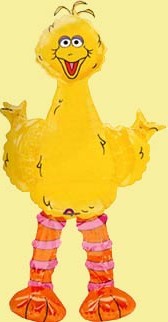 The creation account says that birds of every kind were created. There are non-flying birds, such as "Big Bird".





















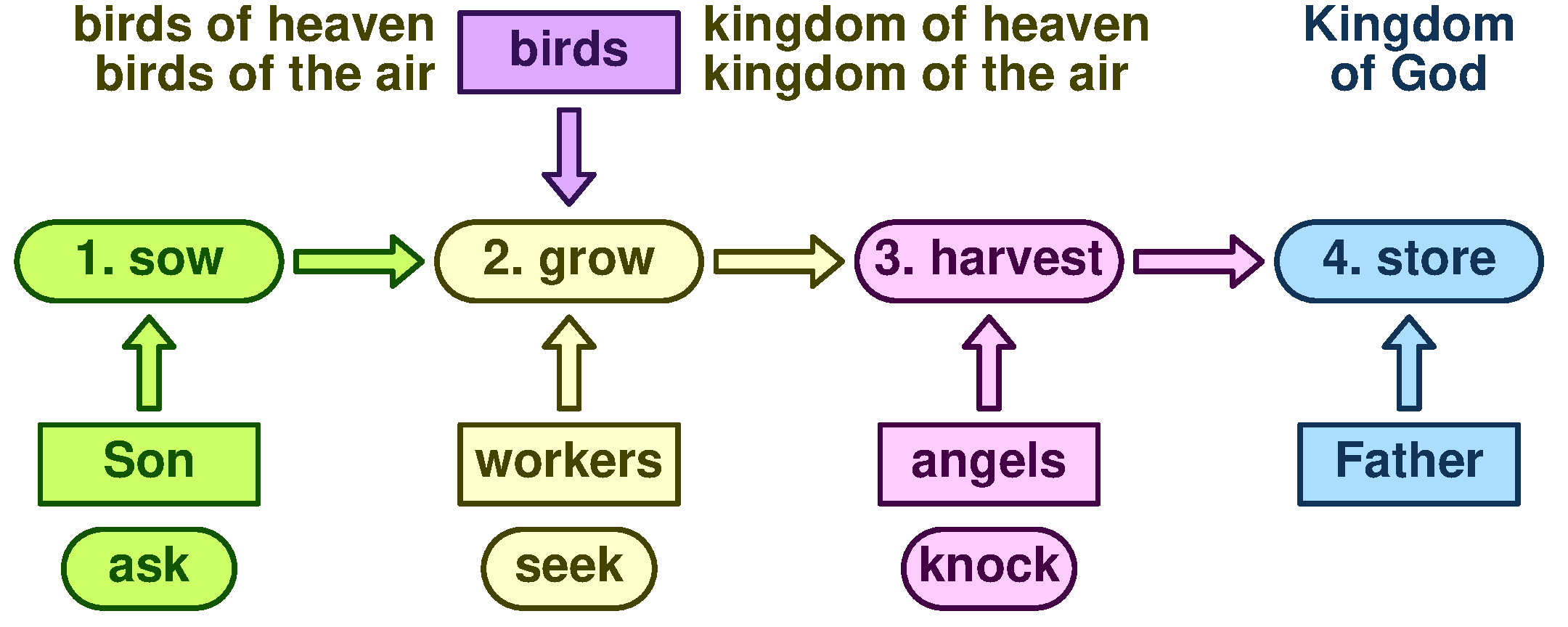 The "ask", "seek" and "knock" sequence can be seen in the "sow", "grow" and "harvest" sequence.





 In many places in the GNT, the Greek verb for "difference" as in "making a difference" is translated as "better".

 The ancient Greek word "διαφέρω" ≈ "carried through, different" with a sense of a "different" way or type as in it "makes a difference".



 Phrase: "One foot in the grave" (distance with time meaning).