Send
Close Add comments:
(status displays here)
Got it! This site "creationpie.org" uses cookies. You consent to this by clicking on "Got it!" or by continuing to use this website. Note: This appears on each machine/browser from which this site is accessed.
Easter: Around the cross
1. Easter: Around the cross
2. Timeline: Prophecy of Daniel
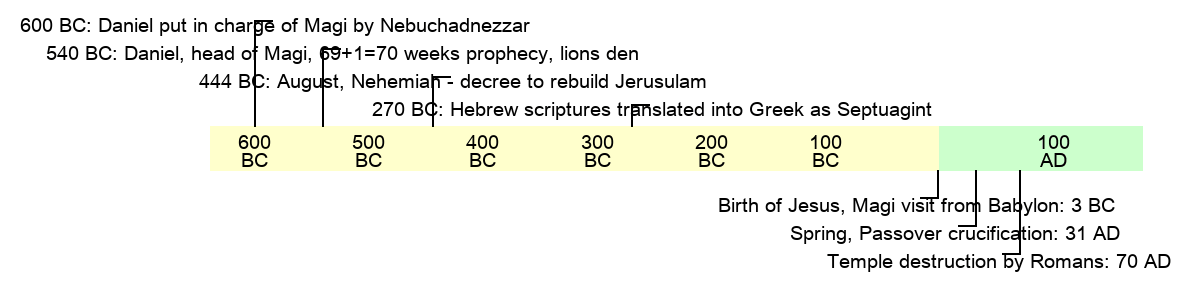 Decree to rebuild
:
173,800 days after early August of
445 BC is
March/April of
31 AD.
Temple destruction:
14,400 days before early September of
70 AD is
March/April of
31 AD.
It had to happen at this time. There was
no other way. [one drop of blood fallacy]
Matthew 26:39 And he went a little further, and fell on his face, and prayed, saying, O my Father, if it be possible, let this cup pass from me: nevertheless not as I will, but as thou wilt. [kjv]
3. Matthew 21:4-5 Prophecy connection
Matthew 21:4 All this was done, that it might be fulfilled which was spoken by the prophet, saying, [kjv]
21:5 Tell ye the daughter of Sion, Behold, thy King cometh unto thee, meek, and sitting upon an ass, and a colt the foal of an ass. [kjv]
ειπατε τη θυγατρι σιων ιδου ο βασιλευς σου ερχεται σοι πραυς και επιβεβηκως επι ονον και επι πωλον υιον υποζυγιου [gnt]
Matthew makes the decision to cherry pick a verse from
Zechariah, read during most Palm Sunday worship services. Matthew thus claims that this is the reason. Is it really the reason? Is it one reason? Are there other more important reasons?
What does it mean to be "
meek"? This only applies if the verse selected by Matthew applies to this very situation.
4. Matthew 21:5
Matthew 21:5 Tell ye the daughter of Sion, Behold, thy King cometh unto thee, meek, and sitting upon an ass, and a colt the foal of an ass. [kjv]
ειπατε τη θυγατρι σιων ιδου ο βασιλευς σου ερχεται σοι πραυς και επιβεβηκως επι ονον και επι πωλον υιον υποζυγιου [gnt]
Greek:
... meek and mounted/riding on (a) donkey and on (a) colt son (of a) beast of burden.
The
KJV (King James Version) translates as
"foal" of an
"ass" what in the Greek is
"beast of burden". Are there
one or
two animals involved?
☐
ass
☐
colt son of a
beast of burden
5. Revelation 19:11 Donkey and horse
Revelation 19:11 And I saw heaven opened, and behold a white horse; and he that sat upon him was called Faithful and True, and in righteousness he doth judge and make war. [kjv]
και ειδον τον ουρανον ανεωγμενον ηνεωγμενον και ιδου ιππος λευκος και ο καθημενος επ αυτον καλουμενος πιστος καλουμενος και αληθινος και εν δικαιοσυνη κρινει και πολεμει [gnt]
One pastor made an emphatic point that Jesus was riding a donkey and
not a
horse as some great and powerful
king. He failed to tell the congregation about that exact thing in Revelation in the
second coming of Jesus.
First coming: Kinsman redeemer as Messiah (Gospels)
Second coming: Avenger of blood as King (Revelation)
6. Revelation 19:12-13,15-16 Donkey and horse
Revelation 19:12 His eyes were as a flame of fire, and on his head were many crowns; and he had a name written, that no man knew, but he himself. [kjv]
19:13 And he was clothed with a vesture dipped in blood: and his name is called The Word of God. [kjv]
19:15 And out of his mouth goeth a sharp sword, that with it he should smite the nations: and he shall rule them with a rod of iron: and he treadeth the winepress of the fierceness and wrath of Almighty God. [kjv]
19:16 And he hath on his vesture and on his thigh a name written, KING OF KINGS, AND LORD OF LORDS. [kjv]
7. Matthew 21:12-14 House of prayer
Matthew 21:12 And Jesus went into the temple of God, and cast out all them that sold and bought in the temple, and overthrew the tables of the moneychangers, and the seats of them that sold doves, [kjv]
και εισηλθεν ο ιησους εις το ιερον του θεου και εξεβαλεν παντας τους πωλουντας και αγοραζοντας εν τω ιερω και τας τραπεζας των κολλυβιστων κατεστρεψεν και τας καθεδρας των πωλουντων τας περιστερας [gnt]
21:13 And said unto them, It is written, My house shall be called the house of prayer; but ye have made it a den of thieves. [kjv]
και λεγει αυτοις γεγραπται ο οικος μου οικος προσευχης κληθησεται υμεις δε αυτον εποιησατε ποιειτε σπηλαιον ληστων [gnt]
21:14 And the blind and the lame came to him in the temple; and he healed them. [kjv]
και προσηλθον αυτω τυφλοι και χωλοι εν τω ιερω και εθεραπευσεν αυτους [gnt]
In the
GNT (Greek New Testament), Jesus uses both words for
"thieves" and words for
"robbers".
The Greek word translated as
"thieves" (using
deception) is that of
"robbers" (using
force).
[Luke, Mark, Isaiah, guesses as to why Jesus was mad]
8. Matthew 21:13 Den of robbers
Matthew 21:13 And said unto them, It is written, My house shall be called the house of prayer; but ye have made it a den of thieves. [kjv]
και λεγει αυτοις γεγραπται ο οικος μου οικος προσευχης κληθησεται υμεις δε αυτον εποιησατε ποιειτε σπηλαιον ληστων [gnt]
Jesus said, "
My house shall be called the house of prayer, but you have made it ..." (check all that apply.)
☐ A den (cave) of
thieves.
☐ A den (cave) of
robbers.
☐ A coffee shop and bookstore.
☐ A basketball and volleyball court.
☐ A platform for social and political change.
☐ A place for "
cultural diversity" (even if it goes against God's laws).
☐ A yoke of compulsion (e.g., church as a tax collector)
☐ ... (add your own ideas here) ...
Discuss: Are these valid comparisons?
9. Matthew 9:12-13 Paraphrase
Matthew 9:12 But when Jesus heard that, he said unto them, They that be whole need not a physician, but they that are sick. [kjv]
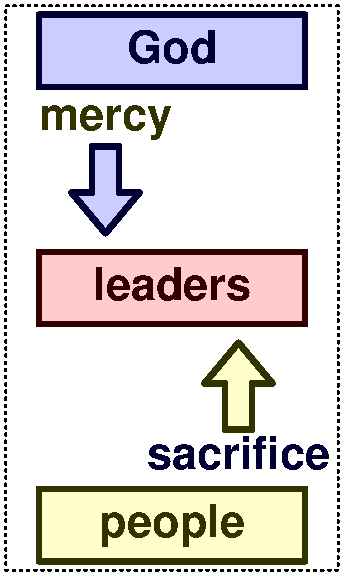
9:13 But go ye and learn what that meaneth, I will have mercy, and not sacrifice: for I am not come to call the righteous, but sinners to repentance. [kjv]
The strong (who oppress the harmed) are righteous (in their own eyes) and do not want the healer (Jesus).
The harmed (who are oppressed by the strong) want a healer (Jesus).
Mercy is needed from the strong (who oppress) and not sacrifice from the harmed (as man's additions to God's laws).
I have not come to call the righteous (in their own eyes) as they do not want the healer (Jesus). (They will not listen nor repent)
I have come to call the sinners as they want the healer (Jesus). (They, at least, will listen and may or may not repent.)
10. Matthew 23:19
Matthew 23:19 Ye fools and blind: for whether is greater, the gift, or the altar that sanctifieth the gift? [kjv]
μωροι και τυφλοι τυφλοι τι γαρ μειζον το δωρον η το θυσιαστηριον το αγιαζον το δωρον [gnt]
[Tables of the money changers]
[Yoke of compulsion]
[Barnabas]
11. Matthew 23:19
KJV: Ye fools and blind: for whether is greater, the gift, or the altar that sanctifieth the gift?
Greek: μωροι και τυφλοι τυφλοι τι γαρ μειζον το δωρον η το θυσιαστηριον το αγιαζον το δωρον
12. Epistle of Barnabas
The
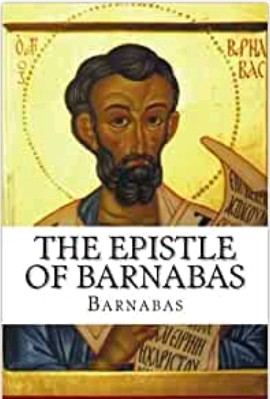
Epistle of Barnabas, not to be confused with a medieval forgery called the Gospel of Barnabas, is a writing from the first century, usually attributed to the Barnabas that accompanied Paul as recorded in the
GNT, but no one knows for sure.
[Connecting dots, yoke of compulsion]
The date appears to be after the destruction of the temple in Jerusalem in 70 AD and before the further destruction and dispersion about 135 AD.
| Disputed letters |
| Hebrews |
accepted |
| Barnabas |
rejected |
|
For various reasons, the disputed Epistle of Barnabas was not accepted into the GNT. Nevertheless, Barnabas makes many interesting points and provides many interesting ideas.
|
Discuss: Why might Barnabas have been rejected while Hebrews was accepted?
 |
Details are left as a future topic.
|
13. Tiberius Caesar and sheep
Luke 3:1 Now in the fifteenth year of the reign of Tiberius Caesar, Pontius Pilate being governor of Judaea, … [kjv]
Emperor
Tiberius Caesar (on taxes):
It is the duty of a good shepherd to shear his sheep, not to skin them.
At the same time, Jesus was walking and teaching in Judea. Jesus had a different idea about what it meant to be a
"good" "shepherd".
John 10:11 I am the good shepherd: the good shepherd giveth his life for the sheep. [kjv]
εγω ειμι ο ποιμην ο καλος ο ποιμην ο καλος την ψυχην αυτου τιθησιν υπερ των προβατων [gnt]
9 AD: Arminius organizes Germans and slaughters Roman Legions under Varus at Teutoburg Forest
14. Transitive relationship
John 13:34 A new commandment I give unto you, That ye love one another; as I have loved you, that ye also love :one another. [kjv]
εντολην καινην διδωμι υμιν ινα αγαπατε αλληλους καθως ηγαπησα υμας ινα και υμεις αγαπατε αλληλους [gnt]
mandatum novum … [v]
… newe maundement… [wy]
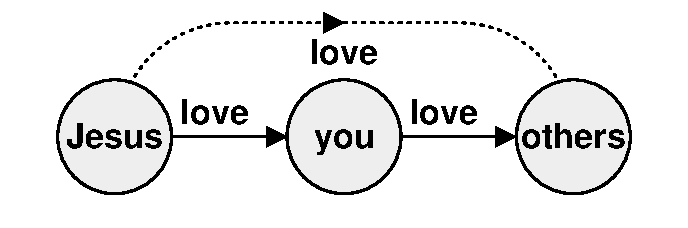
Jesus gives a "
new commandment". It is, rather, a new twist on two old commandments from the
OT (Old Testament).
Love your God with everything.
Love your neighbor as yourself (feedback loop)
Love fellow believers unconditionally.
The "
one another" is for those who are "
similar" and not "
different".
Jesus did not come to "
change everything" nor to replace the law but to fulfill the law. The new twist is to follow the example of Jesus in loving your neighbor as yourself.
15. John 15:13 No greater love
John 15:13 Greater love hath no man than this, that a man lay down his life for his friends. [kjv]
μειζονα ταυτης αγαπην ουδεις εχει ινα τις την ψυχην αυτου θη υπερ των φιλων αυτου [gnt]
16. John 15:13
KJV: Greater love hath no man than this, that a man lay down his life for his friends.
Greek: μειζονα ταυτης αγαπην ουδεις εχει ινα τις την ψυχην αυτου θη υπερ των φιλων αυτου
17. John 15:14-16 Friends
John 15:14 Ye are my friends, if ye do whatsoever I command you. [kjv]
υμεις φιλοι μου εστε εαν ποιητε οσα ο εγω εντελλομαι υμιν [gnt]
15:15 Henceforth I call you not servants; for the servant knoweth not what his lord doeth: but I have called you friends; for all things that I have heard of my Father I have made known unto you. [kjv]
ουκετι υμας λεγω υμας δουλους οτι ο δουλος ουκ οιδεν τι ποιει αυτου ο κυριος υμας δε ειρηκα φιλους οτι παντα α ηκουσα παρα του πατρος μου εγνωρισα υμιν [gnt]
15:16 Ye have not chosen me, but I have chosen you, and ordained you, that ye should go and bring forth fruit, and that your fruit should remain: that whatsoever ye shall ask of the Father in my name, he may give it you. [kjv]
ουχ υμεις με εξελεξασθε αλλ εγω εξελεξαμην υμας και εθηκα υμας ινα υμεις υπαγητε και καρπον φερητε και ο καρπος υμων μενη ινα ο τι αν αιτησητε τον πατερα εν τω ονοματι μου δω υμιν [gnt]
Can the "
ordained" be considered a form of
"asking"? Jesus as the Christ and Messiah addresses his disciples as "
now friends".
18. Questions and answers
John 14:13 And whatsoever ye shall ask in my name, that will I do, that the Father may be glorified in the Son. [kjv]
και ο τι αν αιτησητε εν τω ονοματι μου τουτο ποιησω ινα δοξασθη ο πατηρ εν τω υιω [gnt]
15:16 Ye have not chosen me, but I have chosen you, and ordained you, that ye should go and bring forth fruit, and that your fruit should remain: that whatsoever ye shall ask of the Father in my name, he may give it you. [kjv]
ουχ υμεις με εξελεξασθε αλλ εγω εξελεξαμην υμας και εθηκα υμας ινα υμεις υπαγητε και καρπον φερητε και ο καρπος υμων μενη ινα ο τι αν αιτησητε τον πατερα εν τω ονοματι μου δω υμιν [gnt]
16:23 And in that day ye shall ask me nothing. Verily, verily, I say unto you, Whatsoever ye shall ask the Father in my name, he will give it you. [kjv]
και εν εκεινη τη ημερα εμε ουκ ερωτησετε ουδεν αμην αμην λεγω υμιν οτι οσα αν τι αιτησητε τον πατερα δωσει υμιν εν τω ονοματι μου δωσει υμιν [gnt]

In the above verses, one could paraphrase the general theme as the following.
Ask for it and it will be given to you (or made for you).
19. Questions and answers
So the question comes down to what exactly is "
it" referring. Such pronouns can be ambiguous. To what might be the "
it" in the verses are referring?
Suppose that you were told this three times (pairs) spread over one long discourse. Would you fully understand? Did the disciples understand?
It appears that the unspecified "
it" and other sayings by Jesus in this extended discourse may have left the disciples somewhat confused. A few verses later we have a request by the disciples.
20. John 16:29 Speak clearly
John 16:29 His disciples said unto him, Lo, now speakest thou plainly, and speakest no proverb. [kjv]
λεγουσιν αυτω οι μαθηται αυτου ιδε νυν εν παρρησια λαλεις και παροιμιαν ουδεμιαν λεγεις [gnt]
John organizes John chapters 14, 15 and 16 in a top-down backward-chaining manner that can be confusing. The disciples appear to be confused and want Jesus to speak more plainly.
The
"plainly" or
"openly" can be translated
"bluntly".
The Old English word
"spell" ≈ "speak, say" as in to cast a "
spell". To "
spell" a word one would often say aloud the letters of that word. To "
sit for a spell" is to sit and talk (for a while).
21. John 16:29
KJV: His disciples said unto him, Lo, now speakest thou plainly, and speakest no proverb.
Greek: λεγουσιν αυτω οι μαθηται αυτου ιδε νυν εν παρρησια λαλεις και παροιμιαν ουδεμιαν λεγεις
Latin: dicunt ei discipuli eius ecce nunc palam loqueris et proverbium nullum dicis
Wessex: Hys leorningcnihtas cwaeðen to hym. Nu þu sprecst openlice. & ne segst nan by-spell.
Wycliffe: Hise disciplis seiden to hym, Lo! now thou spekist opynli, and thou seist no prouerbe.
22. Stair analogy
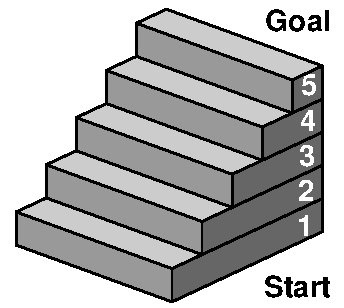
A
stair analogy can be used to help understand
top-down design and
bottom-up implementation.
The goal is the top of the stairs.
The start is the bottom of the stairs.
Identifying the
goal is most important! You do not want to climb the wrong stairs to get to the wrong goal.
Implementation:
Do it: 1 to 2 to 3 to 4 to 5 (same either way)
Design: When it works,
top-down tends to be
better.
Think bottom-up: 1 then 2 then 3 then 4 then 5 (start forward to goal)
Think top-down: 5 if 4 if 3 if 2 if 1 (goal backward to start)
Gospels:
Bottom-up: Matthew, Mark, Luke (goal not clear, a lot of extra material)
Top-down: John (goal clear, no extra material)
23. Ask seek knock
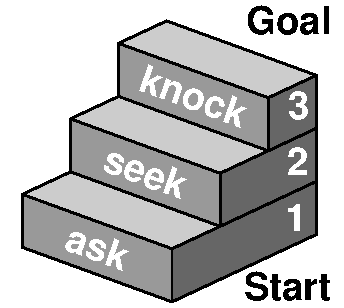 |
Think bottom-up forward-chaining: Start with "ask" then continue with "seek" then finish with "knock".
Think top-down backward-chaining: One can finish with "knock" if one continues with a "seek" if one starts with an "ask".
|
 |
Do it: "ask", "seek", "knock".
|
Here is one interpretation for the three parts, in
top-down backward-chaining order as appears to be used by John in John chapters 14 and following.
Ask for the opportunity to knock and it will be made for you, if you
ask for the opportunity to seek and it will be given to you, if you
ask for the opportunity to ask and it will be given to you.
24. John 17-21
| 14 |
Knock |
Father |
| 15 |
Seek |
Holy Spirit, comforter |
| 16 |
Ask |
Son |
| 17 |
Ask |
Garden, prayer |
| 18 |
Seek |
Arrest, trials, Pilate, witness |
| 19+ |
Knock |
Crucifixion |
In John chapters 14 and following, John presents a top-down design and bottom-up implementation of the entire "
ask", "
seek", "
knock" sequence where Jesus provides the implementation example of the design.
Note that chapter boundaries were determined in the Middle Ages and may not fit what John is saying (since the translators may not have fully understood what John was saying).
25. John 17:1-26 Prayer after the Last Supper
John 17:9 I pray for them: I pray not for the world, but for them which thou hast given me; for they are thine. [kjv]
εγω περι αυτων ερωτω ου περι του κοσμου ερωτω αλλα περι ων δεδωκας μοι οτι σοι εισιν [gnt]
17:10 And all mine are thine, and thine are mine; and I am glorified in them. [kjv]
και τα εμα παντα σα εστιν και τα σα εμα και δεδοξασμαι εν αυτοις [gnt]
Have you ever heard a pastor or someone else "
pray for the world"? What exactly might they mean? Might might Jesus have meant?
After the Last Supper, in the garden before the arrest, trial and crucification, Jesus prays. He specifically does not pray for the world but, rather, for those in the world who are of him.
26. Jesus says why he was born
John 18:37 Pilate therefore said unto him, Art thou a king then? Jesus answered, Thou sayest that I am a king. To this end was I born, and for this cause came I into the world, that I should bear witness unto the truth. Every one that is of the truth heareth my voice. [kjv]
ειπεν ουν αυτω ο πιλατος ουκουν βασιλευς ει συ απεκριθη ο ιησους συ λεγεις οτι βασιλευς ειμι εγω εγω εις τουτο γεγεννημαι και εις τουτο εληλυθα εις τον κοσμον ινα μαρτυρησω τη αληθεια πας ο ων εκ της αληθειας ακουει μου της φωνης [gnt]
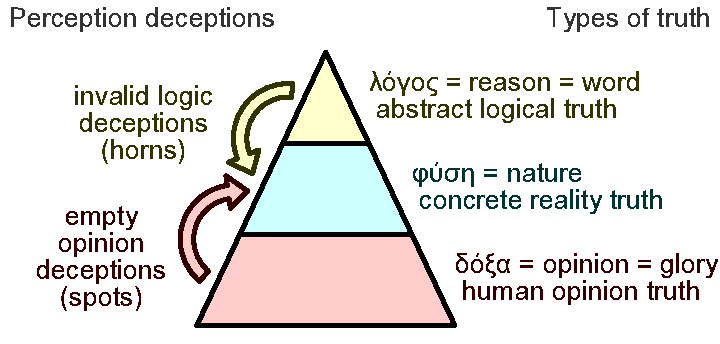
Only John tells us
why Jesus was born. Jesus witnesses to Pilate.
Jesus tells Pilate
why he was born in
John 18:37. When Jesus talks of
"truth", as in the Greek and Hebrew words for truth, he is talking about the truth of
reality and
not of a
logical true-false truth system.
Throughout time, there are those who hear the message and have understanding. Jesus tells this to Pilate. The Greek for "
born" means to "
come into being" (in some form).
[philosophy courses, Aristotle final cause]
27. What is truth?
The world does not care about the truth of reality.
John 18:38 Pilate saith unto him, What is truth? And when he had said this, he went out again unto the Jews, and saith unto them, I find in him no fault at all. [kjv]
λεγει αυτω ο πιλατος τι εστιν αληθεια και τουτο ειπων παλιν εξηλθεν προς τους ιουδαιους και λεγει αυτοις εγω ουδεμιαν αιτιαν ευρισκω εν αυτω αιτιαν [gnt]
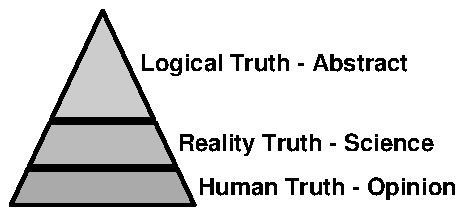 "λόγος" ≈ "word, reasoning" as in "logic".
"φύση" ≈ "nature" as in "reality".
"δόξα" ≈ "opinion, expectation" as in "opinion".
"λόγος" ≈ "word, reasoning" as in "logic".
"φύση" ≈ "nature" as in "reality".
"δόξα" ≈ "opinion, expectation" as in "opinion".
8:32 And ye shall know the truth, and the truth shall make you free. [kjv]
και γνωσεσθε την αληθειαν και η αληθεια ελευθερωσει υμας [gnt]
28. Easter: Shape and prophecy of the cross
What was the actual shape of the crucifixion cross?
Some interesting connections arise when the cross has the shape of a "
tee" or "
T" as in Greek letter "
τ" or "
Τ" (tau) as related by Barnabas and some other Roman writers. The impression of the traditional shape could come from the addition of a "
title" (and supporting piece) placed above to describe the crime.
"χριστός" ≈ "Christ" as in "anointed one".
"χρηστός" ≈ "useful" and appears as a play on words by both Jesus and Paul.
"χρυσός" ≈ "gold".
In particular, in Greek, if the "
t" or "
tau" or "
cross" is removed from "
Christ" one gets a play on words of "
gold". This may or may not have significance.
29. Shape of the cross
Somewhere between 40 and 100 years after the crucifixion, and while crucifixion was still used by the Romans, Barnabas compares the shape of the cross to the Greek letter "
T" which is
not the traditional shape of the Christian cross.
The Greek letter "
T" had a gematria value of
300.
English: And because the cross, which is shaped like the T, was destined to convey grace, it mentions also the "three hundred". (Holmes, 2007, p. 409)
Greek: ὅτι δὲ ὁ σταυρὸς ἐν τῷ ταῦ ἤμελλεν ἔχειν τὴν χάριν, λέγει καὶ τοὺς τριακοσίους. [9.8]
30. Cross ideas
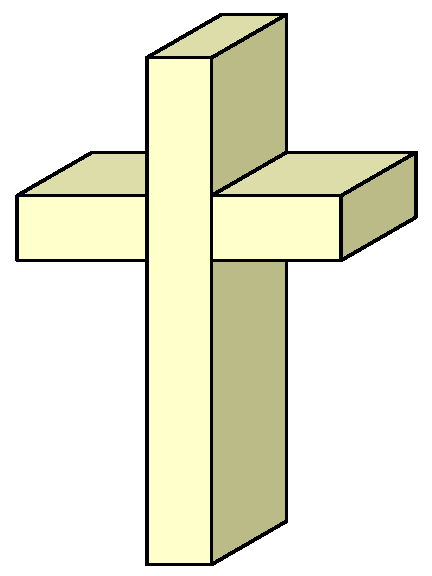
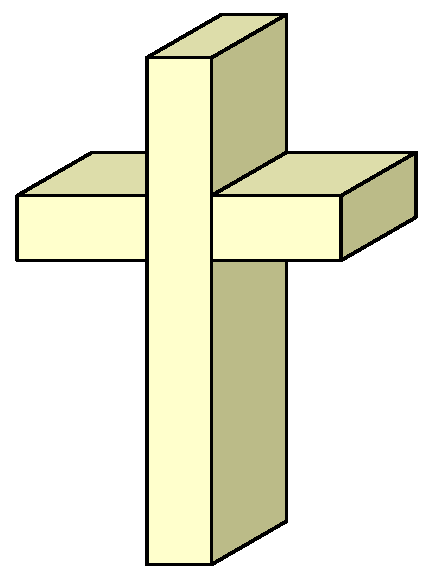
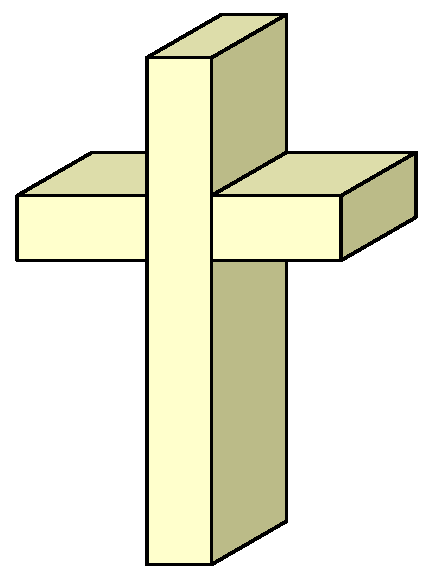
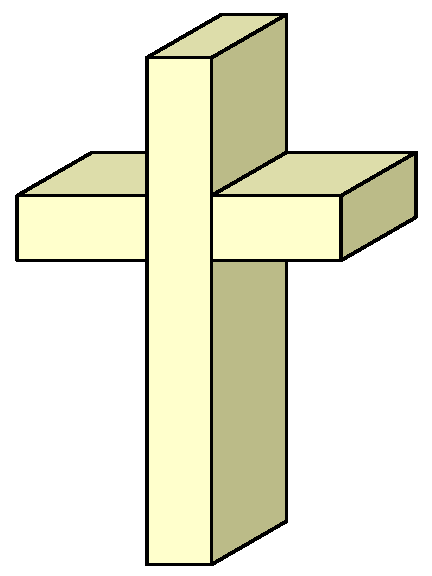
The crucifixion cross appears to have been a wooden main beam with a cross piece that formed the shape of a "
T" or "
tee".
How might the cross have appeared to those present?
Closer up.
Further away.
31. Numbers 2:1-34 Algorithms and the camp of Israel
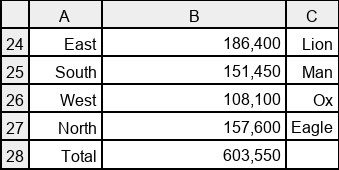
Numbers 2:32 These are those which were numbered of the children of Israel by the house of their fathers: all those that were numbered of the camps throughout their hosts were six hundred thousand and three thousand and five hundred and fifty. [kjv]
The book of Numbers is named for the detailed
census appearing in Numbers 2. The details can be boring but are part of an "
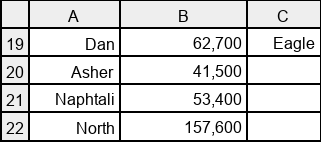
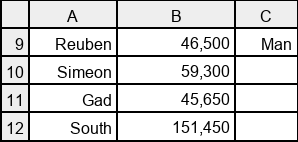
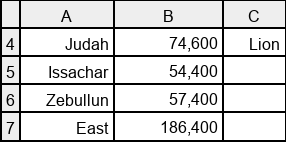
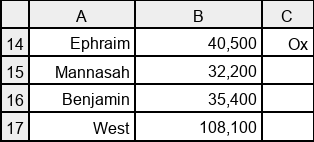
algorithm" provided by God for their camp in the desert. [13 tribes, top-down]
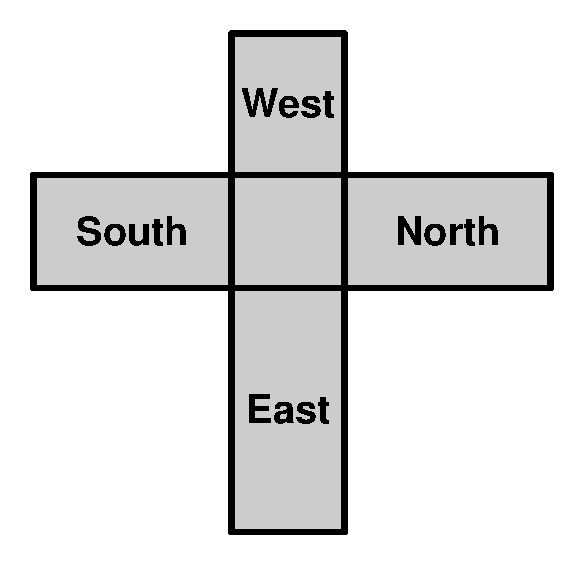
If the Israelites in the desert had followed the "
algorithm" provided by God as how to precisely camp, their camp would have been laid out in the shape of a cross from the point of view of the "
rising sun" in the morning.
Notice the top-down nature of the reporting with the summary totals first and then the details.
32. Exodus 17:13-14 Moses on the hill
Exodus 17:13 And Joshua discomfited Amalek and his people with the edge of the sword. [kjv]
17:14 And the LORD said unto Moses, Write this for a memorial in a book, and rehearse it in the ears of Joshua: for I will utterly put out the remembrance of Amalek from under heaven. [kjv]

Moses was on the hill, with his hands held up on each side.
Who is fighting the actual battle on the ground?
Who fought the Battle of Jericho?
Has sin been defeated?
The
Epistle of
Barnabas makes this connection.
Who might we see helping us with battles when we look up through the fog of war? Oh death where is thy sting?
33. Some crucifixion week alternatives
How does one get "
three"
"days" and "
three"
"nights" from Friday afternoon until Sunday morning?
There appear to be some mis-translations in order to make the time line fit the accepted traditions.
The traditions were put in place a long time after the events actually happened.
The "
Day of Preparation" is the day before the Sabbath or High Sabbath. The Sabbath and the High Sabbath can be on the same day with a 1/7 probability and on a different day with a 6/7 probability. What does the Greek text say?
[stone rolled away, time to buy spices]
34. End of page