Send
Close Add comments:
(status displays here)
Got it! This site "creationpie.org" uses cookies. You consent to this by clicking on "Got it!" or by continuing to use this website. Note: This appears on each machine/browser from which this site is accessed.
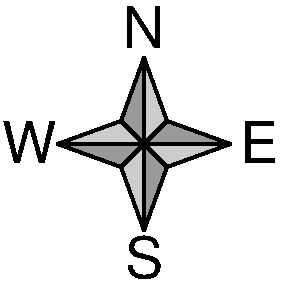
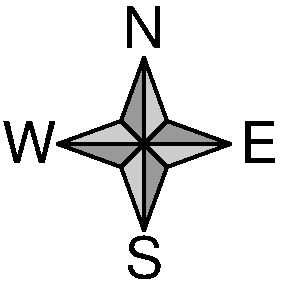
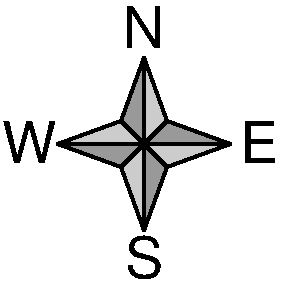
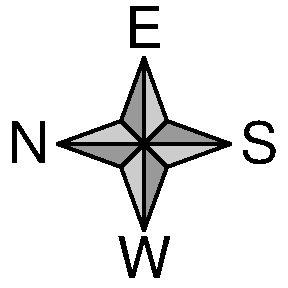
Four compass directions
1. Four compass directions
This content is being developed.
2. Physical and spiritual directions
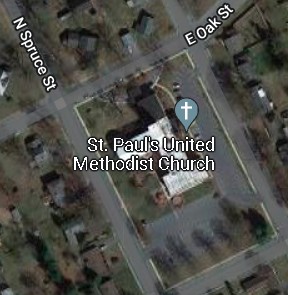
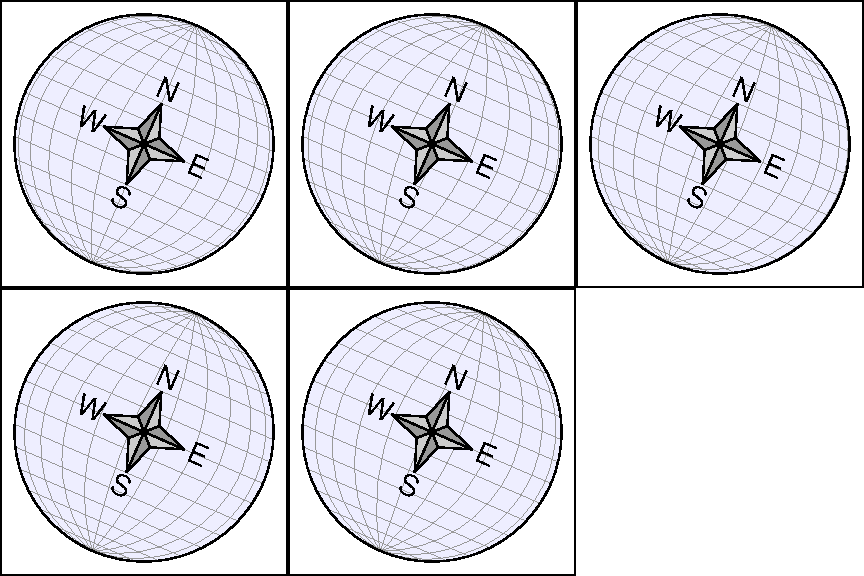
Note the position of the church where north points up and consider one standing in the lobby at the entrance.
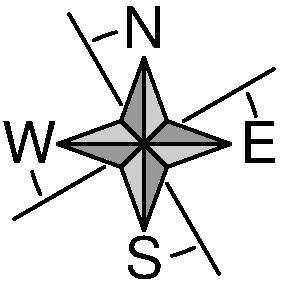
The "West sanctuary" is about 30 degrees south of west. It is closer to "south-west" than "west".
The "South sanctuary" is about 30 degrees east of south. It is closer to "south-east" than "east".
Being
30 degrees off on a compass is like being
1 hour off on an analog clock.
12*30=360
Discuss: How important is it to have the physical directions in a church accurate if people are coming to the church for spiritual direction? Physical compass. Moral compass. Spiritual compass.
How important is it that these are pointing in the right direction? If not, the further you go the further off course you get.
3. Modern Greek
4. Revelation 21:13
5. Four compass directions
6. Revelation 16:12 Rising sun in the east
Revelation 16:12 And the sixth angel poured out his vial upon the great river Euphrates; and the water thereof was dried up, that the way of the kings of the east might be prepared. [kjv]
και ο εκτος αγγελος εξεχεεν την φιαλην αυτου επι τον ποταμον τον μεγαν τον ευφρατην και εξηρανθη το υδωρ αυτου ινα ετοιμασθη η οδος των βασιλεων των απο ανατολων ανατολης ηλιου [gnt]
The
ancient Greek word
"ἀνατολή" ≈ "rising above the horizon, direction of sunrise, east" and similar related meanings. Since the
"sun" was not assumed, the word
"sun" was added, as in this verse, to make it more clear that
"east" is meant. The word comes from the following.
"ἀνα" ≈ "up, upwards" as in "born" from "above".
"τέλλω" ≈ "accomplish, perform, rise (of starts)". The noun form is "τέλος" ≈ "end, purpose, complete"
The
modern Greek word
"ανατολή" (a-na-to-LEE) ≈ "east, sunrise, dawn".
7. Matthew 22:5 Merchants and merchandise
8. North
9. Isaiah 14:13 North
Isaiah 14:13 For thou hast said in thine heart, I will ascend into heaven, I will exalt my throne above the stars of God: I will sit also upon the mount of the congregation, in the sides of the north: [kjv]
συ δε ειπας εν τη διανοια σου εις τον ουρανον αναβησομαι επανω των αστρων του ουρανου θησω τον θρονον μου καθιω εν ορει υψηλω επι τα ορη τα υψηλα τα προς βορραν [lxx]
In general, does the area of the
"north" in the Bible have a good, bad, or indifferent connotation?
[wilderness, north side, Dan, serpent, eagle]
The the English term
"aurora borealis" comes from the Latin word for "
dawn" or "
sunrise" and the Greek word
"north" (which comes through Latin).
10. East direction
The Russian word
"восток" (bos-tok) ≈ "east" has the German "
Ost" in it.
The Russian city of Vladivostok literally means the "
power" of the "
east" where Vladimir, a Russian name combining power and peace, is a common name in Russian.
The Russian prefix "
B" has the connotation of "
to" or "
towards".
The word "
east" has an interesting etymology.
The Russian word "восток" (vo-stok) ≈ "east".
The German word "Ost" ≈ "east" from which comes the word "Easter".
The German word "Ostern" ≈ "Easter".
The Spanish word "este" ≈ "east".
The Latin word "orientem" ≈ "East" from which we get the word "orient". The Orient as the Far East is named as that is the direction in which maps were "oriented" - towards the east.
The modern Greek word "ανατολή" (a-na-to-LEE) ≈ "east" which is related to the rising of the sun in the east.
Note that the Russian prefix "
в" is also a standalone prepositional word that means "
to" or "
towards". The English word "
east" and German "
Ost" which is the same sound as the Russian word. Both are cognate with the Russian word for "
east".
11. Matthew 2:2
Matthew 2:2 Saying, Where is he that is born King of the Jews? for we have seen his star in the east, and are come to worship him. [kjv]
λεγοντες που εστιν ο τεχθεις βασιλευς των ιουδαιων ειδομεν γαρ αυτου τον αστερα εν τη ανατολη και ηλθομεν προσκυνησαι αυτω [gnt]
… oriente … [v]
… eest … [ty]
… Morgenland … [lu]
… востоке … [rus]
12. Matthew 2:2
KJV: Saying, Where is he that is born King of the Jews? for we have seen his star in the east, and are come to worship him.
Greek: λεγοντες που εστιν ο τεχθεις βασιλευς των ιουδαιων ειδομεν γαρ αυτου τον αστερα εν τη ανατολη και ηλθομεν προσκυνησαι αυτω
Latin: dicentes ubi est qui natus est rex Iudaeorum vidimus enim stellam eius in oriente et venimus adorare eum
Wessex: & cwaeðen. hwaer is se iudea kyng þe akenned is. Soðliche we geseagen his steorran on east-daele. & we comen us hine to ge-eadmedenne.
Wycliffe: and seiden, Where is he, that is borun king of Jewis? for we han seyn his sterre in the eest, and we comen to worschipe him.
Tyndale: saynge: Where is he yt is borne kynge of ye Iues? We have sene his starre in ye eest and are come to worship him.
Luther: Wo ist der neugeborne König der Juden? Wir haben seinen Stern gesehen im Morgenland und sind kommen, ihn anzubeten.
Slavonic: где есть рождейся Царь Иудейский? Видехом бо звезду Его на востоце и приидохом поклонитися Ему.
Russian: где родившийся Царь Иудейский? ибо мы видели звезду Его на востоке и пришли поклониться Ему.
Spanish: diciendo: ¿Dónde está el Rey de los judíos, que ha nacido? Porque su estrella hemos visto en el oriente, y venimos a adorarle.
The Luther German uses "
Morgenland", which literally means "
morning land", for "
east".
A historical Linguistic is that a hard Germanic "
g" often changes to a softer English "
y" sound and then often disappears. An example is German "
Morgan" to intermediate form "
morying" to "
morning".
The wise men, being Magi, came from the "
east", being from the old Persian Empire that was taken over by the Parthians. Six hundred years earlier, Daniel had been appointed chief of the Magi. Herodotus records facts about the Magi in Babylon as part of the Meade-Persian empire. The Magi "
saw his star in the east".
13. Viewpoint
Was the star "in the east" or were the wise men in the "east" when they saw his star in the "west", which led them "west"?
John saw Mary with the telescope.
Who had the telescope, John or Mary?
14. We three kings of orient are
The "east" at Christmas brings to mind the song, "We three kings of orient are".
15. Song: We three kings of orient are
The Christmas song "
We three kings" was written by John Henry Hopkins, Jr., from
Williamsport, PA, in 1857. There's gold, frankincense, but wait, there's
myrrh!
1. All: We three kings of Orient are; ...
2: King 1: ... Gold I bring to crown Him again, ... (king)
3: King 2: Frankincense to offer have I; ... (priest)
4: King 3: Myrrh is mine, its bitter perfume ... (burial)
5: All: King and God and sacrifice;
There are some factual issues with the words to the song.
They were not "kings".
We do not know if there were exactly "three".
They were not from the "orient".
16. Orient
The Greek word «
ανατειλη» for "
arise" is related to the Greek word «
ανατολη» which means "
east".
The rising sun is in the east. We orient our maps to the north, but originally maps were oriented to the east, thereby China being referred to as the "
Orient". The modern Greek word for "
dawn" as «
αυγά» and "
egg" as «
αυγό» are related. Pagans worshiped the sun as in the "
golden egg of Astarte". In the Old Testament, this is "
Astorith".
The English word is "east".
The German word is "Ost".
We get the words for Easter from the rising sun in the east. In German it is "
Ostern". With pagan fertility rites represented as eggs and rabbits, we get the concept of Easter bunnies and Easter eggs.
The modern Greek word
"Πάσχα" (PA-skha) ≈ "Easter", is in "
The Passover".
17. Song: In Christ there is no east or west
Psalms 103:12 As far as the east is from the west, so far hath he removed our transgressions from us. [kjv]
καθ οσον απεχουσιν ανατολαι απο δυσμων εμακρυνεν αφ ημων τας ανομιας ημων [lxx]
The words to "
In Christ there is no east or west" were written by English poet/author William Arthur Dunkerley (1852-1941) in 1908 for an exhibition in London for the theme "
the orient in London".
The Latin word
"orientem" ≈ "east" and is the source of the English word "
orient". At one time, the top of maps were the direction east.
It was published in 1913, a year before the start of World War I, based on Galatians 3:28. During World War I, his hymn book "
Hymns for men at the front" sold
8,000,000 (eight million) copies.
18. Verse 1
In Christ there is no East or West,
In Him no South or North;
But one great fellowship of love
Throughout the whole wide earth.
19. Verse 5
In Christ now meet both East and West,
In Him meet North and South;
All Christly souls are one in Him
Throughout the whole wide earth.
20. Vespers in the west at evening
Luke 24:29 … Abide with us: for it is toward evening, and the day is far spent. … [kjv]
και παρεβιασαντο αυτον λεγοντες μεινον μεθ ημων οτι προς εσπεραν εστιν και κεκλικεν ηδη η ημερα και εισηλθεν του μειναι συν αυτοις [gnt]
The garden of Hesperides, visited by Hercules as one of his feats, was in the extreme west (setting sun) from Greece and is the source of the Greek word for "
evening" which comes, through Latin, as "
vespers". The ancient Greek word for "
Spain" was "
Hesperia".
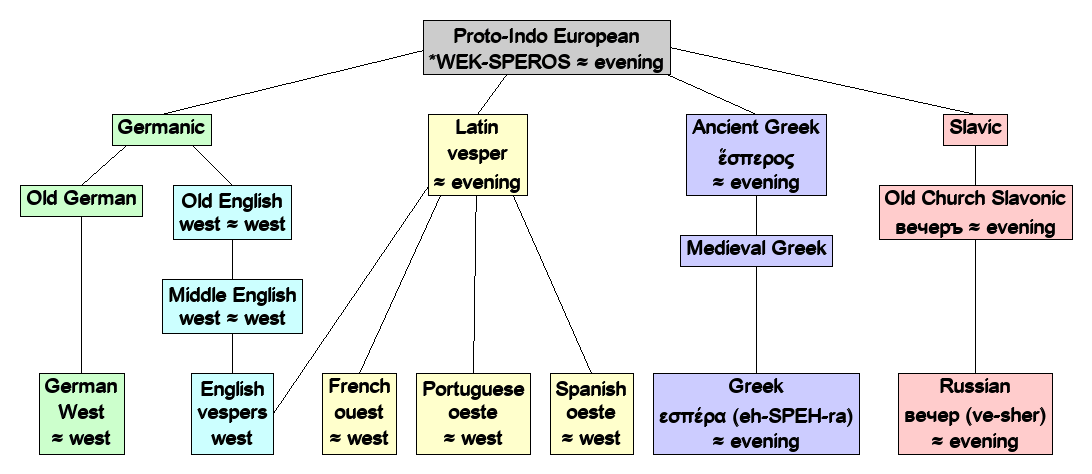
The ancient Greek word
"ἕσπερος" ≈ "evening" which has a connotation of "
west" as in the setting sun. The related English word
"west" is related to the Latin word
"vesper" ≈ "evening" and the Russian word
"вечер" (ve-sher) ≈ "evening".
Since Adam and Eve were expelled towards the east, and Hesperides is to the west, some associate the Garden of Eden with the legend of the Gander of Hesperides.
21. Strongs - evening
- *G2073 *3 ἑσπέρα (hes-per'-ah) : feminine of an adjective hesperos (evening); the eve (5610 being implied):--evening(-tide).
- εσπεραν
- Luke 24:29 ... for it is toward evening, and the day is far spent. ...
- εσπερα
- Acts 4:3 ... for it was now eventide.
- εσπερας
- Acts 28:23 ... from morning till evening.
22. Usage - evening
*G2073 *3 ἑσπέρα (hes-per'-ah) : feminine of an adjective hesperos (evening); the eve (5610 being implied):--evening(-tide).
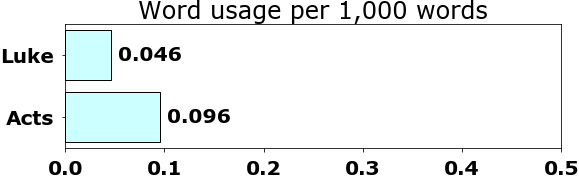 |
Words: εσπερα εσπεραν εσπερας
|
23. Luke 24:29 Road to Emmaus
Luke 24:29 But they constrained him, saying, Abide with us: for it is toward evening, and the day is far spent. And he went in to tarry with them. [kjv]
και παρεβιασαντο αυτον λεγοντες μεινον μεθ ημων οτι προς εσπεραν εστιν και κεκλικεν ηδη η ημερα και εισηλθεν του μειναι συν αυτοις [gnt]
… advesperascit … [v]
… вечеру… [rus]
The modern Greek word
"καλησπέρα" (ka-lee-SPEH-ra) ≈ "good evening" comes from Greek words for "
good" and "
evening" the ancient Greek word
"ἕσπερος" ≈ "evening".
24. Luke 24:29
KJV: But they constrained him, saying, Abide with us: for it is toward evening, and the day is far spent. And he went in to tarry with them.
Greek: και παρεβιασαντο αυτον λεγοντες μεινον μεθ ημων οτι προς εσπεραν εστιν και κεκλικεν ηδη η ημερα και εισηλθεν του μειναι συν αυτοις
Latin: et coegerunt illum dicentes mane nobiscum quoniam advesperascit et inclinata est iam dies et intravit cum illis
Russian: Но они удерживали Его, говоря: останься с нами, потому что день уже склонился к вечеру. И Он вошел и остался с ними.
25. Daniel 6:14 Daniel in the lions den
Daniel 6:14 Then the king, when he heard these words, was sore displeased with himself, and set his heart on Daniel to deliver him: and he laboured till the going down of the sun to deliver him. [kjv]
τοτε ο βασιλευς ως το ρημα ηκουσεν πολυ ελυπηθη επ αυτω και περι του δανιηλ ηγωνισατο του εξελεσθαι αυτον και εως εσπερας ην αγωνιζομενος του εξελεσθαι αυτον [lxx]
26. Daniel 6:14
KJV: Then the king, when he heard these words, was sore displeased with himself, and set his heart on Daniel to deliver him: and he laboured till the going down of the sun to deliver him.
Hebrew: אדין מלכא כדי מלתא שמע שגיא באש עלוהי ועל דניאל שם בל לשיזבותה ועד מעלי שמשא הוא משתדר להצלותה׃
Greek: τοτε ο βασιλευς ως το ρημα ηκουσεν πολυ ελυπηθη επ αυτω και περι του δανιηλ ηγωνισατο του εξελεσθαι αυτον και εως εσπερας ην αγωνιζομενος του εξελεσθαι αυτον
27. Vespers
28. Hercules
Hercules in his 11th labor had to obtain the Apples of Esperides or Hesperides, guarded by a dragon named Ladon and the nymphs called the Hesperides.
Hesperus was related to Venus as the "
evening star".
29. Latin
30. West
31. Diagram
32. Matthew 12:29 Late binding to the west
33. Spain and the land of rabbits
The land of Spain on the Iberian Peninsula comes from the "
Land of rabbits" or "
Iberia" or
Ispania".
- The Greeks called it "Hesperia" as in a garden visited by Hercules and from which, through Latin, comes the English word "vespers".
- The Carthaginians (Hannibal, etc.) called it "Ispania" from the local name for "rabbit".
- The Romans adapted the name in Latin as "Hispania".
- Latin developed into Spanish where the name is "España" (as the leading "h" sound disappeared).
34. Matthew 26:20 The number twelve
Matthew 26:20 Now when the even was come, he sat down with the twelve. [kjv]
οψιας δε γενομενης ανεκειτο μετα των δωδεκα μαθητων [gnt]
… efne … haelend … twelf … [wes]
… Abend setzte … Zwölfen. [lu]
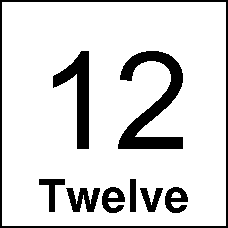
The
ancient Greek word
"δώδεκα" ≈ "twelve" from the Greek words for "
two" and "
ten". The Latin word
"duadecim" ≈ "twelve". The
modern Greek word
"δώδεκα" (THO-theh-ka) ≈ "twelve".
The Old English word
"twelf" ≈ "twelve" comes from "
two" and "
left". That is, there are two left when ten is taken away. The word for "
left" meant the same thing as "
lacks". The English word
"twelve" is related to the German word
"zwölf" ≈ "twelve".
Why would a joke about 12 eggs be boring?
Because it would make you a "dozen".
35. Matthew 26:20 Vespers in the evening
36. Matthew 24:27 Son of man
Matthew 24:27 For as the lightning cometh out of the east, and shineth even unto the west; so shall also the coming of the Son of man be. [kjv]
ωσπερ γαρ η αστραπη εξερχεται απο ανατολων και φαινεται εως δυσμων ουτως εσται και η παρουσια του υιου του ανθρωπου [gnt]
Might this be a
deceptive "presence" such that it is not clear to those observing it happen?
If so, what do you think about using such a
deceptive "presence". The idea of
"arrival" or
"advent" comes from the
Latin.
37. Matthew 24:27 Lightning
38. Luke 17:24
Luke 17:24 For as the lightning, that lighteneth out of the one part under heaven, shineth unto the other part under heaven; so shall also the Son of man be in his day. [kjv]
ωσπερ γαρ η αστραπη η αστραπτουσα εκ της υπ υπο τον ουρανον εις την υπ ουρανον λαμπει ουτως εσται και ο υιος του ανθρωπου εν τη ημερα αυτου [gnt]
The
ancient Greek word
"ἀστραπή" ≈ "lightning" and is used twice in the same verse.
Luke is much more general than Matthew.
39. Strongs - lightning
40. Usage - lightning
- *G796 *9 ἀστραπή (as-trap-ay') : from G797; lightning; by analogy, glare:--lightning, bright shining.
αστραπη *4
Matthew 24:27 For as the lightning cometh out of the east, ...
Matthew 28:3 His countenance was like lightning, and his raiment ...
Luke 11:36 ... full of light, as when the bright shining of a candle doth give thee light.
Luke 17:24 For as the lightning, that lighteneth out of the one ...
αστραπαι *4
Revelation 4:5 And out of the throne proceeded lightnings and thunderings and ...
Revelation 8:5 ... and thunderings, and lightnings, and an earthquake.
Revelation 11:19 ... testament: and there were lightnings, and voices, and ...
Revelation 16:18 ... and thunders, and lightnings; and there was a great ...
αστραπην
41. Revelation 16:18 Lightning
Revelation 16:18 And there were voices, and thunders, and lightnings; and there was a great earthquake, such as was not since men were upon the earth, so mighty an earthquake, and so great. [kjv]
και εγενοντο αστραπαι και φωναι και βρονται και αστραπαι και σεισμος εγενετο μεγας οιος ουκ εγενετο αφ ου οι ανθρωποι εγενοντο επι της γης τηλικουτος σεισμος ουτως μεγας [gnt]
The
ancient Greek word
"ἀστραπή" ≈ "lightning".
42. End of page


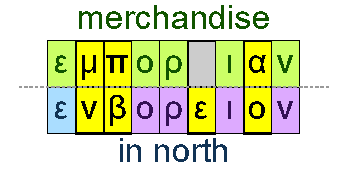
 The Greek word translated as "to" his "merchandise" is that of "onto" his "merchandise".