Send
Close Add comments:
(status displays here)
Got it! This site "creationpie.org" uses cookies. You consent to this by clicking on "Got it!" or by continuing to use this website. Note: This appears on each machine/browser from which this site is accessed.
Genitive son of man in Matthew
1. Genitive son of man in Matthew
This content is being developed.
2. Definite articles translation issue
| * |
Masc.
Sing. |
Masc.
Plural |
Fem.
Sing. |
Fem.
Plural |
Neuter
Sing. |
Neuter
Plural |
| Nom. |
ὁ |
οί |
ἡ |
αί |
τό |
τά |
| Gen. |
τοῦ |
τῶν |
τῆς |
τῶν |
τοῦ |
τῶν |
| Dat. |
τῷ |
τοῖς |
τῇ |
ταῖς |
τῷ |
τοῖς |
| Acc. |
τόν |
τούς |
τήν |
τάς |
τό |
τά |
We need to learn some beginning Greek as a student would learn early on in an introductory course in Greek. Greek, both ancient and modern, has a definite article as in
"the".
"τοῦ" ≈ "(of) the" (genitive) and "ἀνθρώπου" ≈ "person, humanity, man" (genitive) from "ἄνθρωπος" ≈ "person, humanity, man" (nominative).
3. Matthew 19:10 The man
Matthew 19:10 His disciples say unto him, If the case of the man be so with his wife, it is not good to marry. [kjv]
λεγουσιν αυτω οι μαθηται αυτου ει ουτως εστιν η αιτια του ανθρωπου μετα της γυναικος ου συμφερει γαμησαι [gnt]
… causa homini … uxore … expedit nubere [v]
The verse (as connecting commentary by Matthew) shows how to say
"of the" "man" in Greek.
"τοῦ" ≈ "(of) the" (genitive) as a definite article.
"ἀνθρώπου" ≈ "person, humanity, man" (genitive) from "ἄνθρωπος" ≈ "person, humanity, man" (nominative).
Why not the following?
.... charge/accusation of man ...
The
Latin word
"homo" ≈ "human, person, man". Note that Latin has no definite article with which to express
"the". The
ancient Greek word
"αἰτία" ≈ "charge, accusation, occasion, category" and, in philosophy,
"cause". The
Latin word
"causa" ≈ "cause".
4. Mark 5:8 Come out of the man
5. Mark 5:8
KJV: For he said unto him, Come out of the man, thou unclean spirit.
Greek: ελεγεν γαρ αυτω εξελθε το πνευμα το ακαθαρτον εκ του ανθρωπου
Latin: dicebat enim illi exi spiritus inmunde ab homine
6. Mark 7:15 The man
Mark 7:15 There is nothing from without a man, that entering into him can defile him: but the things which come out of him, those are they that defile the man. [kjv]
ουδεν εστιν εξωθεν του ανθρωπου εισπορευομενον εις αυτον ο δυναται αυτον κοινωσαι αυτον αλλα τα εκ του ανθρωπου εκπορευομενα απ αυτου εκεινα εστιν τα κοινουντα τον ανθρωπον [gnt]
… extra hominem … communicant hominem [v]
"τοῦ" ≈ "(of) the" (genitive) and "ἀνθρώπου" ≈ "person, humanity, man" (genitive) from "ἄνθρωπος" ≈ "person, humanity, man" (nominative).
Following the Latin, the first
"of the" (
genitive) is omitted in the Greek The second (
accusative) has
"the" "man".
7. Mark 7:15
KJV: There is nothing from without a man, that entering into him can defile him: but the things which come out of him, those are they that defile the man.
Greek: ουδεν εστιν εξωθεν του ανθρωπου εισπορευομενον εις αυτον ο δυναται αυτον κοινωσαι αυτον αλλα τα εκ του ανθρωπου εκπορευομενα απ αυτου εκεινα εστιν τα κοινουντα τον ανθρωπον
Latin: nihil est extra hominem introiens in eum quod possit eum coinquinare sed quae de homine procedunt illa sunt quae communicant hominem
8. Mark 7:20 The man
9. Mark 7:20
KJV: And he said, That which cometh out of the man, that defileth the man.
Greek: ελεγεν δε οτι το εκ του ανθρωπου εκπορευομενον εκεινο κοινοι τον ανθρωπον
Latin: dicebat autem quoniam quae de homine exeunt illa communicant hominem
10. Exodus 22:7
Exodus 22:7 If a man shall deliver unto his neighbour money or stuff to keep, and it be stolen out of the man's house; if the thief be found, let him pay double. [kjv]
εαν δε τις δω τω πλησιον αργυριον η σκευη φυλαξαι και κλαπη εκ της οικιας του ανθρωπου εαν ευρεθη ο κλεψας αποτεισει διπλουν [lxx]
The
KJV (King James Version) uses the technical term
"stuff" for
"σκευή" ≈ "equipment, attire, trappings". The word is cognate with
"σκεῦος" ≈ "vessel, implement". Both can refer, as slang, to genitalia.
"τοῦ" ≈ "(of) the" (genitive) and "ἀνθρώπου" ≈ "person, humanity, man" (genitive) from "ἄνθρωπος" ≈ "person, humanity, man" (nominative).
11. Exodus 22:7
KJV: If a man shall deliver unto his neighbour money or stuff to keep, and it be stolen out of the man's house; if the thief be found, let him pay double.
Hebrew: כי יתן איש אל רעהו כסף או כלים לשמר וגנב מבית האיש אם ימצא הגנב ישלם שנים׃
Greek: εαν δε τις δω τω πλησιον αργυριον η σκευη φυλαξαι και κλαπη εκ της οικιας του ανθρωπου εαν ευρεθη ο κλεψας αποτεισει διπλουν
12. Question
13. Google Translate
 |
 |
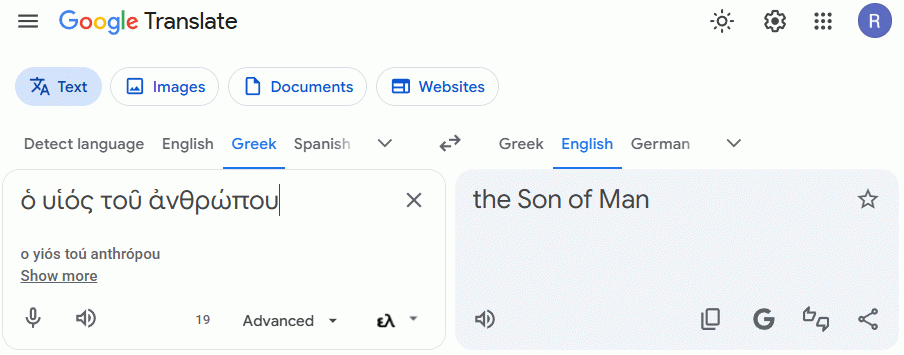 |
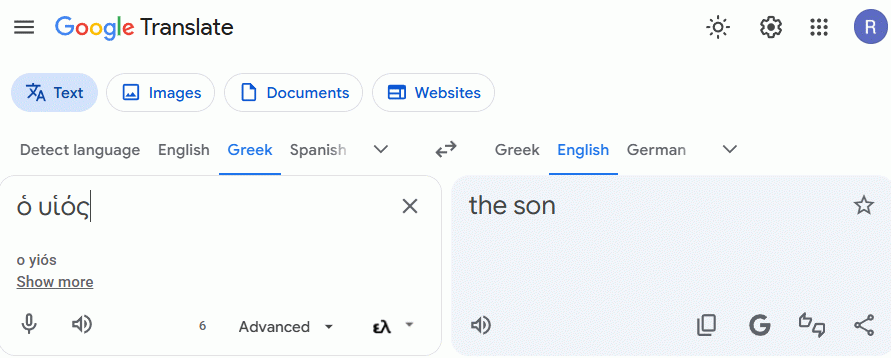
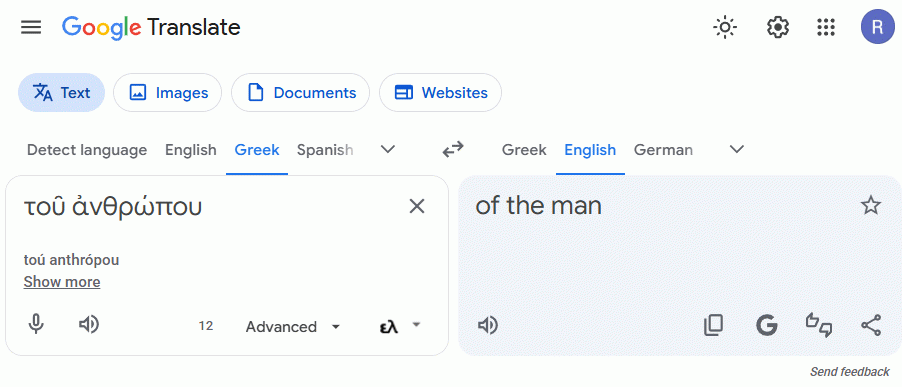
Here are some results from Google Translate
for modern Greek to English. (as of 2026-09-20)
Notice how Google Translate uses pattern
matching based on available source text.
|
14. Answer
15. Translation issue
The Greek phrase
"υἱός τοῦ ἀνθρώπου" ≈ "son of the man" appears
51 times in the
GNT,
all in the Gospels and
all spoken by Jesus. This phrase does
not appear in the
LXX (Septuagint).
In all cases it is translated (mistranslated) as
"son of man" rather than
"son of the man".
Why is
"the" "son" "of (the)" "man" not translated as
"the" "son" "of the" "man"? Only Jesus uses this phrase. Why is
"of (the)" "man" translated as
"of the" "man" in many other places following common Greek translation rules?
Greek, ancient and modern, has a definite article for "the".
Greek, ancient or modern, has no indefinite article as in "a" or "an".
Latin has no definite article for "the".
The
ancient Greek word
"υἷε" ≈ "son" (nominative/accusative) dual of
"υἱός" ≈ "son" .
16. Ezekiel 2:1 Son of a man
Ezekiel 2:1 And he said unto me, Son of man, stand upon thy feet, and I will speak unto thee. [kjv]
… בן אדם … [he]
και ειπεν προς με υιε ανθρωπου στηθι επι τους ποδας σου και λαλησω προς σε [lxx]
The phrase
"son" "of man" appears
94 times in Ezekiel in the
KJV, translated from the Hebrew. The corresponding
LXX Greek does
not use the Greek phrase that Jesus uses (i.e., with the
"the").
Hebrew "בן" (ben) ≈ "son" and "אדם" (adam) ≈ "of (a) man".
Why do some authors make efforts to connect
"son" "of (a) man"by Ezekiel with
"son" "of the" "man" by Jesus when the corresponding phrasings (in the Greek) are not the same?
Jesus (51 times): "son" "(of) the" "man".
Ezekiel (94 times): "son" "(of a) man".
Hebrew, like Greek, has a definite article for
"the" and it is not present in the phrasing used by Ezekiel. Hebrew, like Greek, does not have an indefinite article for "
a" or "
an".
17. Ezekiel 2:1
KJV: And he said unto me, Son of man, stand upon thy feet, and I will speak unto thee.
Hebrew: ויאמר אלי בן אדם עמד על רגליך ואדבר אתך׃
Greek: και ειπεν προς με υιε ανθρωπου στηθι επι τους ποδας σου και λαλησω προς σε
18. Matthew 12:43 The man
Matthew 12:43 When the unclean spirit is gone out of a man, he walketh through dry places, seeking rest, and findeth none. [kjv]
οταν δε το ακαθαρτον πνευμα εξελθη απο του ανθρωπου διερχεται δι ανυδρων τοπων ζητουν αναπαυσιν και ουχ ευρισκει [gnt]
… ab homine … [v]
| * |
Masc.
Sing. |
Masc.
Plural |
Fem.
Sing. |
Fem.
Plural |
Neuter
Sing. |
Neuter
Plural |
| Nom. |
ὁ |
οί |
ἡ |
αί |
τό |
τά |
| Gen. |
τοῦ |
τῶν |
τῆς |
τῶν |
τοῦ |
τῶν |
| Dat. |
τῷ |
τοῖς |
τῇ |
ταῖς |
τῷ |
τοῖς |
| Acc. |
τόν |
τούς |
τήν |
τάς |
τό |
τά |
The definite article
"the" is used for
"man". The
KJV translates the
"the" as
"a". Note that
Latin does
not have a
definite article.
Jesus uses the Greek word for
"man" in specific ways depending on the case used.
"ἄνθρωπος" ≈ "person, humanity, man" (nominative singular).
"ἀνθρώπου" ≈ "person, humanity, man" (genitive singular).
19. Matthew 12:43 Translations
Matthew 12:43 When the unclean spirit is gone out of a man, he walketh through dry places, seeking rest, and findeth none. [kjv]
οταν δε το ακαθαρτον πνευμα εξελθη απο του ανθρωπου διερχεται δι ανυδρων τοπων ζητουν αναπαυσιν και ουχ ευρισκει [gnt]
… ab homine … [v]
NIV (New International Version):
When an impure spirit comes out of a person, it goes through arid places seeking rest and does not find it.
NLT (New Living Translation):
When an evil spirit leaves a person, it goes into the desert, seeking rest but finding none.
Berean Standard Bible:
When an unclean spirit comes out of a man, it passes through arid places seeking rest and does not find it.
Berean Literal Bible:
Now when the unclean spirit may go out from the man, it passes through waterless places seeking rest and does not find it.
20. Matthew 12:8 The son of the man
Matthew 12:8 For the Son of man is Lord even of the sabbath day. [kjv]
κυριος γαρ εστιν και του σαββατου ο υιος του ανθρωπου [gnt]
… enim Filius hominis etiam sabbati [v]
"τοῦ" ≈ "of the" and "σαββάτου" ≈ "Sabbath".
"ὁ Υἱὸς τοῦ ἀνθρώπου" ≈ "the son of the man" but translated as "the Son of man".
Discuss:
Why use "the" for "Sabbath" but not for "man"?
Who is "the" "son"?
Who is "the" "man"?
Might the English imply "a" (generic) "man" (such as mankind) rather than "the" "man"? Who might be "the" "man"?
What opinions have been given over time to support this translation or mistranslation?
The
Latin word
"Filius hominis" ≈ "son of (a) man" appears to have influenced the later English translations (and theological thought).
21. Matthew 12:8
KJV: For the Son of man is Lord even of the sabbath day.
Greek: κυριος γαρ εστιν και του σαββατου ο υιος του ανθρωπου
Latin: dominus est enim Filius hominis etiam sabbati
22. Genitive son of man in Matthew
The phrase
"son" "
of"
"man" appears
31 times in Matthew, all said by Jesus. The
dative "son" without
"man" is used one time by Jesus, in the Parable of the Wedding Feast (in Matthew).
| 31 |
son |
case |
(of the) genitive (man) |
| 22 |
υιος |
nominative |
του ανθρωπου |
| 4 |
υιον |
accusative |
του ανθρωπου |
| 5 |
υιοὐ |
genitive |
του ανθρωπου |
| 1 |
ιοὠ |
dative |
1 time by Jesus |
|
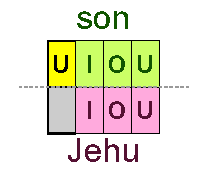 |
Here we look at the use of the
genitive (5 times) and
dative (1 time)
"son" and
"son" of
"man" (
genitive) in Matthew.
Jesus uses the
"son" (
genitive) of
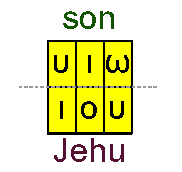
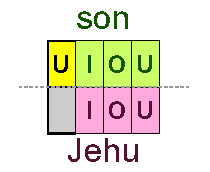
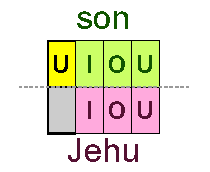
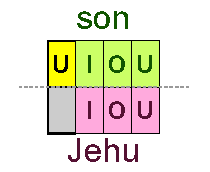
"man" five times in Matthew. The
ancient Greek word
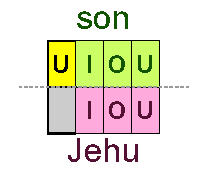
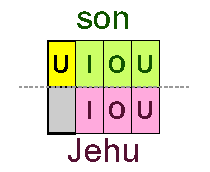
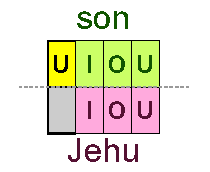
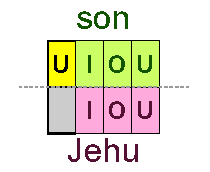
"ιου" ≈ "Jehu" who was the King of the Northern Kingdom in the
OT (Old Testament). Might there be any play on word connection with King Jehu? To do so might involve some trickery or deception into which those deceived enthusiastically join in the deception.
There are other connecting verses in Matthew with the same
genitive word for
"son".
23. Some kings of Israel
| K |
King |
Time |
Years |
|
| C |
Saul |
1050‑1010 |
40 |
Samuel |
| C |
David |
1010‑970 |
40 |
Bathsheba, Nathan |
| C |
Solomon |
970‑930 |
40 |
|
| N |
Jeroboam I |
930‑909 |
22 |
|
| N |
Baasha |
908‑886 |
24 |
|
| N |
Omri |
885‑874 |
12 |
|
| N |
Ahab |
874‑853 |
22 |
Jezebel, Elijah |
| N |
Joram |
852‑841 |
12 |
|
| N |
Jehu |
841‑814 |
28 |
Elisha |
| N |
Jehoahaz |
814‑798 |
17 |
|
24. 2 Kings 10:18
2 Kings 10:18 And Jehu gathered all the people together, and said unto them, Ahab served Baal a little; but Jehu shall serve him much. [kjv]
και συνηθροισεν ιου παντα τον λαον και ειπεν προς αυτους αχααβ εδουλευσεν τω βααλ ολιγα και γε ιου δουλευσει αυτω πολλα [lxx]
The "
leader" will always want you to say "
aye aye" and agree with them.
Yes sir, yes sir, three bags full. (from the children's poem
Baa baa black sheep, have you any wool.)
25. 2 Kings 10:19 King Jehu and Baal
2 Kings 10:19 Now therefore call unto me all the prophets of Baal, all his servants, and all his priests; let none be wanting: for I have a great sacrifice to do to Baal; whosoever shall be wanting, he shall not live. But Jehu did it in subtilty, to the intent that he might destroy the worshippers of Baal. [kjv]
και νυν παντες οι προφηται του βααλ παντας τους δουλους αυτου και τους ιερεις αυτου καλεσατε προς με ανηρ μη επισκεπητω οτι θυσια μεγαλη μοι τω βααλ πας ος εαν επισκεπη ου ζησεται και ιου εποιησεν εν πτερνισμω ινα απολεση τους δουλους του βααλ [lxx]
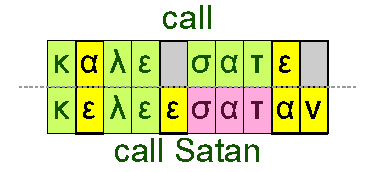
"καλεσατε" ≈ "call" (as used).
"καλέε" ≈ "call" (imperative).
"Σατᾶν" ≈ "Satan" or "Σᾰτᾰ́ν" ≈ "Satan".
The ancient Greek word
"καλεσατε" ≈ "call", in this exact form, appears
13 times in the
LXX and
1 time in the
GNT.
26. Matthew 22:2 Word play
Matthew 22:2 The kingdom of heaven is like unto a certain king, which made a marriage for his son, [kjv]
ωμοιωθη η βασιλεια των ουρανων ανθρωπω βασιλει οστις εποιησεν γαμους τω υιω αυτου [gnt]
The common
ancient Greek word
"υἱῷ" ≈ "son" (dative, masculine, singular) is used
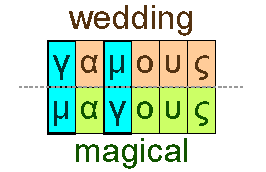
one time by Jesus in Matthew in this exact form.
The words
"son" and "
man" are in this verse (both
dative).
The
ancient Greek word
"ιου" ≈ "Jehu" who was the King of the Northern Kingdom in the
OT.
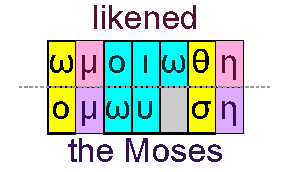
To what
"king" was is this
"wedding" "likened" [
Moses]?
27. Matthew 1:1
Matthew 1:1 The book of the generation of Jesus Christ, the son of David, the son of Abraham. [kjv]
βιβλος γενεσεως ιησου χριστου υιου δαβιδ δαυιδ υιου αβρααμ [gnt]
This is
commentary added by Matthew. The rest of the genealogy uses "
beget" rather than
"son".
The
ancient Greek word
"υἱοῦ" ≈ "(of) son" (
genitive) from
"υἱός" ≈ "son" (nominative)
28. Matthew 23:35
29. Abel to Zacharias between the temple and the altar
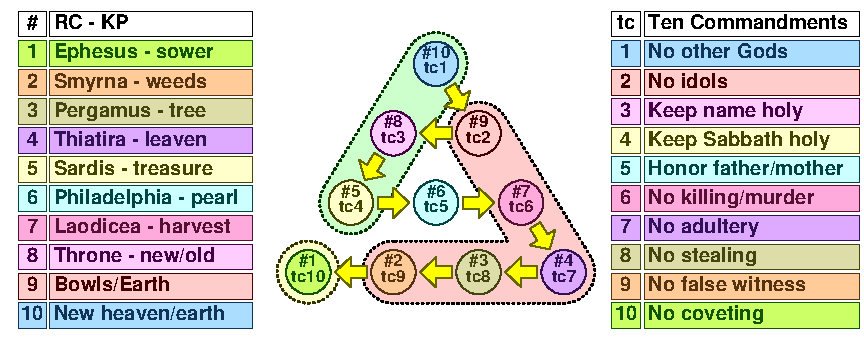
Interesting: Abel starts at node #1 (TC 1: no coveting). until Zechariah at node #7 (TC 6: no killing) between node #4, the temple (TC 4: no adultery), and #9, the altar (TC 2: no idols). [arms/hands as pigs, play on words with Barachias]
|
| Greek numbering |
| 1 |
Α |
α |
A |
Abel (no covet) |
| 2 |
Β |
β |
B |
|
| 3 |
Γ |
γ |
C |
|
| 4 |
Δ |
δ |
D |
(temple)(no adultery) |
| 5 |
Ε |
ε |
E |
|
| 6 |
* |
* |
F |
(digamma) |
| 7 |
Ζ |
ζ |
Z |
Zachariah (no killing) |
| 8 |
Η |
η |
|
|
| 9 |
Θ |
θ |
|
(altar)(no idols) |
| 10 |
Ι |
ι |
|
|
|
30. 2 Chronicles 24:20 Zachariah
2 Chronicles 24:20 And the Spirit of God came upon Zechariah the son of Jehoiada the priest, which stood above the people, and said unto them, Thus saith God, Why transgress ye the commandments of the LORD, that ye cannot prosper? because ye have forsaken the LORD, he hath also forsaken you. [kjv]
και πνευμα θεου ενεδυσεν τον αζαριαν τον του ιωδαε τον ιερεα και ανεστη επανω του λαου και ειπεν ταδε λεγει κυριος τι παραπορευεσθε τας εντολας κυριου και ουκ ευοδωθησεσθε οτι εγκατελιπετε τον κυριον και εγκαταλειψει υμας [lxx]
Some associate
"Zacharias" in Matthew 23:36 with the
"Zechariah" in 2 Chronicles 24:20-21. Jesus and Matthew quote from the
LXX and, in the
LXX,
"Zachariah" in Greek starts with an "
A" and not a "
Z". This
breaks the TenWordPin model correspondence. Does it break other opinions on the source of the
"Zachariah" to which Jesus is referring?
31. 2 Chronicles 24:21
2 Chronicles 24:21 And they conspired against him, and stoned him with stones at the commandment of the king in the court of the house of the LORD. [kjv]
και επεθεντο αυτω και ελιθοβολησαν αυτον δι εντολης ιωας του βασιλεως εν αυλη οικου κυριου [lxx]
32. Matthew 24:27 Advent of a coming appearance
33. Matthew 24:27 Son of man
Matthew 24:27 For as the lightning cometh out of the east, and shineth even unto the west; so shall also the coming of the Son of man be. [kjv]
ωσπερ γαρ η αστραπη εξερχεται απο ανατολων και φαινεται εως δυσμων ουτως εσται και η παρουσια του υιου του ανθρωπου [gnt]
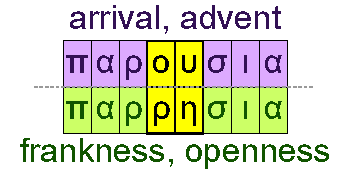
Might this be a
deceptive "presence" such that it is not clear to those observing it happen?
If so, what do you think about using such a
deceptive "presence". The idea of
"arrival" or
"advent" comes from the
Latin.
34. Matthew 24:28-29 Connecting verses
Matthew 24:28 For wheresoever the carcase is, there will the eagles be gathered together. [kjv]
οπου γαρ εαν η το πτωμα εκει συναχθησονται οι αετοι [gnt]
24:29 Immediately after the tribulation of those days shall the sun be darkened, and the moon shall not give her light, and the stars shall fall from heaven, and the powers of the heavens shall be shaken: [kjv]
ευθεως δε μετα την θλιψιν των ημερων εκεινων ο ηλιος σκοτισθησεται και η σεληνη ου δωσει το φεγγος αυτης και οι αστερες πεσουνται απο του ουρανου και αι δυναμεις των ουρανων σαλευθησονται [gnt]
35. Ravening wolves and sheep
Matthew 24:28 For wheresoever the carcase is, there will the eagles be gathered together. [kjv]
οπου γαρ εαν η το πτωμα εκει συναχθησονται οι αετοι [gnt]
There may be "
many" "
birds" and "
few" "
sheep" left.
36. Matthew 24:29 Heavens
Matthew 24:29 Immediately after the tribulation of those days shall the sun be darkened, and the moon shall not give her light, and the stars shall fall from heaven, and the powers of the heavens shall be shaken: [kjv]
ευθεως δε μετα την θλιψιν των ημερων εκεινων ο ηλιος σκοτισθησεται και η σεληνη ου δωσει το φεγγος αυτης και οι αστερες πεσουνται απο του ουρανου και αι δυναμεις των ουρανων σαλευθησονται [gnt]
What are these "
stars" that "
fall" and what "
powers" are "
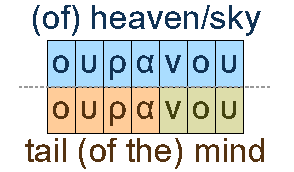
shaken"? Might these be related to the
"tail" "of the mind" for the
first use of
"heaven" in this verse?
The description by Jesus fits what is called an "
eclipse". The preceding verse describes
"lightning". The "
shaken" describes ocean waves.
37. Matthew 24:30 On the clouds of the heaven
Matthew 24:30 And then shall appear the sign of the Son of man in heaven: and then shall all the tribes of the earth mourn, and they shall see the Son of man coming in the clouds of heaven with power and great glory. [kjv]
και τοτε φανησεται το σημειον του υιου του ανθρωπου εν τω ουρανω και τοτε κοψονται πασαι αι φυλαι της γης και οψονται τον υιον του ανθρωπου ερχομενον επι των νεφελων του ουρανου μετα δυναμεως και δοξης πολλης [gnt]
Only the
second word for
"heaven" might be a play on words with
"tail" "of the mind". The context may not fit for such a play on words.
The KJV translates "in" the "clouds" for what the Greek has as "on" the "clouds".
The
KJV translates as
"great" the Greek word that means "
many". The ancient Greek word
"μεγας" ≈ "great" and is the source of the English prefix
"mega". This word is not used here.
38. Matthew 24:30 Son of man
Matthew 24:30 And then shall appear the sign of the Son of man in heaven: and then shall all the tribes of the earth mourn, and they shall see the Son of man coming in the clouds of heaven with power and great glory. [kjv]
και τοτε φανησεται το σημειον του υιου του ανθρωπου εν τω ουρανω και τοτε κοψονται πασαι αι φυλαι της γης και οψονται τον υιον του ανθρωπου ερχομενον επι των νεφελων του ουρανου μετα δυναμεως και δοξης πολλης [gnt]
The first "son" is genitive. That is, some will entrap themselves.
The second "son" is accusative. That is, some will be trapped.
39. Matthew 24:37 Son of man
Matthew 24:37 But as the days of Noe were, so shall also the coming of the Son of man be. [kjv]
ωσπερ δε γαρ αι ημεραι του νωε ουτως εσται και η παρουσια του υιου του ανθρωπου [gnt]
Might this be a
deceptive "presence" such that it is not clear to those observing it happen?
The Greek word translated as
"coming" or
"advent", from the Latin, is in the Greek that of
"presence" which
could be
"arriving".
Might people be looking for a distinct event when it might be a slower progression through deception?
[cold-blooded reptile in water slowly brought to a boil]
40. Matthew 24:38 Son of man
Matthew 24:38 For as in the days that were before the flood they were eating and drinking, marrying and giving in marriage, until the day that Noe entered into the ark, [kjv]
ωσπερ ως γαρ ησαν εν ταις ημεραις εκειναις ταις προ του κατακλυσμου τρωγοντες και πινοντες γαμουντες και εκγαμιζοντες γαμιζοντες αχρι ης ημερας εισηλθεν νωε εις την κιβωτον [gnt]
Notice that they do not know.
Might these "
weddings" be similar to the Parable of the Wedding Feast? That is, where the pews are filled.
41. Matthew 24:39 Son of man
Matthew 24:39 And knew not until the flood came, and took them all away; so shall also the coming of the Son of man be. [kjv]
και ουκ εγνωσαν εως ηλθεν ο κατακλυσμος και ηρεν απαντας ουτως εσται και η παρουσια του υιου του ανθρωπου [gnt]
Might this be a
deceptive "presence" such that it is not clear to those observing it happen?
The Greek word translated as
"coming" or
"advent", from the Latin, is in the Greek that of
"presence" which
could be
"arriving".
42. Matthew 28:19 Son
Matthew 28:19 Go ye therefore, and teach all nations, baptizing them in the name of the Father, and of the Son, and of the Holy Ghost: [kjv]
πορευθεντες ουν μαθητευσατε παντα τα εθνη βαπτιζοντες αυτους εις το ονομα του πατρος και του υιου και του αγιου πνευματος [gnt]
Vacation Bible School teacher:
The kids learned that that Jesus is our friend forever.
Is there a Jehu part of Jesus for which people should be aware? There is the word for
"son" in this verse but
not the word for "
man" in this verse. Both may be needed for the code words to apply.
43. Matthew 12:32 Speaking against the son of man
Matthew 12:32 And who soever speaketh a word against the Son of man, it shall be forgiven him: but who soever speaketh against the Holy Ghost, it shall not be forgiven him, neither in this world, neither in the world to come. [kjv]
και ος αν εαν ειπη λογον κατα του υιου του ανθρωπου αφεθησεται αυτω ος δ αν ειπη κατα του πνευματος του αγιου ουκ αφεθησεται αυτω ουτε εν τουτω τω αιωνι ουτε εν τω μελλοντι [gnt]
What is the difference between the following? Explain.
Speaking "reasoning" against the "son" of "man".
Speaking "reasoning" against the "holy" "spirit".
Would one ever "
speak"
"reasoning" against using somewhat deceptive means (bird calls) to let false leaders (i.e., "
birds") entrap themselves? Could you ever be forgiven for doing so?
44. Deception
The use of
"son" (dative) of
"man" (genitive) by Jesus in Matthew appears to relate to King Jehu and the Parable of the Wedding Feast.
This appears to follow a general principle of the following.
Do to others as they are doing (or trying to do) to others (including themselves).
Do you agree with this principle?
Would you speak against this principle?
If Jesus as God is doing this, would you ever speak out against it?
If so, could you ever be forgiven for doing this?
Might there be a play on words that provides additional clues or useful information?
45. Strongs - riotous
- *G811 *1 ἀσώτως (as-o'-toce) : adverb from the same as G810; dissolutely:--riotous.
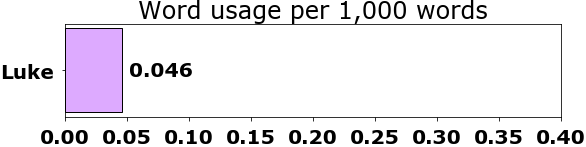 |
Words: ασωτως=1
|
46. Luke 15:13 Lost son
47. Luke 15:13
KJV: And not many days after the younger son gathered all together, and took his journey into a far country, and there wasted his substance with riotous living.
Greek: και μετ ου πολλας ημερας συναγαγων απαντα παντα ο νεωτερος υιος απεδημησεν εις χωραν μακραν και εκει διεσκορπισεν την ουσιαν αυτου ζων ασωτως
Latin: et non post multos dies congregatis omnibus adulescentior filius peregre profectus est in regionem longinquam et ibi dissipavit substantiam suam vivendo luxuriose
48. Strongs - way
*G5158 *13 τρόπος (trop'-os) : from the same as G5157; a turn, i.e. (by implication) mode or style (especially with preposition or relative prefix as adverb, like); figuratively, deportment or character:--(even) as, conversation, (+ like) manner, (+ by any) means, way.
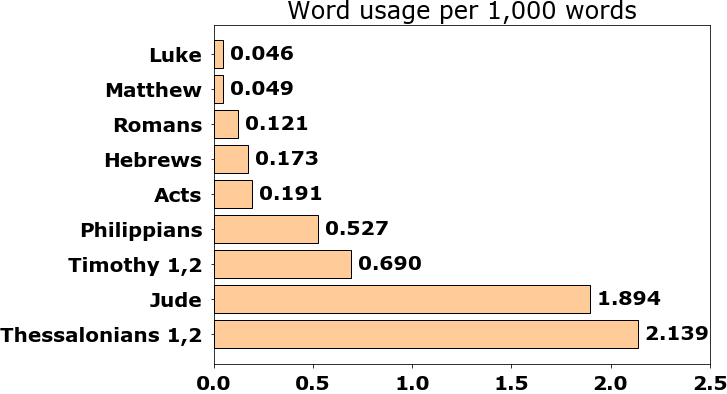 |
Words: τροπον=10 τροπος τροπω=2
|
The
ancient Greek word
"τρόπον" ≈ "turn, way, manner, style" from
"τρόπος" ≈ "turn, way, manner, style".
49. Usage - way
- *G5158 *13 τρόπος (trop'-os) : from the same as G5157; a turn, i.e. (by implication) mode or style (especially with preposition or relative prefix as adverb, like); figuratively, deportment or character:--(even) as, conversation, (+ like) manner, (+ by any) means, way.
- τροπον *10
- Matthew 23:37 ... children together, even as a hen gathereth her ...
- Luke 13:34 ... thy children together, as a hen doth gather her brood ...
- Acts 1:11 ... shall so come in like manner as ye have seen him ...
- Acts 7:28 Wilt thou kill me, as thou diddest the Egyptian yesterday?
- Acts 15:11 ... Jesus Christ we shall be saved, even as they.
- Acts 27:25 ... it shall be even as it was told me.
- Romans 3:2 Much every way: chiefly, because that unto them were committed ...
- 2 Thessalonians 2:3 ... you by any means: for that day shall not come, except there come ...
- 2 Timothy 3:8 Now as Jannes and Jambres withstood ...
- Jude 1:7 ... about them in like manner, giving themselves over to fornication, and ...
- τροπω *2
- Philippians 1:18 What then? notwithstanding, every way, whether in pretence, or ...
- 2 Thessalonians 3:16 ... always by all means. The Lord be with you all.
- τροπος
- Hebrews 13:5 Let your conversation be without covetousness; and be content with such things as ye have: for he ...
50. Matthew 20:8 On the way/manner/style
Matthew 20:8 So when even was come, the lord of the vineyard saith unto his steward, Call the labourers, and give them their hire, beginning from the last unto the first. [kjv]
οψιας δε γενομενης λεγει ο κυριος του αμπελωνος τω επιτροπω αυτου καλεσον τους εργατας και αποδος αυτοις τον μισθον αρξαμενος απο των εσχατων εως των πρωτων [gnt]
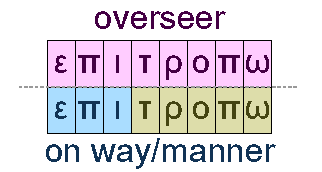
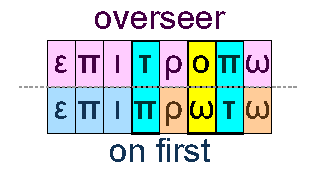
"ἐπῐτρόπῳ" ≈ "person in charge" (dative masculine singular).
"ἐπί" ≈ "on, upon"
"τρόπῳ" ≈ "turn, way, manner, style" (dative masculine singular).
"πρώτῳ" ≈ "first, earliest" (dative masculine singular)
Might the
literal "overseer" reward, as a group, in terms of
"on" the
"manner" or
"style". Who's on first!
51. Play on words
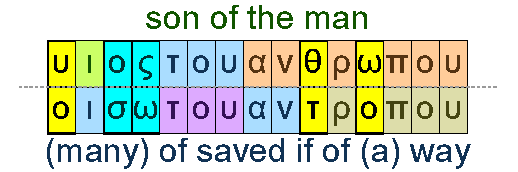
"υἱός" ≈ "son" and "τοῦ" ≈ "(of) the" and "ἀνθρώπου" ≈ "person, humanity, man".
"οι" ≈ "the" (plural) and "σώτου" ≈ "(of) saved" (genitive singular) as a play on words and "αν" ≈ "if, when" and "τρόπου" ≈ "(of) turn, way, manner, style".
The
ancient Greek word
"τρόπον" ≈ "turn, way, manner, style" from
"τρόπος" ≈ "turn, way, manner, style".
How well does this play on words fit with Jesus?
[way, truth, life]
52. End of page