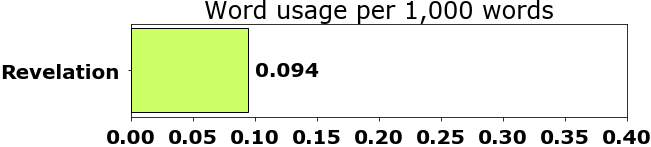
- *G944 *1 βάτραχος (bat'-rakh-os) : of uncertain derivation; a frog:--frog.
14. Revelation 16:13 Frogs
Revelation 16:13 And I saw three unclean spirits like frogs come out of the mouth of the dragon, and out of the mouth of the beast, and out of the mouth of the false prophet. [kjv]
και ειδον εκ του στοματος του δρακοντος και εκ του στοματος του θηριου και εκ του στοματος του ψευδοπροφητου πνευματα τρια ακαθαρτα ομοια βατραχοις ως βατραχοι [gnt]
The
ancient Greek word
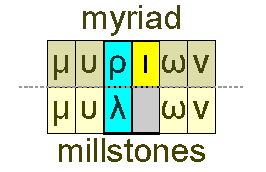
"βάτραχος" ≈ "frog, angler-fish" and appears to be onomatopoeic in origin..
15. Revelation 16:13 Frogs
Revelation 16:13 And I saw three unclean spirits like frogs come out of the mouth of the dragon, and out of the mouth of the beast, and out of the mouth of the false prophet. [kjv]
και ειδον εκ του στοματος του δρακοντος και εκ του στοματος του θηριου και εκ του στοματος του ψευδοπροφητου πνευματα τρια ακαθαρτα ομοια βατραχοις ως βατραχοι [gnt]
Might these "
unclean" "
spirits" as
"frogs" "
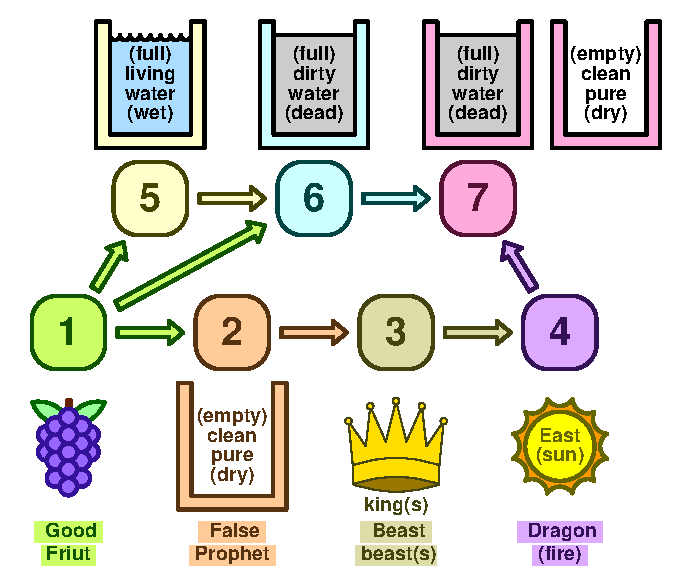
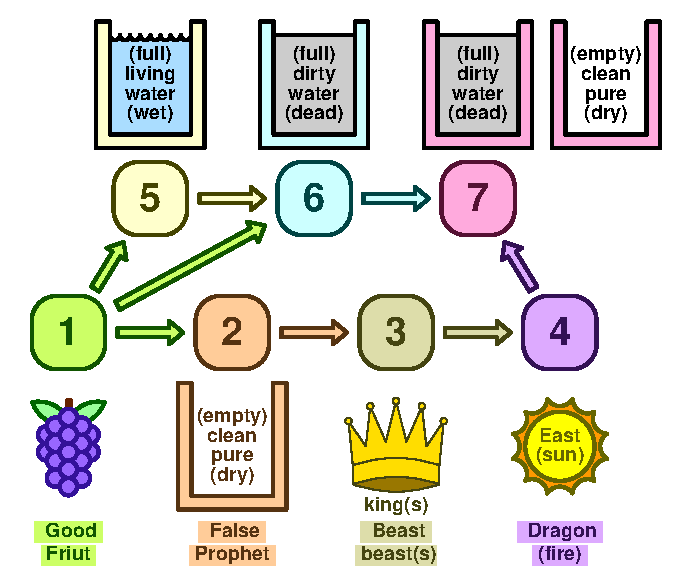
hop" along the nodes, one for each of the "
three" "
unclean" "
spirits"?
dragon
beast
false prophet
16. Revelation 16:13 False prophet
Revelation 16:13 And I saw three unclean spirits like frogs come out of the mouth of the dragon, and out of the mouth of the beast, and out of the mouth of the false prophet. [kjv]
και ειδον εκ του στοματος του δρακοντος και εκ του στοματος του θηριου και εκ του στοματος του ψευδοπροφητου πνευματα τρια ακαθαρτα ομοια βατραχοις ως βατραχοι [gnt]
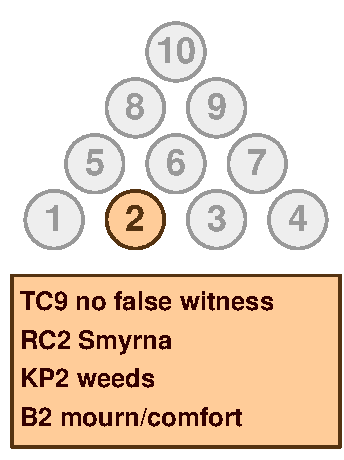
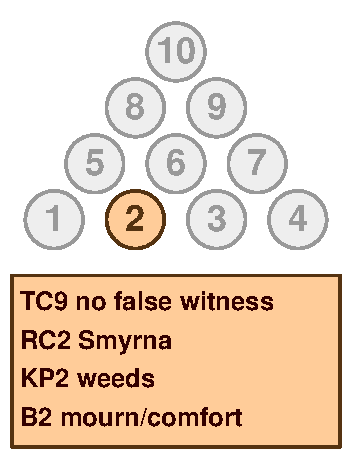
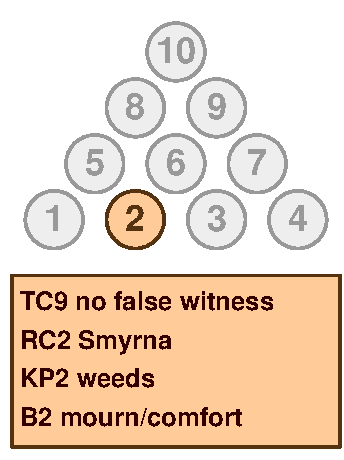
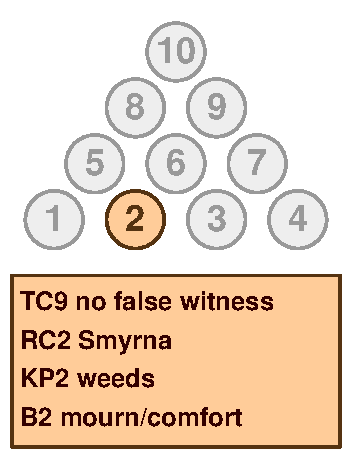
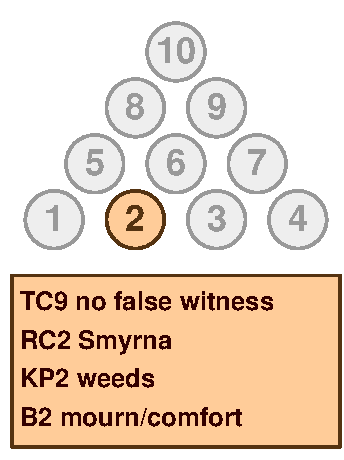
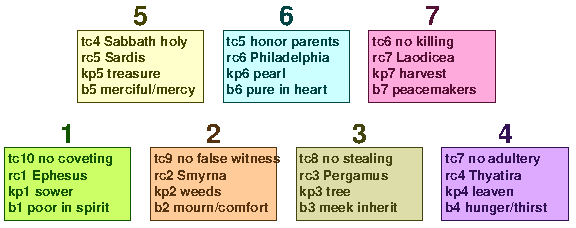
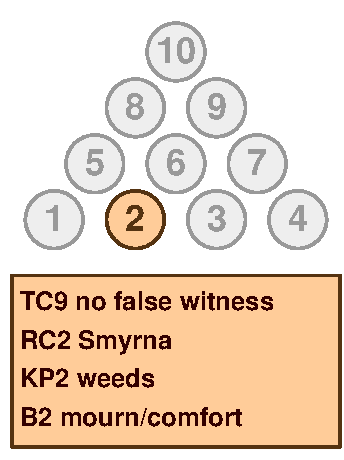
Node 2 is the node of false witness. This might be a good node for the "
false prophet".
17. Revelation 16:13 Beast
Revelation 16:13 And I saw three unclean spirits like frogs come out of the mouth of the dragon, and out of the mouth of the beast, and out of the mouth of the false prophet. [kjv]
και ειδον εκ του στοματος του δρακοντος και εκ του στοματος του θηριου και εκ του στοματος του ψευδοπροφητου πνευματα τρια ακαθαρτα ομοια βατραχοις ως βατραχοι [gnt]
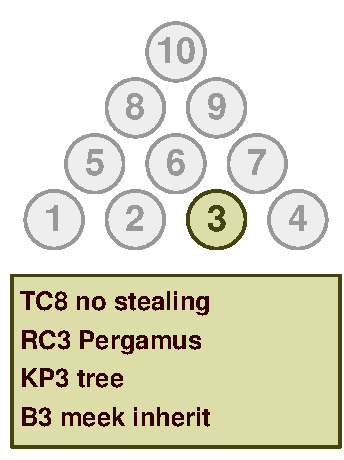
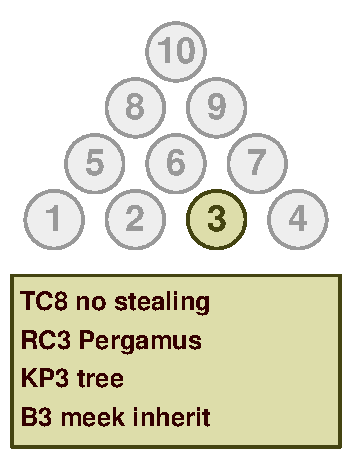
Node 3 is th node of oaths and stealing.
This might be a good node for the "
beast", individual and/or system, that appears to require "
oaths" in order to "
steal" freedom, etc.
18. Revelation 16:13 Dragon
Revelation 16:13 And I saw three unclean spirits like frogs come out of the mouth of the dragon, and out of the mouth of the beast, and out of the mouth of the false prophet. [kjv]
και ειδον εκ του στοματος του δρακοντος και εκ του στοματος του θηριου και εκ του στοματος του ψευδοπροφητου πνευματα τρια ακαθαρτα ομοια βατραχοις ως βατραχοι [gnt]
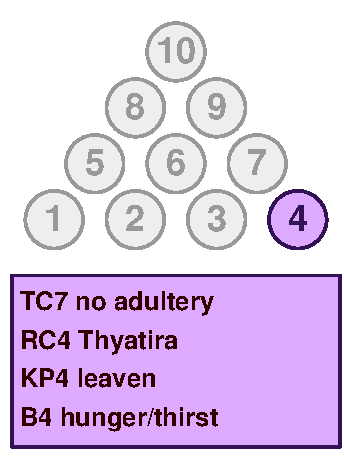
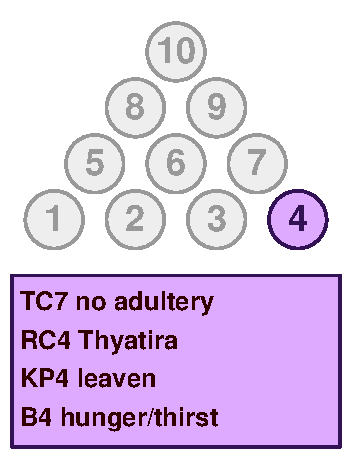
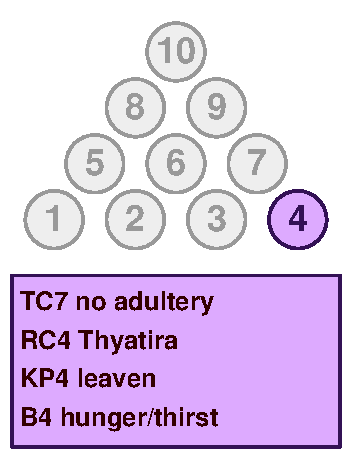
Node 4 is th node of adultery. This might be a good node for the "
dragon" that breaths "
fire" to "
scorch" as the "
sun".
Might this dragon be a
fire-breathing dragon? Do such creatures exist? Perhaps Job can light the fire of imagination.
19. Job 41:1,19-20 Leviathan as a fire-breathing dragon
Job 41:1 Canst thou draw out leviathan with an hook? or his tongue with a cord which thou lettest down? [kjv]
αξεις δε δρακοντα εν αγκιστρω περιθησεις δε φορβεαν περι ρινα αυτου [lxx]
41:19 Out of his mouth go burning lamps, and sparks of fire leap out. [kjv]
εκ στοματος αυτου εκπορευονται λαμπαδες καιομεναι και διαρριπτουνται εσχαραι πυρος [lxx]
41:20 Out of his nostrils goeth smoke, as out of a seething pot or caldron. [kjv]
εκ μυκτηρων αυτου εκπορευεται καπνος καμινου καιομενης πυρι ανθρακων [lxx]
Another dinosaur-like creature, this one fire-breathing, is described as leviathan in the next chapter (verses omitted). This sounds like a fire-breathing
dragon or
dinosaur, a word coined in the 1800's.
20. Revelation 16:13
KJV: And I saw three unclean spirits like frogs come out of the mouth of the dragon, and out of the mouth of the beast, and out of the mouth of the false prophet.
Greek: και ειδον εκ του στοματος του δρακοντος και εκ του στοματος του θηριου και εκ του στοματος του ψευδοπροφητου πνευματα τρια ακαθαρτα ομοια βατραχοις ως βατραχοι
Latin: et vidi de ore draconis et de ore bestiae et de ore pseudoprophetae spiritus tres inmundos in modum ranarum
21. Revelation 16:14 Sixth vial continued - gather for battle
Revelation 16:14 For they are the spirits of devils, working miracles, which go forth unto the kings of the earth and of the whole world, to gather them to the battle of that great day of God Almighty. [kjv]
εισιν γαρ πνευματα δαιμονων δαιμονιων ποιουντα σημεια εκπορευεσθαι α εκπορευεται επι τους βασιλεις της γης και της οικουμενης ολης συναγαγειν αυτους εις τον πολεμον της ημερας εκεινης της μεγαλης του θεου του παντοκρατορος [gnt]
sunt enim spiritus daemoniorum facientes signa et procedunt ad reges totius terrae congregare illos in proelium ad diem magnum Dei omnipotentis [v]
… al erthe… [wy]
… Teufel… ganzen Kreis … [lu]
Interestingly, the two words that make up this one word appear together in only one verse in the Luther German. The German word "
Teufelskreis" has the connotation of a hopeless situation, such as a catch-22 situation, created by a series of inter-dependent events.
The Latin word
"totius terrae" ≈ "total earth". The Wycliffe follows the Latin and combines "
earth" and "
whole world".
22. Revelation 16:14
KJV: For they are the spirits of devils, working miracles, which go forth unto the kings of the earth and of the whole world, to gather them to the battle of that great day of God Almighty.
Greek: εισιν γαρ πνευματα δαιμονων δαιμονιων ποιουντα σημεια εκπορευεσθαι α εκπορευεται επι τους βασιλεις της γης και της οικουμενης ολης συναγαγειν αυτους εις τον πολεμον της ημερας εκεινης της μεγαλης του θεου του παντοκρατορος
Latin: sunt enim spiritus daemoniorum facientes signa et procedunt ad reges totius terrae congregare illos in proelium ad diem magnum Dei omnipotentis
Wycliffe: For thei ben spiritis of deuels, makynge signes, and thei gon forth to kingis of al erthe, to gadere hem in to batel, to the greet dai of almiyti God.
23. Revelation 16:14
KJV: For they are the spirits of devils, working miracles, which go forth unto the kings of the earth and of the whole world, to gather them to the battle of that great day of God Almighty.
Greek: εισιν γαρ πνευματα δαιμονων δαιμονιων ποιουντα σημειαεκπορευεσθαι α εκπορευεται επι τους βασιλεις της γης και της οικουμενης ολης συναγαγειν αυτους εις τον πολεμον της ημερας εκεινης της μεγαλης του θεου του παντοκρατορος
Latin: sunt enim spiritus daemoniorum facientes signa et procedunt ad reges totius terrae congregare illos in proelium ad diem magnum Dei omnipotentis
Wycliffe: For thei ben spiritis of deuels, makynge signes, and thei gon forth to kingis of al erthe, to gadere hem in to batel, to the greet dai of almiyti God.
Tyndale: For they are the sprettes of devyls workynge myracles to go out vnto the kynges of the erth and of the whole worlde to gaddre them to the battayle of that gret daye of God allmyghty.
Luther: Und sind Geister der Teufel; die tun Zeichen und gehen aus zu den Königen auf Erden und auf den ganzen Kreis der Welt, sie zu versammeln in den Streit auf jenen großen Tag Gottes, des Allmächtigen.
24. Revelation 16:15 Sixth vial continued
Revelation 16:15 Behold, I come as a thief. Blessed is he that watcheth, and keepeth his garments, lest he walk naked, and they see his shame. [kjv]
ιδου ερχομαι ως κλεπτης μακαριος ο γρηγορων και τηρων τα ιματια αυτου ινα μη γυμνος περιπατη και βλεπωσιν την ασχημοσυνην αυτου [gnt]
The Greek
"as" indicates an analogy is being made.
Will the day of the Lord will come as a
deceptive "thief" in the night?
25. Revelation 16:15
KJV: Behold, I come as a thief. Blessed is he that watcheth, and keepeth his garments, lest he walk naked, and they see his shame.
Greek: ιδου ερχομαι ως κλεπτης μακαριος ο γρηγορων και τηρων τα ιματια αυτου ινα μη γυμνος περιπατη και βλεπωσιν την ασχημοσυνην αυτου
26. Revelation 16:16 Armageddon
Revelation 16:16 And he gathered them together into a place called in the Hebrew tongue Armageddon. [kjv]
και συνηγαγεν αυτους εις τον τοπον τον καλουμενον εβραιστι αρμαγεδδων αρ μαγεδων [gnt]
The term Armageddon is known in modern times as a reference to the end of the world. Armageddon is in the Jezreel Valley and is near Nazareth.
Is "
Armageddon" a "
battle" as in one part of a "
war" or is "
Armageddon" a "
war" consisting of a series of battles? Most "
wars" consist of many "
battles". Does it matter?
27. Revelation 16:16
KJV: And he gathered them together into a place called in the Hebrew tongue Armageddon.
Greek: και συνηγαγεν αυτους εις τον τοπον τον καλουμενον εβραιστι αρμαγεδδων αρ μαγεδων
Latin: et congregavit illos in locum qui vocatur hebraice Hermagedon
Wycliffe: And he schal gadre hem in to a place, that is clepid in Ebreu Hermagedon.
28. Genesis 8:4 Battle at Armageddon
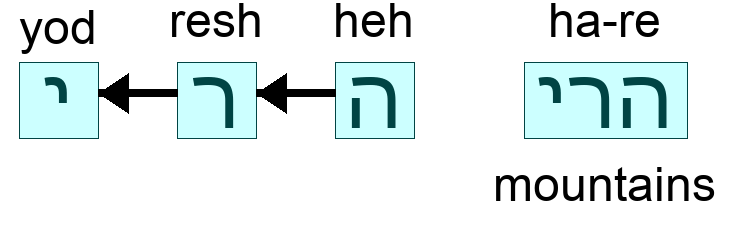
Genesis 8:4 And the ark rested in the seventh month, on the seventeenth day of the month, upon the mountains of Ararat. [kjv]
… הרי … [he]
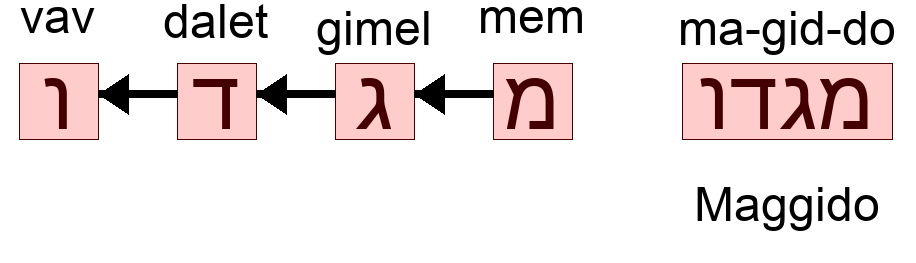
The battle of "
Armageddon" is from the Hebrew for
"Har" "
Megiddon", the
"Mountain" of "
Megiddo".
The mound (or city) of
Megiddo is, in Hebrew, "
Tel Megiddo". The
"mountain" is actually a
"mound" of a "
city" that has built up, layer by layer, such that it is referred to as a
"mountain".
Megiddo is found twelve times in the
OT (Old Testament) and once in Revelation.
29. Genesis 8:4
KJV: And the ark rested in the seventh month, on the seventeenth day of the month, upon the mountains of Ararat.
Hebrew: ותנח התבה בחדש השביעי בשבעה עשר יום לחדש על הרי אררט׃
Greek: και εκαθισεν η κιβωτος εν μηνι τω εβδομω εβδομη και εικαδι του μηνος επι τα ορη τα αραρατ
30. Battles
31. Joshua 12:21-22
Joshua 12:21 The king of Taanach, one; the king of Megiddo, one; [kjv]
מלך … מלך מגדו … [he]
βασιλεα καδης βασιλεα ταναχ [lxx]
rex Thenach … rex Mageddo … [v]
12:22 The king of Kedesh, one; the king of Jokneam of Carmel, one; [kjv]
מלך … מלך … [he]
βασιλεα μαγεδων βασιλεα ιεκοναμ του χερμελ [lxx]
rex Cades … rex Iachanaem Chermeli … [v]
The
LXX switches the verses from the Hebrew.
32. Joshua 12:21
KJV: The king of Taanach, one; the king of Megiddo, one;
Hebrew: מלך תענך אחד מלך מגדו אחד׃
Greek: βασιλεα καδης βασιλεα ταναχ
Latin: rex Thenach unus rex Mageddo unus
33. Joshua 12:22
KJV: The king of Kedesh, one; the king of Jokneam of Carmel, one;
Hebrew: מלך קדש אחד מלך יקנעם לכרמל אחד׃
Greek: βασιλεα μαγεδων βασιλεα ιεκοναμ του χερμελ
Latin: rex Cades unus rex Iachanaem Chermeli unus
34. Judges 5:19
Judges 5:19 The kings came and fought, then fought the kings of Canaan in Taanach by the waters of Megiddo; they took no gain of money. [kjv]
… מלכים … מגדו … [he]
ηλθον βασιλεις και παρεταξαντο τοτε επολεμησαν βασιλεις χανααν εν θενναχ επι υδατος μαγεδδω πλεονεξιαν αργυριου ουκ ελαβον [lxx]
… Mageddo … [v]
35. Judges 5:19
KJV: The kings came and fought, then fought the kings of Canaan in Taanach by the waters of Megiddo; they took no gain of money.
Hebrew: באו מלכים נלחמו אז נלחמו מלכי כנען בתענך על מי מגדו בצע כסף לא לקחו׃
Greek: ηλθον βασιλεις και παρεταξαντο τοτε επολεμησαν βασιλεις χανααν εν θενναχ επι υδατος μαγεδδω πλεονεξιαν αργυριου ουκ ελαβον
Latin: venerunt reges et pugnaverunt pugnaverunt reges Chanaan in Thanach iuxta aquas Mageddo et tamen nihil tulere praedantes
36. 2 Kings 23:29
2 Kings 23:29 In his days Pharaoh-nechoh king of Egypt went up against the king of Assyria to the river Euphrates: and king Josiah went against him; and he slew him at Megiddo, when he had seen him. [kjv]
εν δε ταις ημεραις αυτου ανεβη φαραω νεχαω βασιλευς αιγυπτου επι βασιλεα ασσυριων επι ποταμον ευφρατην και επορευθη ιωσιας εις απαντην αυτου και εθανατωσεν αυτον νεχαω εν μαγεδδω εν τω ιδειν αυτον [lxx]
… Mageddo … [v]
The Battle of Megiddo took place in 609 B.C. and is recorded in 2 Kings. King Josiah would not let the Egyptians pass and died in the battle.
37. 2 Kings 23:29
KJV: In his days Pharaoh-nechoh king of Egypt went up against the king of Assyria to the river Euphrates: and king Josiah went against him; and he slew him at Megiddo, when he had seen him.
Hebrew: בימיו עלה פרעה נכה מלך מצרים על מלך אשור על נהר פרת וילך המלך יאשיהו לקראתו וימיתהו במגדו כראתו אתו׃
Greek: εν δε ταις ημεραις αυτου ανεβη φαραω νεχαω βασιλευς αιγυπτου επι βασιλεα ασσυριων επι ποταμον ευφρατην και επορευθη ιωσιας εις απαντην αυτου και εθανατωσεν αυτον νεχαω εν μαγεδδω εν τω ιδειν αυτον
Latin: in diebus eius ascendit Pharao Necho rex Aegypti contra regem Assyriorum ad flumen Eufraten et abiit Iosias rex in occursum eius et occisus est in Mageddo cum vidisset eum
38. Carchemish
The battle of Megiddo led to the Battle of Carchemish in 605 B.C., the first large battle for which there are historical records. This battle ended the Assyrian Empire, which had a reprieve ofter the repentance recorded in the book of Jonah.
The Battle of Carchemish is mentioned in Jeremiah 46:1-12.
 |
Details are left as a future topic.
|
39. Megiddo
Napoleon visited this place and stated it would be a great place for a battle. He visited it in conjunction with his Egyptian campaign in which the
Rosetta Stone was discovered and later translated to rediscover the meaning of
Egyptian hieroglyphics.
40. Mesopotamia
The ancient Greek word
"Μεσοποταμία" ≈ "Mesopotamia" and means, literally, "
between the rivers", of the Tigris and Euphrates.
"μέσος" ≈ "middle, between" as in the (first part of the) English word "Mesopotamia".
"ποταμός" ≈ "river" and is the source of (the last part of) the English word "hippopotamus".
This is the location of Nineveh (Jonah), Babylon (Daniel) and the Ur of the Chaldea (Abraham). This ward appears
19 times in the
LXX and
GNT. Stephen, in his sermon in Acts, before being stoned, mentions Mesopotamia.
Note: The Potomac River between Maryland and Virginia is from an Algonquian Indian (Native American) name with various claimed meanings such as "
river of swans", "
place where people trade", etc.
41. Revelation 16:12 Euphrates river
Revelation 16:12 And the sixth angel poured out his vial upon the great river Euphrates; and the water thereof was dried up, that the way of the kings of the east might be prepared. [kjv]
και ο εκτος αγγελος εξεχεεν την φιαλην αυτου επι τον ποταμον τον μεγαν τον ευφρατην και εξηρανθη το υδωρ αυτου ινα ετοιμασθη η οδος των βασιλεων των απο ανατολων ανατολης ηλιου [gnt]
"Εὐφράτην" ≈ "Euphrates" (accusative) from "Εὐφράτης" ≈ "Euphrates" . The word appears borrowed, through Old Persian, from the Akkadian which meant "good" and "fruitful" as "parat" which is related to the Semitic Hebrew word "פךה" (parah) ≈ "fruitful". In Greek it is also a play on words with "good" and "father".
"ποταμός" ≈ "river" and is the source of (the last part of) the English word "hippopotamus".
[Parable of the Sower and the rocky dried up ground]
42. Luke 4:25,40 Sun and Elijah
Luke 4:25 But I tell you of a truth, many widows were in Israel in the days of Elias, when the heaven was shut up three years and six months, when great famine was throughout all the land; [kjv]
επ αληθειας δε λεγω υμιν πολλαι χηραι ησαν εν ταις ημεραις ηλιου εν τω ισραηλ οτε εκλεισθη ο ουρανος επι ετη τρια και μηνας εξ ως εγενετο λιμος μεγας επι πασαν την γην [gnt]
4:40 Now when the sun was setting, all they that had any sick with divers diseases brought them unto him; and he laid his hands on every one of them, and healed them. [kjv]
δυνοντος δε του ηλιου παντες απαντες οσοι ειχον ασθενουντας νοσοις ποικιλαις ηγαγον αυτους προς αυτον ο δε ενι εκαστω αυτων τας χειρας επιθεις εθεραπευσεν επιτιθεις εθεραπευεν αυτους [gnt]
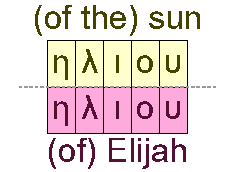
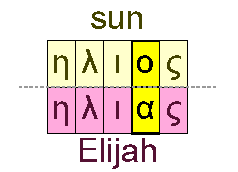
"ἡλίου" ≈ "(of the) sun".
"Ἠλίου" ≈ "(of) Elijah".
43. Matthew 11:12-14
Matthew 11:12 And from the days of John the Baptist until now the kingdom of heaven suffereth violence, and the violent take it by force. [kjv]
απο δε των ημερων ιωαννου του βαπτιστου εως αρτι η βασιλεια των ουρανων βιαζεται και βιασται αρπαζουσιν αυτην [gnt]
11:13 For all the prophets and the law prophesied until John. [kjv]
παντες γαρ οι προφηται και ο νομος εως ιωαννου προεφητευσαν επροφητευσαν [gnt]
11:14 And if ye will receive it, this is Elias, which was for to come. [kjv]
και ει θελετε δεξασθαι αυτος εστιν ηλιας ο μελλων ερχεσθαι [gnt]
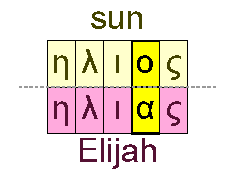
"ἥλιος" ≈ "sun, east, day, sunshine"
"Ἠλίας" ≈ "Elijah".
Since Jesus associates
John the Baptist with
Elijah, it is interesting to see how Jesus uses the word for "
sun".
Elijah was taken away in a chariot of fire.
44. Matthew 13:6
Matthew 13:6 And when the sun was up, they were scorched; and because they had no root, they withered away. [kjv]
ηλιου δε ανατειλαντος εκαυματισθη και δια το μη εχειν ριζαν εξηρανθη [gnt]
"ἥλιος" ≈ "sun, east, day, sunshine"
"Ἠλίας" ≈ "Elijah".
Since Jesus associates
John the Baptist with
Elijah, it is interesting to see how Jesus uses the word for "
sun".
Elijah was taken away in a chariot of fire.
Did
John the Baptist have anything to do with Herod being "
scorched" in any way (when he was up preaching to Herod)?
45. Matthew 13:5-6
Matthew 13:5 Some fell upon stony places, where they had not much earth: and forthwith they sprung up, because they had no deepness of earth: [kjv]
αλλα δε επεσεν επι τα πετρωδη οπου ουκ ειχεν γην πολλην και ευθεως εξανετειλεν δια το μη εχειν βαθος γης [gnt]
13:6 And when the sun was up, they were scorched; and because they had no root, they withered away. [kjv]
ηλιου δε ανατειλαντος εκαυματισθη και δια το μη εχειν ριζαν εξηρανθη [gnt]
What are the "stony places"?
What is the "deepness" of "earth"?
In the "
stony places" one might end up "
between a rock and a hard place". The corresponding Greek word is one of those things that cannot separate us from the love of Christ.
46. Strongs - dried up
47. Usage - dried up
- *G3583 *15 ξηραίνω (xay-rah'-ee-no) : from G3584; to desiccate; by implication, to shrivel, to mature:--dry up, pine away, be ripe, wither (away).
εξηρανθη *10
Matthew 13:6 ... they had no root, they withered away.
Matthew 21:19 ... And presently the fig tree withered away.
Matthew 21:20 ... How soon is the fig tree withered away!
Mark 4:6 ... it had no root, it withered away.
Mark 5:29 ... of her blood was dried up; and she felt in her body ...
Luke 8:6 ... a rock; and as soon as it was sprung up, it withered away, because it lacked moisture.
John 15:6 ... as a branch, and is withered; and men gather them, ...
1 Peter 1:24 ... the flower of grass. The grass withereth, and the flower thereof falleth away:
Revelation 14:15 ... for the harvest of the earth is ripe.
Revelation 16:12 ... and the water thereof was dried up, that the way of the kings ...
εξηραμμενην *2
Mark 3:1 ... a man there which had a withered hand.
Mark 11:20 ... as they passed by, they saw the fig tree dried up from the roots.
ξηραινεται
Mark 9:18 ... his teeth, and pineth away: and I spake to ...
εξηρανται
εξηρανεν
James 1:11 ... with a burning heat, but it withereth the grass, and the flower ...
48. Revelation 16:12 Rising sun in the east
Revelation 16:12 And the sixth angel poured out his vial upon the great river Euphrates; and the water thereof was dried up, that the way of the kings of the east might be prepared. [kjv]
και ο εκτος αγγελος εξεχεεν την φιαλην αυτου επι τον ποταμον τον μεγαν τον ευφρατην και εξηρανθη το υδωρ αυτου ινα ετοιμασθη η οδος των βασιλεων των απο ανατολων ανατολης ηλιου [gnt]
The
ancient Greek word
"ἀνατολή" ≈ "rising above the horizon, direction of sunrise, east" and similar related meanings. Since the
"sun" was not assumed, the word
"sun" was added, as in this verse, to make it more clear that
"east" is meant. The word comes from the following.
"ἀνα" ≈ "up, upwards" as in "born" from "above".
"τέλλω" ≈ "accomplish, perform, rise (of starts)". The noun form is "τέλος" ≈ "end, purpose, complete"
The
modern Greek word
"ανατολή" (a-na-to-LEE) ≈ "east, sunrise, dawn".
49. Revelation 16:12
Revelation 16:12 And the sixth angel poured out his vial upon the great river Euphrates; and the water thereof was dried up, that the way of the kings of the east might be prepared. [kjv]
και ο εκτος αγγελος εξεχεεν την φιαλην αυτου επι τον ποταμον τον μεγαν τον ευφρατην και εξηρανθη το υδωρ αυτου ινα ετοιμασθη η οδος των βασιλεων των απο ανατολων ανατολης ηλιου [gnt]
Had they assumed that they had
"good" "fruit" or perhaps a
"good" "
father"? Was their
"water" (of life) then
dried up? This node,
node 2, is the first step in the path. The next is
node 3 and the
"kingdom" of the
beast. The next is the
"sun" of adultery in
node 4. This is the progression of the "
scattered"
"path". One can
hop along this "
scattered"
"path" much as a "
frog" would
hop along a
"path".
The
ancient Greek word
"ὁδός" ≈ "way, path" as in the last part of the English words
"method" and
"exodus".
50. Revelation 16:12 Great Euphrates river
Revelation 16:12 And the sixth angel poured out his vial upon the great river Euphrates; and the water thereof was dried up, that the way of the kings of the east might be prepared. [kjv]
και ο εκτος αγγελος εξεχεεν την φιαλην αυτου επι τον ποταμον τον μεγαν τον ευφρατην και εξηρανθη το υδωρ αυτου ινα ετοιμασθη η οδος των βασιλεων των απο ανατολων ανατολης ηλιου [gnt]
Where did the evil spirits
hop as
"frogs"? Did they go along the
scattered path?
False prophet to node 2 (lying node).
Beast to node 3 (throne of the beast, tree/oath node)
Dragon to node 4 (fire, adultery node).
Might your "
good" "
fruit" "
dry up" when you try to be "
great" or "
greater" as in the "
great"
"Euphrates" "river"?
51. Put it together
The great "
city" of the "
many" is of "
three" "
parts":
Good fruit and living water turned to (living) blood. Vial 3 and node 5 in the wide area.
Good fruit and dirty water turned to blood as of the dead. Vial 2 and node 6 in the wide area.
Good fruit (Euphrates river) water dried up. Vial 6 and node 2 and continued along the scattered path.
These three parts appear to include everyone.
52. Ignatius: Letter to the Smyrnaeans
Early church father
Ignatius of
Antioch first uses the phrase
"catholic" "church" in his letter to the Smyrnaians in about 175 AD.
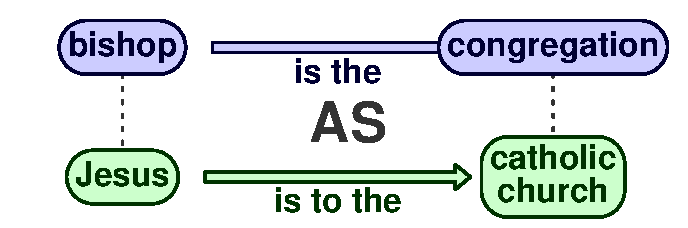
English: Wherever the bishop appears, there let the congregation be; just as wherever Jesus Christ is, there is the catholic church. (Holmes, 2007, p. 255)
Greek: Ὅπου ἂν φανῇ ὁ ἐπίσκοπος, ἐκεῖ τὸ πλῆθος ἤτω, ὥσπερ ὅπου ἂν ῇ Ἰησοῦς Χριστός, ἐκεῖ ἡ καθολικὴ ἐκκλησία. (Ignatius to the Smyrnaeans, 8.2)
In the historical interpretation, Ignatius writes this during the time of the "
wheat" and the "
tares". Some things are good. Some things are
not good.
53. Three grouped parables
|
Kingdom parables:
1. Sower
2. Wheat and tares
3. Mustard seed
4. Woman and leaven
5. Treasure in a field
6. Pearl of great price
7. Nets into the sea
8. Scribe and householder
|
 |
The "
enemy" as the
birds snatched up the seed in parable 1 and appears to have deposited the changed
seed as
weeds in parable 2.
The
birds nest in the mustard
tree in parable 3. The
false doctrine gets mixed in parable 4. Is the woman a seed, a bird, a weed or something else?
Might there be a reason why parables 2 (wheat and tares), 3 (mustard seed) and 4 (woman and leaven) have been grouped together?
Wheat and tares starts at verse 24.
Woman and leaven stops at verse 33.
54. Matthew 13:25,33 Interesting connection
Matthew 13:25 But while men slept, his enemy came and sowed tares among the wheat, and went his way. [kjv]
εν δε τω καθευδειν τους ανθρωπους ηλθεν αυτου ο εχθρος και εσπειρεν επεσπειρεν ζιζανια ανα μεσον του σιτου και απηλθεν [gnt]
13:33 Another parable spake he unto them; The kingdom of heaven is like unto leaven, which a woman took, and hid in three measures of meal, till the whole was leavened. [kjv]
αλλην παραβολην ελαλησεν αυτοις ομοια εστιν η βασιλεια των ουρανων ζυμη ην λαβουσα γυνη ενεκρυψεν εις αλευρου σατα τρια εως ου εζυμωθη ολον [gnt]
"καθολικός," ≈ "universal" is from
"καθόλου" ≈ "at all" is from:
"καθ" ≈ "according to" and
"ὅλος" ≈ "whole, all".
Verse 25 start: "καθεύδω" ≈ "lie down to sleep, be still, be idle"
Verse 33 end: "ολον" ≈ "whole" as in "the whole lump" (verse 33)
Verse 25 has the beginning of "
catholic" near the beginning and verse 33 has the ending of "
catholic" at the end. Is this just
random chance or might this have been on purpose?
55. Put it together
Revelation 16:13 And I saw three unclean spirits like frogs come out of the mouth of the dragon, and out of the mouth of the beast, and out of the mouth of the false prophet. [kjv]
 |
 |
 |
|
False prophet
|
Beast, beasts
|
Dragon
|
The historical time after Jesus in terms of the seven pins of the kingdom of heaven in the ten pin model is that of
node 2 (lying),
node 3 (stealing) and
node 4 (adultery) representing the development of what would be called the Catholic Church. Might the historical Catholic Church be described as a
Patriarchy?
56. Strongs - patriarch
- *G3966 *4 πατριάρχης (pat-ree-arkh'-ace) : from G3965 and G757; a progenitor ("patriarch"):--patriarch.
57. Acts 7:8-9
Acts 7:8 And he gave him the covenant of circumcision: and so Abraham begat Isaac, and circumcised him the eighth day; and Isaac begat Jacob; and Jacob begat the twelve patriarchs. [kjv]
και εδωκεν αυτω διαθηκην περιτομης και ουτως εγεννησεν τον ισαακ και περιετεμεν αυτον τη ημερα τη ογδοη και ο ισαακ τον ιακωβ και ο ιακωβ τους δωδεκα πατριαρχας [gnt]
… duodecim patriarchas [v]
7:9 And the patriarchs, moved with envy, sold Joseph into Egypt: but God was with him, [kjv]
και οι πατριαρχαι ζηλωσαντες τον ιωσηφ απεδοντο εις αιγυπτον και ην ο θεος μετ αυτου [gnt]
… patriarchae aemulantes … [v]
At some point would the
"twelve" "
disciples" be considered as the
"twelve" "patriarchs"?
58. Ignatius: The church
English: Similarly, let everyone respect the deacons as Jesus Christ, just as they should respect the bishop, who is a model of the Father, and the presbyters as God's council and as the band of the apostles. Without these no group can be called a church. (Holmes, 2007, p. 217)
Greek: Ὁμοίως πάντες ἐντρεπέσθωσαν τοὺς διακόνους ὡς Ἰησοῦν Χριστόν, ὡς καὶ τὸν ἐπίσκοπον ὄντα τύπον τοῦ πατρός, τοὺς δὲ πρεσβυτέρους ὡς συνέδριον θεοῦ καὶ ὡς σύνδεσμον ἀποστόλων. χωρὶς τούτων ἐκκλησία οὐ καλεῖται. [3.1]
Analogies made by Ignatius:
The "deacons" are as "Jesus".
The "bishop" are as the "Father" or "God". The top office will becomes the "Pope".
The "presbyters" or "elders" are as "God's council" as the "apostles".
59. Matthew 19:28 Thrones
Matthew 19:28 And Jesus said unto them, Verily I say unto you, That ye which have followed me, in the regeneration when the Son of man shall sit in the throne of his glory, ye also shall sit upon twelve thrones, judging the twelve tribes of Israel. [kjv]
ο δε ιησους ειπεν αυτοις αμην λεγω υμιν οτι υμεις οι ακολουθησαντες μοι εν τη παλιγγενεσια οταν καθιση ο υιος του ανθρωπου επι θρονου δοξης αυτου καθισεσθε καθησεσθε και υμεις επι δωδεκα θρονους κρινοντες τας δωδεκα φυλας του ισραηλ [gnt]
Is it good, bad, or indifferent, to
"sit" on a
"throne"? What about
"sitting" in the
"seat" of the "
scornful" (as a "
bird")?
Does Jesus ever teach or condone a person sitting in
"judgment" over another person? Are people to have "
dominion" over other people?
60. Overseers
English: You must all follow the bishop as Jesus Christ followed the Father, and follow the council of presbyters as you would the apostles;
Greek: Πάντες τῷ ἐπισκόπῳ ἀκολουθεῖτε, ὡς Ἰησοῦς Χριστὸς τῷ Πατρί, καὶ τῷ πρεσβυτερἰῳ ὡς τοῖς Ἀποστόλοις.
How did Jesus Christ "follow" the Father?
Was Jesus Christ also the Father?
Did Jesus intend believers to "follow" the "apostles"? How about the "elders"?
The "
bishop" was the local leader of the church. Later, bishops had more than one church to "
oversee" as a "
sheep dog". The danger is that the "
sheep dog" might become a "
wolf dog".
A "
wolf dog" can be equated with a "
bird" in which case a
true prophet might be considered a "
bird dog" (
not appreciated by the "
birds").
61. Overseers
English: Let no one do anything that has to do with the church without the bishop. (Holmes, p. 215)
Greek: Μηδεὶς χωρὶς τοῦ ἐπισκόπου τι πρασσέτω τῶν ἀνηκόντων εἰς τὴν Ἐκκλησίαν.
 |
 |
|
Sheep dog
|
Wolf dog
|
Does one need "
approval" of the "
bishop" to do "
anything" related to the "
church"?
62. Catholic hierarchy - a patriarchy
| English |
Latin meaning |
| Pope |
Abba or Father |
| Cardinal |
hinge of a door |
| Archbishop |
high bishop |
| Bishop |
visiting overseer |
| Priest |
holy |
| Deacon |
servant |
| Laity |
person |
|
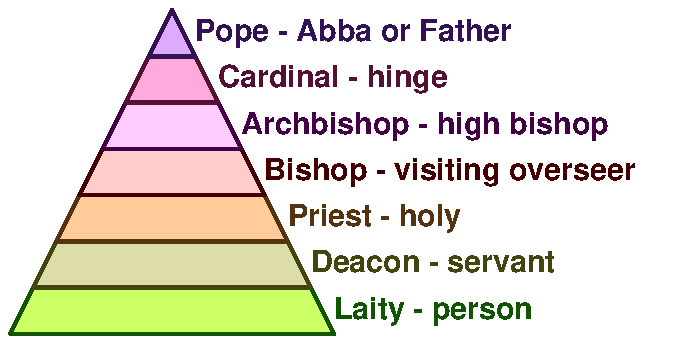 |
In the fourth century AD, the small churches (i.e., mustard seeds of souls) grew into a big tree (human organization) such that the "
birds" came and made a "
home" or "
nest" in the "
tree". Jesus did not come to "
reside" or make a "
home" in the "
law".
63. Acts 7:8
KJV: And he gave him the covenant of circumcision: and so Abraham begat Isaac, and circumcised him the eighth day; and Isaac begat Jacob; and Jacob begat the twelve patriarchs.
Greek: και εδωκεν αυτω διαθηκην περιτομης και ουτως εγεννησεν τον ισαακ και περιετεμεν αυτον τη ημερα τη ογδοη και ο ισαακ τον ιακωβ και ο ιακωβ τους δωδεκα πατριαρχας
Latin: et dedit illi testamentum circumcisionis et sic genuit Isaac et circumcidit eum die octava et Isaac Iacob et Iacob duodecim patriarchas
64. Acts 7:9
KJV: And the patriarchs, moved with envy, sold Joseph into Egypt: but God was with him,
Greek: και οι πατριαρχαι ζηλωσαντες τον ιωσηφ απεδοντο εις αιγυπτον και ην ο θεος μετ αυτου
Latin: et patriarchae aemulantes Ioseph vendiderunt in Aegyptum et erat Deus cum eo
65. A peace of the mouth of the sword
Revelation 1:16 And he had in his right hand seven stars: and out of his mouth went a sharp twoedged sword: and his countenance was as the sun shineth in his strength. [kjv]
και εχων εν τη δεξια αυτου χειρι αυτου αστερας επτα και εκ του στοματος αυτου ρομφαια διστομος οξεια εκπορευομενη και η οψις αυτου ως ο ηλιος φαινει εν τη δυναμει αυτου [gnt]

Many translations add "
hand" with "
right" even though it is not in the Greek. In this case, the word for "
hand" is in the Greek.
The
ancient Greek word
"στόμα" ≈ "mouth" and could mean the "
face", source of a body of water, opening in the earth, the front opening of something, etc. An interesting idiom in the Greek is that of letting the "
mouth of the sword" do the talking. This might be similar to saying "
let my sword do the talking".
The
"sword" here is, literally, a "
two"
"mouth" "sword".
66. Revelation 16:13 Patriarchy
Revelation 16:13 And I saw three unclean spirits like frogs come out of the mouth of the dragon, and out of the mouth of the beast, and out of the mouth of the false prophet. [kjv]
και ειδον εκ του στοματος του δρακοντος και εκ του στοματος του θηριου και εκ του στοματος του ψευδοπροφητου πνευματα τρια ακαθαρτα ομοια βατραχοις ως βατραχοι [gnt]
The English word
"patriarchy", as a social system based on male leadership having authority over women and children, comes, through Latin, from the
ancient Greek word
"πατριάρχης" ≈ "patriarch" and comes from
"πατριά" ≈ "lineage, descent" from
"πατήρ" ≈ "father" and
"άρχη" ≈ "rule, government".
Might the "
unclean" "
spirits" come out of the
"mouth" be embodied in a
"patriarchy"? Might they be
"like" "frogs"? Being "
unclean" they are filled with something.
67. Revelation 16:13
Revelation 16:13 And I saw three unclean spirits like frogs come out of the mouth of the dragon, and out of the mouth of the beast, and out of the mouth of the false prophet. [kjv]
και ειδον εκ του στοματος του δρακοντος και εκ του στοματος του θηριου και εκ του στοματος του ψευδοπροφητου πνευματα τρια ακαθαρτα ομοια βατραχοις ως βατραχοι [gnt]
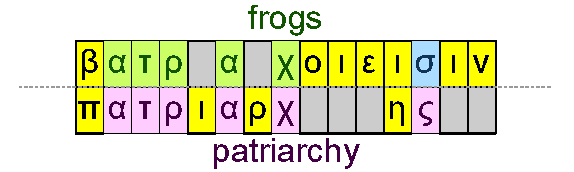
"βάτραχοι" ≈ "frogs".
"πατριάρχης" ≈ "patriarchy".
Note: For play on word purposes, there is a similar vowel sound and an "
s" at the start of the next verse.
The historical time after Jesus in terms of the seven pins of the kingdom of heaven in the ten pin model is that of
node 2 (lying),
node 3 (stealing) and
node 4 (adultery) representing the development of what would be called the Catholic Church. Might the historical Catholic Church be described as a
Patriarchy?
Might the
"patriarchy" come out of the
"mouth" (or sword blade edge)
"as" "frogs"?
68. End of page
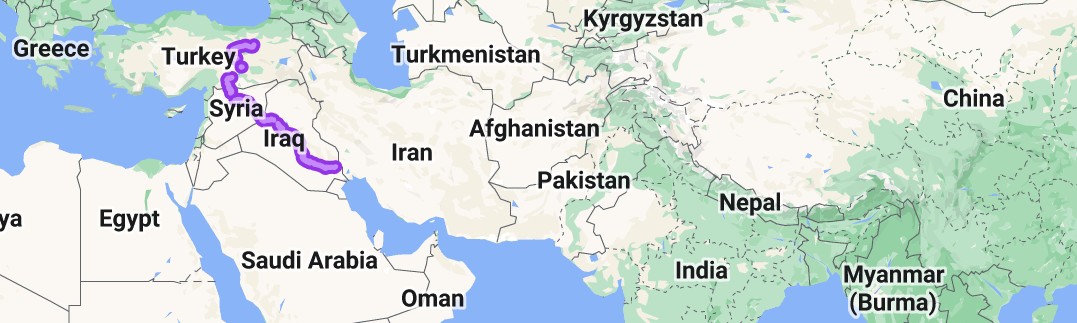 One literal prophecy of the end times in the book of Revelation concerns the "kings of the east". It is not clear as to the identity of the "Kings of the East". One assumption is that east appears to be east of Jerusalem and east of the Euphrates River.