Send
Close Add comments:
(status displays here)
Got it! This site "creationpie.org" uses cookies. You consent to this by clicking on "Got it!" or by continuing to use this website. Note: This appears on each machine/browser from which this site is accessed.
Revelation 16: 17-21 The seventh vile vial judgment
1. Revelation 16: 17-21 The seventh vile vial judgment
This content is being developed.
2. Revelation 16: 17-21 The seventh vile vial judgment
3. Revelation 16:17-21 Seventh vial
Revelation 16:17 And the seventh angel poured out his vial into the air; and there came a great voice out of the temple of heaven, from the throne, saying, It is done. [kjv]
16:18 And there were voices, and thunders, and lightnings; and there was a great earthquake, such as was not since men were upon the earth, so mighty an earthquake, and so great. [kjv]
16:19 And the great city was divided into three parts, and the cities of the nations fell: and great Babylon came in remembrance before God, to give unto her the cup of the wine of the fierceness of his wrath. [kjv]
16:20 And every island fled away, and the mountains were not found. [kjv]
16:21 And there fell upon men a great hail out of heaven, every stone about the weight of a talent: and men blasphemed God because of the plague of the hail; for the plague thereof was exceeding great. [kjv]
4. Revelation 16:17 Seventh vial
Revelation 16:17 And the seventh angel poured out his vial into the air; and there came a great voice out of the temple of heaven, from the throne, saying, It is done. [kjv]
και ο εβδομος αγγελος εξεχεεν την φιαλην αυτου εις επι τον αερα και εξηλθεν φωνη μεγαλη απο εκ του ναου του ουρανου απο του θρονου λεγουσα γεγονεν [gnt]
Why is this
"vial" thrown into the
"air"?
"ἀέρα" ≈ "mist, haze, air, wind" (accusative singular) from "ἀήρ" ≈ "mist, haze, air, wind".
"ναου" ≈ "of the temple" from "ναός" ≈ "temple".
"θρόνους" ≈ "throne" (accusative) and "θρόνος" ≈ "throne".
"φωνή" ≈ "voice, sound".
5. John 19:30 It is finished
John 19:30 When Jesus therefore had received the vinegar, he said, It is finished: and he bowed his head, and gave up the ghost. [kjv]
οτε ουν ελαβεν το οξος ο ιησους ειπεν τετελεσται και κλινας την κεφαλην παρεδωκεν το πνευμα [gnt]
The ancient Greek word
"τέλειος" ≈ "purposed, complete, perfected" and
not the modern English idea of "
perfect" as "
without error".
At the
"end", Jesus says
"it is finished". The Greek word had a meaning of
"paid in full". In Revelation, Jesus shows up to redeem the deed that was paid on the cross.
6. Matthew 27:54
Matthew 27:54 Now when the centurion, and they that were with him, watching Jesus, saw the earthquake, and those things that were done, they feared greatly, saying, Truly this was the Son of God. [kjv]
7. Matthew 27:54
KJV: Now when the centurion, and they that were with him, watching Jesus, saw the earthquake, and those things that were done, they feared greatly, saying, Truly this was the Son of God.
Greek: ο δε εκατονταρχος και οι μετ αυτου τηρουντες τον ιησουν ιδοντες τον σεισμον και τα γενομενα γινομενα εφοβηθησαν σφοδρα λεγοντες αληθως θεου υιος ην ουτος
8. Matthew 28:2
Matthew 28:2 And, behold, there was a great earthquake: for the angel of the Lord descended from heaven, and came and rolled back the stone from the door, and sat upon it. [kjv]
και ιδου σεισμος εγενετο μεγας αγγελος γαρ κυριου καταβας εξ ουρανου και προσελθων απεκυλισεν τον λιθον απο της θυρας και εκαθητο επανω αυτου [gnt]
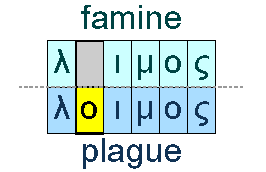
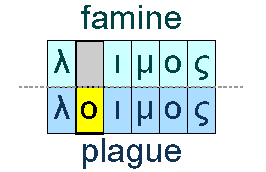
Since
"famines" and
"plagues" are play on words, perhaps
"earthquakes" is too. The
ancient Greek word
"σεισμός" ≈ "shaking, shock, earthquake" which is the source of the English word
"seismic".
The ancient Greek word
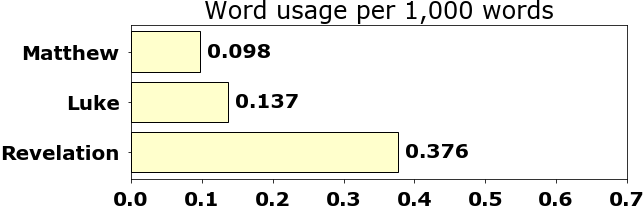
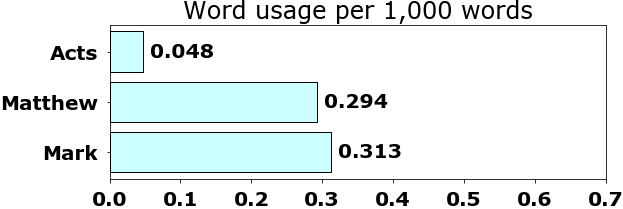
"σεισμοι" ≈ "earthquakes" is used
only in this exact form in the similar verses in Matthew, Mark and Luke. It is not in the
LXX (Septuagint).
Aristotle uses it when discussing literal earthquakes.
If Matthew had known the play on words with the genitive singular "
(of) heaven" he would not have used that word here.
9. Matthew 24:7 Earthquakes
Matthew 24:7 For nation shall rise against nation, and kingdom against kingdom: and there shall be famines, and pestilences, and earthquakes, in divers places. [kjv]
εγερθησεται γαρ εθνος επι εθνος και βασιλεια επι βασιλειαν και εσονται λιμοι και λοιμοι και σεισμοι κατα τοπους [gnt]
Since
"famines" and
"plagues" are play on words, perhaps
"earthquakes" is too. The
ancient Greek word
"σεισμός" ≈ "shaking, shock, earthquake" which is the source of the English word
"seismic".
The
ancient Greek word
"σεισμοι" ≈ "earthquakes" is used
only in this exact form in the similar verses in Matthew, Mark and Luke. It is not in the
LXX.
Aristotle uses it when discussing literal earthquakes.
10. Matthew 24:7
Matthew 24:7 For nation shall rise against nation, and kingdom against kingdom: and there shall be famines, and pestilences, and earthquakes, in divers places. [kjv]
εγερθησεται γαρ εθνος επι εθνος και βασιλεια επι βασιλειαν και εσονται λιμοι και λοιμοι και σεισμοι κατα τοπους [gnt]
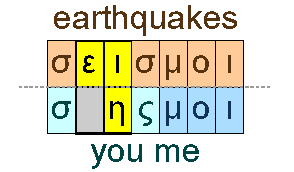
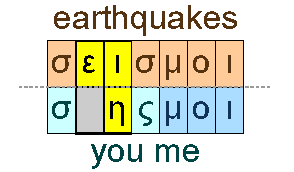
"σεισμοι" ≈ "earthquakes"
"σης" ≈ "your, yours" (genitive, used by disciples in verse 3) and "μοι" ≈ "me" (dative).
Can a
"yours" with respect to "me" (Jesus is speaking) adversarial relationship cause issues? How about
"earthquakes"?
Can the
"yours" and
"me" relationship cause spiritual
"earthquakes"?
11. Revelation 16:17
KJV: And the seventh angel poured out his vial into the air; and there came a great voice out of the temple of heaven, from the throne, saying, It is done.
Greek: και ο εβδομος αγγελος εξεχεεν την φιαλην αυτου εις επι τον αερα και εξηλθεν φωνη μεγαλη απο εκ του ναου του ουρανου απο του θρονου λεγουσα γεγονεν
12. Strongs - lightning
13. Usage - lightning
- *G796 *9 ἀστραπή (as-trap-ay') : from G797; lightning; by analogy, glare:--lightning, bright shining.
αστραπη *4
Matthew 24:27 For as the lightning cometh out of the east, ...
Matthew 28:3 His countenance was like lightning, and his raiment ...
Luke 11:36 ... full of light, as when the bright shining of a candle doth give thee light.
Luke 17:24 For as the lightning, that lighteneth out of the one ...
αστραπαι *4
Revelation 4:5 And out of the throne proceeded lightnings and thunderings and ...
Revelation 8:5 ... and thunderings, and lightnings, and an earthquake.
Revelation 11:19 ... testament: and there were lightnings, and voices, and ...
Revelation 16:18 ... and thunders, and lightnings; and there was a great ...
αστραπην
14. Revelation 16:18 Lightning
Revelation 16:18 And there were voices, and thunders, and lightnings; and there was a great earthquake, such as was not since men were upon the earth, so mighty an earthquake, and so great. [kjv]
και εγενοντο αστραπαι και φωναι και βρονται και αστραπαι και σεισμος εγενετο μεγας οιος ουκ εγενετο αφ ου οι ανθρωποι εγενοντο επι της γης τηλικουτος σεισμος ουτως μεγας [gnt]
The
ancient Greek word
"ἀστραπή" ≈ "lightning".
15. Matthew 24:27 Lightning
16. Luke 17:24
Luke 17:24 For as the lightning, that lighteneth out of the one part under heaven, shineth unto the other part under heaven; so shall also the Son of man be in his day. [kjv]
ωσπερ γαρ η αστραπη η αστραπτουσα εκ της υπ υπο τον ουρανον εις την υπ ουρανον λαμπει ουτως εσται και ο υιος του ανθρωπου εν τη ημερα αυτου [gnt]
The
ancient Greek word
"ἀστραπή" ≈ "lightning" and is used twice in the same verse.
Luke is much more general than Matthew.
17. Revelation 16:18 Voices
Revelation 16:18 And there were voices, and thunders, and lightnings; and there was a great earthquake, such as was not since men were upon the earth, so mighty an earthquake, and so great. [kjv]
και εγενοντο αστραπαι και φωναι και βρονται και αστραπαι και σεισμος εγενετο μεγας οιος ουκ εγενετο αφ ου οι ανθρωποι εγενοντο επι της γης τηλικουτος σεισμος ουτως μεγας [gnt]
The
ancient Greek word
"φωνή" ≈ "voice, sound" as in the first part of the English word
"phonograph".
18. Revelation 16:18 Thunders
Revelation 16:18 And there were voices, and thunders, and lightnings; and there was a great earthquake, such as was not since men were upon the earth, so mighty an earthquake, and so great. [kjv]
και εγενοντο αστραπαι και φωναι και βρονται και αστραπαι και σεισμος εγενετο μεγας οιος ουκ εγενετο αφ ου οι ανθρωποι εγενοντο επι της γης τηλικουτος σεισμος ουτως μεγας [gnt]
The
ancient Greek word
"βροντή" ≈ "thunder" and is from
"βρέμω" ≈ "roar, clash, shout" and is onomatopoeic in that it sounds like what it represents. The
modern Greek word
"βροντή" (vron-TEE) ≈ "thunder". The Greek word is the first part of the English word
"brontosaur".
19. Revelation 16:18 Earthquakes
Revelation 16:18 And there were voices, and thunders, and lightnings; and there was a great earthquake, such as was not since men were upon the earth, so mighty an earthquake, and so great. [kjv]
και εγενοντο αστραπαι και φωναι και βρονται και αστραπαι και σεισμος εγενετο μεγας οιος ουκ εγενετο αφ ου οι ανθρωποι εγενοντο επι της γης τηλικουτος σεισμος ουτως μεγας [gnt]
The
ancient Greek word
"σεισμός" ≈ "shaking, shock, earthquake" which is the source of the English word
"seismic".
20. Matthew 24:7 Earthquakes
Matthew 24:7 For nation shall rise against nation, and kingdom against kingdom: and there shall be famines, and pestilences, and earthquakes, in divers places. [kjv]
εγερθησεται γαρ εθνος επι εθνος και βασιλεια επι βασιλειαν και εσονται λιμοι και λοιμοι και σεισμοι κατα τοπους [gnt]
Since
"famines" and
"plagues" are play on words, perhaps
"earthquakes" is too. The
ancient Greek word
"σεισμός" ≈ "shaking, shock, earthquake" which is the source of the English word
"seismic".
The
ancient Greek word
"σεισμοι" ≈ "earthquakes" is used
only in this exact form in the similar verses in Matthew, Mark and Luke. It is not in the
LXX.
Aristotle uses it when discussing literal earthquakes.
21. Matthew 24:7
Matthew 24:7 For nation shall rise against nation, and kingdom against kingdom: and there shall be famines, and pestilences, and earthquakes, in divers places. [kjv]
εγερθησεται γαρ εθνος επι εθνος και βασιλεια επι βασιλειαν και εσονται λιμοι και λοιμοι και σεισμοι κατα τοπους [gnt]
"σεισμοι" ≈ "earthquakes"
"σης" ≈ "your, yours" (genitive, used by disciples in verse 3) and "μοι" ≈ "me" (dative).
Can a
"yours" with respect to "me" (Jesus is speaking) adversarial relationship cause issues? How about
"earthquakes"?
Can the
"yours" and
"me" relationship cause spiritual
"earthquakes"?
22. Revelation 16:18
KJV: And there were voices, and thunders, and lightnings; and there was a great earthquake, such as was not since men were upon the earth, so mighty an earthquake, and so great.
Greek: και εγενοντο αστραπαι και φωναι και βρονται και αστραπαι και σεισμος εγενετο μεγας οιος ουκ εγενετο αφ ου οι ανθρωποι εγενοντο επι της γης τηλικουτος σεισμος ουτως μεγας
23. Revelation 16:19 Three parts
Revelation 16:19 And the great city was divided into three parts, and the cities of the nations fell: and great Babylon came in remembrance before God, to give unto her the cup of the wine of the fierceness of his wrath. [kjv]
και εγενετο η πολις η μεγαλη εις τρια μερη και αι πολεις των εθνων επεσον επεσαν και βαβυλων η μεγαλη εμνησθη ενωπιον του θεου δουναι αυτη το ποτηριον του οινου του θυμου της οργης αυτου [gnt]
What are the "three" "parts"?
What is the connection with "Babylon"?
24. Revelation 16:19
KJV: And the great city was divided into three parts, and the cities of the nations fell: and great Babylon came in remembrance before God, to give unto her the cup of the wine of the fierceness of his wrath.
Greek: και εγενετο η πολις η μεγαλη εις τρια μερη και αι πολεις των εθνων επεσον επεσαν και βαβυλων η μεγαλη εμνησθη ενωπιον του θεου δουναι αυτη το ποτηριον του οινου του θυμου της οργης αυτου
25. Strongs - island
*G3520 *9 νῆσος (nay'-sos) : probably from the base of G3491; an island:--island, isle.
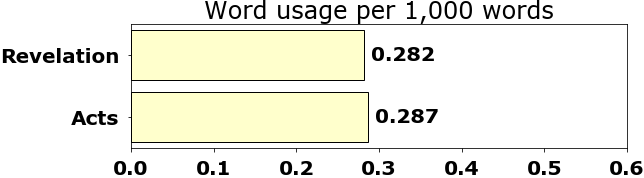 |
Words: νησον=2 νησος=3 νησου νησω=3
|
The
ancient Greek word
"νῆσος" ≈ "island".
26. Usage - island
- *G3520 *9 νῆσος (nay'-sos) : probably from the base of G3491; an island:--island, isle.
νησος *3
Acts 28:1 ... then they knew that the island was called Melita.
Revelation 6:14 ... every mountain and island were moved out of their places.
Revelation 16:20 And every island fled away, and the mountains ...
νησω *3
Acts 28:9 ... had diseases in the island, came, and were healed:
Acts 28:11 ... of Alexandria, which had wintered in the isle, whose sign was Castor and Pollux.
Revelation 1:9 ... Christ, was in the isle that is called Patmos, for ...
νησον *2
Acts 13:6 And when they had gone through the isle unto Paphos, they found ...
Acts 27:26 ... be cast upon a certain island.
νησου
Acts 28:7 ... possessions of the chief man of the island, whose name was Publius; who ...
27. Revelation 16:20
Revelation 16:20 And every island fled away, and the mountains were not found. [kjv]
και πασα νησος εφυγεν και ορη ουχ ευρεθησαν [gnt]
Why is "
island"
singular but "
mountains" is
plural?
"νῆσος" ≈ "island".
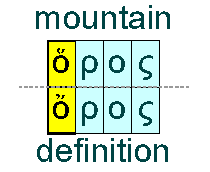
(smooth breathing) "ὄρος" ≈ "mountain".
(rough breathing) "ὅρος" ≈ "boundary, definition".
Could the appropriate
definitions be found? The Greek word for
definition and
mountain are the same.
Remember Matthew 5:14: The
many on a
mountain cannot be
hid (in a bad sense), presumably because the
mountain is
already hidden (e.g., under the water).
28. Strongs - region, boundary
29. Usage - region, boundary
- *G3725 *12 ὅριον (hor'-ee-on) : neuter of a derivative of an apparently primary horos (a bound or limit); a boundary-line, i.e. (by implication) a frontier (region):--border, coast.
- οριων *6
- Matthew 8:34 ... he would depart out of their coasts.
- Matthew 15:22 ... came out of the same coasts, and cried unto him, ...
- Mark 5:17 ... to depart out of their coasts.
- Mark 7:31 ... departing from the coasts of Tyre and Sidon, he came unto the sea of Galilee, through the midst of the coasts of Decapolis.
- Acts 13:50 ... them out of their coasts.
- ορια *4
- Matthew 15:39 ... and came into the coasts of Magdala.
- Matthew 19:1 ... and came into the coasts of Judaea beyond Jordan;
- Mark 7:24 And from thence he arose, and went into the borders ...
- Mark 10:1 ... from thence, and cometh into the coasts of Judæa by the farther side ...
- οριοις *2
- Matthew 2:16 ... and in all the coasts thereof, from two years old ...
- Matthew 4:13 ... which is upon the sea coast, in the borders of Zabulon and Nephthalim:
30. Revelation 6:13 Star falling
Revelation 6:13 And the stars of heaven fell unto the earth, even as a fig tree casteth her untimely figs, when she is shaken of a mighty wind. [kjv]
και οι αστερες του ουρανου επεσαν εις την γην ως συκη βαλλει τους ολυνθους αυτης υπο μεγαλου ανεμου μεγαλου σειομενη [gnt]
Compare the "
stars" of "
heaven" falling with "
manna" falling from "
heaven".
The children of Israel in the "
desert" wanted more than
"manna" as the
"bread" of "
life". They wanted
"birds". Later, they wanted a "
king". Today, many churches want a "
pastor". Discuss the similarities and differences.
31. Revelation 6:13 Earth
Revelation 6:13 And the stars of heaven fell unto the earth, even as a fig tree casteth her untimely figs, when she is shaken of a mighty wind. [kjv]
και οι αστερες του ουρανου επεσαν εις την γην ως συκη βαλλει τους ολυνθους αυτης υπο μεγαλου ανεμου μεγαλου σειομενη [gnt]
The Greek word for "
earth" can be "
sand".
What "
falls" "
into" or "
against" "
earth" or "
sand"?
32. Revelation 16:20
KJV: And every island fled away, and the mountains were not found.
Greek: και πασα νησος εφυγεν και ορη ουχ ευρεθησαν
33. Revelation 16:21
Revelation 16:21 And there fell upon men a great hail out of heaven, every stone about the weight of a talent: and men blasphemed God because of the plague of the hail; for the plague thereof was exceeding great. [kjv]
και χαλαζα μεγαλη ως ταλαντιαια καταβαινει εκ του ουρανου επι τους ανθρωπους και εβλασφημησαν οι ανθρωποι τον θεον εκ της πληγης της χαλαζης οτι μεγαλη εστιν η πληγη αυτης σφοδρα [gnt]
The
ancient Greek word
"πληγή" ≈ "stroke from a sword or pike" but is translated as
"plague" in the
GNT (Greek New Testament) (only in Revelation) and is the source of the English word
"plague".
34. Proverbs 20:30
35. Revelation 16:21
KJV: And there fell upon men a great hail out of heaven, every stone about the weight of a talent: and men blasphemed God because of the plague of the hail; for the plague thereof was exceeding great.
Greek: και χαλαζα μεγαλη ως ταλαντιαια καταβαινει εκ του ουρανου επι τους ανθρωπους και εβλασφημησαν οι ανθρωποι τον θεον εκ της πληγης της χαλαζης οτι μεγαλη εστιν η πληγη αυτης σφοδρα
36. Revelation 16:17
Revelation 16:17 And the seventh angel poured out his vial into the air; and there came a great voice out of the temple of heaven, from the throne, saying, It is done. [kjv]
και ο εβδομος αγγελος εξεχεεν την φιαλην αυτου εις επι τον αερα και εξηλθεν φωνη μεγαλη απο εκ του ναου του ουρανου απο του θρονου λεγουσα γεγονεν [gnt]
Why is
"air" mentioned?
37. Revelation 16:17
Revelation 16:17 And the seventh angel poured out his vial into the air; and there came a great voice out of the temple of heaven, from the throne, saying, It is done. [kjv]
και ο εβδομος αγγελος εξεχεεν την φιαλην αυτου εις επι τον αερα και εξηλθεν φωνη μεγαλη απο εκ του ναου του ουρανου απο του θρονου λεγουσα γεγονεν [gnt]
Were there
earthquakes and
lightnings at the crucifixion and resurrection? What are the three parts of the
many or
city?
To living water path/part to node 5 (wide area, sheep).
To dead water part/path to node 6 (wide area, goats).
To dried-up water part/path to node 2 (scattered path, birds, etc.).
Does this include everyone? Are there any left out?
38. Revelation 16:17
Revelation 16:17 And the seventh angel poured out his vial into the air; and there came a great voice out of the temple of heaven, from the throne, saying, It is done. [kjv]
και ο εβδομος αγγελος εξεχεεν την φιαλην αυτου εις επι τον αερα και εξηλθεν φωνη μεγαλη απο εκ του ναου του ουρανου απο του θρονου λεγουσα γεγονεν [gnt]
Did the islands (individuals) flee away to the
wide area,
node 5 and
node 6?
Were the mountains (definitions) not found as they got lost on the
scattered path?
Did men
blaspheme (perhaps as a false teacher) because of the
raca hail that impacted their
millstone deception/entrapments, the
talent deception/entrapment?
39. Revelation 17:1-18
Revelation 17:1 And there came one of the seven angels which had the seven vials, and talked with me, saying unto me, Come hither; I will shew unto thee the judgment of the great whore that sitteth upon many waters: [kjv]
και ηλθεν εις εκ των επτα αγγελων των εχοντων τας επτα φιαλας και ελαλησεν μετ εμου λεγων μοι δευρο δειξω σοι το κριμα της πορνης της μεγαλης της καθημενης επι των υδατων των πολλων [gnt]
The "
sea" or "
many" "
waters" is the "
sea" of "
humanity" and often spoken of as "
ethnics" or "
heathen".
To "
sit" is to "
sit" as on a "
chair" or "
throne".
40. Model of the kingdoms and births
John 3:3 Jesus answered and said unto him, Verily, verily, I say unto thee, Except a man be born again, he can not see the kingdom of God. [kjv]
απεκριθη ο ιησους και ειπεν αυτω αμην αμην λεγω σοι εαν μη τις γεννηθη ανωθεν ου δυναται ιδειν την βασιλειαν του θεου [gnt]
Four parts:
"earth",
"air",
"fire",
"water".
The "
ask", "
seek", "
knock" sequence is part of the "
flame" and "
sword" progression.
41. Details
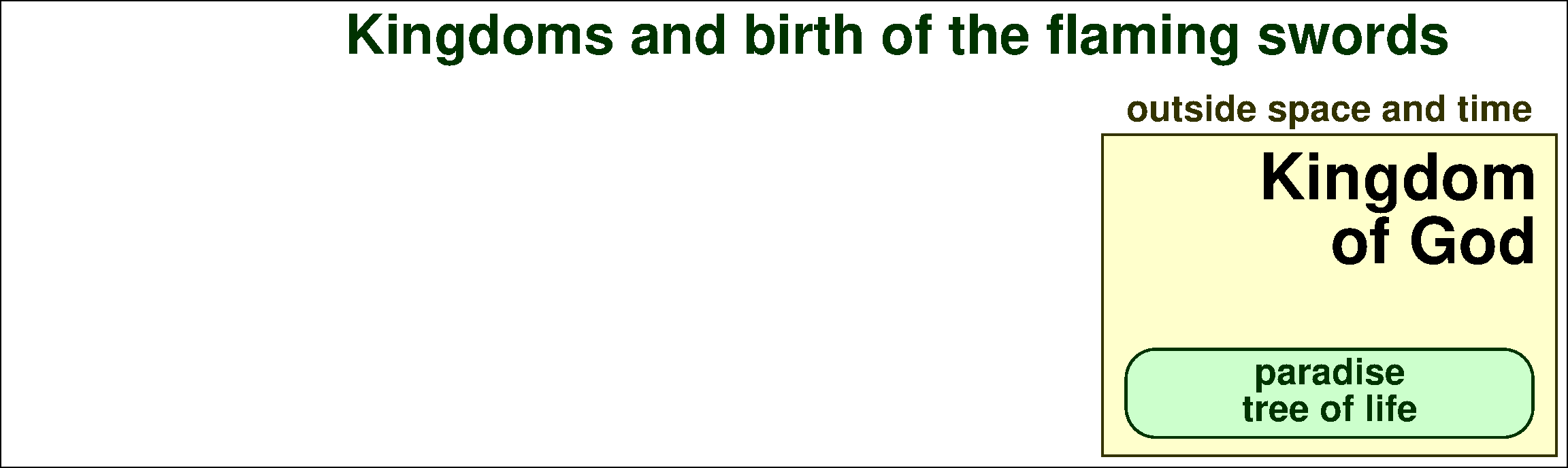
Put the Kingdom of God outside of space and time and (since the fall) includes the "tree of life". The creation is inside space and time.
The "flaming sword" both protects and keeps the way open.
The "Kingdom of Earth" is for those "of the world".
The "Kingdom of Heaven" is for those "in the world".
The "flaming sword" is provided by Jesus who "throws" the "sword". The Holy Spirit provides the "flame".
Birth#3 is the regeneration or in-processing into the Kingdom of God.
42. Four Greek fundamental elements
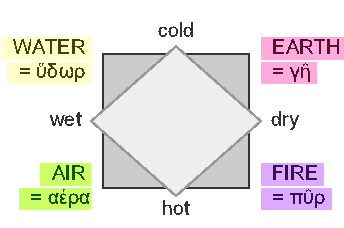
Aristotle relates the following.
English: ... for Empedicles says that fire, water, air and earth are four elements and are simple ... Loeb #400, p. 165.
Greek: ... περὶ Ἐμπεδοκλέα ὁ μὲν γάρ φησι πῦρ καὶ ὕδωρ καὶ ἀέρα καὶ γῆν στοιχεῖα τέσσαρα καὶ ἁπλᾶ εἶναι ... Aristotle, Coming to be, 314a.
 |
|
"water" as wet and cold.
"earth" as cold and dry.
"air" as hot and wet.
"fire" hot and dry.
|
43. Four elements and vials
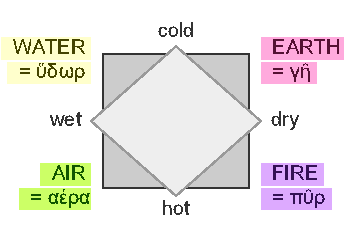
"water"
wet and cold
|
"earth"
cold and dry
|
"air"
hot and wet
|
"fire"
hot and dry
|
|
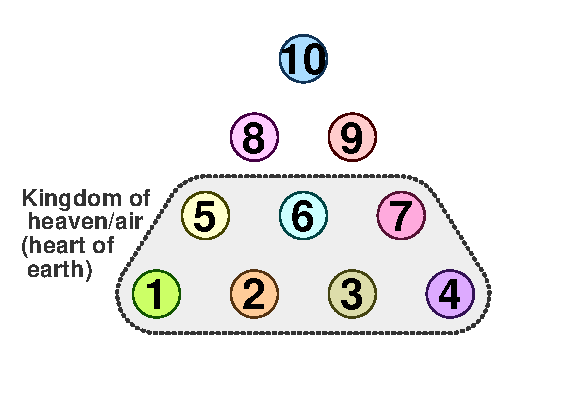
Vial 3 at
node 5: "water".
|
Vial 1 at
node 7: "earth".
|
Vial 7 at
node 1: "air".
|
Vial 4 at
node 4: "fire".
|
|
Is this correspondence a coincidence?
What a strange idea for the Greek philosophers to develop.
|
The path from "air" to "water" would end up being "wet" and "cold". Is "cold" good?
The path from "air" to "fire" to "earth" would end up being "hot" and "dry". Is "hot" good?
The path from "air" to "water" to "earth" with a touch of "fire" would appear to be neither "hot" nor "cold". Is this good?
44. End of page