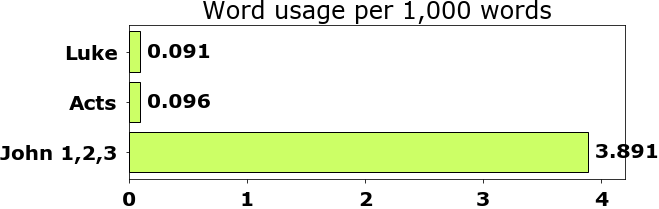
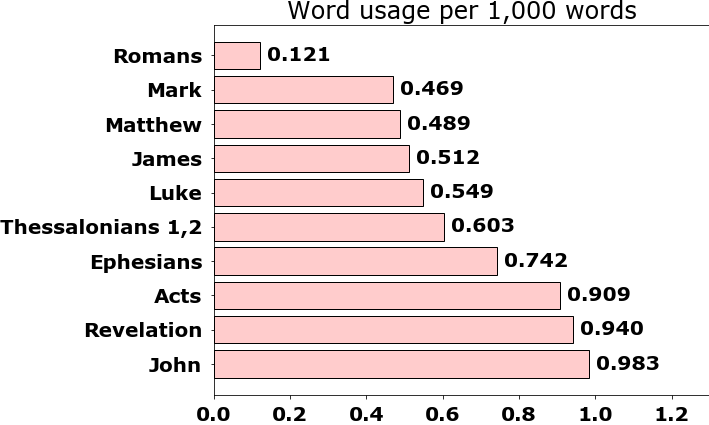
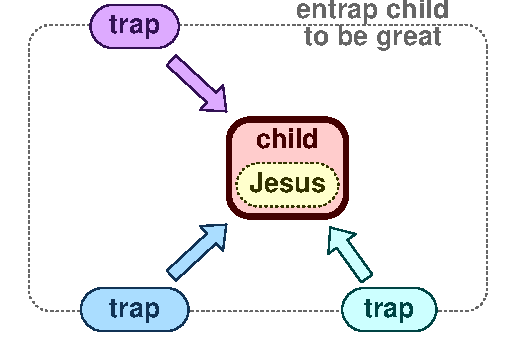
- *G4454 *12 πῶλος (po'-los) : apparently a primary word; a "foal" or "filly", i.e. (specially), a young ass:--colt.
- πωλον *12
- Matthew 21:2 ... an ass tied, and a colt with her: loose ...
- Matthew 21:5 ... upon an ass, and a colt the foal of an ass.
- Matthew 21:7 And brought the ass, and the colt, and put on ...
- Mark 11:2 ... into it, ye shall find a colt tied, whereon never ...
- Mark 11:4 And they went their way, and found the colt tied by the door ...
- Mark 11:5 ... What do ye, loosing the colt?
- Mark 11:7 And they brought the colt to Jesus, and ...
- Luke 19:30 ... the which at your entering ye shall find a colt tied, whereon yet ...
- Luke 19:33 And as they were loosing the colt, the owners thereof said unto them, Why loose ye the colt?
- Luke 19:35 ... their garments upon the colt, and they set Jesus thereon.
- John 12:15 ... sitting on an ass's colt.
54. Matthew 21:2 Sell out
Matthew 21:2 Saying unto them, Go into the village over against you, and straightway ye shall find an ass tied, and a colt with her: loose them, and bring them unto me. [kjv]
λεγων αυτοις πορευθητε πορευεσθε εις την κωμην την απεναντι κατεναντι υμων και ευθεως ευθυς ευρησετε ονον δεδεμενην και πωλον μετ αυτης λυσαντες αγαγετε μοι [gnt]
"πῶλον" ≈ "foal (young horse)" (masculine accusative singular) from "πῶλος" ≈ "foal (young horse)"
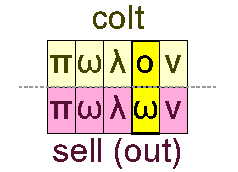
"πωλῶν" ≈ "sell (out)" (contracted masculine present active participle) of "πωλέω" ≈ "sell (out)".
Why a "colt"? Might what Jesus is doing be a "sell (out)"? Consider the "treasure" in the "field".
Why a "donkey"? Might Jesus be the talking "donkey" (think Balaam), providing a warning to those who will listen? Consider the end of the Parable of the Wedding Feast.
55. Matthew 21:2 Donkey and colt
Matthew 21:2 Saying unto them, Go into the village over against you, and straightway ye shall find an ass tied, and a colt with her: loose them, and bring them unto me. [kjv]
λεγων αυτοις πορευθητε πορευεσθε εις την κωμην την απεναντι κατεναντι υμων και ευθεως ευθυς ευρησετε ονον δεδεμενην και πωλον μετ αυτης λυσαντες αγαγετε μοι [gnt]
Are there
one or
two animals involved? Why is the
"donkey" "
bound"?
The "donkey" is female. Greek: "ὄνος" ≈ "ass, donkey" and "ὄνον" ≈ "ass, donkey" (accusative). Play: Latin word "onus" ≈ "burden, load" and is the source of the English word "onus". The ancient Greek word "ὄνομαι" ≈ "impugn, quarrel with".
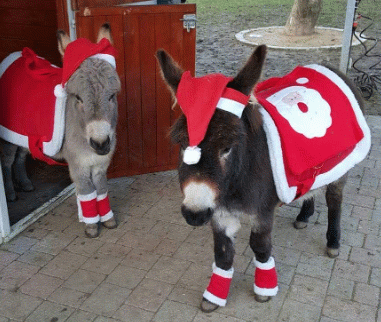
The "colt" is with "her", the "donkey". Greek: "πῶλος" ≈ "foal (young horse)" and (play) "πωλέω" ≈ "sell" as in "levy taxes", "sell an office" or "betray".
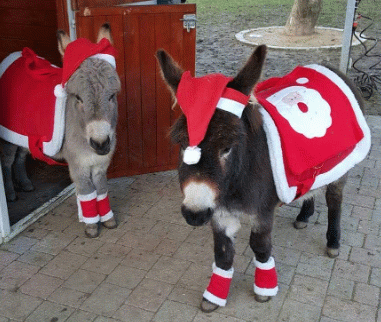
[pony with a sore throat, rehearse]
56. Matthew 21:7 Lead on
Matthew 21:7 And brought the ass, and the colt, and put on them their clothes, and they set him thereon. [kjv]
ηγαγον την ονον και τον πωλον και επεθηκαν επανω επ αυτων τα ιματια αυτων και επεκαθισεν επανω αυτων [gnt]
The "donkey" is female.
The "colt" is male.
Where the two animals
dressed up when they had
"clothes" "
put" "
on"
"them"? It was a
clothes call.
The
ancient Greek word
"ἄγω" ≈ "lead, fetch, bring". Who or what is
"αὐτῶν" ≈ "of them, theirs" (genitive plural, masculine, feminine or neuter)? Did Jesus sit on the
"cloaks" or the
"ass" and "colt" or both or something else?
57. Luke 10:34 Beasts
Luke 10:34 And went to him, and bound up his wounds, pouring in oil and wine, and set him on his own beast, and brought him to an inn, and took care of him. [kjv]
και προσελθων κατεδησεν τα τραυματα αυτου επιχεων ελαιον και οινον επιβιβασας δε αυτον επι το ιδιον κτηνος ηγαγεν αυτον εις πανδοχειον και επεμεληθη αυτου [gnt]
Perhaps the
"Samaritan", as Jesus, had two
"beasts".
The male "donkey" represented the "donkey" "voices", as in the story of Balaam and the "donkey". This is the one that Jesus rode.
The female "colt" represented the "selling out" of himself on the cross for everyone. In that sense, there is a seat on the "colt" for everyone, especially those "wounded" and/or "robbed" by the deception of the religious establishment (of any time).
Analogy used by Jesus:
Jesus is the groom (male). The "donkey" is male.
The Church is the bride (female). The "colt" is female.
58. Strongs - inn
- *G3829 *1 πανδοχεῖον (pan-dokk-i'-on) : neuter of a presumed compound of G3956 and a derivative of G1209; all-receptive, i.e. a public lodging-place (caravanserai or khan):--inn.
 |
Words: πανδοκιον
|
The
ancient Greek word
"πανδοκεῖον" ≈ "inn" and means, literally, an
"everything container". This word became the Spanish word
"fonda" ≈ "boarding house, inn".
59. Luke 10:34 Inn
Luke 10:34 And went to him, and bound up his wounds, pouring in oil and wine, and set him on his own beast, and brought him to an inn, and took care of him. [kjv]
και προσελθων κατεδησεν τα τραυματα αυτου επιχεων ελαιον και οινον επιβιβασας δε αυτον επι το ιδιον κτηνος ηγαγεν αυτον εις πανδοχειον και επεμεληθη αυτου [gnt]
… stabulum … [v]
The
ancient Greek word
"πανδοκεῖον" ≈ "inn" and means, literally, an
"everything container". This word became the Spanish word
"fonda" ≈ "boarding house, inn".
Another
ancient Greek word
"ξενοδοχεῖον" ≈ "hotel, inn" and means, literally, an "
stranger container". This word is
not in the
GNT nor in the
LXX (Septuagint). The
modern Greek word
"ξενοδοχείο" (kseh-no-tho-KHEE-o) ≈ "hotel".
60. Upper room guestchamber
Luke 22:11 … Where is the guestchamber, where I shall eat the passover with my disciples? [kjv]
και ερειτε τω οικοδεσποτη της οικιας λεγει σοι ο διδασκαλος που εστιν το καταλυμα οπου το πασχα μετα των μαθητων μου φαγω [gnt]
Mark 14:14 … Where is the guestchamber, where I shall eat the passover with my disciples? [kjv]
και οπου εαν εισελθη ειπατε τω οικοδεσποτη οτι ο διδασκαλος λεγει που εστιν το καταλυμα μου οπου το πασχα μετα των μαθητων μου φαγω [gnt]
Luke 2:7 And she brought forth her firstborn son, and wrapped him in swaddling clothes, and laid him in a manger; because there was no room for them in the inn. [kjv]
και ετεκεν τον υιον αυτης τον πρωτοτοκον και εσπαργανωσεν αυτον και ανεκλινεν αυτον εν τη φατνη διοτι ουκ ην αυτοις τοπος εν τω καταλυματι [gnt]
The
"upper room" or
"guestchamber", translated as
"inn" in Luke 2:7, is part of the "
house".
61. Luke 10:34
Luke 10:34 And went to him, and bound up his wounds, pouring in oil and wine, and set him on his own beast, and brought him to an inn, and took care of him. [kjv]
και προσελθων κατεδησεν τα τραυματα αυτου επιχεων ελαιον και οινον επιβιβασας δε αυτον επι το ιδιον κτηνος ηγαγεν αυτον εις πανδοχειον και επεμεληθη αυτου [gnt]
The "
wounded" and "
robbed"
man is taken by Jesus as the
"Samaritan" from
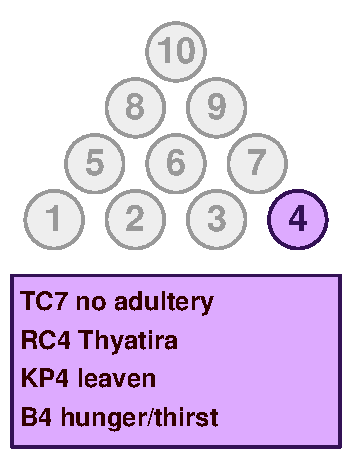
node 4 (adultery) and, instead of going to
node 7, is taken to
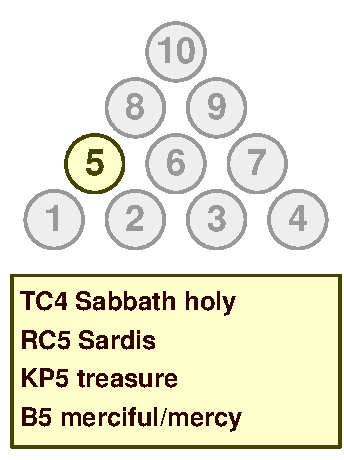
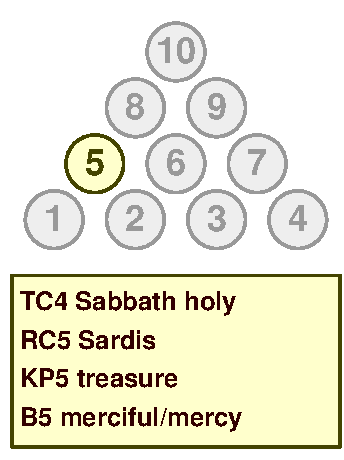
node 5.
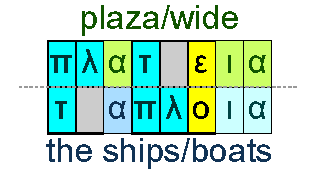
Node 5 is the living infinite bread, living water, living blood, the wide area of the boats, etc. Might this be considered an
"everything container", translated as
"inn" in the
KJV?
[Jesus will take care of you]
62. Luke 10:34
KJV: And went to him, and bound up his wounds, pouring in oil and wine, and set him on his own beast, and brought him to an inn, and took care of him.
Greek: και προσελθων κατεδησεν τα τραυματα αυτου επιχεων ελαιον και οινον επιβιβασας δε αυτον επι το ιδιον κτηνος ηγαγεν αυτον εις πανδοχειον και επεμεληθη αυτου
Latin: et adpropians alligavit vulnera eius infundens oleum et vinum et inponens illum in iumentum suum duxit in stabulum et curam eius egit
63. Luke 10:35
Luke 10:35 And on the morrow when he departed, he took out two pence, and gave them to the host, and said unto him, Take care of him; and whatsoever thou spendest more, when I come again, I will repay thee. [kjv]
και επι την αυριον εξελθων εκβαλων δυο δηναρια εδωκεν τω πανδοχει και ειπεν αυτω επιμεληθητι αυτου και ο τι αν προσδαπανησης εγω εν τω επανερχεσθαι με αποδωσω σοι [gnt]
Why is it on the "morrow"?
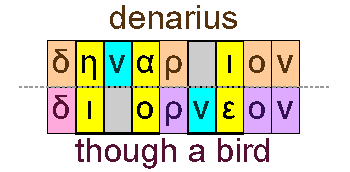
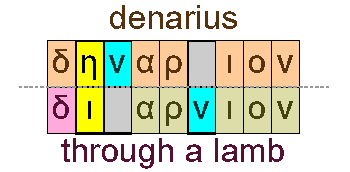
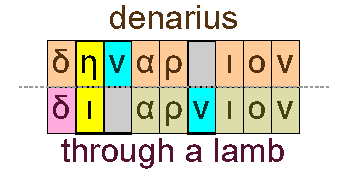
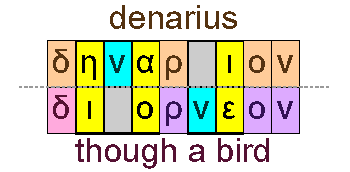
Why "two" of the "denarius" coins?
Who is the "host" of the "inn" or, literally, "everything container"?
Why does the "Samaritan" need to "go away"?
What does it mean for the "Samaritan" to "come again"?
What does it mean to "repay" or "pay"?
64. Luke 10:35 Tomorrow
Luke 10:35 And on the morrow when he departed, he took out two pence, and gave them to the host, and said unto him, Take care of him; and whatsoever thou spendest more, when I come again, I will repay thee. [kjv]
και επι την αυριον εξελθων εκβαλων δυο δηναρια εδωκεν τω πανδοχει και ειπεν αυτω επιμεληθητι αυτου και ο τι αν προσδαπανησης εγω εν τω επανερχεσθαι με αποδωσω σοι [gnt]
The
ancient Greek word
"αὔριον" ≈ "tomorrow, soon" as in the
"dawn". The
modern Greek word
"αύριο" (AV-ree-o) ≈ "tomorrow".
65. Luke 10:35 Tomorrow
Luke 10:35 And on the morrow when he departed, he took out two pence, and gave them to the host, and said unto him, Take care of him; and whatsoever thou spendest more, when I come again, I will repay thee. [kjv]
και επι την αυριον εξελθων εκβαλων δυο δηναρια εδωκεν τω πανδοχει και ειπεν αυτω επιμεληθητι αυτου και ο τι αν προσδαπανησης εγω εν τω επανερχεσθαι με αποδωσω σοι [gnt]
Tomorrow moves from
node 5 to
node 6. Will the "
"Samaritan"" as Jesus come back again? Might this be at
node 7? What decision does the "
man" need to make? Hints:
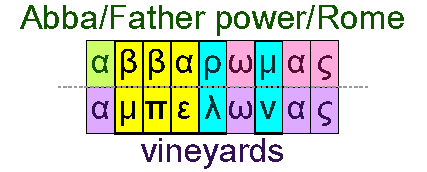
Work in the "Abba" "vineyard" in node 5.
Work in the "Rome" "vineyard" in node 7.
66. Luke 10:35 Host
Luke 10:35 And on the morrow when he departed, he took out two pence, and gave them to the host, and said unto him, Take care of him; and whatsoever thou spendest more, when I come again, I will repay thee. [kjv]
και επι την αυριον εξελθων εκβαλων δυο δηναρια εδωκεν τω πανδοχει και ειπεν αυτω επιμεληθητι αυτου και ο τι αν προσδαπανησης εγω εν τω επανερχεσθαι με αποδωσω σοι [gnt]
The "Samaritan" as Jesus is the "host" of the "everything container".
The "Samaritan" as Jesus is the "host" of the "everything container".
The "Samaritan" as Jesus will leave and return later te "repay" as needed.
Why "
two" of the
"denarius" coins?
67. Sheep and goats
Heart
Not eating fruit.
 |
Spade
Digging in sand.
 |

Sheep
|

Goat
|
 |
 |
 |
 |
|
Let the ways of doing something be a "heart" or a "spade". Group by ways of doing things.
Relate "hearts" to "sheep" for working (primarily) in the "Abba" "vineyard".
Relate "spades" to "goats". for working (primarily) in the "Rome" "vineyard".
|
68. Luke 10:35 Two denarius
Luke 10:35 And on the morrow when he departed, he took out two pence, and gave them to the host, and said unto him, Take care of him; and whatsoever thou spendest more, when I come again, I will repay thee. [kjv]
και επι την αυριον εξελθων εκβαλων δυο δηναρια εδωκεν τω πανδοχει και ειπεν αυτω επιμεληθητι αυτου και ο τι αν προσδαπανησης εγω εν τω επανερχεσθαι με αποδωσω σοι [gnt]
69. Strongs - take care
- *G1959 *3 ἐπιμελέομαι (ep-ee-mel-eh'-om-ahee) : middle voice from G1909 and the same as G3199; to care for (physically or otherwise):--take care of.
επεμεληθη
Luke 10:34 ... to an inn, and took care of him.
επιμεληθητι
Luke 10:35 ... and said unto him, Take care of him; and whatsoever ...
επιμελησεται
1 Timothy 3:5 ... his own house, how shall he take care of the church of God?)
The
ancient Greek word
"ἐπιμελέομαι" ≈ "take care of, pay attention, manage, superintend".
- "ἐπιμελής" ≈ "careful,anxious, attentive".
- "επί" ≈ "on" and "μέλω" ≈ "care for, be interested in, matter of concern".
70. 1 Timothy 3:5 Taking care of houses
1 Timothy 3:5 ( For if a man know not how to rule his own house, how shall he take care of the church of God?) [kjv]
ει δε τις του ιδιου οικου προστηναι ουκ οιδεν πως εκκλησιας θεου επιμελησεται [gnt]
Does this mean that a man who does not have a "
house" cannot take care of the church of God? What is the difference in the following?
Church of God
Church of Jesus
The
ancient Greek word
"ἐπιμελέομαι" ≈ "take care of, pay attention, manage, superintend".
71. Luke 10:35 Take care
Luke 10:35 And on the morrow when he departed, he took out two pence, and gave them to the host, and said unto him, Take care of him; and whatsoever thou spendest more, when I come again, I will repay thee. [kjv]
και επι την αυριον εξελθων εκβαλων δυο δηναρια εδωκεν τω πανδοχει και ειπεν αυτω επιμεληθητι αυτου και ο τι αν προσδαπανησης εγω εν τω επανερχεσθαι με αποδωσω σοι [gnt]
The
ancient Greek word
"ἐπιμελέομαι" ≈ "take care of, pay attention, manage, superintend".
"ἐπιμελήθητι" ≈ "take care" (as used)
72. Strongs - innkeeper
73. Luke 10:35 Ambiguous pronoun
Luke 10:35 And on the morrow when he departed, he took out two pence, and gave them to the host, and said unto him, Take care of him; and whatsoever thou spendest more, when I come again, I will repay thee. [kjv]
και επι την αυριον εξελθων εκβαλων δυο δηναρια εδωκεν τω πανδοχει και ειπεν αυτω επιμεληθητι αυτου και ο τι αν προσδαπανησης εγω εν τω επανερχεσθαι με αποδωσω σοι [gnt]
| * |
Masc.
Sing. |
Masc.
Plural |
Fem.
Sing. |
Fem.
Plural |
Neuter
Sing. |
Neuter
Plural |
| Nom. |
αὐτὁς |
αὐτοί |
αὐτἡ |
αὐταί |
αὐτό |
αὐτά |
| Gen. |
αὐτοῦ |
αὐτῶν |
αὐτῆς |
αὐτῶν |
αὐτοῦ |
αὐτῶν |
| Dat. |
αὐτῷ |
αὐτοῖς |
αὐτῇ |
αὐταῖς |
αὐτῷ |
αὐτοῖς |
| Acc. |
αὐτόν |
αὐτούς |
αὐτήν |
αὐτάς |
αὐτό |
αὐτά |
"ἄνθρωπος" ≈ "person, humanity, man" (masculine singular)
"πανδοχεῖον" ≈ "inn" (accusative neuter singular)
The pronoun
"αυτου" ≈ "him/it" (
genitive) is ambiguous. Which is it?
... take care of him (the man).
... take care of it (the inn).
74. Luke 10:35
KJV: And on the morrow when he departed, he took out two pence, and gave them to the host, and said unto him, Take care of him; and whatsoever thou spendest more, when I come again, I will repay thee.
Greek: και επι την αυριον εξελθων εκβαλων δυο δηναρια εδωκεν τω πανδοχει και ειπεν αυτω επιμεληθητι αυτου και ο τι αν προσδαπανησης εγω εν τω επανερχεσθαι με αποδωσω σοι
Latin: et altera die protulit duos denarios et dedit stabulario et ait curam illius habe et quodcumque supererogaveris ego cum rediero reddam tibi
75. Luke 10:36
Luke 10:36 Which now of these three, thinkest thou, was neighbour unto him that fell among the thieves? [kjv]
τις ουν τουτων των τριων πλησιον δοκει σοι πλησιον γεγονεναι του εμπεσοντος εις τους ληστας [gnt]
The
TR (Textus Receptus) moves the word order. Is there a difference?
Greek: ... which of these of the three neighbor do you think came into being of falling into the robbers?
TR: ... which of these of the three do you think neighbor came into being of falling into the robbers?
Questions:
Who is the "Samaritan"? Who is the "man"?
Three: "robbers", "priest", "Levite". How do these compare to the Unholy Trinity? How about "birds", "fish" and "pigs"?
How many others are there in the story?
76. Luke 10:36
KJV: Which now of these three, thinkest thou, was neighbour unto him that fell among the thieves?
Greek: τις ουν τουτων των τριων πλησιον δοκει σοι πλησιον γεγονεναι του εμπεσοντος εις τους ληστας
77. Luke 10:37
KJV: And he said, He that shewed mercy on him. Then said Jesus unto him, Go, and do thou likewise.
Greek: ο δε ειπεν ο ποιησας το ελεος μετ αυτου ειπεν ουν δε αυτω ο ιησους πορευου και συ ποιει ομοιως
78. Luke 10:38 The story continues
Luke 10:38 Now it came to pass, as they went, that he entered into a certain village: and a certain woman named Martha received him into her house. [kjv]
εγενετο δε εν δε τω πορευεσθαι αυτους και αυτος εισηλθεν εις κωμην τινα γυνη δε τις ονοματι μαρθα υπεδεξατο αυτον εις τον οικον αυτης την οικιαν [gnt]
The story continues.
... more to be added ...
79. Luke 10:38
KJV: Now it came to pass, as they went, that he entered into a certain village: and a certain woman named Martha received him into her house.
Greek: εγενετο δε εν δε τω πορευεσθαι αυτους και αυτος εισηλθεν εις κωμην τινα γυνη δε τις ονοματι μαρθα υπεδεξατο αυτον εις τον οικον αυτης την οικιαν
80. End of page
 What are the two most important rules in the Bible? In Luke 10, the lawyer and Jesus both agree.







 Who is my neighbor?