Send
Close Add comments:
(status displays here)
Got it! This site "creationpie.org" uses cookies. You consent to this by clicking on "Got it!" or by continuing to use this website. Note: This appears on each machine/browser from which this site is accessed.
Matthew 10 Overview and summary
1. Matthew 10 Overview and summary
2. Matthew 10
3. Matthew 10 Overview and summary
In Matthew 10, Jesus sends the "
disciples", as "
apostles" or "
ones sent", to the "
lost" "
sheep" of Israel. It becomes clear in later verses that the ideas of the message is carefully worded to apply to all times and not just this one mission.
4. Matthew 10:1-4 The twelve apostolic disciples
Matthew 10:1 And when he had called unto him his twelve disciples, he gave them power against unclean spirits, to cast them out, and to heal all manner of sickness and all manner of disease. [kjv]
At the beginning of Matthew 10, Jesus
sends, the meaning of "
apostle", the disciples out on a
mission. Why do they need to "
cast out" "
unclean spirits"? The twelve disciples of Jesus are then listed and the discourse continues.
| Simon Peter |
Philip |
James son of Alphaeus |
| Andrew (his brother) |
Bartholomew |
Thaddaeus (Lebbaeus) |
| James of Zebedee |
Thomas |
Simon the Canaanite |
| John (his brother) |
Matthew (publican) |
Judas Iscariot |
The ancient Greek word
"μαλακία" ≈ "softness, effeminacy, unmanliness, feebleness, faint-hardheartedness". Only in the
GNT (Greek New Testament) is the meaning
"infirmity" or
"sickness". What type of
"softness" or
"effeminacy" or
"unmanliness" might Jesus, and here the disciples, have been healing?
5. Matthew 10:5-10 Possessing acquired purchases
Matthew 10:9 Provide neither gold, nor silver, nor brass in your purses, [kjv]
μη κτησησθε χρυσον μηδε αργυρον μηδε χαλκον εις τας ζωνας υμων [gnt]
The ancient Greek word
"κτῆσις" ≈ "act of acquiring, ownership, taking" which, once obtained, becomes "
property". The word is from the ancient Greek word
"κτάομαι" ≈ "get, obtain, acquire". Once acquired, it is
"possessed". The idea of
"possess" comes from the Latin word
"possidere" ≈ "possess".
This word is used in
seven verses in the
GNT. The meaning of the verse can change depending on whether the verse refers to already possessing something or whether that something is to be acquired and then possessed. The idea of
"possess" comes from the Latin word
"possidere" ≈ "possess".
The Greek for
"purses" is that of
"belt" and is the source of the English word
"zone". The Greek has
"into" (going into) rather than
"in" (already in).
"Gold": play on words with Christ by removing the cross.
"Silver": play on words with "lazy way around" as "ἄργυρος" ≈ "silver" and "ἀργός" ≈ "not working, idle, lazy" and "γυρός" ≈ "round".
"Copper": metal of a cheap "idol".
Discuss: Why might the church not want you to have money to take along to spread the "
Good News"? Provide any known historical examples of either case.
This content is concerned with "
acquire" and not the precious metals of "
gold", "
silver" and
"brass" nor the way for the "
lost sheep" to get out of the pit and become
not lost.
6. Matthew 10:8-10 The way out of the pit
Matthew 10:8 Heal the sick, cleanse the lepers, raise the dead, cast out devils: freely ye have received, freely give. [kjv]
10:9 Provide neither gold, nor silver, nor brass in your purses, [kjv]
10:10 Nor scrip for your journey, neither two coats, neither shoes, nor yet staves: for the workman is worthy of his meat. [kjv]
In Matthew 10:8-10, Jesus explains the way out of the "
pit" or "
ditch" or "
abyss". The "
lost sheep" become "
sheep" and ready to
start the path to life.
7. Matthew 10:8-9 Way out of the pit
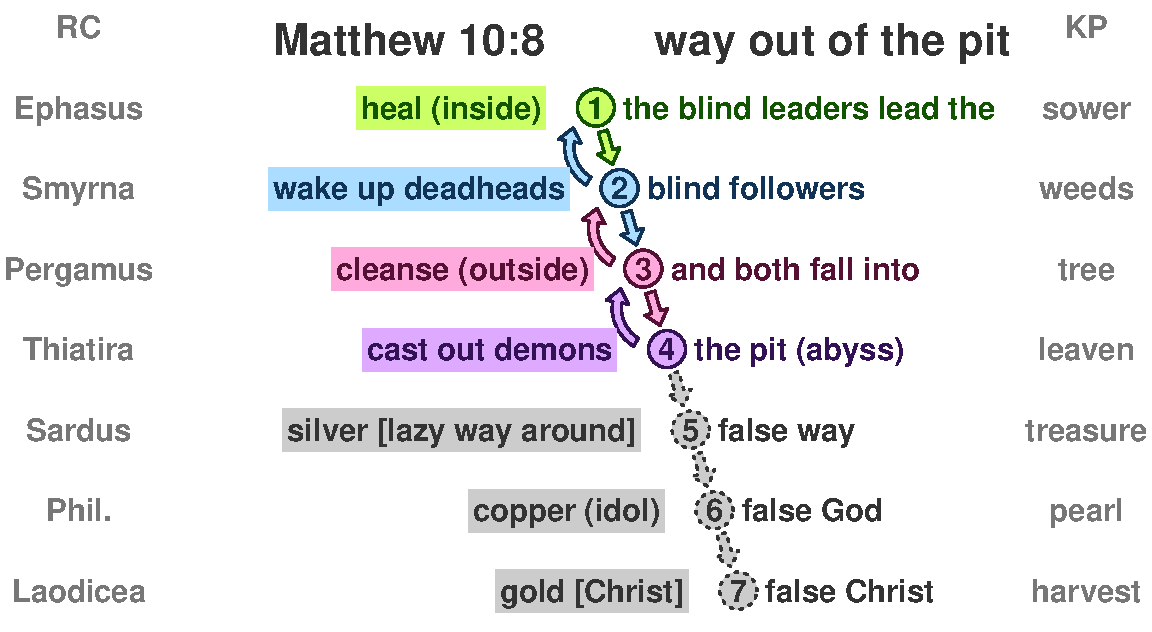
Matthew 10:8-10 appears to show the way
out of the pit in a top-down backward-chaining way.
The "
lost sheep" become "
sheep" and ready to
start the path to life.
Matthew 10:8 Heal the sick, cleanse the lepers, raise the dead, cast out devils: freely ye have received, freely give. [kjv]
10:9 Provide neither gold, nor silver, nor brass in your purses, [kjv]
KJV (King James Version) changes order of
lepers and
dead. The Greek words for "
gold" and "
silver" can be
play on words. Can we go further in the analysis?
4. Cast out devils (if necessary) to get out of the pit.
3. Cleanse them on the outside (if necessary, one coat needed).
2. Wake up the sleeping (not seeing) deadheads (if necessary).
1. Heal them on the inside to be ready to start the path to life.
8. Matthew 10:8-10 Way out of the pit
The Greek word for "
food" can be a play on words with "
trophy".
Is the "
workman" the person being sent out, the person being "
healed", both or neither?
Matthew 10:8 Heal the sick, cleanse the lepers, raise the dead, cast out devils: freely ye have received, freely give. [kjv]
10:9 Provide neither gold, nor silver, nor brass in your purses, [kjv]
10:10 Nor scrip for your journey, neither two coats, neither shoes, nor yet staves: for the workman is worthy of his meat. [kjv]
Sometimes prophets did
concrete actions to symbolize
abstract ideas.
9. Matthew 10:11-15 Dusting off peaceful town salutes
Matthew 10:11 And into whatsoever city or town ye shall enter, enquire who in it is worthy; and there abide till ye go thence. [kjv]
10:12 And when ye come into an house, salute it. [kjv]
10:13 And if the house be worthy, let your peace come upon it: but if it be not worthy, let your peace return to you. [kjv]
10:14 And whosoever shall not receive you, nor hear your words, when ye depart out of that house or city, shake off the dust of your feet. [kjv]
Paraphrase of play on words:
... whatever city [many, bad] or town [hair, believer], ... if not received, depart out of that house or city [many] ...
The Greek word for "city" can be a play on words with "many" as in the "many" on a "mountain" that cannot be "hid" (and not in a good sense). Evil tends to be concentrated in "cities".
The Greek word for "town" can be a play on words with "hair" as in the "hair" as a believer on the "head" as Christ.
The "house" can be the "house" of Israel, an individual "house", a "house" built on "sand" or "rock", etc.
One need not depart out of a
"town" [believer] as a
"hair" on the "
head" of
Jesus.
10. Numbers 6:5 Samson
11. Matthew 10:11 Town hairs as believers
Matthew 10:11 And into whatsoever city or town ye shall enter, enquire who in it is worthy; and there abide till ye go thence. [kjv]
εις ην δ αν πολιν η κωμην εισελθητε εξετασατε τις εν αυτη αξιος εστιν κακει μεινατε εως αν εξελθητε [gnt]
The Greek word for "
town" can be a play on words with "
hair" as in the "
hair" as a
believer on the "
head" as
Christ.
"κόμη" ≈ "well-tended hair" as opposed to "θρίψ" ≈ "hair".
"κώμη" ≈ "un-walled village or town".
"κόμην" ≈ "well-tended hair" (accusative singular).
"κώμην" ≈ "un-walled village or town" (accusative singular)
Today these words would be pronounced the same. At that time, they would have sounded similar.
A "
city", on the other hand, would have a "
wall". Discuss:
Is putting up "walls" good or bad? Explain. How about a "wall" of "laws"?
12. Matthew 10:11 Examine with prudence
Matthew 10:11 And into whatsoever city or town ye shall enter, enquire who in it is worthy; and there abide till ye go thence. [kjv]
εις ην δ αν πολιν η κωμην εισελθητε εξετασατε τις εν αυτη αξιος εστιν κακει μεινατε εως αν εξελθητε [gnt]
The Greek word for "
worthy" is the source of the English word
"axiom". The Greek word for "
abide" is that of "
remaining" as in the
Meno Paradox.
The Greek words for "
and there" can be a play on words with "
bad" referencing a grammatically feminine adjective. It is not clear if such a play on words applies here.
The ancient Greek word
"ἐξετάζω" ≈ "examine well, scrutinize". The Greek word translated as "
enquire" is that of "
examine". How can one "
examine" who is "
worthy"? One must use "
prudence" and make a decision based an what is known.
The
passive action here is to make a decision based on available evidence. In verse 16 (five verses) verses, Jesus will tell them to be as "
prudent", translated as "
wise" as "
serpents" in making such decisions.
13. Matthew 10:13 Flow of peace
Matthew 10:13 And if the house be worthy, let your peace come upon it: but if it be not worthy, let your peace return to you. [kjv]
και εαν μεν η η οικια αξια ελθετω ελθατω η ειρηνη υμων επ αυτην εαν δε μη η αξια η ειρηνη υμων προς εφ υμας επιστραφητω [gnt]

Whatever the word "
peace" means, it can be transferred to and, later if needed, transfered back. Does "
peace" remain with you or does it not return until later? [pass the peace]
Greek (word order):
and if then is the house worthy (let) go/come the peace of you on it if then not the worthy the peace of you on you return (turn around).
If you are continually exuding Jesus, as in a flow of emotion, actions, etc., then stopping that flow has the effect of returning it to you - to be used elsewhere.
14. Matthew 10:13 Flow of peace
Matthew 10:13 And if the house be worthy, let your peace come upon it: but if it be not worthy, let your peace return to you. [kjv]
και εαν μεν η η οικια αξια ελθετω ελθατω η ειρηνη υμων επ αυτην εαν δε μη η αξια η ειρηνη υμων προς εφ υμας επιστραφητω [gnt]
The Greek word for "
peace" comes from either the Greek word for "
say" or "
fastened together" (same word). This origin is disputed, but, if not true, is then a play on words.
"εἰρήνη" ≈ "peace".
"εἴρω" ≈ "speak, say".
"εἴρω" ≈ "fasten together". Compare this with "better together".
"εἴρων" ≈ "one who feigns ignorance" (e.g., Socrates) and is the source of the English word "irony" but had that different meaning in ancient times.
15. Matthew 10:14 Dust in the wind
Matthew 10:14 And whosoever shall not receive you, nor hear your words, when ye depart out of that house or city, shake off the dust of your feet. [kjv]
και ος εαν αν μη δεξηται υμας μηδε ακουση τους λογους υμων εξερχομενοι εξω της οικιας η της πολεως εκεινης εκτιναξατε τον κονιορτον των ποδων υμων [gnt]
The "
house" or "
city" is
not the "
town" which is a play on words with (well-behaved) "
hair" as in a
believer (
sheep).
A "
bird"
preens its feathers to keep them "
smooth", as in "
without horns", and to remove
pests. The
passive action here is to preen by just shaking the dust off the "
feet" for those who do not "
listen". In verse 16 (in two verses), Jesus will tell them to be as "
without horns", translated as "
harmless" (only in the
GNT) as "
birds" or "
pigeons" and translated as "
doves" (same bird).
16. Matthew 10:14 Dust in the wind
Matthew 10:14 And whosoever shall not receive you, nor hear your words, when ye depart out of that house or city, shake off the dust of your feet. [kjv]
και ος εαν αν μη δεξηται υμας μηδε ακουση τους λογους υμων εξερχομενοι εξω της οικιας η της πολεως εκεινης εκτιναξατε τον κονιορτον των ποδων υμων [gnt]
One should "
wash" the "
feet" of the "
fish" in the "
blood". Shaking the "
dust" off the "
feet" symbolically represents "
unwashing" those who do not want to be "
washed" in the "
blood". Apparently, this "
house" is built on "
sand" and one should not take any of that "
sand" (human infrastructure of man as in humanism) away.
17. Matthew 10:15
Matthew 10:15 Verily I say unto you, It shall be more tolerable for the land of Sodom and Gomorrha in the day of judgment, than for that city. [kjv]
αμην λεγω υμιν ανεκτοτερον εσται γη σοδομων και γομορρων εν ημερα κρισεως η τη πολει εκεινη [gnt]
There are things
worse than the
physical actions (sins) of Sodom and Gomorrha.
Might these things (sins) be the
abstract manifestation of
deception that can
deceive one into separating body and soul in hell? (verses 26-27)
18. Matthew 10:16 Animal crackers
In Matthew 10:16, Jesus uses
four creatures in one verse:
sheep,
wolves,
serpents and
doves or (
pigeons) as
"birds". The English adjectives do not fit the Greek words.
Matthew 10:16 Behold, I send you forth as sheep in the midst of wolves: be ye therefore wise as serpents, and harmless as doves. [kjv]
ιδου εγω αποστελλω υμας ως προβατα εν μεσω λυκων γινεσθε ουν φρονιμοι ως οι οφεις και ακεραιοι ως αι περιστεραι [gnt]
"
Wolves" operate in groups and look for any weakness in their prey. Wolves and dogs can interbreed. A "
wolf-dog" is in contrast to a "
sheep-dog".
The
"serpents" are
not "wise" in the English sense. They are
opportunistic and
prudent. So, no "
wise crackers" here!
The
"doves" or
"pigeons" (same bird) or
"birds" are
not "
harmless" in the English sense. They are without frills (insect antennas), with smooth feathers, preened of pests. not fact-checked, etc. Is this how
"birds" of "
prey" or
"pray" want to appear?
19. Matthew 10:16 Context
Matthew 10:16 Behold, I send you forth as sheep in the midst of wolves: be ye therefore wise as serpents, and harmless as doves. [kjv]
ιδου εγω αποστελλω υμας ως προβατα εν μεσω λυκων γινεσθε ουν φρονιμοι ως οι οφεις και ακεραιοι ως αι περιστεραι [gnt]
In previous verses, Jesus has provided the following guidance.
"Examine" who in "worthy". This requires "prudence" as a "serpent".
Shake the "dust" off the "feet". This requires "preening" or "without horns" as a "pigeon" or "dove" (same "bird").
In the next verses, Jesus will provide the following guidance.
The "wolves" will do the "persecution", looking for any "weakness" in the "prey" that can be used (e.g., strong beliefs that are held).
20. Matthew 18:19-20 Comparison
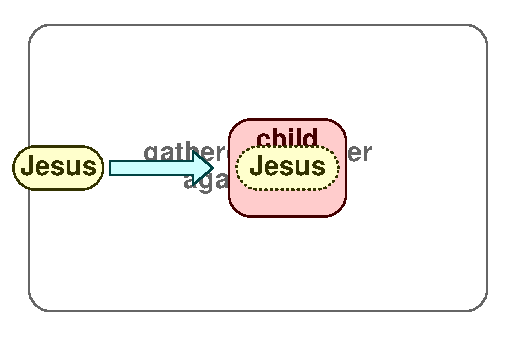
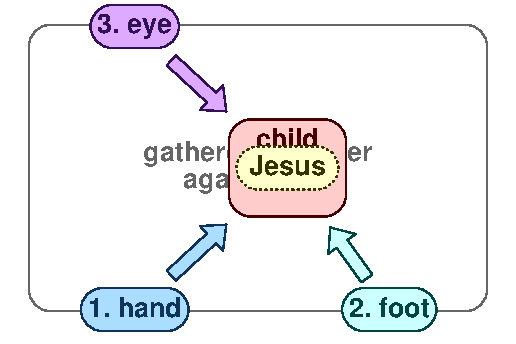
Matthew 18:19 Again I say unto you, That if two of you shall agree on earth as touching any thing that they shall ask, it shall be done for them of my Father which is in heaven. [kjv]
18:20 For where two or three are gathered together in my name, there am I in the midst of them. [kjv]
|
Matthew 18: First time:
|
Matthew 18: Again:
|
Matthew 5,18: Wall
|
 |
 |
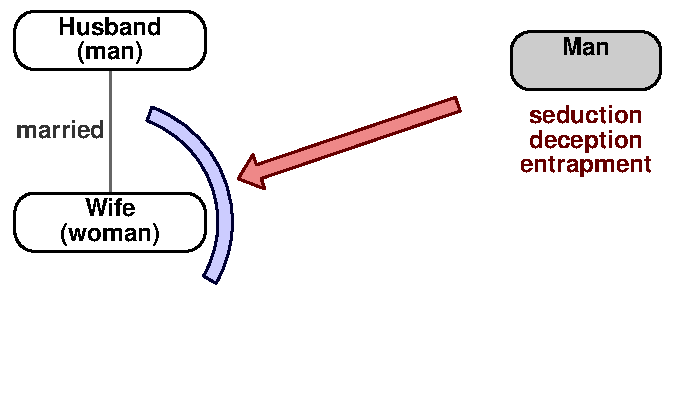 |
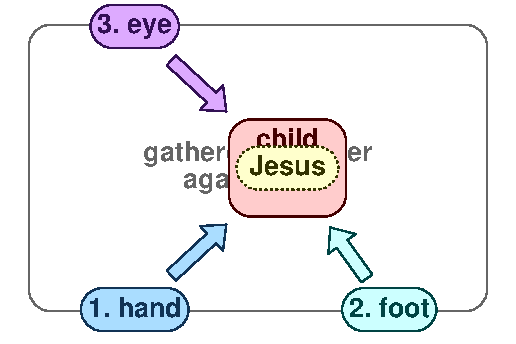 |
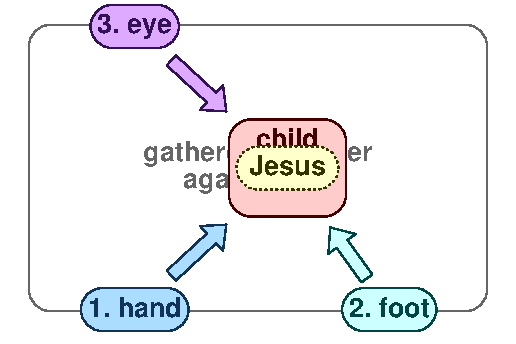 |
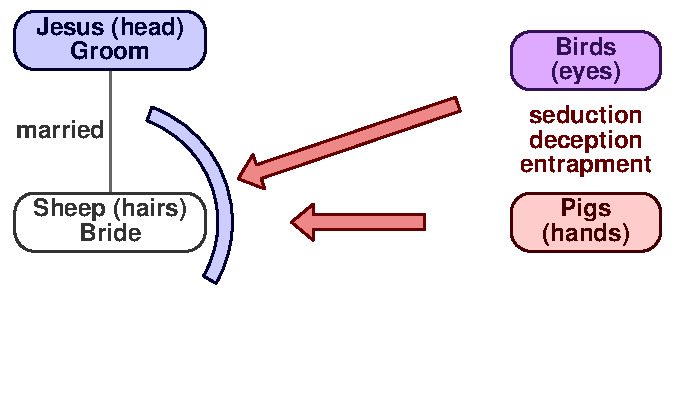 |
Consider what Jesus has said. What might be your
next question?
21. Matthew 18:18 Before and after
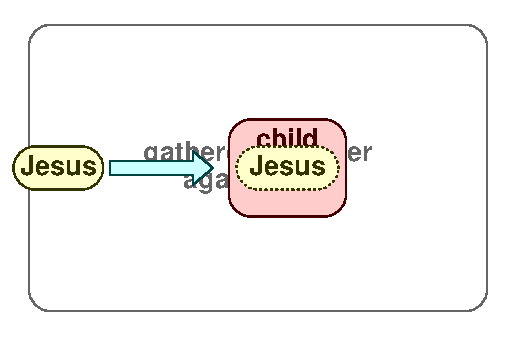 |
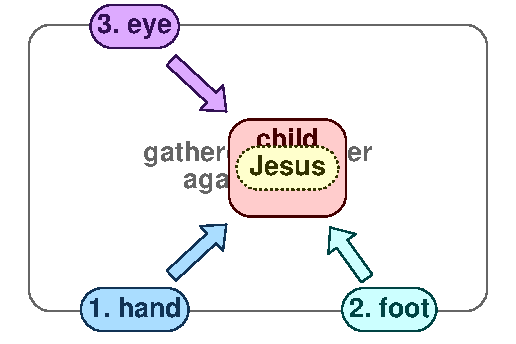 |
Remove the wall between you and Jesus. Put up a wall between you and those that would entrap you (to be great).
|
Matthew 18:18 Verily I say unto you, Whatsoever ye shall bind on earth shall be bound in heaven: and whatsoever ye shall loose on earth shall be loosed in heaven. [kjv]
Jesus, as Holy Spirit, is "
in" the
"heart" of the
"little one", hopefully
"you", for the
"ages", until He comes again.
Only
you can
separate yourself from the love of Christ.
Do you see a connection between the before and after?
If you bind/glue yourself to Jesus on earth, you will be bound/glued to Jesus in heaven. If you loose/separate from Jesus on earth, you will be loosed/separated from Jesus in heaven (i.e., you will not be there).
22. Matthew 10:17-18 Persecution
Matthew 10:17 But beware of men: for they will deliver you up to the councils, and they will scourge you in their synagogues; [kjv]
προσεχετε δε απο των ανθρωπων παραδωσουσιν γαρ υμας εις συνεδρια και εν ταις συναγωγαις αυτων μαστιγωσουσιν υμας [gnt]
10:18 And ye shall be brought before governors and kings for my sake, for a testimony against them and the Gentiles. [kjv]
These verses appear to indicate that this discourse is carefully worded to apply to all time and not just this particular mission or to just the House of Israel.
The ancient Greek word
"συνέδριον" ≈ "council" as in an
"advising body" or
"governing body". This is a man-made organization. The word comes from two words and means, literally,
"sitting together". This word can be a play on words with "
together three" as in the "
three" parts of
Satan, also represented as "
gold", "
silver" and "
copper".
The ancient Greek word
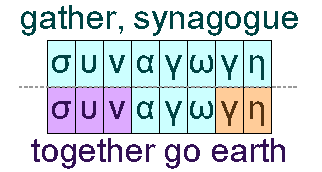
"συναγωγή" ≈ "gathering" as in a
"synagogue" and can be a play on words with the three constituent words "
together", "
lead, bring, go" and "
earth".
23. Matthew 5:22 Council
Matthew 5:22 But I say unto you, That whosoever is angry with his brother without a cause shall be in danger of the judgment: and whosoever shall say to his brother, Raca, shall be in danger of the council: but whosoever shall say, Thou fool, shall be in danger of hell fire. [kjv]
εγω δε λεγω υμιν οτι πας ο οργιζομενος τω αδελφω αυτου εικη ενοχος εσται τη κρισει ος δ αν ειπη τω αδελφω αυτου ρακα ενοχος εσται τω συνεδριω ος δ αν ειπη μωρε ενοχος εσται εις την γεενναν του πυρος [gnt]
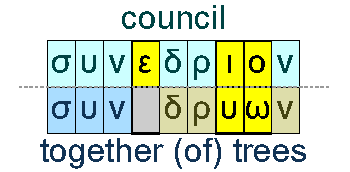
"συνέδριον" ≈ "council".
"σῠν" ≈ "with, together" and "δρῠῶν" ≈ "(of) trees" or "τρῐῶν" ≈ "(of) three"
The Greek word for
"council" is a play on words of
"together" "three" (in an evil/oppressive Satanic sense) of the
"tree" or
"three".
24. Matthew 5:22 Council
Matthew 5:22 But I say unto you, That whosoever is angry with his brother without a cause shall be in danger of the judgment: and whosoever shall say to his brother, Raca, shall be in danger of the council: but whosoever shall say, Thou fool, shall be in danger of hell fire. [kjv]
The ancient Greek word
"συνέδριον" ≈ "council" as in an
"advising body" or
"governing body". This is a man-made organization. The word comes from two words and means, literally,
"sitting together".
"σῠν" ≈ "with, together" and "ἕδρα" ≈ "seat".
The last part of the Greek word for
"council" as in "
seat" is the source of the last part of the Latin phrase
"ex cathedra" ≈ "from out of the chair". This phrase is used to refer to the Pope making "
infallible" pronouncements from "
the out of the chair". This takes God's "
throne" (12 verses away) and puts it under human power.
25. Revelation 3:9 Synagogue
Revelation 3:9 Behold, I will make them of the synagogue of Satan, which say they are Jews, and are not, but do lie; behold, I will make them to come and worship before thy feet, and to know that I have loved thee. [kjv]
ιδου διδωμι διδω εκ της συναγωγης του σατανα των λεγοντων εαυτους ιουδαιους ειναι και ουκ εισιν αλλα ψευδονται ιδου ποιησω αυτους ινα ηξωσιν ηξουσιν και προσκυνησωσιν προσκυνησουσιν ενωπιον των ποδων σου και γνωσιν οτι εγω ηγαπησα σε [gnt]
"συναγωγή" ≈ "gathering"
"συν" ≈ "together".
"ἄγω" ≈ "go" and "γη" ≈ "earth".
The
ancient Greek word
"συναγωγή" ≈ "gathering" and is the source of the English word
"synagogue" which is a Greek word and
not a Hebrew word. This word can be a play on words with the three constituent words
"together",
"lead, bring, go" and
"earth".
26. Revelation 3:9 Synagogue
Revelation 3:9 Behold, I will make them of the synagogue of Satan, which say they are Jews, and are not, but do lie; behold, I will make them to come and worship before thy feet, and to know that I have loved thee. [kjv]
ιδου διδωμι διδω εκ της συναγωγης του σατανα των λεγοντων εαυτους ιουδαιους ειναι και ουκ εισιν αλλα ψευδονται ιδου ποιησω αυτους ινα ηξωσιν ηξουσιν και προσκυνησωσιν προσκυνησουσιν ενωπιον των ποδων σου και γνωσιν οτι εγω ηγαπησα σε [gnt]
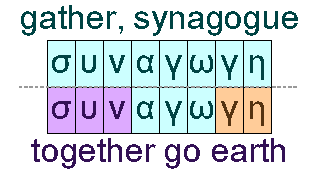
"συναγωγή" ≈ "gathering"
"συν" ≈ "together".
"ἄγω" ≈ "go" and "γη" ≈ "earth".
Discuss:
Who might "lead, bring, go" "together" on the "earth"?
What might be meant by "to" "know"? The "to" was added.
Might the wording indicate that, at one time, they were "loved" but they have now separated themselves from the "love" of Christ?
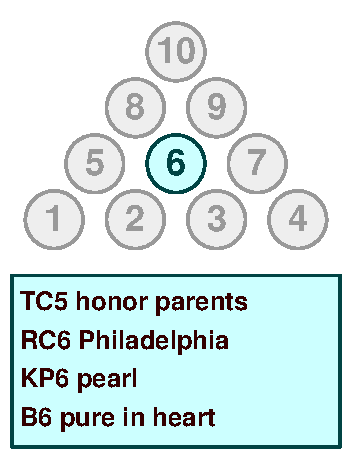
[Ten Pin model]
27. Revelation 3:9
Revelation 3:9 Behold, I will make them of the synagogue of Satan, which say they are Jews, and are not, but do lie; behold, I will make them to come and worship before thy feet, and to know that I have loved thee. [kjv]
ιδου διδωμι διδω εκ της συναγωγης του σατανα των λεγοντων εαυτους ιουδαιους ειναι και ουκ εισιν αλλα ψευδονται ιδου ποιησω αυτους ινα ηξωσιν ηξουσιν και προσκυνησωσιν προσκυνησουσιν ενωπιον των ποδων σου και γνωσιν οτι εγω ηγαπησα σε [gnt]
Greek:
... out of the "synagogue" "of (the)" "Satan" ...
28. Matthew 13:33 Satanic measures three
Matthew 13:33 Another parable spake he unto them; The kingdom of heaven is like unto leaven, which a woman took, and hid in three measures of meal, till the whole was leavened. [kjv]
αλλην παραβολην ελαλησεν αυτοις ομοια εστιν η βασιλεια των ουρανων ζυμη ην λαβουσα γυνη ενεκρυψεν εις αλευρου σατα τρια εως ου εζυμωθη ολον [gnt]
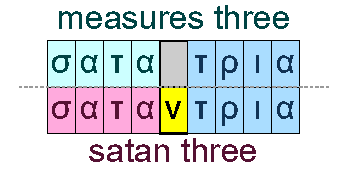
"σατα" ≈ "measures".
"τρια" ≈ "three".
"σαταν" ≈ "Satan".
Can you think of ways that these allusions might be
"encrypted" in the
"wheat" or
"meal"?
☐
σατα τρια (sata tria) as "
measures three" (as written)
☐
σαταν τρια (Satan tria) as "
Satan three"
☐
σαταρίς τρια (sataris tria) as "
woman's headdress three"
☐
στατηρα τρια (statira tria) as "
temple tax coin three"
29. Matthew 10:19-20 Say what
Matthew 10:19 But when they deliver you up, take no thought how or what ye shall speak: for it shall be given you in that same hour what ye shall speak. [kjv]
οταν δε παραδιδωσιν παραδωσιν υμας μη μεριμνησητε πως η τι λαλησητε δοθησεται γαρ υμιν εν εκεινη τη ωρα τι λαλησετε λαλησητε [gnt]
10:20 For it is not ye that speak, but the Spirit of your Father which speaketh in you. [kjv]
ου γαρ υμεις εστε οι λαλουντες αλλα το πνευμα του πατρος υμων το λαλουν εν υμιν [gnt]
The business
JIT (Just In Time) idea allows actions and speaking to be taken when needed instead of the business
JIC (Just In Case) idea whereby one is never really ready until the "
last" "
farthing" has been paid, which will never happen.
This verse does
not provide a Biblical excuse for pastors to not prepare sermons.
30. Luke 12:12 Eager and lazy ideas
Luke 12:12 For the Holy Ghost shall teach you in the same hour what ye ought to say. [kjv]
το γαρ αγιον πνευμα διδαξει υμας εν αυτη τη ωρα α δει ειπειν [gnt]
Apparently one does not need to be taught
"everything" by the Holy Spirit.
One will be "
taught" just in time for what needs to be said. That will work if the Holy Spirit is available to teach always.
That principle has been used in business for many years now. Storing inventory has a storage cost, can go bad, might be lost, etc.
Eager strategy - do it now in case it is needed - JIC it is needed strategy (kitchen sink approach)
Lazy strategy - delay until just when it is needed - JIT as it is needed strategy.
[fractals, time perception]
31. Matthew 10:21-22 Persecution
Matthew 10:21 And the brother shall deliver up the brother to death, and the father the child: and the children shall rise up against their parents, and cause them to be put to death. [kjv]
παραδωσει δε αδελφος αδελφον εις θανατον και πατηρ τεκνον και επαναστησονται τεκνα επι γονεις και θανατωσουσιν αυτους [gnt]
10:22 And ye shall be hated of all men for my name's sake: but he that endureth to the end shall be saved. [kjv]
The "
delivering" up of one another is reminiscent of the
Olivet Discourse about the
End Times in Matthew 24.
The Greek word for "
deliver" is that of "
betray" and is related to the word for "
tradition". All are things that are "
handed over", the literal meaning of the word.
[euthanasia]
32. Matthew 10:23 Flee persecution
Matthew 10:23 But when they persecute you in this city, flee ye into another: for verily I say unto you, Ye shall not have gone over the cities of Israel, till the Son of man be come. [kjv]
οταν δε διωκωσιν υμας εν τη πολει ταυτη φευγετε εις την αλλην ετεραν αμην γαρ λεγω υμιν ου μη τελεσητε τας πολεις του του ισραηλ εως αν ελθη ο υιος του ανθρωπου [gnt]
The "
flee" to "
another" is reminiscent of the "
cities" of "
refuge" in the
OT (Old Testament).
These verses appear to describe how the (people of the) "
world" has treated the Jews in general since then. The same has been true, to a lesser extent, for Christians.
The Greek word for "
persecute" is that of "
pursuit". In context, it may be "
persecution".
The Greek word for "
other" used here is that of a "
different other" as in the first part of the English word
"heterosexual".
33. Philippians 3:6,14 Pursing persecution
The ancient Greek word
"διώκω" ≈ "pursue" in the sense of
"going after" or, in
context,
"persecuting". The Greek word "
blameless" is "
without spots".
Philippians 3:6 Concerning zeal, persecuting the church; touching the righteousness which is in the law, blameless. [kjv]
κατα ζηλον ζηλος διωκων την εκκλησιαν κατα δικαιοσυνην την εν νομω γενομενος αμεμπτος [gnt]
Paul was
"pursuing" in the
wrong direction in a
"physical" way according to
man's "righteousness". The Greek for "
zeal" is that of "
competing with others for the same goal".
Paul is now
"pursuing" (same word) in the
right direction in a
"non-physical" way.
3:14 I press toward the mark for the prize of the high calling of God in Christ Jesus. [kjv]
κατα σκοπον διωκω επι εις το βραβειον της ανω κλησεως του θεου εν χριστω ιησου [gnt]
34. Matthew 10:25 Beelzebub projection
Matthew 10:25 It is enough for the disciple that he be as his master, and the servant as his lord. If they have called the master of the house Beelzebub, how much more shall they call them of his household? [kjv]
αρκετον τω μαθητη ινα γενηται ως ο διδασκαλος αυτου και ο δουλος ως ο κυριος αυτου ει τον οικοδεσποτην βεελζεβουλ εκαλεσαν βεεζεβουλ επεκαλεσαν ποσω μαλλον τους οικιακους αυτου [gnt]
The psychological idea of
projection is that of accusing others of doing or thinking what you are doing or thinking. Here, given the
projection of the religious establishment, Jesus associates the religious establishment with
Beelzebub, Satan, etc., and the
"master of the house" with himself.
The Greek word translated as
"more" is that of
"rather (instead)".
35. Matthew 10:26 Fear and Beelzebub
Matthew 10:26 Fear them not therefore: for there is nothing covered, that shall not be revealed; and hid, that shall not be known. [kjv]
μη ουν φοβηθητε αυτους ουδεν γαρ εστιν κεκαλυμμενον ο ουκ αποκαλυφθησεται και κρυπτον ο ου γνωσθησεται [gnt]
The Greek for
"hid" is seldom, if ever, used in a good context in the
LXX (Septuagint) or
GNT. The "
many" who are on a "
mountain"
cannot be
"hid".
The Greek word for
"covered" and
"secret" or
"hidden" are related.
The "
them" are the
religious establishment (i.e., "
birds" and "
pigs") who have (in the previous verses) attributed the power of Jesus as coming from
Satan or
Beelzebub.
Discuss: Do modern pastors effectively attribute the power of Jesus to Satan when they preach, not about what Jesus actually says, but the opposite of what Jesus says?
36. Matthew 10:27 Housetops
Matthew 10:27 What I tell you in darkness, that speak ye in light: and what ye hear in the ear, that preach ye upon the housetops. [kjv]
ο λεγω υμιν εν τη σκοτια ειπατε εν τω φωτι και ο εις το ους ακουετε κηρυξατε επι των δωματων [gnt]
It appears one is to be "
on" the "
housetop" of the "
house" that is built on "
sand" rather than inside and a part of that "
house". The phrase "
better together" is deceptive.
This same word for "
houses" is used in the Sermon on the Mount as in giving bad "
gifts" or "
houses" (i.e., built on "
sand") to your "
children".
The "
birds" as
false teachers who use
deception want the flock to be "
better together" or "
all in the same boat" or "
all in the same vote" or "
all in the same house", etc. Instead of putting their "
candle" or "
opinion" under an
objective "
measure" they like to hold up that
false light for all in their "
house" (apparently built on a "
mountain") to see.
37. Matthew 10:28 Soul and body
Matthew 10:28 And fear not them which kill the body, but are not able to kill the soul: but rather fear him which is able to destroy both soul and body in hell. [kjv]
και μη φοβηθητε φοβεισθε απο των αποκτεινοντων το σωμα την δε ψυχην μη δυναμενων αποκτειναι φοβηθητε φοβεισθε δε μαλλον τον δυναμενον και ψυχην και σωμα απολεσαι εν γεεννη [gnt]
Jesus tells us that the "
body" and the "
soul" are different. Jesus tells us who we should
"fear" and it is not
"fear" about the
cares and
concerns of this world. The most dangerous attacks are not from the outside but from the inside and involve
deception.
One cannot "
destroy the soul" by
"killing" the body is in persecution (e.g., by the Roman administrations). The primary way to
"destroy" the "
soul" is through
deception so that you "
sell yourself out" or are "
sold out".
Jesus provides an example in the
next verse.
38. Matthew 10:29-31 Soul and body
Matthew 10:29 Are not two sparrows sold for a farthing? and one of them shall not fall on the ground without your Father. [kjv]
ουχι δυο στρουθια ασσαριου πωλειται και εν εξ αυτων ου πεσειται επι την γην ανευ του πατρος υμων [gnt]
10:30 But the very hairs of your head are all numbered. [kjv]
υμων δε και αι τριχες της κεφαλης πασαι ηριθμημεναι εισιν [gnt]
10:31 Fear ye not therefore, ye are of more value than many sparrows. [kjv]
μη ουν φοβηθητε φοβεισθε πολλων στρουθιων διαφερετε υμεις [gnt]
Discuss: [killing me softly with his song]
How might "sparrows" (birds of the evil one) deceive to "destroy the soul" in order to achieve "earthly gain" (money) by "selling out"?
Do "sparrows" succeed because those being deceived do not "understand"? This is what Jesus says of the birds in the Parable of the Sower in Matthew 13.
Have those "deceived" separated themselves from the love of Christ?
39. Matthew 10:29,31 All the sparrows
Matthew 10:29 Are not two sparrows sold for a farthing? and one of them shall not fall on the ground without your Father. [kjv]
ουχι δυο στρουθια ασσαριου πωλειται και εν εξ αυτων ου πεσειται επι την γην ανευ του πατρος υμων [gnt]
10:31 Fear ye not therefore, ye are of more value than many sparrows. [kjv]
μη ουν φοβηθητε φοβεισθε πολλων στρουθιων διαφερετε υμεις [gnt]
Paraphrase:
All the sparrows (of the evil one) who sell themselves (or others) out for earthly gain will fall on that earthly ground because they are without God the Father ... Fear not. You are different than sparrows.
It takes "
two" to work a "
deal" - for or against God. The Greek word for "
hairs" is that of general "
hairs" and
not the Greek word for "
well-behaved hairs" which is a play on words with (un-walled) "
town" or "
village". [sheep and (young) goats]
Which birds stick together the best?
Velcrows
40. Matthew 10:32 Confession reasoning
Matthew 10:32 Whosoever therefore shall confess me before men, him will I confess also before my Father which is in heaven. [kjv]
πας ουν οστις ομολογησει εν εμοι εμπροσθεν των ανθρωπων ομολογησω καγω εν αυτω εμπροσθεν του πατρος μου του εν τοις ουρανοις [gnt]
The ancient Greek word
"ὁμολογέω" ≈ "make an agreement, agree" and means, literally,
"same reasoning" or
"same explanation" and can be
"same word" if "
word" is taken as "
reasoning". The Latin word
"confiteor" ≈ "confess".
Which matters more? What you
think. What you
say. What you
do. Discuss:
Is this a verbal "confession" "in" "Jesus"?
Can actions, or lack of actions, define a "confession" "in" "Jesus"?
How is an "agreement" different than an "oath"?
Jesus here uses the ancient Greek phrase (three times in Matthew)
"ἐν" ≈ "in" and
"ἐμοὶ" ≈ "me" (dative). The
KJV omits the
"in" two times but keeps the third
"in".
41. Matthew 10:32-33 Same reasoning
Matthew 10:32 Whosoever therefore shall confess me before men, him will I confess also before my Father which is in heaven. [kjv]
πας ουν οστις ομολογησει εν εμοι εμπροσθεν των ανθρωπων ομολογησω καγω εν αυτω εμπροσθεν του πατρος μου του εν τοις ουρανοις [gnt]
10:33 But whosoever shall deny me before men, him will I also deny before my Father which is in heaven. [kjv]
οστις δε δ αν αρνησηται με εμπροσθεν των ανθρωπων αρνησομαι αυτον καγω αυτον εμπροσθεν του πατρος μου του εν τοις ουρανοις [gnt]
Jesus will use the
"same reasoning" which is the
literal meaning of the Greek word for
"agreement" and (incorrectly) translated as
"confess". The Greek
"in", omitted in most translations, creates issues with translating the Greek word for
"same reasoning" or
"agreement" as
"confess".
Does the following (paraphrase) make sense?
If you confess in Jesus (as Lord), Jesus will confess in you (as Lord).
Do churches ever get together and
"agree" "in" Jesus ideas that actually "
deny"
Jesus? This is like "
all in the same boat" or "
all in the same vote".
42. Matthew 10:33 Deny
Matthew 10:33 But whosoever shall deny me before men, him will I also deny before my Father which is in heaven. [kjv]
οστις δε δ αν αρνησηται με εμπροσθεν των ανθρωπων αρνησομαι αυτον καγω αυτον εμπροσθεν του πατρος μου του εν τοις ουρανοις [gnt]
Which matters more? What you
think. What you
say. What you
do.
Is this a verbal "denial"?
Can actions, or lack of actions, define a "denial"?
How is a "denial" different than an "oath"? An "oath" is a testimony before men.
Can we associate
"deny" with the actions of a "
bird" (a few verse earlier)?
The Latin word
"nego" ≈ "deny, refuse, say no, reject".
43. Matthew 10:32-33 Agree or deny
Matthew 10:32 Whosoever therefore shall confess me before men, him will I confess also before my Father which is in heaven. [kjv]
10:33 But whosoever shall deny me before men, him will I also deny before my Father which is in heaven. [kjv]
These two verses address the issue in two ways:
agree or
deny. Do the words
"before" "
men" as "
witnesses" make this a "
testimony" or "
oath" or "
creed"?
Are "confess" and "deny", as often translated, opposites?
Are "agree" and "deny", as used by Jesus, opposites?
How might these verses be taken in a
negative or
hostile way rather than in a
positive way?
If you "
sell out" yourself and/or others (to the world), have you, in effect,
"denied" Christ? How might one be
deceived into either
not "agreeing" or
"denying" without knowing that that is what one is really doing?
44. Proverbs 1:17 Birds and nets
Proverbs 1:17 Surely in vain the net is spread in the sight of any bird. [kjv]
ου γαρ αδικως εκτεινεται δικτυα πτερωτοις [lxx]
for nets are not without cause spread for birds. [bs3]
The
Epistle of Barnabas interprets
birds and
nets from Proverbs 1:17 in the
LXX. Both use the Greek word for
"bird" that emphasizes the "
wing".
A bird net works much better if there is some food on which the birds desire to eat. It might be "
deceptive" food.
English: Now the scripture says: "Not unjustly are nets spread out for the birds". This means that people deserve to perish if, having knowledge of the way of righteousness, they ensnare themselves in the way of darkness. (1.4, Holmes, p. 393)
Greek: [1.4] λέγει δὲ ἡ γραφή Οὐκ ἀδίκως ἐκτείνεται δίκτυα πτερωτοῖς. τοῦτο λέγει, ὅτι δικαιως ἀπολεῖται ἄνθρωπος, ὃς ἔχων ὁδοῦ δικαιοσύνης γνῶσιν ἑαυτὸν εἰς ὁδὸν σκότους ἀποσυνέχει.
45. Matthew 10:34 Peace and sword
Matthew 10:34 Think not that I am come to send peace on earth: I came not to send peace, but a sword. [kjv]
μη νομισητε οτι ηλθον βαλειν ειρηνην επι την γην ουκ ηλθον βαλειν ειρηνην αλλα μαχαιραν [gnt]
… mittere pacem … terram … pacem mittere … gladium [v]
The Greek word translated as "
send" is that of "
throw" as in "
throw" a
"sword", "
throw water", etc.
What is "peace"? What is "sword"?
The Greek word for
"peace" comes from either the Greek word for
"say" or
"fasten together" (same word). This origin is disputed, but even if not true, it can be a play on words.
"εἰρήνη" ≈ "peace".
"εἴρω" ≈ "speak, say".
"εἴρω" ≈ "fasten together". Compare this with "better together".
"εἴρων" ≈ "one who feigns ignorance" (e.g., Socrates) and is the source of the English word "irony" but had that different meaning in ancient times.
Jesus will provide more details as to what this verse means in the next few verses.
46. Matthew 10:34
Matthew 10:34 Think not that I am come to send peace on earth: I came not to send peace, but a sword. [kjv]
μη νομισητε οτι ηλθον βαλειν ειρηνην επι την γην ουκ ηλθον βαλειν ειρηνην αλλα μαχαιραν [gnt]
… mittere pacem … terram … pacem mittere … gladium [v]
If Jesus "brings" a "sword", was it there before?
If Jesus "throws", or "turns" or "lights", a "sword", was it there before?
The
Latin word
"mitto" ≈ "send, dispatch, extend". Definition 7 (Wictionary) is that of
"throw". The
ancient Greek word
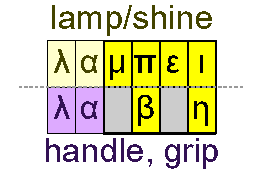
"λαβεῖν" ≈ "" (aorist active indicative) of
"λαμβάνω" ≈ "take hold of, grasp, seize".
"λάμπει" ≈ "to shine, be bright, give light" (as used).
"λάβη" ≈ "handle, grip, hold" (play on words) from the verb for "take" or "seize". Accusative is "λᾰβήν" ≈ "handle, grip, hold" and could be "eye of a needle".
47. Matthew 10:34 Peace and sword
Matthew 10:34 Think not that I am come to send peace on earth: I came not to send peace, but a sword. [kjv]
μη νομισητε οτι ηλθον βαλειν ειρηνην επι την γην ουκ ηλθον βαλειν ειρηνην αλλα μαχαιραν [gnt]
Peace:
Did "peace", in the sense used by Jesus, exist before Jesus came?
Will Jesus bring "peace" in the second coming?
Did Jesus bring "peace" in the first coming?
Sword:
What is the "sword" of "truth"?
Might one purpose of the "sword" be to bring an "awareness" of what is going on (that might need changed)?
The ancient Greek word
"μετάνοια" ≈ "afterthought, repent" where the
"repent" comes from the
GNT (from the Latin).
48. Matthew 10:35 Variance
Matthew 10:35 For I am come to set a man at variance against his father, and the daughter against her mother, and the daughter in law against her mother in law. [kjv]
ηλθον γαρ διχασαι ανθρωπον κατα του πατρος αυτου και θυγατερα κατα της μητρος αυτης και νυμφην κατα της πενθερας αυτης [gnt]
The
KJV translates as
"variance" the ancient Greek word
"δίχα" ≈ "into two parts, in two ways" and, in general, anything pulled or separated into two parts. The Latin word
"separe" ≈ "separate".
The ancient Greek word
"κατά" ≈ "against, opposing, into" (genitive) with a sense of "
getting down" to something.
49. Matthew 10:35 Paraphrase
Matthew 10:35 For I am come to set a man at variance against his father, and the daughter against her mother, and the daughter in law against her mother in law. [kjv]
ηλθον γαρ διχασαι ανθρωπον κατα του πατρος αυτου και θυγατερα κατα της μητρος αυτης και νυμφην κατα της πενθερας αυτης [gnt]
That Jesus came for this and is saying this implies that, now and before (at least the recent past), this was not the case.
Jesus will be the "groom" or "bridegroom" and the church will be the "bride".
Paraphrase:
Jesus is come to (now) set a man in two ways against (with respect to) his father and to set the daughter in two ways against (with respect to) her mother and the bride (young woman, daughter) in two ways against (with respect to) her mother in law.
50. Variance build
Matthew 10:35 For I am come to set a man at variance against his father, and the daughter against her mother, and the daughter in law against her mother in law. [kjv]
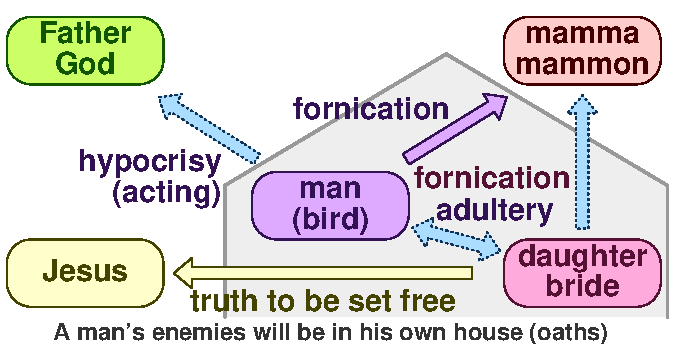
The description of family members is not
complete in a
literal sense (missing family parts and connections). Thus, the meanings may be
symbolic.
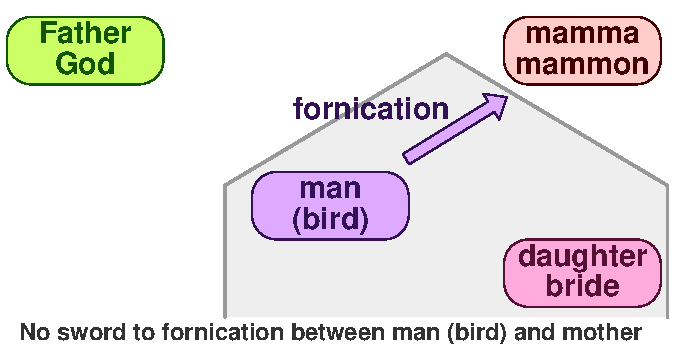
Jesus talked about the
"man" or
"bird" (
false leaders and/or
false teachers) not wanting a "
healer", as in a
"sword" of
"truth" taken to their "
fornication", in the previous chapter.
51. Matthew 10:35
Matthew 10:35 For I am come to set a man at variance against his father, and the daughter against her mother, and the daughter in law against her mother in law. [kjv]
ηλθον γαρ διχασαι ανθρωπον κατα του πατρος αυτου και θυγατερα κατα της μητρος αυτης και νυμφην κατα της πενθερας αυτης [gnt]
Discuss:
Can the "church" commit "adultery" before Jesus establishes the "church"?
Can the "church" be "divorced" and "marry another" before Jesus establishes the "church"?
Does the "bride", translated as "daughter in law" exist before Jesus establishes the "church"?
Does the "mother in law" of the "bride" exist before Jesus establishes the "church"?
52. Matthew 10:36 Enemy inside the gates
Matthew 10:36 And a man's foes shall be they of his own household. [kjv]
και εχθροι του ανθρωπου οι οικιακοι αυτου [gnt]
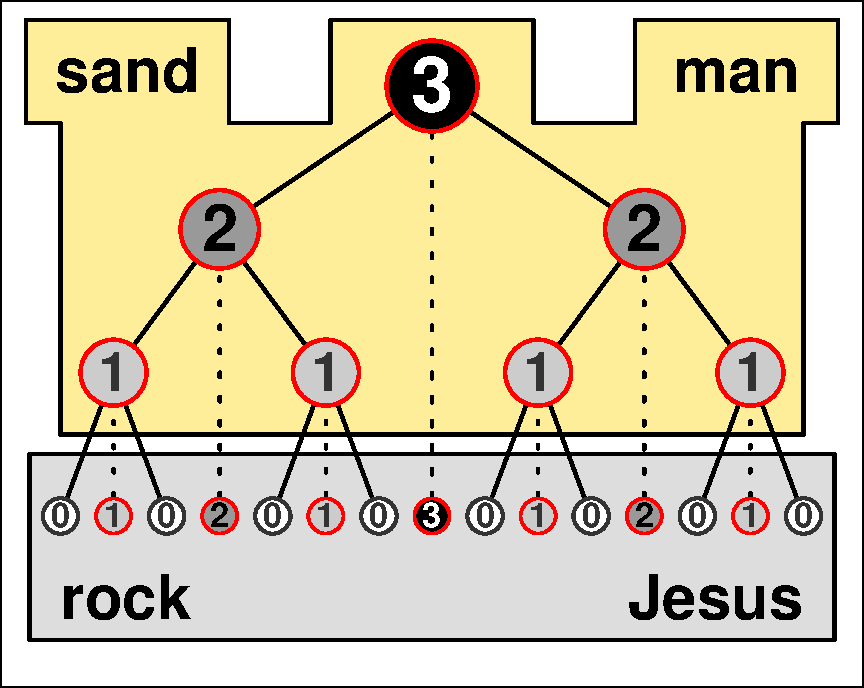
The
KJV translates as
"foes" the ancient Greek word
"ἐχθρός" ≈ "hateful, hostile, enemy". Might the
"enemies" be part of the religious establishment? How are such
"foes" handled.
☐
external threats (
"enemies", secular)
☐
internal threats (
"enemies", truth)
The ancient Greek word
"οικιακός" ≈ "household". Does the "
household" include those in the "
house" that is built either on the "
rock" or on "
sand"? These are analogies and, as such, ideas. In reality, they are both the
same physical house.
53. Matthew 10:36 Enemy inside the gates
Matthew 10:36 And a man's foes shall be they of his own household. [kjv]
και εχθροι του ανθρωπου οι οικιακοι αυτου [gnt]
One way to handle "
internal" threats to the "
bird" or "
organization" or "
house" (built on "
sand") is to require visible and "
measurable" "
oaths" and "
creeds" taken "
in front of" or "
before" witnesses.
Discuss: How hard is it to get a good insurance policy for a "
house" built on "
sand"? Is it
once insured always insured? If anything happens, to whom do you file your claim?
This situation is similar to the "
alterated " "
gifts" in the Sermon on the Mount.
54. Matthew 10:37
Matthew 10:37 He that loveth father or mother more than me is not worthy of me: and he that loveth son or daughter more than me is not worthy of me. [kjv]
ο φιλων πατερα η μητερα υπερ εμε ουκ εστιν μου αξιος και ο φιλων υιον η θυγατερα υπερ εμε ουκ εστιν μου αξιος [gnt]
This description is more family complete as it includes "
father", "
mother", "
son" and "
daughter". Thus, the meaning may have literal
and symbolic (i.e., code word) meaning. These four relationships have been seen in previous verses.
The "father" is the "God" the "Father".
The "mother" is the "mother" "god" or "mama" or "mammon".
The "son" is the "bird" or false leader to whom some will "glue" themselves (rather than Jesus).
The "daughter" or "bride" is the "church" who are to "follow" Jesus.
55. Matthew 10:37
Matthew 10:37 He that loveth father or mother more than me is not worthy of me: and he that loveth son or daughter more than me is not worthy of me. [kjv]
ο φιλων πατερα η μητερα υπερ εμε ουκ εστιν μου αξιος και ο φιλων υιον η θυγατερα υπερ εμε ουκ εστιν μου αξιος [gnt]
56. Matthew 10:37
Matthew 10:37 He that loveth father or mother more than me is not worthy of me: and he that loveth son or daughter more than me is not worthy of me. [kjv]
ο φιλων πατερα η μητερα υπερ εμε ουκ εστιν μου αξιος και ο φιλων υιον η θυγατερα υπερ εμε ουκ εστιν μου αξιος [gnt]
Can one "value" "God" the "Father" "over" Jesus? What (historical) names are there for these heresies.
Can one "value" "mother" or "mammon" "over" Jesus? Can one serve both?
Can one "value" the "man" or "bird" or false leader "over" Jesus? Can one serve both?
Can one "value" the "daughter" or "bride" or "church" (as an organization) "over" Jesus?
57. Compare Matthew and Luke
Matthew 10:37 He that loveth father or mother more than me is not worthy of me: and he that loveth son or daughter more than me is not worthy of me. [kjv]
ο φιλων πατερα η μητερα υπερ εμε ουκ εστιν μου αξιος και ο φιλων υιον η θυγατερα υπερ εμε ουκ εστιν μου αξιος [gnt]
Luke 14:26 If any man come to me, and hate not his father, and mother, and wife, and children, and brethren, and sisters, yea, and his own life also, he cannot be my disciple. [kjv]
ει τις ερχεται προς με και ου μισει τον πατερα εαυτου και την μητερα και την γυναικα και τα τεκνα και τους αδελφους και τας αδελφας ετι δε τε και την εαυτου ψυχην εαυτου ου δυναται ειναι μου μαθητης ειναι [gnt]
Now we have a context for the verse in Luke about
"hate" and the verse in Matthew about "
love". What do each of these verses mean and how do they relate?
The key to the connection is to understand the logical meaning "
more than" in Matthew 10:37. The Greek word is that of "
over" which has the same logical meaning as "
more than".
58. Table comparison
| Book |
Spoken by Jesus |
Same meaning |
Status |
| Matthew |
not (family > Jesus) |
family ≤ Jesus |
correct |
| Luke |
not (family > Jesus) |
family < Jesus |
incorrect |
Correct logic: Matthew writes down and reports what Jesus spoke.
You should "love" Jesus.
Your family must be "less than or equal to" Jesus. (correct)
You must not "love" (nor condone) the worldly part of your family that are against God more than Jesus.
The
incorrect logic goes as follows. Luke reports what was remembered.
You should "love" Jesus.
Your family must be "less than" Jesus. (incorrect)
The opposite of "love" is "hate" (two choices).
Therefore, you must "hate" your family. (incorrect)
59. Matthew 10:38 Following in the crosswalk
Matthew 10:38 And he that taketh not his cross, and followeth after me, is not worthy of me. [kjv]
και ος ου λαμβανει τον σταυρον αυτου και ακολουθει οπισω μου ουκ εστιν μου αξιος [gnt]
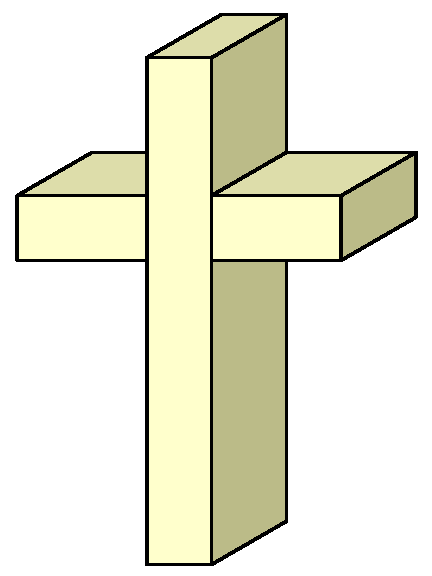
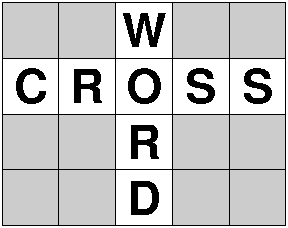
Can you solve the "
cross" "
word" puzzle?
Never a "
cross" "
word"!
The Greek for
"worthy" is related to the English word
"axiom" as in something important or
"worthy". The only thing one is to "
take" is your "
cross".
"λαμβάνω" ≈ "take hold of, grasp, seize".
You are then to
"follow" Jesus and
not "
lead" (to be
great, have a
legacy, etc.).
60. Matthew 10:39 Lost and found
61. Matthew 10:39 Lost and found
Matthew 10:39 He that findeth his life shall lose it: and he that loseth his life for my sake shall find it. [kjv]
ο ευρων την ψυχην αυτου απολεσει αυτην και ο απολεσας την ψυχην αυτου ενεκεν εμου ευρησει αυτην [gnt]
Consider the following words as related.
"loose", "separate", "cut-off", "pluck-out", "lose", "release" [widen]
"bind", "glue".
Paraphrase:
He who finds/glues/binds [widens] his life (to this world) will lose/separate/loose it (in eternity). He that loses/separates/looses his life (from this world) for my sake will find/glue/bind that life (to me in eternity).
The Greek word for
"εὐρών" ≈ "find" can be a play on words uses the ancient Greek word
"εὐρός" ≈ "broad, wide" (source of the English word
"Europe") and, perhaps,
"εὐρώς" ≈ "mold, mildew, rust".
62. Broad and narrow ways to find life
Matthew 10:39 He that findeth his life shall lose it: and he that loseth his life for my sake shall find it. [kjv]
ο ευρων την ψυχην αυτου απολεσει αυτην και ο απολεσας την ψυχην αυτου ενεκεν εμου ευρησει αυτην [gnt]
16:25 For whosoever will save his life shall lose it: and whosoever will lose his life for my sake shall find it. [kjv]
ος γαρ αν εαν θελη την ψυχην αυτου σωσαι απολεσει αυτην ος δ αν απολεση την ψυχην αυτου ενεκεν εμου ευρησει αυτην [gnt]
The ancient Greek word
"εὐρρίσκω" ≈ "find, discover", as in
"eureka", but a play on words uses the ancient Greek word
"εὐρός" ≈ "broad, wide" (source of the English word
"Europe") and, perhaps,
"εὐρώς" ≈ "mold, mildew, rust". Thus, one who attempts to
"find" one's "
life" in the
"broad" or
"wide" area might encounter
"mold",
"mildew" or "
rust", thus "
losing" one's "
life".
What Jesus says later is that of
"save" rather than
"findeth" with the associated play on word meanings.
Discuss: Why might it be to the church's advantage to convince followers that they should "
lose" their (worldly) "
life" in order to
"find" (eternal) "
life"?
63. Matthew 10:38-42 Commanded to follow in the cross walk
Matthew 10:38 And he that taketh not his cross, and followeth after me, is not worthy of me. [kjv]
10:39 He that findeth his life shall lose it: and he that loseth his life for my sake shall find it. [kjv]
The English word
"acolyte" comes from the late Latin word
"acolythus" ≈ "acolyte" which comes from the ancient Greek word
"ἀκόλουθος" ≈ "following, attending".
That word comes from
"κέλευθος" ≈ "road, way, path" which is from
"κελεύω" ≈ "urge, command" which appears in the
KJV and the
LXX. The idea appears to be that if one is not commanding or leading than one is following or attending. We are told to be
"followers" and not
"leaders" in the human sense of the word. An interesting use of the word for
"command" appears in a verse for the "
rapture" and often translated as
"shout".
64. Take reward
Matthew 10:40 He that receiveth you receiveth me, and he that receiveth me receiveth him that sent me. [kjv]
10:41 He that receiveth a prophet in the name of a prophet shall receive a prophet's reward; and he that receiveth a righteous man in the name of a righteous man shall receive a righteous man's reward. [kjv]
10:42 And whosoever shall give to drink unto one of these little ones a cup of cold water only in the name of a disciple, verily I say unto you, he shall in no wise lose his reward. [kjv]
Jesus uses the Greek word for
"receive" or
"accept" many times in these verses. The
KJV then translates the Greek word for
"take" as in
"take" up your cross (a few verses earlier) as
"receive".
The "
glue" need to go both ways. These verses end the chapter but the discourse (and these topics) continue into the next chapter.
The conditional analogy words "
as if" are not translated directly in 10:42 and makes some unnecessary assumptions on certain words. Jesus often uses the word
"one" in a special way (one cookie rule).
65. Matthew 10:42 Drink a cup
Matthew 10:42 And whosoever shall give to drink unto one of these little ones a cup of cold water only in the name of a disciple, verily I say unto you, he shall in no wise lose his reward. [kjv]
και ος εαν αν ποτιση ενα των μικρων τουτων ποτηριον ψυχρου μονον εις ονομα μαθητου αμην λεγω υμιν ου μη απολεση τον μισθον αυτου [gnt]
The ancient Greek word
"ποτίζω" ≈ "give to drink" and is related to
"ποτήριον" ≈ "cup" as a diminutive of the ancient Greek word
"ποτήρ" ≈ "cup" and from the ancient Greek word
"πίνω" ≈ "drink".
"ποτής" ≈ "drink".
"πόσις" ≈ "husband".
The "
water" is inferred and added in the
KJV.
Jesus is the "groom" or "husband".
The church is the "bride" or "wife" consisting of "believers" or "little ones".
66. Matthew 10:42 Cold cup to drink
Matthew 10:42 And whosoever shall give to drink unto one of these little ones a cup of cold water only in the name of a disciple, verily I say unto you, he shall in no wise lose his reward. [kjv]
και ος εαν αν ποτιση ενα των μικρων τουτων ποτηριον ψυχρου μονον εις ονομα μαθητου αμην λεγω υμιν ου μη απολεση τον μισθον αυτου [gnt]
The ancient Greek word
"ψυχρός" ≈ "cold, frigid, cold-hearted". A figurative meaning is that of
"ineffectual". Could this be a play on words with "
life"?
"ψῦχος" ≈ "cold" and is related via PIE to the English word "frigid".
"ψυχρός" ≈ "cold, frigid, cold-hearted".
"ψυχρου" ≈ "cold" as used in the verse.
A modern day English idiom is that of giving someone a "
douse of cold water" as in a "
taste of reality". The Greek word for "
truth" is that of "
reality" as in
not "
oblivion". This is not the same as trying to walk through "
sinking" "
sands".
67. Matthew 10:42 Cold cup to drink
Matthew 10:42 And whosoever shall give to drink unto one of these little ones a cup of cold water only in the name of a disciple, verily I say unto you, he shall in no wise lose his reward. [kjv]
και ος εαν αν ποτιση ενα των μικρων τουτων ποτηριον ψυχρου μονον εις ονομα μαθητου αμην λεγω υμιν ου μη απολεση τον μισθον αυτου [gnt]
The Greek word for
"cold" can be a play on words with the Greek word for "
life".
"ψῦχος" ≈ "cold" and is related via PIE to the English word "frigid".
"ψυχή" ≈ "spirit, life" as in the animating principle of human life as a play on words and the first part of the English word "psychology".
If the
"water" is
"cold" enough, as in "
freezing"
"cold", than one
can walk on
"water". Oh, I see (
icy). Jesus says that the "
truth" will make you "
free". Will the "
truth" will make you "
freeze"?
68. Matthew 10:42 Parsing only one
Matthew 10:42 And whosoever shall give to drink unto one of these little ones a cup of cold water only in the name of a disciple, verily I say unto you, he shall in no wise lose his reward. [kjv]
και ος εαν αν ποτιση ενα των μικρων τουτων ποτηριον ψυχρου μονον εις ονομα μαθητου αμην λεγω υμιν ου μη απολεση τον μισθον αυτου [gnt]
The ancient Greek word
"μόνος" ≈ "alone, forsaken, only, unique" and
"μονή" ≈ "remain, stay" as in a "
residence" or "
mansion". Ambiguous saying:
The man saw the woman with the telescope. Who has the telescope?
Which is the proper parsing of the above verse (not the
comma)?
☐
... cup of cold (water) only , in the name of a disciple ...
☐
... cup of cold (water) , only in the name of a disciple ...
Which of the following is it?
☐
only a cup of cold (water)
☐
only in the name of a disciple
69. Matthew 10:40-42 Top down summary review
Matthew 10:40 He that receiveth you receiveth me, and he that receiveth me receiveth him that sent me. [kjv]
10:41 He that receiveth a prophet in the name of a prophet shall receive a prophet's reward; and he that receiveth a righteous man in the name of a righteous man shall receive a righteous man's reward. [kjv]
10:42 And whosoever shall give to drink unto one of these little ones a cup of cold water only in the name of a disciple, verily I say unto you, he shall in no wise lose his reward. [kjv]
Jesus, as in many other places, appears to be using a top-down backward-chaining approach. Here is a starting point summary.
If you, as a disciple, not exceeding your mandate, bring a cup of cold water (reality) to others, you will not lose your reward if they do not listen.
Do not be deceived or entrapped into exceeding your mandate by saying or promising more than what you can say or promise. Do not do this to "take" a prophet's or a righteous one's "reward".
[disparage expertise to get free work, earn respect to get free work]
70. End of page