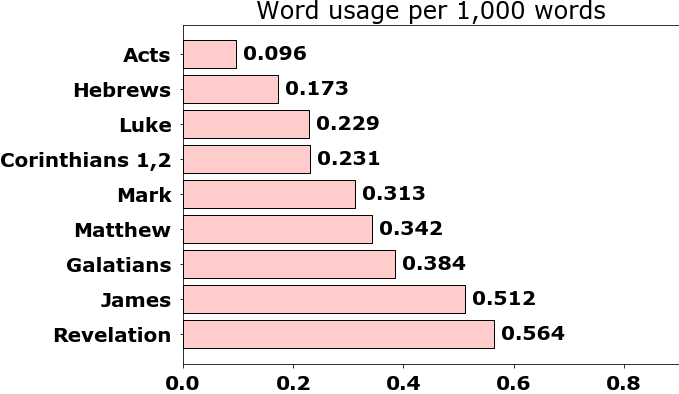
- *G4762 *22 στρέφω (stref'-o) : strengthened from the base of G5157; to twist, i.e. turn quite around or reverse (literally or figuratively):--convert, turn (again, back again, self, self about).
- στρεψον *1 of 22
- Matthew 5:39 ... thy right cheek, turn to him the other also.
- στραφητε *1 of 22
- Matthew 18:3 ... I say unto you, Except ye be converted, and become as ...
The
turning words used by Jesus in Matthew 5:39 to
"turn" the other (
cheek) and by Jesus in Matthew 18:3 to be
"converted" are the same base word and each is used only
one time in the
GNT (Greek New Testament).
Might these verses be related in a deeper sense? If you keep going in the same direction you have
not "turned".
33. Matthew 7:16 Great grapes
34. Matthew 18:3 Great grapes
Matthew 18:3 And said, Verily I say unto you, Except ye be converted, and become as little children, ye shall not enter into the kingdom of heaven. [kjv]
και ειπεν αμην λεγω υμιν εαν μη στραφητε και γενησθε ως τα παιδια ου μη εισελθητε εις την βασιλειαν των ουρανων [gnt]
The
ancient Greek word
"στραφῆτε" ≈ "turn around" has the
onomatopoeic sense of a bird call.
The
ancient Greek word
"στᾰφῠλή" ≈ "grape" and
"σταφυλᾱ́ς" ≈ "bunch of grapes" (accusative plural).
It appears one needs to
"turn" to being a
"grape" and not a "
thorn". What a
"grape" idea! The "
sheep" must have had a "
herd" by the
"grapevine".
[turn vs. repent as think after]
35. Matthew 5:39 Turning
Matthew 5:39 But I say unto you, That ye resist not evil: but whosoever shall smite thee on thy right cheek, turn to him the other also. [kjv]
εγω δε λεγω υμιν μη αντιστηναι τω πονηρω αλλ οστις σε ραπισει επι ραπιζει εις την δεξιαν σου σιαγονα σου στρεψον αυτω και την αλλην [gnt]
The ancient Greek word
"στρέφω" ≈ "turn, direct, twist" and is related to the English word
"strap" as "
fasten". The modern Greek word
"στρέφω" (STREH-fo) ≈ "turn, direct".
The Greek word translated as
"smite" can be a play on words with the Latin word for
"rapid". Jesus some Latin words and Latin play on words in this short verse sequence. False leaders as "
birds" who use "
deception" will want you to be in a
"hurry" as an "
urgent priority" so that you will not think too much about what you are actually doing.
In
"turning" the
"cheek" one is acting "
passively". In Greek, the word for "
passive" is often translated as "
suffering".
36. Matthew 5:39 The evil eye
Matthew 5:39 But I say unto you, That ye resist not evil: but whosoever shall smite thee on thy right cheek, turn to him the other also. [kjv]
εγω δε λεγω υμιν μη αντιστηναι τω πονηρω αλλ οστις σε ραπισει επι ραπιζει εις την δεξιαν σου σιαγονα σου στρεψον αυτω και την αλλην [gnt]
The Greek for
"evil" is in the
dative case so it is
"the evil" or
"(with respect to) the evil" and
not just
"evil" in general.
Note that
not "standing against" "evil" does not mean that one is "
supporting" or "
advocating"
"evil". One is just a bystander, neither condoning nor supporting nor participating in
"evil".
Discuss: Should one actively "
go to war" or "
crusade" against what is considered an
"evil"? Once the double meanings, play on words, and code word meanings in this verse are used, this question should be more clear.
37. Matthew 18:3 Come into being
Matthew 18:3 And said, Verily I say unto you, Except ye be converted, and become as little children, ye shall not enter into the kingdom of heaven. [kjv]
και ειπεν αμην λεγω υμιν εαν μη στραφητε και γενησθε ως τα παιδια ου μη εισελθητε εις την βασιλειαν των ουρανων [gnt]
The Greek for
"become" is that of
"come into being" using the same word that in John 3 was taken as
"born again".
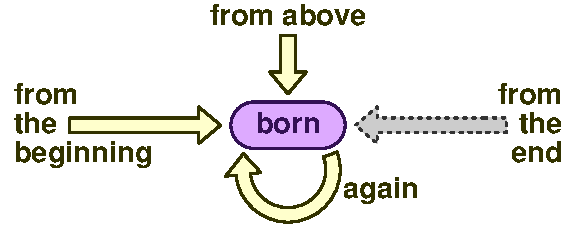
The ancient Greek word
"γίγνομαι" ≈ "come into being" and is the source of the English word
"genesis". The context may indicate being born, being produced, taking place, etc.
This important word will appear two more times in this discourse and be translated in the
KJV (King James Version) as
"become",
"have" and
"shall be done". This obscures the meaning of what Jesus is saying.
38. Matthew 18:2-3 Children
Matthew 18:2 And Jesus called a little child unto him, and set him in the midst of them, [kjv]
και προσκαλεσαμενος ο ιησους παιδιον εστησεν αυτο εν μεσω αυτων [gnt]
18:3 And said, Verily I say unto you, Except ye be converted, and become as little children, ye shall not enter into the kingdom of heaven. [kjv]
και ειπεν αμην λεγω υμιν εαν μη στραφητε και γενησθε ως τα παιδια ου μη εισελθητε εις την βασιλειαν των ουρανων [gnt]
The "little child" is an "as" analogy and refers to "believers" of any age.
The "set" is that of "stand" as in not "standing" for or "in place of" "evil" or "oppression".
The "converted" is that of "turned around" (from being "great").
The "become" is that of "coming into being" as in being "born" "again".
The "child" is in the "middle" of both "good" and "evil" or "oppressive" entities.
39. Matthew 18:3 Children
Matthew 18:3 And said, Verily I say unto you, Except ye be converted, and become as little children, ye shall not enter into the kingdom of heaven. [kjv]
και ειπεν αμην λεγω υμιν εαν μη στραφητε και γενησθε ως τα παιδια ου μη εισελθητε εις την βασιλειαν των ουρανων [gnt]
Matthew 17:26 "the children" (plural ) as "the sons".
Matthew 18:3 "the child" (singular) in the "middle" (no information about turning direction).
Matthew 18:4 "the children" (plural).
Might
"the children" in Matthew 18:4 be related to
"the sons" in Matthew 17:26? Did Jesus show Peter how to
"turn" from being
"great" or wanting to be
"great" by just paying the "
temple tax", making a point, and moving on?
Might they have
"changed direction" from the desire to become the
"greatest" or even know who is the
"greatest"? Might this desire be part of their "
essential attributes" (rich young man in Matthew 19) as in "
everything they have" (unforgiving servant at the end of Matthew 18)?
40. Matthew 18:4 Humbled at the same level
Matthew 18:4 Whosoever therefore shall humble himself as this little child, the same is greatest in the kingdom of heaven. [kjv]
οστις ουν ταπεινωση ταπεινωσει εαυτον ως το παιδιον τουτο ουτος εστιν ο μειζων εν τη βασιλεια των ουρανων [gnt]
The
ancient Greek word
"ταπεινός" ≈ "low-lying, humbled, downcast". The
KJV often translates the Greek word for
"humbled" as
"abased".
How might this
child have been
"humbled"? Does one need to eat
"umble", later
"humble", pie?
Humility is not thinking less of yourself, but thinking of yourself less. C.S. Lewis.
The
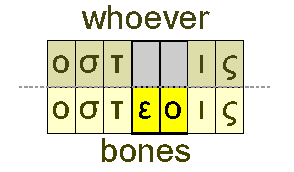
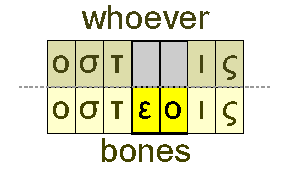
"whoever" indicates that one might want to look for another related meaning in play on words. [Paul and Philippians]
41. Matthew 18:4 Humbled at the same level
Matthew 18:4 Whosoever therefore shall humble himself as this little child, the same is greatest in the kingdom of heaven. [kjv]
οστις ουν ταπεινωση ταπεινωσει εαυτον ως το παιδιον τουτο ουτος εστιν ο μειζων εν τη βασιλεια των ουρανων [gnt]
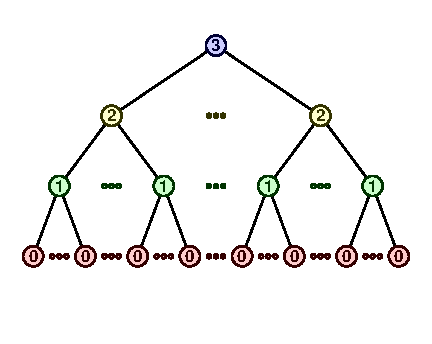
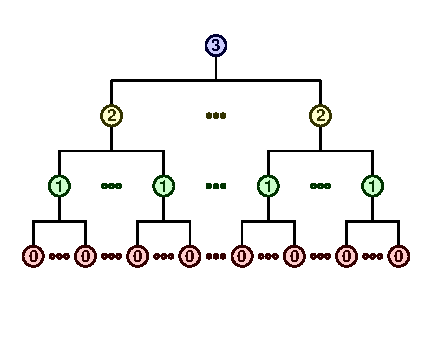
Who is "greatest"?
Who is "least"?
|
With Jesus as the "head" , every "hair" or "believer" is both "greatest" and "least".
|
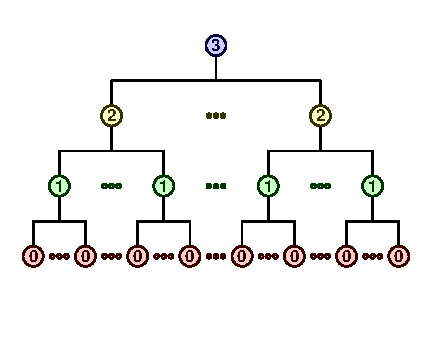 |
Jesus has a flat organizational chart.
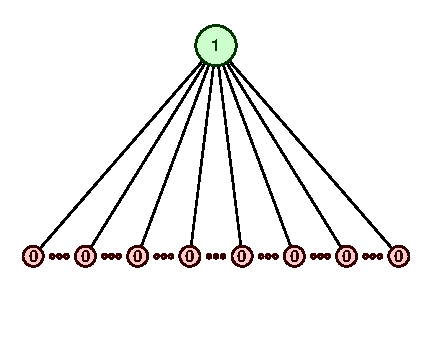
[No child left behind. No child gets ahead.]
[The least of these.]
|
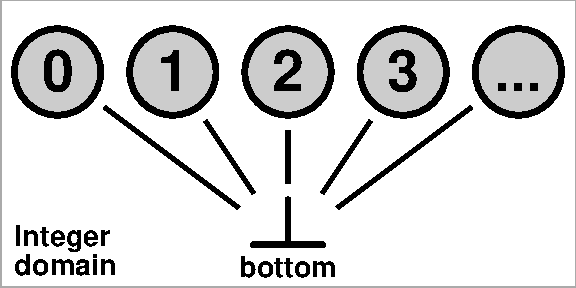 |
This is similar to the semantic domain of integers in programming language theory. Top was not needed for the theory to work.
|
42. Matthew 18:4 Play on words
Matthew 18:4 Whosoever therefore shall humble himself as this little child, the same is greatest in the kingdom of heaven. [kjv]
οστις ουν ταπεινωση ταπεινωσει εαυτον ως το παιδιον τουτο ουτος εστιν ο μειζων εν τη βασιλεια των ουρανων [gnt]
Good KOH.
Not good KOH.
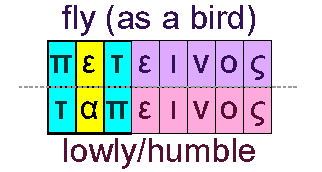
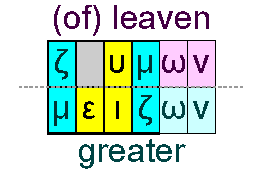
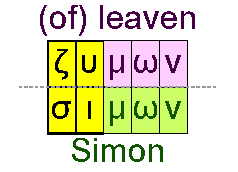
Greek: ... humble oneself ... is the greatest in ...
Play: ... fly (as a bird) oneself ... is the leaven (false doctrine, "Simon") in ...
Would the "
church" represented as
"Simon" "
Peter", ever have anything to do with
"leaven" or trying to
"fly as a bird"? How about
Cardinals? Are they ever
unhinged?
"μείζων" ≈ "greater, larger" in a comparative sense.
"ζῡμῶν" ≈ "leaven" (genitive plural) from "ζύμη" ≈ "yeast, dough".
"σιμων" ≈ "Simon" as in Simon Peter (rock of the church).
43. Matthew 18:5 On the name of mine
Matthew 18:5 And whoso shall receive one such little child in my name receiveth me. [kjv]
και ος εαν δεξηται παιδιον τοιουτον εν παιδιον τοιουτο επι τω ονοματι μου εμε δεχεται [gnt]
The
ancient Greek word
"ἐπί" ≈ "on, upon" as in the prefix of the English word
"epicenter" which is, literally, "
on the center". The
KJV translates as
"in" my "name" the Greek that it
"on" the "name" of
mine. The
"on", as a contrast, will become important in a few verses where
"on" will be translated as
"into".
The
ancient Greek word
"ὄνομα" ≈ "name, noun" is related to Latin
"nomen" ≈ "name, noun" (semantic loan from Greek) and English
"name". One must distinguish
"names" which are abstract letters combined to make a word and the "
meaning" to which the word or
"name" is attached. The "
meaning" depends on context.
44. Matthew 18:5 If received or accepted
Matthew 18:5 And whoso shall receive one such little child in my name receiveth me. [kjv]
και ος εαν δεξηται παιδιον τοιουτον εν παιδιον τοιουτο επι τω ονοματι μου εμε δεχεται [gnt]
The ancient Greek word
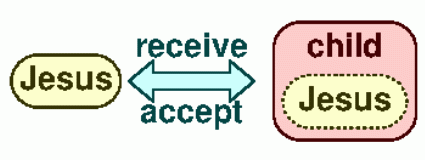
"δέχομαι" ≈ "receive, accept, take, believe". The use of
"receive" or
"accept" word twice ensures that this is a
commutative relationship in that it goes
both ways and sets up an
equality of sorts. This becomes important at the end of the discourse.
Paraphrase:
And if someone receives/accepts one little child such as this on the name of mine receives/accepts me.
Does this mean that one only has to
"accept" a
"child" that has
"accepted" Jesus to have
"accepted" Jesus? Does this make sense? Would false leaders or false teachers
"accept" a
"child" in order to use them for their own purposes?
Most translations
omit the ancient Greek word
"ἐάν" ≈ "if, when". This is a
conditional that creates a
dependency. Who is the
"one" "little child"? Might they give
bad gifts to their
children?
Who is the
"one" "little child"? Reflexive or self-referential relationships are important both in computer science and in some things said by Jesus. Think of the "
one cookie rule".
45. Matthew 18:5 Accept goes both ways
Matthew 18:5 And whoso shall receive one such little child in my name receiveth me. [kjv]
και ος εαν δεξηται παιδιον τοιουτον εν παιδιον τοιουτο επι τω ονοματι μου εμε δεχεται [gnt]
This
"little child" could be anyone. The most important
"little child" is
you (one cookie rule).
You are that
"one" "little child"! What happens if
you as that
"one" "little child" do not
"receive" or
"accept" "on" the "
name" of Jesus?
Including the
"if" in the translation makes this correspondence more clear.
Paraphrase:
And if you receive/accept, as a little child, on the name of me (Jesus), you receive/accept me (Jesus).
46. Matthew 18:5
Matthew 18:5 And whoso shall receive one such little child in my name receiveth me. [kjv]
και ος εαν δεξηται παιδιον τοιουτον εν παιδιον τοιουτο επι τω ονοματι μου εμε δεχεται [gnt]
Paraphrase:
And if you receive/accept, as a little child, on the name of me (Jesus), you receive/accept me (Jesus).
The
"accept" or
"receive" is used
twice in a
commutative or
both ways relationship. That is,
both of the
two, Jesus and
you, must "
agree" for the relationship to be valid. Otherwise, it will
not be completed or done.
The two need to be "
glued" together. This is the primary topic of the
next chapter, Matthew 19.
This
commutative and
reflexive connection with
you becomes important in understanding an otherwise enigmatic verse at the end of the discourse. Such a relationship does
not mean that the usual interpretation is invalid.
47. Usage - receive
*G1209 *56 δέχομαι (dekh'-om-ahee) : middle voice of a primary verb; to receive (in various applications, literally or figuratively):--accept, receive, take. Compare G2983.
 |
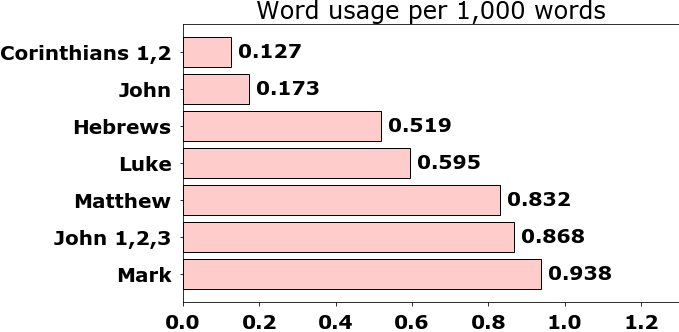
Words: δεδεκται δεξαι=3 δεξαμενη δεξαμενοι δεξαμενος=3 δεξασθαι=3 δεξασθε=4 δεξηται=8 δεξωνται=2 δεχεται=8 δεχηται δεχομενος=4 δεχονται δεχωνται=3 εδεξαμεθα εδεξαντο=5 εδεξασθε=4 εδεξατο=3
|
The ancient Greek word
"δέχομαι" ≈ "receive, accept, take, believe".
48. Matthew 18:1-5 Verses
Matthew 18:1 At the same time came the disciples unto Jesus, saying, Who is the greatest in the kingdom of heaven? [kjv]
18:2 And Jesus called a little child unto him, and set him in the midst of them, [kjv]
18:3 And said, Verily I say unto you, Except ye be converted, and become as little children, ye shall not enter into the kingdom of heaven. [kjv]
18:4 Whosoever therefore shall humble himself as this little child, the same is greatest in the kingdom of heaven. [kjv]
18:5 And whoso shall receive one such little child in my name receiveth me. [kjv]
What could possible go wrong with this nice setup?
49. Matthew 18:6-7
Matthew 18:6 But whoso shall offend one of these little ones which believe in me, it were better for him that a millstone were hanged about his neck, and that he were drowned in the depth of the sea. [kjv]
18:7 Woe unto the world because of offences! for it must needs be that offences come; but woe to that man by whom the offence cometh! [kjv]
Jesus now changes Greek words from
"children" to
"little ones". Why might that be?
Are you thinking "little children"?
Are you thinking "believers of any age"?
50. End of page