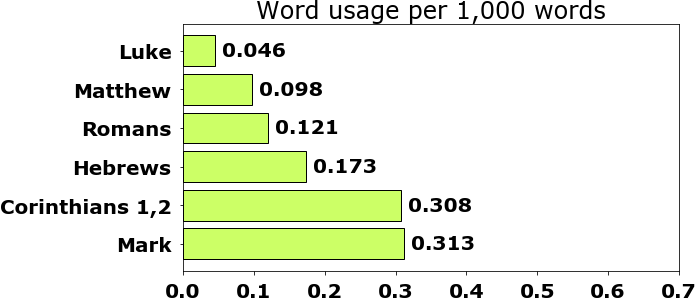
- *G3307 *14 μερίζω (mer-id'-zo) : from G3313; to part, i.e. (literally) to apportion, bestow, share, or (figuratively) to disunite, differ:--deal, be difference between, distribute, divide, give participle
- εμερισεν *4
- Mark 6:41 ... and the two fishes divided he among them all.
- Romans 12:3 ... soberly, according as God hath dealt to every man the measure of faith.
- 2 Corinthians 10:13 ... of the rule which God hath distributed to us, a measure to reach ...
- Hebrews 7:2 To whom also Abraham gave a tenth part of all; ...
- μερισθεισα *2
- Matthew 12:25 ... Every kingdom divided against itself is brought to desolation; and every city or house divided against itself ...
- εμερισθη *2
- Matthew 12:26 ... Satan cast out Satan, he is divided against himself; how ...
- Mark 3:26 ... against himself, and be divided, he cannot stand, ...
- μερισθη *2
- Mark 3:24 And if a kingdom be divided against itself, that ...
- Mark 3:25 And if a house be divided against itself, that ...
- μεμερισται *2
- 1 Corinthians 1:13 Is Christ divided? was Paul crucified ...
- 1 Corinthians 7:34 There is difference also between a wife and a virgin. ...
- μερισασθαι
- Luke 12:13 ... to my brother, that he divide the inheritance with me.
- μεμερικεν
- 1 Corinthians 7:17 But as God hath distributed to every man, as the Lord ...
9. Merisms
The English word
"merism" comes from the ancient Greek word
"μερισμός" ≈ "partition, division" and, from 1894, is a literary device as a figure of speech that uses two extremes and
everything in between. A
merism is a form of
opinion, as in a
hyperbole.
Search "high" and "low".
"young" and "old".
"evening" and "morning".
"confess" (incorrectly translated) and "deny"
Last "will" and "testament".
In the beginning, God created the "heaven" and the "earth".
Jesus uses the Greek word to refer to the "
cares" and "
concerns" of the "
world". That is, how everything is
"divided" or
"compartmentalized" where everyone wants to get their fair share (or more than their fair share).
10. Matthew 13:22 Care of the age
The ancient Greek word
"μέριμνα" ≈ "care, pursuit" and is related to the Latin word
"memor" ≈ "mindful" and the Old English word
"mimor" ≈ "mindful" as in remembering. The
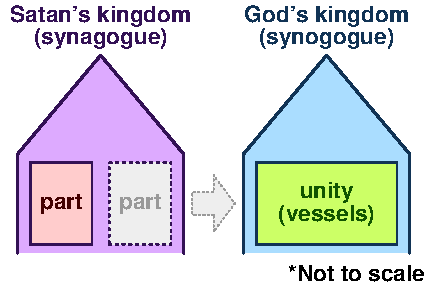
PIE (Proto Indo-European) root
"*(S)MER" ≈ "remember" is the root word of the English word
"memory".
In the first Kingdom Parable of the sower in Matthew 13, Jesus compares the
"care" of the "
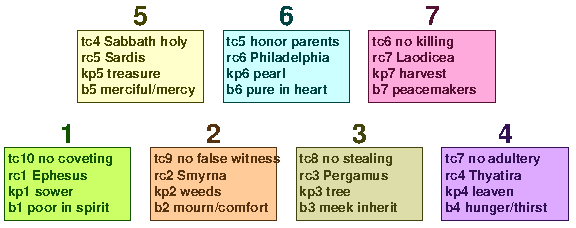
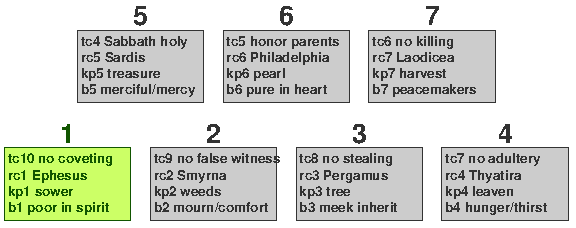
age" (not world) with the "
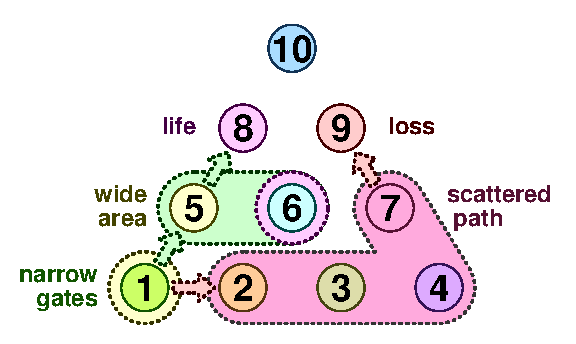
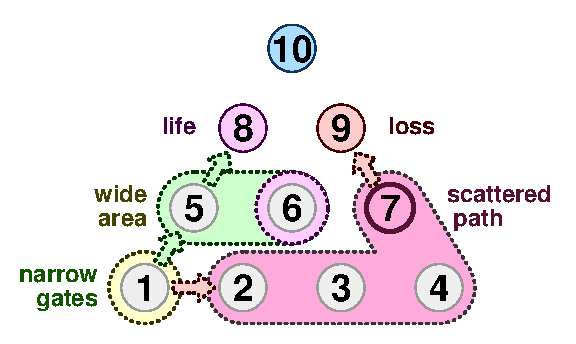
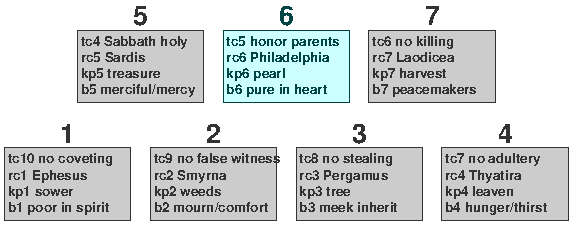
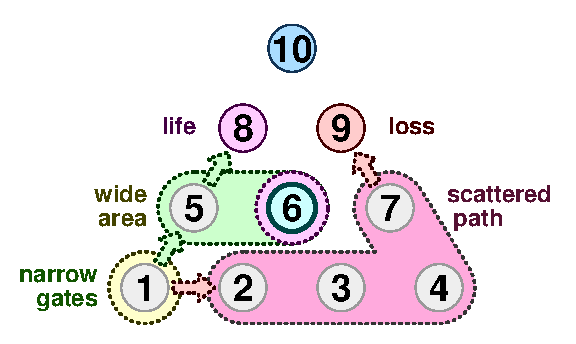
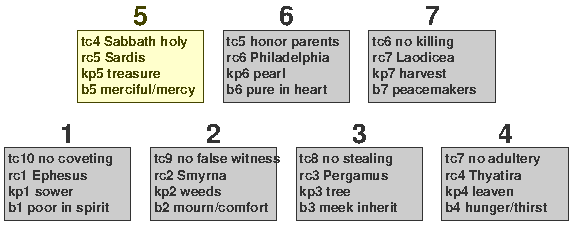
deceitfulness of riches"
Matthew 13:22 He also that received seed among the thorns is he that heareth the word; and the care of this world, and the deceitfulness of riches, choke the word, and he becometh unfruitful. [kjv]
ο δε εις τας ακανθας σπαρεις ουτος εστιν ο τον λογον ακουων και η μεριμνα του αιωνος τουτου και η απατη του πλουτου συμπνιγει τον λογον και ακαρπος γινεται [gnt]
The modern Greek word
"μέριμνα" (MEH-ree-mna) ≈ "care, pursuit".
11. Day and night
The ancient Greek word
"μέρος" ≈ "part, portion, share". The ancient Greek word
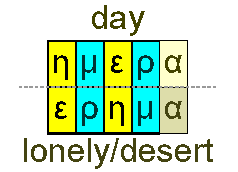
"ἡμέρᾱ" ≈ "day, time" can be a play on words with
"the parts" as
"οι μέρη" ≈ "the parts".
By contrast,
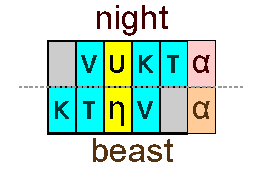
"νύξ" ≈ "night" and
"νύκτός" ≈ "(of the) night". A play on words, as a
Spoonerism, could be the following.
"κτηνα" ≈ "beast".
"κῆτος" ≈ "whale, sea monster",
"κτῆσις" ≈ "act of acquiring, ownership, taking"
12. Matthew 12:25 House divided
Matthew 12:25 And Jesus knew their thoughts, and said unto them, Every kingdom divided against itself is brought to desolation; and every city or house divided against itself shall not stand: [kjv]
ειδως δε ο ιησους τας ενθυμησεις αυτων ειπεν αυτοις πασα βασιλεια μερισθεισα καθ εαυτης ερημουται και πασα πολις η οικια μερισθεισα καθ εαυτης ου σταθησεται [gnt]
Sometimes the word
"house" can refer to more than just a simple family
"house" as in a
"kingdom" "divided" or a
"house" "divided".
13. House divided
A
"house" can be divided in at least two ways. Each could be an
attack or a
division (or something else). It's a tacky distinction.
☐
external attack/division
☐
internal attack/division
To which is Jesus referring?
In Greek, a "
heresy" was a smaller
group or division within a larger group that tried to do something different or against the ideas of the bigger group or division. The word added the meaning of the ideas of the group rather than just the group itself.
14. A house divided
Abraham Lincoln's "
House divided" speech was given in 1858 after accepting the Illinois Republican Party nomination for senator of the United States. The speech started as follows.
A house divided against itself, cannot stand. I believe this government cannot endure permanently half slave and half free. I do not expect the Union to be dissolved - do not expect the house to fall - but I do expect it will cease to be divided. It will become all one thing or all the other. Abraham Lincoln (16th U.S. President)
The "
house divided against itself cannot stand" is from Mark 3:25 (and also Matthew 12:25) in the Bible.
Do the words of Abraham Lincoln appear to refer more to an
external threat
or more of an
internal threat?
15. Luke 10:42
Luke 10:42 But one thing is needful: and Mary hath chosen that good part, which shall not be taken away from her. [kjv]
ενος ολιγων δε εστιν χρεια μαρια δε η ενος μαριαμ γαρ την αγαθην μεριδα εξελεξατο ητις ουκ αφαιρεθησεται απ αυτης [gnt]
16. Luke 10:42
KJV: But one thing is needful: and Mary hath chosen that good part, which shall not be taken away from her.
Greek: ενος ολιγων δε εστιν χρεια μαρια δε η ενος μαριαμ γαρ την αγαθην μεριδα εξελεξατο ητις ουκ αφαιρεθησεται απ αυτης
17. Matthew 12:25 Against itself
Matthew 12:25 And Jesus knew their thoughts, and said unto them, Every kingdom divided against itself is brought to desolation; and every city or house divided against itself shall not stand: [kjv]
ειδως δε ο ιησους τας ενθυμησεις αυτων ειπεν αυτοις πασα βασιλεια μερισθεισα καθ εαυτης ερημουται και πασα πολις η οικια μερισθεισα καθ εαυτης ου σταθησεται [gnt]
Iesus autem sciens cogitationes eorum dixit eis omne regnum divisum contra se desolatur et omnis civitas vel domus divisa contra se non stabit [v]
The Greek word translated as
"against itself" appears to be translated that way only in these (and related) verses on "
kingdoms" "
partitioned".
Greek: "καθ’ ἑαυτῆς" ≈ "apart" as in "separated".
Latin: "contra se" ≈ "against itself" from "contra" ≈ "against, opposite to, contrary to" and "se" ≈ "itself" (reflexive pronoun).
18. Zechariah 12:14 Separated apart
Zechariah 12:14 All the families that remain, every family apart, and their wives apart. [kjv]
πασαι αι φυλαι αι υπολελειμμεναι φυλη καθ εαυτην και αι γυναικες αυτων καθ εαυτας [lxx]
omnes familiae reliquae familiae et familiae seorsum et mulieres eorum seorsum [v]
The ancient Greek phrase
"καθ’ ἑαυτῆς" ≈ "apart" as in
"separated".
The Latin word
"seorsus" ≈ "sundered, separate, apart".
[pulling one up by one's bootstraps]
19. Zechariah 12:14
KJV: All the families that remain, every family apart, and their wives apart.
Hebrew: כל המשפחות הנשארות משפחת משפחת לבד ונשיהם לבד׃
Greek: πασαι αι φυλαι αι υπολελειμμεναι φυλη καθ εαυτην και αι γυναικες αυτων καθ εαυτας
Latin: omnes familiae reliquae familiae et familiae seorsum et mulieres eorum seorsum
20. Matthew 12:26
21. Luke 18:9
Luke 18:9 And he spake this parable unto certain which trusted in themselves that they were righteous, and despised others: [kjv]
ειπεν δε και προς τινας τους πεποιθοτας εφ εαυτοις οτι εισιν δικαιοι και εξουθενουντας τους λοιπους την παραβολην ταυτην [gnt]
dixit autem et ad quosdam qui in se confidebant tamquam iusti et aspernabantur ceteros parabolam istam [v]
The ancient Greek phrase
"ἐφ’ ἑαυτὸν" ≈ "on oneself". The Latin phrase
"in se" ≈ "in themselves".
Note how Luke takes it upon himself to decide what the "
parable" means and adds this before the words that Jesus spoke. Jesus may or may not have meant what Luke decided. Jesus often has additional meanings to what he says beyond one literal meaning.
22. Luke 18:9
KJV: And he spake this parable unto certain which trusted in themselves that they were righteous, and despised others:
Greek: ειπεν δε και προς τινας τους πεποιθοτας εφ εαυτοις οτι εισιν δικαιοι και εξουθενουντας τους λοιπους την παραβολην ταυτην
Latin: dixit autem et ad quosdam qui in se confidebant tamquam iusti et aspernabantur ceteros parabolam istam
23. Proverbs 26:27
Proverbs 26:27 Whoso diggeth a pit shall fall therein: and he that rolleth a stone, it will return upon him. [kjv]
כרה שחת בה יפל וגלל אבן אליו תשוב׃ [he]
ο ορυσσων βοθρον τω πλησιον εμπεσειται εις αυτον ο δε κυλιων λιθον εφ εαυτον κυλιει [lxx]
He that digs a pit for his neighbour shall fall into it: and he that rolls a stone, rolls it upon himself. [bs3]
… fodit foveam incidet … volvit lapidem revertetur ad eum [v]
Greek: "ἐφ’ ἑαυτὸν" ≈ "on oneself".
Latin: "ad eum" ≈ "on him".
Notice the interesting differences between the
LXX (Septuagint) and the
HOT (Hebrew Old Testament) as translated in the
KJV (King James Version).
[projection in psychology, boomerangs]
24. Proverbs 26:27
KJV: Whoso diggeth a pit shall fall therein: and he that rolleth a stone, it will return upon him.
Hebrew: כרה שחת בה יפל וגלל אבן אליו תשוב׃
Greek: ο ορυσσων βοθρον τω πλησιον εμπεσειται εις αυτον ο δε κυλιων λιθον εφ εαυτον κυλιει
Brenton: He that digs a pit for his neighbour shall fall into it: and he that rolls a stone, rolls it upon himself.
Latin: qui fodit foveam incidet in eam et qui volvit lapidem revertetur ad eum
25. Compare
Proverbs 26:27 Whoso diggeth a pit shall fall therein: and he that rolleth a stone, it will return upon him. [kjv]
כרה שחת בה יפל וגלל אבן אליו תשוב׃ [he]
ο ορυσσων βοθρον τω πλησιον εμπεσειται εις αυτον ο δε κυλιων λιθον εφ εαυτον κυλιει [lxx]
Matthew 12:26 And if Satan cast out Satan, he is divided against himself; how shall then his kingdom stand? [kjv]
και ει ο σατανας τον σαταναν εκβαλλει εφ εαυτον εμερισθη πως ουν σταθησεται η βασιλεια αυτου [gnt]
Luke 18:9 And he spake this parable unto certain which trusted in themselves that they were righteous, and despised others: [kjv]
ειπεν δε και προς τινας τους πεποιθοτας εφ εαυτοις οτι εισιν δικαιοι και εξουθενουντας τους λοιπους την παραβολην ταυτην [gnt]
The translations appear to follow the Latin instead of the Greek.
26. Matthew 12:25-26 Partitioned on itself
Matthew 12:25 And Jesus knew their thoughts, and said unto them, Every kingdom divided against itself is brought to desolation; and every city or house divided against itself shall not stand: [kjv]
ειδως δε ο ιησους τας ενθυμησεις αυτων ειπεν αυτοις πασα βασιλεια μερισθεισα καθ εαυτης ερημουται και πασα πολις η οικια μερισθεισα καθ εαυτης ου σταθησεται [gnt]
12:26 And if Satan cast out Satan, he is divided against himself; how shall then his kingdom stand? [kjv]
και ει ο σατανας τον σαταναν εκβαλλει εφ εαυτον εμερισθη πως ουν σταθησεται η βασιλεια αυτου [gnt]
verse 25: ... every kingdom/city/house partitioned apart/separated itself ...
verse 26: ... Satan partitioned on himself.
27. Divide and conquer
Divide each difficulty into as many parts as is feasible and necessary to resolve it. René Descartes (French philosopher, mathematician and statistician)
28. Divide and conquer
The
divide and
conquer problem solving strategy is used in many areas. A well one area historically is in military operations.
Assume that the adversary has greater forces than you.
1. Get your adversary to divide their forces.
2. Defeat each part of the divided forces in detail.
It is to your advantage if you can somehow get your adversary to voluntarily divide their forces.
If your forces are superior, bring your massed forces against the enemy all at once.
[changes after WW2, modern drone warfare]
29. Mistakes happen
 |
 |
|
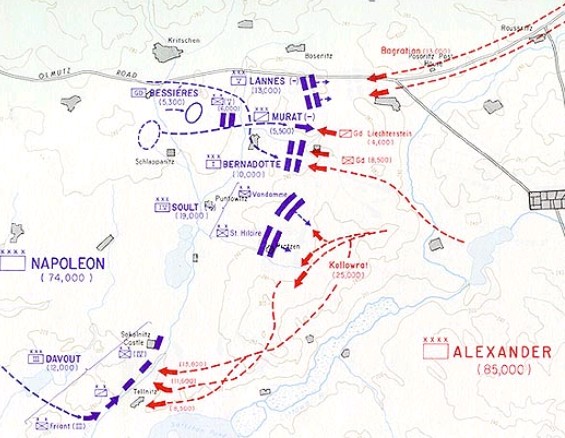
Map: Battle of Austerlitz
|
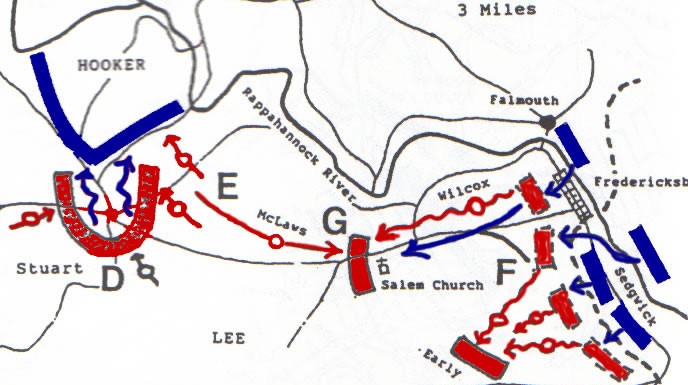
Map: Battle of Chancellorsville
|
Never interrupt your enemy when he is making a mistake. Napoleon Bonaparte (French Emperor and military leader)
Napoleon did this again and again as his prey fell into his traps.
Austerlitz (December 2, 1805), or Battle of the Three Emperors, is an excellent example. Another good example is
Lee at the battle of
Chancellorsville (April 30 to May 6, 1863) in the American Civil War (1861-1865). Both involved the ideas of
divide and
conquer.
Last words of Stonewall Jackson:
Let us cross over the river and rest under the shade of the trees.
30. Hierarchies and goals
|
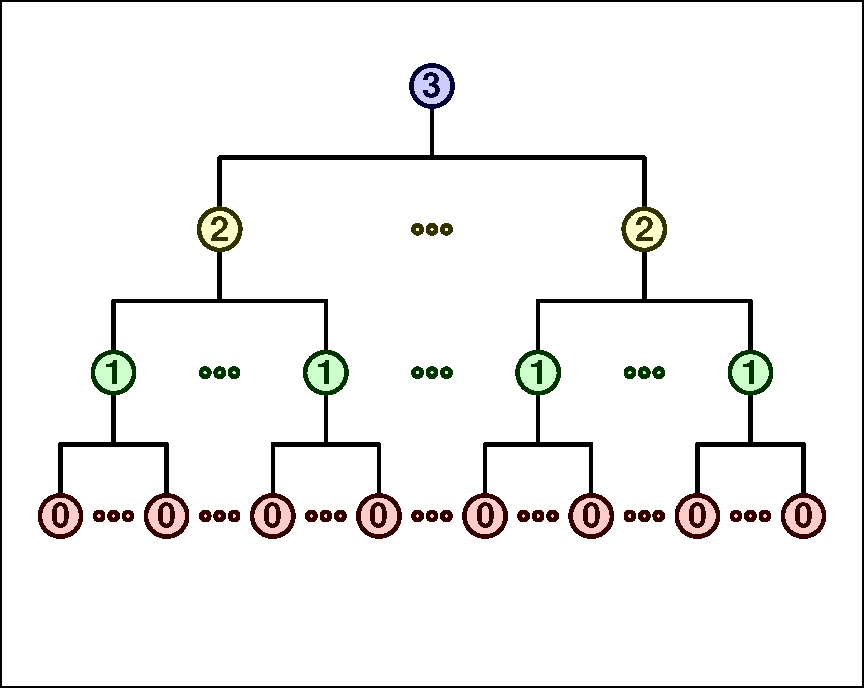
Hierarchy of man (tree)
|
Hierarchy of Jesus (flat)
|
 |
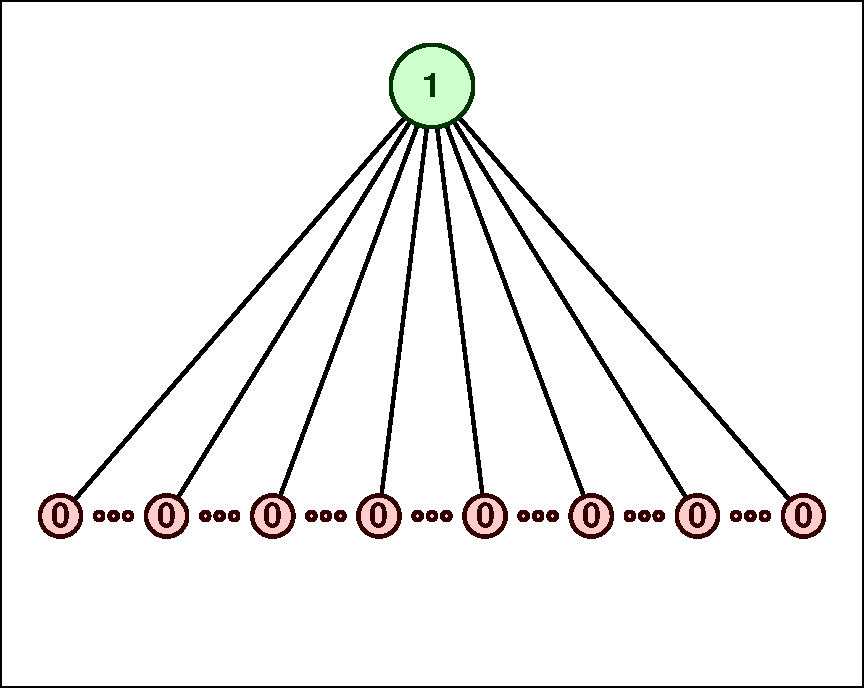 |
The idea of "
unity" in "
Christ" is
ambiguous and can be
deceptive. Can "
unity" be "
made" by
man?
Can we
agree to
disagree?
If a tree-structured hierarchy is desired, with power (and greatness) at each part of the tree, division of parts is not desired (by those at the top).
If a flat hierarchy is desired, division of parts is not a problem.
31. Matthew 18:1 Greatest
Matthew 18:1 At the same time came the disciples unto Jesus, saying, Who is the greatest in the kingdom of heaven? [kjv]
εν εκεινη τη ωρα προσηλθον οι μαθηται τω ιησου λεγοντες τις αρα μειζων εστιν εν τη βασιλεια των ουρανων [gnt]
|
Who is "greatest"?
|
Who is "least"?
|
 |
 |
 |
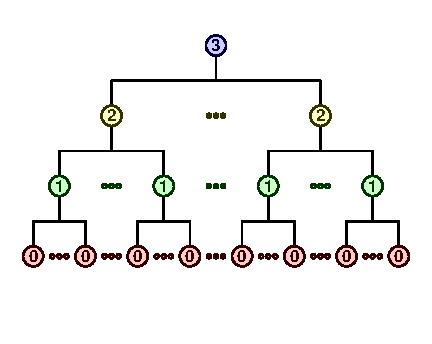 |
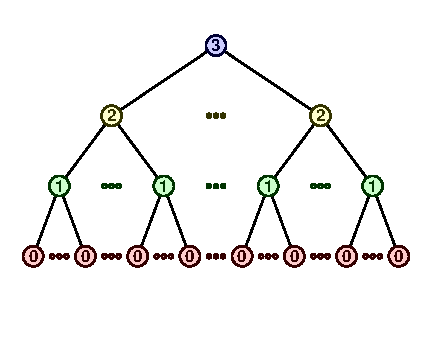
Since chapter 17 is concerned with
"greatness" and chapter 18 starts with the question to Jesus of who is
"greatest", the question might have been motivated by chapter 17 and then that idea follows through with everything Jesus says in finishing this discourse in chapter 18.
In modern times, those who think themselves
"great" are sometimes called the "
elite".
32. Maze generation
1
2
3
4
5
6
7
8
9
10
11
12
13
14
15
+
-
▶
|
Web site:
In-line SVG (formatter Lua)
Lua to SVG
JavaScript and SVG
JavaScript and SVG and D3
R, Julia, Python, Java, C#
33. Matthew 12:25 Entities
Matthew 12:25 And Jesus knew their thoughts, and said unto them, Every kingdom divided against itself is brought to desolation; and every city or house divided against itself shall not stand: [kjv]
ειδως δε ο ιησους τας ενθυμησεις αυτων ειπεν αυτοις πασα βασιλεια μερισθεισα καθ εαυτης ερημουται και πασα πολις η οικια μερισθεισα καθ εαυτης ου σταθησεται [gnt]
Why might Jesus have used the following?
"βασίλεια" ≈ "kingdom" as in "realm". A "basilica" is a hall of the king of the kingdom.
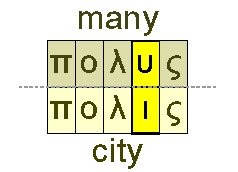
"πόλις" ≈ "city" (accent on first syllable) can be compared to "πολύς" ≈ "many" (accent on second/last syllable). The are "many" in a "city".
"οἰκίᾳ" ≈ "house, dwelling, liar" was the physical "house" building itself while "οἶκος" ≈ "house" was property, except the physical "house", left by a person.
What might be the
common factor in these entities? What might be the
next entity in the sequence?
34. Kingdom
The ancient Greek word
"βασίλεια" ≈ "kingdom" as in
"realm". A
"basilica" is a hall of the
"king" of the
"kingdom".
A
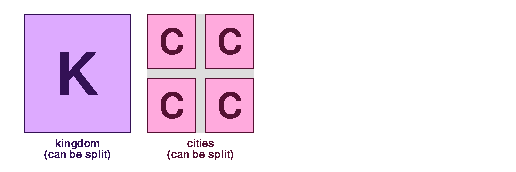
"kingdom" can be
split, from
internal or
external forces, such that it is vulnerable to
falling.
35. City
A
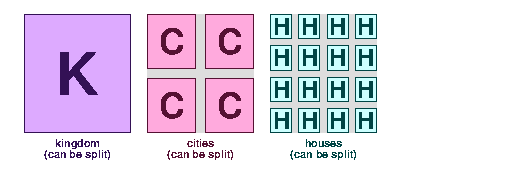
"kingdom" might be split into smaller parts such as
"cities".
The ancient Greek word
"πόλις" ≈ "city" (accent on first syllable) can be compared to
"πολύς" ≈ "many" (accent on second/last syllable). The are
"many" in a
"city".
A
"city" can be
split, from
internal or
external forces, such that it is vulnerable to
falling.
36. House
A
"city" might be split into smaller parts such as
"houses".
The ancient Greek word
"οἰκίᾳ" ≈ "house, dwelling, liar" was the physical
"house" building itself while
"οἶκος" ≈ "house" was property, except the physical
"house", left by a person.
A
"house" can be
split, from
internal or
external forces, such that it is vulnerable to
falling.
37. Vessel
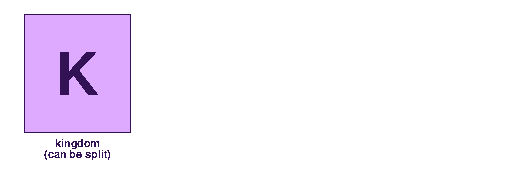
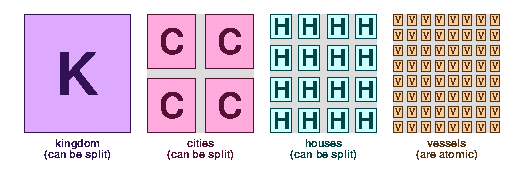
K = Kingdom
C = City
H = House
V = Vessel
A
"house" might be split into smaller parts such as
"vessels".
The ancient Greek word
"σκευή" ≈ "vessel" as something that is made but can refer to "
people" as in a "
chosen"
"vessel". Who is doing the "
choosing"?
A
"vessel" as a "
person" is
atomic and cannot be
split.
38. Atomic moment
1 Corinthians 15:52 In a moment, in the twinkling of an eye, at the last trump: for the trumpet shall sound, and the dead shall be raised incorruptible, and we shall be changed. [kjv]
εν ατομω εν ριπη οφθαλμου εν τη εσχατη σαλπιγγι σαλπισει γαρ και οι νεκροι εγερθησονται αφθαρτοι και ημεις αλλαγησομεθα [gnt]

The ancient Greek word
"ἄτομος" ≈ "uncut, indivisible, individual". This word is used by Paul in 1 Corinthians 15:52 in reference to time.
The modern Greek word
"άτομο" (A-to-mo) ≈ "person, atom".
[not Adam and Eve]
39. Democritus
The ancient Greek philosopher and scientist Democritus (c. 460 - c. 370 BC), with some others, proposed an idea that today would be called "
atomic theory". None of his work survives but many written accounts by others fill in some details.
That theory of atoms and molecules was not established until about 1900. Einstein and his 1905 paper on Brownian motion helped finally establish the atomic theory as an accepted reality.
40. Planck length
1 Corinthians 15:52 In a moment, in the twinkling of an eye, at the last trump: for the trumpet shall sound, and the dead shall be raised incorruptible, and we shall be changed. [kjv]
εν ατομω εν ριπη οφθαλμου εν τη εσχατη σαλπιγγι σαλπισει γαρ και οι νεκροι εγερθησονται αφθαρτοι και ημεις αλλαγησομεθα [gnt]
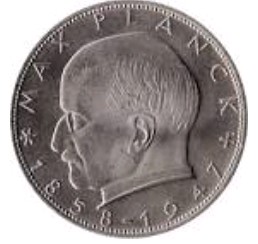
Some take this "
moment", or "
twinkling of an eye", as a Planck length, named after Max Planck (1858-1947). This length is the smallest measurable length of (quantized) time (or space) that has any meaning. This as about
1.6x1035 meters or about
1020 times the size of a proton.
41. 1 Kings 3:25
1 Kings 3:25 And the king said, Divide the living child in two, and give half to the one, and half to the other. [kjv]
και ειπεν ο βασιλευς διελετε το παιδιον το θηλαζον το ζων εις δυο και δοτε το ημισυ αυτου ταυτη και το ημισυ αυτου ταυτη [lxx]
The word for "
divide" used in Matthew 12 is not the same word for "
divide" used in the
LXX in the story of Solomon and the two women and the baby. This word is not used in the
GNT (Greek New Testament) (in this form) and only here in the
LXX (in this form).
[decision theory]
42. 1 Kings 3:25
KJV: And the king said, Divide the living child in two, and give half to the one, and half to the other.
Hebrew: ויאמר המלך גזרו את הילד החי לשנים ותנו את החצי לאחת ואת החצי לאחת׃
Greek: και ειπεν ο βασιλευς διελετε το παιδιον το θηλαζον το ζων εις δυο και δοτε το ημισυ αυτου ταυτη και το ημισυ αυτου ταυτη
43. 1 Kings 3:26
1 Kings 3:26 Then spake the woman whose the living child was unto the king, for her bowels yearned upon her son, and she said, O my lord, give her the living child, and in no wise slay it. But the other said, Let it be neither mine nor thine, but divide it. [kjv]
και απεκριθη η γυνη ης ην ο υιος ο ζων και ειπεν προς τον βασιλεα οτι εταραχθη η μητρα αυτης επι τω υιω αυτης και ειπεν εν εμοι κυριε δοτε αυτη το παιδιον και θανατω μη θανατωσητε αυτον και αυτη ειπεν μητε εμοι μητε αυτη εστω διελετε [lxx]
44. 1 Kings 3:26
KJV: Then spake the woman whose the living child was unto the king, for her bowels yearned upon her son, and she said, O my lord, give her the living child, and in no wise slay it. But the other said, Let it be neither mine nor thine, but divide it.
Hebrew: ותאמר האשה אשר בנה החי אל המלך כי נכמרו רחמיה על בנה ותאמר בי אדני תנו לה את הילוד החי והמת אל תמיתהו וזאת אמרת גם לי גם לך לא יהיה גזרו׃
Greek: και απεκριθη η γυνη ης ην ο υιος ο ζων και ειπεν προς τον βασιλεα οτι εταραχθη η μητρα αυτης επι τω υιω αυτης και ειπεν εν εμοι κυριε δοτε αυτη το παιδιον και θανατω μη θανατωσητε αυτον και αυτη ειπεν μητε εμοι μητε αυτη εστω διελετε
45. Vessels
"Vessels" as "
people" appear to come in two varieties.
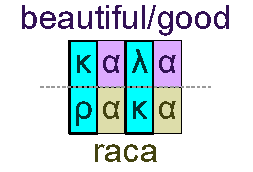
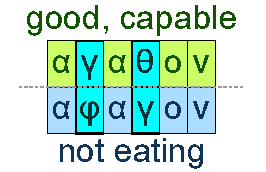
1. "good" as in "raca" (to the "council") or "good" as in "not eating" (the "fruit").
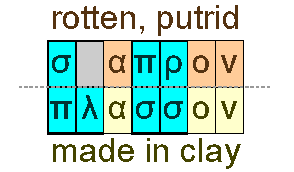
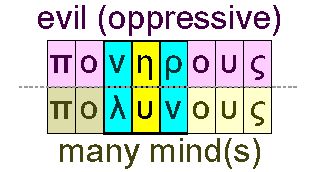
2. "rotten" as in "plastic" or "oppressive" as in "many minds".
How can the
"good" or
"good" be separated from the
"rotten" or
"oppressive"?
Some in 2 are easy to identify. Some in 2 are much more difficult to identify. How might these be identified?
46. Kingdoms
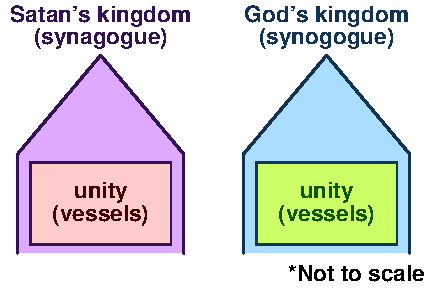
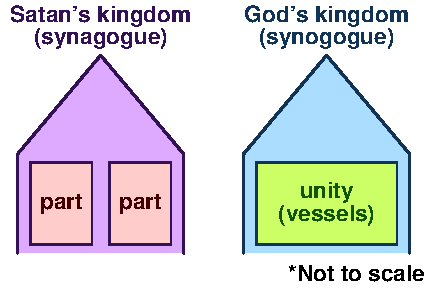
Assume that at the start the houses have "
unity" of some form.
The word "
house" can refer to many things.
A "kingdom" as a "house".
A "house" with "vessels" as "people".
47. Matthew 12:25 Houses
Any division or separation makes that
"kingdom" or
"city" or
"house" susceptible to desolation of some form.
Matthew 12:25 And Jesus knew their thoughts, and said unto them, Every kingdom divided against itself is brought to desolation; and every city or house divided against itself shall not stand: [kjv]
48. Matthew 12:26-27 Houses
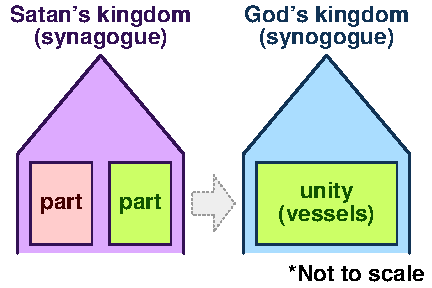
The act of "
throwing out" or "
showing the cards" or "
making known" the deception of part of the "
house" may reduce the "
unity" of the house.
"Satan" does not want to "show the cards" of the "deception".
"Jesus " does "show the cards" of the "deception".
Matthew 12:26 And if Satan cast out Satan, he is divided against himself; how shall then his kingdom stand? [kjv]
12:27 And if I by Beelzebub cast out devils, by whom do your children cast them out? therefore they shall be your judges. [kjv]
και ει εγω εν βεελζεβουλ βεεζεβουλ εκβαλλω τα δαιμονια οι υιοι υμων εν τινι εκβαλλουσιν δια τουτο αυτοι υμων κριται εσονται κριται υμων [gnt]
49. Matthew 12:28 Houses
That "
part" of the "
house" may then move away to be part of the other "
house".
Matthew 12:28 But if I cast out devils by the Spirit of God, then the kingdom of God is come unto you. [kjv]
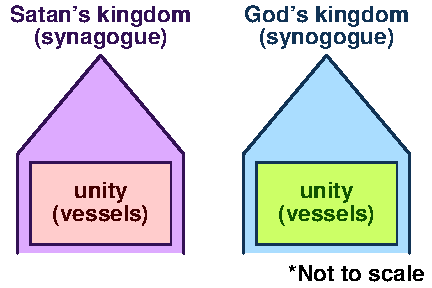
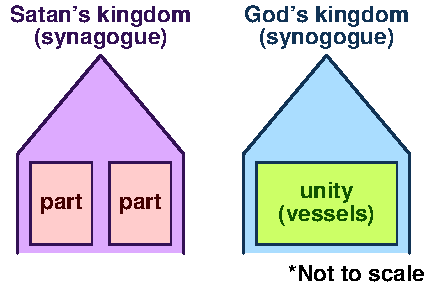
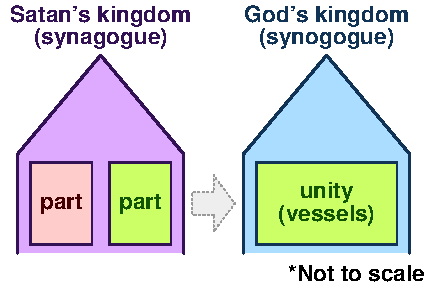
50. Matthew 12:26,28 Division
 |
 |
 |
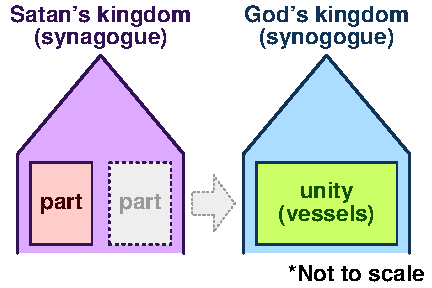 |
Are the houses
initially united?
What does that mean?
|
Would Satan create/reveal
a division/separation
in Satan's house?
|
Would Jesus create/reveal
a division/separation
in Satan's house?.
|
|
Matthew 12:26 And if Satan cast out Satan, he is divided against himself; how shall then his kingdom stand? [kjv]
12:28 But if I cast out devils by the Spirit of God, then the kingdom of God is come unto you. [kjv]
The
"divided" and
"separated" can be
inferred in verse 28.
51. Ten Word Pin model nodes
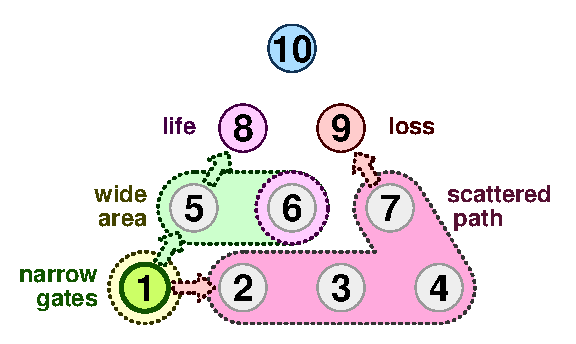
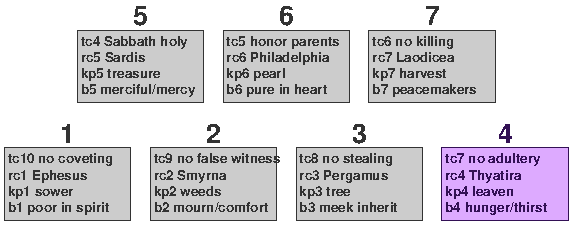
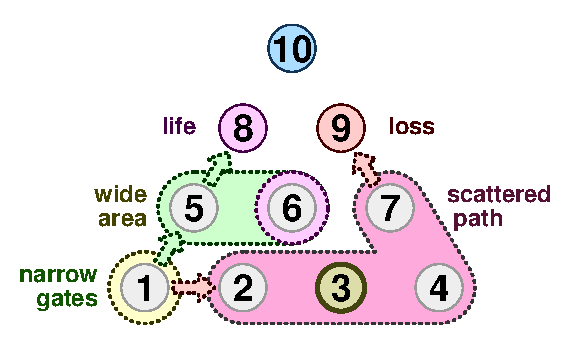
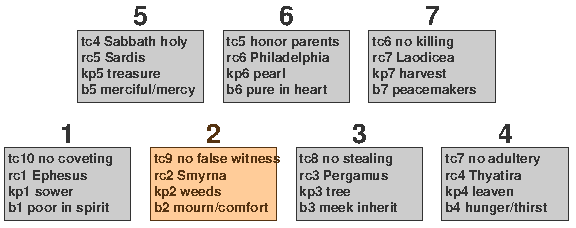
Let us apply the The Ten Word Pin model to the sequence Matthew 12:22-29 and see how the model fits.
52. Choose wisely
Matthew 12:24 But when the Pharisees heard it, they said, This fellow doth not cast out devils, but by Beelzebub the prince of the devils. [kjv]
Covet:
Node 1 of the seven pin sequence often starts in the present at the time Jesus is speaking. Not all sequences are in order (e.g., reverse order, out of sequence, etc.).
This is
node 1 of "
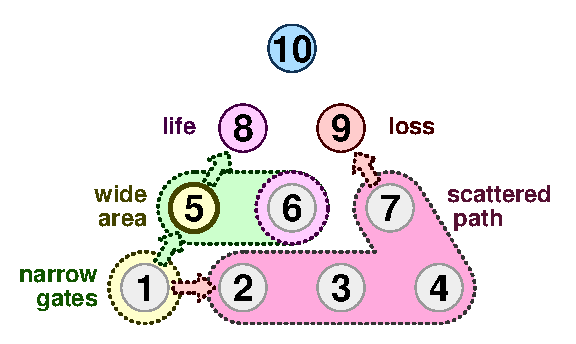
coveting" and choosing the "
way" to "
life" (node 5) rather than the "
scattered" "
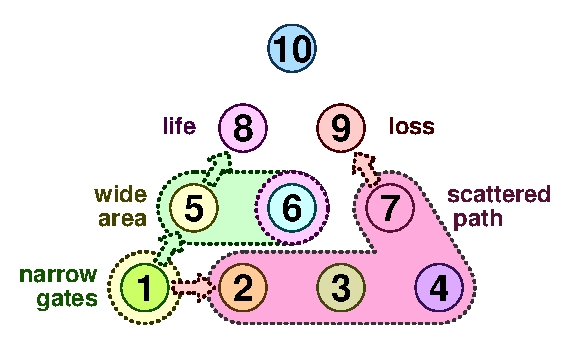
way" (nodes 2, 3, 4, 7). Which way will you "
choose" or "
desire" or "
covet"?
53. Windshield vipers for the birds
Matthew 12:25 And Jesus knew their thoughts, and said unto them, Every kingdom divided against itself is brought to desolation; and every city or house divided against itself shall not stand: [kjv]
A
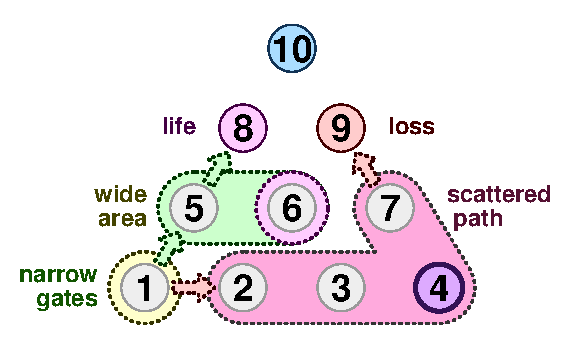
kingdom has appeared in
node 4.
This is
node 4 of "
adultery" in the form of "
missions" by the "
pigs" or "
hands" in support of the goals of the "
bird" or "
eye" or "
leader" and based on
false doctrine in the form of "
leaven" mixed in with
true doctrine. [windshield vipers]
54. Trees and towers
Matthew 12:25 And Jesus knew their thoughts, and said unto them, Every kingdom divided against itself is brought to desolation; and every city or house divided against itself shall not stand: [kjv]
The
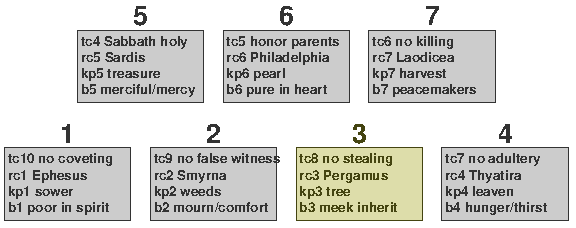
city appears in
node 3 and it cannot be hid (in a bad sense) nor remain.
This is
node 3 of "
oaths" to the goals of the "
birds" who "
steal" from those taking the "
oaths" in the "
tree".
55. Blasphemy
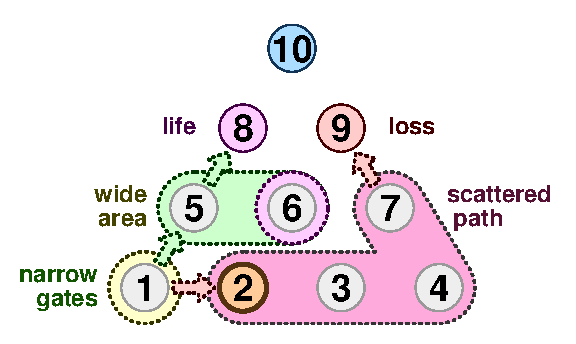
Matthew 12:25 And Jesus knew their thoughts, and said unto them, Every kingdom divided against itself is brought to desolation; and every city or house divided against itself shall not stand: [kjv]
The
house starts in
node 2 with "
blasphemy" of the "
weeds" and churches meeting in
houses churches.
This is
node 2 of "
weeds" and "
false witness" or (smooth talking) "
blasphemy" to promise "
greatness" to those following the "
bird" who create many "
rules" in their "
law".
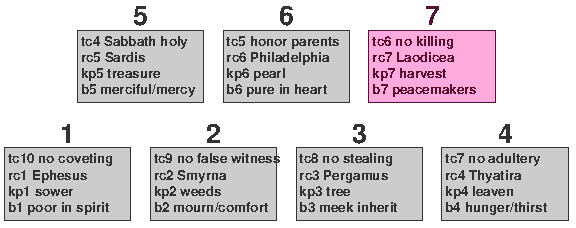
56. Day of separation giving
Matthew 12:26 And if Satan cast out Satan, he is divided against himself; how shall then his kingdom stand? [kjv]
Killing
This is
node 7 of "
killing" (including oneself) at the
end of the "
scattered" "
path" which is a dead-end.
57. Misleading words of the wolf-dogs
Matthew 12:27 And if I by Beelzebub cast out devils, by whom do your children cast them out? therefore they shall be your judges. [kjv]
Tradition is of
node 6. Parents.
Idle words.
Children or
sons swear by that method.
This is
node 6 of
young "
goats" a play on words of "
voicing" "
invalid logic", in the "
wide area", a play on words of "
the boats".
58. Treasure island hopping
Matthew 12:28 But if I cast out devils by the Spirit of God, then the kingdom of God is come unto you. [kjv]
The arrival at the living bread is at
node 5. The "
on you" (play on words) with "
arrive"
This is
node 5 of
"living" "bread" and the
true "sheep" or "
treasure" in the "
field" or
wide area", a play on words of "
the boats".
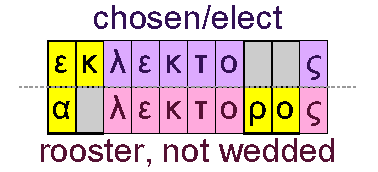
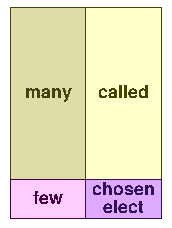
59. Matthew 22:14 Many called few chosen
Matthew 22:14 For many are called, but few are chosen. [kjv]
πολλοι γαρ εισιν κλητοι ολιγοι δε εκλεκτοι [gnt]
Of the
"many" called in the Parable of the Wedding Feast, only
one is
"chosen" to go into "
outer" "
darkness".
Paraphrase:
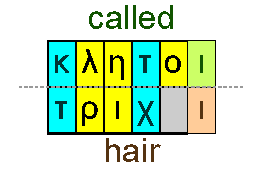
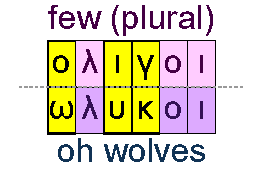
Many [city] are called [hairs] but few [O wolves] are chosen [roosters].
How
"many" is
"many"? How
"few" is
"few"?
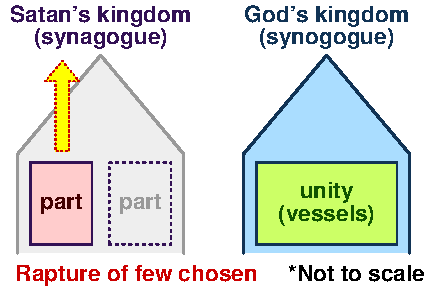
60. Rapture of the vessels of the strong man
This way of identifying the "
good" part of the "
house" helps in "
rapturing" the part of the "
house" that is part of the "
deception".
The "
part" "
raptured" are "
vessels" of the "
strong man".
Matthew 12:29 Or else how can one enter into a strong man's house, and spoil his goods, except he first bind the strong man? and then he will spoil his house. [kjv]
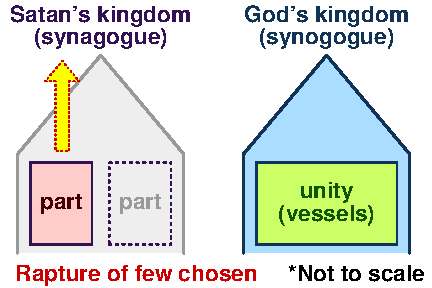
61. Rapture of the vessels of the strong man
Those on the "
scattered" "
path" appear to be easy to identify.
The "
rapture" of the "
chosen" "
elect" appears to involve those who moved to
node 6 from
node 5 and are more difficult to identify. Thus, various strategies are outlined by Jesus in making this determination. One of these ways follows and involves "
idle words".
62. End of page