Send
Close Add comments:
(status displays here)
Got it! This site "creationpie.org" uses cookies. You consent to this by clicking on "Got it!" or by continuing to use this website. Note: This appears on each machine/browser from which this site is accessed.
John 12:20-30 Conditionally fallen grain of wheat
1. John 12:1
John 12:1 Then Jesus six days before the passover came to Bethany, where Lazarus was which had been dead, whom he raised from the dead. [kjv]
ο ουν ιησους προ εξ ημερων του πασχα ηλθεν εις βηθανιαν οπου ην λαζαρος ο τεθνηκως ον ηγειρεν εκ νεκρων ιησους [gnt]
This was
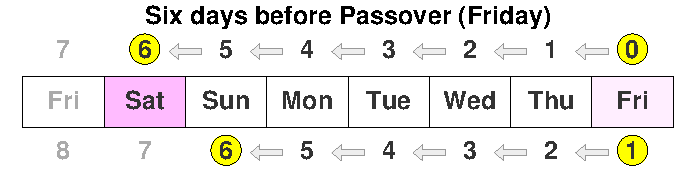
six days before Passover, one of the (traditional) High Sabbaths.
The ancient Greek word
"προ" ≈ "before" and is the source of English words starting with
"pro".
Does the (starting) day of Passover count as one or zero in the count?
Does it make a difference?
2. Counting
Assume that the passover is Friday (starting the evening before).
Six days before Friday is Saturday if not counting Friday (zero-based). Seven days before is Friday.
Six days before Friday is Sunday if counting Friday (one-based). Seven days before is Saturday.
Let us skip to a later sequence of verses in the chapter.
3. John 12:1
KJV: Then Jesus six days before the passover came to Bethany, where Lazarus was which had been dead, whom he raised from the dead.
Greek: ο ουν ιησους προ εξ ημερων του πασχα ηλθεν εις βηθανιαν οπου ην λαζαρος ο τεθνηκως ον ηγειρεν εκ νεκρων ιησους
4. Verses omitted
The verses from John 12:2 to 12:22 are omitted.
John 12:2-8 Martha and Mary, ointment, Judas and the poor.
John 12:9-11 Religious establishment plots against Jesus.
John 12:12-19 Palm Sunday and triumphal entry, Pharisees upset.
 |
Details are left as a future topic.
|
5. John 12:20 Setup
John 12:20 And there were certain Greeks among them that came up to worship at the feast: [kjv]
ησαν δε τινες ελληνες τινες εκ των αναβαινοντων ινα προσκυνησωσιν εν τη εορτη [gnt]
… haeðene … ge-byddan … freols-daige. [wes]
Why would
"Greeks" come to the "
feast" of "
Passover"? Why would people of many different languages go as pilgrims at
Pentecost? Pentecost is a Greek name.
Greek had been spoken in the entire Middle East for 350 years when Alexander the Great enforced Greek on everyone conquered. Greek was easier to read and write and caught on quickly.
Coptic is the dialect of Greek created when Egyptian was integrated into the Greek language in Egypt.
Cleopatra is a Greek name. The Rosetta Stone was in Egyptian hieroglyphs, Greek and Coptic.
6. Coptic cross
 |
 |
Ⲓⲏ︦ⲥ︦: Jesus
Ⲡⲭ︦ⲥ︦: Christ
Ⲡ̀ϣⲏⲣⲓ: Son
Ⲙ̀̀ⲫϯ: of God
|
The words with bars above them are abbreviations.
| Greek |
Coptic |
Abbreviation |
meaning |
| ΧΡΙΣΤΟΣ |
ⲬⲢⲒⲤⲦⲞⲤ |
Ⲭ︦Ⲥ︦ |
Christ |
| Ο ΧΡΙΣΤΟΣ |
ⲠⲒⲬⲢⲒⲤⲦⲞⲤ |
Ⲡ︦Ⲭ︦Ⲥ︦ |
(the) Christ |
| ΙΗΣΟΥΣ |
Ⲓⲏⲥⲟⲩⲥ |
Ⲓⲏ︦ⲥ︦ |
Jesus |
| Σ |
Ⲥ |
|
S |
7. John 12:20
KJV: And there were certain Greeks among them that came up to worship at the feast:
Greek: ησαν δε τινες ελληνες τινες εκ των αναβαινοντων ινα προσκυνησωσιν εν τη εορτη
Wessex: Sume þaemge waeren haeðene þe foren þaet hyo wolden hyo ge-byddan on þam freols-daige.
8. John 12:21 Pass the message
John 12:21 The same came therefore to Philip, which was of Bethsaida of Galilee, and desired him, saying, Sir, we would see Jesus. [kjv]
ουτοι ουν προσηλθον προσηλθαν φιλιππω τω απο βηθσαιδα της γαλιλαιας και ηρωτων αυτον λεγοντες κυριε θελομεν τον ιησουν ιδειν [gnt]
The Greek word translated as "
came" is that of "
went".
The Greek word translated as "
see" is that of "
see" that is more than just an "
observation" with the eyes.
9. John 12:21
KJV: The same came therefore to Philip, which was of Bethsaida of Galilee, and desired him, saying, Sir, we would see Jesus.
Greek: ουτοι ουν προσηλθον προσηλθαν φιλιππω τω απο βηθσαιδα της γαλιλαιας και ηρωτων αυτον λεγοντες κυριε θελομεν τον ιησουν ιδειν
10. John 12:22 Pass the message
John 12:22 Philip cometh and telleth Andrew: and again Andrew and Philip tell Jesus. [kjv]
ερχεται ο φιλιππος και λεγει τω ανδρεα και παλιν ερχεται ανδρεας και φιλιππος και λεγουσιν τω ιησου [gnt]
… eode … hyt … aeft … saegde … [wes]
The Greek word translated as
"cometh" can mean
"goeth". The exact meaning depends on context. The Wessex Old English is
"goed". The second instance is translated as
"again".
The ancient Greek word
"ἐλθών" ≈ "go, come" comes from
"ἔρχομαι" ≈ "go, come". English uses two words with different connotations for the same Greek word. Think
"move"!
11. John 12:22
KJV: Philip cometh and telleth Andrew: and again Andrew and Philip tell Jesus.
Greek: ερχεται ο φιλιππος και λεγει τω ανδρεα και παλιν ερχεται ανδρεας και φιλιππος και λεγουσιν τω ιησου
Wessex: Ða eode philippus. & saegde hyt andrea (sic). & aeft andreas & phillippus hit saegde þam haelende.
12. Verses
Early in the Passover (crucifixion )week, Jesus says the following.
John 12:23 And Jesus answered them, saying, The hour is come, that the Son of man should be glorified. [kjv]
12:24 Verily, verily, I say unto you, Except a corn of wheat fall into the ground and die, it abideth alone: but if it die, it bringeth forth much fruit. [kjv]
12:25 He that loveth his life shall lose it; and he that hateth his life in this world shall keep it unto life eternal. [kjv]
12:26 If any man serve me, let him follow me; and where I am, there shall also my servant be: if any man serve me, him will my Father honour. [kjv]
What might these verses mean?
13. John 12:20-30 Conditionally fallen grain of wheat
John 12:24 Verily, verily, I say unto you, Except a corn of wheat fall into the ground and die, it abideth alone: but if it die, it bringeth forth much fruit. [kjv]
αμην αμην λεγω υμιν εαν μη ο κοκκος του σιτου πεσων εις την γην αποθανη αυτος μονος μενει εαν δε αποθανη πολυν καρπον φερει [gnt]
What might this verse mean?
What is meant by "corn"? The Greek word has other connotations.
There are some mistranslations from the Greek.
There are some logical issues with the English translations.
Definite article changed to indefinite article.
Negation ignored or lessened.
14. English words with narrowed meanings
Many English words, some used in the
KJV (King James Version), had a more
generic meaning at one time.
"meat" meant "food".
"deer" meant "animal".
"apple" meant "fruit" as in a "pineapple".
"corn" meant "grain" or "seed".
"gnat" meant "flying insect".
"fish" meant a "water creature" as in a "starfish", "crawfish", etc.
Each of these words
narrowed in meaning over the years.
15. John 12:24 Seed carrion
John 12:24 Verily, verily, I say unto you, Except a corn of wheat fall into the ground and die, it abideth alone: but if it die, it bringeth forth much fruit. [kjv]
αμην αμην λεγω υμιν εαν μη ο κοκκος του σιτου πεσων εις την γην αποθανη αυτος μονος μενει εαν δε αποθανη πολυν καρπον φερει [gnt]
The ancient Greek word
"κόκκος" ≈ "grain, seed" and it could mean a scarlet dye made from the crushed bodies of the kermes bugs sometimes (incorrectly) thought of as a
"seed".
The word
"φέρω" ≈ "bring, carry, bear" and is related to the English word
"bear" (as in carrying something such as a woman carrying a child to be born) . It is used for
inanimate objects. The ancient Greek word
"ἄγω" ≈ "bring" is used for
animate objects (i.e., people, animals, etc.)
The English word
"carrion" comes, through French, from the Latin word
"caro" ≈ "flesh" as in "
meat".
Why was the vulture stopped from a plane flight?
He was only allowed one carry-on and he had two dead raccoons.
16. John 12:24 I say
John 12:24 Verily, verily, I say unto you, Except a corn of wheat fall into the ground and die, it abideth alone: but if it die, it bringeth forth much fruit. [kjv]
αμην αμην λεγω υμιν εαν μη ο κοκκος του σιτου πεσων εις την γην αποθανη αυτος μονος μενει εαν δε αποθανη πολυν καρπον φερει [gnt]
"λέγω" ≈ "order, arrange, gather, choose, say, call" which is the source of the English word
"legacy" as in what people will say about you. As such, when used for
"say" it tends to indicate that there is some
"order" or
"arrangement" of thought in what is said.
[legacy - list of items in the will]
17. John 12:24 Verily
John 12:24 Verily, verily, I say unto you, Except a corn of wheat fall into the ground and die, it abideth alone: but if it die, it bringeth forth much fruit. [kjv]
αμην αμην λεγω υμιν εαν μη ο κοκκος του σιτου πεσων εις την γην αποθανη αυτος μονος μενει εαν δε αποθανη πολυν καρπον φερει [gnt]
John
always uses the word
"amen" twice and
never once. The others use it always once and never twice.
Example: How do you determine which part of a piece of music is being emphasized when each node it played at the same volume level? The volume level will not help you in this determination. Some other aspect of the music must be used.
18. Verily I say to you: connect the dots
Matthew 25:12 But he answered and said, Verily I say unto you, I know you not. [kjv]
ο δε αποκριθεις ειπεν αμην λεγω υμιν ουκ οιδα υμας [gnt]
Jesus uses the phrase
"verily" or
"amen",
"(I) say" "(to) you" (plural)
25 times and (singular)
2 times in Matthew. Since Matthew is writing down what Jesus says, the exact placement of this phrase appears to be important.
The "amen" in the Greek was changed, when spoken by Jesus at the beginning of a phrase, sometime in the Middle Ages, to "verily". The Latin Vulgate uses the "amen" instead of the Latin "verily".
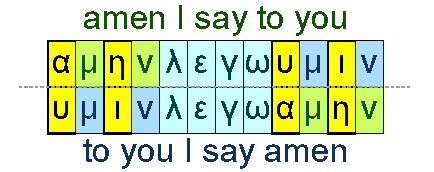
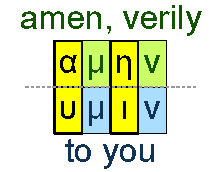
The phrase itself is a symmetrical play on words with the "amen" similar to the "(to) you".
This model appears to fit when the
"(to) you" is
singular and
not plural.
19. Verily I say unto you: connect the dots
Some (theologians, commentators, pastors, etc.) say that the phrase is used to introduce an important concept. Is what Jesus says ever
unimportant?
Instead, the phrase appears to be used to connect the previous thought (excluding scripture quotation) with the next thought as similar in some way.
In some cases, the two thoughts are stated in a
top-down backward-chaining manner so that it helps to consider the second thought before the first thought.
Student:
Are we doing anything important today in class?
20. John 12:24 Amen amen
John 12:24 Verily, verily, I say unto you, Except a corn of wheat fall into the ground and die, it abideth alone: but if it die, it bringeth forth much fruit. [kjv]
αμην αμην λεγω υμιν εαν μη ο κοκκος του σιτου πεσων εις την γην αποθανη αυτος μονος μενει εαν δε αποθανη πολυν καρπον φερει [gnt]
John
always uses the word
"amen" twice and
never once. The others use it always once and never twice.
When Jesus says
"amen",
"amen", I "
say"
"unto you"`, it appears to mean
not that what he says next is important (although it often is), it means to
connect the
previous and
next ideas. There is a play on words with
"amen" and
"unto you" which creates a symmetry as if to say to connect the
previous with the
next.
21. John 12:23-24 Compare before and after
John 12:23 And Jesus answered them, saying, The hour is come, that the Son of man should be glorified. [kjv]
ο δε ιησους απεκρινατο αποκρινεται αυτοις λεγων εληλυθεν η ωρα ινα δοξασθη ο υιος του ανθρωπου [gnt]
12:24 Verily, verily, I say unto you, Except a corn of wheat fall into the ground and die, it abideth alone: but if it die, it bringeth forth much fruit. [kjv]
αμην αμην λεγω υμιν εαν μη ο κοκκος του σιτου πεσων εις την γην αποθανη αυτος μονος μενει εαν δε αποθανη πολυν καρπον φερει [gnt]
In relating the before and after verses, it appears that the idea of the "
Son of man" being be "
glorified" should be associated with the
"corn" of "
wheat" and the rest of that verse.
22. Translations
NIV (New International Version):
Very truly I tell you, unless a kernel of wheat falls to the ground and dies, it remains only a single seed. But if it dies, it produces many seeds.
NLT (New Living Translation):
I tell you the truth, unless a kernel of wheat is planted in the soil and dies, it remains alone. But its death will produce many new kernels—a plentiful harvest of new lives.
Berean Literal Bible:
Truly, truly, I say to you, unless the grain of wheat, having fallen into the ground, should die, it abides alone; but if it should die, it bears much fruit.
How can these obvious mistranslations change the meaning of the verse and how sermons are preached on this verse?
"a" "kernel" should be "the" "kernel".
"unless" should be "if not" (i.e., the "kernel" dies by not being "fallen").
Do translators have the right to change what the Greek says to fit what they, or others, would like the verse to say?
23. Translation considerations
Jesus uses the word "sand" to refer to human infrastructure.
In Greek, the words for "sand" and "earth" appear to be interchangeable
The Greek word for "into" can, in context, mean "against" as in getting "into" your face, tearing "into" you, etc. The two ships crashed "into" each other.
24. Rock and sand
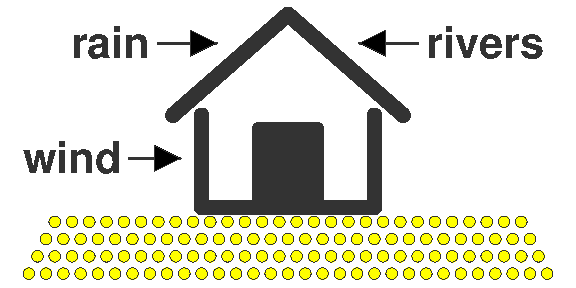
Build your house on the granite
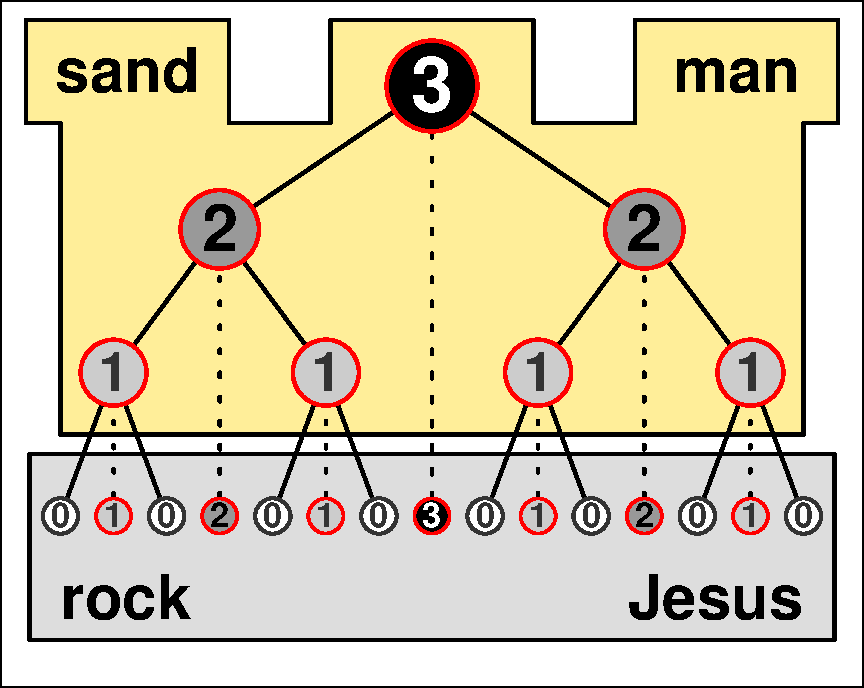
rock of Jesus and not on the human sand (or stones) of man, Matthew 7:24-27. Sand is a chip off the old block of granite and made in the image of granite.
Gathering of believers built on the rock of Christ .
Church of believers built on the sand of man .
The higher one goes up the human
sand hierarchy or
sand tree, the more the temptation to ignore the foundation of the
rock and to start to "
influence" or "
manipulate" others as "
leaders" for one's own purposes.
To the extent that the Church of believers built on the sand of man helps one do what Jesus wants them to do, it is good. To the extent it does not, it is not good.
Some
birds will make "
stones" (sand on which to build their birdhouse) appear as "
bread". That is, give "
bad" "
gifts" or "
houses" to their "
children".
25. House on sand or earth
The
Matthew verse uses
"sand". The
Luke verse uses
"earth".
Matthew 7:26 … shall be likened unto a foolish man, which built his house upon the sand: [kjv]
… ομοιωθησεται ανδρι μωρω οστις ωκοδομησεν αυτου την οικιαν αυτου επι την αμμον [gnt]
Luke 6:49 But he that heareth, and doeth not, is like a man that without a foundation built an house upon the earth; … [kjv]
ο δε ακουσας και μη ποιησας ομοιος εστιν ανθρωπω οικοδομησαντι οικιαν επι την γην … [gnt]
In an arid region such as the Middle East, how much difference is there between
"sand" and
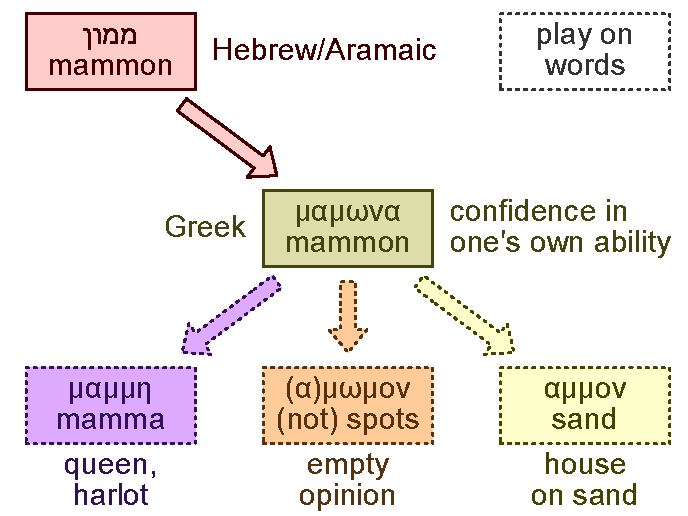
"earth"? In Matthew, Jesus uses the Greek word
"sand" which can be a play on words on
"mammon",
"mommy" and
"spots" as in
"empty opinion".
26. Mammon play on words
27. Matthew 18:20-21 Sin against my name and you
Matthew 18:20 For where two or three are gathered together in my name, there am I in the midst of them. [kjv]
ου γαρ εισιν δυο η τρεις συνηγμενοι εις το εμον ονομα εκει ειμι εν μεσω αυτων [gnt]
18:21 Then came Peter to him, and said, Lord, how oft shall my brother sin against me, and I forgive him? till seven times? [kjv]
τοτε προσελθων αυτω ο πετρος ειπεν αυτω κυριε ποσακις αμαρτησει εις εμε ο αδελφος μου και αφησω αυτω εως επτακις [gnt]
The same word
"εις" ≈ "into" where the meaning can be modified by context. The Greek word for
"into" can, in context, mean
"against" as in getting
"into" your face, tearing
"into" you, etc. The two ships crashed
"into" each other.
28. Paraphrases
The ancient Greek word
"εις" ≈ "into". In
context, it can mean
"against". The ancient Greek word
"ἐν" ≈ "in".
Translators tend to take great liberty in translating the Greek.
18:20 .. gathered together in my name ...
18:21 ... sin against me ...
Using the same meaning for the same word results in the two following choices. One way:
18:20 .. gathered together into my name ... (and "you")
18:21 ... sin into me ... (as the "you")
The other way:
18:20 .. gathered together against my name ... (and "you")
18:21 ... sin against me ... (as the "you")
There may be other ways. In the preceding verses, the
"little ones" or
"believers" (of any age) were connected with
"you" as the
"one" (one cookie rule).
29. Matthew 18:21 Peter interrupts
Matthew 18:21 Then came Peter to him, and said, Lord, how oft shall my brother sin against me, and I forgive him? till seven times? [kjv]
Peter then
interrupts with a question which some pastors attribute to Peter making awkward statements. Peter tends to think as a scientist. What did Jesus say that might have lead Peter to make such an interruption?
Perhaps Peter added
2 (agreeing) plus
2 (gathered together) plus
3 (gathered together) to get
7.
Verse 1 says "
at that same time". The verses right before in chapter 17 are for Peter to go get a "
fish" and take the "
coin" from the "
mouth" of the "
fish" and give it to the religious authorities "
in place of" Jesus and Peter. Peter had not yet done this and had a lot on his mind at the time.
30. John 12:24
John 12:24 Verily, verily, I say unto you, Except a corn of wheat fall into the ground and die, it abideth alone: but if it die, it bringeth forth much fruit. [kjv]
αμην αμην λεγω υμιν εαν μη ο κοκκος του σιτου πεσων εις την γην αποθανη αυτος μονος μενει εαν δε αποθανη πολυν καρπον φερει [gnt]
Does it help to point out that what is translated as
"a corn" or
"a seed" is, in the Greek,
"the corn" or
"the seed" (
definite article)?
Does it help to associate
"earth" with the "
sand" infrastructure of the religious establishment?
Does it help if
"the corn" "
falls"
"into/against" the "
earth/sand"?
The
negation in the verse needs to be carefully inspected.
31. Aristotle: Topica
Aristotle uses the words translated as
"but" "if" "not" nine times in Topica alone with the meaning of
"further" with a
"if" and a
"negative" implication from the «
μη».
English: Further, you must see whether the definition of the contrary fails to be clear from the description given; for correctly assigned definitions also indicate their contraries. (Loeb #391, p. 567)
Greek: Ἔτι εἰ μὴ δῆλος ὁ τοῦ ἐναντίου λόγος ἐκ τοῦ λεχθέντος· οἱ γὰρ καλῶς ἀποδιδόμενοι καὶ τοὺς ἐναντίους προσσημαίνουσιν. Aristotle: Topica [140a]
Note that the translator appears to not have a good background in logic since the three words are spread out within the translation. Paraphrase:
Yet, if not clear ...
"ετι" ≈ "yet, further".
"εί" ≈ "if, whether".
"μὴ" ≈ "not" (potential).
As a phrase, the words mean
"yet" "if" "not" or
"yet" "whether" "not". When translated, the words may be moved around in the text to fit, say, English.
32. Strongs - yet if not
*G2089 *94 ἔτι (et'-ee) : perhaps akin to G2094; "yet," still (of time or degree):--after that, also, ever, (any) further, (t-)henceforth (more), hereafter, (any) longer, (any) more(-one), now, still, yet.
*G1487 *0 εἰ (i) : a primary particle of conditionality; if, whether, that, etc.:--forasmuch as, if, that, (al-)though, whether. Often used in connection or composition with other particles.
*G3361 *0 μή (may) : a primary particle of qualified negation (whereas G3756 expresses an absolute denial); (adverb) not, (conjunction) lest; also (as an interrogative implying a negative answer (whereas G3756 expects an affirmative one)) whether:--any but (that), X forbear, + God forbid, + lack, lest, neither, never, no (X wise in), none, nor, (can-)not, nothing, that not, un(-taken), without. Often used in compounds in substantially the same relations.
The Strongs definitions of the three words are
"yet",
"if" and
"not", just as used many times by Aristotle. Usage:
«μή» is the negative of thought or wish.
«οὐ» is the negative of objective statements of fact.
However, this does not come through in translation. A modern Greek translation of this verse (omitted) appears to be translation not of the original Greek but of the
KJV.
33. Matthew 5:13 Yet whether not
Matthew 5:13 Ye are the salt of the earth: but if the salt have lost his savour, wherewith shall it be salted? it is thenceforth good for nothing, but to be cast out, and to be trodden under foot of men. [kjv]
υμεις εστε το αλας της γης εαν δε το αλας μωρανθη εν τινι αλισθησεται εις ουδεν ισχυει ετι ει μη βληθηναι βληθεν εξω και καταπατεισθαι υπο των ανθρωπων [gnt]
The words for
"yet" "if" "not" it translated as
"but" in the
KJV (and elsewhere).
KJV: but to be cast out ...
Greek: yet if (it is) not thrown out ... (some problems result)
To what does the ambiguous implied "
it" refer?
☐
good "
effective"
"salt".
☐
bad "not" "
effective"
"salt".
The statement is in the form of a "
counter-factual" in that this division does
not exist. The "
trodden" happens
without the split since the split never happens.
A possible play on words for "
if not" might be
"εἰμί" ≈ "to be, happen".
34. Matthew 23:3 Negation
Matthew 23:3 All therefore whatsoever they bid you observe, that observe and do; but do not ye after their works: for they say, and do not. [kjv]
παντα ουν οσα αν εαν ειπωσιν υμιν τηρειν τηρειτε ποιησατε και ποιειτε τηρειτε κατα δε τα εργα αυτων μη ποιειτε λεγεουσιν γαρ και ου ποιουσιν [gnt]
Three Greek
words for negation appear in this verse.
"δε" ≈ "(but) not". This is a qualified negation (but).
"μη" ≈ "not, no" with something more abstract and potential. For example, of a thought or wish. This is used with "do not after their works" (thought or wish).
"ου" ≈ "not, no" with something more physical and actual. For example, an objective statement of fact. This is used with "do not" for what they "say" (objective statement).
35. Matthew 23:3 Negation
Matthew 23:3 All therefore whatsoever they bid you observe, that observe and do; but do not ye after their works: for they say, and do not. [kjv]
παντα ουν οσα αν εαν ειπωσιν υμιν τηρειν τηρειτε ποιησατε και ποιειτε τηρειτε κατα δε τα εργα αυτων μη ποιειτε λεγεουσιν γαρ και ου ποιουσιν [gnt]
What does Jesus think of their
"works" (
abstract and
potential) compared to their
"say" (
physical and
actual)?
Do as I say, not as I do.
Greek, as most languages except English, use the double negative for an
emphatic "not". The English requires that the middle
"not" not be translated.
"ου μη" ≈ "no not" and appears in 137 verses in the GNT (Greek New Testament).
Greek, as most languages, uses the logical negation when both words are
not a plain
"not".
36. Compare Matthew and Luke
Matthew 10:37 He that loveth father or mother more than me is not worthy of me: and he that loveth son or daughter more than me is not worthy of me. [kjv]
ο φιλων πατερα η μητερα υπερ εμε ουκ εστιν μου αξιος και ο φιλων υιον η θυγατερα υπερ εμε ουκ εστιν μου αξιος [gnt]
Luke 14:26 If any man come to me, and hate not his father, and mother, and wife, and children, and brethren, and sisters, yea, and his own life also, he cannot be my disciple. [kjv]
ει τις ερχεται προς με και ου μισει τον πατερα εαυτου και την μητερα και την γυναικα και τα τεκνα και τους αδελφους και τας αδελφας ετι δε τε και την εαυτου ψυχην εαυτου ου δυναται ειναι μου μαθητης ειναι [gnt]
Now we have a context for the verse in Luke about
"hate" and the verse in Matthew about "
love". What do each of these verses mean and how do they relate?
The key to the connection is to understand the logical meaning "
more than" in Matthew 10:37. The Greek word is that of "
over" which has the same logical meaning as "
more than".
37. Table comparison
| Book |
Spoken by Jesus |
Same meaning |
Status |
| Matthew |
not (family > Jesus) |
family ≤ Jesus |
correct |
| Luke |
not (family > Jesus) |
family < Jesus |
incorrect |
Correct logic: Matthew writes down and reports what Jesus spoke.
You should "love" Jesus.
Your family must be "less than or equal to" Jesus. (correct)
You must not "love" (nor condone) the worldly part of your family that are against God more than Jesus.
The
incorrect logic goes as follows. Luke reports what was remembered.
You should "love" Jesus.
Your family must be "less than" Jesus. (incorrect)
The opposite of "love" is "hate" (two choices).
Therefore, you must "hate" your family. (incorrect)
38. John 12:24 Negation
John 12:24 Verily, verily, I say unto you, Except a corn of wheat fall into the ground and die, it abideth alone: but if it die, it bringeth forth much fruit. [kjv]
αμην αμην λεγω υμιν εαν μη ο κοκκος του σιτου πεσων εις την γην αποθανη αυτος μονος μενει εαν δε αποθανη πολυν καρπον φερει [gnt]
"ἐάν" ≈ "if, when". This is a conditional that is dependent on the following precondition for the following postcondition to apply (bottom-up reasoning). Logically, "if" and "when" have the same meaning.
"μη" ≈ "not, no" with something more abstract and potential as in a thought or wish.
"ου" ≈ "not, no" with something more physical and actual as in a statement of fact.
The
KJV translates the Greek words for
"if/when" "not" as
"except". Does the
abstract meaning of
"not" make sense here?
39. Conditional logic
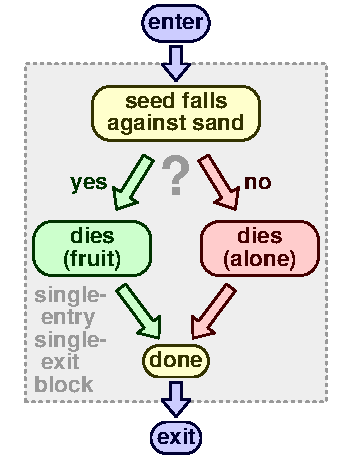
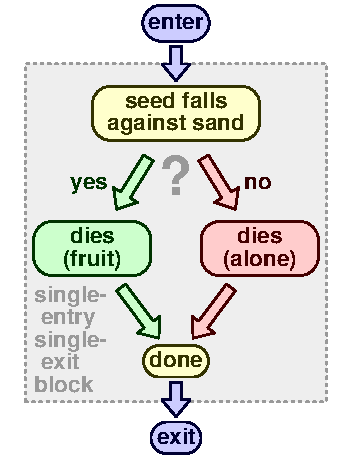
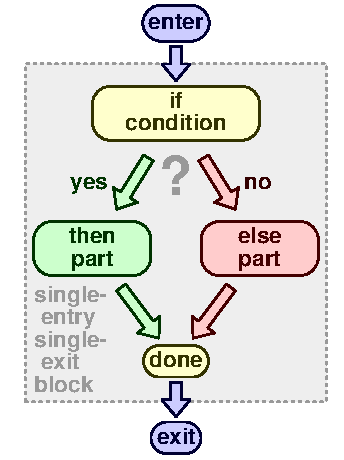
A
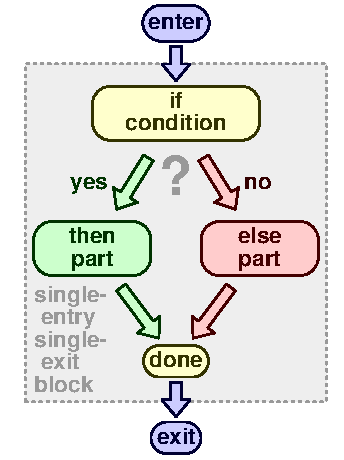
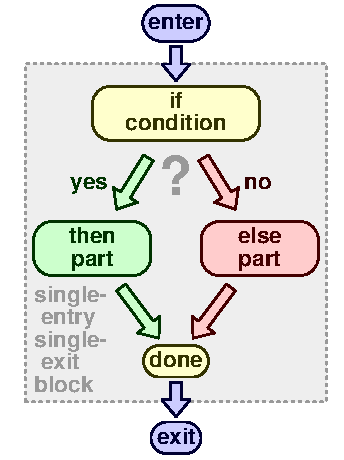
conditional statement states a condition and then has a true or then part and an else or false part.
One must follow the arrows. In programming this idea is called a
SESE (Single Entry Single Exit) block and makes it much easier to reason about programs.
[Antoine Lavoisier and conservation of mass]
Thus, the conditional construct has the following properties [excluded middle].
Mutually exclusive: no overlap
Collectively exhaustive: includes all alternatives
The ancient Greek word
"ἐάν" ≈ "if, when".
40. Conditional statements
|
If [condition] Then
[then-part]
Else
[else-part]
End If
|
If [condition] Then
[then-part]
End If
If Not [condition] Then
[else-part]
End If
|
If Not [condition] Then
[else-part]
End If
If [condition] Then
[then-part]
End If
|
A
conditional statement states a condition and then has a true part and a false part. The programming constructs (on the left) are
equivalent (assuming no side-effects in evaluation of the
condition, for programming purposes).
The reordering in the last (bottom) part is to match the logic of the verse being examined.
[programming as algebraic transformations]
Note: These transformations assume no side-effects in the condition and the first then or else part does not change the condition. This is true for the verses under consideration.
41. Conditional parts
|
If [seed falls against sand] Then
[dies and bears much fruit]
Else
[dies and remains alone]
End If
|
If [seed falls against sand] Then
[dies and bears much fruit]
End If
If Not [seed falls against sand] Then
[dies and remains alone]
End If
|
If Not [seed falls against sand] Then
[dies and remains alone]
End If
If [seed falls against sand] Then
[dies and bears much fruit]
End If
|
The verse has the conditional structure. The "
if" "
however" appears to support this meaning.
The Greek word for "
falls" is used when the "
house" on "
sand" "
falls" and when the "
house" on "
rock" does
not "
fall".
In both cases, the "
seed" "
dies", whether or not "
fallen" "
against" the "
sand" or "
earth".
[keeping corn on the shelf for next year]
42. Conditional logic
What is the "shelf life" of the "seed"?
Use it or lose it.
Jesus: I am the way, the truth, and the life. No one gets to the Father but by me. Sounds like a SESE block.
[sheep pen]
43. John 12:24 Paraphrase
John 12:24 Verily, verily, I say unto you, Except a corn of wheat fall into the ground and die, it abideth alone: but if it die, it bringeth forth much fruit. [kjv]
Greek word order:
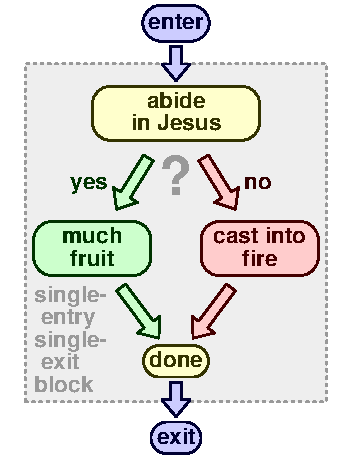
... if not the seed of the wheat fall into (against) the earth (sand) [human infrastructure] dies it (seed) only abiding/remaining. If however (it) dies [against the sand or human infrastructure] much fruit is brought/carried (forth).
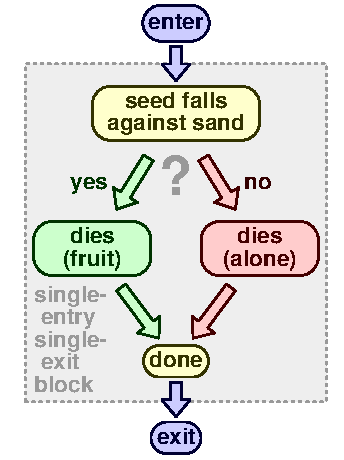
In the "yes" part, the seed is planted and dies bearing/carrying much fruit.
In the "no" part, the seed dies without being planted, so to speak.
The
KJV appears to have back-patched the second part into the first part such that they have similar meanings and not opposite meanings.
44. John 12:24 Paraphrase
John 12:24 Verily, verily, I say unto you, Except a corn of wheat fall into the ground and die, it abideth alone: but if it die, it bringeth forth much fruit. [kjv]
Yes part: If the seed does fall into/against the human infrastructure and dies, it bears/carries much fruit.
No part: If the seed does not fall into/against the human infrastructure it dies, renaming there (living a happy life while in this world, not much if any fruit).
There is a clear parallelism of this verse with the next verse, but only if this verse is properly translated - both ling`uistically and logically.
45. John 12:23
KJV: And Jesus answered them, saying, The hour is come, that the Son of man should be glorified.
Greek: ο δε ιησους απεκρινατο αποκρινεται αυτοις λεγων εληλυθεν η ωρα ινα δοξασθη ο υιος του ανθρωπου
46. John 12:24
KJV: Verily, verily, I say unto you, Except a corn of wheat fall into the ground and die, it abideth alone: but if it die, it bringeth forth much fruit.
Greek: αμην αμην λεγω υμιν εαν μη ο κοκκος του σιτου πεσων εις την γην αποθανη αυτος μονος μενει εαν δε αποθανη πολυν καρπον φερει
47. John 12:25 Prison
John 12:25 He that loveth his life shall lose it; and he that hateth his life in this world shall keep it unto life eternal. [kjv]
ο φιλων την ψυχην αυτου απολεσει απολλυει αυτην και ο μισων την ψυχην αυτου εν τω κοσμω τουτω εις ζωην αιωνιον φυλαξει αυτην [gnt]
The
KJV translates as
"keep" the Greek word that means
"watch" or
"prison" depending on context.
Jesus, John, etc., often use the words "
love" and "
hate" as opposites.
Modern secular psychology tends to not like this pair and will come up with other alternatives.
48. To see a timely prison watch
Matthew 5:25 Agree with thine adversary quickly, whiles thou art in the way with him; lest at any time the adversary deliver thee to the judge, and the judge deliver thee to the officer, and thou be cast into prison. [kjv]
ισθι ευνοων τω αντιδικω σου ταχυ εως οτου ει μετ αυτου εν τη οδω μετ αυτου μηποτε μηποτε σε παραδω ο αντιδικος τω κριτη και ο κριτης σε παραδω τω τω υπηρετη και εις φυλακην βληθηση [gnt]
The
ancient Greek word
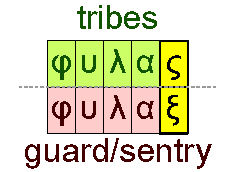
"φυλακή" ≈ "watch, prison" where
"prison" was one way to be
"watched". The Greek word is the source of the English word
"prophylactic".
14:25 And in the fourth watch of the night Jesus went unto them, walking on the sea. [kjv]
τεταρτη δε φυλακη της νυκτος απηλθεν ηλθεν προς αυτους ο ιησους περιπατων επι της θαλασσης την θαλασσαν [gnt]
Jesus wants believers to "
walk" in "
righteousness" in the "
sea" of "
humanity" and be "
fishers" of "
men" and
not "
fishers" of "
pigs" or "
birds".
The
modern Greek word
"φυλακή" (fee-la-KEE) ≈ "watch, prison".
49. Revelation 18:2 Cagey birds
Revelation 18:2 And he cried mightily with a strong voice, saying, Babylon the great is fallen, is fallen, and is become the habitation of devils, and the hold of every foul spirit, and a cage of every unclean and hateful bird. [kjv]
και εκραξεν εν ισχυι ισχυρα φωνη μεγαλη λεγων επεσεν επεσεν βαβυλων η μεγαλη και εγενετο κατοικητηριον δαιμονων δαιμονιων και φυλακη παντος πνευματος ακαθαρτου και φυλακη παντος ορνεου ακαθαρτου και μεμισημενου [gnt]
In Revelation, Babylon is described as a
"watch" of every "
unclean" and "
hateful" type of
"bird". Are they
"watching" those in the
"watch"?
Some Greek manuscripts add a "
beast" as a
land animal.
In Matthew 7, the house built on sand will be "
cut off" and
"fall".
50. Revelation 18:2 Bird watching
Revelation 18:2 And he cried mightily with a strong voice, saying, Babylon the great is fallen, is fallen, and is become the habitation of devils, and the hold of every foul spirit, and a cage of every unclean and hateful bird. [kjv]
και εκραξεν εν ισχυι ισχυρα φωνη μεγαλη λεγων επεσεν επεσεν βαβυλων η μεγαλη και εγενετο κατοικητηριον δαιμονων δαιμονιων και φυλακη παντος πνευματος ακαθαρτου και φυλακη παντος ορνεου ακαθαρτου και μεμισημενου [gnt]
The ancient Greek word
"φυλάσσω" ≈ "watch" is related to
"φυλακή" ≈ "watch, prison". The
KJV translates the same word as
"hold" and then
"cage" and takes a viewpoint on who is
"watching" and who is being
"watched".
Discuss: How might the world be a "
cage" or "
watch" for a believer?
The Greek word for "cage" is that of a "prison" as in something that is "watched".
The Greek word for "bird" is not the word used in Matthew but is that of "fowl", as used by John, or "hen", as used in Matthew and Luke.
51. John 12:24-25 Comparisons
John 12:24 Verily, verily, I say unto you, Except a corn of wheat fall into the ground and die, it abideth alone: but if it die, it bringeth forth much fruit. [kjv]
12:25 He that loveth his life shall lose it; and he that hateth his life in this world shall keep it unto life eternal. [kjv]
Is the
parallelism between these two verses more evident now? Do you see the pattern?
The words "love" and "hate" are used as opposites.
The words "lose" and "keep" or "guard" are used as opposites.
52. Table conditional comparison
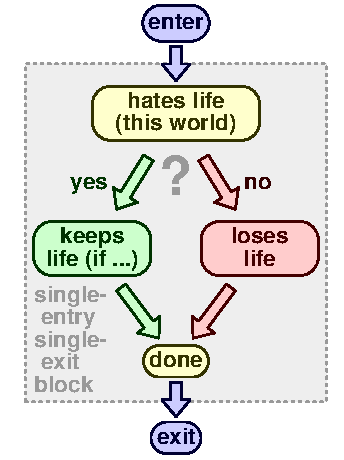
What is needed to
"keep life into eternity" ? Check the next verse. It continues with "
if ...".
| verse |
seed |
then part ‑ true/yes |
else part ‑ false/no |
| 12:24 |
the‑J |
(yes) fallen against sand |
(no) not fallen against sand |
| 12:24 |
the‑J |
dies (having fallen) |
dies (not having fallen) |
| 12:24 |
the‑J |
bears much fruit (later) |
remains alone in this world |
| 12:25 |
a‑you |
(yes) hates life ‑ this world |
(no) loves life ‑ this world |
| 12:25 |
a‑you |
keep life into eternity if ... |
loses life (in prison) |
The use of
negation is difficult for students of programming to learn and use. It appears to have been especially difficult for translators, theologians, etc.
53. John 12:25
KJV: He that loveth his life shall lose it; and he that hateth his life in this world shall keep it unto life eternal.
Greek: ο φιλων την ψυχην αυτου απολεσει απολλυει αυτην και ο μισων την ψυχην αυτου εν τω κοσμω τουτω εις ζωην αιωνιον φυλαξει αυτην
54. John 12:26 Follow me
John 12:26 If any man serve me, let him follow me; and where I am, there shall also my servant be: if any man serve me, him will my Father honour. [kjv]
εαν εμοι διακονη τις διακονη εμοι ακολουθειτω και οπου ειμι εγω εκει και ο διακονος ο εμος εσται και εαν τις εμοι διακονη τιμησει αυτον ο πατηρ [gnt]
The thought and completion of the ideas from the past few verses continue into this verse (and beyond). One is to "
serve" and "
follow", not "
lead". Just do what Christ wants.
What might this say about being recruited (e.g., by a "
bird") to take an "
oath" to be a "
leader" (e.g., a "
pig") for Christ?
[if without an else branch]
55. John 12:26
KJV: If any man serve me, let him follow me; and where I am, there shall also my servant be: if any man serve me, him will my Father honour.
Greek: εαν εμοι διακονη τις διακονη εμοι ακολουθειτω και οπου ειμι εγω εκει και ο διακονος ο εμος εσται και εαν τις εμοι διακονη τιμησει αυτον ο πατηρ
56. John 15:5 Favorite Bible verse
John 15:5 I am the vine, ye are the branches: He that abideth in me, and I in him, the same bringeth forth much fruit: for without me ye can do nothing. [kjv]
εγω ειμι η αμπελος υμεις τα κληματα ο μενων εν εμοι καγω εν αυτω ουτος φερει καρπον πολυν οτι χωρις εμου ου δυνασθε ποιειν ουδεν [gnt]
This verse goes with the
next verse.
Some people cite John 15:5 as their favorite Bible verse. How nice. The "
abide" or "
remain" appears, in context, to be related to the Meno Paradox.
English changes the double negative for emphasis to a single negative. The "
can do" is, in the Greek, "
potentially do". The next verse completes the thought.
57. John 15:6 Paired verses
John 15:6 If a man abide not in me, he is cast forth as a branch, and is withered; and men gather them, and cast them into the fire, and they are burned. [kjv]
εαν μη τις μεινη μενη εν εμοι εβληθη εξω ως το κλημα και εξηρανθη και συναγουσιν αυτα και εις το πυρ βαλλουσιν και καιεται [gnt]
This verse goes with the
previous verse.
The first
"cast" is a play on words with "
into oblivion/forgetfulness". Many churches who might use the previous verse would not want to talk about the
"fire" and being "
burned". The ancient Greek word
"καίω" ≈ "light, kindle, burn".
58. John 15:5-6 Conditional logic
John 15:5 I am the vine, ye are the branches: He that abideth in me, and I in him, the same bringeth forth much fruit: for without me ye can do nothing. [kjv]
15:6 If a man abide not in me, he is cast forth as a branch, and is withered; and men gather them, and cast them into the fire, and they are burned. [kjv]
The pattern used here by John is that of conditional logic.
At one church, someone on the staff claimed John 15:5 as their favorite verse. That church would prefer to omit any mention of John 15:6.
59. John 12:27
John 12:27 Now is my soul troubled; and what shall I say? Father, save me from this hour: but for this cause came I unto this hour. [kjv]
νυν η ψυχη μου τεταρακται και τι ειπω πατερ σωσον με εκ της ωρας ταυτης αλλα δια τουτο ηλθον εις την ωραν ταυτην [gnt]
This verse is used by some to show the humanity of Jesus. Some use it to create doubt on what Jesus is doing.
See, for example,
Quest for the historical Jesus by Albert Schweitzer (1875-1965), a German and French polymath and Lutheran minister from Alsace. Schweitzer received the 1952 Nobel Peace Prize for his work in the philosophy of "
Reverence for life". Note: The Nobel prize process has a long history of not giving prizes to those who support the Bible, Christianity, etc.
 |
Details are left as a future topic.
|
60. John 12:27
KJV: Now is my soul troubled; and what shall I say? Father, save me from this hour: but for this cause came I unto this hour.
Greek: νυν η ψυχη μου τεταρακται και τι ειπω πατερ σωσον με εκ της ωρας ταυτης αλλα δια τουτο ηλθον εις την ωραν ταυτην
61. John 12:28
John 12:28 Father, glorify thy name. Then came there a voice from heaven, saying, I have both glorified it, and will glorify it again. [kjv]
πατερ δοξασον σου το ονομα ηλθεν ουν φωνη εκ του ουρανου και εδοξασα και παλιν δοξασω [gnt]
62. John 12:28
KJV: Father, glorify thy name. Then came there a voice from heaven, saying, I have both glorified it, and will glorify it again.
Greek: πατερ δοξασον σου το ονομα ηλθεν ουν φωνη εκ του ουρανου και εδοξασα και παλιν δοξασω
63. John 12:29
John 12:29 The people therefore, that stood by, and heard it, said that it thundered: others said, An angel spake to him. [kjv]
ο ουν οχλος ο εστως και ακουσας ελεγεν βροντην γεγονεναι αλλοι ελεγον αγγελος αυτω λελαληκεν [gnt]
64. John 12:29
KJV: The people therefore, that stood by, and heard it, said that it thundered: others said, An angel spake to him.
Greek: ο ουν οχλος ο εστως και ακουσας ελεγεν βροντην γεγονεναι αλλοι ελεγον αγγελος αυτω λελαληκεν
65. John 12:30
John 12:30 Jesus answered and said, This voice came not because of me, but for your sakes. [kjv]
απεκριθη ο ιησους και ειπεν ιησους ου δι εμε αυτη η φωνη αυτη γεγονεν αλλα δι υμας [gnt]
66. John 12:30
KJV: Jesus answered and said, This voice came not because of me, but for your sakes.
Greek: απεκριθη ο ιησους και ειπεν ιησους ου δι εμε αυτη η φωνη αυτη γεγονεν αλλα δι υμας
67. More verses
More verses continue until the end of the chapter in verse 50.
 |
Details are left as a future topic.
|
68. End of page