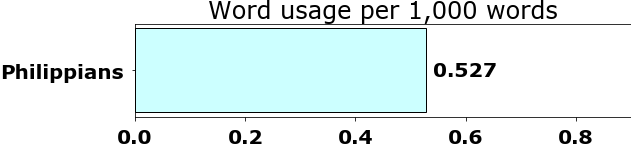
- *G2849 *2 κολάζω (kol-ad'-zo) : from kolos (dwarf); properly, to curtail, i.e. (figuratively) to chastise (or reserve for infliction):--punish.
- κολασωνται
- Acts 4:21 ... finding nothing how they might punish them, because of the people: ...
- κολαζομενους
- 2 Peter 2:9 ... unto the day of judgment to be punished:
- *G2856 *4 κολοβόω (kol-ob-o'-o) : from a derivative of the base of G2849 κολάζω; to dock, i.e. (figuratively) abridge:--shorten.
- εκολοβωσεν *2
- Mark 13:20 And except that the Lord had shortened those days, no flesh should be saved: but for the elect's sake, whom he hath chosen, he hath shortened the days.
- εκολοβωθησαν
- Matthew 24:22 ... those days should be shortened, there should no flesh be saved: but for the elect's sake those days shall be shortened.
- κολοβωθησονται
- Matthew 24:22 ... those days should be shortened, there should no flesh be saved: but for the elect's sake those days shall be shortened.
40. Usage - shortened
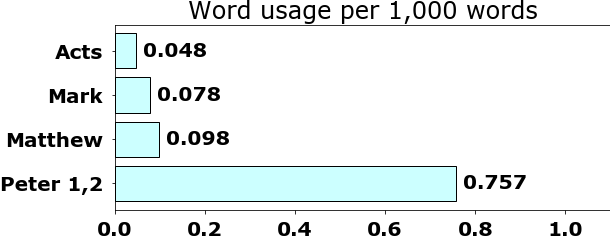 |
Words: εκολοβωθησαν εκολοβωσεν=2 κολαζομενους κολασωνται κολοβωθησονται
|
41. Docked or hornless
The ancient Greek word
"κολάζω" ≈ "check, chastise, punish, beat" is from the ancient Greek word
"κόλος" ≈ "docked, hornless" and appears to fit the idea of removing parts.
Acts 4:21 So when they had further threatened them, they let them go, finding nothing how they might punish them, because of the people: for all men glorified God for that which was done. [kjv]
οι δε προσαπειλησαμενοι απελυσαν αυτους μηδεν ευρισκοντες το πως κολασωνται αυτους δια τον λαον οτι παντες εδοξαζον τον θεον επι τω γεγονοτι [gnt]
… punirent … [v]
The modern Greek word
"κολάζω" (ko-LA-zo) ≈ "chasten, mince".
42. Acts 4:21
KJV: So when they had further threatened them, they let them go, finding nothing how they might punish them, because of the people: for all men glorified God for that which was done.
Greek: οι δε προσαπειλησαμενοι απελυσαν αυτους μηδεν ευρισκοντες το πως κολασωνται αυτους δια τον λαον οτι παντες εδοξαζον τον θεον επι τω γεγονοτι
Latin: at illi comminantes dimiserunt eos non invenientes quomodo punirent eos propter populum quia omnes clarificabant Deum in eo quod acciderat
43. Day of judgment
2 Peter 2:9 The Lord knoweth how to deliver the godly out of temptations, and to reserve the unjust unto the day of judgment to be punished: [kjv]
οιδεν κυριος ευσεβεις εκ πειρασμου ρυεσθαι αδικους δε εις ημεραν κρισεως κολαζομενους τηρειν [gnt]
… temptatione … diem iudicii cruciandos … [v]
… temptacioun… dai of dom … turmentid… [wy]
In Greek, the "
day of judgment" is the "
day of separation" is in the parable of the sheep and goats.
From the Old English, the day is "
doomsday".
44. 2 Peter 2:9
KJV: The Lord knoweth how to deliver the godly out of temptations, and to reserve the unjust unto the day of judgment to be punished:
Greek: οιδεν κυριος ευσεβεις εκ πειρασμου ρυεσθαι αδικους δε εις ημεραν κρισεως κολαζομενους τηρειν
Latin: novit Dominus pios de temptatione eripere iniquos vero in diem iudicii cruciandos reservare
Wycliffe: For the Lord kan delyuere piteuouse men fro temptacioun, and kepe wickid men `in to the dai of dom to be turmentid;
45. Scrabble disaster

|
|

- DISASTER = 9 points
- QUICK = 20 points
|
46. Good and bad colons
47. Dysentery
48. Modern Greek
49. Easy going
2 Samuel 15:3 And Absalom said unto him, See, thy matters are good and right; but there is no man deputed of the king to hear thee. [kjv]
και ειπεν προς αυτον αβεσσαλωμ ιδου οι λογοι σου αγαθοι και ευκολοι και ακουων ουκ εστιν σοι παρα του βασιλεως [lxx]
And Abessalom said to him, See, your affairs are right and clear, yet you have no one appointed of the king to hear you. [bs3]
Might the "
clear" in the Greek (Brenton Septuagint) or "
right" in the
KJV (from the Hebrew) be translated as "
easy going" or of a "
good nature" coming from the idea of a "
good colon" or "
good intestine"?
This word appears only once in the
LXX and not in the
GNT.
50. 2 Samuel 15:3
KJV: And Absalom said unto him, See, thy matters are good and right; but there is no man deputed of the king to hear thee.
Hebrew: ויאמר אליו אבשלום ראה דברך טובים ונכחים ושמע אין לך מאת המלך׃
Greek: και ειπεν προς αυτον αβεσσαλωμ ιδου οι λογοι σου αγαθοι και ευκολοι και ακουων ουκ εστιν σοι παρα του βασιλεως
Brenton: And Abessalom said to him, See, your affairs are right and clear, yet you have no one appointed of the king to hear you.
51. Difficult and easy
Although the Greek word for "
easy" does not appear in the verse where the
KJV translates "
easy", the Greek word translated as "
difficult" appears only seven times but has an interesting etymology. That word appears in a related verse previous to the verses about a camel and a rich man.
The ancient Greek word
"δύσκολος" ≈ "annoyed, grumpy, bad-tempered" with one original meaning of "
hard to satisfy with food" - perhaps due to a "
bad intestine".
52. Riches and the kingdom
Matthew 19:23 … That a rich man shall hardly enter into the kingdom of heaven. [kjv]
… δυσκολως … [gnt]
Mark 10:23 … How hardly shall they that have riches enter into the kingdom of God ! [kjv]
… δυσκολως … [gnt]
10:24 … how hard is it for them that trust in riches to enter into the kingdom of God ! [kjv]
… δυσκολον … [gnt]
Luke 18:24 … How hardly shall they that have riches enter into the kingdom of God ! [kjv]
… δυσκολως … [gnt]
Jesus is speaking in all the verses.
53. Discussion
The word translated as
"hardly" in the
KJV and
"difficult" in many other translations is the ancient Greek word
"δύσκολος" ≈ "annoyed, grumpy, bad-tempered" which means, literally,
"bad colon" as in
"bad intestine".
Consider the above verses and discuss the following.
- How hard is it for the "rich" to enter the kingdom?
- How hard is it for the "poor" to enter the kingdom?
- How hard is it for those who are neither "rich" nor "poor" to enter the kingdom?
What is the difference between the following?
- Something that is easy or hard (difficult).
- Something that is possible or impossible.
Is there a middle ground for each?
Why might the "
young man" be
"annoyed",
"grumpy" or
"bad-tempered" at hearing the remarks of Jesus? Why might the disciples be upset at what Jesus said.
54. Matthew 19:23 Paraphrase
Matthew 19:23 Then said Jesus unto his disciples, Verily I say unto you, That a rich man shall hardly enter into the kingdom of heaven. [kjv]
ο δε ιησους ειπεν τοις μαθηταις αυτου αμην λεγω υμιν οτι δυσκολως πλουσιος δυσκολως εισελευσεται εις την βασιλειαν των ουρανων [gnt]
Paraphrase: (if otherwise qualified)
A man with many possessions enters the kingdom of heaven in a bad-tempered or grumpy manner (since all those possessions are left behind and now worthless). Whether one gets into the kingdom of heaven is dependent on other factors (e.g., how the possessions were obtained, how they were used, etc.).
A play on words can be made as follows. The English word
"Pluto" comes from the ancient Greek word
"Πλούτων" ≈ "God of the underworld or Hades" which comes from
"πλοῦτος" ≈ "riches" or
"πλούσιος" ≈ "wealthy, rich".
55. Contrast discussion
Contrast this paraphrase with the parable of the workers starting at different times of the day. The ones who started early are "
grumpy" and "
annoyed" that the ones starting later in the day get the same reward.
How might the workers feel who spend a lot of time gathering riches for themselves that they cannot take into the kingdom?
How does this differ from the parable about starting at different times?
1 Timothy 6:10 For the love of money is the root of all evil: which while some coveted after, they have erred from the faith, and pierced themselves through with many sorrows. [kjv]
ριζα γαρ παντων των κακων εστιν η φιλαργυρια ης τινες ορεγομενοι απεπλανηθησαν απο της πιστεως και εαυτους περιεπειραν οδυναις πολλαις [gnt]
56. 1 Timothy 6:10
KJV: For the love of money is the root of all evil: which while some coveted after, they have erred from the faith, and pierced themselves through with many sorrows.
Greek: ριζα γαρ παντων των κακων εστιν η φιλαργυρια ης τινες ορεγομενοι απεπλανηθησαν απο της πιστεως και εαυτους περιεπειραν οδυναις πολλαις
Wycliffe: For the rote of alle yuelis is coueytise, which summen coueitinge erriden fro the feith, and bisettiden hem with many sorewis.
Luther: Denn Geiz ist eine Wurzel alles Übels, welches hat etliche gelüstet, und sind vom Glauben irregegangen und machen sich selbst viel Schmerzen,
57. Rich and happy
I never met a rich man who was happy, but I have only very occasionally met a poor man who did not want to become a rich man. Malcolm Muggeridge (British broadcaster)
58. Riches
Reply to people with who have ideas on how he can make a lot of money with his farm.
I can't afford to be that rich. Sam Snyder
59. Riches and the kingdom
Mark 10:24 … how hard is it for them that trust in riches to enter into the kingdom of God ! [kjv]
οι δε μαθηται εθαμβουντο επι τοις λογοις αυτου ο δε ιησους παλιν αποκριθεις λεγει αυτοις τεκνα πως δυσκολον εστιν τους πεποιθοτας επι τοις χρημασιν εις την βασιλειαν του θεου εισελθειν [gnt]
The Greek in Mark for "
that trust in" is not in some Greek manuscripts and not in Matthew or Luke or the other verse in Mark (right before this one). Might Mark have been the rich man who later changed his ways?
 |
Details are left as a future topic.
|
60. Discussion
Discuss:
- Does how one obtains riches matter? What are ill-gotten gains?
- How does Jesus actions with Zacchaeus fit with what Jesus said about the rich and the kingdom?
- Does trust in riches or oneself (mammon) matter?
- Is it a conflict of interest for the church to translate the verses so that one needs to give up riches (preferably to the church)?
61. Matthew 19:23
KJV: Then said Jesus unto his disciples, Verily I say unto you, That a rich man shall hardly enter into the kingdom of heaven.
Greek: ο δε ιησους ειπεν τοις μαθηταις αυτου αμην λεγω υμιν οτι δυσκολως πλουσιος δυσκολως εισελευσεται εις την βασιλειαν των ουρανων
62. Mark 10:23
KJV: And Jesus looked round about, and saith unto his disciples, How hardly shall they that have riches enter into the kingdom of God !
Greek: και περιβλεψαμενος ο ιησους λεγει τοις μαθηταις αυτου πως δυσκολως οι τα χρηματα εχοντες εις την βασιλειαν του θεου εισελευσονται
63. Mark 10:24
KJV: And the disciples were astonished at his words. But Jesus answereth again, and saith unto them, Children, how hard is it for them that trust in riches to enter into the kingdom of God !
Greek: οι δε μαθηται εθαμβουντο επι τοις λογοις αυτου ο δε ιησους παλιν αποκριθεις λεγει αυτοις τεκνα πως δυσκολον εστιν τους πεποιθοτας επι τοις χρημασιν εις την βασιλειαν του θεου εισελθειν
64. Luke 18:24
KJV: And when Jesus saw that he was very sorrowful, he said, How hardly shall they that have riches enter into the kingdom of God !
Greek: ιδων δε αυτον ο ιησους περιλυπον γενομενον ειπεν πως δυσκολως οι τα χρηματα εχοντες εισελευσονται εις την βασιλειαν του θεου εισπορευονται
65. Difficulties in the LXX
Job 34:30 That the hypocrite reign not, lest the people be ensnared. [kjv]
βασιλευων ανθρωπον υποκριτην απο δυσκολιας λαου [lxx]
causing a hypocrite to be king, because of the waywardness of the people. [bs3]
The Greek for "
hypocrite" meant acting or pretending. Do "
actors" (kings, pastors, etc.) reign and cause the people to be ill-tempered or grumpy?
An older definition of "
difficult" as "
hard to satisfy with food" could be related to the Roman idea of keeping in power by making sure the people had "
food and circuses".
66. Job 34:30
KJV: That the hypocrite reign not, lest the people be ensnared.
Hebrew: ממלך אדם חנף ממקשי עם׃
Greek: βασιλευων ανθρωπον υποκριτην απο δυσκολιας λαου
Brenton: causing a hypocrite to be king, because of the waywardness of the people.
67. Difficulty in Jeremiah
Jeremiah 49:8 Flee ye, turn back, dwell deep, O inhabitants of Dedan; for I will bring the calamity of Esau upon him, the time that I will visit him. [kjv]
ηπατηθη ο τοπος αυτων βαθυνατε εις καθισιν οι κατοικουντες εν δαιδαν οτι δυσκολα εποιησεν ηγαγον επ αυτον εν χρονω ω επεσκεψαμην επ αυτον [lxx]
… perditionem … visitationis … [v]
Note that Esau lost his birthright, in part, due to being "
hard to satisfy with food" in that he wanted "
instant gratification". Was Esau "
grumpy" or "
ill-tempered" as a "
calamity"?
The Greek word for "
visit" is the word that later became the word for "
bishop" - which could be as a "
sheep dog" or as a "
wolf dog".
68. Jeremiah 49:8
KJV: Flee ye, turn back, dwell deep, O inhabitants of Dedan; for I will bring the calamity of Esau upon him, the time that I will visit him.
Hebrew: נסו הפנו העמיקו לשבת ישבי דדן כי איד עשו הבאתי עליו עת פקדתיו׃
Greek: ηπατηθη ο τοπος αυτων βαθυνατε εις καθισιν οι κατοικουντες εν δαιδαν οτι δυσκολα εποιησεν ηγαγον επ αυτον εν χρονω ω επεσκεψαμην επ αυτον
Latin: fugite terga vertite descendite in voragine habitatores Dedan quoniam perditionem Esau adduxi super eum tempus visitationis eius
69. Review
A prefix is added to the Greek word for "
colon" or "
intestine" to describe the mood or temperament of people.
- The word "good colon" is an easy-going good-natured mood.
- The word "bad colon" is a grumpy, annoyed or mad-tempered mood.
Going through Latin, the rich man, and the Kingdom of God, the meaning of the Greek word meaning "
grumpy" or "
bad-tempered" coming from, literally, a "
bad colon" or "
bad intestine", is changed to that of "
difficult".
Why might that change have been inferred and/or made?
70. Grumpy flakes
Have you had your "
grumpy flakes" this morning?
Will this be a one-night stay or the usual extended stay? (in the dog house)
71. End of page
 Sometimes it is just the stomach and a little wine might help, as Paul advises Timothy, Bishop of Ephesus.







 In Philippians, Paul puts his "scope" (a word used or alluded to many times) "on" the "bishops" (church leadership), and a word that means "on scope", for preaching not from the truth of Christ.