Send Close Add comments: (status displays here)
Got it!  This site "creationpie.org" uses cookies. You consent to this by clicking on "Got it!" or by continuing to use this website.  Note: This appears on each machine/browser from which this site is accessed.
Matthew 9:32-38 Casting out and harvest workers
by RS  admin@creationpie.org : 1024 x 640


1. Matthew 9:32-38 Casting out and harvest workers
This content is being developed.

2. Matthew 9:32-38 Casting out and harvest workers
Matthew provides connecting commentary including the claim that the "sheep" need a "shepherd".
Matthew 9:36 But when he saw the multitudes, he was moved with compassion on them, because they fainted, and were scattered abroad, as sheep having no shepherd. [kjv]
ιδων δε τους οχλους εσπλαγχνισθη περι αυτων οτι ησαν εσκυλμενοι και ερριμμενοι ωσει προβατα μη εχοντα ποιμενα [gnt]

Jesus then speaks in verse 37.
9:37 Then saith he unto his disciples, The harvest truly is plenteous, but the labourers are few; [kjv]
τοτε λεγει τοις μαθηταις αυτου ο μεν θερισμος πολυς οι δε εργαται ολιγοι [gnt]

9:38 Pray ye therefore the Lord of the harvest, that he will send forth labourers into his harvest. [kjv]
δεηθητε ουν του κυριου του θερισμου οπως εκβαλη εργατας εις τον θερισμον αυτου [gnt]


Information sign More: An opus on the workings of work
Information sign More: A hot time to harvest - now and later

3. Matthew 9:32
Matthew 9:32 As they went out, behold, they brought to him a dumb man possessed with a devil. [kjv]
αυτων δε εξερχομενων ιδου προσηνεγκαν αυτω κωφον δαιμονιζομενον [gnt]

The ancient Greek word "κωφός""dull, mute, deaf". The modern Greek word "κουφός" (ku-FOS) ≈ "deaf" and whose meaning is influenced by translations of the GNT (Greek New Testament).

4. Strongs - dull, mute, deaf
*G2974 *14 κωφός (ko-fos') : from G2875; blunted, i.e. (figuratively) of hearing (deaf) or speech (dumb):--deaf, dumb, speechless.
Word usage per chapter Words: κωφοι=2 κωφον=5 κωφος=4 κωφους=3

The ancient Greek word "κωφός""dull, mute, deaf". The modern Greek word "κουφός" (ku-FOS) ≈ "deaf" and whose meaning is influenced by translations of the GNT.

The "deaf" may not speak well and may be "mute". The English phrase "turning a deaf ear" means not listening.

5. Usage - dull, mute, deaf
  • *G2974 *14 κωφός (ko-fos') : from G2875; blunted, i.e. (figuratively) of hearing (deaf) or speech (dumb):--deaf, dumb, speechless.
  •  Usage 
     All 
      κωφον *5
          Matthew 9:32 ... behold, they brought to him a dumb man possessed with a devil.
          Matthew 12:22 ... blind, and dumb: and he healed him, insomuch that the blind and dumb both spake ...
          Mark 7:32 And they bring unto him one that was deaf, and had an impediment in his speech; and they beseech ...
          Mark 9:25 ... unto him, Thou dumb and deaf spirit, I charge ...
          Luke 11:14 ... it was dumb. And it came to pass, when the devil was gone out, the dumb spake; and ...
      κωφος *4
          Matthew 9:33 And when the devil was cast out, the dumb spake: and the multitudes ...
          Matthew 12:22 ... blind, and dumb: and he healed him, insomuch that the blind and dumb both spake ...
          Luke 1:22 ... unto them, and remained speechless.
          Luke 11:14 ... it was dumb. And it came to pass, when the devil was gone out, the dumb spake; and ...
      κωφους *3
          Matthew 15:30 ... them those that were lame, blind, dumb, maimed, and many ...
          Matthew 15:31 Insomuch that the multitude wondered, when they saw the dumb to speak, the maimed to be whole, ...
          Mark 7:37 ... well: he maketh both the deaf to hear, and the dumb to speak.
      κωφοι *2
          Matthew 11:5 ... the lepers are cleansed, and the deaf hear, the dead are raised up, ...
          Luke 7:22 ... walk, the lepers are cleansed, the deaf hear, the dead are raised, ...

6. Matthew 9:32
   Matthew 9:32 
 All 
KJV: As they went out, behold, they brought to him a dumb man possessed with a devil.
Greek: αυτων δε εξερχομενων ιδου προσηνεγκαν αυτω ανθρωπον κωφον δαιμονιζομενον

7. Strongs - daemon
*G1140 *60 δαιμόνιον (dahee-mon'-ee-on) : neuter of a derivative of G1142; a dæmonic being; by extension a deity:--devil, god.
Word usage per chapter Words: δαιμονια=32 δαιμονιοις δαιμονιον=12 δαιμονιου=4 δαιμονιων=11

The ancient Greek word "δαιμόνιον""divine power, inferior divine being, demon, evil spirit" and is the neuter gender of "δαιμόνιος""divine power, inferior divine being, demon, evil spirit" and is the source of the English word "demon".

8. Usage - daemon
  • *G1140 *60 δαιμόνιον (dahee-mon'-ee-on) : neuter of a derivative of G1142; a dæmonic being; by extension a deity:--devil, god.
  •  Usage 
     All 
       δαιμονιου *4  of 60
          Matthew 9:33 And when the devil was cast out, the dumb spake: ...
          Luke 4:33 ... which had a spirit of an unclean devil, and cried out with a loud voice,
          Luke 8:29 For he had commanded the unclean spirit to come out of ...
          Luke 11:14 And he was casting out a devil, and it was dumb. And it came to pass, when the devil was gone out, the dumb ...

9. Matthew 9:33
Matthew 9:33 And when the devil was cast out, the dumb spake: and the multitudes marvelled, saying, It was never so seen in Israel. [kjv]
και εκβληθεντος του δαιμονιου ελαλησεν ο κωφος και εθαυμασαν οι οχλοι λεγοντες ουδεποτε εφανη ουτως εν τω ισραηλ [gnt]

The Greek word translated as "seen" is that of "φᾱνός""appearing, shining" as in the English word "phenomena" and "phantom". How would one "see" someone "speak"?

The ancient Greek word "δαιμόνιον""divine power, inferior divine being, demon, evil spirit".

Greek letter
The ancient Greek word "ὄχλοι""multitudes, crowds" and is from "ὄχλος""multitude, crowns" and may, through the Greek digamma, be related to the German word "Volk""people" as in "Volkswagen" and to the English word "folk".


Information sign More: Greek digamma

10. Matthew 9:33
   Matthew 9:33 
 All 
KJV: And when the devil was cast out, the dumb spake: and the multitudes marvelled, saying, It was never so seen in Israel.
Greek: και εκβληθεντος του δαιμονιου ελαλησεν ο κωφος και εθαυμασαν οι οχλοι λεγοντες οτι ουδεποτε εφανη ουτως εν τω ισραηλ

11. Matthew 9:34
Matthew 9:34 But the Pharisees said, He casteth out devils through the prince of the devils. [kjv]
οι οι δε φαρισαιοι ελεγον εν τω αρχοντι των δαιμονιων εκβαλλει τα δαιμονια [gnt]

The ancient Greek word "ἐκβάλλω""throw or cast out of" as in "to throw ashore". The exact word "ἐκβᾰ́λλει""throw out" is used here by the Pharisees as recorded by Matthew. Before the "casting out" there is some uncertainty. After the "casting out" it is more certain what was there. This is a fundamental idea of information. There is a before and an after state.

Diamond Club Heart Spade
Card games: You've got to know when to hold'em, know when to fold'em. From the song The Gambler made popular by Kenny Rogers (1978).


Information sign More: Psalms 2: 1-12 Self-reference of robots and humans rebelling
Information sign More: Throwing out some true colors of the tree house

12. Song: The gambler
In the 1978 hit song "The gambler", Kenny Rogers sings about card game strategy where one needs to know that, without looking (keeping in the game) it may be necessary to fold. The song hit #1 on the country charts and became Kenny Rogers signature song.
You've got to know when to hold 'em, know when to fold 'em,
Know when to walk away, know when to run.
You never count your money when you're sittin' at the table,
There'll be time enough for countin' when the dealin's done.

Diamond Club Heart Spade
If "X" is "counting your money" then "X" does not matter while the game is not done.

Information sign More: Nothing is something

13. Matthew 9:34 Projection
Matthew 9:34 But the Pharisees said, He casteth out devils through the prince of the devils. [kjv]
οι οι δε φαρισαιοι ελεγον εν τω αρχοντι των δαιμονιων εκβαλλει τα δαιμονια [gnt]

When the "Pharisees" accuse Jesus of "casting out" "demons" by the prince of demons in the following verse, might this be a case of what is projection in psychology whereby one accuses someone else of doing what you are doing.

The psychological idea of projection is that of accusing others of doing or thinking what you are doing or thinking.

Discuss: Does this ever happen in modern day politics? If so, provide some examples.

14. Projection
Aristotle, in his On Sophistical Refutations, details (at least) 12 ways to use bad or "sophistic" logic. Eristic reasoning is one of them.

One technique of "eristic" (faulty and contentious) logic is to accuse the other side of what you are doing. This tends to confuse those who cannot determine what is valid logic and what is not valid logic.

Projection Projection 2

A name for this in psychology is "projection" as one projects one's own ideas, faults, etc., onto others.

Information sign More: Aristotle
Information sign More: A biased view about being unbiased

15. Matthew 9:34
   Matthew 9:34 
 All 
KJV: But the Pharisees said, He casteth out devils through the prince of the devils.
Greek: οι οι δε φαρισαιοι ελεγον εν τω αρχοντι των δαιμονιων εκβαλλει τα δαιμονια

16. Matthew 9:35 Cities and villages
Matthew 9:35 And Jesus went about all the cities and villages, teaching in their synagogues, and preaching the gospel of the kingdom, and healing every sickness and every disease among the people. [kjv]
και περιηγεν ο ιησους τας πολεις πασας και τας κωμας διδασκων εν ταις συναγωγαις αυτων και κηρυσσων το ευαγγελιον της βασιλειας και θεραπευων πασαν νοσον και πασαν μαλακιαν [gnt]
civitatescastella … [v]
burgachestra … [wes]
citeescastels… [wy]
citiestounes … [ty]
baurgshaimos … [got]
StädteMärkte… [lu]
городамселениям… [rus]


17. Matthew 9:35
   Matthew 9:35 
 All 
KJV: And Jesus went about all the cities and villages, teaching in their synagogues, and preaching the gospel of the kingdom, and healing every sickness and every disease among the people.
Greek: και περιηγεν ο ιησους τας πολεις πασας και τας κωμας διδασκων εν ταις συναγωγαις αυτων και κηρυσσων το ευαγγελιον της βασιλειας και θεραπευων πασαν νοσον και πασαν μαλακιαν εν τω λαω
Latin: et circumibat Iesus civitates omnes et castella docens in synagogis eorum et praedicans evangelium regni et curans omnem languorem et omnem infirmitatem
Wessex: Aend se haelend emb-for ealle burga aend chestra laerende on hire samnunge & bodiende Note: MS. bodiendiende. rices godspel. & haelende aelche adle. & aelche untrumnysse.
Wycliffe: And Jhesus wente`aboute alle the`citees and castels, techinge in the synagogis of hem, and prechynge the gospel of the kyngdom, and helynge euery langour and euery sijknesse.
Tyndale: And Iesus went about all cities and tounes teachynge in their synagoges and preachyng the glad tidinges of ye kyngdome and healinge all maner sicknes and desease amoge ye people.
Gothic: jah bitauh iesus baurgs allos jah haimos laisjands in gaqumthim ize, jah merjands aiwaggeljon thiudangardjos jah hailjands allos sauhtins jah alla unhailja.
Luther: Und Jesus ging umher in alle Städte und Märkte, lehrete in ihren Schulen und predigte das Evangelium von dem Reich und heilete allerlei Seuche und allerlei Krankheit im Volke.
Slavonic: И прохождаше Иисус грады вся и веси, учя на сонмищих их, и проповедая Евангелие Царствия, и целя всяк недуг и всяку язю в людех.
Russian: И ходил Иисус по всем городам и селениям, уча в синагогах их, проповедуя Евангелие Царствия и исцеляя всякую болезнь и всякую немощь в людях.


18. Matthew 9:35-37 Shepherd for sheep
Matthew 9:35 And Jesus went about all the cities and villages, teaching in their synagogues, and preaching the gospel of the kingdom, and healing every sickness and every disease among the people. [kjv]
9:36 But when he saw the multitudes, he was moved with compassion on them, because they fainted, and were scattered abroad, as sheep having no shepherd. [kjv]
9:37 Then saith he unto his disciples, The harvest truly is plenteous, but the labourers are few; [kjv]
τοτε λεγει τοις μαθηταις αυτου ο μεν θερισμος πολυς οι δε εργαται ολιγοι [gnt]

The observation that the people were as "sheep" with no "shepherd" is a conclusion of Matthew and not stated by Jesus. There are many instances of disciples coming to conclusions that do not appear to have conclusive evidence. Why might Matthew have reached this conclusion? What are the primary purposes of a "shepherd" for "sheep"?

19. Shepherds and sheep
Google Co-Pilot AI query: What were the priorities of shepherds in Bible times? (as of 2026-06-05)

Main result: In biblical times, shepherds were both skilled caretakers and respected figures in ancient Israelite society. Their core priorities revolved around the health, safety, and well-being of their flocks, as well as the economic and social needs of their families.

Bullet points:

20. Sheep and shepherds
Google Co-Pilot AI query: What were the primary threats to sheep in Bible times? (as of 2026-06-05)

Main result: In biblical times, sheep were a vital part of the economy and daily life in the ancient Near East, providing meat, milk, wool, and hides. Because they were domesticated and often grazed in open, unfenced areas, they faced multiple and constant threats.

Bullet points;

21. Matthew 9:35-37 Shepherds for sheep
Matthew 9:35 And Jesus went about all the cities and villages, teaching in their synagogues, and preaching the gospel of the kingdom, and healing every sickness and every disease among the people. [kjv]
9:36 But when he saw the multitudes, he was moved with compassion on them, because they fainted, and were scattered abroad, as sheep having no shepherd. [kjv]
9:37 Then saith he unto his disciples, The harvest truly is plenteous, but the labourers are few; [kjv]
τοτε λεγει τοις μαθηταις αυτου ο μεν θερισμος πολυς οι δε εργαται ολιγοι [gnt]

The observation that the people were as "sheep" with no "shepherd" is a conclusion of Matthew and not stated by Jesus. There are many instances of disciples coming to conclusions that do not appear to have conclusive evidence. Why might Matthew have reached this conclusion? What are the primary purposes of a "shepherd" for "sheep"?

22. Matthew 9:36
   Matthew 9:36 
 All 
KJV: But when he saw the multitudes, he was moved with compassion on them, because they fainted, and were scattered abroad, as sheep having no shepherd.
Greek: ιδων δε τους οχλους εσπλαγχνισθη περι αυτων οτι ησαν εκλελυμενοι εσκυλμενοι και ερριμμενοι ωσει προβατα μη εχοντα ποιμενα

23. Strongs - worker
*G2040 *16 ἐργάτης (er-gat'-ace) : from G2041; a toiler; figuratively, a teacher:--labourer, worker(-men).
Word usage per chapter Words: εργαται=4 εργατας=6 εργατην εργατης=3 εργατων=2

The ancient Greek word "ἐργάτης""worker/laborer, capstan/winch" from "ἔργον""work, labor, task".

24. Usage - worker
  • *G2040 *16 ἐργάτης (er-gat'-ace) : from G2041; a toiler; figuratively, a teacher:--labourer, worker(-men).
  •  Usage 
     All 
      εργατας *6
          Matthew 9:38 ... of the harvest, that he will send forth labourers into his harvest.
          Matthew 20:1 ... early in the morning to hire labourers into his vineyard.
          Matthew 20:8 ... his steward, Call the labourers, and give them ...
          Luke 10:2 ... is great, but the labourers are few: pray ye therefore the Lord of the harvest, that he would send forth labourers into his harvest.
          Acts 19:25 Whom he called together with the workmen of like occupation, and said, ...
          Philippians 3:2 Beware of dogs, beware of evil workers, beware of the concision.
      εργαται *4
          Matthew 9:37 ... truly is plenteous, but the labourers are few;
          Luke 10:2 ... is great, but the labourers are few: pray ye therefore the Lord of the harvest, that he would send forth labourers into his harvest.
          Luke 13:27 ... from me, all ye workers of iniquity.
          2 Corinthians 11:13 For such are false apostles, deceitful workers, transforming themselves into the apostles of Christ.
      εργατης *3
          Matthew 10:10 ... nor yet staves: for the workman is worthy of his meat.
          Luke 10:7 ... they give: for the labourer is worthy of ...
          1 Timothy 5:18 ... the ox that treadeth out the corn. And, The labourer is worthy of his reward.
      εργατων *2
          Matthew 20:2 And when he had agreed with the labourers for a penny a day, ...
          James 5:4 Behold, the hire of the labourers who have reaped down your ...
      εργατην
          2 Timothy 2:15 ... thyself approved unto God, a workman that needeth not to be ashamed, rightly dividing the word of truth.

25. Matthew 9:37 Omens
Matthew 9:37 Then saith he unto his disciples, The harvest truly is plenteous, but the labourers are few; [kjv]
τοτε λεγει τοις μαθηταις αυτου ο μεν θερισμος πολυς οι δε εργαται ολιγοι [gnt]

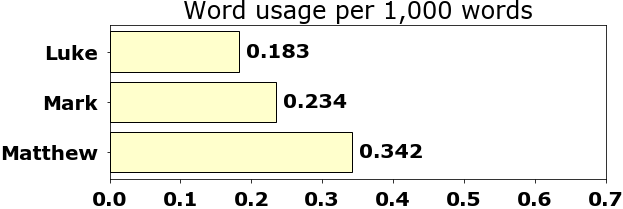
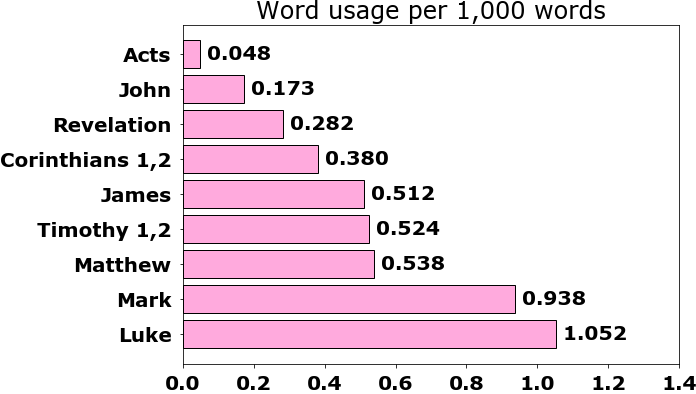
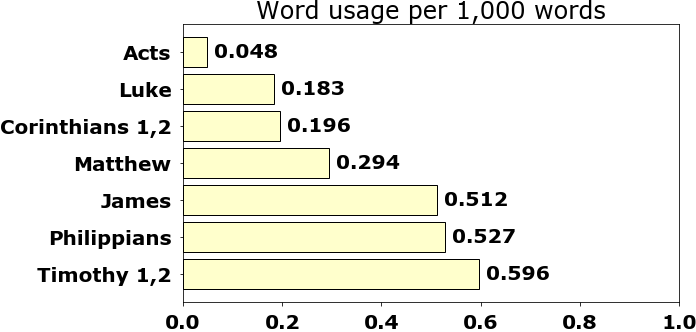
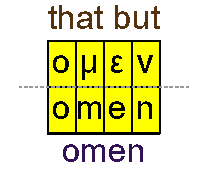
That on the one hand and omen
Might there me an "omen" here (on the one hand)?
Greek: ... on the one hand harvest many but on the other hand ... the workers [oath-takers] are few [oh wolves]

Might an "omen" be that later, during the Latin influence, definitions/mountains were moved, leaven mixed in, etc., to obscure the meaning of this verse?

Information sign More: Omens on the one hand

26. Matthew 9:37-38 Reflexive harvest
Matthew 9:37 Then saith he unto his disciples, The harvest truly is plenteous, but the labourers are few; [kjv]
τοτε λεγει τοις μαθηταις αυτου ο μεν θερισμος πολυς οι δε εργαται ολιγοι [gnt]

9:38 Pray ye therefore the Lord of the harvest, that he will send forth labourers into his harvest. [kjv]
δεηθητε ουν του κυριου του θερισμου οπως εκβαλη εργατας εις τον θερισμον αυτου [gnt]

Thermometer hot
Related English words include "thermal", "thermos", "thermodynamics", etc.


Information sign More: A hot time to harvest - now and later

27. Matthew 9:37 Standing out
Matthew 9:37 Then saith he unto his disciples, The harvest truly is plenteous, but the labourers are few; [kjv]
τοτε λεγει τοις μαθηταις αυτου ο μεν θερισμος πολυς οι δε εργαται ολιγοι [gnt]

Both football players and farmers like to be "outstanding in their field".
Notice that, speaking of the "harvest", Jesus does not say anything about needing "leaders". He needs "followers" who will do "work" without other human "supervision".

28. Standing out
That leaves the second step which is to work what grows until the harvest. This is done by the "workers" or "laborers".
Matthew 9:37 Then saith he unto his disciples, The harvest truly is plenteous, but the labourers are few; [kjv]
τοτε λεγει τοις μαθηταις αυτου ο μεν θερισμος πολυς οι δε εργαται ολιγοι [gnt]

Note that the "workers" help to "grow" the "fruit" for the "harvest". A reflexive relationship exists in that the "workers" are also part of the "harvest" as "fruit".

Information sign More: A hot time to harvest - now and later
Information sign More: Reflexive relationships in the Bible

29. Matthew 9:37
   Matthew 9:37 
 All 
KJV: Then saith he unto his disciples, The harvest truly is plenteous, but the labourers are few;
Greek: τοτε λεγει τοις μαθηταις αυτου ο μεν θερισμος πολυς οι δε εργαται ολιγοι
Latin: tunc dicit discipulis suis messis quidem multa operarii autem pauci
Tyndale: Then sayde he to hys disciples: the hervest is greate but the laborers are feawe.
Luther: Da sprach er zu seinen Jüngern: Die Ernte ist groß; aber wenig sind der Arbeiter.

30. Prayer beads, Beade, and year dates
Matthew 9:38 Pray ye therefore the Lord of the harvest, that he will send forth labourers into his harvest. [kjv]
δεηθητε ουν του κυριου του θερισμου οπως εκβαλη εργατας εις τον θερισμον αυτου [gnt]

The Old English word "biddan""ask, demand" and is the source of English words such as "bid", "bidding", "bead" an it prayer beads, etc. This word was combined/conflated with the Old English word "beodan""offer, announce".
The monk Beade, whose name meant "prayer", starting dating events using the (incorrect dating system for the) birth of Christ. This calendar dating system is still used today. Beade used the term "Easter" and it appears to have been used ever since.

31. Dr. Seuss
Against the flow - fish 2
Why fit in when you were born to stand out? Dr. Seuss.

Never forget that only dead fish swim with the stream. Malcolm Muggeridge


Information sign More: Malcolm Muggeridge

32. Strongs - beseech
*G1189 *22 δέομαι (deh'-om-ahee) : middle voice of G1210; to beg (as binding oneself), i.e. petition:--beseech, pray (to), make request. Compare G4441.
Word usage per chapter Words: δεηθεντων δεηθητε=3 δεηθητι δεομαι=7 δεομεθα δεομενοι=3 δεομενος=2 εδεετο εδεηθη εδεηθην=2

The ancient Greek word "δέω""bind, tie, fasten, fetter".

33. Usage - beseech
  • *G1189 *22 δέομαι (deh'-om-ahee) : middle voice of G1210; to beg (as binding oneself), i.e. petition:--beseech, pray (to), make request. Compare G4441.
  •  Usage 
     All 
    •  δεηθητε *3  of 22
      •   Matthew 9:38 Pray ye therefore the Lord of the harvest, that he will send forth ...
      •   Luke 10:2 ... but the labourers are few: pray ye therefore the Lord of the harvest, ...
      •   Acts 8:24 Then answered Simon, and said, Pray ye to the Lord ...

34. Matthew 9:38 Casting out
Matthew 9:38 Pray ye therefore the Lord of the harvest, that he will send forth labourers into his harvest. [kjv]
δεηθητε ουν του κυριου του θερισμου οπως εκβαλη εργατας εις τον θερισμον αυτου [gnt]

The ancient Greek word "ἐκβάλλω""throw/cast out". It is not clear how the translation of "send forth" follows from the definition of the Greek word.

The Latin word "eicio""cast/drive out".

35. Matthew 9:38 Summer harvest
Matthew 9:38 Pray ye therefore the Lord of the harvest, that he will send forth labourers into his harvest. [kjv]
δεηθητε ουν του κυριου του θερισμου οπως εκβαλη εργατας εις τον θερισμον αυτου [gnt]

The Greek word for "summer" is related to the Greek word for "harvest" which, according to Jesus, is at the end of the ages.

The ancient Greek word "θερίζω""reap" as in the "harvest". The ancient Greek word "θερός""heat" as in the "summer".

36. Matthew 9:38
   Matthew 9:38 
 All 
KJV: Pray ye therefore the Lord of the harvest, that he will send forth labourers into his harvest.
Greek: δεηθητε ουν του κυριου του θερισμου οπως εκβαλη εργατας εις τον θερισμον αυτου
Latin: rogate ergo dominum messis ut eiciat operarios in messem suam
Wessex: biddað þas ripes hlaford þt he sende ripten (sic) to his ripe.
Gothic: bidjith nu fraujan asanais ei ussandjai waurstwjans in asan seina.
Luther: Darum bittet den Herrn der Ernte, daß er Arbeiter in seine Ernte sende!

37. Philippians 3:2 Roman k sound
Philippians 3:2 Beware of dogs, beware of evil workers, beware of the concision. [kjv]
βλεπετε τους κυνας βλεπετε τους κακους εργατας βλεπετε την κατατομην [gnt]
videte canes videte malos operarios videte concisionem [v]

Greek letterThe three word groups all start with the Greek "K" or "Kappa" letter. The "beware" means "see" or "observe".
In Roman times, the letter "k" was considered sinister and, in most cases, the Roman "c", with the same "k" sound, was used. Thus, "Caesar" was pronounced as "Kaiser". Carthage: Latin "Karthago" as "new Tyre", "Punic" as "Phoenician".

Later, the hard Latin "c" as "k" changed to the softer "c" as "s" or "ch" as in "church". The German word "die Kirche""church".

Information sign More: Philippians 3:1-4 shifting gears to work the others

38. End of page

by RS  admin@creationpie.org : 1024 x 640