- *G907 *77 βαπτίζω (bap-tid'-zo) : from a derivative of G911; to immerse, submerge; to make whelmed (i.e. fully wet); used only (in the New Testament) of ceremonial ablution, especially (technically) of the ordinance of Christian baptism:--Baptist, baptize, wash.
- βαπτιζοντες *1 of 77
- Matthew 28:19 ... and teach all nations, baptizing them in the name ...
14. Job 9:31 Take the plunge
Job 9:31 Yet shalt thou plunge me in the ditch, and mine own clothes shall abhor me. [kjv]
ικανως εν ρυπω με εβαψας εβδελυξατο δε με η στολη [lxx]
you had thoroughly plunged me in filth, and my garment had abhorred me. [bs3]
tamen sordibus intingues me et abominabuntur me vestimenta mea [v]
… dippe … filthis… clothis… abhomynable. [wy]
… tunken … Kot… Kleider scheußlich … [lu]
By way of a common ancestor (old German), the German word
"tunken" and the English word
"dunk" are related.
Note that the Greek word in the
LXX (Septuagint) «
εβαψας» has the root of «
βαψ». The Greek letter «
Ψ» or "
psi" has the sound of the consonants "
p" and "
s". So the root of «
βαψ» is «
βαπ» which is the root of words such as
"baptize".
The Latin word
"tinctas" ≈ "dyed". This is the source of the communion method called
"intinction".
15. Job 9:31
KJV: Yet shalt thou plunge me in the ditch, and mine own clothes shall abhor me.
Hebrew: אז בשחת תטבלני ותעבוני שלמותי׃
Greek: ικανως εν ρυπω με εβαψας εβδελυξατο δε με η στολη
Brenton: you had thoroughly plunged me in filth, and my garment had abhorred me.
Latin: tamen sordibus intingues me et abominabuntur me vestimenta mea
Wycliffe: netheles thou schalt dippe me in filthis, and my clothis, `that is, werkis, schulen holde me abhomynable.
Luther: so wirst du mich doch tunken in Kot, und werden mir meine Kleider scheußlich anstehen.
16. Ezekiel 23:15 Dyed fabric
Ezekiel 23:15 Girded with girdles upon their loins, exceeding in dyed attire upon their heads, all of them princes to look to, after the manner of the Babylonians of Chaldea, the land of their nativity: [kjv]
εζωσμενους ποικιλματα επι τας οσφυας αυτων και τιαραι βαπται επι των κεφαλων αυτων οψις τρισση παντων ομοιωμα υιων χαλδαιων γης πατριδος αυτων [lxx]
et accinctos balteis renes et tiaras tinctas in capitibus eorum formam ducum omnium similitudinem filiorum Babylonis terraeque Chaldeorum in qua orti sunt [v]
… cappis peyntid … [wy]
… bunte Kogel … [lu]
The original meaning of
"baptize" had to do with
"dying" fabric. Wycliffe uses the word that became "
painted". To
dye something, one needs to not only immerse it, but dunk it and stir it around. Here we see the The Latin word
"tinctas" ≈ "dyed". The German word
"bunt" ≈ "colorful, variegated" and comes from the Latin word
"punctus" ≈ "pointed" and which is the source of the English word
"point".
17. Ezekiel 23:15 Hat attire
Ezekiel 23:15 Girded with girdles upon their loins, exceeding in dyed attire upon their heads, all of them princes to look to, after the manner of the Babylonians of Chaldea, the land of their nativity: [kjv]
εζωσμενους ποικιλματα επι τας οσφυας αυτων και τιαραι βαπται επι των κεφαλων αυτων οψις τρισση παντων ομοιωμα υιων χαλδαιων γης πατριδος αυτων [lxx]
et accinctos balteis renes et tiaras tinctas in capitibus eorum formam ducum omnium similitudinem filiorum Babylonis terraeque Chaldeorum in qua orti sunt [v]
The English word
"tiara" is from the Latin word
"tiara" ≈ "ornamental headdress" which is from the
ancient Greek word
"τιάρα" ≈ "Persian headdress" (used on solemn occasions).
18. Ezekiel 23:15
KJV: Girded with girdles upon their loins, exceeding in dyed attire upon their heads, all of them princes to look to, after the manner of the Babylonians of Chaldea, the land of their nativity:
Hebrew: חגורי אזור במתניהם סרוחי טבולים בראשיהם מראה שלישים כלם דמות בני בבל כשדים ארץ מולדתם׃
Greek: εζωσμενους ποικιλματα επι τας οσφυας αυτων και τιαραι βαπται επι των κεφαλων αυτων οψις τρισση παντων ομοιωμα υιων χαλδαιων γης πατριδος αυτων
Latin: et accinctos balteis renes et tiaras tinctas in capitibus eorum formam ducum omnium similitudinem filiorum Babylonis terraeque Chaldeorum in qua orti sunt
Wycliffe: and gird on the reynes with kniytis girdlis, and cappis peyntid in the heedis of hem, the foormes of alle duykis, the licnesse of the sones of Babiloyne, and of the lond of Caldeis, in which thei weren borun;
Luther: um ihre Lenden gegürtet und bunte Kogel auf ihren Köpfen, und alle gleich anzusehen wie gewaltige Leute, wie denn die Kinder Babel und die Chaldäer tragen in ihrem Vaterlande,
19. Matthew 28:19 Immersion into baptism
Matthew 28:19 Go ye therefore, and teach all nations, baptizing them in the name of the Father, and of the Son, and of the Holy Ghost: [kjv]
πορευθεντες ουν μαθητευσατε παντα τα εθνη βαπτιζοντες αυτους εις το ονομα του πατρος και του υιου και του αγιου πνευματος [gnt]
Discuss:
Did Jesus intend "baptism" to be a superficial ceremony using some form of water? This is the only verse in Matthew where Jesus uses the word for "baptize". Jesus does use the word for "dip" or "dunk" at the Last Supper.
How many religious wars have taken place and how many believers have been killed by other believers due to differences in the perceived meaning of "baptize" (since Jesus made this statement)?
 |
Details are left as a future topic.
|
20. Matthew 28:19 Logical implications
Matthew 28:19 Go ye therefore, and teach all nations, baptizing them in the name of the Father, and of the Son, and of the Holy Ghost: [kjv]
πορευθεντες ουν μαθητευσατε παντα τα εθνη βαπτιζοντες αυτους εις το ονομα του πατρος και του υιου και του αγιου πνευματος [gnt]
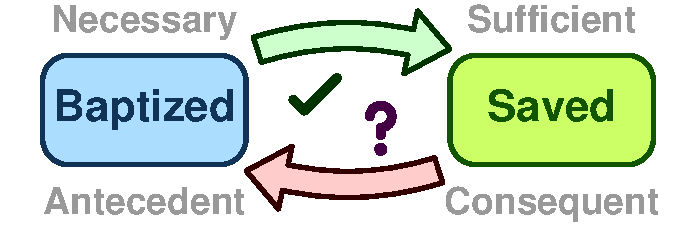
Which of the following are
true? Which are
false? Which cannot be determined?
☐ 1.
"saved" implies "baptized"
☐ 2.
not "baptized" implies not "saved"
☐ 3.
"baptized" implies "saved"
☐ 4.
not "saved" implies not "baptized"
Which of these that are false were believed by some to be true throughout time?
"βαπτίζω" ≈ "dip, plunge, immerse"
"σώζω" ≈ "heal, observe, rescue"
21. Converse error
22. Matthew 28:19 Compare and contrast
Matthew 28:19 Go ye therefore, and teach all nations, baptizing them in the name of the Father, and of the Son, and of the Holy Ghost: [kjv]
πορευθεντες ουν μαθητευσατε παντα τα εθνη βαπτιζοντες αυτους εις το ονομα του πατρος και του υιου και του αγιου πνευματος [gnt]
Compare and contrast "teaching" and "baptizing".
Compare and contrast what Jesus says with, say, certain religious groups who have the approach of distributing printed Bibles where the print size has become increasingly small to reduce costs and increase numbers distributed and, it appears, without much concern about what the translation of those Bibles actually say.
23. Matthew 28:19 Son
Matthew 28:19 Go ye therefore, and teach all nations, baptizing them in the name of the Father, and of the Son, and of the Holy Ghost: [kjv]
πορευθεντες ουν μαθητευσατε παντα τα εθνη βαπτιζοντες αυτους εις το ονομα του πατρος και του υιου και του αγιου πνευματος [gnt]
Vacation Bible School teacher:
The kids learned that that Jesus is our friend forever.
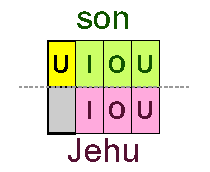
Is there a Jehu part of Jesus for which people should be aware? There is the word for
"son" in this verse but
not the word for "
man" in this verse. Both may be needed for the code words to apply.
24. Matthew 28:19 Manuscript variations
Matthew 28:19 Go ye therefore, and teach all nations, baptizing them in the name of the Father, and of the Son, and of the Holy Ghost: [kjv]
πορευθεντες ουν μαθητευσατε παντα τα εθνη βαπτιζοντες αυτους εις το ονομα του πατρος και του υιου και του αγιου πνευματος [gnt]

Trinity:
Father,
Son and
Holy Spirit/Ghost.
Some manuscripts do not have the "
Holy Spirit" at the end of the verse. Does that part matter? Explain.
25. Matthew 28:20
26. Matthew 28:19-20 The Great Mandate
Matthew 28:19 Go ye therefore, and teach all nations, baptizing them in the name of the Father, and of the Son, and of the Holy Ghost: [kjv]
28:20 Teaching them to observe all things whatsoever I have commanded you: and, lo, I am with you alway, even unto the end of the world. Amen. [kjv]
Matthew ends with "
The Great Commission" and uses the Latin word
"mandani" ≈ "commanded" as in "
mandate". The Greek translated as "
nations" is that of "
people".
Jesus does not call you to be a "leader" in the human organization sense - where part of "leadership" is to "follow the leader" and to "influence" others through dubious "manipulation".
Jesus does not call you to be a "friend" first where one tries to use "friendship" to "influence" others.
As you go through life, you should "
teach" others what Jesus wants you to teach them.
Star Trek:
.. to go where no man has gone before .... Jesus does
not want you to do what is said in Star Trek. Jesus wants you
... to go where men have gone before - and give them the Good News ....
27. Matthew 28:19 Trinity
Matthew 28:19 Go ye therefore, and teach all nations, baptizing them in the name of the Father, and of the Son, and of the Holy Ghost: [kjv]
πορευθεντες ουν μαθητευσατε παντα τα εθνη βαπτιζοντες αυτους εις το ονομα του πατρος και του υιου και του αγιου πνευματος [gnt]
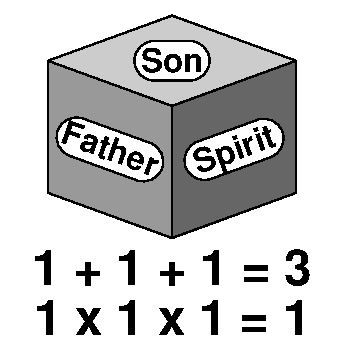
This is one place where all three parts of the "
Trinity" are explicitly mentioned.
28. End of page