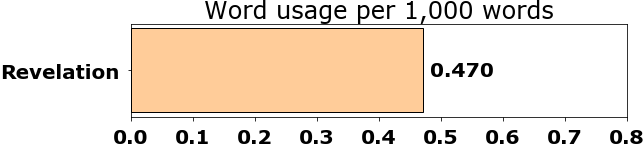
- *G3769 *5 οὐρά (oo-rah') : apparently a primary word; a tail:--tail.
- ουραις *2
- Revelation 9:10 And they had tails like unto scorpions, and there were stings in their tails: and their ...
- Revelation 9:19 ... in their tails: for their tails were like unto serpents, ...
- ουρας
- Revelation 9:10 And they had tails like unto scorpions, and there were stings in their tails: and their ...
- ουραι
- Revelation 9:19 ... in their tails: for their tails were like unto serpents, ...
- ουρα
- Revelation 12:4 And his tail drew the third part of the stars ...
21. Strongs - mind
*G3563 *24 νοῦς (nooce) : probably from the base of G1097; the intellect, i.e. mind (divine or human; in thought, feeling, or will); by implication, meaning:--mind, understanding. Compare G5590.
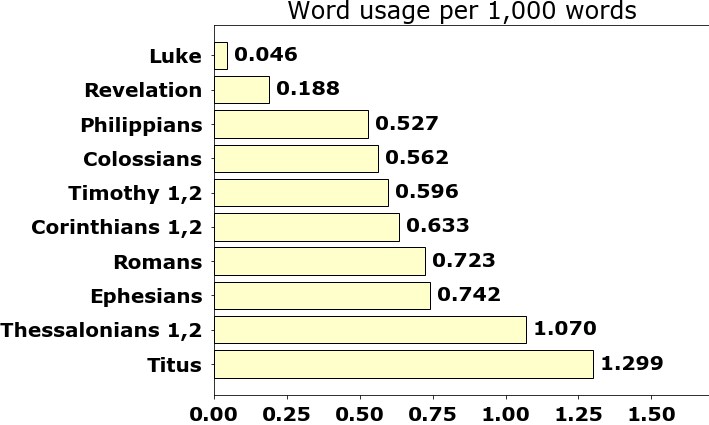 |
Words: νοΐ=3 νοι=3 νοος=6 νουν=9 νους=3
|
The
modern Greek word
"νους" (nus) ≈ "mind" is from the
ancient Greek word
"νοῦς" ≈ "mind", as in reason and understanding, and is a contracted form of the ancient Greek word
"νόος" ≈ "mind".
Aristotle used the term
"νόος" as different from perception or reason and having to do with
understanding. The English philosophical term
"nous" (1600's) is somewhat similar to intelligence or intellect.
22. Sky and heaven
*G3772 *275 οὐρανός (oo-ran-os') : perhaps from the same as G3735 (through the idea of elevation); the sky; by extension, heaven (as the abode of God); by implication, happiness, power, eternity; specially, the Gospel (Christianity):--air, heaven(-ly), sky.
The ancient Greek word
"ουρανός" ≈ "sky, heaven".
The English word for the planet
"Uranus", discovered by William Hershel in 1781, is from the ancient Greek word
"Οὐρανός" ≈ "Uranus" who was a god in Greek mythology.
What is the difference in the following?
Kingdom of "heaven".
Kingdom of the "sky".
23. Kingdom of heaven
The "
kingdom" of "
heaven" appears to be a perception of the mind and not a literal physical reality.
There are two perceptions.
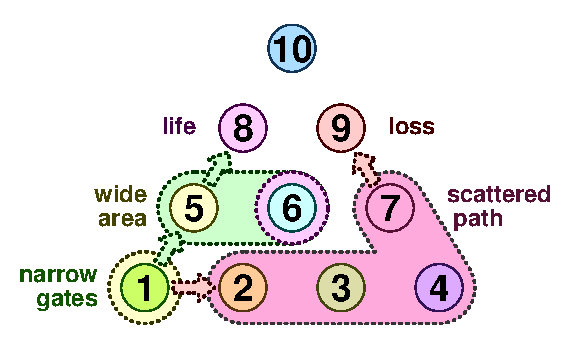
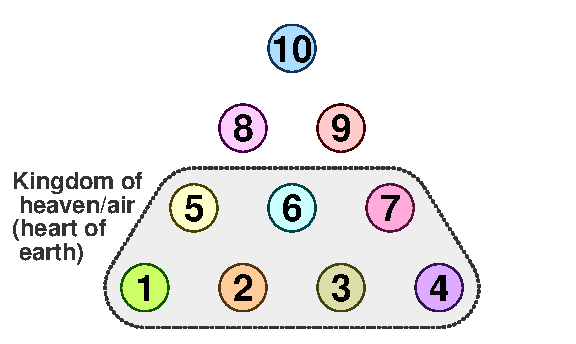
Good kingdom of heaven/air which leads to the kingdom of God and life.
Not good kingdom of heaven/air ruled by the birds of heaven/air leading to loss.
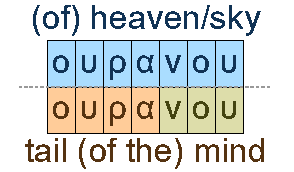 |
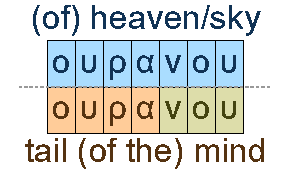
Jesus uses one inflection (genitive) of the word for the not good "heaven" that is a play on words with "tail" of the "mind". Your "mind" is supposed to be in your "head" (Christ) and not your "tail".
|
24. Heaven knows the code words
Jesus uses, by his own explanation, (secret)
code words where nouns refer to other words/meanings and not necessarily the literal meaning(s). In terms of "
heaven" there appear to be three related code words or phrases.
In Matthew, Jesus uses
plural "
airs/heavens"
43 times and
singular "
air/heaven"
18 times.
Translators have translated
plural "
heavens" as
singular "
heaven" and then used opinion to make up reasons for this. Let us see their dogmatic opinions. Do you remember lettuce dog? Those reasons do not appear to fit how the words are used by Jesus nor how they are used in the
LXX.
Note that Jesus knows the code words and appears to use them consistently. Others, including Matthew (who appears to have written down what Jesus says), do not appear to know about these code words and their associated meanings. Thus, others do not use those code words consistently.
25. Sky and heaven usage in Matthew
| J |
O |
the |
Greek |
English |
Case |
Number |
Usage |
| Singular |
| 4 |
0 |
ὁ |
οὐρανός |
air/heaven |
nominative |
singular |
(sky) |
| 9 |
1 |
τοῦ |
οὐρᾰνοῦ |
(of) air/heaven |
genitive |
singular |
bad |
| 5 |
0 |
τῷ |
οὐρᾰνῷ |
(wrt) air/heaven |
dative |
singular |
good |
| 0 |
1 |
τὸν |
οὐρᾰνόν |
air/heaven |
accusative |
singular |
N/A |
| 18 |
2 |
|
|
|
|
|
| Plural |
| 0 |
1 |
οἱ |
οὐρᾰνοί |
airs/heavens |
nominative |
plural |
N/A |
| 31 |
3 |
των |
οὐρανῶν |
(of) airs/heavens |
genitive |
plural |
either |
| 12 |
0 |
τοῖς |
οὐρᾰνοῖς |
(wrt) airs/heavens |
dative |
plural |
good |
| 0 |
0 |
τοὺς |
οὐρᾰνούς |
airs/heavens |
accusative |
plural |
N/A |
| 43 |
4 |
|
|
|
|
|
| Total |
| 61 |
6 |
|
|
|
|
|
J = Jesus
O = Others
26. Matthew 12:26 Division
Matthew 12:26 And if Satan cast out Satan, he is divided against himself; how shall then his kingdom stand? [kjv]
και ει ο σατανας τον σαταναν εκβαλλει εφ εαυτον εμερισθη πως ουν σταθησεται η βασιλεια αυτου [gnt]
| kingdoms |
| perception |
reality |
| heaven (air) |
Satan |
| heaven (heaven) |
God |
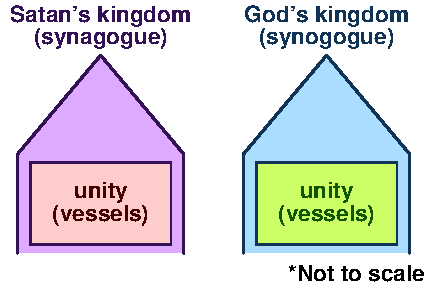
Which
"kingdom" is this? All, some, one, none?
The context of the verses talking about the "
strong man" are Jesus talking to the religious leaders after being accused of casting out demons (Satan) by the power of Satan. This accusation by the religious elite is followed in the next chapter with the Kingdom Parables.
27. Matthew 21: Logical analysis
Matthew 21:31 Whether of them twain did the will of his father? They say unto him, The first. Jesus saith unto them, Verily I say unto you, That the publicans and the harlots go into the kingdom of God before you. [kjv]
τις εκ των δυο εποιησεν το θελημα του πατρος λεγουσιν αυτω ο πρωτος υστερος λεγει αυτοις ο ιησους αμην λεγω υμιν οτι οι τελωναι και αι πορναι προαγουσιν υμας εις την βασιλειαν του θεου [gnt]
Matthew uses
"kingdom" of
"God" and
not the
"kingdom" of
"heaven/air". Is there a difference? If so, is it important?
Many attribute this saying to
hyperbole or, essentially, an
opinion. A
logical analysis of this verse is that, with probability approaching certainty,
no religious elite who mislead the faithful for their own greatness will enter the
"kingdom" of
"God".
Who are the
"first"? Who are the
"last"? Who are the
"many"? Who are
not the
"many"?
28. Kingdom of heaven build
Jesus appears to make a
logical statement. If not, one can use
opinion to make it say many other things.
Are any of man's "
righteous" (without God) going in?
Sinners who have changed.
Sinners who have not changed.
Birds (religious elite) who have oppressed others. Are these the "first" that will be "last"? How many "sparrows" will fall without God?
Sinners who entered the Kingdom of God. Are these the "last" that will be "first"?
In particular, if there is even one tax collector or harlot that does not get into the kingdom of God, then neither do any of the religious elite to which Jesus refers.
29. Model of the kingdoms and births
John 3:3 Jesus answered and said unto him, Verily, verily, I say unto thee, Except a man be born again, he can not see the kingdom of God. [kjv]
απεκριθη ο ιησους και ειπεν αυτω αμην αμην λεγω σοι εαν μη τις γεννηθη ανωθεν ου δυναται ιδειν την βασιλειαν του θεου [gnt]
Four parts:
"earth",
"air",
"fire",
"water".
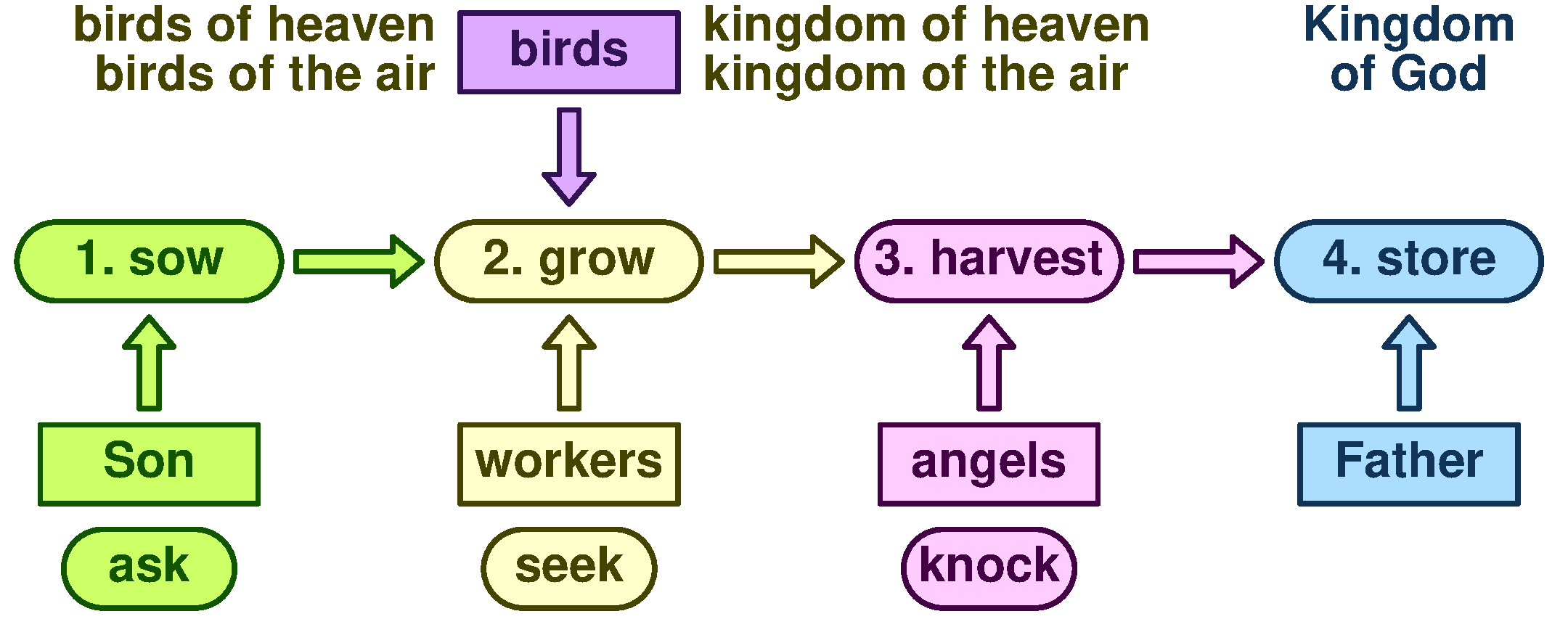
The "
ask", "
seek", "
knock" sequence is part of the "
flame" and "
sword" progression.
30. Details
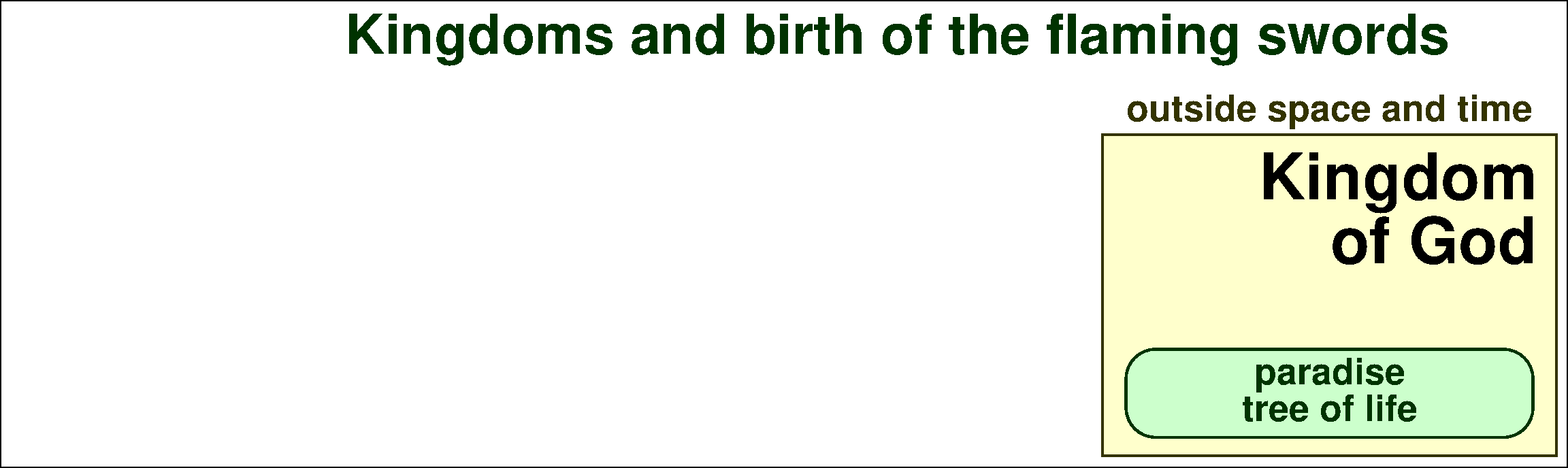
Put the Kingdom of God outside of space and time and (since the fall) includes the "tree of life". The creation is inside space and time.
The "flaming sword" both protects and keeps the way open.
The "Kingdom of Earth" is for those "of the world".
The "Kingdom of Heaven" is for those "in the world".
The "flaming sword" is provided by Jesus who "throws" the "sword". The Holy Spirit provides the "flame".
Birth#3 is the regeneration or in-processing into the Kingdom of God.
31. Matthew 11:12-14
Matthew 11:12 And from the days of John the Baptist until now the kingdom of heaven suffereth violence, and the violent take it by force. [kjv]
απο δε των ημερων ιωαννου του βαπτιστου εως αρτι η βασιλεια των ουρανων βιαζεται και βιασται αρπαζουσιν αυτην [gnt]
11:13 For all the prophets and the law prophesied until John. [kjv]
παντες γαρ οι προφηται και ο νομος εως ιωαννου προεφητευσαν επροφητευσαν [gnt]
11:14 And if ye will receive it, this is Elias, which was for to come. [kjv]
και ει θελετε δεξασθαι αυτος εστιν ηλιας ο μελλων ερχεσθαι [gnt]
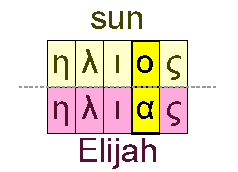
"ἥλιος" ≈ "sun, east, day, sunshine"
"Ἠλίας" ≈ "Elijah".
Since Jesus associates
John the Baptist with
Elijah, it is interesting to see how Jesus uses the word for "
sun".
Elijah was taken away in a chariot of fire.
32. Matthew 11:12-14 Elijah and John the Baptist
Matthew 11:12 And from the days of John the Baptist until now the kingdom of heaven suffereth violence, and the violent take it by force. [kjv]
απο δε των ημερων ιωαννου του βαπτιστου εως αρτι η βασιλεια των ουρανων βιαζεται και βιασται αρπαζουσιν αυτην [gnt]
11:13 For all the prophets and the law prophesied until John. [kjv]
παντες γαρ οι προφηται και ο νομος εως ιωαννου προεφητευσαν επροφητευσαν [gnt]
11:14 And if ye will receive it, this is Elias, which was for to come. [kjv]
και ει θελετε δεξασθαι αυτος εστιν ηλιας ο μελλων ερχεσθαι [gnt]
A
figurative way is to associate
John with
Elijah, as Jesus does, so that from that time until now, about 900 years, the religious establishment has been trying to disrupt the "
kingdom of heaven". By making the figurative assumption of meaning, one can attempt to determine the meaning of "
kingdom of heaven".
33. Timeline: Elijah and John the Baptist (rough dates)
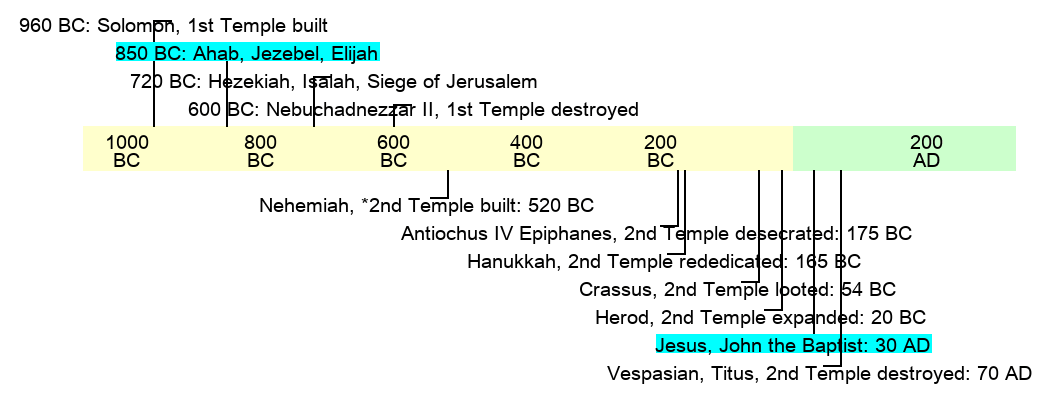
The time of Elijah has several notable events.
Ahab and Jezebel as representing evil oppressors of the world.
Naboth's vineyard in a form of "inquisition" later used by the Catholic Church (and others).
Elijah's time may have a connection with the "taking by force" of the "kingdom of heaven".
Elijah taken up via flaming chariot and horses. This may have a connection with the "flaming sword".
This content needs updated.
34. Mind of the tail
If Jesus is the
"head", then what is the
"tail"? Where should your
"mind" be?
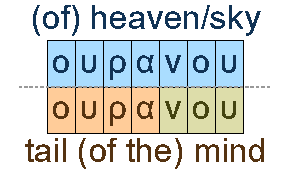
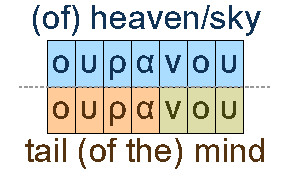
"ουρανου" ≈ "(of) heaven, sky".
"ουρά" ≈ "tail" and "νου" ≈ "(of) mind" (genitive)
Saying:
Your mind is in the gutter. One might say
the gutter of your mind.
|
English: heaven, air
Greek: οὐρανού
Greek: οὐρά νου
English: tail of the mind
|
Note: Play on words to not need to follow grammar and/or spelling rules to be recognized and/or be effective.
There were no spaces (nor diacritical marks) in ancient Greek.
35. Matthew 8:20 Birds of the air
Matthew 8:20 And Jesus saith unto him, The foxes have holes, and the birds of the air have nests; but the Son of man hath not where to lay his head. [kjv]
και λεγει αυτω ο ιησους αι αλωπεκες φωλεους εχουσιν και τα πετεινα του ουρανου κατασκηνωσεις ο δε υιος του ανθρωπου ουκ εχει που την κεφαλην κλινη [gnt]
… Foxis … dennes… briddis … heuene … nestis… reste … heed. [wy]
Is the
"kingdom of heaven" actually
"heaven" as in the
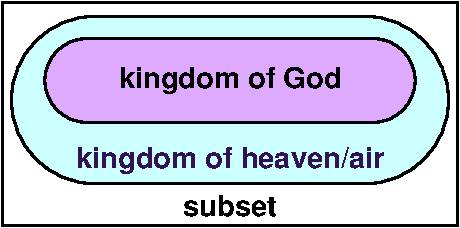
"kingdom of God"?
"βασίλεια των ουρανών" ≈ "kingdom of heaven" or "kingdom of the air".
"πετεινα του ουρανου" ≈ "birds of the air" or "birds of heaven".
Wycliffe uses the phrase "briddis of heuene" or "birds of heaven".
Some will attempt to "
fix" a perceived "
error" in the Bible text by asserting their opinion (or glory) that
"kingdom of God" and
"kingdom of heaven" are the same thing.
If birds represent "
evil" or "
oppression" (parable 1), are there any birds in heaven?
36. Matthew 8:20 Birds of heaven
Matthew 8:20 And Jesus saith unto him, The foxes have holes, and the birds of the air have nests; but the Son of man hath not where to lay his head. [kjv]
και λεγει αυτω ο ιησους αι αλωπεκες φωλεους εχουσιν και τα πετεινα του ουρανου κατασκηνωσεις ο δε υιος του ανθρωπου ουκ εχει που την κεφαλην κλινη [gnt]
… Foxas … holo… heofene fugeles nyst… heafod änhelde. [wes]
… Foxis … dennes… briddis … heuene … nestis… reste … heed. [wy]
The
ancient Greek word
"οὐρανός" ≈ "heaven, air". Jesus uses the dative of
"heaven" or
"air" or
"sky" as a play on words with "
mind" of the "
tail".
Wycliffe translates the Greek as the Middle English phrase
"briddis" ≈ "birds" of
"heuene" ≈ "heaven" as does the Wessex Old English phrase
"fugeles" ≈ "birds" of
"heofene" ≈ "heaven". The Old English word
"briddis" for
"bird" may be the source of the English word
"bride".
37. Matthew 13:4,19 Oppressive birds
Matthew 13:4 And when he sowed, some seeds fell by the way side, and the fowls came and devoured them up: [kjv]
και εν τω σπειρειν αυτον α μεν επεσεν παρα την οδον και ηλθεν ελθοντα τα πετεινα και κατεφαγεν αυτα [gnt]
13:19 When any one heareth the word of the kingdom, and understandeth it not, then cometh the wicked one, and catcheth away that which was sown in his heart. This is he which received seed by the way side. [kjv]
παντος ακουοντος τον λογον της βασιλειας και μη συνιεντος ερχεται ο πονηρος και αρπαζει το εσπαρμενον εν τη καρδια αυτου ουτος εστιν ο παρα την οδον σπαρεις [gnt]
In verse 4, some "fall" "beyond" the "path". Those outside the "path" are "devoured" by the "birds".
In verse 19, the ones "beyond" the "path" are "caught away" because they do not "understand".
See the impressive/oppressive
"birds". They look so pretty. They sound so nice. They make me feel so good. They will pick you berry bush clean. Do not
feed the
"birds" with your
"fruit".
This content needs updated.
38. Minding the tail of the sky
Revelation 9:10 And they had tails like unto scorpions, and there were stings in their tails: and their power was to hurt men five months. [kjv]
9:19 For their power is in their mouth, and in their tails: for their tails were like unto serpents, and had heads, and with them they do hurt. [kjv]
The ancient Greek word
"οὐρά" ≈ "tail" of an animal such as a lion, dog, etc. In military terms, it could be the rear-guard of a marching army. The word appears
five times in
three verses in the
GNT in
Revelation and in the
LXX.
What might the symbolic meaning of the
"tail" be? The
"head" is usually considered opposite to the
"tail". In English, the terms
"heads" and
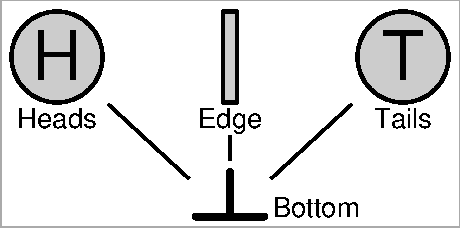
"tails" refer to opposite sides of a coin. Some coins can land on their "
edge". Saying:
I can't make heads or tails of it.
Saying (of
snakes,
birds, etc.):
Heads I win. Tails you lose.. If Jesus is the
"head", then who or what is the
"tail"? The ancient Greek word for
"tail" is related to the (vulgar) word
"ὄρρος" ≈ "backside".
39. Matthew 24:29 Heavens
Matthew 24:29 Immediately after the tribulation of those days shall the sun be darkened, and the moon shall not give her light, and the stars shall fall from heaven, and the powers of the heavens shall be shaken: [kjv]
ευθεως δε μετα την θλιψιν των ημερων εκεινων ο ηλιος σκοτισθησεται και η σεληνη ου δωσει το φεγγος αυτης και οι αστερες πεσουνται απο του ουρανου και αι δυναμεις των ουρανων σαλευθησονται [gnt]
What are these "
stars" that "
fall" and what "
powers" are "
shaken"? Might these be related to the
"tail" "of the mind" for the
first use of
"heaven" in this verse?
The description by Jesus fits what is called an "
eclipse". The preceding verse describes
"lightning". The "
shaken" describes ocean waves.
40. Matthew 24:30 On the clouds of the heaven
Matthew 24:30 And then shall appear the sign of the Son of man in heaven: and then shall all the tribes of the earth mourn, and they shall see the Son of man coming in the clouds of heaven with power and great glory. [kjv]
και τοτε φανησεται το σημειον του υιου του ανθρωπου εν τω ουρανω και τοτε κοψονται πασαι αι φυλαι της γης και οψονται τον υιον του ανθρωπου ερχομενον επι των νεφελων του ουρανου μετα δυναμεως και δοξης πολλης [gnt]
Only the
second word for
"heaven" might be a play on words with
"tail" "of the mind". The context may not fit for such a play on words.
The KJV translates "in" the "clouds" for what the Greek has as "on" the "clouds".
The
KJV translates as
"great" the Greek word that means "
many". The ancient Greek word
"μεγας" ≈ "great" and is the source of the English prefix
"mega". This word is not used here.
41. Matthew 24:30 On the clouds of the heaven
Matthew 24:30 And then shall appear the sign of the Son of man in heaven: and then shall all the tribes of the earth mourn, and they shall see the Son of man coming in the clouds of heaven with power and great glory. [kjv]
και τοτε φανησεται το σημειον του υιου του ανθρωπου εν τω ουρανω και τοτε κοψονται πασαι αι φυλαι της γης και οψονται τον υιον του ανθρωπου ερχομενον επι των νεφελων του ουρανου μετα δυναμεως και δοξης πολλης [gnt]
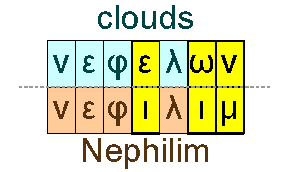
"νεφελῶν" ≈ "cloud" (genitive, as used) from "νεφέλη" ≈ "cloud".
"νεφιλίμ" ≈ "nephilim" (transliteration of Hebrew).
The Greek word for
"clouds" (
dative) is a play on words with the Hebrew transliteration into Greek of
"Nephilim".
Play on words:
... son of the man coming/going on the clouds [nephilim] of the heaven [tail of the mind] ...
This content needs updated.
42. Matthew 26:64 On the clouds
Matthew 26:64 Jesus saith unto him, Thou hast said: nevertheless I say unto you, Hereafter shall ye see the Son of man sitting on the right hand of power, and coming in the clouds of heaven. [kjv]
λεγει αυτω ο ιησους συ ειπας πλην λεγω υμιν απ αρτι οψεσθε τον υιον του ανθρωπου καθημενον εκ δεξιων της δυναμεως και ερχομενον επι των νεφελων του ουρανου [gnt]
The KJV translates "on" the "right hand" for what the Greek has as "out of" the "right (hand)".
The KJV translates "in" the "clouds" for what the Greek has as "on" the "clouds".
Which
"clouds" might these be? Might this coming be through the "
narrow gate" or the "
gates of hell"?
43. Isaiah 14:14
Isaiah 14:14 I will ascend above the heights of the clouds; I will be like the most High. [kjv]
αναβησομαι επανω των νεφελων εσομαι ομοιος τω υψιστω [lxx]
ascendam super altitudinem nubium ero similis Altissimo [v]
44. Isaiah 14:14
KJV: I will ascend above the heights of the clouds; I will be like the most High.
Hebrew: אעלה על במתי עב אדמה לעליון׃
Greek: αναβησομαι επανω των νεφελων εσομαι ομοιος τω υψιστω
45. 1 Corinthians 10:1-3
1 Corinthians 10:1 Moreover, brethren, I would not that ye should be ignorant, how that all our fathers were under the cloud, and all passed through the sea; [kjv]
ου θελω δε γαρ υμας αγνοειν αδελφοι οτι οι πατερες ημων παντες υπο την νεφελην ησαν και παντες δια της θαλασσης διηλθον [gnt]
10:2 And were all baptized unto Moses in the cloud and in the sea; [kjv]
και παντες εις τον μωσην μωυσην εβαπτισαντο εν τη νεφελη και εν τη θαλασση [gnt]
10:3 And did all eat the same spiritual meat; [kjv]
και παντες το αυτο βρωμα πνευματικον βρωμα εφαγον [gnt]
46. 1 Corinthians 10:1
KJV: Moreover, brethren, I would not that ye should be ignorant, how that all our fathers were under the cloud, and all passed through the sea;
Greek: ου θελω δε γαρ υμας αγνοειν αδελφοι οτι οι πατερες ημων παντες υπο την νεφελην ησαν και παντες δια της θαλασσης διηλθον
47. 1 Corinthians 10:2
KJV: And were all baptized unto Moses in the cloud and in the sea;
Greek: και παντες εις τον μωσην μωυσην εβαπτισαντο εν τη νεφελη και εν τη θαλασση
48. 1 Corinthians 10:3
KJV: And did all eat the same spiritual meat;
Greek: και παντες το αυτο βρωμα πνευματικον βρωμα εφαγον
49. Revelation 14:14
Revelation 14:14 And I looked, and behold a white cloud, and upon the cloud one sat like unto the Son of man, having on his head a golden crown, and in his hand a sharp sickle. [kjv]
και ειδον και ιδου νεφελη λευκη και επι την νεφελην καθημενος ομοιος υιω καθημενον ομοιον υιον ανθρωπου εχων επι της κεφαλης αυτου στεφανον χρυσουν και εν τη χειρι αυτου δρεπανον οξυ [gnt]
et vidi et ecce nubem candidam et supra nubem sedentem similem Filio hominis habentem in capite suo coronam auream et in manu sua falcem acutam [v]
50. Revelation 14:14
KJV: And I looked, and behold a white cloud, and upon the cloud one sat like unto the Son of man, having on his head a golden crown, and in his hand a sharp sickle.
Greek: και ειδον και ιδου νεφελη λευκη και επι την νεφελην καθημενος ομοιος υιω καθημενον ομοιον υιον ανθρωπου εχων επι της κεφαλης αυτου στεφανον χρυσουν και εν τη χειρι αυτου δρεπανον οξυ
51. Matthew 19:21-24 Context
Matthew 19:21 Jesus said unto him, If thou wilt be perfect, go and sell that thou hast, and give to the poor, and thou shalt have treasure in heaven: and come and follow me. [kjv]
εφη αυτω ο ιησους ει θελεις τελειος ειναι υπαγε πωλησον σου τα υπαρχοντα και δος τοις πτωχοις και εξεις θησαυρον εν ουρανω ουρανοις και δευρο ακολουθει μοι [gnt]
19:22 But when the young man heard that saying, he went away sorrowful: for he had great possessions. [kjv]
19:23 Then said Jesus unto his disciples, Verily I say unto you, That a rich man shall hardly enter into the kingdom of heaven. [kjv]
19:24 And again I say unto you, It is easier for a camel to go through the eye of a needle, than for a rich man to enter into the kingdom of God. [kjv]
The idea of "
rich" and "
ruler" comes from Luke and appears to have been back-patched into Matthew.
52. Matthew 19:21,23-24 Before and after
Matthew 19:21 Jesus said unto him, If thou wilt be perfect, go and sell that thou hast, and give to the poor, and thou shalt have treasure in heaven: and come and follow me. [kjv]
εφη αυτω ο ιησους ει θελεις τελειος ειναι υπαγε πωλησον σου τα υπαρχοντα και δος τοις πτωχοις και εξεις θησαυρον εν ουρανω ουρανοις και δευρο ακολουθει μοι [gnt]
19:23 Then said Jesus unto his disciples, Verily I say unto you, That a rich man shall hardly enter into the kingdom of heaven. [kjv]
ο δε ιησους ειπεν τοις μαθηταις αυτου αμην λεγω υμιν οτι δυσκολως πλουσιος δυσκολως εισελευσεται εις την βασιλειαν των ουρανων [gnt]
19:24 And again I say unto you, It is easier for a camel to go through the eye of a needle, than for a rich man to enter into the kingdom of God. [kjv]
παλιν δε λεγω υμιν ευκοπωτερον εστιν καμηλον δια τρυπηματος τρηματος ραφιδος διελθειν εισελθειν η πλουσιον εις την βασιλειαν του θεου εισελθειν [gnt]
The "verily I say to you" and "again" connect these three verses.
53. Code word model
The
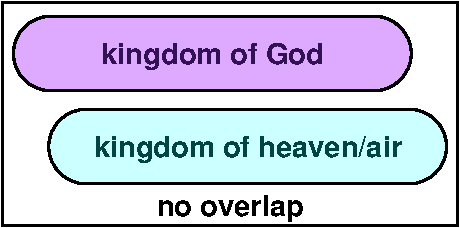
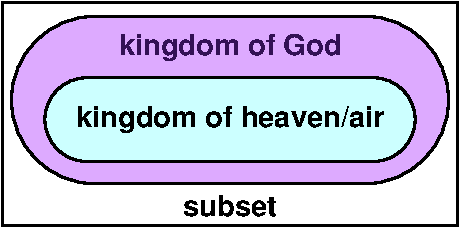
"kingdom of the airs/heavens" has two mutually exclusive and collectively exhaustive parts.
"kingdom of God".
"birds of the air/heaven (tail of mind)".
If Jesus had used
singular "kingdom of the heaven (tail of mind)" rather than
plural "kingdom of the heavens", then the code word model of using
singular "of the heaven" as a play on words with
"tail (of) mind" would have been broken.
How many think that the (code word) "
Kingdom of God" and "
God" are the same thing? How would we know?
[Albert Einstein and Henri Poincaré (and others)][Copernicus and Ptolemy][Kuhn and the Nature of Scientific Revolutions]
54. Barnabas and parables
Barnabas appears to have understood that the parables of Jesus were, in part, to explain the "
kingdom" of the "
heavens", "
kingdom" of the "
air" (same words in Greek), both then and into the future, and "
kingdom" of "
God". Barnabas tried to explain what was needed for salvation and what was not.
English: To the extent that it is possible clearly to explain those things to you, I hope, in accordance with my desire, that I have not omitted anything of the matters relating to salvation. (Holmes, 2007, p. 433)
Greek: Ἐφ’ ὅσον ἦν ἐν δυνατῷ καὶ ἁπλότητι δηλῶσαι ὑμῖν, ἐλπίζει μου ἡ ψυχὴ τῇ ἐπιθυμίᾳ μου μὴ παραλελοιπέναι τι τῶν ἀνηκόντων εἰς σωτηρίαν. Epistle of Barnabas [17:1]
English: For if I should write to you about things present or things to come, you would never understand, because they are found in parables. So much, then, for these things. (Holmes, 2007, p. 433)
Greek: ἐὰν γὰρ περὶ τῶν ἐνεστώτων ἢ μελλόντων γράφω ὑμῖν, οὐ μὴ νοήσητε διὰ τὸ ἐν παραβολαῖς κεῖσθαι. Epistle of Barnabas [17:2]
55. End of page



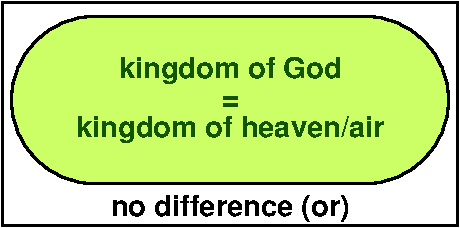
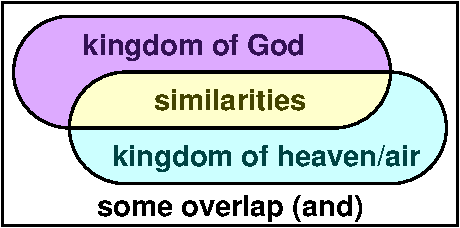
 Jesus often uses code words so that sayings have more than one meaning. All the meanings can be true. The encoded (literal) form makes (some) sense (and some nonsense) while the decoded form makes sense. In general:















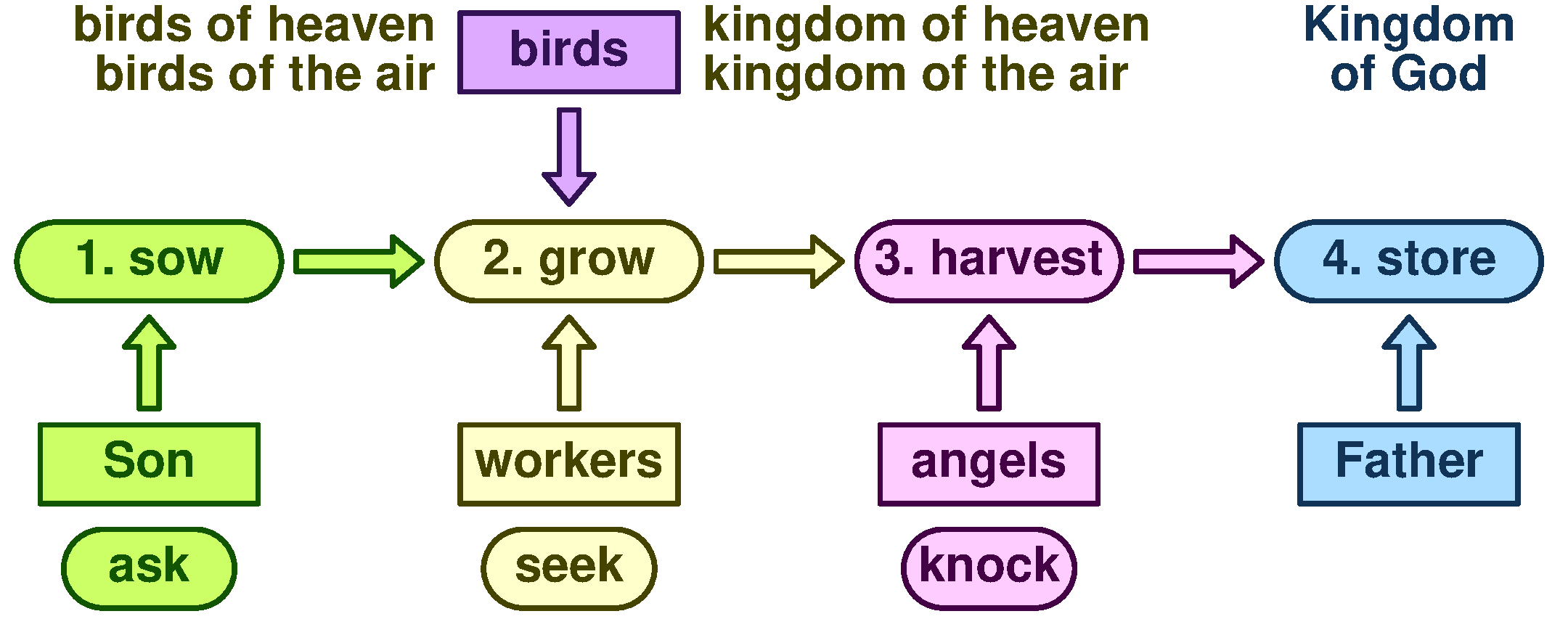 The "ask", "seek" and "knock" sequence can be seen in the "sow", "grow" and "harvest" sequence.