Send
Close Add comments:
(status displays here)
Got it! This site "creationpie.org" uses cookies. You consent to this by clicking on "Got it!" or by continuing to use this website. Note: This appears on each machine/browser from which this site is accessed.
Luke 15:1-10 Wandering sheep and a lost coin
1. Luke 15:1-10 Wandering sheep and a lost coin
This content is being developed.
2. Matthew 18:12-14 Sheep astray from the mountains
Matthew 18:12 How think ye? if a man have an hundred sheep, and one of them be gone astray, doth he not leave the ninety and nine, and goeth into the mountains, and seeketh that which is gone astray? [kjv]
18:13 And if so be that he find it, verily I say unto you, he rejoiceth more of that sheep, than of the ninety and nine which went not astray. [kjv]
18:14 Even so it is not the will of your Father which is in heaven, that one of these little ones should perish. [kjv]
Why did the chicken cross the road?
To get to the other side. And many other answers.
Why did the one sheep go "astray"?
Why is there such "joy" for that one "sheep" "more" than the others?
Did the lost "sheep" ever change behavior?
How might a typical attractive refrigerator magnet sermon for these verses go?
3. Luke 15:1-10 Wandering sheep and a lost coin
Parable of the sheep gone astray in Luke:
Luke 15:4 What man of you, having an hundred sheep, if he lose one of them, doth not leave the ninety and nine in the wilderness, and go after that which is lost, until he find it? [kjv]
Parable of the lost coin in Luke: (not in Matthew)
15:8 Either what woman having ten pieces of silver, if she lose one piece, doth not light a candle, and sweep the house, and seek diligently till she find it? [kjv]
What people remembered and told Luke is much more embellished with literal details than is Matthew.
... more to be added ...
The parable of the prodigal son follows in Luke.
4. Luke 15:1
Luke 15:1 Then drew near unto him all the publicans and sinners for to hear him. [kjv]
ησαν δε εγγιζοντες αυτω εγγιζοντες παντες οι τελωναι και οι αμαρτωλοι ακουειν αυτου [gnt]
5. Luke 15:1
KJV: Then drew near unto him all the publicans and sinners for to hear him.
Greek: ησαν δε εγγιζοντες αυτω εγγιζοντες παντες οι τελωναι και οι αμαρτωλοι ακουειν αυτου
6. Luke 15:2
Luke 15:2 And the Pharisees and scribes murmured, saying, This man receiveth sinners, and eateth with them. [kjv]
και διεγογγυζον οι τε φαρισαιοι και οι γραμματεις λεγοντες οτι ουτος αμαρτωλους προσδεχεται και συνεσθιει αυτοις [gnt]
7. Luke 15:2
KJV: And the Pharisees and scribes murmured, saying, This man receiveth sinners, and eateth with them.
Greek: και διεγογγυζον οι τε φαρισαιοι και οι γραμματεις λεγοντες οτι ουτος αμαρτωλους προσδεχεται και συνεσθιει αυτοις
8. Luke 15:3
Luke 15:3 And he spake this parable unto them, saying, [kjv]
ειπεν δε προς αυτους την παραβολην ταυτην λεγων [gnt]
9. Luke 15:3-7 Lost sheep
Luke 15:3 And he spake this parable unto them, saying, [kjv]
15:4 What man of you, having an hundred sheep, if he lose one of them, doth not leave the ninety and nine in the wilderness, and go after that which is lost, until he find it? [kjv]
15:5 And when he hath found it, he layeth it on his shoulders, rejoicing. [kjv]
15:6 And when he cometh home, he calleth together his friends and neighbours, saying unto them, Rejoice with me; for I have found my sheep which was lost. [kjv]
15:7 I say unto you, that likewise joy shall be in heaven over one sinner that repenteth, more than over ninety and nine just persons, which need no repentance. [kjv]
Luke records what people remembered about what Jesus said. The same content in Matthew has many play on words, double meanings, specific orderings, etc. The Luke verses tend to embellish the literal part of Matthew while losing double meanings, orderings, etc. The Luke words tend to be back-patched into Matthew even when the Greek words are different.
Would it make a difference to the sheep if it were the Passover and they needed a Passover lamb?
10. Luke 15:3-4
Luke 15:3 And he spake this parable unto them, saying, [kjv]
ειπεν δε προς αυτους την παραβολην ταυτην λεγων [gnt]
15:4 What man of you, having an hundred sheep, if he lose one of them, doth not leave the ninety and nine in the wilderness, and go after that which is lost, until he find it? [kjv]
τις ανθρωπος εξ υμων εχων εκατον προβατα και απολεσας εν εξ αυτων εν ου καταλειπει τα εννενηκονταεννεα ενενηκοντα εννεα εν τη ερημω και πορευεται επι το απολωλος εως ευρη αυτο [gnt]
Luke decides that this is a "
parable". Luke decides that the "
man" "
loses" the
"sheep" instead of the
"sheep" "
losing" the "
man" by going "
astray".
Luke uses the word for "
leave" and not the word for "
let go" or "
forgive" as recorded by Matthew.
Matthew does not mention the "
wilderness".
11. Luke 15:3
KJV: And he spake this parable unto them, saying,
Greek: ειπεν δε προς αυτους την παραβολην ταυτην λεγων
12. Luke 15:4
KJV: What man of you, having an hundred sheep, if he lose one of them, doth not leave the ninety and nine in the wilderness, and go after that which is lost, until he find it?
Greek: τις ανθρωπος εξ υμων εχων εκατον προβατα και απολεσας εν εξ αυτων εν ου καταλειπει τα εννενηκονταεννεα ενενηκοντα εννεα εν τη ερημω και πορευεται επι το απολωλος εως ευρη αυτο
13. Luke 15:5-7
Luke 15:5 And when he hath found it, he layeth it on his shoulders, rejoicing. [kjv]
και ευρων επιτιθησιν επι τους ωμους εαυτου αυτου χαιρων [gnt]
15:6 And when he cometh home, he calleth together his friends and neighbours, saying unto them, Rejoice with me; for I have found my sheep which was lost. [kjv]
και ελθων εις τον οικον συγκαλει τους φιλους και τους γειτονας λεγων αυτοις συγχαρητε μοι οτι ευρον το προβατον μου το απολωλος [gnt]
15:7 I say unto you, that likewise joy shall be in heaven over one sinner that repenteth, more than over ninety and nine just persons, which need no repentance. [kjv]
λεγω υμιν οτι ουτως χαρα εσται εν τω ουρανω εσται επι ενι αμαρτωλω μετανοουντι η επι εννενηκονταεννεα ενενηκοντα εννεα δικαιοις οιτινες ου χρειαν εχουσιν μετανοιας [gnt]
Matthew says nothing about "
shoulders" or bring the sheep back. Matthew says nothing about "
neighbors" or "
friends" or even telling anyone about "
finding" the "
lost"
"sheep". The ideas in this verse appear to have been back-patched into Matthew.
14. Luke 15:5
KJV: And when he hath found it, he layeth it on his shoulders, rejoicing.
Greek: και ευρων επιτιθησιν επι τους ωμους εαυτου αυτου χαιρων
15. Luke 15:6
KJV: And when he cometh home, he calleth together his friends and neighbours, saying unto them, Rejoice with me; for I have found my sheep which was lost.
Greek: και ελθων εις τον οικον συγκαλει τους φιλους και τους γειτονας λεγων αυτοις συγχαρητε μοι οτι ευρον το προβατον μου το απολωλος
16. Luke 15:7
KJV: I say unto you, that likewise joy shall be in heaven over one sinner that repenteth, more than over ninety and nine just persons, which need no repentance.
Greek: λεγω υμιν οτι ουτως χαρα εσται εν τω ουρανω εσται επι ενι αμαρτωλω μετανοουντι η επι εννενηκονταεννεα ενενηκοντα εννεα δικαιοις οιτινες ου χρειαν εχουσιν μετανοιας
17. Luke 15:8
Luke 15:8 Either what woman having ten pieces of silver, if she lose one piece, doth not light a candle, and sweep the house, and seek diligently till she find it? [kjv]
η τις γυνη δραχμας εχουσα δεκα εαν απολεση δραχμην μιαν ουχι απτει λυχνον και σαροι την οικιαν και ζητει επιμελως εως οτου ου ευρη [gnt]
18. Luke 15:9 Lost coin
Luke 15:9 And when she hath found it, she calleth her friends and her neighbours together, saying, Rejoice with me; for I have found the piece which I had lost. [kjv]
και ευρουσα συγκαλειται συγκαλει τας φιλας και τας γειτονας λεγουσα συγχαρητε μοι οτι ευρον την δραχμην ην απωλεσα [gnt]
The prefix for "
with" as in "
together" appears twice in this verse (for difference words).
Are they better/bitter together?
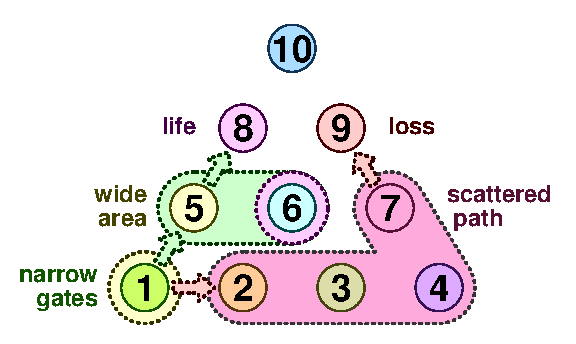
Are they in node 3 as in node 10 as in 100?
19. Kingdoms
 |
| Gospel |
Kingdom
of heaven |
Kingdom
of God |
| Matthew |
32 |
5* |
| Mark |
0 |
16 |
| Luke |
0 |
32 |
| John |
0 |
2 |
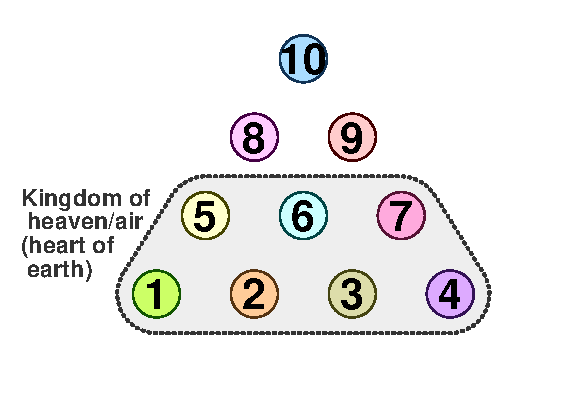
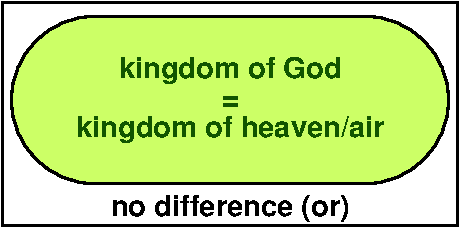
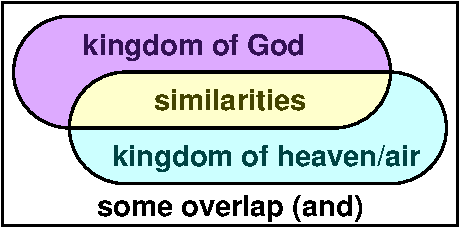
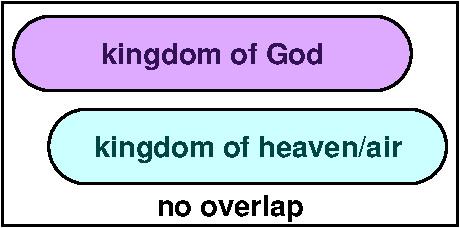
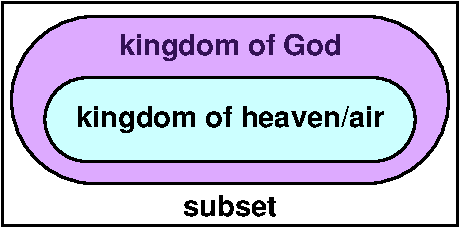
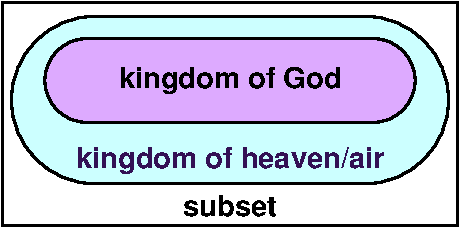
There are many viewpoints on the "kingdom" of "God" and the "kingdom" of "heaven/air". The "birds" of the "air" are the "birds" of "heaven". Which "heaven"?
Sometimes Jesus just says "kingdom". The TR (Textus Receptus) adds "of God" in one of these verses.
It appears that Jesus uses the noun phrase "kingdom" of "heaven/air" as a code word. Matthew just wrote down what was said. The others merged these together in their minds before writing what they remembered. Compare kingdom, vineyard, garden.
[John: verily verily (twice) vs. Others: verily (once), local vs. global analysis]
|
20. Kingdom of heaven
The "
kingdom" of "
heaven" appears to be a perception of the mind and not a literal physical reality.
There are two perceptions.
Good kingdom of heaven/air which leads to the kingdom of God and life.
Not good kingdom of heaven/air ruled by the birds of heaven/air leading to loss.
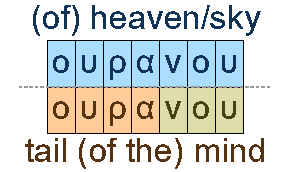 |
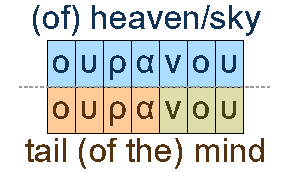
Jesus uses one inflection (genitive) of the word for the not good "heaven" that is a play on words with "tail" of the "mind". Your "mind" is supposed to be in your "head" (Christ) and not your "tail".
|
21. Matthew 21:29 Change ways
Matthew 21:29 He answered and said, I will not: but afterward he repented, and went. [kjv]
21:30 και προσελθων δε τω δευτερω ετερω ειπεν ωσαυτως ο δε αποκριθεις ειπεν εγω κυριε και ουκ ου θελω υστερον μεταμεληθεις απηλθεν [gnt]
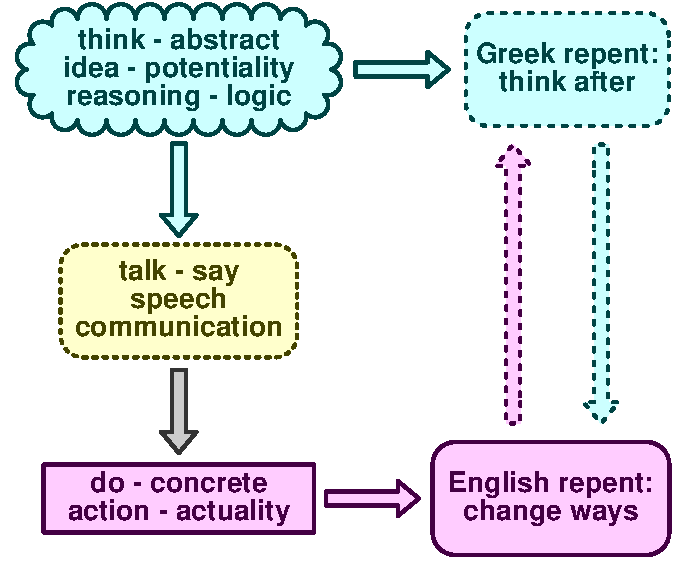
The ancient Greek word
"μεταμέλεια" ≈ "change of purpose, regret, repentance" which is the modern idea of the Latin-based
"repent". This word has to do with
observed behavior and
not inferred attitude.
The ancient Greek word
"μετάνοια" ≈ "afterthought, think after" where the
"repent" (changed behavior) comes from the Latin and
not the Greek.
22. Luke 15:10
Luke 15:10 Likewise, I say unto you, there is joy in the presence of the angels of God over one sinner that repenteth. [kjv]
ουτως λεγω υμιν χαρα γινεται χαρα ενωπιον των αγγελων του θεου επι ενι αμαρτωλω μετανοουντι [gnt]
Matthew uses both kingdom of God and kingdom of heaven.
Luke (and Mark and John) only use kingdom of heaven.
Might the original have been "
kingdom" of "
heaven" in the genitive (singular) which Jesus uses as a play on words with "
tail" of the "
mind"?
Does the "
tail" of the "
mind" have "
messengers" or "
angels"?
Might they "
rejoice" of one that is "
lost" and tries to become "
not lost" "
thinks after" and decides to stay in the bird house?
23. Luke 15:8-10 Parable of the lost coin
Luke 15:8 Either what woman having ten pieces of silver, if she lose one piece, doth not light a candle, and sweep the house, and seek diligently till she find it? [kjv]
15:9 And when she hath found it, she calleth her friends and her neighbours together, saying, Rejoice with me; for I have found the piece which I had lost. [kjv]
15:10 Likewise, I say unto you, there is joy in the presence of the angels of God over one sinner that repenteth. [kjv]
24. Luke 15:8 Disjunction
Luke 15:8 Either what woman having ten pieces of silver, if she lose one piece, doth not light a candle, and sweep the house, and seek diligently till she find it? [kjv]
η τις γυνη δραχμας εχουσα δεκα εαν απολεση δραχμην μιαν ουχι απτει λυχνον και σαροι την οικιαν και ζητει επιμελως εως οτου ου ευρη [gnt]
aut … mulier habens dragmas … dragmam … [v]
The
ancient Greek word
"η" ≈ "or" is the first word in this verse. This appears to create a connection.
Luke 15:4-7 Parable of the lost sheep.
"or"
Luke 15:8-10 Parable of the lost coin.
The
Latin word
"aut" ≈ "or" and the
Latin word
"vel" ≈ "or, rather, either". The
"v" in this word provides a common symbol for
"or".
25. Strongs - woman
*G1135 *219 γυνή (goo-nay') : probably from the base of G1096; a woman; specially, a wife:--wife, woman.
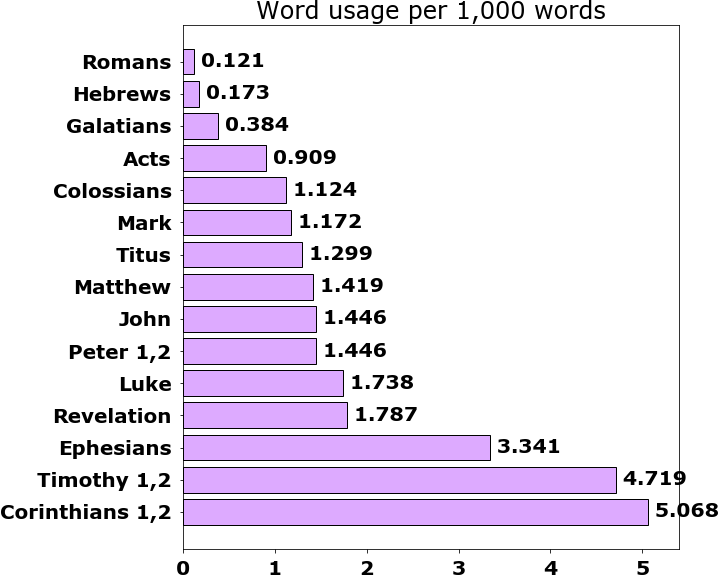 |
Words: γυναι=9 γυναικα=51 γυναικας=11 γυναικει γυναικες=15 γυναικι=16 γυναικος=23 γυναικων=11 γυναιξι γυναιξιν=5 γυνη=76
|
26. Strongs - drachma
*G1323 *2 δίδραχμον (did'-rakh-mon) : from G1364 and G1406; a double drachma (didrachm):--tribute.
*G1406 *3 δραχμή (drakh-may') : from G1405; a drachma or (silver) coin (as handled):--piece (of silver).
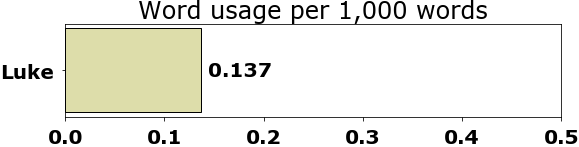 |
Words: δραχμας δραχμην=2
|
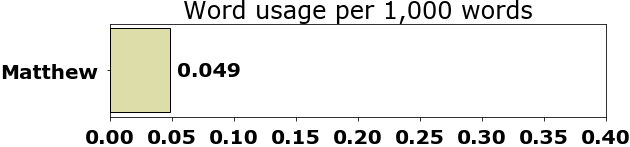 |
Words: διδραχμα=2
|
27. Usage - drachma
- *G1406 *3 δραχμή (drakh-may') : from G1405; a drachma or (silver) coin (as handled):--piece (of silver).
δραχμην *2
Luke 15:8 ... having ten pieces of silver, if she lose one piece, doth not ...
Luke 15:9 ... me; for I have found the piece which I had lost.
δραχμας
Luke 15:8 ... having ten pieces of silver, if she lose one piece, doth not ...
- *G1323 *2 δίδραχμον (did'-rakh-mon) : from G1364 and G1406; a double drachma (didrachm):--tribute.
διδραχμα *2
Matthew 17:24 ... Capernaum, they that received tribute money came to Peter, and said, Doth not your master pay tribute?
28. Luke 15:8 Woman having
Luke 15:8 Either what woman having ten pieces of silver, if she lose one piece, doth not light a candle, and sweep the house, and seek diligently till she find it? [kjv]
η τις γυνη δραχμας εχουσα δεκα εαν απολεση δραχμην μιαν ουχι απτει λυχνον και σαροι την οικιαν και ζητει επιμελως εως οτου ου ευρη [gnt]
aut … mulier habens dragmas … dragmam … [v]
Who is this
"woman"?
- "γυνή" ≈ "woman". The word is related to the English word "queen".
- "ἔχουσα" ≈ "having" from "ἔχων" ≈ "having" from "ἔχω" ≈ "have".
- "δέκα" ≈ "ten"
- "δραχμᾶς" ≈ "drachma" (accusative) plural of "δραχμά" ≈ "drachma" plural of "δραχμή" ≈ "drachma". This was a silver coin in ancient times. The modern Greek word "δράχμα" (THRAKH-ma) ≈ "drachma".
The
ancient Greek word
"δίδραχμον" ≈ "double drachma" as used for the temple tax in Matthew 17. Might these uses of a
"drachma" be related in some way?
- Sheep in Matthew: The man finds the sheep who has wandered (from being deceived and enslaved).
- Coin in Luke: The woman finds the coin (who she had deceived and enslaved) that is lost.
Is there a symmetry here? In Luke the sheep is also lost.
29. Luke 15:8
Luke 15:8 Either what woman having ten pieces of silver, if she lose one piece, doth not light a candle, and sweep the house, and seek diligently till she find it? [kjv]
η τις γυνη δραχμας εχουσα δεκα εαν απολεση δραχμην μιαν ουχι απτει λυχνον και σαροι την οικιαν και ζητει επιμελως εως οτου ου ευρη [gnt]
Due to the inflections used in
PIE (Proto Indo-European) languages (English has lost most of this, German some of this), words can often be put in any reasonable order. People told Luke what they remembered.
- ... woman drachmas having ten if ... (as written by Luke)
- ... having woman drachmas ten if ... (word order similar to Matthew in KP4)
- ... taking woman ... measures three until ... (word order in KP4)
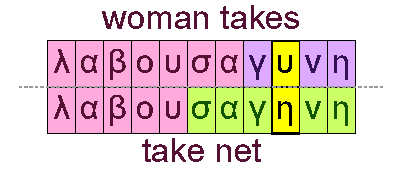
With the word order change, there is a play on words which connects the woman in this parable to the woman in KP4 and, thus, the net in KP7 to the (deceptive) net in KP4.
30. Matthew 17:27 Temple tax coin
Matthew 17:27 Notwithstanding, lest we should offend them, go thou to the sea, and cast an hook, and take up the fish that first cometh up; and when thou hast opened his mouth, thou shalt find a piece of money: that take, and give unto them for me and thee. [kjv]
ινα δε μη σκανδαλισωμεν αυτους πορευθεις εις την θαλασσαν βαλε αγκιστρον και τον αναβαντα πρωτον ιχθυν αρον και ανοιξας το στομα αυτου ευρησεις στατηρα εκεινον λαβων δος αυτοις αντι εμου και σου [gnt]
The ancient Greek word
"στατήρ" ≈ "weight, standard, stater coin". This
"stater", often translated as
"piece of money", was originally a weight of precious metal but eventually became known as a silver or gold coin of various values.
The "
temple tax" was "
two drachmas". For
two this would be a
"four drachma". Some modern Greek translations use the Greek for
"quad drachma". Jesus used the word for
"stater".
31. Matthew 13:47 Hunting drag-net
Matthew 13:47 Again, the kingdom of heaven is like unto a net, that was cast into the sea, and gathered of every kind: [kjv]
παλιν ομοια εστιν η βασιλεια των ουρανων σαγηνη βληθειση εις την θαλασσαν και εκ παντος γενους συναγαγουση [gnt]
The ancient Greek word
"σαγήνη" ≈ "hunting drag-net". In
context, it could be a
fishing "net".
This word is used a few times in the
LXX (Septuagint) but used only
one time in the
GNT (Greek New Testament), by Jesus. There are other Greek words for a
fishing "
net" that are
not used here. The ancient Greek word
"δίκτυον" ≈ "fishing net". This word does not have the deceptive/entrapment connotation and would be a play on words with
"δίκαιον" ≈ "observant of custom, righteous" which would
not be appropriate here.
32. Matthew 13:33 Women taking
33. Matthew 13:47 Play on words
Matthew 13:47 Again, the kingdom of heaven is like unto a net, that was cast into the sea, and gathered of every kind: [kjv]
παλιν ομοια εστιν η βασιλεια των ουρανων σαγηνη βληθειση εις την θαλασσαν και εκ παντος γενους συναγαγουση [gnt]
Here are possible play on words with
"net" as used by Jesus in this verse.
- "σαγήνη" ≈ "hunting drag-net" (as used). In context, it could be a fishing "net".
- "σοι" ≈ "(to) you" (dative) and "σου" ≈ "your" (genitive)
- "γυνή" ≈ "woman". The word is related to the English word "queen".
- "σιαγών" ≈ "jaw, jawbone" and "σιαγονα" ≈ "jaw, jawbone"
- "σοι" ≈ "(to) you" (dative) and "σου" ≈ "your" (genitive)
- "ἀγωνα" ≈ "gathering, contest, competition" and "αγονία" ≈ "contest, competition" (athletics, war, etc.) as in the English word "agony".
34. Strongs - touch
*G680 *33 ἅπτομαι (hap'-tom-ahee) : reflexive of G681 ἅπτω; properly, to attach oneself to, i.e. to touch (in many implied relations):--touch.
*G681 *7 ἅπτω (hap'-to) : a primary verb; properly, to fasten to, i.e. (specially) to set on fire:--kindle, light.
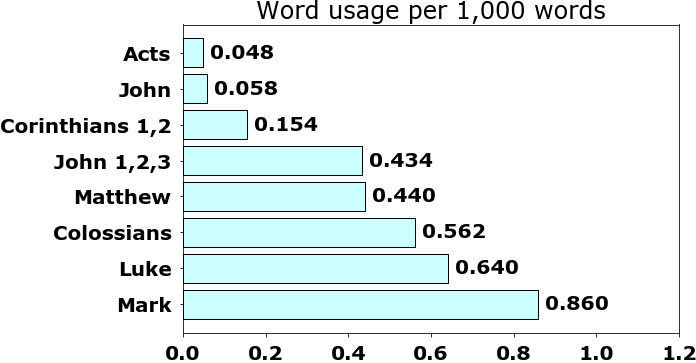 |
Words: απτει απτεσθαι=2 απτεσθε απτεται=2 απτηται απτου αψαμενος=3 αψαντες αψας=2 αψη αψηται=2 αψωμαι=2 αψωνται=3 ηψαντο=2 ηψατο=15 περιαψαντων
|
The Greek has several words for "
touch" or "
hold" or "
fasten to" or even "
kindle" or "
set on fire". The
ancient Greek word
"ἅπτω" ≈ "touch, fasten to, kindle, set on fire" and can mean "
grasp" with the senses as in "
apprehend" or "
perceive". This word is the source of the English word "
haptic" having to do with touching.
35. Usage - touch
- *G680 *33 ἅπτομαι (hap'-tom-ahee) : reflexive of G681 ἅπτω; properly, to attach oneself to, i.e. to touch (in many implied relations):--touch.
- ηψατο *15
- Matthew 8:3 And Jesus put forth his hand, and touched him, saying, I will; ...
- Matthew 8:15 And he touched her hand, and the fever ...
- Matthew 9:20 ... years, came behind him, and touched the hem of his garment:
- Matthew 9:29 Then touched he their eyes, saying, According to ...
- Matthew 20:34 So Jesus had compassion on them, and touched their eyes: and ...
- Mark 1:41 ... moved with compassion, put forth his hand, and touched him, and saith ...
- Mark 5:27 ... in the press behind, and touched his garment.
- Mark 5:30 ... the press, and said, Who touched my clothes?
- Mark 5:31 ... and sayest thou, Who touched me?
- Mark 7:33 ... ears, and he spit, and touched his tongue;
- Luke 5:13 And he put forth his hand, and touched him, saying, I will: ...
- Luke 7:14 And he came and touched the bier: and they that bare ...
- Luke 8:44 Came behind him, and touched the border of his garment: ...
- Luke 8:46 And Jesus said, Somebody hath touched me: for I ...
- Luke 8:47 ... for what cause she had touched him, and how ...
- αψωνται *3
- Matthew 14:36 ... him that they might only touch the hem of his ...
- Mark 3:10 ... they pressed upon him for to touch him, as many as had plagues.
- Mark 6:56 ... him that they might touch if it were but the border of his garment: and as many as touched him were made whole.
- αψωμαι *2
- Matthew 9:21 ... herself, If I may but touch his garment, I shall be whole.
- Mark 5:28 For she said, If I may touch but his clothes, I shall be whole.
- αψηται *2
- Mark 8:22 ... besought him to touch him.
- Mark 10:13 ... young children to him, that he should touch them: and his disciples ...
- απτεσθαι *2
- Luke 6:19 And the whole multitude sought to touch him: for there went ...
- 1 Corinthians 7:1 ... It is good for a man not to touch a woman.
- απτεται *2
- Luke 7:39 ... what manner of woman this is that toucheth him: for she is a sinner.
- 1 John 5:18 ... and that wicked one toucheth him not.
- αψαμενος *2
- Luke 8:45 ... said, Who touched me? When all denied, Peter and they that were with him said, Master, the multitude throng thee and press thee, and sayest thou, Who touched me?
- Luke 22:51 ... thus far. And he touched his ear, and healed him.
- ηψαντο
- Matthew 14:36 ... him that they might only touch the hem of his ...
- απτηται
- Luke 18:15 ... also infants, that he would touch them: but when his disciples ...
- απτου
- John 20:17 Jesus saith unto her, Touch me not; for ...
- απτεσθε
- 2 Corinthians 6:17 ... saith the Lord, and touch not the unclean thing; and I ...
- αψη
- Colossians 2:21 (Touch not; taste not; handle not;
- *G681 *7 ἅπτω (hap'-to) : a primary verb; properly, to fasten to, i.e. (specially) to set on fire:--kindle, light.
- αψας *2
- Luke 8:16 No man, when he hath lighted a candle, covereth it with a vessel, ...
- Luke 11:33 No man, when he hath lighted a candle, putteth it in ...
- αψαμενος
- Matthew 17:7 And Jesus came and touched them, and ...
- ηψαντο
- Mark 6:56 And whithersoever he entered, into villages, or ...
- απτει
- Luke 15:8 ... one piece, doth not light a candle, and ...
- περιαψαντων
- Luke 22:55 And when they had kindled a fire in the midst of the hall, ...
- αψαντες
- Acts 28:2 And the barbarous people shewed us no little ...
36. Candlestick variation in Luke
Luke 8:16 No man, when he hath lighted a candle, covereth it with a vessel, or putteth it under a bed; but setteth it on a candlestick, that they which enter in may see the light. [kjv]
ουδεις δε λυχνον αψας καλυπτει αυτον σκευει η υποκατω κλινης τιθησιν αλλ επι λυχνιας επιτιθησιν τιθησιν ινα οι εισπορευομενοι βλεπωσιν το φως [gnt]
Luke uses a word translated as
"lighted" as in
"set fire to" (definition 14) whose primary definitions (1 to 13) are that of
"grasp" or
"touch".
- no one , having lit a candle ...
- no one, having grabbed a candle (that may be lit at some time) ...
This word is the source of the English word
"haptic" having to do with touching. The following appear to be valid meanings.
In Matthew, Jesus uses a less common word that has a double meaning as a play on words in the way it is used there.
37. Matthew 5:15 False light and translation
Matthew 5:15 Neither do men light a candle, and put it under a bushel, but on a candlestick; and it giveth light unto all that are in the house. [kjv]
ουδε καιουσιν λυχνον και τιθεασιν αυτον υπο τον μοδιον αλλ επι την λυχνιαν και λαμπει πασιν τοις εν τη οικια [gnt]
The words translated as
"neither" and
"light" can be a play on words with
"δικαιοσύνη" ≈ "righteousness, justice" where only the first part of the word is spoken. There were no spaces in Greek writing until much later in history.
English: Neither light ... (as translated)
Greek: ουδε καιουσιν (as written)
Greek: ου δεκαιουσιν (play on words)
Greek: ου δικαιοσινη (more proper Greek)
English: Not righteousness ... (play on words)
Greek: ουδε και ουσιν (as written with space added)
English: Not and is ... (alternative words)
Jesus will make another (indirect) play on words with
"righteousness" in a few verses.
... when you bring your gift to the altar and there [bad righteousness] ...
38. Matthew 5:15 False light
Matthew 5:15 Neither do men light a candle, and put it under a bushel, but on a candlestick; and it giveth light unto all that are in the house. [kjv]
The Greek for "
under"
the "bushel" means "
under"
the "measure" but can be figurative as in evaluating as a
"measure". The
"candle" appears to represent
"opinion" or "
glory". The
"candlestick" might be a
"voting stand".
- How many put their "candle" as in "opinion" or "glory" under a "basket" to hide it?
- How many put their "candle" as in "opinion" or "glory" under the "measure" as in rationally determining whether that "opinion" is valid?
- How many put their "candle" as in "opinion" or "glory" on a "voting stand" or "candlestick" with multiple choices, or just one choice, to see which opinion to use?
The Greek for "
under"
the "bushel" can be a play on words with "
under"
the "
foot". A modern analogy might be pulling a rabbit out of the hat, or putting a rabbit into a hat so it can be pulled out to amaze and give (false) light to all in the house.
39. Luke 15:8 Light a candle
Luke 15:8 Either what woman having ten pieces of silver, if she lose one piece, doth not light a candle, and sweep the house, and seek diligently till she find it? [kjv]
η τις γυνη δραχμας εχουσα δεκα εαν απολεση δραχμην μιαν ουχι απτει λυχνον και σαροι την οικιαν και ζητει επιμελως εως οτου ου ευρη [gnt]
Thought:
A woman, having ten drachmas, loses one. Does she leave the nine and search for the one that is lost? Does this sound familiar.
If the "
woman" is a "
bird" who has deceived these "
drachmas", the "
nine" takes her collection from
node 3 to
node 2. She must now repeat what was done at
node 2.
- Touch a candle to provide (false) light to everyone in the house.
40. Luke 15:8-9 Search seek anomaly
Luke 15:8 Either what woman having ten pieces of silver, if she lose one piece, doth not light a candle, and sweep the house, and seek diligently till she find it? [kjv]
η τις γυνη δραχμας εχουσα δεκα εαν απολεση δραχμην μιαν ουχι απτει λυχνον και σαροι την οικιαν και ζητει επιμελως εως οτου ου ευρη [gnt]
15:9 And when she hath found it, she calleth her friends and her neighbours together, saying, Rejoice with me; for I have found the piece which I had lost. [kjv]
και ευρουσα συγκαλειται συγκαλει τας φιλας και τας γειτονας λεγουσα συγχαρητε μοι οτι ευρον την δραχμην ην απωλεσα [gnt]
Here is a verse from the
GNT that does not appear to fit the distinction between a "
seek" and a "
search".
It would appear that if the coin is lost within the bounds of the house, that one can "
seek" it as it is known to exist. It is lost but somewhere in the house. It is then "
found".
Is the woman "
seeking" or "
searching"? Explain.
41. Luke 15:8-10 Clean sweep
Luke 15:8 Either what woman having ten pieces of silver, if she lose one piece, doth not light a candle, and sweep the house, and seek diligently till she find it? [kjv]
η τις γυνη δραχμας εχουσα δεκα εαν απολεση δραχμην μιαν ουχι απτει λυχνον και σαροι την οικιαν και ζητει επιμελως εως οτου ου ευρη [gnt]
15:9 And when she hath found it, she calleth her friends and her neighbours together, saying, Rejoice with me; for I have found the piece which I had lost. [kjv]
και ευρουσα συγκαλειται συγκαλει τας φιλας και τας γειτονας λεγουσα συγχαρητε μοι οτι ευρον την δραχμην ην απωλεσα [gnt]
15:10 Likewise, I say unto you, there is joy in the presence of the angels of God over one sinner that repenteth. [kjv]
ουτως λεγω υμιν χαρα γινεται χαρα ενωπιον των αγγελων του θεου επι ενι αμαρτωλω μετανοουντι [gnt]
The
ancient Greek word
"σαρόω" ≈ "broom, sweep". If one loses some little piece of metal, how might
"sweeping" the
"room" help in finding it?
The
ancient Greek word
"μετάνοια" ≈ "afterthought" is from the ancient Greek word
"μετανοέω" ≈ "perceive afterwards" often when it is too late.
The Greek is that of "
touch" a "
candle" or "
lamp". The "
light" is inferred.
42. Luke 15:8
KJV: Either what woman having ten pieces of silver, if she lose one piece, doth not light a candle, and sweep the house, and seek diligently till she find it?
Greek: η τις γυνη δραχμας εχουσα δεκα εαν απολεση δραχμην μιαν ουχι απτει λυχνον και σαροι την οικιαν και ζητει επιμελως εως οτου ου ευρη
Latin: aut quae mulier habens dragmas decem si perdiderit dragmam unam nonne accendit lucernam et everrit domum et quaerit diligenter donec inveniat
43. Strongs - neighbor
*G1069 *4 γείτων (ghi'-tone) : from G1093; a neighbour (as adjoining one's ground); by implication, a friend:--neighbour.
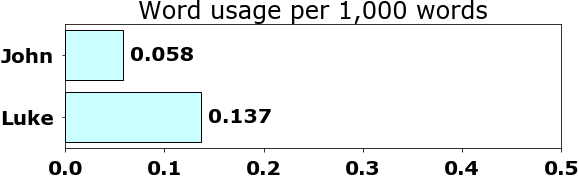 |
Words: γειτονας=3 γειτονες
|
The
ancient Greek word
"γείτων" ≈ "neighbor". The
modern Greek word
"γείτονας" (EE-to-nas) ≈ "neighbor".
Of the
4 occurrences of this word in the
GNT, two are in the parable of the lost sheep and the last coin (one each) in Luke 15.
44. Usage - neighbor
- *G1069 *4 γείτων (ghi'-tone) : from G1093; a neighbour (as adjoining one's ground); by implication, a friend:--neighbour.
- γειτονας *3
- Luke 14:12 ... kinsmen, nor thy rich neighbours; lest they also ...
- Luke 15:6 ... he calleth together his friends and neighbours, saying unto them, Rejoice with ...
- Luke 15:9 ... it, she calleth her friends and her neighbours together, saying, Rejoice with ...
- γειτονες
- John 9:8 The neighbours therefore, and they which before had seen ...
45. Luke 15:8-9 Neighbors
Luke 15:8 Either what woman having ten pieces of silver, if she lose one piece, doth not light a candle, and sweep the house, and seek diligently till she find it? [kjv]
η τις γυνη δραχμας εχουσα δεκα εαν απολεση δραχμην μιαν ουχι απτει λυχνον και σαροι την οικιαν και ζητει επιμελως εως οτου ου ευρη [gnt]
15:9 And when she hath found it, she calleth her friends and her neighbours together, saying, Rejoice with me; for I have found the piece which I had lost. [kjv]
και ευρουσα συγκαλειται συγκαλει τας φιλας και τας γειτονας λεγουσα συγχαρητε μοι οτι ευρον την δραχμην ην απωλεσα [gnt]
This is not the usual word for "
neighbor" as found, say, in Matthew.
46. Luke 15:8 Diligence
Luke 15:8 Either what woman having ten pieces of silver, if she lose one piece, doth not light a candle, and sweep the house, and seek diligently till she find it? [kjv]
η τις γυνη δραχμας εχουσα δεκα εαν απολεση δραχμην μιαν ουχι απτει λυχνον και σαροι την οικιαν και ζητει επιμελως εως οτου ου ευρη [gnt]
The
ancient Greek word
"ἐπιμέλεια" ≈ "diligence, care".
The
modern Greek word
"επιμέλεια" (eh-pee-MEH-lee-a) ≈ "diligence, care".
47. Luke 15:9
KJV: And when she hath found it, she calleth her friends and her neighbours together, saying, Rejoice with me; for I have found the piece which I had lost.
Greek: και ευρουσα συγκαλειται συγκαλει τας φιλας και τας γειτονας λεγουσα συγχαρητε μοι οτι ευρον την δραχμην ην απωλεσα
48. Luke 15:10
KJV: Likewise, I say unto you, there is joy in the presence of the angels of God over one sinner that repenteth.
Greek: ουτως λεγω υμιν χαρα γινεται χαρα ενωπιον των αγγελων του θεου επι ενι αμαρτωλω μετανοουντι
49. Luke 15:11-32 The prodigal son
Luke 15:11 And he said, A certain man had two sons: [kjv]
ειπεν δε ανθρωπος τις ειχεν δυο υιους [gnt]
15:12 And the younger of them said to his father, Father, give me the portion of goods that falleth to me. And he divided unto them his living. [kjv]
και ειπεν ο νεωτερος αυτων τω πατρι πατερ δος μοι το επιβαλλον μερος της ουσιας και ο δε διειλεν αυτοις τον βιον [gnt]
15:13 And not many days after the younger son gathered all together, and took his journey into a far country, and there wasted his substance with riotous living. [kjv]
και μετ ου πολλας ημερας συναγαγων απαντα παντα ο νεωτερος υιος απεδημησεν εις χωραν μακραν και εκει διεσκορπισεν την ουσιαν αυτου ζων ασωτως [gnt]
… dissipavit substantiam … vivendo luxuriose [v]
- Greek: "ᾰ̓σώτου" ≈ "(of) not saved" (genitive singular).
- Latin: "luxuriosus" ≈ "luxuriant, exuberant, self-indulgent".
The Latin word has influenced many English translations.
... more to be added ...
50. End of page