- *G73 *6 ἀγών (ag-one') : from G71; properly, a place of assembly (as if led), i.e. (by implication) a contest (held there); figuratively, an effort or anxiety:--conflict, contention, fight, race.
- αγωνα *5
- Philippians 1:30 Having the same conflict which ye saw ...
- Colossians 2:1 ... ye knew what great conflict I have for you, ...
- 1 Timothy 6:12 Fight the good fight of faith, lay hold on eternal ...
- 2 Timothy 4:7 I have fought a good fight, I have finished my course, I have kept the faith:
- Hebrews 12:1 ... us, and let us run with patience the race that is set before us,
- αγωνι
- 1 Thessalonians 2:2 ... of God with much contention.
- *G74 *1 ἀγωνία (ag-o-nee'-ah) : from G73 ἀγών; a struggle (properly, the state), i.e. (figuratively) anguish:--agony.
- αγωνια
- Luke 22:44 And being in an agony he prayed more earnestly: and ...
- *G75 *8 ἀγωνίζομαι (ag-o-nid'-zom-ahee) : from G73 ἀγών; to struggle, literally (to compete for a prize), figuratively (to contend with an adversary), or genitive case (to endeavor to accomplish something):--fight, labor fervently, strive.
- αγωνιζομενος *3
- 1 Corinthians 9:25 And every man that striveth for the mastery is temperate in all things. Now ...
- Colossians 1:29 Whereunto I also labour, striving according to his working, ...
- Colossians 4:12 ... saluteth you, always labouring fervently for you in ...
- αγωνιζεσθε
- Luke 13:24 Strive to enter in at the strait gate: for ...
- ηγωνιζοντο
- John 18:36 ... then would my servants fight, that I should not ...
- αγωνιζομεθα
- 1 Timothy 4:10 For therefore we both labour and ...
- αγωνιζου
- 1 Timothy 6:12 Fight the good fight of faith, lay hold on eternal ...
- ηγωνισμαι
- 2 Timothy 4:7 I have fought a good fight, I have finished my course, I have kept the faith:
24. Punishment by punny puns
Luke 6:21 Blessed are ye that hunger now: for ye shall be filled. Blessed are ye that weep now: for ye shall laugh. [kjv]
μακαριοι οι πεινωντες νυν οτι χορτασθησεσθε μακαριοι οι κλαιοντες νυν οτι γελασετε [gnt]
A
pun is a play on words or double meaning for a word or phrase. Some people love puns. Some people hate puns. There are many puns, or play on words, used in Hebrew (and Greek) in the Bible. Most puns are by sound, some by meaning, etc.
25. Possible puns
Given the background, let us see of any of the places where Paul uses the (more active) word "agony", often translated as the (more passive) word "conflict", Paul might have had a double-meaning or pun in mind.
26. Word usage
The usage of the Greek word for "
agony" in
18 verses is as follows.
- Luke: 2 (writing for Paul)
- LXX: 3 (Ether, Isaiah, Daniel)
- Paul 11
- Corinthians: 1 (Corinth)
- Philippians: 1 (Philippi)
- Colossians: 3 (Colossae)
- Thessalonians: 1 (Thesolonica)
- Timothy: 4 (Ephesus)
- Hebrews: 1 (authorship disputed)
- Jude, John: 1 (each)
27. Possible puns
The letters to Corinth and Ephesus (Timothy), as well as Hebrews, use the word "
agony" in the context of athletic competition - the primary meaning of the word.
The leading candidate for possible puns is the letter to the city of Colossae which has many explicit mention of (Greek) philosophy and allusions to Greek mathematics and logic on which much of that philosophy is based.
The other pun possibilities are in the letters to Philippi and Thesolonica.
28. 1 Thessalonians 2:13 Effectual working
1 Thessalonians 2:13 For this cause also thank we God without ceasing, because, when ye received the word of God which ye heard of us, ye received it not as the word of men, but as it is in truth, the word of God, which effectually worketh also in you that believe. [kjv]
και δια τουτο και ημεις ευχαριστουμεν τω θεω αδιαλειπτως οτι παραλαβοντες λογον ακοης παρ ημων του θεου εδεξασθε ου λογον ανθρωπων αλλα καθως εστιν αληθως εστιν λογον θεου ος και ενεργειται εν υμιν τοις πιστευουσιν [gnt]
How does the
"effectually worketh" compare with the Aristotelian idea of
"actuality"?
29. Colossians 1:29
Colossians 1:29 Whereunto I also labour, striving according to his working, which worketh in me mightily. [kjv]
εις ο και κοπιω αγωνιζομενος κατα την ενεργειαν αυτου την ενεργουμενην εν εμοι εν δυναμει [gnt]
The words for "
working" and "
mighty" had an additional special meaning in the philosophy of Aristotle.
Paul is working as in an active laboring, the base meaning of
"agony". This verse is a lead-in to chapter 2 which talks about the dangers of philosophy using additional terms that had meaning in philosophy.
Could Paul have a double meaning in that he is "
not an angle" in that he is aware of the dangers of (passive) philosophy thinking?
30. Colossians 2:1 Philosophy and empty deception
Colossians 2:1 For I would that ye knew what great conflict I have for you, and for them at Laodicea, and for as many as have not seen my face in the flesh; [kjv]
θελω γαρ υμας ειδεναι ηλικον αγωνα εχω περι υπερ υμων και των εν λαοδικεια και οσοι ουχ εωρακασιν εορακαν το προσωπον μου εν σαρκι [gnt]
This verse starts the chapter about the dangers of philosophy and empty deception.
Paul is actively laboring in the Greek
"agony" rather than passively thinking in philosophy as in "
not an angle" as in "
this is not geometry class".
31. Colossians 2:1
KJV: For I would that ye knew what great conflict I have for you, and for them at Laodicea, and for as many as have not seen my face in the flesh;
Greek: θελω γαρ υμας ειδεναι ηλικον αγωνα εχω περι υπερ υμων και των εν λαοδικεια και οσοι ουχ εωρακασιν εορακαν το προσωπον μου εν σαρκι
32. Colossians 4:12 Epaphras
Since the other two verses where the word for
"agony" may have a double-meaning, the remaining verse, at the end of the letter, is included.
Colossians 4:12 Epaphras, who is one of you, a servant of Christ, saluteth you, always labouring fervently for you in prayers, that ye may stand perfect and complete in all the will of God. [kjv]
ασπαζεται υμας επαφρας ο εξ υμων δουλος χριστου ιησου παντοτε αγωνιζομενος υπερ υμων εν ταις προσευχαις ινα στητε σταθητε τελειοι και πεπληρωμενοι πεπληροφορημενοι εν παντι θεληματι του θεου [gnt]
To be "
complete" one should be actively laboring in the Greek
"agony" rather than passively thinking in philosophy as in "
not an angle".
33. Colossians 4:12
KJV: Epaphras, who is one of you, a servant of Christ, saluteth you, always labouring fervently for you in prayers, that ye may stand perfect and complete in all the will of God.
Greek: ασπαζεται υμας επαφρας ο εξ υμων δουλος χριστου ιησου παντοτε αγωνιζομενος υπερ υμων εν ταις προσευχαις ινα στητε σταθητε τελειοι και πεπληρωμενοι πεπληροφορημενοι εν παντι θεληματι του θεου
34. 1 Thessalonians 2:2 Competition
1 Thessalonians 2:2 But even after that we had suffered before, and were shamefully entreated, as ye know, at Philippi, we were bold in our God to speak unto you the gospel of God with much contention. [kjv]
αλλα και προπαθοντες και υβρισθεντες καθως οιδατε εν φιλιπποις επαρρησιασαμεθα εν τω θεω ημων λαλησαι προς υμας το ευαγγελιον του θεου εν πολλω αγωνι [gnt]
Here the word for
"agony" is translated by the
KJV as
"contention". Greek has other words that would indicate contention or commotion.
The Greek translated as "
contention" is that of "
competing" as in an
athletic competition.
35. Luke
The verses in Luke, Isaiah and Daniel are interesting though it appears that no double meaning can be discerned here.
36. Luke 13:23-24 Gates in Luke
Luke 13:23 Then said one unto him, Lord, are there few that be saved? And he said unto them, [kjv]
ειπεν δε τις αυτω κυριε ει ολιγοι οι σωζομενοι ο δε ειπεν προς αυτους [gnt]
13:24 Strive to enter in at the strait gate: for many, I say unto you, will seek to enter in, and shall not be able. [kjv]
αγωνιζεσθε εισελθειν δια της στενης πυλης θυρας οτι πολλοι λεγω υμιν ζητησουσιν εισελθειν και ουκ ισχυσουσιν [gnt]
The ancient Greek word
"αγονία" ≈ "contest, competition". This is an
active striving as in athletic competition. It is not a
passive thought process.
What people remembered in Luke is not what is in Matthew. The
two "gates" become
one. The word for "
door" is changed and thus loses the play on words. The
"strait" is
not "
straight" but
"narrow" as in the
"strait" of "
Gibraltar" or the "
Bering"
"strait".
The
KJV translates as "
not be able" the Greek that is "
not strong (enough)". To be "
strong" enough to "
enter in" the
"gate" to
"loss" or "
destruction" one needs to be a
"wolf" or
"bird" and
"few" do this.
37. Luke 22:44 Prayer in Luke
Luke 22:44 And being in an agony he prayed more earnestly: and his sweat was as it were great drops of blood falling down to the ground. [kjv]
και γενομενος εν αγωνια εκτενεστερον προσηυχετο και εγενετο δε ο ιδρως αυτου ωσει θρομβοι αιματος καταβαινοντες επι την γην γην [gnt]
The ancient Greek word
"αγονία" ≈ "contest, competition" and is the source of the English word
"agony". An
active striving, as in a sports
competition, is a very strenuous and tiring experience. The
KJV word of
"agony" is somewhat misleading in this respect.
The
KJV translates as
"as it were" (as a given fact) what in the Greek is
"as if" as an analogy or comparison. That is, a "
potentiality" (in Greek) and not an "
actuality" (in English).
The ancient Greek word
"θρόμβος" ≈ "piece, lump, clot" and is the source of the English word
"thrombosis" as a
"blood clot". The "
great" is added in the
KJV as an
assumption. The
"drops" could be small, medium, large, etc.
The ancient Greek word
"αἷμα" ≈ "blood" and is the source of the English word
"anemic".
Note the common linguistic connection between "
blood dropping" to "
drop of blood" to "
droplet".
38. Isaiah 7:13 Isaiah
KJV:
Isaiah 7:13 And he said, Hear ye now, O house of David; Is it a small thing for you to weary men, but will ye weary my God also? [kjv]
LXX:
και ειπεν ακουσατε δη οικος δαυιδ μη μικρον υμιν αγωνα παρεχειν ανθρωποις και πως κυριω παρεχετε αγωνα [lxx]
And he said, Hear you° now, O house of David; is it a little thing for you to contend with men? and how do you° contend against the Lord? [bs3]
39. Isaiah 7:13
KJV: And he said, Hear ye now, O house of David; Is it a small thing for you to weary men, but will ye weary my God also?
Hebrew: ויאמר שמעו נא בית דוד המעט מכם הלאות אנשים כי תלאו גם את אלהי׃
Greek: και ειπεν ακουσατε δη οικος δαυιδ μη μικρον υμιν αγωνα παρεχειν ανθρωποις και πως κυριω παρεχετε αγωνα
Brenton: And he said, Hear you° now, O house of David; is it a little thing for you to contend with men? and how do you° contend against the Lord?
40. Daniel 6:14 Den of lions
KJV:
Daniel 6:14 Then the king, when he heard these words, was sore displeased with himself, and set his heart on Daniel to deliver him: and he laboured till the going down of the sun to deliver him. [kjv]
LXX:
τοτε ο βασιλευς ως το ρημα ηκουσεν πολυ ελυπηθη επ αυτω και περι του δανιηλ ηγωνισατο του εξελεσθαι αυτον και εως εσπερας ην αγωνιζομενος του εξελεσθαι αυτον [lxx]
Then the king, when he heard the saying, was much grieved for Daniel and he greatly exerted himself for Daniel to deliver him: and he exerted himself till evening to deliver him. [bs3]
41. Daniel 6:14
KJV: Then the king, when he heard these words, was sore displeased with himself, and set his heart on Daniel to deliver him: and he laboured till the going down of the sun to deliver him.
Hebrew: אדין מלכא כדי מלתא שמע שגיא באש עלוהי ועל דניאל שם בל לשיזבותה ועד מעלי שמשא הוא משתדר להצלותה׃
Greek: τοτε ο βασιλευς ως το ρημα ηκουσεν πολυ ελυπηθη επ αυτω και περι του δανιηλ ηγωνισατο του εξελεσθαι αυτον και εως εσπερας ην αγωνιζομενος του εξελεσθαι αυτον
Brenton: Then the king, when he heard the saying, was much grieved for Daniel and he greatly exerted himself for Daniel to deliver him: and he exerted himself till evening to deliver him.
42. End of page
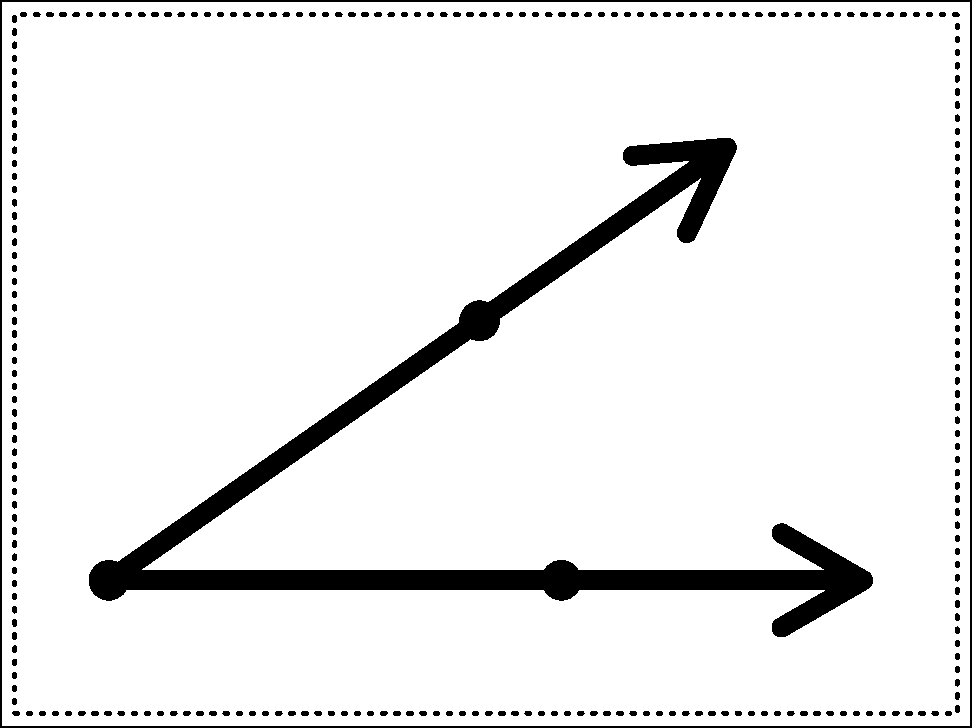 The Greek mathematician Euclid formalized the field of geometry where the angle is a fundamental part of geometry. Many students have had to learn geometry and proofs, etc., though some treat it as "agony".
 The English word "mystery" comes from the Greek word that had to do, not only with not knowing something, but had to do with initiation rites of secret societies, such as Greek philosophical societies.


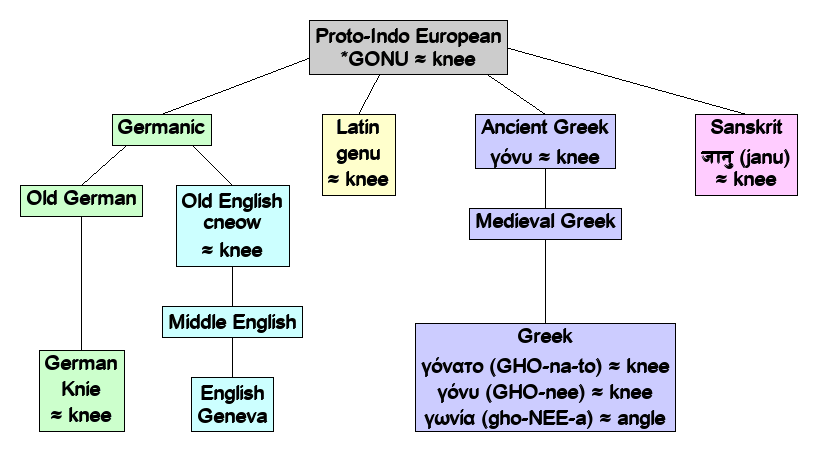
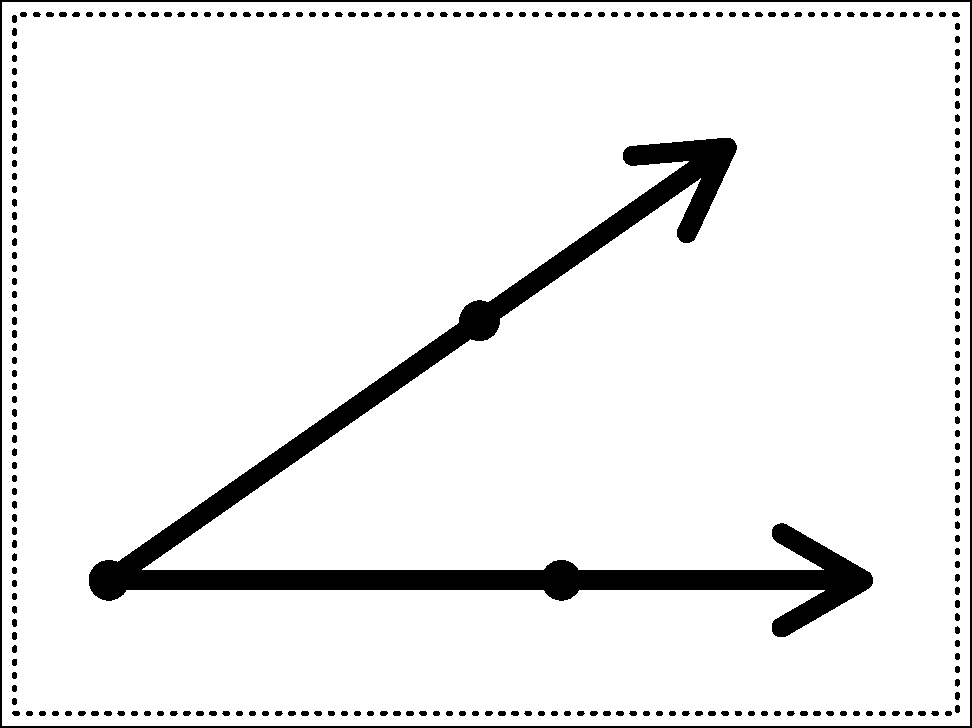 The Greek mathematician Euclid formalized the field of geometry where the angle is a fundamental part of geometry. The Greek words for "angle" and "knee" are related.


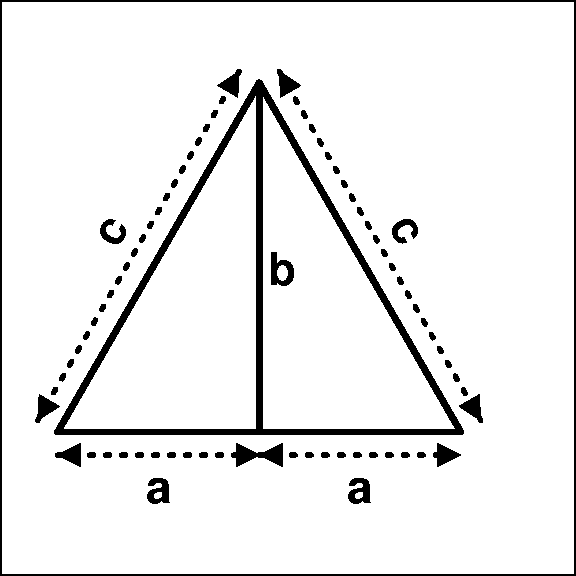 When drawing triangles, there are three points to keep in mind.
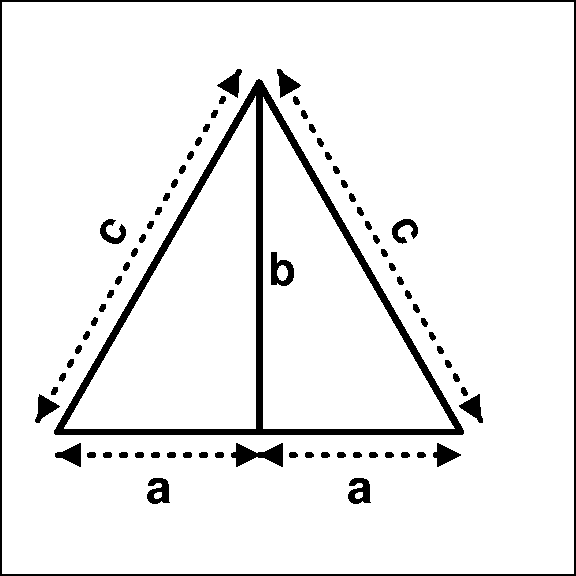 The field of "trigonometry", a word from the early 1600's, is concerned with the geometry of angles and comes from the new Latin word "trigonometria" ≈ "trigonometry" which comes from two Greek words.
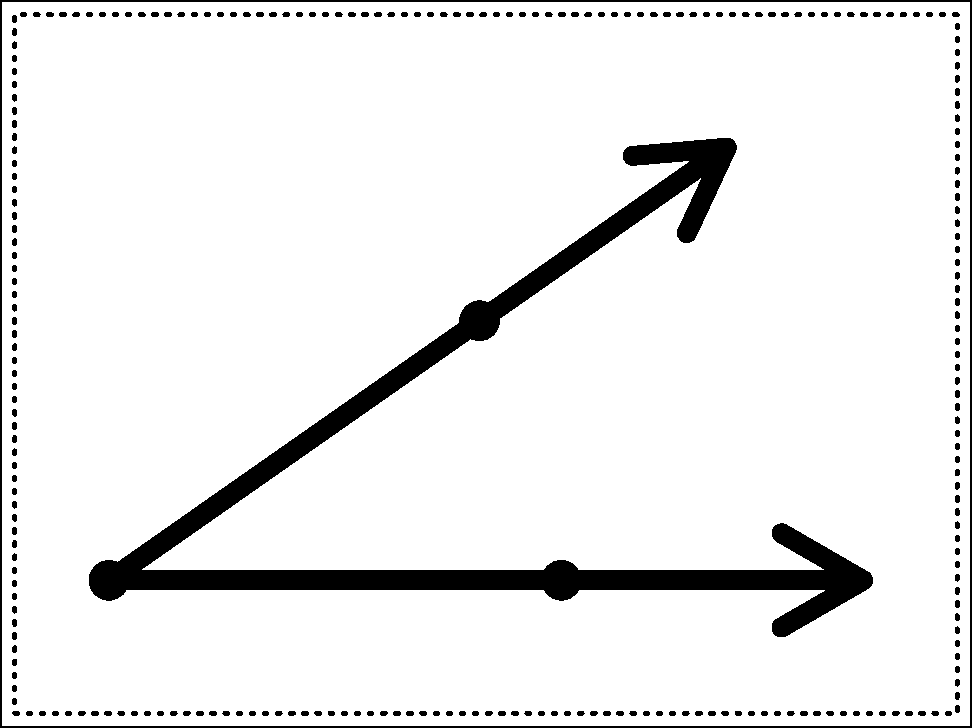 The ancient Greek word "γόνυ" ≈ "knee" which is related to the Latin word "genu" ≈ "knee" and the Old English word "cneow" ≈ "knee".